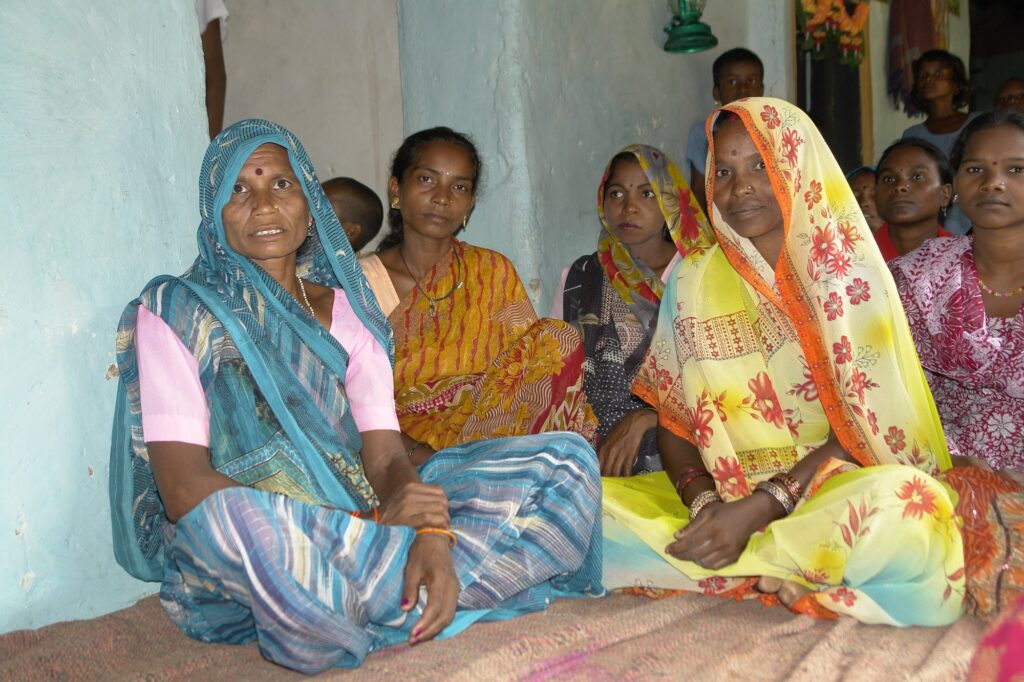
The Gond tribe is the second-largest Adivasi community in India, after the Santhals, with a population of around 13 million spread across Madhya Pradesh, Chhattisgarh, Maharashtra, Telangana, Odisha, Andhra Pradesh, and Uttar Pradesh. The community speaks Gondi, a Dravidian language, and traces its political history to the Gondwana kingdoms that ruled large parts of central India from roughly the 14th to the 18th century. The Gond tribe is also the home of two of India’s most internationally recognised cultural exports of the last forty years: the Pradhan Gond school of painting, led by Jangarh Singh Shyam, and the rich oral epic cycles of Pari Kupar Lingo.
For UPSC, the Gond tribe sits at the centre of three GS-I conversations: pre-modern Indian polity beyond the Delhi-Agra axis, the cultural anthropology of central India, and post-independence tribal policy in the Fifth Schedule states. The community also figures in any serious discussion of the Naxalite question in the Dandakaranya forests, where Gond villages have been caught between the state and the Maoists since the 1980s.
This article reads the Gond tribe across history, language, religion, art, and contemporary politics, with care to separate what is documented from what is colonial cliché.
Who Are the Gonds?
The Gond tribe is the largest of the Dravidian-speaking Adivasi groups of central India and the second-largest Scheduled Tribe in the country by population. The 2011 Census recorded around 11 million Gonds; community and welfare ministry estimates now place the figure at about 13 million.
The Gonds call themselves Koitur or Koi, meaning “people of the hills and forests.” The term “Gond” comes from a Telugu and Kannada word for hill people and was popularised by Mughal and British administrators. Gond subgroups include the Raj Gond (historically associated with the ruling lineages of Gondwana), Maria, Muria, Dhurwa, Khond, Bhatra, and Madia, each with its own dialect and customary law.
The Gond tribe is overwhelmingly rural, agrarian, and forest-dependent. The community is concentrated in the Vindhya, Satpura, Mahadeo, and Maikal hill ranges, plus the Bastar plateau in Chhattisgarh and the Adilabad hills in Telangana.
Geography: The Gond Belt
The Gond belt forms a near-continuous arc across central India:
- Madhya Pradesh: Mandla, Dindori, Balaghat, Chhindwara, Seoni, Betul, Hoshangabad, Shahdol. Madhya Pradesh holds the largest Gond population of any state.
- Chhattisgarh: Bastar, Kanker, Dantewada, Sukma, Bijapur, Narayanpur, Kondagaon, Surguja, Korba.
- Maharashtra: Gadchiroli, Chandrapur, Bhandara, Gondia, Yavatmal.
- Telangana: Adilabad, Komaram Bheem Asifabad, Nirmal, Mancherial.
- Andhra Pradesh: East and West Godavari (Koya Gonds).
- Odisha: Nabarangpur, Kalahandi, Koraput, Rayagada.
- Uttar Pradesh: Sonbhadra, parts of Mirzapur.
The Bastar and Gadchiroli concentrations sit in the Fifth Schedule areas, governed by PESA since 1996. Most of the Gond tribe in these districts holds individual and community forest rights titles under the Forest Rights Act, 2006, though implementation gaps persist.
Gondi: A Dravidian Language Without a Single Script
Gondi belongs to the Dravidian language family and is the largest Dravidian language outside the four southern states. The 2011 Census recorded around 2.9 million Gondi speakers, but linguists estimate a much higher figure since many Gonds report Hindi, Marathi, or Chhattisgarhi as mother tongue under social pressure.
Gondi has several mutually intelligible dialect clusters, including Northern (Madhya Pradesh, Maharashtra), Southern (Chhattisgarh, Telangana), and Koya (Andhra Pradesh, Telangana). Gondi was traditionally written in Devanagari, Telugu, or Roman scripts. A standardised script, Gunjala Gondi Lipi, was rediscovered in 2006 from palm-leaf manuscripts in Gunjala village of Adilabad and is now being revived in Telangana schools.
Gondi is not in the Eighth Schedule of the Constitution. Inclusion has been a long-standing demand of the Gond tribe and is part of the broader campaign for recognition of Adivasi languages.
Gondwana Kingdoms: A Forgotten Political History
The Gondwana region produced four major Gond kingdoms between the 14th and 18th centuries:
- Garha-Mandla in the upper Narmada valley, ruled from Garha and later Mandla.
- Deogarh in the Chhindwara region, near present-day Nagpur.
- Chanda (Chandrapur) in eastern Maharashtra, founded by the Atram dynasty around the 13th century.
- Kherla in the Betul region.
These were sophisticated tributary states, not isolated tribal chiefdoms. The Garha-Mandla kingdom under Sangram Shah (r. 1480–1530) controlled around 52 forts and large parts of the upper Narmada valley. Inscriptions, coinage, and Persian chronicles confirm their place in the wider Indian political system.
The most celebrated figure of Gond history is Rani Durgavati Madavi (1524–1564), a Chandela princess who married Dalpat Shah of Garha-Mandla. After Dalpat Shah’s death in 1550, Durgavati ruled as regent for her young son Vir Narayan. Her armies built canals, repaired forts, and successfully defended Mandla against the Malwa sultanate and Baz Bahadur. In 1564, when Mughal emperor Akbar sent Asaf Khan to annex Garha-Mandla, Durgavati led her army into battle at Narrai (near Jabalpur), was wounded by an arrow, and chose to take her own life rather than be captured. Her memory is preserved in the Rani Durgavati Vishwavidyalaya at Jabalpur and in the central government’s 2024 release of a commemorative coin.
The Gond kingdoms declined under Mughal pressure from the late 17th century and were absorbed by the Marathas and the British in the 18th and 19th centuries.
Religion, Pari Kupar Lingo, and the Persa Pen Cult
The Gond tribe follows Koya Punem, a faith centred on clan deities (Persa Pen) housed in sacred groves, ancestor worship, and seasonal rituals. The central religious figure of the Gonds is Pari Kupar Lingo, an ancient cultural hero credited with organising Gond society into clans, gotras, and the four-fold Saga (Salla) system. His sister-disciple Jango Raitad is honoured as the first priestess.
Pari Kupar Lingo’s life and teachings survive in long oral epic cycles performed by Pardhan, Ojha, and Bhumka bards across the Gond belt. These epics describe creation, the founding of the 18 Gond clans, the discovery of agriculture, and the four-pillar moral code (Sade-Saga). The Pari Kupar Lingo tradition is the spine of Gond identity in the modern era, with statues in Mandla, Adilabad, and Gadchiroli districts and educational textbooks in Gondi.
Sub-traditions include Madiya, Muria, and Koya rites in Bastar and Adilabad, where the Ghotul, a youth dormitory institution famously described by Verrier Elwin, was central to socialisation. Many Ghotuls have weakened in the last forty years under pressure from missionary activity, state schooling, and Maoist control.
Pradhan Gond Painting and Jangarh Singh Shyam
The single most visible Gond cultural product today is the Pradhan Gond school of painting, also known as the Jangarh Kalam. The Pradhans are a sub-group of bards traditionally attached to Gond patrons. In the early 1980s, the artist Jangarh Singh Shyam (1962–2001) of Patangarh village, Madhya Pradesh, was discovered by J. Swaminathan of the Bharat Bhavan in Bhopal. Jangarh translated the Pradhan oral repertoire into canvas, paper, and acrylic, using dots and fine lines to build mythic figures, trees, birds, and creation scenes.
The Jangarh Kalam became a globally collected style within twenty years. Jangarh himself exhibited in Tokyo, Paris, and New York. His suicide at the Mithila Museum in Niigata, Japan, in 2001 marked a turning point for the tribal art market and triggered serious conversations about exploitation. A second and third generation of Pradhan Gond artists, including Bhajju Shyam, Durga Bai, Venkat Raman Singh Shyam, Mayank Shyam, and Japani Shyam, have carried the style forward, producing illustrated books such as The Night Life of Trees and Signature, that have won international design awards.
Pradhan Gond painting received Geographical Indication tag in 2015 (Madhya Pradesh).
Sohrai Versus Pithora Versus Gond Painting: A Quick Distinction
It is common to confuse Gond painting with other tribal arts. The differences are simple:
- Sohrai is the Santhal and Kurmi mural tradition of Jharkhand, painted on house walls during the cattle festival.
- Pithora is a votive painting of the Rathwa and Bhilala communities of Gujarat and Madhya Pradesh.
- Gond (Pradhan) painting is portable, narrative, and built from intricate dot-and-line fillwork on canvas or paper.
All three are now part of the formal Indian tribal art canon, with separate GI tags and dedicated museum collections.
Economy and Social Indicators
The Gond economy combines settled agriculture (paddy, kodo, kutki millets, maize), forest produce (tendu, mahua, bamboo, lac, honey), and a growing wage-labour migration to cities like Nagpur, Jabalpur, Hyderabad, and Mumbai. Mahua flower processing, in particular, has been a household-level economic activity for centuries and was decriminalised in several states only in 2020–22.
Literacy among Gonds in the 2011 Census was around 52%, with female literacy at 39%. Health indicators in the Bastar and Gadchiroli districts remain among the weakest in India, with maternal mortality, sickle-cell anaemia, and child malnutrition all above the all-India tribal average. The displacement-rehabilitation problem is acute: Gond villages have been moved repeatedly for the Bhilai steel plant, the Bailadila iron ore mines, the Indravati hydro project, the Polavaram dam, and the more recent Bastar mining auctions.
The community has been disproportionately affected by the Maoist insurgency in the Dandakaranya region. Salwa Judum (2005–11), the state-backed counter-Maoist militia in Chhattisgarh, was struck down by the Supreme Court in 2011 in Nandini Sundar vs. State of Chhattisgarh, and the bulk of the affected villages were Gond.
The Gond Tribe in Politics and Contemporary Demands
The Gond tribe has produced national figures including Komaram Bheem (1901–1940), the Gond freedom fighter of the Asifabad forests in Telangana, whose famous slogan “Jal, Jangal, Zameen” (water, forest, land) anchors Adivasi politics across India. The district of Komaram Bheem Asifabad in Telangana was renamed in his honour in 2017.
Active Gond political demands include:
- Inclusion of Gondi in the Eighth Schedule of the Constitution.
- Implementation of community forest rights under the Forest Rights Act, with Gadchiroli emerging as a national model district.
- Re-recognition of Halba, Halbi, and other small Gond sub-groups under correct ST classifications across state lists.
- Land restoration in Polavaram, Bastar, and Adilabad mining belts, where displacement has outrun rehabilitation.
The Gond tribe is also at the centre of contemporary tribal movements in central India, from the Pathalgadi assertions in Bastar to anti-mining mobilisations in Hasdeo Aranya.
A Closing Note
The Gond tribe is not a relic. It is one of the largest living language communities of India, a producer of internationally collected art, and a political community with a thousand-year track record of negotiating empires from the Khaljis to the Republic of India. The challenge for the modern Indian state is whether it can finally recognise the Gonds the way the Mughals and the Marathas were forced to: as peers in the conversation about land, language, and faith, not as wards.
Frequently Asked Questions
Where do the Gond tribe live?
The Gond tribe lives mainly in Madhya Pradesh, Chhattisgarh, Maharashtra (especially Gadchiroli and Chandrapur), Telangana (Adilabad belt), Andhra Pradesh (Godavari districts), Odisha (Koraput-Kalahandi), and parts of Uttar Pradesh (Sonbhadra). Madhya Pradesh has the largest Gond population of any state in India.
Is Gondi a Dravidian language?
Yes, Gondi is a Dravidian language, the largest one spoken outside the four southern states. It has several dialects, including Northern Gondi (Madhya Pradesh, Maharashtra), Southern Gondi (Chhattisgarh, Telangana), and Koya (Andhra Pradesh, Telangana). The traditional script, Gunjala Gondi Lipi, was rediscovered in 2006 in Adilabad district.
Who was Rani Durgavati?
Rani Durgavati (1524–1564) was the regent-queen of the Gond kingdom of Garha-Mandla. After her husband Dalpat Shah’s death in 1550, she ruled on behalf of her young son Vir Narayan, expanded the kingdom, and successfully resisted the Malwa sultanate. In 1564 she fought Akbar’s general Asaf Khan at the battle of Narrai near Jabalpur and chose to die by her own dagger rather than be captured. Jabalpur’s central university is named after her.
What is Gond painting?
Gond painting, also known as the Jangarh Kalam or Pradhan Gond school, is a contemporary tribal art form pioneered by Jangarh Singh Shyam of Patangarh village, Madhya Pradesh, from the early 1980s onwards. It uses fine dots and lines to fill bold outlines of mythic figures, trees, birds, and animals. Pradhan Gond painting received a Geographical Indication tag in 2015 and is collected internationally.
Who is Pari Kupar Lingo?
Pari Kupar Lingo is the central cultural hero of the Gond tribe. Oral epic cycles credit him with organising Gond society into 18 clans, founding the Saga or four-pillar moral code, and teaching agriculture. He is venerated alongside his sister-disciple Jango Raitad and forms the spine of the Koya Punem religion.
Are Gonds Hindus?
The Gond tribe follows Koya Punem, a clan-deity-based religion centred on Persa Pen worship, sacred groves, and Pari Kupar Lingo’s teachings. The Census of India has historically counted most Gonds under Hindu, but this is contested. Adivasi organisations argue that Koya Punem is a distinct religious tradition and have demanded a separate Adivasi or Sarna religion code in the Census.
What were the Gondwana kingdoms?
The Gondwana kingdoms were a set of Gond polities that ruled large parts of central India from the 14th to the 18th centuries. The four main ones were Garha-Mandla (upper Narmada), Deogarh (Chhindwara-Nagpur), Chanda (Chandrapur), and Kherla (Betul). They survived as tributary states under the Mughals and were absorbed by the Marathas and the British in the 18th and 19th centuries.
Who was Komaram Bheem?
Komaram Bheem (1901–1940) was a Gond tribal leader from the Asifabad forests of present-day Telangana who led an armed struggle against the Nizam of Hyderabad’s land policies and forest restrictions. His slogan u0022Jal, Jangal, Zameenu0022 remains the rallying cry of Adivasi movements across India. The district of Komaram Bheem Asifabad was renamed in his honour in 2017.
Tell Google you want more of this.
Add Anantam IAS as a preferred sourceOne tap, and this site shows up more often in your own Top Stories, AI Overviews and AI Mode. Remove it any time.