ज़्यादातर अभ्यर्थी कह सकते हैं कि “Sanchi Ashoka ने बनवाया था”। फिर उन दो सवालों पर अटक जाते हैं जो सच में पूछे जाते हैं: Great Stupa पर Buddha की कोई statue क्यों नहीं है और अगर Ashoka का stupa plain brick mound था, तो famous carved gateways किसने जोड़े? जवाब यह है कि Sanchi किसी एक reign का एक monument नहीं है। यह 1,400 साल तक बनती रही building site है, जहाँ चार अलग dynasties ने उसी hill पर अपनी signatures छोड़ीं। इन layers को पढ़ना ही असली skill है।
Sequence ठीक कर लेंगे, तो Sanchi याद करने वाला नाम नहीं रहेगा। यह early Indian stone art, Buddhism के aniconic phase और Mauryan emperor के relic mound के Buddhist storytelling की stone encyclopedia बनने का सबसे साफ़ case study बन जाएगी।
Sanchi का Great Stupa असल में क्या है
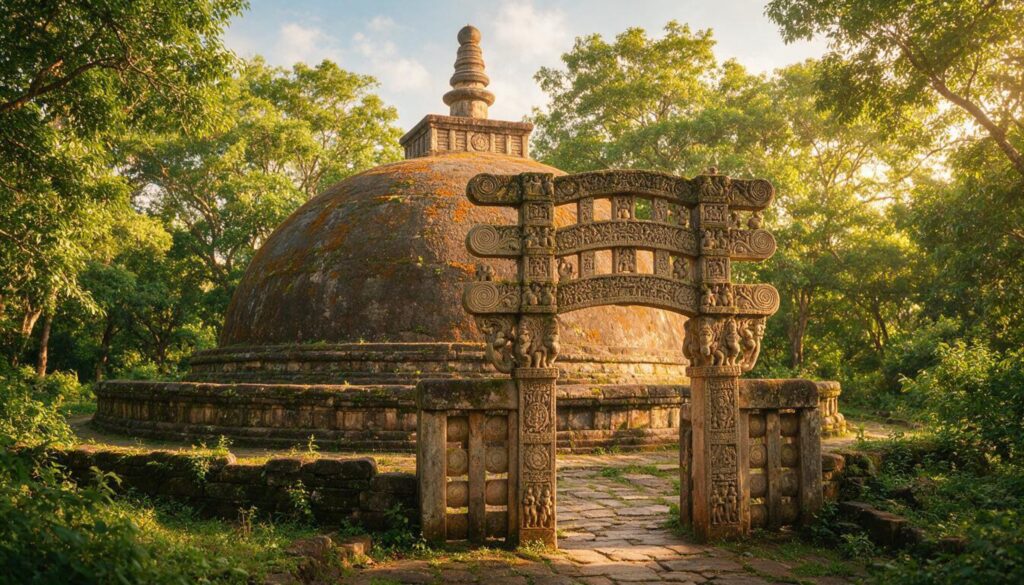
Great Stupa, जिसे Stupa 1 भी कहते हैं, solid hemispherical dome है। इसे अंदर से enter करने के लिए बनाया ही नहीं गया था। Stupa relics के ऊपर बना burial mound है, यहाँ relics Buddha से जुड़े माने जाते हैं। पूरी structure rooms वाली building नहीं, Buddhist cosmos का diagram है। आप इसके चारों ओर चलते हैं, भीतर नहीं जाते।
Anatomy एक बार सीख लीजिए, फिर syllabus के किसी भी stupa को label कर पाएँगे। Dome anda है, literally “egg”। यह womb-like mound relic casket रखती है। ऊपर square railing harmika है, जो summit के sacred zone को mark करती है। Harmika से yashti उठती है, यानी central mast या pillar। इसके ऊपर एक या अधिक chhatra होते हैं, यानी tiers में रखे stone parasols। Umbrella ancient India में royalty और honour का symbol थी और यहाँ यही honour Buddha को दिया गया है।
Base के चारों ओर raised terrace medhi है, जहाँ staircase से पहुँचा जाता है। इसके ऊपर circular processional path pradakshina patha है। Devotees dome को right side में रखते हुए clockwise चलते हैं। Architecture में ही reverence का ritual built-in है। सबको घेरने वाली stone railing vedika है। चार cardinal directions पर इसी में gateways cut हैं, जिन्हें Sanchi ने famous बनाया: toranas।
इसलिए Great Stupa पाँच ideas को एक साथ रखता है: relic mound (anda), sacred summit (harmika), cosmic axis (yashti और chhatra), circumambulation का ritual (medhi और pradakshina patha) और वह boundary जो पूरे complex को consecrated island बनाती है (vedika और toranas)। Bharhut के ruined stupas से लेकर Amaravati के great stupa तक, आप जिस stupa को पढ़ेंगे वह इसी grammar का variation है।
Sanchi किसने और किस क्रम में बनाया
Sanchi को चार dynasties ने बनाया। Exam में लगभग हमेशा sequence पूछा जाता है, single date नहीं। Important order यह है।
Original stupa Mauryan emperor Ashoka ने 3rd century BCE में बनवाया, Kalinga war के बाद जब उनका झुकाव Buddhism की ओर हुआ। उनका version छोटा था और brick का बना था, आज के stupa के करीब आधे size का। उन्होंने इसे किसी major city में नहीं, present-day Madhya Pradesh में Vidisha के पास quiet hilltop पर बनाया। Location के पीछे एक human reason भी है। Ashoka की first wife Devi Vidisha के merchant family से थीं। उनके children Mahendra और Sanghamitra, जो बाद में Sri Lanka में Buddhism लेकर गए, tradition में इसी region से जुड़े हैं। Sanchi इसलिए नहीं चुना गया कि Buddha वहाँ रहे थे। वे कभी वहाँ नहीं गए। Devout local Buddhist community और Ashoka के family ties ने इसे fertile ground बनाया।
Ashoka ने यहाँ polished sandstone का एक pillar भी लगाया। उसके fragments अभी site पर पड़े हैं। अगर आपने Ashoka pillar और Sarnath lion capital पढ़ा है, तो Mauryan court style जानते हैं: stone पर mirror-like “Mauryan polish”, जिसे बाद की Indian workshops पूरी तरह reproduce नहीं कर पाईं।
करीब 2nd century BCE में Mauryas के बाद आई Shunga dynasty के तहत brick stupa का size लगभग double किया गया और उसे dressed stone से case किया गया। Shungas ने raised terrace, staircase, upper processional path, crowning umbrella structure और stone railings जोड़ीं। इसी phase में stupa को आज का bulk और plain तथा dignified stone skin मिली।
Carved gateways सबसे आखिर में आईं। चार toranas को Satavahanas के under, सबसे likely 1st century BCE से 1st century CE के बीच, खड़ा किया गया और rich sculpture से सजाया गया। Southern gateway पर inscription भी है जो Satavahana king के लिए काम करने वाले artisan के gift को record करती है। Monument और patron के बीच यह rare direct link है। इसलिए Sanchi के बारे में “किसने बनाया” पूछा जाए, तो honest answer chain है: Ashoka ने core उठाया, Shungas ने उसे बड़ा और stone-clad किया और Satavahanas ने sculpture दिया। Mauryan half को ठीक place करने के लिए पहले Maurya empire और उसकी administration clear रखें।
| Phase | Dynasty | Rough date | उन्होंने क्या जोड़ा |
|---|---|---|---|
| 1 | Maurya (Ashoka) | 3rd century BCE | Original brick stupa, current size का half; Ashokan pillar |
| 2 | Shunga | 2nd century BCE | Size double, stone casing, terrace, staircase, railings, umbrella |
| 3 | Satavahana | 1st century BCE to 1st century CE | Four carved toranas (gateways) |
| 4 | Gupta | 4th to 5th century CE | Temple 17, seated Buddha images, later shrines |
चार toranas को कैसे पढ़ें
Toranas की वजह से Sanchi हर art-history syllabus में है और इन्हें close reading पसंद है। हर gateway चार cardinal points में से एक पर है और सभी का construction pattern समान है: दो square pillars जिन पर three curved architraves टिकी हैं। Horizontal beams एक के ऊपर एक stacked हैं, छोटे gaps के साथ और ends अक्सर scrolls की तरह curl होते हैं। Pillars, beams और उनके बीच के छोटे figures, पूरी surface लगभग बिना blank inch के carved है।
इन पर Buddhism की picture-book carved है। Jataka tales, यानी Buddha के previous births की stories, Siddhartha के final life as prince के scenes और faith के spread की events, जैसे Ashoka का Bodhi tree visit, सब मिलते हैं। Recurring symbols भी हैं: purity के लिए lotus, elephant और lion, tree-spirits yakshis जो sensual bracket figures के रूप में gateways से बाहर झुकती हैं और devotees की processions।
Gateways interchangeable नहीं हैं। Tradition हर gateway को कुछ particular scenes से जोड़ती है। Rough map याद रखें: best preserved northern torana Jataka scenes से crowded है और उसके ऊपर wheel है। Eastern torana पर famous Great Departure है, जिसमें young prince palace छोड़ते हैं, और celebrated shalabhanjika (tree-goddess) bracket भी है। Southern torana चारों में oldest है और birth तथा Ashoka-related scenes दिखाती है। Western torana पर seven Buddhas और further Jatakas हैं। हर panel रटने की जरूरत नहीं। बस यह समझिए कि toranas narrative art हैं, जो largely non-literate lay public को दिखाकर सिखाती हैं।
Sanchi उन two great sculptural traditions के बीच बैठती है जिन्हें आप कहीं और compare करेंगे। यहाँ relief style flat, crowded और story-driven है। Spirit में यह later Amaravati stupa के करीब है, Gandhara की Greco-Roman modelling के नहीं। Gandhara, Mathura और Amaravati schools revise करते समय Sanchi को उस पूरी conversation का early, symbol-based ancestor मानिए।
Sanchi में Buddha की figure क्यों नहीं है
यही वह point है जहाँ लगभग हर कोई अटकता है। चारों Sanchi gateways के चारों ओर चलिए। Kings, merchants, animals, trees और spirits बहुत हैं, लेकिन Buddha को man के रूप में कहीं नहीं पाएँगे। यह absence deliberate है और इसका नाम aniconic phase of Buddhist art है।
Buddha की death के बाद शुरुआती centuries में artists ने उन्हें human form में दिखाना ही नहीं चुना। उन्हें लगा कि उनकी presence इतनी profound है कि portrait में reduce नहीं की जा सकती। इसलिए symbols से mark किया गया। Footprints physical presence के लिए, empty throne authority के लिए, Bodhi tree enlightenment के लिए, wheel (dharmachakra) first sermon के लिए और stupa final nirvana में passing के लिए। 1st century BCE का viewer जानता था कि हर symbol किस event की ओर इशारा कर रहा है, जैसे crown देखकर king समझ आते हैं, भले king साथ में drawn न हो।
इसलिए Sanchi में “missing” Buddha हर जगह मौजूद हैं, बस face के रूप में नहीं। यह site का सबसे important interpretive fact है और early stupas को later art से अलग करता है। करीब 1st century CE में Gandhara और Mathura की workshops में human Buddha image आई और जल्दी dominant हो गई। यह idea अभी slippery हो, तो empty seat in Buddhist iconography वाला explainer symbols के जरिए इसे समझाता है। Early community ने aniconic form क्यों prefer की, इसके doctrinal reason के लिए Buddhism in India पढ़िए।
यह rule टूटा क्यों? एक कारण Mahayana Buddhism का rise था, जिसने Buddha को picture करने योग्य saviour figure के रूप में devotion को encourage किया। दूसरा कारण ordinary worshippers की image पर focus करने की इच्छा थी। Comparison में clean before-and-after रखिए: aniconic centuries में Sanchi और Bharhut की symbol-based art, फिर 1st century CE से figure-based art। Sanchi का value यह है कि उसने earlier moment को इतने बड़े और well-preserved monument पर पूरी तरह capture किया, जैसे एक visit में aniconic vocabulary पढ़ सकते हैं।
Sanchi का Ashokan pillar क्या बताता है
Ashoka ने केवल Sanchi का stupa नहीं उठाया। उन्होंने उसके पास polished sandstone का pillar भी खड़ा किया। इस pillar का एक message है जो अक्सर छूट जाता है और exam में आता है। इसका capital four addorsed lions का set था, जो famous Sarnath lion capital से closely related है। India ने Sarnath capital को state emblem बनाया, लेकिन Sanchi के lions damaged हैं और आज local museum में displayed हैं।
ज्यादा important pillar shaft पर लिखा message है। इसमें Schism Edict का version है। Ashoka monks और nuns को sangha, यानी monastic community, में divisions पैदा करने के खिलाफ़ warn करते हैं और expulsion की बात कहते हैं। यह fact Sanchi को बड़ी story से जोड़ता है। Ashoka Third Buddhist Council के patron थे, जो Pataliputra में order के disputes और heresies को साफ़ करने के लिए हुई थी। Schism Edict उसी concern को stone में रखती है। Pillar decoration नहीं, adopted faith की unity को actively police करने वाले emperor का evidence है। Site का link Buddhist councils से भी बनता है। Ashoka के edicts revise करते समय याद रखें कि Sanchi में एक minor edict है और उसका विषय abstract dharma नहीं, discipline है।
Pillar Mauryan workshops की technical signature भी दिखाता है: extraordinary Mauryan polish। Hard sandstone पर lustrous, almost glassy finish, जिसे बाद के Indian stone-carvers फिर match नहीं कर पाए। Mauryan art and architecture पर question हो, तो Sarnath capital के बाद Sanchi pillar fragment को second example की तरह इस्तेमाल कीजिए।
Sanchi केवल Stupa 1 नहीं है
Great Stupa सबसे ज़्यादा attention पाता है, लेकिन Sanchi hill पर 1,000 years से अधिक समय में बना Buddhist architecture का छोटा city मौजूद है। Questions कभी-कभी lesser monuments पर भी आते हैं।
Stupa 2 hillside पर नीचे है और अपनी railing के लिए important है। इसमें flowers, animals और riders के early medallions carved हैं, जो Great Stupa के gateways से पहले के हैं। Great Stupa के पास Stupa 3 अलग वजह से important है। इसमें Buddha के two chief disciples Sariputta और Mahamoggallana के relics रखे थे। इसी relic association के कारण Sanchi centuries तक pilgrims खींचती रही।
Site पर Ashoka pillar और उसका lion capital, apsidal prayer halls यानी chaityas के ruins और monks के रहने वाली monastic cells (viharas) भी हैं। Temple 17 Gupta period, लगभग 5th century CE, का architectural students के लिए quiet star है। यह pillared porch वाला छोटा flat-roofed shrine है। इसे India के earliest surviving free-standing structural temples में गिना जाता है और temple architecture in India में पढ़े जाने वाले बड़े stone temples का ancestor माना जाता है। Guptas ने Great Stupa के four gateways की ओर देखते seated Buddha images भी जोड़ीं। तब तक aniconic rule यहाँ भी quietly abandon हो चुकी थी।
Sanchi कैसे खोई और फिर मिली
Sanchi इसलिए बची क्योंकि इसे भुला दिया गया था। India में Buddhism घटने के बाद hill centuries तक abandoned और overgrown रही। इसी वजह से वह reuse और demolition से बची जिसने दूसरे कई sites मिटा दिए।
British officer General Taylor को 1818 में European attention ruins की ओर खींचने का credit दिया जाता है। उसके बाद लगभग एक rough century आया। Amateur treasure-hunters और freelance archaeologists relics की तलाश में stupas में खुदाई करते, domes खोलते और एक gateway गिरा देते। Alexander Cunningham, जो बाद में Archaeological Survey of India के first head बने, और Captain Maisey ने 1850s में site को document और excavate किया, लेकिन casual damage चलता रहा।
Rescue Sir John Marshall के समय हुआ, जो ASI के Director-General थे। उन्होंने करीब 1912 से 1919 के बीच careful conservation और restoration कराई। उनकी team ने fallen railings reset कीं, गिरे हुए gateway को फिर खड़ा किया, monuments clear और stabilise किए तथा छोटा museum बनाया जो आज भी खड़ा है। Toranas आज दिखाई देती हैं, carved blocks का heap नहीं, इसका कारण Marshall की restoration है। यह याद दिलाता है कि “ancient” कहलाने वाली बहुत-सी चीज़ें केवल stone के टिके रहने से नहीं, early twentieth-century conservation choices से बची हैं।
1989 में Buddhist Monuments at Sanchi को UNESCO World Heritage List में inscribe किया गया। यह India के outstanding universal value वाले cultural sites में शामिल हुआ। Full list के लिए UNESCO World Heritage Sites in India में Sanchi की जगह देखें।
Exam के लिए Sanchi को कैसे पढ़ें
Sanchi high-yield है क्योंकि यह बहुत-सी चीज़ों से connect होती है। इसे island नहीं, hub की तरह पढ़िए।
पहले four-dynasty sequence fix करें: Maurya core, Shunga enlargement, Satavahana gateways और Gupta shrines। फिर stupa anatomy vocabulary याद करें। Anda, harmika, yashti, chhatra, medhi, pradakshina patha, vedika और torana हर stupa में लौटते हैं और match-the-following में आ सकते हैं। Third, aniconic principle और उसके five main symbols lock करें। इससे Sanchi Bharhut, Kalinga war तथा Ashoka के conversion और बाद में Buddha image की ओर shift से जुड़ती है। आखिर में context की one-line facts रखें: Sanchi Vidisha के पास है, Buddha के life से direct link नहीं है और इसकी survival John Marshall की वजह से है।
Sourcing के लिए Archaeological Survey of India और UNESCO anchors हैं। Framework के लिए standard NCERT तथा art-and-culture texts इस्तेमाल करें। Individual panels को रटने में ज़्यादा time मत लगाइए। Concepts, sequence और vocabulary, यह तीनों किसी architrave पर कौन-सा Jataka है, उससे कहीं ज़्यादा marks दिलाते हैं।
सामान्य प्रश्न
Sanchi Stupa किसने बनवाया?
किसी एक ruler ने नहीं। Mauryan emperor Ashoka ने 3rd century BCE में original brick stupa बनवाया। 2nd century BCE में Shunga dynasty ने इसे बड़ा करके stone से case किया और 1st century BCE से 1st century CE के बीच Satavahanas ने चार carved gateways जोड़े। बाद में Guptas ने temples और Buddha images जोड़ीं।
Sanchi में Buddha की image क्यों नहीं है?
क्योंकि यह Buddhist art के aniconic phase से जुड़ी है। Early Buddhists ने Buddha को human figure के रूप में नहीं, footprints, empty throne, Bodhi tree, wheel और stupa जैसे symbols के जरिए दिखाया। Human Buddha image बाद में करीब 1st century CE से Gandhara और Mathura में आई।
Sanchi के toranas क्या हैं?
Toranas Great Stupa की railing के cardinal points पर बने चार ornamental gateways हैं। हर gateway में two pillars और उनके ऊपर three curved architraves हैं। इन पर Jataka tales, Buddha के life के scenes और symbols densely carved हैं। ये Satavahanas के under बने और early Indian stone sculpture के लिए famous हैं।
Stupa का मतलब क्या है और उसके main parts कौन-से हैं?
Stupa relics के ऊपर बना mound है। इसके main parts anda (hemispherical dome), harmika (top पर square railing), yashti (central mast) जिसके ऊपर chhatra (stone umbrellas) हैं, medhi (raised terrace), pradakshina patha (circumambulation path) और toranas वाली vedika (surrounding railing) हैं।
Sanchi कहाँ located है?
Sanchi Madhya Pradesh के Raisen district में hilltop site है। यह Vidisha town के पास और Bhopal से करीब 45 kilometres दूर है। Buddha वहाँ कभी नहीं गए थे। Site का चयन Ashoka के Vidisha family ties और strong local Buddhist community से समझ आता है।
Sanchi UNESCO World Heritage Site कब बनी?
Buddhist Monuments at Sanchi को 1989 में UNESCO World Heritage List में inscribe किया गया।
Sanchi को rediscover और restore किसने किया?
General Taylor ने 1818 में ruins की ओर ध्यान खींचा और Alexander Cunningham ने 1850s में इन्हें document किया। Major conservation Sir John Marshall ने ASI के तहत 1912 से 1919 के बीच कराई। उन्होंने fallen gateway फिर खड़ा कराया और site museum बनाया।
अभ्यास प्रश्न
1. Sanchi के Great Stupa के four toranas किस dynasty के under बनाए गए?
a) Maurya
b) Shunga
c) Satavahana
d) Gupta
उत्तर: c) Satavahana
2. Sanchi Stupa के context में anda किसे कहते हैं?
a) Surrounding stone railing
b) Relics के ऊपर hemispherical dome
c) Crowning umbrella
d) Circumambulation path
उत्तर: b) Relics के ऊपर hemispherical dome
3. Sanchi में दिखने वाले aniconic phase का सबसे सही वर्णन कौन-सा है?
a) Buddha को केवल meditation posture में दिखाना
b) Buddha को human form के बजाय symbols से represent करना
c) Buddha की images केवल stucco की बनाना
d) केवल standing Buddha image का इस्तेमाल
उत्तर: b) Buddha को human form के बजाय symbols से represent करना
4. Sanchi के Great Stupa के बारे में निम्नलिखित पर विचार कीजिए:
- इसका original core Ashoka के under brick का बना था।
- Shungas के under इसका size बढ़ाकर stone casing की गई।
- Buddha ने अपने final years Sanchi में बिताए थे।
कौन-से सही हैं?
a) केवल 1 और 2
b) केवल 2 और 3
c) केवल 1 और 3
d) 1, 2 और 3
उत्तर: a) केवल 1 और 2
5. Sanchi का Temple 17 मुख्य रूप से किस वजह से important है?
a) यह hill का largest stupa है
b) यह India के earliest free-standing structural temples में से एक है और Gupta period का है
c) यह Ashokan rock-cut cave है
d) यह pilgrims के लिए Satavahana rest-house है
उत्तर: b) यह India के earliest free-standing structural temples में से एक है और Gupta period का है
Mains-style questions
- “Sanchi एक single monument नहीं, बदलते Buddhist patronage का record है।” Site के Mauryan, Shunga, Satavahana और Gupta phases के संदर्भ में इस statement की जाँच कीजिए।
- Early Indian art में Buddha के aniconic representation को समझाइए और Sanchi की sculpture से अपने answer को illustrate कीजिए।
- Typical stupa के architectural elements का वर्णन कीजिए और बताइए कि Sanchi का Great Stupa इन्हें कैसे exemplify करता है।
- Sanchi के toranas को early Buddhism की “sculptural encyclopedia” कहा गया है। उनके reliefs के themes और significance पर चर्चा कीजिए।
- Sanchi जैसे monuments को समझने में colonial-era discovery और twentieth-century conservation की भूमिका का assessment कीजिए।
Sanchi को उसके pivot की तरह पढ़िए। इसके चारों ओर ancient art और culture का बड़ा हिस्सा अपनी जगह बैठता है: एक ओर Mauryan pillar tradition, दूसरी ओर Amaravati और Gandhara schools, बीच में aniconic-to-iconic shift और आगे structural temple architecture का जन्म। Stone 2,000 years में नहीं हिला, लेकिन उस पर carved ideas आज भी पूरी era को समझने का सबसे efficient रास्ता हैं।