Most aspirants can recite that “Sanchi was built by Ashoka” and then freeze on the two questions that actually get tested: why does the Great Stupa have no statue of the Buddha anywhere on it, and who added those famous carved gateways if Ashoka’s stupa was a plain brick mound? The answer is that Sanchi isn’t one monument from one reign. It’s a 1,400-year building site where four different dynasties left their signatures on the same hill, and reading those layers is the whole skill.
Get the sequence right and Sanchi stops being a name to memorize. It becomes the clearest single case study you have for early Indian stone art, for the aniconic phase of Buddhism, and for how a Mauryan emperor’s relic mound grew into a stone encyclopedia of Buddhist storytelling.
What the Great Stupa at Sanchi actually is
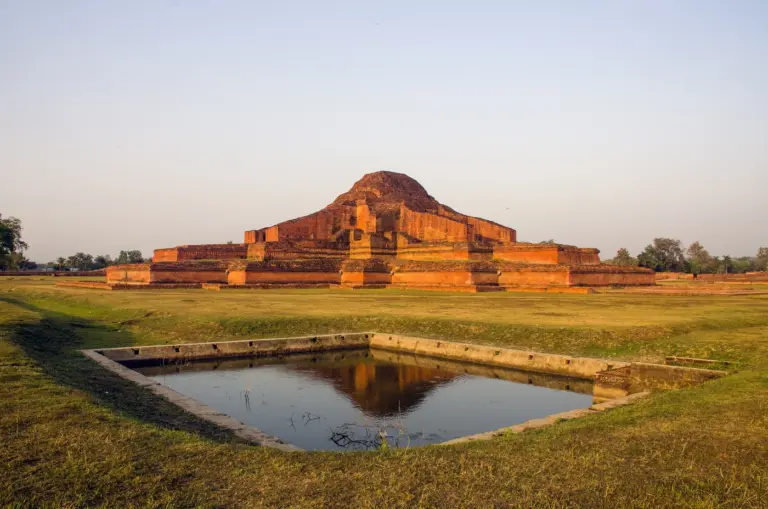
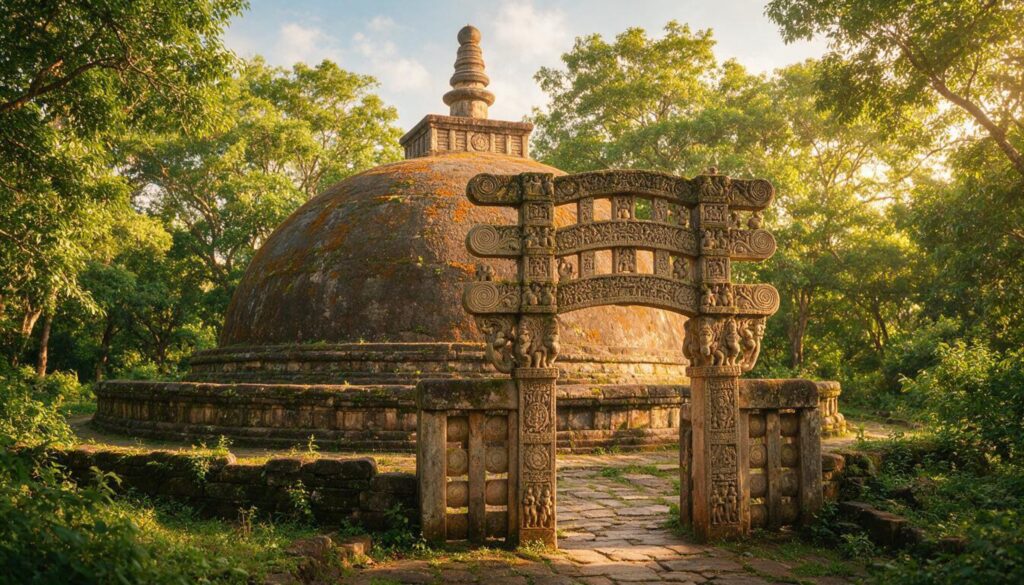
The Great Stupa, also called Stupa 1, is a solid hemispherical dome that was never meant to be entered. A stupa is a burial mound raised over relics, in this case relics associated with the Buddha, and the whole structure is a diagram of the Buddhist cosmos rather than a building with rooms. You walk around it, not into it.
Learn the anatomy once and you can label any stupa in the syllabus. The dome itself is the anda, literally “egg”, the womb-like mound that holds the relic casket. On top sits a square railing called the harmika, marking the sacred zone at the summit. Rising from the harmika is the yashti, a central mast or pillar, crowned by one or more chhatra, stone parasols stacked in tiers, the umbrella being an ancient Indian symbol of royalty and honour extended here to the Buddha.
Around the base runs a raised terrace, the medhi, reached by a staircase, and along it a circular processional path called the pradakshina patha. Devotees walk this path clockwise, keeping the dome on their right, an act of reverence built into the architecture. Enclosing everything is a stone railing, the vedika, pierced at the four cardinal directions by the gateways that made Sanchi famous, the toranas.
So the Great Stupa is really five ideas stacked together: a relic mound (anda), a sacred summit (harmika), a cosmic axis (yashti and chhatra), a ritual of circumambulation (medhi and pradakshina patha), and a boundary that turns the whole thing into a consecrated island (vedika and toranas). Every stupa you’ll study, from the ruined ones at Bharhut to the great one at Amaravati, is a variation on this grammar.
Who built Sanchi, and in what order
Four dynasties built Sanchi, and the exam almost always tests the sequence rather than any single date. Here’s the order that matters.
The original stupa was commissioned by the Mauryan emperor Ashoka in the 3rd century BCE, soon after the Kalinga war turned him toward Buddhism. His version was smaller and built of brick, roughly half the size of what stands today, and he raised it not in a major city but on a quiet hilltop near Vidisha in present-day Madhya Pradesh. There’s a human reason for the location that’s worth remembering: Ashoka’s first wife, Devi, came from a merchant family of Vidisha, and their children Mahendra and Sanghamitra, who later carried Buddhism to Sri Lanka, are traditionally linked to this region. Sanchi wasn’t chosen because the Buddha lived there. He never did. It was chosen because a devout local Buddhist community and Ashoka’s own family ties made it fertile ground.
Ashoka also planted one of his polished sandstone pillars here, and its fragments still lie at the site. If you’ve studied the Ashoka pillar and its Sarnath lion capital, you already know the Mauryan court style: a mirror-like “Mauryan polish” on the stone that no later Indian workshop quite reproduced.
Around the 2nd century BCE, under the Shunga dynasty that succeeded the Mauryas, the brick stupa was roughly doubled in size and cased in dressed stone. The Shungas added the raised terrace and its staircase, the upper processional path, the crowning umbrella structure, and the stone railings. This is the phase that gave the stupa its present bulk and its plain, dignified stone skin.
The carved gateways came last. The four toranas were erected and richly sculpted under the Satavahanas, most likely in the 1st century BCE to 1st century CE. An inscription on the southern gateway even records that it was the gift of an artisan working for a Satavahana king, a rare direct link between a monument and its patron. So when a question asks who was responsible for Sanchi, the honest answer is a chain: Ashoka raised the core, the Shungas enlarged and stone-clad it, and the Satavahanas gave it the sculpture. To place the Mauryan half of that story properly, it helps to have the Maurya empire and its administration clear in your head first.
| Phase | Dynasty | Rough date | What they added |
|---|---|---|---|
| 1 | Maurya (Ashoka) | 3rd century BCE | Original brick stupa, half the current size; Ashokan pillar |
| 2 | Shunga | 2nd century BCE | Doubled in size, stone casing, terrace, staircase, railings, umbrella |
| 3 | Satavahana | 1st century BCE to 1st century CE | The four carved toranas (gateways) |
| 4 | Gupta | 4th to 5th century CE | Temple 17, seated Buddha images, later shrines |
The four toranas and how to read them
The toranas are the reason Sanchi is on every art-history syllabus, and they reward close reading. Each gateway stands at one of the four cardinal points, and each is built the same way: two square pillars carrying three curved architraves, the horizontal beams stacked one above the other with small gaps, the ends often curling into scrolls. The whole surface, pillars and beams and the little figures between them, is carved almost without a blank inch.
What’s carved on them is a picture-book of Buddhism. You’ll find Jataka tales, the stories of the Buddha’s previous births, alongside scenes from his final life as Prince Siddhartha, and events from the spread of the faith such as Ashoka visiting the Bodhi tree. Recurring symbols tie it together: the lotus for purity, the elephant and the lion, tree-spirits called yakshis shown as sensuous bracket figures leaning out from the gateways, and processions of devotees.
The gateways aren’t interchangeable. Convention associates each with particular scenes, so it’s worth carrying a rough map: the northern torana, the best preserved, is crowded with Jataka scenes and crowned by a wheel; the eastern torana carries the famous Great Departure, the young prince leaving his palace, and one of the celebrated shalabhanjika (tree-goddess) brackets; the southern torana, the oldest of the four, shows the birth and Ashoka-related scenes; the western torana carries the seven Buddhas and further Jatakas. Don’t try to memorize every panel. Do fix the idea that the toranas are narrative art, meant to teach a largely non-literate lay public by showing, not telling.
This is a good moment to notice how Sanchi sits between the two great sculptural traditions you’ll compare elsewhere. The relief style here is flat, crowded, and story-driven, closer in spirit to the later Amaravati stupa than to the Greco-Roman modelling of Gandhara. When you revise the Gandhara, Mathura and Amaravati schools, slot Sanchi in as the early, symbol-based ancestor of that whole conversation.
Why there’s no Buddha figure at Sanchi
Here’s the point that trips up almost everyone. Walk around all four Sanchi gateways and you’ll see kings, merchants, animals, trees and spirits in abundance, but you will not find the Buddha shown as a man. That absence is deliberate, and it has a name: the aniconic phase of Buddhist art.
For the first few centuries after the Buddha’s death, artists chose not to depict him in human form at all. They felt his presence was too profound to reduce to a portrait, so they marked it with symbols instead. A pair of footprints stands for his physical presence. An empty throne or seat stands for his authority. The Bodhi tree stands for his enlightenment, the wheel (dharmachakra) for his first sermon, the stupa for his passing into final nirvana. A viewer in the 1st century BCE knew exactly which event each symbol pointed to, the way you know a crown means a king without needing the king drawn beside it.
So at Sanchi the “missing” Buddha is present everywhere, just never as a face. This is the single most important interpretive fact about the site, and it separates the early stupas from what came later. Only around the 1st century CE, in the workshops of Gandhara and Mathura, did the human Buddha image appear and quickly take over. If this idea is still slippery, the dedicated explainer on the empty seat in Buddhist iconography works through it symbol by symbol, and the broader story of Buddhism in India gives you the doctrinal reason the early community preferred it.
Why did the rule break? Partly it was the rise of Mahayana Buddhism, which encouraged devotion to the Buddha as a saviour figure worth picturing, and partly it was the demand of ordinary worshippers for an image to focus on. The shift is a clean before-and-after you can use in comparisons: symbol-based art at Sanchi and Bharhut in the aniconic centuries, then figure-based art from the 1st century CE onward. Sanchi’s value is that it captures the earlier moment so completely, on such a large and well-preserved monument, that you can practically read the entire aniconic vocabulary off its gateways in one visit.
What the Ashokan pillar at Sanchi tells you
Ashoka didn’t only raise the stupa at Sanchi. He also erected one of his polished sandstone pillars beside it, and the pillar carries a message that’s easy to overlook and often tested. Its capital was a set of four addorsed lions, close kin to the celebrated Sarnath lion capital that India adopted as its state emblem, though the Sanchi lions are damaged and displayed in the local museum today.
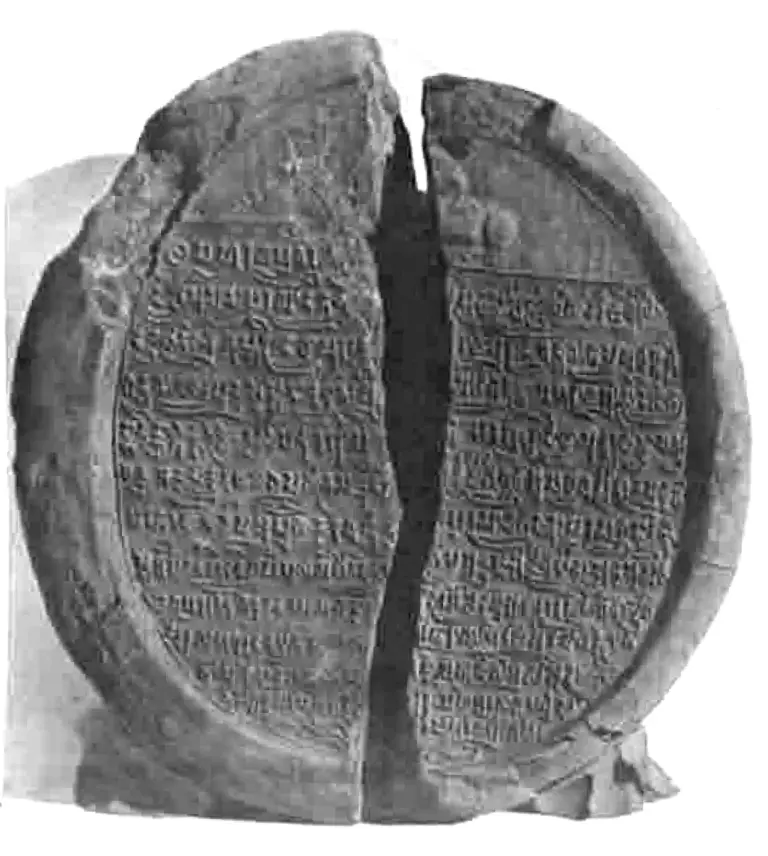
More important is what the pillar’s shaft says. It’s inscribed with a version of the Schism Edict, in which Ashoka warns monks and nuns against creating divisions within the sangha, the monastic community, on pain of expulsion. That single fact ties Sanchi into a much larger story. Ashoka was patron of the Third Buddhist Council, held at Pataliputra to purge the order of disputes and heresies, and the Schism Edict is that concern set in stone. So the pillar isn’t decoration. It’s evidence of an emperor actively policing the unity of the faith he had adopted, and it links the site directly to the Buddhist councils that shaped early Buddhism. When you revise Ashoka’s edicts, remember that Sanchi holds a minor one, and that it’s about discipline rather than dharma in the abstract.
The pillar also shows off the technical signature of the Mauryan workshops: the extraordinary Mauryan polish, a lustrous, almost glassy finish on hard sandstone that later Indian stone-carvers never matched. Feel free to use Sanchi’s pillar fragment as a second example, after the Sarnath capital, when you’re asked to characterize Mauryan art and architecture and its court-sponsored, imperial style.
Sanchi is more than Stupa 1
The Great Stupa gets the attention, but Sanchi hill holds a small city of Buddhist building spanning over a thousand years, and questions sometimes probe the lesser monuments.
Stupa 2 sits lower on the hillside and matters for its railing, carved with early medallions of flowers, animals and riders that predate the Great Stupa’s gateways. Stupa 3, close to the Great Stupa, is important for a different reason: it held the relics of Sariputta and Mahamoggallana, two of the Buddha’s chief disciples. That relic association is why Sanchi drew pilgrims for centuries.
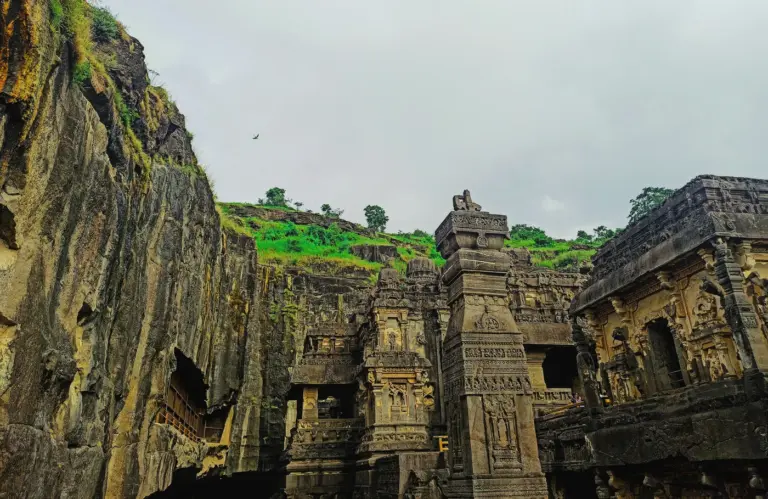
The site also preserves the remains of Ashoka’s pillar with its lion capital, the ruins of apsidal prayer halls called chaityas, and the monastic cells (viharas) where monks lived. Temple 17, from the Gupta period (roughly 5th century CE), is the quiet star for architecture students. It’s a small, flat-roofed shrine with a pillared porch, and it’s often cited as one of the earliest surviving free-standing structural temples in India, an ancestor of the great stone temples you study under temple architecture in India. The Guptas also added seated Buddha images facing the Great Stupa’s four gateways, so by then the aniconic rule had been quietly abandoned even here.
How Sanchi was lost and found again
Sanchi survived because it was forgotten. After Buddhism declined in India, the hill was abandoned and overgrown for centuries, which spared it the reuse and demolition that erased so many other sites.
A British officer, General Taylor, is credited with drawing European attention to the ruins in 1818. What followed was a rough century. Amateur treasure-hunters and freelance archaeologists dug into the stupas looking for relics, cracked open the domes, and toppled a gateway. Alexander Cunningham, later the first head of the Archaeological Survey of India, and Captain Maisey documented and excavated the site in the 1850s, but casual damage continued.
The rescue came under Sir John Marshall, Director-General of the ASI, who ran a careful conservation and restoration between roughly 1912 and 1919. Marshall’s team reset fallen railings, re-erected the fallen gateway, cleared and stabilized the monuments, and built the small museum that still stands. His restoration is the reason you can see the toranas standing today rather than as a heap of carved blocks. It’s a useful reminder that a lot of what we call “ancient” survives because of early-20th-century conservation choices, not because the stone simply endured.
In 1989, the Buddhist Monuments at Sanchi were inscribed on the UNESCO World Heritage List, one of India’s cultural sites recognized for outstanding universal value. If you’re building the fuller list, the roundup of UNESCO World Heritage Sites in India places Sanchi among the country’s inscribed monuments.
How to study Sanchi for the exam
Sanchi is high-yield because it connects to so much else, so study it as a hub, not an island.
Fix the four-dynasty sequence first, because that single chain answers most factual questions: Maurya core, Shunga enlargement, Satavahana gateways, Gupta shrines. Memorize the stupa anatomy vocabulary next, since terms like anda, harmika, yashti, chhatra, medhi, pradakshina patha, vedika and torana recur across every stupa on the syllabus and often appear as match-the-following pairs. Third, lock in the aniconic principle and its five main symbols, because that concept links Sanchi to Bharhut, to the Kalinga war and Ashoka’s conversion that started it all, and to the later shift toward the Buddha image. Finally, keep one line each on Sanchi’s context: it’s near Vidisha, it has no direct link to the Buddha’s life, and its survival owes to John Marshall.
For sourcing, treat the Archaeological Survey of India and UNESCO as your anchors and use standard NCERT and art-and-culture texts for the framework. Don’t over-invest in memorizing individual panels. The concepts, the sequence and the vocabulary carry far more marks than knowing which Jataka sits on which architrave.
Frequently Asked Questions
Who built the Sanchi Stupa?
No single ruler. The Mauryan emperor Ashoka commissioned the original brick stupa in the 3rd century BCE. The Shunga dynasty enlarged it and cased it in stone in the 2nd century BCE, and the Satavahanas added the four carved gateways around the 1st century BCE to 1st century CE. The Guptas later added temples and Buddha images.
Why is there no image of the Buddha at Sanchi?
Because it belongs to the aniconic phase of Buddhist art. Early Buddhists represented the Buddha only through symbols such as footprints, an empty throne, the Bodhi tree, the wheel and the stupa, never as a human figure. The human Buddha image appeared later, from about the 1st century CE, in Gandhara and Mathura.
What are the toranas at Sanchi?
The toranas are the four ornamental gateways set at the cardinal points of the Great Stupa’s railing. Each has two pillars carrying three curved architraves, densely carved with Jataka tales, scenes from the Buddha’s life, and symbols. They were built under the Satavahanas and are prized as early Indian stone sculpture.
What does the word stupa mean, and what are its main parts?
A stupa is a mound raised over relics. Its core parts are the anda (the hemispherical dome), the harmika (the square railing at the top), the yashti (central mast) crowned by chhatra (stone umbrellas), the medhi (raised terrace), the pradakshina patha (circumambulation path), and the vedika (surrounding railing) with its toranas.
Where is Sanchi located?
Sanchi is a hilltop site in Raisen district of Madhya Pradesh, near the town of Vidisha and about 45 kilometres from Bhopal. The Buddha never visited it; Ashoka’s family ties to Vidisha and a strong local Buddhist community explain the choice of site.
When was Sanchi made a UNESCO World Heritage Site?
The Buddhist Monuments at Sanchi were inscribed on the UNESCO World Heritage List in 1989.
Who rediscovered and restored Sanchi?
General Taylor drew attention to the ruins in 1818, and Alexander Cunningham documented them in the 1850s. The major conservation was carried out by Sir John Marshall of the Archaeological Survey of India between about 1912 and 1919, who re-erected the fallen gateway and built the site museum.
Practice Questions
1. The four toranas of the Great Stupa at Sanchi were built under which dynasty?
a) Maurya
b) Shunga
c) Satavahana
d) Gupta
Answer: c) Satavahana
2. In the context of the Sanchi Stupa, the term anda refers to:
a) the surrounding stone railing
b) the hemispherical dome over the relics
c) the crowning umbrella
d) the circumambulation path
Answer: b) the hemispherical dome over the relics
3. Which of the following best describes the aniconic phase reflected at Sanchi?
a) the Buddha shown only in meditation posture
b) the Buddha represented through symbols rather than in human form
c) images of the Buddha made only of stucco
d) the exclusive use of the standing Buddha image
Answer: b) the Buddha represented through symbols rather than in human form
4. Consider the following about the Great Stupa at Sanchi:
- Its original core was built of brick under Ashoka.
- It was enlarged and cased in stone under the Shungas.
- The Buddha spent his final years at Sanchi.
Which are correct?
a) 1 and 2 only
b) 2 and 3 only
c) 1 and 3 only
d) 1, 2 and 3
Answer: a) 1 and 2 only
5. Temple 17 at Sanchi is significant mainly because it is:
a) the largest stupa on the hill
b) one of the earliest free-standing structural temples in India, from the Gupta period
c) an Ashokan rock-cut cave
d) a Satavahana rest-house for pilgrims
Answer: b) one of the earliest free-standing structural temples in India, from the Gupta period
Mains-style questions
- “Sanchi is not a single monument but a record of changing Buddhist patronage.” Examine this statement with reference to the Mauryan, Shunga, Satavahana and Gupta phases of the site.
- Explain the aniconic representation of the Buddha in early Indian art, using the sculpture of Sanchi to illustrate your answer.
- Describe the architectural elements of a typical stupa and discuss how the Great Stupa at Sanchi exemplifies them.
- The toranas of Sanchi have been called a “sculptural encyclopedia” of early Buddhism. Discuss the themes and significance of their reliefs.
- Assess the role of colonial-era discovery and twentieth-century conservation in shaping our present understanding of monuments like Sanchi.
Study Sanchi as the pivot it is, and a large slice of ancient art and culture falls into place around it: the Mauryan pillar tradition on one side, the Amaravati and Gandhara schools on the other, the aniconic-to-iconic shift running through the middle, and the birth of structural temple architecture at the far end. The stone hasn’t moved in two thousand years, but the ideas carved into it are still the most efficient way into a whole era.
Tell Google you want more of this.
Add Anantam IAS as a preferred sourceOne tap, and this site shows up more often in your own Top Stories, AI Overviews and AI Mode. Remove it any time.