Lepakshi का Veerabhadra Temple एक party trick के लिए famous है: stone pillar ज़मीन से थोड़ा ऊपर लटका है और guides उसके नीचे paper या cloth की strip निकाल देते हैं। ज़्यादातर लोग यही image लेकर लौटते हैं और temple के साथ नाइंसाफ़ी करते हैं। Pillar को एक पल के लिए भूल जाएँ, तो Lepakshi पूरे India में sixteenth-century Vijayanagara art के सबसे complete examples में है। Ceiling पर painted murals हैं, room जितना बड़ा monolithic bull है और एक boulder से काटा गया serpent linga के ऊपर coiled है। Hanging pillar hook है। Temple को सच में जानने की वजह यह है कि यह Vijayanagara building के आख़िरी महान phase का लगभग intact snapshot है, जो उस world के नष्ट होने से ठीक पहले बनाया गया था।
Temple क्या है और कहाँ है
Short answer: Lepakshi Andhra Pradesh का sixteenth-century Hindu temple है, जो Veerabhadra को dedicated है और Vijayanagara Empire के peak पर बनाया गया था। यह Andhra Pradesh के Anantapur region के Lepakshi village में है, जो अब Sri Sathya Sai district का हिस्सा है। Karnataka border के पास और Bengaluru से थोड़ी drive पर है।
Presiding deity Veerabhadra, Shiva का fierce warrior form है। Myth के अनुसार Shiva ने इसे अपने rage से बनाया, जब उनकी consort Sati ने पिता Daksha के sacrifice में खुद को जला लिया। Veerabhadra ने वहाँ पहुँचकर yagna destroy किया। इसलिए यह gentle, benedictory Shiva temple नहीं है। यह Shiva के सबसे terrifying aspect को dedicated है। इसी वजह से inside की largest painting में serene god नहीं, weapons लिए towering figure दिखती है।
Temple 1530s CE के आसपास, आम तौर पर करीब 1538 में, Achyuta Deva Raya के reign के दौरान बनाया गया। वे famous Krishnadevaraya के successor थे। Patrons दो brothers Virupanna और Viranna थे, जो empire के local governors और treasury officials थे। समय को ऐसे रखें: empire की catastrophic defeat से करीब एक generation पहले। यह late-imperial Vijayanagara art है, confident और mature, जिसे बनाने वाले state को नहीं मालूम था कि उसका clock चल रहा है। अगर आपने Vijayanagara Empire को political story की तरह पढ़ा है, तो यह temple उसकी wealth का ground-level evidence है।
Tortoise पर बना temple: Kurma Saila plan
एक detail bland site note को यादगार बना देती है। Temple low granite hill पर और उसके भीतर बना है, जिसका shape tortoise जैसा है। इसे Kurma Saila या Kurma Sailam कहते हैं। Rock खुद design का हिस्सा है। Walls और shrines levelled platform पर बैठने के बजाय living granite से सीधे बाहर निकलते हैं।
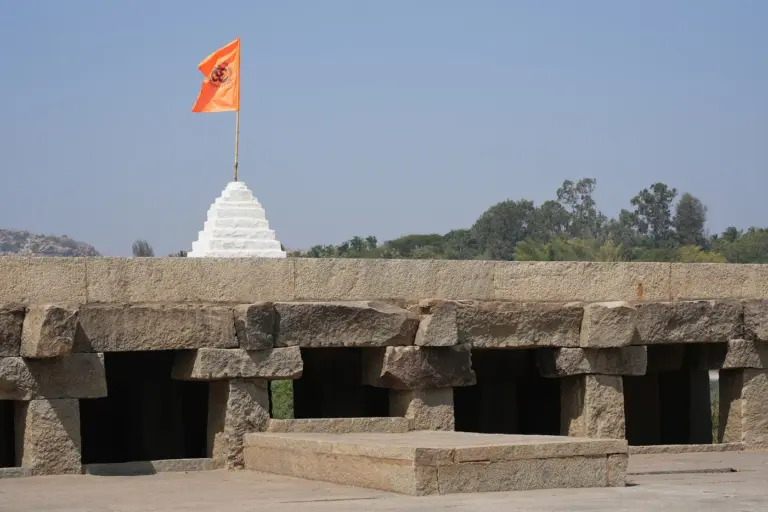
यह दो reasons से important है। First, इससे place की engineering personality समझ आती है। Bedrock से partly carved temple flat ground पर assembled temple से अलग behave करता है। Famous hanging pillar को भी इसी rock-anchored structure पर builders के game की तरह देखना चाहिए। Second, tortoise accidental symbolism नहीं है। Hindu cosmology में tortoise, Kurma, Vishnu का वह form है जो world को support करता है। इसलिए tortoise-shaped rock पर बना Shiva temple shrine की stability और cosmic weight का quiet statement है। Layout standard South Indian sequence follow करता है: Dravidian temple architecture की तरह outer assembly और dance hall, inner hall और sanctum, पूरा complex pillared court से enclosed है।
Hanging pillar को mysticism के बिना समझिए
Lepakshi पर सबसे ज़्यादा पूछा जाने वाला सवाल यह है कि hanging pillar सच में है या नहीं। Honest answer है: हाँ, लेकिन यह engineering है, magic नहीं। बड़े pillared hall, यानी natya mandapa, में करीब 70 carved granite pillars हैं। उनमें से एक floor पर पूरी तरह rest नहीं करता। उसके base पर narrow gap है और visitors thin cloth, sheet of paper या stick को एक side से दूसरी side के नीचे निकालते रहते हैं।
Usual explanation यह है कि pillar ऊपर से लगभग suspended है। इसका load beam और ceiling structure से carry होता है जिसमें यह locked है, ground पर press नहीं होता। इसलिए base floor से थोड़ा clear रहता है। यह builders की stress और balance पर command का deliberate demonstration है, जैसा showpiece कोई confident guild अपनी skill prove करने के लिए बनाए। Colonial period की एक popular story है कि British engineer ने secret जानने के लिए pillar को dislodge करने की कोशिश की। इससे pillar थोड़ा shift हुआ और उसके ऊपर ceiling frescoes की arrangement disturb हुई। फिर उसे छोड़ दिया गया। Anecdote की हर detail exact हो या न हो, student के लिए point साफ़ है: hanging pillar extraordinary structural skill का evidence है, miracle नहीं।
Ceiling: peak Vijayanagara mural painting
ऊपर देखिए और Lepakshi वह चीज़ देती है जो लगभग कोई दूसरा Vijayanagara temple नहीं दे पाता। Halls की ceilings fresco murals से covered हैं। Rich natural, vegetable और mineral dyes से painted ये murals Vijayanagara school of painting के सबसे well-preserved examples में हैं। यह genuinely rare है। Paint fragile होती है और medieval Indian temples के अधिकांश murals खत्म हो चुके हैं। Lepakshi की ceiling बची है।
Murals strong outlines और flat warm colours, ochres, reds, blacks और earthy greens में हैं। Figures mostly profile में हैं और sixteenth-century Vijayanagara court के elaborate costumes, textiles तथा headgear पहनते हैं। Subjects Shaiva legends और epic scenes से आते हैं: Shiva के life के episodes, Shiva और Parvati का marriage, Mahabharata और Ramayana के scenes और patrons Virupanna तथा उनके family का deity की ओर आता long procession panel। Centrepiece assembly hall की ceiling है, जिस पर colossal Veerabhadra image है। इसे India के largest single-figure murals में से एक कहा जाता है और यह कई metres across है। Indian temple art को केवल carved stone की तरह जानने वालों के लिए यह painted dimension revelation है। Art historians Lepakshi को इतना high rate करते हैं, इसकी यही वजह है।
Monolithic Nandi और Nagalinga
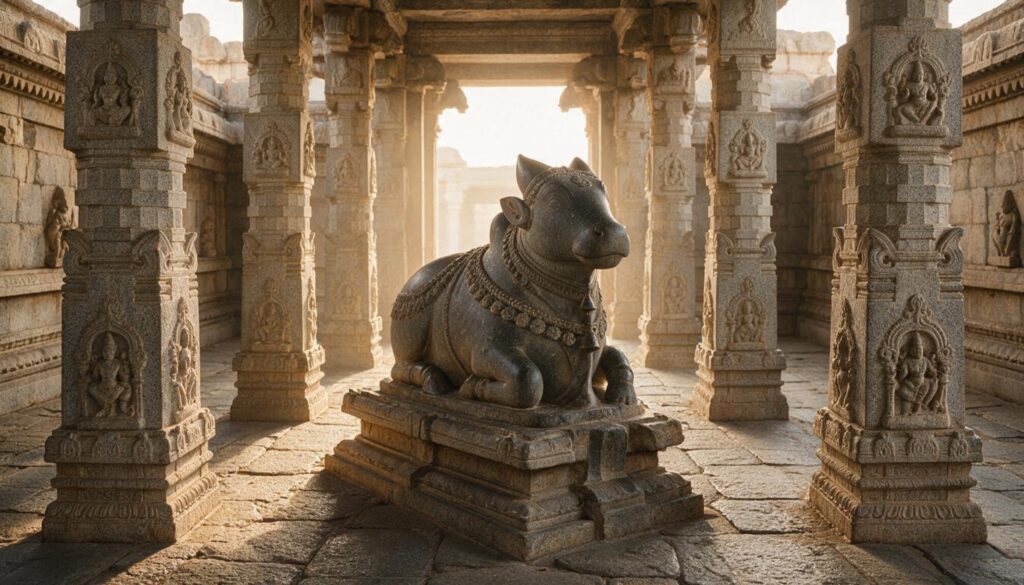
Temple से थोड़ा दूर approach road के पास Nandi बैठा है, Shiva का bull mount, जिसे granite के single block से carve किया गया है। यह huge है, roughly 4.5 metres high और करीब 8 metres long। इसे India की largest monolithic Nandi sculptures में गिना जाता है। Size से आगे इसकी finish important है। Sculptors ने bells, garlands और harness details वाला fully ornamented bull एक boulder से निकाला और उसे temple की ओर face कराया।
Complex के भीतर इसका companion piece Nagalinga है। यह giant seven-hooded serpent या Naga है जो Shiva linga के ऊपर protectively उठकर coiled है। इसे भी single stone से carve किया गया है। Local tradition कहती है कि sculptors ने meal तैयार होने का wait करते हुए इसे remarkably short time में काट दिया। यह folklore है, लेकिन craftsmen की astonishing speed और command को capture करता है। Nandi और Nagalinga को linked pair माना जाता है: bull serpent-guarded linga की ओर देखता है। Together वे Vijayanagara monolithic carving को उसकी full stretch पर दिखाते हैं, वही ambition जिसने Hampi के great stone monuments बनाए।
Unfinished hall और blinded eyes की legend
Lepakshi का सबसे human हिस्सा वह चीज़ है जो कभी finish नहीं हुई। यहाँ अधूरा Kalyana Mandapa है। यह Shiva और Parvati के divine wedding के लिए बनाया जा रहा marriage hall था। Pillars gods, sages और musicians से richly carved हैं, लेकिन काम अचानक रुक गया, जैसे workers ने strike के बीच tools नीचे रख दिए हों।
Temple का नाम दो legends से जुड़ा है। दोनों बार-बार सुनाई देती हैं, हालांकि documented history नहीं, traditional stories हैं। पहली Ramayana connection है। Wounded bird Jatayu Sita को बचाने की कोशिश में Ravana से घायल होकर यहाँ गिरा था। Rama जब dying bird के पास आए, तो उन्होंने “Le Pakshi”, Telugu में “rise, O bird”, कहा। इसी से Lepakshi नाम निकलने की बात कही जाती है। दूसरी legend unfinished hall बताती है। Builder Virupanna, Achyuta Deva Raya के treasury official, ने king की अनुपस्थिति में temple complete करने के लिए royal treasury से बहुत खर्च किया। उन पर state funds के misuse का आरोप लगा और blinded होने की सज़ा मिली। आदेश सुनते ही उन्होंने temple wall पर अपनी आँखें मारकर खुद को blind कर लिया। Kalyana Mandapa के पास आज भी दो dark stain marks दिखाए जाते हैं। इस reading में Lepakshi, “Lepa-akshi”, यानी blinded eye का village, से निकला है और patron के चले जाने से hall unfinished रह गया। इन्हें temple की living legends की तरह रखिए, settled fact की तरह नहीं।
बाकी sculptural programme
Famous features सारी attention ले जाती हैं, लेकिन Lepakshi देखने वाले को और देखते रहने पर reward करती है। कुछ lesser-known works answer में ले जाने लायक हैं क्योंकि वे site की range दिखाते हैं। Main hall के pillars पर dance postures में figures, musicians और mid-movement frozen celestial dancers की remarkable series है। Scholars इसे classical South Indian dance के richer sculptural records में गिनते हैं। यह idle decoration नहीं है। यह poses और instruments का stone catalogue है, जिससे art historians समझ सकते हैं कि sixteenth-century temple dance और music वास्तव में कैसी दिखती थी।
Natural rock के against carved बड़ी Ganesha image, विशाल Hanuman sculpture और temple के बाहर granite में बना much-photographed footprint भी है। Footprint हमेशा moist रहता है और Sita या goddess का footprint मानकर venerate किया जाता है। Rationalists rock में hidden seep की ओर point करते हैं। Devotees divine देखते हैं। दोनों तरह से यह दिखाता है कि temple का meaning carved stone जितना, layered story से भी बनता है। Jatayu और Virupanna legends यही lesson देती हैं।
पूरे programme को दो चीज़ें जोड़ती हैं। First, material discipline। यहाँ लगभग सब कुछ granite है, जो carve करने के लिए unforgiving stone है। फिर भी sculptors ने इसे soft stone की तरह handle किया, lace-fine pillar reliefs से लेकर single-block Nandi तक। Second, completeness। Most Vijayanagara sites हमें fragments में मिलती हैं। ऐसा temple जिसमें murals, monoliths, dance panels और उनसे जुड़ी legends सब बची हों, unusually whole है। इसी wholeness से Lepakshi teaching site बनती है, जहाँ पूरा sixteenth-century religious complex एक साथ काम करता दिखता है, ruins से guess नहीं करना पड़ता।
Lepakshi Vijayanagara story में कहाँ बैठता है
Answer में Lepakshi का अच्छा इस्तेमाल करने के लिए इसे empire के arc के भीतर रखें। Stray marvel की तरह नहीं। Vijayanagara temple building capital Hampi में Virupaksha temple at Hampi जैसी structures के जरिए mature हुई। इनमें towering gateway pyramids, ornate pillared halls, rearing horse और yali pillars और अलग marriage तथा swing pavilions हैं। Lepakshi उसी idiom में बना provincial masterpiece है, थोड़ा later और crucially paintings के साथ intact।
यही last point temple को इतना important बनाता है। 1565 CE में Battle of Talikota में Deccan sultanates के coalition ने Vijayanagara army को crush किया। Capital Hampi sack हुई और largely abandoned हो गई। Centre में empire ने जो बनाया था, उसका बहुत कुछ आज roofless stone है। South-east के village में मौजूद Lepakshi उस destruction से बची। इसी वजह से इसके fragile ceiling murals बच गए, जबकि Hampi के नहीं। Temple केवल beautiful नहीं, survivor भी है। यह उस colour और painted decoration की window है जो ruined capital ने खो दी। इसे Vijayanagara Empire की political timeline के साथ रखेंगे, तो curiosity नहीं, evidence बनेगी।
| Lepakshi की feature | क्या याद रखें |
|---|---|
| Deity | Veerabhadra, Shiva का fierce warrior form |
| Period और dynasty | c. 1530s CE, Vijayanagara Empire, Achyuta Deva Raya के under |
| Patrons | Brothers Virupanna और Viranna |
| Built on | Kurma Saila, tortoise-shaped granite hill |
| Signature features | Hanging pillar, ceiling murals, monolithic Nandi, Nagalinga |
| Location | Lepakshi, Anantapur region (Sri Sathya Sai district), Andhra Pradesh |
Exam के लिए Lepakshi को कैसे पढ़ें
Lepakshi को trivia bundle की तरह मत रटिए। हर headline feature को बड़े idea से जोड़िए, ताकि answer में उसकी जगह बने।
Anchor sentence से शुरू करें: Lepakshi Andhra Pradesh में Veerabhadra को dedicated sixteenth-century Vijayanagara temple है, जो hanging pillar, ceiling murals और giant monolithic Nandi के लिए famous है। यह cleanly कह सकते हैं, तो core तैयार है। फिर “why it matters” line जोड़ें: Hampi 1565 में destroy हुई, इसलिए Lepakshi Vijayanagara painting के best surviving showcases में है, जो capital का ruined stone temple नहीं दे सकता। यह single contrast dozen loose facts से ज़्यादा valuable है।
चार features ready रखें और हर एक की one-line significance भी: hanging pillar structural mastery का evidence; ceiling frescoes finest surviving Vijayanagara murals; monolithic Nandi और Nagalinga single-stone carving के peaks; और unfinished Kalyana Mandapa तथा Virupanna legend temple की human story। Fact और folklore को साफ़ अलग रखें। Dating और dynasty history हैं। Jatayu और blinding stories tradition हैं। यही discipline serious answer और coaching handout का फर्क है।
अंत में cross-file करें। Lepakshi को Vijayanagara art के तहत Hampi के साथ group करें। फिर इसे Khajuraho temples की Nagara world और Brihadisvara temple at Thanjavur की Dravida grandeur से ऊपर की ओर contrast करें। उसी region में Vijayanagara से पहले आए Hoysala temples से sideways तुलना करें। Standard temple architecture in India scheme में slot करें। तब pressure में तुरंत इसे जगह दे पाएँगे। इस web में बैठने के बाद Lepakshi एक और temple cram करने वाली चीज़ नहीं, empire का painted और surviving face है।
सामान्य प्रश्न
Lepakshi का Veerabhadra Temple कहाँ है?
यह Andhra Pradesh के Anantapur region के Lepakshi village में है। अब यह Sri Sathya Sai district का हिस्सा है। Karnataka border के पास और Bengaluru से आसानी से पहुँचा जा सकता है।
Lepakshi temple किसने और कब बनाया?
यह 1530s CE के आसपास, आम तौर पर करीब 1538 में, Achyuta Deva Raya के समय Vijayanagara Empire में बनाया गया। इसके patrons empire के treasury officials brothers Virupanna और Viranna थे।
Lepakshi का hanging pillar कैसे काम करता है?
Main hall के करीब 70 granite pillars में से एक floor पर पूरी तरह rest नहीं करता। उसके base के नीचे thin cloth या paper निकाली जा सकती है। इसे engineering feat माना जाता है, जिसमें pillar का load ऊपर के ceiling और beams carry करते हैं, ground पर press नहीं होता। यह supernatural phenomenon नहीं है।
Art history के लिए Lepakshi temple important क्यों है?
इसके ceilings पर India के best-preserved Vijayanagara-era murals हैं, जो natural dyes से painted हैं। इनमें Veerabhadra की giant image भी है। 1565 में Hampi destroy हो जाने के कारण Lepakshi Vijayanagara painting की finest surviving windows में है।
Lepakshi Nandi की खास बात क्या है?
यह single granite block से बना colossal Nandi bull है, करीब 4.5 metres high और लगभग 8 metres long। इसे India की largest monolithic Nandi sculptures में माना जाता है और यह थोड़ी दूरी से temple की ओर face करता है।
Lepakshi नाम के पीछे कौन-सी legend है?
दो traditions हैं। एक में Ramayana के अनुसार Rama ने dying bird Jatayu से यहाँ “Le Pakshi” (rise, O bird) कहा। दूसरी में royal funds के misuse के आरोप के बाद builder Virupanna ने यहीं खुद को blind कर लिया, जिससे “Lepa-akshi”, यानी blinded eye का village, नाम निकला। दोनों legends हैं, documented history नहीं।
क्या Lepakshi temple Ramayana से जुड़ा है?
केवल Jatayu legend के जरिए। इसमें कहा जाता है कि Ravana से घायल होने के बाद bird यहाँ गिरा था। यह devotional tradition है, historical record नहीं, हालांकि temple की identity और name में इसकी central जगह है।
अभ्यास प्रश्न
1. Lepakshi का Veerabhadra Temple किस empire के दौरान बना?
a) Chola Empire
b) Hoysala Empire
c) Vijayanagara Empire
d) Kakatiya Empire
उत्तर: c) Vijayanagara Empire
2. Lepakshi temple की presiding deity Veerabhadra किसका form है?
a) Vishnu
b) Shiva
c) Brahma
d) Kartikeya
उत्तर: b) Shiva
3. Lepakshi temple जिस granite hill पर बना है, वह किस animal के आकार की है और इसी से Kurma Saila नाम मिला?
a) Elephant
b) Lion
c) Tortoise
d) Serpent
उत्तर: c) Tortoise
4. Lepakshi temple की distinctive feature कौन-सी है?
a) Floor से ऊपर clear करता hanging pillar
b) India का tallest temple tower
c) Lotus-shaped stepwell
d) Rock-cut cave sanctuary
उत्तर: a) Floor से ऊपर clear करता hanging pillar
5. Lepakshi की ceiling paintings historically valuable क्यों हैं?
a) वे India की oldest cave paintings हैं
b) वे best surviving Vijayanagara murals में हैं, जबकि Hampi के murals largely खो गए
c) उन्हें colonial-era British artist ने paint किया
d) वे केवल Buddhist themes दिखाती हैं
उत्तर: b) वे best surviving Vijayanagara murals में हैं, जबकि Hampi के murals largely खो गए
Mains-style questions
- “Lepakshi Vijayanagara art का provincial masterpiece है, जो वहाँ बचा है जहाँ capital के monuments नहीं बचे।” इसकी architecture और paintings के संदर्भ में चर्चा कीजिए।
- Vijayanagara-period painting के study के लिए Veerabhadra Temple, Lepakshi के ceiling murals का significance समझाइए।
- Lepakshi temple से जुड़ी historical और legendary elements में अंतर कीजिए। Heritage sites को समझने में दोनों क्यों matter करते हैं, comment कीजिए।
- Early sixteenth century में Lepakshi temple Vijayanagara Empire की wealth, artistic maturity और religious priorities को कैसे reflect करता है?
- “Lepakshi का hanging pillar miracle के बजाय engineering की तरह पढ़ना बेहतर है।” Vijayanagara builders की technical skill के लिए temple को illustration बनाकर comment कीजिए।
Lepakshi उस reader को reward करती है जो trick pillar पर रुकता नहीं। इसे Vijayanagara का surviving और painted face मानिए: tortoise-shaped rock में carved temple, empire के colours से roofed complex और single stone से cut bull इसका हिस्सा हैं। तब यह curiosity से कहीं अधिक बन जाता है। यह empire के peak पर उसकी क्षमता का hard evidence है और इसलिए और precious है कि उस world की बहुत कम चीज़ें intact बचीं। Hampi और 1565 catastrophe के साथ इसे पढ़िए, fact-versus-legend line साफ़ रखिए। तब Lepakshi पूरे art and culture syllabus की सबसे vivid और usable entries में से एक बन जाएगी।