You have seen the letters KVIC on a khadi kurta’s tag, in a Budget speech about rural jobs, and next to the phrase “Prime Minister’s Employment Generation Programme” in the news, and you have probably never been told what the body actually is or why a fabric has a government commission of its own. Here is the plain answer. KVIC stands for the Khadi and Village Industries Commission, and it is the statutory body that promotes khadi and a whole family of village industries so that rural Indians can earn without leaving their villages. It is not a ministry, it is not a cooperative, and it is not just a clothing brand. It is a commission created by an Act of Parliament to build employment at the bottom of the economy.
The confusion is worth clearing early, because KVIC sits at a junction the syllabus usually treats as three separate things: Gandhian economics and the swadeshi story, the modern architecture of small and rural industry, and the government’s biggest self-employment scheme. Once you see that one body threads all three, a cluster of otherwise scattered facts starts to hang together.
What is the KVIC, in one clean sentence?
KVIC is the statutory body that plans, promotes, and helps finance khadi and village industries for rural employment and self-reliance. That single sentence carries three load-bearing ideas, so unpack it slowly.
It is statutory, meaning it was created by a specific law, not by an executive order or a cabinet decision that could be reversed by a memo. That law is the Khadi and Village Industries Commission Act, 1956, and the Commission began functioning in 1957. Because a statute stands behind it, KVIC has legal standing, a defined mandate, and the power to hold funds and run schemes in its own name.
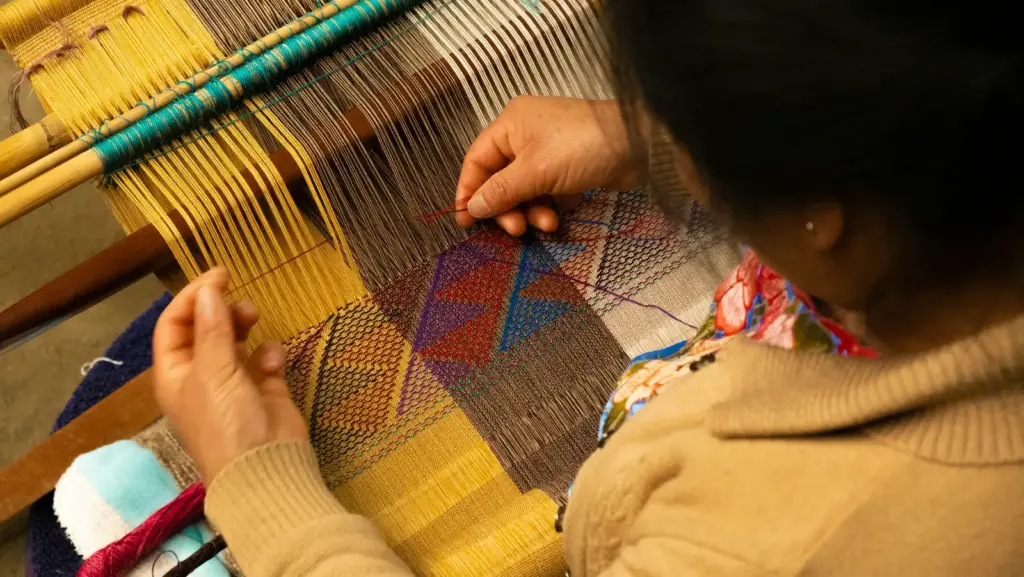
It works on khadi and village industries, and those are two distinct baskets. Khadi is hand-spun and hand-woven natural-fibre cloth, cotton, silk, or wool, made without power at the spinning stage. Village industries are a much wider set of rural, low-capital activities, and the Act draws the line by investment per artisan rather than by trade name. Honey, hand-made paper, pottery, leather, gur and khandsari, village oil, soap, and agarbatti all sit inside the village-industries basket.
It exists for rural employment and self-reliance. This is the part people miss. KVIC’s product is not really cloth or honey. Its product is a livelihood that lets a person earn in their own village instead of migrating to a city slum for work. Read every scheme it runs through that lens and the institution makes sense.
Where KVIC comes from: the Gandhian thread made official
KVIC did not begin the khadi movement, it inherited it, and knowing that inheritance answers half the questions the topic throws up. Khadi as a political and economic idea belongs to Mahatma Gandhi, who turned the charkha, the spinning wheel, into both a tool of village self-reliance and a symbol of the freedom struggle. The organised body Gandhi built for it was the All India Spinners’ Association, set up in 1925 under the Congress.
After independence, the government took the movement into its own machinery. It first created the All India Khadi and Village Industries Board in 1953 as a non-statutory body, then decided the work needed the permanence and powers only a statute can give. So Parliament passed the KVIC Act, 1956, and the Board became the Commission. The lineage runs cleanly from a freedom-struggle association to a departmental board to a statutory commission, and each step traded some of the movement’s romance for more administrative muscle.
| Year | Body | Nature |
|---|---|---|
| 1925 | All India Spinners’ Association | Gandhian, under the Congress |
| 1953 | All India Khadi and Village Industries Board | Non-statutory government board |
| 1956–57 | Khadi and Village Industries Commission (KVIC) | Statutory body under the KVIC Act, 1956 |
That table is worth holding, because examiners like the trap of asking which body came when, and the neat progression, association to board to commission, is the answer to most of those variants.
Who runs the KVIC, and under whom?
KVIC functions under the Ministry of Micro, Small and Medium Enterprises (MSME), with its headquarters in Mumbai. That placement is not a detail to skip, it is the single fact that connects this topic to the modern economy syllabus. Khadi is Gandhian in origin, but administratively it lives inside the same ministry that runs the country’s small-enterprise ecosystem, so KVIC is best understood as the rural, artisan-heavy wing of the broader push you study under the Micro, Small and Medium Enterprises (MSME) sector.
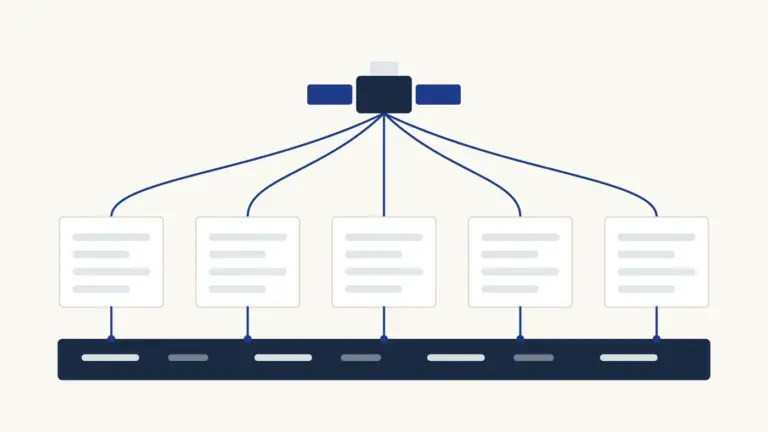
The Commission is a body of a Chairman and up to a set number of members appointed by the central government, supported by a full-time chief executive and a field structure that reaches down through state khadi and village industries boards, registered institutions, and cooperative societies. So the money and policy sit at the Commission in Mumbai, and the actual spinning, weaving, and production sit with thousands of institutions and lakhs of artisans across the country. KVIC is the apex planner and financier, not the workshop floor.
Two lines of the Act’s mandate are worth memorising because every function flows from them. KVIC is charged with planning, promotion, organisation, and implementation of programmes for developing khadi and village industries, and with building up a reserve of raw materials, supplying tools and equipment, and helping market the products. Plan it, fund it, train for it, and sell it: that is the whole job description.
What does the KVIC actually do? Its core functions
KVIC does four things, and almost every scheme or announcement it makes falls under one of them. The skill is to sort a news item into the right bucket rather than memorising a list.
First, it plans and promotes. KVIC frames the programmes, sets targets for production and employment, and coordinates the state boards and institutions that carry the work out. It is the body that decides where a new cluster of artisans should be built and what support they need.
Second, it finances and supplies inputs. KVIC channels government funds as grants, subsidies, and loans to khadi institutions and artisans, and it builds reserves of raw material such as cotton sliver and yarn so that a weaver is not left idle for want of thread. When the government wants to put money into rural self-employment, KVIC is one of the pipes that money flows through.
Third, it trains and builds capacity. Through its training centres and multidisciplinary institutes, KVIC teaches spinning, weaving, beekeeping, pottery, and the other trades, and it has pushed better tools, chiefly the improved and solar charkha, that raise an artisan’s output and daily wage without abandoning the hand-made character of khadi.
Fourth, it markets and certifies. KVIC runs and franchises the Khadi India retail network, sets quality standards, and owns the Khadi mark, the certification that tells a buyer a fabric is genuine hand-spun, hand-woven khadi and not a mill imitation. This certifying-and-branding role has become, in the last decade, the most visible thing KVIC does.
The schemes that carry KVIC’s mandate
The mandate becomes real through a handful of flagship schemes, and these are where the marks are, because a news item almost always names a scheme rather than the Commission.
The biggest by far is the Prime Minister’s Employment Generation Programme (PMEGP), launched in 2008 by merging two older schemes. PMEGP is a credit-linked subsidy scheme: a person who wants to set up a small manufacturing or service unit gets a bank loan, and the government pays a margin-money subsidy on it, higher for rural units, for women, and for weaker-section and special-category applicants, lower for urban and general-category ones. KVIC is the nodal implementing agency for PMEGP at the national level, working alongside state KVI boards and district industries centres. If you remember one KVIC scheme, remember this one, because it is the country’s principal self-employment programme and it is run out of this Commission. It sits alongside the wider self-employment toolkit you study under entrepreneurship development in India and the collateral-free lending of the Mudra Yojana.
Two smaller schemes get named often and are easy marks because their titles say what they do. The Honey Mission, launched in 2017, distributes bee-boxes and trains rural and tribal families in beekeeping, turning KVIC into an unexpected driver of both rural income and crop pollination. Kumhar Sashaktikaran, the potter-empowerment programme, gives potters electric wheels and better kilns and links them to markets, so that a craft that was collapsing under cheap plastic can pay a living wage again. There is also SFURTI, the Scheme of Fund for Regeneration of Traditional Industries, which builds clusters of traditional artisans with shared facilities, and leather and agarbatti programmes on the same self-employment logic.
Read these together and the pattern is obvious. Each scheme takes one traditional rural trade, upgrades the tool, adds a subsidy or an asset, and plugs the artisan into a market. That is KVIC’s method in miniature, and it is a far better thing to write in an answer than a bare list of scheme names.
The Khadi brand revival: from museum piece to record turnover
The most striking KVIC story of the last decade is commercial, and it is worth knowing because it upends the assumption that khadi is a dying, subsidised relic. For years khadi was seen as coarse, unfashionable cloth kept alive by government purchase. Then KVIC leaned hard into branding, designer collaboration, and retail modernisation, protected the Khadi mark against imitators, and pushed khadi as a premium, natural, sustainable, hand-made fabric rather than a charity product.
The numbers moved sharply. KVIC’s combined production and sales of khadi and village-industry products crossed the ₹1.5 lakh crore mark in recent years, with khadi cloth sales alone rising many times over the past decade, and the sector supports employment in the range of a couple of crore people across the country. Those are official KVIC figures, and the direction of travel matters more than the exact rupee count: a Gandhian handicraft has been repositioned as a growth business without shedding its village-employment core.
This revival plugs khadi directly into two live policy stories. It is a natural fit for Make in India, because khadi is manufacturing that is unavoidably domestic and labour-intensive, and it is a sustainability story, because hand-made, low-energy, natural-fibre cloth is close to what the world now calls slow fashion. So a topic that looks like history is actually current, and that dual character, old roots, new relevance, is exactly what a strong answer draws out.
KVIC in the wider rural-livelihood map
To avoid blurring KVIC with the many other bodies that also chase rural income, place it precisely. KVIC works chiefly through individual artisans, registered khadi institutions, and cooperatives, and its signature output is a self-employed or institution-employed producer of a specific good. That makes it a cousin of, but distinct from, the self-help group model of the National Rural Livelihoods Mission and its SHGs, which organises poor rural women into savings-and-credit groups, and the state-level income push of the Lakhpati Didi scheme.
It is also distinct from the cooperative architecture proper. A khadi institution registered with KVIC may take a cooperative form, but the cooperative movement as a whole, its societies, banks, and the new policy push, is a separate stream you study under the cooperative movement in India and the National Cooperative Policy 2025. KVIC is one specific instrument, aimed at khadi and a defined list of village industries, sitting inside the MSME ministry. Keep it in that box and you will not confuse it with every other rural scheme, a mistake that quietly costs marks. For the fuller policy picture of the ecosystem it belongs to, the note on the MSME sector in India is the cleanest companion read.
The honest problems KVIC has to solve
A good answer does not stop at praise, and KVIC carries real, well-documented problems that an examiner rewards you for naming. The most stubborn is wage viability. Hand-spinning is slow, and a spinner working an ordinary charkha earns very little per hour, so the daily wage of a khadi artisan has long lagged behind what the same person could earn as casual labour. Every tool upgrade KVIC pushes, from the improved to the solar and the newer motorised charkha, is really an attempt to raise that hourly output enough to keep spinning worth a person’s day. Until the wage clears that bar without a permanent subsidy, the sector stays fragile at its base.
The second problem is dependence on government support and purchase. Khadi has historically leaned on rebates, subsidies, and institutional buying by government departments, which raises the fair criticism that it is propped up rather than self-sustaining. The branding-led revival is partly an answer to exactly this, an attempt to build genuine market demand so that khadi sells because people want it, not because a rebate makes it cheap or a department is told to stock it.
Third is competition and imitation. Cheap powerloom and mill cloth can mimic the look of khadi at a fraction of the labour cost, which both undercuts genuine artisans and lets imitators pass off machine-made fabric as khadi. This is precisely why the Khadi mark and KVIC’s willingness to pursue trademark and passing-off actions matter, because without enforceable certification the premium that funds the artisan simply leaks away to counterfeiters. There have also been periodic disputes over the use of the khadi name and the Gandhi charkha imagery by private brands, which KVIC has contested to protect the label.
Fourth, and quieter, is a definitional and coverage tension. The village-industries basket is defined by a ceiling on investment per artisan, and as costs rise that ceiling has to be revised, or genuinely small units fall outside the net. Fitting a centuries-old craft economy into the neat categories of a modern MSME ministry is a continuous administrative negotiation, not a settled fact. Holding these four problems, wage, dependence, imitation, and definition, lets you write a balanced answer that neither dismisses khadi as a relic nor pretends its revival is complete.
How to study KVIC for the exam
Do not treat KVIC as a fact to memorise. Treat it as a node with a few threads attached, and learn the threads.
Lock the identity: statutory body under the KVIC Act, 1956, functioning from 1957, headquartered in Mumbai, under the Ministry of MSME, promoting khadi and village industries for rural employment. That one sentence answers almost every direct factual question the topic can ask.
Fix the lineage: All India Spinners’ Association (1925) to the 1953 Board to the 1956 Commission. This is the highest-frequency chronology question, and the progression is easy to say once as a sentence.
Attach the schemes, above all PMEGP, and remember that KVIC is its nodal agency. Add the Honey Mission and Kumhar Sashaktikaran as ready examples, because a named scheme with one line on what it does is worth more than a paragraph of generalities. This trips up a lot of aspirants, who can define khadi but cannot name a single KVIC programme, so the scheme names are your edge.
Finally, connect upward. Whenever KVIC appears in the news, the real story is one of four things: rural employment, the MSME and small-industry ecosystem, sustainable and swadeshi manufacturing, or the Gandhian legacy repurposed. Answer that theme, and the institution question answers itself. That is the whole trick with a body like this, it is only worth marks when you plug it into the larger process it serves.
Frequently Asked Questions
What is the full form of KVIC?
KVIC stands for the Khadi and Village Industries Commission. It is a statutory body that plans, promotes, and finances khadi and village industries to create employment in rural India, and it functions under the Ministry of Micro, Small and Medium Enterprises.
Under which Act was KVIC established?
KVIC is a statutory body constituted under the Khadi and Village Industries Commission Act, 1956, and it began functioning in 1957. It replaced the earlier non-statutory All India Khadi and Village Industries Board of 1953.
Which ministry does KVIC come under?
KVIC functions under the Ministry of Micro, Small and Medium Enterprises (MSME), Government of India. Its headquarters are in Mumbai.
What is the difference between khadi and village industries?
Khadi is hand-spun and hand-woven natural-fibre cloth, made without power at the spinning stage. Village industries are a wider set of low-capital rural activities such as honey, pottery, hand-made paper, village oil, leather, and soap, defined by a ceiling on investment per artisan rather than by the specific trade.
What is PMEGP and how is KVIC connected to it?
PMEGP is the Prime Minister’s Employment Generation Programme, a credit-linked subsidy scheme launched in 2008 to set up small units and generate self-employment. KVIC is the national nodal agency implementing PMEGP, working with state KVI boards and district industries centres.
What is the Honey Mission of KVIC?
The Honey Mission, launched in 2017, distributes bee-boxes and trains rural and tribal families in scientific beekeeping. It raises rural income and also improves crop pollination, and it is one of KVIC’s better-known village-industry programmes.
What is the Khadi mark?
The Khadi mark is a certification owned by KVIC that identifies genuine hand-spun and hand-woven khadi. It protects buyers and authentic producers from mill-made imitations sold as khadi, and it is central to KVIC’s branding and quality-control role.
Is KVIC the same as a cooperative or an SHG?
No. KVIC works through individual artisans, registered khadi institutions, and cooperatives, but it is a distinct statutory commission focused on khadi and a defined list of village industries. It is not the same as the self-help group model of the rural livelihoods mission or the wider cooperative-society system.
Practice Questions
1. The Khadi and Village Industries Commission (KVIC) was set up as a statutory body under which Act?
a) The Industries (Development and Regulation) Act, 1951
b) The Khadi and Village Industries Commission Act, 1956
c) The MSME Development Act, 2006
d) The Cooperative Societies Act, 1912
Answer: b) KVIC was constituted under the KVIC Act, 1956, and began functioning in 1957.
2. KVIC currently functions under which ministry?
a) Ministry of Textiles
b) Ministry of Rural Development
c) Ministry of Micro, Small and Medium Enterprises
d) Ministry of Commerce and Industry
Answer: c) KVIC works under the Ministry of MSME, with headquarters in Mumbai.
3. Consider the following schemes. Which is implemented with KVIC as the national nodal agency?
- Prime Minister’s Employment Generation Programme (PMEGP)
- Honey Mission
- Kumhar Sashaktikaran
a) 1 only
b) 1 and 2 only
c) 2 and 3 only
d) 1, 2 and 3
Answer: d) All three are KVIC programmes, with PMEGP being its flagship self-employment scheme.
4. Which of the following is the correct chronological order of bodies for khadi and village industries?
a) 1953 Board, 1925 Spinners’ Association, 1956 Commission
b) 1925 Spinners’ Association, 1953 Board, 1956 Commission
c) 1956 Commission, 1953 Board, 1925 Spinners’ Association
d) 1925 Spinners’ Association, 1956 Commission, 1953 Board
Answer: b) The All India Spinners’ Association (1925) preceded the 1953 Board, which became the 1956 Commission.
5. With reference to khadi, which statement is correct?
a) Khadi is machine-spun but hand-woven cloth
b) Khadi is hand-spun and hand-woven natural-fibre cloth certified by the Khadi mark
c) Khadi refers only to cotton, never silk or wool
d) Khadi is a synthetic fabric promoted for exports
Answer: b) Khadi is hand-spun and hand-woven natural-fibre cloth, and the Khadi mark certifies its authenticity.
Mains-style questions
- “KVIC’s real product is not cloth or honey but a rural livelihood.” Examine the mandate and functioning of the Khadi and Village Industries Commission in the light of this statement.
- Trace the evolution of the khadi movement from the All India Spinners’ Association to a statutory commission, and assess how this institutional journey changed the character of khadi.
- Discuss the Prime Minister’s Employment Generation Programme (PMEGP) as an instrument of self-employment, and evaluate the role of KVIC in its implementation.
- The revival of khadi as a premium, sustainable brand has coincided with record turnover. Analyse the drivers of this revival and its significance for Make in India and sustainable manufacturing.
- Locate KVIC within India’s wider rural-livelihood and small-industry architecture, and distinguish its approach from the self-help group and cooperative models.
Learn KVIC as a name and it stays dry, a piece of Gandhian nostalgia bolted onto the syllabus. Learn it as a junction and it earns its place, because the single thread of village self-reliance runs from Gandhi’s charkha through a 1956 statute to a modern subsidy scheme that lends a potter money for an electric wheel. The examiner is rarely asking whether you can recite the year of the Act. The examiner is asking whether you understand how the state turned a freedom-struggle idea into a working machine for rural employment. Hold KVIC as that hinge, and it stops being a fact to memorise and becomes a lens on how India tries to keep its villages at work.
Tell Google you want more of this.
Add Anantam IAS as a preferred sourceOne tap, and this site shows up more often in your own Top Stories, AI Overviews and AI Mode. Remove it any time.