Prime Minister Narendra Modi's vision of Viksit Bharat @2047 aspires to transform India into a developed country by the centenary of its Independence. The target is ambitious: moving from low-middle-income status today to a high-income, technology-driven, equitable, green, and globally influential economy within 23 years. Achieving this requires sustained high growth, structural reforms across factor markets, inclusive job creation, and deep investments in human capital. This evergreen guide maps the roadmap and the challenges.
Background: Who are "Developed Countries"?
International financial institutions classify countries based on Gross National Income (GNI) per capita (World Bank Atlas method):
- Low-income: below ~USD 1,145.
- Lower middle-income: USD 1,146 – 4,515.
- Upper middle-income: USD 4,516 – 14,005.
- High-income (developed): above USD 14,005 (threshold updated annually).
India's per capita income is around USD 2,700-2,800 (2024). To reach the developed-country threshold by 2047, India needs per capita income of approximately USD 14,000-20,000 at then-prevailing thresholds — a 5-7x increase in 23 years.
What Should Be the Roadmap?
1. Sustained 6-8% real growth
Assuming a rupee depreciation path and modest domestic inflation, India needs an average real GDP growth of 6-7% annually for per capita income to approach developed-country levels.
2. Raise Gross Fixed Capital Formation (GFCF)
With an Incremental Capital Output Ratio (ICOR) of around 5, a 7% growth needs GFCF of around 35% of GDP (currently ~31%). Recent GFCF rise has been driven by Central government capital expenditure; the baton now needs to be passed to private investment (corporate and non-corporate), which should rise by 1-2% of GDP.
3. Redesign industrial policy
- Multi-dimensional strategy: Promote manufacturing, services, agriculture, and exports simultaneously.
- Sunrise industries: Electronics, semiconductors, defence, renewables, EVs, biotech, specialty chemicals, food processing, tourism.
- Global Value Chains (GVCs): Deepen integration via trade agreements, PLI, and corridor infrastructure.
- Make in India 2.0: Expand PLI beyond current 14 sectors.
4. Job creation
- Technology disruption (AI, automation) reduces labour absorption per unit of output.
- Absorption requires skill upgrade (NEP 2020, Skill India 2.0, ITIs).
- Balance employment-rich sectors (food processing, textiles, tourism, construction, care economy) with high-productivity sectors.
- Employment-Linked Incentives (ELI), apprenticeships, and PM Internship Scheme are first steps.
5. Reducing inequalities
- Cannot sequence growth and equity; pursue both.
- Public expenditure on health and education — both quantum and quality.
- Social security nets: Food, housing, health insurance, pensions for all.
- Empowering women in workforce (target 50% LFPR).
Key Pillars of Viksit Bharat
Economic pillar
- 5 trillion USD economy by 2027-28; 30 trillion USD by 2047 (aspirational).
- Top 3 economies globally by 2030.
- Per capita income on par with high-income threshold.
- Trade: Services exports USD 1 trillion; goods exports USD 1 trillion by 2030.
- Manufacturing share rising to 25% of GDP.
Social pillar
- Universal health coverage via Ayushman Bharat.
- Education: 50% Gross Enrolment Ratio in higher education.
- Housing: Housing for All.
- Nutrition: POSHAN 2.0 reaching all children.
- Gender equality: Female LFPR over 50%.
Infrastructure pillar
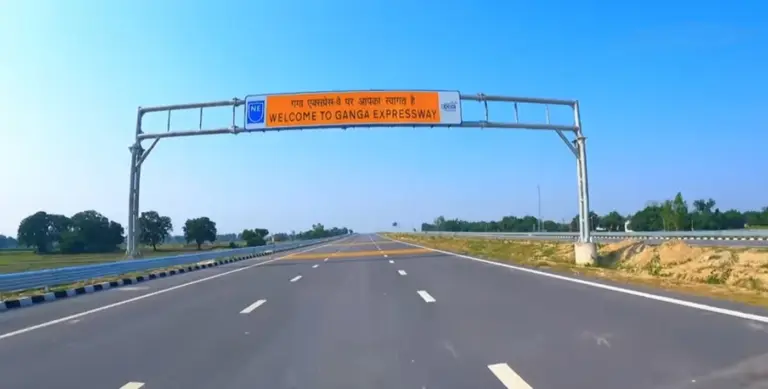
- PM Gati Shakti multimodal integration.
- National Infrastructure Pipeline completion.
- High-Speed Rail, Semi-High Speed, Vande Bharat nationwide.
- Green infrastructure: 500 GW non-fossil capacity by 2030, net-zero by 2070.
Technology pillar
- Digital Public Infrastructure (DPI) exports.
- AI, semiconductors, quantum leadership.
- R&D spend raised to 2% of GDP via ANRF.
Governance pillar
- Ease of Living alongside Ease of Doing Business.
- Judicial reforms and AI-enabled governance.
- Cooperative federalism.
Challenges
- Middle-income trap: Avoiding the fate of Argentina, South Africa.
- Demographic window closes around 2041.
- Climate change and water scarcity.
- Geo-economic fragmentation and supply-chain disruptions.
- Technological disruption and job displacement.
- Social cohesion and inequality management.
- Implementation capacity at state and local levels.
Latest Developments (2024-26)
Updated context: The Union Budget 2024-25 crystallised "Viksit Bharat 2047" as the overarching vision with nine priorities: Productivity in agriculture, employment and skilling, inclusive human resource development, manufacturing and services, urban development, energy security, infrastructure, innovation and R&D, and next-generation reforms. Budget allocations were aligned to these priorities.
The Union Budget 2025-26 complemented this with:
- Income tax relief (tax-free up to Rs 12 lakh).
- MSME classification changes (higher turnover thresholds).
- National Manufacturing Mission.
- Deep Tech Fund of Funds.
- Nuclear Energy Mission for 100 GW nuclear capacity by 2047.
- Employment-Linked Incentives (ELI Scheme).
- Export Promotion Mission and BharatTradeNet.
The Economic Survey 2024-25 projected growth of 6.3-6.8% and argued that India is on track to reach developed-country status by 2047 provided it stays the course on structural reforms, formalisation, and social investment. NITI Aayog‘s Viksit Bharat 2047 Vision Document was released as a consultative draft.
UPSC Relevance
GS Paper III topics directly connected: growth and development; mobilisation of resources; inclusive growth; infrastructure; employment; industrial policy.
Possible questions:
- Discuss the pillars of the Viksit Bharat 2047 vision. What are the key challenges?
- "Avoiding the middle-income trap is more important than achieving high GDP growth." Discuss in the Indian context.
- Evaluate the role of industrial policy, factor market reforms, and human capital in making India a developed country.
Essay and interview angles include development vs growth, Amrit Kaal, demographic dividend, and green transition. Aspirants should know per-capita thresholds, GFCF targets, nine priorities of Budget 2024-25, and Viksit Bharat vision document.
Tell Google you want more of this.
Add Anantam IAS as a preferred sourceOne tap, and this site shows up more often in your own Top Stories, AI Overviews and AI Mode. Remove it any time.