PM SVANidhi (PM Street Vendor’s AtmaNirbhar Nidhi) is a central government scheme that gives street vendors collateral-free working capital loans in three rising tranches — now up to ₹15,000, ₹25,000 and ₹50,000 — along with a 7% interest subsidy and cashback for digital payments. The scheme was restructured in August 2025 and extended till 31 March 2030, so new vendors can still apply. Applications go through the official portal pmsvanidhi.mohua.gov.in, a Common Service Centre (CSC), or a lending bank.
What is PM SVANidhi?
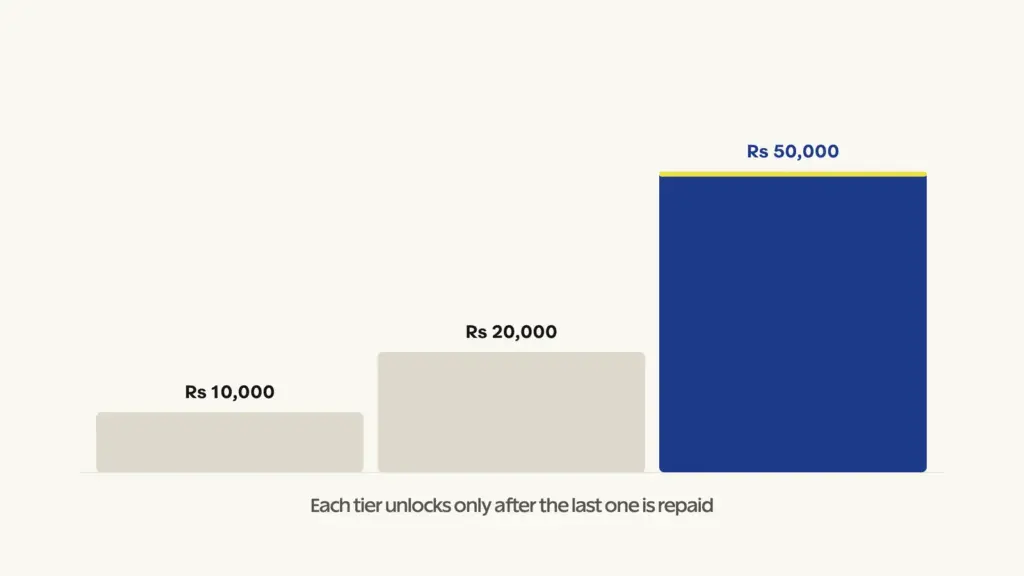
The Ministry of Housing and Urban Affairs launched PM SVANidhi on 1 June 2020 to help street vendors restart and grow their businesses after the COVID-19 lockdowns. Instead of one large loan, the scheme works on a ladder: you take a small first loan, repay it on time, and become eligible for a bigger second loan, and then a still bigger third one. Each loan is collateral-free — you do not pledge any property or gold.
On 27 August 2025, the Union Cabinet approved a restructured version of the scheme with an outlay of ₹7,332 crore and extended the lending period, which had earlier ended on 31 December 2024, to 31 March 2030, per the official announcement. The restructured scheme aims to cover 1.15 crore beneficiaries, including 50 lakh new street vendors, and expands coverage beyond statutory towns to census towns and peri-urban areas in a graded manner.
Loan Amounts and Benefits
The restructured scheme raised the first two tranches. The third tranche stays the same.
| Benefit | Amount / Detail |
|---|---|
| First tranche loan | Up to ₹15,000 (earlier ₹10,000), repayable in about 12 months |
| Second tranche loan | Up to ₹25,000 (earlier ₹20,000), after repaying the first |
| Third tranche loan | Up to ₹50,000, after repaying the second |
| Interest subsidy | 7% per annum on timely/early repayment, credited to your account |
| UPI-linked RuPay credit card | ₹30,000 limit for vendors who have repaid the second tranche |
| Digital cashback | Up to ₹1,600 as incentives on retail and wholesale digital transactions |
Two things make this scheme unusually vendor-friendly. First, timely repayment is rewarded twice — through the interest subsidy and through instant eligibility for the next, larger tranche. Second, there is no penalty for early repayment. As of July 2025, over 96 lakh loans worth ₹13,797 crore had been disbursed to more than 68 lakh street vendors, per the Cabinet press release.
Who is Eligible?
The scheme covers street vendors in urban areas, and now census towns and peri-urban areas too. You qualify if you fall in any of these groups:
- Vendors with a Certificate of Vending (CoV) or ID card issued by the Urban Local Body (ULB). This is the cleanest route.
- Vendors identified in the ULB survey but not yet issued a CoV or ID card. The portal generates a provisional certificate of vending for them.
- Vendors left out of the survey, or those who started vending after it, provided they get a Letter of Recommendation (LoR) from the ULB or the Town Vending Committee (TVC).
- Vendors of surrounding rural/peri-urban areas who vend within ULB limits, again with an LoR from the ULB/TVC.
If you do not have a CoV or LoR, apply for an LoR first — the PM SVANidhi portal itself has a module to request one from your ULB.
How to Apply
- Keep your Aadhaar card ready, with a mobile number linked to Aadhaar — the application is verified through Aadhaar OTP.
- Go to the official portal pmsvanidhi.mohua.gov.in and choose Apply for Loan. Select the tranche (first-time applicants start with the ₹15,000 tranche).
- Enter your mobile number, verify the OTP, and select your vendor category (CoV holder, surveyed vendor, or LoR applicant).
- Fill in the application form: personal details, vending details, bank account, and the loan amount you need.
- Upload documents — CoV/ID card or LoR, and Aadhaar. Submit the form and note the application number.
- The application goes to a lender (scheduled commercial banks, regional rural banks, small finance banks, cooperative banks, NBFCs and micro-finance institutions all participate). The bank verifies and sanctions the loan, and the money comes directly to your bank account.
If you are not comfortable applying yourself, visit the nearest Common Service Centre (CSC) — village-level entrepreneurs there submit PM SVANidhi applications on your behalf. Many banks also accept applications at the branch through banking correspondents.
Checking Status and Documents Needed
To track your application, open the portal, click Check Status, and enter your application number with your Aadhaar-linked mobile OTP. The status shows whether the application is pending with the ULB (for LoR), with the bank, sanctioned, or disbursed.
Documents are deliberately minimal:
- Aadhaar card (mandatory, with linked mobile)
- Certificate of Vending / vendor ID card, or Letter of Recommendation
- Bank account details (a Jan Dhan or any savings account works)
There is no application fee. If anyone asks you for money to “get your SVANidhi loan approved”, it is a scam — report it to your ULB or the bank.
PM SVANidhi is one of several central schemes that use direct benefit transfer; you can see how it fits alongside other programmes in this sarkari yojana list. Vendors planning to scale into a small enterprise can also look at the udyami yojana route, and those thinking about old-age income security can pair their earnings with the Atal Pension Yojana.
Frequently Asked Questions
What is the maximum loan under PM SVANidhi?
The third tranche is up to ₹50,000. But you reach it step by step: first a loan of up to ₹15,000, then up to ₹25,000 after repaying the first, and only then the ₹50,000 tranche. Vendors who repay the second tranche also become eligible for a UPI-linked RuPay credit card with a ₹30,000 limit.
Is PM SVANidhi still open in 2026?
Yes. The Union Cabinet extended the lending period to 31 March 2030 in August 2025, with a target of 1.15 crore beneficiaries including 50 lakh new vendors. Fresh applications are accepted on the portal.
What is the interest rate on the PM SVANidhi loan?
The lender charges its normal rate for such loans, but the scheme pays an interest subsidy of 7% per annum into your account when you repay on time. Early repayment carries no penalty.
Do I need collateral or a guarantor?
No. All three tranches are collateral-free. The scheme carries a credit guarantee for lenders, so you are not asked for security or a guarantor.
I was never surveyed and have no vending certificate. Can I still apply?
Yes. Apply for a Letter of Recommendation (LoR) from your Urban Local Body or Town Vending Committee — the portal has an LoR request module. Once the LoR is issued, you can apply for the loan.
How does the digital cashback work?
When you take and make digital payments (UPI transactions with customers and suppliers), the scheme credits cashback incentives — up to ₹1,600 under the restructured scheme — directly to your account. Your digital transaction history also builds a credit profile that helps with the next tranche.
Can rural street vendors apply?
Vendors from peri-urban and surrounding rural areas who actually vend within urban local body limits can apply with an LoR. The restructured scheme is also expanding coverage to census towns in a phased manner.
Tell Google you want more of this.
Add Anantam IAS as a preferred sourceOne tap, and this site shows up more often in your own Top Stories, AI Overviews and AI Mode. Remove it any time.