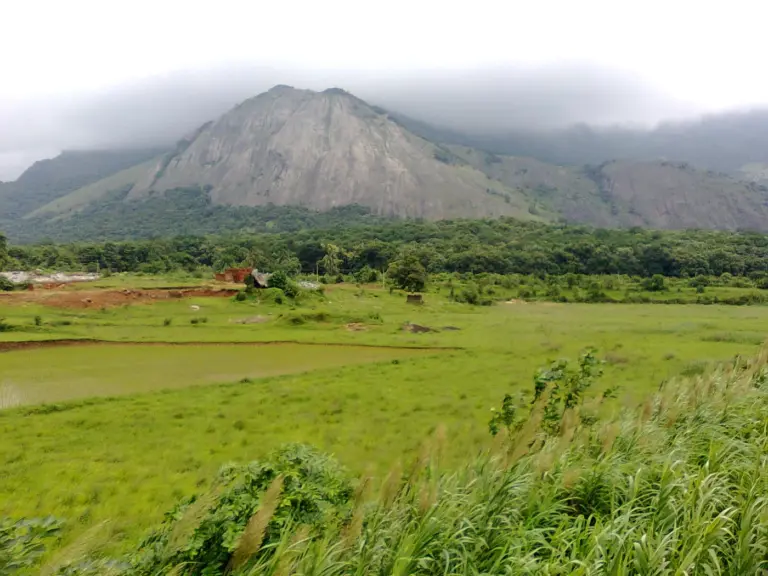
Here is the thing that trips people up about Van Vihar National Park: it carries the legal title of a national park, yet you will not track a wild tiger through its forest the way you would at Kanha or Bandhavgarh. The tigers here live in large fenced enclosures, and most of them arrived as rescued or orphaned animals. That sounds like a contradiction, and in exam prep it becomes a trap. Van Vihar is genuinely notified as a national park under the Wildlife Protection Act, and it is simultaneously run as a modern zoological park and a rescue centre. Holding both facts at once is the whole point of the place, and it is exactly what makes it a favourite one-liner in state PCS and prelims papers.
Sitting on the southern edge of Bhopal’s Upper Lake, spread over just 4.45 square kilometres, Van Vihar is small, urban, and unusual. It is the rare protected area you can reach on a city bus. Below, we will pin down its status, its history, the water body it hugs, the animals it holds, and why an environmental studies aspirant should treat it as a case study in what a twenty-first-century zoo is supposed to be.
What exactly is Van Vihar, a national park or a zoo?
It is both, and the “both” is deliberate. Van Vihar was set up in 1979 and formally notified as a national park in 1983 under the Wildlife Protection Act, 1972. That legal status gives it the highest tier of protection Indian law offers to a piece of land. At the same time, the Madhya Pradesh Forest Department manages it as an open zoological park that follows the norms of the Central Zoo Authority, which recognised it as a medium-sized zoo in 1993 to 1994.
So how does one plot of land wear two hats? The answer is spatial. The herbivores, chital, sambar, blackbuck, nilgai, and wild boar, roam free across the greater part of the park, living more or less as they would in the wild. The carnivores, tigers, lions, leopards, sloth bears, and hyenas, are kept in spacious wire enclosures built to imitate natural habitat rather than the old-style barred cage. A visitor drives or walks along a single road with free-ranging deer on one side and a rescued tiger pacing a wooded enclosure on the other. That layout is the physical expression of the dual mandate.
If the distinction between a national park, a wildlife sanctuary, and a zoo feels blurry, it is worth separating them cleanly, because examiners love the difference. A national park is the strictest category of protected area, where private rights and grazing are generally not allowed. A sanctuary offers slightly more flexible protection. A zoo is an establishment for keeping captive animals for display, conservation, and education. Van Vihar’s oddity is that it legally is the first and functionally operates as the third. For a fuller map of how these categories nest inside Indian conservation law, our note on the Wildlife Protection Act, 1972 lays out the schedules and the protected-area hierarchy.
Where it sits: the Upper Lake and the Bhoj Wetland
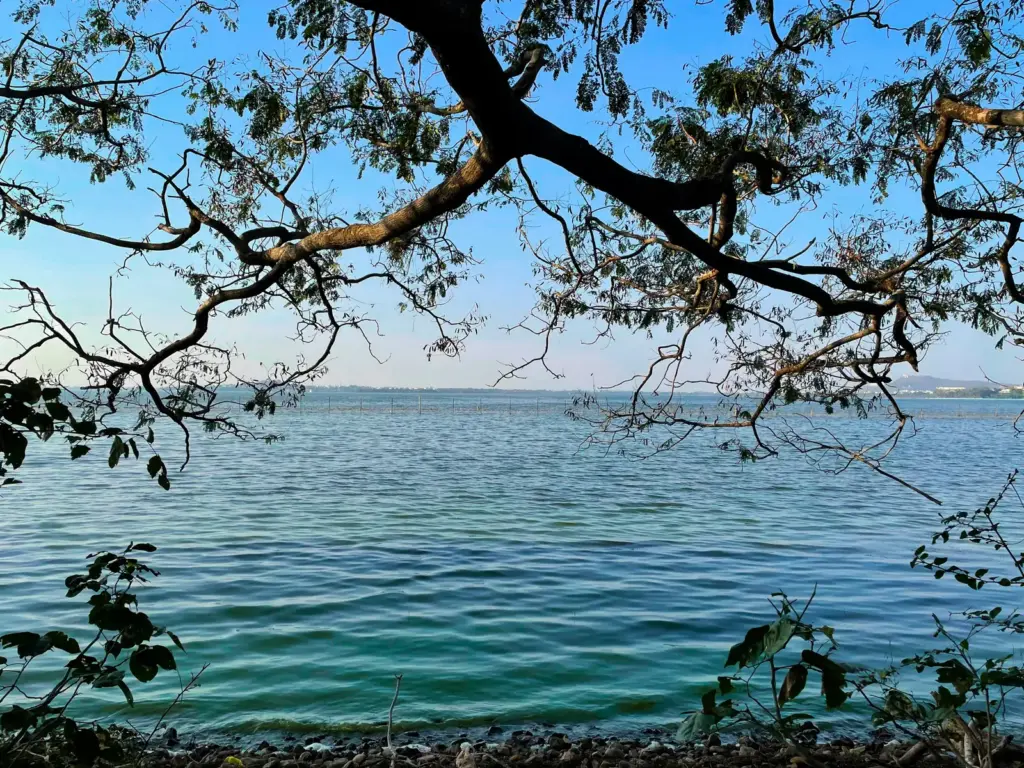
Van Vihar’s northern boundary is the Upper Lake of Bhopal, locally called Bada Talab or Bhojtal, and this is not a scenic footnote. The lake is one of two water bodies that make up the Bhoj Wetland, which was designated a Wetland of International Importance under the Ramsar Convention in 2002. That single geographic fact links a city park to a global treaty, and it is precisely the kind of connection prelims questions are built on.
The Upper Lake is believed to have been created in the eleventh century by Raja Bhoj of the Paramara dynasty, which is where the name Bhojtal comes from. It is one of the oldest human-made lakes in India and the main source of drinking water for a large part of Bhopal. Having a national park on its bank matters ecologically: the forested slope acts as a buffer, filtering runoff and shielding the shoreline from the pressure of a growing city. The wetland draws large numbers of migratory birds in winter, and Van Vihar has recorded roughly 200 bird species, which turns the lake edge into one of central India’s more accessible birding spots.
To place the Bhoj Wetland in the national picture, it helps to know that India now has more than 90 Ramsar sites, the largest network in Asia. Our explainers on Ramsar sites in India and the Ramsar Convention itself walk through the criteria a wetland must meet and why the count keeps climbing. If you want the broader ecology of why these shallow, unglamorous water bodies matter so much, the piece on wetlands of India is the place to start.
The rescue-centre model: where the animals actually come from
This is the part that makes Van Vihar special rather than just scenic. It functions as a rescue centre, and most of its big cats and bears did not come from breeding programmes or purchases. They came from misery. The lions and tigers were rescued from defunct circuses. The sloth bears were taken from *madaris*, the street performers who once made “dancing bears” by piercing the animals’ muzzles. Other tigers, leopards, and bears arrived from zones of human-wildlife conflict, where an animal that strayed into a village and could not be safely returned to the forest would otherwise have been killed.
Once you see that, the enclosures read differently. Van Vihar is not pretending these are wild animals on display. It is giving animals that can never be released a dignified, near-natural place to live out their lives. That reframing is the modern philosophy of zoos: not entertainment, but a combination of rescue, conservation, education, and, where possible, breeding. The park also runs a conservation breeding effort and set up a vulture breeding centre aimed at species like the white-rumped vulture, whose populations crashed after the veterinary drug diclofenac poisoned them across South Asia.
The reason a village cannot simply keep a “problem” leopard, and why rescue centres exist at all, sits inside the wider crisis of shrinking habitat and rising encounters between people and predators. Our detailed treatment of human-wildlife conflict explains why these confrontations are increasing and what tools, from rapid-response teams to compensation schemes, states are using to manage them.
Why an urban national park is a bigger deal than it looks
Most national parks are remote by design, buffered from cities by hundreds of kilometres of buffer forest. Van Vihar is the opposite. It sits inside the municipal limits of a state capital, which makes it a live experiment in the urban-wildlife interface: can meaningful conservation survive in the middle of a city of over two million people?
The honest answer is that it is hard, and the pressures are the interesting bit. Traffic noise, plastic waste thrown from the boundary road, invasive plant species creeping in from disturbed edges, and the sheer volume of weekend visitors all bear down on a park this size. Yet the same location is its greatest asset. A schoolchild in Bhopal can visit a tiger, a vulture nursery, and a Ramsar wetland in a single morning, which is conservation education at a scale no distant reserve can match. Van Vihar quietly proves that protected areas and dense cities are not always enemies, and that a green lung on a lakeshore can deliver drinking-water security, biodiversity, and public awareness at once.
Compare it with Madhya Pradesh’s flagship wild reserves and the contrast sharpens the lesson. Kuno National Park, now famous as the home of India’s reintroduced cheetahs, and Gandhi Sagar Wildlife Sanctuary, the second cheetah site, are large, remote landscapes built for free-ranging populations. Madhav National Park, recently elevated to tiger-reserve status, follows the classic model of wild tigers roaming open forest. Van Vihar sits at the other end of the spectrum: tiny, urban, and captive-focused. Madhya Pradesh, often called the “Tiger State” for topping the country’s tiger count, therefore showcases nearly the full range of what a protected area can be. For the wider system of how tiger habitat is governed, our overview of tiger reserves in India fills in the National Tiger Conservation Authority framework.
How a degraded hillside became a national park
The origin story matters, because Van Vihar is partly a restoration success rather than a pristine forest that was fenced off. The land on the ridge above the Upper Lake had been quarried and grazed and was ecologically run down when the state decided, at the end of the 1970s, to convert it into a protected green belt for the capital. The choice reflected a then-new idea in Indian conservation: that a city needed a large, permanent lung, and that a national-park designation was the surest legal way to keep builders and encroachers out for good.
Turning a picnic-ground concept into a functioning park took the harder work of afforestation, protection from grazing and fire, and the slow return of native trees on the dry deciduous slope. Over the decades the ridge recovered enough tree cover and grass to support free-ranging herbivores, and the animal collection grew as rescued carnivores arrived and needed homes. The lesson for an aspirant is that protection plus time can rebuild an ecosystem, and that a national park need not be a virgin wilderness to do real conservation work. That is a useful counter-example to the assumption that only untouched forest deserves the label.
Wildlife you will actually see
Van Vihar’s animal list is worth knowing in two buckets, because the split maps directly onto the free-ranging versus enclosed layout.
| Category | Representative species | How they live in the park |
|---|---|---|
| Free-ranging herbivores | Chital, sambar, blackbuck, nilgai, four-horned antelope, wild boar | Roam openly across the park’s forest |
| Enclosed carnivores | Tiger, lion, leopard, sloth bear, striped hyena | Large near-natural enclosures, mostly rescued animals |
| Reptiles and aquatic life | Indian star tortoise, freshwater turtles, gharial and crocodile pens, fish | Enclosures and lake edge |
| Birds | Around 200 species, including winter migrants and resident vultures | Wild and free, drawn by the Upper Lake |
The vulture breeding centre deserves a second look, because it connects a small Bhopal aviary to a genuine national emergency. India’s vulture populations fell by more than 90 percent within a decade after the painkiller diclofenac, given to cattle, proved lethal to the birds that fed on carcasses. The crash had public-health consequences, since vultures had quietly disposed of animal remains that now rotted or fed feral dogs. Centres that breed and hold birds like the white-rumped vulture are part of the slow effort to rebuild those populations for eventual release, and Van Vihar’s role in that programme is a reminder that even a city park can carry a piece of a country-wide recovery.
The blackbuck and four-horned antelope are quietly important entries. The blackbuck is the fastest Indian antelope and a species that has recovered thanks to protected areas, while the four-horned antelope, or chousingha, is the only wild bovid in the world with four horns and is found only in the Indian subcontinent. The vulture centre matters far beyond the park boundary, because India’s vulture collapse of the 1990s and 2000s was one of the steepest declines of any bird group anywhere, and breeding programmes like this one are part of the slow national recovery.
Conservation education, the quiet main function
If you ask what Van Vihar is *for*, the honest answer is not tiger tourism but public education, and that is a function worth taking seriously in an exam that increasingly rewards an understanding of why institutions exist. A protected area on the doorstep of two million people can reach an audience that a remote reserve never will. School groups, morning walkers, cyclists, and birdwatchers pass through its gates in numbers that dwarf the footfall at distant parks, and each of them leaves having stood a few metres from a rescued tiger or watched a vulture chick in a breeding aviary.
That reach is the strongest argument for keeping captive-focused urban parks in the conservation mix. Attitudes towards wildlife are formed young and in cities, where most Indians now live, and a place like Van Vihar is where a child first learns that a sloth bear is not a circus prop and a vulture is not a bad omen but an ecosystem’s cleanup crew whose collapse endangered public health. Measured against that goal, the park’s small size and its enclosures stop looking like weaknesses and start looking like the price of accessibility. It is a reminder that conservation is not only about saving the last wild population; it is also about building the constituency of people who will vote and pay to keep those populations alive.
How to study Van Vihar for the exam
Treat Van Vihar as a “linking” topic rather than a standalone fact to memorise. Its exam value lies in how many syllabus threads it ties together, so study it as a hub with spokes.
First, lock the four hard facts that examiners actually test: it is in Bhopal, Madhya Pradesh; it is a national park notified in 1983; it is run as a zoo and rescue centre under Central Zoo Authority norms; and it borders the Upper Lake, part of the Bhoj Wetland Ramsar site (2002). If you can recite that chain, you can answer almost any objective question thrown at it.
Second, use it to anchor the category confusion that costs marks: national park versus sanctuary versus zoo versus conservation reserve. Van Vihar is the perfect mnemonic because it collapses the “park” and “zoo” categories into one campus, which forces you to hold the definitions apart consciously.
Third, connect it upward to the wetland and treaty layer. A question on Ramsar sites in Madhya Pradesh, on the Bhoj Wetland, or on urban wetland conservation can all be answered through Van Vihar’s geography. The habit to build is reflexive linking: whenever you read about one node, jot the two or three nodes it connects to. That is how a single lakeside park in Bhopal becomes a dozen marks across environment, geography, and governance.
Finally, keep one crisp analytical line ready for a Mains answer or interview: Van Vihar shows that conservation and urbanisation need not be adversaries, and that a rescue-and-education model has real value even where wild populations cannot roam free. That is the judgement, not just the trivia, and it is what separates a scoring answer from a list.
Frequently Asked Questions
Is Van Vihar National Park a zoo or a national park?
It is legally both. Van Vihar was notified as a national park in 1983 under the Wildlife Protection Act, 1972, and it is simultaneously developed and managed as a modern zoological park and rescue centre following Central Zoo Authority norms. Herbivores range free while carnivores live in large enclosures.
Where is Van Vihar National Park located?
It is in Bhopal, the capital of Madhya Pradesh, on the southern shore of the Upper Lake (Bhojtal or Bada Talab). It lies within the city limits, which makes it one of the most accessible national parks in India.
Which Ramsar site is next to Van Vihar?
The park borders the Upper Lake, one of the two water bodies of the Bhoj Wetland, which was designated a Ramsar site of international importance in 2002.
How big is Van Vihar National Park?
It covers about 4.45 square kilometres, roughly 445 hectares, which makes it one of the smaller national parks in the country.
Are there wild tigers in Van Vihar?
No. The tigers, lions, and leopards live in large fenced enclosures and are mostly rescued animals from circuses, conflict zones, or captivity. The free-ranging wildlife consists of herbivores such as chital, sambar, and blackbuck.
Who manages Van Vihar National Park?
The Madhya Pradesh Forest Department manages it, headed by a senior forest officer, and it operates in line with Central Zoo Authority guidelines because it also functions as a zoo.
Why is Van Vihar called a rescue centre?
Because many of its carnivores were rescued: lions and tigers from circuses, sloth bears from street performers, and leopards and bears from human-wildlife conflict zones. It also runs conservation breeding, including a vulture breeding programme.
Practice Questions
1. Van Vihar National Park is located on the shore of which water body?
a) Lower Lake, Bhopal
b) Upper Lake (Bhojtal), Bhopal
c) Sagar Lake
d) Tawa Reservoir
Answer: b) Upper Lake (Bhojtal), Bhopal
- Consider the following about Van Vihar National Park:
- It is notified as a national park under the Wildlife Protection Act, 1972.
- It is managed as a zoo under Central Zoo Authority norms.
- It is located in Indore, Madhya Pradesh.
Which statements are correct?
a) 1 and 2 only
b) 2 and 3 only
c) 1 and 3 only
d) 1, 2 and 3
Answer: a) 1 and 2 only
3. The Bhoj Wetland, which adjoins Van Vihar, was designated a Ramsar site in which year?
a) 1971
b) 1982
c) 2002
d) 2012
Answer: c) 2002
4. Which of the following animals in Van Vihar National Park typically range freely rather than being kept in enclosures?
a) Tigers and lions
b) Sloth bears and hyenas
c) Chital, sambar, and blackbuck
d) Leopards and gharials
Answer: c) Chital, sambar, and blackbuck
5. The four-horned antelope, found in Van Vihar, is notable because it is:
a) The fastest land mammal in India
b) The only wild bovid with four horns, endemic to the Indian subcontinent
c) A migratory species from Central Asia
d) The state animal of Madhya Pradesh
Answer: b) The only wild bovid with four horns, endemic to the Indian subcontinent
- Van Vihar National Park is described as a national park, a zoo, and a rescue centre at once. Examine how this dual model reflects the changing philosophy of protected areas in India.
- Discuss the ecological significance of siting a national park on the shore of a Ramsar-designated urban wetland, using the example of Van Vihar and the Bhoj Wetland.
- “Conservation and urbanisation need not be adversaries.” Critically evaluate this claim with reference to urban protected areas such as Van Vihar National Park.
- Rescue centres for carnivores have become an important element of India’s wildlife management. Analyse the circumstances that make such centres necessary and the challenges they face.
- Compare the conservation models of a captive-focused urban park such as Van Vihar with those of free-ranging reserves such as Kuno and Madhav National Parks, and assess what each contributes to India’s biodiversity strategy.
Van Vihar rewards the aspirant who resists the urge to file it under a single label. It is not a wild reserve, and it is not merely a city zoo. It is a considered answer to a hard question, namely what to do with animals that can never go home and how to keep a living forest breathing on the edge of a swelling city. Learn it as the place where a national park, a rescue centre, and a Ramsar wetland share one lakeshore, and you will have both the facts for the objective paper and the argument for the essay.
Tell Google you want more of this.
Add Anantam IAS as a preferred sourceOne tap, and this site shows up more often in your own Top Stories, AI Overviews and AI Mode. Remove it any time.