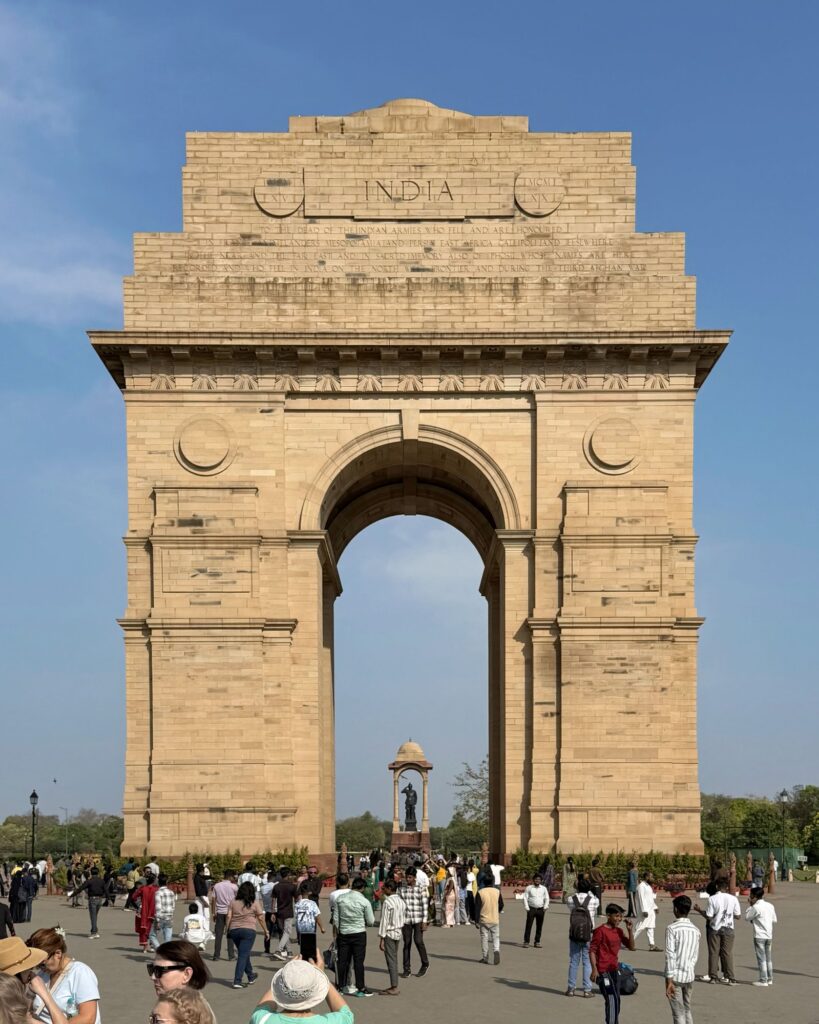
The First World War (1914–1918) fundamentally altered India’s political, economic, and social trajectory. India contributed 1.3 million soldiers and labourers to the British war effort, spent over £146 million, and suffered approximately 74,000 casualties — all without consent from Indian representatives. The war catalyzed the Home Rule Movement, produced the Lucknow Pact between Congress and the Muslim League, and created the economic and political conditions that enabled Mahatma Gandhi‘s rise as the leader of India’s freedom movement. For UPSC, understanding WWI’s impact on India is essential for Modern History (GS Paper I).
India's Contribution to World War I
Military Contribution
India provided the largest volunteer army in history at that point.
| Metric | Data |
|---|---|
| Total troops sent overseas | ~1.3 million (combatants + non-combatants) |
| Combatants | ~800,000 |
| Non-combatant labourers | ~500,000 |
| Indian casualties (killed) | ~74,000 |
| Indian casualties (wounded) | ~67,000 |
| Theatres of war | France, Belgium, Mesopotamia (Iraq), East Africa, Gallipoli, Palestine, Egypt |
Indian soldiers fought in nearly every major theatre of the war. The Indian Expeditionary Forces included infantry, cavalry, and support units. Many came from Punjab, which provided over 60% of India's combatant troops.
Financial Contribution
- India contributed £146 million to the British war effort as a "gift"
- Additional loans and revenue contributions
- War bonds were pushed on Indian princes, merchants, and the general public
- India's revenues were diverted to fund British military operations
Material Contribution
- Jute for sandbags (critical trench material)
- Cotton, wool, and leather for military supplies
- Grain and food supplies
- Railway equipment and rolling stock
- Horses and mules for cavalry and transport
Political Impact of WWI on India
Home Rule Movement (1916)
The war created an opportunity for Indians to demand political concessions in exchange for wartime loyalty.
Annie Besant‘s Home Rule League (September 1916):
- Based in Madras (rest of India except Bombay)
- Published "New India" and "Commonweal" newspapers
- Organized public meetings and study circles
- Besant was interned by the government in June 1917, which made her a national hero
Tilak's Indian Home Rule League (April 1916):
- Based in Maharashtra and Central Provinces, Karnataka, and Berar
- More aggressive in tone and approach
- Used his newspapers "Kesari" and "Mahratta" for propaganda
- Tilak declared "Home Rule is my birthright"
Significance: The Home Rule Movement was the first organized political campaign demanding self-governance. It revived the Indian National Congress from its post-Surat Split (1907) dormancy and politicized a new generation of Indians.
Lucknow Pact (December 1916)
The Lucknow Pact was a historic agreement between the Indian National Congress and the All India Muslim League, facilitated by the common wartime political momentum.
Key terms:
- Congress accepted separate electorates for Muslims (a significant concession)
- Both organizations jointly demanded dominion status for India
- Agreed on weightage for minority representation in provinces
- Created a united front demanding self-governance
Significance:
- First formal Hindu-Muslim political cooperation
- Tilak and Muhammad Ali Jinnah were key architects
- Jinnah was called "Ambassador of Hindu-Muslim Unity" by Sarojini Naidu
- The unity, however, was fragile and unraveled in the 1920s
Montagu-Chelmsford Reforms (1919)
In August 1917, British Secretary of State Edwin Montagu declared that Britain's policy was "the increasing association of Indians in every branch of the administration and the gradual development of self-governing institutions." This Montagu Declaration was a direct response to wartime pressures.
The resulting Government of India Act, 1919 introduced:
| Feature | Details |
|---|---|
| Dyarchy | Divided provincial subjects into "reserved" (Governor) and "transferred" (Indian ministers) |
| Expanded electorate | Increased from 1% to about 3% of the population |
| Central legislature | Bicameral: Council of State + Legislative Assembly |
| Communal representation | Separate electorates for Muslims (continued from Morley-Minto) |
| Franchise | Extended but still based on property and education qualifications |
The reforms disappointed Indian nationalists who found them too limited and the dyarchy system unworkable, but they represented the first formal recognition that India would eventually govern itself.
Economic Impact of WWI
Inflation and Prices
The war triggered massive inflation in India.
- Food prices: Doubled between 1914 and 1918
- Essential commodities: Sharp rises in prices of cloth, kerosene, and salt
- Cause: Diversion of Indian production to war needs, disruption of trade, printing of money
- Impact: The urban poor and middle class suffered most, creating widespread discontent
Industrial Growth
Paradoxically, the war also stimulated Indian industry.
- British imports decreased as British factories produced war materials
- Indian manufacturers filled the domestic demand gap
- Cotton textile mills expanded significantly
- Tata Steel (established 1907) grew rapidly supplying steel for war needs
- New industrial enterprises were founded in chemicals, cement, and paper
This wartime industrialization created a small but significant Indian capitalist class that later supported the nationalist movement financially.
Agricultural Distress
- Forced recruitment of rural men reduced agricultural labour
- Compulsory requisition of food grains and animals for war supply
- Rising land revenue demands
- Crop failures combined with inflation created famine conditions in some regions
Debt Burden
India emerged from the war with increased debt obligations. The financial burden was passed to Indian taxpayers through higher taxes, which fueled post-war discontent.
Social Impact
Political Awakening
- Indian soldiers who fought in France and the Middle East were exposed to ideas of freedom and self-determination
- Returning soldiers expected political rights in return for their sacrifice
- President Wilson's Fourteen Points and the principle of self-determination raised expectations among Indian nationalists
- Disillusionment set in when British promises of reform were inadequate
Spread of Political Consciousness
- The war politicized communities that had previously been uninvolved in national politics
- Punjabi and other rural communities that contributed soldiers became politically conscious
- The Ghadar Movement (1913 onwards), though based in North America, attempted armed revolution during the war years
- Defence of India Act (1915) gave extraordinary powers to suppress dissent
Impact on Muslim Politics
- The Ottoman Empire fought against Britain — Indian Muslims had religious ties to the Ottoman Caliph
- Post-war, the dismemberment of the Ottoman Empire and the abolition of the Caliphate led to the Khilafat Movement (1919–1924)
- This created conditions for the Gandhi-led Non-Cooperation and Khilafat alliance
Post-War Developments: The Transition to Gandhian Era
Rowlatt Act (1919)
Despite wartime loyalty, the British passed the Rowlatt Act extending wartime emergency powers into peacetime — allowing arrest and detention without trial. Indian nationalists were outraged. Gandhi called for a national hartal (strike) against the Act, marking his emergence as an all-India leader.
Jallianwala Bagh Massacre (13 April 1919)
General Dyer ordered firing on a peaceful gathering in Amritsar, killing at least 379 people (official figure; actual count likely higher). This event shattered any remaining faith in British goodwill and radicalized Indian opinion decisively.
Timeline: From WWI to the Gandhian Mass Movements
| Year | Event | Significance |
|---|---|---|
| 1914 | WWI begins; India enters war automatically | No Indian consent sought |
| 1916 | Home Rule Leagues; Lucknow Pact | Revived nationalist agitation |
| 1917 | Montagu Declaration | First British acknowledgment of self-governance goal |
| 1918 | WWI ends | Indian expectations for reform peak |
| 1919 | Rowlatt Act; Jallianwala Bagh; Montagu-Chelmsford Reforms | Radicalization and disillusionment |
| 1920 | Non-Cooperation Movement + Khilafat Movement | Gandhi becomes the supreme leader |
UPSC Exam Strategy
Prelims Focus
- India's military contribution (numbers, theatres)
- Home Rule League founders and dates (Tilak — April 1916, Besant — September 1916)
- Lucknow Pact (1916) terms
- Montagu Declaration (1917) and Government of India Act (1919)
- Rowlatt Act and Jallianwala Bagh (dates)
Mains (GS Paper I)
- How WWI transformed Indian nationalism from moderate petitioning to mass agitation
- Economic consequences of the war on Indian society
- Lucknow Pact: achievements and limitations of Hindu-Muslim unity
- The transition from Home Rule politics to Gandhian mass politics
- Comparison of Indian and other colonial contributions to WWI
Related: Non-Cooperation Movement
Related: Swadeshi Movement: Economic Nationalism in India
Related: Jawaharlal Nehru: India's First PM & Vision
Related: Mahatma Gandhi: Life and Legacy
Frequently Asked Questions
How many Indian soldiers fought in World War 1?
Approximately 1.3 million Indians served in World War 1, including about 800,000 combatants and 500,000 non-combatant labourers. Indian soldiers fought in France, Belgium, Mesopotamia, East Africa, Gallipoli, Palestine, and Egypt. About 74,000 Indians were killed and 67,000 were wounded.
What was the Lucknow Pact and why was it significant?
The Lucknow Pact (December 1916) was an agreement between the Indian National Congress and the All India Muslim League. Congress accepted separate electorates for Muslims, and both organizations jointly demanded self-governance. Mediated by leaders like Tilak and Jinnah, it represented the first significant Hindu-Muslim political cooperation.
How did WWI lead to Gandhi's rise in Indian politics?
WWI created economic distress (inflation, taxes), political expectations (wartime loyalty deserved reform), and subsequent disillusionment (Rowlatt Act, Jallianwala Bagh). These conditions demanded a new form of mass politics. Gandhi's strategies of non-cooperation and civil disobedience answered this need, replacing the moderate politics that had failed.
What were the Montagu-Chelmsford Reforms?
The Montagu-Chelmsford Reforms (Government of India Act, 1919) introduced dyarchy in provinces — dividing subjects into "reserved" (British-controlled) and "transferred" (Indian ministers). The reforms expanded the electorate and created a bicameral central legislature but were widely seen as inadequate and unworkable.
Tell Google you want more of this.
Add Anantam IAS as a preferred sourceOne tap, and this site shows up more often in your own Top Stories, AI Overviews and AI Mode. Remove it any time.