Join Anantam IAS Channel on Telegram

Daily Digest · Tuesday

26 May 2026 Current Affairs for UPSC

9 current affairs published on Tuesday, 26 May 2026

26 May 2026 Current Affairs for UPSC — every Why-in-News article AnantamIAS published on Tuesday, 26 May 2026, broken down with Why in News?, the exact GS paper it feeds, sub-topic mapping, MCQ-ready facts and a UPSC-style practice question. 9 articles in total, covering Polity, Economy, Environment, S&T, IR, Geography, History, Society and Internal Security — the same Why-in-News + GS-paper-mapping + practice-question format the Compass uses across every daily digest on the site.

Daily current affairs for UPSC is where new material enters your prep stream. Read this 26 May 2026 digest end-to-end in 25–35 minutes, attempt the practice question at the foot of each article (it's MCQ for some, 10/15-marker for others), then bookmark the entries that fall inside your active revision window. Everything stays cross-linked: tap any subject pill to jump to that subject's hub, or use the table of contents above to skip straight to a specific story.

Use this page three ways. Read sequentially for a one-sitting scan of everything that mattered on 26 May 2026. Download the 26 May 2026 PDF below for offline study or print revision. Or use the May 2026 Current Affairs compilation to see this day in the month's full context. For the previous day's reading, see 25 May 2026 Current Affairs; the next day's is 27 May 2026 Current Affairs.

Why we publish daily current affairs separately from the monthly compilation: daily is learning, monthly is revision. Use the daily page to add fresh material to your notes the day it breaks; come back to the May 2026 compilation 60 days before Prelims when the noise has settled and only the lasting takeaway is worth re-reading.

India’s Ageing Challenge

Open article →Download PDF

Why in News?

The newly elected state government in Kerala has announced the formation of a department for elderly people, the first such initiative in India. At present, the welfare of the aged comes under the state’s Social Welfare department.

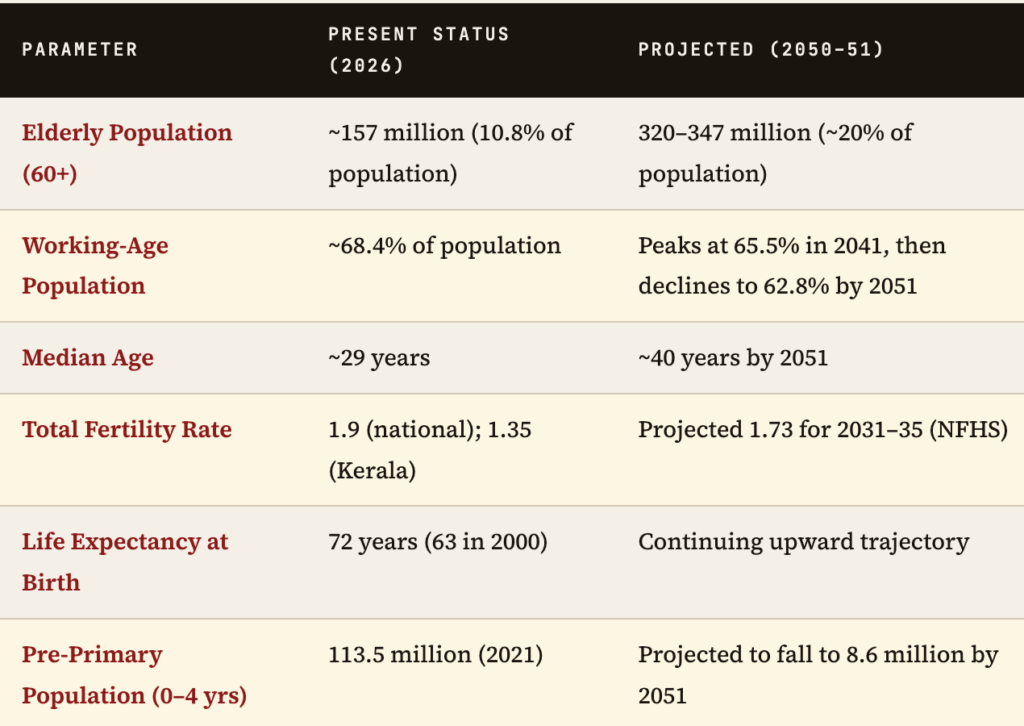
India is facing a rapid demographic transition, with the elderly population (aged 60+) projected to reach 347 million by 2050, making up roughly 20% of the total population. 

UPSC Relevance: GS-1 Indian Society: Population Issues; GS-2 Social Justice: Human Resources

Mains: India’s Ageing Challenge & Structural Demographic Shift

Structural Demographic Shift in India:

  • India’s latest Sample Registration System (SRS) Statistical Report, 2024, offers evidence of a structural demographic shift. The country’s Total Fertility Rate (TFR) has fallen to 1.9, dipping below the replacement level of 2.1 for the first time in recorded history. 
  • The crude birth rate has dropped from 21 per thousand in 2014 to 18.3 in 2024, while the death rate has fallen marginally from 6.7 to 6.4. 

Together, these figures confirm that India is transitioning from a phase of population explosion to one of decelerating growth and eventual demographic ageing.
Features of Demographic Shift in India: 

  • Accelerated ageing: India’s elderly population is growing at a decadal rate exceeding 41%, far faster than the historical pace seen in now-developed nations, which had decades of economic growth to build social security systems before facing similar transitions. 
  • Feminisation of ageing: women constitute the majority of the elderly demographic, and widowhood leaves over 50% of elderly women exposed to financial vulnerability, social exclusion, and property rights disputes. 
  • State-level disparities: Southern states such as Kerala, Tamil Nadu, and Goa, along with Himachal Pradesh and Punjab in the north, have already achieved fertility rates comparable to developed nations and are ageing rapidly, while northern states like Uttar Pradesh and Bihar continue to have TFRs well above replacement level.

India has roughly 33 years to leverage its demographic dividend before transitioning into an ageing economy, similar to developed nations, by the 2050s. 

Rising Elderly Population and Associated Challenges:

  • Financial Vulnerability: Only an estimated 10% of the elderly in urban areas and 5% in rural areas have access to formal social security or pension coverage.
  • Healthcare Infrastructure Gap: Approximately 75% of the elderly suffer from chronic conditions such as diabetes, hypertension, arthritis, and cardiovascular disease. The NPHCE now covers all 713 health districts, but India faces an acute shortage of geriatricians, trained nurses, physiotherapists, and occupational therapists relative to projected needs.
  • Caregiving Deficit: Urban migration and the shift to nuclear families have left nearly 20% of urban elderly and 10% of rural elderly living alone. India’s care economy remains structurally undervalued, with women bearing a disproportionate burden estimated at around four hours of unpaid care daily.
  • Mental Health and Dementia: Nearly 1 in 4 older adults in India exhibits symptoms of psychological distress, according to the India Ageing Report 2023. Mental health conditions, particularly dementia, remain heavily stigmatised, limiting early diagnosis and appropriate care.
  • Delayed Census Impact: The Census, postponed since 2020 due to the COVID-19 pandemic, has disrupted planning for delimitation, financial devolution to states (which uses population and demographic performance as criteria), and sample surveys that rely on census data as a sampling frame.
  • Workforce and Fiscal Pressure: As the dependency ratio rises (more elderly per working-age adult), fiscal pressure on pension systems, healthcare budgets, and state welfare programmes will intensify. E.g., the old-age dependency ratio in Kerala has already risen from ~19% (2011) to ~26% (2021), and is projected to reach >34% by 2031.

Case Study- Kerala: India’s Greying Frontier

  • Kerala is India’s most rapidly ageing state, with a demographic profile comparable to East Asian and European nations. As per the Elderly in India Report 2021, around 16.5% of Kerala’s population is already aged 60 and above, a share expected to reach ~21% by 2031, compared with the all-India figure of 13.1%.
  • Three reinforcing factors explain Kerala’s rapid ageing:
    • TFR has fallen to just 1.35. 
    • Significantly better healthcare outcomes (female life expectancy at 78.4 years, against 71.9 years for men)
    • Large-scale outmigration of working-age adults, particularly men, to West Asia. Return migration of older former emigrants further swells the elderly population.

Over 70% of Kerala’s elderly suffer from at least one chronic ailment. Old-age home residents have nearly doubled in less than a decade. 

Kerala has responded with several institutional innovations:

  • State Elderly Commission (2025) 
  • Department for Senior Citizens (2026) 
  • Vayomithram (mobile geriatric care) 
  • Smruthipadham (dementia initiative) 
  • Kerala Care Palliative Grid (1,387 govt + 1,227 NGO units) 
  • Samayaprabha (day-care for the elderly)

Key Central Government Policies and Schemes: 

  • The National Policy on Older Persons, 1999, laid the foundational framework for state responsibility toward senior citizens.
  • The Maintenance and Welfare of Parents and Senior Citizens Act, 2007, provides legal provisions mandating family maintenance and penalises neglect or abandonment of elderly parents.
  • National Programme for Health Care of the Elderly, 2010-11 (NPHCE), a Centrally Sponsored Programme launched by the Ministry of Health, now covers all 713 health districts and operates through dedicated geriatric OPDs, 10-bedded geriatric wards, and two National Centres of Ageing.
  • Atal Vayo Abhyuday Yojana (2021) envisions a society where all senior citizens live healthy, empowered, and dignified lives with strong intergenerational bonds, consolidating multiple elderly welfare schemes.
  • Ayushman Bharat PMJAY now extends health insurance coverage to all citizens aged 70 and above, significantly widening the social protection net for the elderly.
  • India announced a National Demographic Mission (2025), an initiative to monitor and manage demographic transitions, including migration, ageing, and human capital development. The first time demographic management has been elevated to a dedicated national programme.

Despite this, the functionality of schemes remains deeply uneven across regions. Rural areas lag behind urban centres in access to geriatric services. Northern states require targeted interventions to achieve national convergence. Inter-state migration is expected to intensify as demographic gaps between states widen.

Way Forward: 

  • Universal Social Security Architecture. India must scale pension coverage far beyond its current reach, which stands at only 10% in urban and 5% in rural elderly populations. Contributory pension schemes, portability of social security for migrant workers, and universal old-age pensions for the unorganised sector are minimum requirements for preventing mass old-age poverty.
  • Invest in Geriatric Health Infrastructure. The NPHCE must be rapidly scaled with substantially more geriatricians, trained nurses, physiotherapists, and occupational therapists to meet the WHO multidisciplinary care benchmarks. National Centres of Ageing should serve as research and training hubs, and dementia care requires dedicated attention through awareness campaigns and community programmes.
  • Formalise and Value the Care Economy: India’s care economy, disproportionately borne by women, must be recognised, regulated, and remunerated. This includes creating a skilled, certified workforce of professional caregivers, expanding community-based home care, and providing social recognition and financial support to informal caregivers.
  • Harness the Silver Economy: Rather than viewing seniors as dependents, India should create enabling conditions for productive, active ageing. Senior skill registries, digital literacy drives, encore career platforms, and senior entrepreneurship support programmes can convert the elderly into economic contributors.
  • Facilitate Managed Inter-State Migration: As high-TFR northern states continue to generate a labour surplus while low-TFR southern states face workforce shortages, managed inter-state migration becomes essential. This requires investment in transport infrastructure, implementation of the three-language formula, removal of local employment quotas, and portability of welfare entitlements across states.
  • Adopt Technology and AI for Elder Care. Digital Public Infrastructure should be leveraged to integrate elderly health records, streamline pension delivery, enable teleconsultation with geriatricians in remote areas, and detect elder abuse. 

Following the WHO’s model of healthy ageing, India’s policies should shift from a disease-management model to a capability-enhancement model.  
Ageing Population in India: SRS 2024, Fertility Decline and Policy Challenges

Open article →Download PDF

Introduction

Ageing population in India has become a live UPSC current-affairs issue after the Office of the Registrar General and Census Commissioner placed the Sample Registration System Statistical Report 2024 in the official Census Digital Library. The headline is not just that India remains young. The deeper story is that fertility, birth rates and infant mortality are falling together, which means the country must prepare for a future where demographic dividend slowly gives way to elderly care, social security and a smaller growth in the working-age population.

The official SRS catalogue records the 2024 report as a 2026 release by ORGI, and the Census Digital Library history page shows the SRS 2024 package added on May 20, 2026. The reported national Total Fertility Rate is 1.9, below the replacement level of 2.1. The crude birth rate is reported at 18.3, the crude death rate at 6.4, and infant mortality at 24. For UPSC, this one data release connects GS-I society, GS-II health and welfare, GS-III labour markets, and Essay themes on demographic transition.

Ageing population in India SRS 2024 UPSC current affairs

Quick Facts at a Glance

IndicatorValueSource
ReportSample Registration System Statistical Report 2024ORGI Census Digital Library
Release listingSRS 2024 added on May 20, 2026Census catalog history
Total Fertility Rate1.9, below replacement levelSRS 2024 catalogue
Crude Birth Rate18.3 per 1,000 populationSRS 2024 catalogue
Crude Death Rate6.4 per 1,000 populationSRS 2024 catalogue
Infant Mortality Rate24 per 1,000 live birthsSRS 2024 catalogue
Long-term ageing warningElderly share projected to cross 20% by 2050UNFPA India Ageing Report 2023
Policy responseNITI Aayog released senior-care reform position paper in 2024PIB/NITI Aayog release

Background and Context

The Sample Registration System is India’s large-scale demographic surveillance system for annual estimates of fertility and mortality. Census gives the decadal population count, but SRS gives the moving picture: births, deaths, infant mortality, fertility and related indicators. This makes SRS especially important in years when the decennial Census is delayed.

India’s demographic debate has usually been framed around population growth. SRS 2024 shifts the frame toward population composition. A TFR of 1.9 means the average number of children a woman is expected to have is below replacement level. Population can still grow for some time because of population momentum, but the age structure will gradually tilt upward.

The policy question is no longer only how India can educate and employ its youth. It is also how India can finance pensions, design geriatric health care, support family caregivers, make cities age-friendly and protect elderly women, informal workers and rural seniors from old-age poverty.

Key Features of the SRS 2024 Demographic Signal

Fertility has moved below replacement level

A TFR below 2.1 shows that India has entered a mature stage of demographic transition. Urbanisation, female education, delayed marriage, contraception, migration and changing aspirations have reduced family size. The UPSC angle is not whether population control has succeeded. The exam angle is whether the State is ready for the social and fiscal consequences of low fertility.

Birth rate is falling while death rate is low

The crude birth rate of 18.3 and crude death rate of 6.4 suggest that India still has natural increase, but the speed of increase is declining. This creates a transition window. Policy must use the remaining demographic dividend to improve human capital before the dependency ratio starts rising more visibly.

Infant mortality decline changes household behaviour

An IMR of 24 is a major improvement over earlier decades. Lower child mortality often reduces the perceived need for larger families. This is why health indicators and fertility indicators must be read together. Better survival, education and urban living all reinforce smaller family norms.

Regional divergence remains the hard problem

The all-India average hides differences between southern and northern States, rural and urban India, and rich and poor households. Some States are already ageing faster, while high-burden States still face child health and maternal health deficits. A national ageing policy must therefore be flexible enough for different demographic stages.

Significance for UPSC

  • GS-I: Direct link to population, demographic transition, family structure and ageing society.
  • GS-II: Connects to health policy, social justice, welfare schemes and vulnerable sections.
  • GS-III: Labour supply, savings behaviour, pension burden and productivity implications.
  • GS-IV: Ethics of intergenerational justice, dignity of elderly and care responsibility.
  • Essay: Useful for themes on demographic dividend, ageing, welfare state and inclusive growth.
  • Prelims: SRS, TFR, IMR, replacement fertility, ORGI, UNFPA and senior-care schemes are testable.

Detailed Analysis: From Demographic Dividend to Ageing Preparedness

The phrase demographic dividend means that a country has a high share of working-age population compared with dependents. India still has that advantage, but SRS 2024 reminds us that the dividend is not permanent. Low fertility today creates a smaller young cohort tomorrow. If productivity, education and health do not improve quickly, India may become older before it becomes sufficiently rich.

Ageing also changes the nature of welfare. A young society needs schools, skilling and jobs. An older society needs chronic disease management, long-term care, accessible transport, social pensions and protection against neglect. NITI Aayog’s senior-care reform paper recognised the need to rethink the senior-care economy, healthy ageing and institutional support.

Policy areaWhy SRS 2024 mattersUPSC angle
HealthOlder population means more chronic disease burdenGeriatric care, primary health, insurance
EconomyShrinking growth of workforce can affect savings and productivityLabour reforms, skilling, women’s work
SocietySmaller families weaken traditional old-age supportCare economy, gender burden, social security
FederalismStates are at different demographic stagesState-specific health and pension planning

The gender dimension is crucial. Elderly women often face widowhood, lower lifetime earnings and weaker asset ownership. UNFPA has highlighted the rapid growth of the very old population and the vulnerability of older women. For Mains, this means ageing should not be treated as a neutral demographic fact. It is a social justice issue.

Challenges and Criticisms

The first challenge is data lag. Census 2011 remains the last full decennial Census. SRS gives vital rates, but planning for ageing requires granular district-level age structure, migration, disability and household composition. Without updated local data, old-age services risk being under-planned or badly targeted.

The second challenge is fragmented welfare. India has pensions, health insurance, old-age homes, maintenance law and welfare schemes, but they do not always operate as a single continuum of care. Informal workers, elderly women, disabled seniors and rural elderly often face the greatest gaps.

The third challenge is regional imbalance. States with low fertility may need elderly-care infrastructure sooner, while high-fertility States still need maternal and child health investments. A one-size national programme will miss both realities.

Way Forward

India should prepare a demographic transition strategy that combines youth employment with elderly care. The remaining dividend years should be used to raise female labour force participation, improve skilling, strengthen preventive health and expand pension coverage for informal workers.

Senior care should be treated as a public service and an economic sector. Geriatric clinics, home-based care, assistive devices, caregiver training, age-friendly housing and digital health records can create jobs while improving dignity for older citizens.

Finally, States need demographic dashboards based on SRS, Census, NFHS, LASI and health system data. Ageing is not tomorrow’s problem. SRS 2024 shows that India is already moving toward it.

Prelims Pointers

  • SRS stands for Sample Registration System.
  • SRS is published by the Office of the Registrar General and Census Commissioner, India.
  • SRS 2024 was listed in the Census Digital Library in May 2026.
  • India’s reported TFR in SRS 2024 is 1.9.
  • Replacement-level fertility is generally taken as 2.1 births per woman.
  • Crude Birth Rate measures live births per 1,000 population.
  • Crude Death Rate measures deaths per 1,000 population.
  • Infant Mortality Rate measures infant deaths per 1,000 live births.
  • UNFPA India Ageing Report 2023 projects the elderly share to exceed 20% by 2050.
  • Maintenance and Welfare of Parents and Senior Citizens Act was enacted in 2007.
  • Article 41 is a DPSP related to public assistance in old age, sickness and disablement.
  • NITI Aayog released a senior-care reform paper in February 2024.

Mains Practice Questions

  • SRS 2024 shows that India’s fertility transition is deepening. Discuss the opportunities and risks this creates for India’s demographic dividend.
  • Ageing population is not only a health issue but also a social justice issue. Examine with reference to elderly women, informal workers and rural households.
  • How should India redesign welfare architecture for a society that is young today but ageing rapidly?
  • Discuss the role of updated demographic data in planning health, pensions and urban services in India.
  • Falling fertility should shift India’s policy debate from population control to population quality. Analyse.
  • What institutional reforms are needed to build a senior-care economy in India?

Conclusion

SRS 2024 is important because it marks a change in the way India must read its population story. The country is not facing an immediate collapse of demographic dividend, but the direction is clear: lower fertility, slower population growth and a larger elderly cohort over time.

For UPSC, the answer is not panic. It is preparedness. India needs to convert today’s young workforce into a healthy, skilled and productive population, while building institutions for tomorrow’s elderly citizens.

A good Mains conclusion can be simple: India’s demographic dividend will be remembered not by how young the country was, but by how wisely it prepared for becoming old.

Frequently Asked Questions

What is SRS 2024?

SRS 2024 is the Sample Registration System Statistical Report 2024, released through the Census Digital Library by the Office of the Registrar General and Census Commissioner, India. It provides annual fertility and mortality indicators used for demographic planning.

What is India’s TFR in SRS 2024?

India’s reported Total Fertility Rate in SRS 2024 is 1.9. This is below the replacement level of 2.1, which means the long-term age structure will gradually shift toward an older population.

Why is ageing population in India important for UPSC?

Ageing population in India links GS-I society, GS-II welfare, GS-III economy and Essay themes. It affects health care, pensions, labour markets, family structures and social justice.

What is replacement-level fertility?

Replacement-level fertility is the fertility rate at which a population replaces itself over generations without migration. It is generally taken as 2.1 births per woman.

Which institution publishes SRS?

The Office of the Registrar General and Census Commissioner, India publishes SRS reports. It functions under the Ministry of Home Affairs.

What does UNFPA say about India ageing?

UNFPA’s India Ageing Report 2023 projected that the elderly share of India’s population could double to over 20% by 2050, making senior care a major policy challenge.

India-Australia CECA: Bridging the Trade and Trust Barrier

Open article →Download PDF

Why in News?

There is growing anticipation that India and Australia may conclude a Comprehensive Economic Cooperation Agreement (CECA), expanding upon the existing India-Australia Economic Cooperation and Trade Agreement (ECTA) signed in 2022. 

UPSC Relevance: GS-2 International Relations: Bilateral Relations; GS-3 Economy: International Trade, Agriculture

Prelims: CECA, ECTA, Free Trade Agreement (FTA), Quad, Phytosanitary Standards
Mains: India-Australia bilateral relations and trade partnership. 

India-Australia Economic Relations: 

  • Merchandise Trade: Bilateral merchandise trade increased from US$ 12.2 billion in FY 2020-21 to approximately US$ 24.1 billion in FY 2024-25 after the implementation of ECTA. Australia accounts for nearly two-thirds of bilateral merchandise exports.
  • Services Trade: Bilateral services trade has crossed US$ 10 billion. Australia’s higher education sector constitutes nearly 60% of bilateral services trade.
  • Investment Relations: The investment relationship presents a contrasting picture:
    • Indian investment in Australia ~US$ 32 billion
    • Australian FDI in India ~US$ 18 billion. 

About the Economic Cooperation and Trade Agreement (ECTA):

  • ECTA is a bilateral trade agreement signed between India and Australia in 2022, and came into force the same year.
  • Aim: To enhance the economic ties between India and Australia. 

Key aspects of ETCA:

  • Tariff Reduction: Australia eliminated 96% tariffs on Indian goods. India offered preferential access to Australia on over 70% of its tariff lines, including primarily raw materials and intermediaries such as coal, mineral ores and wines.
  • Enhanced professional mobility: Indian IT and healthcare professionals gain improved access to the Australian market. 
  • Rule of origin: ECTA includes a rules of origin clause to avoid benefits to any third party. 

Comprehensive Economic Cooperation Agreement (CECA):

  • A Comprehensive Economic Cooperation Agreement (CECA) is a broader form of Free Trade Agreement that covers:
    • Trade in goods and services
    • Investments
    • Intellectual Property Rights (IPR)
    • Digital trade
    • Regulatory cooperation
    • Mobility of professionals
  • The proposed India-Australia CECA seeks to deepen economic integration beyond the tariff reductions already provided under ECTA.

Why is CECA Important for India?

  • Diversification of Trade Partnerships: The global trading environment has become increasingly uncertain due to Geopolitical conflicts, Supply-chain disruptions, Protectionist policies, and tariff wars among major economies. A comprehensive trade agreement with Australia can help India reduce dependence on a limited set of export markets.
  • Strengthening Indo-Pacific Partnerships: Australia is a key partner in the Quad grouping, Indo-Pacific economic architecture, and critical minerals supply chains. Enhanced economic cooperation complements the growing strategic partnership between the two countries.
  • Access to Critical Resources: Australia possesses vast reserves of Lithium, Cobalt, Rare Earth elements and Copper.  These minerals are crucial for electric vehicles (EVs), Renewable energy systems, and semiconductor manufacturing. 
  • Greater Market Access: CECA can facilitate increased exports of pharmaceuticals, IT and digital services, Textiles and apparel, Engineering goods and Agricultural products. 

The Agriculture Question: The Biggest Hurdle

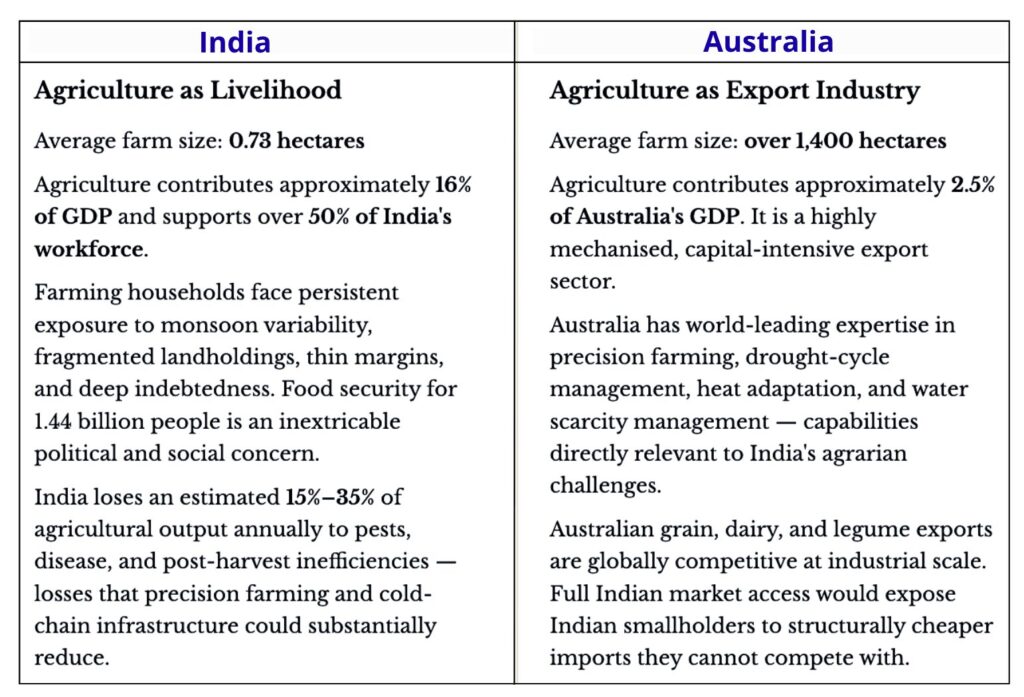
Australia’s 2025 Economic Engagement Roadmap identifies four major cooperation superhighways: Clean Energy, Education, Tourism and Agribusiness. Agriculture remains the most sensitive issue in CECA negotiations.

Agriculture is the most structurally and politically sensitive dimension of the India-Australia trade relationship. The asymmetry between the two agricultural economies is stark and fundamental.

Protecting India’s market from cheap Australian wheat, dairy, and sugar is not a mere negotiating stance; it is a political and social necessity, given the direct livelihood implications for hundreds of millions of farming households. 

India has traditionally protected Dairy products, Wheat, Rice, Sugar and Chickpeas. These sectors were largely excluded from ECTA and remain politically sensitive.

Transforming Agriculture from a Challenge into an Opportunity: 

Rather than focusing solely on tariff concessions, both countries can cooperate through institutional and technological partnerships.

  • Biosecurity and Phytosanitary Cooperation: Both countries can expand cooperation on Digital certification systems, Quarantine protocols, Food safety standards and Mutual recognition arrangements.  This would improve access for Indian agricultural exports while ensuring safety standards.
  • Agricultural Technology Collaboration: Australia can contribute expertise in Precision farming, Water management, Climate-resilient agriculture, irrigation technologies and Farm mechanisation. Australia’s experience in managing droughts and water scarcity can be particularly useful for India.
  • Investment in Agricultural Infrastructure: India loses an estimated 15-35% of agricultural output due to Pest attacks and post-harvest losses, Inadequate storage and Poor logistics. Australian investment can help develop Cold-chain infrastructure, Warehousing, Food processing facilities and Agricultural logistics networks. 
  • Smart Agriculture Partnerships: The recently launched India-Australia Smart Farm Network Initiative aims to promote Joint research, Climate-smart agriculture, Technology transfer and University-industry collaborations. 

India and Australia should move beyond a narrow focus on tariff reductions and pursue a partnership based on complementarity rather than complete symmetry. 

A balanced CECA can protect India’s agricultural interests while expanding opportunities in trade, services, education, clean energy, and critical minerals, which can significantly strengthen the bilateral relationship between the nations.  

Supreme Court considers bigger public participation in defining Aravalli

Open article →Download PDF

Why in News?

The Supreme Court has directed that the expert committee being constituted to redefine the Aravalli hill system should ensure wider public participation through consultations with environmental experts, scientists and stakeholders. The Court also intends the panel to prepare a roadmap on permissible activities, including regulated mining, while ensuring ecological protection of the Aravalli ecosystem.

UPSC Relevance

Prelims

  • Physical Geography: Age, geological origin (Precambrian era, Aravalli–Delhi orogeny), extension (across Gujarat, Rajasthan, Haryana, and Delhi), and highest peak (Guru Shikhar) of the Aravalli Range.
  • Ecology & Environment: The ecological function of old fold mountains as a barrier against desertification, water table aquifers, and wildlife corridors.
  • Environmental Governance: Central Empowered Committee (CEC), Amicus Curiae, and regulatory provisions of the Mines and Minerals (Development and Regulation) [MMDR] Act, 1957.

Mains

  • GS Paper II (Governance): Judicial review, public-inclusive policymaking, and the balancing role of expert committees.
  • GS Paper III (Environment & Infrastructure): Combating desertification, land degradation, balancing ecological preservation with regulated mineral mining, Sustainable Protected Area Management.

Background and Context

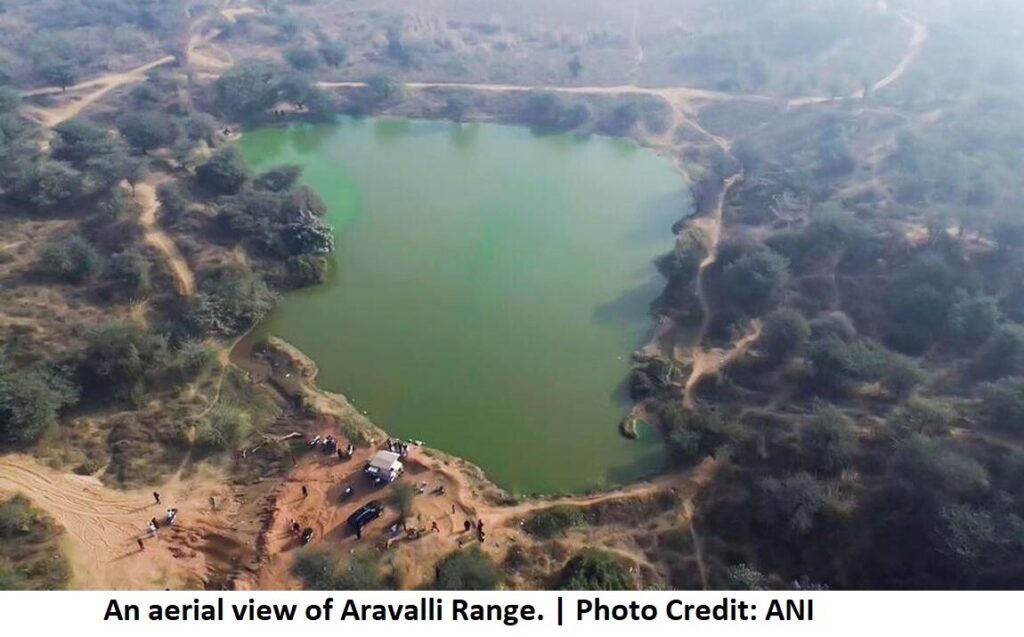
The Aravalli Range is among the oldest fold mountain systems in the world and acts as a crucial ecological barrier in north-western India. It extends across several States including Rajasthan, Haryana, Delhi and Gujarat.

The issue arose after a Supreme Court judgment in November 2025 upheld a government committee’s definition of the Aravalli hills. The definition restricted Aravalli identification primarily to:

  • Areas having elevations of 100 metres or above
  • Hill clusters, slopes or hillocks situated within 500 metres of each other

The decision generated criticism because many ecologists argued that such a narrow definition excluded numerous ecologically important lower hill systems and fragmented landscapes.

Subsequently, the Court revisited the matter suo motu and stayed its earlier judgment.

About the Aravalli Range

Aravalli Range is one of the world’s oldest geological formations and stretches approximately 700 km, beginning from Gujarat through Rajasthan and Haryana to Delhi.

The ecological significance of the Aravallis includes:

The hill range acts as a natural barrier against the eastward expansion of the Thar Desert and helps moderate desertification.

It serves as an important groundwater recharge system for north-western India.

The region supports biodiversity through forests, grasslands and wildlife habitats.

The hills contribute significantly to climate regulation and carbon sequestration.

Why Definition of Aravalli Matters

The controversy demonstrates that environmental protection is strongly dependent upon legal definitions.

A restrictive definition may exclude large ecologically connected landscapes from protection measures.

The Court observed that out of approximately 12,081 Aravalli hills in Rajasthan alone, only 1,048 hills would satisfy the 100-metre threshold.

This implies that nearly 90% of identified hill structures could potentially lose protection.

Such exclusion could create what the Court described as a regulatory lacuna.

Concerns with Narrow Definition

Threat of Increased Mining Activities

Lower hill formations and connected ecological areas may become vulnerable to unregulated mining if excluded from legal protection.

Mining activities can lead to:

  • Deforestation, Habitat fragmentation, Air pollution, Groundwater depletion, Soil degradation

Ecological Fragmentation

Mountain systems function as integrated ecological landscapes rather than isolated peaks.

Protecting only elevated portions while excluding connected ecosystems may undermine conservation objectives.

Accelerated Desertification

The Aravallis prevent the expansion of desert ecosystems toward fertile plains.

Weakening ecological protection may increase vulnerability to land degradation.

Loss of Biodiversity

The Aravalli ecosystem supports multiple plant and animal species, many adapted to fragile dry ecosystems.

Fragmentation may threaten habitat continuity.

Supreme Court’s Current Approach

The Court has attempted to shift the process from a purely administrative exercise toward a multidisciplinary and participatory framework.

Constitution of Expert Committee

The proposed committee is expected to include experts from different domains: Environmental scientists, Ecologist, Foresters, Mining experts, Conservation specialists

    The Court stated that the committee should remain functional and avoid becoming excessively large.

    Greater Public Participation

    The Court emphasized extensive consultations with:

    • Domain experts, Local communities, Stakeholders, Environmental groups

    This reflects an emerging approach of participatory environmental governance.

    Preparation of a Comprehensive Roadmap

    The committee has been tasked not only with defining the Aravallis but also with developing a framework regarding:

    • Permissible activities, Ecological safeguards, Regulated mining practices, Long-term sustainability measures

    Judicial Supervision

    The committee will function under the direct supervision of the Supreme Court.

    This reflects judicial activism in environmental matters where concerns exist regarding administrative inadequacies.

    Judicial Intervention in Environmental Governance

    Indian courts have historically expanded environmental protection through constitutional interpretation.

    Constitutional Basis

    Article 21: The right to life has been interpreted to include the right to a healthy environment.

    Article 48A: Directs the State to protect and improve the environment.

    Article 51A(g): Imposes a fundamental duty upon citizens to protect the environment.

    Important Environmental Principles Applied by Courts

    Precautionary Principle: Activities with potentially irreversible environmental consequences should be approached cautiously even where scientific certainty is incomplete.

    Polluter Pays Principle: Individuals or industries causing environmental damage are expected to bear the financial burden of restoring ecological harm.

    Sustainable Development: Developmental activities should balance economic growth with environmental protection so that present needs are met without compromising future generations.

    Challenges in Aravalli Conservation

    Illegal Mining

    Illegal stone mining and quarrying remain significant challenges in several regions.

    Urban Expansion

    Rapid urbanisation around Delhi-NCR and adjoining areas places pressure on the ecosystem.

    Administrative Fragmentation

    The Aravalli landscape extends across multiple States, creating coordination difficulties.

    Weak Enforcement Mechanisms

    Even where legal protections exist, implementation remains inconsistent.

    Conflicting Development Priorities

    Infrastructure projects and economic activities often conflict with ecological considerations.

    Way Forward

    Adopt a Landscape-Based Approach: The Aravalli should be viewed as an interconnected ecological system rather than isolated hill structures.

    Use Scientific Mapping Technologies: Satellite imagery, GIS mapping and ecological indicators should supplement traditional definitions.

    Strengthen Community Participation: Local communities and traditional knowledge systems should become integral to conservation strategies.

    Promote Sustainable Mining Practices: Mining should be regulated through scientific assessment and strict environmental safeguards.

    Create an Inter-State Coordination Mechanism: Since the Aravallis cut across multiple States, a coordinated governance framework is necessary.

    Conclusion

    The present debate goes beyond merely defining a mountain range. It concerns the broader question of how India balances environmental protection with economic development. The Supreme Court’s emphasis on scientific expertise, stakeholder participation and ecological continuity indicates a shift toward more inclusive environmental governance. The future of the Aravallis will depend not only on legal definitions but also on whether conservation is treated as an integrated long-term national priority.

    Practice Questions

    Prelims Question 1 (Inference-based)

    Consider the following statements regarding the recent Supreme Court proceedings on the Aravalli ecosystem:

    I. The Supreme Court observed that defining the Aravallis solely through elevation criteria may create gaps in environmental protection.

    II. Ecological systems such as mountain ranges often function as interconnected landscapes rather than isolated geographical features.

    III. A landscape-based approach can strengthen environmental conservation outcomes.

    Which of the following relationships among the statements is correct?

    1. Statement II explains the concerns raised in Statement I.
    2. Statement III extends the implications of Statement II into a policy approach.
    3. Statement I contradicts Statement III.

    (a) 1 and 2 only
    (b) 2 and 3 only
    (c) 1 only
    (d) 1, 2 and 3

    Answer: (a)

    Explanation: Statement II provides ecological reasoning for the Court’s concerns in Statement I. Statement III logically extends the idea into a broader conservation strategy. Statement I does not contradict Statement III.

    Prelims Question 2

    Assertion (A): The Aravalli Range plays a significant role in preventing desertification in northwestern India.

    Reason (R): The Aravalli hills act as a natural ecological barrier restricting the expansion of the Thar Desert eastward.

    (a) Both A and R are correct, and R is the correct explanation of A
    (b) Both A and R are correct, but R is not the correct explanation of A
    (c) A is correct but R is incorrect
    (d) A is incorrect but R is correct

    Answer: (a)

    Explanation: The Aravalli Range acts as a natural barrier against desert expansion and thereby contributes to controlling desertification.

    Mains Questions

    1. Discuss the ecological significance of the Aravalli Range and examine the challenges associated with its conservation.
    2. Judicial intervention has increasingly shaped environmental governance in India. Examine this statement in the context of recent developments concerning the Aravalli ecosystem

    President confers 66 Padma Awards; actor Dharmendra, violinist N Rajam honoured

    Open article →Download PDF

    Why in News?

    President Droupadi Murmu conferred Padma Awards at a Civil Investiture Ceremony held at Rashtrapati Bhavan. Among the prominent awardees were Dharmendra (posthumously awarded Padma Vibhushan) and N. Rajam for her contribution to Indian classical music. The 2026 list includes 131 Padma Awards across different categories.

    UPSC Relevance

    Prelims: Padma Awards, civilian honours system, Bharat Ratna, constitutional and administrative aspects.

    Mains:
    GS I (Indian culture and heritage),
    GS II (Governance and institutions),
    GS IV (Recognition of public service and values).

    Background/Context

    India recognises exceptional contributions made by individuals in various fields through its civilian honours system. The Padma Awards constitute one of the highest civilian recognitions and seek to honour distinguished service across domains such as art, literature, science, social work, public affairs, medicine, sports, civil service and other fields of human endeavour.

    Instituted in 1954, the awards aim to acknowledge individuals whose work has had a significant impact on society and national development.

    The Padma Awards are announced annually on the eve of Republic Day and are presented by the President of India at ceremonial functions held at Rashtrapati Bhavan.

    Understanding India’s Civilian Honours Structure

    India has a hierarchy of civilian awards:

    • Bharat Ratna: India’s highest civilian award, given for exceptional service of the highest order in any field of human endeavour.
    • Padma Vibhushan: Awarded for exceptional and distinguished service of a very high order.
    • Padma Bhushan: Awarded for distinguished service of high order.
    • Padma Shri: Awarded for distinguished service in any field.

    Unlike military decorations, these awards are civilian recognitions and do not confer titles.

    Constitutional and Legal Dimensions

    Article 18 of the Constitution prohibits the State from conferring titles except military or academic distinctions.

    A constitutional question had emerged regarding whether national awards violate Article 18. In the Balaji Raghavan vs Union of India judgment, the Supreme Court held that civilian awards such as Bharat Ratna and Padma Awards are constitutional because they are recognitions and not hereditary titles.

    The Court also observed that recipients cannot use these awards as prefixes or suffixes to their names.

    Evolution of Padma Awards

    Initially, Padma awards existed under three classes:

    • Pahela Varg
    • Dusra Varg
    • Tisra Varg

    These were reorganised in 1955 into:

    • Padma Vibhushan
    • Padma Bhushan
    • Padma Shri

    Over time, reforms have attempted to make the selection process more transparent and inclusive.

    The government increasingly emphasises recognition of “unsung heroes” — individuals who work at the grassroots level with substantial societal impact.

    Selection Process of Padma Awards

    The selection process involves multiple stages:

    • Nominations are invited from the public, State governments, Union Territories, Ministries and institutions.
    • A Padma Awards Committee constituted by the Prime Minister annually reviews nominations.
    • Recommendations are submitted to the Prime Minister and President.
    • Final approval is granted by the President.

    The process increasingly encourages public participation through online nomination systems.

    Significant Features of Padma Awards

    Recognition beyond celebrity status

    The awards are intended to acknowledge contributions rather than popularity. Increasingly, grassroots workers, tribal artists, social reformers and innovators have been included.

    Diverse representation

    The awards cover:

    • Arts and culture
    • Science and engineering
    • Public affairs
    • Medicine
    • Literature
    • Education
    • Social work
    • Sports
    • Civil service

    Recognition of posthumous contributions

    Awards can also be conferred posthumously where contributions have left a lasting impact.

    For example, actor Dharmendra received posthumous recognition through Padma Vibhushan in 2026.

    Notable Awardees from the 2026 Ceremony

    Some important awardees include:

    • Dharmendra — recognised for contribution to Indian cinema and arts.
    • N. Rajam — known for pioneering the “Gayaki Ang” style in violin performance.
    • Bhagat Singh Koshyari — public affairs.
    • Uday Kotak — business and finance.
    • R. Ganesh — revival of Avadhana tradition.

    Importance of Padma Awards in Nation Building

    Padma Awards perform functions beyond symbolic recognition.

    They create role models who inspire society, preserve cultural and artistic traditions, reward public service, and promote social contributions that may otherwise remain unnoticed.

    Recognition of local innovators and cultural practitioners also strengthens India’s soft power and cultural continuity.

    Challenges and Criticisms

    Allegations of politicisation

    Concerns are sometimes raised regarding possible political influence in selection of recipients.

    Questions over transparency

    Selection criteria are often viewed as insufficiently clear by sections of society.

    Perceived urban and elite bias

    Historically, awards were often criticised for favouring prominent public figures while overlooking grassroots contributors.

    Subjectivity in evaluating contributions

    Assessing impact across different sectors can be difficult because social contributions are not always measurable.

    Way Forward

    Strengthen transparency

    Selection procedures and evaluation criteria can be made more open and publicly understandable.

    Greater recognition of grassroots contributions

    Expanding representation of tribal communities, local innovators and social workers can enhance inclusiveness.

    Promote public participation

    Increasing awareness regarding open nominations can democratise the awards process.

    Build institutional documentation

    Awardees’ work may be systematically documented and integrated into educational and public knowledge systems.

    Conclusion

    The Padma Awards represent India’s attempt to celebrate excellence across diverse fields while recognising service to society and nation-building. Their larger significance lies not merely in honouring individuals but in reinforcing social values, preserving cultural heritage and inspiring future generations.

    Practice Questions

    Prelims Question 1 (Inference-based)

    Consider the following statements regarding India’s Padma Awards system:

    I. Padma Awards seek to recognise distinguished contributions across multiple fields of public life.
    II. Article 18 prohibits conferring hereditary or title-based distinctions by the State.
    III. The Supreme Court has upheld the constitutional validity of civilian awards while restricting their use as titles.

    Which of the following relationships among the above statements is correct?

    1. Statement III validates how Statement I can operate without violating Statement II.
    2. Statement II contradicts Statement I because recognition through awards itself is unconstitutional.
    3. Statement III extends Statement II by distinguishing honours from prohibited titles.

    (a) 1 only
    (b) 1 and 3 only
    (c) 2 and 3 only
    (d) 1, 2 and 3

    Answer: (b)

    Explanation: The Supreme Court clarified that civilian awards are recognitions rather than titles, thereby allowing awards under constitutional limits.

    Prelims Question 2

    Match the following:

    AwardDescription
    1. Bharat RatnaA. Distinguished service in any field
    2. Padma VibhushanB. Highest civilian award
    3. Padma BhushanC. Exceptional and distinguished service of very high order
    4. Padma ShriD. Distinguished service of high order

    Select the correct answer:

    (a) 1-B, 2-C, 3-D, 4-A
    (b) 1-C, 2-B, 3-A, 4-D
    (c) 1-B, 2-D, 3-C, 4-A
    (d) 1-A, 2-C, 3-B, 4-D

    Answer: (a)

    Explanation: Bharat Ratna is the highest civilian award, followed by Padma Vibhushan, Padma Bhushan and Padma Shri in descending order.

    Mains Questions

    1. Discuss the significance of Padma Awards in promoting inclusiveness, cultural preservation and recognition of public service in India.
    2. “National honours must balance recognition of excellence with transparency and public trust.” Examine in the context of India’s civilian awards system.

    Indian mobile market hit as Global Semicon industry faces severe Memflation

    Open article →Download PDF

    Why in News?

    India is witnessing shortages and rising prices in the ₹10,000 to ₹15,000 smartphone segment as the global semiconductor industry faces severe “memflation”. 

    UPSC Relevance: GS-3 Economy: Manufacturing; Science and Technology: Emerging Technologies

    Prelims: Semiconductor, DRAM, NAND Flash, India Semiconductor Mission (ISM)

    What is Memflation?

    • Memflation refers to a rise in prices caused by shortages of memory chips, such as:
      • DRAM (Dynamic Random-Access Memory): temporary working memory used by processors.
      • NAND Flash Memory: non-volatile memory used for data storage in smartphones, laptops, SSDs, and other electronic devices.
    • The current memflation cycle is being driven by the explosive growth of AI applications and data centres.

    Why is the Global Semiconductor Industry Experiencing Memflation?

    • Shift Towards AI Infrastructure: The rapid expansion of Generative AI, Large Language Models (LLMs), and AI data centres has dramatically increased demand for High-Bandwidth Memory (HBM).
    • Capacity Diversion: A single HBM chip can consume 2-3 times more wafer capacity than conventional DRAM. Semiconductor firms are allocating more wafer fabrication and advanced packaging capacity toward HBM because of higher profitability. 
    High-Bandwidth Memory (HBM) is an advanced type of computer memory that is designed to provide both high bandwidth and low power consumption. It provides significantly faster data transfer rates and is essential for AI accelerators and GPUs. Major AI chips such as those used in data centres rely heavily on HBM. 

    As a result, the production of conventional DRAM and NAND has become constrained, and the prices of memory components have surged globally, triggering “memflation”. 

    Why is India Particularly Vulnerable?

    • Heavy Import Dependence: India imports most of its semiconductor requirements. Key suppliers include Taiwan, South Korea, China, Japan and the United States. Domestic semiconductor manufacturing remains limited.
    • Weak Presence in Memory Chip Manufacturing: India currently lacks large-scale production facilities for DRAM, NAND Flash and HBM. This exposes the country to global supply disruptions.

    India’s Semiconductor Mission: Can It Reduce Vulnerability?

    • India Semiconductor Mission (ISM): Launched in 2021 with a financial outlay of ₹76,000 crore, the mission aims to:
      • Develop semiconductor fabrication capabilities.
      • Promote chip packaging and testing.
      • Build semiconductor design ecosystems.
      • Reduce import dependence.
    • India has approved semiconductor projects, including Tata Electronics, Micron Technology India Assembly and Test Facility, CG Power Semiconductor Facility, etc. However, these projects focus mainly on Assembly, Testing and Packaging. India still lacks advanced memory fabrication facilities.

    Challenges in Building Semiconductor Capacity: 

    • Capital Intensive Industry: A modern semiconductor fabrication plant (fab) may require investments exceeding $10-20 billion.
    • Technological Complexity: Challenges include Precision manufacturing, Clean-room environments, Advanced lithography and a highly skilled workforce. 
    • Long Gestation Period: Semiconductor facilities typically require 3-5 years for construction. Additional time for commercial scaling.

    Hence, global supply constraints may continue through 2026-27. 

    Also Read: https://anantamias.com/current-affairs/indias-semiconductor-mission-policy-push-challenges/ 

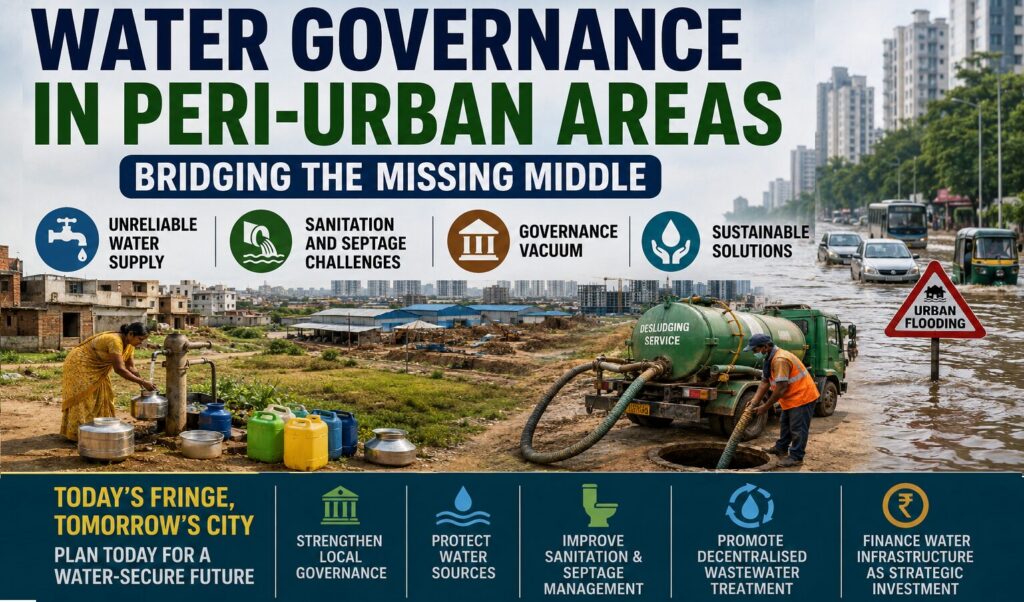
    Water governance in peri-urban areas 

    Open article →Download PDF

    Why in News?

    India has made significant progress in expanding access to water through initiatives such as the Jal Jeevan Mission and urban water infrastructure programmes. However, a large but neglected zone between villages and cities — peri-urban areas — continues to face serious challenges of water supply, sanitation, groundwater contamination and governance gaps. As India urbanises rapidly, these regions are emerging as critical spaces that require dedicated policy attention.

    UPSC Relevance

    Prelims: Jal Jeevan Mission, 73rd and 74th Constitutional Amendments, Swachh Bharat Mission, Census Towns, urbanisation and sanitation initiatives.

    Mains:
    GS-II (Governance, Local Governance, Public Service Delivery),
    GS-III (Urbanisation, Water Resource Management, Infrastructure, Sustainable Development, Environment).

    Background and Context

    India’s water discourse has traditionally focused on two images: rural areas waiting for access to drinking water and cities struggling with water scarcity or flooding. Yet between these two lies a rapidly expanding “missing middle” — peri-urban India.

    These are transitional spaces where villages gradually transform into urban settlements. They are characterised by mixed land use, changing demographics and weak institutional structures. Though economically dynamic, they often remain trapped in an administrative vacuum.

    Over the last two decades, the number of Census towns in India increased from approximately 1,362 to 3,784, representing an increase of around 178%. This indicates rapid urbanisation occurring outside formally recognised urban areas.

    By 2047, India is projected to require approximately 230 million additional housing units and nearly 500 new cities. Therefore, today’s peri-urban regions may become tomorrow’s urban centres.

    What is Peri-Urban Areas?

    Peri-urban regions occupy a transitional position between rural and urban spaces. They possess characteristics of both areas but often enjoy the benefits of neither.

    Some common features include:

    • Agricultural lands gradually convert into industrial areas, housing colonies and commercial establishments, creating intense pressure on local resources.
    • Population growth often exceeds infrastructure development, leading to shortages in basic services such as drinking water and sanitation.
    • Administrative responsibilities frequently overlap among Panchayats, municipal bodies and development authorities.
    • Environmental degradation accelerates because land-use regulation remains weak.

    What are the Major Water Governance Challenges in Peri-Urban India?

    Governance Vacuum and Institutional Confusion

    The biggest challenge in peri-urban regions is institutional ambiguity.

    For example, some areas remain legally classified as villages despite displaying urban characteristics. Others are transferred to municipal jurisdictions without corresponding administrative capacity.

    This creates situations where residents face urban costs without receiving urban services.

    For instance, in Gurugram, several peri-urban areas were absorbed under municipal administration, but governance inefficiencies continue to affect service delivery.

    Inadequate Water Supply

    Water supply in these regions often remains unreliable and irregular.

    Rawta village on Delhi’s outskirts demonstrates this challenge. Water is supplied through common collection points on alternate days and only during late-night hours. Residents often sacrifice sleep to collect water, while private vendors exploit shortages by charging high prices.

    Such situations create inequality in access to an essential resource.

    Groundwater Degradation and Pollution

    Peri-urban regions increasingly experience groundwater contamination due to waste disposal and industrial activities.

    In peri-urban Hyderabad, toxic leachate generated from waste dumping sites contaminated groundwater resources, affecting local communities.

    Since many households depend heavily on groundwater extraction, contamination directly affects public health.

    Urban Expansion Creating Rural Sacrifice Zones

    Cities often satisfy growing water requirements by diverting resources from surrounding regions.

    The Bisalpur Dam in Rajasthan illustrates this issue. Originally designed to support irrigation needs of Tonk and Sawai Madhopur districts, increasing urban demand from Jaipur has altered water allocation patterns.

    As urban demand expands, peri-urban and rural communities frequently bear disproportionate costs.

    Sanitation and Septage Management Challenges

    Sanitation systems in peri-urban regions face serious deficiencies.

    Nearly 40 million urban households depend upon septic tanks and on-site sanitation systems. However:

    • Desludging frequently occurs only after tanks overflow rather than through periodic maintenance.
    • Illegal dumping of untreated faecal sludge into rivers, open lands and agricultural fields remains widespread.
    • One untreated tanker discharge can significantly undermine sanitation gains achieved under national programmes.

    Thus, sanitation challenges extend beyond toilet construction to the management of waste after collection.

    Existing Government Initiatives

    Jal Jeevan Mission (JJM)

    The mission seeks to provide functional household tap connections to rural households while ensuring sustainable water supply systems.

    Although the programme significantly expanded water access, source sustainability remains an important concern.

    Swachh Bharat Mission

    The mission improved sanitation coverage and toilet construction across India. However, peri-urban areas continue to face challenges related to faecal sludge and wastewater management.

    Constitutional Framework for Urban Governance

    The Seventy-fourth Constitutional Amendment Act sought to strengthen urban local governance through municipal institutions and Nagar Panchayats.

    However, implementation remains uneven, particularly in transitional regions.

    Way Forward

    Strengthening Governance Structures

    State governments should establish Nagar Panchayats in all eligible Census towns as envisioned under constitutional provisions.

    Experiments such as multi-stakeholder coordination platforms involving engineers, Panchayat representatives and local communities can improve accountability.

    Ensuring Source Sustainability

    Providing water connections alone is insufficient unless water sources remain protected.

    Measures should include:

    • Preventing encroachments around catchment areas.
    • Restricting dumping of solid waste.
    • Encouraging community-based sanitary inspections of local water sources.

    Launching a Peri-Urban Focused Swachh Bharat Mission 3.0

    Future sanitation initiatives should explicitly focus on peri-urban requirements.

    Key measures may include:

    • Establishing faecal sludge treatment plants where central sewage infrastructure is not viable.
    • Introducing GPS-enabled desludging systems to prevent illegal disposal.
    • Using mini-desludging vehicles for narrow roads and congested settlements.
    • Integrating sanitation costs within monthly utility payments through small service charges.

    Promoting Decentralised Wastewater Treatment

    Innovative modular treatment systems can recycle wastewater close to the source.

    These systems reduce land requirements and can recover substantial quantities of reusable water.

    Government support through procurement policies, incentives and regulatory simplification can accelerate adoption.

    Innovative Financing Mechanisms

    Peri-urban water infrastructure should be treated as strategic national investment.

    Blended financing approaches combining public support, concessional loans and performance-linked funding may provide sustainable solutions.

    Challenges in Implementation

    Administrative Fragmentation: Multiple agencies with overlapping responsibilities often create delays and weak accountability mechanisms.

    Financial Constraints: Smaller urban local bodies frequently lack adequate resources to invest in water and sanitation infrastructure.

    Rapid Urbanisation: Population growth often exceeds infrastructure expansion.

    Environmental Pressures: Groundwater depletion, pollution and climate variability add further stress.

    Conclusion

    India’s future water security may be determined not only in villages or metropolitan cities but in the vast peri-urban spaces connecting them. These regions already possess substantial economic significance and demographic weight. If governance reforms, infrastructure investment and sustainable water management are pursued together, peri-urban India can transform from a neglected transition zone into a resilient and water-secure growth centre.

    Practice Questions

    Prelims Question 1 (Inference-based)

    Consider the following statements regarding peri-urban water governance in India:

    I. Expansion of water supply infrastructure alone may not ensure long-term water security in peri-urban regions.

    II. Institutional ambiguity in peri-urban regions affects both service delivery and accountability.

    III. Rapid urbanisation automatically results in improved access to water and sanitation services.

    Which of the following relationships among the above statements is/are correct?

    1. Statement II explains one of the structural reasons behind concerns highlighted in Statement I.
    2. Statement III strengthens the argument presented in Statement I.
    3. Statement I and Statement II together imply the need for governance reforms alongside infrastructure expansion.

    (a) 1 only
    (b) 1 and 3 only
    (c) 2 and 3 only
    (d) 1, 2 and 3

    Answer: (b)

    Explanation: Infrastructure alone cannot ensure water security without institutional support. Governance gaps contribute directly to service deficiencies. Statement III is incorrect because rapid urbanisation often creates additional stress.

    Prelims Question 2

    Match the following initiatives with their primary objectives:

    InitiativeObjective
    A. Jal Jeevan Mission1. Constitutional recognition of urban local bodies
    B. Swachh Bharat Mission2. Household tap water connections
    C. 74th Constitutional Amendment3. Improvement in sanitation

    Select the correct answer:

    (a) A–2, B–3, C–1
    (b) A–1, B–2, C–3
    (c) A–3, B–2, C–1
    (d) A–2, B–1, C–3

    Answer: (a)

    Explanation: Jal Jeevan Mission focuses on tap water access; Swachh Bharat Mission addresses sanitation; the 74th Amendment strengthened urban local bodies.

    Mains Questions

    1. “Peri-urban regions represent the missing middle in India’s water governance framework.” Examine the statement.
    2. Discuss how rapid urbanisation and institutional gaps create challenges for sustainable water and sanitation management in peri-urban India.

    Finance Commission transfers and equity issue 

    Open article →Download PDF

    Why in News?

    The debate around fiscal federalism and resource sharing has gained renewed attention after discussions surrounding the recommendations of the 16th Finance Commission (FC). While the Commission retained the 41% vertical devolution share for States, concerns continue regarding the balance between equity and efficiency in horizontal transfers among States. Several States, especially economically stronger southern States, have raised concerns about declining shares and fiscal autonomy.

    UPSC Relevance

    Prelims: Finance Commission, Articles related to fiscal federalism, tax devolution, cesses and surcharges, GST.

    Mains:
    GS-II: Centre-State relations, federalism, constitutional bodies;
    GS-III: Public finance, fiscal policy, inclusive development.

    Background and Context

    India follows a federal fiscal structure in which expenditure responsibilities and revenue-raising capacities are distributed between the Union and States. However, a mismatch exists because States often bear larger expenditure obligations while the Centre controls major taxation powers.

    To address these imbalances, the Constitution established the Finance Commission.

    The Commission performs two important balancing functions:

    • Addressing vertical imbalance, which concerns resource distribution between the Centre and States.
    • Addressing horizontal imbalance, which concerns disparities among States themselves.

    Over time, Finance Commissions have increasingly focused on equalisation, ensuring that relatively poorer States receive greater financial support.

    Constitutional Framework of Finance Commission

    The Finance Commission derives authority from Article 280 of the Constitution of India.

    Its functions include:

    • Recommending distribution of net tax proceeds between the Union and States.
    • Determining principles governing grants-in-aid.
    • Suggesting measures for strengthening State finances.
    • Advising on matters referred by the President.

    The Commission is appointed every five years.

    Understanding Vertical and Horizontal Devolution

    Vertical Devolution

    Vertical devolution refers to the distribution of resources between the Union government and States.

    The 15th Finance Commission had recommended 41% tax devolution to States (reduced from 42% due to the creation of Ladakh and Jammu & Kashmir as Union Territories).

    The 16th Finance Commission retained this share.

    Horizontal Devolution

    Horizontal devolution distributes the States’ share among individual States using certain criteria.

    The broad objective is to reduce disparities among States and ensure balanced development.

    Criteria Used by the 16th Finance Commission

    The 16th FC retained most criteria from the previous Commission with slight modifications:

    CriteriaWeight
    Income distance42.5%
    Population17.5%
    Area10%
    Forest and ecology10%
    Demographic criterion10%
    Contribution to national GDP10%

    The addition of contribution to GDP replaced tax effort.

    However, instead of using actual GSDP values, the Commission used a square-root transformation, reducing advantages for larger economies.

    Major Concerns Raised by States

    Increasing Use of Cesses and Surcharges

    States argued that cesses and surcharges have grown substantially.

    These revenues:

    • Are excluded from the divisible pool.
    • Remain entirely with the Union government.
    • Reduce actual transfers to States.

    States suggested either:

    • Including them within the divisible pool; or
    • Capping them at around 8–10%.

    Declining Fiscal Autonomy

    States also highlighted concerns arising from:

    • GST-related structural changes.
    • Rising public debt burdens.
    • Increasing dependence on Centrally Sponsored Schemes.
    • Slower growth in central tax revenues.

    For example, many schemes require States to bear a substantial share of expenditure.

    This limits flexibility in spending according to local priorities.

    Frequent Changes in Formula

    States argued that repeated alterations in devolution criteria create uncertainty.

    Unpredictability makes long-term fiscal planning difficult.

    The Equity versus Efficiency Debate

    The central issue is whether transfers should primarily reward:

    • Equity, meaning support for poorer States to reduce disparities; or
    • Efficiency, meaning rewarding States demonstrating better economic performance and governance outcomes.

    The current system heavily favours equity.

    Equity Arguments

    Supporters argue that:

    • Poorer States require greater assistance because of weaker fiscal capacities.
    • Constitutional federalism seeks balanced regional development.
    • Equal opportunities are necessary for national cohesion.

    Examples include States such as Bihar and Uttar Pradesh, where developmental challenges remain significant.

    Efficiency Arguments

    Economically stronger States argue that:

    • They contribute disproportionately to national GDP and taxes.
    • Continued redistribution may weaken incentives for fiscal discipline.
    • Better-performing States should not be excessively penalised.

    Southern States particularly highlight this concern.

    Their combined share reportedly declined substantially over successive Finance Commissions.

    Why Fiscal Transfers Alone Have Not Eliminated Disparities

    Higher transfers have not necessarily translated into convergence in public services.

    Examples indicate persistent differences:

    • Bihar’s health expenditure per person remains substantially lower than several other States.
    • Spending on elementary education also shows wide variation.

    This suggests that transfers alone cannot solve developmental inequalities.

    Administrative capacity, governance quality and institutional efficiency also matter.

    Alternative Devolution Approaches Suggested

    The article discusses possible alternative models.

    Greater Weight to Economic Contribution

    Increasing GDP contribution weight to around 25% while reducing income-distance weight could substantially raise shares for economically stronger States.

    Potential beneficiaries include:

    • Maharashtra
    • Karnataka
    • Tamil Nadu

    Use of Actual GSDP Instead of Square-root Transformation

    Using actual economic contribution rather than transformed values may better reflect genuine fiscal capacity and economic output.

    Data-driven Weight Assignment

    The article proposes methods such as:

    • Principal Component Analysis (PCA)
    • Fiscal outcome indicators
    • Revenue mobilisation indicators

    Such approaches could reduce subjective weighting.

    The Cost of Alternative Weighting Schemes

    If the commission had utilized the actual, uncompressed GSDP shares or assigned higher weights to economic performance, the distribution of the vertical pool—estimated at ₹104 lakh crore over the award period—would look vastly different.

    An alternative model using actual GSDP shares with a 25% weight (and reducing income distance to 27.5%) would have yielded major revenue gains for industrial states over the award period:

    • Maharashtra: A share increase of 2.392%, translating to an additional ₹2.49 lakh crore (approx. ₹49,744 crore annually).
    • Karnataka: A share increase of 1.806%, yielding an additional ₹1.88 lakh crore (approx. ₹37,565 crore annually).
    • Tamil Nadu: A share increase of 1.556%, generating an additional ₹1.62 lakh crore (approx. ₹32,365 crore annually).

    Challenges Before Fiscal Federalism

    Rising political economy concerns

    Future delimitation may alter parliamentary representation patterns, potentially influencing fiscal incentives and political bargaining.

    Dependence on non-divisible revenues

    Increasing reliance on cesses and surcharges may weaken cooperative federalism.

    Reduced flexibility for States

    Greater dependence on centrally designed schemes limits State autonomy.

    Balancing national cohesion and economic incentives

    Excessive equalisation may create dependency, while excessive efficiency orientation may deepen inequalities.

    Devolution Criterion15th FC Weight16th FC WeightKey Structural Changes Under 16th FC
    Income Distance45.0%42.5%Retained as the dominant equity measure to support fiscally weaker states.
    Population15.0%17.5%Increased by 2.5%, keeping total demographic need central to the formula.
    Area15.0%10.0%Reduced to allocate more weight to performance metrics.
    Forest Cover10.0%10.0%Maintained to reward states preserving ecological assets.
    Demographic Performance12.5%10.0%Modified by replacing the inverse fertility rate with actual population growth.
    Economic Performance2.5% (Tax Effort)10.0% (GDP Contribution)Replaced “Tax Effort” with a state’s contribution to national GDP, using a square-root formula.

    Way Forward

    Adopt a balanced equity-efficiency framework

    Future Finance Commissions should maintain support for weaker States while adequately rewarding economic performance and governance outcomes.

    Increase transparency in formula design

    Predictable and stable criteria can help States undertake long-term fiscal planning.

    Expand divisible resources

    A review of cesses and surcharges can improve fairness in resource sharing.

    Focus on fiscal outcomes

    Indicators such as education outcomes, healthcare performance and tax mobilisation may improve incentive structures.

    Strengthen cooperative federalism

    Regular institutional dialogue between the Centre and States can reduce friction over fiscal issues.

    Conclusion

    India’s fiscal federal structure aims to balance national unity with regional equity. The challenge before future Finance Commissions is not simply deciding who gets more resources, but designing a system that simultaneously encourages efficiency, addresses disparities and preserves cooperative federalism. The debate is therefore not between rich and poor States, but between competing visions of fairness itself.

    Practice Questions

    Prelims Question 1 (Inference-based)

    Consider the following statements regarding Finance Commission transfers in India:

    I. Horizontal devolution primarily seeks to reduce developmental disparities among States.

    II. Increasing the weight of GDP contribution in devolution criteria would likely increase transfers to economically stronger States.

    III. Greater emphasis on income distance generally benefits fiscally stronger States.

    Which of the following relationships among the statements is correct?

    1. Statement II extends the principle in Statement I by rewarding economic performance.
    2. Statement III contradicts Statement I.
    3. Statement II and Statement III represent competing approaches to fiscal transfer design.

    (a) 1 only
    (b) 2 only
    (c) 1 and 3 only
    (d) 3 only

    Answer: (c)

    Explanation: Statement II represents efficiency-based allocation, while Statement I represents equity objectives. Statement III is incorrect because income distance generally benefits weaker States.

    Prelims Question 2

    Match the following:

    CriteriaPurpose
    A. Income distance1. Environmental conservation
    B. Forest cover2. Reduce fiscal disparities
    C. Population3. Reflect demographic needs

    Choose the correct answer:

    (a) A–2, B–1, C–3
    (b) A–1, B–3, C–2
    (c) A–2, B–3, C–1
    (d) A–3, B–2, C–1

    Answer: (a)

    Explanation: Income distance addresses disparities, forest cover rewards ecological contributions, and population captures demographic requirements.

    Mains Questions

    1. “The debate on Finance Commission transfers is fundamentally a debate between equity and efficiency in Indian federalism.” Examine.
    2. Critically analyse whether the present fiscal transfer architecture adequately balances the developmental needs of poorer States with the aspirations of economically stronger States.

    Synthesis of the first stable Carbon-free analogue of Ferrocene

    Open article →Download PDF

    Why in News?

    Researchers at IIT Madras and IISc Bengaluru solved a 70-year-old chemistry puzzle by successfully synthesising the first stable, carbon-free analogue of ferrocene. The new carbon-free molecule copies the unusual ‘sandwich’ structure of the ferrocene molecule. 

    UPSC Relevance: GS-3 Science and Technology: Developments and Applications of Science and Technology 

    Prelims: Ferrocene, stable Carbon-free analogue of Ferrocene

    What is Ferrocene?

    • Ferrocene is one of the most important compounds in modern chemistry.
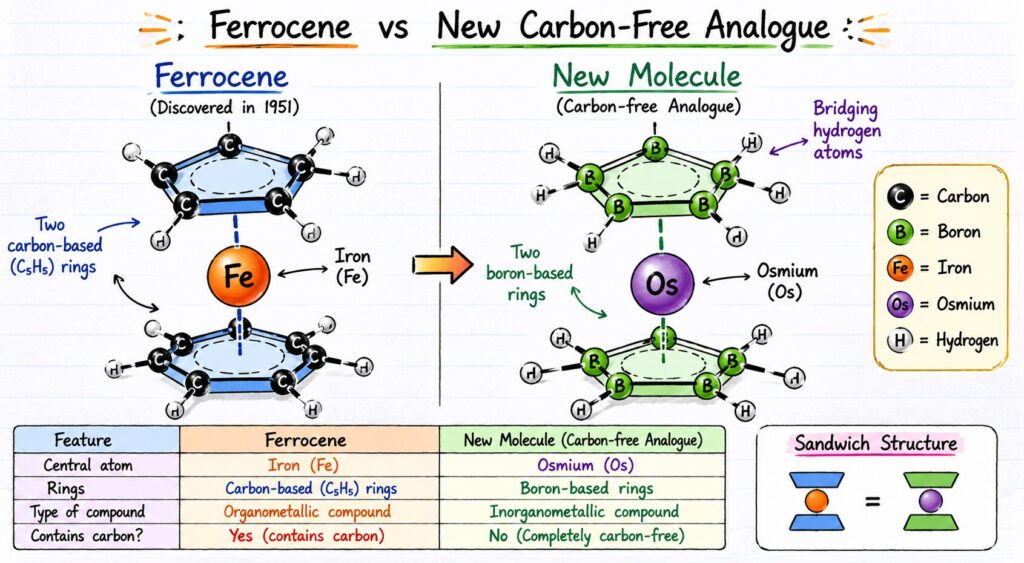
    • Structure: It consists of one iron (Fe) atom sandwiched between two five-membered carbon rings. 
    • Ferrocene is valuable because it is highly stable, readily transfers electrons, and can be chemically modified with ease. These properties make it useful in medicine, energy storage, catalysis, sensing technologies, advanced materials, and electronics.
    • Applications of Ferrocene: Ferrocene and its derivatives are used in Pharmaceuticals, Catalysts, Fuel additives, Batteries, Sensors, Advanced materials and Electronics. 

    The 70-Year-Old Scientific Puzzle:

    • Since the discovery of ferrocene, scientists have wondered: Is the remarkable stability of the sandwich structure dependent on carbon-based rings, or can other elements also create such stable architectures?
    • For decades, scientists have attempted to replace carbon with other elements. Numerous theoretical models were proposed. Experimental efforts repeatedly failed.

    They were unable to create a stable carbon-free analogue. 

    The Breakthrough:  Synthesis of the first stable Carbon-free analogue of Ferrocene

    • Indian research team successfully synthesised a molecule that mimics ferrocene but contains no carbon at all.
    • The iconic “sandwich” structure was created by placing an Osmium atom between two Boron-based rings.
    • The new molecule’s Osmium-to-Boron bond is even stronger and potentially more robust than ferrocene. 

    Significance of the Breakthrough: 

    • Solves a Fundamental Question: The breakthrough proves that such complex structural stability is not exclusive to carbon-based organic chemistry, thereby expanding the frontiers of inorganic chemistry.
    • Launches the field of Inorganometallics: Ferrocene’s discovery in 1951 created the entire field of organometallics. Boron’s ability to mimic carbon’s ability to form stable rings and complex structures suggests that inorganometallics could evolve into an equally rich and productive field.
    • Advances in Materials Science: Stable boron-metal frameworks may possess high thermal stability, unique electronic properties and exceptional chemical resistance. These characteristics could be useful in future advanced materials.