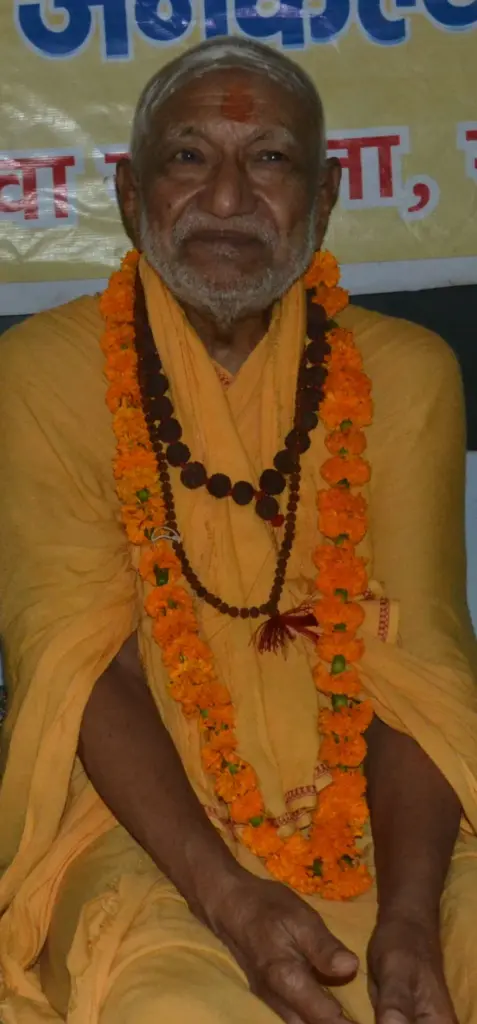
GD Agarwal (Guru Das Agarwal, also spelled Agrawal) was an Indian environmental engineer who taught at IIT Kanpur, served as the first member secretary of the Central Pollution Control Board and, as the monk Swami Gyan Swaroop Sanand, fasted repeatedly to stop dams on the upper Ganga. He died at AIIMS Rishikesh on 11 October 2018, aged 86, on the 111th day of a fast demanding a law to protect the river. His earlier fasts led the Centre to scrap the 600 MW Loharinag Pala project in 2010 and to notify the Bhagirathi eco-sensitive zone in 2012.
Readers usually meet him through the last chapter alone: an elderly sadhu who fasted to death over a river. That picture leaves out the first sixty years. He was a Berkeley-trained pollution scientist who helped build India’s first pollution regulator and argued for the Ganga in the language of flow measurements and project clearances as much as in the language of faith. This note keeps both halves in view and separates what the record shows from what his supporters and critics each claim.
Who GD Agarwal was
GD Agarwal’s public life ran in two tracks that met only late: a career in environmental engineering and a campaign for the Ganga that he eventually waged as a sannyasi, a Hindu renunciant. The facts below come from his alma mater, the Central Pollution Control Board, the environment ministry’s notifications and contemporary reporting.
| Fact | Detail |
|---|---|
| Full name | Guru Das Agarwal (spelled Agrawal in many records) |
| Monastic name | Swami Gyan Swaroop Sanand, taken in 2011 |
| Born | 1932, Kandhla, western Uttar Pradesh |
| Education | Civil engineering, University of Roorkee; M.S. (1965) and Ph.D. (1966), University of California, Berkeley |
| Career | Professor of environmental engineering at IIT Kanpur; first member secretary of the CPCB |
| Known for | Fasts against dams on the Bhagirathi and Alaknanda; demand for an aviral (uninterrupted) Ganga |
| Policy outcomes linked to his fasts | Loharinag Pala project scrapped (2010); Bhagirathi eco-sensitive zone notified (2012) |
| Died | 11 October 2018, AIIMS Rishikesh, on day 111 of his last fast |
Life in phases
His life is easiest to follow in four phases: training, teaching and regulation, retirement into activism and the final fasts as Swami Sanand.
Engineer and scientist
Agarwal was born in 1932 in Kandhla, a small town in western Uttar Pradesh. A former student, writing for India Water Portal, records that he was raised by his aunt and began work as an irrigation engineer. He studied civil engineering at the University of Roorkee, now IIT Roorkee, and then went to the University of California, Berkeley, which lists him among its alumni with an M.S. in 1965 and a Ph.D. in 1966 in civil engineering.
Berkeley’s alumni note says he began his career as a professor of environmental engineering at IIT Kanpur, and contemporary accounts describe him heading the department of civil and environmental engineering there. Environmental engineering, in plain terms, is the branch that designs systems to treat sewage, clean water and control pollution. That training explains why his later river campaign kept returning to flows, discharges and project design.
The first member secretary of the CPCB
The Central Pollution Control Board was constituted in September 1974 under the Water (Prevention and Control of Pollution) Act, 1974, as India’s first national pollution regulator. Agarwal was its first member secretary, the full-time officer who runs the board’s work, as Down To Earth and his former students record. The board’s role in the wider regulatory system is covered in the note on pollution control boards.
The exact years of his CPCB stint are reported differently across secondary accounts, and no primary record of his tenure turned up in the board’s own published pages. The safe statement is the one every source agrees on: he was the board’s first member secretary.
Chitrakoot and the turn to the river
After retiring from IIT Kanpur, Agarwal settled in Chitrakoot and taught as an honorary professor at the Mahatma Gandhi Chitrakoot Gramodaya Vishwavidyalaya, according to his former student. His focus narrowed to the upper Ganga, where a cascade of hydropower projects was planned on the Bhagirathi between Gangotri and Uttarkashi. Projects of this kind divert the river through long tunnels to turbines and return it downstream; protesters against Loharinag Pala warned that the Bhagirathi would vanish from its course and run only through tunnels.
Swami Sanand and the final fasts
In 2011 he took sannyas and became Swami Gyan Swaroop Sanand. The new name didn’t change his method. He kept writing to ministers and prime ministers with specific demands, and he kept fasting when the demands went unanswered. His last fast, begun on 22 June 2018 at the Matri Sadan ashram in Haridwar, ended with his death in October.
What he argued for
Agarwal’s central idea was that the Ganga needed to be aviral as well as nirmal, uninterrupted as well as clean. Most government programs since the Ganga Action Plan had focused on cleaning, chiefly through sewage treatment plants. Agarwal argued that a river cut into segments by dams and tunnels cannot clean itself, however many treatment plants line its banks.
His demands across the years were concrete:
- Free flow in the headwaters. He wanted the upper Bhagirathi, and later the Alaknanda and its tributaries, kept in their natural channels, without new hydropower diversions.
- Minimum environmental flows. Environmental flow, or e-flow, is the share of a river’s natural flow that must be left in the channel to keep it alive; he pressed for it to be fixed and enforced.
- A Ganga law. In 2018 he demanded that Parliament pass the Ganga protection bill drafted by a committee headed by Justice Giridhar Malviya.
- A Ganga council. He proposed a 20-member body of official and non-official members whose consent would be needed before any work affecting the river.
- An end to riverbed mining, especially near Haridwar.
He also framed the river in religious terms, as sacred and central to Hindu life, and that framing was deliberate. Down To Earth notes that he clarified he was not against projects as such, only against projects built at the cost of the Ganga. The note on the Ganga river system places the Bhagirathi and Alaknanda in the wider basin.
The fasts and what they changed
Agarwal’s fasts are the best-documented part of his life, because each one produced letters, ministerial responses and press coverage. Accounts differ on the count: SANDRP’s Himanshu Thakkar lists fasts in 2008, 2009, 2010, 2012 and 2013 before the last one, while a former student writing for India Water Portal describes four. The outcomes are clearer than the count.
Loharinag Pala, 2008 to 2010
The 600 MW Loharinag Pala project, being built by NTPC on the Bhagirathi, was his first target. Down To Earth reported that a Group of Ministers decided on 8 July 2010 to let construction continue because NTPC had already spent about ₹600 crore, and that Agarwal began an indefinite hunger strike on 20 July, his third against the project. On 20 August 2010 the ministers reversed themselves and scrapped it. In a letter dated 23 August 2010, then finance minister Pranab Mukherjee set out the government’s commitments, including scrapping projects on the Bhagirathi and declaring the stretch from Gaumukh to Uttarkashi eco-sensitive.
That sequence shows the stakes on both sides. A public sector company had sunk about ₹600 crore into a half-built project, and the fast forced the Centre to decide whether that spending outweighed the river. Down To Earth also reported that Uttarakhand’s chief minister had written to the Prime Minister on 3 August 2010 asking for the project to be dropped.
The Bhagirathi eco-sensitive zone, 2012
The second outcome was legal. On 18 December 2012, the environment ministry notified the entire watershed of about 100 km of the Bhagirathi, from Gaumukh to Uttarkashi, as an eco-sensitive zone covering 4,179.59 square kilometers, by notification S.O. 2930(E) under the Environment (Protection) Act, 1986. An eco-sensitive zone restricts or regulates activities such as large hydropower and quarrying inside it. The notification has since been amended, most recently on 10 November 2022. The rules behind such zones are in the note on eco-sensitive zones, and the parent law is in the note on the Environment (Protection) Act, 1986.
The last fast, 2018
On 24 February 2018 he wrote to Prime Minister Narendra Modi listing his demands and announcing a fast from 22 June. Getting no response, he began it at Matri Sadan, Haridwar. On 9 October 2018 the government notified minimum environmental flows for the Ganga by gazette notification, and Union water resources minister Nitin Gadkari appealed to him to end his fast. He refused, saying his core demands were unmet. He gave up water, was moved to AIIMS Rishikesh and died there on 11 October 2018, which Down To Earth reported as the 111th day of the fast.
Legacy and how he is remembered
Agarwal’s legacy sits in three places: in law, in the river-policy debate and in the ethics of protest.
In law, his fasts are directly linked to two lasting acts: the cancellation of Loharinag Pala and the Bhagirathi eco-sensitive zone. The e-flow notification of 9 October 2018 came during his last fast; it set the upper basin’s flows at 20% of the monthly average in the dry months of November to March, 25% in October, April and May and 30% in the monsoon, with minimum releases at the Bhimgoda, Bijnor, Narora and Kanpur barrages. The Central Water Commission now publishes compliance reports against it.
In the policy debate, his insistence on flow over cleaning has become mainstream vocabulary. The National Ganga River Basin Authority he engaged with was dissolved on 7 October 2016 and replaced by a National Ganga Council chaired by the Prime Minister, with the National Mission for Clean Ganga as its executing arm. The cleaning side of that story is in the note on Ganga pollution.
In ethics, his fasts belong to the Gandhian line of non-violent self-suffering aimed at changing a government’s mind. They invite comparison with other Himalayan environmental movements, such as the Chipko movement, and with the long protest against the Tehri dam on the same river.
What remains disputed
Three questions about Agarwal stay open, and an honest answer should name them.
- Whether the government met his demands. The government’s answer was the e-flow notification of 9 October 2018, released with Gadkari’s appeal to end the fast. Agarwal and his supporters held that the central demands, a Ganga law and a halt to Alaknanda projects, were not met, and critics such as Thakkar called the notification too little and too late.
- The framing of the cause. Even sympathetic river activists, Thakkar among them, wrote that they did not always share his focus on the Ganga alone or on religious grounds, preferring that all rivers be treated alike on social and ecological grounds.
- Small factual gaps. Sources differ on the number of his fasts, on whether he gave up water on 9 or 10 October 2018 and on the years of his CPCB tenure.
GD Agarwal and the Ganga today
GD Agarwal’s name now attaches to a debate that is still being decided in court and in policy. The law he wanted has not been enacted; the Ganga is still governed by the 2016 authorities order issued under the Environment (Protection) Act and by the 2018 e-flow notification.
The hydropower question moved in May 2026. The Union government filed a joint affidavit before the Supreme Court stating that it will permit no new hydroelectric projects in the Alaknanda-Bhagirathi basin of the upper Ganga, allowing only 7 projects, 4 already commissioned and 3 well advanced. It cited seismic fragility, biodiversity, the five Prayags and the precautionary principle, as the explainer on no new hydroelectric projects in the upper Ganga basin sets out. It is the closest the state has come to his central demand, though it arrives through an affidavit, not the statute he asked for.
How to study GD Agarwal for exams
GD Agarwal is a person-in-context topic, not a biography to memorize. He fits GS Paper III under environment and conservation (river pollution, environmental flows, eco-sensitive zones and hydropower), GS Paper II under pressure groups and civil society and GS Paper IV as a case study in conscience and non-violent protest. In Prelims he is more likely to appear through what he influenced, the Bhagirathi eco-sensitive zone or e-flows, than by name.
Mains has asked about the river policies he challenged. Mains 2015 GS Paper III asked candidates to “Discuss the Namami Gange and National Mission for Clean Ganga (NMCG) programmes and the causes of mixed results from previous schemes. What quantum leaps can help preserve the river Ganga better than incremental inputs?” His aviral Ganga argument is a ready-made answer to the second half.
Revise these until they’re automatic:
- First member secretary of the CPCB, the board constituted in September 1974 under the Water Act.
- Swami Gyan Swaroop Sanand: the name he took in 2011.
- Loharinag Pala: 600 MW NTPC project on the Bhagirathi, scrapped on 20 August 2010.
- Bhagirathi eco-sensitive zone: about 100 km from Gaumukh to Uttarkashi, 4,179.59 sq km, notified 18 December 2012.
- Aviral and nirmal: uninterrupted and clean, his two conditions for a living river.
- 9 October 2018: the Ganga e-flow notification.
- 11 October 2018: his death at AIIMS Rishikesh, on day 111 of his last fast.
Two confusions cost marks. Don’t credit him with the Ganga Action Plan or Namami Gange; these were government programs, and his 2018 letters argued that the work done under them had not saved the river. And don’t call the 2012 zone a national park or sanctuary; it is an eco-sensitive zone under the Environment (Protection) Act.
| Figure | Field | Main river or region | Method | Key outcome |
|---|---|---|---|---|
| GD Agarwal | Environmental engineer and monk | Bhagirathi and Alaknanda | Letters and fasts | Loharinag Pala scrapped; Bhagirathi eco-sensitive zone |
| Sunderlal Bahuguna | Gandhian activist | Bhagirathi at Tehri; Himalayan forests | Padyatras and fasts, part of Chipko | Long protest against the Tehri dam |
| Medha Patkar | Social activist | Narmada | Narmada Bachao Andolan, satyagraha | Resettlement and dam-height debate |
GD Agarwal is worth more to an answer than his biography suggests. He gives you an engineer’s argument for river flow, a dated record of what a protest achieved and an honest case of a citizen and a state talking past each other. Use him as evidence, with dates, and he lifts an environment or ethics answer above the general.
Frequently Asked Questions
Who was GD Agarwal?
GD Agarwal was an Indian environmental engineer who taught at IIT Kanpur and was the first member secretary of the Central Pollution Control Board. In 2011 he became a monk named Swami Gyan Swaroop Sanand. He is known for his fasts to stop hydropower projects on the upper Ganga, and he died in 2018 during a fast for a Ganga protection law.
Why did GD Agarwal fast?
He fasted to keep the upper Ganga flowing in its natural channel and to stop new hydropower projects on the Bhagirathi and Alaknanda. In his last fast in 2018 he also demanded a Ganga protection law based on the Justice Giridhar Malviya committee draft, a statutory Ganga council and an end to riverbed mining.
How did GD Agarwal die?
He died at AIIMS Rishikesh on 11 October 2018, aged 86. He had been fasting since 22 June 2018 at Matri Sadan in Haridwar and had given up water shortly before he was moved to hospital. The hospital’s director attributed his death to a heart attack on the 111th day of the fast.
What did GD Agarwal achieve?
His fasts are linked to the cancellation of the 600 MW Loharinag Pala hydropower project on the Bhagirathi in August 2010 and to the notification of the Bhagirathi eco-sensitive zone from Gaumukh to Uttarkashi in December 2012. The Ganga environmental flow notification came on 9 October 2018, during his final fast.
What is the Bhagirathi eco-sensitive zone?
It is the watershed of about 100 km of the Bhagirathi from Gaumukh to Uttarkashi, covering 4,179.59 square kilometers, notified by the environment ministry on 18 December 2012 under the Environment (Protection) Act, 1986. It restricts or regulates activities such as large hydropower and mining inside the zone.
What does aviral Ganga mean?
Aviral means uninterrupted or continuously flowing. Agarwal argued that the Ganga had to be aviral as well as nirmal, or clean, because a river broken by dams and diverted through tunnels cannot sustain itself however much sewage is treated along its banks.
Was GD Agarwal the founder of the CPCB?
No. He was the first member secretary of the Central Pollution Control Board, the board’s chief executive officer, but the board itself was created by law in September 1974 under the Water (Prevention and Control of Pollution) Act, 1974.
Practice Questions
Prelims
1. Consider the following statements about GD Agarwal: 1. He was the first member secretary of the Central Pollution Control Board. 2. He took the monastic name Swami Gyan Swaroop Sanand. Which of the statements given above is/are correct?
- (a) 1 only
- (b) 2 only
- (c) Both 1 and 2
- (d) Neither 1 nor 2
Answer: (c) Both are correct; he took sannyas in 2011.
2. Consider the following statements about the Bhagirathi eco-sensitive zone: 1. It covers the watershed from Gaumukh to Uttarkashi. 2. It was notified under the Wild Life (Protection) Act, 1972. 3. It was notified in December 2012. Which of the statements given above are correct?
- (a) 1 and 2 only
- (b) 1 and 3 only
- (c) 2 and 3 only
- (d) 1, 2 and 3
Answer: (b) It was notified under the Environment (Protection) Act, 1986.
3. The Loharinag Pala hydroelectric project, scrapped in 2010 after protests including GD Agarwal’s fast, was located on which river?
- (a) Alaknanda
- (b) Mandakini
- (c) Bhagirathi
- (d) Yamuna
Answer: (c) The 600 MW NTPC project was on the Bhagirathi.
4. The Central Pollution Control Board was constituted under which law?
- (a) Environment (Protection) Act, 1986
- (b) Water (Prevention and Control of Pollution) Act, 1974
- (c) Air (Prevention and Control of Pollution) Act, 1981
- (d) National Green Tribunal Act, 2010
Answer: (b) CPCB was constituted in September 1974 under the Water Act.
5. In the context of river management, the term ‘environmental flow’ refers to:
- (a) the maximum water a dam may store in the monsoon
- (b) the flow a river must retain in its channel to sustain its ecosystem
- (c) the volume of treated sewage released into a river
- (d) the flow required to run a hydropower turbine at full capacity
Answer: (b) E-flow is the minimum flow left in the channel; the Ganga’s was notified on 9 October 2018.
Mains
- What role do environmental NGOs and activists play in influencing Environmental Impact Assessment (EIA) outcomes for major projects in India? Cite four examples with all important details. (10 marks, 150 words) Previous year: Mains 2024, GS Paper III.
- What are environmental pressure groups? Discuss their role in raising awareness, influencing policies and advocating for environmental protection in India. (15 marks, 250 words) Previous year: Mains 2025, GS Paper II.
- A clean Ganga is not possible without a flowing Ganga. Examine this argument with reference to hydropower in the upper Ganga basin and the environmental flow norms of 2018. (15 marks, 250 words)
- GD Agarwal’s fasts raise the question of how far self-suffering is a legitimate tool of public persuasion in a democracy. Discuss from an ethical perspective. (10 marks, 150 words)
- Evaluate the significance of eco-sensitive zones as a conservation tool, with reference to the Bhagirathi eco-sensitive zone. (10 marks, 150 words)
Tell Google you want more of this.
Add Anantam IAS as a preferred sourceOne tap, and this site shows up more often in your own Top Stories, AI Overviews and AI Mode. Remove it any time.