Soil is the foundation of civilisation. It stores carbon, filters water, grows food, hosts a quarter of the planet's biodiversity and regulates climate. It also takes a thousand years to build a centimetre of topsoil — and decades of bad management to destroy it. Indian soils are in crisis. Over 60% of Indian soils have soil organic carbon (SOC) below 0.5%, against an optimal range of 1.5% to 2% as recommended by World Food Prize laureate Rattan Lal. Our soils are, as agricultural scientists now openly say, "in the ICU".
This is not an academic problem. Low SOC soils hold less water, need more fertiliser, emit more carbon and crumble under extreme rainfall. They feed today at the cost of tomorrow.
Agriculture and Global Sustainability
Earth Day originated in the United States in 1970 under Senator Gaylord Nelson's leadership, amid concerns about environmental damage from rapid industrial development. Over the fifty-plus years since, numerous Conferences of Parties (COPs) have been held. COP28 in Dubai (November–December 2023) was historic: for the first time, agriculture was brought into the climate agreement through the Emirates Declaration on Sustainable Agriculture, Resilient Food Systems and Climate Action, signed by 159 countries.
India did not sign it, unlike most G20 countries including the United States and China. The government's reasoning: the declaration would involve significant changes in Indian agricultural policies and farming practices — changes the government is not yet prepared to commit to internationally.
The Population and Food Challenge
- It took Homo sapiens 200,000+ years to reach 1 billion people in 1804.
- The second billion arrived in 123 years (by 1927).
- Within less than 100 years, humanity has grown from 2 billion to over 8 billion (crossed in November 2022).
Norman Borlaug, father of the Green Revolution, observed that this planet can feed four billion people at most on its own natural endowment. If science had not intervened, many more would have starved. The Green Revolution — high-yielding varieties, synthetic fertilisers, irrigation, mechanisation — saved hundreds of millions of lives. But it created environmental consequences that are becoming unsustainable.
Food Waste and Subsidy Realities
- As per FAO, roughly 30% of food produced never reaches stomachs — lost in post-harvest handling, storage, transport and retail, and wasted at the consumer end.
- To ensure no one dies of hunger, each country devises its own policies.
- India runs the world's largest food subsidy programme — Pradhan Mantri Garib Kalyan Anna Yojana (PMGKAY) — under which 81.35 crore people receive free foodgrains. Extended until 2028, it is a massive redistribution lever.
Policy Challenges
Skewed Fertiliser Subsidy
The policy of heavily subsidising chemical fertilisers — especially urea — has led to severely skewed NPK ratio. The ideal N:P:K ratio for Indian soils is around 4:2:1. Actual usage in many states exceeds 7:3:1 or even 10:3:1. The consequences:
- Soils starved of organic carbon as micronutrients and organic matter are ignored.
- Nitrogen leaching into groundwater — nitrate contamination in drinking water.
- Soil acidification from excessive urea.
- Yield plateaus despite rising fertiliser use.
Indian urea retail prices have been frozen for decades at subsidised rates, creating vast gaps between field reality and market pricing.
Policy Blindness
World Food Laureate Rattan Lal places optimal SOC at 1.5 to 2%. Over 60% of Indian soils are below 0.5%. The policy response has been slow, partial and poorly resourced. Soil Health Cards are distributed but rarely acted on in recommendations.
Reform Direction
- Move from subsidising fertiliser prices to direct income transfer to farmers.
- Let prices of N, P and K be decided by market forces.
- Advance preparation requires updated land records, crop data, irrigation status, tenancy details.
- Fertiliser-neutral subsidy reorientation has been repeatedly recommended by committees (Shanta Kumar, Dalwai Committee).
Groundwater Depletion
In Punjab, Haryana and western Rajasthan, the situation is especially serious. The drivers:
- Free electricity for irrigation tubewells.
- Minimum Support Prices (MSP) concentrated on paddy and wheat.
- Open-ended procurement of rice by FCI.
Result: farmers grow water-guzzling paddy in semi-arid Punjab, pumping groundwater with zero marginal cost. Central Ground Water Board data show Punjab's water table has fallen over 10 metres in two decades.
Paddy fields also emit methane and nitrous oxide — approximately 5 tonnes of CO2-equivalent per hectare per year. The crop is an ecological triple-loss: water, soil, climate.
Reduced Crop Diversity
Historical Punjab tells the story in one statistic:
- In 1960, only 4.8% of Punjab's cropped area was under rice.
- Today, rice occupies more than 40% of Punjab's cropped area.
This has displaced maize, millets, pulses and many oilseeds. It has also driven loss of varietal diversity — successful high-yielding varieties of rice and wheat displaced hundreds of local landraces.
The Integrated Nutrient Management concept, once central to extension services, has been diluted.
What Healing Looks Like
Agronomy
- Natural farming with desi cow dung, urine (PKVY, BPKP, NMNF).
- Regenerative agriculture — cover crops, reduced tillage, diverse rotations.
- Crop diversification — millets, pulses, oilseeds.
- Agroforestry — trees on farms.
- Biochar and compost application.
- Mulching to preserve moisture.
- Balanced NPK use with micronutrients.
Policy
- Fertiliser subsidy reform — nutrient-based subsidy extended to urea fully; DBT pilots.
- MSP broadening to pulses, millets, oilseeds with effective procurement.
- Electricity pricing reform — metered tubewells, cash-in-lieu incentives for reduced pumping.
- Procurement diversification — away from paddy-wheat monoculture.
- Groundwater regulation with community involvement (Atal Bhujal Yojana model).
- Carbon credits for soil carbon — emerging opportunity.
Institutional
- Soil Health Card 2.0 — with GIS, time-series tracking and action plans.
- ICAR extension revitalised to carry regenerative practices.
- Krishi Vigyan Kendras as demonstration hubs.
- FPO aggregation for natural farming produce.
- Private sector MRV for soil carbon markets.
Climate and Food System Resilience
- Extreme weather — heatwaves, erratic monsoons, cyclones — demand resilient food systems.
- Loss of pollinators under pesticide and climate stress threatens yields.
- Salinisation in coastal aquifers and arid irrigated belts.
- Soil erosion — roughly 5 billion tonnes of topsoil lost every year in India.
Planet-positive policy means balancing productivity with sustainability — not choosing between them.
Latest Developments (2024–26)
Updated context:
- National Mission on Natural Farming (NMNF) launched in November 2024 with Rs 2,481 crore outlay over 6 years.
- PM Pranam Scheme (2023) incentivises states reducing chemical fertiliser use by sharing saved subsidy.
- Union Budget 2024–25 announced 1 crore farmers to be transitioned to natural farming.
- Green Credit Programme (2023) creates tradable credits for tree plantation on degraded land.
- Soil Health Card 2.0 pilot launched in 2024 with georeferencing and digital action plans.
- PMGKAY extended to 2028 — covering 81.35 crore people.
- Millet mainstreaming post International Year of Millets 2023.
- Carbon Credit Trading Scheme (CCTS) operational framework under development, with agriculture pathway under discussion.
- Rattan Lal continues to advise Indian government on SOC restoration.
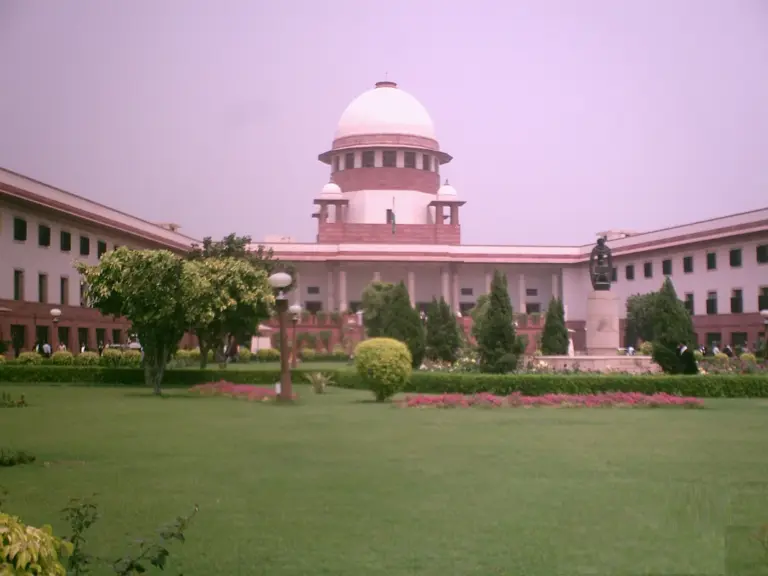
- Supreme Court interventions (2024) on stubble burning and groundwater over-extraction.
Conclusion
The Green Revolution solved India's food crisis. It also quietly created a soil crisis, a water crisis and a climate crisis. Healing the soil is not a niche concern for eco-purists. It is core agricultural policy, core climate policy and core food security policy. What is needed is not nostalgia for pre-Green Revolution farming but a science-led, policy-supported second green revolution — one that restores soil carbon, diversifies crops, prices water honestly and pays farmers for the ecosystem services they can rebuild.
UPSC Relevance
Paper mapping: GS Paper III — Agriculture, Environment, Climate Change; GS Paper II — Government Schemes.
Prelims pointers:
- Optimal soil organic carbon (SOC) is 1.5–2% (per Rattan Lal).
- COP28 took place in Dubai (Nov–Dec 2023); for the first time, agriculture entered a climate agreement through the Emirates Declaration.
- India did not sign the Emirates Declaration on Agriculture.
- Green Revolution is associated with Norman Borlaug (father) and M.S. Swaminathan (in India).
- Earth Day began in 1970 under Senator Gaylord Nelson (USA).
- PMGKAY covers 81.35 crore people with free foodgrains, extended to 2028.
- National Mission on Natural Farming (NMNF) launched November 2024.
- Atal Bhujal Yojana is the central scheme for community-led groundwater management.
- Ideal N:P:K ratio is around 4:2:1 for Indian soils.
- Paddy fields emit approximately 5 tCO2-e/ha/year.
Mains angles:
- "Indian soils are in crisis. Discuss the policy reforms needed to restore soil health while safeguarding food security."
- "Evaluate the long-term sustainability of the Green Revolution model in light of groundwater depletion, soil degradation and climate change."
Tell Google you want more of this.
Add Anantam IAS as a preferred sourceOne tap, and this site shows up more often in your own Top Stories, AI Overviews and AI Mode. Remove it any time.