The Nilgiri Tahr (Nilgiritragus hylocrius) is a stocky, cliff-dwelling ungulate endemic to the southern Western Ghats of Tamil Nadu and Kerala. Locally called "Varaiaadu" in Tamil (mountain goat), it is the state animal of Tamil Nadu and an IUCN-listed Endangered species. The species inhabits high-altitude montane grasslands and shola ecosystems between 1,200 and 2,600 metres above sea level.
For UPSC aspirants, the Nilgiri Tahr is a recurring topic under GS Paper 3 (Environment and Biodiversity) owing to its endemic status, the 2024 first-ever synchronised census, and Project Nilgiri Tahr launched by the Tamil Nadu government.
Taxonomy and Identification
| Attribute | Details |
|---|---|
| Scientific name | Nilgiritragus hylocrius |
| Family | Bovidae |
| Local names | Varaiaadu (Tamil), Mullan Aadu, Nilgiri ibex |
| Weight | 80–100 kg (males); 50–60 kg (females) |
| Shoulder height | ~100 cm |
| Horn length | Up to 40 cm (males); shorter in females |
| Lifespan | 9–10 years in the wild |
Historically grouped with Hemitragus, molecular studies reclassified the species into a monotypic genus Nilgiritragus, making it genetically distinct from the Himalayan and Arabian Tahrs. Adult males develop a silvery-grey saddle-shaped back patch, earning them the nickname "saddlebacks". Females and juveniles are uniform brown.
Habitat and Distribution
The Nilgiri Tahr is strictly endemic to the Western Ghats, restricted to a narrow belt of about 400 km between the Nilgiri Hills in the north and the Ashambu / Agasthyamalai Hills in the south.
Key Habitats
- Eravikulam National Park (Kerala): ~700 individuals — the single largest population; also famed for the Neelakurinji (Strobilanthes kunthiana) bloom.
- Grass Hills National Park (Tamil Nadu): Part of the Anamalai Tiger Reserve; one of the densest populations.
- Nilgiri Biosphere Reserve: Mukurthi National Park holds a viable population.
- Anamalai and Palani Hills: Fragmented populations.
- Periyar Tiger Reserve, Silent Valley, Meghamalai: Smaller sub-populations.
- Ashambu / Agasthyamalai range: Southernmost distribution limit.
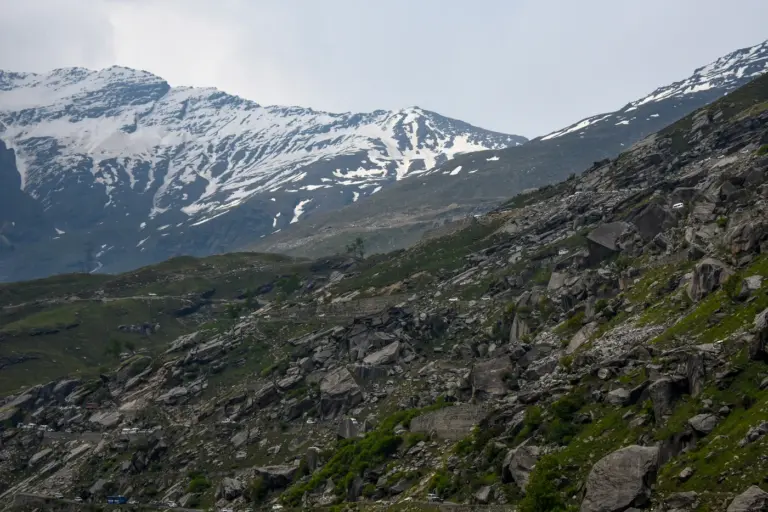
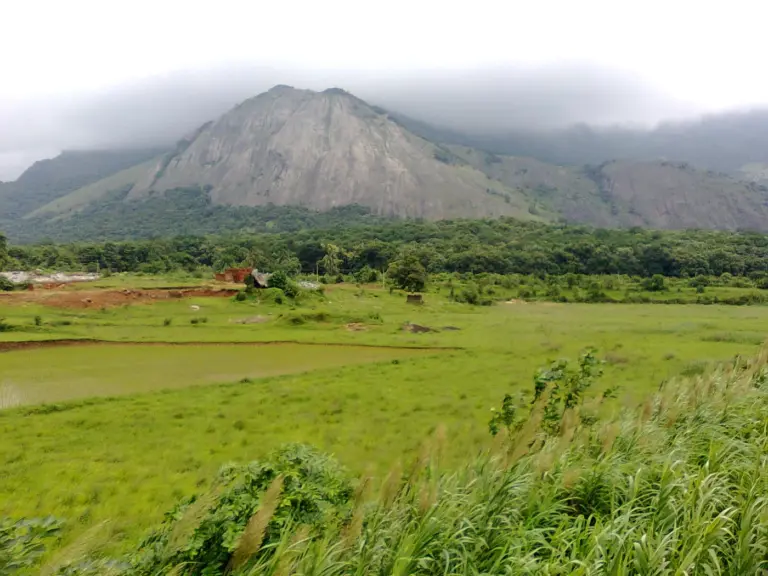
The species prefers open montane grasslands bordered by shola forests, using steep cliffs and rock escarpments as escape terrain.
Population and the 2024 Synchronised Census
The first-ever synchronised census of the Nilgiri Tahr was conducted in April 2024 under Project Nilgiri Tahr. Tamil Nadu and Kerala Forest Departments jointly surveyed all known habitats using bounded count and direct observation methods.
| Census | Population Estimate |
|---|---|
| 1975 (Clifford Rice, WWF) | ~2,230 |
| 2015 (WWF India) | ~3,122 |
| 2024 (first synchronised census) | ~3,122 individuals (Eravikulam ~700) |
Populations remain fragmented across 17+ isolated pockets, raising concerns of genetic isolation and inbreeding.
Legal and Conservation Status
| Framework | Status |
|---|---|
| IUCN Red List | Endangered |
| Wildlife (Protection) Act, 1972 | Schedule I |
| CITES | Not listed |
| State animal | Tamil Nadu |
Project Nilgiri Tahr
The Tamil Nadu government launched Project Nilgiri Tahr on 10 October 2023 with an outlay of Rs. 25.14 crore over five years. It is the first species-specific conservation project for the Nilgiri Tahr.
Key Objectives
- Population estimation via synchronised surveys (achieved April 2024).
- Radio-collaring for movement and home-range studies.
- Reintroduction into historical habitats where the species is locally extinct.
- Disease surveillance for foot-and-mouth disease (FMD) and peste des petits ruminants (PPR) transmitted from livestock.
- Invasive species removal — particularly wattle (Acacia mearnsii), eucalyptus and pine plantations that have replaced native shola-grassland mosaics.
- Eco-development with tribal settlements around habitats.
- Development of a dedicated Nilgiri Tahr Conservation Centre at the Anamalai Tiger Reserve.
Implementation
The project is coordinated by the Tamil Nadu Forest Department with WWF-India, Bombay Natural History Society (BNHS), and the Wildlife Institute of India (WII). 7 October is observed annually as Nilgiri Tahr Day (birth anniversary of E.R.C. Davidar, who pioneered Tahr research).
Ecological Role
The Nilgiri Tahr is a keystone herbivore of the shola-grassland ecosystem. Its grazing:
- Maintains the open grassland mosaic essential for co-existing species.
- Supports seed dispersal of native grasses.
- Sustains predators such as the Indian leopard and dhole (Asiatic wild dog).
It is also a bio-indicator of high-altitude ecosystem health — population declines reflect habitat fragmentation or climate shifts across the Western Ghats.
Threats to Survival
1. Habitat Loss and Fragmentation
- Conversion of native grasslands into tea, coffee and eucalyptus plantations during the colonial era.
- Expansion of wattle (Acacia mearnsii) introduced by the British for fuelwood — now a dominant invasive blocking grassland regeneration.
- Hydroelectric projects and road networks fragmenting habitats.
2. Climate Change
- Rising temperatures pushing the species to higher elevations.
- Altered monsoon patterns affecting grassland productivity.
- Shifts in the Neelakurinji bloom cycle in the same shola-grassland habitat.
3. Poaching
- Drastically reduced since colonial sport-hunting but still reported in remote tracts.
- Meat and trophy horns remain incentives.
4. Disease Transmission
- Contact with domestic cattle, sheep and goats introduces FMD, PPR and anthrax.
- The 2014 FMD outbreak in Eravikulam NP killed several individuals.
5. Tourism Pressure
- Eravikulam NP hosts 4+ lakh annual visitors, disturbing Tahr behaviour in the Rajamalai zone.
Comparison with Other Tahrs
| Species | Distribution | IUCN Status |
|---|---|---|
| Nilgiri Tahr (Nilgiritragus hylocrius) | Western Ghats, India — endemic | Endangered |
| Himalayan Tahr (Hemitragus jemlahicus) | Himalayas (India, Nepal, Bhutan, China) | Near Threatened |
| Arabian Tahr (Arabitragus jayakari) | Hajar Mountains (Oman, UAE) | Endangered |
The three are now in separate monotypic genera, confirming independent evolutionary lineages.
Associated Protected Areas
- Nilgiri Biosphere Reserve (1986) — India's first biosphere reserve, 5,520 sq km.
- Eravikulam National Park (Kerala, 1978) — Rajamalai tourist zone.
- Anamalai Tiger Reserve (Tamil Nadu) — includes Grass Hills NP.
- Mukurthi National Park (Tamil Nadu) — entirely within Tahr habitat.
- Silent Valley National Park (Kerala) — small population.
- Periyar Tiger Reserve (Kerala) — southern population.
UPSC Relevance
GS Paper 3 (Environment and Biodiversity):
- Endemic species conservation in the Western Ghats.
- Species-specific project mode (Project Tiger, Project Elephant, Project Dolphin, Project Cheetah, Project Nilgiri Tahr).
- Shola-grassland ecosystem dynamics.
- Invasive Alien Species (IAS) management.
GS Paper 1 (Geography): Western Ghats — one of the eight hottest biodiversity hotspots globally; UNESCO World Heritage Site (2012).
Key Prelims Facts:
- Scientific name: Nilgiritragus hylocrius
- IUCN status: Endangered
- WPA 1972: Schedule I
- State animal of: Tamil Nadu
- Largest population: Eravikulam National Park (~700)
- Project Nilgiri Tahr launched: 10 October 2023, Tamil Nadu Government
- Budget outlay: Rs. 25.14 crore over 5 years
- First synchronised census: April 2024 (~3,122 individuals)
- Altitude range: 1,200–2,600 m
- Nickname for adult males: Saddlebacks
- Local name: Varaiaadu
Prelims Tip: Remember the reclassification — the Nilgiri Tahr belongs to its own monotypic genus Nilgiritragus, not Hemitragus. Link it with the Neelakurinji (Strobilanthes kunthiana) bloom that occurs every 12 years in the same Eravikulam shola-grassland habitat.
Mains Angle: Discuss how species-specific projects (Project Nilgiri Tahr) complement landscape-scale conservation (Nilgiri Biosphere Reserve) and address threats from invasive species and climate change in endemic mountain ecosystems.
Tell Google you want more of this.
Add Anantam IAS as a preferred sourceOne tap, and this site shows up more often in your own Top Stories, AI Overviews and AI Mode. Remove it any time.