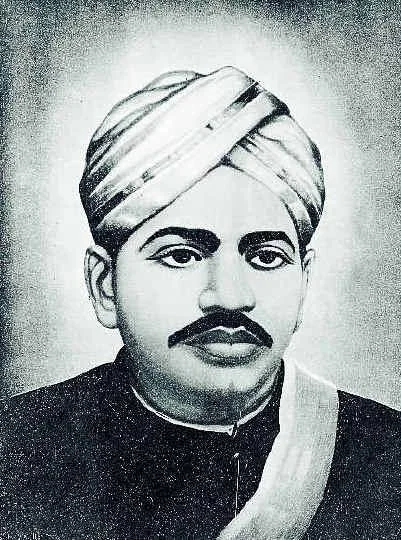
Ask most aspirants who India’s first Education Minister was, and the name Maulana Abul Kalam Azad comes quickly. Ask them what he did before 1947, and the answer thins out. That gap is the problem, because Azad was not a scholar who wandered into politics late; he was a revolutionary journalist at twenty-four, the youngest person ever to lead the Congress, the man who presided over the party through its most dangerous years, and the most prominent nationalist Muslim who staked everything on the argument that India need not be divided. His story is where the freedom struggle, communal politics and the idea of composite nationhood meet, which is exactly why examiners keep returning to it.
Who Maulana Abul Kalam Azad was
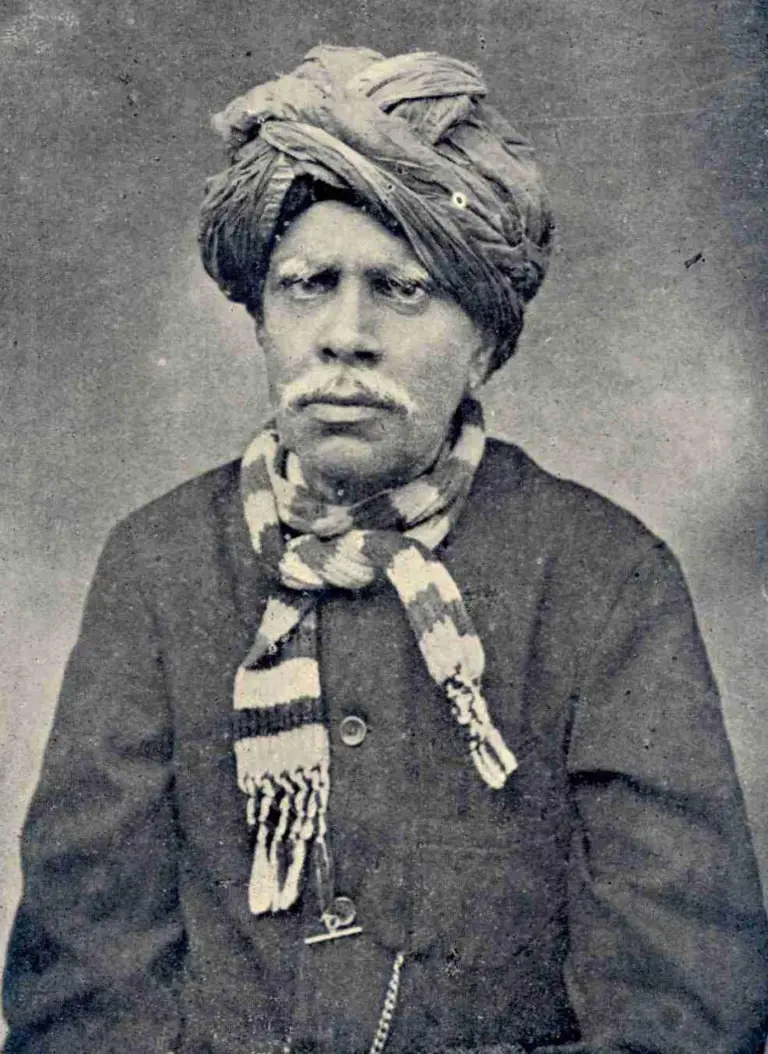
Maulana Abul Kalam Azad was a scholar, journalist and nationalist leader who served as Congress president during the crucial years of the freedom struggle and became independent India’s first Minister of Education. He was born on 11 November 1888 in Mecca, to an Indian father of scholarly lineage and an Arab mother, and grew up in Calcutta steeped in a traditional Islamic education of theology, philosophy and Arabic.
His given name was Abul Kalam Ghulam Muhiyuddin Ahmed, but he is remembered by the pen name he chose, Azad, meaning “the free”. The name was a statement of intent. He broke early from the conservative, taqlid-bound scholarship of his upbringing, taught himself English, and turned his formidable learning toward a single cause: an independent, undivided India in which Hindus and Muslims shared a common national life. Understanding that intellectual journey, from orthodox seminary to composite nationalism, is the key to the whole figure.
The revolutionary journalist: Al-Hilal and Al-Balagh
Azad entered public life not through a party but through a printing press, and this is the phase students most often skip. In 1912 he launched the Urdu weekly Al-Hilal, a paper that broke sharply from the loyalist tone of most Muslim publications of the day. Al-Hilal attacked British rule openly, urged Muslims to join the national mainstream rather than stand apart, and preached Hindu-Muslim unity as a religious as much as a political duty. It was fierce, learned and wildly popular, reaching a circulation few Urdu papers had touched.
The government moved against it under the Press Act, and when Al-Hilal was suppressed Azad simply started another paper, Al-Balagh, in 1915. That too was shut down, and he was interned at Ranchi from 1916 until the end of the First World War. By the time he was released, he was not just a writer but a nationalist of national standing, radicalised by the very repression meant to silence him. The lesson to carry into an answer is that Azad’s nationalism was forged in journalism and jail, a full decade before he became a Congress figurehead.
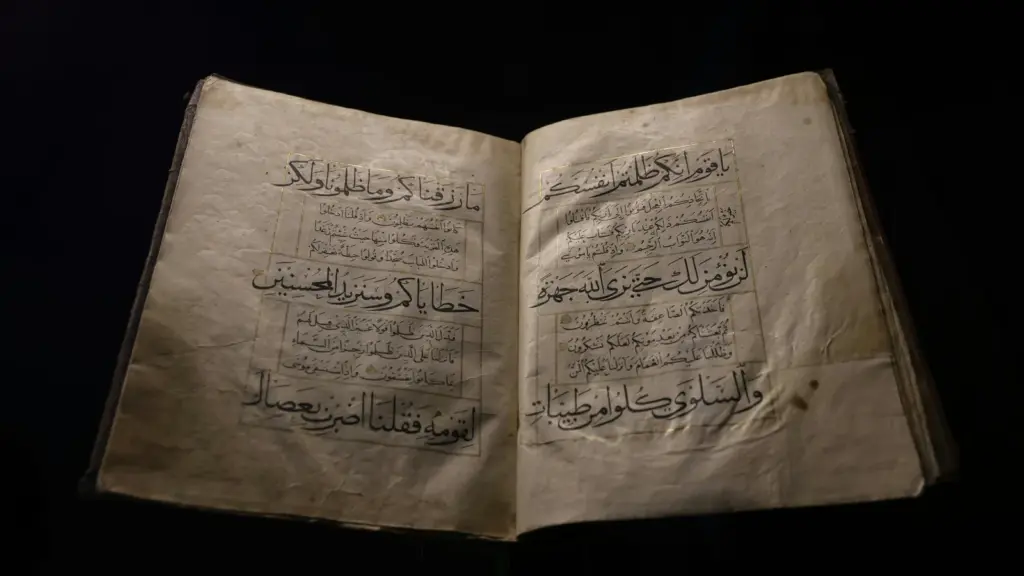
His scholarship ran alongside his politics and gave it depth. Azad was a serious theologian, and his best-known work of religious learning, the Tarjuman al-Quran, an interpretive commentary on the Quran, argued that the essential message of religion was unity and that sectarian division betrayed faith rather than expressed it. This was not a separate hobby from his politics; it was the foundation of it. His case for Hindu-Muslim unity rested on a theological argument that a true reading of Islam pointed toward brotherhood and against communal separatism. That is what made him so distinctive and so difficult for the Muslim League to answer: he opposed the two-nation theory not despite his religious credentials but because of them.
Khilafat, Non-Cooperation and the Gandhian turn
Azad’s arrival on the mass-politics stage came through the Khilafat cause. He was among the foremost leaders of the Khilafat Movement, the campaign launched after the First World War to protect the Ottoman Caliphate and, more broadly, to channel Muslim political energy into the national struggle. For Azad the Khilafat question was never only about Turkey; it was a bridge to bring Muslims into a united anti-colonial front alongside the Congress.
That is why he threw himself behind Mahatma Gandhi and the Non-Cooperation Movement of 1920-22, which fused the Khilafat and Congress agitations into the first true mass movement against the Raj. Azad’s endorsement mattered, because his religious credentials gave the Gandhian programme legitimacy among Muslims that no other leader could supply. From this point his path ran alongside Gandhi’s, and he became one of the most consistent Congress loyalists through every phase that followed, even when the alliance cost him support among sections of his own community.
The youngest Congress president, and then the longest-serving
Here is the fact that surprises people: Azad became president of the Indian National Congress in 1923, at the age of thirty-five, the youngest person ever to hold the office. He presided over the special session at Delhi at a moment when the movement was demoralised after the abrupt suspension of Non-Cooperation, and his job was to hold a fractured party together. That he did it so young says everything about the authority his learning and courage had already earned him within the Congress.
His second, far more consequential presidency began at the Ramgarh session in 1940 and ran, without fresh elections because of the war and the imprisonment of the leadership, all the way to 1946. This made him Congress president through the single most turbulent stretch of the freedom struggle: the failure of the Cripps Mission in 1942, the launch and suppression of the Quit India Movement, the long imprisonment of the entire top leadership, and then the tense endgame negotiations of 1945-46. When the British finally came to the table, it was Azad, as Congress president, who led the party’s side across those talks.
The stand against Partition
Azad’s defining political conviction, and his greatest defeat, was his opposition to the partition of India. He rejected the two-nation theory outright, arguing that religion was not a basis for nationhood and that India’s Hindus and Muslims had woven a shared civilisation over centuries that no line on a map could honestly cut. Against the Muslim League’s demand for Pakistan, he offered the vision of a single, federal, secular India in which Muslims would be safer as a large, respected minority within a united country than as a majority in a truncated, hostile-bordered state.
This position cost him dearly among Muslim politicians. Muhammad Ali Jinnah dismissed him as a Congress showpiece, and the League worked hard to paint him as a leader without a following in his own community. The charge was unfair but politically effective, because the League had captured the language of Muslim identity so completely that a nationalist Muslim who spoke of shared nationhood could be caricatured as a stooge. Azad held his ground anyway, and the loneliness of that stand is part of what makes him so instructive. He was arguing not for the easy position but for the one he believed was true, and he paid the price of being proved politically defeated while remaining, in his own eyes and in the Constitution’s, morally right.
As Congress president he led the party’s delegation at the Shimla Conference of 1945, the Viceroy Wavell’s attempt to form an interim government, where the talks broke down largely over the League’s insistence that it alone could nominate Muslim members. He then carried that responsibility into the Cabinet Mission of 1946 as the Congress’s principal negotiator, and he pinned real hope on the Cabinet Mission plan precisely because its loose three-tier federation offered a way to keep India united while giving Muslim-majority provinces autonomy. When that plan collapsed and Partition became inevitable, Azad regarded it as a tragedy, and he did not spare his own colleagues in his later judgment of how the acceptance came about.
His warnings that Partition would not solve the communal problem but relocate and deepen it read, in hindsight, as painfully prescient. In his famous address from the steps of Delhi’s Jama Masjid in October 1947, he urged the Muslims who feared the new India to stay rather than flee to Pakistan, reminding them that this land was as much theirs as anyone’s. For an aspirant, the sharpest way to hold this is that Azad represents the road not taken: the composite-nationalist alternative to the two-nation theory, defeated at the level of events but never refuted at the level of argument.
India’s first Education Minister and the institutions he built
When India became independent on 15 August 1947, Azad joined the first Cabinet as the Minister of Education, a post he held until his death on 22 February 1958. This is the phase that shaped the country you actually live in, because Azad used the ministry to lay the institutional bedrock of modern Indian education.
He was also a member of the Constituent Assembly that drafted the Constitution, bringing his weight to the settlement of a secular republic even as the country was torn by the very Partition he had fought to prevent. His fingerprints are on an extraordinary list of institutions. He established the University Grants Commission (UGC) in 1953 to fund and set standards for higher education. He championed the first Indian Institute of Technology at Kharagpur, opened in 1951, the seed of the entire IIT system. He set up the three great national cultural academies, the Sangeet Natak Akademi, the Lalit Kala Akademi and the Sahitya Akademi, along with the Indian Council for Cultural Relations (ICCR). He had earlier been closely associated with the founding of Jamia Millia Islamia.
Running through all of it was a coherent philosophy. Azad pressed for free and compulsory primary education for every child up to the age of fourteen, treated girls’ education and adult literacy as national priorities rather than afterthoughts, and insisted that a poor country could not modernise without a deep base of technical and scientific institutions. He set up the All India Council for Technical Education on a statutory footing and pushed university education to serve the economy, not just the elite. Binding these together was his conviction that a secular, composite culture was the soul of the nation and that education was how you transmitted it across generations. Long before the National Education Policy framed these debates for a new century, Azad had set the direction.
National Education Day and India Wins Freedom
Two things keep Azad’s memory alive in the calendar and on the bookshelf, and both are frequently examined. The first is National Education Day, observed every year on 11 November, his birth anniversary. The then Ministry of Human Resource Development announced it in 2008 to honour his contribution to laying the foundations of India’s education system, and it is now a fixed marker in the academic year.
The second is his memoir, India Wins Freedom, an autobiographical account of the freedom struggle’s final decades dictated in English and published in 1959, a year after his death. The book carried a famous condition: Azad ordered that thirty pages be withheld from publication for thirty years. When those sealed pages were finally released in 1988, they added candid, sometimes stinging assessments of his contemporaries and of the decisions that led to Partition, and they reignited debate about how the tragedy of 1947 might have been handled differently. The book remains a primary source on the endgame of the freedom movement, and the detail of the sealed pages is exactly the kind of specific fact that separates a good answer from an average one.
The Bharat Ratna and Azad’s place in memory
Recognition of Azad’s stature came late, and posthumously. He was awarded the Bharat Ratna in 1992, thirty-four years after his death, joining the ranks of the nation’s highest civilian honour. If you have studied the Bharat Ratna, you will recognise how fitting the belated award was for a man whose central cause, an undivided secular India, was defeated in his lifetime yet vindicated as the country’s founding constitutional ideal.
Azad died in Delhi on 22 February 1958, still in office as Education Minister, and was given a state funeral; he is buried near the Jama Masjid from whose steps he had made his most famous appeal. His afterlife runs through the institutions that carry his name, the Maulana Azad National Urdu University at Hyderabad and the Maulana Azad Medical College among them, and through the annual return of National Education Day. The Maulana Abul Kalam Azad Trophy, awarded for the best overall sporting performance among Indian universities, is another small piece of a legacy that turns out to be remarkably wide, spanning higher education, culture, sport and the moral argument at the heart of the republic. But his deeper legacy is an argument rather than a monument. He is India’s clearest historical answer to the claim that religion must define a nation, a Muslim scholar of impeccable credentials who insisted, against the tide, that his faith and his Indian nationhood were not in tension but in harmony. In an age when that argument is anything but settled, he is a figure worth understanding fully, not just cataloguing.
How to study and apply this
Build your notes around Azad’s three lives: the journalist-revolutionary of Al-Hilal and Al-Balagh, the Congress leader who was both its youngest and one of its longest-serving presidents, and the nation-builder who ran education for eleven years. For Prelims, lock the dates that get tested: born 11 November 1888, Al-Hilal in 1912, youngest Congress president in 1923, president again from 1940 to 1946, first Education Minister from 1947 to 1958, UGC in 1953, National Education Day declared in 2008, and Bharat Ratna in 1992. The sealed-pages detail of India Wins Freedom is a classic single-fact question.
For Mains, the payoff is thematic. Azad is your best case study for composite nationalism versus the two-nation theory, so pair him deliberately with the Muslim League side of the argument when you write about the road to Partition. He is also the person to name when a question asks about the ideological foundations of India’s education system or the making of its cultural institutions. Set his vision alongside Nehru’s to show how the first Cabinet split the work of nation-building, and you turn a biography into an analysis, which is what earns the marks.
Frequently Asked Questions
Who was Maulana Abul Kalam Azad?
He was a scholar, journalist and nationalist leader who served as Congress president during the freedom struggle and became independent India’s first Minister of Education. He was a leading advocate of Hindu-Muslim unity and a firm opponent of the partition of India.
Why is National Education Day celebrated on 11 November?
It marks the birth anniversary of Maulana Azad, born on 11 November 1888. The Ministry of Human Resource Development declared the day in 2008 to honour his role in building India’s modern education system.
What newspapers did Azad start?
He launched the Urdu weekly Al-Hilal in 1912 and, after it was suppressed, Al-Balagh in 1915. Both were fiercely anti-colonial and preached Hindu-Muslim unity, and both were shut down by the British.
Why did Azad oppose the partition of India?
He rejected the two-nation theory, holding that religion could not be the basis of nationhood and that India’s Hindus and Muslims shared a common civilisation. He believed Muslims would be more secure within a united, secular, federal India than in a divided one.
What institutions did Azad establish as Education Minister?
He set up the University Grants Commission in 1953, championed the first IIT at Kharagpur, and founded the Sangeet Natak Akademi, Lalit Kala Akademi, Sahitya Akademi and the Indian Council for Cultural Relations.
What is India Wins Freedom?
It is Azad’s autobiographical account of the freedom struggle, published in 1959 after his death. He ordered thirty pages withheld for thirty years; they were released in 1988 and contained candid assessments of the events leading to Partition.
When was Azad awarded the Bharat Ratna?
He was awarded the Bharat Ratna posthumously in 1992, thirty-four years after his death in 1958.
How long was Azad Congress president, and when?
He first became Congress president in 1923 as its youngest ever, and served again from the Ramgarh session of 1940 until 1946, one of the longest continuous tenures, spanning the Quit India Movement and the Partition-era negotiations.
Practice Questions
1. Maulana Abul Kalam Azad is associated with which of the following publications?
- Al-Hilal
- Al-Balagh
- Comrade
a) 1 and 2 only
b) 2 and 3 only
c) 1 and 3 only
d) 1, 2 and 3
Answer: a
2. Consider the following statements about Maulana Abul Kalam Azad:
- He was the youngest person to become president of the Indian National Congress.
- He served as Congress president continuously from 1940 to 1946.
- He was independent India’s first Minister of Education.
Which of the statements given above are correct?
a) 1 and 2 only
b) 2 and 3 only
c) 1 and 3 only
d) 1, 2 and 3
Answer: d
3. National Education Day in India is observed on 11 November to commemorate:
a) The founding of the University Grants Commission
b) The birth anniversary of Maulana Abul Kalam Azad
c) The passage of the Right to Education Act
d) The adoption of the National Education Policy
Answer: b
4. Which institution was established during Maulana Azad’s tenure as Education Minister?
a) University Grants Commission
b) Indian Council of Agricultural Research
c) Planning Commission
d) Reserve Bank of India
Answer: a
5. With reference to the book India Wins Freedom, which of the following is correct?
a) It was written by Jawaharlal Nehru
b) It was published before independence
c) Thirty of its pages were withheld and released only in 1988
d) It advocated the two-nation theory
Answer: c
- “Maulana Abul Kalam Azad represents the road not taken in the history of Indian nationalism.” Discuss with reference to his opposition to the two-nation theory.
- Evaluate the contribution of Maulana Abul Kalam Azad to the freedom struggle, from his journalism in Al-Hilal to his leadership of the Congress during the Quit India years.
- Assess the role of Maulana Azad as independent India’s first Education Minister in shaping the country’s higher-education and cultural institutions.
- “Azad’s nationalism was rooted in composite culture rather than religious identity.” Examine this proposition and its relevance to contemporary debates on secular nationhood.
- Discuss the significance of India Wins Freedom as a primary source for understanding the events leading to the partition of India.
Tell Google you want more of this.
Add Anantam IAS as a preferred sourceOne tap, and this site shows up more often in your own Top Stories, AI Overviews and AI Mode. Remove it any time.