Most aspirants can name the emperor who built the Taj Mahal but stall when asked who founded India’s third-largest city. The answer is a sixteenth-century local chieftain, not an emperor at all, and that is exactly why he slips through revision. Kempe Gowda I was a Nadaprabhu, a feudatory lord under the Vijayanagara Empire, and in 1537 he laid out a fortified market town on a scrubby plateau that has since become Bengaluru, the software capital of the world. Learn him not as a stray name to memorize but as a case study in how a medieval Indian city was actually planned, financed, and made to last, and he stops being trivia and starts explaining the map you can still walk today.
Who Kempe Gowda was and whom he served
The short answer: Kempe Gowda I (born 27 June 1510, died 1569) was a chieftain of the Yelahanka line who governed a small territory near modern Bengaluru as a vassal of the Vijayanagara emperors. He belonged to the Morasu Vokkaliga farming community, and his family had held the Yelahanka estate for generations before him, so he inherited a going concern rather than conquering one.
To place him, you have to place his overlord. The Vijayanagara Empire was the great Hindu power of the peninsula, ruling most of South India from its capital at Hampi. Kempe Gowda came to prominence during the reign of Achyuta Deva Raya, the emperor who succeeded the celebrated Krishnadevaraya. A local lord like Kempe Gowda did not act alone. He held his land at the empire’s pleasure, paid tribute, sent troops when summoned, and needed imperial sanction for anything ambitious. This is the single fact that reframes the founding of Bengaluru: it was not a rebel’s independent city but a licensed expansion by a loyal feudatory, and the licence matters.
Think of the arrangement the way a modern franchise works. The brand and the ultimate authority sit at the centre; the local operator runs the outlet, keeps the profits after paying his dues, and can grow the business only with head office’s blessing. Kempe Gowda was that local operator, and Bengaluru was the outlet he built when he decided Yelahanka was too small for his ambitions.
The founding of Bengaluru in 1537
Kempe Gowda founded Bengaluru in 1537 CE, after securing formal permission from Emperor Achyuta Deva Raya, whose sanction is dated to around 1532. He then shifted his seat from Yelahanka to the new town, roughly ten kilometres to the south, and set about building it from scratch on open ground. That deliberate, planned quality is what makes the city unusual. It was not an old sacred site he inherited or a river port that grew organically. It was a purpose-built commercial capital, laid out on a chosen spot.
There is a well-worn legend attached to the choice of site, and it is worth knowing because examiners and quiz-setters love it. The story goes that while Kempe Gowda was out hunting near the future city, he saw a hare turn and chase his hunting dog rather than flee from it. In the folk grammar of the time this reversal marked the ground as gandu bhumi, a “heroic” or auspicious place, and he took it as a sign to build there. Treat the tale as folklore, not documented fact, but it captures the idea the founders wanted attached to the city: a place where the weak could stand up to the strong.
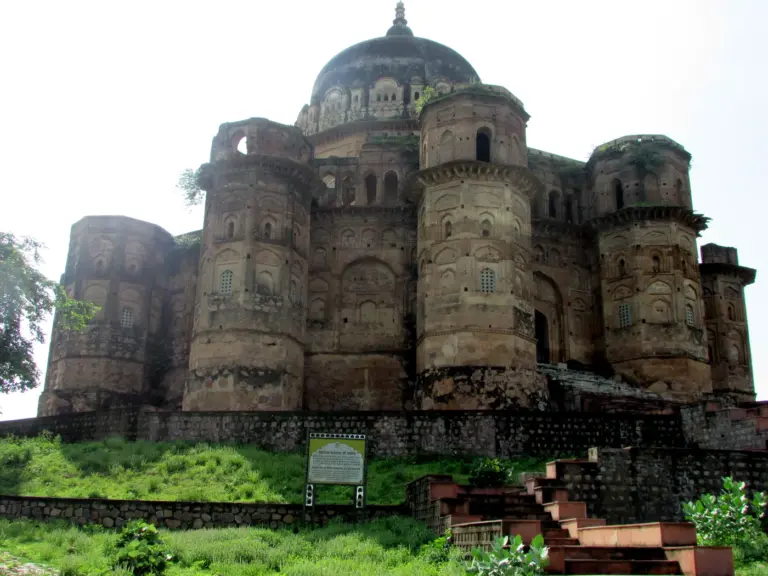
The heart of the new town was a mud fort, an oval earthwork enclosure with gates and a surrounding ditch. That original 1537 fort was earthen, not the stone one tourists see today. The masonry fort at the same site was rebuilt much later in the eighteenth century, in the era of Hyder Ali and Tipu Sultan, so if you ever read that “Kempe Gowda’s fort” is made of stone, remember the material changed hands and centuries. What Kempe Gowda gave Bengaluru was the plan and the mud walls; the granite came generations after him.
The petes: how the city was zoned by trade
Here is the detail that separates a coaching note from real understanding of Kempe Gowda, and it is the most examinable part of the whole topic. He did not just wall off a settlement. He zoned it. The city was divided into petes, distinct market streets and quarters, each dedicated to a particular trade or community. The two main commercial arteries were Doddapete (the “big market,” running roughly north to south) and Chikkapete (the “small market,” running east to west), and they crossed near the centre of town at what is still one of Bengaluru’s busiest junctions.
Around these two axes he settled specialised markets: quarters for cotton, for grain and rice, for oil, for various artisan castes, so that weavers lived and traded in one pete, potters in another, metalworkers in a third. Some of those names survive on the map, which is the payoff of learning this properly. Chickpete and Balepet and Cottonpet are living Bengaluru localities whose names still announce the trade that Kempe Gowda’s plan assigned them nearly five centuries ago.
This is not decorative trivia. It tells you how a medieval Indian ruler thought about wealth. By clustering trades, Kempe Gowda made his markets efficient and, crucially, easy to tax, because a ruler who knows exactly where the cloth merchants sit knows exactly where to collect. The pete system welded prestige and productivity together in the same way great temple towns did elsewhere in the medieval period: the layout was a revenue machine dressed as a city. Miss the petes and you miss why Bengaluru was built at all.
Water: the tanks that made a dry plateau habitable
Bengaluru sits high on the Deccan plateau, around 900 metres above sea level, with no major river running through it. That is the founder’s real problem, and his solution is the second great lesson of the topic. A city on a dry upland lives or dies by its ability to store rain, so Kempe Gowda built tanks, large artificial reservoirs called *keres* in Kannada, to catch and hold the monsoon.
The most important were Dharmambudhi, Kempambudhi, and Sampangi tanks, dug to supply drinking water and irrigate the fields that fed the town. Dharmambudhi is the one to remember, because its story compresses the whole history of the city. That tank was later drained and built over, and the site it once occupied is today the Kempegowda Bus Station, the vast Majestic bus terminus, so a lake that watered the sixteenth-century town now moves millions of commuters. Kempambudhi survives as a smaller water body near the old city core.
The tanks tell you the same thing the petes do, from a different angle. Kempe Gowda was not merely fortifying a spot; he was engineering the conditions for a permanent settlement to survive on ground that nature had not made easy. Every serious medieval city on the plateau, from the Bahmani capitals to the Vijayanagara heartland, lived by exactly this logic of stored water, and Kempe Gowda’s *keres* are Bengaluru’s version of it.
The four watchtowers and the prophecy of growth
The image most associated with Kempe Gowda, the four stone towers scattered across modern Bengaluru, was not actually his own work but his successor’s. The four watchtowers were built by Kempe Gowda II, his son, to mark the outer limits of the city as its founders imagined it. They stand, roughly, at the four corners of the old town: at Lalbagh in the south, at Kempambudhi in the west, near Ulsoor (Halasuru) lake in the east, and at Mekhri Circle in the north. Four of them are now protected heritage monuments.
There is a lovely story attached, and it carries a genuinely useful idea. Legend holds that Kempe Gowda II built the towers to fix the boundary his family expected the city to reach, and that his mother predicted the city would one day outgrow those markers. She was right by an almost comic margin. The towers that were meant to sit at the distant edge of Bengaluru now stand well inside the built-up core, ringed by traffic and apartment blocks, with the metropolis sprawling for tens of kilometres beyond them. The prophecy is the tidy hook, but the real lesson is that the founders were laying out a city with the ambition of a capital, not a village, and drawing its outer ring accordingly.
Kempe Gowda and the Vijayanagara connection
You cannot understand Kempe Gowda’s career without holding the fortunes of his overlord in view, because his rise and his troubles both flow from that relationship. He served the empire loyally, but the sources record a serious rupture: at one point the Vijayanagara authorities reportedly imprisoned him for around five years, in one common account for the presumption of minting his own coinage, an assertion of sovereignty that a mere feudatory was not supposed to make. He was later released and restored, but the episode is a clean illustration of how much autonomy a Nadaprabhu really had, which was a great deal in practice and none at all in principle.
The larger arc is tragic and worth filing. Kempe Gowda I died in 1569. Just four years before that, in 1565, the empire he served was shattered at the Battle of Talikota, where a coalition of Deccan sultanates crushed the Vijayanagara army and sacked the magnificent capital at Hampi, whose living heart, the Virupaksha temple, still stands amid the ruins. So Kempe Gowda outlived the golden age of his own overlords and watched, in his last years, the central authority that had licensed his city collapse. Bengaluru, ironically, survived the empire that authorised it. That is a quietly powerful point: the local institution proved more durable than the imperial one above it, which is precisely why Kempe Gowda’s plan still shapes the ground while Vijayanagara is a field of stones.
What Kempe Gowda built beyond walls and water
Kempe Gowda was a builder of temples as much as of markets, and a patron of learning, so the standard “founder of a fort” summary undersells him. He is credited with patronising several temples that anchor the old city, including the Bull Temple (Dodda Basavana Gudi) with its huge monolithic Nandi, and the Gavi Gangadhareshwara cave temple, a rock-cut shrine famous for a striking solar alignment in mid-January. These were not private chapels but civic institutions, giving the new town the sacred centre a self-respecting settlement was expected to have.
He was also, by the standards of a regional chieftain, a cultivated man. He is remembered as a patron of letters and is credited with authoring a work called *Gangagaurivilasa*, a play in the *yakshagana* dramatic tradition. Tag this to the broader point that the courts of the Deccan, from Vijayanagara down to its feudatories, were centres of literary production; if that world interests you, the depth of the regional canon is visible in a resource like the Kannada literature guide. Kempe Gowda belongs to that cultural ecosystem, not outside it.
The legacy: from a mud fort to a global city
The modern afterlife of Kempe Gowda is where the topic pays off for current affairs, because his name is stamped across today’s Bengaluru. The city he founded is now the Silicon Valley of India, a metropolis of well over ten million people and the country’s information-technology hub. And Karnataka has deliberately made him its civic icon.
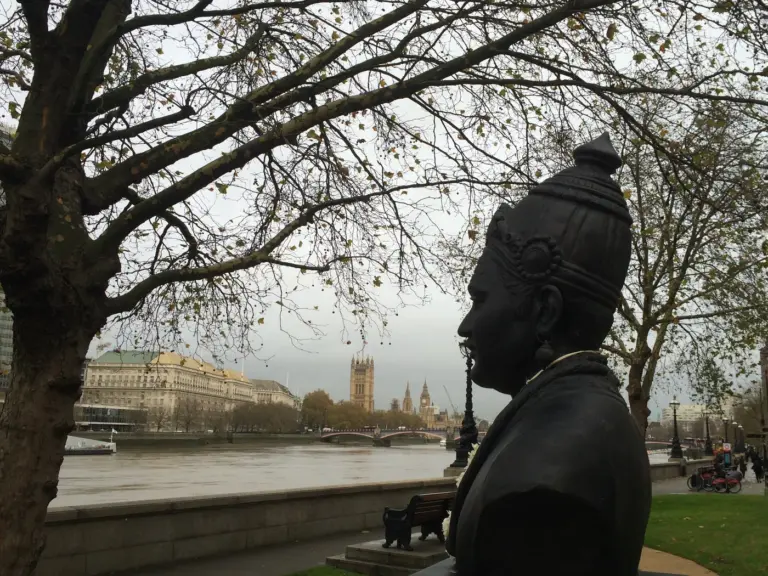
Three markers are worth carrying into the exam hall. First, Kempegowda International Airport, the city’s airport at Devanahalli that opened in 2008, is named after him. Second, the central bus and metro interchange at Majestic, built over his drained Dharmambudhi tank, carries his name as Kempegowda Bus Station. Third, and most quizzable, is the Statue of Prosperity, a 108-foot bronze statue of Kempe Gowda unveiled by the Prime Minister in November 2022 on the airport premises. It weighs around 218 tonnes, was sculpted by the veteran Ram V. Sutar (the same sculptor behind the Statue of Unity), and is billed as the tallest bronze statue of a city’s founder anywhere.
That statue is the neat closing image for the whole story. A local chieftain who built a mud fort and a few tanks in 1537 is honoured, five centuries on, by a 108-foot bronze at the gateway of a city that never stopped growing. The homage is a measure of how completely his plan won.
Where the name “Bengaluru” actually comes from
A common misconception is worth clearing up, because it is exactly the kind of half-fact that costs marks. Kempe Gowda did not invent the name Bengaluru. The popular story that the name comes from benda kaalu ooru, “the town of boiled beans,” where an old king was fed boiled pulses by a kind woman, is a charming folk etymology usually attached to the earlier Hoysala king Veera Ballala, not to Kempe Gowda at all. It is a legend, not documented history.
The harder evidence points much further back. The name appears in a stone inscription from around 890 CE at Begur, on the city’s southern outskirts, which records a “Bengaluru war,” meaning a place called Bengaluru existed roughly six and a half centuries before Kempe Gowda built his fort. So the correct framing is this: the name was already old and local, and Kempe Gowda attached his planned city to an existing regional name rather than coining a new one. He founded the *city* of Bengaluru in 1537; he did not christen the *word*. Getting that distinction right is a small mark of genuine understanding, and it is precisely the sort of nuance a well-set question probes.
How to study Kempegowda for exams
Do not try to memorise Kempe Gowda as a list of facts, because on their own the dates blur. Fix him instead as a small, tight story with four load-bearing beats, and the details hang themselves on it.
First, the frame: he was a Nadaprabhu, a Vijayanagara feudatory of the Yelahanka line, and he founded Bengaluru in 1537 with imperial permission from Achyuta Deva Raya. That single sentence answers most objective questions.
Second, the plan: a mud fort, the petes zoned by trade (Doddapete and Chikkapete as the main axes), and the tanks (Dharmambudhi, Kempambudhi, Sampangi) that solved the plateau’s water problem. This is the “how a city was planned” content that a good Mains answer needs.
Third, the succession detail: the four watchtowers were built by Kempe Gowda II, not the founder, to mark the city limits. That distinction is a classic trap, so guard against it.
Fourth, the legacy trio for current affairs: the airport, the bus station, and the 108-foot Statue of Prosperity of 2022. Aspirants sitting the Karnataka state services, in particular, should treat this as core state-history material, the kind that sits alongside figures like Rani Chennamma of Kittur in the KPSC syllabus.
The topic is smaller than it looks once you see it as one coherent act of city-making by a licensed local lord. Founder, plan, water, towers, legacy: five words, and Kempe Gowda is under control.
Frequently Asked Questions
Who was Kempe Gowda and what is he famous for?
Kempe Gowda I (1510 to 1569) was a sixteenth-century chieftain, a Nadaprabhu or feudatory lord under the Vijayanagara Empire, from the Yelahanka line near modern Bengaluru. He is famous as the founder of Bengaluru, which he established as a fortified, carefully planned market town in 1537.
In which year was Bengaluru founded by Kempe Gowda?
Bengaluru was founded in 1537 CE. Kempe Gowda built it after securing permission from the Vijayanagara emperor Achyuta Deva Raya, laying out a mud fort, market streets, and tanks on open ground and shifting his capital there from Yelahanka.
Which empire did Kempe Gowda serve under?
He served the Vijayanagara Empire as a vassal chieftain. His prominence coincided with the reign of Emperor Achyuta Deva Raya. The empire was later broken at the Battle of Talikota in 1565, four years before Kempe Gowda’s own death.
Who built the four watchtowers of Bengaluru?
The four watchtowers were built by Kempe Gowda II, the son of the founder, to mark the boundaries of the city. They stand near Lalbagh, Kempambudhi, Ulsoor (Halasuru) lake, and Mekhri Circle, and legend says his mother predicted the city would grow far beyond them, which it did.
What are the petes associated with Kempe Gowda’s Bengaluru?
Petes were the market streets and trade quarters into which Kempe Gowda zoned his city. The main axes were Doddapete and Chikkapete, and specialised quarters were set aside for cotton, grain, and various artisan trades. Many of these names, such as Chickpet and Cottonpet, survive as Bengaluru localities today.
What is the Statue of Prosperity?
It is a 108-foot bronze statue of Kempe Gowda, unveiled in November 2022 on the premises of Kempegowda International Airport in Bengaluru. It weighs about 218 tonnes, was sculpted by Ram V. Sutar, and is described as the tallest bronze statue of a city’s founder.
Why is Bengaluru’s airport named after Kempe Gowda?
Because Kempe Gowda founded the city. Kempegowda International Airport at Devanahalli, which opened in 2008, is named in his honour, as is the central Kempegowda Bus Station, reflecting Karnataka’s decision to make the founder its civic icon.
Practice Questions
1. Kempe Gowda I, the founder of Bengaluru, was a feudatory (Nadaprabhu) of which empire?
a) The Bahmani Sultanate
b) The Vijayanagara Empire
c) The Mughal Empire
d) The Maratha Empire
Answer: b) The Vijayanagara Empire
2. In which year did Kempe Gowda I found the city of Bengaluru?
a) 1510
b) 1537
c) 1565
d) 1610
Answer: b) 1537
3. The four watchtowers marking the boundaries of old Bengaluru were built by:
a) Kempe Gowda I
b) Kempe Gowda II
c) Achyuta Deva Raya
d) Hyder Ali
Answer: b) Kempe Gowda II
4. Which of the following were the two principal market streets (petes) of Kempe Gowda’s Bengaluru?
a) Balepet and Cottonpet
b) Doddapete and Chikkapete
c) Lalbagh and Ulsoor
d) Sampangi and Dharmambudhi
Answer: b) Doddapete and Chikkapete
5. The Statue of Prosperity, unveiled in 2022, honours Kempe Gowda and is located at:
a) Vidhana Soudha, Bengaluru
b) Lalbagh Botanical Garden
c) Kempegowda International Airport, Devanahalli
d) Hampi, near the Virupaksha temple
Answer: c) Kempegowda International Airport, Devanahalli
Mains-style questions
- “The founding of Bengaluru in 1537 illustrates how a regional feudatory, rather than an imperial court, could plan and finance a durable Indian city.” Discuss with reference to Kempe Gowda.
- Examine the town-planning principles evident in Kempe Gowda’s Bengaluru, with particular attention to the pete system and the network of tanks, and explain what they reveal about medieval urban economy.
- “Kempe Gowda outlived the empire that authorised his city.” Analyse the relationship between the Vijayanagara Empire and its feudatories in the light of this statement.
- Assess the significance of water management, especially artificial tanks, in the survival of settlements on the semi-arid Deccan plateau, using Bengaluru as a case study.
- Discuss how modern Karnataka has constructed Kempe Gowda as a civic icon, and evaluate the role such historical figures play in regional identity.
Kempe Gowda deserves more than the single line he usually gets as “the founder of Bengaluru.” He is a rare, well-documented example of how an Indian city was actually conceived: licensed by an empire, zoned for trade, watered by engineered tanks, and ringed by towers drawn with the ambition of a capital. Learn him as that coherent act of city-making, keep the four beats of founder, plan, water, and legacy ready, and one of the most rewarding topics in South Indian history falls neatly into place.
Tell Google you want more of this.
Add Anantam IAS as a preferred sourceOne tap, and this site shows up more often in your own Top Stories, AI Overviews and AI Mode. Remove it any time.