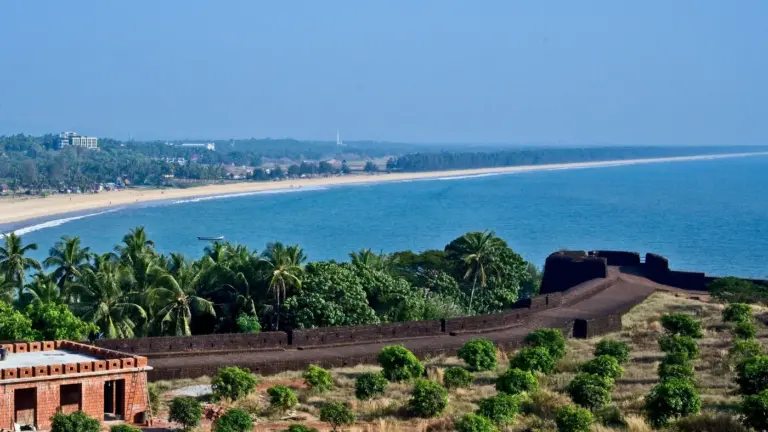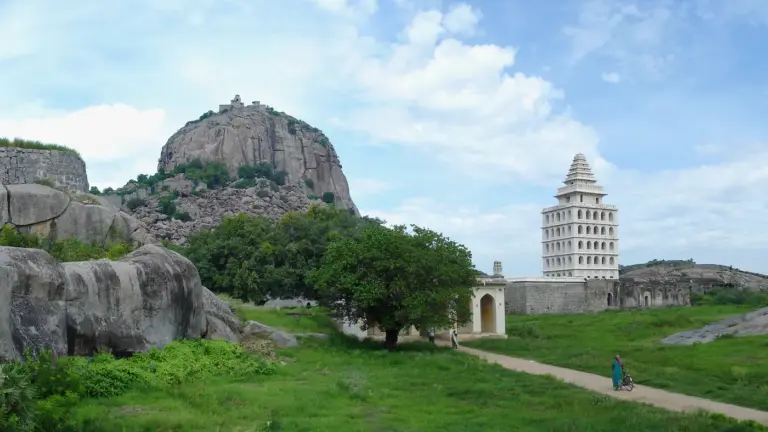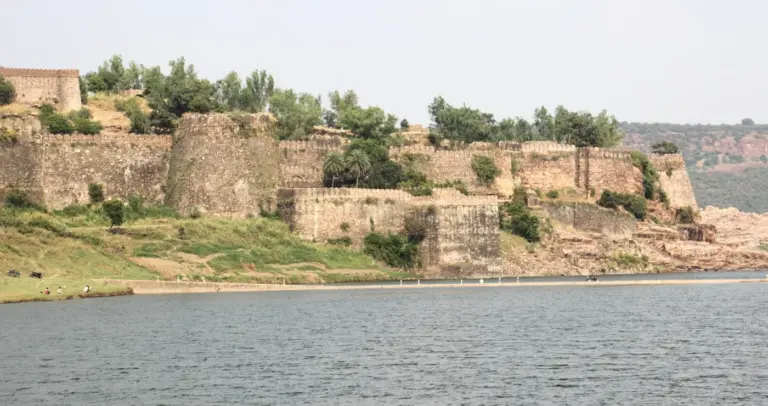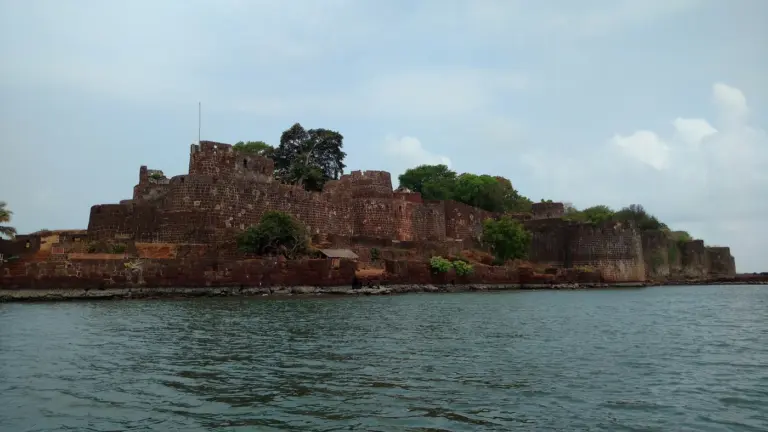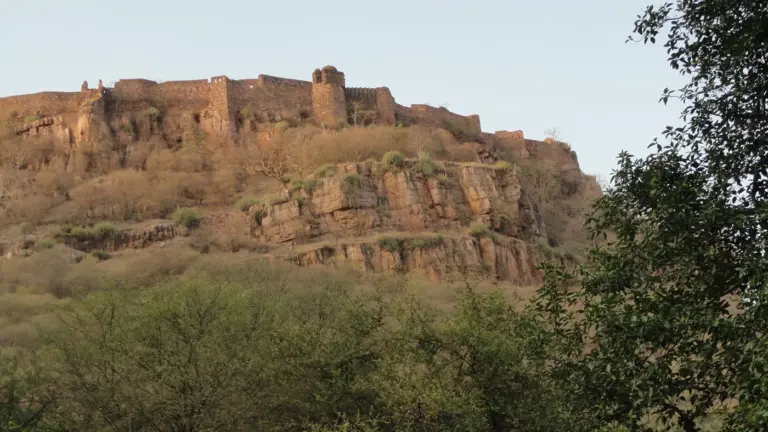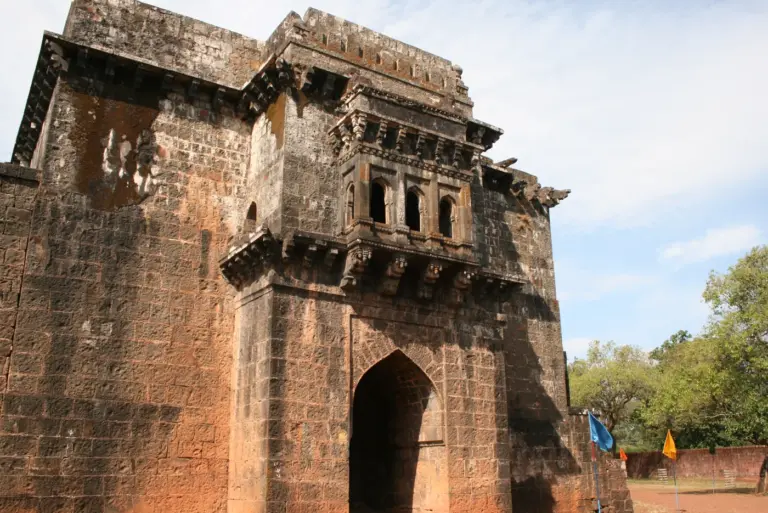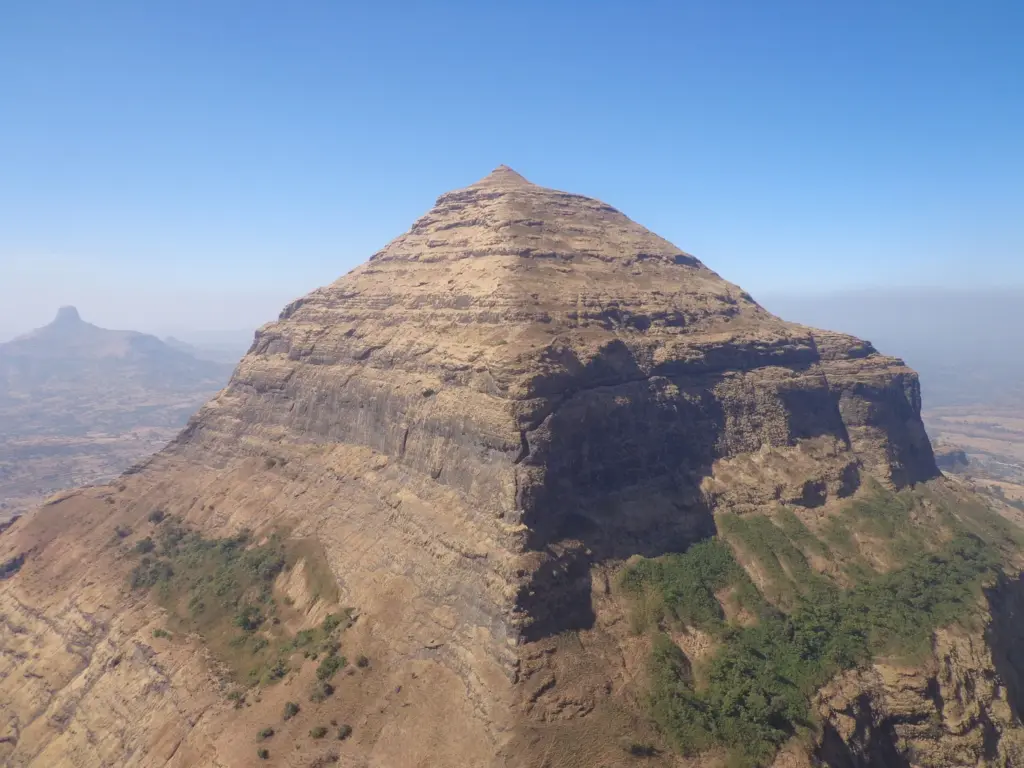
Salher fort is a hill fort in the Baglan (Satana) taluka of Nashik district, Maharashtra, at the northern end of the Sahyadri, where the old passes run down from the Deccan toward Gujarat. The Marathas took it from the Mughals at the start of 1671, and early in 1672 a Maratha army routed the Mughal force besieging it in what’s remembered as the Battle of Salher. In 2025 it became one of the 12 forts of the Maratha Military Landscapes of India on the UNESCO World Heritage List.
Two lines follow Salher around. The first calls it the highest fort in Maharashtra at about 1,567 m, a figure from trekking and travel writing; the Baroda State gazetteers measured the peak at 5,263 feet and ranked it third in the northern Sahyadri. The second calls the 1672 battle the first Maratha victory over the Mughals in open battle. Historians from Grant Duff onward have said something close to that, but they don’t agree on who led the Maratha army that day. This note separates the record from the repetition and shows why a remote fort on the Gujarat edge of the Deccan was worth two campaigns.
Where Salher Fort is and what it’s known for
Salher is a Maratha hill fort in the Baglan hills of northwest Nashik, known for the victory of 1672 and, since 2025, for its UNESCO listing. It is one of the peaks the 1923 Baroda gazetteer places at the northern extremity of the great Sahyadri range, the Maharashtra name for the Western Ghats.
| Fact | Detail |
|---|---|
| Location | Baglan (Satana) taluka, Nashik district, Maharashtra, above the Dangs |
| Type | Hill fort, in the Ministry of Culture’s classification of the UNESCO components |
| Height | 5,263 feet (about 1,604 m) in the Baroda State gazetteers of 1908 and 1923; about 1,567 m in popular sources |
| Early holders | The Rathod chiefs of Baglan, then the Mughals after their 1637 campaign in Baglan |
| Taken by the Marathas | About 5 January 1671, by escalade, in Jadunath Sarkar’s dating; the 1883 Nasik gazetteer says 1670 and credits Moropant Pingle |
| Battle of Salher | Early 1672; a Maratha relief army routed the Mughal force besieging the fort under Ikhlas Khan |
| Later holders | Mughals by negotiation in 1684; a Maratha base again by 1705; later Gaikwad (Baroda) territory; added to Nashik district in 1950 |
| Protection | State protected by the Directorate of Archaeology and Museums, Government of Maharashtra |
| UNESCO status | Component of the Maratha Military Landscapes of India, inscribed on 11 July 2025 under criteria (iv) and (vi) |
Salher has two neighbors worth knowing by name. Salota, spelled Salhota in an 1845 account quoted by the Baroda gazetteer, is a second fort on the same precipitous hill. Mulher, about 10 miles to the east by the 1883 Nasik gazetteer’s reckoning, was the seat of Mughal power in Baglan, and the same gazetteer ranks Mulher and Salher first among the Nasik hill forts for height and size.
Why Salher and the Baglan passes mattered
Salher mattered because it watched Baglan, the hill country between the Deccan and Gujarat, and the routes that crossed it toward Surat. The 1923 Baroda gazetteer says the fort guarded one of the most frequented passes from the Deccan into Gujarat, and Kincaid and Parasnis note that the main road from Surat to Aurangabad passed by Salher.
Baglan, which older books write as Baglana, is the old name of this corner of the Sahyadri, and it survives in the Baglan or Satana taluka. Long before the Marathas arrived, its forts had a reputation for being hard to take:
- The Ain-i-Akbari (1590), as summarized in the Nasik gazetteer, describes Baglan as a mountainous, well-peopled country between Surat and Nandurbar under a Rathod chief, with 7 forts, of which Mulher and Salher were places of unusual strength.
- When Akbar tried to take Baglan after conquering Khandesh in 1599, the gazetteer records a 7-year siege of its chief, Pratapshah, who held out because the hills fed and watered his garrison and the passes were so narrow that no more than 2 men could march abreast.
- The English traveler William Finch wrote in 1610 of two mighty castles at Mulher and Salher, reached by roads that let only 2 men or 1 elephant pass, with 80 small forts guarding the way.
- In 1637 a Mughal army pressed Mulher so hard that the Baglan chief, Bharji, sent his mother and his agent out with the keys of Mulher and 7 other forts.
After 1637 the Mughals governed Baglan from Mulher. By 1671, Sarkar notes, the faujdar of Baglana, the Mughal officer who commanded a district’s troops, had his headquarters there. Salher was the western fort of the pair, the one that overlooks the Dangs.
The 1923 Baroda gazetteer adds a local purpose: it says Salher was built to control the Bhil communities of the surrounding ranges and of the Dangs below. That’s a colonial-era explanation, but it’s a fair reminder that a frontier fort faced its own hills as much as distant armies.
Put the pieces together and Salher’s value is plain. It sat above the road to Surat, the Mughal port that Shivaji sacked in 1664 and again in 1670, and whoever held it could either raid Gujarat or shut the door on raiders.
How the Marathas took Salher in 1671
The Marathas took Salher at the turn of 1670 and 1671, in the raids that followed Shivaji’s second sack of Surat. Jadunath Sarkar dates the capture to about 5 January 1671 and says it fell to a surprise escalade, a climb over the walls on ladders, rather than to a long siege.
The campaign ran like this in Sarkar’s account:
- October 1670: after sacking Surat, Chhatrapati Shivaji Maharaj entered Baglan and plundered the villages under Mulher. On his way back he fought the Mughal general Daud Khan at Vani-Dindori.
- December 1670: Prataprao Gujar raided Berar while a second column under Moropant Pingle looted west Khandesh and Baglan. The two joined near Salher and laid siege to it.
- About 5 January 1671: a force of 20,000 horse and foot found the garrison off its guard and scaled the wall with rope ladders. The commandant, Fathullah Khan, fell fighting, and his wife’s brother gave up the fort.
- The relief that came too late: Daud Khan, marching to raise the siege, heard on the road that Salher had already fallen and turned back.
The date needs one caution. The 1883 Nasik gazetteer says Moropant took Salher in 1670, and the 1923 Baroda gazetteer files the same event under 1672. Sarkar built his date from the akhbarat, the Mughal court newsletters, and from Bhimsen’s Persian memoir, the Dilkasha, so his “about January 1671” is the one to use, with the columns of Moropant and Prataprao doing the work.
A smart reader will spot a complication. An English letter from Bombay dated 8 April 1671 reported that the new Mughal commander, Mahabat Khan, had retaken Salher, and Sabhasad’s chronicle says the same. Sarkar checked both against the Mughal record and rejects them: that spring the Mughals recovered only Ravla-Javla and Markandagarh. Salher stayed Maratha, which is exactly why the Mughals had to come back and besiege it that winter.
What happened in the Battle of Salher
In early 1672 a Maratha relief army attacked the Mughal force besieging Salher and broke it. The Mughal commander, Ikhlas Khan, was wounded and captured. His siege camp was taken and Mulher fell to the Marathas soon afterward. Sarkar places the battle in the second half of January 1672; many modern accounts say February.
The sequence, as Sarkar and Grant Duff tell it:
- The siege: Aurangzeb, unhappy with Mahabat Khan’s slow campaign, sent Bahadur Khan and Dilir Khan to the Deccan in the winter of 1671. They marched from Gujarat into Baglan and besieged Salher, then left Ikhlas Khan Miana and Rao Amar Singh Chandawat to press the siege while they moved on toward Ahmadnagar.
- The pressure on the garrison: Grant Duff says Salher was short of provisions and that 2,000 Maratha horse posted near it had been cut to pieces, which made quick relief essential.
- The relief: Duff says Moropant and Prataprao were sent with 20,000 horse and ordered to fight. Kincaid and Parasnis add that they came in two columns, Prataprao to the west of the fort and Moropant to the east.
- The fight: Prataprao let Ikhlas Khan charge, fell back until the Mughal ranks came apart, then turned on them with Moropant in support. This is the feigned retreat, an old cavalry tactic: run just long enough for the pursuers to lose their order.
- The count: Sarkar lists Ikhlas Khan and Muhakam Singh, son of Rao Amar Singh, wounded and taken prisoner with 30 principal officers. Rao Amar Singh and several thousand soldiers were killed.
On the Maratha side the one chief of note killed was Suryajirao Kakade, whom Sarkar calls a comrade of Shivaji’s youth and Duff a commander of 5,000. Duff says the prisoners of rank were sent to Raigad and released with honor once their wounds had healed. Those who chose to stay were taken into Shivaji’s service.
Ikhlas Khan had met these commanders before. At Vani-Dindori, 15 months earlier, he had charged a Maratha rearguard under Prataprao and been wounded and unhorsed before Daud Khan’s artillery rescued him. This time there was no rescue.
Who led the Maratha army at Salher
The sources split on this, and the split follows the kind of source each historian trusted. Grant Duff, writing from Maratha manuscripts, and Kincaid and Parasnis, who point to the bakhars (Marathi prose chronicles) of Sabhasad and Shedgaonkar, name Moropant Pingle and Prataprao Gujar. Jadunath Sarkar, who worked mainly from Persian chronicles and English factory letters, writes that the besiegers were attacked by Shivaji himself with a large force.
The safe line for an answer is to name Moropant Pingle and Prataprao Gujar as the commanders and to add that Sarkar credits Shivaji in person. Both can’t be fully right, and no surviving source settles it.
Why historians call Salher a turning point
Salher is called a turning point because it was a pitched battle, fought in the open, and the Mughals lost it outright. Grant Duff called it the most complete victory Shivaji’s troops ever won “in a fair fought action with the Moghuls”. Kincaid and Parasnis went further and wrote that, for the first time, the Marathas had beaten a disciplined Mughal army in the field.
Weren’t there earlier open fights? There were. At Vani-Dindori in October 1670 the Marathas fought Daud Khan for a full day, but Sarkar’s account has the Mughal artillery holding them off until they withdrew to the Konkan. Salher is different in kind, because the Mughal army lost both its commander and its camp.
Sarkar measures the effect in months, not adjectives. Shivaji’s prestige rose sharply, and because a Satnami rising in March 1672 and an Afghan revolt in April tied the emperor down, Shivaji was left master of the situation in the Deccan for the rest of that year. It’s one battle in the long story of the Maratha Empire, but two years later Shivaji was crowned at Raigad as a king who had already beaten a Mughal army in the open.
What happened to Salher after 1672
Salher stayed Maratha for about 12 years and then passed to the Mughals in 1684 by a bargain, not a storm. Its later owners were the Gaikwads of Baroda, which is why the fort lay outside Nasik district until the princely states merged.
- 1684, the bargain: Aurangzeb sent Prince Muhammad Azam to reduce the northern forts, starting with Salher. Grant Duff says Neknam Khan, the Mughal commandant of Mulher, had already secured a promise from the Maratha havildar (fort commander) to hand it over, and the fort was evacuated as soon as the army arrived. The Nasik gazetteer agrees that promises and presents did it, but its entry on Mulher dates the deal to 1682, after all attempts to take Salher by force had failed.
- 1705, a Maratha base again: the Baroda gazetteer says Rajaram appointed Khanderao Dabhade in 1699 to collect the Maratha dues in Baglan, and that in 1705 Dabhade raided across the Narmada and got back to Salher with his booty.
- 1724 to 1795, the Nizam’s frontier: after the Nizam made himself independent in the Deccan in 1724, he kept a commandant at Mulher and a governor of Baglan. He ceded Baglan to the Peshwa in 1795, after the Battle of Kharda.
- The Gaikwad gift: the Nasik gazetteer reports that a Peshwa gave Salher to Rani Gahinabai, wife of Govindrao Gaikwad of Baroda, as her personal allowance. It says the gift “is said” to have happened, so the manner of transfer is report, not record.
- 1818: Mulher surrendered to the British in July 1818. Salher, by then a Baroda possession, stayed with the Gaikwads.
- 1883 to 1923: the Nasik gazetteer found Salher just outside its district, inhabited by a few Gaikwadi soldiers descended from the old garrison. The 1923 Baroda gazetteer describes the fort as dismantled, its massive gates decaying and only a few dismounted guns left.
- 1950: Salher village was transferred from Surat district to Nashik district, according to the Nashik district administration.
That chain of owners explains a detail that puzzles anyone reading the old volumes side by side. The 1883 Nasik gazetteer mentions Salher only in passing while the Baroda gazetteers describe it, because until the merger the fort was Baroda’s to describe.
How Salher’s defenses worked
Salher was defended mainly by its own cliffs. The 1923 Baroda gazetteer calls it a very good specimen of natural scarping, of which every advantage had been taken. Scarping means cutting a slope back into a sheer rock face, and the gazetteer’s point is that Salher’s builders made full use of the cliffs nature had already provided.
Here’s the route an attacker faced, stage by stage, as the old descriptions give it:
- The approach. The hills around Salher could be crossed only at a few passes. The Nasik gazetteer names the Babulna pass, about 2 miles north of the fort, as the only pass on the west, used to carry wood from the Dangs to the Nasik markets. The 1845 account quoted by the Baroda gazetteer says the forts were reached by paths several miles long.
- The narrow way up. Finch in 1610 described roads that took only 2 men or 1 elephant, watched by small posts along the way. An army on such a path climbs in file, in full view of the garrison.
- The scarp and the gates. The last stage was the cut rock itself, with gateways and rock-cut steps. Tieffenthaler, writing in 1750, described Salher and Mulher as very strong heights built with excellent skill and connected by steps cut in the rock. By 1923 the gates were decaying.
- Water on the summit. The 1845 account notes a tank at Salher supplied by a spring. The 1923 gazetteer found the water tanks of Salher and Songadh still in very good repair and thought they were probably built in the period of Muslim rule.
The record shows how this worked in practice, and where it didn’t. Salher held against the Mughal siege of 1672, and by the Nasik gazetteer’s account it resisted attempts to take it by force before 1684. It fell twice, and neither time to a regular siege: once to a surprise escalade in 1671, when the garrison was off its guard, and once to a bargain in 1684. The cliff could beat an army. It couldn’t beat a careless watch or a good offer.
Compare it with Rajgad, which spread its defense across three fortified spurs so that an attacker had to split his force. Salher made a different bet: one high rock, cut sheer, with water on top.
What the record doesn’t give is a gate-by-gate description of Salher. The Nasik gazetteer walks through Mulher’s gateways and reservoirs one by one, but Salher lay outside its district. Modern trekking guides name gates and temples on the summit, including a shrine that local tradition ties to Parashurama, the warrior sage counted as the sixth avatar of Vishnu. None of that appears in the gazetteers, so this note treats it as tradition rather than history.
Salher Fort today
Salher is a state-protected monument and one of the 12 components of the Maratha Military Landscapes of India, inscribed on the UNESCO World Heritage List on 11 July 2025 as India’s 44th World Heritage property. The Ministry of Culture’s release of that day gives the facts that matter:
- The decision came at the 47th session of the World Heritage Committee, at UNESCO headquarters in Paris.
- India sent the nomination in January 2024, and the 18-month review included a field mission by ICOMOS, the body that evaluates cultural sites for UNESCO.
- 18 of the 20 State Parties on the Committee supported the inscription.
- Salher is classed as a hill fort, one of 6 in the property.
The UNESCO record for the property lists it under criteria (iv) and (vi). Criterion (iv) is about type: the forts together are an outstanding example of how a military system was built into mountains and coast. Criterion (vi) is about association: the forts are tied directly to events and traditions of outstanding significance, and at Salher that tie is easiest to see through the battle of 1672. The whole property, all 12 forts together, covers 1,577.63 ha, with a buffer zone of 96,500.43 ha.
Protection is split between two agencies, and Salher is on the state side:
- Directorate of Archaeology and Museums, Government of Maharashtra: Salher, Rajgad, Khanderi and Pratapgad.
- Archaeological Survey of India: Shivneri, Lohgad, Raigad, Suvarnadurg, Panhala, Vijaydurg, Sindhudurg and Gingee.
The site’s current-affairs note on the inscription covers all 12 forts, and the roundup of World Heritage Sites in India places the property in India’s list.
A listing restores nothing by itself. The Baroda gazetteer already described Salher as dismantled a century ago, so the work now is to conserve what survives on a remote summit, and that work sits with the state directorate rather than with the ASI.
How to study Salher Fort for exams
Salher belongs to two parts of the syllabus: the Maratha-Mughal wars in medieval history, and fort architecture and the World Heritage list in art and culture. It’s rarely asked alone, so it’s best learned as the battle that sits between the sack of Surat in 1670 and the coronation of 1674.
Mains tends to ask about the Maratha state rather than single forts. History Optional Paper I in Mains 2026 asked: “Trace the trajectory of Maratha polity from Shivaji to Peshwa Balaji Baji Rao. What was the impact of the Third Battle of Panipat (1761) on the Maratha State? Analyze.” Salher belongs at the start of that trajectory, as the point where the new state showed it could meet a Mughal army in the field.
History Optional 2024 Paper I asked: “How did the Maratha guerrilla warfare tactics contribute to their military successes against larger and more established armies?” Salher is the case that sharpens that answer. An answer built only on raids and hill forts misses the one battle where Maratha cavalry beat a Mughal army in the open, using a cavalry tactic rather than a hideout.
On the Prelims side, 184 of the 1,403 questions from 2013 to 2026 in the site’s Prelims question bank are tagged History and 94 are tagged Art and Culture, the two sections where Salher can appear.
Revision facts to hold:
- Baglan (Satana) taluka, Nashik district; Gaikwad (Baroda) territory until Salher village joined Nashik district in 1950.
- Taken by the Marathas about 5 January 1671 by escalade, in Sarkar’s dating; the Nasik gazetteer credits Moropant Pingle.
- Battle of Salher, early 1672: the Mughal siege force under Ikhlas Khan routed and its camp taken; Mulher fell soon after.
- Commanders: Moropant Pingle and Prataprao Gujar in the Maratha tradition, Shivaji in person according to Sarkar; Suryajirao Kakade was killed.
- Given up to the Mughals in 1684 by a bargain, not an assault.
- A state-protected hill fort and a component of the Maratha Military Landscapes of India, inscribed on 11 July 2025 under criteria (iv) and (vi).
- Height 5,263 feet in the Baroda gazetteers; 1,567 m is the popular figure.
Four confusions deserve a line each:
- Salher, Salota and Mulher. Salota sits on the same hill as Salher. Mulher is a separate fort about 10 miles east that served as the Mughal headquarters of Baglan, and only Salher is in the UNESCO property.
- Salher and Vani-Dindori. Both were fought against Mughal forces in the Nashik country, but Vani (October 1670) ended with the Marathas withdrawing to the Konkan, while Salher (1672) ended with the Mughal siege camp taken.
- Who won it. Suryajirao Kakade is sometimes credited with the victory; the historians record him as the one Maratha chief of note killed in it.
- Spellings. Sarkar writes Salhir and Grant Duff writes Salheir. The Nasik gazetteer’s Saler is the same fort again.
| Fort | District | Type | Anchor fact | Protected by |
|---|---|---|---|---|
| Salher | Nashik (Baglan) | Hill fort | Maratha capture in 1671 and the open-field victory of 1672 | Maharashtra Directorate of Archaeology and Museums |
| Shivneri | Pune (near Junnar) | Hill fort | Shivaji’s birthplace | ASI |
| Rajgad | Pune | Hill fort | First seat of Shivaji’s government | Maharashtra Directorate of Archaeology and Museums |
| Raigad | Raigad | Hill fort | Capital; coronation of 1674 | ASI |
| Pratapgad | Satara | Hill-forest fort | The Afzal Khan encounter, 10 November 1659 | Maharashtra Directorate of Archaeology and Museums |
Salher is where the northern Maratha frontier stopped being a raiding route and became held ground, with both Baglan forts in Maratha hands by the end of January 1672. For your preparation it teaches a habit worth more than the fort itself: give every date with its source, and say plainly where Sarkar and the Maratha chronicles part ways.
Frequently Asked Questions
Where is Salher Fort located?
Salher Fort is in the Baglan (Satana) taluka of Nashik district in Maharashtra, at the northern end of the Sahyadri range, overlooking the Dangs. It belonged to the Gaikwads of Baroda before independence, and Salher village joined Nashik district from Surat district in 1950.
Who built Salher Fort?
No source names a builder. The Ain-i-Akbari of 1590 already lists Salher among the strongest forts of the Rathod chiefs of Baglan, and the 1923 Baroda gazetteer thinks its water tanks date from the period of Muslim rule. The Marathas took it from the Mughals in about January 1671.
What happened in the Battle of Salher?
In early 1672 a Maratha relief army attacked the Mughal force besieging Salher and routed it. The Mughal commander Ikhlas Khan was wounded and captured with 30 of his principal officers, and the siege camp was taken. The fort stayed with the Marathas, who took nearby Mulher soon after.
Who led the Marathas in the Battle of Salher?
Grant Duff and Kincaid and Parasnis, following the Maratha chronicles, name Moropant Pingle and Prataprao Gujar as the commanders. Jadunath Sarkar writes that Shivaji himself attacked the besiegers. Suryajirao Kakade, sometimes credited with the win, was the one Maratha chief of note killed in the battle.
Is Salher the highest fort in Maharashtra?
It is often called that, usually with a height of about 1,567 m, but that figure comes from trekking and travel writing rather than an official survey. The Baroda State gazetteers of 1908 and 1923 put the peak at 5,263 feet, about 1,604 m, and ranked it third in the northern Sahyadri. Kalsubai, at 1,646 m by Maharashtra Tourism’s figure, is the highest peak in the state.
Is Salher Fort a UNESCO World Heritage Site?
Yes. Salher is one of the 12 components of the Maratha Military Landscapes of India, inscribed on 11 July 2025 at the 47th session of the World Heritage Committee under criteria (iv) and (vi). It is protected by Maharashtra’s Directorate of Archaeology and Museums, not by the ASI.
What is the difference between Salher and Mulher?
They are separate forts about 10 miles apart in Baglan. Mulher was the seat of the Mughal district commander, while Salher, to its west, guarded a pass toward Gujarat and overlooks the Dangs. Only Salher is part of the UNESCO property.
Practice Questions
Prelims
1. Consider the following statements about the Battle of Salher: 1. It was fought between the Marathas and a Mughal force besieging the fort. 2. The Mughal commander Ikhlas Khan was captured in it. 3. It took place after Shivaji’s coronation at Raigad. Which of the statements given above is/are correct?
- (a) 1 and 2 only
- (b) 2 and 3 only
- (c) 1 and 3 only
- (d) 1, 2 and 3
Answer: (a) The battle was fought in early 1672, two years before the coronation of 1674.
2. Consider the following statements about Salher Fort: 1. It is classified as a hill fort among the components of the Maratha Military Landscapes of India. 2. It is protected by the Directorate of Archaeology and Museums, Government of Maharashtra. Which of the statements given above is/are correct?
- (a) 1 only
- (b) 2 only
- (c) Both 1 and 2
- (d) Neither 1 nor 2
Answer: (c) The Ministry of Culture lists Salher as a hill fort and as one of the four state-protected components.
3. Which of the following forts are components of the Maratha Military Landscapes of India? 1. Salher 2. Mulher 3. Gingee 4. Lohgad. Select the correct answer using the code given below.
- (a) 1, 3 and 4 only
- (b) 1 and 2 only
- (c) 2, 3 and 4 only
- (d) 1, 2, 3 and 4
Answer: (a) Mulher, Salher’s neighbor in Baglan, is not one of the 12 components.
4. Salher Fort guarded the passes of which historical region?
- (a) Maval
- (b) Baglan
- (c) Konkan
- (d) Berar
Answer: (b) Salher and Mulher were the chief forts of Baglan, the hill country between the Deccan and Gujarat.
5. Which Maratha chief of note was killed in the Battle of Salher?
- (a) Prataprao Gujar
- (b) Moropant Pingle
- (c) Suryajirao Kakade
- (d) Khanderao Dabhade
Answer: (c) Sarkar and Grant Duff record Suryajirao Kakade as the Maratha chief of note killed; Prataprao and Moropant commanded the relief.
Mains
- The Battle of Salher (1672) is often described as the first Maratha victory over the Mughals in open battle. Examine this view with reference to the sources. (15 marks, 250 words)
- Why did the forts of Baglan matter to both the Mughals and the Marathas in the seventeenth century? Illustrate with reference to Salher and Mulher. (10 marks, 150 words)
- Salher fell to a surprise escalade in 1671 and to a negotiated surrender in 1684 but held against a siege in 1672. What does its record reveal about the strengths and limits of Maratha hill forts? (15 marks, 250 words)
- Discuss how the inscription of the Maratha Military Landscapes of India on the World Heritage List affects the responsibilities of the state and central agencies that protect its components. (10 marks, 150 words)
- Safeguarding the Indian art heritage is the need of the moment. Discuss. (10 marks, 150 words) Previous year: Mains 2018, GS Paper I.
Tell Google you want more of this.
Add Anantam IAS as a preferred sourceOne tap, and this site shows up more often in your own Top Stories, AI Overviews and AI Mode. Remove it any time.