* Dholavira is one of the five largest Harappan sites and is located in the present-day state of Gujarat, India. It was a prominent city of the ancient Indus Valley Civilization, flourishing around 4500 years ago.
* Dholavira is renowned for its sophisticated water management system, which includes reservoirs, dams, channels, and other hydraulic structures.
* Dholavira was a well-planned city with three distinct divisions: the citadel, middle town, and lower town. The city also had a large stadium or public gathering area, suggesting community events or administrative functions. A remarkable discovery at Dholavira was the earliest known signboard, with inscriptions on a large wooden board, indicating the use of writing for communication or identification.
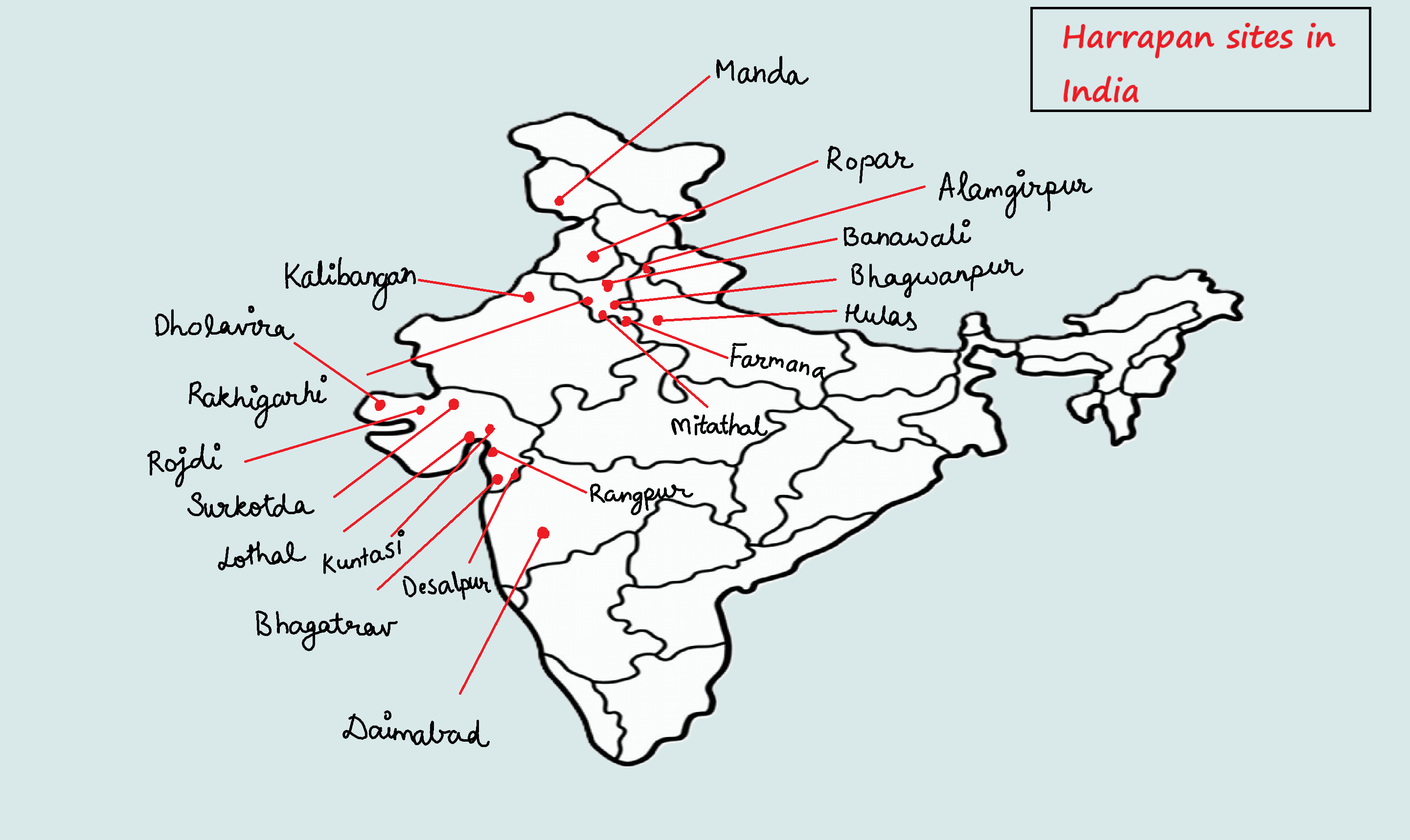
Kalibangan (Rajasthan) - First site to show ploughed field patterns. - Fire altars, indicating ritualistic practices. - Houses made of mud bricks instead of baked bricks. - No large water reservoirs like Dholavira.
Rakhigarhi (Haryana) - Largest IVC site in India. - Evidence of multi-roomed houses, pottery, and jewelry making. - Skeletons found suggest the continuity of Harappan genes. - No evidence of large-scale fortifications like Dholavira.
Ropar (Punjab) - First Harappan site excavated after India's independence. - Harappan culture overlapped with later Vedic culture. - Evidence of burials with pottery and personal belongings. - Found near the Sutlej River, showing river-based settlement.
