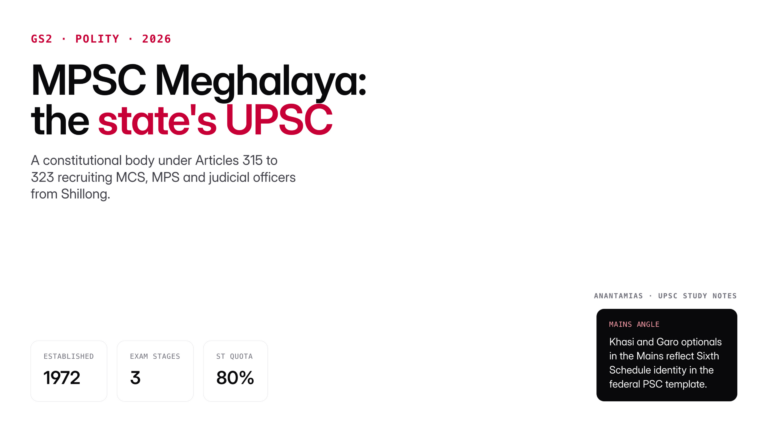
Meghalaya Public Service Commission (MPSC): Exam, Syllabus and Notification
MPSC Meghalaya explained: constitutional basis, MCS/MPS exam pattern, syllabus, notification cycle, eligibility and UPSC-style governance notes.

Category
Everything published under Study Notes on Anantam IAS, newest first.
3454 articles
MPSC Meghalaya explained: constitutional basis, MCS/MPS exam pattern, syllabus, notification cycle, eligibility and UPSC-style governance notes.

Mangrove forest in India, montane and tropical thorn forests: classification, state-wise cover, importance, and Forest Plus 2.0 programme explained for UPSC asp

Makar Sankranti 2026 date is 14 January. Learn the astronomical meaning, Pongal, Lohri and Magh Bihu variants, and UPSC significance of this harvest festival.
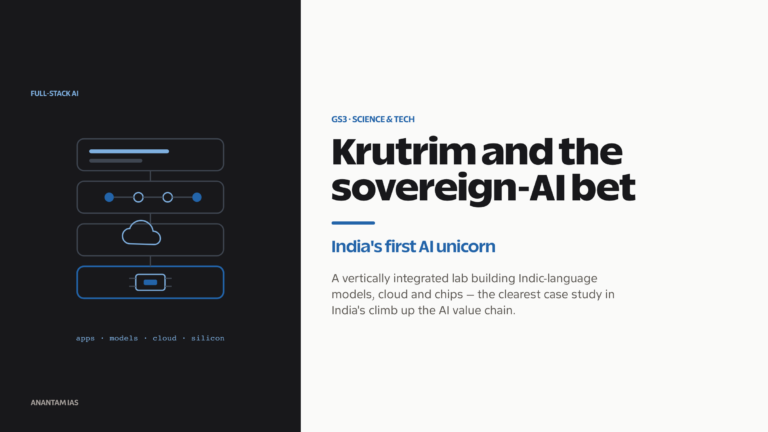
Krutrim is India's first AI unicorn — explore its founding by Bhavish Aggarwal, Krutrim-1 and Krutrim-2 language models, chip ambitions and UPSC significance.

Complete Indian prime minister list from 1947 to 2026 with tenure, party, constituency and key achievements. Essential UPSC Prelims and Mains reference.

Complete UPSC guide to the Indian Laurel Tree (Terminalia tomentosa): taxonomy, features, ecological role, tasar silk link, medicinal uses and distribution.

India has 28 states and 8 Union Territories. Explore the full list, capitals, formation history and UPSC relevance of India's political map.

How many High Courts are there in India in 2026? Complete list of 25 High Courts with seats, benches, jurisdiction, and UPSC-ready facts on…

How many district in UP? Uttar Pradesh has 75 districts grouped into 18 divisions. Full list, division-wise map, and UPSC pointers for 2026.

India's 2025-26 rank across Henley Passport, Global Hunger, Global Innovation, Global Peace and World Happiness indices with methodology and UPSC takeaways.
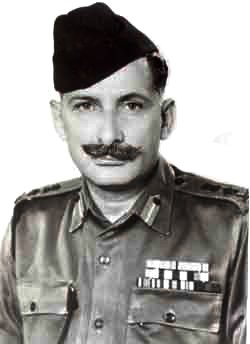
Field Marshal rank in India: history, eligibility criteria, recipients Manekshaw and Cariappa, five-star equivalents in Navy and Air Force, and ceremonial role.
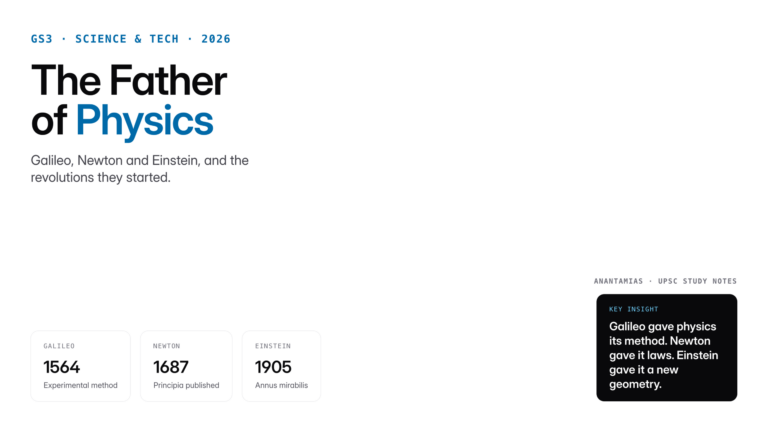
Galileo is called the father of modern physics, Newton of classical mechanics, and Einstein of modern theoretical physics. Learn why each answer appears.