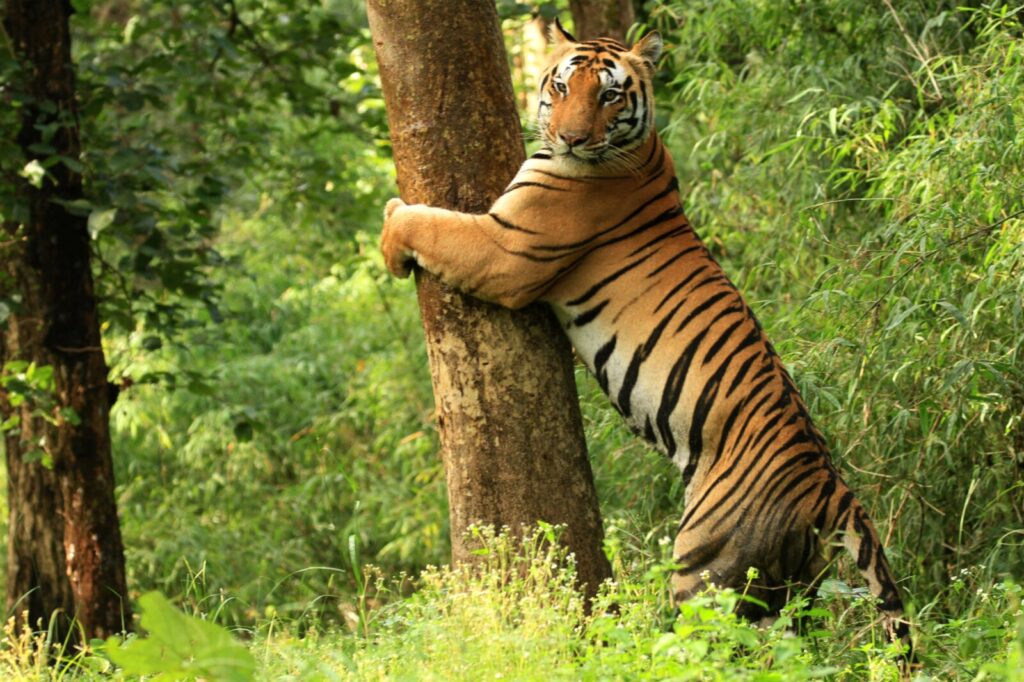
Kanha National Park is the largest national park in Madhya Pradesh, one of the original nine Project Tiger reserves, the natural home of the only surviving population of the hard-ground swamp deer or barasingha, and widely accepted as the landscape that inspired Rudyard Kipling’s The Jungle Book. Spread across the Maikal range of the Satpura hills in the Mandla and Balaghat districts of Madhya Pradesh, Kanha National Park covers roughly 940 sq km of core area, with an additional 1,067 sq km of buffer forming the larger Kanha Tiger Reserve.
Kanha National Park is the conservation flagship of what Madhya Pradesh now markets as the “Tiger State of India” — the state currently records the highest tiger numbers of any Indian state in the 2022 All-India Tiger Estimation. The park’s role is not only as a high-density tiger habitat but as a textbook demonstration that a near-extinct subspecies (the hard-ground barasingha) can be brought back to viable population sizes through sustained intensive management.
Geography and Landscape of Kanha National Park
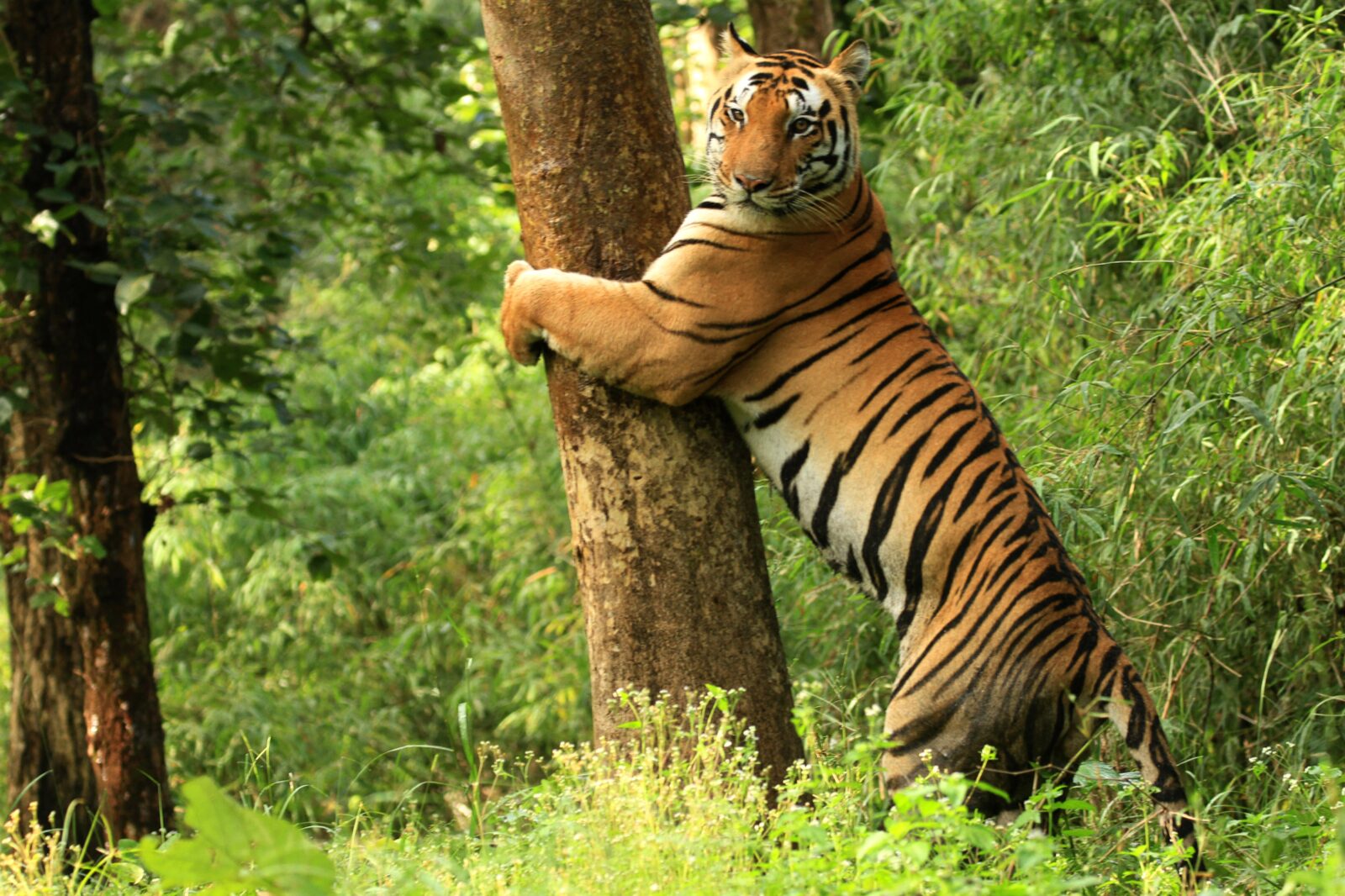
Kanha lies on the Maikal range of the Satpura hill system in central India, at elevations between roughly 450 and 950 metres. The park spans the catchments of the Banjar river (Mandla district) and the Halon river (Balaghat district), both tributaries of the Narmada and the Wainganga respectively.
A Mosaic of Sal, Bamboo, and Meadow
The defining ecological pattern of Kanha National Park is a mosaic of moist deciduous sal forest, mixed forest with bamboo, and large open meadows (called “maidans”). The meadows — Kanha, Mukki, Sondhar, Bishanpura — are not natural in origin. They were created by the relocation of villages from inside the park starting in the 1960s, and they have since become the productive engine of the park’s herbivore biomass. Sal (Shorea robusta) is the dominant timber species, with bamboo (Dendrocalamus strictus) forming a thick understorey in the lower elevations.
Six Ranges, Two Valleys
The Kanha Tiger Reserve is divided into administrative ranges including Kanha (the central tourism range), Mukki (south), Kisli, Sarhi, Bhaisanghat, and Supkhar. Tourism is permitted in four ranges; the rest function as inviolate core.
History: From Hunting Reserve to Conservation Showcase
Kanha was a hunting reserve for the erstwhile rulers of the region long before it became a national park. The earliest formal protection came in 1933 with the constitution of the Banjar Valley Reserve, followed by the Halon Valley Reserve in 1935. The two were merged and notified as Kanha National Park in 1955 under the Madhya Pradesh National Parks Act.
In 1973, Kanha National Park was selected as one of the nine original Project Tiger reserves at the launch of the programme — alongside Jim Corbett, Sundarbans, and six others. The Kanha Tiger Reserve was created the same year, bringing the larger buffer into a single management unit.
A village relocation programme from the 1960s onwards systematically moved 28 villages out of the core, creating the maidans that today carry the highest densities of barasingha and chital in central India.
The Hard-Ground Barasingha Story
The single most important species story tied to Kanha National Park is the recovery of the hard-ground swamp deer (Rucervus duvaucelii branderi), known locally as the barasingha. It is one of three subspecies of the swamp deer; the other two (R. d. duvaucelii in the Terai and R. d. ranjitsinhi in Assam) occupy wet swamp habitats. The Kanha population is the only surviving group of the hard-ground subspecies, evolved to live on firm soils rather than swamp.
The 1970 Crisis
In 1970 the entire hard-ground barasingha population at Kanha National Park was estimated at just 66 individuals. Habitat shrinkage, competition with livestock, and disease had driven the subspecies to the edge of extinction.
Active Recovery
Kanha National Park became one of the earliest case studies of intensive species recovery inside a national park. Measures included:
- Protected enclosures with controlled grazing and predator exclusion
- Maintenance of grasslands through prescribed burning and bamboo removal
- Removal of livestock from the core through village relocation
- Disease surveillance and de-worming programmes
By 2016 the population had recovered to over 700 individuals. The 2022 estimate places it at roughly 800. The hard-ground barasingha is the official state animal of Madhya Pradesh, and Bhoorsingh the Barasingha is the mascot of Kanha National Park.
Translocation to Satpura and Bandhavgarh
In a more recent phase of recovery, surplus barasingha from Kanha National Park have been translocated to Satpura Tiger Reserve (starting 2015) and Bandhavgarh Tiger Reserve (starting 2018) to create satellite populations and reduce the single-site extinction risk.
Kanha’s Tigers and Larger Fauna
Tigers
Kanha Tiger Reserve held over 100 tigers in the 2022 estimation, with one of the most stable breeding tiger populations in the country. The reserve also functions as a “source” population, with dispersing tigers establishing territories in the surrounding Kanha-Pench corridor.
Other Large Mammals
The park supports leopards, dhole, sloth bear, gaur (Indian bison), sambar, chital, four-horned antelope, mouse deer, wild boar, and Indian wolf along the periphery. Gaur populations were boosted by a translocation programme starting in 2011 from Kanha to Bandhavgarh, where they had been locally extinct. The gaur translocation is one of the largest large-bovid translocations attempted in Asia.
Birds and Reptiles
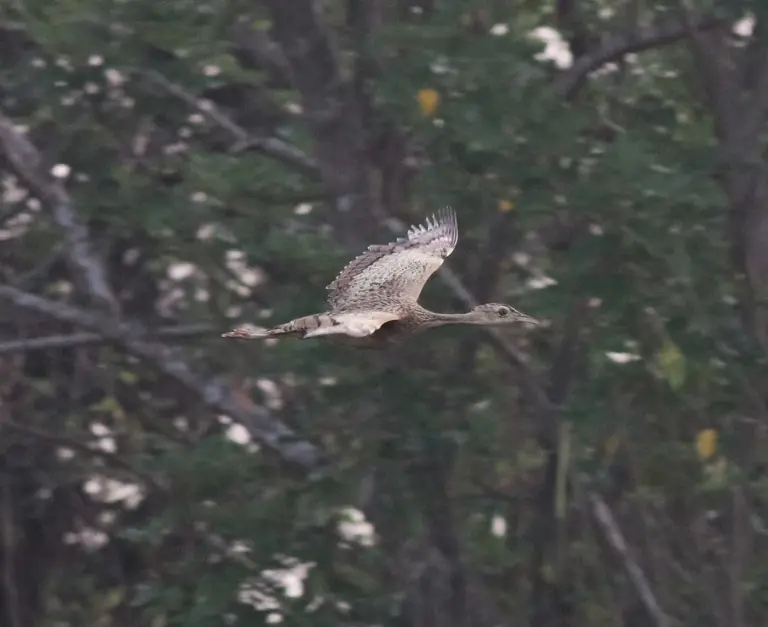
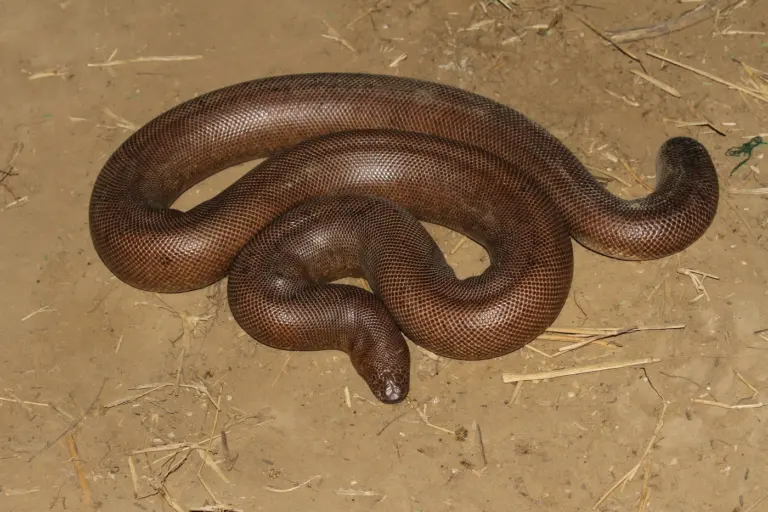
Kanha is an Important Bird Area with over 300 recorded bird species, including the Indian pitta, Indian roller, crested serpent eagle, white-eyed buzzard, and the malabar pied hornbill. Reptiles include the Indian rock python, cobra, krait, monitor lizard, and several species of skinks.
Legal Status and Tiger Reserve Framework
Kanha National Park is notified under the Wildlife (Protection) Act 1972. The Kanha Tiger Reserve operates under the National Tiger Conservation Authority framework introduced by the 2006 amendment to the WLPA. The reserve has a clearly demarcated core (Critical Tiger Habitat) and buffer, with regulated tourism limited to 20% of the core area.
The Kanha-Pench corridor — connecting Kanha Tiger Reserve to Pench Tiger Reserve through reserve forests in Mandla, Seoni, and Balaghat — has been formally identified as a critical tiger corridor in NTCA documents. Maintaining its permeability is one of the central conservation tasks of the Madhya Pradesh forest department.
The Jungle Book Connection
Rudyard Kipling’s The Jungle Book (1894) is widely associated with Kanha National Park, although Kipling himself never visited central India. The forests of the Seoni district adjoining Kanha, and the sal-bamboo terrain that defines the larger Pench-Kanha-Satpura belt, are the most plausible setting for the stories of Mowgli, Sher Khan, Bagheera, and Baloo. The Madhya Pradesh tourism department uses this association extensively in branding the park.
The literary connection has marketing value, but the genuine conservation interest lies elsewhere — Kanha National Park is one of the best-managed examples of meadow-sal-bamboo habitat in tropical Asia.
Recent Translocation and Reintroduction Programmes
Beyond barasingha, Kanha has become a “source” landscape for several species-recovery efforts in central India.
- Hard-ground barasingha translocated to Satpura Tiger Reserve (2015 onwards) and Bandhavgarh (2018 onwards)
- Gaur translocated from Kanha to Bandhavgarh (2011 onwards) where they had been locally extinct
- Tigers dispersing naturally into the Kanha-Pench corridor and into Achanakmar Tiger Reserve in Chhattisgarh
These are among the highest-profile mammal translocation programmes in India and are studied internationally as models for landscape-scale species recovery.
Threats and Management Challenges
Despite strong management, Kanha National Park faces real pressures:
- Linear infrastructure cutting the Kanha-Pench corridor
- Invasive species (Lantana camara) in the understorey
- Bamboo gregarious flowering and mass die-off cycles that periodically reshape habitat
- Tourism pressure in the core ranges
- Climate-driven changes in water availability in the Banjar and Halon catchments
The 2024–25 management plan emphasises corridor consolidation, lantana control, and active grassland maintenance.
Kanha National Park and UPSC
For Civil Services aspirants, Kanha National Park is a high-frequency topic in environment, ecology, and biodiversity sections. Key testable points:
- Notified as a national park in 1955; one of the original 1973 Project Tiger reserves
- Hard-ground barasingha — only surviving population, scientific name Rucervus duvaucelii branderi
- State animal of Madhya Pradesh (barasingha)
- Setting linked to Kipling’s Jungle Book
- Translocation of barasingha to Satpura and Bandhavgarh; gaur translocation to Bandhavgarh
- Madhya Pradesh as Tiger State of India
- Kanha-Pench corridor as a critical tiger corridor
For complementary reading on the broader protected-area network, cross-read Jim Corbett National Park, Kaziranga National Park, Sundarbans National Park, and biodiversity hotspots of India. For wetland-focused conservation see Ramsar Sites of India, and for single-species recovery models see Asiatic Lion in India and the Greater One-Horned Rhinoceros.
Outlook
Kanha National Park is in many ways the most quietly successful of India’s flagship reserves. It does not have the iconic megafauna density of Kaziranga or the dramatic landscape of the Sundarbans, but it has done something rarer: it has pulled a subspecies back from sixty-six animals to nearly a thousand, it has supplied source animals to four other reserves, and it has held a high-density tiger population over five decades without a major poaching collapse. The next phase will depend on whether the Kanha-Pench corridor can be defended against expanding road and rail infrastructure and whether grasslands can be actively maintained against bamboo and lantana encroachment. The park’s record makes it reasonable to expect that the answer will be yes.
Frequently Asked Questions
Where is Kanha National Park located?
Kanha National Park is located in the Maikal range of the Satpura hills, spread across the Mandla and Balaghat districts of Madhya Pradesh. The core national park covers about 940 sq km, and the larger Kanha Tiger Reserve covers about 2,000 sq km including buffer.
When was Kanha declared a national park and tiger reserve?
It was notified as a national park in 1955 under the Madhya Pradesh National Parks Act, drawing on earlier protection of the Banjar Valley Reserve (1933) and the Halon Valley Reserve (1935). It was declared a Tiger Reserve in 1973 as one of the original nine reserves under Project Tiger.
Why is Kanha National Park famous for the barasingha?
Kanha National Park is the only surviving habitat of the hard-ground subspecies of swamp deer (Rucervus duvaucelii branderi). The population had crashed to just 66 individuals in 1970 and has been recovered through intensive management to roughly 800 today. The hard-ground barasingha is the state animal of Madhya Pradesh.
Did Rudyard Kipling visit Kanha National Park?
No. Kipling never visited central India. The Jungle Book (1894) was written using descriptions of the central Indian forests passed on to him, and the sal-bamboo terrain of the Pench-Kanha-Satpura belt is widely identified as the most plausible setting for the stories.
How many tigers are there in Kanha Tiger Reserve?
The 2022 All-India Tiger Estimation placed the Kanha Tiger Reserve population at over 100 tigers. It is one of the most stable breeding tiger populations in India and functions as a source for the wider Kanha-Pench landscape.
What is the significance of the Kanha-Pench corridor?
The Kanha-Pench corridor connects Kanha Tiger Reserve to Pench Tiger Reserve through reserve forests in Mandla, Seoni, and Balaghat. It is formally identified by the National Tiger Conservation Authority as a critical tiger corridor and is essential for the genetic exchange and dispersal of tigers, gaur, and barasingha.
What translocation programmes have used Kanha National Park as a source?
Surplus barasingha from Kanha have been translocated to Satpura Tiger Reserve (2015 onwards) and Bandhavgarh Tiger Reserve (2018 onwards) to create satellite populations. Gaur (Indian bison) have been translocated from Kanha to Bandhavgarh from 2011 onwards, restoring a locally extinct species.
How are vegetation and habitat managed inside Kanha National Park?
Active management includes prescribed grassland burning, bamboo and lantana control, village relocation from the core (28 villages relocated since the 1960s), and the maintenance of large maidans like Kanha, Mukki, and Sondhar. These open meadows now support the highest densities of barasingha and chital in central India.
Tell Google you want more of this.
Add Anantam IAS as a preferred sourceOne tap, and this site shows up more often in your own Top Stories, AI Overviews and AI Mode. Remove it any time.