Opens in a new tab
Join Anantam IAS Channel on Telegram

Daily Digest · Friday

6 November 2026 Current Affairs for UPSC

11 current affairs published on Friday, 6 November 2026

6 November 2026 Current Affairs for UPSC — every Why-in-News article AnantamIAS published on Friday, 6 November 2026, broken down with Why in News?, the exact GS paper it feeds, sub-topic mapping, MCQ-ready facts and a UPSC-style practice question. 11 articles in total, covering Polity, Economy, Environment, S&T, IR, Geography, History, Society and Internal Security — the same Why-in-News + GS-paper-mapping + practice-question format the Compass uses across every daily digest on the site.

Daily current affairs for UPSC is where new material enters your prep stream. Read this 6 November 2026 digest end-to-end in 25–35 minutes, attempt the practice question at the foot of each article (it's MCQ for some, 10/15-marker for others), then bookmark the entries that fall inside your active revision window. Everything stays cross-linked: tap any subject pill to jump to that subject's hub, or use the table of contents above to skip straight to a specific story.

Use this page three ways. Read sequentially for a one-sitting scan of everything that mattered on 6 November 2026. Download the 6 November 2026 PDF below for offline study or print revision. Or use the November 2026 Current Affairs compilation to see this day in the month's full context. For the previous day's reading, see 5 November 2026 Current Affairs; the next day's is 7 November 2026 Current Affairs.

Why we publish daily current affairs separately from the monthly compilation: daily is learning, monthly is revision. Use the daily page to add fresh material to your notes the day it breaks; come back to the November 2026 compilation 60 days before Prelims when the noise has settled and only the lasting takeaway is worth re-reading.

Satellite Network Authorisation: Who Can Supply Connectivity?

Open article →Download PDF

Why in News?

On 5 November, the Telecom Regulatory Authority of India (TRAI) recommended a national satellite network authorisation that would let network operators supply capacity to eligible telecom service providers.

  • The Department of Telecommunications sought terms for a network authorisation under section 3(1)(b) of the Telecommunications Act, 2023.
  • TRAI proposes separate conditions for spectrum used between a gateway and satellite and spectrum used between a satellite and user terminal.
  • The recommendations await a government decision.
  • A provider serving a remote community could buy satellite network capacity while retaining responsibility for its own service authorisation.
  • The ability to carry a signal and the legal right to sell a service to the public are separate questions.

UPSC Relevance

Prelims Relevance

  • SCNaaS stands for Satellite Communication Network as a Service.
  • The proposed SCN authorisation covers the wholesale network function.
  • A feeder link connects the satellite and its gateway earth station.
  • A user link connects the satellite and a user terminal.
  • FSS means Fixed Satellite Service and MSS means Mobile Satellite Service.

Mains Relevance

GS Paper 3

  • Assess whether shared networks could reduce the cost of reaching remote settlements.
  • Explain why spectrum conditions must follow the service carried over the network.

GS Paper 2

  • Distinguish a regulator’s recommendations from the government’s decision on authorisation.

Background and Context

Who Would Serve the Subscriber?

Imagine a broadband provider seeking to connect a village beyond its terrestrial network. TRAI’s proposal separates the purchase of satellite capacity from the sale of broadband.

  • The satellite network provider would supply network capacity to another eligible provider under a commercial agreement. Its proposed customer is the authorised service provider purchasing that capacity for its own service.
  • The village household would subscribe through the service provider. Eligibility to purchase the wholesale service depends on permission to provide satellite communications or to deliver telecommunications through a satellite network.
  • The proposed network authorisation would confer no independent right to sell a subscription to the household. A firm that holds both roles must identify which authorisation permits each activity.
  • An existing eligible licensee could also offer wholesale capacity if it meets the prescribed entry criteria and accepts the network operator’s technical, security and rollout conditions. Its existing licence alone would be insufficient.
  • Sharing infrastructure could spare a service provider the expense of developing its own satellite network. The commercial benefit would depend on the capacity it can obtain, on what terms and at what price.

Which Link Needs Which Spectrum?

Follow a transmission from a gateway to a satellite and onward to a terminal. Each of those two radio paths has its own proposed assignment conditions.

  • The feeder link connects a gateway earth station to a satellite. TRAI recommends administrative assignment of Fixed Satellite Service spectrum to a network provider for this part of the path.
  • The user link connects a terminal to the satellite. The proposal allows a network provider to seek Fixed Satellite Service or Mobile Satellite Service spectrum for this segment.
  • For administrative assignment on the user link, the applicant would have to show that its partner’s intended service falls within the First Schedule to the Telecommunications Act. The use case determines eligibility.
  • Alternatively, a partner’s existing spectrum could support wholesale capacity under an agreement. The partner would retain its right to use that spectrum, even while the network operator uses it to serve that partner.
  • Network authorisation and frequency assignment answer different questions. Permission to operate the infrastructure would still leave the operator needing a lawful basis to use the particular frequencies on each radio link.
What Changes for Direct-to-Device Service?

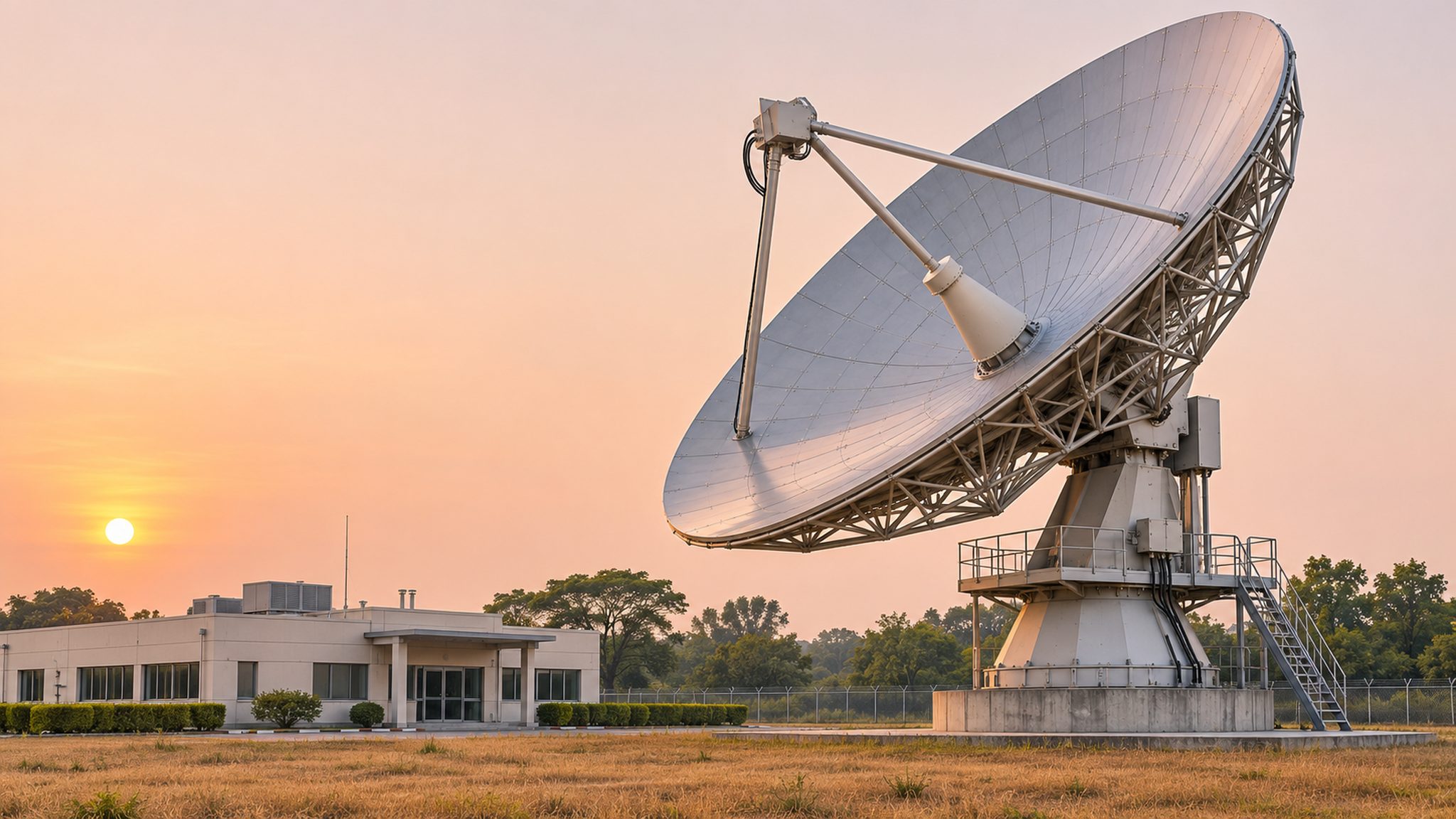
A phone communicating directly with a satellite still depends on a network operator, an authorised access provider and permission to use the relevant radio frequencies.

  • One proposed route uses mobile satellite spectrum. An authorised access provider could obtain wholesale network capacity to offer the service, while the handset would need hardware compatible with the satellite bands.
  • Another route uses mobile network spectrum already assigned to access providers. TRAI proposes that holders collectively covering the relevant frequency channel across all licensed service areas must agree to its use.
  • The proposed mobile-band route would operate on a non-interference, non-protection basis. Satellite transmissions would have to protect existing services, and the satellite service could not demand protection from their lawful transmissions.
  • Even a handset that supports the right band cannot establish a commercial entitlement to service. The government would still need to decide on the framework, and operators would need the applicable permissions and agreements.

Way Forward

Make the Division of Responsibility Clear

  • Specify which entity answers to the subscriber when a wholesale capacity failure interrupts retail service.
  • Require a documented match between the partner’s intended service and the spectrum assignment route.
  • Read alongside control of satellite connectivity and telecom interconnection agreements for two distinct questions about network dependence.

Conclusion

  • For a spectrum question, identify the endpoints of the radio link, whose frequencies it uses and which service the partner intends to supply.
  • TRAI’s recommendation would let eligible providers share satellite infrastructure. The government’s decision on authorisation and the provider’s permission to serve end users remain separate steps.

UPSC Practice Questions

Prelims MCQ 1

With reference to TRAI’s proposed satellite network authorisation, consider the following statements:

  1. The network authorisation alone permits retail sales to households.
  2. The feeder link connects a gateway earth station and a satellite.
  3. An eligible partner can retain the right to use spectrum made available under a network agreement.

How many of the above statements are correct?

(a) Only one (b) Only two (c) All three (d) None

Answer: (b) Only two

Explanation:

Statements two and three describe the proposals. The SCN provider would supply eligible service providers and could not serve subscribers directly under this authorisation.

Prelims MCQ 2

What would an SCN provider need to show when seeking administrative assignment for a user link?

(a) The gateway uses a different satellite (b) Its partner’s intended service falls in the First Schedule (c) The operator already supplies retail broadband (d) Every subscriber owns a satellite dish

Answer: (b) Its partner's intended service falls in the First Schedule

Explanation:

TRAI ties the administrative assignment test for user-link spectrum to the service the partner intends to offer.

UPSC Mains Questions

  1. How could wholesale satellite networks expand connectivity while preserving accountability to subscribers?
  2. Explain why the distinction between feeder links and user links matters for spectrum governance.

Source: PIB, Ministry of Communications.

Frequently Asked Questions

What is SCNaaS?

Satellite Communication Network as a Service is the proposed wholesale supply of satellite network capacity to an eligible provider. That provider would use the capacity to deliver services within its own authorisation.

Who decides whether the framework takes effect?

TRAI has recommended terms after a request from the Department of Telecommunications. The Central Government must decide whether to adopt those terms before operators can rely on the proposed authorisation.

Can a network provider use its partner’s frequencies?

TRAI proposes allowing use under an agreement for the limited purpose of supplying network capacity to that partner. The right to use the frequencies would remain with the partner.

What is a satellite user link?

It is the radio connection between a satellite and the user terminal. Under the proposal, the partner’s intended service matters when seeking administrative assignment of spectrum for this connection.
UGC Campus Equity Rules: Which Rules Apply During the Stay?

Open article →Download PDF

Why in News?

On 5 November, the Centre told the Supreme Court it was considering a committee to review the University Grants Commission’s 2026 campus equity regulations, The Hindu reported.

  • The Solicitor General requested more time for the government to respond to criticism of the regulations.
  • The Court’s January stay kept the 2026 regulations in abeyance and continued the 2012 framework.
  • The reported submission described a possible review. The Centre did not announce members or a decision to change the rules.
  • A student reporting caste discrimination still has a campus complaint route under the earlier regulations.
  • For a university deciding which procedure to follow, the interim order matters more than the date on the latest UGC notification.

UPSC Relevance

Prelims Relevance

  • UGC made the 2012 regulations under section 26 of the UGC Act, 1956.
  • The 2012 regulations cover higher educational institutions across India.
  • A student or a parent can submit a written complaint to the Anti Discrimination Officer.
  • An interim stay suspends operation pending a further judicial decision.

Mains Relevance

GS Paper 2

  • Explain how judicial review affects the operation of delegated legislation.
  • Assess how a complaint procedure can protect students facing caste discrimination while ensuring a fair inquiry.

Background and Context

What Did the Court Put on Hold?

A university receiving a discrimination complaint must first identify the rules it can apply while the challenge to the new regulations is pending.

  • The UGC issued the 2026 regulations to address discrimination in higher education. Petitioners challenged how the new text defined caste-based discrimination, bringing a question about the scope of a regulatory provision before the Court.
  • In January, the Supreme Court issued an interim stay and directed that the 2012 regulations continue. This preserved a procedure for addressing complaints while the judges examined the objections to its proposed replacement.
  • The Court also issued notice to the Centre and the UGC. Notice gives those authorities an opportunity to respond to the challenge before the Court decides whether the contested provision can stand.
  • The November submission came from the government’s lawyer. A university reading the hearing report has no basis to treat the suggested committee as an appointed body or to start applying the suspended framework.

How Can a Student Report Discrimination?

The 2012 regulations connect a right to equal treatment with an identifiable person who receives the complaint.

  • Under the 2012 definition, a distinction can amount to discrimination through its purpose or its effect on equal treatment. Denying access to education on grounds such as caste or disability falls within its scope.
  • A student or parent can give the Anti Discrimination Officer a written account with sufficient detail about the alleged conduct. The regulations also allow complaints about incidents alleged to have occurred outside the institution.
  • For example, a student who says caste prejudice cost them access to a laboratory can describe the occasion, the decision and its effect. These details give the officer something specific to examine.
  • The officer initiates follow-up action and may conduct preliminary fact-finding where necessary. The institution acts on the officer’s recommendation. Any punishment must reflect the nature of the discrimination or harassment established.
  • The institution must publish its filing procedure online. For a parent seeking help, the practical question is whether that published procedure identifies the right recipient and explains what information the complaint should include.

Why Is the Caste Definition Contested?

Two sets of arguments concern different risks. Keep both separate from what the Court has actually decided.

  • Petitioners objected to Regulation 3(c) of the 2026 rules. They argued that its definition of caste-based discrimination restricted coverage to prejudice against Scheduled Castes, Scheduled Tribes and Other Backward Classes.
  • Advocates representing the mothers of Rohith Vemula and Payal Tadvi opposed the stay. They argued that students from historically oppressed castes needed the stronger protection the new regulations sought to provide.
  • A definition determines which allegations a provision can address. A complaint procedure answers a separate question about who hears the allegation and how an institution establishes what happened before taking action.
  • In a policy review, ask how each proposed wording would affect a student reporting exclusion. Then ask whether the procedure gives the decision-maker enough evidence to assess the complaint and explain the outcome.

Way Forward

Keep the Complaint Route Accessible

  • Publish the officer’s contact details beside the filing instructions, using language a student or parent can follow.
  • Explain how records of the alleged incident can help the officer assess the complaint.
  • If a review committee is appointed, examine its published remit and recommendations separately from any regulations the UGC subsequently issues.

Conclusion

  • The Court kept an existing remedy available during litigation. For a campus complaint, identify the operative regulation, the officer authorised to receive it and the institution responsible for follow-up.
  • For an examination answer, attribute each position to its speaker. A petitioner’s objection, a government lawyer’s suggestion and a judicial direction carry different consequences for students.

UPSC Practice Questions

Prelims MCQ 1

With reference to the UGC campus equity regulations, consider the following statements:

  1. The January interim order kept the 2012 regulations in force.
  2. Only a student may file a written complaint under the 2012 rules.
  3. An interim stay settles the final validity of the regulation.

How many of the above statements are correct?

(a) Only one (b) Only two (c) All three (d) None

Answer: (a) Only one

Explanation:

Only statement 1 is correct. A parent may also complain. The court retained the earlier regime without deciding the final merits.

Prelims MCQ 2

Who receives a written discrimination complaint under the 2012 UGC equity regulations?

(a) The university visitor (b) The Solicitor General (c) The Anti Discrimination Officer (d) A proposed special review committee

Answer: (c) The Anti Discrimination Officer

Explanation:

The officer receives a complaint from a student or parent and initiates follow-up action.

UPSC Mains Questions

  1. How can universities protect students facing caste discrimination while providing a fair procedure for deciding complaints?
  2. Explain how an interim judicial order can maintain access to a remedy during a challenge to delegated legislation.

Sources: The Hindu and University Grants Commission, 2012 equity regulations.

Frequently Asked Questions

Which UGC campus equity rules apply during the stay?

The Supreme Court directed that the 2012 equity regulations continue while the 2026 regulations remain in abeyance. Universities still have responsibilities to receive and act on discrimination complaints.

Did the Centre appoint a special committee?

At the November hearing the Solicitor General said the government was considering a committee and sought more time to respond. The reported submission did not announce a decision constituting one.

Who can complain under the 2012 rules?

A student or parent can send the Anti Discrimination Officer a written complaint describing the alleged discrimination or harassment. The rules also cover allegations concerning incidents outside the higher educational institution.

What did petitioners challenge in Regulation 3(c)?

Petitioners argued that the definition of caste-based discrimination was too narrow in its coverage. The Court issued notice on the petitions, leaving their merits for examination during the proceedings.

Active Debris Removal: Why Capture Requires a Matched Orbit

Open article →Download PDF

Why in News?

On 5 November, Cosmoserve Space opened its Base 1 facility in Hyderabad to develop and test robots for active debris removal and in-orbit servicing.

  • Base 1 has laboratories for orbital rendezvous and capture, microgravity simulation platforms and satellite integration clean rooms.
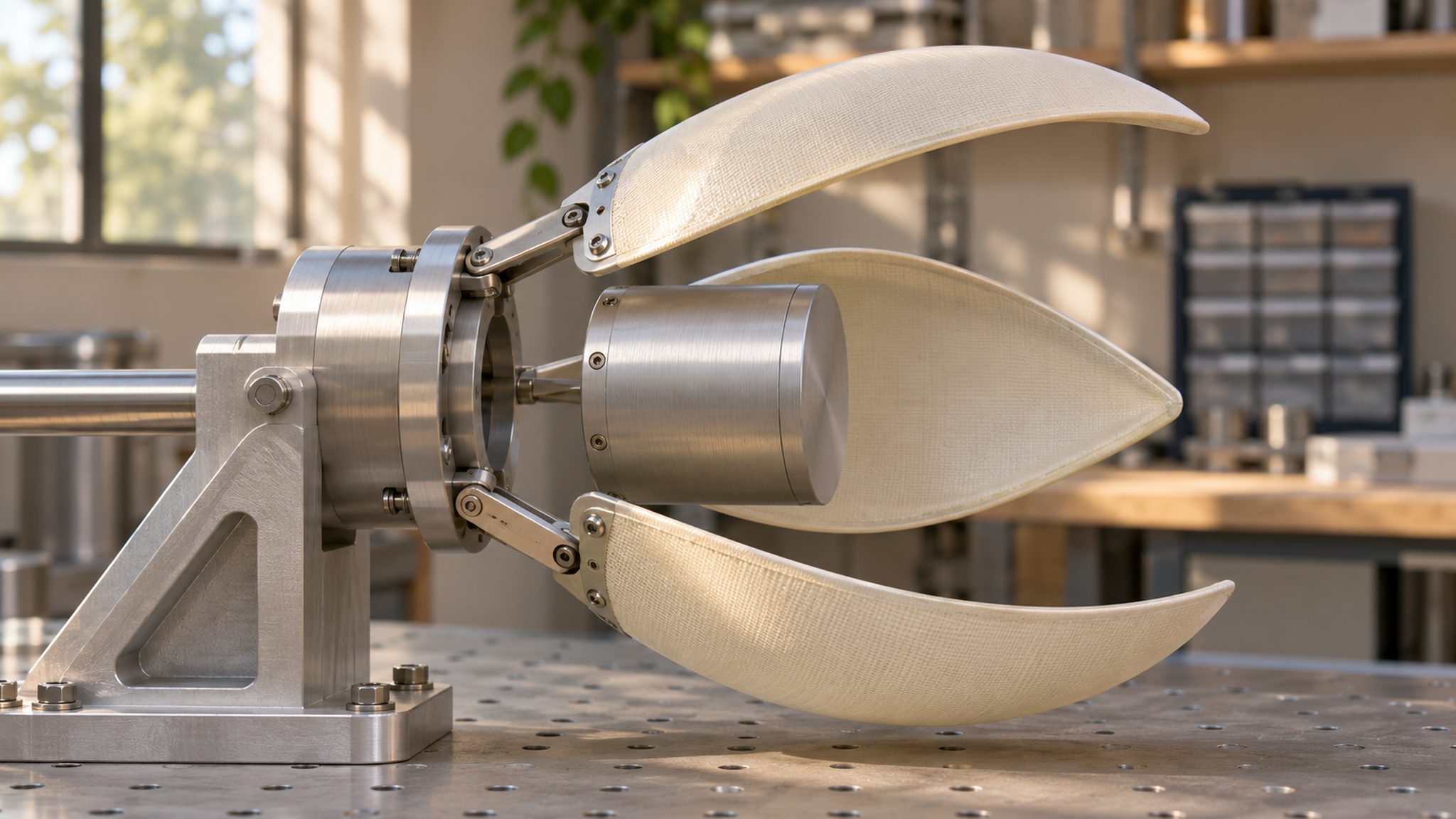
  • The Department of Space reported that Mission EMBRACE tested soft robotic petals in space in July 2026.
  • The minister described debris-free space by 2030 as a policy vision. The announcement reported no recovery or disposal of an existing debris object.
  • A defunct satellite can share an orbital region with working satellites long after its mission ends.
  • Tracking can warn an operator about a close approach. Removing an object requires a spacecraft capable of changing that object’s orbit.

UPSC Relevance

Prelims Relevance

  • Orbital debris includes defunct satellites and spent rocket stages.
  • Rendezvous involves bringing two spacecraft close with compatible motion.
  • An uncooperative target cannot help a servicing vehicle navigate or capture it.
  • A capture mechanism secures the object. Disposal changes its orbital fate.

Mains Relevance

GS Paper 3

  • Distinguish collision avoidance, prevention of new debris and removal of existing debris.
  • Evaluate what a ground test facility can establish about readiness for a flight mission.

Background and Context

What Can the Hyderabad Facility Test?

A removal mission must bring hardware, navigation software and flight control together. Base 1 gives engineers a place to test how those parts interact.

  • The rendezvous laboratory addresses the approach to a moving target. A capture laboratory addresses the later problem of making contact and holding the target without damaging either object.
  • A microgravity simulation lets teams study how hardware behaves under selected conditions on Earth. A ground trial can expose a fault before flight, while leaving other conditions to be tested in orbit.
  • The July EMBRACE test took soft robotic petals into space. That demonstrated a step in developing a capture device. The official account does not report the capture of a freely orbiting, defunct satellite.
  • The same close-approach skills also support in-orbit servicing. A servicing vehicle might reach an operating satellite to extend its useful life, whereas a debris-removal vehicle seeks to take a defunct object out of harm’s way.

Why Must a Chaser Match the Target's Motion?

Imagine two objects passing the same point on different paths. Even at their closest approach they can be moving rapidly relative to one another.

  • Tracking estimates where the debris will be. An orbit catalogue helps a mission planner find the target, but reaching that predicted location alone could produce a brief flyby or a collision.
  • During rendezvous, the chaser changes its trajectory so that it can stay near the target. Its sensors measure the separation and how quickly that separation changes as the two objects move.
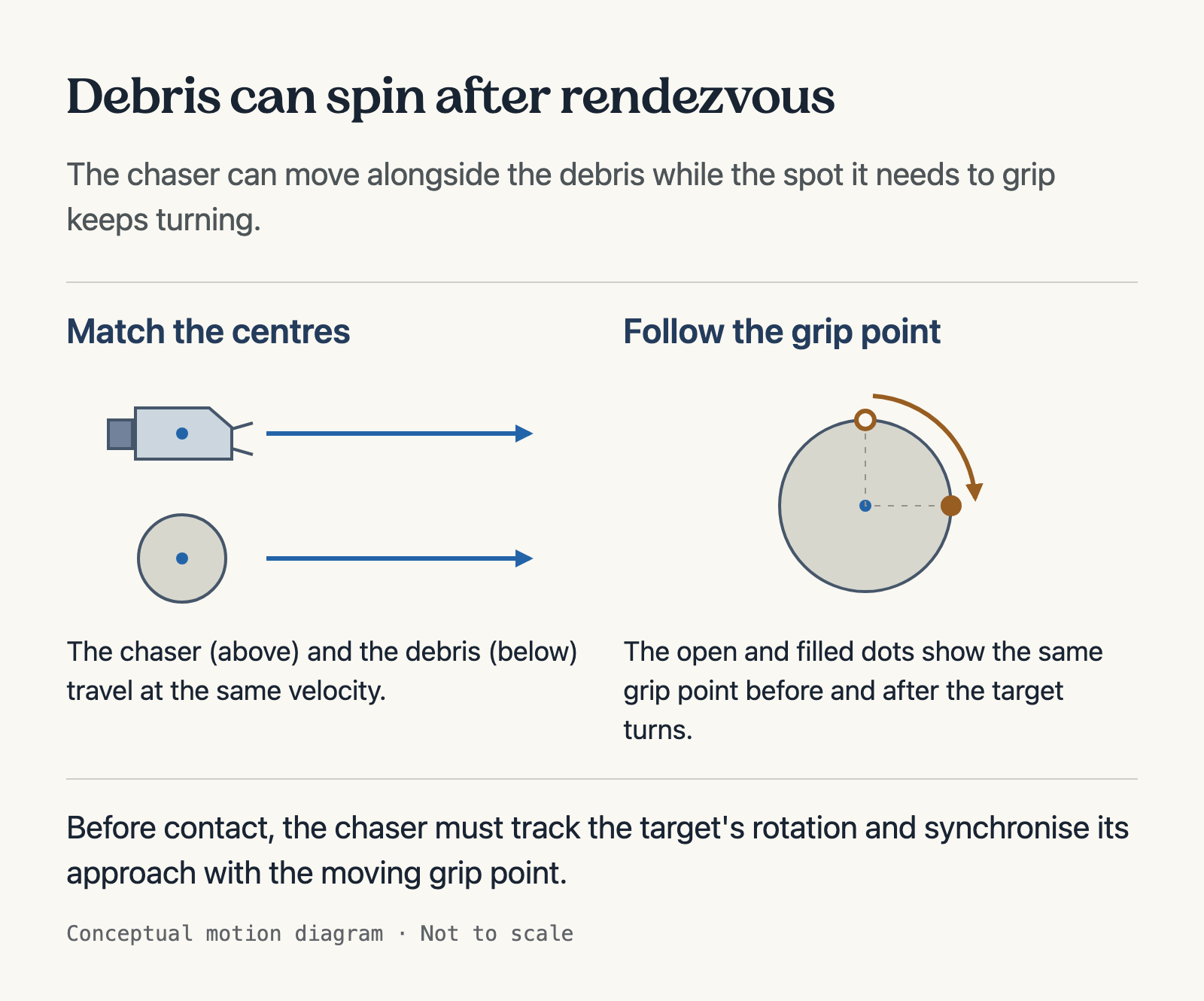
  • A defunct satellite may tumble. Even when its centre moves alongside the chaser, a point on its surface can sweep past the capture mechanism, much as the rim of a turning wheel does.
  • For capture, the chaser must account for both the approach speed and the rotation of the intended contact point. If those motions are poorly matched, contact can knock fragments loose.
  • Once joined, the spacecraft must control the combined body. The attached mass changes how the system responds to thrust. A secure grip gives the chaser a way to move the debris with it.
Equal arrows show matched centre velocities while a point on the target surface turns through an arc.
A target's centre and its grip point can have different motions. Illustrative geometry, not mission data.

When Does Capture Become Disposal?

A captured object can still occupy the same busy orbit. Its eventual path determines whether the operation has reduced the hazard.

  • For an object in low Earth orbit, one disposal option is to lower its orbit for atmospheric re-entry. The mission must plan the descent as well as the encounter that precedes it.
  • Active removal deals with debris already present. Designing a new satellite to leave its operational orbit at the end of its life reduces the chance that a future chaser will have to collect it.
  • A functioning satellite may make a collision-avoidance manoeuvre after a warning. That can protect the satellite during one encounter while leaving the debris available to cross another spacecraft’s path later.
  • Read the 2030 vision against these separate outcomes. Demonstrating a capture component, disposing of one selected object and reducing the risk across an entire orbital region each require different evidence.

Way Forward

Measure Each Flight Milestone

  • Report which relative motions a test reproduced, which target it used and what happened after contact.
  • Include a safe retreat if the chaser loses track of the target during the final approach.
  • Pair a removal plan with measures that limit new debris. See the wider space governance debate and the scope of the Outer Space Treaty.

Conclusion

  • For an exam question, follow the target through the encounter. Tracking predicts its path, rendezvous controls relative motion, capture secures it and disposal changes where it will travel.
  • The Hyderabad laboratories support the development of these capabilities. A claim of debris removal requires evidence of the target’s fate after the capture attempt.

UPSC Practice Questions

Prelims MCQ 1

With reference to active debris removal, consider the following statements:

  1. A tracking catalogue alone can change the orbit of a defunct satellite.
  2. A chaser may need to account for the target’s rotation before capture.
  3. Securing a target does not by itself remove it from its orbit.

How many of the above statements are correct?

(a) Only one (b) Only two (c) All three (d) None

Answer: (b) Only two

Explanation:

Statements two and three are correct. Tracking estimates motion. A chaser must physically intervene to change a debris object’s orbit.

Prelims MCQ 2

Which observation most directly demonstrates a successful rendezvous before capture?

(a) Both objects pass through the same altitude (b) A ground sensor identifies the target (c) The chaser maintains a controlled position close to the target (d) Both objects cross the same point at high relative speed

Answer: (c) The chaser maintains a controlled position close to the target

Explanation:

Controlled relative position enables the final approach. Equal altitudes and crossing paths can still leave the vehicles moving rapidly relative to each other.

UPSC Mains Questions

  1. Why is tracking orbital debris insufficient for its safe removal? Explain the role of relative motion in capture.
  2. How should a national space programme balance preventing new debris with removing existing objects?

Sources: PIB, Department of Space and European Space Agency, Active debris removal.

Frequently Asked Questions

What is active debris removal?

It is a mission to intervene physically in the trajectory of an existing debris object. One approach uses a chaser to capture the object and take it towards safe disposal.

Why is a tumbling target difficult to capture?

The target’s surface rotates relative to the chaser. Even if their centres move together, the intended contact point may move fast enough to make a grip unsafe.

What did Mission EMBRACE test?

The Department of Space reports that the mission tested soft robotic petals in space in July 2026. The ministry describes a component test and gives no account of an existing debris object being removed.

How does collision avoidance differ from active removal?

A working satellite changes its own path to avoid a predicted encounter. Active removal changes the path of the debris itself so it can leave the orbital region at risk.

Kimberley Process: What a Rough Diamond Certificate Covers

Open article →Download PDF

Why in News?

India chaired a Kimberley Process consultation in Luanda on 3 November ahead of the New Delhi plenary, where participants are expected to consider proposals on rough diamond certification.

  • The Commerce Ministry reported the discussions on 5 November. The plenary is scheduled for 30 November to 4 December.
  • Participants discussed digital certification, statistical reporting and possible reform of the conflict diamond definition.
  • India participates as an observer in the African Diamond Producers’ Association (ADPA), which hosted anniversary events in Luanda.
  • A rough diamond may change hands across borders before cutting and polishing. The certificate travels with the shipment at the stage the scheme regulates.
  • Checking the safe passage of a parcel and investigating the conditions under which its stones were mined require different evidence.

UPSC Relevance

Prelims Relevance

  • KPCS stands for Kimberley Process Certification Scheme.
  • The scheme governs international trade in rough diamonds between participants.
  • The exporting authority validates the shipment certificate.
  • Governments, industry and civil society contribute to the Kimberley Process.
  • India chairs the Kimberley Process in 2026 and has observer status in ADPA.

Mains Relevance

GS Paper 2

  • Examine how consensus shapes reform of a multilateral trading arrangement.
  • Distinguish India’s chairship from its observer role in a regional producers’ association.

GS Paper 3

  • Assess the evidentiary limits of border certification for responsible mineral sourcing.

Background and Context

What Makes a Rough Diamond a Conflict Diamond?

The Kimberley Process defines the problem by who uses the proceeds of a rough diamond sale and what the money finances.

  • A conflict diamond falls within the definition when rebels or their allies use rough stones to pay for armed conflict directed against a legitimate government. A diamond’s physical appearance cannot reveal that financial link.
  • The relevant product is the rough diamond. A shipment of uncut stones crossing a border falls within the scheme, while a finished diamond in a jeweller’s display falls outside its certification requirement.
  • A mine’s location in a country experiencing unrest cannot settle the question. An investigator needs to examine financing, including who received the proceeds and whether those proceeds supported the specified armed activity.
  • Consider a buyer who asks about working conditions at a mine. The shipment certificate addresses conflict financing within the scheme’s definition. Evidence about wages, safety or labour abuses requires a separate investigation.

What Happens When a Shipment Crosses a Border?

Imagine an exporter sending rough stones from a producing country to a cutting centre abroad. Authorities on each side have a distinct job.

  • First check the trading partner. The scheme restricts rough diamond trade to participants, so an exporter cannot satisfy the rules simply by preparing paperwork for a customer in a non-participating country.
  • The exporting authority validates a certificate for the consignment. Its unique number, parcel count and carat weight identify the shipment and give the receiving authority details to check against the goods.
  • A tamper-resistant container helps keep the certificate connected to the stones it describes. An intact container can protect that link during transport. It cannot independently establish where the stones entered the supply chain.
  • The importing authority checks for a valid certificate. A doubtful document calls for verification with the relevant authorities before its claims can be accepted. A trader’s invoice alone cannot perform the certificate’s function.
  • Compare this with a certificate of origin. Both documents can be checked at a border, but the Kimberley certificate answers a narrower question about compliance with rough diamond trading rules.

What Could the Luanda Consultation Change?

India brought the scheme’s working bodies and observers together to identify questions that still need agreement before the New Delhi meeting.

  • India’s chairship gives it a role in convening participants and seeking agreement. The process works by consensus. A proposal raised at the consultation still has to secure agreement before it changes the rules.
  • The proposed definition review concerns which forms of violence the scheme should cover. The Commerce Ministry described an exchange of views in Luanda. It reported no adopted expansion of the conflict diamond definition.
  • Digital certification addresses a separate problem. Authorities could match records across borders more readily, as in wider customs cooperation. A digital record would still depend on reliable information when stones first enter the system.
  • India’s ADPA observer status offers a channel for discussing how producer countries can retain more value through sorting and valuation. That role is distinct from chairing the process that sets rough diamond certification requirements.

Way Forward

Match Each Claim to the Evidence

  • Assess proposals to widen the definition against the precise risks they would add and the evidence authorities could collect.
  • Use peer review and trade records to investigate discrepancies between shipments dispatched and consignments received.
  • Bring artisanal producers into discussions about recordkeeping so that controls remain workable for small operators.

Conclusion

  • A Kimberley certificate follows a particular consignment of rough stones across a border. Its credibility depends on controls where diamonds enter the trade and on checks that keep the document tied to the parcel.
  • When evaluating a reform, ask whether it changes what counts as conflict financing or how compliance is verified. A digital certificate and a broader definition answer different questions.

UPSC Practice Questions

Prelims MCQ 1

With reference to the Kimberley Process Certification Scheme, consider the following statements:

  1. A validated certificate must accompany an international shipment of rough diamonds between participants.
  2. A certificate attests to the labour conditions of every mine supplying the shipment.
  3. India holds observer status in the African Diamond Producers’ Association.

How many of the above statements are correct?

(a) Only one (b) Only two (c) All three (d) None

Answer: (b) Only two

Explanation:

Statements one and three are correct. Certification addresses the scheme’s requirements for rough diamonds. It does not establish wages or working conditions at individual mines.

Prelims MCQ 2

Which change would alter the substantive scope of the Kimberley Process?

(a) Expanding the agreed definition of conflict diamonds (b) Using a different tamper-resistant container (c) Digitising the certificate number (d) Reconciling import and export records electronically

Answer: (a) Expanding the agreed definition of conflict diamonds

Explanation:

Changing the definition changes which stones the scheme seeks to exclude. The other measures change how authorities identify, record or protect shipments.

UPSC Mains Questions

  1. How far can shipment certification support responsible mineral sourcing? Discuss with reference to the Kimberley Process.
  2. Examine the opportunities and limits of India’s chairship in reforming a consensus-based trade arrangement.

Sources: PIB, Ministry of Commerce and Industry and PIB, Kimberley Process trading procedures.

Frequently Asked Questions

What does a Kimberley Process certificate cover?

It accompanies a shipment of rough diamonds between participating jurisdictions. The exporting authority validates it to certify compliance with the scheme designed to exclude conflict diamonds from legitimate international trade.

Does a retail diamond ring require this certificate?

The scheme applies at the rough diamond stage. A polished gem in a retail ring falls outside the shipment certification requirement, even though the rough stones used to produce it were traded earlier.

What did India do in Luanda?

As chair, India convened working bodies and observers to discuss proposals ahead of the New Delhi plenary. Participants considered the definition of conflict diamonds, digital certification and ways to improve reporting.

Does digital certification expand the definition of conflict diamonds?

Digitising a certificate changes how authorities record and verify a shipment. Expanding the risks covered by the scheme requires participants to agree on a change in the underlying definition.

Pig Breeding: Quality and Biosecurity in Liquid Semen Insemination

Open article →Download PDF

Why in News?

On 6 November, the Ministry of Fisheries, Animal Husbandry and Dairying announced the release in Sikkim on 2 November of a protocol for semen production and artificial insemination using liquid semen in pigs.

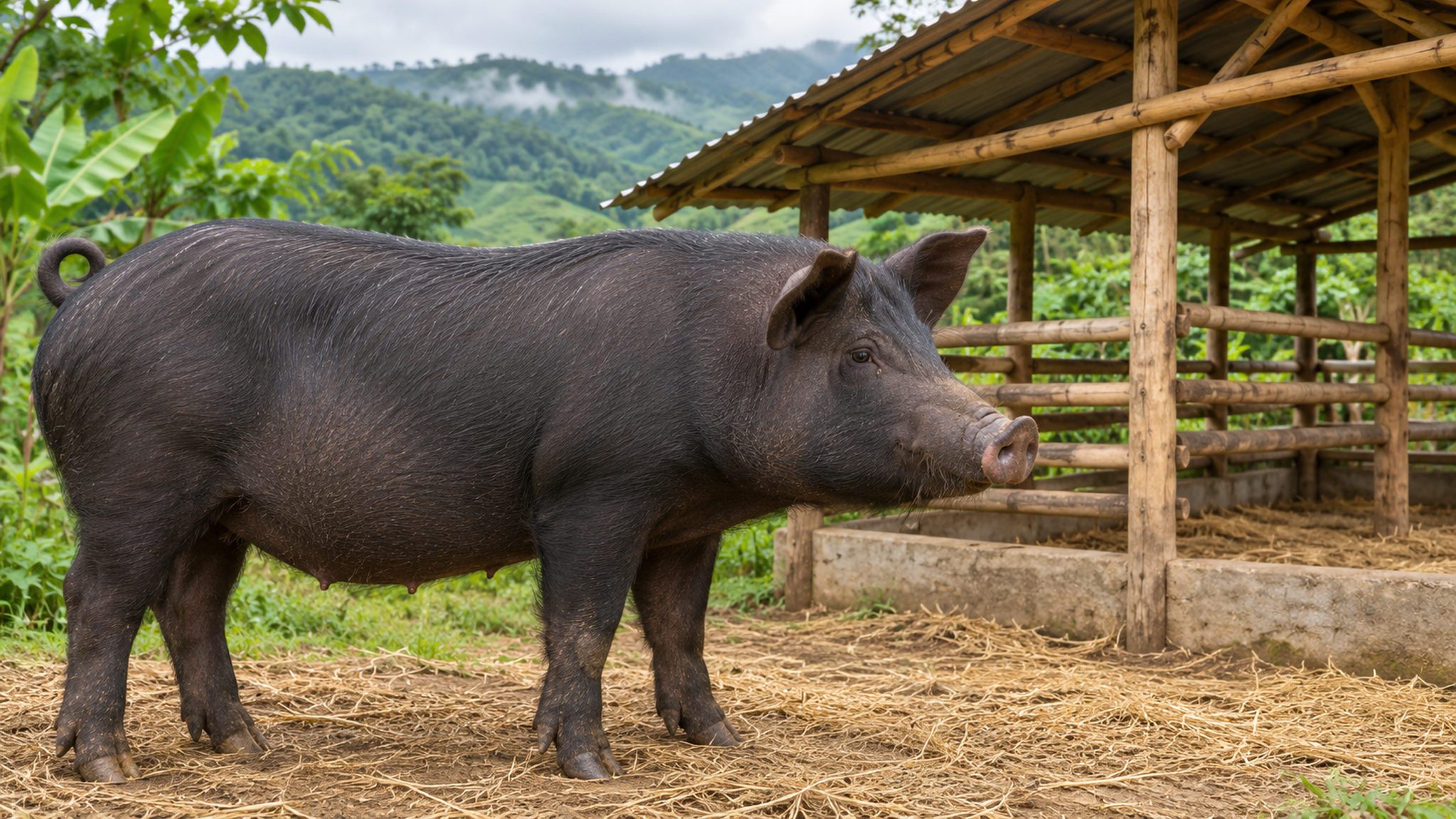
  • The protocol covers breeding boar selection, semen evaluation, laboratory quality management, preservation, transport and disease prevention.
  • The ministry identifies the North-East as a priority for expanding access to breeding material and conserving indigenous pig germplasm.
  • The publication provides guidance for states, veterinarians and breeding centres. The release reports expected outcomes rather than measured changes in farm productivity.
  • A selected boar can contribute to breeding on several holdings without travelling to each one. The practical constraint shifts to delivering a usable dose when the sow is ready.
  • A breeding centre makes two decisions with different consequences: which animals should contribute genes and which batches are suitable for distribution.

UPSC Relevance

Prelims Relevance

  • A boar is a male pig and a sow is an adult female pig.
  • Artificial insemination delivers semen into the female reproductive tract.
  • Liquid semen is preserved and transported without freezing.
  • A semen dose carries paternal genetic material. Offspring inherit genetic material from both parents.

Mains Relevance

GS Paper 3

  • Explain how breeding services could improve access to selected germplasm for smallholders.
  • Assess the safeguards needed to protect animal health and maintain locally adapted breeding stock.

Background and Context

What Does Artificial Insemination Change?

Consider a smallholder who wants offspring from a suitable boar but cannot move the animals between two distant farms.

  • Boar selection determines which male contributes genetic material. A centre should define the trait it wants to retain or improve before distributing semen. Increasing the number of doses alone says little about that choice.
  • During artificial insemination, semen from the selected boar is introduced into the sow’s reproductive tract. Fertilisation takes place inside her body, and the resulting piglets inherit characteristics from both parents.
  • Compare this with in vitro fertilisation and embryo transfer. In that procedure a laboratory produces an embryo before transfer. A pig semen dose contains sperm cells and does not contain a developing piglet.
  • A single boar can sire piglets on different farms through this service. The offspring are sexually produced and can differ even within one litter. Cloning is a different reproductive process.

Why Check Both Semen Quality and Biosecurity?

A sample can come from a desirable boar yet be unsuitable for use. The protocol follows it from collection to the farm.

  • Evaluation asks whether the collected material is suitable for processing. A centre needs a decision about each collection even when the donor has a good breeding record. Selection and sample assessment answer different questions.
  • Preservation and transport matter because living sperm must remain viable until use. A batch accepted in the laboratory can lose quality during delivery, so a farm’s distance from the centre affects service planning.
  • Biosecurity addresses a separate risk. A common donor or contaminated equipment can connect holdings that never exchange live animals. Hygienic collection and handling protect the farms served by the same centre.
  • A batch record would help a veterinarian trace a complaint back to the donor, collection and delivery route. Records also support investigation of animal disease risks across holdings when several farms report a problem.

Why Does Local Germplasm Matter in the North-East?

The ministry cites the 2019 Livestock Census, which placed nearly 45% of India’s pigs in the North-East.

  • Germplasm means heritable material used for breeding. A programme can use semen from locally adapted boars to maintain a line while giving farmers outside the donor’s village access to that line.
  • A decision about breeding objectives starts on the farm. Growth under a centre’s feeding conditions may tell a farmer less than the performance of offspring under the feed, housing and care available locally.
  • Widespread use of semen from a few males can narrow the pool of sires even when many farms receive doses. Maintaining diverse breeding lines requires attention to donor identity and relatedness across successive matings.
  • The ministry expects artificial insemination to support livelihoods. To assess that claim, compare farm outcomes such as successful farrowing and piglet survival with the service costs a smallholder actually bears.

Way Forward

Track the Journey of Each Dose

  • Maintain donor and batch records that connect the laboratory, delivery worker and receiving farm.
  • Review failed services with veterinarians to distinguish possible handling problems from timing or herd-health factors.
  • Follow offspring across several farms before recommending wider use of a breeding line.

Conclusion

  • Pig breeding policy has two tests. The centre must choose boars suited to the breeding objective, and the field service must deliver viable material with adequate animal-health safeguards.
  • For a GS-III answer, connect the proposed expansion of breeding access to a measurable farm outcome and explain how donor selection can protect indigenous lines over successive generations.

UPSC Practice Questions

Prelims MCQ 1

With reference to artificial insemination using liquid semen in pigs, consider the following statements:

  1. Fertilisation takes place inside the sow.
  2. Each offspring is a genetic clone of the selected boar.
  3. Semen quality can change between evaluation and use.

How many of the above statements are correct?

(a) Only one (b) Only two (c) All three (d) None

Answer: (b) Only two

Explanation:

Statements 1 and 3 are correct. The inseminated sow supplies the egg, and the offspring inherits genetic material from both parents.

Prelims MCQ 2

Which action most directly supports conservation of locally adapted pig germplasm?

(a) Assuming a laboratory quality check settles all field risks (b) Using the same boar for all matings across a region (c) Measuring only the number of semen doses dispatched (d) Maintaining several documented local breeding lines

Answer: (d) Maintaining several documented local breeding lines

Explanation:

Maintaining distinct breeding lines helps retain heritable diversity. Counting doses measures distribution, while a quality check measures suitability of a batch.

UPSC Mains Questions

  1. Explain how liquid semen insemination could expand smallholder access to pig breeding services in the North-East. Which delivery constraints should states address?
  2. Assess how a state can pursue genetic improvement while conserving locally adapted pig germplasm.

Source: PIB, Ministry of Fisheries, Animal Husbandry and Dairying.

Frequently Asked Questions

When was the pig breeding protocol released?

The protocol was released in Sikkim on 2 November 2026. The ministry announced it on 6 November and identified breeding services in the North-East as a priority.

How does liquid semen insemination differ from embryo transfer?

In insemination, a semen dose is placed in the female reproductive tract and the egg is fertilised inside the sow. In embryo transfer, an embryo has already developed before transfer.

Why do breeding centres check quality after selecting a donor?

Selection concerns the traits a boar can transmit. A separate evaluation determines whether a particular collection can be processed and distributed, and subsequent handling affects its suitability for insemination.

How can artificial insemination help conserve indigenous pigs?

Centres can select donors from multiple locally adapted lines and distribute their semen to suitable herds. Keeping track of parentage helps managers avoid repeated matings between closely related animals.

Amini: Detecting Submarines in Shallow Coastal Waters

Open article →Download PDF

Why in News?

Garden Reach Shipbuilders and Engineers (GRSE) delivered Amini, a shallow-water anti-submarine craft, to the Indian Navy on November 5, 2026.

  • The Defence Ministry reported the delivery on November 6.
  • GRSE designed and built the craft in Kolkata to Indian Register of Shipping classification rules.
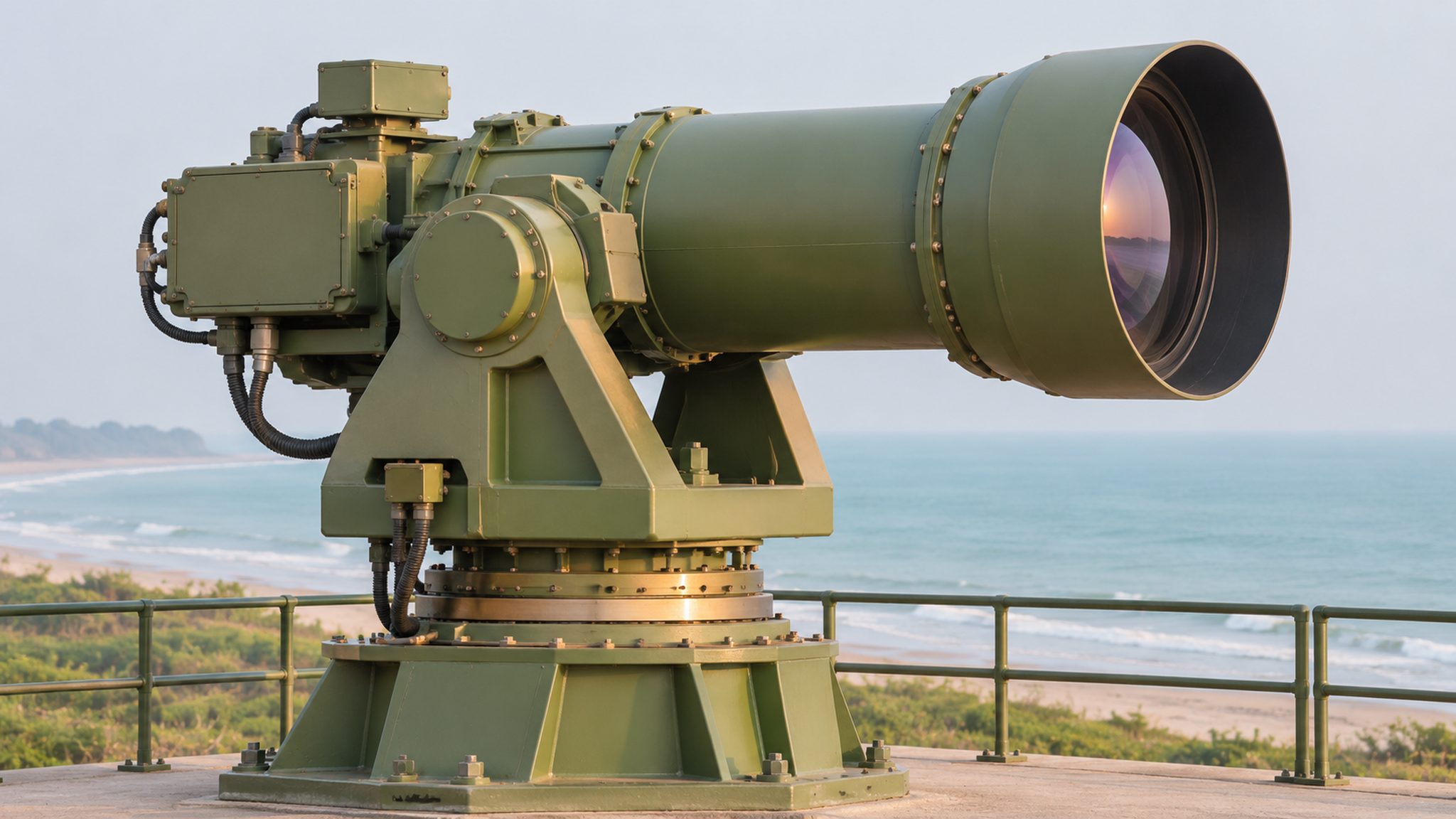
  • Amini combines waterjet propulsion with sonar, lightweight torpedoes and indigenous rocket launchers.
  • Shallow coastal waters return echoes from the seabed as well as objects in the water column.
  • A sonar contact is evidence to interpret before assigning an identity to its source.

UPSC Relevance

Prelims Relevance

  • Amini Island is in Lakshadweep.
  • GRSE designed and built the craft.
  • ASW SWC stands for Anti-Submarine Warfare Shallow Water Craft.
  • Sonar uses sound to sense underwater objects.

Mains Relevance

GS Paper 3

  • Relate the coastal acoustic environment to maritime security.
  • Assess what a shipyard delivery establishes about domestic defence production.

Background and Context

What the Navy Received

The Ministry of Defence identified the builder, the recipient and the equipment aboard the craft in its delivery announcement.

  • Delivery records the transfer from the shipbuilder to the Navy. Commissioning is a separate service milestone. An answer citing the November 5 handover should use the status the ministry actually announced.
  • The name comes from Amini Island in Lakshadweep. It also preserves the name of an earlier Indian anti-submarine corvette, so distinguish the newly delivered craft from its predecessor when discussing naval history.
  • GRSE built the ship under the classification rules of the Indian Register of Shipping. These rules concern ship construction. Claims about success in detecting a particular target require different evidence.
  • The ministry also identifies coastal surveillance and mine laying among the capabilities the craft supports. These are separate tasks, even though the same vessel can contribute to each one.

How Sonar Works in Coastal Water

In littoral waters close to shore, a sonar receiver can pick up sound from several sources within a small area.

  • Active sonar transmits a sound pulse and receives an echo. The time taken for the outward and return journey helps estimate distance to the surface or object that reflected the pulse.
  • The seabed itself reflects sound. In shallow water it lies close to the objects being investigated, so a return from the bottom can complicate interpretation of an echo from the water column.
  • Passive sonar listens to sound already present. A receiver can pick up ships or marine animals as well as a submarine. The sound it records still needs to be identified.
  • Detection means noticing a possible contact. Classification asks what produced it. A receiver that registers an echo has supplied evidence of a reflector, while its identity remains a separate question.

Propulsion, Sensing and Engagement

Three pieces of equipment on the same ship answer three different questions about what the vessel can do.

  • The waterjets propel Amini by directing water astern. They explain how the surface craft moves, whereas air-independent propulsion addresses how long a submarine can operate underwater before it needs outside air.
  • The ministry places sonar among the craft’s sensors. Its description supports the underwater detection role. Estimating how far a crew could detect a particular submarine would require conditions and equipment details beyond that announcement.
  • The lightweight torpedoes and rocket launchers belong to the engagement side of the design. Listing those weapons identifies a capability. A report of an actual encounter would need evidence of a specific contact and response.
  • In a piracy rescue, surveillance helps establish what is happening aboard a surface vessel. Underwater surveillance poses a different identification problem because a crew must interpret acoustic information about a submerged object.

Way Forward

Assess Each Milestone Separately

  • Use the delivery announcement to establish the builder, recipient and equipment.
  • Use a separate commissioning announcement when recording entry into commissioned service.
  • Assess operational performance against evidence from trials or operations under specified conditions.

Conclusion

  • Amini links domestic shipbuilding to a specific maritime requirement. A coastal surveillance craft needs a means of propulsion, a way to sense underwater contacts and equipment suited to its assigned missions.
  • For an answer on anti-submarine warfare, explain the uncertainty between hearing a return and knowing what produced it. That uncertainty gives shallow-water acoustics a direct bearing on coastal security.

UPSC Practice Questions

Prelims MCQ 1

With reference to Amini, consider the following statements:

  1. GRSE designed and built the craft.
  2. Its name comes from an island in Lakshadweep.
  3. Its lightweight torpedoes provide its main propulsion.

How many of the above statements are correct?

(a) Only one (b) Only two (c) All three (d) None

Answer: (b) Only two

Explanation:

Statements 1 and 2 are correct. Waterjets propel the craft, while lightweight torpedoes are weapons.

Prelims MCQ 2

Which observation best explains why a coastal sonar contact needs classification?

(a) A passive sonar always transmits a pulse. (b) The seabed and other objects can also return echoes. (c) A waterjet identifies the source of each echo. (d) Only submarines reflect underwater sound.

Answer: (b) The seabed and other objects can also return echoes.

Explanation:

An active sonar pulse can reflect from different surfaces. Detecting a return alone does not identify the reflector.

UPSC Mains Questions

  1. Explain how shallow coastal waters affect the interpretation of underwater contacts. Illustrate with Amini.
  2. What does the delivery of an indigenous naval craft establish about defence production? Distinguish this milestone from evidence of operational performance.

Sources: PIB, Ministry of Defence and NOAA Ocean Exploration.

Frequently Asked Questions

Who built Amini for the Indian Navy?

Garden Reach Shipbuilders and Engineers designed and built Amini in Kolkata under Indian Register of Shipping classification rules. The shipbuilder delivered it to the Navy on November 5, 2026.

Why does Amini carry the name of an island?

The name refers to Amini Island in Lakshadweep. It also continues the name of an earlier Indian anti-submarine corvette that served before the newly delivered craft.

Why can a sonar echo be difficult to classify?

The seabed and objects in the water can both reflect sound. A return establishes that a transmitted pulse encountered a reflector, but its source still needs interpretation.

What is the difference between Amini’s waterjets and torpedoes?

Waterjets supply propulsion for the surface craft. Lightweight torpedoes belong to its underwater weapon systems. Sonar has a third role, helping the crew detect and assess contacts.

UBC 63: How Gaia Distinguished Two Passing Star Clusters

Open article →Download PDF

Why in News?

On November 5, the Department of Science and Technology reported that an Indian-led team using Gaia data identified two star clusters of different ages in UBC 63.

  • Researchers distinguished UBC 63A and UBC 63B within a region previously treated as one open cluster.
  • The estimated ages are about 21 million years for A and 562 million years for B.
  • A reconstruction places their closest approach about six million years ago.
  • Stars close together in a sky image can occupy different depths along the same line of sight.
  • The pair’s relative motion helps distinguish a temporary encounter from a bound orbit.

UPSC Relevance

Prelims Relevance

  • Gaia is a European Space Agency mission.
  • Parallax helps astronomers estimate stellar distances.
  • Proper motion measures angular movement across the sky over time.
  • A colour–magnitude diagram compares stellar colour with brightness.

Mains Relevance

GS Paper 3

  • Explain how survey observations and numerical models answer different questions about stellar systems.
  • Use UBC 63 to illustrate how astronomers test an existing classification.

Background and Context

Why the Sky Image Suggested One Cluster

A photograph flattens a volume of the Milky Way into two dimensions. This makes assigning stars to an open cluster a problem of membership.

  • An open cluster is a group of stars formed together from gas and dust. Its members can remain loosely held by gravity while the surrounding Galaxy influences their paths.
  • A patch of sky can contain foreground and background stars as well as cluster members. Measuring the angle between two points of light tells us little about their separation along the line of sight.
  • The European Space Agency’s Gaia mission repeatedly measured stellar positions. The apparent shift associated with Earth’s orbital motion, called parallax, gives astronomers a way to estimate distance.
  • Astronomers can also measure proper motion, the change in a star’s direction on the sky over time. Groups with similar distances and motions are promising candidates for a common stellar population.

How Researchers Separated UBC 63A and UBC 63B

The team combined two kinds of evidence. One concerned how the stars moved, the other how far the stars had progressed through their lifetimes.

  • Researchers grouped stars using measurements of position, parallax and proper motion from Gaia’s third data release. The measurements favoured two distinct populations in the region previously catalogued under a single name.
  • A colour–magnitude diagram places each star according to its colour and brightness. Stars with a shared formation history trace a recognisable sequence because their masses affect how quickly they evolve.
  • UBC 63 showed two sequences. Comparing these patterns with models of stellar evolution gave a much younger age for A than for B. The ages are estimates derived from the populations as a whole.
  • The age gap rules against formation in the same episode. That conclusion concerns when the stars formed. Whether the clusters now orbit one another requires separate evidence about their speeds and separation.

How a Flyby Differs From a Bound Pair

The team used present measurements to calculate earlier positions. The resulting history describes a modelled encounter that took place long before astronomical observations began.

  • In the orbital reconstruction, the centres approached to roughly seven parsecs and subsequently moved apart. The present separation is estimated at about 26 parsecs. Both distances carry uncertainties.
  • A parsec measures distance. Here the quoted separation is between cluster centres in three dimensions. The separation of their images on the sky would capture only part of that physical distance.
  • The researchers compared the clusters’ relative speed with the escape speed for the pair. Their estimated relative speed was higher, supporting a flyby in which the systems move apart after a close approach.
  • The gravity within each cluster and the gravity between the two clusters act on different scales. Individual stars can belong to their respective clusters even as the clusters themselves follow unbound paths.

Way Forward

Test the Reconstruction

  • Refine membership estimates as improved stellar measurements become available.
  • Check whether the closest approach persists when plausible measurement errors enter the orbital calculation.
  • Compare other candidate pairs using the same age and motion tests.

Conclusion

  • UBC 63 illustrates how an apparent concentration of stars can contain distinct populations. The age difference and the measured motions answer separate questions about their origin and their present relationship.
  • A flyby is inferred from the reconstructed paths. As in the study of Centaurus X-3, identify what the instrument measured before explaining the physical history researchers inferred.

UPSC Practice Questions

Prelims MCQ 1

With reference to UBC 63, consider the following statements:

  1. Gaia astrometry helped distinguish two populations in the same sky region.
  2. The researchers estimated that UBC 63B is older than UBC 63A.
  3. Gaia directly recorded the closest approach of the two clusters.

How many of the above statements are correct?

(a) Only one (b) Only two (c) All three (d) None

Answer: (b) Only two

Explanation:

The first two statements are correct. Researchers reconstructed the earlier encounter using measured motions and dynamical models.

Prelims MCQ 2

Which observation most directly supports the interpretation that the two clusters are mutually unbound?

(a) Their estimated relative speed exceeds the escape speed for the pair. (b) Their images lie close together on the sky. (c) Both are visible in the Milky Way. (d) Their stars occupy distinct colour–magnitude sequences.

Answer: (a) Their estimated relative speed exceeds the escape speed for the pair.

Explanation:

Relative speed compared with the pair’s escape speed tests gravitational binding. The colour–magnitude sequences help estimate ages.

UPSC Mains Questions

  1. How can an astrometric survey distinguish overlapping stellar populations? Illustrate with UBC 63.
  2. Explain how astronomers combine observations and simulations to distinguish a temporary encounter between open clusters from a bound orbit.

Sources: PIB, Ministry of Science and Technology and Biswas and colleagues, study preprint.

Frequently Asked Questions

What did the UBC 63 study find?

Researchers identified two stellar populations of markedly different ages where earlier catalogues listed a single cluster. Their analysis suggests the two clusters passed close together and are now moving apart.

How does Gaia help identify cluster members?

Gaia measures stellar positions, parallax and proper motion. Astronomers can use similarities in these properties to identify groups whose members lie at comparable distances and move together across the sky.

What did the colour–magnitude diagram reveal?

The stars fell along two sequences. Comparing the sequences with stellar evolution models indicated that UBC 63A is much younger than UBC 63B, weakening the case for a single formation episode.

How did astronomers date the flyby?

They calculated how the clusters’ orbits would evolve from the available measurements. Their reconstruction put the closest approach around six million years ago, with the clusters now farther apart.

Pralay: What a Quasi-Ballistic Missile Trial Establishes

Open article →Download PDF

Why in News?

DRDO flight-tested the Pralay quasi-ballistic missile on November 5, 2026, as part of user evaluation trials off the Odisha coast.

  • The launch took place on Dr APJ Abdul Kalam Island.
  • The Integrated Test Range at Chandipur deployed the instruments that recorded the flight.
  • The Defence Ministry reported that the flight met its objectives and described induction as imminent.
  • The word quasi-ballistic describes the character of a missile’s flight path.
  • A user evaluation trial generates evidence for a decision on service readiness.

UPSC Relevance

Prelims Relevance

  • Pralay uses solid propellant.
  • Research Centre Imarat is a DRDO laboratory in Hyderabad.
  • Bharat Dynamics Limited produced the system as an industry partner.
  • The Integrated Test Range collected flight data.

Mains Relevance

GS Paper 3

  • Explain how a test range supplies evidence for evaluating an indigenous system.
  • Distinguish the responsibilities of the developer, production partner and intended military user.

Background and Context

What Quasi-Ballistic Flight Means

A missile can be described by what powers it, how it is guided and the path it follows. Each description answers a different question.

  • In an ideal ballistic coast, gravity governs the trajectory after propulsion ends. The speed and direction at the end of powered ascent help determine where that freely moving object will go.
  • A quasi-ballistic missile can maneuver during a broadly ballistic flight. This allows departures from the path an object would follow under gravity alone. The term does not supply an exact trajectory for the November flight.
  • A cruise missile relies on aerodynamic lift for most of its flight and typically sustains powered flight through the atmosphere. Simply knowing that a missile has guidance leaves its flight class unresolved.
  • The ministry describes Pralay as a solid-propellant system with guidance and navigation. Propellant supplies energy, navigation estimates the missile’s state and guidance determines the course corrections needed to follow the intended path.

What the Range Instruments Establish

The Defence Ministry attributed its assessment to measurements taken during the flight. Those measurements address the objectives set for that particular trial.

  • The island was the launch site. The Integrated Test Range at Chandipur supplied the measuring instruments. These are different geographical references in the announcement, with a different function attached to each.
  • The purpose of tracking is to reconstruct how the system actually flew. Comparing the measured flight with the planned one gives evaluators a basis for deciding whether the agreed test conditions were met.
  • The ministry’s July 2025 trials explicitly examined performance at the ends of the intended range envelope. It reported that tracking sensors, including instruments aboard a ship near the impact point, recorded those flights.
  • The November report confirms that objectives were met but supplies no measured range or accuracy figure. The earlier trials illustrate the measurement process. Their particular objectives cannot simply be transferred to this flight.

How Evaluation Differs From Induction

The organisations named in the release show how a domestic missile programme moves from engineering work to an article that the intended user can evaluate.

  • Research Centre Imarat worked with other DRDO laboratories to develop Pralay. Assigning development solely to the factory that built the missile would obscure the laboratory contribution to its design.
  • Bharat Dynamics Limited produced the system as a development and production partner. That role links the engineering design to an actual test article while leaving the assessment of flight performance to the evaluation process.
  • User evaluation addresses how a system performs against requirements relevant to the intended service. The submarine propulsion module trial illustrates why the article tested and the conditions of the test both matter.
  • An acquisition decision also has a specific scope. Induction means introduction into service. A successful flight can inform that decision, while its date and service status require a separate official record.

Way Forward

Reading Defence Trial Announcements

  • Identify the tested objective before using a trial result as evidence of capability.
  • Attribute performance claims to the reporting authority when measured values remain unpublished.
  • Track the service announcement separately when discussing induction or deployment.

Conclusion

  • Pralay illustrates how domestic defence production depends on distinct institutions. A laboratory develops the system, an industrial partner produces it and range personnel collect the evidence used to evaluate a flight.
  • For a question on operational readiness, identify the strongest claim the evidence supports. The ministry confirmed success against the November flight objectives and used prospective language when discussing induction.

UPSC Practice Questions

Prelims MCQ 1

With reference to Pralay, consider the following statements:

  1. It uses solid propellant.
  2. Research Centre Imarat helped develop it.
  3. The November flight announcement confirmed its formal induction.

How many of the above statements are correct?

(a) Only one (b) Only two (c) All three (d) None

Answer: (b) Only two

Explanation:

Statements 1 and 2 are correct. The Defence Ministry described induction as imminent.

Prelims MCQ 2

Which feature most directly distinguishes cruise flight from an ideal ballistic coast?

(a) Public ownership of the production partner (b) Use of a land-based launch site (c) Aerodynamic lift sustaining flight for most of the path (d) Presence of a guidance system

Answer: (c) Aerodynamic lift sustaining flight for most of the path

Explanation:

Cruise flight relies on aerodynamic lift for most of the route. Guidance can also be present in a ballistic missile.

UPSC Mains Questions

  1. Explain the significance of user evaluation for indigenous defence equipment, using the Pralay trial as an example.
  2. How do propulsion, guidance and flight path describe different aspects of missile technology?

Sources: PIB, Ministry of Defence and Ministry of Defence, July 2025 Pralay trials.

Frequently Asked Questions

Where did the November Pralay test take place?

DRDO launched Pralay from Dr APJ Abdul Kalam Island off Odisha on November 5. The Integrated Test Range at Chandipur deployed the instruments used to evaluate the flight.

What does quasi-ballistic mean?

A quasi-ballistic missile can maneuver during a broadly ballistic flight. The classification concerns its trajectory, while terms such as solid propellant describe the propulsion system.

Who developed and produced Pralay?

Research Centre Imarat in Hyderabad worked with other DRDO laboratories on development. Bharat Dynamics Limited produced the system as one of the industrial partners involved in development and production.

Did the trial confirm induction?

The Defence Ministry said all objectives of the November flight were met and described induction as imminent. Formal entry into service would require a separate confirmation.

Removing the odds between safety and freedom

Open article →Download PDF

Why in news?

Supreme Court recognised children’s internet access as a fundamental right, while States plan screen-time curbs for children.

UPSC Relevance 

Prelims: Articles 19(1)(a), 21, 21A

Mains: GS2 – Fundamental Rights; Welfare of vulnerable sections (children); Government policies and interventions. 

GS3 – Cyber security; Role of media and social networking sites in internal security challenges.

GS4 – Ethics in digital space.

Right to Internet Access 

The right to internet access means that the State should not arbitrarily cut people off from the internet and should work towards making it available to all. In India, it is not a separate article in the Constitution. Courts have read it into existing fundamental rights, because in the digital age most of our speech, learning, work and access to welfare happens online.

Constitutional and Judicial Basis 

Provision / CaseWhat it says
Article 19(1)(a)Freedom of speech and expression, which includes the right to know and receive information
Article 21 and 21ARight to life with dignity, privacy, and free and compulsory education (6–14 years)
Article 39(f)DPSP – children should develop in a healthy manner, in conditions of freedom and dignity
K.S. Puttaswamy (2017)Right to privacy is a fundamental right under Article 21
Faheema Shirin v. State of Kerala (2019)Kerala HC held that internet access is part of the right to education and privacy
Anuradha Bhasin (2020)Free speech and trade through the internet are protected under 19(1)(a) and 19(1)(g); shutdowns must be proportionate and reviewed
Just Rights for Children Alliance v. S. HarishRecognised internet access as a fundamental right for children, with emphasis on their safety (as cited in the article)

International angle: The UN Convention on the Rights of the Child (UNCRC, 1989) – which India ratified in 1992 – guarantees children’s access to information (Article 17). Its General Comment No. 25 (2021) says children’s rights apply equally online and offline.

Why Digital Access is Necessary for Children

  • Education – online classes, e-books and platforms like DIKSHA, SWAYAM and PM eVidya. During COVID-19, schooling for crores of children continued only because of the internet.
  • Capability building – Amartya Sen’s capability approach: access widens choices and freedoms. Joseph Stiglitz adds that transformation, not just capability, drives development.
  • Skills for the future – coding, AI and digital literacy are basic skills for tomorrow’s jobs.
  • Self-expression and participation – children can share views, create content and take part in public debates.
  • Access to services – scholarships, Aadhaar-linked benefits and health information are increasingly online.
  • Social connection – connects children across regions and cultures; helps children with disabilities through assistive technology.
  • Reducing inequality – if poor and rural children are left offline, the digital divide becomes a learning and income divide. As per ASER 2024, around 90% of rural teenagers (14–16 years) had a smartphone at home, but far fewer used it for learning.

Threats and Security Concerns

  • Cyberbullying and harassment – trolling, body-shaming and threats that affect mental health and school performance.
  • Online grooming and sexual exploitation – predators befriend children through games and social media; Child Sexual Exploitative and Abuse Material (CSEAM) is a serious crime.
  • Sextortion and deepfakes – morphed images used to blackmail teenagers; AI tools make this easier.
  • Privacy and data misuse – apps collect children’s data for profiling and targeted ads.
  • Digital addiction – excess screen time, gaming disorder (recognised by WHO in ICD-11) and poor sleep.
  • Mental health – anxiety, depression, body image issues and exposure to harmful content.
  • Financial frauds – phishing, fake gaming rewards, and misuse of parents’ UPI or cards.
  • Misinformation and radicalisation – children are less able to judge fake news and extremist content.
  • Rising crime – NCRB data show cybercrimes against children crossed 1,800 cases in 2022, a sharp rise over 2021. Actual numbers are higher due to under-reporting.

India’s Legal and Institutional Framework

  • IT Act, 2000 – Section 67B punishes publishing or browsing child sexual material; Section 79 places due diligence on intermediaries.
  • IT Rules, 2021 – platforms must remove harmful content quickly, appoint grievance officers and use tools to detect CSEAM.
  • POCSO Act, 2012 – covers use of children for pornographic purposes; mandatory reporting of offences.
  • Digital Personal Data Protection Act, 2023 (Section 9) – verifiable parental consent for processing data of anyone under 18; bans tracking, behavioural monitoring and targeted ads aimed at children. Detailed procedure is in the DPDP Rules, 2025.
  • Institutions – Indian Cyber Crime Coordination Centre (I4C), National Cyber Crime Reporting Portal (cybercrime.gov.in), helpline 1930, CERT-In, NCPCR, and Childline 1098.

Global Practices and Case Studies

CountryPractice
AustraliaSet up the world’s first eSafety Commissioner (2015); minimum age of 16 for social media accounts under a 2024 law
United KingdomAge Appropriate Design Code (Children’s Code, 2021) – high privacy by default; Online Safety Act, 2023 – duty of care on platforms
European UnionDigital Services Act bans targeted ads to minors and requires risk assessments by large platforms
United StatesCOPPA (1998) – parental consent for collecting data of children under 13
China‘Minor mode’ on devices; strict limits on online gaming hours for minors
BrazilChildren’s social media accounts must be linked to a legal guardian
FinlandMedia literacy taught across the school curriculum – a model for building critical thinking

Good practices in India

  • Kerala – ‘Little KITEs’ IT clubs in government schools teach digital skills and cyber safety; Kerala Police’s Cyberdome tracks online child abuse.
  • Andhra Pradesh and Karnataka – plans for screen-time curbs for children (the court warned against blindly copying foreign models).
  • NCERT and CBSE – guidelines and handbooks on cyber safety for schools.
  • Operation Megh Chakra (CBI, 2022) – nationwide searches against online circulation of child sexual abuse material, based on Interpol inputs.

Way Forward

  • Rights-first approach – treat access as a right; any curb must be legal, necessary and proportionate.
  • Safety by design – platforms should build child-safe default settings, age assurance and quick reporting tools.
  • Shared responsibility – parents, schools, government and service providers must work together.
  • Digital literacy – add cyber safety and critical thinking to the school curriculum; train teachers and parents.
  • Bridge the digital divide – devices and connectivity for poor, rural and girl children through BharatNet and school ICT labs.
  • Strong enforcement – quick action under DPDP, POCSO and IT Rules; special cyber cells for crimes against children.
  • Mental health support – counselling in schools and helplines like Tele-MANAS (14416).
  • Indian solutions – design rules suited to Indian realities instead of copying blanket bans from abroad.

Conclusion: The article calls this ‘authority-liberty coordination’ – the Constitution limits both State power and individual liberty. Too much State control leads to authoritarian tendencies, while unlimited freedom can become anarchy. 

Blanket curbs may look protective, but they end up shutting children out of knowledge and opportunity. The goal should be an internet where children can learn, create and connect – safely.

Practice MCQ

Q1. With reference to the Digital Personal Data Protection Act, 2023, consider the following statements:

  1. It defines a ‘child’ as a person below 16 years of age.
  2. Data fiduciaries must obtain verifiable consent of the parent before processing a child’s personal data.
  3. It prohibits targeted advertising directed at children.

Which of the statements given above are correct?

(a) 1 and 2 only     (b) 2 and 3 only     (c) 1 and 3 only     (d) 1, 2 and 3

Answer: (b). Statement 1 is incorrect. Under the Act, a child is a person who has not completed 18 years of age.

Mains Practice Question

“Protecting children online does not necessarily mean restricting their freedom.” In light of the recognition of internet access as a fundamental right, discuss the threats children face in the digital space and suggest a balanced framework for their online safety. (15 Marks, 250 words)

Danger in the sewer

Open article →Download PDF

Why in news?

Four workers died cleaning a hotel’s food-waste chamber in Ujjain, showing sewer deaths continue despite laws and court orders.

UPSC Relevance 

Prelims: PEMSR Act 2013, constitutional provisions (Articles 17, 21, 23), NCSK, NAMASTE scheme, Supreme Court judgments.

Mains GS1: Caste system and social issues; role of women.

Mains GS2: Welfare of vulnerable sections; laws, institutions and bodies for their protection; Fundamental Rights; role of judiciary.

The Scale of the Problem

PeriodDeaths in sewer and septic tank cleaning (Parliament / NCSK data)
1993 to 20251,350
2014 to 2025859
2019 to mid-2026498
  • The numbers have never come close to zero, and the Safai Karamchari Andolan has repeatedly alleged serious under-reporting.
  • The government has maintained since 2021 that manual cleaning of insanitary latrines has been eliminated, but deaths in sewers and septic tanks continue.

What is Manual Scavenging?

  • Meaning: Manually cleaning, carrying, disposing or handling human excreta from insanitary latrines, open drains, pits or railway tracks before it has fully decomposed.
  • Legal definition: Section 2(1)(g) of the Prohibition of Employment as Manual Scavengers and their Rehabilitation (PEMSR) Act, 2013. A person using notified protective gear and devices is not counted as a manual scavenger.
  • Hazardous cleaning: The 2013 Act separately defines manual cleaning of a sewer or septic tank without protective gear and equipment as ‘hazardous cleaning’ [Section 2(1)(d)]. This is where most deaths now take place.
  • Forms today:
    • Cleaning dry and insanitary latrines (mostly done by women).
    • Entering sewers, manholes and septic tanks.
    • Cleaning railway tracks and open drains.
  • Caste link: It is not just an occupation but a caste-imposed practice. About 97% of manual scavengers identified in government surveys belong to Scheduled Castes, mostly from Valmiki and similar communities.
  • Gender dimension: Women form the majority of those cleaning dry latrines, and face double discrimination of caste and gender.

Constitutional Status

ProvisionRelevance to manual scavenging
Article 14Equality before law; the practice treats a group as lesser humans
Article 15No discrimination on grounds of caste
Article 17Abolishes untouchability; manual scavenging is its worst surviving form
Article 19(1)(g)Freedom to choose an occupation, denied by caste-based work
Article 21Right to life with dignity, right to health and safe working conditions
Article 23Prohibits forced labour and begar
Article 42Just and humane conditions of work (DPSP)
Article 46Protect SCs and STs from social injustice and exploitation (DPSP)
Article 47Duty of State to improve public health (DPSP)
State List, Entries 5 and 6Local government and public health and sanitation are State subjects, so municipalities are key

Legal Framework

1. Employment of Manual Scavengers and Construction of Dry Latrines (Prohibition) Act, 1993

  • Banned employment of manual scavengers for dry latrines and construction of new dry latrines.
  • Limitations: Did not cover sewers and septic tanks; weak enforcement and almost no convictions.

2. PEMSR Act, 2013

  • Prohibition: No person, local authority or agency can engage anyone as a manual scavenger or for hazardous cleaning of sewers and septic tanks.
  • Insanitary latrines: Must be demolished or converted into sanitary latrines.
  • Punishment:
    • Employing a manual scavenger: up to 1 year and/or fine up to ₹50,000 (first offence); higher for repeat offence.
    • Hazardous cleaning of sewer/septic tank: up to 2 years and/or fine up to ₹2 lakh (first offence); up to 5 years and/or ₹5 lakh for repeat offence.
    • Offences are cognizable and non-bailable.
  • Rehabilitation: Survey to identify manual scavengers, one-time cash assistance, scholarships for children, residential plot and house, skill training and loans for alternative livelihood.
  • Monitoring: Vigilance Committees (district), State and Central Monitoring Committees; NCSK monitors implementation.

3. Other laws

  • Protection of Civil Rights Act, 1955: Compelling a person to do scavenging on grounds of untouchability is an offence.
  • SC/ST (Prevention of Atrocities) Act, 1989 (amended in 2015): Making an SC/ST member do manual scavenging, or employing them for it, is an atrocity.

4. Institutions and schemes

  • National Commission for Safai Karamcharis (NCSK): Set up in 1994 as a statutory body; became non-statutory after its Act lapsed in 2004. Its tenure is extended periodically, recently up to March 2028.
  • NAMASTE scheme (2022-23): National Action for Mechanised Sanitation Ecosystem, run by the Ministry of Social Justice with Ministry of Housing and Urban Affairs. Aims at zero deaths through profiling of sewer workers, PPE kits, health cover under AB-PMJAY, capital subsidy for sanitation machines, and Emergency Response Sanitation Units in ULBs. It replaced the earlier Self Employment Scheme for Rehabilitation of Manual Scavengers (SRMS).
  • Safaimitra Suraksha Challenge (2020): Launched by MoHUA to encourage cities to mechanise sewer and septic tank cleaning.

Judicial Pronouncements

Case / OrderKey points
Delhi Jal Board v. National Campaign for Dignity and Rights of Sewerage and Allied Workers (2011)State and its agencies are responsible for safety of sewer workers, even if hired through contractors; right to life under Article 21 applies
Safai Karamchari Andolan v. Union of India (2014)Directed full implementation of the 2013 Act; ₹10 lakh compensation to families of sewer deaths since 1993; entering sewers without safety gear to be a crime even in emergencies; railways to end manual scavenging
SC observation (2019)The Court remarked that no country sends its people to gas chambers to die, criticising continued sewer deaths
SC order (2025)Ordered an end to manual sewer and septic tank cleaning in six major cities – Delhi, Mumbai, Kolkata, Chennai, Bengaluru and Hyderabad – and sought compliance reports
SC notices (2026)Notices to 15 Chief Secretaries for not following the 2023 judgment, including on payment of compensation

Challenges in Ending Manual Scavenging

  • Denial and under-reporting: Districts declare themselves ‘manual scavenging free’, and the official focus on latrines hides sewer and septic tank deaths.
  • Contractor chain: Municipal bodies and private firms outsource work to contractors who hire undocumented workers, so liability is avoided.
  • Weak enforcement: Very few FIRs lead to convictions; vigilance committees rarely meet; compensation is delayed or unpaid.
  • Lack of mechanisation: Small towns lack sewer-cleaning machines and trained staff. Narrow lanes and old sewer design make machine access hard.
  • Dependence on septic tanks: A large share of households, especially in smaller towns, rely on septic tanks and pits that need regular emptying.
  • Caste and social stigma: Rehabilitated workers find it hard to get other jobs or business customers, so many return to the same work.
  • Rehabilitation through loans: Self-employment loans do not suit people with little education and capital; one-time cash help is not a real livelihood.
  • Wrong policy focus: Schemes stress distributing safety kits and assistance, rather than removing the situations where a person has to enter a sewer at all.
  • Private establishments: Hotels, housing societies and malls hire workers privately and are rarely inspected, as in the Ujjain case.
  • Data gaps: Surveys depend on self-identification; many workers are not counted out of fear or stigma.

Way Forward

  • Zero human entry: Make machine cleaning the only legal option; redesign sewers and manholes for machine access; use robots like ‘Bandicoot’, first used in Kerala.
  • Fix accountability: Make municipal commissioners and principal employers liable for deaths, even when work is outsourced.
  • Formalise sanitation work: Written contracts, minimum wages, insurance, health check-ups and pensions for all sanitation workers, including contract workers.
  • Enforce the law: Time-bound FIRs, fast-track trials, active vigilance committees and regular inspection of private establishments.
  • Pay compensation promptly: Implement the ₹30 lakh award in Balram Singh within fixed timelines, with direct monitoring by courts and NCSK.
  • Real rehabilitation: Skill training linked to jobs, preference in public employment, housing and education for children, not just loans.
  • Empower workers: Train and organise sanitation workers into cooperatives that own and run cleaning machines (Sanitation Entrepreneurs under NAMASTE).
  • Fight stigma: Social awareness against caste-based occupations, and involve communities and civil society like the Safai Karamchari Andolan.
  • Better data: An independent national survey covering sewer, septic tank, railway and private sector workers.

Laws and judgments alone have not stopped these deaths. The goal must be simple: no human being should ever have to enter a sewer.

Practice MCQ

Q1. With reference to the Prohibition of Employment as Manual Scavengers and their Rehabilitation Act, 2013, consider the following statements:

1. It prohibits hazardous cleaning of sewers and septic tanks along with manual scavenging.

2. Offences under the Act are cognizable and non-bailable.

3. The National Commission for Safai Karamcharis, which monitors its implementation, is a constitutional body.

How many of the above statements are correct?

(a) Only one     (b) Only two     (c) All three     (d) None

Answer: (b)

Explanation: Statement 3 is incorrect. NCSK was set up as a statutory body in 1994 and has functioned as a non-statutory body since its Act lapsed in 2004. It is not a constitutional body.

Mains Practice Question

“Despite a strong legal framework and repeated judicial directions, manual scavenging and sewer deaths persist in India.” Discuss the constitutional and legal safeguards against the practice, examine the reasons for their poor implementation and suggest a way forward. (15 Marks, 250 words)

A middle power moment in a fragmenting world

Open article →Download PDF

Why in news?

Global churn and a weakening post-war order have revived debate on whether middle powers like India can stabilise the world.

UPSC Relevance  

Prelims: International groupings (MIKTA, IBSA, BRICS, G20, Quad, IMEC, INSTC). 

Mains: GS2 – Bilateral, regional and global groupings and agreements involving India; Effect of policies and politics of developed and developing countries on India’s interests. 

What is a Middle Power?

A middle power is a state that is not a superpower or a great power, but still has enough economic, diplomatic and military weight to influence global affairs. It cannot set the rules of the international system alone, but it is no longer a mere rule-taker either. The idea is old – the Italian thinker Giovanni Botero wrote about ‘mezzano’ states in the 16th century – but it became popular after World War II, when Canada argued that countries which contributed to the war effort deserved a say in the new UN system. Middle powers prefer multilateralism, compromise, mediation and ‘good international citizenship’. Scholars described them as catalysts, facilitators and managers in diplomacy.

Key features

  • Regional weight – strong presence in its own neighbourhood.
  • Global reach without dominance – diplomatic networks and economic links that extend beyond the region.
  • Strategic autonomy – enough room to follow an independent foreign policy rather than be locked into one camp.
  • Influence through coalitions, not coercion – agenda-setting, bridge-building and issue-based partnerships.
  • Niche diplomacy – focusing on chosen issues. E.g., Canada led the Ottawa Treaty banning landmines (1997); Australia formed the Cairns Group of farm exporters (1986) in trade talks.

Traditional vs Emerging Middle Powers

BasisTraditional middle powersEmerging middle powers
ExamplesCanada, Australia, Netherlands, Norway, SwedenIndia, Brazil, Indonesia, South Africa, Türkiye, Mexico, Saudi Arabia, UAE
Relation to the orderMostly supporters of the US-led liberal orderWant the order reformed to reflect new power realities
AlignmentUsually allied with the WestMulti-aligned; deal with all sides
Main concernsPeacekeeping, human rights, arms controlDevelopment, climate justice, fair trade, technology access, reform of UN/IMF/WB
Regional roleLimited regional dominanceOften the leading power in their region

Note: France and the UK are sometimes called ‘former great powers acting as middle powers’ today. Groupings like MIKTA (Mexico, Indonesia, South Korea, Türkiye, Australia – formed in 2013 on the sidelines of the UNGA) and IBSA (India, Brazil, South Africa – Brasilia Declaration, 2003) are formal platforms of middle powers.

Why Middle Powers Matter in International Relations

  • Bridge-builders – they can talk to the West and the Global South at the same time, which neither superpowers nor small states can do easily.
  • Stabilisers – when great powers clash, middle powers keep cooperation alive on trade, health, climate and finance.
  • Mediators – they are often trusted more than great powers. E.g., Türkiye and the UN brokered the Black Sea Grain Initiative (2022); Qatar has hosted talks on Afghanistan and Gaza.
  • Norm-shapers – they push new rules in areas like digital governance, climate finance and health security.
  • Voice of the Global South – they carry the concerns of developing countries into forums dominated by rich nations.

Why are Middle Powers Rising Now?

  • Erosion of great-power consensus – the US is rethinking its global commitments, while China and Russia are more assertive. No single power offers uncontested leadership any more.
  • Paralysis of multilateral bodies – the UN Security Council still mirrors 1945; vetoes have blocked action on Ukraine and Gaza. The WTO’s Appellate Body has been non-functional since 2019.
  • Fragmented supply chains – the ‘China plus one’ shift, de-risking and friend-shoring have raised the value of countries like India, Vietnam, Mexico and Indonesia.
  • Shift of economic weight – emerging economies now account for a growing share of global growth, giving them a stronger claim to a seat at the table.
  • Multipolarity – the world is no longer bipolar (Cold War) or unipolar (1990s). Power is spread across many centres, creating space to act.
  • Issue-based minilaterals – small, flexible groupings (Quad, I2U2, IMEC) are replacing slow, large forums, and middle powers are natural members.
  • Political signals – in Davos (January 2026), Canadian PM Mark Carney called on middle powers to act together; EAM S. Jaishankar has also spoken on the theme.

India as a Middle Power – Evidence and Debate

What India brings

  • Economic weight – among the world’s top five economies and the fastest-growing major economy in recent years.
  • Demography and talent – the most populous country with a large skilled workforce.
  • Military and nuclear capability – one of the largest armed forces and a responsible nuclear record (no-first-use doctrine).
  • Digital public infrastructure – UPI, Aadhaar and CoWIN are offered as global public goods.
  • Civilisational and diplomatic legacy – from NAM to today’s ‘Vishwa Bandhu’ outreach.

India’s middle power diplomacy in action

  • G20 Presidency (2023) – African Union became a permanent member; consensus on the New Delhi Leaders’ Declaration despite the Ukraine split.
  • Voice of Global South Summits – first held in January 2023, giving developing countries a platform.
  • Multi-alignment – India is in the Quad with the US, Japan and Australia, and also in BRICS and the SCO with China and Russia.
  • Connectivity – IMEC (announced at the G20, 2023) and INSTC (India-Iran-Russia, agreement of 2000).
  • Global initiatives – International Solar Alliance (2015), Coalition for Disaster Resilient Infrastructure (2019), Vaccine Maitri during COVID-19.

The debate – is India a middle power or more?

Many in India are uneasy with the label. Jaishankar has spoken of India wanting to be a ‘leading power’ rather than just a balancing power. Critics of the label argue that India’s size and potential make it a great power in the making. Others say that in today’s capabilities India still behaves like a middle power – it shapes outcomes through coalitions, not by dictating terms. The fair view is that India is a ‘middle power with great power aspirations’.

Challenges and Limits

  • Vulnerability to shocks – middle powers are more exposed to economic shocks, sanctions and tariff wars than superpowers.
  • No common agenda – they differ among themselves. Brazil or Indonesia may see China as an economic engine, while India sees it through the lens of the unsettled border.
  • Capacity gaps – limited diplomatic staff, defence budgets and development finance compared to China or the US. India’s foreign service is small for a country of its size.
  • Great-power pressure – they are often forced to pick sides (e.g., pressure on India over Russian oil and tariffs).
  • Domestic constraints – poverty, inequality and internal issues limit how much they can invest abroad.
  • Institutional resistance – the P5 are unwilling to dilute their privileges; UNSC reform has been stuck for decades.

Way Forward

  • Issue-based coalitions – build flexible partnerships on climate, digital rules, critical minerals and health instead of rigid blocs.
  • Push institutional reform – UNSC expansion, IMF quota reform and stronger MDBs, while protecting institutions that protect weaker states.
  • Middle-power cooperation – link IBSA, MIKTA and like-minded states on common goals such as WTO revival.
  • Offer global public goods – DPI, vaccines, solar and disaster resilience give credibility beyond rhetoric.
  • Strengthen home base – economic growth, manufacturing, defence self-reliance and a larger diplomatic corps.
  • Bridge, don’t divide – act as moderators and innovators – stabilisers in a world where stability is scarce.

Conclusion: Middle powers will not replace great powers. But in a fragmenting world, their ability to mediate, convene and innovate gives them real influence. For India, the middle power moment is a chance to shape a more representative order while building the strength to become a leading power.

Practice MCQ

Q1. Consider the following countries:

  1. Mexico
  2. Indonesia
  3. India
  4. Türkiye
  5. Australia

How many of the above are members of MIKTA?

(a) Only two     (b) Only three     (c) Only four     (d) All five

Answer: (c). MIKTA has Mexico, Indonesia, South Korea, Türkiye and Australia. India is not a member; it is part of IBSA with Brazil and South Africa.

Q2. Consider the following statements:

Statement-I: The African Union was made a permanent member of the G20 during India’s Presidency in 2023.

Statement-II: The G20 has a permanent secretariat that decides on the admission of new members.

Which one of the following is correct in respect of the above statements?

(a) Both Statement-I and Statement-II are correct and Statement-II explains Statement-I

(b) Both Statement-I and Statement-II are correct, but Statement-II does not explain Statement-I

(c) Statement-I is correct, but Statement-II is incorrect

(d) Statement-I is incorrect, but Statement-II is correct

Answer: (c). The AU joined at the New Delhi Summit (2023). The G20 has no permanent secretariat; it works through a rotating Presidency and the ‘Troika’ (past, present and next Presidency), and decisions are taken by consensus.

Mains Practice Question

“A weakening global order has opened space for middle powers to act as stabilisers of international cooperation.” Discuss the factors behind the rise of middle powers and examine whether India should see itself as a middle power or a leading power. (15 Marks, 250 words)