



Opens in a new tab
Join Anantam IAS Channel on Telegram

Current Affairs Compass · UPSC 2026

News, mapped to your syllabus.

Every article opens with Why in News?, tells you the exact GS paper it feeds, and closes with a UPSC-style practice question. 2,402+ articles indexed · daily, monthly and subject-wise compilations · PDFs you can actually revise from.

8
published today
79
this month
1,860
this year
2,402+
all-time archive

Compass compilations

Year-long PDFs, stitched by subject.

Every high-yield news item from a full calendar year, grouped by theme, cross-referenced to the syllabus. The three subjects that dominate UPSC current affairs, first — the rest follow through the monthly archive.

All months →
  • GS IIIJan – Dec 2025

    Environment, Ecology & Biodiversity

    Every Why-in-News item, organised into chapters you can read end-to-end — or dip into topic by topic when a question surfaces.

    ⬇ Download PDF
  • GS IIJan – Dec 2025

    Indian Polity & Governance

    Every Why-in-News item, organised into chapters you can read end-to-end — or dip into topic by topic when a question surfaces.

    ⬇ Download PDF
  • GS IIIJan – Dec 2025

    Science & Technology

    Every Why-in-News item, organised into chapters you can read end-to-end — or dip into topic by topic when a question surfaces.

    ⬇ Download PDF

Just published

The latest current affairs from our desk.

A live feed of the nine most recent UPSC current affairs articles published on AnantamIAS — each opens with Why-in-News, the GS paper it feeds, a practice question, and an FAQ accordion.

All daily digests →

Browse by subject

Current affairs grouped by GS paper.

Twelve subject hubs, each with the ten most recent articles laid out in a scannable list. Click any title to read the full Why-in-News + GS-mapping breakdown, or open the subject hub to see every article we've ever published in that paper.

GS II · 854 articles

Polity & Governance

View all
  1. 01SC Beneficiary Reporting: Making Financial Inclusion Measurable
  2. 02Great Nicobar PIL: Judicial Review and Tribal Rights
  3. 03Does a visa guarantee entry into India?
  4. 04Centre Frames Rules to Standardise Recruitment to Tribunal Posts
  5. 05A Court divided by its own Architecture
  6. 06Free Speech versus Legislative Privilege: Supreme Court to Revisit the Limits
  7. 07Petroleum Amendment Draft: Civil Penalties and Safety Offences
  8. 08What are the provisions of AFSPA?
  9. 09Surveillance Is Not the Only Privacy Issue
  10. 10A New Governance Model for Ladakh
GS III · 1050 articles

Economy

View all
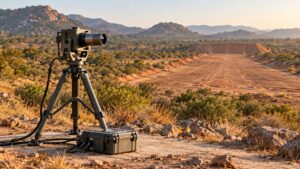
  1. 01Defence Test Ranges: Opening Shared Facilities for Development
  2. 02Environmental Accounts: Connecting Natural Assets and Economic Activity
  3. 03SC Beneficiary Reporting: Making Financial Inclusion Measurable
  4. 04RBI Rate Hike: How Calibrated Tightening Reaches the Economy
  5. 05Kasturi Cotton gains as traceability in textiles turns crucial
  6. 06ITLA: Integrating Transport Planning and Technical Appraisal
  7. 07Services Production Index: Measuring Non-Market Activities
  8. 08SME Growth Fund: Patient Equity for Expanding Enterprises
  9. 09First international cargo vessel leaves Assam since 1947
  10. 10The Looming Crisis of World Unemployment
GS III · 827 articles

Environment & Ecology

View all
  1. 01Environmental Accounts: Connecting Natural Assets and Economic Activity
  2. 02Zinc-Air Catalysts: Improving the Oxygen Reaction Without Platinum
  3. 03Industrial Fuel Cameras: Linking Visual Checks With Emission Data
  4. 04Bird islands: India’s conservation efforts must go beyond symbolism
  5. 05Why is Buxa bringing Tigers back?
  6. 06Great Nicobar PIL: Judicial Review and Tribal Rights
  7. 07India-Japan JCM: From Climate Projects to Accounted Credits
  8. 08Pacific Pre-COP31: Setting Priorities Before Formal Negotiations
  9. 09Jal Arpan: Moving From Tap Construction to Community Operation
  10. 10Sal Borer Control: Why Trapping and Sanitation Felling Differ
GS II · 663 articles

International Relations

View all
  1. 01We need to foster a Middle Power approach
  2. 02India-Japan JCM: From Climate Projects to Accounted Credits
  3. 03India-Switzerland Mobility: Temporary Access With Defined Rules
  4. 04Trump’s AI accord: White House Accord on Super Intelligence
  5. 05Dibrugarh-Dhaka Cargo: Connecting Inland Waterways Across Borders
  6. 06Pacific Pre-COP31: Setting Priorities Before Formal Negotiations
  7. 07Cetacean Conservation: Reducing Bycatch and Vessel Collision Risks
  8. 08Kashmir as India’s Gateway to Eurasian Opportunity
  9. 09Tarang Shakti: Coordinating Combat and Support Aircraft
  10. 10Quad-at-Sea: Coast Guard Learning Through Shipboard Observation
GS III · 929 articles

Science & Technology

View all
  1. 01Defence Test Ranges: Opening Shared Facilities for Development
  2. 02Satellite-Aided Rescue: Turning Distress Alerts Into Response
  3. 03Zinc-Air Catalysts: Improving the Oxygen Reaction Without Platinum
  4. 04Satellite Internet: Why a Licence Is Only One Approval Stage
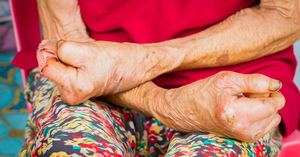
  5. 05Breaking Leprosy Transmission: India’s Challenge beyond Elimination
  6. 06Why does NASA want to build a Nuclear Reactor on the Moon?
  7. 07Nobel Prize in Physics 2026
  8. 08High-Altitude Platform: Testing a Stratospheric Airship
  9. 09IceCube: Detecting Cosmic Neutrinos Through Antarctic Ice
  10. 10OJ 287: Reading Black-Hole Activity Through Changing Light
GS I · 312 articles

History

View all
  1. 01CERD General Recommendation 40 and Reparatory Justice
  2. 02Vaishya Tekri: Testing Ujjain’s Mauryan Stupa Hypothesis
  3. 03Gyan Bharatam Survey Reports More Than 1.19 Crore Manuscripts
  4. 04Sarnath: UNESCO Inscription Recognises a Living Buddhist Heritage
  5. 05Keeladi Excavations: New Brick Structures Deepen the Sangam-Age Record
  6. 06Lothal Heritage Complex: Recreating a Harappan Maritime Town
  7. 07Prambanan temple: Indonesia’s Hindu heritage site and the India connection
  8. 08Syama Prasad Mookerjee: 125th birth anniversary of the Jana Sangh founder
  9. 09Rakhigarhi Ancient DNA: What Harappan Skeletons Reveal About India’s Ancestry
  10. 10The ‘Dancing Girl’ of Mohenjo-daro: Art, Identity and a Naming Debate
GS I · 500 articles

Geography

View all
  1. 01IARRF: Studying the Atmosphere and Ionosphere With Radar
  2. 02OptoSAR Satellites: Combining Radar and Optical Views
  3. 03Mount Mantap: Nuclear Tests and Delayed Fault Reactivation
  4. 04Monsoon Withdrawal: Why Retreat Can Coexist With Heavy Rain
  5. 05Sambalpur Doppler Radar: From Weather Observations to Early Action
  6. 06Kishau Agreement: Shared Storage, Federal Coordination and River Flows
  7. 07August Ocean Heat: El Niño and Uneven Regional Risks
  8. 08Bakhira Lake Sediments: Reconstructing the Monsoon Before Rain Gauges
  9. 09ORV Sagar Manthan: From Ship Launch to Ocean Research
  10. 10UN ‘Correct the Map Controversy’ and India’s Territorial Concerns
GS I · 359 articles

Society

View all
  1. 01Tribal Heritage Archives: Preserving Living Knowledge With Communities
  2. 02Authorities lax in ensuring Women’s Safety in Delhi: SC
  3. 03Long Wait for Justice as Pendencies in Rape Cases Mount
  4. 04Film Certification: Drug Warnings and Parental Guidance
  5. 05Secularism is a ‘modern’ concept, does not fit India’s tradition, says RSS chief
  6. 06India ranks 131st on the Global Gender Gap Index 2026
  7. 07Building Collapses in India: Nearly 8,000 people died due to the collapse of structures in 5 years
  8. 08The Incongruity of Caste and Science
  9. 09Tamil Nadu’s Birth Decline and the Demographic Transition
  10. 10India’s Youth Power: An Electoral Force Still in the Making
GS IV · 318 articles

Ethics & Integrity

View all
  1. 01Long Wait for Justice as Pendencies in Rape Cases Mount
  2. 02UN Iran Findings: Civilian Protection and the Limits of Fact-Finding
  3. 03Doping is now a deep-rooted culture in Indian Sports
  4. 04AI in Mathematics: Proof Verification, Understanding and Research Ethics
  5. 05Judicial Integrity and Corruption
  6. 06Return of Profanation as a New Political Language
  7. 07SC calls on students to educate elders in Waste Management
  8. 08AI Agents, Consumer Control and Accountability
  9. 09AI-Designed Viruses: Scientific Promise and the Biosecurity Governance Gap
  10. 10Animal-Free Research Methods and India’s Biomedical Testing Transition
GS I · 273 articles

Art & Culture

View all
  1. 01Coal mining near Ramappa Temple may harm the Heritage Site and Lake
  2. 02Classical Language Centres: Turning Recognition Into Research Capacity
  3. 03Tribal Heritage Archives: Preserving Living Knowledge With Communities
  4. 04Dadasaheb Phalke Award for Kannada film artist Anant Nag
  5. 05Bharat Ratna and C.N.R. Rao’s Scientific Legacy
  6. 062026 Ramon Magsaysay Awards 
  7. 07Vaishya Tekri: Testing Ujjain’s Mauryan Stupa Hypothesis
  8. 08Gyan Bharatam Survey Reports More Than 1.19 Crore Manuscripts
  9. 09Sarnath: UNESCO Inscription Recognises a Living Buddhist Heritage
  10. 10Keeladi Excavations: New Brick Structures Deepen the Sangam-Age Record
GS III · 290 articles

Internal Security

View all
  1. 01Defence Test Ranges: Opening Shared Facilities for Development
  2. 02Satellite-Aided Rescue: Turning Distress Alerts Into Response
  3. 03High-Altitude Parachute: Controlling Descent in Thin Air
  4. 04High-Altitude Platform: Testing a Stratospheric Airship
  5. 05Fleet Support Ships: Extending Naval Endurance at Sea
  6. 06Free-Space QKD: Combining Quantum Keys With Post-Quantum Security
  7. 07What are the provisions of AFSPA?
  8. 08Cybercrimes in India: Vulnerability and Access to Justice
  9. 09Kashmir as India’s Gateway to Eurasian Opportunity
  10. 10Making Every Second Count: IST Becomes India’s Only Legal Time
GS III · 117 articles

Disaster Management

View all
  1. 01Satellite-Aided Rescue: Turning Distress Alerts Into Response
  2. 02Mass-Gathering Heat Risk: Planning the Whole Event
  3. 03National Coastal Mission 2.0: Coordinating Coastal Resilience
  4. 04Nepal’s Flash Floods: Rebuilding Communities after a Disaster
  5. 05Dam Emergency Plans: Coordinating Warnings Across Cascades
  6. 06Steel Safety Council: Learning From Near Misses Before Accidents
  7. 07AI in Disaster Response: From Scattered Reports to Verified Action
  8. 08El Niño Heat Death Projections: Reading Risk Before It Becomes Loss
  9. 09Access-Controlled Highways: New Rules for Safer Corridor Design
  10. 10Mount Mantap: Nuclear Tests and Delayed Fault Reactivation

Yearly archive

Every year, indexed.

The full searchable table of every article we've published in a calendar year — with subjects, publish date, and per-article PDF download.

How we do current affairs

Three rules every article on AnantamIAS follows.

Because current affairs for UPSC without the syllabus mapping is just news. And news without a question to answer is just noise.

  1. 01

    Open with Why in News?

    The hook is never the headline — it's the trigger. What event, judgement, or policy decision brought this topic into the UPSC crosshair this week? That context survives; the headline doesn't.

  2. 02

    Map it to the GS paper — and the sub-topic.

    Every article explicitly states which Mains GS paper it feeds, and which syllabus sub-topic it sits under. So when you revise a topic, the article is already indexed against your notes.

  3. 03

    Close with a practice question.

    A 15-marker or a Prelims MCQ, depending on the topic's exam load. Written by the faculty who reads Mains answer copies, not scraped from a bank. That's why they read as if UPSC could have asked them.

FAQ

What aspirants ask us about current affairs.

Which source should I follow — AnantamIAS or a newspaper?

Both. Read The Hindu or Indian Express daily for raw reading habit and diverse opinions. Use the Compass digest to know which of the day’s stories actually matter for UPSC, mapped to the syllabus with context.

How many current affairs articles do I need to read a day for UPSC?

About 5–10 substantive items in Foundation year, 10–15 closer to Prelims. We publish ~20 a day across subjects — don’t read all, read the ones that fall inside your active revision window.

Is the monthly current affairs PDF enough, or do I need the daily?

Monthly is revision-ready. Daily is learning-ready. Use daily to add fresh material to your notes, then re-read the monthly PDF in the final 60-day Prelims sprint — by which point the story has settled into its lasting takeaway.

Do you cover state-specific current affairs?

We cover state-level developments only when they carry national significance — federal-dispute rulings, inter-state river issues, Governor–state conflicts. For state PSC preparation, state-specific papers still have the edge.

Will current affairs from 2024 / 2025 still matter in the 2026 UPSC exam?

Yes — for any topic where the policy or framework continues (e.g., DPDP Act 2023, Women’s Reservation Bill, Kuno cheetahs, G20 legacy). UPSC increasingly asks for trend recall, not just the freshest news.

Can I download all current affairs as a single PDF?

Every daily archive page has a Print / Save as PDF button that bundles all of that day’s articles into a single print-ready document. Monthly PDFs are available from the Compass section above for the three biggest subjects.

Current affairs, taught — not just posted

Every programme's live classes integrate the Compass.

Foundation, PSIR Drona, and Mains Crash — all weave this week's current affairs into the theory class they accompany. Sit in a free demo to see it in action.