



UPSC CSE 2026 Essay Paper Discussion

Current Affairs Compass · UPSC 2026

News, mapped to your syllabus.

Every article opens with Why in News?, tells you the exact GS paper it feeds, and closes with a UPSC-style practice question. 2,107+ articles indexed · daily, monthly and subject-wise compilations · PDFs you can actually revise from.

0
published today
175
this month
1,565
this year
2,107+
all-time archive

Compass compilations

Year-long PDFs, stitched by subject.

Every high-yield news item from a full calendar year, grouped by theme, cross-referenced to the syllabus. The three subjects that dominate UPSC current affairs, first — the rest follow through the monthly archive.

All months →
  • GS IIIJan – Dec 2025

    Environment, Ecology & Biodiversity

    Every Why-in-News item, organised into chapters you can read end-to-end — or dip into topic by topic when a question surfaces.

    ⬇ Download PDF
  • GS IIJan – Dec 2025

    Indian Polity & Governance

    Every Why-in-News item, organised into chapters you can read end-to-end — or dip into topic by topic when a question surfaces.

    ⬇ Download PDF
  • GS IIIJan – Dec 2025

    Science & Technology

    Every Why-in-News item, organised into chapters you can read end-to-end — or dip into topic by topic when a question surfaces.

    ⬇ Download PDF

Just published

The latest current affairs from our desk.

A live feed of the nine most recent UPSC current affairs articles published on AnantamIAS — each opens with Why-in-News, the GS paper it feeds, a practice question, and an FAQ accordion.

All daily digests →

Browse by subject

Current affairs grouped by GS paper.

Twelve subject hubs, each with the ten most recent articles laid out in a scannable list. Click any title to read the full Why-in-News + GS-mapping breakdown, or open the subject hub to see every article we've ever published in that paper.

GS II · 807 articles

Polity & Governance

View all
  1. 01India-Canada Relations: From Diplomatic Reset to Strategic Cooperation
  2. 02Road Safety in India
  3. 03Bankers’ Books Evidence Act: Digital Records and Court Certification
  4. 04How should RUPPs be regulated?
  5. 05Ladakh to get a Unique Elected Body under Article 371K
  6. 06Onus on legislature to make Marital Rape punishable: SC
  7. 07Capital Punishment 
  8. 08Census 2027 
  9. 09The Political cost of Unconditional Cash Transfer (UCT) schemes 
  10. 10Judicial Integrity and Corruption
GS III · 915 articles

Economy

View all
  1. 01Delhi Drylands Declaration: Connecting Research, Farms and Policy
  2. 02Nepal LDC Graduation: Eligibility Is Not Transition Readiness
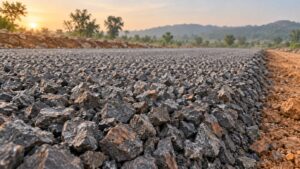
  3. 03Steel Slag Roads: From Industrial By-product to Tested Aggregate
  4. 04Badri Cattle OPU-IVF: Embryo Transfer and Germplasm Conservation
  5. 05E-commerce firms brought under tighter regulation 
  6. 06Cochin Ship Repair JV: Building a Maritime Services Cluster
  7. 07Tara Coal Block: Revised Boundaries and Environmental Decision-Making
  8. 08Bankers’ Books Evidence Act: Digital Records and Court Certification
  9. 09Middle Income Trap
  10. 10ASEAN-India Agriculture: A Results-Based Cooperation Work Programme
GS III · 768 articles

Environment & Ecology

View all
  1. 01Delhi Drylands Declaration: Connecting Research, Farms and Policy
  2. 02Steel Slag Roads: From Industrial By-product to Tested Aggregate
  3. 03August Ocean Heat: El Niño and Uneven Regional Risks
  4. 04Tara Coal Block: Revised Boundaries and Environmental Decision-Making
  5. 05Forest Rights Review: From Recognised Titles to Community Governance
  6. 06Bakhira Lake Sediments: Reconstructing the Monsoon Before Rain Gauges
  7. 07Pollution from Open Waste Burning triples in cities during winter: study
  8. 08Organic Photocatalysts: How Self-Assembly Improves Charge Separation
  9. 09NHAI Plantation Rules: Linking Completion and Payments to Survival
  10. 10Orangutans Rescued in Odisha
GS II · 621 articles

International Relations

View all
  1. 01Delhi Drylands Declaration: Connecting Research, Farms and Policy
  2. 02Nepal LDC Graduation: Eligibility Is Not Transition Readiness
  3. 03Colombo Security Conclave: Rehearsing a Shared Maritime Response
  4. 04BRICS New Delhi Declaration: Consensus and Multilateral Reform
  5. 05India-EU FTA closer to becoming a reality 
  6. 06The BRICS bank an alternative that wasn’t 
  7. 07Bundibugyo Outbreak: Why Geographical Spread Changes Response
  8. 08Cochin Ship Repair JV: Building a Maritime Services Cluster
  9. 09EU Cyber Resilience Act: Product-Security Reporting Begins
  10. 10Houthis seize key city on Red Sea, advance towards Bab el-Mandeb
GS III · 816 articles

Science & Technology

View all
  1. 01CTED Propaganda Report: Beyond Content Removal
  2. 02Steel Slag Roads: From Industrial By-product to Tested Aggregate
  3. 03Badri Cattle OPU-IVF: Embryo Transfer and Germplasm Conservation
  4. 04Experts call for protecting genetic data from misuse in a changing landscape
  5. 05Bundibugyo Outbreak: Why Geographical Spread Changes Response
  6. 06Enoxaparin Reference Standard: Measuring Biological Activity Reliably
  7. 07EU Cyber Resilience Act: Product-Security Reporting Begins
  8. 08Bakhira Lake Sediments: Reconstructing the Monsoon Before Rain Gauges
  9. 09ORV Sagar Manthan: From Ship Launch to Ocean Research
  10. 103D-Printed Bone Grafts: Patient-Specific Bioceramics Move Toward Commercialisation
GS I · 250 articles

History

View all
  1. 01CERD General Recommendation 40 and Reparatory Justice
  2. 02Vaishya Tekri: Testing Ujjain’s Mauryan Stupa Hypothesis
  3. 03Gyan Bharatam Survey Reports More Than 1.19 Crore Manuscripts
  4. 04Sarnath: UNESCO Inscription Recognises a Living Buddhist Heritage
  5. 05Keeladi Excavations: New Brick Structures Deepen the Sangam-Age Record
  6. 06Lothal Heritage Complex: Recreating a Harappan Maritime Town
  7. 07Prambanan temple: Indonesia’s Hindu heritage site and the India connection
  8. 08Syama Prasad Mookerjee: 125th birth anniversary of the Jana Sangh founder
  9. 09Rakhigarhi Ancient DNA: What Harappan Skeletons Reveal About India’s Ancestry
  10. 10The ‘Dancing Girl’ of Mohenjo-daro: Art, Identity and a Naming Debate
GS I · 466 articles

Geography

View all
  1. 01August Ocean Heat: El Niño and Uneven Regional Risks
  2. 02Bakhira Lake Sediments: Reconstructing the Monsoon Before Rain Gauges
  3. 03ORV Sagar Manthan: From Ship Launch to Ocean Research
  4. 04UN ‘Correct the Map Controversy’ and India’s Territorial Concerns
  5. 05Equal-Area World Maps: UN Resolution and India’s Boundary Caveat
  6. 06India-China Corps Commander Talks: The New Wacha-Damai Channel
  7. 07Strait of Hormuz Exclusion-Zone Proposal: Transit Passage and Shipping Risk
  8. 08Brahmaputra Mega Dam: Transboundary Risks at the Great Bend
  9. 09Jammu Heroin Routes: Interstate and Cross-Border Trafficking Networks
  10. 10Anak Krakatau Eruption: Volcanic Ash, Aviation and Sunda Strait Risk
GS I · 339 articles

Society

View all
  1. 01Building Collapses in India: Nearly 8,000 people died due to the collapse of structures in 5 years
  2. 02The Incongruity of Caste and Science
  3. 03Tamil Nadu’s Birth Decline and the Demographic Transition
  4. 04India’s Youth Power: An Electoral Force Still in the Making
  5. 05Master Plan for Delhi 2047 Notified
  6. 06Census 2027 Population Enumeration: Parental Data and New Fields
  7. 07Extreme Heat During Pregnancy and Adverse Birth Outcomes in India
  8. 08Nepal Communal Clashes: Secularism and Stability in the Border Belt
  9. 09Odisha PVTG Nutrition: Anaemia and Adolescent Stunting Gaps
  10. 10Canada Study-Permit Cuts: Why Indian Students Face the Largest Impact
GS IV · 313 articles

Ethics & Integrity

View all
  1. 01Judicial Integrity and Corruption
  2. 02Return of Profanation as a New Political Language
  3. 03SC calls on students to educate elders in Waste Management
  4. 04AI Agents, Consumer Control and Accountability
  5. 05AI-Designed Viruses: Scientific Promise and the Biosecurity Governance Gap
  6. 06Animal-Free Research Methods and India’s Biomedical Testing Transition
  7. 07AI-Fabricated Precedents: The Supreme Court’s Warning on Manufactured Justice
  8. 08Calcutta HC on Public Parading of Accused: State Power vs Human Dignity (UPSC GS2/GS4)
  9. 09​Gang of seven: On the AAP defections
  10. 10Subhas Chandra Bose: the paradox of a revolutionary’s theory and praxis
GS I · 226 articles

Art & Culture

View all
  1. 01Bharat Ratna and C.N.R. Rao’s Scientific Legacy
  2. 022026 Ramon Magsaysay Awards 
  3. 03Vaishya Tekri: Testing Ujjain’s Mauryan Stupa Hypothesis
  4. 04Gyan Bharatam Survey Reports More Than 1.19 Crore Manuscripts
  5. 05Sarnath: UNESCO Inscription Recognises a Living Buddhist Heritage
  6. 06Keeladi Excavations: New Brick Structures Deepen the Sangam-Age Record
  7. 07Jagannath Dham Trademark: Protecting Puri Temple’s Sacred Identity
  8. 08Mission Senehjori: Turning Muga Silk Waste into High-Value Yarn
  9. 09Lothal Heritage Complex: Recreating a Harappan Maritime Town
  10. 10Bhojshala Dispute: Supreme Court to List All Petitions Against the High Court Order
GS III · 245 articles

Internal Security

View all
  1. 01Colombo Security Conclave: Rehearsing a Shared Maritime Response
  2. 02CTED Propaganda Report: Beyond Content Removal
  3. 03EU Cyber Resilience Act: Product-Security Reporting Begins
  4. 04India’s 6G Call to Action: Security, Standards and Policy Autonomy
  5. 05FIU Notices to Crypto Platforms: Activity-Based AML Obligations
  6. 06No UAPA charges in NIA chargesheet against U.S. national & six Ukrainians
  7. 07India-Morocco Defence Ties: From MoU to Joint Committee
  8. 08Watchdog report warns of rise in tech-driven hawala network
  9. 09Defence Acquisition Council: AoN and Indigenisation
  10. 10Roadmap ready to make India drug-free by 2029
GS III · 97 articles

Disaster Management

View all
  1. 01August Ocean Heat: El Niño and Uneven Regional Risks
  2. 02NIDM Review: Turning Disaster Lessons Into Preparedness
  3. 03Building Collapses in India: Nearly 8,000 people died due to the collapse of structures in 5 years
  4. 04Anak Krakatau Eruption: Volcanic Ash, Aviation and Sunda Strait Risk
  5. 05Climate Overshoot: The Peak-and-Decline Pathway
  6. 06What are Hanging Glaciers?
  7. 07India-Nepal Power Trade: Flood Damage Reverses Seasonal Electricity Flows
  8. 08Zaporizhzhia Power Loss: Why Off-Site Electricity Is a Nuclear Safety Pillar
  9. 09Shared Disaster beyond Borders and Geopolitics
  10. 10Aditya-L1 Solar Flare Precursors: From Small Brightenings to Space-Weather Warning

Yearly archive

Every year, indexed.

The full searchable table of every article we've published in a calendar year — with subjects, publish date, and per-article PDF download.

How we do current affairs

Three rules every article on AnantamIAS follows.

Because current affairs for UPSC without the syllabus mapping is just news. And news without a question to answer is just noise.

  1. 01

    Open with Why in News?

    The hook is never the headline — it's the trigger. What event, judgement, or policy decision brought this topic into the UPSC crosshair this week? That context survives; the headline doesn't.

  2. 02

    Map it to the GS paper — and the sub-topic.

    Every article explicitly states which Mains GS paper it feeds, and which syllabus sub-topic it sits under. So when you revise a topic, the article is already indexed against your notes.

  3. 03

    Close with a practice question.

    A 15-marker or a Prelims MCQ, depending on the topic's exam load. Written by the faculty who reads Mains answer copies, not scraped from a bank. That's why they read as if UPSC could have asked them.

FAQ

What aspirants ask us about current affairs.

Which source should I follow — AnantamIAS or a newspaper?

Both. Read The Hindu or Indian Express daily for raw reading habit and diverse opinions. Use the Compass digest to know which of the day’s stories actually matter for UPSC, mapped to the syllabus with context.

How many current affairs articles do I need to read a day for UPSC?

About 5–10 substantive items in Foundation year, 10–15 closer to Prelims. We publish ~20 a day across subjects — don’t read all, read the ones that fall inside your active revision window.

Is the monthly current affairs PDF enough, or do I need the daily?

Monthly is revision-ready. Daily is learning-ready. Use daily to add fresh material to your notes, then re-read the monthly PDF in the final 60-day Prelims sprint — by which point the story has settled into its lasting takeaway.

Do you cover state-specific current affairs?

We cover state-level developments only when they carry national significance — federal-dispute rulings, inter-state river issues, Governor–state conflicts. For state PSC preparation, state-specific papers still have the edge.

Will current affairs from 2024 / 2025 still matter in the 2026 UPSC exam?

Yes — for any topic where the policy or framework continues (e.g., DPDP Act 2023, Women’s Reservation Bill, Kuno cheetahs, G20 legacy). UPSC increasingly asks for trend recall, not just the freshest news.

Can I download all current affairs as a single PDF?

Every daily archive page has a Print / Save as PDF button that bundles all of that day’s articles into a single print-ready document. Monthly PDFs are available from the Compass section above for the three biggest subjects.

Current affairs, taught — not just posted

Every programme's live classes integrate the Compass.

Foundation, PSIR Drona, and Mains Crash — all weave this week's current affairs into the theory class they accompany. Sit in a free demo to see it in action.