Opens in a new tab
Join Anantam IAS Channel on Telegram

Daily Digest · Friday

15 May 2026 Current Affairs for UPSC

31 current affairs published on Friday, 15 May 2026

15 May 2026 Current Affairs for UPSC — every Why-in-News article AnantamIAS published on Friday, 15 May 2026, broken down with Why in News?, the exact GS paper it feeds, sub-topic mapping, MCQ-ready facts and a UPSC-style practice question. 31 articles in total, covering Polity, Economy, Environment, S&T, IR, Geography, History, Society and Internal Security — the same Why-in-News + GS-paper-mapping + practice-question format the Compass uses across every daily digest on the site.

Daily current affairs for UPSC is where new material enters your prep stream. Read this 15 May 2026 digest end-to-end in 25–35 minutes, attempt the practice question at the foot of each article (it's MCQ for some, 10/15-marker for others), then bookmark the entries that fall inside your active revision window. Everything stays cross-linked: tap any subject pill to jump to that subject's hub, or use the table of contents above to skip straight to a specific story.

Use this page three ways. Read sequentially for a one-sitting scan of everything that mattered on 15 May 2026. Download the 15 May 2026 PDF below for offline study or print revision. Or use the May 2026 Current Affairs compilation to see this day in the month's full context. For the previous day's reading, see 14 May 2026 Current Affairs; the next day's is 16 May 2026 Current Affairs.

Why we publish daily current affairs separately from the monthly compilation: daily is learning, monthly is revision. Use the daily page to add fresh material to your notes the day it breaks; come back to the May 2026 compilation 60 days before Prelims when the noise has settled and only the lasting takeaway is worth re-reading.

Fake Currency in India: ₹638 Crore Seized Since 2017, Gujarat Tops Detections

Open article →Download PDF

Counterfeit notes worth roughly ₹638 crore have been seized across India since 2017, and a single state, Gujarat, accounts for more than half of those detections. The numbers, compiled from National Crime Records Bureau filings and National Investigation Agency case files, surfaced again this week as parliamentary committees probed the steady drumbeat of fake Indian currency note recoveries in 2026.

The headline figure looks small against an economy of this size. But fake currency in India is not a volume problem. It is a sovereignty, security, and trust problem. Each high-quality counterfeit note that clears a teller window or a kirana counter chips at the central bank’s monopoly on legal tender, funds organised crime, and in several documented cases bankrolls terror operations. That is why the response sits with the NIA and the Home Ministry, not just the police.

This article reads the latest fake currency in India data with a UPSC internal security lens. We trace the post-demonetisation arc, decode why Gujarat keeps topping the seizure tables, map the FICN smuggling architecture, and examine what India’s counter-counterfeiting framework still gets wrong.

Quick Facts
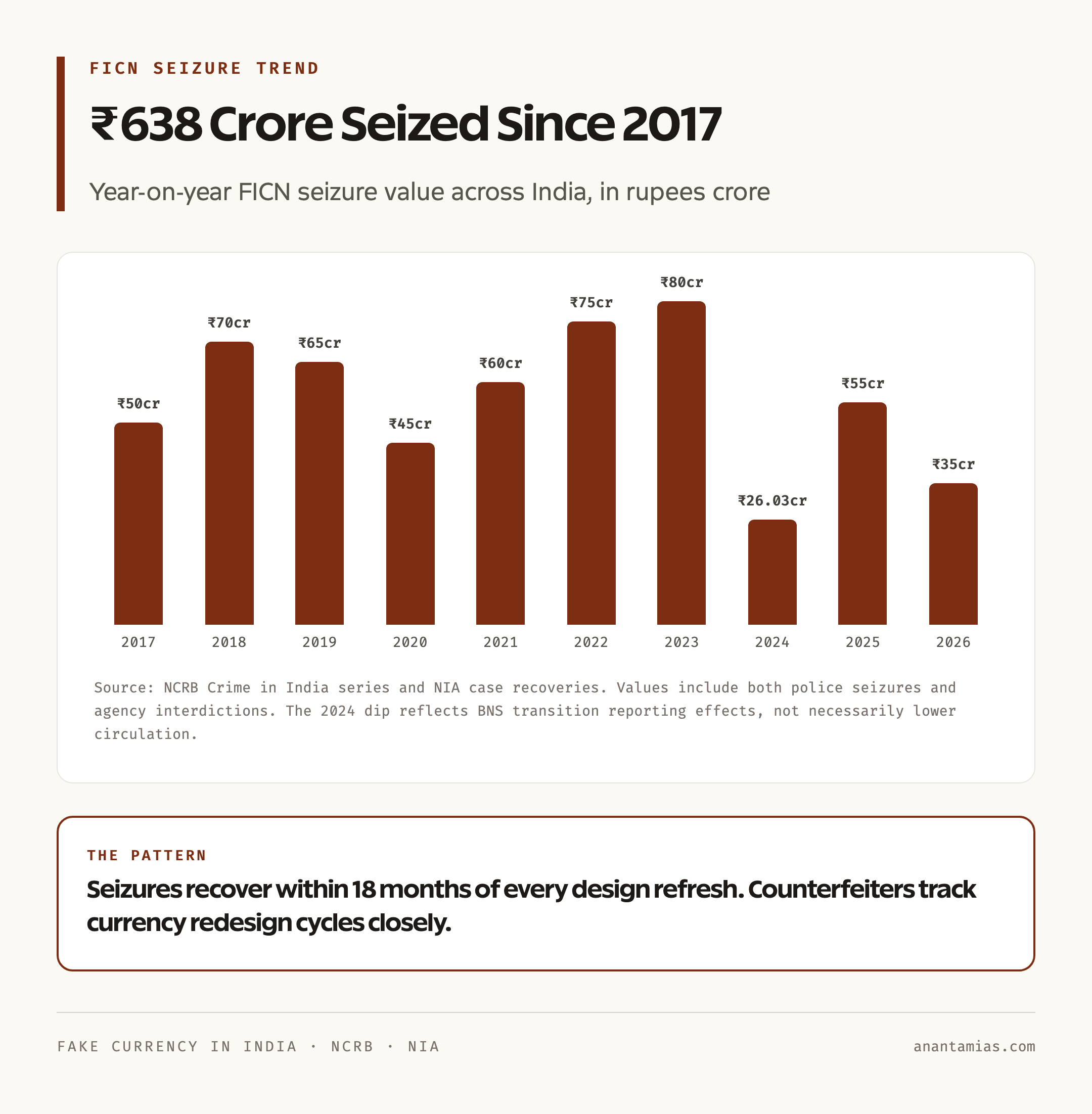
Fake Currency Seizures in India 2017 to 2026
  • Total fake currency seized since 2017: roughly ₹638 crore (NCRB and NIA cumulative).
  • Gujarat’s share of detections: above 50 percent over the 2017-2026 window.
  • 2024 FICN seizure value: ₹26.03 crore (NCRB Crime in India 2024).
  • Top denominations counterfeited: ₹500 and ₹200 notes, with rising ₹100 cases.
  • Lead investigative agency: National Investigation Agency (NIA), under the NIA Act, 2008.
  • Constitutional anchor: counterfeiting falls under Indian Penal Code Sections 489A-489E, now mirrored in the Bharatiya Nyaya Sanhita.

What Just Happened

In early May 2026, the Ministry of Home Affairs tabled fresh state-wise fake currency in India seizure figures before a parliamentary standing committee. The data confirmed three trends that security analysts have been flagging for years: counterfeiting is becoming more concentrated geographically, the quality of fakes is improving, and the supply chain is increasingly transnational.

The NCRB Crime in India 2024 report had already shown that the value of FICN seized in 2024 stood at ₹26.03 crore across 1,135 cases. The cumulative count since 2017 now sits at the ₹638 crore mark when you add NIA case recoveries that do not always show up in police-only statistics. Officials told the committee that the seizure value undercounts circulation, since detection rates for high-grade fakes remain low.

The post-demonetisation period was meant to break the FICN economy. The note ban of November 2016 invalidated 86 percent of currency in circulation overnight. Counterfeiters were left with stacks of useless paper. But the new ₹2,000 note, and later the redesigned ₹500, were copied within months. By 2018, fresh FICN was already in circulation.

Background and Historical Context

Counterfeiting is one of the oldest crimes against the state. In British India, the East India Company faced organised counterfeiting of the rupee from the 1820s onward. After independence, the Reserve Bank of India absorbed currency design and security from the colonial framework and added Indian-language scripts, watermarks, and progressively complex security threads.

The modern fake currency in India problem took its present shape in the 1990s. Investigative reports linked high-quality counterfeits to print houses in Pakistan, with notes routed through Nepal, Bangladesh, and Gulf transit points. The phrase Fake Indian Currency Notes, or FICN, entered policy vocabulary around this time. The Reserve Bank progressively upgraded note design in 1996, 2000, 2005, and 2016 to defeat each new generation of fakes.

The 2016 demonetisation was the most dramatic policy intervention. The government cited three goals: hitting black money, choking terror financing, and ending FICN circulation. The first two outcomes remain contested. On counterfeiting, the demonetisation produced a short-term shock and a longer-term reset. The new notes use updated security features, but counterfeiters adapted within 12 to 18 months.

The NIA was tasked specifically with FICN investigation in 2013, after the Mumbai 26/11 attacks confirmed terror-counterfeit linkages. Since then, the agency has run several long-running FICN networks to ground, including modules tied to Dawood Ibrahim’s organisation and to print shops in Pakistan’s Punjab.

Key Features of India’s Counter-Counterfeiting Framework

The Indian state runs a layered defence against fake currency.

  • Legal layer: Sections 489A-489E of the old IPC, now part of the Bharatiya Nyaya Sanhita, criminalise counterfeiting, possession, and circulation of FICN. Punishment goes up to life imprisonment.
  • Investigative layer: The NIA leads, with state police, customs, and the Directorate of Revenue Intelligence as partners. The Terror Funding and Fake Currency Cell sits inside the NIA.
  • Detection layer: RBI’s currency verification, processing, and shredding system flags suspect notes returned from bank chests. Banks must report FICN within prescribed timelines.
  • Design layer: RBI security features include intaglio printing, microletters, color-shifting ink, latent images, and bleed lines for the visually impaired.
  • Cross-border layer: SSB, BSF, and customs handle smuggling interdiction at the Nepal and Bangladesh borders.

This framework looks comprehensive on paper. In practice, the bottleneck sits at detection inside banks and in the informal economy, where most fake notes circulate undetected.

Why Gujarat Tops the Detection Tables
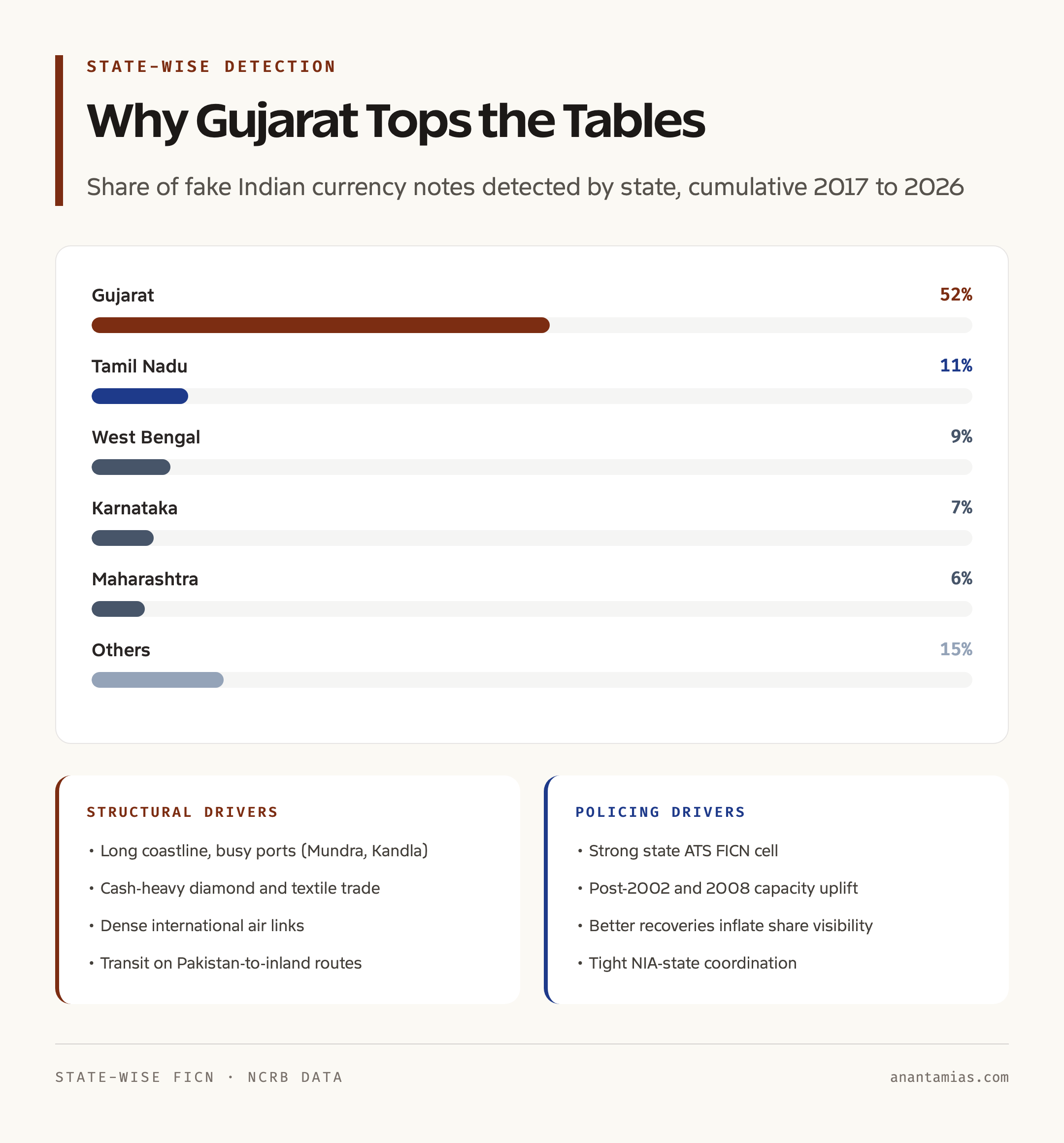
State-wise FICN Detection Share

Gujarat’s outsized share of fake currency in India seizures has a structural explanation, not a moral one. The state has long coastlines, busy ports including Mundra and Kandla, dense international air traffic through Ahmedabad and Surat, and a large diamond and textile cash economy. Each of these is a counterfeiter’s friend and an investigator’s lead.

Two factors compound the geography. First, Gujarat’s Anti-Terrorism Squad and state police have invested heavily in FICN detection capacity since the 2002 and 2008 attack experiences. Better policing produces more recoveries, which makes the data look worse, even though the underlying problem may be similar elsewhere. Second, the state sits on transit routes between Pakistan-origin print shops and consumer markets across western and central India.

Other states with high detections include Tamil Nadu, West Bengal, Karnataka, and Maharashtra. Border states like Punjab and West Bengal record large interdictions because cross-border smuggling is more visible there.

Why It Matters

Fake currency in India is not just a financial crime. It hits four state interests at once.

It threatens monetary sovereignty. Only the RBI can issue legal tender. Every counterfeit note is an unauthorised seignorage extraction.

It enables terror financing. Multiple NIA charge sheets, including the 2018 module busted in West Bengal, link FICN earnings to handlers based in Pakistan and to specific terror outfits. The economics work because counterfeiters trade fakes at roughly 40 to 50 percent of face value.

It corrupts the informal economy. Small traders absorb the loss when they unknowingly accept and bank a fake note. The bank confiscates the note and files a complaint, leaving the trader with the financial hit.

It weakens trust in cash, which still anchors over 80 percent of consumer transactions in India by volume despite the UPI revolution.

Detailed Analysis: What the FICN Numbers Hide

Three patterns deserve closer attention.

The quality ladder is climbing. Modern fake currency in India often reproduces three or four of the RBI’s seven main security features. Bank officials report cases where only specialised UV scanners catch the fake. This explains why detection inside the banking chain has improved but field detection by traders remains weak.

Denomination targeting has shifted. The ₹2,000 note, withdrawn from circulation in 2023, was the original prestige target for counterfeiters. Post-withdrawal, the volume has moved to ₹500 and increasingly to ₹200. The lower face value of ₹200 makes detection less likely because people scrutinise smaller notes less carefully.

Geography is fragmenting. Earlier, FICN flowed through three main corridors: Nepal-Bihar, Bangladesh-West Bengal, and Karachi-Gujarat. Investigators now see micro-routes through Sri Lanka, Malaysia, and the Gulf, with cash mules carrying smaller batches more frequently. Internal printing inside India, using domestic offset presses, is also rising in NIA case files.

The connection to organised crime and terrorism has been formalised in case-law and policy. For a deeper look at how the state frames these overlaps, our explainer on organised crime terrorism linkages traces the doctrinal arc.

Comparative Perspective
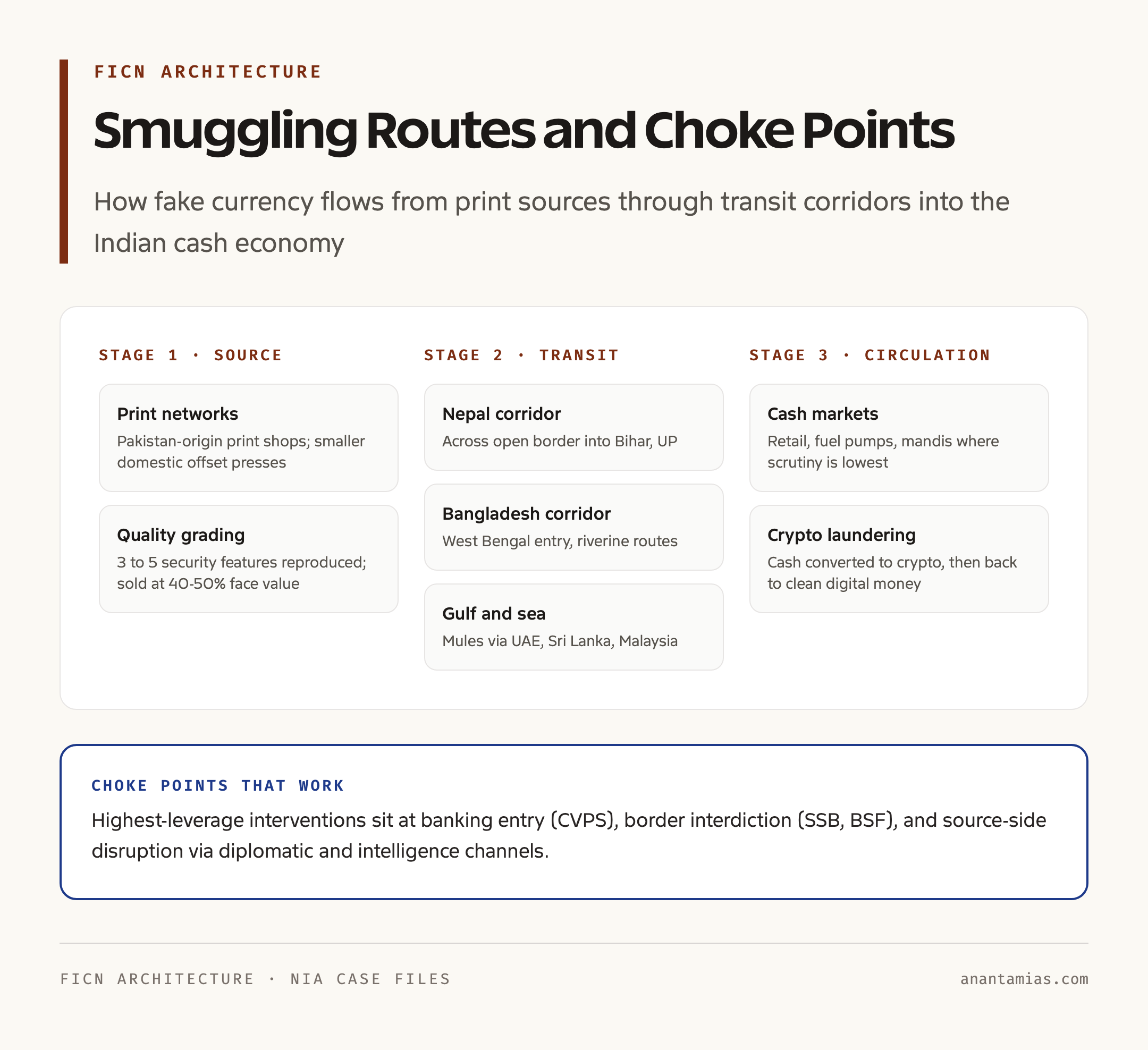
FICN Smuggling Routes and Choke Points

Compare the Indian framework against three peer cases.

  • United States: The US Secret Service has dual mandate over counterfeiting and presidential protection. Detection happens overwhelmingly at the Federal Reserve sorting stage, with field detection through cash-handling staff training. Counterfeit rates are extremely low because the dollar carries the world’s most sophisticated security features.
  • European Union: The European Central Bank coordinates with national central banks and Europol. The euro has experienced waves of counterfeiting from Italian and Bulgarian print networks. EU seizure data is published quarterly, more frequently than India’s annual NCRB cycle.
  • United Kingdom: The Bank of England moved to polymer notes from 2016 onward. Polymer is far harder to counterfeit than paper because the substrate itself carries security features. Counterfeit rates dropped sharply.

India has experimented with polymer for the ₹10 note in limited pilots. A broader polymer shift would impose printing infrastructure costs but could permanently raise the cost of counterfeiting.

Challenges

The fight against fake currency in India runs into recurring obstacles.

  • Detection gap inside banks. Bank staff turnover and training shortfalls mean that fake notes routinely pass through teller counters before catching a back-end check.
  • Field-level awareness. Most cash transactions happen without any scanning. Retail traders rely on visual checks alone.
  • Cross-border coordination. Source-side action against print shops in Pakistan and Bangladesh requires diplomatic and intelligence cooperation that is uneven at best.
  • Conviction rates. NIA conviction rates in FICN cases are high, but state police rates are far lower because evidence chains break.
  • Digital-age laundering. Counterfeiters increasingly use FICN to seed cash for crypto purchases, then convert back to clean digital money. The trail is harder to follow than traditional hawala.
  • Demonetisation fatigue. Another note withdrawal is politically and economically costly, which limits the policy menu.

Prelims Pointers

  • NIA Act, 2008: under the Union Home Ministry, jurisdiction over FICN cases under 2013 amendment.
  • BNS provisions on counterfeiting mirror IPC Sections 489A-489E, with up to life imprisonment.
  • RBI under the Reserve Bank of India Act, 1934 has the sole right to issue currency.
  • Major security features on Indian banknotes: watermark, security thread, latent image, microletters, intaglio print, color-shifting ink, bleed lines.
  • Currency Verification and Processing System (CVPS) at RBI handles bulk fake detection.
  • Coinage Act, 2011 regulates coin counterfeiting separately.
  • SSB guards the India-Nepal and India-Bhutan borders, key FICN transit routes.
  • Terror Funding and Fake Currency Cell sits within the NIA.

Mains Questions

  1. Examine the structural reasons why a single state like Gujarat accounts for over half of fake currency in India detections. (GS Paper III, 250 words)
  2. Critically evaluate demonetisation’s claim of breaking the FICN economy. Use NCRB and NIA data from the post-2017 period. (GS Paper III, 250 words)
  3. Counterfeiting is increasingly intertwined with terror financing and organised crime. Discuss India’s institutional response and suggest reforms. (GS Paper III, 250 words)
  4. Compare India’s anti-counterfeiting framework with the United States and the European Union. What lessons can India draw? (GS Paper II, 150 words)

Way Forward

The next phase of India’s response to fake currency in India needs three shifts.

Move detection earlier in the cash cycle. Mandatory UV scanners at high-throughput retail points, subsidised through MSME schemes, would catch fakes before they recirculate. Bank-staff training cycles need to be shorter and more frequent.

Re-examine the polymer substrate question. A measured transition for lower denominations, beginning with ₹100 and ₹200, would test the operational case before any large rollout.

Strengthen the source-side response. Diplomatic engagement on print-shop networks, supported by financial intelligence sharing through the Financial Action Task Force framework, is more productive than purely interdictive policing.

The link between counterfeiting and India’s broader internal security architecture deserves continued examination. Our piece on terrorism in India sets the wider context, and the explainer on black money and parallel economy shows how FICN intersects with digital laundering channels. For the latest reporting framework that captures these patterns, see our analysis of the NCRB Crime in India 2024 report.

The ₹638 crore figure is what the state has caught. The interesting number is what it has missed. Closing that gap is the work of the next decade.

Frequently Asked Questions

How much fake currency has been seized in India since 2017?

Cumulative seizures of fake Indian currency notes since 2017 stand at roughly ₹638 crore, combining NCRB police data with NIA case recoveries. The 2024 single-year figure alone was ₹26.03 crore across 1,135 cases.

Why does Gujarat account for over half of fake currency detections?

Gujarat’s long coastline, major ports like Mundra and Kandla, busy international airports, and a large cash-heavy diamond and textile economy combine with strong police FICN units. The state sits on natural transit routes between Pakistan-origin print networks and inland markets.

What is FICN and which agency investigates it?

FICN stands for Fake Indian Currency Notes. The National Investigation Agency leads FICN cases under the NIA Act, 2008, after a 2013 amendment formally added FICN to its jurisdiction. State police, customs, and the Directorate of Revenue Intelligence assist.

Did demonetisation in 2016 end fake currency circulation?

No. Demonetisation produced a short-term shock by invalidating existing FICN stocks. Counterfeiters adapted to the new note designs within 12 to 18 months, and fresh FICN was in circulation by 2018. The long-term claim of breaking the counterfeit economy has not held.

Which denominations are counterfeited most often?

₹500 notes lead the seizure tables. ₹200 counterfeits are rising because people scrutinise smaller notes less carefully. The ₹2,000 note, withdrawn in 2023, was the original prestige target during 2016-2023.

What security features protect Indian banknotes?

Key features include the watermark, security thread, latent image, microletters, intaglio print giving raised feel, color-shifting ink on numerals, and bleed lines for visually impaired identification. RBI updates the feature set periodically.

How is fake currency linked to terror financing?

Counterfeiters trade fakes at 40 to 50 percent of face value, which gives terror handlers a margin to fund operations. Multiple NIA charge sheets have documented direct flows from FICN sales to handlers and listed terror outfits.

What punishment do fake currency offences carry in India?

Bharatiya Nyaya Sanhita provisions, mirroring the older IPC Sections 489A to 489E, prescribe up to life imprisonment for counterfeiting, possession, and circulation of fake currency notes.

Should India move to polymer banknotes like the UK?

Polymer notes are far harder to counterfeit because the substrate itself carries security features. India has piloted polymer ₹10 notes. A broader transition would raise printing costs but could permanently raise the counterfeiter’s cost curve.

Where can students read the official data?

The NCRB Crime in India annual report, the NIA annual report, and the RBI Annual Report carry the primary statistics. Parliamentary standing committee reports on home affairs add policy commentary.
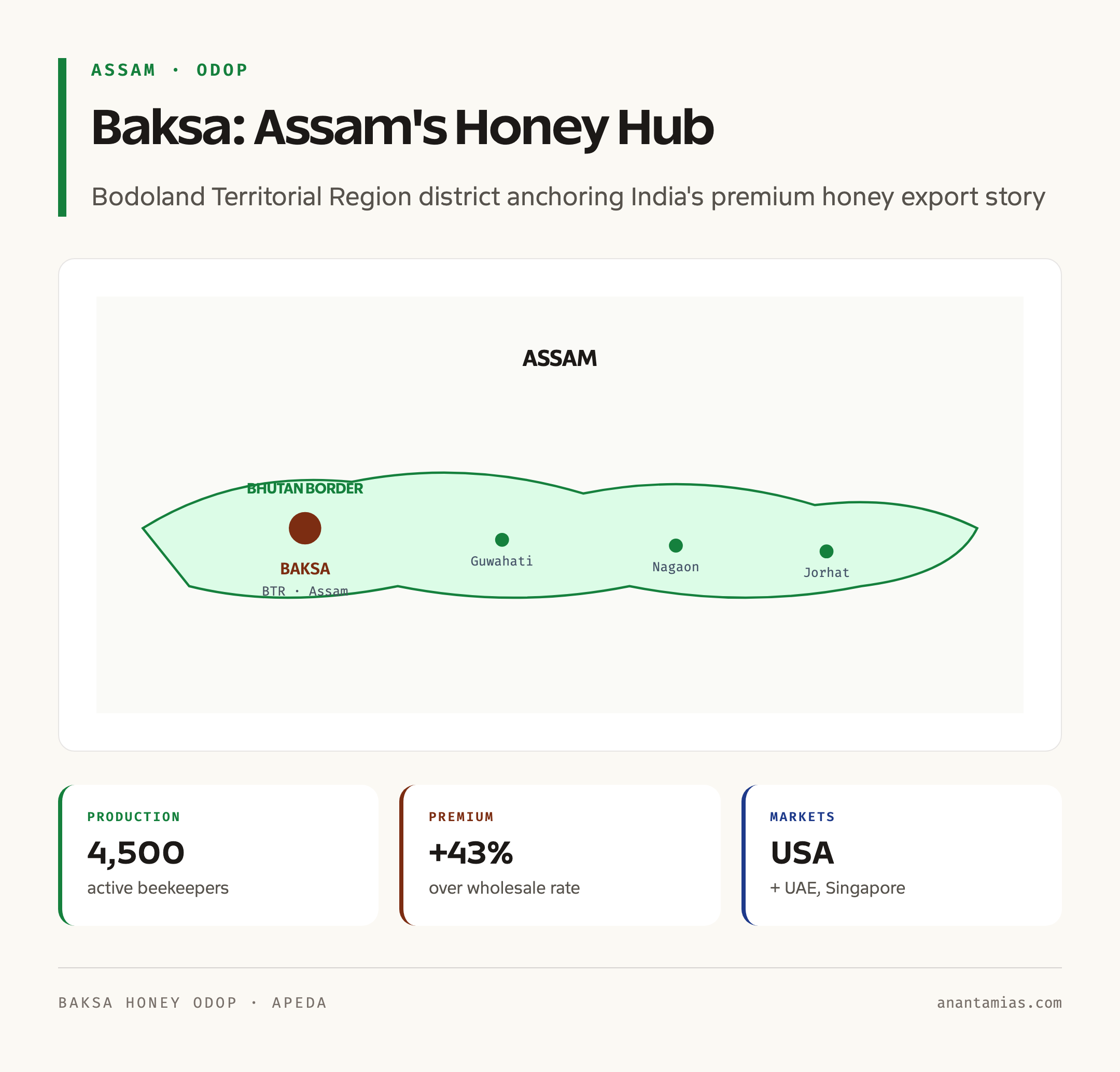
Baksa Honey ODOP: Assam’s One District Product Earns 43% Export Premium in USA

Open article →Download PDF

A consignment of Baksa Honey, packaged in Assam and routed through Kolkata, recently cleared US customs at a price 43 percent above the prevailing wholesale rate for Indian honey. The number caught the attention of trade officials because it suggests, for the first time at scale, that India’s One District One Product framework can deliver real export premiums for a remote tribal-belt commodity.

The Baksa Honey ODOP success matters for three reasons. It validates a programme that has often been dismissed as branding gimmickry. It opens an income channel for Bodoland farmers whose region has cycled through insurgency, peace accords, and uneven development for three decades. And it offers a template for the other 760-odd district products the government has identified under the same scheme.

This article reads the Baksa Honey ODOP breakthrough with a UPSC economy and governance lens. We trace the ODOP architecture, examine why honey from a single Assam district commanded a premium that better-known producers could not, and ask what lessons travel to other districts.

Quick Facts

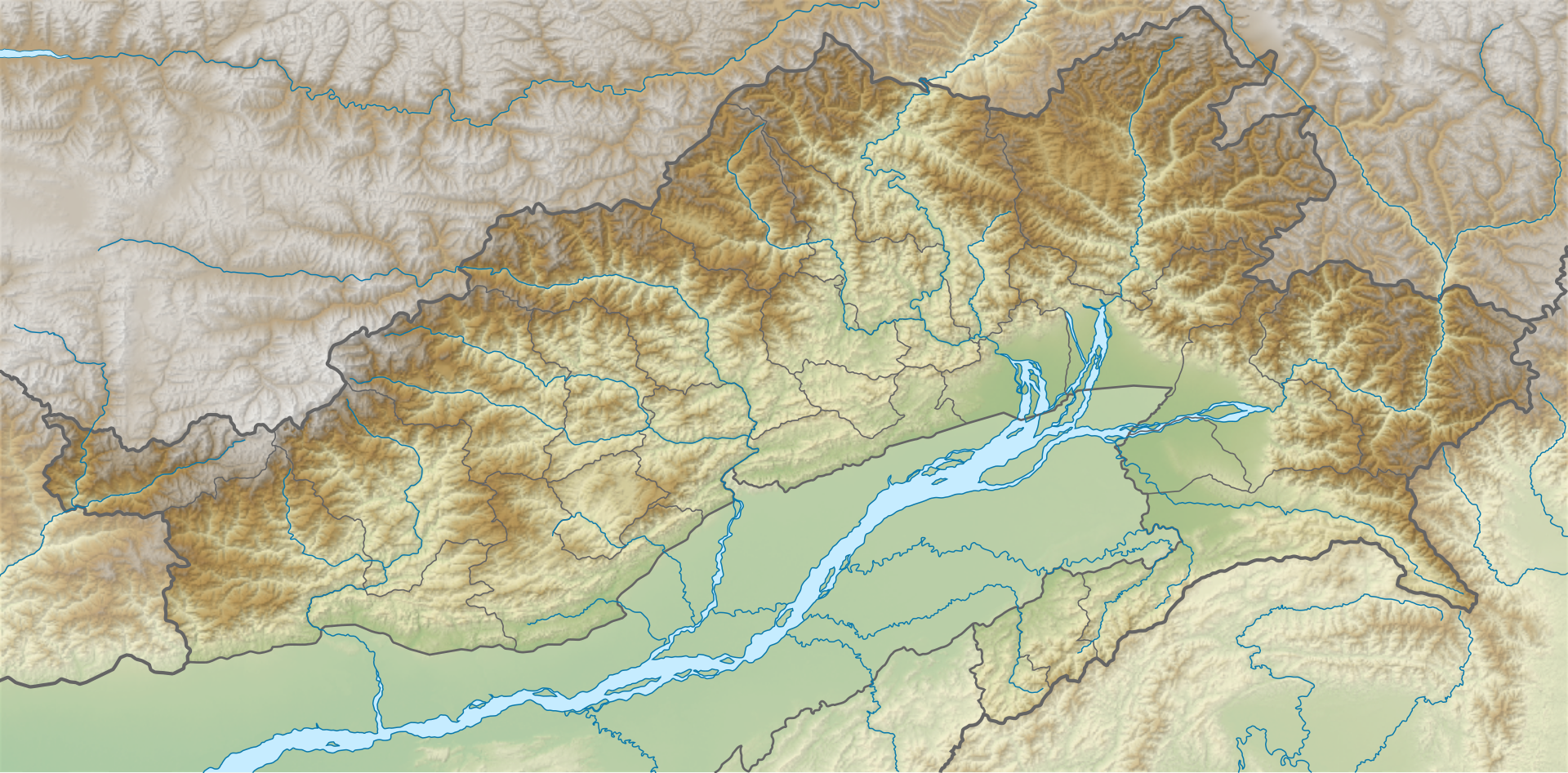
Baksa District: Assam's Honey Hub
  • Product: Baksa Honey, multi-floral and litchi-blossom variants.
  • Source: Baksa district, Bodoland Territorial Region, Assam.
  • Export premium: 43 percent over standard Indian honey wholesale rates.
  • Destination: United States, with consignments also routed to UAE and Singapore.
  • Framework: One District One Product (ODOP), launched 2018 under DPIIT.
  • Nodal agency for honey exports: Agricultural and Processed Food Products Export Development Authority (APEDA).
  • Number of ODOP districts mapped nationally: more than 760.
  • Honey production cluster size in Baksa: roughly 4,500 active beekeepers.

What Just Happened

In early May 2026, APEDA and the Bodoland Territorial Council jointly announced that Baksa Honey ODOP shipments to the United States had crossed the threshold of a sustained price premium. The data point, drawn from FOB invoices over the preceding six months, showed an average realisation of 43 percent above the standard Indian honey export benchmark.

The announcement was paired with a memorandum of understanding between APEDA, an Assam-based farmer producer organisation, and a US distributor specialising in single-origin honey. Under the agreement, Baksa Honey will be sold in specialty grocery and online channels in five US states, with traceability built in from individual apiary to retail shelf.

Officials credited four levers for the premium. The first is the unique floral profile of Baksa, where colonies feed on litchi, mustard, and forest blossoms in distinct seasonal windows. The second is laboratory testing that confirmed low residue levels for antibiotics and pesticides, a long-standing concern for Indian honey in US and EU markets. The third is the ODOP-branded packaging with origin storytelling. The fourth is a direct-from-producer supply chain that compressed the value gap usually captured by intermediaries.

Background and Historical Context

The One District One Product idea predates the formal Indian scheme. Japan ran a One Village One Product programme from Oita Prefecture beginning in 1979, and Thailand later adapted it as One Tambon One Product. Both emphasised local distinctiveness, rural pride, and small-batch exports.

India’s version launched in 2018, originally as a focused intervention in Uttar Pradesh’s rural economy, then scaled nationally through the Department for Promotion of Industry and Internal Trade. The Centre’s ODOP cell mapped products across districts, ranging from Madhubani paintings to Channapatna wooden toys, Aligarh locks, and Tirupur knitwear.

The scheme overlapped with the geographical indication regime, which protects place-linked products through a separate legal instrument under the Geographical Indications of Goods (Registration and Protection) Act, 1999. Some ODOP products carry GI tags, others do not. The reading of how GI works for India’s regional commodities is laid out in our explainer on geographical indications and the origin tag.

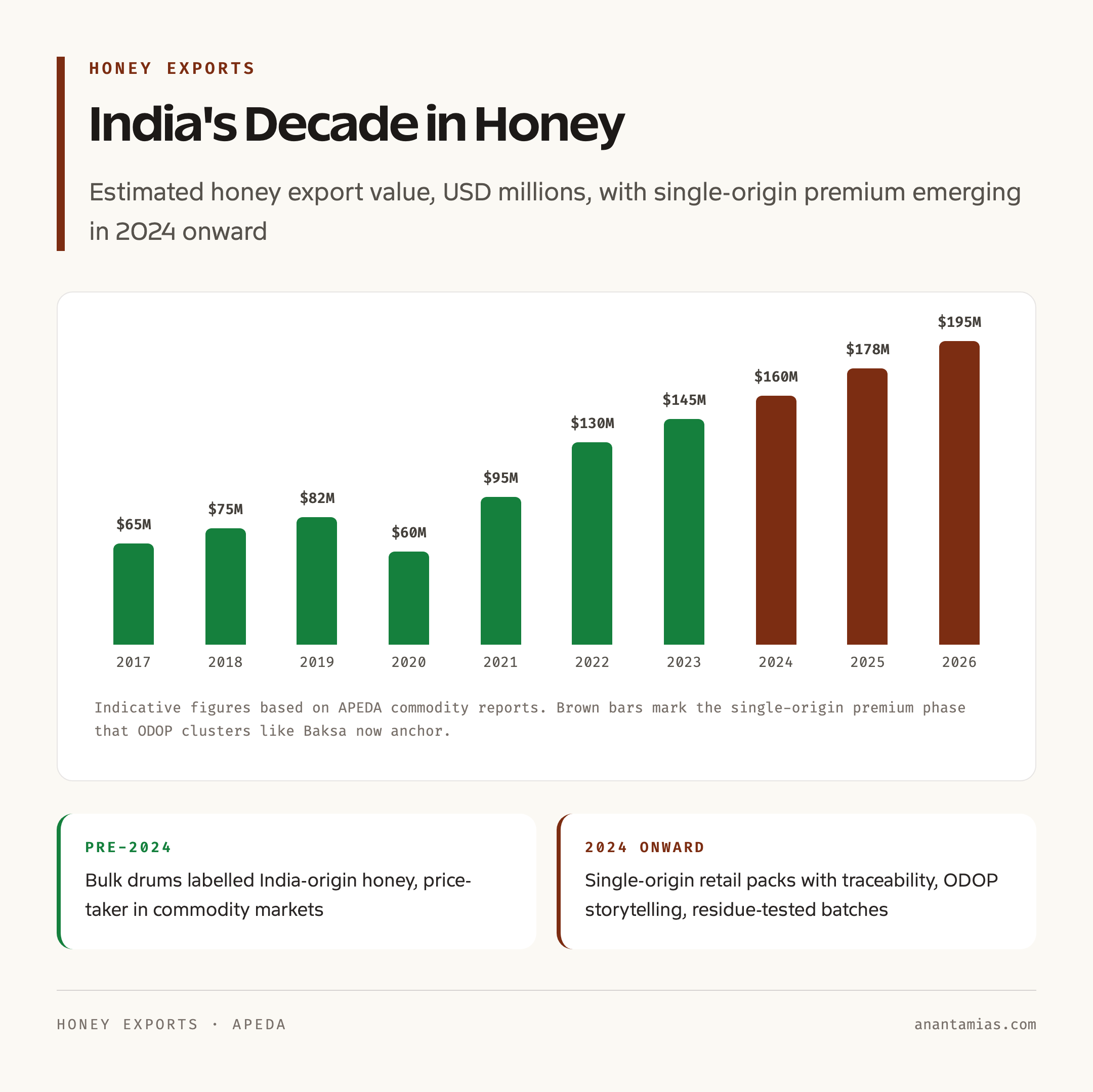
For honey, the policy backdrop was crowded. Indian honey exports had grown steadily through the 2010s, but a 2020 testing controversy in the US flagged adulteration and antibiotic residues in some Indian consignments. The reputation hit took years to repair. APEDA tightened residue monitoring and pushed traceability. Single-origin, well-tested honey from districts like Baksa benefited from the cleaner reputation that followed.

Key Features of the ODOP Framework

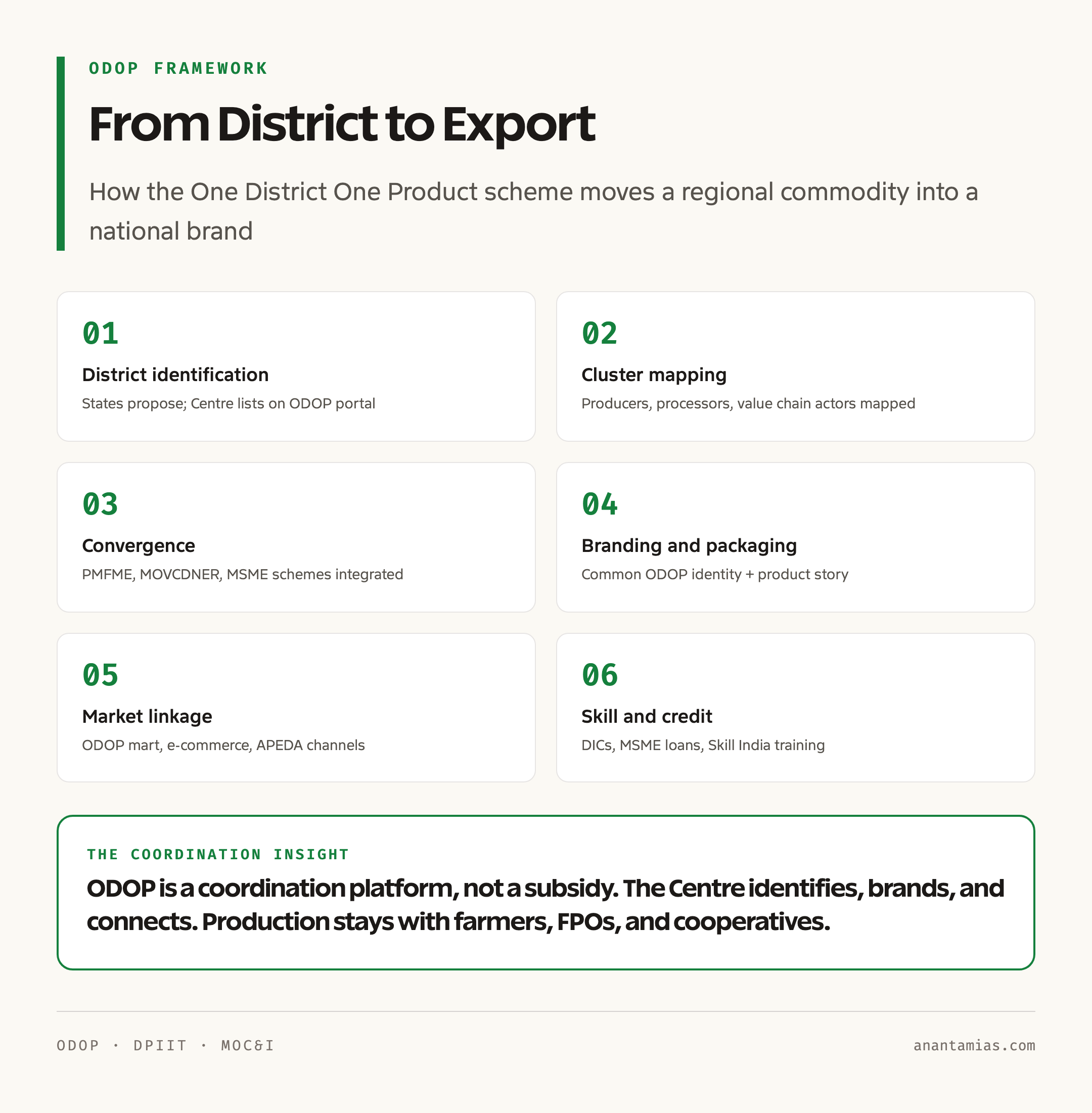
The One District One Product architecture has six moving parts.

  • District identification: State governments propose one signature product per district. The Centre validates and lists it on the ODOP portal.
  • Cluster mapping: Producers, processors, and value chain actors are mapped to enable targeted intervention.
  • Convergence: ODOP integrates with the Pradhan Mantri Formalisation of Micro Food Processing Enterprises scheme, Mission Organic Value Chain Development for North Eastern Region, and state-level schemes.
  • Branding and packaging: A common ODOP visual identity is used alongside product-specific branding.
  • Market linkage: ODOP mart on the GeM portal, e-commerce tie-ups, and APEDA channels for exportable items.
  • Skill and credit: District Industries Centres, MSME loan schemes, and Skill India training feed into ODOP clusters.

The framework is more coordination platform than direct subsidy. The Centre identifies, brands, and connects. Production stays with farmers, cooperatives, and FPOs.

Why Baksa, Why Honey

ODOP Framework: From District to Export

Baksa sits in the Bodoland Territorial Region, an autonomous area established under the Sixth Schedule of the Constitution. The district borders Bhutan to the north and is dominated by forest, foothill agriculture, and mixed-floral landscape.

Three structural features helped honey work here.

The terrain offers floral diversity that monocrop regions cannot match. Litchi orchards, mustard fields, sal forests, and wild flowers stagger their blooms, giving bee colonies year-round forage and producing distinctly flavoured honey.

The social structure favours collective marketing. Bodo and other tribal communities in the region have a tradition of customary cooperation, which translated well into producer-organisation governance once formal FPOs were registered.

The geography limits competing industrial activity. Baksa has minimal pesticide-intensive farming, which keeps residue baselines low and supports US and EU compliance.

These advantages would have sat dormant without three policy nudges. Mission Organic Value Chain Development for North Eastern Region funded certification and infrastructure. ODOP gave Baksa a marketing identity. APEDA pushed quality testing and buyer linkages.

Why It Matters

The Baksa Honey ODOP story matters beyond a single commodity.

It demonstrates a working rural export channel. Most Indian export earnings flow through a small number of clusters, dominated by gems, textiles, and pharmaceuticals. Diversifying to district-level products spreads gains.

It strengthens the case for the Northeast as an economic frontier, not just a strategic one. The region has long carried infrastructure and connectivity disadvantages. Premium niche exports turn those disadvantages, like isolation from industrial pollution, into market advantages.

It supports tribal livelihoods in a region with delicate political history. The Bodoland Territorial Region’s peace settlement, formalised in 2020, was meant to be accompanied by an economic peace dividend. Beekeeping has emerged as one of the few livelihoods that scales without dispossessing forest land.

It validates the ODOP framework at a moment when many central schemes face mid-cycle scrutiny.

Detailed Analysis: How the Premium Got Built

The 43 percent premium did not appear at the customs invoice. It was constructed step by step.

Step one: traceability infrastructure. Each apiary in the Baksa cluster carries a numeric tag. The FPO’s cloud database records flowering window, harvest date, lab test reports, and the route to the bottling facility. This data is exposed to the US distributor through a QR code on retail packaging.

Step two: residue testing. Every batch is tested for chloramphenicol, oxytetracycline, and a panel of pesticides at NABL-accredited labs. The reports are appended to export documentation. This rebuilds buyer trust after the 2020 reputation episode.

Step three: single-origin packaging. Instead of bulk drums labelled India-origin honey, Baksa ships in retail-ready 250-gram and 500-gram bottles with origin storytelling. Margin per kilogram is dramatically higher than bulk.

Step four: direct buyer engagement. APEDA and the FPO bypassed traditional brokers and engaged the US distributor directly. The captured margin came partly from disintermediation.

Step five: ODOP branding overlay. The ODOP visual identity, alongside Bodoland-specific motifs, signals to a US consumer that the product is regionally distinctive, not an anonymous import.

None of these steps is exotic. Each requires institutional patience. The 43 percent premium is what patience returned.

Comparative Perspective

India Honey Exports Trend 2017 to 2026

Read Baksa alongside three reference cases.

  • Channapatna wooden toys, Karnataka: GI-tagged, ODOP-listed, but export realisation remains low because traditional artisans have not built the residue-and-traceability equivalent that food products require.
  • Madhubani paintings, Bihar: Strong cultural identity, ODOP brand, but limited export volume because aesthetic premium products are slow-moving in foreign retail.
  • Mahua flowers, Madhya Pradesh: Tribal-belt forest produce with ODOP intent. Pricing has improved within India, but export breakthroughs are pending due to alcoholic-beverage classification issues abroad.

Baksa Honey crosses both the testing-and-traceability barrier and the consumer-product fit. That combination is rare and replicable.

Challenges

The success story carries real risks.

  • Scale ceiling. Baksa’s annual production is finite. As premium demand grows, the temptation to dilute with sourced honey from outside the district will rise. Strict origin enforcement is essential.
  • Climate vulnerability. Honey output is exquisitely sensitive to floral timing, rainfall, and temperature. Climate shocks can wipe out a season.
  • Concentration risk. Heavy reliance on US distribution exposes producers to a single regulatory environment. The 2020 US testing crisis is a cautionary precedent.
  • Quality drift. Cluster-wide quality consistency requires continuous training. A single bad batch can hurt the brand.
  • Adulteration policing. Sugar syrup adulteration remains the Indian honey sector’s structural problem. Baksa must stay above it.
  • Institutional fragility. FPO governance depends on a handful of leaders. Succession and capacity-building need attention.

Prelims Pointers

  • ODOP launched in 2018, now under DPIIT, Ministry of Commerce and Industry.
  • APEDA established under the APEDA Act, 1985, regulates agri-export development.
  • Geographical Indications of Goods Act, 1999 protects place-linked products.
  • Baksa is part of the Bodoland Territorial Region, governed under the Sixth Schedule.
  • Bodoland Territorial Council was created under the Bodo Accord, 2003, and reformed in 2020.
  • Mission Organic Value Chain Development for North Eastern Region launched 2015 under Agriculture Ministry.
  • National Beekeeping and Honey Mission, launched 2020, supports the apiculture value chain.
  • India is among the top ten honey exporters by volume globally.

Mains Questions

  1. The One District One Product framework has often been criticised as branding without substance. Use the Baksa Honey ODOP case to evaluate its real economic potential. (GS Paper III, 250 words)
  2. Discuss the role of geographical indications and traceability in raising export realisations for tribal-belt commodities in India. (GS Paper III, 250 words)
  3. The Northeast has long been seen as a connectivity challenge rather than an economic opportunity. Examine how schemes like ODOP and APEDA channels are reshaping that view. (GS Paper II, 250 words)
  4. Honey is exquisitely sensitive to floral timing and climate. Discuss the implications of climate change for India’s apiculture-based rural livelihoods. (GS Paper III, 150 words)

Way Forward

The Baksa Honey ODOP playbook should be codified and replicated.

Build five to ten more district-product anchors across the Northeast with similar testing-and-traceability investment. The chosen products should have proven export demand, not just cultural distinctiveness.

Diversify destination markets. Add UAE, Singapore, Japan, and Germany as parallel channels to reduce US dependency.

Hardwire farmer-producer organisation governance with mandatory rotation of leadership and external audit. FPOs that thin out at the top lose their negotiating power with buyers.

Invest in cold-chain and bottling capacity within the region. Most value capture currently happens downstream of the district. Bringing more of that infrastructure closer to source raises producer share.

Treat ODOP as a long-cycle programme. Niche export markets reward patient quality, not annual rotation of priority products.

The wider context of how Indian agriculture is repositioning for global markets is covered in our analysis of India farm exports and US tariffs in 2026, and the institutional architecture for rural skilling and credit is examined in our piece on tribal issues in India.

Baksa Honey is one district’s story. The interesting question is how many other districts have a similar story waiting to be made operational.

Frequently Asked Questions

What is Baksa Honey and why is it special?

Baksa Honey is a multi-floral honey produced in Baksa district of the Bodoland Territorial Region in Assam. Its distinctiveness comes from litchi, mustard, and forest blossoms that stagger their bloom cycle, plus low pesticide exposure in the surrounding landscape.

What is the One District One Product scheme?

ODOP is a Government of India initiative launched in 2018 that identifies one signature product for each district, then provides branding, cluster development, market linkage, and credit support through schemes like PMFME and APEDA’s export channels.

How big is the export premium for Baksa Honey?

Recent shipments to the United States cleared at roughly 43 percent above the standard wholesale rate for Indian honey, on a free-on-board basis. The premium reflects single-origin branding, traceability, and clean residue testing.

Which agency promotes Indian honey exports?

APEDA, the Agricultural and Processed Food Products Export Development Authority, is the nodal agency. It coordinates quality standards, buyer-seller meets, and export documentation under the APEDA Act, 1985.

Does Baksa Honey carry a geographical indication tag?

Several Assam honey varieties are in the GI pipeline. ODOP listing and GI registration are separate but complementary. The 2026 export premium has been built primarily on ODOP branding and traceability, with GI work ongoing.
Why was Indian honey controversial in the US around 2020?

A 2020 controversy flagged adulteration and antibiotic residues in some Indian honey consignments. APEDA responded by tightening residue testing, accreditation requirements, and traceability protocols. Clean clusters like Baksa benefited from this reset.

How many beekeepers work in the Baksa cluster?

Roughly 4,500 active beekeepers participate in the cluster, organised through farmer producer organisations that handle aggregation, testing, and export coordination.

What schemes support Northeast agri-exports?

Key schemes include Mission Organic Value Chain Development for North Eastern Region, ODOP, the National Beekeeping and Honey Mission, the Agri-Infrastructure Fund, and APEDA’s market access initiatives.

Can the ODOP model be replicated for other tribal-belt commodities?

Yes, but replication requires food-safety testing capacity, traceability infrastructure, single-origin packaging discipline, and patient buyer engagement. Cultural distinctiveness alone is not enough.

Where can students read more about the ODOP framework?

Official sources include the ODOP portal on the Invest India website, DPIIT releases, APEDA’s commodity reports, and the Ministry of Food Processing Industries annual report.

Baiga Tribe PVTG: Madhya Pradesh’s Forest Guardians and the Habitat Rights Question

Open article →Download PDF

The Baiga of Madhya Pradesh have been in the news this month for the most ordinary of reasons. A district administration order in Dindori cleared the way for habitat rights recognition under the Forest Rights Act for several Baiga settlements. The order is technical, but it touches one of the longest-running tensions in Indian governance: how the state recognises tribes that the state itself has sometimes failed to see as full citizens.

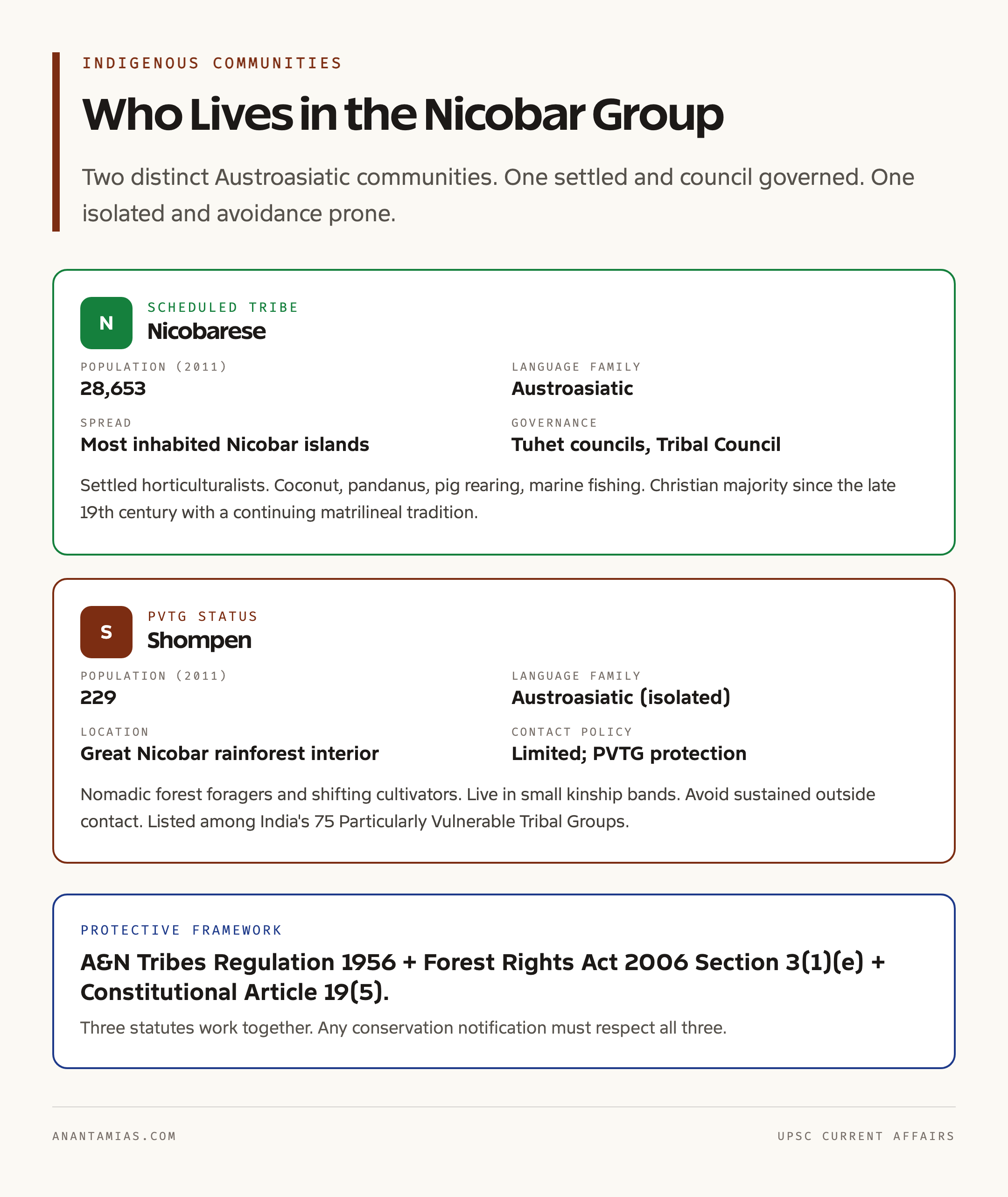
The Baiga are listed as a Particularly Vulnerable Tribal Group, one of 75 such groups identified across India. The PVTG category was created to address communities whose populations, livelihoods, and social systems make them especially fragile in the face of mainstream development. Habitat rights, available only to PVTGs under the Forest Rights Act framework, are the most powerful protection the law offers them.

This article reads the Baiga tribe PVTG story with a UPSC tribal affairs lens. We trace the community’s history, decode the PVTG framework, examine the shifting cultivation debate, and ask what habitat rights actually mean on the ground.

Quick Facts

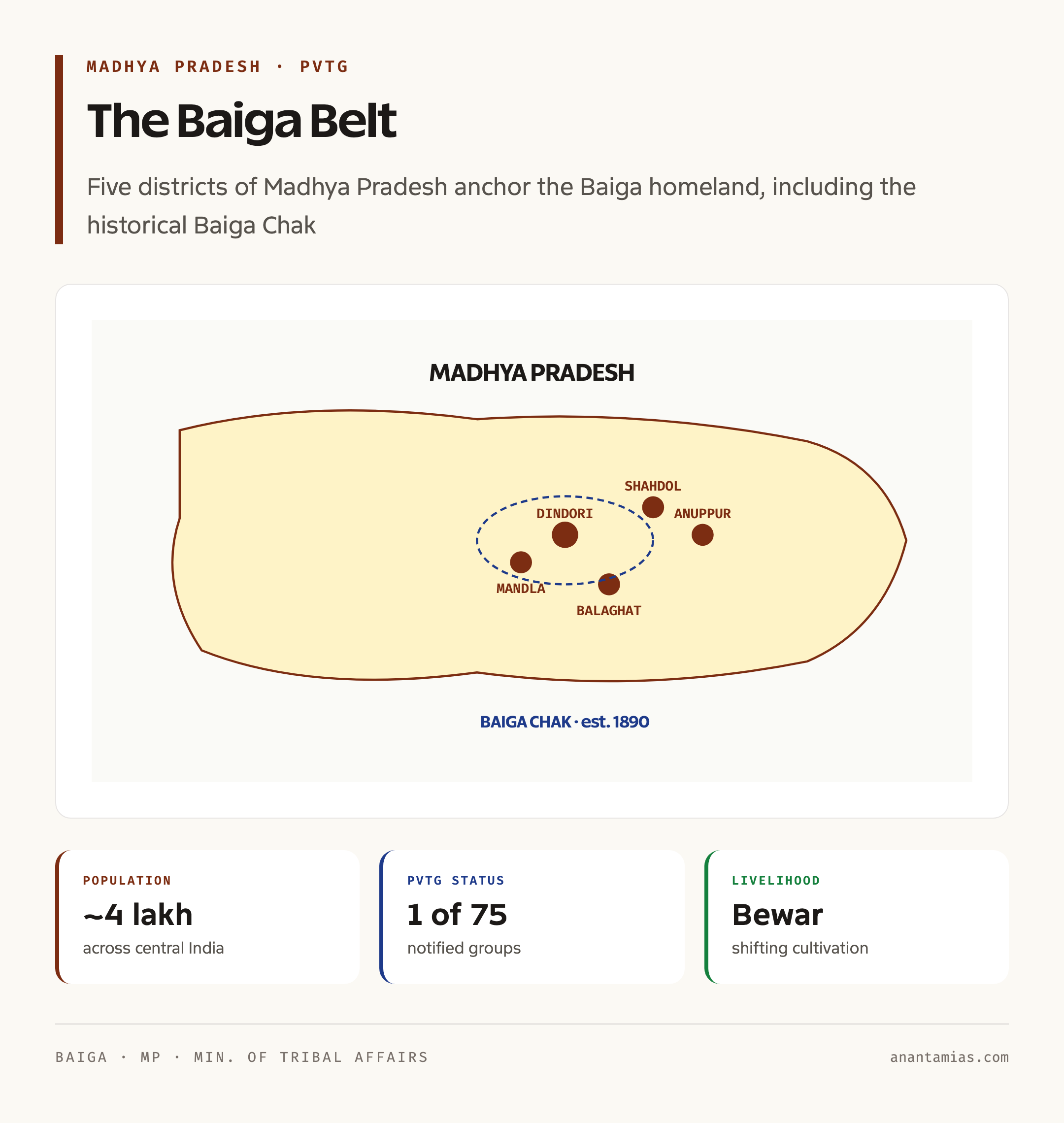
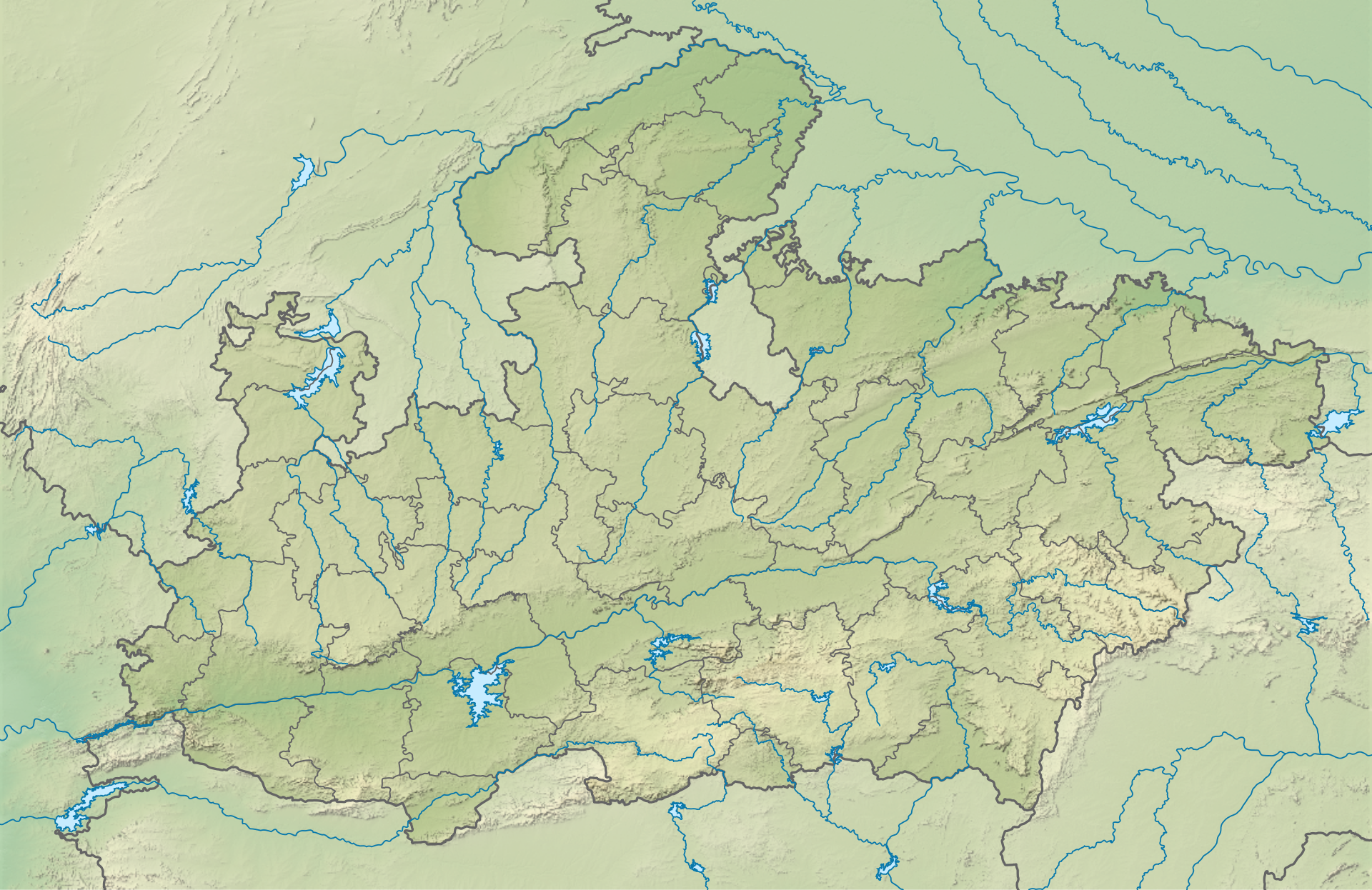
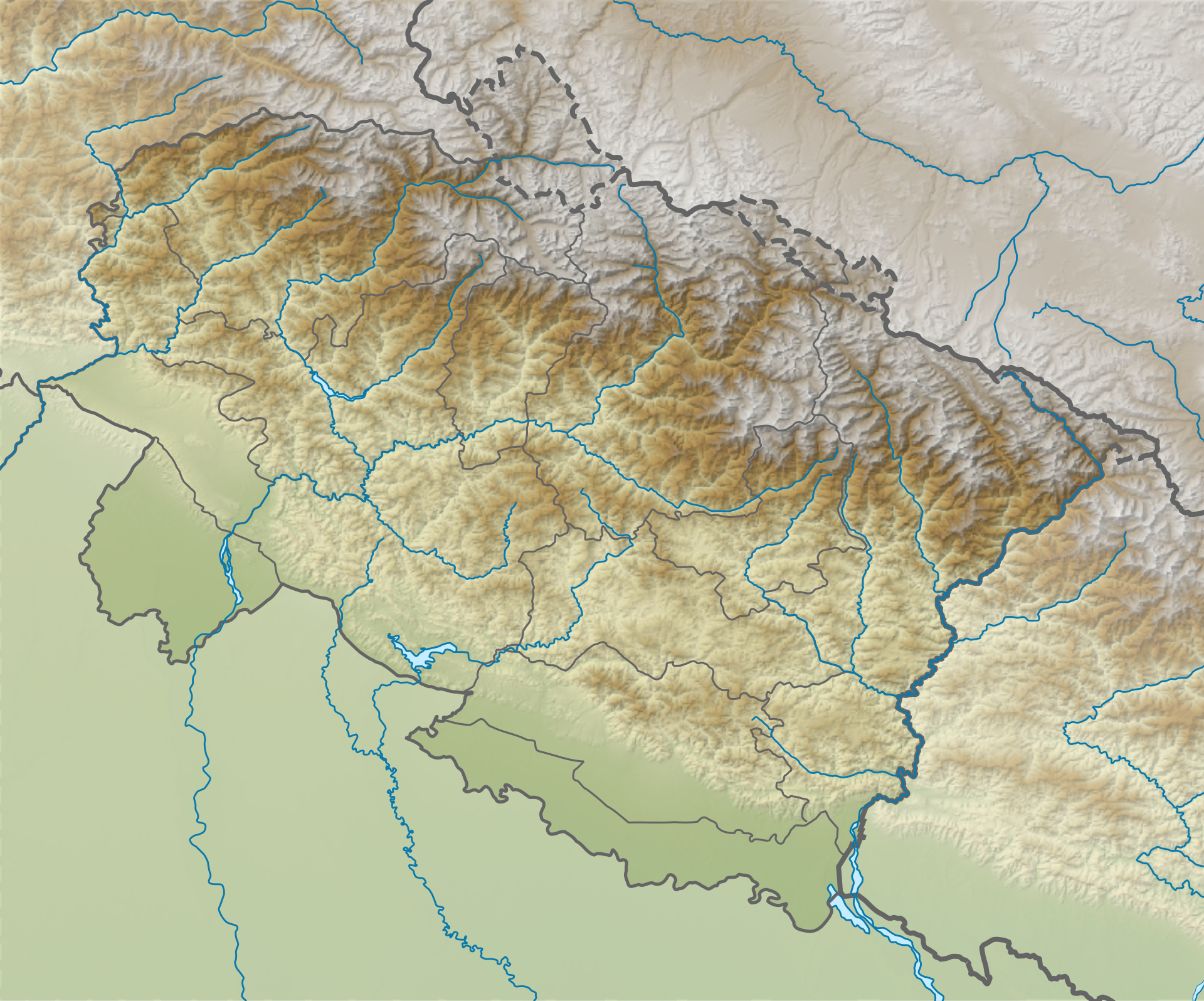
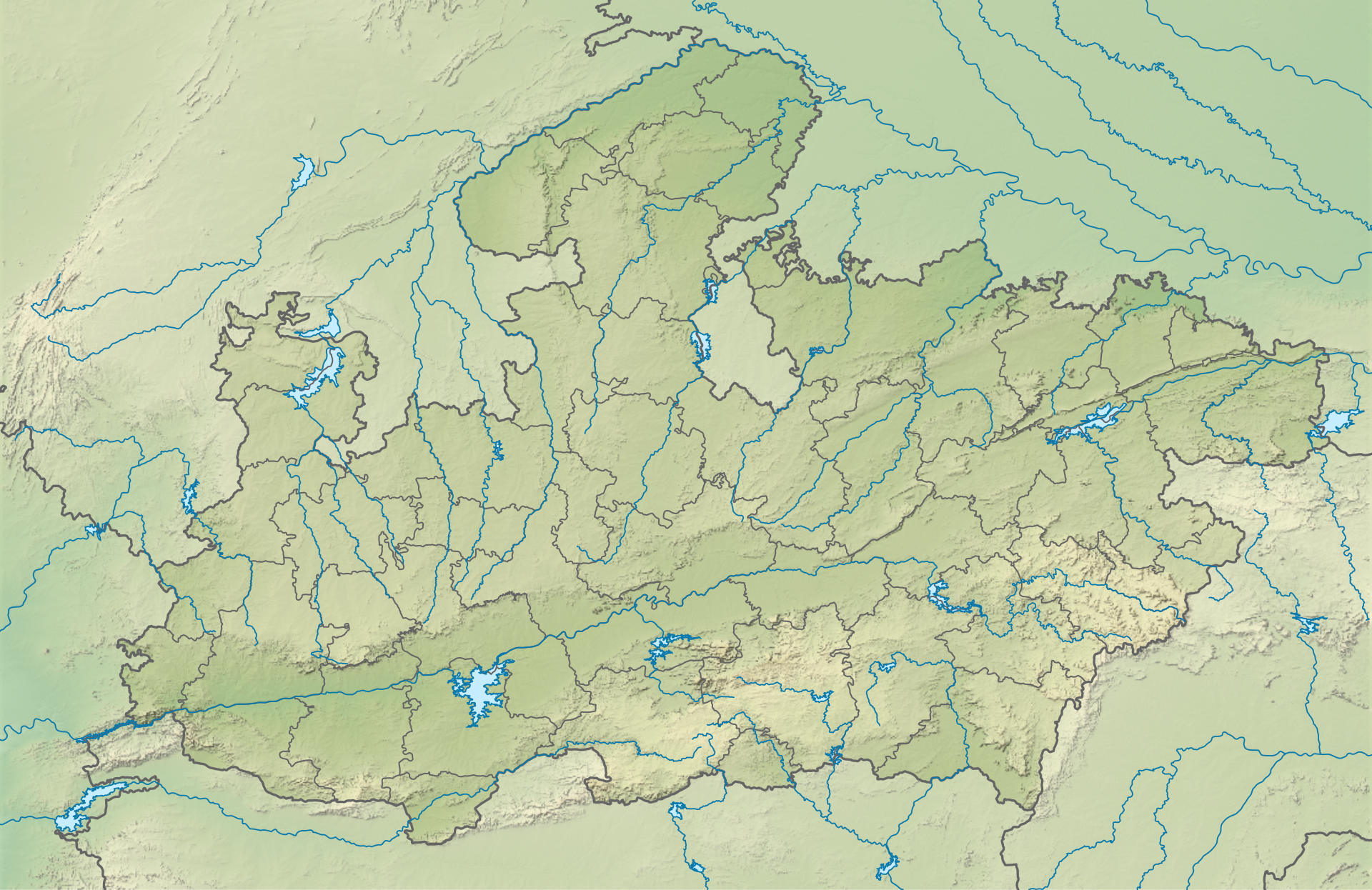
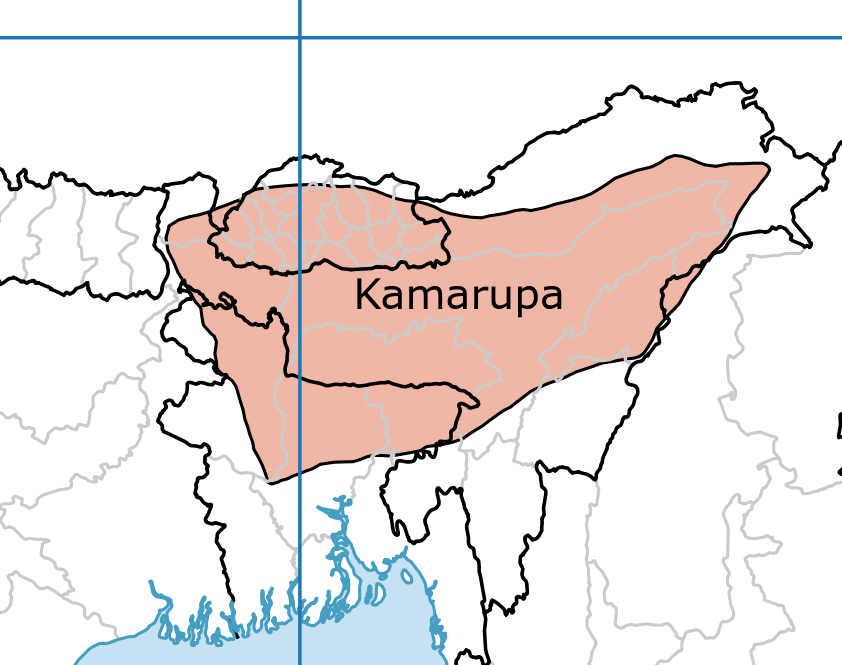
Baiga Belt: Districts of Madhya Pradesh
  • Population: roughly 4 lakh Baiga across central India.
  • Concentration: Madhya Pradesh, mainly Dindori, Mandla, Balaghat, Shahdol, and Anuppur districts.
  • Also present in: Chhattisgarh, Jharkhand, Uttar Pradesh.
  • PVTG status: notified by the Government of India.
  • Total PVTGs in India: 75 communities, across 18 states and Union Territories.
  • Traditional livelihood: bewar or dahiya shifting cultivation, forest gathering, beekeeping.
  • Key legal anchor: Scheduled Tribes and Other Traditional Forest Dwellers (Recognition of Forest Rights) Act, 2006.
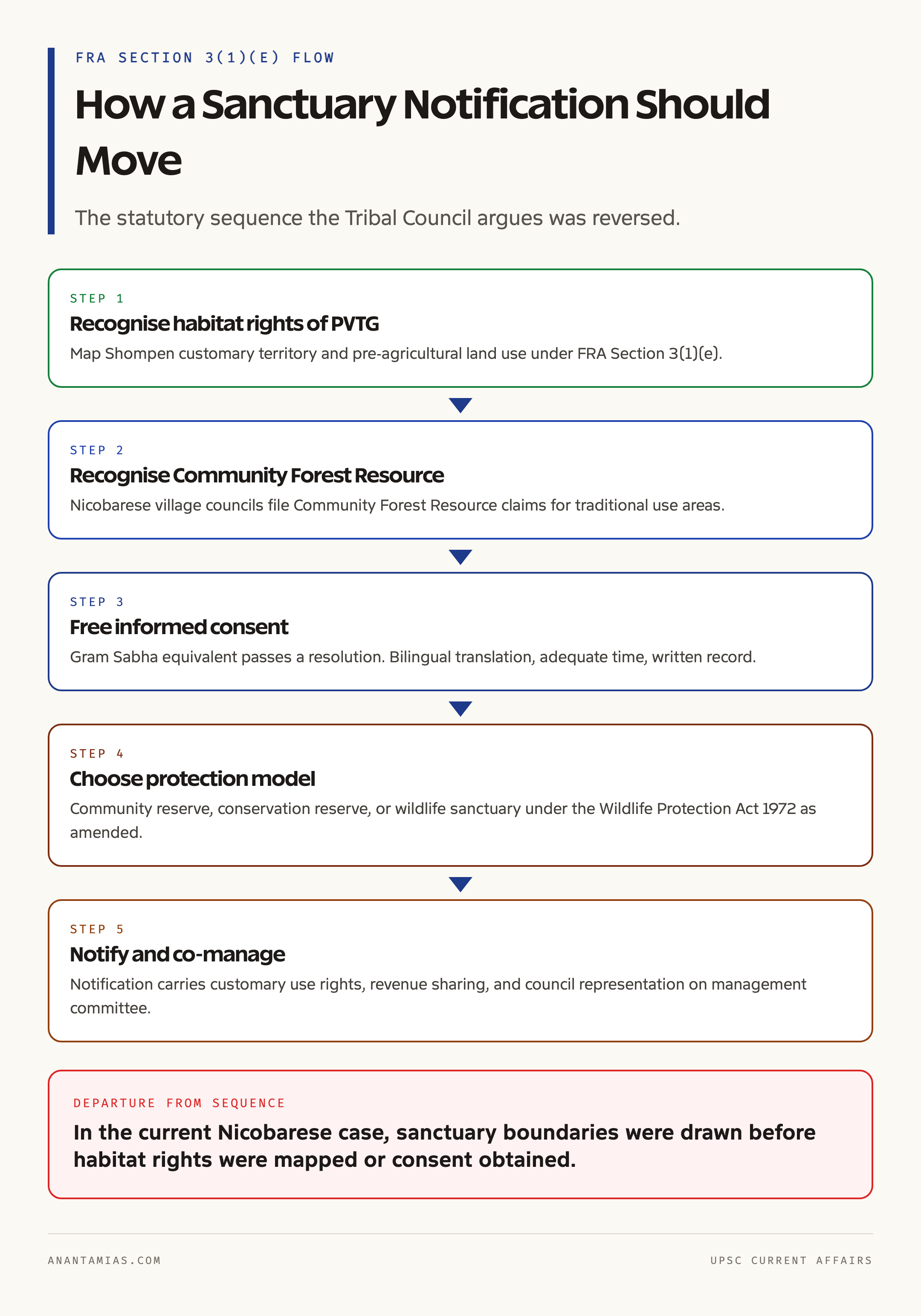
  • Habitat rights provision: Section 3(1)(e) of the Forest Rights Act.

What Just Happened

In May 2026, the Madhya Pradesh tribal welfare department processed habitat rights claims for Baiga settlements in Dindori district, advancing one of the country’s most-watched habitat rights cases. The administrative file moved through district-level committees, state nodal verification, and forest department concurrence.

Habitat rights recognition is consequential. Where individual forest rights protect a single family’s claim to cultivated land, and community forest rights protect a village’s gathering and grazing rights, habitat rights protect a whole community’s relationship with its traditional territory. For a PVTG like the Baiga, the territory extends across forest patches, sacred groves, water sources, and cultivation sites that may straddle multiple revenue villages.

The 2026 movement was driven by three factors. State elections had reset political incentives. Civil society had finally translated a decade of documentation into legally usable evidence packages. And the central tribal affairs ministry had pushed states to clear pending PVTG habitat rights claims as part of the Pradhan Mantri Janjati Adivasi Nyaya Maha Abhiyan rollout.

Background and Historical Context

The Baiga have lived in the forest belt of central India for centuries. Colonial ethnographers, including Verrier Elwin in the 1930s, documented their society as bewar-based: a long-fallow shifting cultivation system in which patches of forest were cleared, sown for two or three seasons, and then left for the forest to reclaim over a decade or more. Elwin’s book The Baiga, published in 1939, remains a foundational text.

The colonial administration tried to settle the Baiga into permanent cultivation, both for forest conservation and for revenue. The community resisted, and the British eventually carved out the Baiga Chak in 1890, a reservation in the present-day Dindori and Mandla districts where bewar was permitted under specific conditions.

After independence, the conservation-versus-tribal-livelihood debate hardened. The Indian Forest Act of 1927 framework, inherited from the British, classified large parts of central India as Reserved or Protected Forest, restricting traditional access. The wider history of this legal framework is covered in our explainer on the Indian Forest Act 1927.

The 1976 Dhebar Commission first formalised the Primitive Tribal Group category, later renamed Particularly Vulnerable Tribal Group in 2006. The Baiga were among the early notifications. The PVTG framework recognises that some tribes require differentiated, intensified state support rather than blanket schemes designed for the broader scheduled tribe population.

The Forest Rights Act of 2006 was the next watershed. It recognised individual, community, and habitat rights of forest-dwelling Scheduled Tribes and other traditional forest dwellers. For PVTGs, Section 3(1)(e) created the habitat rights category. Implementation has been slow.

Key Features of the PVTG Framework

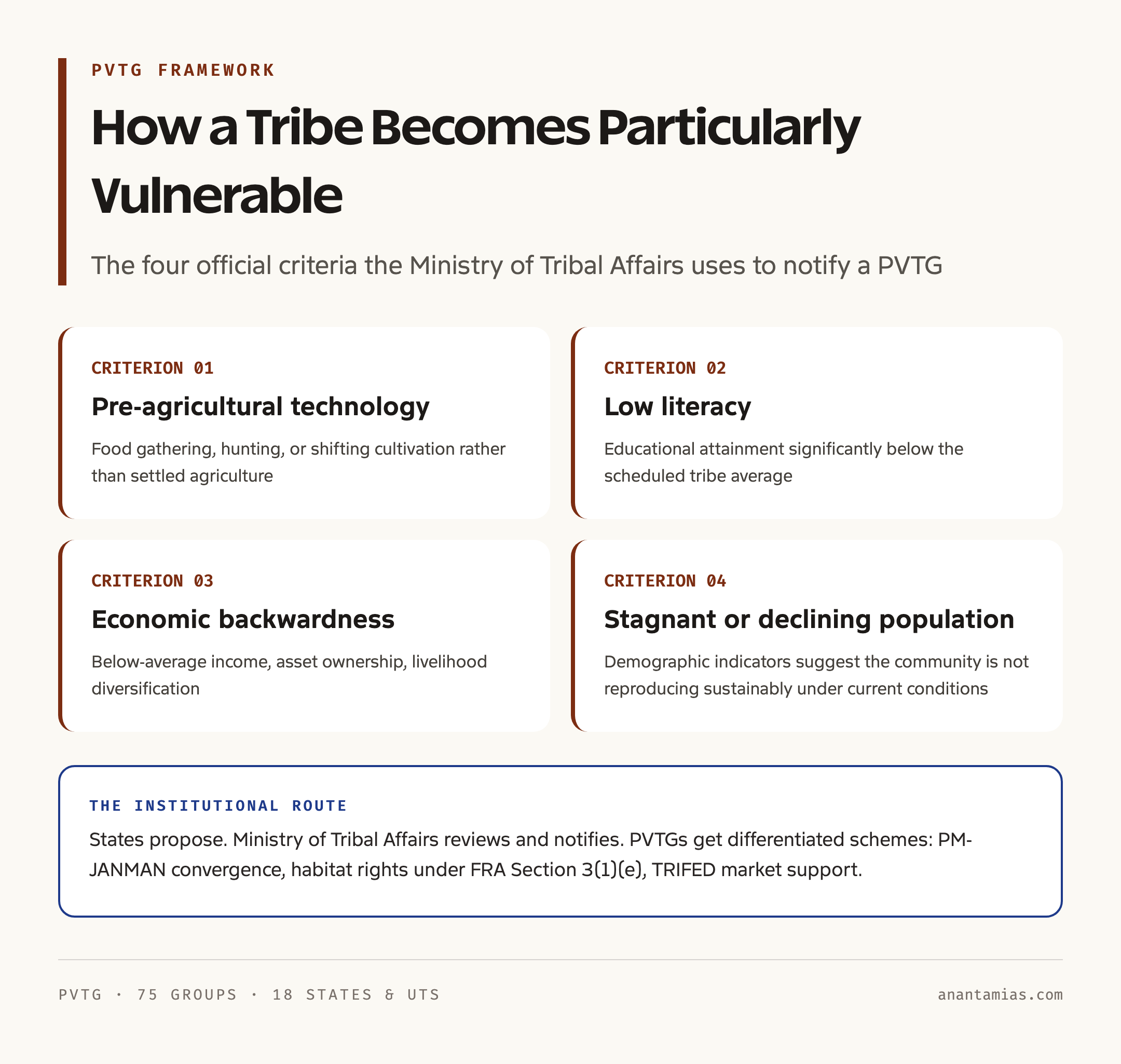
A tribe is classified as Particularly Vulnerable Tribal Group on four criteria.

  • Pre-agricultural level of technology: Communities that practice food gathering, hunting, or shifting cultivation rather than settled agriculture.
  • Low literacy: Educational attainment significantly below the scheduled tribe average.
  • Economic backwardness: Below-average income, asset ownership, and livelihood diversification.
  • Stagnant or declining population: Demographic indicators that suggest the community is not reproducing itself sustainably under current conditions.

States propose tribes for PVTG status. The Ministry of Tribal Affairs reviews and notifies. The list of 75 includes the Jarawa and Sentinelese in the Andaman and Nicobar Islands, the Toda in Tamil Nadu, the Kattunayakan in Kerala, the Birhor in Jharkhand, and the Baiga, Bharia, and Sahariya in Madhya Pradesh.

PVTGs are eligible for special support under the Pradhan Mantri PVTG Development Mission, launched in 2023, which is now folded into the broader PM Janjati Adivasi Nyaya Maha Abhiyan. The mission targets habitat development, road connectivity, housing, electrification, drinking water, mobile connectivity, and skill training across PVTG settlements.

Why the Baiga Case Matters

PVTG Criteria: How a Tribe Becomes Particularly Vulnerable

The Baiga tribe PVTG story matters at three levels.

It tests the operational depth of the Forest Rights Act. Habitat rights have been recognised for very few PVTGs in the two decades since the Act was passed. Each successful recognition adds case law and administrative practice.

It informs the shifting cultivation debate. Bewar has been treated by foresters as destructive and by the community as ecologically calibrated. Recent ecological studies suggest long-fallow shifting cultivation can be carbon-neutral or carbon-positive over a full cycle. Habitat rights recognition implicitly accepts the community’s framing.

It carries constitutional weight. Article 244 read with the Fifth and Sixth Schedules, Article 46 on educational and economic promotion of weaker sections, and the broader directive principles all converge on PVTG welfare. How the state delivers on these promises is a constitutional question, not just an administrative one.

Detailed Analysis: The Bewar System

To understand the Baiga, you have to understand bewar, also called dahiya in some areas. The system has four phases across a typical 12 to 15 year cycle.

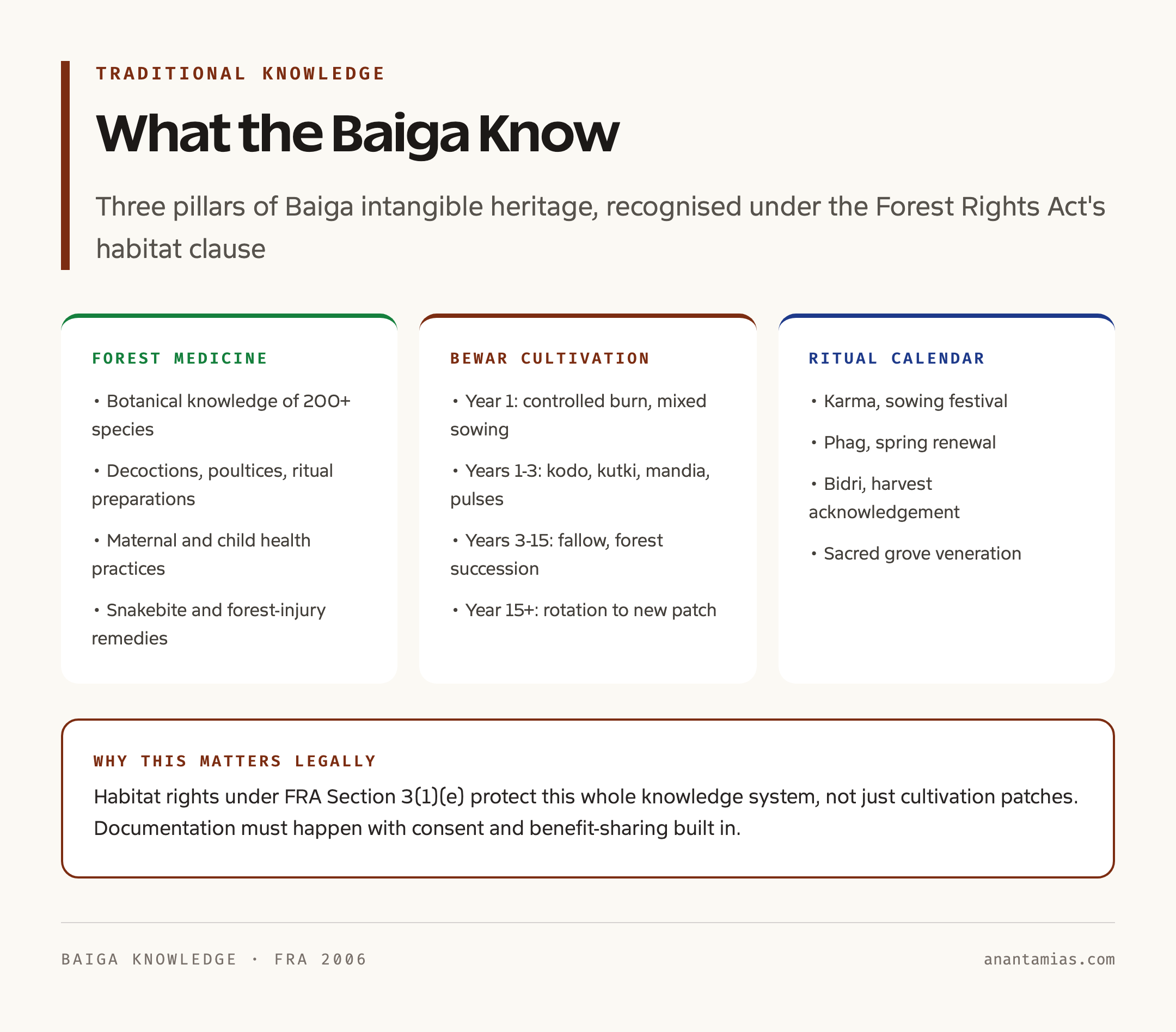
Year one: clearing. A forest patch is selected, the undergrowth cut and burned during the dry season. Ash returns nutrients to the soil. The burn is timed and controlled.

Years one to three: cultivation. Mixed cropping of kodo, kutki, mandia, and pulses. Yields are modest but reliable, and the soil retains fertility because of mixed planting and ash enrichment.

Years three to fifteen: fallow. The patch is left to regenerate. Forest succession returns, biodiversity recovers, soil carbon rebuilds.

Year fifteen or later: rotation. A new patch is cleared, and the cycle continues.

The system rests on three preconditions: enough land, enough time, and enough community discipline. All three eroded over the colonial and post-independence period as forest department restrictions, population pressure, and competing land use compressed the cycle.

When bewar is squeezed to short cycles of three or four years, the system collapses ecologically. The fix is not to ban bewar but to restore the conditions under which it works. That is precisely what habitat rights, applied with seriousness, can do.

Why It Matters for Indian Federalism

Tribal affairs sit at an awkward constitutional junction. The Fifth Schedule applies to scheduled areas in most states with significant tribal populations, including Madhya Pradesh. The Sixth Schedule covers the Northeast separately. Land, forests, and revenue administration are largely state subjects, while tribal welfare is on the Concurrent List in spirit if not in form.

The Forest Rights Act centralised the rights recognition framework but left implementation entirely to states. This produces wide variation. Odisha and Maharashtra have recognised community forest rights at scale. Madhya Pradesh and Chhattisgarh have moved more slowly. Habitat rights, the highest-stakes category, have been recognised for only a handful of PVTGs nationwide.

The Baiga case is consequential because Madhya Pradesh is the state with the largest PVTG presence after Odisha. Implementation momentum here radiates outward.

Comparative Perspective

Baiga Traditional Knowledge System

Three reference cases sharpen the Baiga picture.

  • Jenu Kuruba and Soliga of Karnataka: Habitat-style rights inside tiger reserves have been litigated through community-forest-rights routes. Outcomes mixed. Wider issues of tribal relocation are discussed in our piece on relocation of tribals from tiger reserves.
  • Dongria Kondh of Odisha: The Niyamgiri gram sabha verdict in 2013, where local councils rejected bauxite mining on sacred hills, was a landmark in habitat-style protection through indirect means.
  • Hill Korwa of Chhattisgarh: Another PVTG with extensive shifting cultivation history. Habitat rights work in Chhattisgarh has been slower than in Madhya Pradesh, even though the population overlap is similar.

The point is that habitat rights work as both a legal claim and a political instrument. The legal claim sets the floor. The political instrument depends on administrative will.

Challenges

The Baiga tribe PVTG and the broader habitat rights agenda face real obstacles.

  • Forest department resistance. Foresters often see habitat rights as a threat to conservation mandates and revenue collection from non-timber forest produce.
  • Documentation gaps. Establishing customary boundaries requires oral history, GPS mapping, and inter-village agreement. The process is slow and expensive.
  • Conflicting land claims. Other communities, including non-tribal cultivators, may have overlapping claims that must be reconciled.
  • Implementation capacity. District administrations are often understaffed for the technical work habitat rights require.
  • Scheme fragmentation. PMJ-AYUSH lines up with multiple ministries. Convergence on the ground is uneven.
  • Climate vulnerability. Forest-dependent livelihoods are exposed to drought, fire, and changing rainfall patterns.
  • Education and health metrics. Even with PVTG-specific schemes, indicators lag the scheduled tribe average.

Prelims Pointers

  • 75 PVTGs in India across 18 states and Union Territories, notified by the Ministry of Tribal Affairs.
  • Forest Rights Act, 2006: Section 3(1)(e) covers habitat rights for PVTGs.
  • Baiga Chak: established 1890 in present-day Dindori and Mandla districts.
  • PMJ-AYUSH or PM Janjati Adivasi Nyaya Maha Abhiyan: launched 2023 for PVTGs.
  • TRIFED: under Ministry of Tribal Affairs, supports tribal commerce.
  • Bewar or dahiya: shifting cultivation practised by the Baiga.
  • Verrier Elwin’s The Baiga, 1939: foundational ethnographic text.
  • Dhebar Commission, 1961: recommended the Primitive Tribal Group category.
  • PVTGs include Jarawa and Sentinelese (Andaman), Toda (Tamil Nadu), Kattunayakan (Kerala), Birhor (Jharkhand).

Mains Questions

  1. The Particularly Vulnerable Tribal Group category creates a differentiated welfare regime for the most fragile tribal communities. Critically examine its effectiveness with reference to the Baiga of Madhya Pradesh. (GS Paper II, 250 words)
  2. Habitat rights under the Forest Rights Act have been recognised for very few PVTGs in two decades. What explains the implementation gap, and how can it be closed? (GS Paper II, 250 words)
  3. Shifting cultivation has historically been treated as ecologically destructive. Discuss the ecological case for long-fallow shifting systems like bewar and the policy implications. (GS Paper III, 250 words)
  4. Tribal traditional knowledge constitutes a significant intangible heritage of India. Discuss with examples how the state can protect and integrate this knowledge into mainstream development. (GS Paper I, 150 words)

Way Forward

Five directions matter for the Baiga and the wider PVTG framework.

Operationalise habitat rights at scale. Madhya Pradesh’s current momentum should be backed by dedicated administrative capacity in Dindori, Mandla, Balaghat, Shahdol, and Anuppur. Each habitat rights file should have a named officer accountable for end-to-end processing.

Rebuild the bewar policy framework. Where habitat rights are recognised, foresters should treat the community as partners in landscape management. Burn permits, fallow protection, and seed banks for traditional grains should follow.

Document and protect traditional knowledge. The Baiga’s botanical knowledge, especially for forest medicine, is one of India’s underrated intangible heritages. Documentation must happen with consent and with benefit-sharing built in.

Invest in convergence. PM Janjati Adivasi Nyaya Maha Abhiyan brings together health, education, connectivity, and livelihoods. The Baiga case can pilot full convergence in a measurable cluster of villages.

Centre tribal voice in implementation. Gram sabhas in PVTG areas need real authority, not advisory roles. This is the test the Forest Rights Act framework set itself, and habitat rights are where it must be passed.

For wider context on the institutional landscape, see our piece on the Forest Rights Act 2006, and the broader policy frame in tribal issues in India.

The Baiga have lived with the forest longer than the Indian state has existed. Habitat rights are not a gift from the state. They are an overdue recognition.

Frequently Asked Questions

Who are the Baiga and where do they live?

The Baiga are an Adivasi community of about four lakh people, concentrated in Madhya Pradesh, with presence in Chhattisgarh, Jharkhand, and Uttar Pradesh. Their core area is the Baiga Chak across Dindori, Mandla, Balaghat, Shahdol, and Anuppur districts.

What does PVTG status mean for a tribe?

Particularly Vulnerable Tribal Group is a sub-classification of scheduled tribes, created to identify communities that need intensified, differentiated state support. PVTGs are eligible for special schemes including the PM Janjati Adivasi Nyaya Maha Abhiyan and habitat rights under the Forest Rights Act.

How many PVTGs are there in India?

There are 75 notified PVTGs across 18 states and Union Territories. The list includes the Baiga of Madhya Pradesh, the Jarawa and Sentinelese of the Andaman and Nicobar Islands, the Toda of Tamil Nadu, and the Birhor of Jharkhand, among others.

What are habitat rights under the Forest Rights Act?

Habitat rights, recognised under Section 3(1)(e) of the Forest Rights Act 2006, protect the customary territory of a PVTG, including forest patches, water sources, sacred sites, and cultivation areas. They are stronger than individual or community forest rights because they cover whole landscapes.

What is bewar or dahiya cultivation?

Bewar is the Baiga’s traditional shifting cultivation system. A forest patch is cleared and burned, then cultivated for two or three years with millets and pulses, before being left fallow for a decade or more. When the cycle is long, the system is ecologically sustainable.

Why is the bewar system under threat?

Forest department restrictions, population pressure, and competing land use have compressed the fallow cycle. Short-cycle bewar is ecologically destructive, but the fix is to restore the conditions for long-fallow practice, not to ban bewar.

Who classifies a community as a PVTG?

State governments propose communities for PVTG status. The Ministry of Tribal Affairs at the Centre reviews and notifies. The four criteria are pre-agricultural technology, low literacy, economic backwardness, and stagnant or declining population.

What is the PM Janjati Adivasi Nyaya Maha Abhiyan?

PM-JANMAN is a Government of India scheme launched to deliver convergent development to PVTG households across housing, road connectivity, electrification, drinking water, mobile connectivity, education, and health. It absorbed and expanded the earlier PVTG development mission.

How has the Forest Rights Act performed since 2006?

Implementation has been uneven. Individual rights and community rights have been recognised in many states, but habitat rights for PVTGs remain rare. Odisha and Maharashtra have moved fastest. Madhya Pradesh is now picking up pace.

Where can students read more about Baiga ethnography?

Verrier Elwin’s The Baiga (1939) remains the foundational text. Recent scholarship includes work by Madhu Ramnath, Felix Padel, and reports from the Ministry of Tribal Affairs, the Tribal Cooperative Marketing Development Federation (TRIFED), and state tribal research institutes.

Revolt of 1857: 169 Years Since Meerut, Reading the First War of Independence

Open article →Download PDF

On May 10, 1857, sepoys of the Third Bengal Light Cavalry at Meerut refused orders, broke open the jail, and rode for Delhi. By the next afternoon they had reached the Red Fort and persuaded an 82-year-old Bahadur Shah Zafar to lend his name to a rebellion he had not started. The 169th anniversary of that ride falls this week, and the event still anchors school textbooks, parliamentary speeches, and a long-running academic debate about what to call what happened.

The Revolt of 1857 was the largest armed challenge to British rule in India before the twentieth century. It was simultaneously a sepoy mutiny, a peasant uprising, a feudal restoration attempt, and, in the reading that gained ground after independence, a first war of national liberation. Each of those framings is partly right. None of them captures the whole.

This article reads the Revolt of 1857 with a UPSC modern history lens. We trace the causes, follow the course from Barrackpore to Bareilly, examine consequences, and engage the historiographical debate that still shapes how India remembers 1857.

Quick Facts

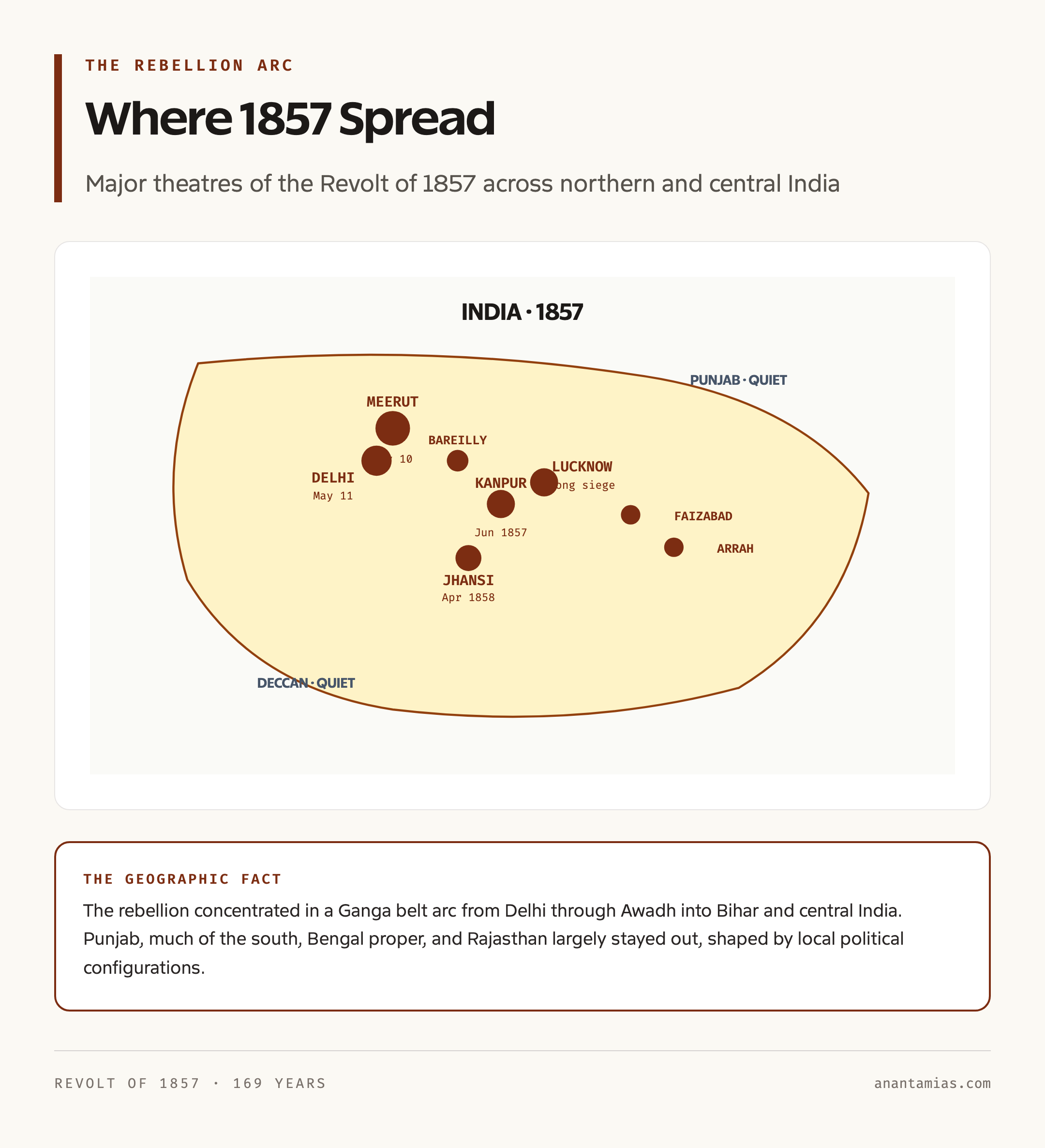
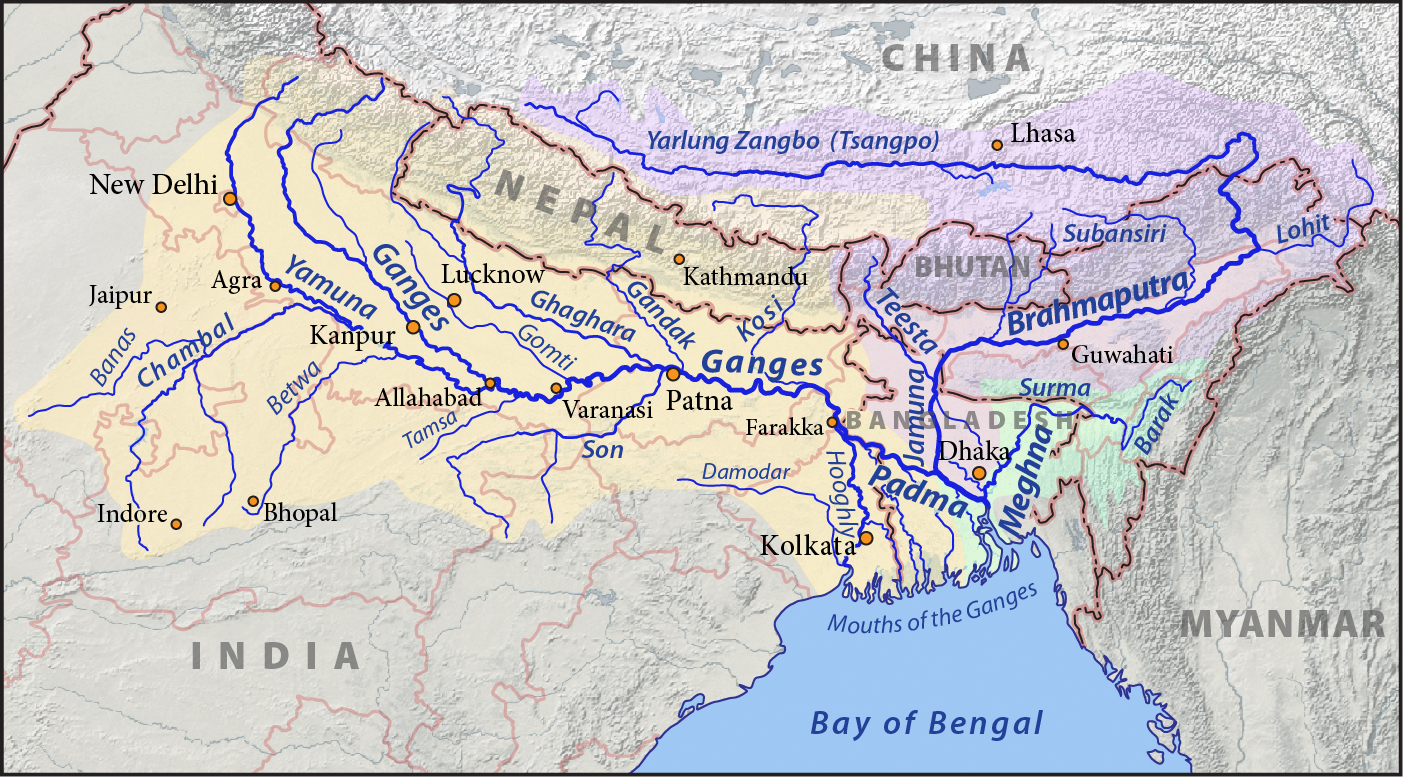
Revolt of 1857: Territorial Spread
  • Date of outbreak: May 10, 1857 at Meerut, with antecedent at Barrackpore on March 29, 1857.
  • Immediate trigger: greased cartridges of the new Enfield rifle, rumoured to use cow and pig fat.
  • Symbolic leader: Bahadur Shah II (Bahadur Shah Zafar), last Mughal emperor.
  • Major centres: Delhi, Meerut, Kanpur, Lucknow, Jhansi, Bareilly, Faizabad, Arrah.
  • Key leaders: Mangal Pandey, Nana Sahib, Tatya Tope, Rani Lakshmibai, Begum Hazrat Mahal, Kunwar Singh.
  • Duration: May 1857 to November 1858, with sporadic resistance into 1859.
  • Outcome: rebellion suppressed; British Crown takes over from East India Company.
  • Constitutional consequence: Government of India Act, 1858; Queen Victoria’s Proclamation, November 1, 1858.

What Just Happened

May 10, 2026 marked the 169th anniversary of the Meerut outbreak. The Ministry of Culture, the National Archives, and several state-level cultural commissions hosted commemorations. The Archaeological Survey of India announced restoration funding for 1857-linked memorials at Meerut, Kanpur, and Jhansi. Academic institutions including the Centre for Historical Studies and several state universities convened symposia on 1857 sources, including the digitisation of regional vernacular records that have only recently entered scholarship.

The anniversary also reopened public debates that recur every year. Should 1857 be officially designated First War of Independence in school curricula, as some governments have urged. How should the memory of leaders like Mangal Pandey be balanced against the figure of Bahadur Shah Zafar, a reluctant participant. What role did peasants, women, and rural notables play, beyond the canonical lineup of sepoys and rulers.

The substantive policy question raised this anniversary cycle is preservation. Many 1857 sites are under encroachment or neglect, including the cantonment lines at Meerut, the Bibighar at Kanpur, the Residency at Lucknow, and the Jhansi Fort precincts. The Centre and states are negotiating a coordinated heritage framework.

Background and Historical Context

The East India Company’s century-long rise reshaped India structurally before the Revolt. The Battle of Plassey in 1757 set the company up as a territorial power in Bengal. The Mughal emperor’s authority shrank to the walls of the Red Fort. The Marathas were broken at Panipat in 1761, contained by 1818, and dispossessed by 1853. The Sikh empire fell in 1849. By the 1850s, the company governed directly or through subsidiary alliances across nearly all of India.

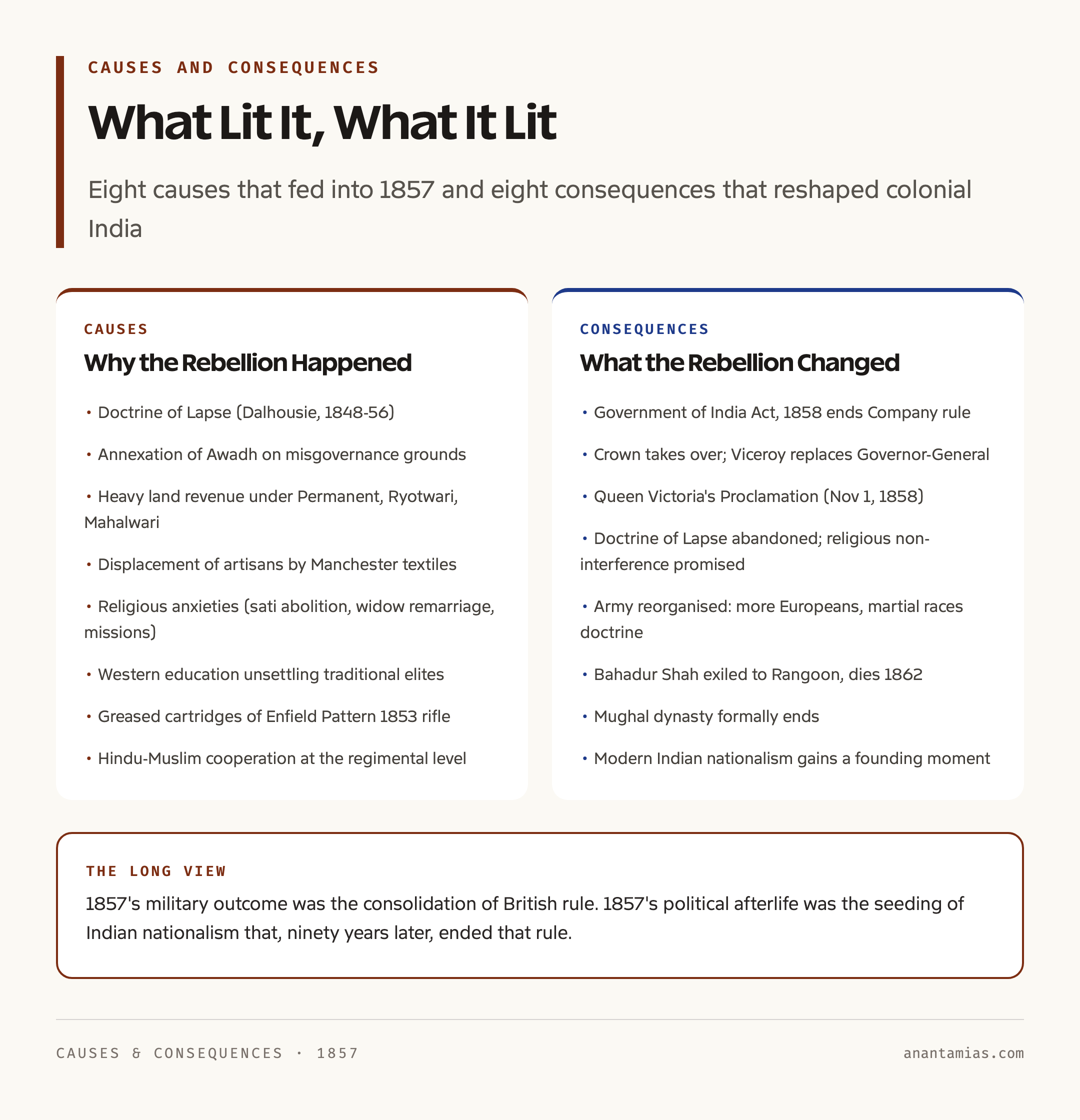
The economic and social ground had shifted in ways that fed grievance. The Permanent Settlement of 1793, Ryotwari, and Mahalwari systems extracted heavy land revenue. Traditional artisans were displaced by Manchester textiles. The Doctrine of Lapse, applied aggressively by Lord Dalhousie from 1848, annexed states without male heirs, including Satara, Jhansi, Nagpur, Sambalpur, and Awadh, the last on grounds of misgovernance.

Religious and cultural anxieties compounded these grievances. The abolition of sati in 1829, the legalisation of widow remarriage in 1856, missionary activity, and the introduction of Western education unsettled traditional elites and rural society alike. The army, where Hindu and Muslim sepoys served side by side, became the meeting place where these grievances boiled together.

The immediate trigger was the new Enfield Pattern 1853 rifle. Its cartridges had to be bitten before loading. Rumours that the grease used was beef tallow and pig fat insulted both Hindu and Muslim sepoys at once. The administration’s stumbling response, including punitive measures against soldiers who refused the cartridges, lit the fuse.

Key Course of Events

The Revolt unfolded in identifiable phases.

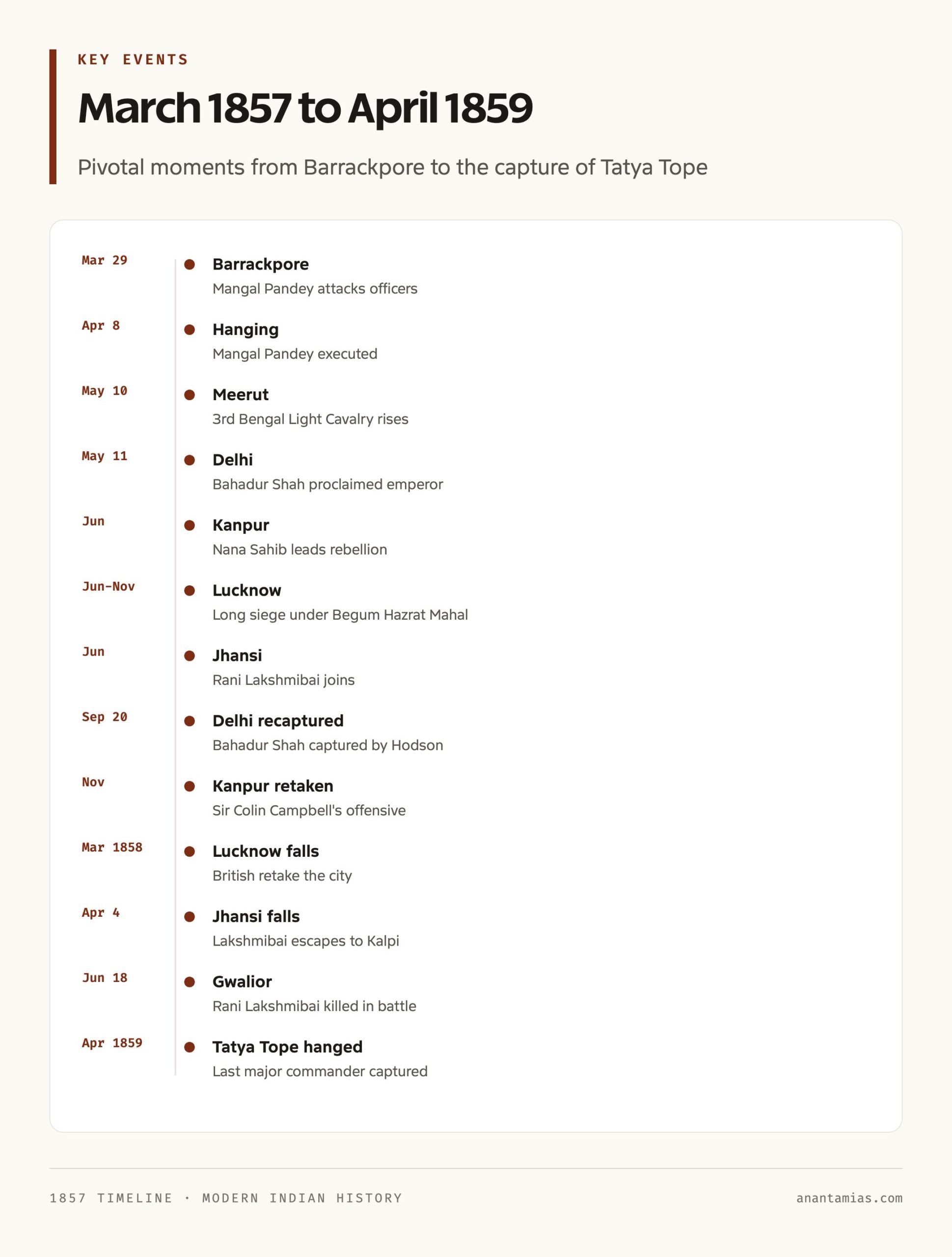
Phase one, March 1857: Barrackpore. Mangal Pandey of the 34th Bengal Native Infantry attacked British officers on March 29. He was court-martialled and hanged on April 8, his regiment disbanded. His act was a precursor, not the outbreak.

Phase two, May 1857: Meerut and Delhi. Eighty-five sepoys of the Third Bengal Light Cavalry at Meerut refused the cartridges on May 9 and were imprisoned. On May 10, comrades broke them out, killed officers, and rode for Delhi. On May 11, they reached the Red Fort and proclaimed Bahadur Shah Zafar emperor of Hindustan.

Phase three, June to September 1857: rebellion spreads. Kanpur fell under Nana Sahib and Tatya Tope. Lucknow saw a long siege with Begum Hazrat Mahal leading from inside. Jhansi rallied under Rani Lakshmibai after the British rejected her son’s adoption. Faizabad, Bareilly, Arrah, and pockets of Bihar joined. Punjab, where the Sikh population’s relations with the British had been recently reset, mostly stayed quiet. So did the south.

Phase four, September 1857 to March 1858: British counter-offensive. Delhi was retaken in September 1857 after a bloody siege. Bahadur Shah was captured, his sons executed by Captain Hodson, the emperor himself exiled to Rangoon where he died in 1862. Kanpur was retaken under Sir Colin Campbell. Lucknow fell to the British in March 1858.

Phase five, April to November 1858: pacification. Jhansi fell on April 4, 1858 with Rani Lakshmibai killed in battle near Gwalior on June 18. Tatya Tope was captured and hanged in April 1859. Kunwar Singh of Jagdishpur, well into his seventies, fought a last campaign in Bihar. The rebellion was declared over in November 1858, though sporadic resistance continued for months.

Key Features of the 1857 Rebellion

Key Events Timeline May to December 1857

Four structural features distinguish 1857 from earlier armed protests against British rule.

  • Scale. The rebellion spread across a wide arc from Delhi through the Ganga belt to central India, drawing in regiments, princely households, peasants, and urban notables.
  • Coalition. Sepoys, dispossessed rulers, taluqdars, peasants, and religious figures joined around shared grievances even where their ultimate objectives differed.
  • Symbolic unity. Bahadur Shah Zafar gave the rebellion a single, if frail, symbolic centre. The earlier Maratha, Sikh, and tribal uprisings did not have a pan-Indian symbol of comparable weight.
  • Cross-religious mobilisation. Hindu and Muslim soldiers acted together at Meerut, Delhi, and across the rebellion. This cooperation in 1857 became a touchstone for later nationalists arguing against colonial communal narratives.

Why It Matters

The Revolt of 1857 matters as more than a historical event.

It produced the constitutional architecture of British India. The Government of India Act, 1858 ended company rule and transferred authority to the Crown. The Viceroy replaced the Governor-General. The Secretary of State for India sat in London with a Council. Queen Victoria’s Proclamation promised non-interference in religion and the abolition of the Doctrine of Lapse.

It reshaped the British army in India. The ratio of European to Indian troops was tilted upward. Artillery was concentrated in British hands. The Bengal Army was reorganised along the so-called martial races doctrine, recruiting more from Punjab, the Northwest, and the Gurkha hills, and less from the United Provinces.

It seeded modern Indian nationalism. V.D. Savarkar’s 1909 book The Indian War of Independence, 1857 reframed the rebellion as a first war of national liberation. Congress leaders, revolutionaries, and later official India accepted variants of this framing.

It complicated the relationship between memory and history. Indian, British, Marxist, subaltern, and regional historians read 1857 in incompatible ways. The contested framing is itself part of the event’s afterlife.

Detailed Analysis: The Historiographical Debate

Four major framings have shaped how India and the world read 1857.

The mutiny framing. Contemporary British accounts, including The History of the Indian Mutiny by John Kaye and George Malleson, treated the events as a military mutiny that spread because of administrative weakness. The framing emphasised sepoy grievances and downplayed broader social participation. This framing has been thoroughly criticised but still echoes in older textbooks.

The first war of independence framing. V.D. Savarkar’s 1909 work and subsequent nationalist scholarship treated 1857 as a coordinated, pan-Indian, anti-colonial war. The framing emphasises Hindu-Muslim unity, leadership by Bahadur Shah, and the rebellion’s ideological coherence. After independence, this became the dominant Indian public memory.

The Marxist and class-conflict framing. Historians including R.C. Majumdar, who eventually rejected the war-of-independence framing, and later Marxist historians like Bipan Chandra and Sumit Sarkar, emphasised the rebellion’s social composition. Peasant grievance, taluqdari interest, and the role of dispossessed groups received attention.

The subaltern framing. From the 1980s, subaltern studies historians including Ranajit Guha and Gautam Bhadra recovered the voices and politics of ordinary participants. Local rebellions, women’s roles, and tribal participation were brought into the centre of the analysis.

Each framing illuminates and obscures. The pragmatic UPSC reading recognises 1857 as multi-stranded, with sepoy mutiny, princely restoration, peasant uprising, and proto-nationalist mobilisation all present in different proportions in different theatres.

Comparative Perspective

1857: Causes and Consequences Side by Side

Set 1857 against three reference rebellions.

  • The American Revolutionary War, 1775-1783: A successful settler revolt with clear ideological scaffolding. 1857 lacked the printing press networks, the explicit republican ideology, and the international support that the American case enjoyed.
  • The Taiping Rebellion, 1850-1864: Contemporary with 1857 in China, with millions killed. The Taiping movement had ideological coherence the 1857 coalition lacked, but also faced more determined imperial repression.
  • The Polish January Uprising, 1863: A nationalist uprising against Russian rule, defeated but ideologically generative. The pattern of failure-followed-by-political-influence is similar to 1857.

The 1857 outcome was the consolidation of British rule. The 1857 legacy was the seeding of Indian political imagination that would, ninety years later, end that rule.

Challenges in 1857 Scholarship

The current state of Revolt of 1857 research and remembrance faces specific challenges.

  • Source asymmetry. Most surviving sources are British. Indian voices, especially of common participants, are harder to access. Vernacular records, oral traditions, and recently digitised collections are slowly addressing the gap.
  • Heritage neglect. Many 1857 sites are under-protected. The Meerut cantonment, the Bibighar at Kanpur, and Jhansi precincts need coordinated conservation.
  • Polarised memory. Public commemoration sometimes flattens the rebellion into a single, sanitised narrative. The complexity, including violence on both sides, is uncomfortable but historically real.
  • Curricular variance. State boards treat 1857 differently. Some emphasise national-war framing, others mutiny framing. A common scholarly baseline would help students.
  • Underexplored regions. Bihar, central India, and the eastern theatre have received less attention than Delhi and Awadh. Local archives are being opened.
  • Women’s history. Beyond Rani Lakshmibai and Begum Hazrat Mahal, the participation of women across rural and urban theatres is under-documented.

Prelims Pointers

  • Outbreak: May 10, 1857 at Meerut; antecedent at Barrackpore, March 29, 1857 (Mangal Pandey).
  • Last Mughal emperor: Bahadur Shah II, exiled to Rangoon, died 1862.
  • Governor-General during the Revolt: Lord Canning (became first Viceroy in 1858).
  • Doctrine of Lapse: associated with Lord Dalhousie, applied 1848-1856.
  • Annexation of Awadh: 1856, on grounds of misgovernance.
  • Government of India Act, 1858: ended East India Company rule, created the Office of Secretary of State for India.
  • Queen Victoria’s Proclamation: November 1, 1858 at Allahabad.
  • V.D. Savarkar’s 1909 work: The Indian War of Independence, 1857.
  • Key leaders: Nana Sahib (Kanpur), Tatya Tope, Rani Lakshmibai (Jhansi), Begum Hazrat Mahal (Lucknow), Kunwar Singh (Jagdishpur), Maulvi Ahmadullah Shah (Faizabad).

Mains Questions

  1. The Revolt of 1857 was at once a sepoy mutiny, a feudal restoration, and a peasant uprising. Discuss with reference to specific theatres of the rebellion. (GS Paper I, 250 words)
  2. Critically examine the framing of the 1857 events as the First War of Independence. What does the framing gain, and what does it obscure? (GS Paper I, 250 words)
  3. The Revolt of 1857 reshaped the constitutional architecture of British India. Discuss the institutional consequences embodied in the Government of India Act, 1858 and Queen Victoria’s Proclamation. (GS Paper I, 250 words)
  4. Hindu-Muslim cooperation in 1857 has been cited as a defining feature of the rebellion. Discuss its scale and limits, and its later use in Indian political memory. (GS Paper I, 150 words)

Way Forward

The 169th anniversary is the right moment for three commitments.

Treat 1857 sites as a coordinated heritage cluster. Meerut, Delhi, Kanpur, Lucknow, Jhansi, Bareilly, Faizabad, and Arrah deserve an integrated conservation, interpretation, and tourism framework. The Archaeological Survey of India, the Ministry of Culture, and concerned states should sign a multi-year compact.

Open the archives wider. The National Archives, state archives, and private collections still hold material that has not entered scholarship. Digitisation with searchable metadata, especially of vernacular records, would transform research.

Update curricula honestly. The Revolt was multi-stranded. School and college texts should reflect that complexity, recognising both the sepoy and the peasant, both Bahadur Shah’s reluctance and the genuine popular mobilisation, both the violence and the legitimacy of the uprising.

For deeper context on the personalities and constitutional aftermath, see our pieces on Mangal Pandey, tribal movements of the colonial period, and the wider sweep of modern Indian history as it ran into the encounter with colonial law.

A hundred and sixty-nine years on, the Revolt of 1857 is no longer an event. It is a question that India still answers, every time the country names its founding moment.

Frequently Asked Questions

When did the Revolt of 1857 begin?

The main outbreak occurred at Meerut on May 10, 1857, when sepoys of the Third Bengal Light Cavalry rebelled and rode for Delhi. An earlier incident, the Mangal Pandey episode at Barrackpore on March 29, 1857, is treated as a precursor.

Why is 1857 called the First War of Independence?

V.D. Savarkar’s 1909 book The Indian War of Independence, 1857 popularised the framing. Subsequent nationalist scholarship and post-independence official memory adopted it. The framing emphasises pan-Indian scope, Hindu-Muslim cooperation, and anti-colonial intent.

What was the immediate trigger of the Revolt?

The introduction of the Enfield Pattern 1853 rifle, whose greased cartridges had to be bitten before loading. Rumours that the grease used beef and pig fat insulted both Hindu and Muslim sepoys. The administration’s punitive response to refusing sepoys lit the fuse.

Who was Bahadur Shah Zafar’s role in the rebellion?

The 82-year-old emperor became the symbolic head of the rebellion after sepoys reached the Red Fort on May 11, 1857. He was a reluctant participant. After Delhi fell in September 1857, he was captured, his sons executed, and he was exiled to Rangoon, where he died in 1862.

Which areas of India did not join the Revolt?

Punjab, much of the south, Bengal proper, and most of Rajasthan did not actively join. Reasons varied: recent British settlements with Sikh elites, distance from the rebellion’s epicentre, and local political configurations that did not align with the uprising.

What was the Doctrine of Lapse?

A policy associated with Lord Dalhousie (1848-1856) under which princely states without a male biological heir would lapse to the East India Company, refusing to recognise adopted heirs. Annexed states included Satara, Jhansi, Nagpur, and Sambalpur.

What were the major consequences of the Revolt?

The Government of India Act, 1858 ended East India Company rule and transferred authority to the Crown. The Indian army was reorganised. The Doctrine of Lapse was abandoned. Religious non-interference was promised. Indian nationalism received a foundational moment to build on.

Who were the women leaders of the 1857 Revolt?

The most prominent were Rani Lakshmibai of Jhansi, who fell at Gwalior in June 1858, and Begum Hazrat Mahal of Awadh, who led the Lucknow theatre and later went into exile in Nepal. Many other women participated at local levels, often under-documented.

Why did the Revolt fail?

Several factors: limited geographic reach, lack of unified command, varying objectives among coalition members, superior British logistics and reinforcements, loyal Indian regiments and princely states, and the late entry of some theatres after the British counter-offensive had begun.

Where can students read primary sources on 1857?

The National Archives of India, the British Library’s India Office records, state archives, and the digitised collections of major universities hold rebellion-era papers. Contemporary works include John Kaye’s history, William Howard Russell’s My Diary in India, and Sayyid Ahmad Khan’s Causes of the Indian Revolt.

Bharat Maritime Insurance Pool (BMIP): India’s Move to Insure Its Own Ships

Open article →Download PDF

The Bharat Maritime Insurance Pool, launched in New Delhi on 12 May 2026, is one of those policy moves that looks technical on the surface and turns out to be quietly strategic underneath. On paper it’s a domestic insurance pool that will provide protection and indemnity cover for Indian-flagged vessels operating on international routes. In practice it is the first serious attempt to build an indigenous alternative to the London-centric maritime insurance market that has historically had the power to immobilize parts of Indian shipping whenever sanctions, war risk, or political pressure escalated.

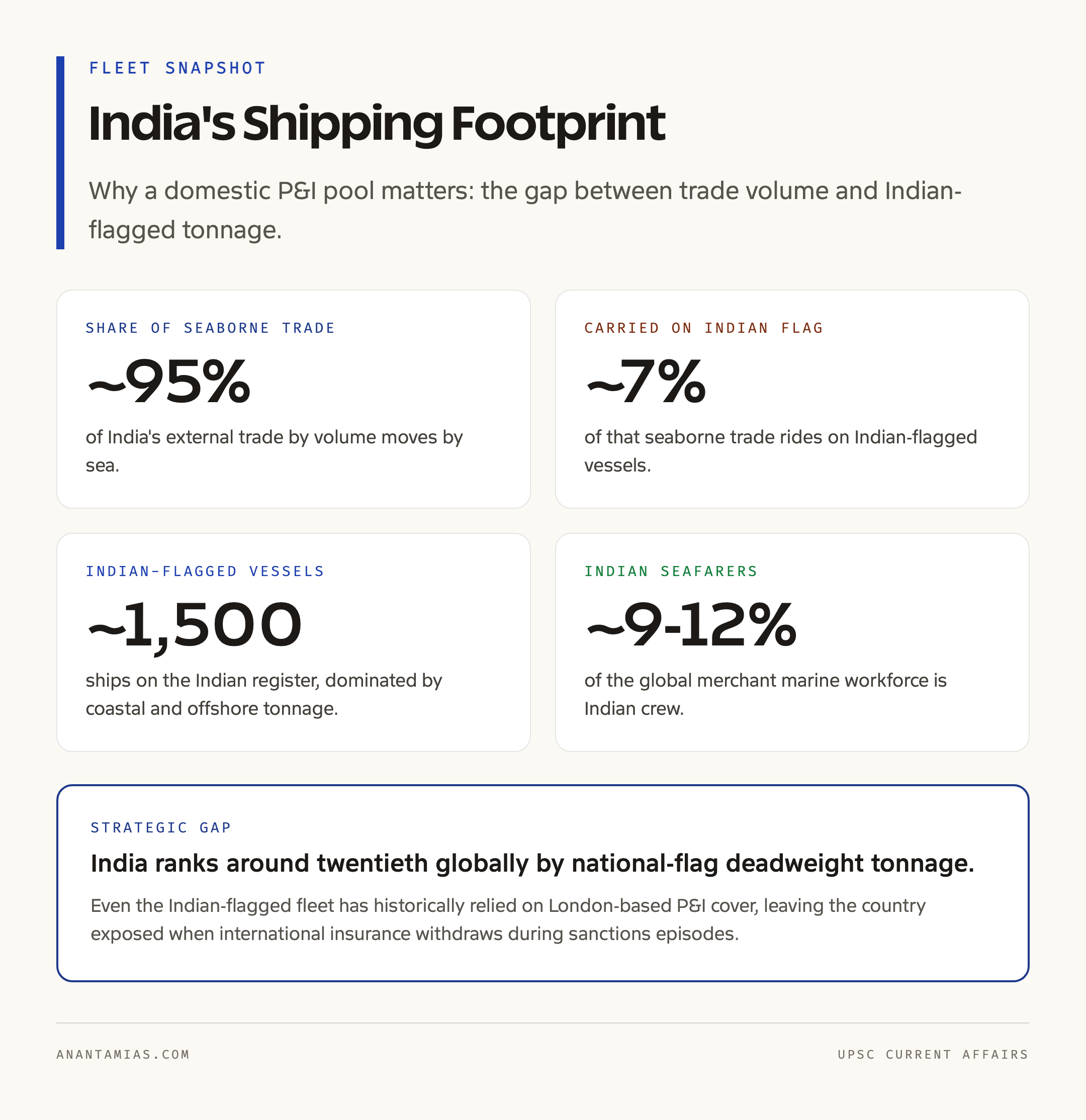
The launch matters for two reasons. India’s seaborne trade has grown sharply, but Indian-flagged ships still carry only a small share of it. Most of the country’s external trade rides on foreign hulls, often insured through the International Group of Protection and Indemnity Clubs based in London and a handful of European centers. When sanctions hit in 2022 and again in 2025, India saw firsthand how quickly insurance withdrawal can disrupt cargo movement. The Bharat Maritime Insurance Pool tries to give the country a domestic backstop.

The deeper context is that maritime insurance is not just commerce. It’s geopolitics. Whoever insures the world’s shipping has effective veto power over what moves on the seas. India is trying to acquire a piece of that veto.

Quick Facts

How Maritime Insurance Flows from Vessel to Claim
  • Initiative: Bharat Maritime Insurance Pool (BMIP)
  • Launch date: 12 May 2026
  • Launch venue: New Delhi
  • Nodal ministry: Ministry of Ports, Shipping and Waterways
  • Regulator: Insurance Regulatory and Development Authority of India (IRDAI)
  • Scope: Protection and indemnity (P&I) cover for Indian-flagged vessels on international routes
  • Comparable international bodies: International Group of P&I Clubs (IG P&I), Lloyd’s of London market
  • Core function: Pooling and reinsurance of marine liability risk
  • Strategic objective: Reduce dependence on foreign maritime insurers and improve sanctions resilience
  • Coverage areas: Crew claims, third-party damage, oil pollution, wreck removal, collision, war risk add-ons

What Just Happened

The Government of India formally launched the Bharat Maritime Insurance Pool on 12 May 2026 in New Delhi, with participation from the Ministry of Ports, Shipping and Waterways, IRDAI, the General Insurance Corporation of India, and a consortium of Indian general insurers. The pool will offer P&I cover, the most important class of marine liability insurance, to Indian-flagged vessels engaged in international trade.

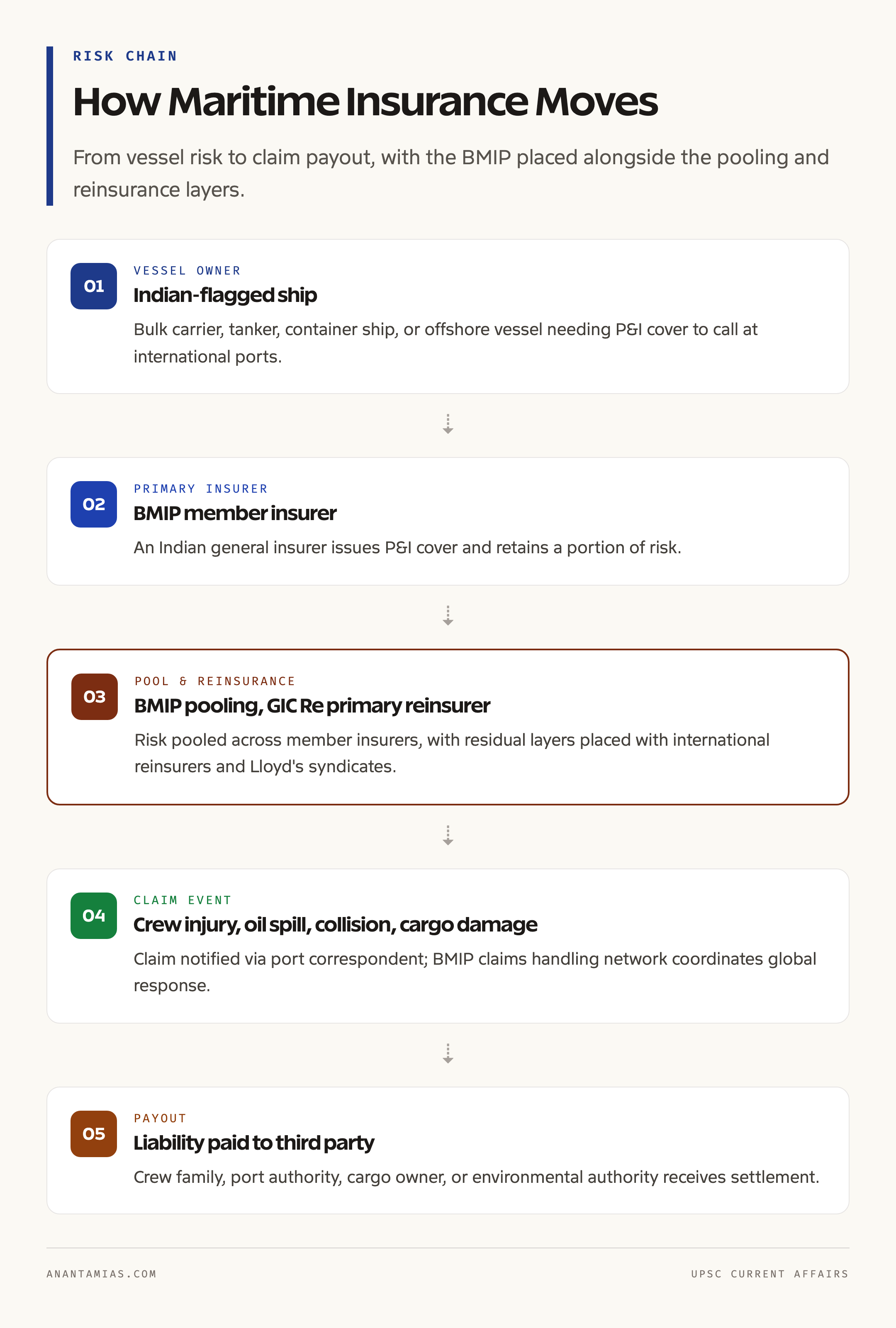
The BMIP will operate as a pool, meaning multiple Indian insurers contribute capacity and share risk, with the General Insurance Corporation acting as the principal reinsurer. The pool will issue cover on terms broadly comparable to International Group club standards, including coverage for crew claims, cargo damage, third-party injury, oil pollution liabilities, wreck removal, and collision claims. War risk and sanctions-related coverage extensions are expected as add-on layers. Premium pricing will be benchmarked against international rates while retaining flexibility for strategic fleet segments.

Background and Historical Context

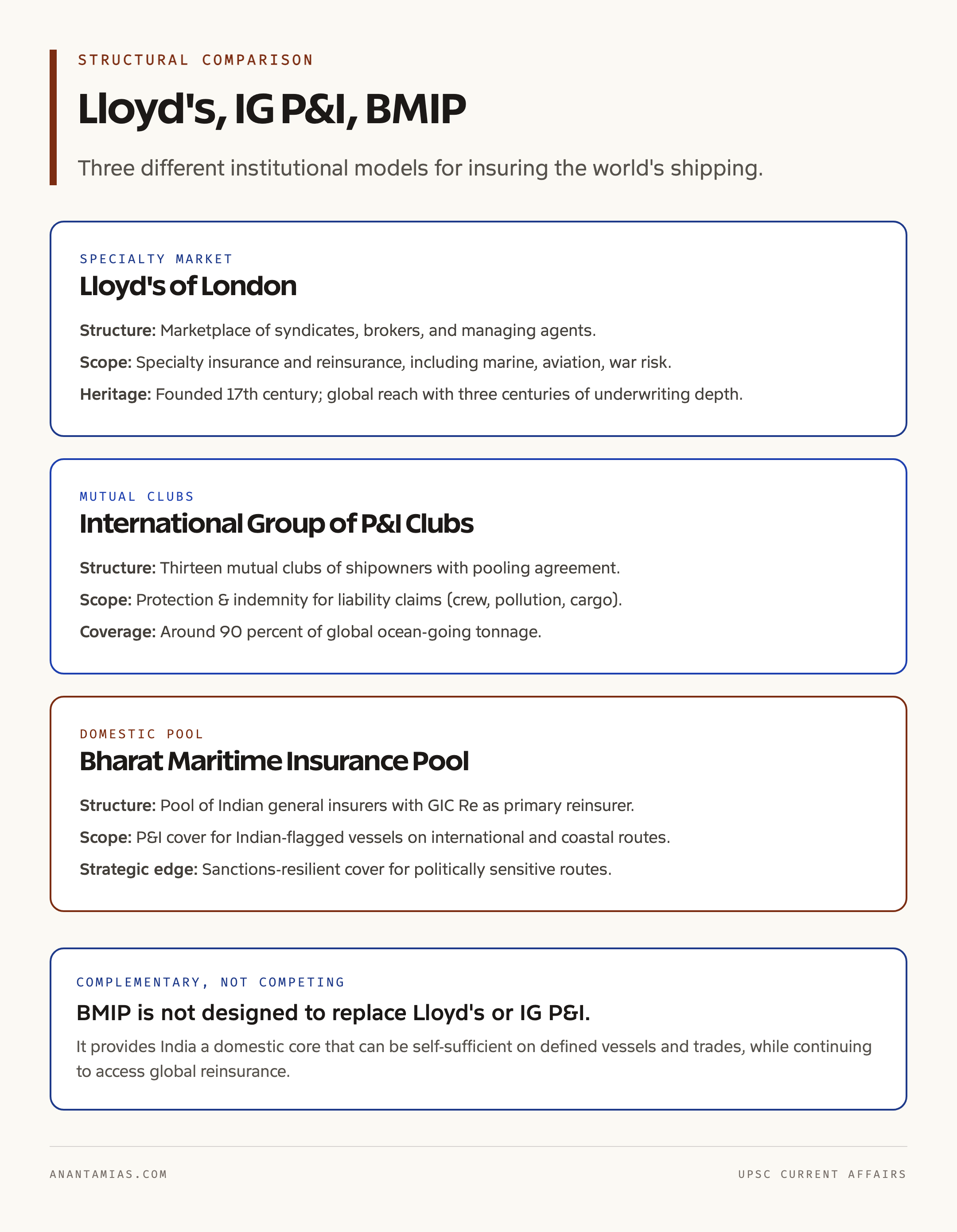
Global maritime insurance has been concentrated in London for over three centuries. Lloyd’s of London, founded in the late seventeenth century as a coffee house where merchants and underwriters met, evolved into the world’s largest specialty insurance market. Alongside Lloyd’s, the International Group of Protection and Indemnity Clubs emerged in the nineteenth century as a mutual structure of shipowners pooling liability risk. Together, IG P&I clubs cover around 90 percent of the world’s ocean-going tonnage.

India’s marine insurance market historically focused on hull and cargo cover for its own trade flows, leaving P&I largely to London. The General Insurance Corporation has held some reinsurance share, and a few Indian insurers offer hull cover, but indigenous P&I capacity has been limited. The vulnerability of this arrangement became obvious after 2022, when sanctions on Russian oil trade caused IG P&I clubs to withdraw cover from vessels involved in that trade. Indian shippers that had been ferrying discounted Russian crude suddenly faced insurance gaps. The episode triggered a serious review of how dependent India was on a single insurance market it didn’t control.

The Bharat Maritime Insurance Pool is the direct policy response. It builds on earlier efforts including the Indian Specie Insurance Pool, the FDI relaxation in insurance, and IRDAI’s regulatory framework for cross-border reinsurance.

Key Provisions of the Bharat Maritime Insurance Pool

The pool is structured as a coordinated capacity rather than a single insurer. Its core design features include:

  • Membership: Open to Indian-flagged vessels engaged in international and coastal trade, including bulk carriers, tankers, container ships, and offshore vessels.
  • Coverage classes: Standard P&I cover, with optional layers for war risk and sanctions-resilient routes.
  • Premium structure: Competitive with IG P&I rates, with concessions for vessels meeting flagging, crew, and environmental compliance benchmarks.
  • Capacity pooling: Multiple Indian general insurers contribute capacity. GIC Re acts as primary reinsurer and aggregates risk before placing residual layers in international markets.
  • Claims handling: Domestic claims handling network with global correspondents, modeled on the IG P&I network of port correspondents.
  • Strategic flexibility: The pool can underwrite voyages and trades where IG P&I cover may be unavailable, including certain politically sensitive routes.
  • Governance: A pool board with representation from the Ministry of Ports, IRDAI, GIC Re, member insurers, and the Indian shipping industry.

Why It Matters

India's Shipping Fleet Snapshot

The Bharat Maritime Insurance Pool matters for three reasons.

First, strategic autonomy. India’s ability to move cargo, particularly energy imports, in a crisis depends on whether vessels can be insured. A domestic pool reduces the chokepoint risk that comes with relying entirely on London-centric insurers.

Second, financial sector deepening. Maritime insurance is high-skill, high-margin business. Building domestic capability in P&I cover trains underwriters, claims handlers, and surveyors. It is a step toward turning India’s financial services sector into one that can serve global niche markets, similar to how the Gujarat International Finance Tec-City (GIFT City) framework is positioning India in cross-border reinsurance.

Third, shipping sector competitiveness. Indian shipowners have historically faced higher operating costs partly because P&I cover and reinsurance flow through foreign markets in foreign currencies. A domestic pool can reduce frictional cost and provide tailored cover for the Indian fleet.

Detailed Analysis

The BMIP is a strategic instrument as much as a commercial one. The economics are not trivial. P&I clubs are mutuals, which means their pricing reflects pooled global risk rather than any single market’s profitability. Replicating that risk pool domestically requires either a large fleet base (which India does not yet have) or aggressive reinsurance into international markets (which partly defeats the autonomy goal).

The design seems to acknowledge this trade-off. By using GIC Re as a primary reinsurer and retaining residual placement in international reinsurance markets, the pool gets the best of both worlds: domestic underwriting and claims handling, with international capacity backing the higher liability layers. The strategic value comes when international reinsurance is withdrawn for specific routes. In those cases, the pool can either retain risk domestically or place it through alternative reinsurance partners.

Three risks should be tracked. Capacity risk: If a single major claim exhausts the pool, India may need a sovereign backstop. Premium risk: If premiums end up higher than IG P&I rates, voluntary participation will be weak. Reputational risk: A poorly handled high-profile claim early in the pool’s life could damage its credibility internationally and deter recognition by foreign port authorities.

Comparative Perspective

The closest comparison is China’s domestic P&I cover, China Shipowners Mutual Assurance Association (CPI), which was set up to insure Chinese-flagged vessels and has grown over decades. India is starting later but with the advantage of an established reinsurance industry under GIC Re and an active IRDAI regulatory regime.

Lloyd’s of London remains the dominant specialty market. The BMIP is not designed to replace Lloyd’s. It is designed to give India a domestic core that can be self-sufficient on a defined set of vessels and trades and that can collaborate with Lloyd’s for other risks.

The IG P&I structure is mutual. The BMIP is a pool of commercial insurers, which is structurally different. Both can deliver similar cover, but the cost of capital, claims philosophy, and governance differ.

Challenges and Concerns

Lloyd's, IG P&I Clubs, and BMIP Compared

Three challenges stand out. First, the fleet base is small. India ranks around twentieth globally by deadweight tonnage of national-flag fleet. A pool needs scale to absorb large claims without lumpy reinsurance costs. Second, international recognition takes time. Port state authorities, charterers, and cargo interests have to accept BMIP cover as equivalent to IG P&I cover. That recognition cycle could take several years. Third, the claims correspondent network has to be built across major ports globally, which is a substantial operational investment.

The pool also has to navigate the friction between strategic autonomy and commercial competitiveness. Underwriting politically sensitive routes can build strategic value but expose the pool to secondary sanctions risk and reinsurance withdrawal.

Prelims Pointers

  • Launch date: 12 May 2026 in New Delhi
  • Nodal ministry: Ministry of Ports, Shipping and Waterways
  • Regulator: IRDAI
  • Primary reinsurer: General Insurance Corporation of India (GIC Re)
  • Comparable global bodies: IG P&I Clubs, Lloyd’s of London
  • Coverage type: Protection and Indemnity (P&I), with war risk and sanctions add-ons
  • Target user: Indian-flagged vessels on international routes
  • GIFT City link: India’s emerging cross-border reinsurance hub
  • Historical precedent: Indian Specie Insurance Pool

Mains Questions

  1. GS Paper III (Economy and Infrastructure): Discuss the rationale, design, and strategic significance of the Bharat Maritime Insurance Pool in the context of India’s shipping ambitions. (15 marks, 250 words)
  2. GS Paper II (International Relations): Examine how maritime insurance can become an instrument of geopolitical leverage. How does BMIP address this dimension? (10 marks, 150 words)
  3. GS Paper III (Economy): “Maritime insurance is a quiet pillar of strategic autonomy.” Critically evaluate India’s policy moves in this space. (15 marks, 250 words)
  4. GS Paper III (Financial Services): Analyze the role of GIFT City and GIC Re in deepening India’s reinsurance capacity. (10 marks, 150 words)

Way Forward

The Bharat Maritime Insurance Pool will need to do four things to grow into a credible institution. Build international recognition across major port authorities and charterer communities. Develop a global claims correspondent network within three to five years. Build domestic underwriting and claims-handling talent that can match the depth of London. And calibrate its strategic underwriting carefully so that it preserves international reinsurance partnerships while expanding India’s autonomy.

Coordination across the Ministry of Ports, IRDAI, GIC Re, and the Ministry of External Affairs will be essential. The pool should also be linked to broader maritime initiatives, including the Sagarmala port modernization program, the Maritime India Vision 2030, and the green shipping push. As Indian shipowners modernize their fleets with lower emission vessels, the pool can offer differentiated premium structures that reward cleaner operations.

For UPSC aspirants, the BMIP sits at the intersection of economy, geopolitics, financial services, and infrastructure. It pairs well with the India-Oman CEPA for Gulf trade context, the Jan Suraksha schemes for financial-inclusion architecture, and the agni missile family as a parallel example of an indigenous capability project.

Frequently Asked Questions

What is the Bharat Maritime Insurance Pool?

It is a domestic insurance pool launched on 12 May 2026 to provide protection and indemnity (P&I) cover to Indian-flagged vessels operating on international and coastal routes.

Why is P&I cover important?

P&I cover handles third-party liabilities arising from shipping, including crew claims, cargo damage, oil pollution, wreck removal, and collision liabilities. Without P&I cover, vessels are typically not allowed to call at ports or carry cargo.

Who regulates the BMIP?

The Insurance Regulatory and Development Authority of India (IRDAI) regulates the pool, while the Ministry of Ports, Shipping and Waterways is the nodal policy ministry.

How does BMIP compare to Lloyd’s of London?

Lloyd’s is a specialty insurance market with global scope and three centuries of underwriting depth. BMIP is a domestic pool focused on Indian-flagged vessels. The two are complementary rather than direct competitors.

What is the role of GIC Re?

GIC Re acts as the primary reinsurer for the pool, aggregating risk from member insurers before placing residual layers in international reinsurance markets.

Will BMIP cover war risk?

War risk and sanctions-related coverage are expected as add-on layers on top of standard P&I cover.

How does this improve India’s sanctions resilience?

By providing a domestic alternative to International Group P&I clubs, the pool reduces the risk that withdrawal of foreign insurance can immobilize Indian-flagged shipping during sanctions episodes.

What is the International Group of P&I Clubs?

A grouping of thirteen mutual P&I clubs that together cover around 90 percent of the world’s ocean-going tonnage. They share large claims through a pooling agreement.

Can foreign-flagged vessels join BMIP?

The pool is primarily designed for Indian-flagged vessels, although chartered tonnage with Indian operational interests may be considered over time as the pool matures.

How does BMIP connect to GIFT City?

GIFT City is India’s offshore financial centre and is positioned as a cross-border reinsurance hub. The BMIP can use GIFT City based reinsurers and brokers, deepening the country’s specialty insurance ecosystem.

Coal Gasification Scheme 2026: Rs 37,500 Crore Push to Decarbonize India’s Coal Backbone

Open article →Download PDF

The Coal Gasification Scheme 2026 marks one of the more unusual industrial bets the Union government has placed in recent years. Approved by the Union Cabinet on 13 May 2026 with an outlay of Rs 37,500 crore, the scheme tries to keep India’s massive coal sector economically relevant while peeling some of its emissions and import dependence away. The basic idea is straightforward. Instead of burning coal to make electricity, gasify it. Convert solid coal into a synthesis gas, then route that syngas into chemicals, fertilizers, transport fuels, and synthetic natural gas that the country currently imports in large volumes.

This is not a new technology. China runs the world’s largest coal-to-chemicals industry and South Africa’s Sasol has done coal-to-liquids commercially for decades. What’s new is India’s willingness to spend serious capital on it at a moment when most of the world is winding down coal investment. The scheme reflects a specific reading of India’s energy and industrial situation: the coal reserves are real, the import bill for methanol and ammonia is real, and a clean retirement of coal will take longer than the climate calendar suggests. The Coal Gasification Scheme 2026 is essentially a hedge.

The scheme also lands at a time when Indian energy strategy is actively splitting. Renewables get one set of policies. Hydrogen gets another. Nuclear gets a third. And coal, which still produces over 70 percent of the country’s electricity, is getting a fourth track that tries to transform it rather than simply phase it down.

Quick Facts

Coal to Syngas to Downstream Products
  • Scheme: Coal Gasification Scheme 2026
  • Outlay: Rs 37,500 crore over the scheme period
  • Approving authority: Union Cabinet
  • Approval date: 13 May 2026
  • Nodal ministry: Ministry of Coal
  • Objective: Convert coal and lignite to syngas for downstream chemicals and fuels
  • Coverage: PSU projects, private sector projects, and demonstration units
  • Target: Cumulative gasification capacity of around 100 million tonnes per annum by 2030
  • Key feedstocks: Coal (high-ash domestic varieties) and lignite (Neyveli, Gujarat, Rajasthan)
  • Outputs: Methanol, ammonia, urea, dimethyl ether, synthetic natural gas, hydrogen

What Just Happened

On 13 May 2026 the Cabinet Committee on Economic Affairs cleared the Coal Gasification Scheme 2026 with a financial commitment of Rs 37,500 crore. The scheme provides budgetary support across three categories of projects. Category one covers public sector undertaking projects with up to Rs 1,350 crore per project. Category two covers private sector and PSU projects through a tariff-based competitive bidding route. Category three supports demonstration projects to test indigenous gasification technologies, with smaller per-project ceilings designed to absorb early-stage technology risk.

The scheme also extends concessions on coal block auctions for gasification end-use, allows rebates on revenue share, and gives priority allocation of coal to gasification projects that meet defined milestones. Coal India Limited, NLC India Limited, and several private players including Reliance, GAIL, and ONGC are expected to be early users of the framework. The Ministry of Coal is the nodal ministry, working with the Ministry of Petroleum and Natural Gas on downstream offtake.

Background and Historical Context

India’s interest in coal gasification has been on and off for nearly five decades. The Fertilizer Corporation of India ran coal-based ammonia plants in the 1970s and 80s, but most were shut as natural gas became the dominant feedstock. The conversation revived in 2020 when the government laid out a target of 100 million tonnes per annum of coal gasification by 2030, set against rising coking coal and methanol import bills.

The Coal Gasification Scheme 2026 is the financial backbone of that target. Earlier announcements lacked a structured incentive layer. Without budgetary support, coal gasification struggled against cheaper imported natural gas and against the steep capital cost of gasification plants, which can run two to three times higher per unit of output than conventional steam reforming. The new scheme tries to close that gap with explicit central assistance and policy carve-outs in coal block allocation.

The scheme also has to be read alongside the country’s National Hydrogen Mission, the PLI scheme for specialty chemicals, and the broader push to reduce dependence on imported urea and methanol. India imports almost all its methanol requirement and a significant share of its ammonia. Domestic syngas could in principle replace a meaningful chunk of those imports while creating downstream chemical industry capacity.

Key Provisions of the Coal Gasification Scheme 2026

The scheme is structured around incentives rather than direct production targets. The core provisions include:

  • Category I: Up to Rs 1,350 crore per project for PSU-led gasification, with a focus on demonstrating scale.
  • Category II: Private sector and PSU projects awarded through tariff-based competitive bidding with capital incentives tied to project commissioning and minimum capacity utilization.
  • Category III: Demonstration projects for indigenous gasification technologies including underground coal gasification and high-ash coal specific reactors.
  • Coal block concessions: Rebate of up to 50 percent on revenue share for coal extracted for gasification end-use, with priority linkage from Coal India.
  • Technology agnostic design: Both surface gasification and underground coal gasification (UCG) routes are eligible.
  • Output flexibility: Eligible end uses include methanol, ammonia, urea, dimethyl ether, synthetic natural gas, hydrogen, and downstream chemicals.
  • Domestic content preference: Plants that source pressure vessels, gasifiers, and air separation units from domestic vendors get an extra incentive layer.
  • Timeline: Projects must achieve commercial operation within 60 months of award to claim full incentive.

Why It Matters

Rs 37,500 Crore Outlay Across Three Categories

Three things make the Coal Gasification Scheme 2026 strategically interesting for India.

First, import substitution. India spends a large amount of foreign exchange every year on methanol, ammonia, and synthetic chemicals. Coal gasification can theoretically displace a meaningful share of that. Even if it doesn’t reach the full 100 MTPA target, partial displacement frees up scarce foreign exchange for higher-end imports.

Second, coal sector transition. India’s coal industry employs a large workforce and underpins the economies of Jharkhand, Odisha, Chhattisgarh, and West Bengal. A pure phase-down of coal would be politically and economically wrenching. Gasification gives the sector a second life, particularly for high-ash domestic coal that struggles in export markets.

Third, strategic optionality on synthetic fuels. As global aviation moves toward sustainable aviation fuel and shipping moves toward methanol bunker fuel, coal-derived methanol with carbon capture could play a transitional role. Without an industrial base in syngas, India would be locked out of that supply chain.

The trade-off is honest. Coal gasification is more carbon intensive than natural gas reforming and significantly more so than green hydrogen routes. Whether the scheme stays climate compatible depends entirely on whether carbon capture and storage gets bolted on at scale.

Detailed Analysis

The economics of the Coal Gasification Scheme 2026 are tight. Capital expenditure on a commercial gasification plant typically runs Rs 8,000 to 12,000 crore for a million-tonne-per-annum methanol facility. Even with Rs 1,350 crore of central support, the bulk of project cost has to come from equity and debt at returns that depend on syngas pricing.

Three risks dominate. Feedstock quality risk: Indian coal is high in ash and low in calorific value. Most international gasifier technologies are designed for lower-ash coal. Indigenous gasifier development for high-ash coal is still maturing, which is exactly why Category III demonstration projects exist. Carbon policy risk: A future carbon border adjustment mechanism in the EU or a domestic carbon price could erode the cost advantage of coal-derived chemicals overnight. Offtake risk: Methanol blending mandates and DME demand are still policy-driven. Without firm offtake contracts, project financing becomes hard.

On the upside, an integrated coal-to-chemicals complex can vertically integrate up to fertilizers, specialty chemicals, and even synthetic fuels, capturing margins across the chain. This is the model Sasol pioneered and what large Chinese players have replicated.

Comparative Perspective

India is hardly first to this game. China operates over 100 large-scale coal gasification facilities and produces tens of millions of tonnes of methanol from coal every year. South Africa’s Sasol runs the world’s most established coal-to-liquids complex. The United States ran several federally supported coal gasification programs in the 1980s, most of which were eventually shelved as natural gas prices collapsed.

The Indian variant differs in two ways. The scheme is built around incentives rather than government ownership, unlike the Chinese model. And it explicitly leaves the door open for underground coal gasification, which would let the country exploit deep seams that are uneconomic to mine conventionally.

Challenges and Concerns

India's Coal and Lignite Production Base

Environmental opposition is a real headwind. Coal gasification produces large volumes of CO2 alongside its syngas, and unless coupled with carbon capture, it can be more emissions-intensive than direct combustion. Water demand is also significant, raising local concerns in already water-stressed coal belts. Land acquisition for integrated gasification complexes has been a friction point in earlier projects.

Technology risk is the second concern. Indigenous high-ash gasifiers are not yet at full commercial scale. If the scheme ends up dominated by imported technology, the value-add to the Indian engineering sector will be limited. The demonstration project category exists to address this, but five years is a short window for moving from pilot to commercial reactor.

Finally, the scheme depends on a stable downstream demand for methanol and DME. Methanol blending policies have been on paper for years without crossing single-digit adoption. Unless transport fuel policy moves in step with the gasification push, supply could outrun demand.

Prelims Pointers

  • Approval date: 13 May 2026 by the Cabinet
  • Outlay: Rs 37,500 crore
  • Ministry: Ministry of Coal
  • Target: 100 MTPA coal gasification by 2030
  • Categories: PSU projects, private sector competitive bidding, and demonstration projects
  • Eligible feedstocks: Coal and lignite
  • Key end-products: Methanol, ammonia, urea, DME, synthetic natural gas, hydrogen
  • Major lignite zones: Neyveli (Tamil Nadu), Kutch (Gujarat), Barmer (Rajasthan)
  • UCG: Underground coal gasification, eligible under demonstration category

Mains Questions

  1. GS Paper III (Energy): Discuss the rationale, design, and trade-offs of the Coal Gasification Scheme 2026 in the context of India’s energy transition. (15 marks, 250 words)
  2. GS Paper III (Industry): Coal gasification can play a role in reducing India’s chemical and fertilizer import bill. Examine the technological and policy challenges that need to be addressed. (10 marks, 150 words)
  3. GS Paper III (Environment): “Clean coal” technologies present a paradox in the context of India’s net-zero commitments. Critically evaluate. (15 marks, 250 words)
  4. GS Paper III (Economy): Compare India’s coal gasification approach with China and South Africa. What lessons can policy design draw from international experience? (10 marks, 150 words)

Way Forward

The Coal Gasification Scheme 2026 will succeed or fail on three things. Indigenous gasifier technology has to reach commercial readiness within the scheme window, otherwise the value chain leaks abroad. Carbon capture has to be planned into projects from day one rather than retrofitted, because retrofitting roughly doubles capital cost. And downstream demand policy, especially methanol blending and DME for cooking, has to move with similar urgency to soak up the syngas output. If these three move together, the scheme can be a credible bridge. If they don’t, it risks becoming an expensive defense of an industry the country eventually has to wind down.

A linked policy review framework, perhaps under the NITI Aayog, would help track these three dimensions. The Coal Gasification Scheme 2026 is also a useful test case for how India will structure other industrial decarbonization schemes, including steel decarbonization and cement decarbonization, where the underlying tension between domestic industry and climate goals is similar.

For UPSC aspirants, this scheme connects energy, industry, environment, and federalism, since most coal-producing states are also among the country’s poorer ones. Read it alongside the National Hydrogen Mission and the National Steel Policy to see how the government’s industrial decarbonization strategy is being stitched together.

You can also see how India’s broader energy strategy is unfolding through our pieces on the India pension landscape for fiscal context, the Delhi EV policy 2026 for transport-side transition, and the agni missile family for an example of indigenous heavy-engineering capability building.

Frequently Asked Questions

What is the Coal Gasification Scheme 2026?

It is a Rs 37,500 crore central scheme approved by the Union Cabinet on 13 May 2026 to support the conversion of coal and lignite into syngas, which can then be used to produce methanol, ammonia, urea, DME, synthetic natural gas, and hydrogen.

Who is the nodal ministry?

The Ministry of Coal is the nodal ministry, working in coordination with the Ministry of Petroleum and Natural Gas and the Ministry of Chemicals and Fertilizers.

What is the gasification target for India?

The country has set a target of around 100 million tonnes per annum of coal gasification by 2030.

Is underground coal gasification (UCG) eligible?

Yes. UCG is eligible under the demonstration project category, allowing exploitation of deep coal seams that are uneconomic to mine conventionally.

Why is coal gasification controversial?

It is more carbon intensive than natural gas reforming and significantly more so than green hydrogen, and it can therefore conflict with India’s net-zero pathway unless coupled with carbon capture and storage.

How does this scheme help reduce imports?

India imports almost all its methanol and a large share of its ammonia. Coal-derived syngas can substitute a portion of these imports and free up foreign exchange.

What are the three project categories under the scheme?

PSU-led projects with capital support up to Rs 1,350 crore each, private and PSU projects through tariff-based competitive bidding, and demonstration projects for indigenous gasification technologies.

Which major companies are likely to participate?

Coal India Limited, NLC India Limited, GAIL, ONGC, Reliance, and other large industrial players that have shown interest in coal-to-chemicals integration.

What is the relationship with the National Hydrogen Mission?

Coal gasification can produce hydrogen, often called “grey hydrogen” or “blue hydrogen” if combined with carbon capture. The Hydrogen Mission focuses on green hydrogen, so the two are complementary rather than substitutes.

What is the timeline for project completion?

Projects must achieve commercial operation within 60 months of award to claim full central incentive under the scheme.

D’Ering Memorial WLS Tiger Sighting: Royal Bengal Tiger Returns to Arunachal After 20 Years

Open article →Download PDF

A Royal Bengal Tiger has been photographed inside the D’Ering Memorial Wildlife Sanctuary (DEMWS) near Pasighat in Arunachal Pradesh. The sighting was confirmed in early May 2026 through camera trap images captured during a survey conducted by the state forest department with technical support from the Ashoka Trust for Research in Ecology and the Environment (ATREE). It is the first verified tiger evidence inside DEMWS in nearly two decades. The last confirmed evidence dated back to 2005, with only unverified sightings reported until 2007 to 2008.

For a sanctuary that occupies a thin riparian strip between the Brahmaputra (locally the Siang and Lohit) and the Assam-Arunachal border, the return of a tiger is more than a feel-good story. It says something concrete about ecosystem recovery, prey base health, and the slow knitting back together of the Northeast tiger corridor that runs from Kaziranga across Dibru-Saikhowa into Arunachal’s foothill grasslands. The same camera trap survey also documented the Critically Endangered Chinese pangolin and the rare Endangered hispid hare, both of which are extremely difficult to detect without dedicated effort.

UPSC aspirants should treat this as a layered story. It connects with the National Tiger Conservation Authority’s all-India tiger estimation work, with the Northeast biodiversity hotspot, with the policy debate around grassland ecosystems versus dense forest cover, and with the role of independent research institutions like ATREE in conservation science.

Quick Facts

D'Ering Memorial Wildlife Sanctuary Arunachal map
  • Sanctuary: D’Ering Memorial Wildlife Sanctuary (DEMWS)
  • Location: East Siang district, Arunachal Pradesh, 13 km from Pasighat
  • Area: Approximately 190 sq km
  • Ecosystem: Riparian grassland and wetland complex along the Siang and Lohit rivers
  • Established: Notified as a wildlife sanctuary in 1978
  • Sighting confirmed: Early May 2026, through camera trap survey
  • Survey partner: Ashoka Trust for Research in Ecology and the Environment (ATREE)
  • Previous confirmed tiger evidence: 2005, last documented inside DEMWS
  • Other recent finds in same survey: Chinese pangolin (Critically Endangered), hispid hare (Endangered)
  • Adjacent landscape: Kobu Chapori proposed reserve forest in Assam, where adult tiger pugmarks were reported in January 2026

What Just Happened

Wildlife officials of the Arunachal Pradesh forest department, working alongside an ATREE-led research team, confirmed the presence of a Royal Bengal Tiger inside this wildlife sanctuary based on camera trap photographs from a survey conducted over the late dry season. The Arunachal Times and India Today NE first reported the finding on May 8, 2026, with corroborating reports from EastMojo and the Arunachal Observer.

The same camera trap survey, set up to study small carnivore and mesomammal distribution in the sanctuary’s riparian grasslands, produced two more notable detections. Chinese pangolin (Manis pentadactyla), classified as Critically Endangered by the IUCN, was photographed in the sanctuary’s interior. Hispid hare (Caprolagus hispidus), classified as Endangered and endemic to the Brahmaputra-Terai floodplain belt, was also documented. Both species are notoriously difficult to detect with traditional sign surveys.

Forest officials have been careful in their public statements. The single tiger documented could be a transient individual from the adjacent Kobu Chapori area in Assam, where adult tiger pugmarks were reported in January 2026 by Jonai forest range officers. Whether it represents a resident population, a recurring visitor, or a single dispersal event will need follow-up camera trap deployment over the next monsoon and winter cycle.

Background and Historical Context

DEMWS is named after Daying Ering, an Adi statesman from Arunachal Pradesh who served in the Lok Sabha and later as Lieutenant Governor of Mizoram. The sanctuary was notified in 1978 to protect a stretch of riverine grassland and seasonally inundated wetland on the Siang and Lohit rivers. It sits at an elevation range of roughly 100 to 150 meters above sea level, placing it firmly in the floodplain transition zone.

The historical tiger presence in this landscape is well-documented. Until the 1990s, tigers ranged across the contiguous Kaziranga, Dibru-Saikhowa, and D’Ering riparian belt. Hunting pressure, retaliatory killings after livestock predation, and a combination of habitat fragmentation and seasonal flooding shifts pushed tigers out of the smaller protected areas. Kaziranga retained its core population. DEMWS lost its tigers by the mid-2000s.

The recovery story has multiple threads. National Tiger Conservation Authority data through the All India Tiger Estimation cycles has shown a steady increase in Northeast tiger numbers from around 100 in 2006 to 219 in the 2022 round. Most of that recovery has been concentrated in Kaziranga, Manas, and Pakke. The dispersal of younger tigers from these source populations into adjacent landscapes is the mechanism that the DEMWS sighting likely represents.

Camera trap technology has been the second thread. The cost and reliability of motion-triggered cameras has dropped sharply. ATREE and other institutions have built dense camera grids across the Northeast, picking up presence data that older sign-based surveys would have missed.

Key Provisions and Features of DEMWS Conservation

The sanctuary is managed under the Wildlife Protection Act, 1972, as amended. Its protection regime has three operational features.

  • Riparian grassland management: The sanctuary’s grassland mosaic, dominated by tall grass species like Saccharum, Phragmites, and Imperata, is maintained through controlled burning and grazing exclusion. These grasslands are habitat for the hispid hare, hog deer, and pygmy hog (although the pygmy hog is currently not confirmed in DEMWS).
  • Flood management: Annual monsoon flooding of the Siang and Lohit is part of the ecosystem rather than a threat. Sanctuary management has resisted flood control structures that would harm the riparian dynamic.
  • Buffer integration: The sanctuary’s boundary touches Assam’s Kobu Chapori proposed reserve forest. Cross-state coordination on patrolling, anti-poaching, and habitat management has been weak historically but is being strengthened under the NTCA’s landscape approach.

The sanctuary has been on the radar of state and central conservation authorities for upgradation. Proposals to include it as part of an expanded protected area network in Arunachal have been discussed for over a decade.

Why It Matters

DEMWS biodiversity quick grid

The D’Ering Memorial Wildlife Sanctuary tiger sighting matters on three dimensions.

On the ecological side, it confirms that prey base, water security, and habitat structure at DEMWS are sufficient to support a top predator. Tigers do not move into landscapes that cannot sustain them for at least a season. The detection of hispid hare and Chinese pangolin in the same survey strengthens the picture. These species are sensitive to disturbance and would be among the first to disappear from a degrading landscape.

On the policy side, the sighting supports the case for treating the Northeast riparian belt as a single conservation landscape rather than as administratively separate sanctuaries. The NTCA’s landscape approach, articulated in the National Tiger Recovery Programme, calls for managing source-sink dynamics across protected areas. The DEMWS sighting is exactly the kind of evidence the NTCA needs to push for coordinated funding across state boundaries.

On the institutional side, it validates the role of research partners like ATREE. Independent technical capacity, combined with state forest department on-ground knowledge, is the model that has worked for elephant census, snow leopard surveys, and now tiger detection. UPSC questions on the public-private-academic partnership model in conservation can draw on exactly this kind of example.

Detailed Analysis: The Northeast Tiger Corridor

The Northeast tiger corridor sits at the heart of India’s tiger species story and is one of the four major tiger landscapes recognized by the NTCA. It connects with the broader network of tiger reserves in India. It runs from the Brahmaputra floodplain across Assam into Arunachal Pradesh’s foothills and feeds into Bhutan’s Royal Manas National Park and onward into the Tibetan-facing slopes. The corridor includes Kaziranga, Manas, Nameri, Orang, Dibru-Saikhowa, Pakke, and now potentially DEMWS as a recovery node.

The corridor’s value rests on three structural features. It is the only Indian tiger landscape that connects to Bhutan and feeds genetic flow into a transboundary population. It includes seasonal floodplain habitat that supports unusually high prey densities (rhino, swamp deer, hog deer, wild buffalo, sambar, gaur). And it is the only Indian landscape where the Indian and Indochinese tiger gene pools have historically met.

The recovery in this corridor has not been uniform. Kaziranga’s tiger density per 100 sq km is among the highest in the world. Manas and Pakke have recovered slower. DEMWS, Dibru-Saikhowa, and several proposed reserve forests in Assam and Arunachal are still in the early stages.

What complicates the picture is climate-driven flood pattern change. The Brahmaputra system is seeing larger and faster monsoon flood events, which can briefly turn even safe high-ground refugia into inaccessible patches. Riparian sanctuaries like DEMWS may need to plan for shifting prey distribution and intermittent connectivity.

Comparative Perspective

How does the DEMWS tiger story compare with other ecological recovery moments in Indian conservation?

Recovery StoryLocationSpecies ReturningApproximate Timeline
Western Ghats tiger dispersalKerala, Karnataka, Tamil NaduTiger to new sub-landscapesOngoing since 2018
Greater one-horned rhino in ManasAssamRhino, after near-extinction in 2005Recovered to 50+ by 2024
Eastern swamp deer in ManasAssamReintroduced from Kaziranga2014 onward
Snow leopard detections in Sikkim and ArunachalEastern HimalayasDocumented presence2020s
DEMWS tigerArunachal PradeshTiger after 20-year gap2026

Each of these stories follows a similar pattern. Long absence, conservation pressure ratchets up in the surrounding landscape, source population recovers, dispersing individuals reach the previously empty area, camera trap or genetic evidence confirms return. Each then faces the harder second question, which is whether a recurring detection becomes a resident population, and then a breeding population.

Challenges Ahead

Twenty-year tiger absence-to-return timeline

Three challenges sit immediately ahead. Confirming whether the DEMWS tiger is transient or resident requires sustained camera trap effort over at least two seasons. The forest department and ATREE will need funding and personnel for this.

Cross-state coordination with Assam over the Kobu Chapori area needs formal structure. The current ad-hoc information sharing is not enough. A joint patrolling protocol between Arunachal and Assam forest departments, with NTCA financial backing, should be the immediate next step.

Tourism and commercial development pressure on Pasighat town, only 13 km from DEMWS, is rising. The sanctuary’s effective insulation from human disturbance has been one of its conservation strengths. Without a clearly notified eco-sensitive zone, that insulation will erode.

Beyond these immediate items, the deeper challenge is grassland ecosystem protection. India’s protected area framework was designed primarily around forests. Grasslands, riparian belts, and seasonally inundated habitats have been undervalued in policy. DEMWS, the Banni grasslands in Gujarat, and the terai grasslands in Uttar Pradesh and Uttarakhand all face this same blind spot.

Prelims Pointers

  • D’Ering Memorial Wildlife Sanctuary is in East Siang district, Arunachal Pradesh, near Pasighat.
  • Sanctuary area: approximately 190 sq km.
  • Sanctuary notified in 1978.
  • Named after Daying Ering, an Adi statesman who served in the Lok Sabha and as Lieutenant Governor of Mizoram.
  • Ecosystem: riparian grassland and wetland on the Siang and Lohit rivers.
  • Last confirmed tiger evidence before 2026: 2005.
  • 2026 sighting: confirmed through camera trap survey by Arunachal forest department with ATREE.
  • ATREE is the Ashoka Trust for Research in Ecology and the Environment, headquartered in Bengaluru.
  • Royal Bengal Tiger scientific name: Panthera tigris tigris.
  • Chinese pangolin: IUCN Critically Endangered, scientific name Manis pentadactyla.
  • Hispid hare: IUCN Endangered, scientific name Caprolagus hispidus.
  • Adjacent area in Assam where pugmarks were reported in January 2026: Kobu Chapori proposed reserve forest, Jonai forest range.
  • All India Tiger Estimation 2022 reported 219 tigers in the Northeast Hills and Brahmaputra Flood Plains landscape.

Mains Questions

  1. The reappearance of the Royal Bengal Tiger in D’Ering Memorial Wildlife Sanctuary after two decades reflects both the success and the unfinished business of India’s tiger recovery. Discuss. (GS Paper 3, Environment and Ecology, 250 words)
  2. Examine the role of independent research institutions in Indian wildlife conservation. Use the ATREE-DEMWS camera trap survey as an illustrative case. (GS Paper 2, Civil Society and Conservation, 150 words)
  3. Riparian grasslands have been undervalued in India’s protected area framework. Discuss the policy and ecological case for stronger grassland protection. (GS Paper 3, 250 words)
  4. The Northeast tiger corridor connects across state and international boundaries. Discuss the federal and diplomatic dimensions of managing this landscape. (GS Paper 2, Federalism and International Relations, 250 words)

Way Forward

The DEMWS tiger sighting deserves a structured follow-through. The forest department should expand the camera trap grid across the entire sanctuary and the adjoining Kobu Chapori area for two full seasonal cycles to establish residency status. The NTCA should fund a landscape-level habitat assessment connecting DEMWS with Dibru-Saikhowa, Pakke, and the Bhutan-side Royal Manas, identifying connectivity bottlenecks and barriers.

Arunachal and Assam should formalize a joint management protocol for the cross-boundary tiger landscape, including data sharing, anti-poaching coordination, and prey base management. The eco-sensitive zone for DEMWS should be notified at the earliest opportunity to limit commercial pressure from Pasighat.

For the broader policy picture, the central government should reconsider the protected area classification system to give riparian grasslands the same legal weight and funding priority as dense forest tiger reserves. The DEMWS story is a small reminder that India’s biodiversity is not a static map. It is a recovering, redistributing system, and policy needs to keep up.

Frequently Asked Questions

Where is D’Ering Memorial Wildlife Sanctuary located?

D’Ering Memorial Wildlife Sanctuary is in East Siang district of Arunachal Pradesh, approximately 13 km from the town of Pasighat. It covers about 190 sq km of riparian grassland and wetland along the Siang and Lohit rivers.

Why is the 2026 tiger sighting significant?

The May 2026 sighting is the first verified evidence of a Royal Bengal Tiger inside DEMWS in nearly two decades. The last confirmed evidence was from 2005. The return suggests that prey base, habitat, and connectivity in the Northeast tiger corridor have improved enough to support dispersal into previously empty sanctuaries.

How was the tiger documented?

The sighting was confirmed through camera trap photographs captured during a survey conducted by the Arunachal Pradesh forest department with technical support from the Ashoka Trust for Research in Ecology and the Environment (ATREE).

What is ATREE?

ATREE is the Ashoka Trust for Research in Ecology and the Environment, an independent research institution headquartered in Bengaluru that works on ecology, biodiversity, and environmental policy. It partners with forest departments and the NTCA on field-based research.

What other species were found in the same survey?

The survey also documented the Chinese pangolin (Manis pentadactyla), classified as Critically Endangered by the IUCN, and the hispid hare (Caprolagus hispidus), classified as Endangered. Both species are difficult to detect without dedicated camera trap effort.

Is the tiger a resident or a transient?

It is too early to tell. The single tiger could be a transient individual dispersing from the adjacent Kobu Chapori area in Assam, where adult tiger pugmarks were reported in January 2026. Sustained camera trap effort over at least two seasonal cycles is needed to determine whether the sanctuary now hosts a resident or breeding population.

What is the Northeast tiger corridor?

The Northeast tiger corridor is one of four major tiger landscapes recognized by the National Tiger Conservation Authority. It runs from the Brahmaputra floodplain across Assam into Arunachal Pradesh and connects to Bhutan’s Royal Manas National Park. It includes Kaziranga, Manas, Nameri, Orang, Dibru-Saikhowa, Pakke, and DEMWS.

Who was D’Ering and why is the sanctuary named after him?

Daying Ering was an Adi statesman from Arunachal Pradesh who served in the Lok Sabha and later as Lieutenant Governor of Mizoram. The sanctuary, notified in 1978, is named in his memory.

What is the role of the NTCA in this story?

The National Tiger Conservation Authority, established under the Wildlife Protection Act 1972 (as amended) in 2006, runs the All India Tiger Estimation and coordinates conservation across tiger landscapes. The DEMWS sighting strengthens the case for NTCA funding to extend the landscape approach into the previously underprotected riparian grasslands of the Northeast.

What are the next steps for DEMWS?

Sustained camera trap deployment over two seasonal cycles, formal cross-state coordination with Assam over the Kobu Chapori area, notification of an eco-sensitive zone around the sanctuary, and a landscape-level habitat assessment connecting DEMWS with Dibru-Saikhowa, Pakke, and Bhutan’s Royal Manas are the immediate priorities.

India Assumes IORA Chairship and Hosts 10th Indian Ocean Dialogue: SAGAR to MAHASAGAR

Open article →Download PDF

India has stepped into a role it has been quietly preparing for over a decade. On May 7 and 8, 2026, New Delhi hosted the 10th Indian Ocean Dialogue, the first edition convened by India as the new chair of the Indian Ocean Rim Association (IORA) for the 2025 to 2027 term. The theme this year was sober and deliberate: “Indian Ocean Region in a Transforming World.”

Behind that careful phrasing sits a sharper reality. The Indian Ocean carries roughly four-fifths of global oil trade and a third of all bulk cargo. It is also the maritime space where Chinese naval visibility, Houthi disruptions in the Red Sea, climate-driven coastal stress, and undersea cable vulnerabilities are colliding at once. The India IORA chairship is the country’s chance to set the regional agenda for the next two years, and the 10th Indian Ocean Dialogue was the venue where that agenda was first sketched in public.

For aspirants, this is not just another summit headline. It is a live case study in maritime diplomacy, blue economy strategy, and the evolution of India’s SAGAR doctrine into what External Affairs Minister S. Jaishankar now calls MAHASAGAR.

Quick Facts

IORA member states and India's chairship priorities
  • Event: 10th Indian Ocean Dialogue (IOD-10)
  • Dates: May 7 to 8, 2026
  • Venue: New Delhi, hosted by the Ministry of External Affairs with the Indian Council of World Affairs (ICWA) and the IORA Secretariat
  • Theme: “Indian Ocean Region in a Transforming World”
  • India’s IORA chairship: Assumed in November 2025, term runs 2025 to 2027
  • India’s chairship theme: “Innovation, Openness, Resilience and Adaptability in the Indian Ocean Region”
  • IORA membership: 23 member states and 12 dialogue partners, covering roughly 2.7 billion people
  • Headline doctrine: MAHASAGAR (Mutual and Holistic Advancement for Security and Growth Across Regions)

What Just Happened

India took two distinct but linked steps. First, the country formally moved into the IORA chair, replacing Sri Lanka, which had held the position before. The IORA chairship rotates among member states and the chair runs the Council of Foreign Ministers, sets the agenda for the Committee of Senior Officials, and shapes the working group calendar across maritime safety, fisheries, disaster risk management, and the blue economy. The chairship builds on a decade of Indian Ocean diplomacy that reframed the region from a trade zone into a security and connectivity space.

Second, India used the chairship to convene the 10th edition of the Indian Ocean Dialogue. The dialogue is IORA’s Track 1.5 platform, meaning it sits between official negotiations and pure academic discussion. Senior officials, scholars, and policy thinkers from member states and dialogue partners showed up to debate where the region is headed.

The Indian side framed the chairship as a continuation of a longer story. From SAGAR (Security and Growth for All in the Region), articulated by Prime Minister Narendra Modi in 2015, the country has now moved to MAHASAGAR, which extends the geography and the ambition. The “Mahasagar” framing pulls in the broader Indo-Pacific while keeping the Indian Ocean at the core.

Background and Historical Context

The Indian Ocean sits at the center of this story for good reason. IORA itself is older than people think. It was founded in 1997 in Mauritius as the Indian Ocean Rim Association for Regional Cooperation (IOR-ARC), then renamed IORA in 2013. For most of its early years it was a quiet trade-promotion body. The seven priority areas it focuses on today, including maritime safety and security, trade and investment facilitation, fisheries management, disaster risk management, academic and cultural exchange, tourism, and the blue economy, only took clear shape after 2014.

India’s relationship with IORA tracks its own maritime awakening. The country hosted the first Indian Ocean Dialogue in Kochi, Kerala, in 2014. It hosted the sixth edition in New Delhi in 2019 and the eighth virtually in 2021. Each time, the focus widened from trade to security to climate. The SAGAR doctrine, announced from Mauritius in March 2015, gave that arc a name. It put India on record as a net security provider in the Indian Ocean.

The decade that followed reshaped the region. China deepened its presence at Hambantota, Gwadar, Djibouti, and across the digital silk road. Climate change battered small island developing states from the Maldives to Seychelles. The Houthi attacks in the Red Sea in 2024 and 2025 rerouted shipping around the Cape of Good Hope and exposed how thin global maritime security really is.

India also stepped up its maritime outreach in parallel, including the IOS Sagar deployment that reflected India’s maritime outreach across the western Indian Ocean. By the time India IORA chairship became formal in late 2025, the region needed a chair willing to push the agenda harder. India’s IOD-10 framing made it clear it sees that as the job.

Key Provisions and Features of India’s Chairship Agenda

India’s chair theme is built around four words. Each carries a specific commitment.

  • Innovation: Push digital public infrastructure, AI for maritime domain awareness, and shared satellite-based ocean monitoring across IORA states. The Information Fusion Centre – Indian Ocean Region (IFC-IOR) at Gurugram is positioned as the regional anchor.
  • Openness: Keep the Indian Ocean a free, open, and rules-based space. The phrasing carefully avoids naming China but signals continuity with the Quad framing.
  • Resilience: Strengthen disaster preparedness, particularly for cyclones, tsunamis, and coastal climate stress. Build out the IORA Disaster Risk Management cluster.
  • Adaptability: Reform IORA’s own working processes so the body can act faster. India wants more frequent senior officials’ meetings, clearer working group deliverables, and a stronger secretariat.

The MAHASAGAR doctrine layers on top. It expands SAGAR’s focus on neighborhood and littoral cooperation to a wider “regions” framing, pulling in the African coast, the Gulf, Southeast Asia, and Pacific island states.

Why It Matters for India

India IORA chair 2025-27 priorities card

India IORA chairship matters on four dimensions. First, it gives India agenda-setting power in the only region-wide multilateral body that covers the Indian Ocean. ASEAN handles East Asia, the GCC handles the Gulf, but the Indian Ocean as a coherent unit has only IORA.

Second, it lets India translate bilateral muscle into multilateral structure. India already has bilateral defense and economic agreements with most IORA states. The chairship is the chance to convert those into regional norms, especially on maritime domain awareness, fisheries management, and undersea cable protection.

Third, it positions India as the natural convener for blue economy financing. The blue economy contribution to India’s GDP is estimated at roughly 4 percent, and the country wants to scale that toward 8 to 10 percent by 2030. Sustainable fisheries, ocean energy, coastal tourism, marine biotechnology, and shipping are all part of that mix.

Fourth, it sharpens India’s role as a counterweight to Chinese maritime expansion without forcing a binary choice on smaller states. This is the same logic that has shaped the maritime sector in India and the recent step-up in Persian Gulf maritime monitoring by the Ministry of Ports. Many IORA members trade more with China than with India. The chairship gives India a platform to offer a different kind of regional cooperation without demanding alignment.

Detailed Analysis: SAGAR to MAHASAGAR

The shift from SAGAR to MAHASAGAR is more than a rebranding exercise. SAGAR, as articulated in 2015, had a clear focus on the immediate maritime neighborhood: littoral states, island states, and the Indian Ocean basin itself. The five pillars were security, capacity building, sustainable development, blue economy cooperation, and collective action on maritime threats.

MAHASAGAR widens the canvas. The acronym expansion, Mutual and Holistic Advancement for Security and Growth Across Regions, deliberately drops the single-ocean framing. It signals that India sees its maritime stake stretching from the African coast to the western Pacific. The doctrine also embeds a more explicit reciprocity. Where SAGAR was framed as India offering security and growth, MAHASAGAR insists on “mutual” advancement, an acknowledgment that smaller states want partnership, not patronage.

Three operational elements run through the MAHASAGAR framing. One is connectivity, both physical and digital, including ports, undersea cables, and digital public infrastructure exports through the India Stack. Two is capacity building, particularly coast guard training, hydrographic surveys, and joint exercises. Three is what Delhi calls “blue economy plus”, meaning fisheries, tourism, and shipping bundled with climate finance, ocean health monitoring, and renewable ocean energy.

Comparative Perspective

India is not the only power trying to write the Indian Ocean rulebook. The comparison sharpens the stakes.

ActorPrimary VehicleFocusStyle
IndiaIORA chairship, MAHASAGAR, IFC-IORMaritime domain awareness, blue economy, capacity buildingConvening, partnership-led
ChinaBelt and Road Initiative, naval port accessPorts, infrastructure, naval presenceBilateral, infrastructure-heavy
United StatesIndo-Pacific Strategy, Quad, CMFFreedom of navigation, securityAlliance-based, security-first
FranceIndo-Pacific strategy, Réunion-based presenceMaritime presence, EU coordinationQuiet, resident-power framing
JapanFOIP, infrastructure financeQuality infrastructure, ODAStandards-led

Each model carries trade-offs. The Chinese approach delivers ports faster but stirs sovereignty concerns. The American framing offers security depth but pushes states toward camps. India’s pitch is the middle path, regional, inclusive, and slower but stickier.

Challenges Ahead

Indian Ocean Dialogue ten-year evolution

The chairship will not be easy. IORA has structural weaknesses, including a small secretariat in Mauritius, modest funding, and uneven member commitment. Some members, including Pakistan, are members in name but rarely active. Others, including Australia and Indonesia, prefer the Indo-Pacific framing through ASEAN or the East Asia Summit over IORA.

The blue economy agenda has to compete with developmental urgency. Coastal states want jobs, not just sustainability frameworks. Fisheries disputes between members, particularly around illegal, unreported, and unregulated (IUU) fishing, will test India’s convening skills.

Maritime security cooperation is sensitive. China is an IORA dialogue partner, which limits how directly India can push back on Chinese naval expansion through the forum. The IOD-10 framing kept the language careful for exactly this reason.

Finally, India’s own bandwidth is finite. Running an IORA chairship in parallel with G20 follow-through, BRICS expansion, Quad coordination, and the SCO calendar will stretch the Ministry of External Affairs thin.

Prelims Pointers

  • IORA was founded in 1997 in Mauritius, originally as IOR-ARC. It was renamed IORA in 2013.
  • IORA Secretariat is in Cyber City, Ebene, Mauritius.
  • IORA has 23 member states and 12 dialogue partners as of 2026.
  • Seven priority areas of IORA: maritime safety and security, trade and investment facilitation, fisheries management, disaster risk management, academic and cultural exchange, tourism and cultural exchange, and the blue economy.
  • India’s IORA chairship term: 2025 to 2027.
  • India hosted the inaugural Indian Ocean Dialogue in Kochi in 2014.
  • SAGAR was announced by Prime Minister Modi from Mauritius in March 2015.
  • The IOD-10 theme is “Indian Ocean Region in a Transforming World.”
  • India’s chairship theme is “Innovation, Openness, Resilience and Adaptability in the Indian Ocean Region.”
  • MAHASAGAR stands for Mutual and Holistic Advancement for Security and Growth Across Regions.
  • The Information Fusion Centre – Indian Ocean Region (IFC-IOR) is in Gurugram, Haryana.

Mains Questions

  1. “India’s IORA chairship is an opportunity to reposition the Indian Ocean as a coherent strategic region rather than a contested space.” Examine. (GS Paper 2, International Relations, 250 words)
  2. The shift from SAGAR to MAHASAGAR reflects both ambition and constraint. Critically evaluate India’s maritime doctrine evolution since 2015. (GS Paper 2, 250 words)
  3. Discuss how the blue economy can become a structural pillar of India-IORA cooperation. What domestic reforms does India need to credibly lead this agenda? (GS Paper 3, Economy and Environment, 250 words)
  4. Compare the Indo-Pacific framing and the Indian Ocean framing in India’s foreign policy. Are they complementary or competing? (GS Paper 2, 150 words)

Way Forward

The next two years should see four concrete moves. India needs to push IORA toward time-bound deliverables, especially on undersea cable protection and IUU fishing. The secretariat in Mauritius needs more staff and funding, and India should be the first to put money on the table. The Indian Ocean Dialogue should expand into a year-round track with rolling working groups, not just an annual event. And the MAHASAGAR doctrine needs implementing arms, whether through the IFC-IOR, the National Maritime Foundation, or new institutional vehicles.

For aspirants, the deeper takeaway is structural. Maritime diplomacy is no longer a niche topic. It now sits at the intersection of trade, security, climate, and technology, and India is positioning itself as the natural anchor for a region that holds a third of humanity. The chairship is the test. The next two years will show whether India can convert the SAGAR vision into a working regional system.

Frequently Asked Questions

What is India IORA chairship and when does it run?

India assumed the chairship of the Indian Ocean Rim Association (IORA) in November 2025 for the 2025 to 2027 term. The chairship rotates among member states and gives India the lead role in setting IORA’s agenda, convening ministerial meetings, and coordinating working groups across the seven priority areas.

What was the 10th Indian Ocean Dialogue and where was it held?

The 10th Indian Ocean Dialogue (IOD-10) was held in New Delhi on May 7 and 8, 2026, hosted by the Ministry of External Affairs in collaboration with the Indian Council of World Affairs (ICWA) and the IORA Secretariat. The theme was “Indian Ocean Region in a Transforming World.”

What is the difference between SAGAR and MAHASAGAR?

SAGAR, announced in 2015, stood for Security and Growth for All in the Region and focused on India’s maritime neighborhood. MAHASAGAR stands for Mutual and Holistic Advancement for Security and Growth Across Regions. It expands the geography to include the African coast, Gulf, Southeast Asia, and Pacific, and adds an explicit reciprocity to the partnership framing.

How many member states does IORA have?

IORA has 23 member states and 12 dialogue partners as of 2026, covering roughly 2.7 billion people across the Indian Ocean rim.

Where is the IORA Secretariat located?

The IORA Secretariat is in Cyber City, Ebene, Mauritius.

What is the Information Fusion Centre – Indian Ocean Region?

The IFC-IOR is a maritime information-sharing hub in Gurugram, Haryana, hosted by the Indian Navy. It works with international liaison officers from partner navies to build maritime domain awareness across the region.

Why is the blue economy important for India?

The blue economy currently contributes about 4 percent to India’s GDP. The government aims to scale it toward 8 to 10 percent by 2030 through fisheries, ocean energy, marine biotechnology, coastal tourism, and shipping. The IORA chairship gives India a platform to align regional financing and standards for this agenda.

How does India’s chairship differ from the previous IORA chair?

Sri Lanka held the chair before India and focused largely on disaster management and digital cooperation. India has signaled a wider agenda anchored in four themes: innovation, openness, resilience, and adaptability, with explicit links to MAHASAGAR and the IFC-IOR.

Is China part of IORA?

China is a dialogue partner of IORA, not a member state. Dialogue partners can attend Council of Foreign Ministers meetings as observers but cannot vote on decisions.

What are the main challenges to India’s IORA chairship?

Limited secretariat capacity, uneven member engagement, competing regional frameworks like ASEAN and the East Asia Summit, sensitivity around China as a dialogue partner, and the bandwidth strain on India’s Ministry of External Affairs are the main constraints. The next two years will test whether IORA can become an action-driven body or remains primarily a consultative platform.

India-Oman CEPA 2026: India’s Second Gulf Trade Pact Comes Online

Open article →Download PDF

The India-Oman CEPA, effective from 1 June 2026, becomes India’s second Comprehensive Economic Partnership Agreement with a Gulf Cooperation Council member after the India-UAE pact of 2022. The agreement covers trade in goods, trade in services, investment promotion, and regulatory cooperation, and it represents a quiet acceleration of India’s trade strategy in the Gulf. The Gulf matters to India not as a single market but as a layered relationship: an energy supplier, a workforce destination, an investment partner, and increasingly a hub for re-export trade. The CEPA tries to formalize all four strands in one framework.

Oman is not India’s largest Gulf trading partner. It ranks behind the UAE, Saudi Arabia, and Qatar in trade volume. But it is strategically located at the entry of the Persian Gulf, controls one side of the Strait of Hormuz, and has long maintained a balanced foreign policy that gives it a quietly important role in the region. Indian goods that reach the UAE often need Omani logistics. Indian workers who go to Oman often re-route through it to other Gulf countries. The CEPA gives both sides a more predictable framework.

The agreement also lands in a particular moment in Indian trade strategy. The country has stepped back from joining the Regional Comprehensive Economic Partnership but has pushed forward with bilateral CEPAs and trade pacts with the UAE, Australia, EFTA, and now Oman. The India-Oman CEPA fits into that bilateral-first strategy.

Quick Facts

India-Oman CEPA Framework at a Glance
  • Agreement: India-Oman Comprehensive Economic Partnership Agreement (CEPA)
  • Effective date: 1 June 2026
  • Negotiating ministry: Ministry of Commerce and Industry
  • Scope: Trade in goods, trade in services, investment, digital trade, customs cooperation
  • Counterpart: Sultanate of Oman, Ministry of Commerce, Industry and Investment Promotion
  • Tariff coverage: Substantial duty-free access on a defined share of tariff lines for both sides
  • Service sectors: IT, healthcare, education, financial services, professional services
  • Strategic context: Second CEPA with a GCC member after the India-UAE CEPA (2022)
  • Bilateral trade base: Several billion dollars annually, weighted toward energy and chemicals
  • Geostrategic location: Oman controls the southern side of the Strait of Hormuz

What Just Happened

The Government of India announced that the India-Oman Comprehensive Economic Partnership Agreement will come into force on 1 June 2026. The agreement was signed earlier and has now completed the domestic ratification process on both sides. From 1 June 2026, duty-free access kicks in on a defined set of tariff lines, with phased reductions on others. Service trade liberalization commitments and investment protection commitments begin in parallel.

The agreement carries chapters on trade in goods, rules of origin, sanitary and phytosanitary measures, technical barriers to trade, trade in services, digital trade, investment, customs cooperation, intellectual property, and dispute settlement. It also includes a chapter on economic cooperation in areas such as renewable energy, fintech, food processing, and pharmaceuticals.

Background and Historical Context

India and Oman have a long maritime and trading history. Oman was a key node in the Indian Ocean trade network for centuries. In the modern era, Oman has been a steady source of crude oil and petroleum products for India, and a long-standing host of the Indian diaspora, particularly from Kerala. Defense cooperation has also been close, with the Indian Navy enjoying access to Duqm port for operational turnaround.

Trade between the two countries has historically been modest and tilted toward energy. India exports textiles, machinery, chemicals, and food products to Oman, while Oman exports crude petroleum, fertilizers, urea, and chemicals to India. The CEPA negotiation began as part of India’s wider engagement with the GCC and was given political momentum after the success of the India-UAE CEPA, which more than doubled bilateral non-oil trade in its first three years.

The CEPA also fits into India’s broader Indo-Gulf strategy, which now includes the India-Middle East-Europe Economic Corridor (IMEC), the I2U2 grouping, energy supply diversification, and increased investment flows from sovereign wealth funds.

Key Provisions of the India-Oman CEPA

The agreement covers ground similar to the India-UAE CEPA but with specific calibrations for Oman’s economic structure. The major chapters include:

  • Trade in goods: Phased duty elimination on a substantial share of tariff lines covering textiles, gems and jewellery, leather, footwear, agricultural products, engineering goods, and pharmaceuticals. Exclusions include certain sensitive sectors.
  • Rules of origin: Defined value addition and regional content thresholds to prevent re-routing of third-country goods through Oman.
  • Services: Liberalization in IT services, healthcare, education, financial services, professional services, and tourism, with mutual recognition of qualifications in selected professions.
  • Investment: Investment protection, non-discrimination, and dispute resolution provisions. Lower investment screening thresholds for Omani sovereign wealth and government investment vehicles in defined sectors.
  • Digital trade: Provisions on cross-border data flows, paperless trading, and e-signatures.
  • Government procurement and competition: Limited but defined market access in government procurement on a non-mandatory basis.
  • Cooperation chapters: Renewable energy, fintech, food processing, MSMEs, and pharmaceuticals.

Why It Matters

Indo-Oman Bilateral Trade Trend

The India-Oman CEPA matters along three axes.

First, goods trade diversification. Indian exporters get smoother access to a Gulf market that has historically been small but well-positioned for onward distribution. Textile, gems and jewellery, and engineering goods exporters can use Oman as a logistics base.

Second, services and investment opening. The Gulf hosts a large Indian diaspora and an even larger Indian services footprint. A formal services trade framework reduces friction for IT companies, healthcare chains, education providers, and financial firms operating in Oman.

Third, strategic positioning. Oman is a balanced regional actor, an entry point to the Persian Gulf, and a country with deepening interest in Indian investment. The CEPA gives India a stronger institutional anchor in the region beyond the UAE.

There is also a quieter benefit. Two CEPAs with two GCC members create a template that can accelerate negotiations with Saudi Arabia and Qatar. A India-GCC FTA has been stuck for years. Bilateral CEPAs with major GCC members can ultimately function as a backdoor regional opening.

Detailed Analysis

The economic impact of the India-Oman CEPA depends on three things: how fast tariff elimination ramps up, how effective rules of origin enforcement is, and how much new investment the agreement actually unlocks.

On tariff impact, the bigger gains will likely accrue on the Indian export side, since Oman’s effective tariff levels have historically been higher than India’s average effective rate for certain product lines. Indian textiles, gems and jewellery, and processed food can expect competitive gains over Bangladesh, Sri Lanka, and even some Southeast Asian competitors who do not have similar preferential access.

On services, the depth of liberalization will depend on Oman’s national regulations governing professional practice and labor market access. The CEPA can only go as far as domestic regulation in Oman allows. The mutual recognition of qualifications has to be matched by Omani professional bodies actually issuing recognition, which is where the India-UAE CEPA has seen partial progress.

On investment, the bigger flow is likely from Omani capital into India, particularly into infrastructure, ports, and renewable energy. Oman’s sovereign wealth and pension funds have been increasing their India allocation, and the CEPA provides them stronger legal protections.

Comparative Perspective

The most relevant comparison is the India-UAE CEPA, which came into force in 2022. That agreement covered around 80 percent of tariff lines on the Indian side and around 90 percent on the UAE side at entry into force, with phased liberalization on the remainder. Non-oil trade jumped substantially in the first two years, with notable gains in gems and jewellery, textiles, and processed food.

The India-Oman CEPA broadly mirrors that template but with calibration for Oman’s smaller market size and different sectoral profile. Oman is less heavily focused on re-export trade than the UAE, so the gains for Indian exporters using Oman as a hub may be more modest. On the other hand, Oman offers a more direct strategic anchor near the Strait of Hormuz and the Indian Ocean rim.

Compared with India’s earlier RTAs, including the India-ASEAN agreement and the India-Korea CEPA, the India-Oman CEPA has cleaner rules of origin, better digital trade provisions, and a more developed services framework. It reflects the lessons India has drawn from earlier trade deal experiences.

Challenges and Concerns

Gulf CEPAs Compared: UAE versus Oman

Three issues need attention. Trade imbalance: The bilateral trade balance has historically favored Oman because of energy imports. The CEPA can narrow this only if Indian non-oil exports respond meaningfully, which depends on logistics, branding, and trade promotion. Rules of origin enforcement: Indian customs has to verify that goods claiming preferential origin actually meet value-addition thresholds, which is operationally demanding. Sensitive sectors: Indian dairy, agriculture, and selected manufacturing segments will be watching closely to ensure exclusions hold.

There is also a strategic concern. Tighter Gulf integration means deeper exposure to regional security risks, including disruption around the Strait of Hormuz. The CEPA increases the economic interdependence between India and Oman without altering the underlying security architecture. A serious regional escalation could test how robust the agreement is operationally.

Prelims Pointers

  • CEPA: Comprehensive Economic Partnership Agreement
  • Effective date for India-Oman CEPA: 1 June 2026
  • Counterpart country: Sultanate of Oman
  • Predecessor Gulf CEPA: India-UAE CEPA (2022)
  • GCC members: UAE, Saudi Arabia, Qatar, Kuwait, Bahrain, Oman
  • Strait of Hormuz: Strategic chokepoint where Oman holds the southern side
  • Duqm port: Strategic Indian Navy access port in Oman
  • IMEC: India-Middle East-Europe Economic Corridor
  • I2U2: India, Israel, UAE, and US grouping for economic cooperation

Mains Questions

  1. GS Paper II (International Relations): Examine the strategic and economic significance of the India-Oman CEPA in the broader context of India’s Gulf policy. (15 marks, 250 words)
  2. GS Paper III (Economy): Compare the India-UAE CEPA and the India-Oman CEPA in terms of design, sectoral coverage, and expected economic impact. (15 marks, 250 words)
  3. GS Paper III (Economy and Trade): Critically evaluate India’s shift from regional trade agreements to bilateral CEPAs as a trade strategy. (10 marks, 150 words)
  4. GS Paper II (International Relations): How does India-Oman economic cooperation complement India’s maritime and security interests in the Indian Ocean Region? (10 marks, 150 words)

Way Forward

For the India-Oman CEPA to deliver, four things need to happen in the first three years. Exporter outreach has to reach MSMEs, not just large firms, so that the tariff gains feed through to a broader trade base. Customs and certification infrastructure has to scale up to handle preferential rules-of-origin verification. Investment promotion has to focus on specific sectors where Omani capital and Indian projects match, particularly in renewable energy, ports, and food processing. And the services chapter has to be operationalized through bilateral mutual recognition agreements rather than just paper commitments.

India should also use the CEPA as a template for ongoing negotiations with other GCC members. A standardized framework reduces the cost and complexity of subsequent agreements. The IMEC corridor adds another layer of opportunity, allowing Indian goods to move through Oman or the UAE toward Europe under preferential terms.

For UPSC aspirants, this CEPA fits a wider story. Pair it with the Bharat Maritime Insurance Pool for shipping context, the Jan Suraksha schemes for financial inclusion architecture, and the Coal Gasification Scheme 2026 for industrial decarbonization strategy.

Frequently Asked Questions

What is the India-Oman CEPA?

It is a Comprehensive Economic Partnership Agreement between India and the Sultanate of Oman covering trade in goods, services, investment, digital trade, and cooperation, taking effect on 1 June 2026.

Is this India’s first CEPA with a Gulf country?

No. The India-UAE CEPA, signed in 2022, was the first. The India-Oman CEPA is the second.

What does CEPA stand for?

Comprehensive Economic Partnership Agreement. It is broader than a free trade agreement and typically covers goods, services, investment, and cooperation.

Which Indian sectors benefit most?

Textiles, gems and jewellery, leather and footwear, processed food, pharmaceuticals, and engineering goods are expected to see the strongest gains on the export side. IT services, healthcare, and education benefit on the services side.

Are sensitive sectors protected?

Yes. Both sides retain exclusions on defined sensitive products and services. The Indian dairy sector, for example, has historically been carved out of similar agreements.

How does this affect India’s trade deficit with Oman?

The trade balance has historically favored Oman because of energy imports. The CEPA can narrow the gap if Indian non-oil exports respond, but the structural energy import will remain.

What is the strategic significance of Oman for India?

Oman controls the southern side of the Strait of Hormuz, hosts a large Indian diaspora, provides Indian Navy access to Duqm port, and maintains a balanced foreign policy that makes it a useful regional partner.

How does the CEPA fit with IMEC?

IMEC is the India-Middle East-Europe Economic Corridor announced in 2023. The CEPA strengthens the economic plumbing of one node in that corridor, even though Oman is not part of the original IMEC route.

What about investment from Omani sovereign wealth?

The investment chapter offers stronger legal protection and dispute settlement, which is expected to encourage Omani sovereign and pension capital to allocate more to Indian infrastructure and renewable energy.

When does duty-free access begin?

Duty-free access on the agreed set of tariff lines begins from 1 June 2026, with phased reductions on remaining lines according to the agreed schedule.

India Becomes Third Largest Renewable Energy Producer: 262.7 GW Milestone and What It Hides

Open article →Download PDF

India third largest renewable energy capacity holder. The headline broke on May 11, 2026, when the Union Minister for New and Renewable Energy Pralhad Joshi shared figures from the Renewable Energy Statistics 2026 published by IRENA. The country now sits behind only China and the United States in installed renewable energy capacity, having pushed past Brazil over the previous two years. Total non-fossil installed capacity has crossed 283 GW. Pure renewables, the metric used for the IRENA ranking, stand at 262.7 GW.

That number deserves applause, but it also deserves a closer look. Behind the milestone sits a fragile manufacturing base, a record-breaking annual capacity addition that masks grid integration headaches, and a 2030 target that still needs roughly 220 GW more of clean capacity in less than five years. If you are preparing for UPSC, the story to remember is not just the rank. It is the gap between installed capacity and energy delivered, and the supply chain dependence that nobody puts in the headline.

This piece walks through what changed, why the ranking matters, where India’s clean energy mix actually sits today, and the harder questions about the supply chain, particularly around polysilicon and solar cell manufacturing.

Quick Facts

Global renewable energy capacity ranking 2026
  • Announcement: May 11, 2026, by Union Minister for New and Renewable Energy Pralhad Joshi
  • Source: Renewable Energy Statistics 2026, published by the International Renewable Energy Agency (IRENA)
  • India’s pure renewable capacity: 262.7 GW (excluding large hydro and nuclear in some definitions, including them in others depending on category)
  • Total non-fossil installed capacity: 283.46 GW as of March 31, 2026
  • Global rank: Third, behind China and the United States, ahead of Brazil and Germany
  • 2025-26 capacity addition: 55.29 GW, the highest in any single year
  • 2030 target: 500 GW of non-fossil installed capacity (Panchamrit commitments at COP26)
  • Non-fossil share of total installed capacity: Crossed 50 percent in 2025

What Just Happened

The Renewable Energy Statistics 2026 from IRENA placed India third in the world for installed renewable energy capacity. The headline figure builds on a decade of renewable energy policy that combined subsidies, tariffs, and manufacturing incentives. The release confirmed two things. First, India third largest renewable energy ranking is now official, replacing Germany and Brazil from earlier rankings. Second, the country crossed a domestic threshold that the National Electricity Plan had projected for 2027: non-fossil sources crossed 50 percent of total installed capacity in 2025-26.

The Ministry of New and Renewable Energy (MNRE) released a breakdown of the 283.46 GW non-fossil installed capacity as of March 31, 2026. It includes 274.68 GW of renewables and 8.78 GW of nuclear. Within renewables, solar power leads at 150.26 GW, followed by wind at 56.09 GW, large hydro at 51.41 GW, bio-energy at 11.75 GW, and small hydro at 5.17 GW.

The 55.29 GW added in 2025-26 was driven almost entirely by solar, including utility-scale solar parks, distributed rooftop installations under the PM Surya Ghar Muft Bijli Yojana, and the first commercial-scale operationalization of solar-wind hybrid plants under the National Hybrid Policy.

Background and Historical Context

India’s solar energy story really begins with the National Solar Mission of 2010, one of the eight missions under the National Action Plan on Climate Change (NAPCC). The original target was 20 GW of solar by 2022. By 2015, that target had been revised upward to 100 GW of solar within a 175 GW renewable energy goal for 2022.

That 175 GW target was the first time India publicly committed to scale. The country missed the original 2022 deadline. By December 2022, the installed renewable capacity was around 122 GW, well short of 175. But the slope of the curve was sharp enough that the subsequent target, 500 GW of non-fossil installed capacity by 2030, was announced at COP26 in Glasgow as part of the Panchamrit commitments.

Three external developments changed the trajectory. First, the cost of utility-scale solar PV crashed globally, from roughly USD 0.30 per kWh in 2010 to below USD 0.03 per kWh by 2024 in competitive auctions. Second, India set up the International Solar Alliance (ISA) in 2015, headquartered in Gurugram, to coordinate solar deployment across sun-rich countries. Third, the Production Linked Incentive (PLI) scheme for solar PV manufacturing, launched in 2021 and expanded in 2022, started building domestic capacity in ingots, wafers, cells, and modules.

By 2024-25, the policy stack had three reinforcing levers. The Approved List of Models and Manufacturers (ALMM) restricted procurement of imported solar modules in government-supported projects. The Basic Customs Duty (BCD) of 40 percent on imported modules and 25 percent on imported cells made imports expensive. The PLI scheme of approximately INR 24,000 crore was building integrated manufacturing.

What the May 2026 announcement confirms is that the policy stack has worked on capacity addition. The harder question is whether it has worked on manufacturing depth.

Key Provisions and Features of the Current Push

Four elements drive the current trajectory.

  • Utility-scale solar and wind: Competitive bidding, viability gap funding for offshore wind, and solar park infrastructure under the Ultra Mega Solar Power Park scheme have driven the bulk of capacity addition.
  • PM Surya Ghar Muft Bijli Yojana: Launched in February 2024, the scheme targets one crore households with rooftop solar and free electricity up to 300 units per month. As of early 2026, more than 1.5 million installations have been completed.
  • PM-KUSUM: The Pradhan Mantri Kisan Urja Suraksha evam Utthaan Mahabhiyan covers solar water pumps under PM-KUSUM, grid-connected agricultural solar, and decentralized solar power plants. It is the rural workhorse of the solar mission.
  • National Green Hydrogen Mission: The National Green Hydrogen Mission carries INR 19,744 crore in outlay through 2030, the mission targets 5 million tonnes of green hydrogen production annually, which would require roughly 125 GW of additional renewable capacity to feed electrolysers.

Behind the headline capacity sits the National Mission on Advanced High Efficiency Solar PV Modules under PLI. Tranche-I awarded 8.7 GW of integrated capacity. Tranche-II expanded it to nearly 39.6 GW.

Why It Matters for India

India non-fossil energy mix breakdown

The third-place ranking matters on five fronts. It strengthens India’s climate diplomacy hand at COP and G20 forums, where the country has long argued that emerging economies are doing more on clean energy than they are credited for. It validates the policy stack, which combined subsidies, mandates, tariffs, and PLI, and gives the country a template for green hydrogen and battery storage scale-up. It improves India’s attractiveness for green finance, with the renewable energy sector now drawing more than USD 15 billion in annual investment.

The ranking also reduces a chunk of the country’s external vulnerability. Every GW of solar capacity displaces roughly 1.5 to 2 million tonnes of coal demand per year. With coal still meeting around 55 percent of installed capacity and roughly 70 percent of generation, the renewable push is the only structural lever for energy import substitution.

Finally, it sets up the next harder fight, which is generation share, not just capacity share. Solar capacity factors in India sit around 18 to 22 percent. Wind sits at 22 to 28 percent. Coal sits at 55 to 65 percent. So 50 percent of installed capacity from non-fossil sources delivers only about 22 to 25 percent of actual electricity generation. The next phase is about storage, grid flexibility, and round-the-clock renewable contracts.

Detailed Analysis: The Polysilicon Problem

Here is where the picture gets harder. India third largest renewable energy capacity holder, yes, but most of those solar modules sit on top of imported polysilicon. Polysilicon is the silicon-grade feedstock that gets sliced into wafers, doped into cells, and assembled into modules. China produces roughly 80 to 85 percent of global polysilicon and an even higher share of wafers. India produces essentially none at commercial scale today.

Domestic manufacturing of perovskite solar cells in India is a parallel story but commercial scale is still some years away. The PLI scheme has begun to plug the gap in modules and cells. But going upstream into wafers and ingots is harder, and into polysilicon harder still. Polysilicon plants need cheap, reliable power (typically below INR 4 per kWh round the clock), large gas or chemical feedstock supply, and capital expenditure of USD 1 to 2 billion per facility. Returns are long-cycle.

What this means in practice is uncomfortable. Even a fully PLI-built Indian module factory still depends on Chinese polysilicon at the front end of the value chain. A trade disruption with China, whether tariff-led, geopolitical, or pandemic-style, could squeeze India’s solar deployment within months. The International Solar Alliance has begun pushing for diversified polysilicon production across member countries, but nothing at scale exists yet.

The other supply chain vulnerability is rare earths and critical minerals for wind turbines and battery storage. India does not have substantial domestic lithium, cobalt, or neodymium production. The Khanij Bidesh India Limited (KABIL) joint venture is acquiring overseas mineral assets, but the timeline is long.

Comparative Perspective

The top five renewable energy producers globally tell a clear story.

CountryInstalled Renewable Capacity (approx.)StrengthVulnerability
China1,500+ GWVertically integrated supply chainDomestic coal still dominant in generation
United States480+ GWMature wind base, strong storage pushPolicy whiplash across administrations
India262.7 GWFast capacity addition, low costManufacturing depth and grid flexibility
Brazil200+ GWLarge hydro base, growing solarDrought-induced hydro volatility
Germany165+ GWGrid integration, storage techHigh retail electricity prices

India’s relative position is genuinely strong on cost and pace. The vulnerability sits on the depth side. China achieved its dominance by going upstream into polysilicon, wafer, glass, encapsulant, junction box, and inverter manufacturing simultaneously. India has chosen to go down the value chain from modules to cells first. Whether the country can compress the polysilicon and wafer build-out into the next five years is the real test.

Challenges Ahead

Polysilicon import dependence in India

The 500 GW by 2030 target requires roughly 217 GW more capacity in less than five years, or about 50 GW per year. That is achievable based on 2025-26 numbers, but only if four constraints are managed.

First, transmission. The Central Electricity Authority estimates the country needs roughly INR 9 lakh crore in transmission investment by 2030 to evacuate renewable generation from Rajasthan, Gujarat, Tamil Nadu, and Andhra Pradesh to demand centers in the north and east.

Second, storage. Battery energy storage system (BESS) capacity needs to scale from under 5 GWh today to roughly 40 GWh by 2030 to handle solar over-generation in midday hours. Tariffs for storage-backed renewable contracts are still 30 to 50 percent higher than plain solar.

Third, land. Utility-scale solar needs roughly 4 to 5 acres per MW. The PM-KUSUM model of farm-edge solar helps, but acquiring contiguous land remains a bottleneck in densely populated states.

Fourth, manufacturing depth. Without domestic polysilicon and wafer production, the cost and security advantage of being India third largest renewable energy economy stays partial.

Prelims Pointers

  • The Renewable Energy Statistics 2026 ranking is released by IRENA (International Renewable Energy Agency).
  • IRENA was established in 2009 and is headquartered in Abu Dhabi, UAE.
  • The International Solar Alliance is headquartered in Gurugram, Haryana.
  • India’s Panchamrit commitments at COP26 (Glasgow, 2021) include 500 GW of non-fossil capacity by 2030 and net-zero by 2070.
  • India’s total non-fossil installed capacity as of March 31, 2026: 283.46 GW (including 8.78 GW nuclear).
  • Solar PV: 150.26 GW. Wind: 56.09 GW. Large hydro: 51.41 GW. Bio-energy: 11.75 GW. Small hydro: 5.17 GW. Nuclear: 8.78 GW.
  • Capacity added in 2025-26: 55.29 GW, highest annual addition on record.
  • PM Surya Ghar Muft Bijli Yojana was launched in February 2024.
  • ALMM stands for Approved List of Models and Manufacturers.
  • The Basic Customs Duty (BCD) on imported solar modules is 40 percent, on imported cells is 25 percent.
  • PLI scheme for solar PV manufacturing total outlay is approximately INR 24,000 crore across Tranche-I and Tranche-II.
  • National Green Hydrogen Mission target: 5 million tonnes per annum by 2030.

Mains Questions

  1. India third largest renewable energy capacity holder, but generation share lags significantly behind capacity share. Discuss the policy and technological steps needed to close this gap. (GS Paper 3, Environment and Economy, 250 words)
  2. The PLI scheme has built solar module capacity but the polysilicon and wafer dependence on China remains. Critically evaluate India’s solar manufacturing policy. (GS Paper 3, Economy, 250 words)
  3. Examine the role of the International Solar Alliance in India’s clean energy diplomacy. How does it complement the IORA and BIMSTEC platforms? (GS Paper 2, International Relations, 250 words)
  4. “Achieving 500 GW of non-fossil capacity by 2030 is necessary but not sufficient for India’s energy transition.” Justify. (GS Paper 3, 150 words)

Way Forward

The next phase of India’s clean energy build needs to move on four parallel tracks. On manufacturing, the country needs at least two commercial-scale polysilicon plants operational by 2028. The PLI scheme should be extended upstream with specific terms for polysilicon and wafer fabrication. On grid, the National Electricity Plan transmission build needs to be front-loaded to 2027-28 rather than 2029-30, especially the high-voltage direct current corridors from western and southern renewable zones.

On storage, the Viability Gap Funding for BESS, announced in 2024, needs to scale at least fivefold to bring storage-backed tariffs within striking distance of plain solar. On finance, sovereign green bonds and the Climate Finance Taxonomy notified by the Ministry of Finance should be operationalized to channel insurance and pension money into long-duration assets.

The IRENA ranking is a strong waypoint. It is not a destination. The harder work, on supply chain depth, generation share, storage, and grid flexibility, starts now.

Frequently Asked Questions

When did India become the third largest renewable energy producer?

The ranking was confirmed in the Renewable Energy Statistics 2026 published by IRENA, announced by the Ministry of New and Renewable Energy on May 11, 2026. India had moved into third place by overtaking Brazil over the previous two years.

What is the difference between renewable energy capacity and non-fossil capacity?

Renewable energy capacity typically includes solar, wind, small hydro, large hydro, and bio-energy. Non-fossil capacity adds nuclear to that mix. India’s renewable capacity is 274.68 GW and its total non-fossil capacity is 283.46 GW as of March 31, 2026.

Why does the IRENA ranking show 262.7 GW while MNRE figures show 283.46 GW?

IRENA’s methodology in the headline ranking covers a narrower set of renewable sources and uses a slightly earlier cut-off date, which produces the 262.7 GW figure. The MNRE 283.46 GW figure includes nuclear and is updated to March 31, 2026.

What is the 500 GW target and where does it come from?

The 500 GW non-fossil installed capacity target by 2030 is part of India’s Panchamrit commitments announced at COP26 in Glasgow in November 2021. It was paired with net-zero by 2070 and a 45 percent emissions intensity reduction by 2030 compared to 2005 levels.

What is the polysilicon problem in Indian solar?

Polysilicon is the silicon feedstock used to make solar wafers and cells. China produces roughly 80 to 85 percent of global polysilicon. India does not have commercial-scale polysilicon production today, so even domestically manufactured Indian solar modules depend on Chinese inputs at the front of the supply chain.

What is the International Solar Alliance?

The International Solar Alliance (ISA) is an India-led intergovernmental organization headquartered in Gurugram. It was launched at COP21 in Paris in 2015 and aims to mobilize finance, technology, and policy support for solar deployment across sun-rich countries.

How big is India’s annual capacity addition?

In 2025-26, India added 55.29 GW of non-fossil capacity, the highest annual addition on record. The previous high was around 35 GW in 2023-24.

What is PM Surya Ghar Muft Bijli Yojana?

Launched in February 2024, the scheme targets one crore households with rooftop solar installations. Eligible households get free electricity up to 300 units per month and capital subsidy on installation cost. More than 1.5 million installations have been completed by early 2026.

What are the main risks to the 2030 target?

Transmission build delays, slow storage deployment, land acquisition friction, and continued upstream supply chain dependence on China for polysilicon, wafers, and rare earths are the four main risks.

Is India’s non-fossil generation share also 50 percent?

No. Installed capacity from non-fossil sources is now above 50 percent, but actual generation share remains around 22 to 25 percent because solar and wind have lower capacity factors than coal. Closing this gap requires storage, grid flexibility, and demand-side management.

Jan Suraksha Schemes at 11 Years: PMJJBY, PMSBY, and APY Crossed 94 Crore Enrolments

Open article →Download PDF

The Jan Suraksha schemes turned 11 in May 2026, and the headline number is striking. Across Pradhan Mantri Jeevan Jyoti Bima Yojana (PMJJBY), Pradhan Mantri Suraksha Bima Yojana (PMSBY), and Atal Pension Yojana (APY), the three schemes have crossed 94.56 crore cumulative enrolments since launch in May 2015. Even adjusted for overlaps and dormant accounts, that’s the largest deliberate expansion of micro-insurance and micro-pension coverage that any country has attempted in a single decade.

The schemes were launched together as part of a coordinated push to build a basic social security floor for India’s informal and low-income population. PMJJBY offers term life cover at a flat annual premium. PMSBY offers personal accident cover at an even smaller premium. APY offers a guaranteed pension at retirement age in exchange for monthly contributions. All three were designed to ride on the rails of the Jan Dhan Yojana, which had by 2015 already opened bank accounts for hundreds of millions of previously unbanked Indians.

Eleven years in, the picture is more complex than a single enrolment number suggests. Coverage has spread wide. Claims experience has been mixed. Sustainability of premiums and guarantees has been questioned. And the schemes now have to evolve into a more layered architecture that can carry India’s social security ambitions through the next demographic cycle.

Quick Facts

Three-Scheme Jan Suraksha Architecture
  • Schemes: Pradhan Mantri Jeevan Jyoti Bima Yojana (PMJJBY), Pradhan Mantri Suraksha Bima Yojana (PMSBY), Atal Pension Yojana (APY)
  • Launch date: 9 May 2015 in Kolkata
  • Anniversary: 11 years as of 9 May 2026
  • Total enrolments across three schemes: 94.56 crore cumulative
  • Nodal ministry: Ministry of Finance, Department of Financial Services
  • APY regulator: PFRDA
  • PMJJBY premium: Rs 436 annual, life cover Rs 2 lakh
  • PMSBY premium: Rs 20 annual, accident cover Rs 2 lakh
  • APY contribution: Rs 42 to Rs 1,454 monthly depending on age and target pension
  • APY benefit: Guaranteed monthly pension of Rs 1,000 to Rs 5,000 from age 60

What Just Happened

The Department of Financial Services released the 11-year review of the Jan Suraksha schemes around the anniversary on 9 May 2026. The cumulative enrolment figure of 94.56 crore covers all three schemes together. Within this, PMSBY accounts for the largest individual share at around 50 crore enrolments, given its very low premium. PMJJBY has crossed 25 crore enrolments. APY has gone past 7 crore subscribers, with steady incremental additions.

Claims payouts under PMJJBY and PMSBY have moved into multi-thousand-crore territory in recent years. Rural and women’s participation in the schemes has improved markedly. APY’s average ticket size has shifted upward as more subscribers opt for higher pension slabs. The schemes have remained operationally simple, with auto-debit from Jan Dhan and other bank accounts being the dominant enrolment channel.

Background and Historical Context

The Jan Suraksha schemes were launched on 9 May 2015 in Kolkata as part of a wider financial inclusion push. The architecture rested on three earlier foundations. The Pradhan Mantri Jan Dhan Yojana of 2014 had created the bank account base. Aadhaar provided the identity layer. The unified payments rails were beginning to take shape.

Before these schemes, micro-insurance penetration in India was very low, particularly among low-income and informal sector households. Life insurance penetration hovered around 3 percent of GDP, dominated by long-term endowment products that low-income households could not afford. Personal accident cover was even less penetrated. Old-age income security outside of the organised sector was nearly non-existent, with NPS still being seen as a middle-class instrument.

The Jan Suraksha approach borrowed three ideas. Premiums had to be tiny and flat so that the cognitive barrier to enrolment collapsed. Distribution had to ride on bank accounts that already existed. And benefits had to be simple, with no medical underwriting and minimal documentation. PMJJBY and PMSBY operate as group insurance schemes underwritten by LIC and a panel of public and private insurers. APY operates through the National Pension System architecture under PFRDA, with the central government providing a guarantee on the assured pension.

Key Provisions of the Three Schemes

Pradhan Mantri Jeevan Jyoti Bima Yojana (PMJJBY)

  • Target group: Indian residents aged 18 to 50, with a savings bank or post office account.
  • Premium: Rs 436 per year, auto-debited.
  • Cover: Rs 2 lakh life cover, payable on death from any cause.
  • Coverage period: Annual renewable, with continuous cover up to age 55 if premium continues to be paid.
  • Underwriting: No medical examination; standard declaration of good health.

Pradhan Mantri Suraksha Bima Yojana (PMSBY)

  • Target group: Indian residents aged 18 to 70 with a bank or post office account.
  • Premium: Rs 20 per year, auto-debited.
  • Cover: Rs 2 lakh on death or permanent disability due to accident, Rs 1 lakh on partial permanent disability.
  • Coverage period: Annual renewable.
  • Underwriting: None.

Atal Pension Yojana (APY)

  • Target group: Indian residents aged 18 to 40, with a bank account, who are not income-tax payers.
  • Contribution: Rs 42 to Rs 1,454 per month depending on age at entry and target pension.
  • Benefit: Guaranteed monthly pension of Rs 1,000, 2,000, 3,000, 4,000, or 5,000 from age 60 onwards.
  • Family pension: Spouse continues to receive the same pension after subscriber’s death.
  • Return of corpus: Accumulated pension wealth returned to nominee after spouse’s death.

Why It Matters

Enrolment Trend 2015 to 2026

The Jan Suraksha schemes matter for three reasons.

First, breadth of coverage. The schemes have created the largest social protection floor India has ever built. Even with overlaps and dormant accounts, the active reach is into hundreds of millions of households. That is a structural shift in the country’s financial profile.

Second, distributional impact. A non-trivial share of enrolments and claims has come from rural households, women, and low-income workers in the informal sector. For families that lose a primary earner, a Rs 2 lakh payout is meaningful in cash-flow terms.

Third, policy infrastructure. The schemes built operational infrastructure such as auto-debit enrolment, group insurance underwriting at scale, simple grievance redressal, and a digital claims tracking layer. This infrastructure is now reusable for other social protection programs.

There is a fourth subtle benefit. The schemes have normalized the idea that low-income households can and should buy insurance and pension products. That cultural shift is harder to measure but probably matters most over the long run.

Detailed Analysis

The 11-year review surfaces three important policy questions.

Premium adequacy. PMJJBY’s premium was raised from Rs 330 to Rs 436 in 2022 after years of claims pressure, but the insurance industry continues to flag claims ratios that are higher than typical group term portfolios. PMSBY’s Rs 20 premium remains heavily subsidized in actuarial terms. Both schemes depend on participation by public sector insurers willing to accept thin or negative margins as a social mandate. Long-run sustainability requires either premium recalibration, government subsidy formalization, or risk pooling reform.

APY pension adequacy. A Rs 5,000 monthly pension at age 60 covers a portion of basic needs in 2026 but will erode in real terms over the decades during which a subscriber receives it. The scheme caps benefits at Rs 5,000, which makes it more of a floor than a comprehensive retirement income. Several proposals have been floated to add a higher voluntary tier and index pension to inflation.

Coverage depth versus breadth. Cumulative enrolments are high but renewal rates are uneven. A meaningful share of PMJJBY policies lapses for non-renewal due to insufficient balance in the linked bank account at the time of premium auto-debit. PMSBY has similar but smaller drop-off. APY contributions also see lapse and revival cycles. The next phase has to focus on retention and continuity, not just enrolment.

Comparative Perspective

Globally, India’s Jan Suraksha approach is comparable to a few large micro-insurance and contributory pension programs. China’s social pension and rural health insurance schemes are larger by absolute numbers but operate through a different fiscal structure. Brazil’s Bolsa Familia provides cash transfer rather than insurance. South Africa’s social grants system is largely tax-funded.

India’s hybrid model, where contributions are nominal but real, government provides guarantees and subsidies, and the formal insurance and pension industry runs the actual product, is closer to the European Bismarckian tradition adapted for an informal-sector heavy economy. The success of the approach has caught attention internationally, and several developing countries have explored variants of the auto-debit, low-premium, group-policy model.

The scale that Jan Suraksha has achieved would have been impossible without Jan Dhan accounts and Aadhaar. The Indian stack effectively allowed a global-scale micro-insurance experiment to be run at low operational cost.

Challenges and Concerns

Claims, Payouts, and Coverage Footprint

The 11-year mark is also a reasonable moment to confront persistent challenges. Lapse and renewal: A significant share of PMJJBY and PMSBY policies lapse each year. The lapse pattern correlates with low average balances in linked accounts. Claims awareness: Many eligible beneficiaries don’t know how to claim, particularly in cases of accidental death. Awareness campaigns and grievance redressal still need work. APY ceiling: The Rs 5,000 monthly pension cap looks low for a scheme expected to be a meaningful retirement instrument. Gender gap: Women’s share has improved but remains below their share of the working-age population.

There is also a structural question. As India’s organized sector expands, the boundary between Jan Suraksha and the broader insurance and pension market will blur. Schemes designed for informal-sector workers should evolve into a more layered architecture rather than remain in their original 2015 form indefinitely.

Prelims Pointers

  • Launch date: 9 May 2015 in Kolkata
  • Anniversary: 9 May 2026 marks 11 years
  • Total enrolments across three schemes: 94.56 crore cumulative
  • PMJJBY premium: Rs 436 per year, Rs 2 lakh life cover, age 18 to 50 entry
  • PMSBY premium: Rs 20 per year, Rs 2 lakh accident cover, age 18 to 70 entry
  • APY contribution range: Rs 42 to Rs 1,454 monthly
  • APY pension slabs: Rs 1,000, Rs 2,000, Rs 3,000, Rs 4,000, Rs 5,000 per month
  • Regulator (APY): PFRDA
  • Linkage: Jan Dhan Yojana, Aadhaar, bank account auto-debit

Mains Questions

  1. GS Paper II (Social Justice): Evaluate the design, reach, and impact of the Jan Suraksha schemes (PMJJBY, PMSBY, APY) on India’s social security architecture. (15 marks, 250 words)
  2. GS Paper III (Economy and Financial Inclusion): “Jan Suraksha schemes rely on the Jan Dhan-Aadhaar-Mobile trinity.” Examine how the JAM architecture has enabled large-scale social protection. (15 marks, 250 words)
  3. GS Paper II (Welfare): Discuss the challenges of premium adequacy, renewal rates, and benefit indexation in the Jan Suraksha schemes. Suggest reforms. (10 marks, 150 words)
  4. GS Paper III (Pensions): Compare the Atal Pension Yojana with the National Pension System. What role should APY play in India’s broader pension architecture? (10 marks, 150 words)

Way Forward

The Jan Suraksha schemes have built scale. The next decade has to build depth. Four reforms suggest themselves. First, premium recalibration and explicit subsidy for PMJJBY and PMSBY to put long-run sustainability on a clearer footing. Second, a higher voluntary tier in APY with pension slabs above Rs 5,000 for subscribers who can afford larger contributions, with retention of the central guarantee on the base slab. Third, renewal nudges and continuity through automated balance top-up, default opt-in, and reminder systems linked to the auto-debit cycle. Fourth, claims awareness and digital tracking so that eligible beneficiaries can file and track claims through Jan Suraksha digital platforms.

The schemes also need to integrate better with the wider pension architecture, including the Unified Pension Scheme for central government employees, EPFO reforms, and the broader NPS. As India moves toward an older demographic profile, fragmented social protection will be more expensive to run than a coherent multi-tier system.

For UPSC aspirants, Jan Suraksha is a useful case study in policy design that consciously uses behavioral simplicity. Pair it with the India pension landscape for the multi-pillar context, the Bharat Maritime Insurance Pool for parallel financial sector capability-building, and the Coal Gasification Scheme 2026 for industrial policy at scale.

Frequently Asked Questions

What are the Jan Suraksha schemes?

Three financial inclusion schemes launched on 9 May 2015: Pradhan Mantri Jeevan Jyoti Bima Yojana (life insurance), Pradhan Mantri Suraksha Bima Yojana (accident insurance), and Atal Pension Yojana (pension).

How many people have enrolled in the schemes?

As of the 11-year mark in May 2026, cumulative enrolments across the three schemes have crossed 94.56 crore.

What does PMJJBY cover?

A Rs 2 lakh life cover for death from any cause, available to bank account holders aged 18 to 50, at an annual premium of Rs 436.

What does PMSBY cover?

Rs 2 lakh accidental death or permanent total disability cover, and Rs 1 lakh for partial permanent disability, available to account holders aged 18 to 70, at Rs 20 a year.

What is the Atal Pension Yojana?

A government-backed pension scheme for citizens aged 18 to 40, with monthly contributions ranging from Rs 42 to Rs 1,454 depending on age and chosen pension, providing a guaranteed pension of Rs 1,000 to Rs 5,000 from age 60.

Who regulates the Atal Pension Yojana?

The Pension Fund Regulatory and Development Authority (PFRDA) regulates APY. The central government provides a guarantee on the assured pension benefit.

How are premiums collected?

Premiums for PMJJBY and PMSBY are auto-debited from the subscriber’s bank account once a year. APY contributions are auto-debited monthly, quarterly, or half-yearly depending on subscriber preference.

How is this linked to Jan Dhan Yojana?

The Jan Dhan Yojana provided the bank account base on which Jan Suraksha could ride. Most enrolments came through Jan Dhan and similar basic savings accounts.

What happens if my account lacks the premium balance?

The policy lapses for that year. PMJJBY and PMSBY can be reinstated by topping up the account and re-enrolling, subject to conditions. Continuous lapses can affect cover continuity.

Is the Rs 5,000 pension under APY enough?

It provides a basic floor but is not designed to be a comprehensive retirement income. Subscribers with higher contribution capacity should consider layering APY with NPS or other retirement instruments.

Kuno National Park Cheetah Update 2026: Population Hits 57 with Botswana Arrivals

Open article →Download PDF

Kuno National Park cheetah population now stands at 57. That number, announced after the release of two Botswana cheetahs into the open forest on May 10, 2026, makes Project Cheetah officially the largest live wild cheetah population outside Africa. Madhya Pradesh Chief Minister Mohan Yadav personally released the two cats after their quarantine period at the Kuno soft bomas.

The 57 figure carries a lot of weight, both biological and political. It includes 54 cheetahs at Kuno National Park and three at the Gandhi Sagar Wildlife Sanctuary, a second site that began receiving translocated cheetahs in late 2024. Of the 54 at Kuno, 17 are now free-ranging in the wild while 37 remain in soft bomas, large fenced enclosures of 50 to 150 hectares used for conditioning and breeding management. The split tells you something important. Free-ranging numbers are growing but slower than the soft-boma count, which is what the National Tiger Conservation Authority (NTCA) and the Cheetah Project Steering Committee have to work with through monsoon 2026.

This piece walks through the May 2026 update, the full timeline of Project Cheetah since September 2022, the mortality story that nobody likes to revisit, and the policy and ecological questions UPSC aspirants need to track.

Quick Facts

Kuno cheetah population trend 2022 to 2026
  • Total cheetah population in India (May 2026): 57
  • At Kuno National Park: 54 (17 free-ranging, 37 in soft bomas)
  • At Gandhi Sagar Wildlife Sanctuary: 3
  • Latest releases: Two Botswana cheetahs released into the open forest on May 10, 2026, after the standard 30-day quarantine
  • Botswana batch: 9 cheetahs (6 females, 3 males), arrived in February 2026
  • Earlier batches: 8 from Namibia (September 17, 2022), 12 from South Africa (February 2023)
  • First Indian-born cubs: March 2023 (Jwala’s litter), and second generation born in 2025
  • Project authority: National Tiger Conservation Authority (NTCA) under the Ministry of Environment, Forest and Climate Change
  • Steering body: Cheetah Project Steering Committee, chaired by retired forest officer Rajesh Gopal

What Just Happened

Madhya Pradesh Chief Minister Mohan Yadav released two cheetahs brought from Botswana into the open forest area of Kuno National Park on May 10, 2026. These two cats had completed their 30-day quarantine period in soft bomas. They were part of the nine-cheetah batch that arrived from Botswana in February 2026, the third international consignment under Project Cheetah after Namibia in 2022 and South Africa in 2023.

The May 10 release pushed Kuno’s count to 54 and the all-India total to 57 (including three at Gandhi Sagar). Officials noted that the Botswana cats are expected to add genetic diversity to the existing Namibian and South African stock at Kuno, reducing the risk of inbreeding depression that the steering committee has flagged in internal reviews.

Two design choices distinguish this phase from the 2022 and 2023 phases. First, the use of two parallel sites, Kuno and Gandhi Sagar, follows the recommendation of the cheetah action plan that no single site should hold the entire founder population. Second, the soft boma to wild ratio is being managed more conservatively, drawing on lessons from cheetah reintroduction science and the latest cheetah update reports. Earlier, free-release pace was faster. After mortality events in 2023, the steering committee slowed down releases and lengthened acclimatization windows.

Background and Historical Context

The cheetah went extinct in India in 1952. The last three known cheetahs were reportedly shot by Maharaja Ramanuj Pratap Singh Deo of Koriya in present-day Chhattisgarh in 1947. Their decline through the late 19th and early 20th centuries was driven by hunting, habitat loss, and the loss of their primary prey, the blackbuck and chinkara, across the open grasslands of central and western India.

Discussions about reintroduction began in the 1970s, with proposals to bring Asiatic cheetahs from Iran. These never materialized because Iran’s own Asiatic cheetah population had crashed to fewer than 50 individuals and the political windows kept closing. By 2009, the Wildlife Trust of India and the Wildlife Institute of India recommended that Indian conditions could support the African cheetah (Acinonyx jubatus jubatus), which is genetically closer to the extinct Asiatic cheetah than was previously assumed.

The Supreme Court initially blocked the project in 2013 on grounds that the African cheetah was a different subspecies and that the existing protected areas were better suited to Asiatic lion translocation. In 2020, the court allowed an experimental introduction on a case-by-case basis. The Cheetah Action Plan, published by the NTCA in January 2022, formalized the framework.

Kuno was chosen as the first site for three reasons. It had been originally prepared in the 1990s as the second home for the Asiatic lion (a translocation Gujarat has resisted). It has roughly 748 square kilometers of contiguous protected area with low human density. And its prey base, primarily chital, sambar, nilgai, chinkara, and wild boar, was assessed as sufficient for a founder population of about 20 cheetahs.

Key Provisions and Features of Project Cheetah

The project is structured around four operational pillars.

  • Translocation and quarantine: Imported cheetahs are held in 30-day quarantine in small bomas (around 1 to 2 hectares), then moved to larger soft bomas (50 to 150 hectares) for acclimatization, then progressively released into the open forest.
  • Soft boma to wild progression: A staged release model that allows cheetahs to develop hunting skills, get used to Indian climate and topography, and avoid initial conflict with leopards.
  • Health monitoring and veterinary support: A dedicated team from the Wildlife Institute of India, Indian Veterinary Research Institute, and South African and Namibian vets follows every individual cat. Each cheetah has a satellite collar with GPS tracking.
  • Site expansion: Gandhi Sagar Wildlife Sanctuary in Mandsaur district of MP received its first cheetahs in late 2024. Mukundra Hills Tiger Reserve in Rajasthan and Banni grasslands in Gujarat are under evaluation.

The Cheetah Project Steering Committee, chaired by retired NTCA official Rajesh Gopal, includes wildlife biologists, forest officers, and international cheetah experts. The committee reviews mortality, breeding success, and release readiness every quarter.

Why It Matters

Project Cheetah introduction batches timeline

Project Cheetah is the only intercontinental large carnivore reintroduction attempt of its scale anywhere in the world. Its success or failure will shape conservation science for the next two decades.

For India, the project carries three distinct stakes. First, it restores a species that disappeared from the country within living memory and reasserts ecological agency. Second, it forces investment in grassland and scrub forest landscapes, which have historically been underprotected compared to dense forest and tiger reserve geographies. Third, it tests the institutional capacity of the NTCA, state forest departments, and the Cheetah Project Steering Committee to manage a complex, internationally-visible program.

For the global conservation community, India’s experiment matters because cheetahs are vulnerable globally, with an estimated 7,000 individuals left across Africa and fewer than 50 in Iran. If India can establish a self-sustaining wild population of 200 to 300 cheetahs over the next decade, it becomes an insurance population against catastrophic decline elsewhere.

For UPSC purposes, the project intersects environment, ecology, federalism (state versus center forest department coordination), international diplomacy (the MoUs with Namibia, South Africa, and Botswana), and judicial activism (the Supreme Court’s role in shaping the project).

Detailed Analysis: The Mortality Question

Behind the 57 number sits a difficult sub-story. Between September 2022 and December 2024, at least nine adult cheetahs and three cubs died at Kuno from a mix of causes. Investigations attributed deaths to renal failure from dehydration, septicemia linked to radio collar abrasions during the Indian monsoon, prey-related injuries during initial hunts, and one case of suspected leopard predation on a cheetah cub.

The 2023 mortality cluster prompted an external review and a course correction. Collars were redesigned with shorter, softer bands. Free-release pace was slowed. Veterinary teams added monsoon-specific protocols. By 2025, the mortality rate had dropped substantially.

The arrival of the Botswana batch in 2026 is part of the genetic diversification response. Genetic studies on the Namibian and South African founder stock had flagged a narrower-than-ideal founder gene pool. Botswana cheetahs come from a different broader population cluster, which should help.

Two breeding successes are worth tracking. The first Indian-born cubs were born in March 2023 to a Namibian female named Jwala. Of her four cubs, three survived past their first year. A second-generation Indian-born cohort, cubs born to an Indian-born mother, was documented in 2025 and represents the first proof that the founder population can sustain itself across generations.

Comparative Perspective

How does Project Cheetah compare with other large carnivore reintroduction or translocation programs?

ProjectLocationSpeciesStatus
Yellowstone WolvesUSA, 1995Gray wolfConsidered successful, ~100 wolves in park
Iberian LynxSpain, PortugalIberian lynxPopulation recovered to 1,600+ from <100
African Wild DogMultiple African sitesLycaon pictusMixed results, ongoing
Asiatic LionIndia, Gir to Kuno (planned)Panthera leo persicaTranslocation stalled, single-site risk persists
Project CheetahIndia, Kuno + Gandhi SagarAfrican cheetah57 individuals, early-stage

The Yellowstone wolf reintroduction shows what success can look like at a 30-year horizon. The Iberian lynx project shows how slow and patient recovery work is. Project Cheetah is at year four. It is too early to call it a success or failure. What can be said is that the founder population now exists, second-generation breeding has happened, and two sites are operational. The next five years are the test.

Challenges Ahead

Cheetah versus leopard quick differentiator

Three problems will shape the next phase. The first is prey base. Kuno’s prey density was estimated at the lower end of the suitable range when the project started. Active prey base augmentation through chital and chinkara translocations from Pench, Bandhavgarh, and Van Vihar has begun, but it takes time. Without sufficient prey, free-ranging cheetahs will move outside the protected area and face conflict.

The second is leopard interaction. Aspirants should review the cheetah vs leopard differentiator to understand the dynamics. Kuno has roughly 80 to 100 leopards. Leopards are dominant in confrontations with single cheetahs and have been documented killing cheetah cubs in Africa. The soft boma model partially insulates cubs from leopards during the vulnerable first year, but free-ranging adult cheetahs still face risk.

The third is monsoon management. African cheetahs evolved in regions with shorter and lighter rainy seasons. Indian monsoons stress immune systems, can cause collar injuries, and shift prey movement. The Cheetah Project Steering Committee has adapted protocols but the seasonal mortality risk persists.

A fourth, longer-term issue is space. Kuno alone cannot hold more than about 25 to 30 free-ranging adult cheetahs at sustainable density. Gandhi Sagar adds maybe another 10 to 15. To reach the Cheetah Action Plan target of a stable population of 100 to 200 cheetahs, India needs three to five more sites operational. Mukundra Hills, Banni grasslands, and Nauradehi Wildlife Sanctuary are the leading candidates.

Prelims Pointers

  • Kuno National Park is in Sheopur district, Madhya Pradesh. Total area is roughly 748 sq km.
  • Kuno was originally prepared as the second home for the Asiatic lion (the translocation has not happened).
  • Gandhi Sagar Wildlife Sanctuary is in Mandsaur district, Madhya Pradesh.
  • Project Cheetah was formally launched on September 17, 2022, with the release of 8 Namibian cheetahs.
  • The first South African batch (12 cheetahs) arrived in February 2023.
  • The Botswana batch (9 cheetahs, 6 females and 3 males) arrived in February 2026.
  • First Indian-born cubs: March 2023, mother Jwala from Namibia.
  • The NTCA was established under the Wildlife Protection Act 1972 (as amended) in 2006.
  • The Cheetah Action Plan was published by NTCA in January 2022.
  • The Supreme Court approved an experimental cheetah introduction in 2020.
  • African cheetah scientific name: Acinonyx jubatus jubatus.
  • Asiatic cheetah scientific name: Acinonyx jubatus venaticus. The Asiatic subspecies survives only in Iran, with fewer than 50 individuals.
  • Total cheetah population in India as of May 2026: 57.

Mains Questions

  1. Critically evaluate Project Cheetah as a model for intercontinental species reintroduction. What are its scientific and policy lessons for India? (GS Paper 3, Environment and Ecology, 250 words)
  2. Discuss the institutional architecture of wildlife conservation in India with reference to the National Tiger Conservation Authority and the Cheetah Project Steering Committee. (GS Paper 2, Governance, 150 words)
  3. Kuno National Park cheetah experience exposes the limits of single-site conservation. Examine the need for a landscape approach to large carnivore management in India. (GS Paper 3, 250 words)
  4. Compare Project Cheetah with the planned translocation of Asiatic lions from Gir. What does the comparison reveal about federal coordination on wildlife issues? (GS Paper 2, Federalism, 150 words)

Way Forward

Three priorities should drive the next two years. Operational site expansion is the most urgent. Mukundra Hills in Rajasthan and Banni grasslands in Gujarat need to be brought online with cheetah-ready infrastructure and prey base augmentation. Without expansion, the Kuno-Gandhi Sagar system cannot grow beyond 60 to 70 individuals.

Second, prey base. The chital, chinkara, and nilgai translocation program from source landscapes needs to be scaled. Without prey density above 20 individuals per square kilometer of primary prey species, free-ranging cheetah survival rates will not stabilize.

Third, community interface. Cheetahs ranging beyond protected boundaries will inevitably enter agricultural and pastoral landscapes. The compensation, early-warning, and community engagement protocols developed for tiger reserves need to be adapted for cheetah-specific patterns.

The 57 number is a milestone, not a destination. The Kuno National Park cheetah experiment is genuinely working at the founder population level. Whether it scales into a self-sustaining wild population of 200 or more across multiple sites is the question the next decade has to answer.

Frequently Asked Questions

What is the current cheetah population at Kuno National Park?

As of May 10, 2026, Kuno National Park hosts 54 cheetahs. Of these, 17 are free-ranging in the wild and 37 are in soft bomas. Total cheetahs in India, including those at the Gandhi Sagar Wildlife Sanctuary, stand at 57.

When did Project Cheetah begin?

Project Cheetah was formally launched on September 17, 2022, when Prime Minister Narendra Modi released eight Namibian cheetahs into Kuno National Park on his birthday. A second batch of 12 cheetahs arrived from South Africa in February 2023.

Why was Kuno chosen as the site?

Kuno was assessed as suitable because of its 748 square kilometers of contiguous protected area, relatively low human density, the prey base of chital, sambar, nilgai, chinkara, and wild boar, and the absence of tigers, which would otherwise compete with cheetahs at the apex predator level.

What is the difference between the African cheetah and the Asiatic cheetah?

The African cheetah (Acinonyx jubatus jubatus) and the Asiatic cheetah (Acinonyx jubatus venaticus) are subspecies. The Asiatic subspecies survives only in Iran with fewer than 50 individuals. Genetic studies have shown that the African cheetah is close enough to the historical Indian cheetah for ecological replacement purposes.

Why were Botswana cheetahs added in 2026?

The Botswana cheetahs arrived in February 2026 to add genetic diversity to the existing Namibian and South African founder stock. Genetic studies had flagged a narrower-than-ideal founder gene pool at Kuno. Cheetahs from Botswana come from a broader population cluster.

What is Gandhi Sagar Wildlife Sanctuary’s role?

Gandhi Sagar Wildlife Sanctuary in Mandsaur district of Madhya Pradesh is the second cheetah site under Project Cheetah. It received its first cheetahs in late 2024 and currently hosts three individuals. Multi-site distribution reduces single-site risk.

How many cheetahs have died under Project Cheetah?

Between September 2022 and December 2024, at least nine adult cheetahs and three cubs died at Kuno from causes including renal failure, septicemia from radio collar abrasions, and prey-related injuries. Protocols have since been revised, and mortality has substantially dropped.

Who runs Project Cheetah?

The project is executed by the National Tiger Conservation Authority (NTCA) under the Ministry of Environment, Forest and Climate Change. The Cheetah Project Steering Committee, chaired by Rajesh Gopal, provides scientific and operational oversight.

What is a soft boma?

A soft boma is a large fenced enclosure, typically 50 to 150 hectares, used to acclimatize translocated cheetahs to Indian conditions before free release. It allows hunting practice, monitoring, and veterinary intervention while reducing initial mortality risk.

Will India get more cheetah sites?

Mukundra Hills Tiger Reserve in Rajasthan, Banni grasslands in Gujarat, and Nauradehi Wildlife Sanctuary in Madhya Pradesh are under evaluation as additional sites. Expansion is necessary to reach the Cheetah Action Plan target of a stable population of 100 to 200 cheetahs in the wild.

NEET 2026 Paper Leak: Why India’s Exam Governance Crisis Demands Structural Reform

Open article →Download PDF

The NEET 2026 paper leak has triggered the largest single-test crisis in India’s centralized examination history. With 22.79 lakh aspirants writing the National Eligibility cum Entrance Test on May 4, 2026, confirmation of leaked question papers circulating on encrypted channels before the exam window closed forced the Union government to order a nationwide retest. The fallout reaches far beyond an inconvenienced cohort. It questions whether the National Testing Agency, created in 2017 to professionalize high-stakes testing, can deliver examinations that the country trusts.

This is the second major NEET crisis in two years and the fourth NTA-conducted exam disrupted by integrity failures since 2024. The Public Examinations (Prevention of Unfair Means) Act, 2024, passed precisely to deter such leaks, has been tested in real conditions for the first time at this scale. Early arrests in Bihar, Gujarat, and Rajasthan have already produced charge sheets, but the deeper question stays open: are leak rings outpacing the law, or is the law’s enforcement architecture not yet in place?

For UPSC aspirants, the NEET 2026 paper leak sits at the intersection of governance, education policy, federalism, and criminal justice. It maps onto GS Paper 2 themes around regulatory bodies, GS Paper 3 themes around internal security and economic offenses, and the essay paper through the broader question of meritocracy and institutional decay.

Quick Facts

NEET Governance Chain and Points of Failure
  • Exam date: May 4, 2026, single-day pen-and-paper test conducted by NTA
  • Candidates registered: 22.79 lakh, the largest cohort in NEET’s history
  • Trigger: Leaked papers surfaced on Telegram and WhatsApp groups roughly 90 minutes before the test
  • Centers affected: Initial probe identified breaches at centers in Patna, Godhra, Rajkot, Jamnagar, and Hazaribagh
  • Retest ordered: May 26, 2026, across 4,750 centers
  • Arrests: 28 individuals across five states, including center coordinators and a printing press contractor
  • Legal route: First major test of the Public Examinations (Prevention of Unfair Means) Act, 2024
  • Past precedent: NEET UG 2024 controversy, NEET PG 2024 last-minute postponement, UGC NET 2024 cancellation

What Just Happened

NTA conducted NEET UG 2026 across 557 cities and 14 international centers on May 4. Within hours of the exam ending, screenshots matching the actual question paper began circulating on social media. The Central Bureau of Investigation, called in by the Ministry of Education on May 6, traced the earliest known image to a Telegram channel timestamped 1:30 PM local time, before the 2:00 PM exam concluded in several centers.

Forensic analysis confirmed the leaked paper was identical to the version distributed at specific centers in Bihar and Gujarat. Investigators traced the breach to two separate vectors. In Patna, a center superintendent allegedly opened a sealed paper packet roughly two hours before schedule. In Godhra, a transport contractor’s vehicle made an unscheduled stop, during which the paper trunk was photographed.

By May 10, the Education Ministry confirmed that the integrity of the test had been compromised at a scale that could not be remedied through localized retesting or score normalization. A nationwide retest was announced on May 12, with the new exam scheduled for May 26. NTA committed to publishing a forensic audit report and overhauling its question paper distribution protocol before the retest.

The Supreme Court took suo motu cognizance on May 14, observing that repeated leaks have eroded the constitutional promise of equal opportunity under Article 16 and the right to fair process under Article 14. A three-judge bench is now monitoring the CBI probe and has asked the Centre to file a status report by May 28.

Background and Historical Context

NEET became the single national medical entrance examination in 2016 after the Supreme Court upheld its constitutionality, replacing more than 90 separate state and institutional tests. The shift sat inside a broader move toward standardized testing that critics have long debated alongside other reforms shaping school education and skill development and vocational education in India. The rationale was uniform standards, reduced student burden, and an end to the multiple-exam fee racket. NTA took over conduct of NEET, JEE, UGC NET, and other tests in 2017 with the same logic applied to administration: a single professional agency replacing fragmented arrangements run by CBSE, UGC, and others.

The promise was a clean institutional separation between curriculum bodies and examination conduct. In practice, NTA inherited the same printing presses, the same transport contractors, and the same district-level networks that had administered exams for decades. The architecture became more centralized, but the perimeter of trust did not shrink.

Paper leaks in Indian public examinations are not new. The Bihar Public Service Commission leaks of the 1990s, the Vyapam scandal in Madhya Pradesh during 2013, the SSC CGL leak of 2018, and a string of state recruitment leaks through the 2010s established a pattern. What has changed is the speed at which leaked content propagates. Encrypted messaging and crypto-based payments have turned what was once a regional cottage industry into an organized national operation.

NEET UG 2024 was the first major NTA-era warning. Confirmed paper distribution to a cohort of students in Hazaribagh and Patna led to an investigation that produced more than 50 arrests but did not result in a retest, with the Supreme Court accepting NTA’s argument that the breach was localized. Critics warned then that the agency had set a low bar for what counted as a compromise. The 2026 incident has effectively raised that bar.

Key Provisions of the Public Examinations Act, 2024

The Public Examinations (Prevention of Unfair Means) Act, 2024, was Parliament’s direct response to mounting leak scandals. It criminalizes a wide range of acts that previously fell into legal gray zones.

The Act covers all examinations conducted by central public examination authorities, including UPSC, SSC, RRB, IBPS, and NTA. State-level recruitment tests remain outside its scope unless states adopt parallel legislation, which only a handful have done so far.

Core offenses include leaking question papers, impersonation, tampering with answer sheets, and using unauthorized communication devices. The Act treats offenses as cognizable, non-bailable, and non-compoundable. Punishments include imprisonment up to ten years and fines up to one crore rupees for service providers who breach contracts.

The Act introduces a category of organized crime for paper leak syndicates, with enhanced punishment up to ten years rigorous imprisonment and minimum fines of one crore rupees. Property of convicted persons can be attached and recovered against examination costs.

A High-Level National Technical Committee on Public Examinations was constituted to develop secure digital infrastructure, advise on protocols, and audit examination conduct. The committee’s recommendations are advisory, which has drawn criticism from those who want a statutory regulator.

Why It Matters

India's Exam Leak Incidents 2017 to 2026

The NEET 2026 paper leak matters because India runs the most consequential examination economy in the world. More than two crore young people sit centralized tests each year for college admission, government jobs, and professional licenses. The credibility of these tests determines whether merit functions as a viable social contract or hardens into cynicism.

For 22.79 lakh families, the May 26 retest means a renewed test cycle. For students who borrowed against next year’s coaching fees, who relocated for the exam, or who timed their last year of school around a single day, the cost compounds. The mental health implications are well documented: Kota and Sikar coaching centers have reported a spike in distress calls to helplines since May 12.

The federalism dimension is sharp. Health and education sit on the Concurrent List, but medical education governance is dominated by central bodies, from the National Medical Commission to NTA. The debate echoes wider concerns around the internationalisation of higher education in India and the new education policy 2020, both of which presume credible centralized assessment. State governments, especially Tamil Nadu, have argued that the central test fails to account for regional curricular variation and rural disadvantage. The 2026 leak strengthens demands from Tamil Nadu, Kerala, and West Bengal to permit state-level alternatives.

The international perception matters too. India’s higher education system markets itself globally as a meritocratic pipeline. Persistent leaks at the entry point undermine the brand and complicate recognition of Indian degrees abroad. Several European medical accreditation bodies have already requested clarification from the Indian government.

Detailed Analysis of NTA’s Structural Weaknesses

NTA’s governance model concentrates responsibility without matching authority. The agency procures printing services, transport, biometric verification, and center supervision through a layered network of contractors and subcontractors. Auditing of these vendors is thin, and the agency lacks an in-house security cadre comparable to the Reserve Bank’s currency division or UPSC’s confidential cell.

Question paper security follows what the High-Level Committee on the Conduct of Public Examinations led by K Radhakrishnan in 2024 called a “trust-based perimeter.” Once papers leave the printing facility, custody depends on local center coordinators, who are typically school principals or college administrators with no security training and modest accountability. The 2026 leak’s Patna vector involved exactly such a coordinator.

Single-day, single-paper administration creates the worst possible target for leak syndicates. With one paper version distributed across 4,750 centers, any single breach contaminates the entire cohort. Agencies in other jurisdictions, including the College Board for the SAT in the United States, have moved to multi-version and computer-adaptive testing precisely to dilute leak value.

NTA’s recourse to retests has emerged as a default rather than a last resort. Retests are expensive, logistically punishing, and politically costly. They also do not solve the underlying problem. Each retest reinforces the lesson that breach detection happens after the fact, which is exactly when prevention has already failed.

Comparative Lens: How Other Countries Handle High-Stakes Tests

The Chinese Gaokao, taken by roughly 12 to 13 million students annually, runs over two to three days with multiple paper versions, strict same-day distribution, and criminal penalties of up to seven years imprisonment for organized cheating. China has reported high-profile leaks too, but the multi-paper architecture limits the scale of contamination.

The American SAT and ACT moved to digital, computer-adaptive formats between 2023 and 2024 across most centers. Each test taker sees a partly unique question pool drawn from a large bank, which substantially reduces the value of any leaked content. The College Board reports cheating incidents but no nationwide retests in the past decade.

South Korea’s Suneung, taken by roughly half a million students, runs on a single day but with paramilitary-grade security including police escorts for paper transport, sealed centers, and a moratorium on flights and stock market openings during listening sections. Korea has not had a confirmed nationwide leak in over twenty years.

The United Kingdom’s A Levels operate through multiple awarding bodies, each running its own examinations, which distributes risk. When breaches occur, they affect a fraction of the cohort rather than the entire annual intake. This decentralized approach is the inverse of India’s current model.

Challenges and Limitations

Reform Recommendations for NTA and High-Stakes Tests

Implementing the Public Examinations Act, 2024, requires investigative capacity that does not yet exist at scale. The CBI’s specialized exam fraud cell remains small, and state police forces, where most operational policing happens, are not deputed under the central law. Coordination gaps have delayed previous probes.

Digital infrastructure for computer-based testing across 4,000-plus centers and 22 lakh candidates is a multi-thousand-crore commitment. India’s current computer-based testing capacity, used for tests like the JEE Main and CAT, handles a maximum of 12 to 15 lakh candidates spread over several days. Scaling to NEET-class volumes would require massive expansion of test centers, broadband, and proctoring.

Coaching industry pushback is real. Pen-and-paper testing is familiar territory for the Kota-Sikar-Hyderabad coaching ecosystem. A shift to multi-version digital testing would disrupt mock-test economics and could face quiet resistance from a politically influential industry.

Data privacy concerns arise around biometric attendance, AI proctoring, and behavior analytics. The Digital Personal Data Protection Act, 2023, has yet to issue final rules, and exam-grade data collection sits in regulatory limbo.

Prelims Pointers

  • NEET UG is conducted by NTA under the National Medical Commission framework for admission to MBBS, BDS, AYUSH, and allied medical courses
  • NTA was constituted in 2017 as a registered society under the Department of Higher Education, Ministry of Education
  • The Public Examinations (Prevention of Unfair Means) Act, 2024, received presidential assent on February 12, 2024
  • The High-Level Committee on the Conduct of Public Examinations was chaired by former ISRO chairman K Radhakrishnan
  • NEET became mandatory nationally for medical admissions following the Supreme Court’s 2016 judgment
  • Article 14 (equality before law) and Article 21 (right to life and personal liberty) have been cited in PILs related to exam integrity
  • The Right to Education Act covers school education up to Class 8 and does not extend to higher education entrance examinations

Mains Questions

  1. “Centralized examinations promised uniformity but delivered fragility.” Examine this proposition in the context of the NEET 2026 paper leak. Suggest a federal architecture for high-stakes testing in India. (GS Paper 2, 15 marks)
  1. The Public Examinations (Prevention of Unfair Means) Act, 2024, marks a shift from administrative to criminal regulation of examination integrity. Critically analyze whether criminalization alone can deter organized paper leak networks. (GS Paper 3, 15 marks)
  1. Discuss the implications of repeated NTA examination failures for the right to equality and the principle of meritocracy in Indian higher education. Suggest reforms to NTA’s governance, technology, and accountability framework. (GS Paper 2, 10 marks)
  1. Evaluate India’s preparedness to transition from pen-and-paper to computer-based adaptive testing for high-volume national examinations. Identify infrastructure, equity, and security challenges and propose a phased roadmap. (GS Paper 3, 10 marks)

Way Forward

Reforming NTA is the immediate priority. The agency needs statutory backing, an independent governing board with academic and security representation, and a dedicated cadre rather than ad-hoc deputation. The K Radhakrishnan Committee’s 2024 recommendations on a permanent governance review should be operationalized, not shelved.

Phased migration to multi-version, computer-based, adaptive testing should begin within twelve to eighteen months for NEET PG, where candidate numbers are smaller. NEET UG can follow over three to five years as infrastructure expands. Question bank development must be funded centrally and audited externally.

State-level legislation mirroring the Public Examinations Act is essential. Without state laws, recruitment exams conducted by state public service commissions remain vulnerable. A model law drafted by the Ministry of Home Affairs and circulated to states would accelerate adoption.

Investigative capacity must expand. A specialized examination fraud agency, on the model of the Serious Fraud Investigation Office for corporate fraud, would consolidate skills currently spread across CBI, state police, and NTA. The case parallels arguments for stronger institutional design in other regulatory domains, including the role of parliamentary committees in oversight. Funding should flow from a small statutory levy on exam fees.

Finally, the testing economy itself needs a hard look. Single high-stakes admission tests concentrate risk and student stress. A multi-test, year-round model with credit transfer and standardized normalization would distribute the load and reduce the political cost of any single breach.

Frequently Asked Questions

What is the NEET 2026 paper leak and how was it confirmed?

The NEET 2026 paper leak refers to the confirmed circulation of actual NEET UG question papers on encrypted messaging platforms before and during the May 4, 2026 exam window. The CBI confirmed the breach through forensic matching of leaked images with the official paper version distributed at specific centers in Bihar and Gujarat.

Why was a nationwide retest ordered instead of a localized one?

The Education Ministry concluded that the leak’s contamination extended beyond identifiable centers and could not be contained through localized retesting or score normalization without violating the principle of equal opportunity. The Supreme Court accepted this assessment on May 14.

What is the Public Examinations (Prevention of Unfair Means) Act, 2024?

It is a central law that criminalizes paper leaks, impersonation, and other unfair means in examinations conducted by central public examination authorities. Offenses are cognizable, non-bailable, and non-compoundable, with imprisonment up to ten years and fines up to one crore rupees.

How is NEET 2026 different from the NEET 2024 controversy?

NEET 2024 involved a confirmed but localized leak that did not produce a nationwide retest, with the Supreme Court accepting NTA’s argument that the breach was geographically contained. NEET 2026 has produced the first full national retest in the test’s history, signaling a stricter judicial and administrative posture.

What is the role of the National Testing Agency?

NTA is an autonomous society under the Ministry of Education that conducts large-scale entrance examinations including NEET, JEE Main, UGC NET, and CUET. It was set up in 2017 to professionalize examination conduct, though it relies on a contractor network for printing, transport, and center supervision.

Will the NEET 2026 retest affect the medical admission timeline?

NTA has indicated that results from the May 26 retest will be released within four to six weeks, which pushes counseling by roughly six to eight weeks. State counseling rounds and All India quota allocations are being recalibrated accordingly.

What reforms has the K Radhakrishnan Committee recommended?

The 2024 committee chaired by former ISRO chairman K Radhakrishnan recommended phased adoption of computer-based testing, multi-stage examinations where feasible, secure digital question bank infrastructure, strengthened center auditing, and an independent grievance mechanism for candidates.

How does India’s exam security compare with other countries?

China and South Korea use single-day high-stakes tests but with multi-version papers and paramilitary-grade security. The United States and United Kingdom rely on digital adaptive or multi-board testing that limits leak value. India’s single-version, single-day, paper-based model concentrates risk in a way that few peer countries still tolerate.

Can affected candidates challenge the retest legally?

Yes. Candidates can file writ petitions under Article 32 or 226 challenging the retest on grounds of arbitrariness or denial of opportunity, though courts have historically deferred to NTA on operational decisions. The Supreme Court’s ongoing supervisory role in 2026 makes individual challenges less likely to succeed.

What is the way forward for NTA after the 2026 crisis?

NTA needs statutory backing, a permanent professional cadre, in-house security capacity, phased migration to multi-version computer-based testing, and an independent audit mechanism. State-level Public Examinations Acts and a dedicated examination fraud investigation agency would round out the reform package.

Battery Energy Storage Systems VGF Scheme 2026: 30 GWh Push for Grid Storage

Open article →Download PDF

A second tranche of Viability Gap Funding for grid-scale Battery Energy Storage Systems VGF support has cleared the cabinet, and it changes the speed at which India can absorb its own renewable power. The Union Cabinet, on 14 May 2026, approved a fresh outlay of Rs 5,400 crore from the Power System Development Fund to bankroll 30 gigawatt-hours of new storage capacity over the next financial years. The scheme is meant to bridge the cost gap that has, so far, kept storage projects from being bankable at tariffs that distribution companies are willing to sign.

The push matters because India is already running into a duck-curve problem. Solar generation peaks at midday, drops to zero by evening, and demand surges right when generation collapses. Without storage, gigawatts of solar capacity get either curtailed or backed up by expensive thermal ramping. The latest Battery Energy Storage Systems VGF round is the most concrete attempt yet to fix that mismatch.

This piece walks through what the scheme covers, how it builds on earlier rounds, which technologies are likely to dominate, what it means for the renewable-energy transition, and the trade-offs every UPSC aspirant should be ready to debate in the exam hall.

Quick Facts

BESS Technology Architecture
  • Approval date: 14 May 2026 by the Cabinet Committee on Economic Affairs.
  • Capacity supported: 30 gigawatt-hours of new Battery Energy Storage Systems capacity.
  • Outlay: Rs 5,400 crore from the Power System Development Fund.
  • Mode: Viability Gap Funding, paid in five tranches over project life.
  • Earlier round: First BESS VGF scheme of September 2023 supported about 4 GWh.
  • Target horizon: Builds toward National Electricity Plan’s 47 GW or 236 GWh storage need by 2031-32.
  • Implementing agency: Ministry of Power, with bidding through SECI and NTPC.

What Just Happened

The cabinet decision on 14 May 2026 sets the second and far larger phase of India’s storage push in motion. The first BESS VGF scheme, notified in September 2023, sanctioned roughly 4 GWh of projects and proved that auctions could discover tariffs below the discom willingness-to-pay line once VGF closed the gap. With those early projects now under construction in Gujarat, Maharashtra, Karnataka, and Chhattisgarh, the government has scaled up the ambition by an order of magnitude.

The fresh allocation will flow as a capital subsidy paid in installments tied to commissioning, dispatch availability, and storage-cycle benchmarks. State distribution companies that procure storage capacity at discovered tariffs will not have to absorb the full project economics; the VGF pays the difference between bid tariff and the project’s revenue-requirement.

The scheme is technology-neutral on paper. In practice, lithium-iron-phosphate chemistry is expected to dominate the 30 GWh build-out, with smaller pilots for sodium-ion and flow batteries. Power Ministry guidelines also require local manufacturing content to ramp up over the project timeline, dovetailing with the Advanced Chemistry Cell Production-Linked Incentive scheme.

Background and Historical Context

India’s grid storage story is still young. Pumped-storage hydro projects, classified separately from battery storage, have been the dominant balancing tool for decades, with installed capacity of roughly 4.7 GW. Battery storage at grid scale only entered the conversation seriously after the 2018-19 SECI tenders for renewable-plus-storage hybrids, and even those were small. The need for a storage architecture that could ride out the evening peak became urgent only after solar additions crossed 60 GW.

The first organised policy response came in 2022 when the Ministry of Power notified the National Framework for Promoting Energy Storage Systems. The framework exempted storage projects from inter-state transmission charges till mid-2025, allowed open-access procurement, and classified BESS as a separate generation-cum-transmission asset class. The September 2023 VGF scheme then operationalised the framework by tendering 4 GWh through SECI.

Key Provisions of the Battery Energy Storage Systems VGF Scheme

The 2026 scheme has four pillars. First, it earmarks Rs 5,400 crore as capital support, drawn from the Power System Development Fund, a corpus financed by surcharges on inter-state transmission and held by the Central Electricity Regulatory Commission. Second, it sets a capacity target of 30 GWh, an eightfold jump over the first round.

Third, the scheme uses competitive bidding under tariff-based reverse auctions. Developers bid the lowest tariff at which they can deliver storage services, and VGF is calibrated to the gap between the discovered tariff and the project’s revenue requirement. Fourth, the funding is tranched: developers get a fraction on commissioning, with the bulk released against dispatch and cycle performance over the project life. That discipline is meant to prevent the kind of stranded-asset risk seen in early renewable bids.

The scheme also mandates a minimum local-content trajectory aligned with the Advanced Chemistry Cell PLI. Cell-level domestic manufacturing must scale from initial assembly to deeper localisation by year five. Battery management systems, power conversion equipment, and balance-of-plant procurement get separate domestic-content benchmarks.

Why It Matters

India BESS Capacity Ramp 2026 to 2030

The Battery Energy Storage Systems VGF scheme is the closest India has come to a credible answer for the evening-peak problem in a renewables-heavy grid. Without storage, every additional gigawatt of solar after a certain point starts displacing less coal and triggers more curtailment. With 30 GWh of dispatchable battery storage in the pipeline, distribution companies finally get a way to lock in solar power generated at midday and release it at 7 to 11 pm when household demand peaks.

The scheme also has an industrial dimension. The Advanced Chemistry Cell PLI scheme already nudges domestic cell manufacturing, but without a guaranteed domestic offtake market, manufacturers were nervous. A 30 GWh storage pipeline anchored by VGF creates predictable demand and lowers the risk premium for setting up giga-factories. That has spillover benefits for electric mobility, where the same cell chemistry is needed.

There is a strategic angle too. India imports the bulk of its lithium and cell components from a handful of countries, and the lithium-ion battery supply chain is concentrated. Anchoring large domestic demand makes it easier to justify upstream investments in lithium processing, cathode-active material plants, and recycling infrastructure.

Detailed Analysis: How the Battery Energy Storage Systems VGF Scheme Will Work

The economics of grid-scale storage hinge on three numbers: the discovered tariff in rupees per kilowatt-hour delivered, the round-trip efficiency of the battery, and the capacity utilisation factor over the contract life. VGF cushions the first by closing the gap to discom-acceptable tariffs. In the 2023 round, tariffs cleared around Rs 4.83 per kWh for two-cycle daily operation, helped by capital subsidy of about Rs 27 lakh per MWh.

In the 2026 round, the bid quantum is much larger, and the global cell price has dropped further. Lithium-iron-phosphate cell prices fell from about USD 156 per kWh in early 2022 to under USD 100 per kWh by mid-2024, and most forecasts see prices stabilising near USD 80 per kWh through 2027. That should pull discovered storage tariffs below Rs 4 per kWh in many bids, reducing the per-MWh VGF needed.

Round-trip efficiency for modern lithium-iron-phosphate systems sits at 88 to 92 percent, and degradation curves now allow 6,000 to 8,000 deep cycles. Two-cycle daily operation under the Battery Energy Storage Systems VGF scheme implies roughly 15 to 20 years of useful life, which lines up with the typical 25-year power purchase agreement horizon, with augmentation costs factored in.

Comparative Perspective

Most major economies that have moved fast on renewables now have an equivalent storage push. California’s Self-Generation Incentive Program and the federal Investment Tax Credit treat storage similarly to a generation asset and have unlocked over 13 GW of battery storage in the United States. The United Kingdom uses capacity-market auctions plus contracts-for-difference. Australia leans on direct state-government underwriting of mega-batteries such as the Hornsdale Power Reserve.

China dominates the global cell supply and is also building enormous storage parks under provincial mandates. Europe’s approach mixes the Innovation Fund with national capacity payments. India’s Battery Energy Storage Systems VGF scheme borrows the capital-subsidy logic from these models but pairs it with a domestic-content trajectory tied to the Advanced Chemistry Cell PLI to avoid the import-dependence trap.

Challenges in Scaling Battery Energy Storage

BESS Cost-Decline Curve

Several headwinds remain. Cell-level domestic manufacturing is still nascent, and most projects under the first VGF round used imported cells assembled into modules within India. Until cathode-active material and electrolyte production scale up, deep localisation is a stretch.

Critical-mineral access is the next hurdle. India has secured offtake agreements in Argentina and Australia and has begun lithium exploration domestically, but processing capacity is thin. Cobalt, nickel, manganese, and graphite face similar issues. A battery storage scheme is only as resilient as the upstream supply chain that feeds it.

Safety and standards are catching up but not fully there. Thermal-runaway events at battery storage sites elsewhere in the world have prompted stricter fire-suppression and siting norms. The Central Electricity Authority’s draft technical regulations on grid-scale storage will need rapid finalisation before the 30 GWh pipeline matures. End-of-life recycling rules under the Battery Waste Management Rules, 2022 are in place, but enforcement infrastructure is uneven.

Prelims Pointers

  • The Power System Development Fund is administered by the Central Electricity Regulatory Commission and financed primarily by inter-state transmission surcharges.
  • The Battery Energy Storage Systems VGF scheme is technology-neutral but expected to be dominated by lithium-iron-phosphate chemistry.
  • The Advanced Chemistry Cell Production-Linked Incentive scheme has an outlay of Rs 18,100 crore for 50 GWh of cell manufacturing capacity.
  • The Battery Waste Management Rules, 2022 mandate extended producer responsibility for battery recyclers and producers.
  • Pumped-storage hydro and battery energy storage together form the bulk of utility-scale storage classifications under Indian grid codes.
  • BESS projects under the scheme are required to support frequency regulation and reactive-power services beyond pure energy arbitrage.

Mains Questions

  1. Discuss the role of the Battery Energy Storage Systems VGF scheme in enabling India’s renewable energy targets. What are the structural barriers that capital subsidy alone cannot fix? (GS Paper III, Energy)
  2. Examine the trade-offs between technology-neutral and technology-specific support for grid storage in India. How should policy balance lithium-ion dominance against emerging chemistries like sodium-ion and flow batteries? (GS Paper III, Science and Technology)
  3. Critical-mineral security has become inseparable from energy security. Suggest a framework for India to build resilient supply chains for battery raw materials. (GS Paper II, International Relations and GS Paper III, Economy)
  4. Battery storage is often presented as a substitute for thermal back-up. Critically assess this claim with reference to grid reliability, fiscal cost, and decarbonisation goals. (GS Paper III, Environment and Economy)

Way Forward

The Battery Energy Storage Systems VGF scheme is necessary but not sufficient. A complementary policy push has to deepen domestic cell manufacturing, finance critical-mineral processing, and modernise the grid to handle high-ramp storage dispatch. The Central Electricity Authority needs to publish binding technical and safety standards, and discoms need standardised storage power purchase agreements to cut transaction time on each bid.

Recycling cannot remain an afterthought. With 30 GWh entering the system, India will have several million tonnes of spent cells to handle by the mid-2030s. A national recycling cluster, anchored by extended producer responsibility revenue, would convert that waste stream into a domestic supply of lithium, cobalt, and nickel. Combined with sustained R and D in alternative chemistries, this would let India lead, rather than follow, on grid storage.

Frequently Asked Questions

What is the Battery Energy Storage Systems VGF scheme?

It is a Viability Gap Funding scheme approved in 2026 to support 30 GWh of grid-scale battery storage capacity. The scheme provides Rs 5,400 crore as capital subsidy from the Power System Development Fund to bridge the gap between bid tariffs and project economics.

Why does India need grid-scale battery storage?

Solar and wind generation is intermittent and concentrated during the day. Demand peaks in the evening. Storage shifts surplus midday solar to evening peak hours, reduces curtailment, lowers thermal back-up needs, and helps stabilise the grid as renewable share rises.

Which technology will dominate the 30 GWh pipeline?

Lithium-iron-phosphate cells are expected to dominate because of their lower cost, better safety profile, and longer cycle life compared with nickel-rich chemistries. Sodium-ion and flow batteries are likely to feature in smaller pilots.

What is the Power System Development Fund?

The Power System Development Fund is a corpus administered by the Central Electricity Regulatory Commission, financed largely from surcharges on inter-state transmission. It funds power-sector reforms, transmission strengthening, and now grid storage.

How does VGF actually flow to developers?

The VGF is paid in tranches tied to project milestones. A portion is released on commissioning, with the bulk linked to dispatch availability and round-trip efficiency benchmarks over the project life, ensuring sustained performance.

Will the scheme reduce electricity tariffs?

By replacing expensive evening-peak thermal ramping with stored solar, the scheme can lower the average cost of supply for distribution companies. End-consumer tariff impact depends on how state regulators pass through the savings.

How does this link to electric vehicles?

Both grid storage and electric vehicles depend on the same cell chemistries and supply chains. Anchoring a large domestic storage market makes giga-factory investments easier to justify, lowering cell costs for the EV sector too.

Is local manufacturing mandatory?

The scheme mandates a domestic-content trajectory aligned with the Advanced Chemistry Cell PLI. Cell-level localisation must deepen over the project life, starting with module assembly and moving toward full cell manufacturing.

What about recycling old batteries?

The Battery Waste Management Rules, 2022 require extended producer responsibility. Recyclers must register, and producers must take back end-of-life cells. A larger domestic storage fleet creates the volume needed to make recycling economically viable.

How does the scheme compare with pumped-storage hydro?

Pumped-storage hydro offers very long-duration storage at low marginal cost but takes years to build and requires specific topography. Battery storage is faster to deploy, modular, and better suited to short-duration peak shifting. The two are complementary.
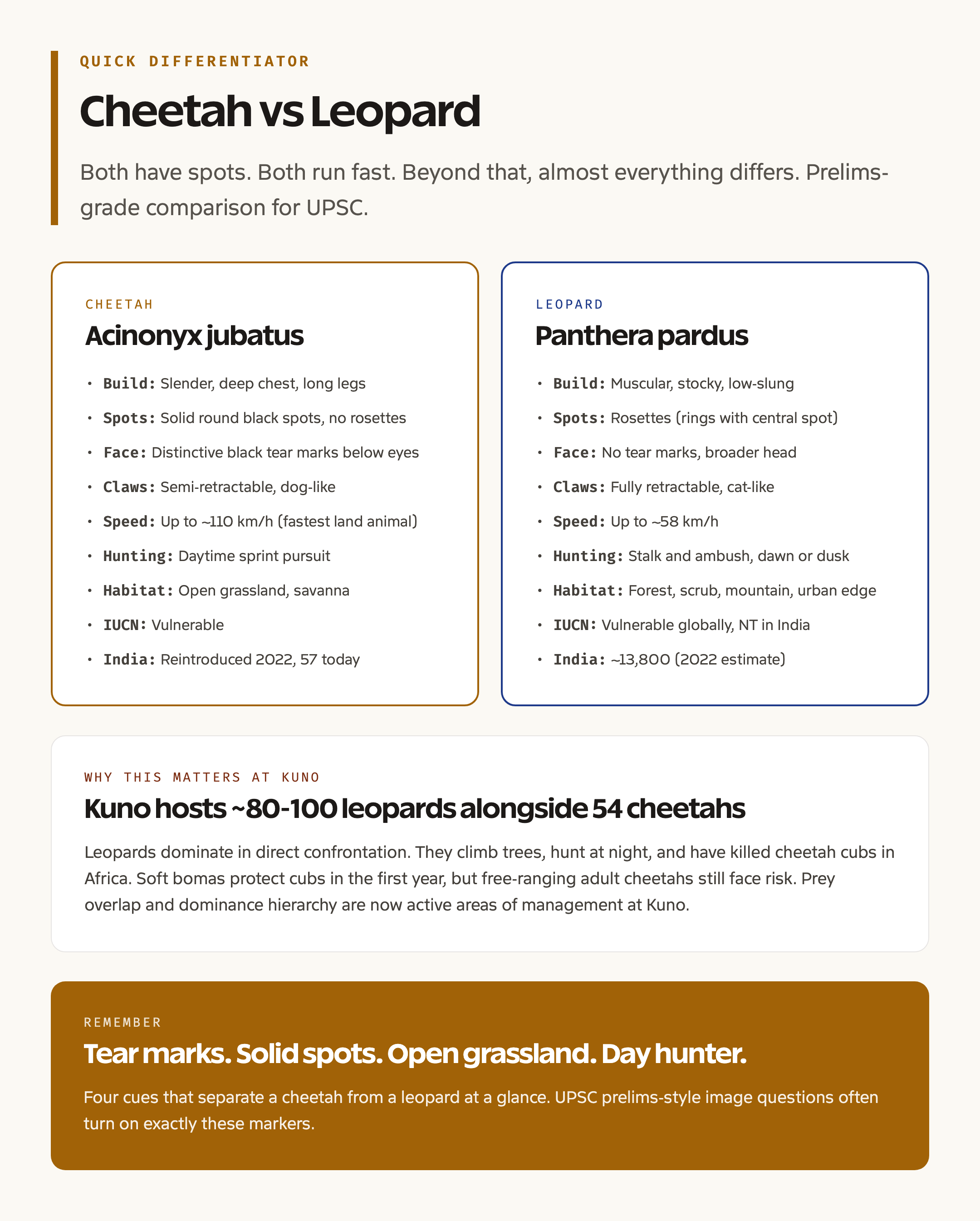
India-Vietnam ECSP: How New Delhi and Hanoi Just Upgraded Their Strategic Compact

Open article →Download PDF

India and Vietnam have spent two decades climbing the same diplomatic staircase, one polite step at a time. In May 2026, they finally skipped a tread. During Vietnamese General Secretary and President To Lam’s three-day state visit to New Delhi, the two sides upgraded their decade-old Comprehensive Strategic Partnership to an Enhanced Comprehensive Strategic Partnership, a tier Vietnam reserves for its closest external relationships.

The India-Vietnam ECSP arrives at a moment when Southeast Asia is once again becoming the centre of strategic gravity. China’s pressure in the South China Sea, the realignment of supply chains away from single-country dependence, and the Indo-Pacific’s quiet militarisation have all sharpened the case for two like-minded democracies to coordinate more closely. The ECSP locks that coordination into a treaty-grade framework with thirteen new agreements, a 25 billion dollar bilateral trade target, and a 2026 to 2030 action plan.

This article walks through what changed during the To Lam visit, why the India-Vietnam ECSP matters for UPSC aspirants reading international relations and Act East policy, and where the relationship is likely to head before the partnership is reviewed again.

Quick Facts

India-Vietnam Partnership Tier Progression
  • Upgrade date: 6 May 2026, during To Lam’s state visit to India from 5 to 7 May.
  • New tier: Enhanced Comprehensive Strategic Partnership, Vietnam’s highest external relationship category alongside China, Russia and a handful of others.
  • Anchor framework: Joint Statement on the ECSP plus a 2026 to 2030 Plan of Action.
  • Trade target: 25 billion dollars in bilateral trade by 2030, up from a current base of roughly 15 billion dollars.
  • Defence dialogue: Launch of a 2+2 dialogue mechanism at Foreign and Defence Secretary level.
  • New deals: Thirteen agreements covering digital technology, critical minerals, rare earths, digital payments, urban cooperation, culture, customs, agriculture and judicial training.

What Just Happened

To Lam landed in New Delhi on 5 May 2026 for his first bilateral state visit to India after taking over as Vietnam’s General Secretary and President. The visit coincided with the tenth anniversary of the Comprehensive Strategic Partnership signed during Prime Minister Narendra Modi’s 2016 visit to Hanoi. The agenda made the intent obvious from day one.

Prime Minister Modi and President To Lam held delegation level talks, addressed the India Vietnam Business Forum, paid tribute at Rajghat, and unveiled the Joint Statement on the ECSP. Both leaders described the upgrade as a reflection of the trust accumulated over fifty years of diplomatic relations and the convergence between India’s Act East and Vietnam’s Act West orientations.

The India-Vietnam ECSP is not a paper relabel. It is paired with a detailed Plan of Action 2026 to 2030 that locks in annual summits, regular 2+2 dialogues, a target of 25 billion dollars in trade, and concrete deliverables in defence industry collaboration, rare earth and critical mineral processing, civil nuclear cooperation, semiconductors, digital public infrastructure exchange, and joint maritime exercises. UPI and Vietnam’s NAPAS payment network agreed to launch interoperable cross-border payments. The two coast guards signed a fresh memorandum on maritime law enforcement.

Background and Historical Context

The India Vietnam story stretches well beyond modern diplomacy. Buddhist exchanges, the Cham temples of central Vietnam, and the Sanskrit inscriptions at My Son testify to a civilisational link dating back nearly two thousand years. In the twentieth century, the two nations grew close as fellow travellers in the Non Aligned Movement, with Jawaharlal Nehru and Ho Chi Minh exchanging visits in 1954 and 1958.

Building Blocks of the Relationship

Formal diplomatic relations were upgraded to ambassador level in 1972. India was one of the few non-communist countries to recognise the Socialist Republic of Vietnam in 1976 and supported Hanoi during its decade of isolation after the Cambodia intervention. The Strategic Partnership came in 2007 during Prime Minister Nguyen Tan Dung’s India visit. The leap to Comprehensive Strategic Partnership in 2016 brought defence, security and Indo-Pacific into the centre of the agenda, including a 100 million dollar Line of Credit to Vietnam for the purchase of patrol vessels.

The new India-Vietnam ECSP builds on this base. It is the third tier in a sequence that began with Strategic Partnership in 2007 and matured into CSP in 2016. The Enhanced version adds three things: a regularised 2+2 dialogue, formal civil nuclear cooperation, and a critical minerals framework that did not exist a decade ago. India’s Act East Policy and its growing engagement with Indo-Pacific geopolitics provide the structural backdrop.

Key Features of the India-Vietnam ECSP

Five Pillars of the India-Vietnam ECSP

The Joint Statement organises the partnership across five interlocking pillars. Each pillar has measurable targets that move it beyond the symbolic.

  • Political and defence cooperation: Annual summits, 2+2 Foreign and Defence Secretary dialogue, regular naval exercises, expansion of the BrahMos cruise missile contract follow-on, and joint training under the existing 500 million dollar Defence Line of Credit.
  • Economic and trade cooperation: Bilateral trade target of 25 billion dollars by 2030, early conclusion of an ASEAN India Trade in Goods Agreement review, mutual recognition of standards, and a joint critical minerals working group.
  • Science, technology and digital: UPI-NAPAS interoperability, cooperation in semiconductors, artificial intelligence, space applications under ISRO Vietnam Space Agency collaboration, and a memorandum on digital public infrastructure.
  • Cultural and people-to-people ties: Restoration of the Cham temple complex at My Son, expansion of the e-visa regime, Hindi and Vietnamese language exchange chairs, and a new Cultural Exchange Programme for 2026 to 2030.
  • Regional and multilateral coordination: Joint positions on Indo-Pacific freedom of navigation, ASEAN centrality, Mekong Ganga Cooperation, UNCLOS based dispute resolution, and reformed multilateralism.

Why It Matters

The India-Vietnam ECSP matters for three reasons that map cleanly onto India’s broader foreign policy. First, it strengthens India’s Act East Policy by placing Vietnam at the centre of a network that already includes Japan, Australia and the United States in the Quad and the Indo-Pacific. Vietnam shares a 1300 kilometre coastline with the South China Sea and a long land border with China, which makes it strategically irreplaceable for any Indian role east of the Strait of Malacca.

Second, the ECSP secures supply chains in sectors that have become national-security questions. Vietnam holds the second largest rare earth reserves in the world after China but exports almost none in processed form. India’s growing electronics manufacturing and electric mobility plans need stable rare earth supply that bypasses Chinese choke points. The critical minerals working group set up under the ECSP is the first bilateral framework outside the Quad to address this.

Third, the partnership demonstrates that India can build deep ties with a one-party communist state when interests converge. Vietnam balances its long border with China through diversified relationships, and India has now joined the inner circle of that balancing strategy alongside Russia, China, the United States, Japan and Australia.

Detailed Analysis

Three threads run through the ECSP and deserve closer reading. The first is defence industrial cooperation. The BrahMos sale to Vietnam, signed in 2022 and partially delivered, was India’s first major export of an indigenous strike missile. The ECSP commits both sides to a follow-on order, expansion to Akash, and joint development of light combat systems. The defence line of credit has been topped up. Vietnamese pilots have begun training on the Su-30MK series at Indian air force schools.

The second thread is connectivity. Vietnam joins India in pushing for a credible International North South Transport Corridor and an India Myanmar Thailand Trilateral Highway extension. Direct flights between Indian metros and Hanoi, Ho Chi Minh City, Da Nang and Phu Quoc have multiplied since 2022. Tourism crossed 500,000 Indian visitors in 2025 and is expected to double by 2030 under the new visa regime.

The third thread is the careful management of the China factor. Neither India nor Vietnam mentions China by name in the ECSP joint statement, but the references to freedom of navigation, the rule of law in the South China Sea, UNCLOS, peaceful resolution of disputes and reformed multilateralism make the subtext obvious. Both countries have ongoing territorial disputes with Beijing and have learnt that a public alliance against China is less useful than quiet coordination on capacity building, exercises and procurement.

Comparative Perspective

India-Vietnam Trade Trajectory Toward 2030

Vietnam now holds Enhanced or Comprehensive Strategic Partnerships with seven countries: China, Russia, India, the United States, South Korea, Japan and Australia. The India tier upgrade places New Delhi alongside Washington and Seoul as the most recent additions to the top category. Hanoi’s bamboo diplomacy is deliberately calibrated so no partner becomes dominant.

Compared with India’s other Enhanced or Special Strategic Partnerships, the Vietnam ECSP sits closer to the Japan model than the Russia model. Japan offers technology and capital. Russia offers legacy defence supply. Vietnam offers regional positioning, critical minerals and a manufacturing alternative. The mix is different enough that the partnership complements rather than competes with existing ties. The BRICS grouping and the Shanghai Cooperation Organisation do not include Vietnam, which makes the bilateral channel more important for India’s Southeast Asia outreach.

Challenges Ahead

The ECSP is ambitious but not frictionless. Trade is still skewed in India’s favour, with Indian exports of pharmaceuticals, marine products and agro chemicals exceeding Vietnamese exports of electronics and footwear. Vietnam wants better market access for its consumer electronics and agricultural goods, and India wants stronger protection for its services exports.

Defence deals move slowly. The BrahMos order has been delivered only in part, and Hanoi has been cautious about further high profile purchases that might invite Chinese retaliation. Civil nuclear cooperation will need careful framing because Vietnam’s earlier reactor plans were shelved in 2016. The 2+2 dialogue at Secretary level is a useful start but stops short of the ministerial 2+2 that India runs with the United States, Japan and Australia.

Connectivity remains the weakest link. Direct shipping lines between Indian east coast ports and Vietnamese deep water ports are thin, and the absence of an active India ASEAN free trade agreement review continues to depress trade growth.

Prelims Pointers

  • ECSP tier: Vietnam’s top external relationship category; India joins China, Russia, the United States, Japan, South Korea and Australia in this group.
  • Visit dates: General Secretary and President To Lam, 5 to 7 May 2026.
  • Trade target: 25 billion dollars by 2030.
  • 2+2 Dialogue: Foreign and Defence Secretary level, the first such structure between India and an ASEAN partner.
  • Mekong Ganga Cooperation: Six-member regional grouping including India, Cambodia, Laos, Myanmar, Thailand and Vietnam, launched in 2000.
  • Critical minerals: New working group under the ECSP to focus on rare earths, lithium and processing technology.

Mains Practice Questions

  1. GS Paper 2: Discuss the significance of the India-Vietnam Enhanced Comprehensive Strategic Partnership for India’s Act East Policy and Indo-Pacific strategy.
  2. GS Paper 2: Critically examine the role of bilateral strategic partnerships in advancing India’s foreign policy objectives, with reference to the India Vietnam ECSP.
  3. GS Paper 3: How can critical mineral partnerships with Vietnam and other ASEAN states reduce India’s strategic dependence on a single source country?
  4. GS Paper 2: Vietnam’s bamboo diplomacy offers lessons for middle powers navigating major power rivalry. Discuss in the context of India’s own non aligned tradition.

Way Forward

The ECSP gives both governments a framework. Translating it into outcomes will require steady execution rather than fresh announcements. Defence orders need to clear faster, the trade in goods agreement review with ASEAN must move, and the 2+2 mechanism should mature into a ministerial format within three years. Critical minerals work must produce a pilot processing facility before the next summit. The cultural component, often dismissed as soft power, will quietly underpin the economic and strategic agenda by widening the base of constituents who care about the relationship.

For India, the India-Vietnam ECSP is the most concrete addition to Act East since the 2016 CSP. For Vietnam, it is a hedge that gives Hanoi more diplomatic room. For students of international relations, it is a textbook case of how middle powers build leverage through layered partnerships rather than formal alliances.

Frequently Asked Questions

What is the India-Vietnam ECSP and when was it signed?

The India-Vietnam ECSP, or Enhanced Comprehensive Strategic Partnership, was signed on 6 May 2026 during Vietnamese General Secretary and President To Lam’s state visit to India. It upgrades the existing Comprehensive Strategic Partnership of 2016 to Vietnam’s highest external relationship tier.

How is the ECSP different from the Comprehensive Strategic Partnership?

The ECSP adds a Foreign and Defence Secretary level 2+2 dialogue, a critical minerals working group, civil nuclear cooperation, UPI-NAPAS interoperability and a binding 2026 to 2030 Plan of Action with measurable targets. The 2016 CSP was broader but lacked these specific mechanisms.

Why does the India-Vietnam ECSP matter for the Act East Policy?

Vietnam sits at the geographic centre of Southeast Asia and shares a long land and maritime boundary with China. Locking in a top tier partnership with Hanoi gives India strategic depth in the South China Sea and a credible economic partner east of Singapore, which is essential for the Act East Policy.

What is the trade target set under the ECSP?

Both governments have set a bilateral trade target of 25 billion dollars by 2030, up from roughly 15 billion dollars in 2024 to 2025.

What are the five pillars of the India-Vietnam ECSP?

The five pillars are political and defence cooperation, economic and trade cooperation, science technology and digital, cultural and people-to-people ties, and regional and multilateral coordination.

How does Vietnam manage relations with both India and China simultaneously?

Vietnam practises bamboo diplomacy, balancing relationships with all major powers including China, Russia, India, the United States, Japan, South Korea and Australia. Vietnam refuses formal alliances but maintains close cooperation with each so no single partner can dominate.

Is the ECSP linked to the BrahMos missile deal?

Yes. The original BrahMos contract was signed in 2022 and partial delivery has happened. The ECSP commits both sides to a follow-on order and expansion to other Indian air defence platforms, including the Akash missile system.

Which countries have Enhanced Comprehensive Strategic Partnerships with Vietnam?

As of May 2026, Vietnam maintains its top tier ECSP relationship with China, Russia, India, the United States, South Korea, Japan and Australia.

How does the ECSP help India’s critical minerals security?

Vietnam holds the second largest rare earth reserves in the world. The new critical minerals working group will identify joint exploration, processing and supply contracts, helping India reduce its near total dependence on Chinese supply for rare earths and several battery metals.

What role does Mekong Ganga Cooperation play in the relationship?

The Mekong Ganga Cooperation, launched in 2000, brings together India and the five lower Mekong nations including Vietnam. It now serves as a regional umbrella for connectivity, culture and capacity building, complementing the bilateral ECSP framework.

LEADS 2025 Report: How India’s Seventh State Logistics Index Reshapes Trade Competitiveness

Open article →Download PDF

The LEADS 2025 Report, the seventh annual Logistics Ease Across Different States exercise, has placed state logistics performance back at the center of India’s competitiveness conversation. Released by the Department for Promotion of Industry and Internal Trade on May 13, 2026, the report assesses all 36 states and union territories on a four-pillar framework covering infrastructure, services, operational ease, and regulatory environment. Its findings shape how investors read state-level logistics, how the Centre allocates capital expenditure under PM Gati Shakti, and how the National Logistics Policy translates into measurable outcomes.

LEADS sits in a small but powerful family of Indian state ranking exercises that includes the Ease of Doing Business Reform Action Plan, the State Energy Efficiency Index, and the SDG India Index. Like its peers, LEADS uses a competitive federalism logic: rank states, publicize results, and let political and investor incentives drive improvement. Unlike most peers, LEADS relies heavily on perception surveys of logistics users, which gives it sensitivity to operational reality but also exposes it to methodological debate.

For UPSC, the LEADS 2025 Report is a versatile asset. It anchors GS Paper 3 questions on infrastructure and economy, GS Paper 2 questions on cooperative and competitive federalism, and prelims questions on government reports and ranking indices. The report’s link to PM Gati Shakti and the National Logistics Policy makes it especially useful in mains essays on infrastructure and trade.

Quick Facts

State Logistics Performance Heatmap Concept
  • Released by: Department for Promotion of Industry and Internal Trade (DPIIT), Ministry of Commerce and Industry
  • Edition: Seventh, covering financial year 2024-25
  • Release date: May 13, 2026
  • Coverage: All 36 states and union territories grouped into Coastal, Landlocked, North-East, and Union Territories categories
  • Methodology: 41 indicators across four pillars, blending stakeholder perception surveys with objective data
  • Tiers: Achievers, Fast Movers, Aspirers, with the highest tier identifying frontier performers in each category
  • Anchored in: National Logistics Policy 2022 and PM Gati Shakti National Master Plan launched in 2021
  • Sample: Several thousand respondents across exporters, importers, transporters, freight forwarders, and warehousing operators

What Just Happened

The seventh edition of LEADS extends the methodology refined since the 2018 launch and adds a sharper read on multimodal corridors. The Department for Promotion of Industry and Internal Trade released the report along with a state-level scorecard, an aggregated dashboard, and a set of recommendations for laggard states.

Achievers in the Coastal States category include Gujarat, Tamil Nadu, Karnataka, and Andhra Pradesh, reflecting deep port infrastructure, dense industrial clusters, and improving last-mile connectivity. In the Landlocked category, Haryana, Punjab, and Uttar Pradesh lead, helped by inland container depots, expressway networks, and proximity to the Delhi-Mumbai and Eastern Dedicated Freight Corridors. Among Union Territories, Delhi and Chandigarh dominate the Achievers tier.

The North-East has been a focus of LEADS attention since the third edition. Assam, Tripura, and Sikkim are flagged as Fast Movers, with the report attributing gains to the Bharatmala Pariyojana, Saubhagya power coverage, and the multi-modal Brahmaputra waterway investments under Inland Waterways Authority of India.

Beyond rankings, the 2025 edition identifies systemic gaps. Average truck turnaround time at major ports has improved but remains above global benchmarks. Warehousing capacity is concentrated in eight to ten states. Digital integration across state-level logistics agencies is uneven, with some states fully linked to the National Logistics Portal Marine and others outside it.

The report also previews a methodology refresh planned for the eighth edition, including expanded coverage of cold chain logistics, e-commerce last-mile performance, and air cargo ecosystem readiness.

Background and Historical Context

India’s logistics policy story has been a slow climb. The 1991 reforms opened trade and unleashed demand for moving goods, but logistics infrastructure lagged. Through the 1990s and 2000s, logistics costs as a share of GDP stayed elevated relative to peer economies, with multiple government and industry estimates placing them in the range of 13 to 14 percent. International benchmarks for developed economies sit closer to 8 to 9 percent.

The first comprehensive policy push came through the Ministry of Commerce and Industry establishing a Logistics Division in 2017. This was followed by the launch of the National Logistics Portal in 2020, the PM Gati Shakti National Master Plan in October 2021, and the National Logistics Policy in September 2022. Together, these formed the most ambitious institutional architecture India has built around logistics.

LEADS launched in 2018 as a state-level supplement to the broader policy push. The first edition was a relatively simple benchmarking exercise. Each subsequent edition refined methodology, expanded indicators, added categorical groupings, and deepened the survey sample. By the fifth edition in 2022, LEADS had become a standard reference in state-level investor briefings.

PM Gati Shakti is the structural backbone for cross-ministerial logistics coordination, and the broader policy logic is captured in earlier analysis of the Gati Shakti master plan benefits and challenges and the deeper logistics sector constraints and challenges review. It is a GIS-enabled digital platform that maps 36 central ministries and 36 states onto a single visualization, with infrastructure assets, project plans, and economic clusters layered together. The aim is to reduce project delays, avoid duplication, and synchronize utility planning. LEADS reads state performance partly through how well states use Gati Shakti tools.

The National Logistics Policy 2022 sets four central targets. Reduce logistics cost as a share of GDP to be comparable with global benchmarks. Improve India’s Logistics Performance Index rank to among the top 25. Create a unified logistics interface platform. Build robust data-driven decision support across the sector. LEADS reports progress on these targets at the state level.

Key Provisions and Methodology

LEADS scores states across four pillars. The Infrastructure pillar captures quality of roads, rail freight ecosystem, port and inland waterways access, air cargo facilities, and warehousing density. The Services pillar covers freight forwarding, customs broking, trucking services, courier and parcel networks, and value-added logistics services like packaging.

The Operational pillar tracks turnaround times, transit reliability, dwell times at terminals, and how predictable the end-to-end movement is for shippers. The Regulatory pillar evaluates ease of obtaining permits, the responsiveness of state logistics agencies, transparency in regulations, and quality of grievance redressal.

The 41 indicators draw from a combination of stakeholder perception surveys, objective administrative data, and Gati Shakti dashboard inputs. The blend matters. Perception surveys catch what users actually experience and reduce the chance that nominally well-performing states ignore on-the-ground bottlenecks. Objective data ensures the index is not dominated by sentiment.

States are grouped into four categories to enable fair comparison. Coastal States include states with major sea-port access. Landlocked States are those without ocean coastline. North-Eastern States are grouped together to reflect shared topographical and connectivity challenges. Union Territories form the fourth category.

Within each category, states are placed in tiers. Achievers are top performers operating at the frontier. Fast Movers have shown meaningful year-on-year improvement. Aspirers are states that need targeted intervention to catch up. The tier nomenclature is identical to NITI Aayog’s tier language in other indices.

Why It Matters

LEADS 4-Tier Framework Breakdown

Logistics performance is one of the most consequential determinants of state competitiveness. Investment location decisions for manufacturing, especially under the Production Linked Incentive schemes, depend heavily on access to ports, freight corridors, and reliable last-mile transport. LEADS findings feed directly into how state investment promotion agencies pitch themselves.

For exporters, every percentage point of logistics cost saved translates into a margin gain that can be redeployed into product, market expansion, or pricing. India’s exporters operate on thinner logistics margins than peers in Vietnam or Thailand. Closing that gap matters disproportionately for labor-intensive sectors like textiles, leather, and engineering.

For consumers, logistics performance shapes price levels and product availability. Cold chain weakness explains why fresh produce prices spike sharply between harvest and consumption. Warehousing density gaps explain why e-commerce delivery in tier-3 and tier-4 cities lags metros by several days.

For state governments, LEADS rankings are political. Parallels run to debates about micro-irrigation initiatives challenges and way forward where competitive state performance has shaped Central scheme outcomes. A jump from Aspirer to Fast Mover, or Fast Mover to Achiever, is celebrated in state budget speeches. A drop reverses the narrative. This creates a useful pressure for state-level reform that pure top-down policy cannot generate on its own.

For the Centre, LEADS provides a basis for differentiated allocation under Gati Shakti and capital outlay. States with weaker logistics performance can be prioritized for targeted infrastructure, while frontier states can be templated for replication.

Detailed Analysis of Top Performers and Lessons

Gujarat’s leadership across the Coastal States category combines deep port infrastructure, a dense industrial corridor on the Delhi-Mumbai Industrial Corridor route, and a state-level Logistics Park policy that has crowded in private warehousing. The state’s electronic permit and single-window systems have substantially reduced regulatory friction.

Tamil Nadu’s performance reflects a different model. It anchors on multiple medium-sized ports rather than one giant terminal, has dense automotive and electronics clusters that drive specialized logistics services, and benefits from continuous infrastructure investment over multiple state governments. Tamil Nadu’s freight corridor planning is among the most disciplined in the country.

Haryana’s lead among Landlocked States is rooted in the Delhi-Mumbai Industrial Corridor passing through it, the Western Dedicated Freight Corridor’s Haryana segments, and concentration of multimodal logistics parks around Manesar, Rewari, and Faridabad. Its proximity to Delhi as a consumer market is structural.

Punjab and Uttar Pradesh’s positioning shows the Dedicated Freight Corridor effect. Both states sit on the Eastern Corridor route, and freight volumes have responded quickly. Uttar Pradesh’s emergence as a logistics geography also reflects expressway investments including the Purvanchal and Bundelkhand expressways.

The North-East story is incremental but real. Assam’s port and waterway investments on the Brahmaputra, the opening of additional border trade points with Bangladesh and Myanmar, and the expansion of air cargo through Guwahati have all moved indicators positively. Tripura’s role as a transshipment node for Bangladesh trade is growing.

Comparative Lens: India in Global Logistics

The World Bank’s Logistics Performance Index ranks India 38th in its 2023 release, an improvement from 44th in 2018, but still behind major peer economies. India’s strongest sub-component is international shipments, while customs and timeliness lag. LEADS-style state-level granularity is rare globally, with most countries assessing logistics performance at national level only.

China’s logistics cost as a share of GDP has fallen from over 18 percent two decades ago to roughly 14 percent today through systematic investment in expressways, high-speed rail freight, and port consolidation. India’s trajectory is similar but on a different timeline.

The European Union and the United States operate at logistics costs in the 8 to 9 percent range, reflecting mature infrastructure, decades of corridor consolidation, and dense intermodal hubs. India’s target under the National Logistics Policy to converge with these benchmarks is ambitious and depends on sustained capital outlay.

ASEAN economies have made LEADS-like exercises increasingly common as part of investment promotion. Vietnam, Thailand, and Indonesia all run state or provincial logistics assessments. India’s LEADS is among the most methodologically developed in the region and is studied by peer countries as a reference.

Challenges and Limitations

Logistics Cost as Percent of GDP Trend

Methodological dependence on perception surveys is the most cited critique. Survey responses can be biased by recent experience, by who the respondents are, and by selection in who agrees to participate. The DPIIT has expanded sample sizes and weighting techniques each year, but some bias is structural.

Coverage gaps remain. Specialized logistics like cold chain, hazardous materials, and air cargo are unevenly captured. The 2025 edition flags this and announces deeper coverage in the next edition.

State-level data fragmentation is real. Several states do not yet feed comprehensive logistics data into the National Logistics Portal or PM Gati Shakti. Without this, the objective layer of LEADS underweights some categories of activity.

The federal policy disconnect is a deeper issue. Many logistics interventions sit with state agencies that report to different ministries, with little vertical coordination. LEADS can identify the gaps but cannot solve them without political alignment.

Climate adaptation is largely missing from current LEADS pillars. Floods in Chennai, Hyderabad, and Bengaluru have repeatedly disrupted port and warehousing operations. As climate volatility grows, logistics resilience needs explicit measurement and weighting.

Prelims Pointers

  • LEADS is published by the Department for Promotion of Industry and Internal Trade under the Ministry of Commerce and Industry
  • The seventh edition was released on May 13, 2026
  • PM Gati Shakti National Master Plan was launched on October 13, 2021
  • The National Logistics Policy 2022 was launched on September 17, 2022
  • India’s rank in the World Bank Logistics Performance Index 2023 is 38
  • The four LEADS pillars are Infrastructure, Services, Operational, and Regulatory
  • LEADS classifies states into Coastal, Landlocked, North-Eastern, and Union Territories categories
  • States are ranked into Achievers, Fast Movers, and Aspirers tiers
  • The Dedicated Freight Corridor Corporation of India operates the Eastern and Western Dedicated Freight Corridors

Mains Questions

  1. “PM Gati Shakti and the National Logistics Policy form a complementary architecture for closing India’s logistics performance gap.” Examine this proposition using LEADS 2025 findings. (GS Paper 3, 15 marks)
  1. Discuss how state-level competitive federalism, anchored by indices like LEADS, has reshaped India’s infrastructure and policy environment. What are the limits of this approach? (GS Paper 2, 15 marks)
  1. India aims to bring logistics costs as a share of GDP in line with global benchmarks. Identify the structural bottlenecks and outline a sectoral roadmap drawing on LEADS findings. (GS Paper 3, 10 marks)
  1. Evaluate the role of multimodal corridors and Dedicated Freight Corridors in transforming India’s logistics geography. Discuss the regional impacts using examples from LEADS 2025. (GS Paper 3, 10 marks)

Way Forward

Deepening LEADS methodology is the immediate priority. The eighth edition should embed cold chain, e-commerce last mile, air cargo, and climate resilience indicators. Sample sizes should grow further, and the survey instrument should disaggregate by shipper size to capture MSME experience.

Closing the data integration gap requires every state to fully onboard onto PM Gati Shakti and the National Logistics Portal. The Centre can incentivize this through performance-linked capital grants tied to data coverage.

Cooperative arrangements between adjacent states need clearer institutional anchoring. The Delhi-Mumbai Industrial Corridor and the Chennai-Bengaluru Industrial Corridor show what is possible when states align. Replicating this around the Eastern and Western Dedicated Freight Corridors needs dedicated coordination structures.

Climate-resilient infrastructure investment must be embedded in Gati Shakti planning. Floodproofing of ports, warehouses, and access roads should be a standard design parameter. The LEADS framework should explicitly score this.

Skilling matters as much as capital. Logistics service quality depends on truck drivers, warehousing workers, customs brokers, and freight forwarders. Sector skill councils need to scale, and ITIs and polytechnics should include logistics-specific tracks.

Finally, India should engage internationally to push its DPI-style logistics platforms as exportable goods, building on the larger DPI India Stack reference architecture. The National Logistics Portal Marine, the Logistics Data Bank, and the Gati Shakti platform are world-class digital tools that peer economies are interested in adopting.

Frequently Asked Questions

What is the LEADS 2025 Report?

LEADS, or Logistics Ease Across Different States, is an annual assessment of state and union territory logistics performance published by the Department for Promotion of Industry and Internal Trade. The 2025 edition is the seventh in the series, released on May 13, 2026, covering financial year 2024-25.

How are states classified in the LEADS report?

States are grouped into four categories: Coastal States with sea-port access, Landlocked States, North-Eastern States, and Union Territories. Within each category, states are placed into Achievers, Fast Movers, or Aspirers tiers based on a four-pillar framework.

What are the four pillars of the LEADS framework?

The four pillars are Infrastructure (roads, rail, ports, warehousing), Services (freight forwarding, trucking, courier networks), Operational (turnaround times, transit reliability), and Regulatory (permits, transparency, grievance redressal).

How does LEADS connect to PM Gati Shakti?

PM Gati Shakti is the GIS-enabled national master plan that synchronizes infrastructure planning across central and state agencies. LEADS draws on Gati Shakti dashboard data and partly assesses how effectively states use the platform. The two are complementary tools in the National Logistics Policy architecture.

Which states are top performers in LEADS 2025?

Gujarat, Tamil Nadu, Karnataka, and Andhra Pradesh lead the Coastal States category. Haryana, Punjab, and Uttar Pradesh lead the Landlocked category. Delhi and Chandigarh lead Union Territories. Assam, Tripura, and Sikkim are Fast Movers in the North-East.

What is the National Logistics Policy 2022?

The National Logistics Policy, launched in September 2022, aims to reduce logistics costs, improve India’s Logistics Performance Index rank, build a unified logistics interface platform, and embed data-driven decision making. LEADS measures state-level progress toward these targets.

How is logistics cost as a share of GDP measured?

Multiple methodologies exist. Various government and industry estimates place India’s logistics cost at 13 to 14 percent of GDP, against 8 to 9 percent for developed economies. The DPIIT and NITI Aayog are working on a refined official methodology under the National Logistics Policy.

What is the role of Dedicated Freight Corridors in state performance?

Dedicated Freight Corridors, especially the Eastern and Western corridors operated by DFCCIL, separate freight from passenger rail traffic, raise rail freight modal share, and reduce transit times. States along these corridors, including Haryana, Uttar Pradesh, and Gujarat, have shown measurable improvement in LEADS rankings.

How does India compare globally on logistics?

India ranks 38th in the World Bank’s Logistics Performance Index 2023, an improvement from 44th in 2018. China, Vietnam, and Thailand outperform India in most LPI categories, while India outperforms regional peers like Pakistan and Bangladesh.

What are the main critiques of the LEADS methodology?

Critiques include heavy reliance on perception surveys, uneven coverage of specialized logistics like cold chain and air cargo, data integration gaps across states, and limited treatment of climate resilience. The DPIIT addresses many of these in successive editions and has signaled deeper coverage in the eighth edition.

MSP Kharif Crops 2026-27: CCEA Hikes for 14 Crops Decoded

Open article →Download PDF

The Cabinet Committee on Economic Affairs cleared the MSP Kharif crops 2026-27 package on 13 May 2026, raising the minimum support prices for all 14 mandated kharif crops ahead of the sowing season. The headline number was paddy: common-grade MSP rose to Rs 2,441 per quintal, with Grade A paddy a notch higher. Pulses, oilseeds, and coarse cereals received steeper percentage increases, in line with the policy intent of nudging farmers away from the water-intensive paddy-wheat cycle.

The decision lands at a politically charged moment. Farm unions have been arguing that the existing A2+FL formula understates the real cost of cultivation, and have demanded a legal guarantee for MSP tied to the C2 plus 50 percent benchmark recommended by the Swaminathan Commission. The government has held the line on the formula but used the absolute increases to send a signal that procurement-driven price support is still central to its rural strategy.

This explainer breaks down the MSP Kharif crops 2026-27 decision, the formula behind it, how it builds on past trends, what it means for inflation and fiscal arithmetic, and the analytical hooks UPSC aspirants need across Prelims and Mains.

Quick Facts

MSP Kharif Crops 2026-27 At a Glance
  • Approval date: 13 May 2026 by the Cabinet Committee on Economic Affairs.
  • Crops covered: 14 mandated kharif crops including paddy, jowar, bajra, ragi, maize, tur, urad, moong, groundnut, soybean, sunflower, sesamum, niger seed, and cotton.
  • Paddy common MSP: Rs 2,441 per quintal for marketing season 2026-27.
  • Formula used: A2+FL plus 50 percent margin, as recommended by the Commission for Agricultural Costs and Prices.
  • Reference standard: Swaminathan Commission proposed C2 plus 50 percent.
  • Procurement agencies: Food Corporation of India for paddy, NAFED and similar bodies for pulses and oilseeds.

What Just Happened

The cabinet approved the MSP Kharif crops 2026-27 set just before the southwest monsoon onset, giving farmers a clear price signal for the upcoming sowing decisions. Paddy common-grade MSP rose to Rs 2,441 per quintal, a meaningful step over the previous season. Tur dal, urad, and moong saw larger absolute and percentage increases, reflecting the official intent to encourage pulses cultivation and reduce import dependence on edible protein.

Oilseeds received the most attention this round. Soybean, groundnut, sunflower, sesamum, and niger seed all saw double-digit percentage increases relative to their A2+FL cost trajectory. With India importing nearly 60 percent of its edible oil requirement, the government is using MSP to push acreage shifts toward oilseeds, complementing the National Mission on Edible Oils.

Coarse cereals like jowar, bajra, ragi, and maize also got firmer support, in line with the millet push that started during the International Year of Millets 2023. The cabinet release framed the package as a balance between farm-income protection, crop diversification, and consumer-price stability.

Background and Historical Context

The MSP system in India dates to 1965, when the Agricultural Prices Commission was set up to recommend procurement prices for paddy and wheat. The objective then was to secure foodgrain self-sufficiency and insulate farmers from the price collapses that had followed the Green Revolution’s surplus shocks. The commission was renamed the Commission for Agricultural Costs and Prices in 1985 and now covers 23 commodities across kharif, rabi, and other seasons.

Two costs sit at the heart of the debate. A2 captures paid-out costs: seeds, fertiliser, hired labour, fuel, irrigation. FL adds the imputed value of unpaid family labour. C2 adds the rental value of owned land and interest on owned capital. The MSP has historically been built on A2+FL plus a margin. The 2018-19 Union Budget formalised the policy of pegging the margin at 50 percent of A2+FL. The Swaminathan Commission, in its 2006 report, recommended C2 plus 50 percent. Bridging the gap between these two definitions is the heart of the present farm-union demand.

For context on how rural distress and price policy intersect, our analysis of the Swaminathan Commission report and farmer welfare lays out the original recommendations and how they have aged. The MSP and agricultural marketing overview explains the procurement architecture, and the broader kharif crops primer covers the agronomic side.

Key Provisions of the MSP Kharif Crops 2026-27 Package

The 2026-27 round covers 14 kharif crops with crop-wise MSPs published in the official gazette notification. Paddy common-grade MSP rose to Rs 2,441 per quintal; Grade A paddy is set slightly higher. Pulses got steeper absolute increases, with tur dal MSP touching the higher end of the price band, urad close behind, and moong receiving the largest absolute hike to align with rising production costs.

Oilseeds saw the sharpest policy nudge. Soybean MSP rose to support farm-gate viability against international price volatility. Groundnut MSP rose in step. Sunflower seed, sesamum, and niger seed all received above-cost margins to incentivise area expansion. Coarse cereals saw firm increases too: jowar, bajra, ragi, and maize MSPs aim to keep the millet acreage trajectory intact after the post-2023 momentum.

The cabinet release also indicated continued procurement support through Food Corporation of India for paddy, and through NAFED, NCCF, and Hafed for pulses and oilseeds under the Price Support Scheme. Cotton MSP, declared separately for medium and long staples, is implemented through the Cotton Corporation of India.

Why It Matters

Paddy MSP Trend 2018-2026

The MSP Kharif crops 2026-27 decision matters at three levels. At the farm level, it sets the income floor for the largest cropping season of the year. Even when actual market prices stay above MSP, the announced price acts as a signal for sowing choices, input-credit terms, and contract negotiations.

At the macroeconomic level, MSP feeds directly into the Consumer Price Index basket through the cereal and pulse weightings. Larger MSP hikes raise the floor for retail food prices and can complicate the Reserve Bank of India’s inflation-targeting framework. The Monetary Policy Committee has flagged food-price persistence as a key risk, and MSP increases of 5 to 7 percent feed into baseline inflation arithmetic.

At the political-economy level, the announcement is the government’s chosen instrument for replying to the farm-union demand for legal MSP. Rather than legislate a guarantee, the executive has used larger absolute increases on pulses and oilseeds to reset the bargain. This matters for state elections where farm constituencies are decisive and for the ongoing dialogue with farmer organisations.

Detailed Analysis: How the MSP Calculation Actually Works

The Commission for Agricultural Costs and Prices begins each season with a state-wise cost-of-cultivation survey conducted through agricultural universities. The commission compiles A2, FL, and C2 cost data for every crop in each major producing state. It then averages costs across states, weights them by area, and arrives at an all-India weighted cost.

The MSP is then set at A2+FL plus a margin no lower than 50 percent. In practice, for many crops, the announced MSP also crosses 50 percent over A2+FL but falls short of C2 plus 50 percent. For paddy and wheat, the gap between A2+FL plus 50 percent and C2 plus 50 percent has historically been around 12 to 16 percent. For pulses and oilseeds, the gap can widen because C2 imputes higher land-rental values in rainfed regions.

The 14 kharif crops covered span paddy, jowar, bajra, ragi, maize, tur, urad, moong, groundnut, soybean, sunflower, sesamum, niger seed, and cotton. Among these, only paddy receives broad procurement at scale. Pulses and oilseeds get scheme-based procurement that often falls short of declared targets, leaving market prices below MSP in glut years. That is the central operational complaint of farm unions: MSP without procurement is a notional price.

Comparative Perspective

Most large agricultural economies use price-support mechanisms in some form. The United States runs counter-cyclical payments and crop insurance subsidies that effectively underwrite farmer revenue. The European Union’s Common Agricultural Policy has moved from price intervention to direct payments delinked from production. China runs minimum purchase prices for rice and wheat similar to India and adds large reserve stockpiling.

What sets India apart is the dual role of MSP as both a price floor and a procurement trigger linked to the public distribution system. Few other countries combine farmer support with food security distribution at the scale India does. The trade-off is well known: the system favours paddy and wheat over pulses, oilseeds, and millets, contributing to groundwater stress in north-western states and import dependence on edible oils.

Challenges with the MSP Architecture

A2+FL versus C2 Cost Framework

The headline challenge is coverage. MSP procurement at scale exists mainly for paddy and wheat. For the other 12 kharif crops, declared MSPs translate into procurement only in a few states or in pockets where state agencies are active. The result is a wide divergence between announced floor prices and realised farm-gate prices.

The second challenge is the formula debate. Farm unions argue that A2+FL undercounts land rent and capital costs, especially in tenancy-heavy regions where leased-in land is the norm. A C2 plus 50 percent benchmark would raise headline MSPs by 12 to 25 percent across crops, but it would also raise procurement costs, food subsidy bills, and inflation pass-through.

The third challenge is structural: an MSP-procurement system tilted toward paddy and wheat has locked in a cropping pattern that is water-intensive and ecologically stressed. The MSP Kharif crops 2026-27 package nudges toward pulses and oilseeds, but without matching procurement, the price signal does not translate into sowing shifts at scale. The nano-fertiliser push and other input-side reforms have to be paired with credible procurement to make a difference.

Prelims Pointers

  • The Commission for Agricultural Costs and Prices is an attached office of the Department of Agriculture and Farmers Welfare; it is statutory but not constitutional.
  • MSP is announced for 22 mandated crops plus sugarcane, which has a separate Fair and Remunerative Price.
  • A2+FL includes paid-out costs plus imputed family labour value; C2 adds rental value of owned land and interest on owned capital.
  • The Swaminathan Commission, formally the National Commission on Farmers, was constituted in 2004 and submitted its final report in 2006.
  • The Food Corporation of India is the principal procurement agency for paddy and wheat; NAFED, NCCF, and Hafed handle pulses and oilseeds under the Price Support Scheme.
  • Sugarcane FRP is announced by the Cabinet Committee on Economic Affairs separately from MSP; some states declare a higher State Advised Price.

Mains Questions

  1. Critically examine the debate around C2 plus 50 percent versus A2+FL plus 50 percent as the basis for the Minimum Support Price. What are the fiscal and inflationary trade-offs? (GS Paper III, Agriculture)
  2. The MSP Kharif crops 2026-27 package emphasises pulses and oilseeds. Discuss whether price support alone can drive crop diversification in India. (GS Paper III, Agriculture)
  3. Evaluate the role of the Commission for Agricultural Costs and Prices in shaping India’s agricultural-price policy. Suggest reforms to make its recommendations more responsive to ground realities. (GS Paper III, Government Policies)
  4. A legal guarantee of MSP has been a long-standing farmer demand. Analyse the costs, benefits, and design challenges of such a legal framework. (GS Paper III, Economy and GS Paper II, Governance)

Way Forward

Sustainable MSP reform must move on three fronts at once. First, the procurement architecture needs to expand for pulses and oilseeds so that announced prices translate into farm-gate realisations. State agencies must be capitalised, storage capacity expanded, and aggregation through Farmer Producer Organisations strengthened.

Second, MSP should be calibrated alongside non-price instruments. Direct income support like PM-KISAN, crop insurance under PMFBY, and farm-credit interest subvention together do more for net farm income than headline MSP hikes alone. A cleaner separation between price support and income support would let each instrument do its job. Third, the policy must internalise water and soil sustainability. Differential MSPs that reward less-water-intensive crops in stressed basins could nudge the cropping pattern without imposing blanket restrictions.

Frequently Asked Questions

What is the MSP Kharif crops 2026-27 announcement?

It is the Cabinet Committee on Economic Affairs decision dated 13 May 2026 setting minimum support prices for all 14 mandated kharif crops for the 2026-27 marketing season. Paddy common-grade MSP rose to Rs 2,441 per quintal, with pulses and oilseeds receiving larger absolute increases.

Which crops are covered under kharif MSP?

The 14 kharif crops are paddy, jowar, bajra, ragi, maize, tur or arhar, urad, moong, groundnut, soybean, sunflower seed, sesamum, niger seed, and cotton.

What is the A2+FL formula?

A2 covers actual paid-out costs like seeds, fertiliser, hired labour, fuel, irrigation, and rent paid for leased-in land. FL adds the imputed value of unpaid family labour. MSP is currently set at A2+FL plus 50 percent margin.

How does C2 differ from A2+FL?

C2 includes everything in A2+FL plus the rental value of owned land and interest on the value of owned fixed capital. C2 is broader and consistently higher than A2+FL for most crops.

What did the Swaminathan Commission recommend?

The National Commission on Farmers, chaired by M S Swaminathan, recommended that MSP should be at least 50 percent above the C2 cost of production, that procurement should be expanded, and that crop diversification should be encouraged through targeted price support.

Does MSP guarantee a sale to the government?

No. MSP is a declared floor price. The government procures actively for paddy and wheat through the Food Corporation of India and supports pulses and oilseeds through the Price Support Scheme via NAFED, NCCF, and Hafed. Other crops rely on market sales.

How does MSP affect inflation?

MSP hikes raise the floor for retail food prices because procurement at higher prices feeds into the public distribution system and shifts the supply curve for non-procured crops too. The Monetary Policy Committee tracks MSP closely as part of food-price expectations.

Why are pulses and oilseeds getting larger hikes?

India imports a large share of its edible oils and faces structural protein-pulse deficits. Larger MSP increases for pulses and oilseeds are meant to incentivise area shifts away from paddy and wheat toward these crops and to reduce import dependence over time.

What is the difference between MSP and Fair and Remunerative Price?

MSP is announced for the 22 mandated crops plus a separate price for sugarcane. The Fair and Remunerative Price is the central price for sugarcane, while several state governments declare a higher State Advised Price for cane.

Will MSP become legally guaranteed?

The government has held the line on the present executive framework. A legal MSP would require a fresh statute defining covered crops, procurement obligation, financing source, and dispute resolution. The fiscal and inflation implications are still being debated.

BRICS Foreign Ministers Meeting 2026: India’s Chair, Jaishankar’s Pitch, and the Global South Agenda

Open article →Download PDF

The Bharat Mandapam convention centre in New Delhi has hosted many diplomatic moments since it opened, but the BRICS Foreign Ministers Meeting 2026 stood out for a simple reason. It was the first major BRICS gathering after the bloc’s expansion, the first under India’s 2026 chairship, and the first to take place against the backdrop of a hot regional conflict in West Asia. External Affairs Minister S Jaishankar opened the two-day conclave on 14 May 2026 with a phrase that set the tone: international relations are in considerable flux.

The BRICS Foreign Ministers Meeting 2026 brought together delegations from the now eleven-member grouping, partner countries, and the rotating chairs of regional organisations India had invited as guests. The agenda packed in five demanding files: AI governance for development, reformed multilateralism, climate finance for the Global South, expansion and partner country protocol, and the response to the Iran Israel situation. India is in the chair for the calendar year and will host the BRICS Summit in 2026.

This article unpacks what the BRICS Foreign Ministers Meeting 2026 delivered, why India’s chairship matters for the Global South narrative, and what UPSC aspirants need to track on the multilateral diplomacy syllabus.

Quick Facts

BRICS Expanded: Original and New Members
  • Dates: 14 to 15 May 2026, Bharat Mandapam, New Delhi.
  • Chair: India, under the 2026 chairship of the BRICS grouping.
  • Theme: Building for Resilience, Innovation, Cooperation and Sustainability, captured in the acronym BRICS.
  • Chair: External Affairs Minister S Jaishankar chaired the ministerial session.
  • Members present: Brazil, Russia, India, China, South Africa, Egypt, Ethiopia, Iran, United Arab Emirates, Indonesia, and Saudi Arabia as an observer.
  • Partner countries: Belarus, Bolivia, Cuba, Kazakhstan, Malaysia, Nigeria, Thailand, Uganda, Uzbekistan and Vietnam attended in the new partner country format.

What Just Happened

The BRICS Foreign Ministers Meeting 2026 formally opened on the morning of 14 May 2026. Jaishankar welcomed delegations including Russian Foreign Minister Sergey Lavrov, Brazilian Foreign Minister Mauro Vieira, Iranian Foreign Minister Abbas Araghchi, Indonesian Foreign Minister Sugiono and South African Foreign Minister Ronald Lamola. China was represented at the Vice Foreign Minister level.

In his opening remarks, Jaishankar argued that the global economy was being battered by the use of sanctions as a routine policy tool, by disruptions in major shipping lanes, and by attacks on energy infrastructure in West Asia. He called for reformed multilateralism, repeated India’s longstanding case for permanent membership of the United Nations Security Council, and announced three Indian deliverables for the year: a BRICS AI for Development Cooperation Framework, a Climate Finance Roadmap for the Global South, and a Partner Country Modalities document that defines the rights of the ten newly inducted partner states.

The first day ended without a joint communique because of an open Iran United Arab Emirates exchange on the conflict in West Asia. Iran accused the UAE of supporting Israeli military operations. The UAE rejected the charge. Jaishankar moved the BRICS Foreign Ministers Meeting 2026 past the dispute through bilateral consultation and the joint outcome was issued the next day with a softened West Asia paragraph.

Background and Historical Context

BRICS began as an acronym. The economist Jim O’Neill coined BRIC in 2001 to describe Brazil, Russia, India and China as the four economies that would dominate global growth in the new century. The first BRIC Foreign Ministers meeting was held in New York in September 2006 on the margins of the United Nations General Assembly. The first BRIC Summit followed in Yekaterinburg in 2009. South Africa joined in 2010, turning BRIC into BRICS.

From BRIC to BRICS Plus

The grouping spent its first decade focused on coordination among emerging economies. Key institutional outputs included the New Development Bank in 2014 and the Contingent Reserve Arrangement of 100 billion dollars to support balance of payments. The Johannesburg summit in 2023 took the most consequential decision in the bloc’s history: invite six countries to join in January 2024. Saudi Arabia held back. Argentina, after a government change, declined. Egypt, Ethiopia, Iran and the UAE joined. Indonesia joined in early 2025. By 2026 the bloc has eleven members in practice and ten partner countries in a second tier.

India is now serving its third BRICS chairship after 2012 and 2021. The 2026 chairship comes at a moment when the bloc’s character is being redefined. The original five had broadly similar concerns about Western financial dominance. The eleven member configuration includes oil producers, regional rivals like Iran and the UAE, and democracies like India and Brazil that resist any anti Western posture. The BRICS grouping covers around 45 percent of global population, 35 percent of global GDP in purchasing power parity terms, and 40 percent of crude oil production.

Key Outcomes of the BRICS Foreign Ministers Meeting 2026

India's BRICS 2026 Chairship Priorities

The 15 May 2026 outcome document, called the New Delhi Chair’s Statement, packaged the meeting’s takeaways into six baskets.

  • AI for Development: Endorsement of an AI cooperation framework that will pool training datasets in BRICS official languages, run a model risk assessment task force, and explore a BRICS sovereign AI compute facility.
  • Climate finance: A Global South Climate Finance Roadmap proposing a 200 billion dollar annual mobilisation target by 2030, with BRICS coordinated positions for COP31 in Brazil.
  • Reformed multilateralism: Reaffirmation of UN Security Council reform with explicit reference to permanent representation for India, Brazil and South Africa.
  • Expansion and partner countries: Approval of the Partner Country Modalities Document and an Action Plan to graduate selected partners into full membership over the 2027 to 2028 cycle.
  • Trade and currency: Pilot of a BRICS Cross Border Payment System linking national payment networks, with India offering UPI as a reference implementation.
  • West Asia and conflict resolution: A softened consensus paragraph calling for de-escalation, freedom of navigation through the Strait of Hormuz, and resumed diplomacy through the United Nations.

Why It Matters

The BRICS Foreign Ministers Meeting 2026 matters for India in three concrete ways. It anchors India’s claim to leadership of the Global South at a moment when the G20 process has thinned out. It gives Indian companies in fintech, digital public infrastructure and renewable energy a multilateral platform to scale. It also stress tests the proposition that India can chair a bloc that includes both Russia and Iran without alienating the United States and the European Union.

For the Global South, the meeting is significant because BRICS is becoming the venue where reformed multilateralism is most actively debated. The G20 has slowed under the weight of geopolitical splits, and the United Nations General Assembly has become a venue for speeches rather than decisions. BRICS, with the New Development Bank and now a cross border payments pilot, offers something more concrete.

For the international system, the meeting offered an early test of whether the expanded BRICS can produce outcomes despite internal contradictions. The Iran UAE exchange showed how thin the consensus can be. The softened joint statement showed that the chair can still move the bloc forward if it focuses on functional baskets rather than political quarrels.

Detailed Analysis

The first thread worth pulling is reformed multilateralism. India has used every chairship since 2012 to press for UN Security Council reform. The Delhi outcome document repeated this in stronger language than the 2024 Kazan declaration, naming India, Brazil and South Africa as candidates for permanent seats. Whether China and Russia will support text that names specific candidates at the United Nations remains an open question, but the BRICS Foreign Ministers Meeting 2026 created a paper trail.

The second thread is the Global South Climate Finance Roadmap. Developed economies have repeatedly missed the 100 billion dollar climate finance commitment first made at COP15 in 2009. The BRICS roadmap calls for a doubling of that target by 2030 and tasks the New Development Bank with mobilising at least 30 billion dollars of the total. The roadmap also flags concessional finance for adaptation, not just mitigation, which has been a long standing Global South demand.

The third thread is the careful management of expansion. The Partner Country Modalities Document grants partner states observer rights, access to BRICS working groups, and a clear path to full membership through merit-based criteria. The document was drafted by India and reflects a preference for measured expansion rather than the rapid enlargement Russia and China had advocated.

The fourth thread is currency. BRICS does not propose a common currency, contrary to commentary in some Western media. The 2026 chair’s statement explicitly clarifies that the immediate priority is settlement in local currencies and a cross border payment messaging layer. UPI’s offer to act as a reference implementation strengthens India’s voice in this debate. Russia’s earlier push for a BRICS Pay currency has been deferred.

Comparative Perspective

BRICS Summit Cycle Timeline

The BRICS Foreign Ministers Meeting 2026 sits between two earlier benchmarks. The 2024 Russia chairship at Nizhny Novgorod and the Kazan Summit produced a heavily Russia centric agenda focused on settlement bypass and political coordination against the West. The 2025 Brazil chairship at Rio produced a Global South focused agenda heavy on climate, health and food security. India’s 2026 chairship combines elements of both while adding AI for Development, digital public infrastructure and reformed multilateralism as distinctly Indian themes.

The Group of Twenty, which India chaired in 2023, offers a useful contrast. The G20 is broader, includes the West, and operates with a strict consensus rule. BRICS Plus is narrower, excludes the West, and increasingly operates with rotating chair leadership rather than full consensus. Each grouping has its advantages. India’s diplomacy is now built on the assumption that both will run in parallel for the foreseeable future.

Challenges Ahead

The BRICS Foreign Ministers Meeting 2026 surfaced challenges that the bloc will have to manage through the rest of India’s chairship year. Internal rivalry between Iran and the UAE could derail the West Asia paragraph at the summit. China prefers a more anti Western posture than the Delhi outcome reflects. Russia continues to use BRICS as a sanctions bypass platform, which makes Brazil and India uncomfortable.

Cohesion is a structural challenge. The bloc now spans regimes from democratic Brazil and India to authoritarian Russia and clerical Iran. Setting common positions on human rights, terrorism or freedom of navigation requires careful drafting. The new BRICS Cross Border Payment System will only succeed if member central banks cooperate on technical standards, which historically has been slow.

Resourcing is another constraint. The New Development Bank’s lending capacity is far smaller than the World Bank or the Asian Development Bank. The proposed AI compute facility and the Climate Finance Roadmap need investment that the bloc has yet to commit. Without resources, the BRICS agenda risks becoming a Communique heavy exercise.

Prelims Pointers

  • Founding year: First BRIC Foreign Ministers meeting in 2006; first summit in 2009.
  • Members: Brazil, Russia, India, China, South Africa, Egypt, Ethiopia, Iran, UAE, Indonesia. Saudi Arabia is yet to confirm membership.
  • Partner Countries 2025: Belarus, Bolivia, Cuba, Kazakhstan, Malaysia, Nigeria, Thailand, Uganda, Uzbekistan, Vietnam.
  • Institutions: New Development Bank in Shanghai, Contingent Reserve Arrangement of 100 billion dollars.
  • Indian chairship: Third Indian chairship after 2012 and 2021.
  • Theme: Building for Resilience, Innovation, Cooperation and Sustainability.

Mains Practice Questions

  1. GS Paper 2: Discuss the significance of India’s BRICS chairship in 2026 for the Global South narrative and reformed multilateralism. (250 words)
  2. GS Paper 2: Critically examine how the expansion of BRICS has affected the coherence and agenda setting capacity of the grouping. (250 words)
  3. GS Paper 3: What are the implications of the proposed BRICS Cross Border Payment System for India’s digital public infrastructure and financial sovereignty?
  4. GS Paper 2: Compare and contrast the G20 and BRICS as platforms for India’s foreign policy in the present international system.

Way Forward

India’s chairship runs until the end of 2026 and culminates in the BRICS Summit later in the year. Three deliverables will define whether the chairship is remembered as substantive. The AI for Development framework must move from a paper concept to a working compute pilot. The Climate Finance Roadmap must produce a credible mobilisation pathway with the New Development Bank as anchor. The Partner Country Modalities Document must be ratified at the summit so the bloc has a transparent enlargement playbook.

The BRICS Foreign Ministers Meeting 2026 has set the table. The summit later in the year will tell us whether the eleven member bloc can convert process into outcomes. For UPSC aspirants, this is one of the cleanest case studies of multilateral diplomacy on the current syllabus, and the New Delhi outcome document is essential reading.

Frequently Asked Questions

What is the BRICS Foreign Ministers Meeting 2026?

The BRICS Foreign Ministers Meeting 2026 is the annual ministerial conclave of the BRICS grouping. It took place on 14 and 15 May 2026 at Bharat Mandapam, New Delhi, under India’s 2026 chairship and was chaired by External Affairs Minister S Jaishankar.

Why is India chairing BRICS in 2026?

The BRICS chair rotates annually among member states. India chaired in 2012 and 2021. The 2026 chair returned to India under the standard rotation, with Russia having chaired in 2024 and Brazil in 2025.

What is the theme of India’s BRICS chairship?

The theme is Building for Resilience, Innovation, Cooperation and Sustainability, with the first letters spelling BRICS. The theme frames India’s priority areas including AI for Development, climate finance, reformed multilateralism, and partner country integration.

Who are the new BRICS members after expansion?

Egypt, Ethiopia, Iran and the United Arab Emirates joined in January 2024. Indonesia joined in 2025. Saudi Arabia was invited in 2023 but has not formally accepted. Argentina, also invited, declined after its 2023 government change.

What are BRICS partner countries?

Partner countries are a second tier announced at the Kazan Summit in 2024. They include Belarus, Bolivia, Cuba, Kazakhstan, Malaysia, Nigeria, Thailand, Uganda, Uzbekistan and Vietnam. They attend BRICS meetings, participate in working groups and can be considered for full membership.

What is the BRICS Cross Border Payment System?

It is a pilot framework agreed at the 2026 Foreign Ministers Meeting to link member national payment networks. India has offered UPI as a reference implementation. The system is designed to support local currency settlement and does not propose a common BRICS currency.

How did the West Asia situation affect the meeting?

Iran and the United Arab Emirates exchanged sharp statements during the meeting over Iran’s claims of UAE support for Israeli military operations. The dispute delayed the joint statement by a day. India as chair worked through bilateral consultation to produce a softened West Asia paragraph in the New Delhi Chair’s Statement.

What is the New Development Bank?

The New Development Bank, headquartered in Shanghai, is a BRICS owned multilateral development bank set up in 2014. It funds infrastructure and sustainable development projects in BRICS and other emerging economies.

Will BRICS adopt a common currency?

No common BRICS currency is on the table. The 2026 Chair’s Statement explicitly limits cooperation to local currency settlement and a cross border payment messaging layer. Russia’s earlier push for a common currency has been deferred.

How does BRICS support India’s Global South agenda?

BRICS gives India a platform to coordinate with major emerging economies on UN Security Council reform, climate finance, food and health security, and digital public infrastructure. India uses the BRICS chair year to push Global South priorities into multilateral negotiations including COP and the United Nations.

PM Modi Austerity Appeal 2026: Gold, Oil, Imports and the CAD Pinch

Open article →Download PDF

The PM Modi austerity appeal of 12 May 2026 has landed in the middle of a tightening external balance sheet. Speaking at a public event in Delhi, the Prime Minister urged citizens to consciously moderate their spending on five flagged categories: gold, petroleum products, foreign travel, edible oils, and chemical fertilisers. The list is not a random selection. Each of these items accounts for a substantial slice of India’s import bill and feeds directly into current account deficit pressure.

The appeal is being read as the rhetorical anchor of a broader Swadeshi 2.0 narrative. Where the original Swadeshi movement of the early twentieth century was about political assertion through economic self-reliance, the 2026 version is about macroeconomic stability through behavioural shift. The signal is voluntary, but the economic logic behind it is hard.

This article explains what the PM Modi austerity appeal covers, why each category matters for the external accounts, how it links to the current account deficit and forex reserve cushion, and what the policy mix behind the rhetoric looks like.

Quick Facts

Five-Category Austerity Card Set
  • Date of appeal: 12 May 2026 at a public event in Delhi.
  • Five flagged categories: gold, petrol or petroleum products, foreign travel, edible oils, and chemical fertilisers.
  • Combined import dependence: these five categories together account for a substantial share of India’s merchandise import bill.
  • Macroeconomic anchor: sustained pressure on the current account deficit and forex reserves.
  • Broader narrative: positioned as Swadeshi 2.0, linking citizen choices to import substitution.
  • Policy adjacencies: PM Pranam, National Mission on Edible Oils, PLI schemes, and ethanol blending.

What Just Happened

In a public address on 12 May 2026, PM Modi flagged five spending categories where citizen restraint, he argued, would directly help the national balance sheet. The phrasing was conversational, but the choice of items signalled coordination with the macroeconomic policy stance.

Gold imports had recently spiked again, partly because global prices and partly because of festive and wedding demand. Petroleum imports remained elevated despite ethanol blending progress. Foreign travel, which counts under services-account outflows, has been rising as outbound tourism normalises post-pandemic. Edible oil imports remained near 60 percent of consumption. Chemical fertilisers, especially urea and DAP, continue to weigh on import bills and subsidy budgets.

The PM Modi austerity appeal asks for citizen-level moderation: jewellery instead of bullion stockpiling, public transport over private fuel-heavy vehicles, domestic tourism over foreign trips, traditional oils blended with imported ones, and organic or nano-fertiliser use where viable. The framing is voluntary, not regulatory, but it dovetails with several existing policy instruments.

Background and Historical Context

India has long run a structural trade deficit, offset partly by services exports and remittances. The current account deficit has historically been the most-watched external indicator because it tells investors how much foreign capital India needs each year to balance its books. When the current account deficit widens beyond 2.5 to 3 percent of GDP, the rupee comes under pressure, forex reserve drawdowns accelerate, and import inflation rises.

Three of the five flagged categories have figured in past austerity calls. Indira Gandhi famously appealed for restraint on gold imports in the 1970s. The 1991 balance-of-payments crisis prompted explicit measures including gold pledging by the government. Atal Bihari Vajpayee’s government in the early 2000s pushed import substitution for select capital goods. The present appeal sits in that lineage but uses softer, behavioural framing rather than tariff hikes alone.

The Swadeshi movement of the early twentieth century, anchored by figures like Bal Gangadhar Tilak, Aurobindo Ghose, and later Mahatma Gandhi, was an early example of consumer choice as a political and economic tool. The contemporary Swadeshi movement discourse has evolved from boycott to brand-choice, with policy instruments like Make in India, PLI, and Vocal for Local layered on top.

Key Provisions of the Austerity Appeal

The PM Modi austerity appeal is not a notification or a legal instrument; it is a behavioural call paired with a policy stack. Each of the five categories maps to specific government programmes that the appeal implicitly reinforces.

On gold, the policy stack includes import duty, Sovereign Gold Bonds, the Gold Monetisation Scheme, and PAN-card thresholds for high-value transactions. The appeal nudges citizens toward holding paper-gold or sovereign instruments rather than fresh bullion imports. On petroleum, the ethanol blending programme has reached around 20 percent under the E20 roadmap, electric vehicle penetration is rising, and public transport investments are scaling. The appeal asks citizens to align personal travel choices with these instruments.

On edible oils, the National Mission on Edible Oils targets palm-oil acreage expansion in the northeast and oilseed productivity gains, complemented by the MSP push for oilseeds discussed in our MSP Kharif crops 2026-27 analysis. On foreign travel, the Dekho Apna Desh initiative and Swadesh Darshan circuit funding aim to deepen domestic tourism. On chemical fertilisers, the PM Pranam scheme rewards states that reduce chemical fertiliser use, and the One Nation One Fertiliser branding consolidates the market, alongside the nano-fertiliser rollout.

Why It Matters

India Current Account Deficit Trend

The PM Modi austerity appeal matters because the underlying arithmetic is real. The five categories together account for a large slice of India’s merchandise import bill and several percentage points of services outflow. Even a modest behavioural shift, sustained across millions of households, can compress the current account deficit by a meaningful margin.

The appeal also matters because it reframes citizen behaviour as a tool of macroeconomic management. The classical levers of monetary tightening and tariff hikes have known side-effects: slower growth, dearer credit, and reciprocal trade actions. Behavioural calls have lower direct cost but also depend on credibility and follow-through. The fact that the appeal is paired with concrete policy schemes makes it harder to dismiss as rhetoric.

Finally, the appeal sits within a longer geopolitical pivot. Critical-mineral dependence, semiconductor imports, and energy security have all become bipartisan concerns. By widening the conversation to everyday consumption, the government links household choices to strategic autonomy in a way that earlier austerity calls did not.

Detailed Analysis: How Each Category Links to the External Balance

Gold accounts for one of the largest non-essential import categories in India’s merchandise basket. In high-import months, gold inflows have crossed USD 5 to 7 billion. Restraint on jewellery and bullion purchases, even modest, can compress the deficit. Sovereign Gold Bonds offer a domestic-financed alternative that meets investment demand without import outflow.

Petroleum imports are the single largest line item in India’s trade deficit, and prices are exogenously volatile. Ethanol blending under E20 has reduced petrol-equivalent imports, but diesel-heavy freight and aviation fuel demand keep the bill high. Personal-vehicle fuel restraint, electric two-wheeler and three-wheeler uptake, and shift toward public transport all bend the import curve.

Edible oils are a structural vulnerability. India imports palm oil from Indonesia and Malaysia, soybean oil from Argentina and Brazil, and sunflower oil largely from Ukraine and Russia. Any supply shock translates almost instantly into household inflation. Foreign travel under the services account adds dollar outflow that does not generate matching dollar inflow unless India can attract reciprocal tourism. Chemical fertilisers depend on imported urea, DAP, and potash, with the import bill peaking when global gas prices rise.

Comparative Perspective

Several economies have used austerity messaging during external stress. The United Kingdom ran wartime austerity into the 1950s. South Korea staged a gold-collection drive during the 1997 Asian crisis where citizens donated gold to shore up reserves. China has historically used administrative and tariff levers rather than appeals. Japan blends both: nudging through public communication and structural policy on energy efficiency.

India’s choice in 2026 is closer to the South Korean playbook in spirit, though scaled for a much larger and more decentralised consumer base. The combination of moral suasion plus policy stack also recalls Singapore’s long-running campaigns on water conservation and saving, where behavioural framing complemented pricing.

Challenges with the Austerity Approach

Import-Substitution Roadmap

The first challenge is that voluntary appeals often work at the margin but rarely deliver structural shifts on their own. Without sustained policy reinforcement, the effect fades within a few quarters. The second challenge is income elasticity. Lower-income households consume less of the imported basket to begin with; their compliance has limited dollar impact. Higher-income households drive most discretionary imports, and their behaviour is shaped by lifestyle expectations more than appeals.

The third challenge is sectoral. Gold demand has a deep cultural component tied to weddings, festivals, and wealth storage. Foreign travel has a status dimension. Edible oils have substitution limits set by cuisine and pricing. Chemical fertilisers have crop-cycle inertia. Each requires a different policy mix, not a single message.

The fourth challenge is implementation. An austerity appeal not backed by visible state-level discipline on capital expenditure, subsidy efficiency, and import-substitution timelines can read as one-sided. The PM Modi austerity appeal will be judged in part by whether public-sector and government-side spending shows comparable restraint where it can.

Prelims Pointers

  • The current account deficit measures the gap between a country’s outflows and inflows on trade in goods and services, primary income, and secondary income.
  • Forex reserves include foreign currency assets, gold, Special Drawing Rights, and reserve tranche position with the IMF.
  • The Sovereign Gold Bond scheme was launched in 2015 to reduce physical gold demand by offering paper-gold investment instruments with interest plus capital appreciation.
  • The PM Pranam scheme rewards states that reduce chemical fertiliser use by redirecting urea subsidy savings to alternative agriculture investments.
  • Ethanol blending in petrol crossed 15 percent in 2024 and is targeting 20 percent under the E20 roadmap.
  • The Swadesh Darshan and Dekho Apna Desh schemes promote domestic tourism circuits and reduce services-account outflows.

Mains Questions

  1. Discuss how citizen-level consumption choices can influence India’s current account balance. Critically examine the PM Modi austerity appeal of 2026 in this context. (GS Paper III, Economy)
  2. Examine the policy stack supporting the PM Modi austerity appeal, including ethanol blending, Sovereign Gold Bonds, and PM Pranam. How effective are these instruments in reducing import dependence? (GS Paper III, Government Policies)
  3. Compare and contrast the original Swadeshi movement with the contemporary Swadeshi 2.0 narrative. What are the continuities and changes in objectives and methods? (GS Paper I, History and GS Paper III, Economy)
  4. Edible oil imports remain a structural vulnerability for India. Suggest a comprehensive strategy to reduce import dependence over the medium term. (GS Paper III, Agriculture and Economy)

Way Forward

The PM Modi austerity appeal will deliver lasting impact only if it is paired with execution on three fronts. First, the policy stack on each flagged category must move on a measurable timeline: ethanol blending to 20 percent and beyond, oilseed acreage and yield improvements with deep procurement support, fertiliser productivity through nano-formulations, and Sovereign Gold Bond uptake at scale.

Second, supply-side reforms must lower the cost of compliant choices. Domestic tourism infrastructure must catch up so that the substitution from foreign travel feels like an upgrade, not a compromise. Electric mobility must scale beyond two-wheelers, with charging infrastructure that makes substitution from petrol viable in tier-two cities. Third, transparency must improve. Periodic publication of import bills by category, milestones on substitution targets, and household-level guidance would convert a one-off appeal into a sustained behavioural-change programme.

Frequently Asked Questions

What did PM Modi say in the austerity appeal of May 2026?

PM Modi urged citizens to consciously moderate spending on five categories: gold, petroleum products, foreign travel, edible oils, and chemical fertilisers. The appeal was framed as Swadeshi 2.0 and linked citizen choices to reducing India’s import dependence and external account pressure.

Why these five categories specifically?

Each of the five categories contributes a large share of India’s merchandise or services import bill and weighs on the current account deficit. They are also areas where domestic substitutes or alternative consumption choices exist and where government policy is actively pushing self-reliance.

What is the current account deficit?

The current account deficit is the difference between a country’s payments to and receipts from the rest of the world on trade in goods and services, primary income such as interest and dividends, and secondary income such as remittances. A wider deficit means a country needs more foreign capital inflow to balance its books.

How does gold demand affect India’s external balance?

Gold is one of the largest non-essential import items for India. High gold imports drain forex reserves, widen the trade deficit, and put pressure on the rupee. Sovereign Gold Bonds and the Gold Monetisation Scheme offer paper-gold alternatives that meet investment demand without import outflow.

Is the appeal a legal restriction?

No. The appeal is a behavioural call by the Prime Minister, not a legal or regulatory instrument. It is reinforced by existing policy schemes like ethanol blending, PM Pranam, the National Mission on Edible Oils, Sovereign Gold Bonds, and the Dekho Apna Desh initiative.

What is Swadeshi 2.0?

Swadeshi 2.0 is the contemporary framing of economic self-reliance that combines consumer choice, manufacturing-side Production-Linked Incentives, and import substitution. It draws inspiration from the original Swadeshi movement but applies the logic to modern global value chains.

How will the appeal affect inflation?

If the appeal succeeds in moderating import demand, it can ease rupee depreciation pressure and reduce imported-inflation risk. The short-run effect on retail inflation is limited; the medium-run effect depends on whether domestic substitutes scale.

Has India done this before?

Yes. Calls for austerity and gold restraint were made during the 1970s economic stress and the 1991 balance-of-payments crisis. South Korea ran a famous gold-collection drive during the 1997 Asian crisis. The 2026 appeal is in that tradition but framed for a much larger consumer economy.

What is PM Pranam?

PM Pranam, or the Prime Minister Programme for Restoration, Awareness, Nourishment and Amelioration of Mother Earth, incentivises states to reduce chemical fertiliser use by redirecting urea subsidy savings into alternative-agriculture investments.

How can citizens contribute beyond the five flagged categories?

Beyond the five categories, supporting locally manufactured goods under the Make in India and Vocal for Local push, choosing domestic services where comparable quality exists, and adopting energy-efficient appliances all contribute to lower import dependence over time.

Nicobarese Wildlife Sanctuaries: Tribal Council Opposes Three New Protected Areas in A&N Islands

Open article →Download PDF

A short notification by the Andaman and Nicobar administration to declare three new wildlife sanctuaries in the Nicobar group has reopened one of India’s oldest constitutional debates: how to reconcile statutory conservation with the customary rights of indigenous communities. In May 2026, the Tribal Council of the Nicobars wrote formally to the Lieutenant Governor and the Ministry of Tribal Affairs requesting withdrawal of the proposal, citing inadequate consultation under the Forest Rights Act and the special protection enjoyed by the Shompen as a Particularly Vulnerable Tribal Group.

The Nicobarese wildlife sanctuaries controversy is not just about three forest patches. It tests whether the Forest Rights Act 2006, which has been notified for the Andaman and Nicobar Islands since 2009, can deliver on its promise of protecting habitat rights of PVTGs and recognising community forest resources before any change in land use. The episode also reopens questions about the Great Nicobar transhipment terminal, the Galathea Bay project, and the broader pattern of development pressure on India’s only fully tribal Union Territory.

This article walks through what the administration has proposed, why the Nicobarese are opposed, and how UPSC aspirants should locate the Nicobarese wildlife sanctuaries issue within the polity, environment and tribal rights syllabi.

Quick Facts

Andaman and Nicobar Tribal Reserves Sketch Map
  • Proposed sanctuaries: Three new wildlife sanctuaries notified for public consultation in the Nicobar group of islands in early May 2026.
  • Opposing community: The Nicobarese Tribal Council, supported by Shompen elders and civil society groups.
  • Legal basis cited: Forest Rights Act 2006, particularly Section 3(1)(e) on habitat rights of PVTGs, and the Andaman and Nicobar Islands (Protection of Aboriginal Tribes) Regulation 1956.
  • PVTGs in the Nicobar group: The Shompen, classified as one of India’s most isolated PVTGs.
  • Existing protection: Several Nicobar islands are already designated as tribal reserves under the 1956 Regulation.
  • Land area in question: Sanctuaries would overlap or border ancestral foraging zones, coastal hamlets, and Shompen rainforest habitat.

What Just Happened

The Andaman and Nicobar administration issued draft notifications in early May 2026 proposing three wildlife sanctuaries in the Nicobar group. The stated objective is the protection of endemic species, the Nicobar megapode and the Nicobar long tailed macaque among them, together with mangrove and coral ecosystems damaged in the 2004 tsunami. The notifications also reference international commitments under the Convention on Biological Diversity and the Kunming Montreal Global Biodiversity Framework target of 30 percent protected area coverage by 2030.

The Nicobarese Tribal Council met within days and issued a unanimous resolution opposing the proposal. The Council’s letter argues that no proper Gram Sabha equivalent consultation was held with the Nicobarese village councils, that habitat rights for the Shompen have not been mapped before the sanctuary boundaries were drawn, and that the cumulative impact of the proposed sanctuaries together with the Great Nicobar transhipment terminal threatens the cultural integrity of both communities.

The Nicobarese wildlife sanctuaries proposal has also drawn opposition from former officials of the Anthropological Survey of India, from Shompen welfare societies, and from environmental groups that argue conservation must be co-designed with the resident communities rather than imposed through top down notifications. The Ministry of Tribal Affairs has asked the administration to share the consultation record.

Background and Historical Context

The Nicobar group is geographically and culturally distinct from the Andaman group. It sits at the southern end of the Andaman and Nicobar archipelago, closer to Sumatra than to mainland India. The Nicobarese are an Austroasiatic speaking community spread across most of the inhabited islands, while the Shompen are a smaller and more isolated PVTG that lives in the rainforest interior of Great Nicobar.

The Layered Legal Framework

The Nicobarese and Shompen have lived under a triple-layered protective framework for decades. The first layer is the Andaman and Nicobar Islands (Protection of Aboriginal Tribes) Regulation 1956, which designates tribal reserves and limits entry by outsiders. The second layer is the Scheduled Areas framework under the Fifth and Sixth Schedules of the Constitution, although the Andaman and Nicobar Islands have not been brought under the Sixth Schedule despite long standing demand. The third layer is the Forest Rights Act 2006, which became applicable to the Union Territory after a 2009 notification.

The Forest Rights Act includes a provision specifically designed for communities like the Shompen. Section 3(1)(e) recognises rights including community tenures of habitat and habitation for primitive tribal groups and pre-agricultural communities. Habitat is defined broadly to include the entire customary territory used for foraging, hunting, fishing, swidden cultivation and ritual movement. Once habitat rights are recognised through a process that begins at the Gram Sabha or its equivalent, the area becomes a Community Forest Resource and any change in land use, including the declaration of a wildlife sanctuary, requires the free and informed consent of the rights holders.

Key Concerns Raised by the Nicobarese

Indigenous Communities of the Nicobar Group

The Tribal Council’s letter and supporting petitions raise five specific concerns that map cleanly onto the FRA framework and the 1956 Regulation.

  • Consent and consultation: The Council argues that village councils were not consulted in writing, that the public notice period was inadequate for an isolated archipelago, and that consent forms were not bilingually translated.
  • Habitat rights mapping: Section 3(1)(e) habitat rights for the Shompen have not been delimited or recognised. Drawing sanctuary boundaries before habitat is mapped reverses the statutory sequence.
  • Cumulative impact: Three sanctuaries together with the Great Nicobar transhipment project, the international airport and the township proposal will sharply reduce the customary commons.
  • Restriction on customary use: Wildlife sanctuary status restricts hunting, fishing, swidden cultivation and gathering. These are central to Nicobarese and Shompen economic life.
  • Erosion of self-government: The 1956 Regulation gives tribal councils a quasi-administrative role over their reserves. Imposing sanctuary boundaries without their concurrence dilutes that authority.

Why It Matters

The Nicobarese wildlife sanctuaries issue matters for three reasons. First, it tests whether the Forest Rights Act applies in spirit to one of India’s most isolated regions. The Act has been criticised for poor implementation in the Northeast and in tribal majority districts of central India. If habitat rights cannot be operationalised in the Nicobar group, the credibility of the Act as a tool for PVTG protection will be weakened.

Second, the issue reframes the conservation debate in India. The dominant conservation model in India has been exclusionary, modelled on the colonial era forest reserves and post-independence national parks. The Wildlife Protection Act 1972 allowed for the displacement of communities living inside sanctuaries. The Forest Rights Act 2006 created space for a different model: protected areas managed jointly with resident communities. The Nicobarese wildlife sanctuaries case is a high profile test of which model prevails. India’s wildlife protection regime has yet to find a settled answer.

Third, the case interacts directly with the Great Nicobar development project, including the proposed transhipment terminal at Galathea Bay. Galathea is the most important nesting site for the Giant Leatherback turtle in the northern Indian Ocean. The interaction of conservation with development on the same island has produced an unusual coalition of environmentalists, tribal councils and academic anthropologists who all argue for a more deliberate consent process.

Detailed Analysis

The Nicobarese have a long history of structured self-government. Village councils, called Tuhet, operate at the level of joint family clusters. Above them sit island councils. At the top sits the Tribal Council of the Nicobars, recognised by the administration since the colonial era. This is one of the few examples in India of a chain of traditional governance institutions that survived through colonial rule and post-independence consolidation. Any sanctuary process that ignores this structure is procedurally weak.

The Shompen are a different story. They are nomadic forest dwellers who avoid contact, do not have settled village councils, and live in small kinship bands within the rainforest of Great Nicobar. The Anthropological Survey of India classifies them as a PVTG. The 2011 Census recorded their population at 229. The Forest Rights Act explicitly mentions communities like the Shompen in Section 3(1)(e), but operationalising habitat rights for a community that does not assemble in fixed villages requires careful anthropological work. That work has not been done in the present case.

The Wildlife Protection Act 1972, as amended in 2022, allows for the declaration of community reserves and conservation reserves with the consent of local communities. The Nicobarese case raises the question of why the administration has chosen to declare full wildlife sanctuaries rather than community reserves or conservation reserves, which would be procedurally lighter and more compatible with FRA recognition. A conservation reserve managed by the Tribal Council, with revenue sharing and customary use protection, would have produced fewer objections.

The international dimension is also worth flagging. India’s Kunming Montreal target of 30 percent protected area coverage by 2030 is being read by some forest departments as a license to add new sanctuaries quickly. The CBD framework, however, also requires recognition of indigenous and local community contribution to conservation. The Nicobarese position is consistent with the international consensus that 30 by 30 must be achieved through inclusive rather than exclusive protected areas.

Comparative Perspective

Forest Rights Act Framework for Sanctuaries

The Nicobarese wildlife sanctuaries dispute echoes earlier confrontations in mainland India. In the Niyamgiri hills of Odisha, the Dongria Kondh exercised their FRA right to veto a bauxite mining project after the Supreme Court in 2013 directed that Gram Sabhas decide. In the Mendha Lekha village in Maharashtra, Community Forest Resource recognition transformed local governance and forest economy. In the Northeast, the Sixth Schedule and customary law operate alongside the FRA, producing a more pluralistic system.

The Nicobar group needs a hybrid that draws from these examples. Tribal councils already exist. Habitat rights are statutorily recognisable. The political question is whether the administration will invest the time in a proper consultation or use the public consultation window as a procedural formality.

Challenges Ahead

Implementation challenges in the Nicobarese wildlife sanctuaries case are significant. Mapping Shompen habitat is technically difficult because the community is avoidance prone. Translating consent processes into Nicobarese and Shompen languages requires bilingual facilitators who are not easy to find. Holding public hearings on islands without regular ferry connections multiplies logistical cost.

Politically, the administration faces competing pressures. The Ministry of Environment wants visible additions to the protected area network ahead of CBD reporting. The Ministry of Tribal Affairs wants procedural compliance with FRA. The Ministry of Ports, Shipping and Waterways wants the Galathea project to move ahead. Reconciling these is hard.

There is also a long term capacity question. Sanctuary management requires staff, infrastructure and ongoing community engagement. The Andaman and Nicobar forest department is small relative to the area it manages. Adding three more sanctuaries without budget and staff augmentation could degrade rather than improve protection on the ground.

Prelims Pointers

  • PVTG: Particularly Vulnerable Tribal Group, an administrative category for the most isolated tribal communities. There are 75 PVTGs in India.
  • Shompen: PVTG of Great Nicobar, Austroasiatic language family, population recorded as 229 in 2011 Census.
  • Nicobarese: Austroasiatic speaking community spread across the inhabited Nicobar Islands.
  • Forest Rights Act Section 3(1)(e): Recognises habitat rights of PVTGs and pre-agricultural communities.
  • A&N Tribes Regulation 1956: Designates tribal reserves and limits outsider entry.
  • Wildlife Protection Act 1972: Provides for national parks, sanctuaries, community reserves and conservation reserves.
  • Galathea Bay: Important Leatherback turtle nesting site on Great Nicobar.

Mains Practice Questions

  1. GS Paper 1: Discuss the cultural and economic significance of the Nicobarese and Shompen communities and the policy challenges in protecting their customary rights.
  2. GS Paper 2: Examine the procedural requirements under the Forest Rights Act 2006 for declaring a wildlife sanctuary in a Scheduled or tribal area.
  3. GS Paper 3: Evaluate the tension between India’s biodiversity targets under the Kunming Montreal Framework and the rights of forest dwelling communities under the FRA.
  4. GS Paper 2: Critically examine the institutional architecture for tribal self-governance in the Andaman and Nicobar Islands.

Way Forward

A workable path forward is visible. First, the administration can pause the Nicobarese wildlife sanctuaries notifications and convene a structured consultation with the Tribal Council, Shompen welfare society representatives, and the Ministry of Tribal Affairs. Second, the habitat rights of the Shompen should be mapped under FRA Section 3(1)(e) before any sanctuary boundary is finalised. Third, the administration should consider community reserves and conservation reserves under the amended Wildlife Protection Act as alternatives to full sanctuary status. Fourth, the cumulative impact of the Great Nicobar projects should be assessed jointly with the sanctuary proposal.

The Nicobarese wildlife sanctuaries case can become a model for inclusive conservation if procedural shortcuts are avoided. It can also become a cautionary tale if the administration treats consultation as a formality. The next six months will tell us which way the case turns.

Frequently Asked Questions

What are the proposed Nicobarese wildlife sanctuaries?

The Andaman and Nicobar administration has notified three new wildlife sanctuaries in the Nicobar group of islands for public consultation. The notifications cite protection of endemic species, mangroves and coral systems and align with India’s 30 by 30 biodiversity target.

Why are the Nicobarese opposed to these sanctuaries?

The Tribal Council argues that village councils were not properly consulted, that the Shompen habitat rights under Section 3(1)(e) of the Forest Rights Act have not been mapped, and that the sanctuaries will restrict customary hunting, fishing, swidden cultivation and gathering essential to their economy.

Who are the Shompen?

The Shompen are a Particularly Vulnerable Tribal Group resident in the rainforest interior of Great Nicobar. They are nomadic, avoidance prone and speak an Austroasiatic language. The 2011 Census recorded their population at 229.

What does Section 3(1)(e) of the Forest Rights Act say?

Section 3(1)(e) recognises rights including community tenures of habitat and habitation for primitive tribal groups and pre-agricultural communities. It is specifically designed to protect PVTGs like the Shompen.

How is the 1956 Regulation different from the FRA?

The Andaman and Nicobar Islands (Protection of Aboriginal Tribes) Regulation 1956 protects tribal reserves and limits entry by outsiders. The Forest Rights Act 2006 recognises individual and community rights of forest dwellers over their customary land and resources. Both operate in parallel.

Why has the administration chosen sanctuary status rather than community reserves?

The administration has not publicly explained the choice. Critics argue that community reserves under the amended Wildlife Protection Act 1972 would be more compatible with FRA recognition and tribal council governance.

How does this issue connect with the Great Nicobar project?

Great Nicobar is the site of a proposed transhipment terminal at Galathea Bay and an integrated township and airport project. The sanctuary proposals overlap with land and coastal areas linked to both the project and Shompen habitat, raising concerns about cumulative impact.

What is the role of the Tribal Council?

The Tribal Council of the Nicobars is the apex representative body for the Nicobarese community. It coordinates village level Tuhet councils and acts as the principal interlocutor with the administration. It has issued a formal resolution opposing the sanctuary proposal.

What protected areas already exist in the Nicobar group?

The Nicobar group hosts the Galathea National Park, the Campbell Bay National Park, and several smaller sanctuaries. Tribal reserves under the 1956 Regulation cover much of the inhabited area.

How does this case fit India’s 30 by 30 commitment under the CBD?

India has committed to bringing 30 percent of its land and sea area under protected area or other effective area based conservation by 2030. The Nicobarese case illustrates that meeting the target requires inclusive protected area expansion that recognises customary rights rather than top down notification.

COSOP IFAD India 2026-2033: Eight-Year Rural Partnership Decoded

Open article →Download PDF

The International Fund for Agricultural Development and the Government of India have agreed on a fresh Country Strategic Opportunities Programme for the eight-year cycle from 2026 to 2033. The COSOP IFAD India framework, finalised in mid-May 2026, sets the terms for the next phase of one of India’s longest-running multilateral partnerships on rural development. It moves beyond standalone projects toward an outcome-anchored programme covering smallholder agriculture, market integration, climate resilience, and inclusion.

IFAD has worked with India since 1979 and has co-financed more than thirty projects across most of its agro-ecological zones. The new COSOP refresh comes at a moment when smallholder farmers face overlapping stresses: erratic monsoons, volatile farm-gate prices, mounting input costs, and the slow churn of rural-to-urban migration. The 2026-2033 programme positions IFAD’s support to complement India’s own flagship missions rather than run parallel to them.

This explainer walks through what the COSOP IFAD India framework covers, how it builds on the earlier 2018-2024 cycle, which districts and themes will see priority, and what it means for the UPSC syllabus on rural development, multilateral cooperation, and climate-resilient agriculture.

Quick Facts

COSOP IFAD India 2026-2033 Four-Pillar Framework
  • Programme name: Country Strategic Opportunities Programme, COSOP IFAD India.
  • Duration: Eight years, 2026 to 2033.
  • Counterpart agencies: Department of Economic Affairs, Ministry of Finance for sovereign loans; Department of Agriculture and Farmers Welfare and partner state agencies for implementation.
  • Thematic pillars: Smallholder livelihoods, market integration through Farmer Producer Organisations, climate-resilient agriculture, and gender-youth inclusion.
  • Partnership vintage: IFAD has supported India since 1979, financing more than thirty projects.
  • IFAD type: A specialised agency of the United Nations and an international financial institution, headquartered in Rome.

What Just Happened

IFAD and the Department of Economic Affairs concluded the COSOP IFAD India 2026-2033 process after a multi-round consultation that covered state governments, civil society, Farmer Producer Organisations, and research institutions. The framework was signed off in mid-May 2026 and will guide every new IFAD-financed operation in India through 2033, along with policy-engagement work that runs alongside lending.

Unlike older COSOPs that listed indicative projects, the 2026-2033 framework is organised around outcomes. It commits to measurable improvements in farm productivity, market access, climate resilience, and women-and-youth participation in rural value chains. Each new project will be designed to fit within the framework’s results matrix, which links inputs to mid-term and long-term indicators that align with India’s own development priorities.

Geographically, the COSOP IFAD India strategy will lean toward aspirational districts, tribal subplan blocks, and rainfed agro-ecological zones in central and eastern India. The focus reflects where smallholder vulnerability is highest and where state capacity for converged delivery still has room to grow.

Background and Historical Context

IFAD was created in 1977 as a response to the food crises of the early 1970s. It is the only specialised United Nations agency and international financial institution focused exclusively on rural transformation. India was a founding member and has been both a contributor to IFAD’s resources and a recipient of its financing.

The India-IFAD partnership opened in 1979 with the first agriculture project in Rajasthan. Over the following four decades, projects spread across tribal development in Maharashtra, women-led microenterprise in Andhra Pradesh, hill agriculture in the northeast, dryland farming in Tamil Nadu, and post-disaster rural recovery in Odisha and Kerala. By the early 2020s, IFAD had co-financed dozens of operations cumulatively reaching millions of rural households.

The previous COSOP cycle of 2018-2024 emphasised three pillars: smallholder farmer support, women’s empowerment in rural enterprises, and adaptation to climate variability. Mid-term evaluation findings showed strong results on group formation, women’s collectives, and climate-adaptation practices in dryland regions, but mixed performance on market integration and post-harvest infrastructure. The 2026-2033 design corrects for those gaps. For broader context on how rural finance and structural transformation intersect, our analysis of structural transformation in rural India frames the macro picture.

Key Provisions of the COSOP IFAD India 2026-2033

The new framework rests on four pillars. The first pillar focuses on smallholder livelihoods. It targets farmers with landholdings below two hectares and landless rural labour, through productivity-enhancing technologies, water-use efficiency, livestock-based diversification, and improved access to extension services. Specific support flows through state-led missions and federations of self-help groups.

The second pillar targets market integration. The previous cycle showed that productivity gains alone do not translate into income gains without dependable market linkages. The COSOP IFAD India strategy now invests in Farmer Producer Organisations, aggregation infrastructure, digital trading platforms, value-addition centres, and supply contracts with formal buyers. Several state-level FPO promotion missions, including those under the central FPO scheme, will be co-financed or technically supported.

The third pillar covers climate-resilient agriculture. It funds soil-health interventions, drought-tolerant varieties, micro-irrigation, watershed development, and weather-indexed insurance linkages. The pillar dovetails with the National Mission on Sustainable Agriculture and state-level climate-adaptation plans. The fourth pillar pushes inclusion. It mandates gender-disaggregated targets, youth-enterprise components, and tribal-community programming, with at least half the direct beneficiaries expected to be women.

Why It Matters

India IFAD Partnership Timeline

The COSOP IFAD India 2026-2033 framework matters because India’s rural transformation is at a difficult crossing. Agriculture continues to employ roughly two-fifths of the workforce while contributing about a sixth of GDP. Smallholders dominate landholding distribution, and their viability is shaped by overlapping price, climate, and credit shocks. Standalone government schemes can struggle to address all four risks simultaneously.

IFAD’s value-add is not the volume of finance but the methodology. Its projects typically pilot delivery models that state governments can scale through their own resources later. The COSOP framework also brings convergence: a single results matrix lets policy makers track whether productivity, income, climate-resilience, and inclusion indicators move together rather than separately. That discipline is hard to enforce within India’s domestic-scheme architecture alone.

For multilateral cooperation, the partnership matters because IFAD is one of the few UN agencies where India is both a donor and a recipient. Indian contributions to IFAD’s replenishment cycles signal commitment to South-South cooperation, and the experience gained from IFAD-financed projects has influenced India’s bilateral assistance to other developing countries.

Detailed Analysis: How COSOP IFAD India Translates into Projects

Each COSOP cycle generates a pipeline of specific projects. Under the previous cycle, operations like the Odisha-PVTG empowerment programme, the Andhra Pradesh inclusive market expansion, the Mizoram livelihoods project, and the Jharkhand tribal empowerment initiative were active. Under the 2026-2033 cycle, the pipeline is expected to favour rainfed-belt states and aspirational districts where convergence opportunities with the central rural-development schemes are strongest.

A typical IFAD-financed project blends a sovereign loan from IFAD with co-financing from the state government and complementary grant components, and runs over six to eight years. Implementation goes through a dedicated project management unit set up by the state, supported by IFAD’s country team and roving technical missions. Procurement, financial management, and safeguards follow IFAD’s guidelines, which align broadly with World Bank and Asian Development Bank standards.

The COSOP IFAD India framework also embeds policy-engagement targets alongside lending. IFAD provides analytical work on smallholder economics, climate adaptation, and rural-finance design that feeds into central and state policy discussions. For example, IFAD’s evidence base on women’s collectives has shaped how the Deendayal Antyodaya National Rural Livelihoods Mission designs its federation strategies.

Comparative Perspective

IFAD is one of three main multilateral institutions financing Indian rural and agricultural development. The World Bank works on similar themes with larger ticket sizes and broader sectoral coverage. The Asian Development Bank focuses on rural connectivity, water resources, and energy. IFAD’s distinctive position is its laser focus on smallholder rural transformation and its mandate to reach the poorest rural communities.

Globally, IFAD operates in over a hundred countries, with country strategic opportunities programmes designed for each. The Indian COSOP cycle is comparable in length and architecture to those for other large recipients such as Indonesia, Ethiopia, and Bangladesh. The differentiator for India is the scale of domestic schemes and the depth of state-level institutional capacity, which lets IFAD operate more as a pilot-and-policy partner than as a primary financier.

Challenges in Delivering the COSOP IFAD India Strategy

Priority Districts Coverage

The first challenge is convergence with domestic schemes. IFAD projects work best when they layer onto existing central or state programmes rather than creating parallel structures. Mid-term reviews from the previous cycle flagged cases where implementation arrangements drifted into parallel project management instead of strengthening line departments.

The second challenge is market integration. Productivity gains in smallholder agriculture often hit a ceiling at aggregation. Without functional Farmer Producer Organisations, cold-chain links, and contractual buyers, gains slip away in post-harvest losses and distress sales. The 2026-2033 framework foregrounds market integration, but the execution challenge is real: FPOs need working capital, governance support, and digital infrastructure to scale.

The third challenge is climate co-benefits. Climate-resilient agriculture requires longer time horizons than typical project cycles. Soil-health restoration, watershed treatment, and crop diversification show full results over a decade. IFAD’s eight-year framework gives more space than three- to five-year domestic schemes, but sustained results depend on whether state governments continue investments after project closure. The link to broader structural transformation in rural India determines whether incremental gains translate into durable income shifts.

Prelims Pointers

  • IFAD was established in 1977 as a specialised agency of the United Nations and an international financial institution headquartered in Rome.
  • India is both a contributing member and a beneficiary of IFAD financing; it has been associated with IFAD since the agency’s inception.
  • The COSOP is IFAD’s medium-term country engagement framework, typically running five to eight years.
  • IFAD’s financing instruments include sovereign loans on concessional and ordinary terms, grants, and Debt Sustainability Framework support for low-income countries.
  • IFAD’s flagship publication is the Rural Development Report, released periodically with thematic focus.
  • The President of IFAD is elected by the Governing Council, where India sits on the Executive Board through periodic rotations.

Mains Questions

  1. Discuss the role of multilateral institutions like IFAD in India’s rural development. How does the COSOP IFAD India 2026-2033 framework complement domestic schemes? (GS Paper II, International Institutions)
  2. Examine how smallholder agriculture in India faces overlapping price, climate, and credit risks. Suggest a converged policy response drawing on the COSOP IFAD India framework. (GS Paper III, Agriculture)
  3. Market integration of smallholders through Farmer Producer Organisations is often presented as a solution to distress sales. Critically assess this proposition with reference to capacity and capital constraints. (GS Paper III, Economy)
  4. India’s experience as both donor and recipient of IFAD support offers lessons in South-South cooperation. Discuss the implications for India’s development partnership programme. (GS Paper II, International Relations)

Way Forward

The COSOP IFAD India 2026-2033 framework will deliver to the extent that it stays anchored in three disciplines. First, convergence must be operational, not aspirational. Each new project should build on or strengthen an existing central or state scheme, with implementation through line departments rather than parallel units. Second, the market-integration pillar needs sustained finance for Farmer Producer Organisations, including equity grants, working-capital lines from NABARD, and supply contracts with formal buyers under the eNAM and unified market platforms.

Third, climate resilience must be measured against decade-long indicators, not project-cycle proxies. Soil-organic-carbon trajectories, water-table behaviour in treated watersheds, and crop-yield variability under stress conditions are the outcomes that matter. If the COSOP framework can institutionalise these measurements alongside its income and inclusion targets, it will leave behind a durable contribution to India’s rural transformation.

Frequently Asked Questions

What is the COSOP IFAD India 2026-2033 framework?

It is the Country Strategic Opportunities Programme that governs the partnership between the International Fund for Agricultural Development and India for the eight-year cycle from 2026 to 2033. It defines the thematic priorities, geographic focus, lending pipeline, and policy-engagement agenda.

What are the four pillars of the new COSOP?

The four pillars are smallholder livelihoods, market integration through Farmer Producer Organisations, climate-resilient agriculture, and inclusion of women, youth, and tribal communities. Each pillar maps to measurable outcome indicators in the results framework.

When did India start working with IFAD?

The partnership began in 1979 with IFAD’s first project in Rajasthan. Over the following four decades, IFAD co-financed more than thirty projects across most agro-ecological zones in India.

Is IFAD a part of the United Nations?

Yes. IFAD is a specialised agency of the United Nations and at the same time an international financial institution. It was established in 1977 and is headquartered in Rome.

Which states are likely to be priority under COSOP 2026-2033?

The framework leans toward rainfed agro-ecological zones, aspirational districts, and tribal sub-plan blocks in central and eastern India. Specific state pipelines will be confirmed as project designs are finalised through 2026 and 2027.

How does IFAD financing flow into India?

IFAD provides sovereign loans through the Department of Economic Affairs, Ministry of Finance, which are passed on to implementing state agencies along with state co-financing and complementary grant components.

Does India contribute to IFAD as well?

Yes. India contributes to IFAD’s replenishment cycles as a member country, even while receiving project financing. This dual role reflects India’s commitment to South-South cooperation and to the multilateral rural-development agenda.

How does COSOP IFAD India relate to the Sustainable Development Goals?

The COSOP framework’s outcomes link directly to SDG 1 on poverty, SDG 2 on hunger, SDG 5 on gender equality, SDG 13 on climate action, and SDG 17 on partnerships. Project monitoring includes SDG-aligned indicators.

What is the role of Farmer Producer Organisations in the new framework?

Farmer Producer Organisations are the central institutional vehicle for the market-integration pillar. The COSOP supports FPO formation, governance, working capital, post-harvest infrastructure, and digital market linkages, complementing the central FPO promotion scheme.

How does the new COSOP differ from the previous 2018-2024 cycle?

The 2026-2033 framework is more outcome-focused, has a stronger market-integration pillar, embeds climate-resilience as a cross-cutting theme rather than a stand-alone pillar, and includes explicit gender and youth targets. It also leans more on convergence with central and state schemes rather than parallel project structures.

Uzbekistan in News: A Doubly Landlocked Pivot in India’s Central Asia Strategy

Open article →Download PDF

Uzbekistan rarely makes headlines outside Central Asia, which is precisely why aspirants miss it on the location in news questions. In May 2026, however, the country has been everywhere on the diplomatic map. The Uzbek foreign minister attended the BRICS Foreign Ministers Meeting at Bharat Mandapam as a partner country representative. The fifth round of the India Central Asia Dialogue is scheduled for the second half of 2026 with Tashkent expected to host. And Uzbekistan has formally applied to join the International North South Transport Corridor, a move with direct consequences for India’s connectivity ambitions.

The Uzbekistan location in news angle matters for more than geography drills. Uzbekistan is one of only two doubly landlocked countries in the world, alongside Liechtenstein. It sits at the historical pivot of the Silk Road, controls the headwaters of two rivers that fed the now shrunken Aral Sea, and shares borders with all four other Stans plus Afghanistan. For India, Uzbekistan is the most populous Central Asian republic, a Strategic Partner since 2011, and the regional anchor for the Connect Central Asia Policy.

This article works through the geography, the India link, the Aral Sea crisis, and the connectivity story that puts Uzbekistan firmly into UPSC location in news territory.

Quick Facts

Central Asia Sketch Map Featuring Uzbekistan
  • Capital: Tashkent.
  • Geographic position: Central Asia, doubly landlocked, bordered by Afghanistan, Kazakhstan, Kyrgyzstan, Tajikistan and Turkmenistan.
  • Doubly landlocked: Uzbekistan and Liechtenstein are the only two doubly landlocked countries in the world.
  • Population: Roughly 36 million, the most populous Central Asian republic.
  • Rivers: Amu Darya and Syr Darya, the two principal rivers of Central Asia, feed Uzbekistan and the Aral Sea.
  • Bilateral relationship: Strategic Partnership with India since 2011, with an active India Central Asia Dialogue framework.
  • Indian investment: Approximately 451 million dollars in cumulative Indian investments in Uzbekistan.

What Just Happened

The Uzbekistan location in news file has accumulated three distinct developments through April and May 2026. First, Uzbekistan attended the BRICS Foreign Ministers Meeting in New Delhi as a recognised partner country, one of ten admitted to the second tier at the Kazan summit in 2024. Foreign Minister Bakhtiyor Saidov used the platform to push for Uzbek inclusion in BRICS working groups on connectivity and critical minerals.

Second, Uzbekistan has formally applied to join the International North South Transport Corridor. The INSTC is a 7200 kilometre multi modal corridor that connects Mumbai through Chabahar in Iran and Bandar Abbas to the Caspian Sea and onward to Russia and Europe. Uzbekistan’s accession will give Tashkent direct multi-modal access to Indian and European markets and will give India a credible land route into the heart of Central Asia.

Third, the Indian Embassy in Tashkent has flagged 2026 as a milestone year for bilateral cooperation. The fifth India Central Asia Dialogue, the first since 2024, is expected to be held in the second half of 2026. India’s defence procurement diversification, the search for critical minerals supply, and the Connect Central Asia Policy now in its second decade have all put Uzbekistan back into Indian foreign policy attention.

Background and Historical Context

Uzbekistan’s relationship with India is older than either modern state. The land between the Amu Darya and the Syr Darya, known historically as Transoxiana or Mawarannahr, was a key node on the Silk Road. Buddhist monasteries dotted the route through Termez and Samarkand. Babur, the founder of the Mughal dynasty, was born in Andijan in the Fergana Valley of present day Uzbekistan in 1483. The shared civilisational past surfaces in language, cuisine, music and architecture.

Modern Bilateral Relations

Uzbekistan declared independence in 1991 after the dissolution of the Soviet Union. India was among the first countries to recognise it and opened an embassy in Tashkent within months. The relationship moved into Strategic Partnership in 2011 during President Islam Karimov’s visit. A virtual summit between Prime Minister Narendra Modi and President Shavkat Mirziyoyev in December 2020 produced a Treaty of Strategic Partnership covering trade, defence, science and education.

The Connect Central Asia Policy, articulated by India in 2012, identifies Uzbekistan as the regional anchor. The policy focuses on six pillars: political relations, economic engagement, capacity building, security cooperation, connectivity, and people to people ties. Bilateral mechanisms include the India Uzbekistan Joint Commission, the Defence Cooperation Working Group, and the Joint Working Group on counter terrorism. The fifth India Central Asia Dialogue, when it convenes, will be the main multilateral platform. The annual Shanghai Cooperation Organisation summit, which Uzbekistan hosted in 2022, has become another anchor.

Key Features of Uzbekistan’s Geography and Polity

Uzbekistan India Connectivity Diagram

Several geographic and political facts make Uzbekistan distinctive on the Central Asian map and worth mastering for the prelims.

  • Doubly landlocked status: Surrounded entirely by landlocked neighbours. The nearest sea is 4000 kilometres away. Only Liechtenstein shares this status globally.
  • Five neighbours: Kazakhstan to the north and northwest, Kyrgyzstan to the northeast, Tajikistan to the southeast, Afghanistan to the south, Turkmenistan to the southwest.
  • Fergana Valley: A densely populated, irrigated valley shared with Kyrgyzstan and Tajikistan, often described as the demographic heart of Central Asia.
  • Aral Sea: Once the world’s fourth largest inland lake, now reduced to roughly 10 percent of its 1960s extent after Soviet era cotton irrigation diverted Amu Darya and Syr Darya flow.
  • Tian Shan and Kyzylkum: Mountains to the east and the Kyzylkum desert to the centre and northwest. The country has elevation extremes ranging from below sea level near the Aral Sea to 4643 metres at Khazret Sultan.
  • Cities: Tashkent the capital, Samarkand, Bukhara, Khiva and Termez carry layered Islamic, Sogdian and Buddhist heritage. Three Uzbek cities are UNESCO World Heritage sites.

Why It Matters

The Uzbekistan location in news file matters for three reasons that connect to India’s foreign policy and the UPSC syllabus. First, Uzbekistan is the keystone of the Connect Central Asia Policy. The five Central Asian republics together have a population of about 80 million and combined GDP of roughly 400 billion dollars. Uzbekistan accounts for about 45 percent of population and a third of regional GDP. Tashkent is the only Central Asian capital with direct connecting flights to multiple Indian metros.

Second, Uzbekistan is a critical minerals story. The country is among the top ten producers of uranium globally, holds significant deposits of gold, copper, tungsten and rare earths, and has signed a recent agreement with India to explore joint mineral processing. India’s diversification away from Chinese supply for rare earth metals and battery materials makes Uzbekistan a useful partner.

Third, Uzbekistan is a connectivity story. Without sea access of its own, Uzbekistan depends on transit through Iran’s Chabahar port, Russia’s rail network and Turkmenistan’s pipeline corridors. India’s investment in Chabahar and its role in the INSTC give New Delhi a stake in how Tashkent connects to global trade. Uzbekistan’s INSTC application aligns Tashkent more closely with the India led connectivity vision than with the China led Belt and Road.

Detailed Analysis

The Aral Sea crisis is the single most consequential environmental story in Uzbekistan and deserves close reading. The Aral Sea once covered 68000 square kilometres. Soviet era engineers diverted the Amu Darya and Syr Darya from the 1960s onward to irrigate cotton in Uzbekistan, Kazakhstan and Turkmenistan. By the early 2000s the South Aral had largely dried up. The exposed seabed, now called the Aralkum desert, releases salt and pesticide laden dust that has affected respiratory health across the region. Uzbekistan has led the international response through the International Innovation Centre for the Aral Sea Basin headquartered in Nukus.

Connectivity is the other thread that defines Uzbekistan’s foreign relations. The country has been pursuing multiple corridor strategies in parallel. The INSTC accession through Bandar Abbas and Chabahar offers a southern outlet. The Trans Afghan railway, also called the Mazar-i-Sharif to Kabul to Peshawar route, would provide a more direct line to Pakistan and onward to the Indian Ocean. The Middle Corridor or Trans Caspian International Transport Route offers an east west option through the Caspian Sea, Azerbaijan, Georgia and Turkey. Uzbekistan’s strategy is to participate in all three rather than pick a winner.

India’s bilateral cooperation with Uzbekistan covers six concrete pillars. Defence cooperation includes joint exercises Dustlik, training of Uzbek officers in Indian military academies and an active Defence Cooperation Working Group. Trade is small but growing, with bilateral trade crossing 750 million dollars in 2024 to 2025. The Strategic Partnership Council reviews progress annually. India runs over 200 ITEC training slots for Uzbek officials and supports the Uzbek information technology sector through the India Uzbekistan Joint Entrepreneurship Development Centre in Tashkent. Indian pharmaceutical exports dominate the trade basket. Tourism flows have grown after Uzbekistan introduced e visas for Indian travellers.

Comparative Perspective

Aral Sea Crisis: Then and Now

Uzbekistan’s location and demography make it the largest Central Asian republic that India needs to court. Kazakhstan to the north is larger by area, richer in oil and uranium, and a member of the Eurasian Economic Union, which gives it Russian gravity. Turkmenistan to the southwest is wealthier per capita on the back of gas exports but isolationist. Kyrgyzstan and Tajikistan are smaller and closer to Russia and China respectively.

For comparison, India runs Strategic Partnerships with all five Central Asian republics and is the only Indian Ocean power with such a comprehensive Central Asia presence. The 2022 India Central Asia Summit, convened virtually by Prime Minister Modi, formalised the leader level dialogue. The Uzbek INSTC application, if approved, will deepen Tashkent’s role as the lead Central Asian partner.

Challenges Ahead

The Uzbekistan location in news case is not without obstacles. The most obvious is geography. Doubly landlocked status keeps logistics expensive. Chabahar route capacity is constrained, the Trans Afghan railway will need Afghan stability that is not yet visible, and the Trans Caspian route depends on shipping across a lake. Multimodal connectivity is the only viable model and requires sustained financing.

Domestically, Uzbekistan has been carrying out a careful reform programme since 2017 under President Mirziyoyev. Convertibility of the som, opening of the economy to foreign investment, easing of border controls with Kyrgyzstan and Tajikistan, and outreach to international institutions have all moved fast. The political system, however, remains authoritarian and India’s people to people partnerships must navigate that reality.

Regionally, Uzbekistan sits next to Afghanistan and downstream of glacier fed rivers vulnerable to climate change. The Aral Sea dust and salinity remain a public health emergency. Water sharing with upstream Tajikistan and Kyrgyzstan continues to be contentious despite recent treaty progress.

Prelims Pointers

  • Capital: Tashkent.
  • Doubly landlocked partners globally: Uzbekistan and Liechtenstein.
  • Five neighbours: Afghanistan, Kazakhstan, Kyrgyzstan, Tajikistan, Turkmenistan.
  • Rivers: Amu Darya, Syr Darya. Both flow toward the Aral Sea.
  • Aral Sea: Once the world’s fourth largest inland lake; reduced to about a tenth of its 1960s area.
  • UNESCO World Heritage sites: Samarkand, Bukhara and the historic centre of Khiva (Itchan Kala) plus Shahrisabz.
  • Strategic Partnership with India: Signed in 2011, upgraded by treaty in 2020.
  • Connect Central Asia Policy: Articulated by India in 2012 with Uzbekistan as a regional anchor.
  • INSTC application: Filed in March 2026.

Mains Practice Questions

  1. GS Paper 1: Discuss the strategic importance of Uzbekistan in India’s Central Asia Policy and outline the major bilateral mechanisms. (250 words)
  2. GS Paper 1: Examine the Aral Sea crisis as a case study in the environmental consequences of irrigation led agriculture.
  3. GS Paper 2: What are the key challenges for India in operationalising the International North South Transport Corridor for trade with Central Asia?
  4. GS Paper 2: Critically analyse the Connect Central Asia Policy in the light of regional competition from China’s Belt and Road Initiative and Russia’s Eurasian Economic Union.

Way Forward

Uzbekistan will continue to be in news through 2026. The fifth India Central Asia Dialogue, the INSTC accession process, the joint critical minerals working group, and the upcoming SCO and BRICS engagements will all keep Tashkent on the Indian foreign policy radar. For UPSC aspirants the priority is to internalise the geography, the doubly landlocked fact, the Aral Sea crisis, and the broad outline of bilateral cooperation.

A productive Indian strategy will combine Chabahar based connectivity, joint critical minerals processing, expanded ITEC training, and quiet diplomatic support for Uzbek reform. The Uzbekistan location in news case is a model for how India can engage a smaller but strategically located partner without overpromising or overcommitting.

Frequently Asked Questions

Why is Uzbekistan in news in May 2026?

Uzbekistan attended the BRICS Foreign Ministers Meeting in New Delhi as a partner country, has applied to join the International North South Transport Corridor, and is preparing to host the fifth India Central Asia Dialogue later in 2026.

What does doubly landlocked mean and which countries are doubly landlocked?

A doubly landlocked country is surrounded entirely by other landlocked countries, so reaching a coastline requires crossing at least two international borders. Uzbekistan and Liechtenstein are the only two doubly landlocked countries in the world.

Which countries border Uzbekistan?

Uzbekistan shares borders with Afghanistan, Kazakhstan, Kyrgyzstan, Tajikistan and Turkmenistan.

What is the Aral Sea crisis?

The Aral Sea, once the world’s fourth largest inland lake, has been reduced to roughly 10 percent of its 1960s extent due to Soviet era irrigation diversion of the Amu Darya and Syr Darya. The exposed seabed, called the Aralkum desert, generates toxic dust storms that affect health across the region.

What is the India Uzbekistan Strategic Partnership?

The Strategic Partnership was signed in 2011 and elevated to a Treaty of Strategic Partnership during the virtual summit between Prime Minister Modi and President Mirziyoyev in December 2020. It covers political relations, defence, trade, science and culture.

How is Uzbekistan connected to the INSTC?

Uzbekistan applied for full INSTC membership in March 2026. The corridor will give Tashkent multimodal access to the Indian Ocean through Iran’s Chabahar and Bandar Abbas ports, reducing dependence on Russian rail and the Trans Caspian route.

What is the Connect Central Asia Policy?

The Connect Central Asia Policy was articulated by India in 2012. It identifies six pillars of engagement with the five Central Asian republics including political relations, economy, capacity building, security, connectivity, and people to people ties. Uzbekistan is the regional anchor.

Which Indian companies are active in Uzbekistan?

Indian pharmaceutical companies dominate the trade basket. Sun Pharmaceuticals, Dr Reddy’s and others maintain manufacturing or distribution presence. Indian information technology firms operate through the India Uzbekistan Joint Entrepreneurship Development Centre in Tashkent.

What are the UNESCO World Heritage sites in Uzbekistan?

Samarkand, Bukhara, the historic centre of Khiva known as Itchan Kala, and Shahrisabz are inscribed on the UNESCO World Heritage list. They reflect Uzbekistan’s role on the Silk Road and its Timurid heritage.

How does Uzbekistan fit into BRICS?

Uzbekistan is one of ten BRICS partner countries inducted at the Kazan Summit in 2024. It attends BRICS meetings, participates in working groups, and is eligible to be considered for full membership through a merit based process under the New Delhi Chair’s Statement of 2026.

Location in News — May 2026: 20 Places UPSC Aspirants Must Know

Open article →Download PDF

Location-based questions quietly decide UPSC Prelims every year. Three to five Prelims questions on average pivot on where a place sits, what river it touches, which biosphere it belongs to, or which country it borders. Skip those, and a strong aspirant slides from a comfortable cushion to the cut-off. That’s why we run this column every month.

This is the inaugural edition of our “Location in News” series. We’ve pulled 20 places that drove headlines in May 2026 across conservation, infrastructure, foreign policy, and climate. For each one, you get a Wikipedia locator map, three short paragraphs of context, and the Prelims hooks that examiners reuse year after year. Bookmark this page, revise at month-end, and again forty-eight hours before Prelims.

The mix this month leans roughly 60-40 toward Indian locations. Conservation news drove the Indian side — Kuno’s cheetah census, D’Ering’s surprise tiger sighting, the cheetah Phase II move into Gandhi Sagar, Kaziranga’s rhino count, and Similipal’s tiger estimation all landed in the same window. Infrastructure pulled the rest, with Vizhinjam crossing its first million TEU and Subansiri Lower’s commissioning timeline becoming official. International news was equally rich. Operation Project Freedom in the Strait of Hormuz, the India-Vietnam ECSP, the India-Oman CEPA going live, Uzbekistan’s Connect Central Asia Plus upgrade, the Yavarí-Tapiche corridor in the Amazon, and the unprecedented Aralkum dust storm reaching Tashkent gave us a tidy spread across regions.

What Counts as Location in News

“Location in News” is shorthand for places that featured in current affairs during a defined window. UPSC tests them not by demanding pin-point geography but by asking what kind of place it is, what river or biome surrounds it, what protection status it carries, or which country it borders.

The categories that recur in Prelims:

  • National parks, tiger reserves, wildlife sanctuaries (IUCN, WPA Schedule, biosphere reserves)
  • Rivers and tributaries (basin, riparian states, dams, sediment behaviour)
  • Wetlands and lakes (Ramsar status, brackish vs freshwater, threats)
  • Ports and infrastructure (transshipment capacity, deep-water status, hinterland)
  • Tribes and indigenous regions (PVTGs, Scheduled Areas, isolated peoples)
  • International chokepoints and straits (oil trade routes, naval significance)
  • Foreign countries in news (capital, neighbours, recent India engagement)

A monthly column like this one matters because the news window matches the way Prelims is set. UPSC sets the paper in late April or early May for a June Prelims, so May news is the last cycle that can realistically appear. Examiners also recycle locations from the previous twelve months, which is why a stable monthly archive is more useful than a single year-end compilation. If you stack twelve months of “Location in News” pages by the time you sit the exam, you’ll have covered roughly 240 distinct places — far more than any monthly magazine or coaching booklet packs in.

Indian Locations in News (May 2026)

India’s May 2026 news cycle leaned heavily on conservation, infrastructure milestones, and climate-risk geographies. Twelve places stood out. We’ve sequenced them roughly north to south, then east to west, but you can dip in wherever your revision plan needs you.

1. Kuno National Park

Kuno National Park, Madhya Pradesh — cheetah reintroduction

Kuno sits in Sheopur district of Madhya Pradesh, in the upper Chambal basin. The park spans about 748 sq km of dry deciduous forest and grassland, with the Kuno river cutting through it. It shares administrative neighbourhood with the Chambal sanctuary and forms part of the proposed Kuno-Madhav landscape.

May 2026 was a milestone month. India’s cheetah reintroduction project completed its annual census and reported 57 cheetahs alive in Kuno, including 32 cubs born on Indian soil. Two cheetahs were translocated to Gandhi Sagar to launch the second-habitat phase. The Cheetah Project Steering Committee met in Bhopal and approved Phase II expansion.

Prelims hooks: Kuno is a national park (notified 2018), not a tiger reserve. It’s the world’s first intercontinental large carnivore translocation site. Cheetahs are Schedule I under the Wildlife (Protection) Act 1972 and IUCN Vulnerable globally, though Asiatic cheetahs are Critically Endangered. The Kuno river is a tributary of the Chambal, itself a tributary of the Yamuna.

2. D’Ering Memorial Wildlife Sanctuary

D'Ering Memorial Wildlife Sanctuary, Arunachal Pradesh — tiger sighting

D’Ering sits on a flat alluvial island where the Siang river spreads out before merging with the Lohit and Dibang to form the Brahmaputra. Administratively it lies in East Siang district of Arunachal Pradesh, near Pasighat. The sanctuary covers about 190 sq km of grassland, swamp, and riverine forest.

In May 2026, camera traps recorded a Royal Bengal tiger inside D’Ering — the first confirmed tiger presence in over twenty years. The sighting triggered fresh debate on tiger corridor connectivity in eastern Arunachal and on protection upgrades for the sanctuary. The Wildlife Institute of India and state forest department began joint patrolling.
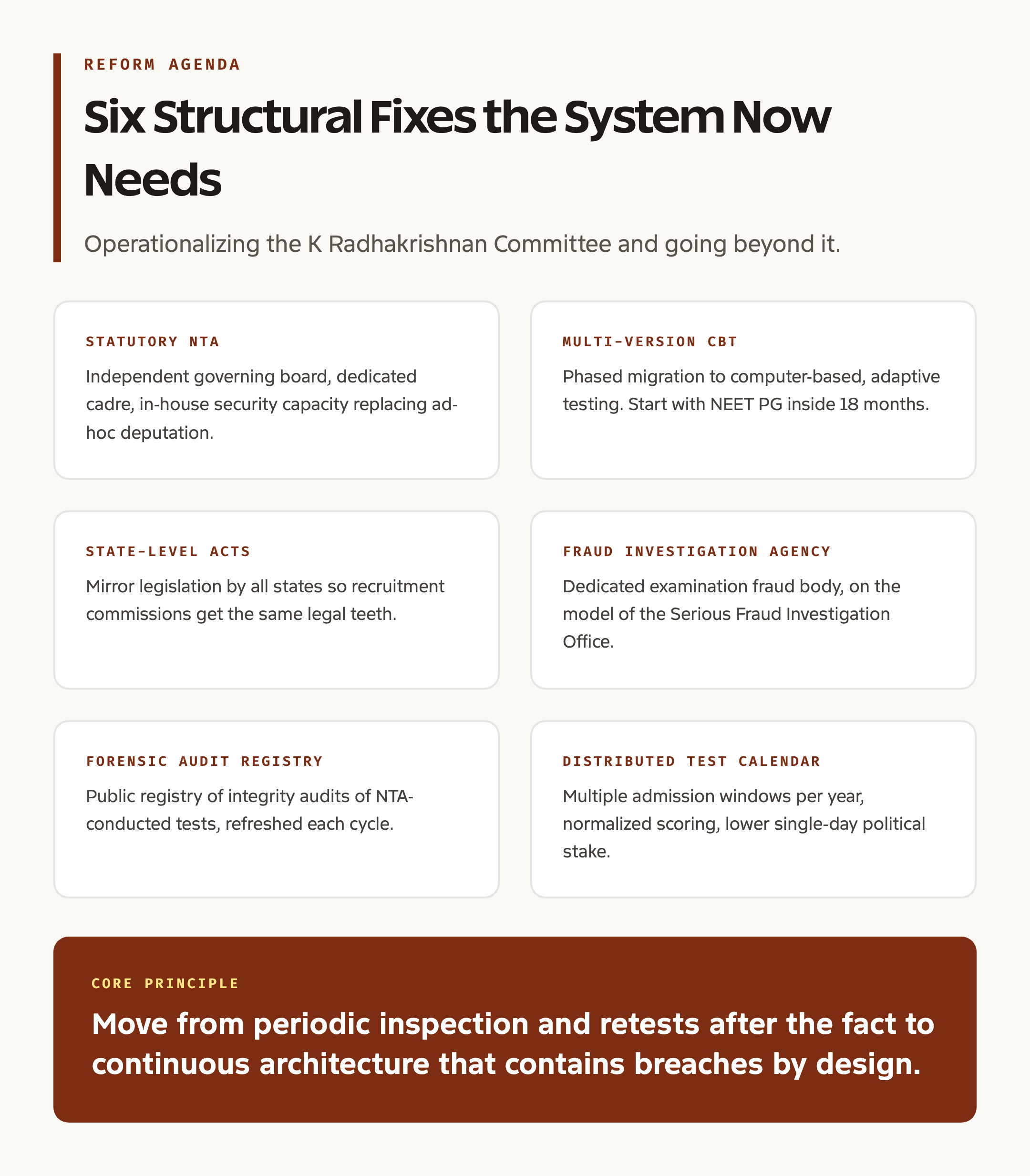
Prelims hooks: D’Ering was named after Daying Ering, the first chief executive councillor of the erstwhile NEFA. It’s part of the Brahmaputra floodplain ecosystem. Tigers here connect potentially to Namdapha and Pakke landscapes. The sanctuary is famous as habitat for Bengal florican, hog deer, and wild buffalo.

3. Binsar Wildlife Sanctuary

Binsar Wildlife Sanctuary, Almora, Uttarakhand

Binsar sits at roughly 2,400 metres above sea level in the Almora district of Uttarakhand, in the Kumaon Himalaya. The sanctuary covers about 47 sq km of oak and rhododendron forest. From the Zero Point inside Binsar, you can see Kedarnath, Chaukhamba, Trishul, Nanda Devi, and Panchachuli on a clear day.

In May 2026, Uttarakhand notified an expanded eco-tourism plan for Binsar, capping daily visitor numbers, banning private vehicles beyond Ayarpani, and routing all entries through electric shuttles. Conservation groups welcomed the cap; local home-stay operators worried about livelihoods.

Prelims hooks: Binsar was declared a sanctuary in 1988 to protect the Kumaon oak forests. Its dominant vegetation is montane temperate forest, not subtropical. Key fauna include Himalayan goral, leopard, musk deer, and pheasants. The sanctuary lies in the upper Kosi catchment, not the Ramganga.

4. Subansiri River

Subansiri River — Brahmaputra tributary

The Subansiri rises in Tibet, enters India through Arunachal Pradesh, runs roughly 442 km through Lower Subansiri and Upper Subansiri districts, then joins the Brahmaputra in Lakhimpur district of Assam. It’s the largest tributary of the Brahmaputra by discharge, contributing about 7.9% of the Brahmaputra’s flow.

In May 2026, NHPC announced that wet-commissioning of the 2,000 MW Subansiri Lower Hydroelectric Project would begin from the second week of June. It will be India’s largest operational hydro project by capacity. The announcement reignited downstream protests in Assam over silt load, fish kills, and dam-induced floods.

Prelims hooks: Subansiri is the Brahmaputra’s largest tributary by volume, ahead of the Manas and the Lohit. The Subansiri Lower project is at Gerukamukh on the Arunachal-Assam border. The river’s name in Tibetan is Tsari Chu. Riparian states are Arunachal Pradesh and Assam only.

5. Vizhinjam International Seaport

Vizhinjam lies on the Arabian Sea coast about 16 km south of Thiruvananthapuram in Kerala. The port has a natural draught of around 18-20 metres without dredging, putting it among the deepest harbours in South Asia. Adani Ports is developing it under a public-private partnership with the Kerala government.

In May 2026, Vizhinjam handled its millionth TEU since commercial operations began in July 2024, becoming India’s first transshipment hub capable of berthing the largest container vessels afloat. PM Modi virtually inaugurated Phase II civil works, which will lift capacity to 4.5 million TEU by 2028.

Prelims hooks: Vizhinjam is India’s first deep-water multi-purpose seaport built specifically for transshipment. Until Vizhinjam, more than 75% of India-bound transshipment ran through Colombo, Singapore, and Salalah. It lies just 10 nautical miles from the international east-west shipping lane. Mother vessels here are typically over 18,000 TEU. The port uses a landlord-port PPP model where the Kerala Maritime Board owns the land and Adani Ports operates the concession for forty years with a fifteen-year extension option.

6. Kolleru Lake

Kolleru Lake, Andhra Pradesh — Ramsar wetland

Kolleru Lake lies between the Krishna and Godavari deltas in Andhra Pradesh, sprawling across Eluru and West Godavari districts. It’s India’s largest freshwater lake by area in the natural floodplain category, fed by the Budameru and Tammileru streams and connected to the sea through the Upputeru drain.

In May 2026, the National Green Tribunal directed the Andhra Pradesh government to file a fresh action-taken report on aquaculture encroachment inside Kolleru’s plus-5 contour. The order followed petitions alleging that over 12,000 acres of seasonally inundated lake bed had been converted into shrimp ponds.

Prelims hooks: Kolleru is a Ramsar wetland (designated 2002). It was notified as a wildlife sanctuary in 1999. The +5 contour defines the protected lake boundary. Migratory birds include grey pelican, painted stork, glossy ibis, and Asian openbill. The lake is a tank-cascade type, not a coastal lagoon.
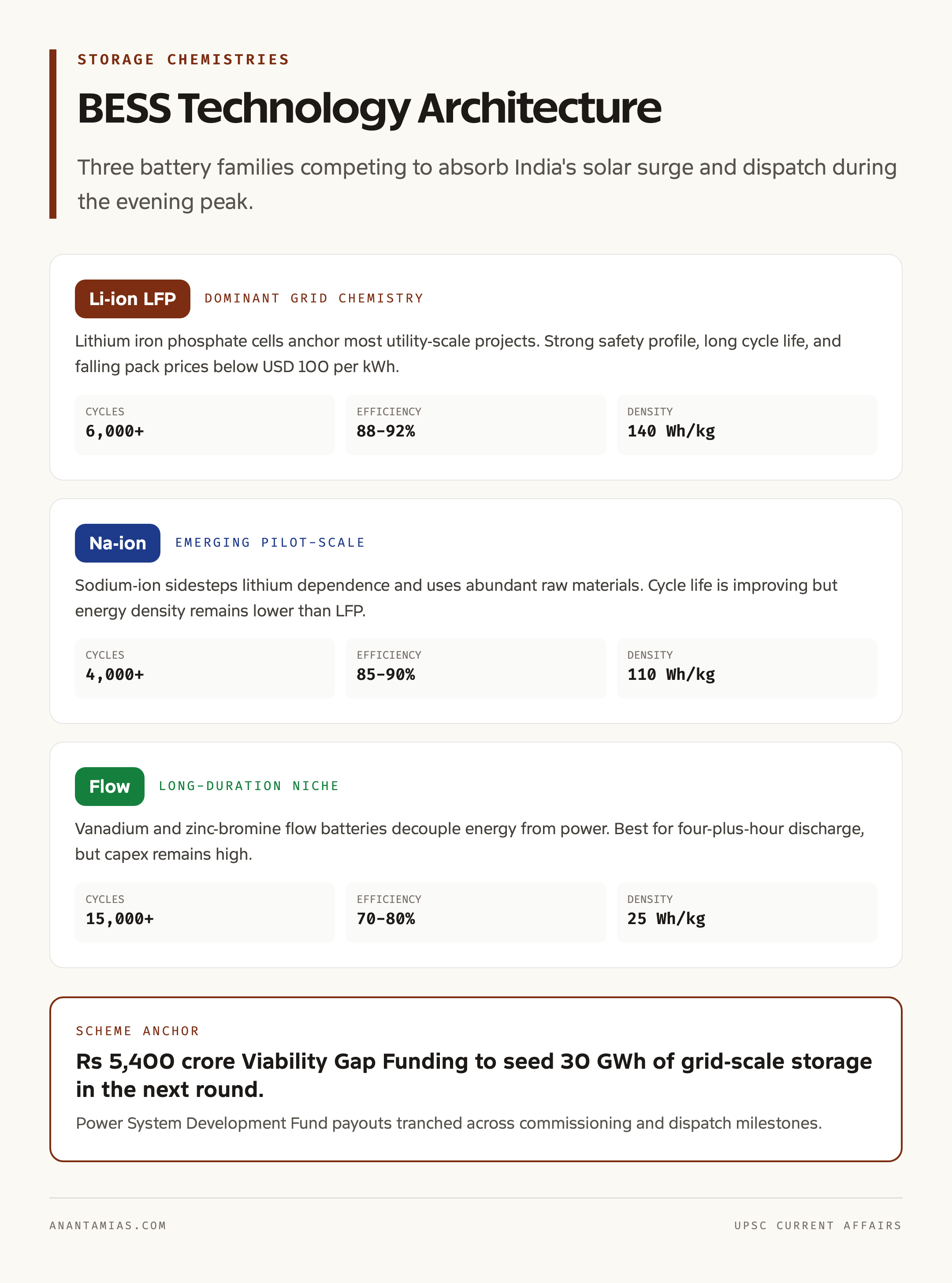
7. Similipal National Park

Similipal National Park, Odisha — biosphere reserve

Similipal sits in Mayurbhanj district of Odisha, on the Eastern Ghats. The park covers about 2,750 sq km of sal-dominated moist deciduous forest and is the source of several rivers including the Budhabalanga, Khairi, Salandi, and Bhandan. Joranda and Barehipani waterfalls lie within it.

In May 2026, Similipal’s annual tiger estimation reported 27 tigers, up from 16 in 2022, including India’s only stable population of melanistic tigers. The Odisha government also approved a fresh village-relocation package for three forest villages inside the core.

Prelims hooks: Similipal is a tiger reserve, a UNESCO Biosphere Reserve, and a national park (the dual notification matters for MCQs). It’s home to Project Tiger, Project Elephant, and Mugger crocodile populations. The Saoras and the Kolhas live in the buffer zone. Pseudo-melanistic tigers, found nowhere else in the wild, are the standout fauna.

8. South Lhonak Lake

South Lhonak Lake, Sikkim — GLOF risk

South Lhonak is a glacial lake at about 5,200 metres elevation in Mangan district of North Sikkim, near the Tibet border. It formed in recent decades as the Lhonak glacier retreated, and by 2023 covered roughly 1.6 sq km, making it one of the fastest-growing supraglacial lakes in the Himalaya.

In May 2026, ISRO released satellite imagery showing renewed water accumulation inside the lake basin two years after the October 2023 GLOF event that destroyed the Teesta-III dam and killed over 100 people downstream. Sikkim launched a fresh GLOF early-warning installation programme covering 17 lakes.

Prelims hooks: GLOF stands for Glacial Lake Outburst Flood. The 2023 South Lhonak GLOF was caused by a lateral moraine collapse, not by ice avalanche. The Teesta is the major river system at risk. South Lhonak feeds the Goma Chu, which joins the Lhonak Chu and finally the Teesta. North Sikkim’s tehsil reorganisation in 2021 placed Lhonak inside Mangan district.

9. Great Nicobar

Great Nicobar Island — Nicobarese consultation

Great Nicobar is the southernmost island of the Andaman and Nicobar archipelago, with Indira Point as India’s southernmost land point. It covers about 1,045 sq km and houses the Galathea Bay biosphere reserve. Two PVTGs live here: the Shompen in the interior and the Nicobarese along the coast.

In May 2026, the Nicobarese Tribal Council formally rejected the proposed denotification of the Galathea Bay Wildlife Sanctuary, which would clear the path for the holistic development project’s container port and airport components. The Ministry of Tribal Affairs sought a fresh consultation cycle.

Prelims hooks: The Shompen are a Particularly Vulnerable Tribal Group (PVTG), classified under Schedule I of the WPA-equivalent tribal protection lists. Indira Point lies at about 6.7°N. Galathea Bay is critical leatherback turtle nesting habitat. The Andaman and Nicobar archipelago lies in the Bay of Bengal, separated from the Andaman group by the Ten Degree Channel.

10. Gandhi Sagar Wildlife Sanctuary

Gandhi Sagar Wildlife Sanctuary, Madhya Pradesh — cheetah Phase II

Gandhi Sagar straddles Mandsaur and Neemuch districts of Madhya Pradesh, on the Chambal river. The sanctuary covers about 368 sq km of khathiar-gir dry deciduous forest and grassland, adjacent to the Gandhi Sagar reservoir built on the Chambal in 1960.

In May 2026, two cheetahs translocated from Kuno arrived at Gandhi Sagar’s purpose-built 64 sq km soft-release boma, marking India’s second free-ranging cheetah habitat. The cheetahs were named Prabhash and Pavak. A third batch from South Africa is scheduled for July 2026.

Prelims hooks: Gandhi Sagar is a wildlife sanctuary, not a national park. The Gandhi Sagar dam is one of four major dams on the Chambal (the others are Rana Pratap Sagar, Jawahar Sagar, and Kota Barrage). The sanctuary borders Bhainsrodgarh sanctuary in Rajasthan. The cheetah Phase II is run jointly by MP forest department, NTCA, and Wildlife Institute of India.

11. Baksa district

Baksa district, Assam — ODOP honey exports

Baksa lies in lower Assam, carved out of Barpeta, Nalbari, and Kamrup districts in 2003. It’s one of five districts under the Bodoland Territorial Region. The district headquarters is Mushalpur. The Manas National Park forms its northern boundary along the Bhutan border.

In May 2026, the Assam government cleared a first-of-its-kind shipment of Baksa wild honey to the United States under the One District One Product programme. The honey commanded a 43% premium over standard Indian wild honey prices, owing to its sub-Himalayan multi-floral origin and tribal-cooperative provenance.

Prelims hooks: ODOP is administered by the Department for Promotion of Industry and Internal Trade (DPIIT), not the Ministry of Commerce directly. Baksa is part of the Bodoland Territorial Region created under the Sixth Schedule. The Manas river runs along its western edge. Baksa is the home district of the BTR Chief Executive Member.
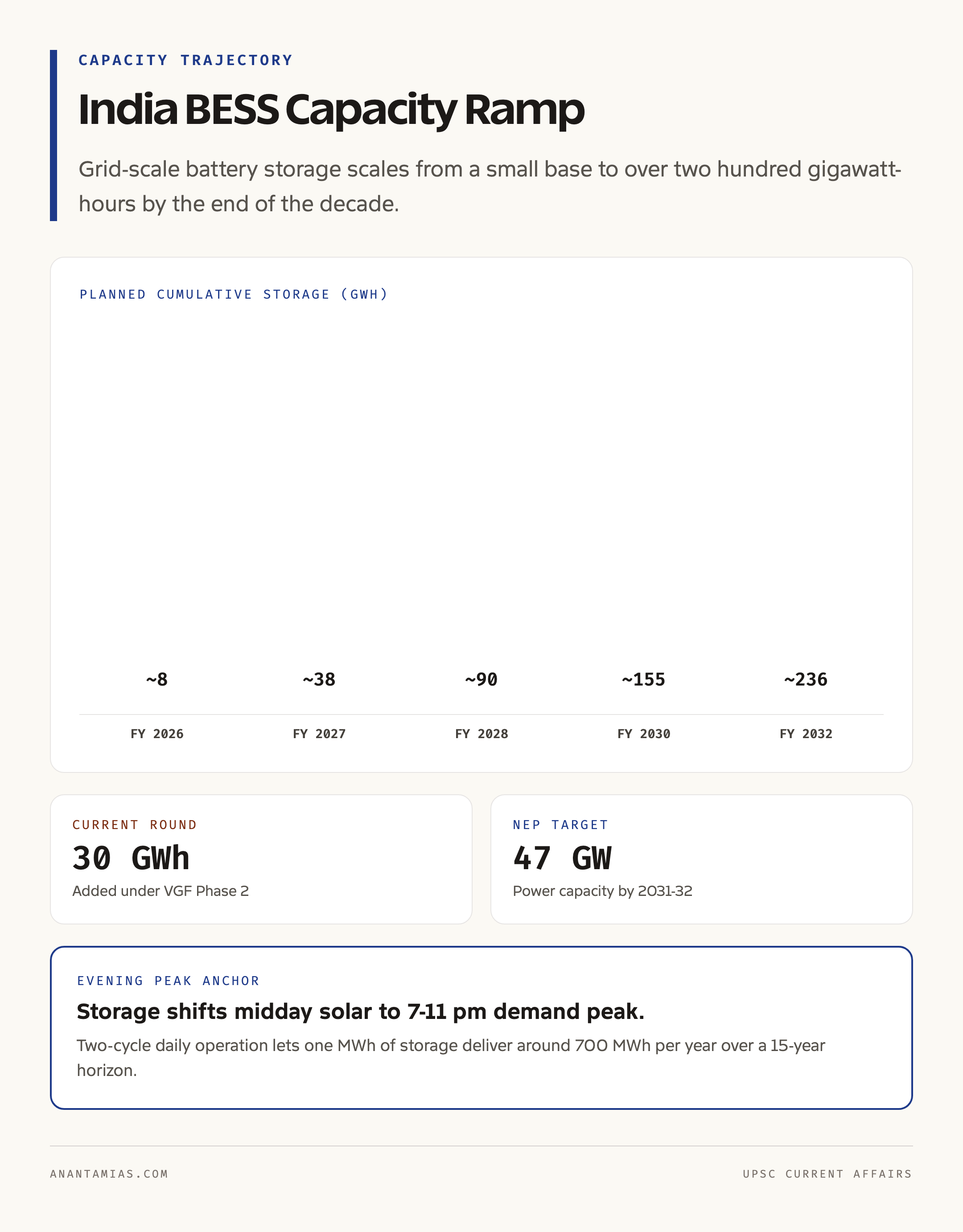
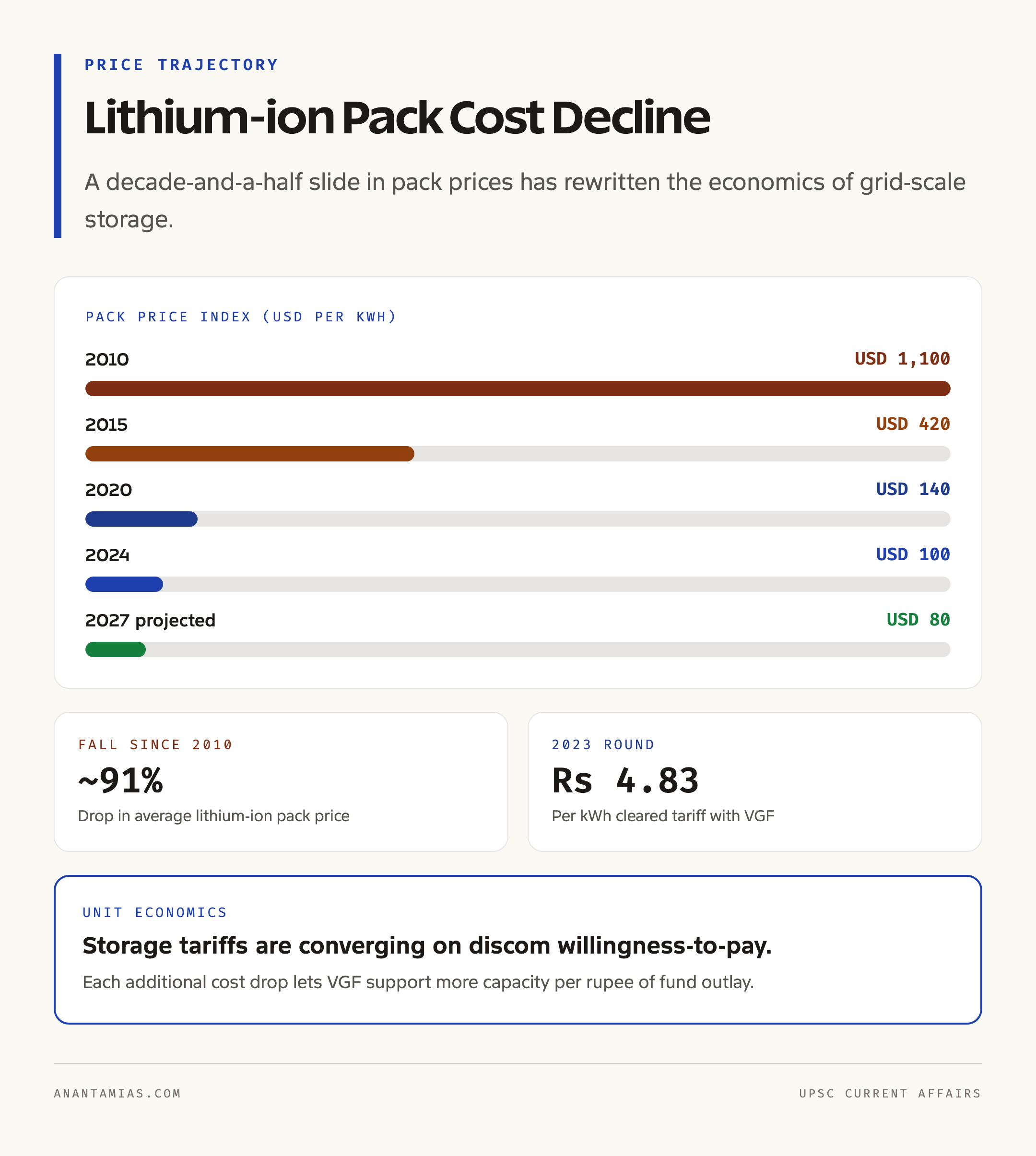
12. Kaziranga National Park

Kaziranga National Park, Assam — rhino census

Kaziranga lies on the southern bank of the Brahmaputra in Golaghat and Nagaon districts of Assam. It covers about 1,090 sq km of tall elephant grass, marshland, and tropical moist mixed deciduous forest. It holds two-thirds of the world’s wild one-horned rhinoceros population.

In May 2026, the Assam government released the annual rhino census: 2,786 individuals, an increase of 173 over the 2022 count and a fresh all-time high. The state also flagged a 19% rise in poaching attempts intercepted, suggesting renewed cross-border syndicate activity through Bhutan and Bangladesh.

Prelims hooks: Kaziranga is a national park, a tiger reserve (notified 2007), and a UNESCO World Heritage Site (1985). It’s home to the “Big Five” — rhino, elephant, tiger, wild water buffalo, and eastern swamp deer. The Brahmaputra floods Kaziranga every monsoon, and animals migrate to the Karbi Anglong hills. The Diphlu river forms its southern boundary.

International Locations in News (May 2026)

International geography is half the story. May 2026’s foreign-policy and global news cycle threw up eight places that UPSC examiners will almost certainly draw from. The same logic applies: know where they sit, what they border, and why they made headlines.

13. Strait of Hormuz

Strait of Hormuz — Iran-Oman chokepoint

The Strait of Hormuz is a narrow waterway between the Persian Gulf and the Gulf of Oman, separating Iran on the north from Oman’s Musandam exclave on the south. At its narrowest point, the strait is just 33 km wide, with two-mile-wide shipping lanes for inbound and outbound traffic. Roughly 20% of the world’s seaborne oil passes through it.

In May 2026, the US Fifth Fleet launched Operation Project Freedom, a convoy-escort initiative after Iran-flagged fast-attack craft harassed three commercial tankers in two weeks. India joined as a non-NATO partner under the framework, providing two destroyers under Operation Sankalp-II.

Prelims hooks: The Strait separates the Persian Gulf (also called the Arabian Gulf) from the Gulf of Oman, not from the Arabian Sea directly. Musandam is an Omani exclave separated from mainland Oman by UAE territory. Iran and Oman jointly police the strait under the 1975 maritime delimitation. Hormuz Island itself is Iranian.

14. Cape Verde

Cape Verde — Atlantic archipelago, West Africa

Cape Verde, officially Cabo Verde, is an archipelago of ten volcanic islands in the central Atlantic Ocean, about 570 km off the West African coast. The country’s capital is Praia on the island of Santiago. Population is roughly 600,000. It’s a member of ECOWAS and the African Union.

In May 2026, the cruise ship MV Hondius docked at Mindelo with eight confirmed hantavirus pulmonary syndrome cases and one fatality among passengers. WHO classified the cluster as a public-health event of regional concern and dispatched a rapid-response team. India’s MEA issued a travel advisory for Indian seafarers.

Prelims hooks: Cape Verde is a Macaronesian archipelago, grouped geologically with the Azores, Madeira, and Canary Islands. It’s the westernmost African country (excluding remote islands). Hantavirus is primarily rodent-borne, with the deer mouse as the main reservoir in the Americas. The MV Hondius is a Dutch-flagged expedition cruise vessel. Cape Verde was a Portuguese colony until 1975 and uses the Cape Verdean escudo, pegged to the euro under a special arrangement that predates the eurozone itself.

15. Yavarí River

Yavarí River — Peru-Brazil Amazon corridor

The Yavarí, called Javary in Portuguese, rises in the Peruvian Andes and flows roughly 1,200 km northeast before joining the Amazon at the Brazil-Peru-Colombia tri-border. The river forms the international boundary between Peru and Brazil for most of its length. The basin houses several uncontacted indigenous groups.

In May 2026, Peru, Brazil, and Colombia signed the Leticia Pact extension creating the Yavarí-Tapiche Indigenous Corridor — a transboundary protected area of roughly 75,000 sq km for isolated peoples. The corridor connects existing reserves in all three countries.

Prelims hooks: The Yavarí basin lies within the Western Amazon biogeographic region. Uncontacted tribes here include the Korubo, the Mayoruna (Matsés), and groups within the Vale do Javari indigenous land. The Amazon is the largest river in the world by discharge. India is an observer at the Amazon Cooperation Treaty Organization (ACTO).

16. Vietnam

Vietnam — India ECSP partner

Vietnam occupies the eastern coast of mainland Southeast Asia along the South China Sea (which Vietnam calls the East Sea). The country is shaped like an “S” stretching 1,650 km from north to south. Hanoi is the capital, Ho Chi Minh City the commercial hub. Borders: China, Laos, and Cambodia.

In May 2026, Vietnamese General Secretary Tô Lâm visited New Delhi and India signed the Enhanced Comprehensive Strategic Partnership — an upgrade from the 2016 CSP. The package included a USD 500 million defence line of credit and expanded BrahMos cooperation.

Prelims hooks: Vietnam is one of five countries (with India, China, Russia, Japan) operating BrahMos. It joined ASEAN in 1995 and the WTO in 2007. The Mekong Delta is its rice bowl. The country’s communist political system runs under a single party — the Communist Party of Vietnam. The Red River and Mekong are its two principal river systems.

17. Mozambique

Mozambique — India strategic dialogue

Mozambique stretches along the southeast African coast on the Indian Ocean for about 2,500 km. Maputo, in the far south, is the capital. The country borders South Africa, Eswatini, Zimbabwe, Zambia, Malawi, and Tanzania. The Mozambique Channel separates it from Madagascar.

In May 2026, India hosted Mozambican Foreign Minister Verónica Macamo for the first India-Mozambique Strategic Dialogue. Agreements covered a USD 200 million LoC for railway modernisation and joint development of the Mocímboa da Praia port on the gas-rich Cabo Delgado coast.

Prelims hooks: Mozambique is a Lusophone country (Portuguese is the official language). It joined the Commonwealth in 1995 despite no British colonial history. The Zambezi cuts through the country en route to the Indian Ocean. The Mozambique Channel separates it from Madagascar and is a major shipping lane. India and Mozambique conduct the IBSAMAR naval exercise with Brazil and South Africa. India was the first country to which Mozambique exported pigeon peas under a long-term contract — a deal that has anchored India’s pulses-import strategy since 2016.

18. Uzbekistan

Uzbekistan — Central Asia, INSTC partner

Uzbekistan sits at the heart of Central Asia, bordering Kazakhstan, Kyrgyzstan, Tajikistan, Afghanistan, and Turkmenistan. It’s one of only two doubly landlocked countries on Earth (Liechtenstein is the other). The capital is Tashkent. The Aral Sea forms part of its northwestern boundary.

In May 2026, Uzbekistan and India signed an upgraded Connect Central Asia Plus action plan during President Mirziyoyev’s New Delhi visit. The plan formalised Uzbek participation in the International North-South Transport Corridor (INSTC) via Chabahar port, and announced direct Tashkent-Mumbai air cargo from August 2026.

Prelims hooks: A doubly landlocked country is surrounded entirely by other landlocked countries. Tashkent is the largest city in Central Asia by population. The Amu Darya and Syr Darya are the main rivers, both flowing toward the shrinking Aral Sea. Uzbekistan is a member of the SCO, CIS, and EAEU observer. India launched the India-Central Asia Dialogue in 2019.

19. Oman

Oman — India CEPA partner, Persian Gulf

Oman lies on the southeastern coast of the Arabian Peninsula, fronting the Arabian Sea, the Gulf of Oman, and the Persian Gulf through its Musandam exclave. Muscat is the capital. The country borders Saudi Arabia, the UAE, and Yemen. The Hajar Mountains run along its northern coast.

In May 2026, the India-Oman CEPA cleared its final ratification hurdle and took effect from 1 June 2026 — India’s first CEPA with a Gulf Cooperation Council member. The agreement eliminates duties on 99% of Indian exports and grants Oman duty-free access for 92% of its trade lines.

Prelims hooks: Oman is a sultanate, not a monarchy in the strict sense — the head of state is the Sultan. CEPA stands for Comprehensive Economic Partnership Agreement. Oman is the seat of the Indian Navy’s Duqm Port logistics access for IOR operations. The Strait of Hormuz separates Oman’s Musandam from Iran. Frankincense from Dhofar is a UNESCO heritage trade good.

20. Aral Sea

Aral Sea — Uzbekistan/Kazakhstan shrinking lake

The Aral Sea straddles the border of Uzbekistan (Karakalpakstan) and Kazakhstan in Central Asia. Once the world’s fourth-largest lake at 68,000 sq km, it has shrunk to roughly 10% of that size after decades of Soviet-era diversion of the Amu Darya and Syr Darya for cotton irrigation. The exposed bed is now called the Aralkum desert.

In May 2026, a Karakalpakstan dust storm carrying salt and pesticide residues from the Aralkum reached Tashkent for the first time on record, prompting an air-quality emergency. The Uzbek government accelerated the Million Trees programme on the Aralkum and called for fresh international climate finance.

Prelims hooks: The Aral Sea was the world’s fourth-largest lake in 1960. The Amu Darya and Syr Darya are the main feeder rivers. The northern Aral is being partially restored via the Kok-Aral dam (a World Bank project in Kazakhstan). Karakalpakstan is an autonomous republic within Uzbekistan. The Aral crisis is a textbook case of human-induced desertification. The dust from the Aralkum is rich in DDT and other persistent organic pollutants from decades of cotton agrochemicals, which makes the storms a transboundary public-health hazard, not just a meteorological one.

Prelims-Ready Map Drill

Twenty locations, one table. Cover the third column with your hand, name the why-in-news from the location alone, then check yourself. Two passes here are worth ten passes through any textbook.

LocationState or CountryWhy in News (May 2026)UPSC Hook
Kuno National ParkMadhya Pradesh57 cheetahs in annual censusSchedule I species, Chambal basin
D’Ering WLSArunachal PradeshFirst tiger sighting in 20 yearsBrahmaputra floodplain
Binsar WLSUttarakhandEco-tourism cap notificationKumaon oak-rhododendron forest
Subansiri RiverArunachal Pradesh / AssamLower HEP wet commissioningBrahmaputra’s largest tributary
Vizhinjam PortKerala1M TEU + Phase II launchIndia’s first deep-water transshipment
Kolleru LakeAndhra PradeshNGT order on aquacultureRamsar wetland, +5 contour
SimilipalOdisha (Mayurbhanj)27 tigers, melanistic stableBiosphere + tiger reserve + NP
South Lhonak LakeSikkimRenewed GLOF risk imageryTeesta basin, supraglacial lake
Great NicobarA&N IslandsNicobarese reject denotificationShompen PVTG, Indira Point
Gandhi Sagar WLSMadhya PradeshCheetah Phase II siteChambal basin, second cheetah habitat
BaksaAssam (BTR)Honey exports to USA, 43% premiumODOP, Sixth Schedule
KazirangaAssam2,786 rhinos, all-time highWorld Heritage, tiger reserve
Strait of HormuzIran / OmanOperation Project Freedom20% of seaborne oil
Cape VerdeWest Africa (Atlantic)MV Hondius hantavirus outbreakMacaronesia, ECOWAS
Yavarí RiverPeru / Brazil borderIndigenous corridor pactAmazon basin, ACTO
VietnamSoutheast AsiaECSP with India, Tô Lâm visitASEAN, BrahMos partner
MozambiqueSoutheast AfricaFirst Strategic Dialogue with IndiaLusophone, Indian Ocean
UzbekistanCentral AsiaConnect Central Asia PlusDoubly landlocked, INSTC
OmanPersian GulfCEPA effective 1 June 2026First GCC CEPA
Aral SeaUzbekistan / KazakhstanAralkum dust storm in TashkentAmu + Syr Darya

How to Revise Location in News for UPSC

The trick with places-in-news isn’t intensity. It’s spacing. Read this column twice — once at month-end as part of your regular current-affairs revision, and once again forty-eight to seventy-two hours before the Prelims exam. The second pass is purely for muscle memory of “where it sits.”

For each location, do a thirty-second exercise. Close your eyes, picture an outline of the relevant region (India, the Arabian Peninsula, Central Asia), and place a dot where the location sits. Open your eyes, check the map above. If you missed by more than two states or two countries, mark it for a third pass.

What UPSC actually tests: positional knowledge (“located in which state”), thematic association (“which Ramsar site”), and joint identifiers (“which biosphere reserve is also a tiger reserve”). UPSC almost never tests exact coordinates, exact areas, or year-of-notification. Don’t waste cycles memorising those.

International locations matter as much as Indian ones. In recent years Prelims has lifted geography questions from Indian government press releases on bilateral visits, climate summits, and trade pacts. Treat the foreign-policy news cycle as a geography reading list.

A few specific habits help. Keep a physical world atlas open while you read this article — a paper atlas, not a phone map. Phone maps zoom too fast and don’t build spatial memory the way a paper atlas does. For each international location, find it on the atlas, trace the borders with your finger, and name the four nearest countries out loud. For Indian locations, do the same with state boundaries and the nearest river. The motor memory pays off in the exam hall when you face a static map question with no internet to fall back on.

The other habit worth building: link locations to themes rather than to dates. UPSC examiners think in themes — conservation, infrastructure, foreign policy, climate, indigenous rights. When you revise this list, group the twenty locations by theme first, then by region. That’s how examiners pick their question stems. If you can recite “the three Indian locations linked to cheetah Phase II” without thinking, you’ve internalised the right unit of revision.

Frequently Asked Questions

What is “Location in News” in UPSC?

“Location in News” refers to places that featured in current affairs over a defined window, typically a month or a quarter. UPSC Prelims tests them through indirect questions on protection status, river basins, neighbouring countries, or thematic identifiers like Ramsar sites and biosphere reserves. The pattern shows up in three to five Prelims questions on average each year.

Which locations are most important for May 2026 Prelims?

For May 2026, the highest-yield locations are Kuno (cheetah Phase II), Vizhinjam (first deep-water transshipment), Strait of Hormuz (Operation Project Freedom), South Lhonak (GLOF imagery), Uzbekistan (INSTC and Connect Central Asia Plus), Oman (CEPA), and Great Nicobar (Nicobarese consultation). These have a high probability of generating direct or indirect Prelims hooks because they cluster around recurring UPSC themes — conservation, infrastructure, foreign policy, and tribal protection.

How many map questions does UPSC ask in Prelims?

On average, three to five out of one hundred Prelims questions test location knowledge directly or indirectly. Some years it’s higher, especially when international relations or environment dominate the question paper. The number rarely drops below two. That puts location-in-news worth about four to six marks in a paper where the cut-off swings by ten marks.

Should I memorise exact coordinates?

No. UPSC has almost never asked for exact coordinates of any place. What examiners test is positional knowledge — “in which state is X” or “which country borders Y.” You should know the broad latitude band (tropical vs temperate), the river basin, the neighbouring states or countries, and one or two thematic identifiers like Ramsar or biosphere status.

Are international locations as important as Indian ones?

Yes, increasingly so. Over the last five Prelims cycles, international geography has shown up in roughly the same proportion as Indian geography in current-affairs-linked questions. Treat the foreign-policy news cycle as a geography reading list — every bilateral visit, climate summit, and trade pact comes with a map you should know.

How often should I revise places in news?

Twice per location is the standard schedule. The first pass happens at month-end as part of your regular monthly current-affairs revision. The second pass happens forty-eight to seventy-two hours before the Prelims exam itself. Aspirants who want belt-and-braces revision add a third pass at the end of each quarter, focused on the highest-yield locations only.

Where can I find the source maps?

Every map in this article is a Wikipedia locator or relief map, picked for clarity and for matching UPSC’s positional question format. For deeper map study, use the Survey of India open-data portal for Indian locations and the UN OCHA ReliefWeb for international ones. Atlases from Oxford, Orient Blackswan, or TTK work too, but the Wikipedia maps are sufficient for Prelims.

How is this article structured for revision?

The article is structured to support the two-pass schedule. The first pass at month-end should be a slow read of each H3 section, paragraph by paragraph, building context. The second pass before the exam should focus only on the Prelims-Ready Map Drill table and the UPSC hooks under each location. The introduction and revision-strategy sections are background reading, not active study material. Aspirants who use spaced-repetition flashcard apps can lift the third-paragraph Prelims hooks directly into Anki or RemNote — the hook lines are written in fact-per-bullet format precisely so they convert cleanly into cards.

The Iran war, India’s strategic autonomy challenges

Open article →Download PDF

image 52

The Iran Conflict and India’s Strategic Autonomy Challenge

Why in News?

The recent escalation involving Israeli-American military strikes on Iran and subsequent counterstrikes has generated major geopolitical uncertainty in West Asia. The conflict has revived concerns regarding: Energy security, Global trade disruptions, Strategic alignments, Great power rivalry

    For India, the crisis is particularly significant because Iran has historically been central to: India’s energy imports, Connectivity ambitions, Access to Central Asia, Strategic balancing in Eurasia

      The developments come at a time when India is simultaneously:

      • Deepening ties with the United States and Europe
      • Expanding strategic partnerships in the Indo-Pacific
      • Seeking to preserve its long-standing doctrine of strategic autonomy

      The situation therefore raises fundamental questions regarding the future of India’s foreign policy independence in an increasingly polarised world order.

      UPSC Relevance

      Prelims Relevance

      • Strategic autonomy, Chabahar Port, BRICS, India-EU Free Trade Agreement, NATO, West Asian geopolitics

      Mains Relevance

      GS Paper 2

      • India and its neighbourhood, Bilateral and multilateral relations, India’s foreign policy, International groupings and agreements

      GS Paper 3

      • Energy security, Globalisation and economic diplomacy

      Essay

      • Strategic autonomy in a multipolar world
      • India and changing global power structures
      • Global South and geopolitical realignment

      Background and Context

      Strategic Autonomy in Indian Foreign Policy

      Strategic autonomy refers to:

      A country’s ability to pursue independent foreign and security policies based on national interest without excessive dependence on any major power bloc.

      India’s approach evolved from:

      • Non-Alignment during the Cold War
        to
      • Multi-alignment in the contemporary era

      Unlike rigid alliance systems, India traditionally maintained relations with multiple competing powers simultaneously.

      Examples include India’s relations with:

      • United States, Russia, Iran, Israel, European Union, Gulf countries, China

      This flexibility has historically provided India:

      • Diplomatic manoeuvrability
      • Economic diversification
      • Security balancing options

      Evolution of India-Iran Relations

      Iran has long been strategically important for India.

      Energy Security

      Iran was historically among India’s major crude oil suppliers because:

      • Iranian oil was competitively priced
      • Transportation costs were lower
      • Payment flexibility existed

      Before sanctions intensified, Iran supplied a substantial share of India’s crude imports.

      Connectivity and Eurasian Access

      Iran is central to India’s connectivity strategy through:

      • Chabahar Port
      • International North-South Transport Corridor (INSTC)

      Chabahar Port provides India strategic access to:

      • Afghanistan
      • Central Asia
      • Eurasia

      without dependence on Pakistan.

      Geopolitical Significance

      Iran’s location gives it strategic importance because it sits near:

      • Strait of Hormuz, Persian Gulf, West Asian energy routes

      Instability in Iran directly affects:

      • Global oil prices
      • Shipping routes
      • Energy markets

      The Emerging Geopolitical Crisis

      Escalation in West Asia

      The recent strikes on Iran mark a major escalation in West Asian geopolitics.

      The conflict has implications for:

      • Global energy markets
      • Maritime trade
      • Regional security architecture
      • Great power competition

      The crisis has revived fears of:

      • Wider regional war
      • Disruption in the Strait of Hormuz
      • Oil supply shocks

      Strategic Impact on India

      India imports a significant portion of its energy requirements.

      Any disruption in West Asia can lead to:

      • Higher crude oil prices
      • Inflationary pressures
      • Current account deficits
      • Exchange rate instability

      The crisis also complicates India’s balancing strategy between:

      • United States
      • Iran
      • Israel
      • Gulf Arab countries

      The Challenge to Strategic Autonomy

      Shift from Liberal Economic Order to Strategic Alignment

      The article highlights an important transformation in global politics.

      Historically, the post-Second World War economic order was relatively open:

      • Countries could maintain diverse economic ties even amidst geopolitical rivalry.

      For example:

      • India traded heavily with both the U.S. and China simultaneously.
      • Economic engagement was less rigidly linked to military alignment.

      However, recent developments suggest:

      • Economic relations are increasingly being securitised.
      • Trade and investment are now linked to geopolitical alignment.

      U.S. Economic and Strategic Pressure

      The article argues that the United States increasingly expects partners to align with its:

      • Strategic interests
      • Sanctions regime
      • Geoeconomic priorities

      Examples include pressure regarding:

      • Russian oil imports
      • Iran sanctions
      • De-dollarisation within BRICS
      • Technology and supply chain alignment

      This constrains India’s policy flexibility.

      Russia-Ukraine War and India’s Foreign Policy

      The Russia-Ukraine conflict already tested India’s strategic autonomy.

      India adopted a carefully balanced approach:

      • Avoided condemning Russia directly
      • Continued oil imports
      • Maintained relations with Western powers

      India successfully managed:

      • Energy interests
      • Diplomatic balancing
      • Strategic partnerships

      However, the Iran crisis is viewed as more difficult because:

      • It directly affects India’s immediate energy and maritime interests.
      • West Asia is more critical to India’s economic stability.

      India’s Relations with Europe

      India-EU Free Trade Agreement

      European Union and India recently accelerated negotiations on a Free Trade Agreement (FTA).

      The agreement was viewed as:

      • A geoeconomic diversification strategy
      • A hedge against U.S. unpredictability
      • A sign of strengthening multipolarity

      However, the article questions whether Europe can genuinely support India’s strategic autonomy independently of the United States.

      Rafale Fighter Jet Deal

      India’s expanded Rafale acquisition from France was also interpreted as:

      • Diversification of defence partnerships
      • Reduction of overdependence on Russia
      • Greater technological cooperation

      Dassault Rafale is considered one of the world’s advanced fighter aircraft platforms.

      However, concerns remain regarding:

      • Technology transfer limitations
      • Dependence on foreign upgrades
      • Control over source codes and algorithms

      These concerns relate directly to:

      • Defence indigenisation
      • Strategic dependence
      • Make in India objectives

      Technology Dependence and Defence Autonomy

      Modern warfare increasingly depends on:

      • Software systems
      • Artificial intelligence
      • Algorithms
      • Network-centric capabilities

      Thus, control over:

      • Source codes
      • Upgrades
      • Maintenance ecosystems

      can create long-term strategic dependence.

      This illustrates a broader dilemma:

      Military modernisation through imports may enhance capability while simultaneously reducing autonomy.

      Multipolarity versus Unipolarity

      India’s Vision of Multipolarity

      India consistently advocates:

      • Multipolar global order
      • Reform of global governance institutions
      • Strategic pluralism

      India supports institutions such as:

      • BRICS
      • SCO
      • G20
      • Quad

      simultaneously.

      This reflects India’s preference for:

      • Flexible coalitions
      • Issue-based partnerships
      • Non-bloc politics

      Persistence of U.S. Dominance

      The article argues that despite discussions of multipolarity:

      • U.S. strategic dominance remains significant.
      • Europe often aligns with Washington during major crises.

      This limits the practical space available for independent middle powers.

      Global South and Geoeconomic Competition

      The article also highlights concerns regarding:

      • Western-centric supply chains
      • Strategic economic blocs
      • Geoeconomic fragmentation

      The Global South increasingly faces pressure to:

      • Align with competing power centres
      • Accept strategic conditionalities

      rather than operating autonomously.

      India’s Energy Security Concerns

      Dependence on Imported Energy

      India imports more than 80% of its crude oil requirements.

      West Asia remains a critical supplier.

      Any regional instability affects:

      • Fuel prices
      • Inflation
      • Fiscal stability
      • Industrial competitiveness

      Strait of Hormuz

      Strait of Hormuz is one of the world’s most important oil transit chokepoints.

      A major share of global petroleum trade passes through it.

      Conflict involving Iran could:

      • Disrupt shipping
      • Increase insurance costs
      • Raise freight charges

      This would directly impact India’s economy.

      Chabahar Port and Connectivity Risks

      India invested in Chabahar to:

      • Bypass Pakistan
      • Expand Central Asian access
      • Enhance regional connectivity

      U.S. sanctions and geopolitical instability have repeatedly complicated the project.

      Reduced strategic space regarding Iran may weaken:

      • India’s Eurasian outreach
      • Connectivity ambitions

      Challenges Before India

      Shrinking Strategic Space

      Increasing geopolitical polarisation limits India’s ability to maintain balanced ties with competing powers.

      Economic Vulnerability

      Energy price volatility can:

      • Increase inflation
      • Widen trade deficits
      • Slow economic growth

      Defence Dependence

      Reliance on imported defence technology creates:

      • Long-term dependency
      • Operational vulnerabilities
      • Upgrade constraints

      Weakness of Alternative Power Centres

      Europe’s strategic autonomy from the United States remains limited during major geopolitical crises.

      Pressure on Multi-Alignment Strategy

      India’s simultaneous engagement with:

      • U.S.
      • Russia
      • Iran
      • Europe

      is becoming increasingly difficult under bloc-style geopolitics.

      Way Forward

      Strengthen Energy Diversification

      India should continue diversifying:

      • Crude import sources
      • Renewable energy investments
      • Strategic petroleum reserves

      Reducing excessive dependence on any single region is essential.

      Accelerate Defence Indigenisation

      Initiatives such as:

      • Atmanirbhar Bharat
      • Make in India in Defence

      must focus on:

      • Indigenous R&D
      • Engine technology
      • Electronics
      • AI-enabled defence systems

      Technological sovereignty is central to strategic autonomy.

      Deepen Multi-Alignment Diplomacy

      India should continue engaging multiple power centres while avoiding rigid bloc politics.

      Flexible issue-based coalitions remain beneficial.

      Strengthen Regional Connectivity

      Projects such as:

      • Chabahar Port
      • INSTC

      should remain strategic priorities for Eurasian access.

      Enhance Maritime Security

      Given instability in the Indian Ocean and West Asia, India should strengthen:

      • Naval capacity
      • Maritime domain awareness
      • Energy shipping protection

      Promote Global South Cooperation

      India can play a larger role in articulating:

      • Strategic autonomy
      • Equitable global governance
      • South-South cooperation

      through forums such as:

      • BRICS
      • G20
      • Voice of Global South Summit

      Build Economic Resilience

      Reducing external vulnerability requires:

      • Supply chain diversification
      • Domestic manufacturing
      • Technological self-reliance

      Economic resilience strengthens diplomatic autonomy.

      Conclusion

      The ongoing Iran conflict represents a major geopolitical stress test for India’s foreign policy doctrine of strategic autonomy. The crisis demonstrates that the contemporary international system is increasingly characterised by:

      • Geopolitical fragmentation
      • Economic securitisation
      • Strategic conditionalities

      India’s long-standing strategy of balancing relations across competing power centres is becoming more difficult as major powers increasingly demand alignment rather than partnership.

      At the same time, the situation underscores the enduring importance of:

      • Energy security
      • Defence indigenisation
      • Economic resilience
      • Diplomatic flexibility

      For India, preserving strategic autonomy in the coming decades will require not only skilful diplomacy but also deeper domestic capabilities that reduce dependence on external power structures.

      UPSC Practice Questions

      Consider the following statements regarding India’s strategic autonomy:

      1. Strategic autonomy refers to complete diplomatic isolation from major powers.
      2. India historically maintained relations simultaneously with competing global powers.
      3. Energy security is an important component of strategic autonomy.

      Which of the statements given above are correct?

      (a) 1 and 2 only
      (b) 2 and 3 only
      (c) 1 and 3 only
      (d) 1, 2 and 3

      Correct Answer: (b) 2 and 3 only

      Explanation:
      Statement 1 is incorrect because strategic autonomy means independent decision-making, not isolation.
      Statement 2 is correct because India has historically maintained diversified partnerships.
      Statement 3 is correct because dependence on external energy sources directly affects strategic flexibility.

      With reference to Chabahar Port, consider the following statements:

      1. It is located in Iran.
      2. It provides India access to Afghanistan and Central Asia bypassing Pakistan.
      3. It is part of India’s Indo-Pacific maritime strategy alone.

      Which of the statements given above are correct?

      (a) 1 and 2 only
      (b) 2 and 3 only
      (c) 1 and 3 only
      (d) 1, 2 and 3

      Correct Answer: (a) 1 and 2 only

      Explanation:
      Statement 1 is correct because Chabahar Port is located in Iran.
      Statement 2 is correct because it offers connectivity access bypassing Pakistan.
      Statement 3 is incorrect because Chabahar is more closely linked to Eurasian connectivity and the International North-South Transport Corridor (INSTC).

      Mains Question:

      1. Discuss the implications of West Asian geopolitical instability for India’s energy security and foreign policy.
      2. “The contemporary international system is increasingly transforming economic interdependence into strategic dependence.” Examine in the context of India’s strategic autonomy.

      What is PMOS, and why does the renaming of PCOS Matter?

      Open article →Download PDF

      Why in News?

      In a major global consensus, Polycystic Ovary Syndrome (PCOS) has been renamed as Polyendocrine Metabolic Ovarian Syndrome (PMOS). The previous name incorrectly implied the disease was strictly an ovarian or reproductive issue. This caused delays in diagnosis and fragmented medical care. 

      UPSC Relevance: GS-3 Science and Technology: Biology and Biotechnology

      Prelims: Polyendocrine Metabolic Ovarian Syndrome (key facts)

      What is PMOS?

      • Polyendocrine Metabolic Ovarian Syndrome (PMOS) is a complex hormonal and metabolic disorder affecting women, particularly during reproductive age.
      • It is characterised by:
        • Hormonal imbalance
        • Excess androgen production
        • Ovulatory dysfunction
        • Metabolic abnormalities
        • Multiple immature ovarian follicles
      • The condition affects nearly 8-18% women in India, while globally, around 170 million women are estimated to be affected during their reproductive years.
      image 53 2
      image 53 1

      Why was PCOS Renamed as PMOS?

      The earlier term “PCOS” was considered medically misleading because it focused mainly on ovarian cysts, while the disorder actually involves multiple body systems.

      • Misleading Reference to Cysts:
        • During a normal menstrual cycle, several follicles begin developing in the ovary. One becomes dominant, matures fully, and releases an egg (ovulation), while the remaining follicles naturally regress. 
        • In PMOS, this maturation process is disrupted. Many follicles stall midway, remaining small and immature, a state called arrested follicle development. These immature follicles accumulate and appear as multiple small, fluid-filled structures, misleadingly called “cysts.”
      • Ignored Metabolic Risks: The older terminology underemphasised major metabolic complications such as obesity, Insulin resistance, Type-2 Diabetes, Hypertension, Fatty liver disease and Cardiovascular disease. 
      • Narrow Reproductive Focus: PCOS was widely perceived merely as a fertility disorder, leading to delayed diagnosis, stigma related to infertility and inadequate long-term management. 

      Diagnosis of PMOS: 

      Currently, diagnosis still follows existing PCOS criteria, which include at least two of the following:

      • Irregular ovulation
      • Excess androgen production (hyperandrogenism)
      • Polycystic ovarian morphology on ultrasound. 

      Significance for India: 

      India has a particularly high burden of the disorder due to a sedentary lifestyle, rising obesity, genetic predisposition to insulin resistance and urban dietary changes. 

      • The PMOS framework may help India adopt preventive screening, adolescent awareness programmes, lifestyle-based interventions and integrated women’s healthcare strategies. 
      • The updated terminology aims to improve early screening and help women better understand long-term health risks. 

      The renaming of PCOS to PMOS reflects a deeper scientific understanding that the condition is a lifelong multisystem endocrine-metabolic disorder rather than merely an ovarian abnormality.  

      Global Capability Centres (GCCs) and the Reshaping of India’s IT Industry

      Open article →Download PDF

      Why in News?

      India’s Global Capability Centre (GCC) ecosystem is undergoing a rapid and structural transformation. Multinational corporations are increasingly using their India centres not merely for back-office operations, but for artificial intelligence (AI) development, engineering, research, and global business functions. 

      UPSC Relevance: GS-3 Economy: Service sector 

      Mains: Global Capability Centres: Growth & Challenges. 

      What are Global Capability Centres (GCCs)?

      • Global Capability Centres (GCCs), also called captive centres, are offshore units established by multinational corporations (MNCs) to manage strategic and operational functions for their global businesses. 
      • Initially, GCCs in India were mainly focused on low-cost back-office operations and business process outsourcing (BPO). However, they have now evolved into high-value innovation and engineering hubs. 
      • These centres undertake activities such as:
        • Software engineering
        • AI and machine learning
        • Finance and accounting
        • Product development
        • Cybersecurity
        • Cloud engineering
        • Semiconductor and chip design
        • R&D and innovation
        • Data analytics
        • Human resource management. 

      Status of GCCs in India: 

      • India has emerged as one of the world’s largest GCC destinations, often described as the GCC Capital of the World. Key hubs include Bengaluru, Hyderabad, Pune, Chennai, Mumbai, and the National Capital Region (NCR).
      • As of FY26, India hosts approximately 2,117 GCCs employing 2.36 million professionals and generating $98.4 billion in revenue. The sector has expanded by 32% over the last five years, with more than 500 new GCCs and 1,000 additional units set up during the period.
      • The GCC sector contributes approximately $68 billion as direct Gross Value Addition (GVA), equivalent to around 1.6% of India’s GDP. Projections suggest GVA from GCCs could rise to $200 billion by 2030.
      • Employment is projected to grow to 2.8 million professionals by 2030, up from 2.36 million in FY26. India’s GCC ecosystem employs more than 250,000 AI professionals, making it the world’s second-largest enterprise AI talent base after the United States. 
      • The rate of establishment of Engineering R&D GCCs has grown 1.3 times faster than the overall GCC setup rate over the last five years, reflecting a decisive shift towards high-value-added work.  
      image 53 3

      From Cost Arbitrage to Strategic Ownership: 

      • India’s GCC story is no longer about just low-cost outsourcing. Global firms are increasingly assigning India centres end-to-end ownership over products, AI systems, platforms, and business outcomes. This describes GCCs as evolving from “delivery engines” into “enterprise nerve centres.”
      • However, this evolution is uneven. Only 5% of GCCs have evolved into “transformation hubs” characterised by CXO-level roles and functional sovereignty from India. Strategic control and top-level corporate authority largely continue to remain headquartered overseas. 
      • India’s next challenge is to move beyond being a large execution and engineering base and to become a location where multinationals place global business heads, AI leadership teams, and enterprise-wide decision-making authority.

      Factors Conducive to GCC Growth in India: 

      • Government Initiatives: Strategic programmes such as Digital India and Ease of Doing Business reforms have created a conducive environment backed by improved physical and digital infrastructure. The Union Budget 2025 unveiled a National Framework to expand GCCs beyond metro hubs to Tier-II cities. State-level policies in Karnataka, Telangana, Maharashtra, Tamil Nadu, and Gujarat have further accelerated GCC clustering. Over 215+ GCC units are now housed in emerging Tier-II locations.
      • Talent Pool: India’s talent pool is a critical competitive advantage, with approximately 2.1 million STEM graduates entering the workforce annually. Female participation in the GCC workforce stands at approximately 35%, reflecting an improving gender profile.
      • Cost-Effectiveness: GCC operations in India cost 30-50% less than equivalent operations in the US, UK, and Australia, making it a compelling destination for multinational investment.
      • Digital Ecosystem: India’s mature digital ecosystem, spanning fintech, cloud adoption, and enterprise technology, makes it an ideal location for deploying next-generation GCC capabilities.
      • Broadening Participation: While US-headquartered firms historically dominated, companies from the UK, Germany, Japan, Denmark, and other nations are now deepening their India GCC presence. Over 130 UK firms now operate 250+ GCCs in India, employing more than 200,000 professionals. 

      How GCCs are reshaping India’s IT Industry?

      The rise of GCCs is intensifying competitive pressure on India’s traditional IT services industry. 

      • Shift from Outsourcing to Ownership: Traditional Indian IT firms relied on labour-intensive outsourcing, time-and-material contracts and large workforces handling repetitive technology operations. However, multinational firms are now building in-house GCCs, retaining strategic control and owning intellectual property internally. This reduces dependence on external IT vendors.
      • Transition in Business Models: Indian IT firms are being pushed up the value chain towards consulting, AI integration, automation services, and platform engineering. 

      Challenges Associated with GCCs: 

      • Geographic Concentration: Approximately 95% of GCCs are concentrated in six major urban clusters. Expanding to Tier-II cities is constrained by gaps in digital infrastructure, power reliability, internet connectivity, and urban amenities.
      • Regulatory Fragmentation: The absence of a national-level GCC policy has led to a fragmented landscape of state-specific policies with varying standards. Concerns also persist around dispute resolution mechanisms and the length of appellate processes.
      • Transfer Pricing and Taxation:  The Safe Harbour Regime was introduced to provide certainty in transfer pricing for MNCs. The earlier transfer pricing margin rates of 17-24% were seen as deterrents for GCC expansion. Industry experts had long recommended rates of 14-15% to align with global standards. 
      • India’s Union Budget 2026-27 has introduced a landmark rationalisation of transfer pricing rules. A unified Safe Harbour margin of 15.5% has been prescribed for a consolidated “Information Technology Services” category covering software development, IT-enabled services, KPO, and contract R&D. 
      • Eligibility threshold has also been raised from ₹300 crore to ₹2,000 crore, bringing a significantly larger cohort of mid-to-large GCCs within the safe harbour framework. 
      • Safe harbour validity of up to five consecutive years has also been introduced. This directly addresses a longstanding demand of the GCC sector. 
      • Operational and Cross-Border Data Challenges: Conflicts between cross-border data transfer laws and regional frameworks create significant compliance complexity for GCCs. For example, balancing obligations under the EU-US Data Privacy Framework and India’s own mandates under the Digital Personal Data Protection (DPDP) Act, 2023, poses ongoing operational challenges.
      • Intellectual Property (IP) Concerns: Despite hosting large engineering workforces, GCCs typically retain innovation and intellectual property abroad. Risks of IP disputes, multi-jurisdictional IP ownership complexities, and limited cross-border IP enforcement remain important concerns.
      • Leadership Gap: Only 5% of GCCs have evolved to include CXO roles with functional sovereignty from India. India remains primarily an execution and engineering hub rather than a global decision-making base. 

      Way Forward: 

      • Enhanced Outreach: Develop comprehensive outreach strategies to attract GCC investments from beyond US-headquartered companies, expanding to European, Japanese, and Southeast Asian corporations. 
      • Geographic Diversification: Centre-State-Industry dialogue framework should actively promote GCC expansion to Tier-II cities, supported by the identification and sharing of best practices from established GCC hubs.
      • Regulatory Simplification: A national-level single-window clearance system for GCC establishment would reduce regulatory friction. The transfer pricing rationalisation in Budget 2026-27 is a significant step; consistent administrative implementation is now critical.
      • Innovation Incentives: Introduction of concessional tax rates for GCCs engaged in R&D and IP creation within India would incentivise shifting IP ownership onshore and reward higher-value mandates.
      • Digital Economic Zones: Creation of specialised zones housing GPU-based data centres, academia, startups, and co-located workspaces would facilitate the transition from traditional business functions to AI-led engineering and R&D.
      • Leadership Elevation: Targeted policy dialogue with multinational parent companies to encourage the placement of global business heads and AI leadership roles in India, moving GCCs from execution centres to strategic decision-making hubs.
      • IP Framework Strengthening: Developing clearer cross-border IP protection mechanisms and harmonised frameworks would reduce disputes and encourage GCCs to anchor IP creation in India.

      India has successfully pivoted from a cost-arbitrage destination to an innovation-driven economy, with over 1,700 Global Capability Centres acting as critical hubs for AI, engineering, and R&D. 

      Government considers Cut in Withholding Tax

      Open article →Download PDF

      Why in News?

      The Government of India and the Reserve Bank of India (RBI) are considering reducing or even eliminating the withholding tax (WHT) on interest income earned by foreign investors on Indian government bonds. 

      The move is aimed at attracting foreign capital inflows, stabilising the rupee, and strengthening India’s external sector amid rising global uncertainty and capital outflows. 

      UPSC Relevance: GS-3 Economy: External sector management; Capital markets and bond markets

      Prelims: Withholding Tax, Foreign Portfolio Investment (FPI), Forex Reserves

      What is Withholding Tax?

      • Withholding tax is a tax deducted at source on payments made to non-residents. In the present context, it refers to the tax imposed on interest income earned by foreign investors from Indian government bonds. It functions similarly to Tax Deducted at Source (TDS).
      • Example: If a foreign investor earns ₹100 as interest on Indian government securities and the withholding tax rate is 20%, ₹20 is deducted before payment.

      Present Tax Structure in India: 

      • Earlier, foreign investors enjoyed a concessional withholding tax rate of 5% on certain rupee-denominated bonds. The concessional regime ended in 2023.
      • Currently, most non-resident investors effectively pay around 20% withholding tax on interest income from Indian government bonds. This is one of the highest in the world.

      Why is India considering a Reduction?

      • To attract Foreign Capital Inflows: Foreign Portfolio Investors (FPIs) have withdrawn large amounts from Indian markets in recent months. Lower taxes can improve post-tax returns and make Indian bonds more attractive globally.
      • To stabilise the Rupee: The rupee has weakened significantly against the US dollar due to higher US interest rates, rising crude oil prices, geopolitical tensions in West Asia and foreign capital outflows. The RBI’s capacity to continuously defend the rupee through forex intervention is limited.
      • To protect Foreign Exchange Reserves: India’s forex reserves have come under pressure because of RBI intervention in currency markets, Oil import payments and Capital outflows. Greater foreign investment in bonds can increase dollar inflows and support reserves.
      • To deepen India’s Bond Market: India has been integrating with global bond markets. Indian government bonds have recently been included in major global indices. Such inclusion can attract passive global investment flows. 

      Concerns regarding Reduction in Withholding Tax: 

      • Uncertain impact on Investment Flows: Policymakers fear that tax cuts alone may not attract substantial foreign investment because the US interest rates remain high, global uncertainty persists, and investors are risk-averse. Thus, the revenue sacrifice may not yield proportionate benefits.
      • Revenue Loss to Government: Reducing withholding tax lowers tax collections from foreign investors. This could affect fiscal revenues.
      • Vulnerability to Volatile Capital: Excessive reliance on foreign portfolio flows can expose the economy to sudden reversals. FPIs are often called “hot money” because they can exit quickly during crises.
      • External Sector Risks Continue: Even if inflows rise temporarily, structural challenges remain high crude oil imports, global geopolitical instability and exchange rate pressures. 

      India should adopt a balanced strategy involving rationalisation of withholding taxes, deepening domestic bond markets, prudent forex reserve management, strengthening macroeconomic fundamentals and increasing stable long-term FDI inflows.  

      Practice MCQ: 

      Q. With reference to withholding tax in India, consider the following statements:

      1. It is a tax deducted at source on payments made to non-residents. 

      2. Foreign investors pay withholding tax on interest income earned from Indian government bonds. 

      3. India currently has one of the lowest withholding tax rates in Asia. 

      Which of the statements given above are correct?

      (a) 1 and 2 only

      (b) 2 and 3 only

      (c) 1 and 3 only

      (d) 1, 2 and 3

      Answer: (a) 

      India’s Wholesale Inflation hits 42-Month High

      Open article →Download PDF

      Why in News?

      Geopolitical tensions in West Asia and a surge in global crude oil prices pushed India’s WPI inflation to 8.3% in April 2026, its highest level since October 2022, raising concerns about imported inflation and downstream consumer price pressures. 

      UPSC Relevance: GS-3 Economy: Inflation 

      Prelims: Wholesale Price Index (WPI), Consumer Price Index (CPI), Imported inflation, Base Effect 

      What is the Wholesale Price Index?

      • The Wholesale Price Index (WPI) is a key economic indicator that tracks the average change in price of goods and commodities at the bulk/producer level before they reach the retail or consumer market. 
      • It reflects price movements of a basket of goods, including primary articles (food, oilseeds, minerals), fuel and power (petrol, diesel, LPG, electricity), and manufactured products (chemicals, textiles, metals and machinery). 
      • Published monthly by: Office of the Economic Adviser, Ministry of Commerce and Industry
      • Base year: 2011-12
      • WPI does not include services. WPI is used to monitor supply-side inflation and is a critical input for industry pricing, taxation and policy-making. 

      Major Drivers of the Inflation Surge: 

      India’s WPI-based inflation surged to 8.3% year-on-year in April 2026, more than doubling from 3.88% in March 2026. The biggest contributor was the sharp increase in global crude prices. The Fuel and Power category witnessed a massive increase in April 2026. 

      image 54

      Comparison: WPI vs. CPI: 

      image 55

      Why WPI matters despite RBI Targeting CPI?

      Although the RBI targets CPI inflation, WPI remains important because it:

      • Captures producer-level price pressures
      • Indicates future retail inflation trends
      • Reflects industrial cost structures
      • Helps assess supply-chain stress. 

      Thus, WPI acts as an early warning indicator for inflationary pressures.

      Policy Implications of rising WPI: 

      • Industry & Corporate Margins: Rising input costs (in energy, metals, and chemicals) are squeezing manufacturing margins. Companies unable to pass on higher costs will face profitability pressure, with a potential slowdown in private capital expenditure.
      • Consumers (Risk of Higher Consumer Inflation): Sustained wholesale inflation can eventually pass into retail prices through transport costs, logistics expenses and higher input costs. 
      • Pressure on RBI Monetary Policy: The RBI targets CPI, not WPI. However, persistent wholesale inflation signalling supply-side stress may constrain the RBI’s ability to reduce policy rates further. It would complicate monetary policy decisions. 
      • Fuel Pricing & Oil Marketing Companies (OMCs): Global crude prices may require domestic fuel prices to rise further for OMCs to return to profitability at last year’s levels. The government faces a fiscal-political trade-off between absorbing the shock (via excise duty cuts or OMC subsidies) and passing it on to consumers.
      • Imported Inflation & Current Account Deficit (CAD): With India importing the vast majority of its crude oil, sustained high global oil prices will widen the trade deficit, depreciate the rupee further, and perpetuate imported inflation.
      What is Imported Inflation?
      • Imported inflation occurs when rising global prices increase domestic inflation through imports.
      • India imports more than 85% of its crude oil requirements. Large quantities of fertilisers, edible oils, and industrial inputs.
      • Hence, global commodity shocks directly affect transportation, manufacturing, electricity generation and consumer prices. 
      • Base Effect Dynamics: The April 2026 inflation figures are amplified by a favourable base from April 2025, when crude oil and gas saw deep deflation (-15.5%). As the base normalises in subsequent months, headline WPI could moderate even if energy prices remain stable. 
      Base Effect and Inflation: 
      • Base Effect: When prices in the previous year were unusually low, current inflation appears disproportionately high even with moderate price increases.
      • For example, Crude oil and natural gas witnessed deflation in early 2025. This amplified the year-on-year inflation rate in 2026. 

      India’s wholesale inflation spike to a 42-month high highlights the economy’s vulnerability to global energy shocks and geopolitical instability. 

      UPSC PYQ 2020:

      Q. Consider the following statements:

      1. The weightage of food in the Consumer Price Index (CPI) is higher than that in the Wholesale Price Index (WPI).

      2. The WPI does not capture changes in the prices of services, which CPI does.

      3. The Reserve Bank of India has now adopted WPI as its key measure of inflation and to decide on changing the key policy rates.

      Which of the statements given above is/are correct?

      (a) 1 and 2 only

      (b) 2 only

      (c) 3 only

      (d) 1, 2 and 3

      Answer: (a)

      Building a preventive health culture in India 

      Open article →Download PDF

      image 55

      Why in News?

      India is witnessing a rapid rise in non-communicable diseases (NCDs) such as diabetes, cardiovascular diseases, cancer and strokes, which are now the leading causes of mortality. Recent discussions around preventive health care, including findings from large-scale health assessments such as the Apollo Hospitals Health of the Nation Report 2026, have highlighted the urgent need to shift India’s health-care model from disease treatment to disease prevention. The issue has gained policy relevance in the context of rising health-care costs, demographic transition and India’s long-term developmental goals.

      UPSC Relevance

      Prelims: Non-communicable diseases, National Health Policy 2017, Ayushman Bharat, SDG-3, preventive health care, public health indicators

      Mains:

      GS II: – Health sector, public health infrastructure, human development, government policies and interventions, social sector development

      GS III: – demographic dividend, economic productivity and human capital;

      Essay: – preventive health, public health governance, development and human well-being

      Background/Context:

      Over the past four decades, India has made notable advancements in healthcare, establishing institutions of global repute, expanding tertiary care, and improving access to advanced treatments.

      However, the health system remains predominantly curative, focused on treating illness after it manifests rather than preventing its onset. With a large youthful population, India is at a critical juncture where rising NCDs threaten to undermine the demographic dividend.

      According to various health assessments, approximately 270 million Indians live with chronic conditions, many undiagnosed until complications arise. This situation necessitates a paradigm shift from illness response to health preservation.

      Burden of Non-Communicable Diseases


      NCDs such as cardiovascular diseases, diabetes, cancer, chronic respiratory diseases, and strokes have surpassed infectious diseases as the leading causes of death and disability in India. These conditions are largely lifestyle-related and preventable through early intervention. The economic cost is substantial, including direct medical expenses, productivity losses, and increased out-of-pocket expenditure that pushes families into poverty.

      Critical Window of Intervention


      The period between 30 and 40 years of age emerges as a decisive phase. During these years, metabolic and cardiovascular risks accelerate due to sedentary lifestyles, unhealthy diets, stress, and lack of routine screening. Most individuals remain asymptomatic, delaying care until irreversible damage occurs. Timely lifestyle modifications and regular health checks can significantly delay or reverse many conditions, highlighting the importance of early action.

      Preventive Health as Self-Stewardship


      Prevention requires a cultural transformation where health is viewed as an active daily commitment rather than the mere absence of disease. This involves personal responsibility, family-level awareness, and community participation. It calls for integrating wellness into everyday life through balanced nutrition, physical activity, mental well-being, and periodic screenings.

      Constitutional, Economic, Social and Governance Dimensions

      • Constitutional Provisions: Article 21 (Right to Life) has been interpreted by the Supreme Court to include the right to health and a clean environment. Directive Principles of State Policy (Articles 39, 41, 47, and 48A) direct the State to improve public health, nutrition, and living standards.
      • Economic Dimension: High out-of-pocket health expenditure (around 45-50% of total health spending) exacerbates inequality. NCDs impose a heavy burden on GDP; the World Economic Forum estimates that India could lose trillions due to NCDs by 2030 if unchecked.
      • Social Dimension: Preventive care can reduce gender disparities in health outcomes and empower marginalised sections. It also addresses the urban-rural divide in awareness and access.
      • Governance: Health is a State subject (List II), but the Centre plays a key role through concurrent powers and centrally sponsored schemes. Effective prevention demands cooperative federalism and convergence between health, education, and nutrition ministries.

      Relevant Schemes, Reports and Initiatives

      • Ayushman Bharat (2018): Comprises Health and Wellness Centres (HWCs) for primary preventive care and Pradhan Mantri Jan Arogya Yojana (PMJAY) for secondary and tertiary care. Over 1.5 lakh HWCs aim to deliver comprehensive primary healthcare including NCD screening.
      • National Health Policy 2017: Emphasises preventive and promotive health, targeting reduction in NCD burden.
      • National Programme for Prevention and Control of Cancer, Diabetes, Cardiovascular Diseases and Stroke (NPCDCS).
      • Apollo Hospitals Health of the Nation Report 2026 and other surveys like the National Family Health Survey (NFHS-5) and Global Burden of Disease Study.
      • International linkages: Sustainable Development Goal 3 (Good Health and Well-being) and WHO Framework on NCD prevention.

      Challenges and Concerns

      • Low health-seeking behaviour in asymptomatic populations and inadequate health literacy.
      • Resource constraints, shortage of trained personnel for preventive services, and weak primary healthcare infrastructure in several regions.
      • Rising risk factors such as obesity, tobacco use, alcohol consumption, air pollution, and unhealthy processed food consumption.
      • Fragmented data systems and poor integration of digital health tools.
      • Over-commercialisation of curative care may disincentivise investment in prevention.
      • Socio-cultural barriers, including fatalistic attitudes towards health in some communities.

      Way Forward

      • Strengthen primary healthcare through full operationalisation of Ayushman Bharat HWCs with focus on NCD screening, lifestyle counselling, and community health workers (ASHAs and ANMs).
      • Launch a national mission for preventive health literacy, integrating it into school and college curricula and using digital platforms for mass awareness.
      • Incentivise regular health check-ups through tax benefits, workplace wellness programmes, and insurance premium discounts.
      • Promote inter-sectoral coordination involving education, urban planning, agriculture (for nutrition), and environment ministries to address social determinants of health.
      • Leverage technology through digital health IDs (ABHA), AI-driven risk prediction, and telemedicine for follow-ups.
      • Encourage public-private partnerships and civil society participation to scale community-based prevention models.
      • Adopt outcome-based monitoring with clear targets for reduction in NCD incidence and improvement in healthy life expectancy.
      • Foster a whole-of-society approach where individuals, families, communities, and governments share responsibility for health creation.

      Conclusion


      India’s journey from a curative to a preventive health paradigm is essential for realising its aspiration of becoming a developed nation by 2047. By building a robust culture of prevention rooted in awareness, early action, and self-stewardship, India can not only reduce disease burden but also enhance the quality of life of its citizens. This shift will safeguard the demographic dividend, promote inclusive growth, and strengthen the foundation of Viksit Bharat. The time for this civilisational reckoning is now.

      Practice Questions Prelims MCQs

      Which of the following is/are the objectives of Ayushman Bharat Scheme?

      1. Establishment of Health and Wellness Centres for primary care.
      2. Providing health insurance coverage for secondary and tertiary care.
      3. Focus exclusively on curative treatment of communicable diseases.

        Select the correct answer using the code given below:
        (a) 1 only
        (b) 1 and 2 only
        (c) 2 and 3 only
        (d) 1, 2 and 3

        Answer: (b)

        Explanation: Ayushman Bharat strengthens primary healthcare through HWCs and provides insurance via PMJAY. It covers both preventive and curative aspects, with emphasis on NCDs as well.

          Consider the following statements:

          1. Non-Communicable Diseases are now the leading cause of death in India.
          1. Article 47 of the Indian Constitution directs the State to improve public health as a primary duty.

          Which of the statements given above is/are correct?
          (a) 1 only
          (b) 2 only
          (c) Both 1 and 2
          (d) Neither 1 nor 2

          Answer: (c)

          Explanation: Both statements are factually correct and reflect current health trends and constitutional provisions.

          Mains Questions

          Examine the economic and social implications of the rising burden of non-communicable diseases in India. How can government schemes like Ayushman Bharat be reoriented to address this challenge more effectively?

          “India’s healthcare system has excelled in curative care but lags in preventive health.” Discuss the statement and suggest a multi-pronged strategy to build a preventive health culture in the country.

          India’s labour market shows gains, but challenges persist 

          Open article →Download PDF

          image 56

          India’s Labour Market: Progress, Structural Transformation and Emerging Challenges

          Why in News?

          The recently released Periodic Labour Force Survey (PLFS) 2025 highlights important changes in India’s labour market, including rising labour force participation, declining unemployment, growing female workforce participation and gradual expansion of salaried employment. At the same time, the survey underlines persistent concerns relating to skill gaps, gender inequality, low-quality employment and the challenge of absorbing millions of young workers entering the labour market every year.

          UPSC Relevance

          Prelims: Periodic Labour Force Survey (PLFS), Labour Force Participation Rate (LFPR), Workforce Participation Rate (WPR), unemployment rate, demographic dividend, NEET population, Skill India Mission

          Mains:

          GS Paper 2 – social sector, welfare policies, vulnerable sections, education and human resource development;

          GS Paper 3 – employment, inclusive growth, demographic dividend, skill development, informal sector, labour reforms, women workforce participation

          Background and Context

          India is currently passing through a crucial demographic phase. Nearly two-thirds of its population is within the working-age category, making it one of the youngest major economies in the world. Every year, around 7–10 million young Indians enter the labour market with rising educational attainment and higher economic aspirations.

          This demographic profile offers India a potential demographic dividend, which refers to accelerated economic growth arising from a higher proportion of working-age population relative to dependents. However, demographic advantage does not automatically translate into economic prosperity. It depends on the ability of the economy to generate productive employment opportunities, improve workforce skills and ensure labour market inclusion.

          In this context, the PLFS 2025 becomes particularly significant because it provides insight into employment generation, labour force participation, sectoral shifts and the changing quality of employment in the Indian economy.

          Understanding Key Labour Market Indicators

          Labour Force Participation Rate (LFPR)

          LFPR refers to the proportion of the population that is either employed or actively seeking employment. It indicates the degree of economic participation within a country.

          Workforce Participation Rate (WPR)

          WPR measures the percentage of the population that is actually employed. It reflects the economy’s ability to absorb labour.

          Unemployment Rate

          The unemployment rate represents the proportion of the labour force that is willing and available to work but unable to find employment.

          Together, these indicators help assess the overall health of the labour market.

          Positive Trends Emerging from PLFS 2025

          Improvement in Employment Indicators

          PLFS 2025 presents relatively encouraging headline indicators. India’s Labour Force Participation Rate stands at around 59%, while the Workforce Participation Rate is approximately 57%. The unemployment rate has declined to nearly 3%.

          These figures indicate rising economic participation and improved labour absorption. Particularly important is the decline in youth unemployment across both rural and urban areas, suggesting gradual improvement in employment opportunities for younger workers.

          The survey also points to sustained improvements in women’s labour force participation, especially in rural India. This is an important development because historically India has recorded one of the lowest female labour force participation rates among major economies.

          Shift Towards Better Quality Employment

          An important structural trend in PLFS 2025 is the increase in regular salaried employment. The share of salaried jobs has increased from 22% to 24%, while dependence on self-employment has declined marginally.

          This transition is significant because regular salaried employment is generally associated with greater income security, better working conditions and access to social protection measures such as paid leave, pensions and health benefits.

          The rise in salaried employment also indicates gradual formalisation of the Indian economy, though the pace remains uneven.

          Structural Transformation of the Economy

          The survey reflects a gradual structural transformation in employment patterns. Agriculture’s share in employment has declined to around 43%, while manufacturing and services sectors are witnessing expansion.

          This movement of labour away from agriculture towards manufacturing and services is considered a critical stage in economic development. Historically, countries that successfully industrialised experienced similar transitions from low-productivity agricultural work to higher-productivity industrial and service-sector employment.

          Young workers, particularly young women, are increasingly entering manufacturing and services sectors, indicating changing occupational aspirations and improving educational access.

          Gender Dimensions of India’s Labour Market

          Rise in Women’s Workforce Participation

          One of the most encouraging findings of the survey is the improvement in female workforce participation. Wage growth among women has been notable across salaried employment, self-employment and casual labour categories.

          This reflects expanding economic opportunities for women and gradual changes in social attitudes toward women’s employment.

          Government initiatives such as:

          • Beti Bachao Beti Padhao
          • Skill India Mission
          • Self Help Group (SHG) promotion under National Rural Livelihood Mission (NRLM)

          have also contributed indirectly to improving women’s economic participation.

          Persistent Gender Inequalities

          Despite progress, substantial gender disparities continue to persist. Women continue to earn significantly lower wages compared to men across almost all categories of employment. The wage gap is especially pronounced in self-employment.

          In addition, women continue to face structural barriers such as unequal unpaid care work, childcare responsibilities, workplace insecurity and limited access to quality employment opportunities.

          The PLFS data reveals that women spend significantly more time on unpaid domestic work, resulting in a “double burden” of paid and unpaid labour. This restricts career continuity and reduces long-term workforce participation.

          India’s female labour force participation remains below the global average despite recent improvements.

          Education and Employment Transition

          Expansion of Higher Education

          India has witnessed a major expansion in tertiary education over the last two decades. Millions of young people now possess graduate and postgraduate qualifications, reflecting increasing social mobility and educational aspirations.

          However, the labour market has not generated adequate quality employment opportunities for all educated youth.

          Between 2004 and 2023, nearly 5 million graduates entered the labour market annually, but a much smaller number secured employment. This points toward a growing mismatch between educational expansion and employment generation.

          Skill Mismatch and Employability Crisis

          A major challenge is that educational qualifications do not always translate into employable skills. Many graduates lack industry-relevant technical skills, communication abilities and practical training required in modern workplaces.

          This has created a situation where unemployment rates are often higher among educated youth than among less educated workers.

          The issue highlights the distinction between education and employability. Merely expanding higher education without improving quality and labour-market relevance cannot fully address employment challenges.

          Skill Development and Vocational Training

          Limited Formal Skill Training

          India continues to face major shortages in formal vocational and technical training. Only a small proportion of the working-age population has received certified skill training.

          This is a serious concern because modern economies increasingly require:

          • Technical specialisation
          • Digital literacy
          • Adaptability
          • Continuous upskilling

          The PLFS findings show that individuals with formal skill training have significantly higher workforce participation rates, underlining the importance of vocational education.

          Government Initiatives

          India has launched several programmes to strengthen workforce skills, including:

          • Skill India Mission
          • Pradhan Mantri Kaushal Vikas Yojana (PMKVY)
          • National Skill Development Corporation (NSDC)
          • National Education Policy (NEP) 2020

          The National Education Policy 2020 emphasises vocational integration, multidisciplinary learning and skill-oriented education to improve employability outcomes.

          However, implementation gaps continue regarding:

          • Quality of training
          • Industry linkage
          • Placement support
          • Regional disparities in training infrastructure

          The Challenge of NEET Youth

          A particularly concerning issue is the large proportion of youth categorised as NEET — those Not in Education, Employment or Training.

          Around one-fourth of India’s youth fall into this category. Many of them are not included in unemployment statistics because they are no longer actively searching for jobs.

          This hidden labour underutilisation can create long-term economic and social consequences, including:

          • Skill erosion
          • Social exclusion
          • Reduced productivity
          • Higher dependency burdens

          Targeted interventions are necessary to reconnect such youth with education, skilling and employment pathways.

          Demographic Dividend and India’s Development Trajectory

          India is currently approaching the peak phase of its demographic dividend. However, this demographic window is temporary, with the share of working-age population expected to begin declining after 2030.

          Countries such as South Korea, China and Vietnam successfully utilised their demographic transitions through investments in:

          • Manufacturing
          • Education
          • Public health
          • Skill development
          • Export-oriented industrialisation

          India’s challenge is more complex because of:

          • Large informal workforce
          • Regional disparities
          • Rapid technological change
          • Uneven industrial growth

          Failure to create productive employment opportunities at scale may transform demographic advantage into social and economic stress.

          Emerging Global Challenges

          Artificial Intelligence and Automation

          Artificial Intelligence (AI), robotics and automation are rapidly transforming labour markets across the world. Routine and repetitive jobs are increasingly vulnerable to automation.

          Future employment generation will require workers to possess:

          • Digital skills
          • Analytical abilities
          • Technological adaptability
          • Problem-solving capabilities

          This necessitates major reforms in India’s education and training systems.

          Green Transition and New Employment Patterns

          Climate change mitigation and the global transition toward renewable energy are reshaping employment structures. Green sectors such as:

          • Renewable energy
          • Electric mobility
          • Sustainable infrastructure
          • Waste management

          are expected to generate new employment opportunities.

          India must prepare its workforce for this transition through green skill development programmes.

          Constitutional and Governance Dimensions

          The Indian Constitution contains several provisions related to social and economic justice.

          Article 39 directs the State to ensure adequate livelihood opportunities and equal pay for equal work.

          Article 41 emphasises the right to work, education and public assistance in cases of unemployment.

          Article 43 calls for living wages and decent working conditions for workers.

          India has also consolidated multiple labour laws into four Labour Codes to improve labour regulation, formalisation and ease of compliance. However, concerns remain regarding implementation, labour protections and social security coverage.

          Challenges

          Jobless or Job-Poor Growth

          India’s economic growth has not consistently generated sufficient quality employment opportunities, especially in labour-intensive sectors.

          Persistent Informality

          A large share of India’s workforce continues to remain informal, unprotected and outside the ambit of social security systems.

          Skill Mismatch

          Educational expansion has not adequately aligned with industry requirements, resulting in employability gaps among graduates.

          Gender Inequality

          Women continue to face barriers such as wage discrimination, unpaid care burden, workplace insecurity and lower workforce retention rates.

          Weak Manufacturing Employment

          India’s manufacturing sector has not generated labour-intensive employment on the scale achieved by East Asian economies.

          Regional and Social Disparities

          Employment opportunities remain uneven across States, rural-urban regions and social groups, contributing to unequal economic outcomes.

          Way Forward

          Strengthening Industry-Relevant Skill Development

          Skill development programmes must be closely aligned with industry requirements, emerging technologies and local economic needs. Apprenticeship-based learning and vocational education should be expanded significantly.

          Promoting Labour-Intensive Manufacturing

          India should prioritise sectors such as textiles, electronics assembly, food processing and footwear that have the potential to generate large-scale employment opportunities.

          Expanding Women’s Workforce Participation

          Policies should focus on affordable childcare facilities, workplace safety, flexible employment arrangements and reduction of unpaid care burdens to improve female labour participation.

          Improving Education-Employment Linkages

          Universities and industries must collaborate more effectively to ensure curriculum relevance, internship opportunities and practical skill exposure.

          Expanding Social Security

          Informal workers should be brought under broader social protection systems including health insurance, pensions and income support mechanisms.

          Targeted Support for NEET Youth

          Focused interventions involving apprenticeships, reskilling, digital training and career counselling are necessary to re-engage disengaged youth.

          Preparing for Future Labour Markets

          India must invest in AI literacy, green skills, digital infrastructure and lifelong learning systems to prepare workers for future economic transitions.

          Conclusion

          The PLFS 2025 findings suggest that India’s labour market is gradually moving in a positive direction through rising participation, declining unemployment and expanding salaried employment. Structural shifts away from agriculture and improving female workforce participation indicate long-term transformation within the economy.

          However, major challenges relating to informality, skill mismatch, gender inequality and quality job creation continue to persist. India’s demographic dividend presents a historic opportunity, but it is also time-sensitive. The coming decade will determine whether India can successfully convert its youthful population into a productive economic force capable of sustaining long-term inclusive growth.

          UPSC Practice Questions

          Consider the following statements regarding labour market indicators:

          1. Labour Force Participation Rate includes both employed persons and those actively seeking employment.
          2. Workforce Participation Rate refers only to those currently employed.
          3. NEET youth are fully captured within official unemployment statistics.

          Which of the statements given above are correct?

          (a) 1 and 2 only
          (b) 2 and 3 only
          (c) 1 and 3 only
          (d) 1, 2 and 3

          Correct Answer: (a) 1 and 2 only

          Explanation:
          Statement 1 is correct because LFPR includes both employed persons and individuals actively searching for employment.
          Statement 2 is correct because WPR measures only those who are currently employed.
          Statement 3 is incorrect because many NEET individuals are not actively searching for work and therefore may not be counted within official unemployment figures.

          With reference to India’s demographic dividend, consider the following statements:

          1. Demographic dividend automatically guarantees economic growth.
          2. Productive employment and skill development are essential to harness demographic dividend.
          3. India’s demographic window is expected to continue indefinitely.

          Which of the statements given above are correct?

          (a) 1 and 2 only
          (b) 2 only
          (c) 2 and 3 only
          (d) 1, 2 and 3

          Correct Answer: (b) 2 only

          Explanation:
          Statement 1 is incorrect because demographic dividend requires effective policies, employment generation and human capital investment.
          Statement 2 is correct because productive employment and workforce skills are essential for converting demographic advantage into economic growth.
          Statement 3 is incorrect because India’s demographic window is temporary and expected to narrow after 2030.

          Mains:

          1. Examine the major structural challenges in India’s labour market despite improvements shown in recent labour surveys.
          2. “India’s demographic dividend can become a demographic burden if productive employment generation does not keep pace with labour force expansion.” Discuss.

          Free and fair elections can happen only if there are independent Election Commissioners, SC says

          Open article →Download PDF

          image 57

          Why in News?

          The Supreme Court has raised concerns regarding the Chief Election Commissioner and other Election Commissioners (Appointment, Conditions of Service, and Term of Office) Act, 2023, while hearing petitions challenging the law. The Court observed that free and fair elections require an independent Election Commission and questioned the dominance of the Executive in the appointment process of Election Commissioners.

          UPSC Relevance

          Prelims: Election Commission of India, Article 324, basic structure doctrine, constitutional bodies, Anoop Baranwal judgment, separation of powers

          Mains:

          GS Paper 2 – constitutional bodies, electoral reforms, separation of powers, independence of institutions, Parliament and judiciary, federal democracy;

          GS Paper 3 – governance and accountability;

          Essay – democracy, constitutional morality, institutional independence

          Background and Context

          The Election Commission of India (ECI) is one of the most important constitutional institutions responsible for ensuring free and fair elections in the country. It conducts elections to:

          • Parliament
          • State Legislatures
          • Offices of the President and Vice-President

          The framers of the Constitution recognised that democracy can survive only if elections remain impartial, credible and insulated from political interference.

          The constitutional basis of the Election Commission is provided under Article 324, which vests the “superintendence, direction and control” of elections in the Election Commission.

          For decades, however, appointments of the Chief Election Commissioner (CEC) and Election Commissioners (ECs) were made solely by the Executive without a dedicated parliamentary law regulating the process.

          This led to growing concerns regarding:

          • Institutional independence
          • Executive dominance
          • Transparency in appointments

          The issue gained constitutional significance after the Supreme Court’s judgment in the Anoop Baranwal case in 2023.

          Constitutional Position of the Election Commission

          Article 324 and Constitutional Status

          Article 324 establishes the Election Commission as a constitutional body entrusted with conducting elections.

          The Article provides:

          • Appointment of the CEC and ECs by the President
          • Parliament’s authority to make laws regarding appointments
          • Security of tenure for the CEC

          The Election Commission occupies a unique constitutional position because elections form the foundation of representative democracy.

          Importance in Democratic Governance

          The Election Commission plays a crucial role in:

          • Conducting elections impartially
          • Maintaining electoral rolls
          • Enforcing the Model Code of Conduct
          • Regulating political parties and campaign practices

          Its credibility directly affects:

          • Public trust in democracy
          • Legitimacy of governments
          • Constitutional stability

          The Supreme Court has repeatedly held that free and fair elections form part of the basic structure of the Constitution.

          The Anoop Baranwal Judgment (2023)

          Background of the Case

          In Anoop Baranwal v. Union of India, the Supreme Court examined the absence of a transparent appointment mechanism for Election Commissioners.

          The Court observed that prolonged executive control over appointments could undermine institutional independence.

          Interim Appointment Mechanism

          The Constitution Bench created an interim selection committee comprising:

          • The Prime Minister
          • The Leader of Opposition in Lok Sabha
          • The Chief Justice of India

          The Court clarified that this arrangement would continue until Parliament enacted a law under Article 324(2).

          The judgment was viewed as an attempt to:

          • Introduce checks and balances
          • Protect institutional neutrality
          • Strengthen electoral democracy

          The 2023 Appointment Act

          Key Provisions

          Parliament subsequently enacted the Chief Election Commissioner and other Election Commissioners (Appointment, Conditions of Service, and Term of Office) Act, 2023.

          The law replaced the Chief Justice of India in the selection committee with:

          • A Cabinet Minister nominated by the Prime Minister

          Thus, the selection committee now consists of:

          • Prime Minister
          • Cabinet Minister nominated by PM
          • Leader of Opposition

          Criticism of the Law

          Critics argue that the law gives overwhelming control to the Executive because:

          • Two out of three members belong to the ruling government
          • Decisions need not be unanimous
          • The Leader of Opposition may become merely symbolic

          Petitioners before the Supreme Court contended that the Act effectively nullified the spirit of the Anoop Baranwal judgment.

          Supreme Court’s Concerns

          Need for Institutional Independence

          The Supreme Court observed that free and fair elections can exist only when the Election Commission is genuinely independent.

          The Court emphasised:

          Independence must not only exist in reality but must also appear to exist.

          This reflects an important constitutional principle:

          • Public confidence in institutions depends both on actual impartiality and visible neutrality.

          Executive Dominance in Appointments

          Justice Dipankar Datta questioned the absence of a “neutral” member in the selection committee.

          The Court highlighted concerns that:

          • A Cabinet Minister may not independently oppose the Prime Minister
          • Executive dominance could compromise perceptions of impartiality

          The observations reflect broader constitutional anxieties regarding concentration of power.

          Elections and Basic Structure Doctrine

          The Court reiterated that:

          • Free and fair elections are part of the basic structure of the Constitution

          This principle originates from landmark cases such as:

          • Kesavananda Bharati Case
          • Indira Gandhi v. Raj Narain

          The judiciary has consistently held that democracy and electoral integrity are fundamental constitutional values beyond ordinary political majorities.

          Government’s Arguments

          Parliament’s Legislative Authority

          The Union government argued that Parliament is constitutionally empowered under Article 324(2) to enact laws regarding appointments.

          It contended that:

          • The Supreme Court cannot dictate the exact form of legislation
          • Parliament is not bound to reproduce judicial suggestions verbatim

          The Attorney-General argued that the Anoop Baranwal judgment only created a temporary arrangement until Parliament legislated on the matter.

          Separation of Powers Argument

          The government further argued that:

          • The judiciary cannot become a “second chamber of Parliament”

          This reflects the constitutional doctrine of separation of powers, under which:

          • Legislature makes laws
          • Executive implements laws
          • Judiciary interprets laws

          The government warned against excessive judicial intervention in legislative policymaking.

          Broader Constitutional and Governance Issues

          Independence of Constitutional Bodies

          The debate raises wider concerns regarding the independence of constitutional institutions such as:

          • Election Commission
          • Central Bureau of Investigation (CBI)
          • Comptroller and Auditor General (CAG)
          • Information Commission

          Institutional independence is essential for:

          • Accountability
          • Rule of law
          • Democratic legitimacy

          Checks and Balances

          Modern constitutional democracies rely upon checks and balances to prevent concentration of power.

          Independent appointment mechanisms are often viewed as safeguards against:

          • Political capture
          • Executive overreach
          • Partisan appointments

          Several democracies adopt collegium-style or bipartisan appointment systems for sensitive constitutional posts.

          Judicial Review and Constitutional Morality

          The case also touches upon the judiciary’s role in preserving constitutional morality.

          Constitutional morality refers to:

          Adherence to constitutional principles such as accountability, institutional integrity and democratic fairness beyond mere legal technicalities.

          The Court’s intervention reflects concerns that formal legality alone may not sufficiently protect democratic institutions.

          Comparative International Practices

          Several democratic countries have adopted relatively independent appointment systems for electoral authorities.

          South Africa

          South Africa uses an independent panel for recommending appointments to its Electoral Commission.

          Canada

          Election management bodies operate with significant institutional autonomy and parliamentary oversight.

          United Kingdom

          Electoral administration involves parliamentary scrutiny and independent regulatory frameworks.

          These models aim to:

          • Minimise partisan influence
          • Enhance institutional credibility
          • Build public confidence

          Challenges

          Executive Dominance

          The present structure may allow the ruling government disproportionate influence over appointments.

          Perception of Bias

          Even if commissioners act independently, the perception of executive control can weaken public trust.

          Institutional Credibility

          Frequent political controversies surrounding appointments may gradually erode institutional legitimacy.

          Ambiguity in Appointment Criteria

          The absence of clearly defined eligibility standards and transparent selection procedures raises concerns regarding arbitrariness.

          Judicial-Legislative Tensions

          The dispute also reflects continuing tensions between parliamentary sovereignty and judicial review.

          Way Forward

          Establishing a Broad-Based Selection Committee

          A more balanced appointment committee involving representatives from the judiciary, opposition and civil society may strengthen institutional independence.

          Transparent Selection Procedures

          The appointment process should include:

          • Publicly known eligibility criteria
          • Merit-based evaluation
          • Institutional transparency

          Parliamentary Scrutiny

          Parliamentary committees may be involved in reviewing appointments to improve democratic accountability.

          Fixed and Secure Tenure

          Greater protection of tenure and post-retirement safeguards can reduce executive influence over Election Commissioners.

          Strengthening Institutional Autonomy

          Administrative and financial autonomy of the Election Commission should be enhanced to ensure operational independence.

          Electoral Reforms

          Broader electoral reforms involving political funding transparency, internal democracy within political parties and stronger enforcement powers for the Election Commission are also necessary.

          Conclusion

          The ongoing constitutional debate over the appointment of Election Commissioners goes beyond a mere institutional dispute. It concerns the foundational principles of Indian democracy itself. Free and fair elections constitute the backbone of constitutional governance, and their credibility depends significantly upon the independence of the Election Commission.

          The Supreme Court’s observations reflect growing concerns regarding executive dominance over constitutional institutions. At the same time, the case also raises important questions regarding separation of powers and Parliament’s legislative authority. A balanced institutional framework that protects both democratic accountability and institutional independence will be essential for preserving public trust in India’s electoral system.

          UPSC Practice Questions

          1. Consider the following statements regarding the Election Commission of India:

          I. The Election Commission of India is a constitutional body established under Article 324.
          II. The Constitution explicitly prescribes the appointment procedure for Election Commissioners.
          III. Free and fair elections have been recognised by the Supreme Court as part of the basic structure of the Constitution.

          Which of the statements given above are correct?

          (a) I and II only
          (b) I and III only
          (c) II and III only
          (d) I, II and III

          Correct Answer: (b) I and III only

          Explanation:
          Statement I is correct because Article 324 establishes the Election Commission of India.
          Statement II is incorrect because the Constitution does not explicitly prescribe a detailed appointment mechanism and leaves it to Parliament under Article 324(2).
          Statement III is correct because the Supreme Court has recognised free and fair elections as part of the basic structure doctrine.

          1. With reference to the Anoop Baranwal judgment, consider the following statements:

          I. The Supreme Court created an interim appointment committee for Election Commissioners until Parliament enacted a law.
          II. The committee included the Chief Justice of India as one of its members.
          III. The judgment permanently amended Article 324 of the Constitution.

          Which of the statements given above are correct?

          (a) I and II only
          (b) II and III only
          (c) I and III only
          (d) I, II and III

          Correct Answer: (a) I and II only

          Explanation:
          Statements I and II are correct because the Supreme Court introduced an interim selection mechanism including the Prime Minister, Leader of Opposition and Chief Justice of India.
          Statement III is incorrect because the judiciary cannot amend the Constitution; the arrangement was temporary until Parliament enacted a law.

          Mains:

          1. Examine the constitutional and institutional issues involved in the appointment of the Chief Election Commissioner and Election Commissioners in India.
          2. “The independence of the Election Commission is indispensable for preserving the democratic character of the Indian Constitution.” Discuss.