Current affairs curated and edited by Anantam IAS faculty — pulled from The Hindu, PIB, IDSA, Foreign Affairs and the ministries. Read, annotate, revise.
Articles200
EditionCurrent Affairs · 2025
Publishedanantamias.com
Old Rajinder Nagar · Delhi 110005 · anantamias.com
Anantam IASYearly Digest
Article 1 / 200 · 1 January 2025, 9:00 am
Cabinet extends one-time special DAP package beyond NBS from 01.01.2025
General Studies · Indian Economy
Why in News?
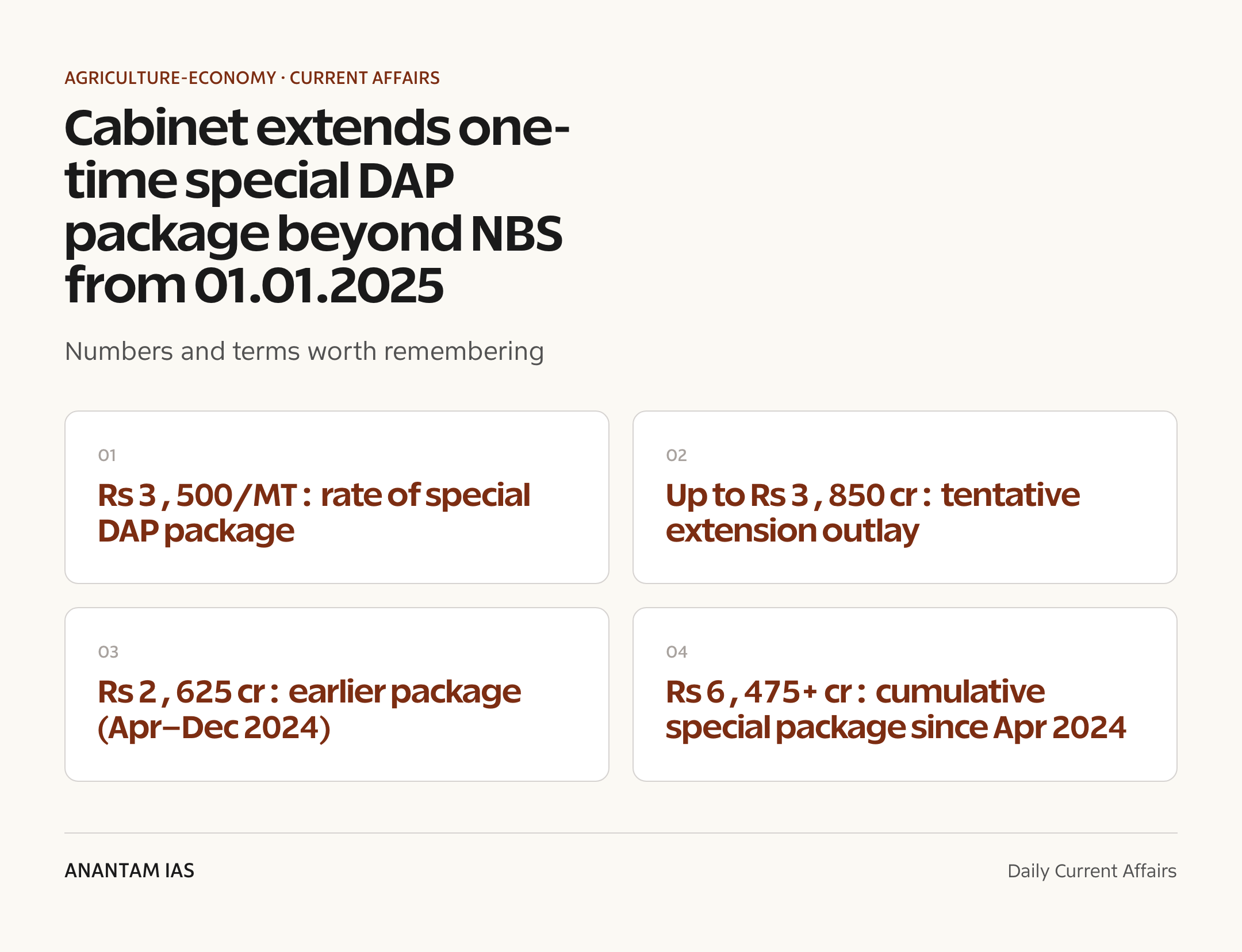
The Union Cabinet approved an extension of the One-time Special Package for Di-Ammonium Phosphate (DAP) beyond the Nutrient Based Subsidy (NBS) regime at Rs 3,500 per metric tonne, effective from 01.01.2025 until further orders. The decision aims to secure availability of DAP at affordable prices for farmers during the ongoing cropping cycles and to stabilise the fertiliser market against global supply and price shocks.
The extension carries a tentative additional budgetary requirement of up to Rs 3,850 crore. This builds on an earlier one-time special package that covered 01.04.2024–31.12.2024 and raises the cumulative special support on DAP since April 2024 to more than Rs 6,475 crore. The move has immediate implications for agricultural input costs, procurement and distribution logistics ahead of Kharif and Rabi seasons, and for short-run fiscal planning.
Policy decision: Extension of the special DAP package to continue over and above NBS subsidy from 01.01.2025.
Fiscal element: Tentative additional budgetary requirement up to Rs 3,850 crore for the extended period.
Farmer impact: Keeps retail DAP prices stable and predictable across sowing windows, reducing input cost stress.
Market signal: Government intervention to manage import-linked price shocks and ensure uninterrupted supply.
Aggregate relief: Total special package for DAP since April 2024 now exceeds Rs 6,475 crore, reflecting recurring short-term support.
The development matters in the context of:
NBS framework: Nutrient Based Subsidy (NBS) has been the primary mechanism for P&K fertiliser subsidies since 01.04.2010 and specifies nutrient-wise subsidy rates paid to manufacturers and importers.
Earlier special package: Cabinet had approved a one-time special DAP package at Rs 3,500/MT for 01.04.2024–31.12.2024 with an estimated outlay of Rs 2,625 crore to mitigate 2024 price volatilities.
Supply risk: Global geopolitical tensions and volatility in commodity markets in 2024 raised import prices and threatened domestic availability of DAP, prompting emergency fiscal support.
Coverage: Under NBS, 28 grades of P&K fertilisers are covered and supplied to farmers through manufacturers and importers; the special package targets DAP specifically.
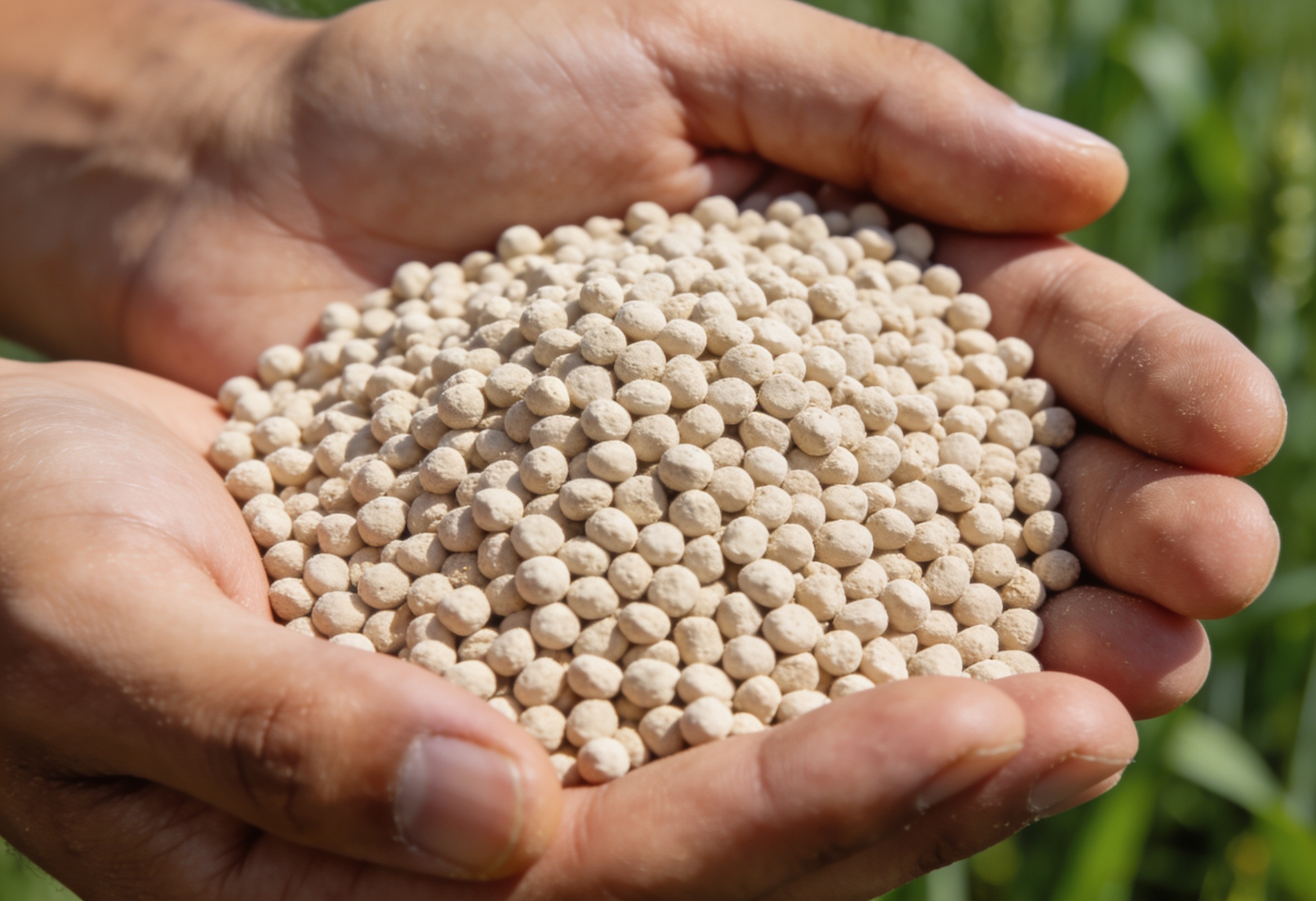
Implementation: The special support is paid over and above NBS rates to manufacturers/importers so that retail prices remain unchanged for farmers until further orders.
Illustration: AI-generated (Freepik)
UPSC Relevance
Prelims Relevance
Nutrient Based Subsidy (NBS) scheme details and its start date (01.04.2010).
Role and nutrient profile of DAP (Di-Ammonium Phosphate) as a phosphate and nitrogenous fertiliser used widely in Indian cropping systems.
Specifics of the Cabinet decision: special support of Rs 3,500 per MT and tentative outlay up to Rs 3,850 crore for the extension period.
Mains Relevance
GS3 Economy
Assess implications of input subsidies on agricultural productivity, resource use efficiency and fiscal balance.
Analyse pros and cons of episodic fiscal interventions versus structural reforms in fertiliser policy and supply chains.
Discuss policy options for ensuring affordable, efficient and sustainable fertiliser supplies, including targeting, domestic capacity enhancement and nutrient management.
Essay
Can be used as empirical evidence in essays on state support to agriculture, public finance trade-offs, market interventions during crises and long-term institutional reforms.
Useful when discussing food security linkages, agricultural price policies and the transition from universal subsidies to targeted welfare mechanisms.
Background and Context
NBS scheme basics
Structure, intent and operational mechanics of the Nutrient Based Subsidy regime.
Launch date: NBS has been in operation since 01.04.2010 as a replacement for earlier concession-based subsidy systems.
Mechanism: The scheme prescribes fixed subsidy rates per kg for major nutrients (N, P, K), paid to fertiliser manufacturers/importers to keep retail prices steady.
Objective: Encourage rationalisation of subsidies across fertiliser grades and enable differentiated pricing by nutrient content.
Administration: Ministry of Chemicals & Fertilizers sets NBS rates periodically based on input costs, with payments routed to producers/importers.
DAP in Indian agriculture
Why Di-Ammonium Phosphate is critical to cropping and how demand patterns shape policy choices.
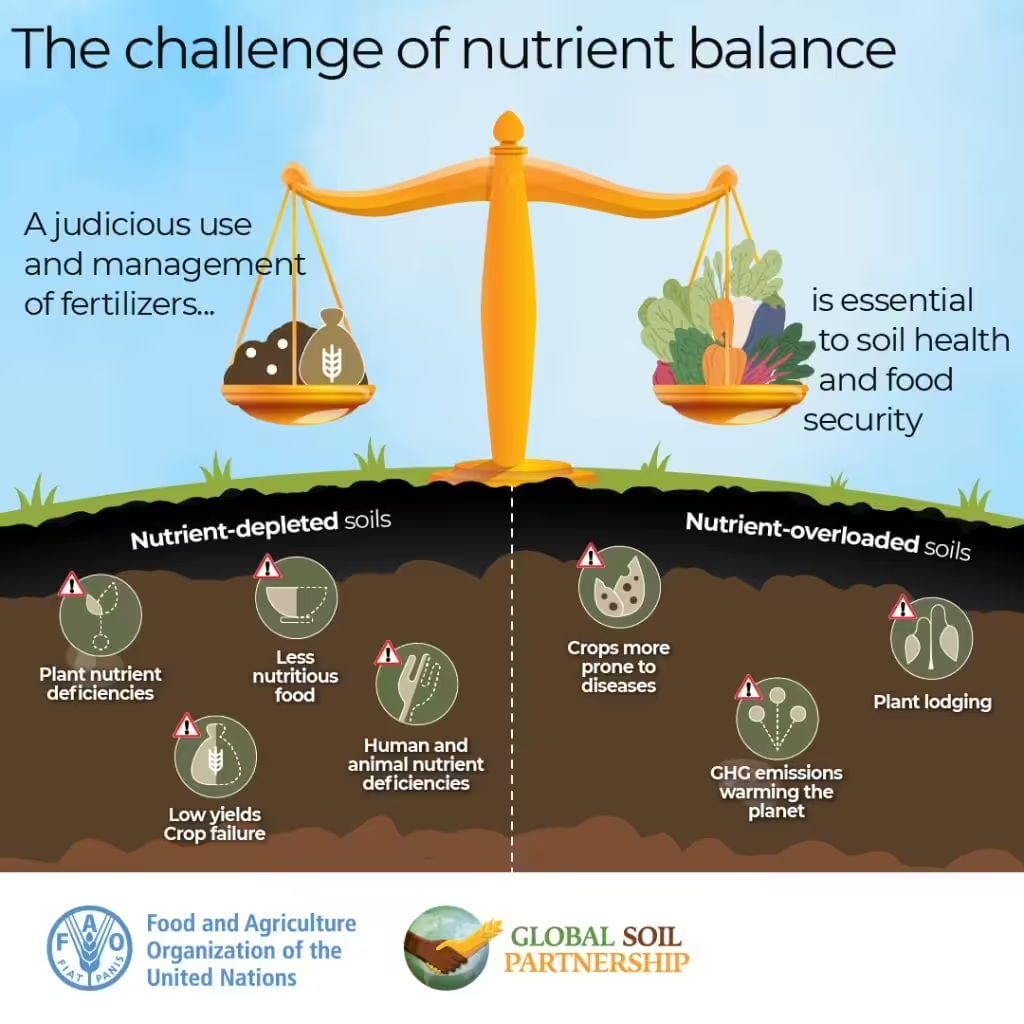
Nutrient profile: DAP provides phosphorus and a portion of nitrogen; phosphorus is essential for root development and early crop growth.
Crop usage: Widely used across cereals, oilseeds and horticulture; demand peaks before sowing in Kharif and Rabi seasons.
Supply pattern: Domestic capacity exists but India imports significant quantities of phosphoric raw materials and finished DAP depending on global prices.
Price sensitivity: Domestic retail prices link to international phosphoric acid and rock phosphate markets; supply disruptions can quickly affect farmer access.
Reasons for the one-time special package
Immediate drivers that led the government to offer additional support beyond NBS.
Global price shocks in 2024 raised input costs for DAP manufacturers and importers, threatening retail price increases.
Short-term policy gap: NBS rates may not have fully shielded farmers from sudden international market moves during the cropping season.
Food security risk: Elevated fertiliser prices risked lower application rates and potential yield loss if left unchecked.
Political economy: Protecting farmer incomes and sowing decisions ahead of key seasons is a high priority for governments during stress periods.
Fiscal implications and scale
How episodic support affects government budgets and planning.
Estimated cost: The January 2025 extension carries a tentative additional requirement up to Rs 3,850 crore.
Cumulative outflow: Combined with earlier measures since April 2024, total special support on DAP exceeds Rs 6,475 crore.
Budget trade-offs: Recurring emergency measures compress fiscal space for other programmes if not offset by savings or revenue measures.
Contingent planning: Repeated extensions necessitate clearer contingency provisions in budgetary frameworks for commodity-linked subsidies.
Supply chain and implementation dynamics
Operational aspects of keeping fertiliser available at farm gates.
Channel payments: Subsidy payments are routed to manufacturers/importers to bridge gap between landed costs and retail price caps.
Distribution timing: Stocks and logistics must be aligned with sowing windows to prevent local shortages even when national supplies are adequate.
Monitoring needs: Timely data on allocations, offtake and retail availability is necessary to prevent diversion and hoarding.
Policy pathways to reduce recurring fiscal dependence while securing farmer access.
Targeting: Direct Benefit Transfer (DBT) mechanisms to channel support only to eligible farmers can save resources.
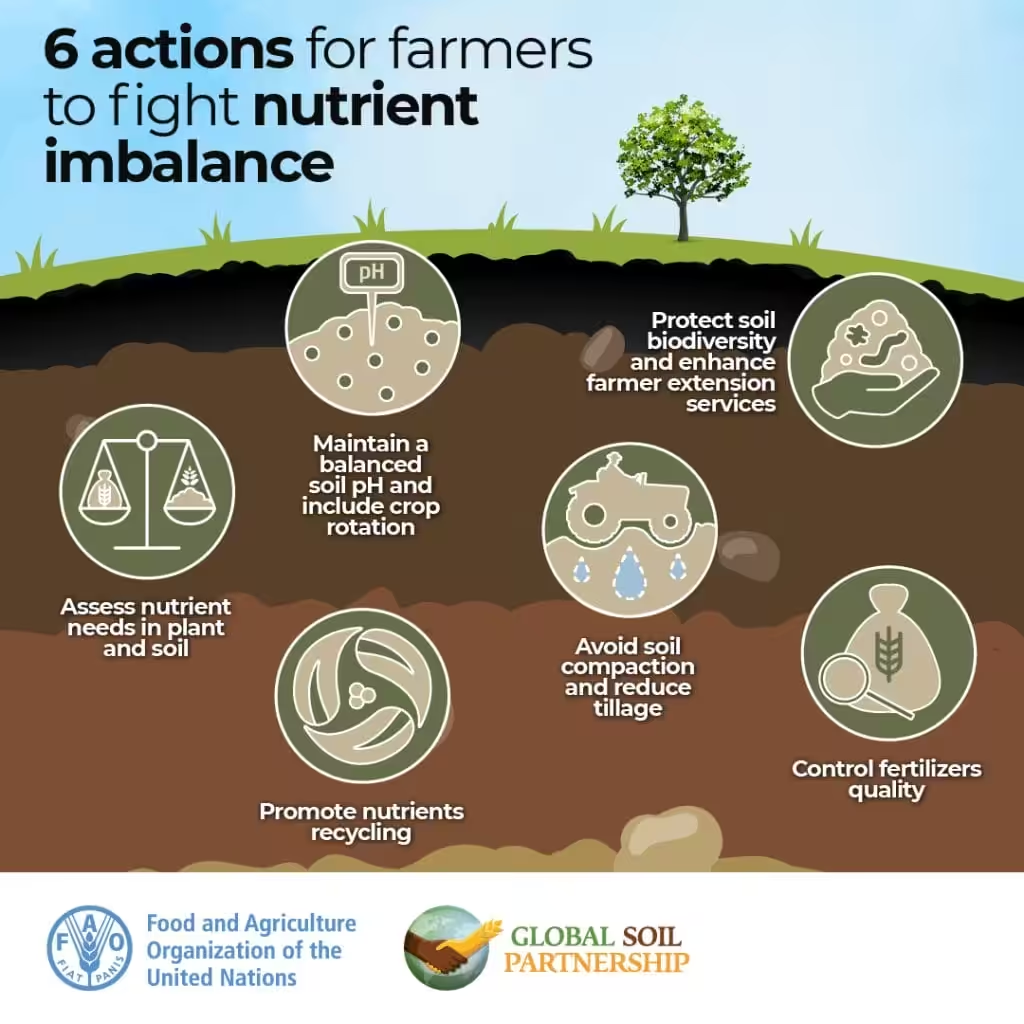
Balanced nutrition: Promote soil testing and balanced fertilisation to reduce over-reliance on single fertiliser grades like DAP.
Domestic investments: Encourage capacity building in phosphate rock processing, phosphoric acid production and recycling of nutrients.
Market instruments: Use strategic buffer stocks and price-linked triggers for temporary support instead of open-ended subsidies.
Way Forward
Design clearer time-bound rules
Set explicit criteria and review timelines for any future extensions.
Institute periodic market reviews linked to international price indices and domestic availability metrics to decide extensions.
Announce sunset clauses and phased exit strategies to avoid open-ended fiscal commitments.
Develop contingency protocols that tie emergency support to measurable supply disruptions or price thresholds.
Move towards better targeting
Reduce universal fiscal outgo by focusing support where it is most needed.
Pilot DBT for fertiliser users in high-need regions to evaluate leakage reduction and administrative feasibility.
Design differentiated support for smallholders and marginal farmers who are most price-sensitive.
Leverage Aadhaar–land records–soil health card data to deliver targeted assistance while protecting legitimate entitlements.
Strengthen domestic supply and resilience
Reduce exposure to global shocks through capacity and market interventions.
Provide incentives for phosphate rock exploration and processing to reduce import dependence over the medium term.
Encourage public–private investment in DAP manufacturing and storage infrastructure to smooth seasonal bottlenecks.
Promote nutrient recycling technologies and use of indigenous phosphate alternatives where agronomically viable.
Promote efficient nutrient management
Address demand-side factors to lower subsidy dependency sustainably.
Scale up soil health cards, micro-nutrient advisories and farm-level soil testing to guide balanced fertiliser use.
Support extension and precision farming tools that optimize dose and timing of fertiliser application.
Link incentive programmes for balanced nutrient application with credit and crop insurance schemes to encourage adoption.
Conclusion
Immediate objective: The extension preserves DAP affordability and availability for farmers during critical cropping periods by providing an additional Rs 3,500/MT over NBS until further orders.
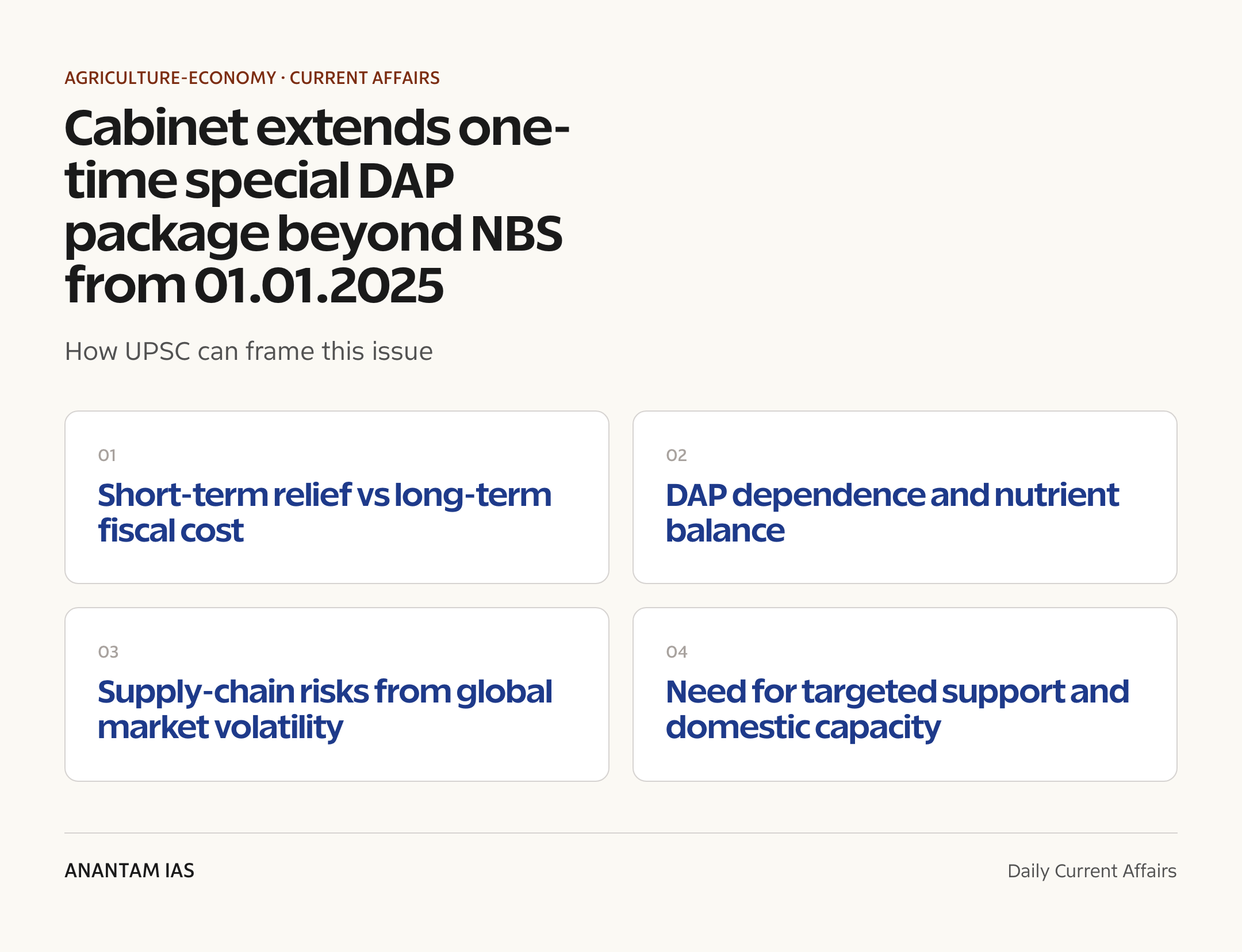
Trade-offs: While short-term relief reduces risks of input underuse and protects cropping decisions, recurrent extensions raise questions about fiscal sustainability, market distortions and long-term resilience of domestic supply chains.
Policy message: Emergency interventions should be paired with clearer exit rules, targeted delivery mechanisms and investments in domestic capacity and nutrient management to reduce the need for repeated fiscal support.
UPSC Practice Questions
Prelims MCQ 1
The Nutrient Based Subsidy (NBS) scheme for P&K fertilisers in India was introduced in which year?
(a) 2005 (b) 2010 (c) 2015 (d) 2020
Answer: (b) 2010
Explanation:
NBS for P&K fertilisers has been in effect since 01.04.2010. The scheme replaced earlier subsidy mechanisms and prescribes nutrient-wise subsidy rates paid to manufacturers and importers.
Prelims MCQ 2
The Cabinet approval on 01.01.2025 extended a one-time special package on DAP at what rate over and above NBS?
(a) Rs 1,500 per MT (b) Rs 2,500 per MT (c) Rs 3,500 per MT (d) Rs 4,500 per MT
Answer: (c) Rs 3,500 per MT
Explanation:
The extension continues the special DAP package at Rs 3,500 per metric tonne over and above the NBS subsidy, aimed at keeping retail prices stable for farmers.
UPSC Mains Questions
{‘question’: ‘Examine the economic and fiscal implications of providing recurrent fertilizer subsidies such as the extended one-time DAP package. Suggest reforms to balance farmer support and fiscal sustainability.’, ‘model_answer_points’: [‘Economic effects: Subsidies reduce input prices and can boost short-term fertiliser use, agricultural output and farmer incomes; they also support planting decisions in stress periods.’, ‘Market distortions: Price support can bias nutrient choice, encourage inefficient use and retard adoption of integrated nutrient management practices.’, ‘Fiscal burden: Recurrent episodic support increases subsidy outgo, constrains budgetary space for other rural investments and complicates fiscal planning.’, ‘Leakage and targeting: Universal subsidies risk diversion to non-target users; targeted transfers and improved delivery systems can enhance efficiency.’, ‘Reforms: Transition to targeted DBT pilots, link temporary support to transparent triggers, incentivise balanced fertilisation and invest in domestic production capability.’, ‘Implementation: Strengthen monitoring with public disclosure of allocation and offtake data, set market-linked review mechanisms and prepare phased exit pathways.’]}
{‘question’: ‘Discuss the role of central government interventions in stabilising agricultural input markets. Use the DAP special package extension as an example to illustrate short-term and long-term policy trade-offs.’, ‘model_answer_points’: [‘Stabilisation role: Central interventions can avert acute shortages, prevent price spikes and maintain cropping intensity, thereby safeguarding food production.’, ‘Short-term benefits: Immediate affordability and predictability of input prices reduce risk aversion among farmers and support yields in vulnerable seasons.’, ‘Long-term trade-offs: Prolonged state support can crowd out private investment, create dependency and impose recurring fiscal costs that may be unsustainable.’, ‘Case illustration: The DAP extension prevented price-driven cutbacks in fertiliser use in 2024–25, but repeated measures signal the need for structural steps such as capacity building and targeted delivery.’, ‘Policy synthesis: Combine emergency support with reforms—promote domestic supply, precision nutrient management, targeted transfers and transparent exit criteria to optimise outcomes.’]}
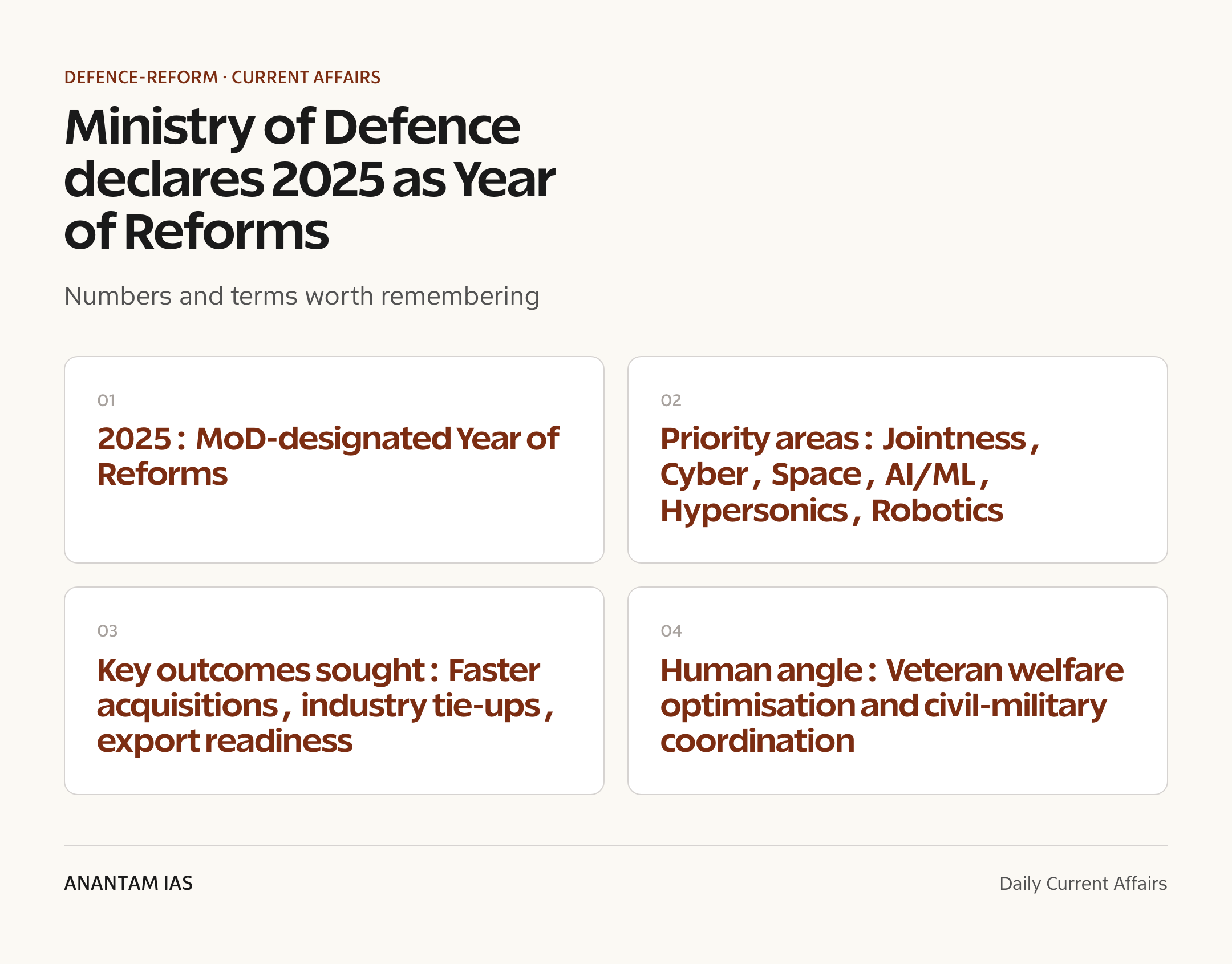
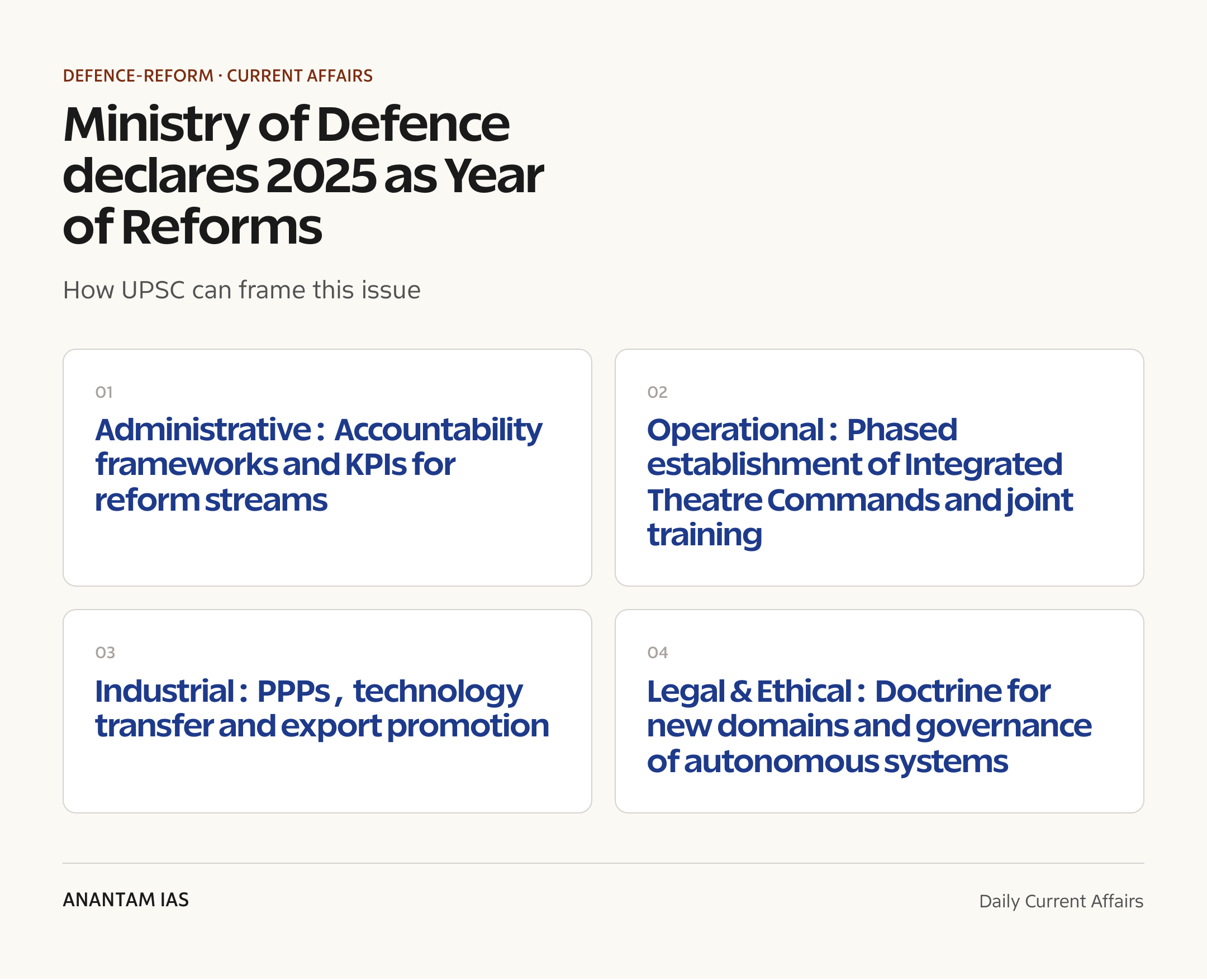
Ministry of Defence declares 2025 as Year of Reforms
General Studies · GS III · Internal Security
Why in News?
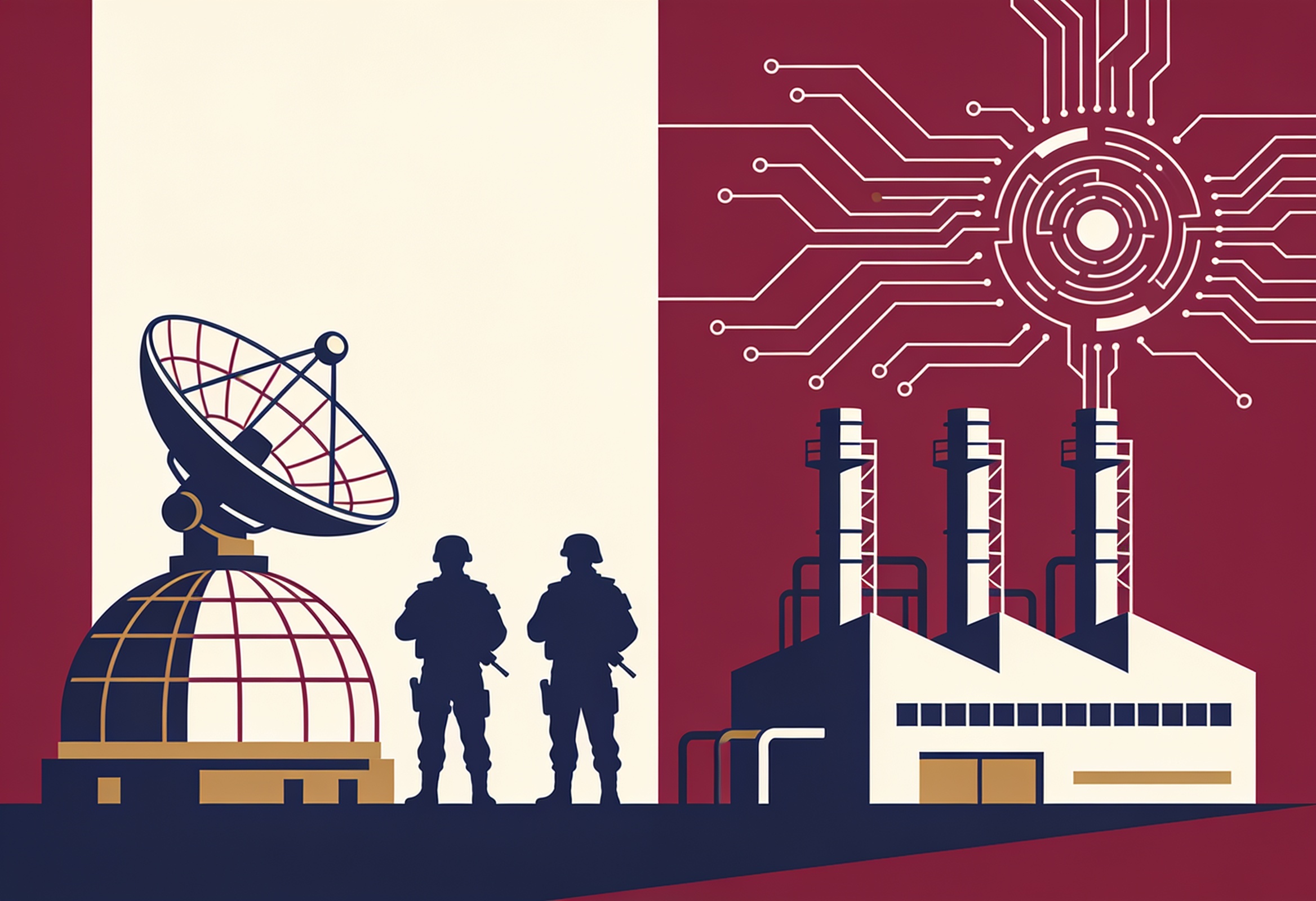
On the eve of the New Year, Raksha Mantri chaired a meeting of all MoD Secretaries and the Ministry resolved to observe 2025 as its ‘Year of Reforms’. The declaration creates a concentrated policy window to accelerate ongoing modernisation efforts across organisational structures, procurement systems and the defence industrial ecosystem.
The initiative identifies a cluster of priority interventions — strengthening jointness through Integrated Theatre Commands, operationalising new domains such as cyber and space, prioritising emerging technologies (AI/ML, hypersonics, robotics), simplifying acquisitions, encouraging public-private partnerships and improving veteran welfare. The move signals an administrative attempt to align doctrine, resources and industry over a clearly defined timeframe.
Official policy signal: The MoD has designated a calendar year to concentrate administrative energy and political will on defence reform, which helps focus leadership attention and resource allocation.
Priority areas identified: Jointness and Integrated Theatre Commands; operational capacity in cyber and space; investment in AI/ML, hypersonics and robotics; doctrinal updates to match technological change.
Procurement and industry push: Commitment to simplify acquisition procedures, promote technology transfer, incentivise public-private partnerships and improve ease of doing business to accelerate capability delivery and export readiness.
Human and institutional aspects: Emphasis on veteran welfare, utilising ex-servicemen expertise, breaking silos across stakeholders and strengthening civil-military coordination to reduce duplication and optimise resources.
The development matters in the context of:
Modernisation backlog: Indian Armed Forces are engaged in a long-running modernisation cycle; many platforms and systems need replacement or augmentation, and procurement delays have affected force preparedness.
Integrated Theatre Commands: A structural reform intended to create unified command for theatre-level operations, requiring changes to command-and-control, logistics and legal frameworks.
New operational domains: Cyber and space have become essential to contemporary warfare; developing doctrine, persistent capabilities and resilient systems is a strategic imperative.
Emerging tech centrality: AI/ML, hypersonics and robotics are expected to transform combat dynamics; bridging R&D to production is essential for operational utility.
Defence industrial base: ‘Make in India’ objectives and export ambitions demand regulatory ease, quality assurance, supply-chain integration and international partnerships.
Procurement bottlenecks: Complex approval chains, protracted trials and unclear vendor engagement processes have contributed to delays and cancellations in defence projects.
Illustration: AI-generated (Freepik)
UPSC Relevance
Prelims Relevance
Facts to remember: 2025 designated by MoD as ‘Year of Reforms’ to focus on jointness, new domains, acquisitions and industry tie-ups.
Key terms and concepts: Integrated Theatre Commands, public-private partnership (PPP), technology transfer, defence exports, AI/ML in defence.
Mains Relevance
GS3 Economy
Governance and public administration: Demonstrates how the executive uses focused timelines to push cross-cutting reforms and the administrative machinery required to implement sectoral change.
Industrial policy and trade: Links defence industrial policy with ease of doing business, incentives for domestic production and export promotion; useful for analysing industrial strategy and trade implications.
Science & technology and national security: Illustrates the strategic integration of emerging technologies into national security planning and the policy levers needed to transition R&D into fielded capabilities.
Essay
Themes: Modernisation of the armed forces, technology and national power, civil-military relations, administrative reform and industry-state relations.
Use in essays: Can be cited as a recent example of targeted administrative focus to accelerate sectoral reform, and to discuss the interplay between policy intent and execution challenges in large public organisations.
Background and Context
Why a Year-based push
A time-bound declaration aims to create momentum and internal accountability within MoD and services.
Concentrated timelines generate measurable milestones, which can be tracked through quarterly reviews and performance indicators.
Political and administrative visibility can help resolve inter-departmental blockages and prioritise funds in budgetary cycles.
Task forces and dedicated cells can be constituted to break complex reforms into implementable packages with assigned timelines.
A single-year focus helps test pilot reforms and produce implementation templates for scaling up in subsequent years.
Public reporting, where appropriate, can create external accountability and reduce information asymmetry with stakeholders.
Integrated Theatre Commands
An institutional change aimed at improving joint operational capability and faster decision-making in theatres of operation.
Objective is to unify command of land, sea and air assets under theatre commanders for theatre-specific strategy and operations.
Operational prerequisites include shared logistics, joint intelligence, common planning systems and interoperable communications.
Administrative measures needed: transfer of assets, funding realignment, personnel policies and changes to service-specific command prerogatives.
Risks include institutional resistance from services protective of domain-specific identities and redistribution of resources.
A phased implementation with pilot commands, legal clarifications and doctrinal publications reduces friction and operational disruption.
Operationalising cyber and space
New domains need tailored organisational structures, doctrine and resilient infrastructure.
Space requirements include persistent situational awareness, resilient satellite communications and space situational awareness capabilities.
Cyber needs include defensive posture, offensive options with legal oversight, and integration with conventional operations for real-time support.
Doctrine must clarify attribution thresholds, rules of engagement and escalation control in non-kinetic theatres.
Human capital pipelines should be created through specialised training institutes, lateral recruitment and civil-military exchanges.
Procurement pathways should favour rapid fielding of modular, upgradable systems to keep pace with short technology cycles.
Emerging technologies: AI, hypersonics and robotics
These technologies are force multipliers but require systems-level integration and governance.
Research must move beyond prototype to certified platforms with clear test-and-evaluation regimes and interoperability standards.
Supply chains for critical components (sensors, semiconductors, composites) must be secured through domestic capacity and trusted imports.
Legal, ethical and operational frameworks should guide use of autonomy, human oversight and fail-safe mechanisms.
Collaboration between DRDO, academia, startups and industry will accelerate transition from lab to operational use.
Investments in simulation, digital twins and live testing ranges are necessary to validate systems under realistic conditions.
Acquisition reform and industry linkages
Faster, transparent procurement can incentivise domestic manufacturing and global competitiveness.
Simplified procurement rules and fast-track clearances for critical projects can reduce cycle times and cost overruns.
Pre-qualification frameworks and strategic vendor lists for key technologies can shorten tendering while maintaining oversight.
PPP models and technology transfer clauses can help scale production and embed industrial capability domestically.
Export promotion requires quality assurance, lifecycle support mechanisms and diplomatic initiatives to open markets.
Standards alignment with global systems and participation in international supply chains will increase supplier credibility.
Veteran welfare and civil-military coordination
Retaining institutional knowledge and ensuring social compact with veterans strengthens human resources and societal trust.
Optimising pensions and healthcare delivery is part of social justice and reduces administrative burden through digitisation.
Structured programs to place veterans in training, maintenance, manufacturing and R&D roles can channel experience into capability building.
Civil-military coordination improvements can reduce duplication of infrastructure and improve disaster-response synergy.
Leveraging veteran expertise in doctrine development and institutional training can bridge operational requirements and industry needs.
Transparent grievance redressal and stakeholder consultations help maintain morale and public confidence.
Way Forward
Governance and accountability
Set measurable KPIs for each reform stream with quarterly reviews by an empowered steering committee.
Publish periodic progress reports to build stakeholder confidence and enable course correction.
Create cross-functional task forces with clear mandates, deliverables and sunset clauses to avoid permanent bureaucratic expansion.
Acquisition and industrial incentives
Fast-track acquisition paths for critical technologies with pre-qualified vendor lists and fixed evaluation timelines.
Offer targeted fiscal incentives, concessional financing and procurement preference tied to technology transfer and export milestones.
Encourage clustering of defence MSMEs and anchor large orders to create scalable supply chains and quality standards.
Operational and doctrinal measures
Establish joint centres of excellence for cyber and space with pooled funding and integrated staffing.
Pilot Integrated Theatre Commands in selected regions with monitored performance metrics before national rollout.
Develop doctrinal handbooks for AI and autonomous systems specifying human-in-loop mandates and escalation protocols.
Human capital and veterans
Create lateral recruitment channels for specialists from industry and academia, supplemented by in-service training.
Launch veteran integration programs linking ex-servicemen to training roles, maintenance contracts and industry placements.
Invest in education partnerships to build a pipeline of engineers and technologists attuned to defence requirements.
Conclusion
The ‘Year of Reforms’ is a clear policy intent by MoD to accelerate cross-cutting modernisation, but success will depend on follow-through, institutional incentives and measurable delivery against timelines.
If reforms are synchronised across doctrine, procurement and industry while safeguarding operational readiness, India can achieve meaningful improvements in jointness, technology adoption and defence industrial capacity with positive spillovers for exports and strategic autonomy.
UPSC Practice Questions
Prelims MCQ 1
Which of the following is a declared focus area in the MoD’s 2025 ‘Year of Reforms’?
(a) Privatisation of the Indian Army (b) Development of Integrated Theatre Commands (c) Abolition of defence exports policy (d) Complete civilianisation of defence R and D
Answer: (b) Development of Integrated Theatre Commands
Explanation:
The MoD announcement explicitly lists strengthening jointness and facilitating establishment of Integrated Theatre Commands as a priority. Options (a), (c) and (d) do not reflect the content of the press release and are not part of the declared agenda.
Prelims MCQ 2
The MoD’s 2025 reforms explicitly list which technological domains for attention?
(a) Artificial Intelligence, Machine Learning, Hypersonics and Robotics (b) Quantum computing, Blockchain, 3D printing and Bioengineering (c) Nuclear propulsion, Coal gasification, Traditional artillery modernization (d) None of the above
Answer: (a) Artificial Intelligence, Machine Learning, Hypersonics and Robotics
Explanation:
The press release names AI, ML, hypersonics and robotics among the emerging technologies to be focussed on during the Year of Reforms. The other choices include technologies not listed in the announcement or are unrelated.
UPSC Mains Questions
{‘question’: ‘Examine the likely administrative and doctrinal challenges in establishing Integrated Theatre Commands in India and suggest measures to address them.’, ‘guidance’: ‘Discuss inter-service rivalry, allocation of assets, command and control, logistics, legal frameworks and propose institutional reforms, phased implementation and legislative or policy adjustments.’}
{‘question’: ‘Assess how prioritising new domains such as cyber and space in defence reforms would alter India’s strategic posture. What policy steps are required to operationalise these domains?’, ‘guidance’: ‘Cover capability development, doctrine, international norms, resource allocation, human capital and inter-agency coordination.’}
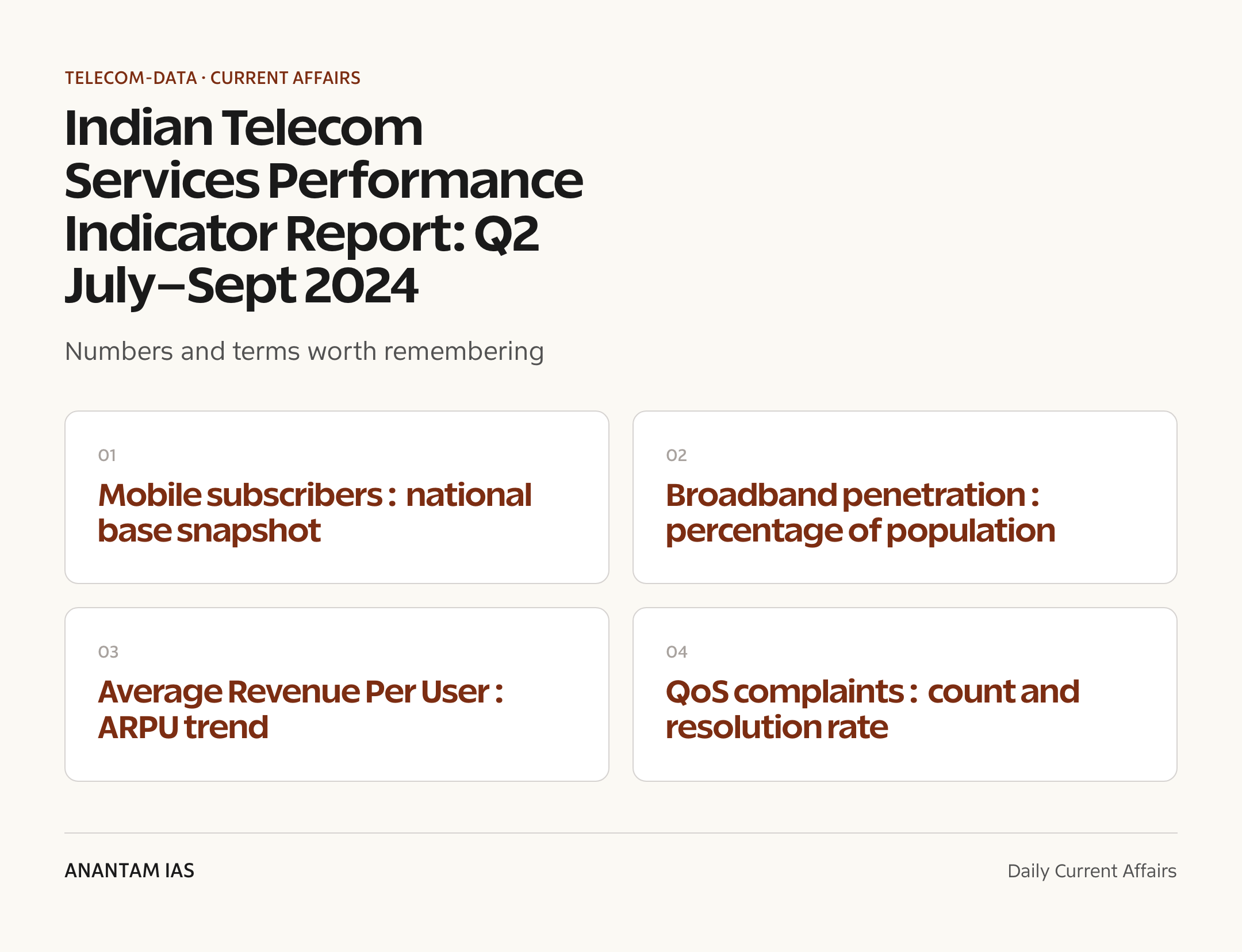
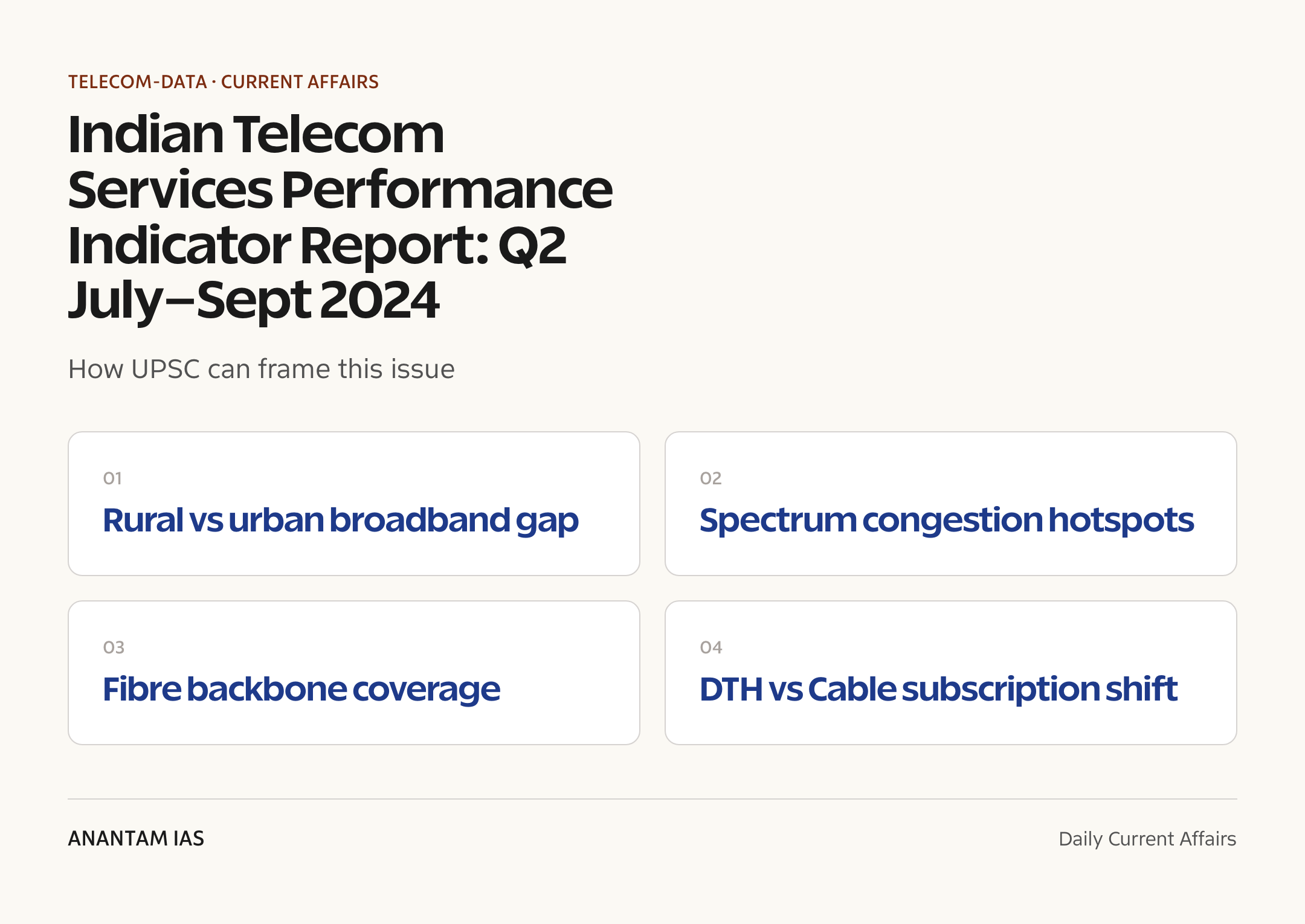
Indian Telecom Services Performance Indicator Report: Q2 July–Sept 2024
General Studies · GS III · Science & Tech
Why in News?
The Telecom Regulatory Authority of India (TRAI) has released its quarterly “Indian Telecom Services Performance Indicator Report” for the period 1 July to 30 September 2024. The report compiles sector-wide metrics on mobile and broadband subscribers, quality of service (QoS) parameters, complaint statistics and broadcasting service indicators (Cable TV, DTH and radio). It is a routine release, but one that carries fresh empirical inputs used by policymakers, regulators, market analysts and civil-society stakeholders to gauge the health of India’s digital infrastructure.
Beyond headline subscriber numbers, the report provides granular signals about network congestion, ARPU (Average Revenue Per User) trends, rural–urban divides in broadband access and the status of transport infrastructure such as fibre backhaul. These signals directly inform spectrum management choices, investment needs for fibre and backhaul, and targeted interventions for improving service delivery in underserved geographies — matters that are central to GS3 topics on technology, infrastructure and economic growth.
Release: TRAI published the performance indicator report for the quarter ending 30 September 2024; the executive summary and the full report are available on TRAI’s website and via the Department of Telecommunications press release.
Subscriber trends: The report details national aggregates and quarterly net additions for mobile, broadband and fixed-line segments, including the mix of prepaid/postpaid and the distribution across urban and rural areas — critical for assessing market saturation and outreach.
Quality metrics and complaints: QoS statistics such as call-drop rates, data throughput and latency together with complaint volumes and resolution times provide an evidence base for enforcement, licence-condition reviews and consumer protection measures.
Spectrum and capacity indicators: Information on spectrum usage, utilisation pressures in specific frequency bands and indications of congestion in urban hotspots help shape auctions, refarming decisions and policies on sharing or dynamic spectrum access.
Broadcasting trends: DTH, Cable TV and radio service metrics in the report reflect consumer behaviour shifts — for example migration to OTT platforms — and inform regulatory choices in content distribution, carriage and signalling.
The development matters in the context of:
Regulatory input: Quarterly TRAI reports are primary inputs for DoT policy deliberations, parliamentary questions and industry consultations on licensing and spectrum.
Digital India objectives: Broadband penetration and quality metrics bear directly on goals such as e-governance delivery, digital education and access to health services.
Market structure and competition: Subscriber additions, churn, ARPU and market share trends help competition authorities and policymakers assess concentration risks and the financial health of operators.
Investment signals: Persistent QoS problems and spectrum pressure indicate where private capex or public interventions (e.g., incentives for fibre rollout) are needed to expand capacity.
Consumer protection: Complaint patterns and QoS shortfalls drive regulatory action on penalties, mandatory remediation and improvements to grievance redress systems.
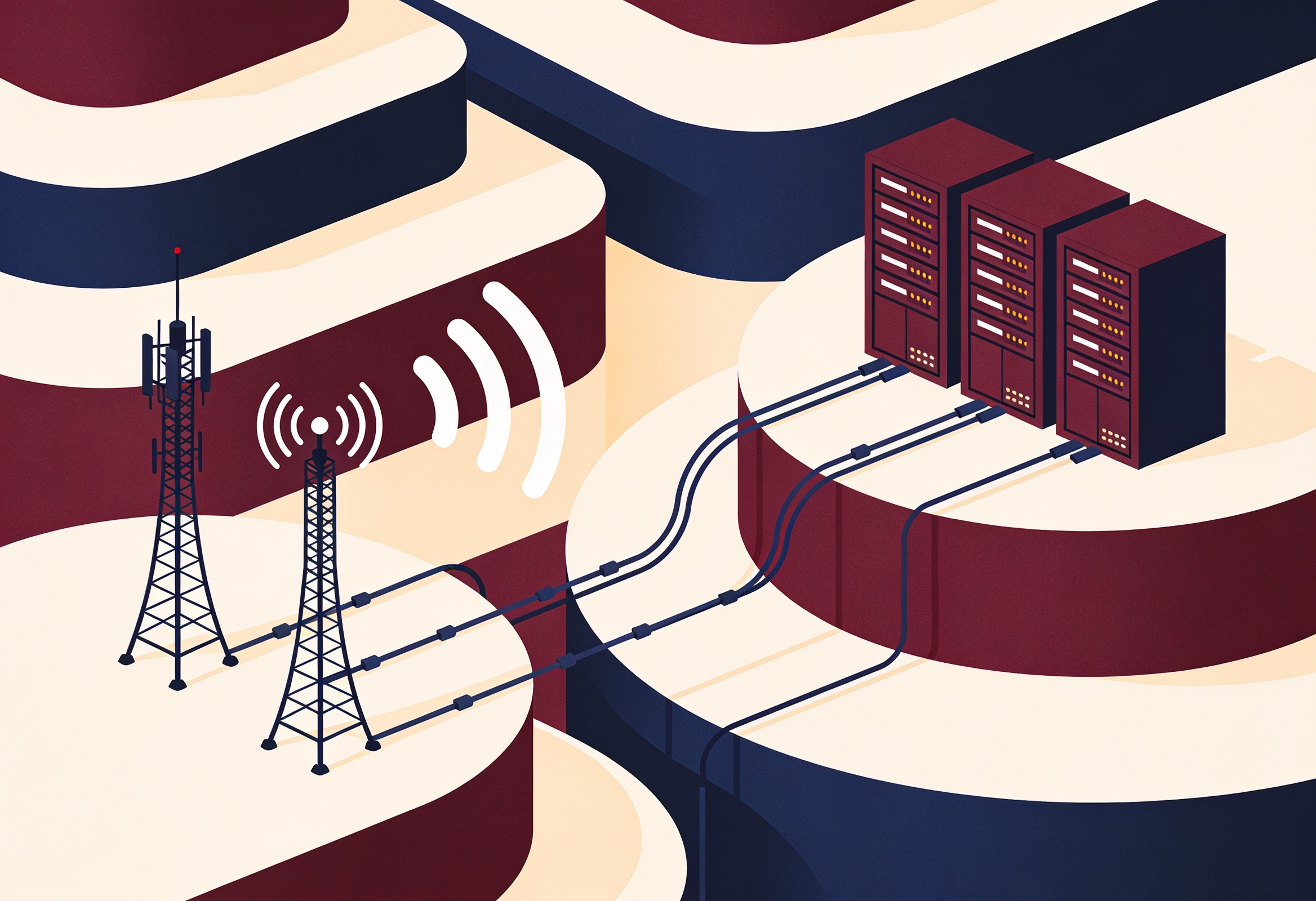
Illustration: AI-generated (Freepik)
UPSC Relevance
Prelims Relevance
– Sectoral statistics on subscriber counts, broadband penetration rates and broadcasting subscriber numbers are concrete factual details useful for preliminary examinations. The report’s definition of broadband, frequency bands commonly referenced (e.g., 700 MHz, 3.5 GHz) and institutional roles (TRAI vs DoT) are high-yield facts.
Mains Relevance
GS3 Economy
– Use the report’s empirical data to frame answers on telecom regulation, digital infrastructure deficits, spectrum policy and the economic implications for the digital economy.
– Incorporate QoS and ARPU trends when discussing industry viability, investment needs and the case for public policy support in low-ARPU rural markets.
– Draw on broadcasting metrics to discuss the interplay between content distribution markets (DTH, Cable, OTT) and regulation of carriage, pricing and consumer choice.
Essay
– The report provides data points and trends that strengthen essays on technology and development, infrastructure-led growth, the digital divide and regulatory challenges in transitioning to a 5G/6G-enabled economy.
Background and Context
TRAI and Reporting
Mandate: TRAI is the statutory regulator for telecommunications in India and is responsible for monitoring sector performance and advising the government.
TRAI issues periodic performance indicator reports that aggregate data furnished by service providers, offering a consolidated view of sector metrics.
The reports are non-financial and focus on operational parameters such as subscribers, QoS, complaints and broadcasting statistics.
Findings from these reports feed into DoT decisions on licensing, spectrum allocation and regulatory enforcement.
TRAI’s methodology typically includes definitions for metrics (for instance, what counts as broadband) and standardised reporting templates used by operators.
Subscriber Metrics and Market Structure
Key indicators: Total mobile and broadband subscriber numbers, net additions and the split between prepaid and postpaid services provide a snapshot of market dynamics.
Net additions reveal current growth momentum; stagnation or decline can signal market saturation or competitive pressures.
Prepaid-dominated markets have different revenue profiles and service expectations compared with postpaid-heavy segments.
Urban–rural splits in subscriber distribution expose the geographic reach of services and where policy focus is required.
Subscriber churn, while not always published in every quarter, is a useful indicator of competitive intensity and service quality.
Broadband Definitions and Penetration
Broadband penetration is frequently used as a proxy for digital access and socioeconomic inclusion.
TRAI defines broadband for the purposes of its reporting; the threshold (e.g., minimum speed) can change over time and affect comparability.
Penetration is expressed as subscriptions per 100 population and is sensitive to multiple SIM ownership and inactive accounts.
Fixed broadband (fibre/DSL) and mobile broadband trends together determine effective internet reach.
Affordability, availability of handsets and last-mile infrastructure (fibre to home or wireless links) are key determinants of real uptake.
QoS metrics commonly tracked include call completion rates, dropped-call rates, accessibility of signaling channels, data throughput and latency.
TRAI also publishes complaint statistics — volume, types (billing, network, service denial), and resolution times — which spotlight consumer-facing problems.
Persistently high complaint volumes or QoS breaches may lead to regulatory directives, inspection of networks or monetary penalties.
Improved monitoring (e.g., use of crowdsourced speed tests) complements operator-reported metrics and can reveal ground realities.
Spectrum Management and Capacity
Spectrum is a scarce national resource; its allocation and efficient use underpin network capacity and the rollout of new services.
Reports can signal congestion in particular bands and geographies, prompting considerations for auctioning additional spectrum or enabling sharing.
Refarming (repurposing older spectrum holdings) and densification using small cells are common technical responses to capacity constraints.
Backhaul capacity, especially fibre to towers and to the last mile, affects how much traffic can be carried without overloading radio spectrum.
Policy tools such as spectrum caps, sharing frameworks, and dynamic access regimes are calibrated using utilization and congestion indicators.
Broadcasting and Content Distribution
Cable TV, DTH and radio indicators show the demand-side evolution in content consumption and revenue models.
DTH and cable subscriber shifts point to migration patterns and monetisation through subscriptions versus ad-supported models.
Radio reach remains significant for news, emergency messaging and local language content, especially in semi-urban and rural areas.
The rise of OTT streaming affects traditional broadcasters’ market share and drives convergence in regulation and taxation debates.
Regulatory concerns for broadcasting include carriage charges, interconnection agreements and consumer choice preservation.
Economic Linkages and Policy Implications
Telecom sector performance has multiplier effects on economic activity, governance and inclusion.
Higher broadband penetration supports digital commerce, telemedicine, remote education and improved market access for microenterprises.
ARPU levels and operator revenues influence willingness to invest in network expansion and technology upgrades like 5G.
A predictable regulatory regime and clarity on spectrum pricing reduce investment risk for long-duration capex decisions.
Policy interventions may include targeted subsidies, public infrastructure sharing and incentives for rural network expansion.
Way Forward
Accelerate Fibre and Backhaul Expansion
Prioritise fibre-to-tower and fibre-to-the-premises rollouts to increase transport capacity and reduce reliance on scarce radio spectrum.
Encourage municipal-level permissions, right-of-way simplification and coordinated trenching to lower deployment costs.
Promote public–private partnerships and viability-gap funding for fibre in low-return rural corridors.
Mandate dark-fibre access and infrastructure sharing to reduce duplication and speed up last-mile connectivity.
Improve Spectrum Management and Utilisation
Adopt flexible approaches such as spectrum sharing, geographic licensing and market-based dynamic access where feasible.
Regularly review band utilisation to enable refarming of legacy allocations for more efficient bands.
Use data from TRAI reports to prioritise auctions or temporary spectrum assignments in chronic congestion hotspots.
Design auction and pricing parameters that balance revenue needs with the imperative to expand capacity rapidly.
Focus on Rural and Low-ARPU Markets
Deploy targeted subsidy mechanisms, performance-based support or concessional access to public infrastructure to make rural rollouts viable.
Encourage affordable device programmes and digital literacy campaigns so that physical availability converts to effective usage.
Leverage universal service obligations and funds to incentivise operators to meet minimum QoS and coverage thresholds in underserved areas.
Support community networks and last-mile innovations such as shared-owned micro-operators where commercial models alone fall short.
Strengthen QoS Monitoring and Consumer Redressal
Upgrade monitoring systems, including independent measurements and crowdsourced data, to validate operator-reported QoS.
Mandate faster grievance redress timelines and transparent escalation paths for unresolved consumer complaints.
Introduce outcome-based performance standards tied to license renewals or incentives to align operator behaviour with public interest.
Publicly publish more granular QoS and complaint metrics to increase accountability and enable civil-society scrutiny.
Conclusion
The TRAI Q2 2024-25 performance indicator report supplies policymakers and market actors with current, operational data about subscriber dynamics, service quality and capacity constraints. Policymakers should use these empirical signals to prioritise fibre expansion, refine spectrum management, and deploy targeted interventions for rural connectivity. Improving monitoring and consumer redress mechanisms will strengthen trust in services while a predictable regulatory environment will encourage sustained private capital for 5G rollouts and future digital infrastructure.
UPSC Practice Questions
Prelims MCQ 1
Which body publishes the Indian Telecom Services Performance Indicator Report?
(a) Department of Telecommunications (DoT) (b) Telecom Regulatory Authority of India (TRAI) (c) Ministry of Electronics and Information Technology (MeitY) (d) Telecommunications Consultants India Limited (TCIL)
Answer: (b) Telecom Regulatory Authority of India (TRAI)
Explanation:
TRAI is the statutory regulator that compiles operational data from service providers and issues periodic performance indicator reports covering telecom and broadcasting sectors.
Prelims MCQ 2
A key capacity-related lever that can relieve spectrum congestion noted in TRAI reports is:
(a) Increase in DTH subscriptions (b) Fibre deployment to towers and last mile (c) Reduction of radio stations (d) Closure of small telecom operators
Answer: (b) Fibre deployment to towers and last mile
Explanation:
Fibre backhaul and last-mile fibre increase transport capacity, enabling higher data throughput and offloading traffic from radio links; this directly reduces spectral pressure and improves QoS.
UPSC Mains Questions
{‘question’: ‘Critically examine how telecom performance indicators influence spectrum policy and auction timings in India.’, ‘answer’: ‘Telecom performance indicators such as congestion metrics, band utilisation reports and QoS degradations provide the empirical basis for spectrum policy choices. When TRAI highlights persistent congestion in specific bands or geographies, policymakers and DoT must weigh the immediacy of capacity needs against fiscal and market considerations. Auction timing can be accelerated to supply scarce spectrum, though aggressive pricing may deter participation and delay network upgrades. Alternative tools include enabling spectrum sharing, allowing temporary liberalised access in emergencies, and refarming legacy bands for newer technologies. A balanced approach combines targeted auctions for critical bands with regulatory facilitation of sharing and reuse to address immediate capacity shortfalls while preserving revenue objectives. Case examples where QoS deterioration precipitated regulatory engagement illustrate that timely data can trigger interventions such as temporary spectrum assignments or directives for infrastructure augmentation.’}
{‘question’: ‘Evaluate the role of broadband penetration and network quality in achieving Digital India objectives, using insights from TRAI quarterly reports.’, ‘answer’: ‘Broadband penetration and network quality are foundational to Digital India goals across governance, education, health and commerce. TRAI reports reveal not only headline subscription counts but also quality dimensions — latency, throughput and outage frequency — which determine whether digital services are usable. Urban–rural disparities in these metrics point to persistent access gaps; improving mere coverage without quality will not achieve service delivery objectives. Policy responses include large-scale fibre buildout to support high-capacity services, targeted subsidies or VGF for low-ARPU areas, and regulatory obligations that ensure minimum QoS. Coordinated action to lower deployment costs (streamlined permissions), incentivise private investment and leverage universal service funds can accelerate inclusive digital access. The argument should stress that broadband is an enabler: improved penetration must be coupled with quality and affordability to yield the socioeconomic benefits envisioned under Digital India.’}
One Nation One Subscription: Research Access for Public Institutions
General Studies · GS II · Science & Tech
Why in News?
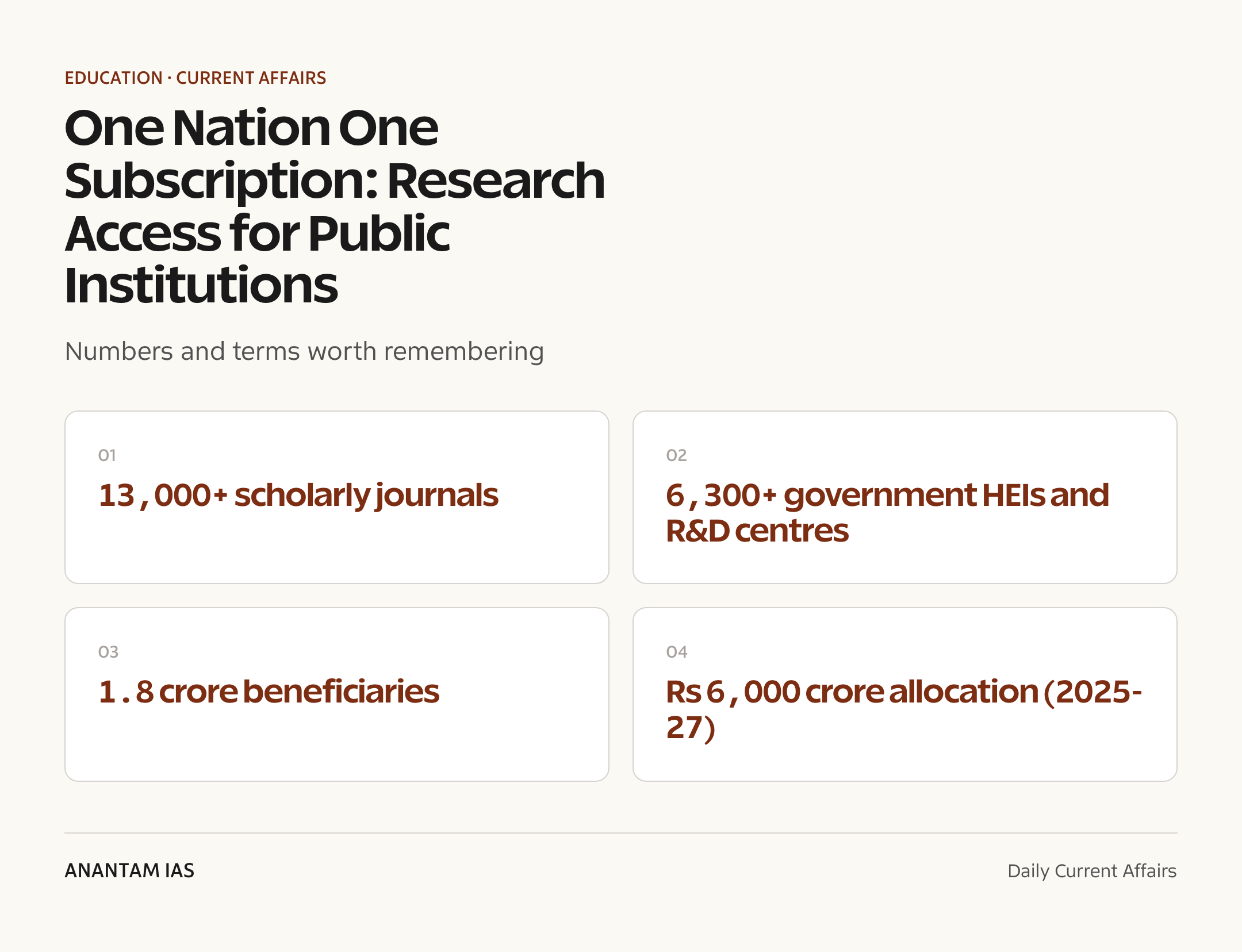
The Union Cabinet approved the One Nation One Subscription (ONOS) scheme on 25 November 2024 and the scheme is slated to be implemented from 1 January 2025. ONOS centralises procurement and licensing of international scholarly journals and articles for government higher education institutions (HEIs) and central government R&D centres, enabling nationwide digital access to subscription content without individual institutional subscriptions.
The announcement carries a targeted three-year funding envelope of Rs 6,000 crore (1 January 2025 to 31 December 2027) and promises access to more than 13,000 journals from around 30 major international publishers. The scale — covering over 6,300 government-managed HEIs and an estimated 1.8 crore beneficiaries — makes ONOS a significant national intervention in knowledge access and research-support infrastructure.
Cabinet approval: ONOS has been approved as a centrally funded scheme to negotiate and provide subscription access on behalf of eligible government HEIs and central R&D institutions.
Scale and scope: It targets coverage of over 13,000 scholarly journals from about 30 international publishers, extending benefits to roughly 1.8 crore students, faculty and researchers across more than 6,300 institutions.
Funding and timeline: A budgetary allocation of Rs 6,000 crore has been provided for the initial three-year phase (2025–2027) to operationalise procurement, access management and capacity building.
The development matters in the context of:
NEP 2020 alignment: The National Education Policy 2020 emphasises strengthening research culture and capacity in HEIs; ONOS operationalises the access component of that strategic aim.
Jai Anusandhan and Viksitbharat@2047: Political and policy initiatives encouraging a national research push provide the impetus for measures that expand researchers’ access to global literature.
Existing consortia experience: Several ministries and institutions have run subscription consortia; ONOS seeks to scale those lessons into a unified national model to improve negotiating leverage.
Digital emphasis and repositories: The scheme focuses on electronic access via institutional authentication and is intended to complement investments in repositories, Indian journals and open access infrastructure.
Time-bound pilot: The three-year window provides a period to stabilise licensing, monitor usage patterns and design a sustainable transition plan beyond subscription-heavy models.
Illustration: AI-generated (Freepik)
UPSC Relevance
Prelims Relevance
What ONOS provides: centralised digital access to international journals for public HEIs and central R&D institutions across disciplines.
Implementation actors: Ministry of Education as nodal sponsor with designated agencies to handle procurement, authentication, access control and analytics.
Mains Relevance
GS2 Education
Policy design and equity: Evaluate centralised procurement versus institutional autonomy, including trade-offs between negotiating power and local needs.
Research quality and innovation: Discuss the anticipated impact on research outputs, collaborations, citation networks and translation of research into innovation.
Fiscal and governance implications: Assess budgetary sustainability, procurement transparency, contractual safeguards (archival access, text-mining rights) and integration with open access goals.
Essay
Themes: Education reform, science and technology policy, knowledge equity, capacity building and India’s development trajectory to 2047.
Arguments: Case for facilitating access to global knowledge as a driver of development; examining how subscription access must be paired with open-science investments for long-term resilience.
Background and Context
Policy genesis
ONOS builds on policy pronouncements and the NEP 2020 focus on research-driven higher education.
NEP 2020 places research and innovation at the centre of higher education reform and recommends strengthening institutional research capacity.
Statements such as ‘Jai Anusandhan’ and the Viksitbharat@2047 vision elevated research as a national priority and underscored the need for broad access to global knowledge resources.
Prior experiments with consortia by ministries and large universities exposed operational models for centralised subscriptions and shared services.
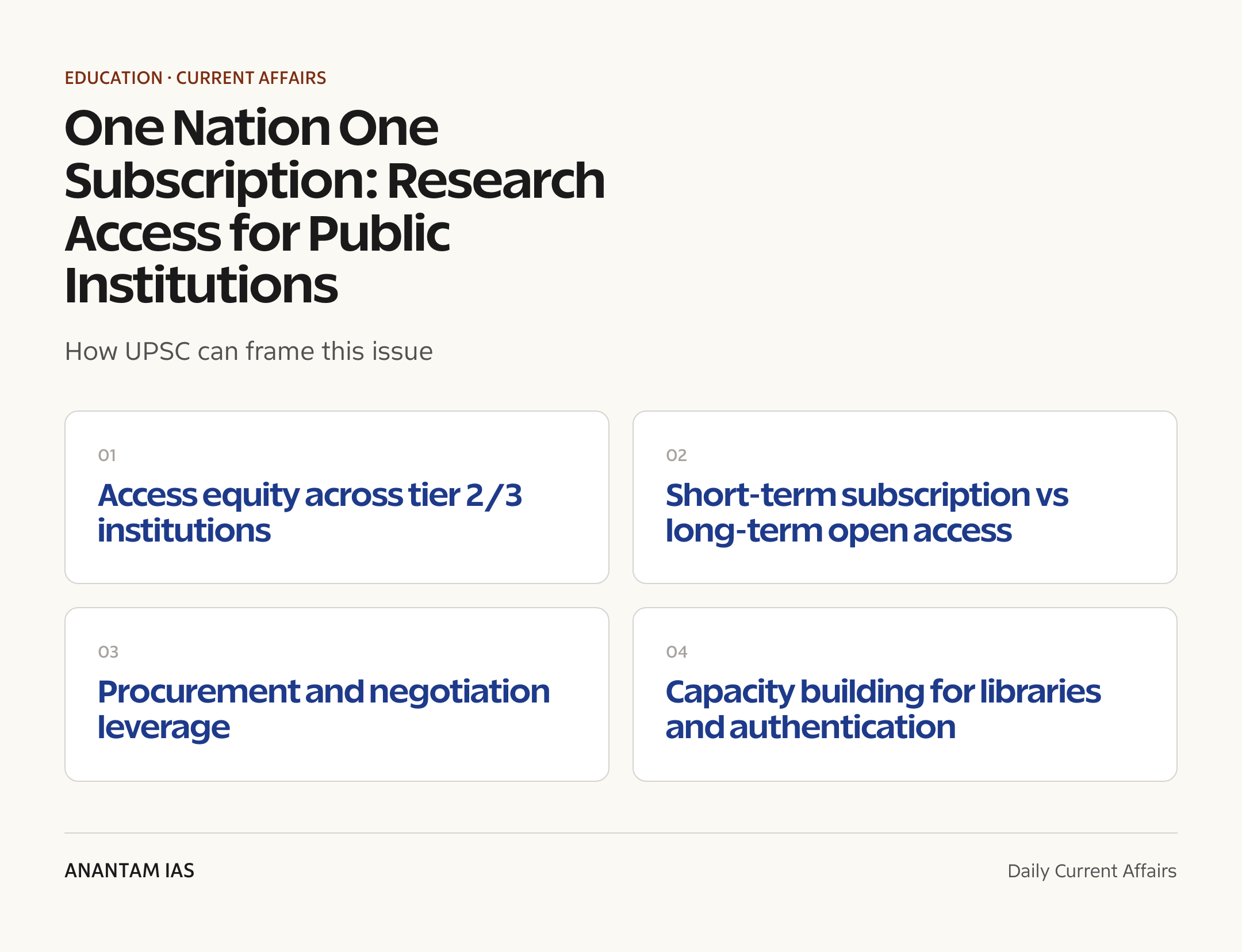
Policymakers identified paywalls as a structural barrier for many public institutions, particularly in tier 2 and tier 3 cities, motivating a national scale intervention.
What ONOS offers
The scheme’s principal commitments as outlined by the Ministry of Education.
Access to more than 13,000 scholarly journals from about 30 major international publishers spanning STEM, medicine, social sciences, humanities, management and professional subjects.
Coverage envisaged for over 6,300 government-managed HEIs and central government R&D institutions, with estimated 1.8 crore beneficiaries including students, faculty and researchers.
A dedicated budget allocation of Rs 6,000 crore to operationalise central procurement, licensing, authentication systems and capacity-building during 2025–2027.
A time-bound approach to test procurement mechanisms, usage analytics, and to build the infrastructure for federated access and support services.
Implementation mechanics
How subscriptions, access and monitoring are expected to be organised under ONOS.
Central procurement will involve negotiating national licenses with publishers, seeking bundled deals that include archival access and permissible uses such as text and data mining.
Access management is likely to use a mix of IP-based access for institutional networks, federated logins (e.g., eduGAIN-like models) and individual credentials where necessary.
Usage analytics and reporting are planned to inform renewal decisions by tracking downloads, active users, subject-wise demand and geographic distribution of usage.
Operational responsibilities will include a nodal agency for licensing, technical teams for authentication, and local library networks to facilitate end-user support.
Equity and reach
The equity objective aims to reduce disparities in access between well-resourced and less-resourced institutions.
Tier 2 and tier 3 colleges and remote institutions often lack budgets for multiple subscriptions; ONOS aims to remove that financial barrier by extending digital access.
Digital-only delivery lowers logistical hurdles associated with print subscriptions, though it relies on adequate internet connectivity and local devices.
Cross-disciplinary coverage ensures practitioners across social sciences, professional courses and humanities can benefit, not just STEM fields.
Inclusion requires capacity building in institutional libraries so that faculty and students can discover and effectively use resources.
Synergies with open access
ONOS is positioned as an interim, pragmatic step that must work with the broader open science agenda.
The scheme does not replace the long-term objective of expanding open access publishing and strengthening Indian journals and repositories.
Practical measures could include negotiating offsetting agreements with publishers and safeguarding text- and data-mining rights for public research.
Investment in national repositories, preprint servers and capacity to host Indian journals will be necessary to reduce dependence on subscription models over time.
Research assessment reforms — rewarding open dissemination and reproducibility — would align incentives for authors to publish in accessible venues.
Fiscal and procurement challenges
While the initial allocation is sizeable, operational complexities will determine value for money.
The Rs 6,000 crore allocation provides runway for three years, but long-term commitments need a sustainability plan that balances central support and institutional contributions.
Transparent publisher negotiations are critical: rights such as perpetual archival access, multi-user licenses and text-mining must be secured.
Measuring impact requires robust metrics beyond raw downloads — quality of use, citations, collaborative outputs and changes in research productivity matter.
There is a risk of paying for low-usage titles; strategic curation and periodic reviews must avoid blanket renewals that waste public funds.
Way Forward
Usage-driven procurement and analytics
Deploy advanced usage analytics to identify high-impact titles and subject gaps, guiding renewals and reallocation of spend.
Implement periodic cost-benefit reviews to discontinue low-use subscriptions and reinvest in under-served disciplines.
Use demand data to negotiate performance-based clauses with publishers, such as price adjustments tied to measured institutional usage.
Capacity building and authentication
Strengthen institutional library infrastructure, including discovery platforms, link resolvers and training for librarians and researchers.
Adopt federated authentication standards to provide secure and seamless off-campus access while protecting license terms.
Provide user training modules and outreach to improve discoverability and proper citation practices among students and faculty.
Aligning subscriptions with open science
Develop an explicit open access roadmap that runs in parallel — subsidise Indian journals, support repositories and negotiate offsetting deals.
Mandate clauses in licensing that permit text and data mining for public-interest research and archival rights for long-term preservation.
Reform research assessment frameworks to reward open dissemination and reproducibility, reducing incentives to publish solely in high-paywall journals.
Governance, transparency and sustainability
Create an independent advisory committee comprising librarians, researchers, legal experts and government representatives to oversee renewals.
Publish procurement outcomes, where contractual confidentiality allows, to build public trust and academic scrutiny into pricing and rights.
Design a post-2027 funding strategy that blends central funding with calibrated institutional co-contributions and efficiency savings.
Conclusion
One Nation One Subscription is a major, time-bound initiative to democratise access to international scholarly literature for public HEIs and central R&D institutions. The scheme can raise research visibility and quality provided strong governance, demand-driven procurement and investments in library capacity accompany licensing. To realise long-term value, ONOS must be integrated with a broader open science strategy: strengthen Indian publishing and repositories, secure rights for archival and text-mining uses, and reform research assessment so that open dissemination is rewarded. Fiscal prudence, transparency in negotiations and an evidence-driven renewal process will determine whether ONOS becomes a bridge to an equitable, sustainable research ecosystem or a short-term bandage on systemic access challenges.
UPSC Practice Questions
Prelims MCQ 1
Which of the following are features of the One Nation One Subscription (ONOS) scheme announced for 2025?
(a) Centralised access to international journals for government HEIs and central R&D institutions (b) Access limited to only STEM journals (c) Allocation of Rs 6,000 crore for 2025-2027 (d) Coverage of over 13,000 scholarly journals
Answer: (a) and (c) and (d)
Explanation:
ONOS provides centralised access to international journals for government HEIs and central R&D centres, is funded with Rs 6,000 crore for 2025–2027, and covers over 13,000 journals. It is not restricted to STEM; social sciences, humanities and professional disciplines are included.
Prelims MCQ 2
ONOS primarily aims to address which issue in India’s higher education and research system?
(a) Digital infrastructure for online exams (b) Paywall-related barriers to accessing international scholarly literature (c) Faculty recruitment rules (d) Student loan interest rates
Answer: (b)
Explanation:
The core objective of ONOS is to remove paywall barriers by providing centralised access to international journals for eligible public institutions. The scheme does not directly target online exam infrastructure, faculty recruitment or student loan policies.
UPSC Mains Questions
{‘question’: ‘Analyse how One Nation One Subscription can influence research quality and innovation capacity in India. What governance and fiscal safeguards are needed to ensure long-term impact?’, ‘answer’: ‘Comprehensive answers should argue that ONOS will increase access to global literature, enabling researchers in smaller institutions to engage with current scholarship, design better experiments and collaborate internationally. This can raise the baseline research quality, diversify citation networks and accelerate translation of research into innovation. Safeguards needed include: transparent national procurement with clauses on archival and text-mining rights; independent oversight for renewals based on usage and impact metrics; capacity building for institutional libraries and federated authentication; phased co-funding mechanisms and periodic cost-benefit analysis to ensure fiscal sustainability; and parallel investments to strengthen Indian journals and open repositories so dependence on paid subscriptions reduces over time.’}
{‘question’: ‘Critically examine the tension between subscription-based national access schemes and the open access movement. How should India reconcile short-term access needs with long-term open science goals?’, ‘answer’: ‘Model answers should note the practical tension: subscription deals provide immediate, broad access but reinforce pay-to-read models that can crowd out open access growth. Reconciling the two requires a two-track strategy: use central subscriptions as a transitional measure while negotiating offsetting agreements and clauses that support open access (e.g., APC discounts, read-and-publish deals), invest in capacity for domestic journal publishing and repositories, reform evaluation metrics to reward open dissemination and reproducibility, and allocate funds to subsidise APCs for Indian authors. Policy coherence across funding agencies, publishers and institutions will be crucial for a smooth transition.’}
Cabinet approves continuation and modifications of PMFBY and RWBCIS till 2025-26 with budgetary support
General Studies · Government scheme · Indian Economy
Why in News?
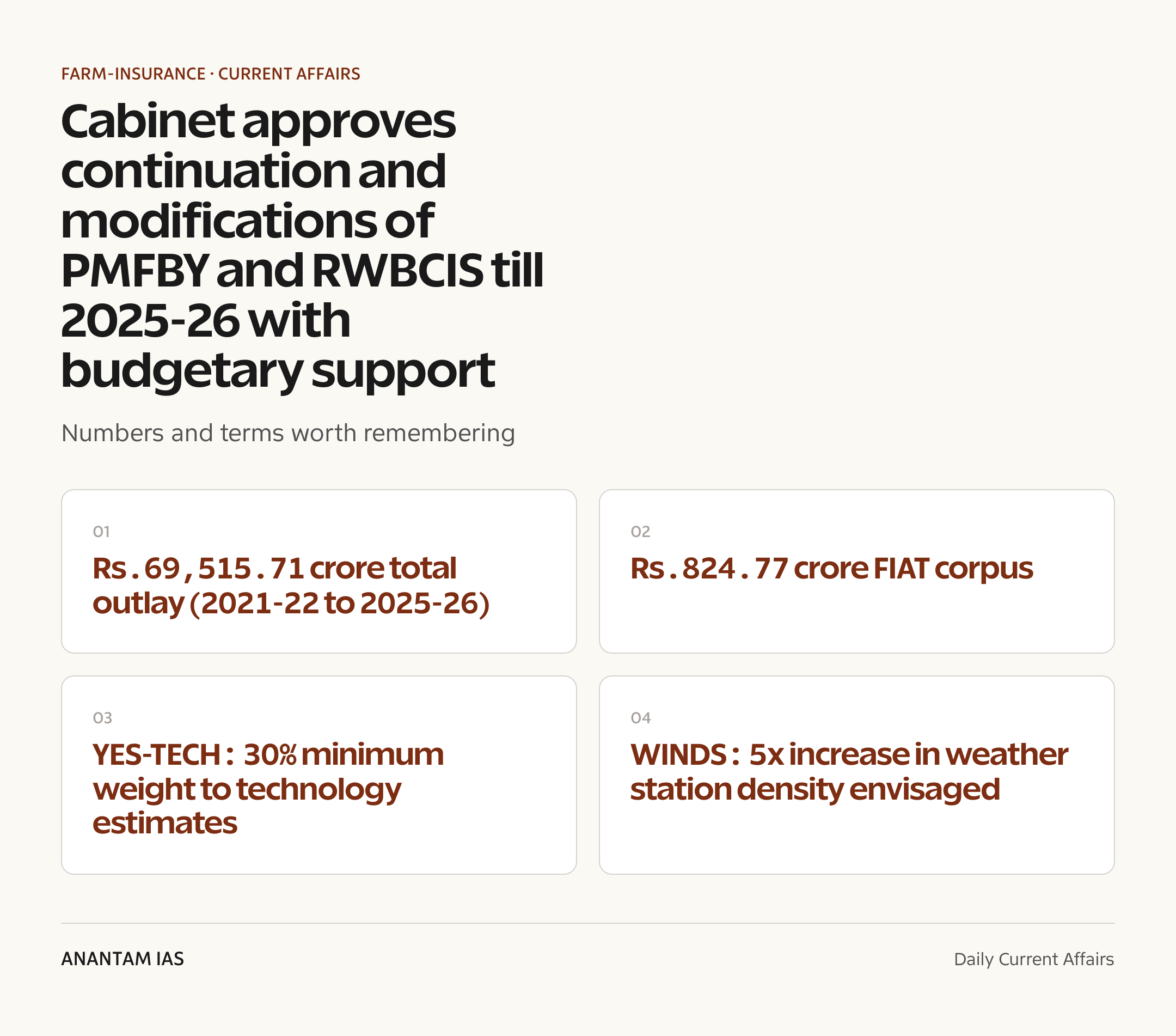
The Union Cabinet approved the continuation of Pradhan Mantri Fasal Bima Yojana (PMFBY) and Restructured Weather Based Crop Insurance Scheme (RWBCIS) up to the financial year 2025-26, along with modifications intended to improve transparency and speed of claim settlement. The decision includes an overall budgetary outlay of Rs.69,515.71 crore for the period 2021-22 to 2025-26 and establishes a dedicated Fund for Innovation and Technology (FIAT) to accelerate technology adoption across scheme operations.
The move is significant because it institutionalises a large central subsidy for crop insurance while signalling a shift towards technology-driven yield estimation and weather monitoring. Key initiatives under the modifications — YES-TECH (remote sensing based yield estimation) and WINDS (a denser network of Automatic Weather Stations and rain gauges) — aim to reduce dependence on manual Crop Cutting Experiments and enable more objective, quicker settlements. The policy change will influence fiscal planning, state implementation strategies and the broader approach to agrarian risk management.
Continuation: PMFBY and RWBCIS extended through 2025-26 with central funding and operational modifications.
Budget outlay: Total allocation of Rs.69,515.71 crore for 2021-22 to 2025-26 to meet premium subsidies and implementation costs.
Tech fund: Creation of FIAT with a corpus of Rs.824.77 crore to finance YES-TECH, WINDS and research & development required for scaling.
YES-TECH: Remote sensing-based yield estimation will carry a minimum 30% weight in yield calculations and is already in implementation in nine major states.
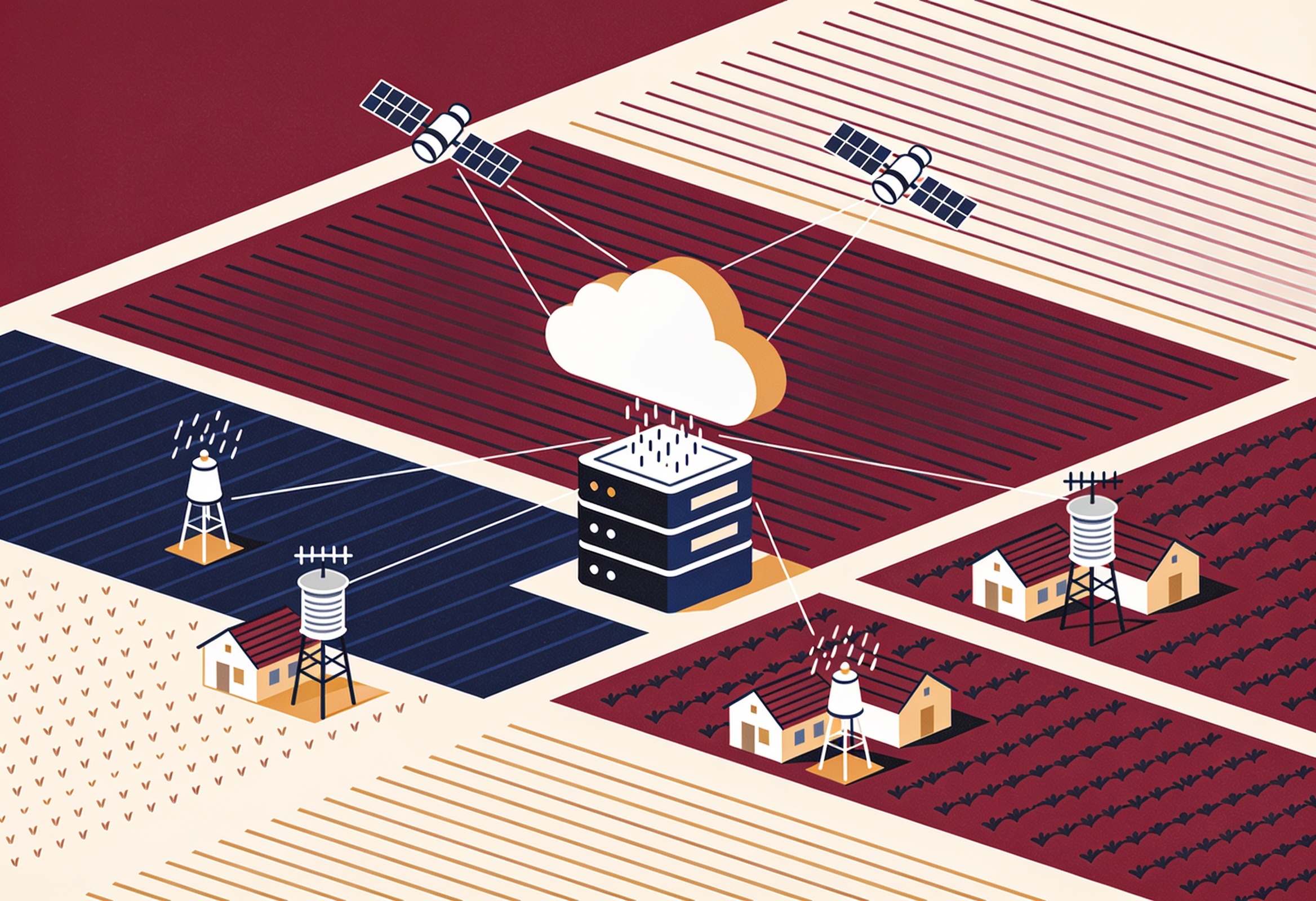
WINDS: Plan to increase weather station density up to five times current networks, with AWS at block level and ARGs at panchayat level to generate hyper-local weather data.
Special support: A 90:10 central-state premium sharing for North Eastern States and flexibility to reallocate unused funds there to other development schemes.
The development matters in the context of:
Scheme background: PMFBY launched to protect farmers from crop losses due to non-preventable natural calamities, pests and diseases and to stabilise farm incomes.
Coverage model: Premiums are actuarially determined, with central and state governments subsidising portions to keep farmer contributions affordable.
Operational issues: Persistent delays in claim settlement, disputes over Crop Cutting Experiments (CCEs), and limited weather data coverage have undermined farmer trust.
Technology push: Strengthening remote sensing and local weather networks is intended to increase objectivity and reduce the logistical burdens of field-based yield estimation.
Fiscal implications: The large outlay increases the recurring subsidy burden, raising questions about medium-term sustainability and prioritisation within agriculture spending.
State heterogeneity: States vary in administrative capacity and willingness to adopt technology-based methods; some have moved faster to tech-heavy approaches than others.
Illustration: AI-generated (Freepik)
UPSC Relevance
Prelims Relevance
Memorise: Schemes extended up to 2025-26; total outlay Rs.69,515.71 crore for 2021-22 to 2025-26; FIAT corpus Rs.824.77 crore.
Understand components: YES-TECH (remote sensing yield estimation with minimum 30% weight) and WINDS (block-level AWS and panchayat-level ARGs).
Remember special provisions: Central premium sharing on a 90:10 basis for North Eastern States and flexibility to reallocate unused funds.
Mains Relevance
GS3 Economy
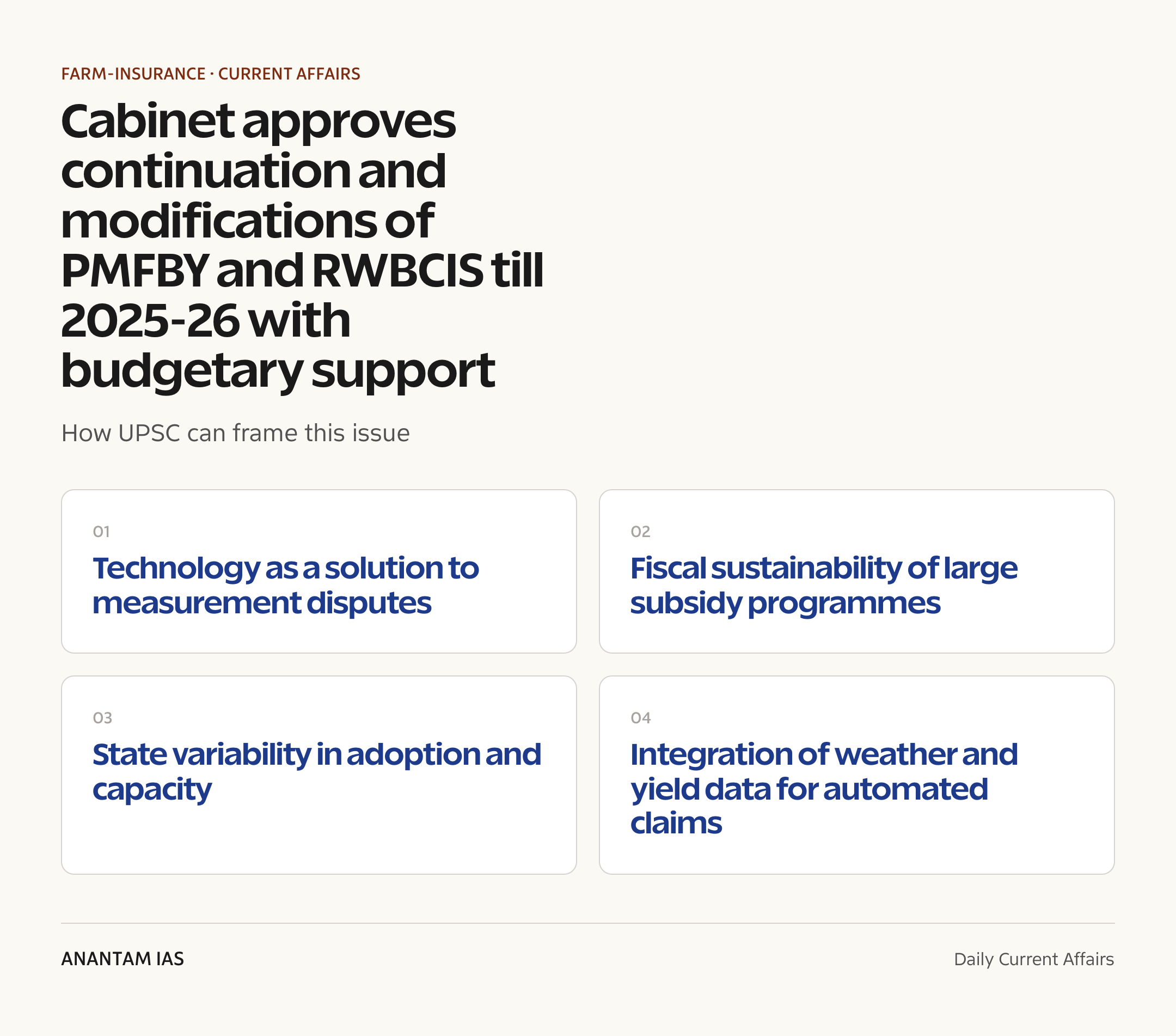
Evaluate the role of technology in improving the delivery and credibility of public crop insurance and reducing measurement disputes.
Discuss fiscal tradeoffs and sustainability concerns associated with large subsidy-backed insurance programmes and alternatives to fiscal transfers.
Analyse centre-state relations in scheme administration, capacity differences across states and their implications for farmer welfare and coverage equity.
Essay
Themes: Agrarian distress and policy responses; Role of technology and data in governance; Public finance and subsidy design.
Arguments: Assess balancing protective public finance for farmers against incentives for risk reduction, efficiency and market-based solutions.
Background and Context
Origin and objectives
Why PMFBY and RWBCIS were created and what they aim to achieve.
Provide insurance cover to farmers against crop losses from natural calamities, pests and diseases to stabilise incomes and protect credit flow.
Reduce post-disaster distress among farmers that can lead to indebtedness and farm abandonment.
Encourage agricultural investments by reducing farm-sector volatility and improving access to institutional credit against insured crop value.
Design intended to be national in scope, with central subsidy to make insurance affordable and with scope for state adaptations.
Implementation mechanics
How the schemes have functioned operationally since inception.
Premiums are determined on actuarial principles, with the government subsidising a portion of the actuarial premium to keep farmer premiums capped.
Private and public insurance companies are contracted as implementing agencies by state governments to underwrite risks and manage claims.
Claims traditionally rely on Crop Cutting Experiments (CCEs) for area-yield estimation and on weather/area-index methodologies for certain crops.
Farmer enrolment is done seasonally; the schemes cover notified crops, with sums insured linked to scale of finance or expected yield.
Key operational challenges
Persistent problems that have limited scheme effectiveness and farmer trust.
Delay in claim settlements and procedural complexities leading to farmer dissatisfaction and litigation in some instances.
Disputes around CCEs, inadequate sample sizes, and alleged manipulation have undermined perceived fairness.
Sparse weather station networks and limited granularity of ground data reduce precision of weather-index products and area estimates.
Adverse selection concerns, insurer solvency risks in high-loss years and heterogeneity across states in subsidy capacity and monitoring.
Technology interventions introduced
YES-TECH and WINDS are designed to address measurement and data gaps.
YES-TECH employs remote sensing and satellite-derived indices to estimate yields, with technology-based estimates carrying at least 30% weight in final calculations.
WINDS proposes Automatic Weather Stations at block level and Automatic Rain Gauges at panchayat level to create hyper-local weather datasets for trigger-based assessments.
Early adopters: Nine major states have begun implementing YES-TECH and are in different stages of piloting WINDS installations.
Objective is to reduce reliance on time-consuming CCEs and to enable faster, more objective, and automated claim triggers.
FIAT: Fund for Innovation and Technology
Purpose, scope and intended uses of the new technology fund.
FIAT has a corpus of Rs.824.77 crore dedicated to scaling technology solutions under PMFBY and RWBCIS.
Funds will finance procurement of remote sensing data, installation and maintenance of weather station networks, platform development and research studies.
Intended to support state-level onboarding, capacity building, tendering and proof-of-concept testing before full roll-out.
Expectation that central funding will reduce entry barriers for states to adopt tech-based estimation and monitoring systems.
Special provisions for North Eastern States
Why the North East receives differentiated treatment under the scheme.
Centre offers a 90:10 central-state premium sharing to encourage coverage in the North Eastern States where agriculture is predominantly small and fragmented.
Given low gross cropped area and voluntary nature of participation, states have flexibility to reallocate unspent scheme funds to other development needs.
Policy aims to balance equity in coverage with practical considerations about scheme uptake and administrative cost-effectiveness in difficult terrain.
Prioritisation for saturation of farmers in the region is part of a wider strategy to improve outreach and social protection for marginal cultivators.
Fiscal and policy trade-offs
Budgetary implications and broader policy considerations.
The Rs.69,515.71 crore allocation for 2021-22 to 2025-26 represents a substantial recurring subsidy that must be balanced against other agricultural investments.
Sustainability questions arise in high-loss years when claims spike and insurer stress can lead to contingent liabilities for the exchequer.
Policymakers face trade-offs between broad subsidisation to protect farmers and targeting limited resources to most vulnerable areas or crops.
Long-run resilience requires combining insurance with investments in irrigation, extension, climate-resilient practices and market infrastructure.
Way Forward
Operationalising and validating technology
Scale YES-TECH after rigorous ground-truthing and transparent methodology disclosure to reduce distrust among stakeholders.
Create standard validation protocols and third-party audits for remote sensing algorithms and yield models.
Pilot interoperability standards so remote-sensing outputs, CCEs and WINDS data can be reconciled during transition periods.
Invest in local capacity building for data interpretation at state agricultural departments and insurance implementing agencies.
Fast-tracking WINDS deployment
Adopt standard procurement templates and central-supported tenders to reduce planning delays and economies of scale.
Ensure ongoing maintenance and data quality agreements to prevent sensor downtimes and data gaps.
Integrate WINDS outputs with national meteorological and agri-data platforms to enrich modelling and index designs.
Provide funds from FIAT for initial capital expenditure and training for state-level staff to operate AWS/ARG networks.
Strengthening governance and grievance redress
Establish clear timelines for claim settlement, with automated triggers for index-based payouts and defined escalation mechanisms.
Set up independent grievance cells with farmer-friendly access and mobile-enabled claim status tracking.
Mandate disclosure of actuarial assumptions, premium components and claim ratios to improve transparency.
Use open-data policies selectively to enable research while protecting farmer privacy and commercial data rights.
Fiscal sustainability and policy integration
Institute periodic actuarial reviews and scenario-based stress tests to assess long-term subsidy needs and insurer solvency risks.
Consider targeting higher subsidy rates to regions with greater vulnerability while encouraging market-based products elsewhere.
Link insurance with investments in risk reduction — irrigation, improved seeds and extension — to reduce indemnity burden over time.
Explore blended finance and reinsurance arrangements, and encourage private-sector innovation in complementary products.
Conclusion
The Cabinet decision secures continuity of two flagship crop insurance programmes while committing resources to technological modernisation intended to address core operational weaknesses.
Realising the intended gains will require transparent implementation of YES-TECH and WINDS, robust validation and grievance mechanisms, timely claim settlements and prudent fiscal management so that insurance strengthens farmer resilience without unsustainable subsidy pressure.
UPSC Practice Questions
Prelims MCQ 1
Which of the following statements about YES-TECH under PMFBY is/are correct? 1) It uses remote sensing for yield estimation. 2) Technology based yield estimates must carry minimum 30 percent weightage. 3) YES-TECH replaces WINDS. Choose the correct option.
(a) 1 and 2 only (b) 1 and 3 only (c) 2 and 3 only (d) All of the above
Answer: (a) 1 and 2 only
Explanation:
YES-TECH employs remote sensing to generate yield estimates and mandates that technology-based estimates carry at least 30% weight when computing final yields. It is designed to complement other initiatives and does not replace WINDS, which focuses on weather data infrastructure.
Prelims MCQ 2
The Fund for Innovation and Technology (FIAT) approved for PMFBY has a corpus closest to which of the following amounts?
The Cabinet approved a Fund for Innovation and Technology (FIAT) with a corpus of Rs.824.77 crore to support technology initiatives such as YES-TECH and WINDS and related R&D and pilot activities.
UPSC Mains Questions
{‘question’: ‘Analyse the potential of remote sensing based yield estimation in improving the effectiveness of crop insurance schemes. What governance measures are needed to ensure its credibility?’, ‘model_answer_points’: [‘Begin by outlining the limitations of crop cutting experiments (CCEs): logistical complexity, sampling errors, time lags and susceptibility to disputes in heterogeneous smallholder landscapes.’, ‘Explain how remote sensing provides scalable, repeatable and frequent observations over large areas, potentially enabling area-based yield estimation, early-warning signals and automation of parts of claim processing.’, ‘Identify implementation challenges: sensor resolution constraints for fragmented holdings, cloud cover affecting optical data, need for robust calibration with ground truth, potential algorithmic bias and data ownership concerns.’, ‘Recommend governance measures: mandatory ground-truth validation and phased roll-out, independent third-party audits of algorithms and models, publication of methodologies and error margins, grievance mechanisms and continuity of CCEs until validated technology attains reliability.’, ‘Conclude by suggesting integration with complementary investments (local weather stations, farmer registries, digital land records) to maximise the benefits and credibility of technology-driven estimation.’]}
{‘question’: ‘Critically examine the fiscal tradeoffs involved in providing large central subsidies for crop insurance. Suggest policy alternatives to complement insurance for managing agrarian risk.’, ‘model_answer_points’: [‘Start with the fiscal dimension: present the Rs.69,515.71 crore allocation and discuss recurring subsidy implications, particularly under years with large claims that can strain budgets.’, ‘Examine efficiency and incentive effects: subsidies can buffer farmers but may create moral hazard, reduce private risk mitigation investments and favour broad coverage over targeted protection.’, ‘Discuss distributional issues: uniform subsidy regimes may not prioritise the most vulnerable regions or crops, and insurer risks can translate into contingent public liabilities.’, ‘Offer alternatives and complements: invest in climate-resilient infrastructure (irrigation, watershed management), expand risk-reducing extension services, promote diversified and indexed financial products, and design targeted cash transfers for highly vulnerable households.’, ‘Propose policy mixes: use targeted subsidies, encourage private crop insurance markets for commercially viable segments, leverage reinsurance markets, and condition subsidies on adoption of risk-reduction measures to reduce long-term fiscal exposure.’]}
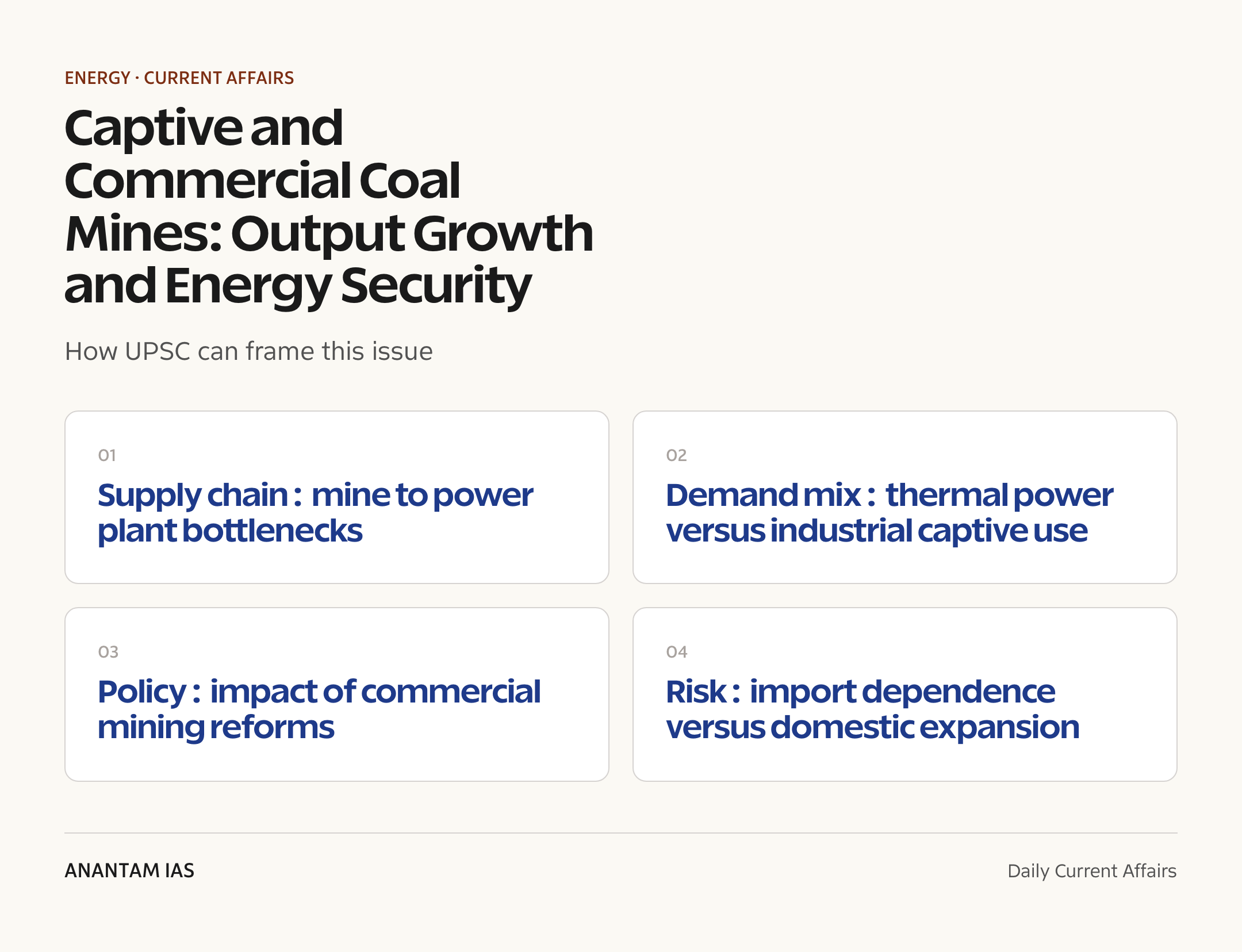
Captive and Commercial Coal Mines: Output Growth and Energy Security
General Studies · GS III · Indian Economy
Why in News?
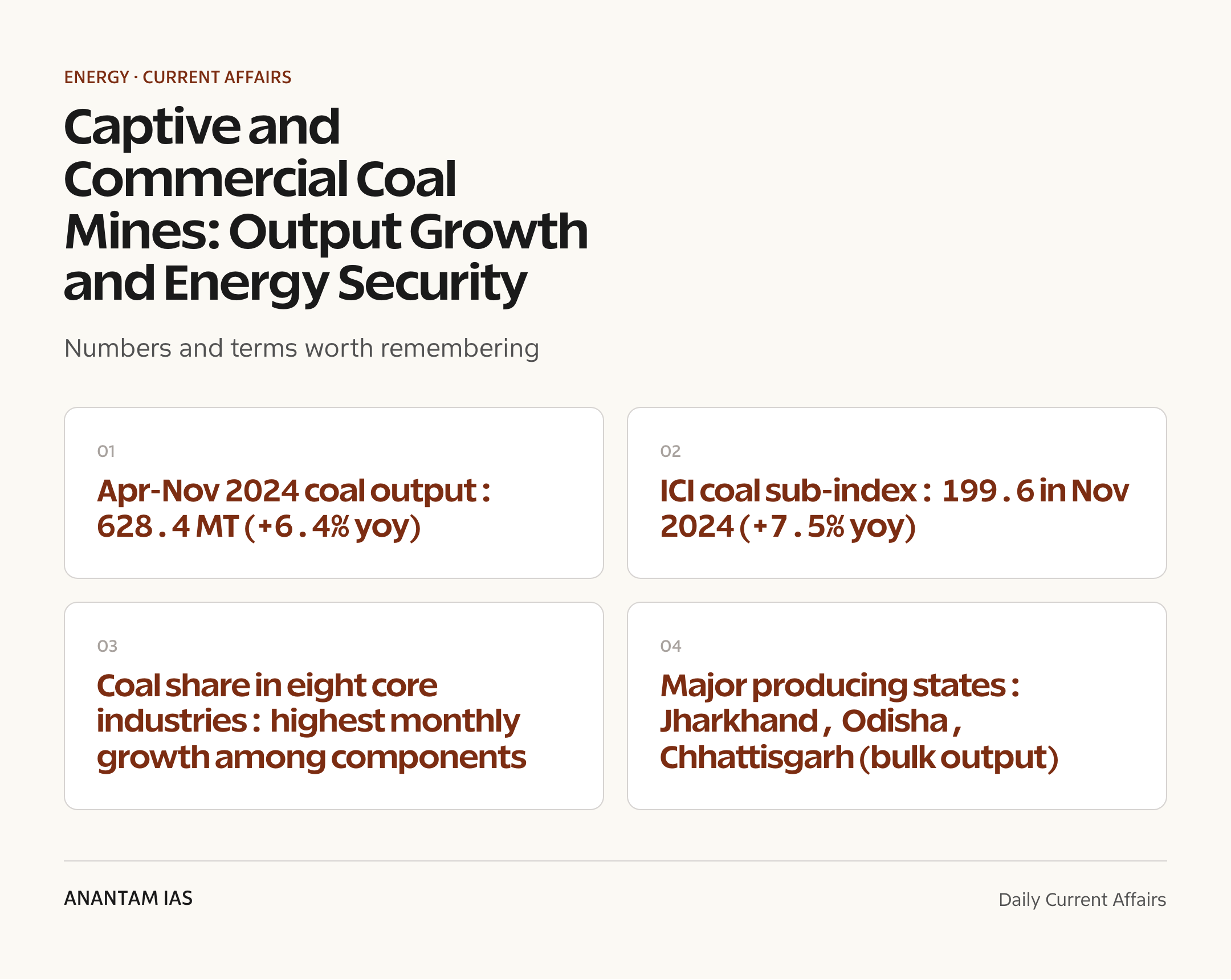
Ministry of Commerce and Industry ICI data and Ministry of Coal releases report higher coal output and a 7.5% growth for the coal industry in November 2024, with output of 628.4 MT in Apr-Nov 2024 up 6.4% year on year.
Output growth: Coal sector ICI at 199.6 points for Nov 2024, up 7.5% over Nov 2023; Apr-Nov 2024 coal production 628.4 MT, up 6.4% year on year.
Energy security: Higher domestic supply lowers near-term pressure on coal imports that affect forex and strategic stockpiles.
Industrial impact: Availability of coal influences costs for steel, cement and heavy industries reliant on captive mines.
Policy signal: Growth underlines success of reforms around commercial mining, e-auctioning and operationalisation of captive blocks.
Transition debate: Output expansion raises questions on balancing fossil fuel supply with decarbonisation commitments and energy transition planning.
The development matters in the context of:
What the numbers cover: ICI measures combined performance of eight core industries; the coal sub-index reported the strongest growth among the eight cores in Nov 2024.
Components of coal supply: Domestic supply comprises commercial production (public and private), captive mining for user industries and imports for shortfalls or quality needs.
Recent policy changes: Commercial mining opened to private and foreign investment since 2020; auctions and allocation processes have increased private participation and capacity additions.
Demand drivers: Thermal power generation remains the largest coal consumer; heavy industries and cement also consume captive and commercial coal.
Import dynamics: India imports both steam and coking coal when domestic quality or proximity does not meet demand; imported volumes fluctuate with domestic output and international prices.
Logistics and bottlenecks: Railway offtake, pithead connectivity, loading infrastructure and environmental clearances influence the pace at which mined coal reaches consumers.
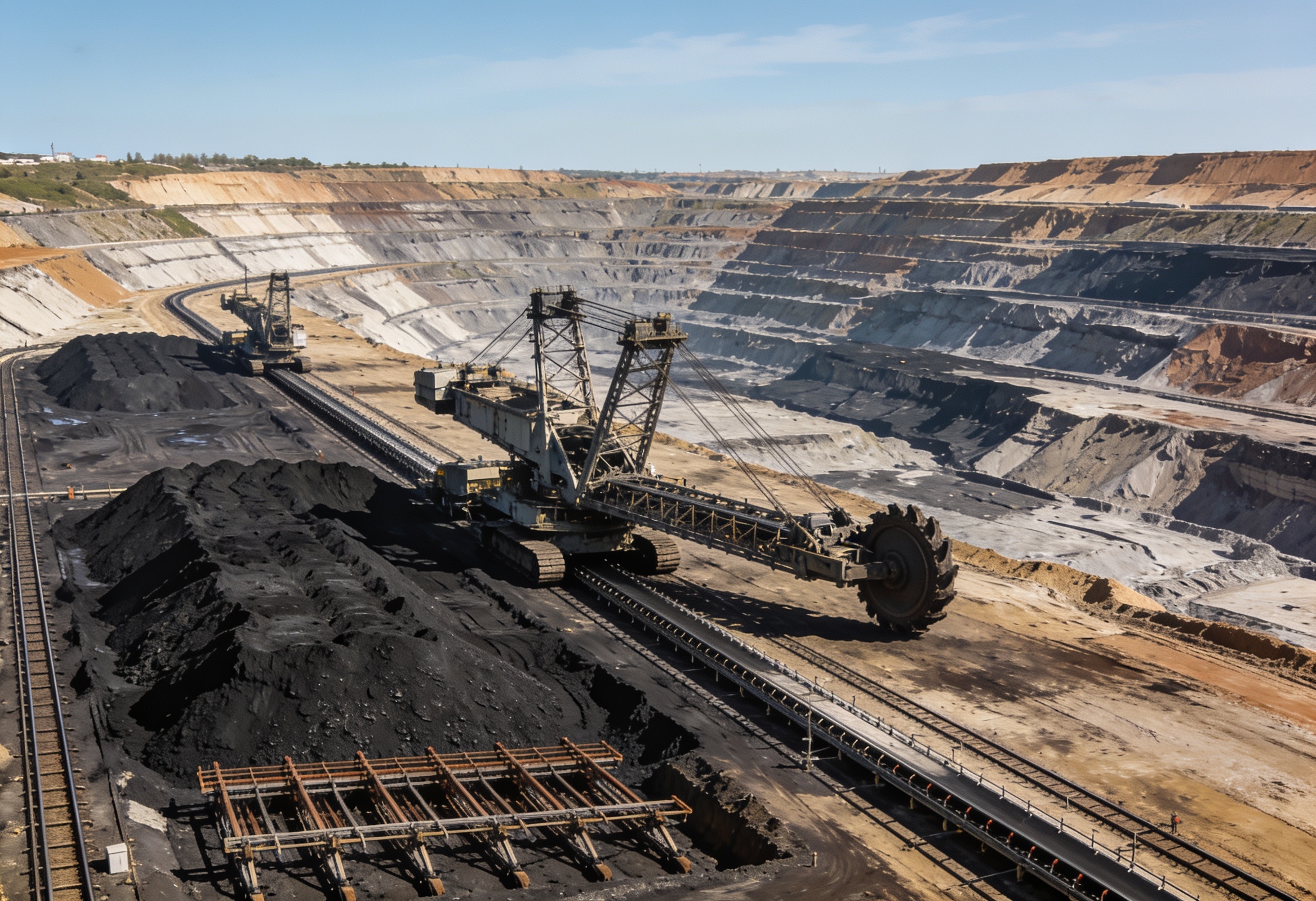
Illustration: AI-generated (Freepik)
UPSC Relevance
Prelims Relevance
Index of Eight Core Industries (ICI) and its components.
Distinction between captive and commercial coal mines under Indian law and policy.
Basic trends in India’s coal production and import dependence for energy security.
Mains Relevance
GS3 Economy
Discuss linkages between coal production and industrial growth, energy security and external sector.
Evaluate the impact of commercialisation of coal mining on resource allocation, competition and regulatory oversight.
Assess the challenges in balancing short-term supply needs with India’s long-term net zero and transition commitments.
Essay
Topics on energy security, industrialisation, role of fossil fuels in development and sustainable transition pathways.
Arguments on growth versus environment, and India’s development priorities in the near to medium term.
Background and Context
Structure of India's coal sector
Understanding actors, mine types and end users clarifies how output changes affect the economy.
Public sector dominance historically: Coal India Limited (CIL) has been the major producer, with state subsidiaries supplying most commercial coal.
Captive mines: Allocated to industrial users to supply their own plants; they reduce dependence on external suppliers and give cost certainty.
Commercial mines: Mines that sell coal in the market to utilities, traders and industries; opened to private players after reforms.
Private participation: Reforms since 2014 and 2020 have enabled private and foreign entities to bid in commercial auctions and operate mines.
Importers and traders: Private trading houses and government agencies supplement domestic supply through imports.
Policy reforms and timelines
Recent policy actions expanded access and aimed to boost production rapidly.
Liberalisation steps: Commercial mining permissions, auction frameworks and streamlined clearances seek to mobilise private capital.
Coal linkage reforms: Shift from administrative allocation to market mechanisms for certain segments to improve efficiency.
Ease of doing business: Changes in forest and environmental clearance processes and faster clearances at central and state levels have shortened lead times.
Production targets: Government has set higher production goals to reduce imports and supply growing demand of power and industry.
Production trends and statistics
Recent data signals a recovery and expansion in domestic coal output.
Apr-Nov 2024 output: 628.4 million tonnes, a 6.4% increase year on year as reported in ICI release.
ICI coal sub-index: Rose to 199.6 points in Nov 2024, the highest growth among the eight cores for that month.
Seasonality and supply cycles: Monsoon, mining ramp-up and demand from thermal stations cause intra-year fluctuations in dispatches.
Regional concentration: Major coalfields in eastern and central India (Jharkhand, Odisha, Chhattisgarh) account for bulk of production.
Demand side: power and industry
End use determines how changes in production propagate through the economy.
Thermal power sector: Largest consumer; plant stocks and generation plans determine procurement needs.
Captive consumption: Steel and cement plants with captive mines secure fuel and reduce exposure to volatile spot markets.
Quality factors: Indian thermal coal calorific value varies; some industries import to meet higher quality or coking coal needs.
Domestic price signals: Market prices, linkages and e-auction outcomes impact cost structures for end users.
Import dependence and external risks
Imports remain an important lever for balancing quality and shortfalls, with macro implications.
Forex impact: Higher imports worsen the current account and expose the economy to global price swings.
Geopolitical risk: Global supply disruptions and shipping costs affect import availability and price.
Stock policy: Strategic and working stocks at power plants act as buffers but require capital and logistics.
Environmental and social constraints
Mining expansion interacts with land, forest, water and community issues.
Land acquisition: Displacement and rehabilitation remain contested in several mining areas.
Forest clearances: Many high-yield deposits lie under forest land, requiring multi-agency approvals.
Pollution impacts: Air and water pollution from mining and transport affect local health and ecosystems.
Regulatory compliance: Environmental safeguards and mine reclamation obligations increase project complexity and costs.
Way Forward
Improve logistics and last mile delivery
Operational efficiency reduces transit losses and ensures timely supplies to end users.
Prioritise dedicated rail corridors and increase rake availability for coal movements.
Develop pithead stocking yards and multimodal links to reduce bottlenecks at loading points.
Use data-driven scheduling between mines, railways and power plants for synchronized dispatch.
Encourage private investment in rail sidings and handling infrastructure under PPP models.
Strengthen environmental and social governance
Better safeguards make mining expansion sustainable and socially acceptable.
Mandate robust rehabilitation and livelihood plans tied to mine approvals and release of funds.
Enforce strict monitoring of dust, effluent and groundwater impacts with community reporting mechanisms.
Fast-track reforestation and phased mine closure plans to restore landscapes post-mining.
Ensure transparent benefit sharing with local communities through development trusts or revenue sharing.
Optimise policy mix for transition and security
A calibrated policy approach can secure supply while aligning with climate commitments.
Use domestic production to meet near-term reliability needs while scheduling gradual capacity additions in cleaner technologies.
Design transition financing to help coal-dependent regions diversify economic activities and retrain workers.
Adopt market instruments like hedging and long-term contracts to reduce import exposure without abrupt production shocks.
Coordinate coal strategy with renewable build-out to avoid stranded assets and ensure grid stability.
Improve market functioning and regulation
Transparent markets and effective regulation support efficient coal allocation and investment.
Strengthen auction design to reward quality, timeline compliance and sustainable practices.
Improve data transparency on production, dispatches and stocks for better policymaking.
Harmonise central and state-level approvals to reduce delays and uncertainty for investors.
Promote competition in coal trading while preventing anti-competitive practices that distort prices.
Conclusion
Stronger domestic coal output in 2024 helped reduce short-term supply pressure and supported industrial activity. Policy focus must shift from only raising volumes to improving logistics, social and environmental governance, and linking coal strategy with the energy transition. Pragmatic steps can lock in energy security while lowering economic and social costs of mining.
UPSC Practice Questions
Prelims MCQ 1
Which of the following correctly distinguishes captive coal mines from commercial coal mines in India?
(a) A. Captive mines sell coal only in the open market; commercial mines supply only their own plant. (b) B. Captive mines supply coal exclusively to the entity that developed the mine; commercial mines can sell coal to any buyer. (c) C. Captive mines are owned only by public sector undertakings; commercial mines are owned only by private companies. (d) D. Captive mines require no environmental clearances while commercial mines do.
Answer: B
Explanation:
Captive mines are allocated or developed to meet the requirements of the entity that operates the mine; commercial mines produce coal for sale in the market. Ownership can be public or private for both types and both require environmental clearances.
Prelims MCQ 2
The Index of Eight Core Industries includes which of the following sectors?
(a) A. Coal, cement, telecommunications, steel (b) B. Coal, crude oil, electricity, fertilizers (c) C. Coal, agriculture, services, steel (d) D. Coal, mining of precious metals, healthcare, electricity
Answer: B
Explanation:
The ICI comprises coal, cement, crude oil, electricity, fertilizers, natural gas, refinery products and steel. Telecommunications and services are not included.
UPSC Mains Questions
{‘question’: “Analyse how increased domestic coal production affects India’s energy security and external sector. In your answer, discuss short-term benefits and medium-term trade-offs.”, ‘points’: [‘Explain the immediate relief to import dependence and reduced exposure to international price volatility.’, ‘Discuss how reliable supply supports industrial output and avoids generation shortfalls in thermal plants.’, ‘Assess medium-term concerns about infrastructure bottlenecks, environmental impacts and fiscal costs of subsidies or stockpiles.’, ‘Evaluate trade-offs between supporting domestic coal for security and committing to decarbonisation targets.’]}
{‘question’: ‘Critically examine the impact of opening commercial coal mining to private players on resource governance, competition and environmental safeguards.’, ‘points’: [‘Discuss improvements in efficiency, additional investment and potential for higher production.’, ‘Analyse challenges in regulatory oversight, monitoring of compliance and risks of rent-seeking.’, ‘Evaluate mechanisms to ensure environmental standards, community compensation and reclamation.’, ‘Offer policy measures to balance competition with sustainable mining practices.’]}
DRDO marks 67th Foundation Day with focus on indigenous defence R&D
General Studies · Internal Security · International Relations · Science & Tech
Why in News?
Raksha Mantri and DRDO leadership set priorities for 2025: mission-mode completion targets, greater private-sector and start-up engagement, open test facilities and accelerated technology transfers to industry.
Policy push: Raksha Mantri asked DRDO labs to identify 2-3 critical projects each and complete them by 2025, targeting 100 completed projects by next Foundation Day.
Industry linkage: DRDO has handed over 1,950 Transfers of Technology to industry; 256 licensing agreements were signed in 2024 to scale indigenous production.
Test infrastructure access: DRDO opened facilities to industry — over 18,000 tests in three years, with more than 5,000 tests in 2024 — to speed up private-sector adoption.
Start-up outreach: Directives to include start-ups in R&D and hold regular open days aim to inject innovation and accelerate dual-use solutions.
Strategic capability: Public felicitation of the design team for a Long Range Hypersonic Anti-Ship Missile signals emphasis on advanced deterrence technologies.
The development matters in the context of:
DRDO mandate: National agency for defence research, design and development covering missiles, avionics, electronic warfare, naval systems, armaments and more.
Aatmanirbhar Bharat link: Technology transfer and industry partnerships are central to the government’s push for indigenous manufacturing in defence.
Defence industrial ecosystem: Since reforms beginning in 2020, greater private-sector participation, licensing, and corporatised production agencies have been promoted.
Global tech competition: Hypersonics, AI, quantum sensing and missile defence are priority domains as regional security dynamics intensify.
Testing bottlenecks: Limited test infrastructure historically slowed private-sector absorption of defence tech; opening facilities addresses this gap.
Mission-mode projects: Focused, time-bound R&D projects are used to fast-track operational systems from lab prototypes to production.
Illustration: AI-generated (Freepik)
UPSC Relevance
Prelims Relevance
Facts to remember: DRDO celebrates Foundation Day on 1 January every year; 67th Foundation Day marked in 2025.
Key numbers:1,950 ToTs handed to industry overall; 256 licensing agreements in 2024; > 18,000 tests for industry over three years.
Organisational leaders: Raksha Mantri Shri Rajnath Singh and DRDO Chairman Dr Samir V Kamat featured in the event.
Mains Relevance
GS3 Science & Tech
Policy analysis: Implications of accelerating ToTs and test-facility access for domestic defence manufacturing and strategic autonomy.
Governance: Role of DRDO as a state R&D agency in enabling private-sector growth while balancing security and intellectual property concerns.
Strategic studies: Significance of hypersonic weapon development for regional deterrence, arms-race dynamics and arms control debates.
Essay
Technology and national power: DRDO’s initiatives exemplify how state-led R&D ecosystems contribute to economic and strategic strength.
Public-private partnerships: Case study on defence-technology transfer, start-up engagement and converting research into production.
Innovation ecosystems: Discuss creating dual-use technology flows and the societal impact of defence R&D spillovers.
Background and Context
DRDO: mandate and structure
Basic overview of the organisation, its responsibilities and working model.
Mandate: Design, develop and deliver state-of-the-art indigenous defence systems and technologies to Indian Armed Forces and security agencies.
Organisational spread: Comprises multiple labs and establishments across domains like missiles, aeronautics, armaments, electronics and naval systems.
Governance: Falls under the Department of Defence R&D, Ministry of Defence; chaired by the Chairman, DRDO who also serves as Secretary, Defence R&D.
Partner model: Works with DPSUs, private industry, academic institutions and start-ups through ToTs, licensing, and Development cum Production Partners.
Funding & priorities: Funded by central allocations with project-specific prioritisation; recent years show emphasis on rapid prototyping and production partnerships.
Technology transfer and licensing
How DRDO moves technologies from lab to industry and the scale of recent transfers.
Transfer of Technology (ToT): Mechanism for handing technical designs, manufacturing know-how and documentation to industry for production.
Volume: DRDO reported 1,950 ToTs to Indian industry to date, indicating active dissemination of defence technologies.
2024 surge:256 licensing agreements signed in 2024, reflecting accelerated commercial uptake.
Objective: Reduce import dependence, expand domestic production base and support Aatmanirbhar Bharat in defence.
Challenges: Standardising IP terms, ensuring quality-control in licensed production and aligning industry capacity with complex systems.
Open test facilities and validation
Testing infrastructure is central to converting prototypes into producible systems.
Policy shift: DRDO opened test facilities for use by private industry and DPSUs to enable faster validation cycles.
Testing scale: Over 18,000 tests conducted for private industries/DPSUs in three years with > 5,000 tests in 2024 alone.
Impact: Reduces time-to-market, lowers validation costs for industry and strengthens industry confidence in indigenous designs.
Operational needs: Industry requires predictable booking, clear fees, and standard test-report formats to plan production runs.
Future gaps: Need for mobile test ranges, instrumented open ranges and certified third-party test agencies for transparency.
Start-ups and industry engagement
DRDO wants increased participation from start-ups to catalyse innovation and dual-use products.
Open days: Each DRDO lab encouraged to host two open days monthly to interact with industry and start-ups.
Start-up role: Small firms can bring rapid prototyping, software-led solutions, sensors, autonomy and AI integration.
Barriers: Complex procurement, security clearances and scale-up funding remain hurdles for defence start-ups.
Support measures: DRDO can provide mentorship, access to test-beds, preferential licensing and prototype co-development.
Expected outcome: More innovation flow into dual-use tech that benefits civilian sectors like disaster response and transportation.
Strategic technology priorities
Areas highlighted by DRDO and the wider global context that shape R&D focus.
Hypersonics: High-priority domain for rapid strike and anti-access capabilities; public mention of a long-range hypersonic anti-ship missile.
AI and autonomy: Integration into ISR, electronic warfare and missile guidance systems to improve decision cycles.
Advanced materials and propulsion: Critical for lightweight platforms, hypersonic vehicles and extended endurance of systems.
Sensors and quantum technologies: Next-generation sensing and navigation solutions to operate in contested environments.
Dual-use focus: Emphasis on technologies that can transition to civilian applications to expand economic returns.
Operational targets and timeline
Concrete timeline set by Raksha Mantri for near-term delivery expectations.
Lab targets: Each DRDO lab asked to pick 2-3 critical projects for completion within the year 2025.
Aggregate goal: Aim to have 100 such projects completed by the next Foundation Day.
Monitoring: Regular reviews and prioritisation expected to align resources for mission-mode delivery.
Risk management: Need to balance speed with testing rigor and operational validation to avoid fielding unreliable systems.
Success indicators: Prototype-to-production conversions, licensing deals concluded and operational inductions into forces.
Way Forward
Strengthen industry absorption
Standardise licensing: Create standard, time-bound licensing templates with clear IP and quality clauses to speed agreements.
Capacity building: Support MSMEs with skill development and capital access to meet defence manufacturing standards.
Production partners: Expand Development cum Production Partner model to de-risk industry adoption and scale manufacturing.
Enhance test infrastructure and access
Transparent booking: Implement an online portal for facility booking, standard fees and test-report accreditation.
Regional hubs: Establish regional test centres and mobile test units to reduce logistical barriers for industry.
Third-party certification: Authorise independent agencies to certify test outcomes to build trust among private partners.
Operationalise start-up engagement
Incubation tie-ups: Link DRDO labs with incubators and accelerators to mentor dual-use start-ups and run co-development sprints.
Fast-track trials: Offer sandboxed trials and security-cleared access for vetted start-ups to demonstrate concepts.
Seed support: Provide grants or matching funding for prototype development aimed at defence-relevant outcomes.
Focus on program management
Mission-mode governance: Create cross-lab program teams with milestone-based funding and clear deliverables.
Performance metrics: Track key metrics such as prototype readiness levels, ToT conversions and time-to-production.
Risk mitigation: Conduct independent technical reviews and iterative field trials to validate systems.
Conclusion
DRDO’s 67th Foundation Day set a pragmatic agenda: time-bound mission projects, deeper industry and start-up engagement, open test infrastructure and scaling of technology transfers. Implementation will require program discipline, standardised IP frameworks and capacity building in industry to convert lab successes into operational capabilities that reinforce strategic autonomy.
UPSC Practice Questions
Prelims MCQ 1
Which of the following statements about DRDO’s announcements on its 67th Foundation Day (2025) are correct? 1) DRDO reported handing over about 1,950 Transfers of Technology to Indian industry to date. 2) In 2024, DRDO signed 256 licensing agreements for ToTs. 3) DRDO conducts no tests for private industry and only works with DPSUs. Select the correct answer.
(a) 1 and 2 only (b) 2 and 3 only (c) 1 and 3 only (d) All of the above
Answer: (a) 1 and 2 only
Explanation:
Statements 1 and 2 are true as reported. Statement 3 is false because DRDO has opened test facilities for private industry and reported over 18,000 tests for private industries and DPSUs.
Prelims MCQ 2
On its 67th Foundation Day, DRDO was asked to have each lab identify how many critical projects to complete in 2025, with an aggregate target of 100 projects by the next Foundation Day? 1) One critical project 2) Two to three critical projects 3) Five critical projects Select the correct answer.
(a) 1 only (b) 2 only (c) 3 only (d) 1 and 2
Answer: (b) 2 only
Explanation:
Raksha Mantri instructed that each DRDO lab should identify two to three critical projects to be completed by 2025, aiming for about 100 completed projects overall.
UPSC Mains Questions
{‘question’: “Analyse how DRDO’s strategy of technology transfer and opening of test facilities to private industry can strengthen ‘Aatmanirbhar Bharat’ in defence manufacturing. What institutional and policy measures are required to address challenges in this approach?”, ‘model_answer’: “Start with succinct thesis: DRDO’s ToTs and test-facility access reduce import dependence by enabling domestic firms to produce defence systems. Explain mechanisms: capacity building, supply chain development, quality assurance, and scale. Discuss benefits: faster induction cycles, job creation, export potential and dual-use spillovers. Identify challenges: IP governance, certification, production quality, financing, security clearances and absorptive capacity of MSMEs. Recommend measures: standardised licensing frameworks, credit and tax incentives, a national defence industrial certification agency, regional testing hubs, public procurement preferences for ToT-based products, accelerated security-clearance processes for vetted start-ups, and institutionalised DRDO-industry joint programmes with milestone funding. Conclude by linking to strategic autonomy and sustainable industrial base.”}
{‘question’: “Discuss the strategic implications of India developing hypersonic weapon capabilities such as the Long Range Hypersonic Anti-Ship Missile mentioned during DRDO’s Foundation Day. How should India balance deterrence objectives with regional stability?”, ‘model_answer’: ‘Open with strategic context: hypersonics alter offense-defence calculations due to high speed, maneuverability and reduced reaction time. Assess deterrence value: enhanced denial capability, sea denial against adversary navies and signalling of technological parity. Evaluate risks: potential arms race, escalation dynamics, difficulties in attribution and collateral damage in crisis. Policy balance: pursue credible but restrained deployment, transparency measures with regional partners, invest in counter-hypersonic defenses and early warning, integrate arms-control dialogue bilaterally and in multilateral forums, and embed doctrine and command-control safeguards to reduce miscalculation. Conclude: capability must be part of a calibrated strategy combining deterrence, defence and diplomatic engagement.’}
India submits 4th Biennial Update Report to UNFCCC
Environment & Ecology · General Studies · GS III · International Relations
Why in News?
India submitted its 4th Biennial Update Report (BUR-4) to the UNFCCC on 30 December 2024, updating the national GHG inventory for 2020 and reporting progress on mitigation, adaptation and support needs.
BUR-4 submission updates the Third National Communication and provides a full GHG inventory for 2020 to the UNFCCC secretariat.
Policy relevance: the report documents mitigation actions, constraints and requirements in finance, technology and capacity building that shape domestic planning and international negotiations.
Quantitative update: India reports a 7.93% decline in total GHG emissions in 2020 relative to 2019 and a 36% reduction in emissions intensity of GDP since 2005.
Sectoral picture: energy contributes 75.66% of emissions (ex-LULUCF), agriculture 13.72%, industrial processes 8.06% and waste 2.56%.
LULUCF role: forests and other land use sequestered ~522 Mt CO2 in 2020, equal to about 22% of CO2 emissions that year.
The development matters in the context of:
BUR purpose: Biennial Update Reports are submissions by non-Annex I countries that provide updated GHG inventories, mitigation actions and needs related to finance, technology and capacity building.
NDC link: BURs complement Nationally Determined Contributions by tracking progress and providing historical inventories that inform future NDC updates and policy choices.
India’s development context: India frames its climate actions in the principles of equity and common but differentiated responsibilities and respective capabilities (CBDR-RC).
Global process: UNFCCC uses BURs to aggregate national information, assess global progress and shape discussions on finance and technology transfer under the Paris architecture.
Data vintage: BUR-4 reports the national inventory for the calendar year 2020, a pandemic-affected year with notable emissions fluctuation.
Domestic use: the report informs national planning across energy, forestry, agriculture and waste sectors and supports MRV (measurement, reporting, verification) strengthening.
Illustration: AI-generated (Freepik)
UPSC Relevance
Prelims Relevance
Definition and purpose of Biennial Update Reports under the UNFCCC.
Key greenhouse gas inventory figures for India in 2020: total emissions, sectoral shares and LULUCF sequestration.
India’s stated change in GHG emission intensity of GDP since 2005 (36% by 2020).
Mains Relevance
GS3 Environment
Assess how India’s BUR-4 reflects the balance between developmental priorities and mitigation commitments.
Discuss the role of accurate GHG inventories and LULUCF accounting in shaping climate policy and international negotiations.
Analyse the implications of reported finance, technology and capacity-building needs for India’s climate diplomacy and domestic implementation.
Essay
Material for essays on sustainable development, climate justice and India’s role in global climate governance.
Data points to support arguments on low-carbon growth pathways and energy transition in emerging economies.
Evidence for debates on equity and differentiated responsibilities in international climate action.
Background and Context
What is a Biennial Update Report
Function and scope of BURs submitted by non-Annex I parties to the UNFCCC.
Purpose: provide updated national GHG inventories, mitigation actions and information on needs in finance, technology and capacity building.
Reporting cycle: BURs are usually submitted every two years, complementing National Communications and NDC updates.
Audience: UNFCCC secretariat, other parties, researchers and international funders who use the data for synthesis reports and negotiations.
MRV role: strengthen transparency through documented methodologies, uncertainty assessment and institutional arrangements for measurement, reporting and verification.
Comparability limits: methodologies and data availability vary among countries; land-use accounting poses special challenges.
Key findings in India’s BUR-4
Quantitative and sectoral highlights from the 2020 inventory and related notes.
Total emissions (ex-LULUCF) reported at 2,959 Mt CO2e for 2020; net emissions including LULUCF at 2,437 Mt CO2e.
2020 drop: total GHG emissions decreased by 7.93% compared to 2019, influenced by pandemic-related activity changes and structural factors.
LULUCF sequestration: ~522 Mt CO2 sequestered, equivalent to roughly 22% of the country’s CO2 emissions in 2020.
Intensity gains: GHG emission intensity of GDP reduced by 36% since 2005.
Methodology and inventory issues
How India compiles GHG inventories and challenges specific to national reporting.
IPCC guidelines: India uses IPCC Tiered approaches for sectors, mixing activity data and emission factors to estimate emissions.
Data sources: national statistics, energy consumption datasets, industrial production figures and forestry assessments feed the inventory.
Uncertainty: sectoral uncertainties are documented; LULUCF estimates are sensitive to land-use classification and biomass assessment methods.
Temporal comparability: national time series depend on methodological consistency; revisions may occur when improved data become available.
Capacity gaps: need for finer spatial data, national emission factors and improved monitoring for distributed sources like small combustion and agriculture.
India's mitigation actions reported
Overview of policies and programmes cited in BUR-4 as contributing to mitigation.
Renewable energy expansion: large-scale deployment of solar and wind capacity and supportive policies like RPOs and auctions.
Energy efficiency: standards and labelling, Perform Achieve and Trade (PAT) scheme and appliance efficiency programmes.
Electrification and clean cooking: household electrification, Ujjwala LPG connections and efforts to reduce biomass burning.
Forestry and restoration: national afforestation programmes and landscape restoration contributing to LULUCF sinks.
Transport shifts: policies promoting public transport, vehicle fuel efficiency and gradual electrification of mobility.
Finance, technology and capacity-building needs
What BUR-4 reports about India’s constraints and support requirements for implementation.
Finance gaps: need for concessional and climate-focused finance to scale low-carbon infrastructure and adaptation measures.
Technology needs: access to advanced renewable integration, storage technologies and climate-smart agricultural practices.
Capacity building: strengthening state-level MRV, sectoral modelling and local institutions for project implementation.
Private sector role: mobilising domestic capital and blended finance to reduce reliance on external funding alone.
International cooperation: emphasis on technology transfer, joint R&D and targeted capacity support under UNFCCC mechanisms.
Implications for global climate diplomacy
How the BUR affects India’s positioning in international negotiations and multilateral processes.
Credibility: a transparent inventory supports India’s negotiating stance that action aligns with development priorities and equity considerations.
Negotiation leverage: documented needs in finance and technology underpin requests for support and collaboration.
Comparative signal: data on per capita and intensity trends strengthen arguments about differentiated responsibility.
Policy narratives: showcasing emissions intensity improvement feeds into narratives of low-carbon development pathways.
Way Forward
Strengthen national MRV systems
Develop and adopt national emission factors for key sectors to reduce inventory uncertainty.
Invest in remote sensing and ground measurements for more accurate LULUCF and land-use change monitoring.
Standardise state-level reporting templates and build capacity at subnational agencies for timely data flows.
Create a central data platform that integrates energy, industrial and land-use datasets for automated reporting.
Mobilise finance and technology at scale
Design blended finance instruments to de-risk private investment in renewable energy and storage projects.
Prioritise international partnerships for transfer of grid integration and battery technologies.
Structure targeted funds for climate-smart agriculture and livelihood-linked adaptation interventions.
Use BUR-4 quantified needs to negotiate enhanced grant and concessional flows in UNFCCC forums.
Align domestic policy with inventory findings
Target sectoral policies where emissions intensity remains high, such as industry and transport decarbonisation.
Scale up programmes that deliver both development and mitigation co-benefits, including clean cooking and urban public transport.
Mainstream LULUCF management into land-use planning and incentivise afforestation and agroforestry practices.
Enhance monitoring of policy outcomes through annual indicator dashboards tied to inventory metrics.
Use BURs for diplomacy and domestic communication
Present BUR evidence in climate negotiations to secure targeted technology partnerships and finance.
Communicate inventory achievements to domestic stakeholders to build political and social support for climate measures.
Leverage BUR data to inform NDC updates and set realistic sectoral trajectories.
Engage private sector and civil society using transparent data to catalyse bottom-up initiatives and innovation.
Conclusion
BUR-4 is a technical and diplomatic instrument that documents India’s 2020 GHG inventory, sectoral emissions, and LULUCF sequestration while identifying gaps in finance, technology and capacity. The submission strengthens India’s transparency record and provides data to align domestic policy with internationally pledged trajectories. Continued investment in MRV, targeted finance instruments and technology partnerships will be critical to convert reported needs into measurable mitigation and adaptation outcomes.
UPSC Practice Questions
Prelims MCQ 1
Which of the following is a mandatory element of a Biennial Update Report (BUR) submitted by non-Annex I parties to the UNFCCC?
(a) Detailed national adaptation plans with costing (b) A national greenhouse gas inventory (c) A legally binding emissions budget (d) A schedule for fossil fuel phase-out
Answer: (b) A national greenhouse gas inventory
Explanation:
BURs must include updated national greenhouse gas inventories. Adaptation plans, binding budgets and fossil fuel phase-out schedules are not required elements of BURs.
Prelims MCQ 2
According to India’s BUR-4, which sector contributed the largest share of GHG emissions (excluding LULUCF) in 2020?
(a) Agriculture (b) Industrial Processes and Product Use (c) Energy (d) Waste
Answer: (c) Energy
Explanation:
BUR-4 reports the energy sector contributed 75.66% of India’s emissions excluding LULUCF, the largest share among sectors.
UPSC Mains Questions
{‘question’: ‘Analyse how strengthened national MRV systems can improve the credibility of India’s climate commitments and aid in negotiating international support. Discuss specific institutional and technical measures.’, ‘model_answer’: ‘Start with the link between credible MRV and trust in international negotiations. Explain specific institutional measures: a centralised MRV unit, standardised state reporting templates, legal mandates for data sharing, and dedicated budgets. Discuss technical measures: development of national emission factors, enhanced activity data collection, remote sensing for LULUCF, integrated data platforms, uncertainty quantification and third-party verification. Conclude by showing how improved MRV helps quantify finance and technology needs, enabling targeted support and potentially better concessional terms.’}
{‘question’: ‘Evaluate the role of LULUCF sequestration in India’s climate strategy as reflected in BUR-4. What are methodological and policy challenges in scaling LULUCF sinks?’, ‘model_answer’: ‘Begin with the contribution reported in BUR-4: ~522 Mt CO2 sequestered in 2020, about 22% of CO2 emissions. Discuss policy relevance: cost-effective mitigation potential, co-benefits for biodiversity and livelihoods. Examine methodological challenges: land classification, carbon stock estimation, permanence, baseline setting and avoiding double counting. Address policy challenges: competing land uses, governance across ministries and states, financing for large-scale restoration, and safeguards for community rights. Offer solutions: integrated land-use planning, improved monitoring, incentives for agroforestry, and landscape-level financing mechanisms.’}
Nano-formulation of melatonin shows therapeutic potential for Parkinson’s disease
General Studies · Health · Science & Tech
Why in News?
A DST-INST Mohali study demonstrated that a human serum albumin nano-formulation of melatonin (nano-melatonin) enhances brain delivery, bioavailability and neuroprotective effects, including induction of mitophagy through BMI1 upregulation, reducing oxidative stress in Parkinson’s disease models.
Novel delivery: Use of human serum albumin (HSA) as a nanocarrier enabled targeted brain delivery and sustained release of melatonin.
Mechanistic insight: Study links nano-melatonin to upregulation of BMI1 and induction of mitophagy, clarifying a molecular pathway for neuroprotection.
Preclinical efficacy: Nano-melatonin reduced rotenone-induced toxicity in vitro and protected TH-positive neurons in rat models.
Translational potential: Work points to repurposing a safe neurohormone, enhanced by nanotech, as a therapeutic candidate for Parkinson’s and other mitophagy-related disorders.
The development matters in the context of:
Parkinson’s disease burden: PD is a progressive neurodegenerative disorder driven by loss of dopaminergic neurons and alpha-synuclein aggregation; current drugs treat symptoms but do not alter disease progression.
Therapeutic gap: No disease-modifying therapy is widely available; strategies that reduce oxidative stress and clear dysfunctional mitochondria are of high research priority.
Melatonin as candidate: Melatonin is an antioxidant neurohormone known for sleep regulation and clinical safety as a supplement, but it has low bioavailability and is prone to premature oxidation.
Mitophagy in PD: Quality control of mitochondria via mitophagy is central to neuronal health; several PD-associated genes modulate mitophagy.
Nanocarriers for CNS: HSA and other protein-based nanocarriers can improve brain delivery by enhancing stability, circulation time and possibly crossing the blood brain barrier.
Policy angle: Indian institutes developing translational neurotherapeutics align with national priorities for indigenous biotech innovation and public health preparedness.
Illustration: AI-generated (Freepik)
UPSC Relevance
Prelims Relevance
Focus on basic facts and mechanisms: melatonin properties, HSA nanocarrier, mitophagy definition, BMI1 role and rotenone as a PD toxin. Useful for factual MCQs on science and health.
Mains Relevance
GS3 Science & Tech
Topics for GS3 answers: neurodegenerative disease biology, biotechnology for drug delivery, translational research pathways, public health implications of neurotherapeutics and research policy support mechanisms.
Essay
Material for essays on ‘Science, Technology and Society’, ‘Biotechnology and Healthcare’, or ‘Innovation and Public Health’ with examples of nanotech-enabled drug repurposing and ethical/regulatory considerations.
Background and Context
Parkinson's disease: pathophysiology and unmet need
Key disease mechanisms and why new therapeutics are required.
Neuronal loss: PD is characterized by progressive loss of dopaminergic neurons in the substantia nigra and consequent motor and non-motor symptoms.
Protein aggregation: Aggregation of alpha-synuclein into Lewy bodies is a pathological hallmark linked to neuronal dysfunction.
Oxidative stress and mitochondria: Mitochondrial dysfunction and elevated oxidative stress are central contributors to neuronal death in PD.
Current treatment limits: Levodopa and dopamine agonists relieve symptoms but do not stop neurodegeneration or restore lost neurons.
Disease-modifying need: Interventions that clear dysfunctional mitochondria or reduce oxidative damage are candidates for slowing progression.
Melatonin: biology and therapeutic profile
Why melatonin is considered for neuroprotection and its pharmacological limits.
Physiology: Melatonin is a pineal gland hormone that regulates the sleep-wake cycle and has antioxidant properties.
Neuroprotective effects: Demonstrated antioxidant, anti-inflammatory and mitochondrial stabilizing effects in several preclinical models.
Clinical safety: Widely used as a supplement for sleep disorders with an established safety profile at common doses.
Pharmacokinetic constraints: Low oral bioavailability, rapid metabolism and susceptibility to oxidation reduce central nervous system exposure.
Need for delivery tech: Enhancing stability and brain delivery could unlock melatonin’s therapeutic potential in neurodegeneration.
Mitophagy and its relevance to neurodegeneration
Role of mitochondrial quality control in neuronal survival.
Definition: Mitophagy is selective autophagic removal of damaged or dysfunctional mitochondria to maintain cellular health.
PD genes: Several PD-related genes, including PINK1 and Parkin, regulate mitophagy; failure of this process contributes to PD pathology.
Oxidative stress link: Accumulation of damaged mitochondria increases reactive oxygen species and promotes cell death.
Therapeutic target: Agents that enhance mitophagy may reduce neuronal loss and slow disease progression.
Biomarker potential: Changes in mitophagy regulators could serve as pharmacodynamic markers in trials.
BMI1: an epigenetic regulator in neuroprotection
Emerging role of BMI1 in mitophagy regulation as reported in the study.
BMI1 identity: Member of Polycomb Repressive Complex 1 involved in chromatin regulation and gene expression control.
Study finding: Nano-melatonin upregulated BMI1, which correlated with increased mitophagy in PD models.
Functional implication: BMI1 may influence expression of genes governing mitochondrial quality control pathways.
Broader links: Epigenetic modulation is an emerging axis to regulate neuronal stress responses and survival.
Research gap: Need to map precise BMI1 targets and confirm causality in varied PD models.
Nanocarriers for CNS drug delivery
Rationale and mechanisms by which nanoparticles assist brain-targeted therapies.
Barrier challenge: Blood brain barrier restricts passage of many therapeutic molecules into the CNS.
HSA advantages: Human serum albumin is biocompatible, prolongs circulation and can be engineered for controlled release.
Sustained release: Nano-formulations can protect labile drugs from premature oxidation and ensure steady brain exposure.
Targeting potential: Surface modifications can improve uptake by endothelial or neuronal cells and reduce peripheral toxicity.
Regulatory aspects: Nanomedicines face specific safety and manufacturing challenges that require early planning for translation.
Preclinical evidence: rotenone models and outcome measures
Experimental systems used to test neuroprotective effects of nano-melatonin.
Rotenone model: A pesticide-based model that induces mitochondrial dysfunction and dopaminergic neuron loss resembling PD pathology.
In vitro assays: Measure oxidative stress, mitophagy markers, cell viability and mitochondrial biogenesis after toxin exposure.
In vivo readouts: Protection of TH-positive neurons, behavioral endpoints and biochemical markers of oxidative stress and mitophagy.
Comparative outcomes: Study reports nano-melatonin outperformed bare melatonin on antioxidative and neuroprotective metrics.
Limitations: Preclinical models do not fully recapitulate human PD complexity; translational steps are required.
Way Forward
Preclinical to clinical translation
Rigorous toxicology: Conduct GLP-compliant safety studies for HSA-based nano-melatonin focusing on repeated-dose CNS and systemic toxicity.
Pharmacokinetics and biodistribution: Establish brain/plasma ratios, metabolic fate and sustained-release profile in larger animal models.
Dose finding: Identify minimally effective doses and therapeutic window with behavioral and biomarker endpoints.
Regulatory engagement: Initiate early dialogue with drug regulatory authorities for pathway clarification and clinical trial design.
Mechanistic and biomarker research
BMI1 causality: Use genetic modulation of BMI1 to confirm its role in melatonin-mediated mitophagy and neuroprotection.
Pathway mapping: Define downstream gene networks and proteins influenced by BMI1 that mediate mitophagy induction.
Biomarkers: Develop peripheral or imaging biomarkers for mitophagy activation and oxidative stress to monitor response.
Disease models: Test nano-melatonin across genetic and toxin-based PD models to evaluate generalizability.
Access planning: Integrate early discussions on pricing, local manufacturing and patient access in India.
Multi-stakeholder partnerships: Engage academia, industry and patient groups for trial recruitment and post-market surveillance.
Conclusion
The INST Mohali study provides a convincing preclinical case that HSA nano-formulation significantly enhances melatonin delivery to the brain, upregulates BMI1, induces mitophagy and reduces oxidative damage in Parkinson’s disease models. These findings justify accelerated translational work spanning safety testing, formulation scale-up and clinical trials to evaluate whether nano-melatonin can become a disease-modifying therapy for PD or other conditions with mitophagy impairment.
UPSC Practice Questions
Prelims MCQ 1
Which of the following statements about melatonin is/are correct?
1. It is secreted by the pineal gland and regulates the sleep-wake cycle.
2. It is inherently a highly brain-penetrant molecule with excellent oral bioavailability.
3. It has antioxidant properties that may be neuroprotective.
Select the correct answer using the code: A. 1 and 2 only; B. 1 and 3 only; C. 2 and 3 only; D. 1, 2 and 3.
Answer: B
Explanation:
Statement 1 and 3 are correct: melatonin is produced by the pineal gland and regulates sleep, and it has antioxidant properties. Statement 2 is incorrect because melatonin has limited oral bioavailability and is prone to rapid metabolism and oxidation.
Prelims MCQ 2
In the context of Parkinson’s disease research, ‘mitophagy’ refers to:
A. The generation of new mitochondria in neurons.
B. The selective removal of damaged mitochondria by autophagy.
C. The aggregation of mitochondrial proteins into Lewy bodies.
D. A type of synaptic pruning that removes unused synapses.
Answer: B
Explanation:
Mitophagy is the process of selective autophagic removal of dysfunctional mitochondria, which helps maintain cellular health. It is distinct from mitochondrial biogenesis, which is generation of new mitochondria.
UPSC Mains Questions
{‘question’: ‘Explain how nanoparticle-based drug delivery can change the prospects of repurposing established molecules like melatonin for neurodegenerative diseases. Discuss scientific and regulatory challenges.’, ‘model_answer’: ‘Nanoparticle delivery can address pharmacokinetic and delivery limitations of repurposed molecules by improving stability, prolonging circulation, and enhancing CNS uptake through controlled release and possible BBB transcytosis. For melatonin, an HSA nanocarrier protects against premature oxidation, increases bioavailability and enables sustained brain exposure, which can reveal disease-modifying effects such as mitophagy induction. Scientific challenges include demonstrating reproducible brain targeting, understanding long-term biodistribution and off-target accumulation, and validating mechanistic biomarkers of efficacy. Regulatory challenges involve meeting safety data requirements specific to nanomaterials, establishing GMP-compliant manufacturing, and defining comparability and quality attributes. Early regulatory interaction and comprehensive toxicology, pharmacokinetic and immunogenicity studies are essential to move from preclinical promise to clinical testing.’}
{‘question’: “Discuss the role of mitophagy in Parkinson’s disease pathogenesis and evaluate therapeutic strategies that target mitophagy pathways.”, ‘model_answer’: ‘Mitophagy maintains mitochondrial quality by clearing damaged mitochondria; dysfunction in mitophagy leads to accumulation of defective mitochondria, increased reactive oxygen species and neuronal death, contributing to PD pathogenesis. Genetic evidence from PD-linked genes (PINK1, Parkin) supports this link. Therapeutic strategies include small molecules that activate mitophagy, gene therapies restoring PINK1/Parkin function, antioxidants that reduce mitochondrial damage and nanoparticle-mediated delivery of mitophagy inducers like nano-melatonin. Each approach must be evaluated for specificity, risk of excessive mitochondrial clearance, impact on cellular metabolism and translational feasibility. Combination therapies and validated biomarkers to monitor mitophagy in patients will be required for clinical success.’}
Constitution of Working Group to revise Wholesale Price Index (Base 2011-12)
General Studies · GS III · Indian Economy · Reports and Indices
Why in News?
A government Working Group has been constituted to rebase and revise the Wholesale Price Index from 2011-12 to 2022-23, with a mandate to update weights, coverage and methodology and to submit a report within 18 months.
Official notification dated 02 January 2025 constituting the Working Group with Prof. Ramesh Chand (NITI Aayog) as chairman and representation from central statistical offices, departments, RBI and market economists.
Mandate: move the WPI base year from 2011-12 to 2022-23, review weights, item coverage, price collection and treatment of taxes/subsidies.
Timeline: final report to the Office of the Economic Adviser within 18 months of notification.
Impact: potential changes in measured wholesale inflation that feed into policy signals, contract indexation and business planning.
The development matters in the context of:
WPI role: The Wholesale Price Index is India’s primary producer-price measure covering commodities and manufactured products used by policymakers, industry and researchers.
Current base: The active WPI series uses base year 2011-12; many price indices worldwide are updated every 5-10 years to reflect structural economic change.
Recent concerns: Changes in product composition, services share, supply chain shifts and tax reforms like GST reduce representativeness of older weights.
Methodology issues: WPI differs from CPI in coverage and purpose; WPI excludes most services and household consumption patterns and relies on different price collection points.
Precedent: Base-year revisions typically alter measured inflation levels and growth rates because of updated weights and substitution patterns.
Stakeholder interest: Industry, farmers, banks and fiscal planners track WPI for contract escalation clauses, commodity pricing and policy calibration.
Illustration: AI-generated (Freepik)
UPSC Relevance
Prelims Relevance
High. Questions may ask about the WPI base year, lead ministry, composition of the Working Group, timeline for submission and key differences between WPI and CPI.
Mains Relevance
GS3 Economy
High. Useful for answers on inflation measurement, index construction, statistical reforms, and policy implications of index rebasing for macro policy and sectoral stakeholders.
Essay
Moderate. Material usable in essays on macroeconomic management, data-driven governance, and reforms in statistical systems.
Background and Context
What is the WPI and why it matters
Define the index and its principal uses.
The Wholesale Price Index measures price changes at an early stage of the distribution chain—mainly in industry, mining and primary articles.
It is distinct from the Consumer Price Index which tracks retail prices faced by households and includes services.
WPI is used for policy analysis, sectoral price monitoring, contract escalation clauses and some fiscal calculations.
Because it captures producer-level inflation, WPI often leads CPI in signalling inflationary pressures in supply chains.
Central banks and ministries use WPI alongside CPI to obtain a fuller picture of inflation dynamics across the economy.
Why base-year revision is done
Rationale behind periodic rebasing of price indices.
Over time the economy’s structure changes: new goods emerge, old goods decline and consumption patterns shift; these changes require updated weights for accurate measurement.
Tax and institutional changes such as the introduction of GST affect prices and tax incidence; older series may no longer capture these effects properly.
Rebasing incorporates improved data sources and advances in statistical methods, raising the quality and relevance of statistics.
Regular updates reduce bias from outdated quantity weights and better represent current production and trade patterns.
International practices recommend periodic rebasing, typically every 5 to 10 years, to maintain index reliability.
Recent methodological challenges for WPI
Key technical and data issues the Working Group will need to address.
Coverage: WPI mainly covers goods and excludes most services; growth of services in the economy poses representativeness questions.
Weights: Existing weights derive from older production and trade data; need to incorporate recent national accounts and enterprise surveys.
Price collection: Changes in distribution channels, digital trade and manufacturing contracts require a review of price collection points and frequency.
Treatment of taxes and subsidies: Since GST, commodity-level tax incidence changed; the Working Group must define whether indices are calculated tax-inclusive or tax-exclusive.
Integration with other statistics: Aligning WPI with national accounts and trade statistics will improve coherence across official data systems.
Composition and mandate of the Working Group
Who is on the panel and what they must deliver.
Chair: Prof. Ramesh Chand, Member, NITI Aayog; Member Secretary: Deputy Director General, DPIIT.
Members include officials from Ministry of Statistics & PI, DEA, Agriculture, Consumer Affairs, Petroleum, GSTN and RBI.
Non-official members: eminent economists and private-sector chief economists from SBI, Crisil, Kotak, Bank of America and others.
Mandate: revise base to 2022-23, review weights, item coverage, price collection methods, and recommend statistical treatments.
Timeline: submit final report within 18 months of the notification; Chairman may co-opt additional experts as needed.
Possible immediate effects of rebasing
Short-term statistical and market consequences to expect.
Measured WPI inflation levels could change due to new weights; past series may be re-linked to show consistent historical movements.
Contract indexation clauses tied to WPI might need rewording to reference the new series and rebasing formulae.
Market participants, including commodity traders and manufacturers, will reassess pricing, hedging and inventory decisions based on revised signals.
Policymakers may need to explain movement in reported inflation after rebasing to manage expectations in financial markets.
Academic and media commentary will scrutinise methodological choices such as inclusion/exclusion of services and treatment of indirect taxes.
International practice and comparators
How other countries handle rebasing and index construction.
Many statistical agencies rebase indices regularly and publish bridging series to maintain continuity for analysts.
Some countries maintain both producer and output price indices to capture different stages in production chains; cross-checks improve reliability.
Use of enterprise-level administrative data and scanner data has become common to improve price coverage and timeliness.
Best practice includes clear documentation, public consultations and transparent revision policies to retain credibility.
Way Forward
Technical recommendations for the Working Group
Adopt 2022-23 as base year with clear justification and publish bridging series for historical continuity.
Use recent national accounts and enterprise survey data to set weights and reflect current production patterns.
Define explicit treatment of taxes and subsidies with scenarios for tax-inclusive and tax-exclusive series to aid users.
Pilot incorporation of high-frequency administrative or scanner data for select commodities to improve timeliness.
User communication and transition plan
Publish methodology documents, sample weights and illustrative re-linked historical series well before formal release.
Engage stakeholders from industry, state governments, banks and researchers through public consultations and workshops.
Provide guidance for legal and contractual use, including model clauses to transition to the new WPI for indexation.
Issue interim FAQs and explainer notes to help media and markets interpret year-on-year changes after rebasing.
Institutional and capacity measures
Strengthen capacity at MSPI for price collection, data processing and rapid dissemination of metadata.
Establish inter-agency data-sharing protocols with GSTN, customs and enterprise registries to access quality administrative data.
Create a technical advisory panel for ongoing methodological updates beyond the current review period.
Invest in training and statistical software to support complex chain-weighting and index linking operations.
Policy use and coordination
Coordinate with RBI and DEA to explain implications for monetary and fiscal analysis and avoid misinterpretation of short-term shifts.
Recommend parallel publication of WPI and complementary price indicators to capture services price movements where relevant.
Advise government bodies to review contractual references to price indices and allow transition periods for existing agreements.
Conclusion
Rebasing the WPI to 2022-23 is a technical but consequential reform. A transparent methodology, stakeholder engagement and careful communication will be critical to ensure the new series improves measurement without creating unnecessary volatility or confusion for policymakers, markets and users.
UPSC Practice Questions
Prelims MCQ 1
Which ministry or department released the notification constituting the Working Group to revise the WPI base to 2022-23?
(a) Ministry of Finance (b) Ministry of Commerce & Industry (c) Ministry of Statistics & Programme Implementation (d) Department of Economic Affairs
Answer: (b) Ministry of Commerce & Industry
Explanation:
The Press Information Bureau release issued on 02 January 2025 was by the Ministry of Commerce & Industry announcing constitution of the Working Group.
Prelims MCQ 2
What is the timeline given to the Working Group to submit its final report on WPI revision?
The official notification states that the Working Group has been asked to submit its final report within 18 months of issue of the notification.
UPSC Mains Questions
{‘question’: ‘Explain the significance of rebasing price indices like WPI and outline the key methodological issues the Working Group should address while moving the base to 2022-23.’, ‘answer’: ‘Rebasing aligns index weights with current economic structure, improving representativeness and reducing bias from outdated consumption or production patterns. For WPI, the Working Group should update weights using recent national accounts and enterprise surveys, review item coverage especially given the rising share of services, clarify price collection points and frequency, set a transparent policy on taxation treatment (tax-inclusive or exclusive), pilot use of administrative and scanner data for select commodities, publish bridging series for historical continuity, and ensure coherence with national accounts and trade statistics.’}
{‘question’: ‘Discuss the possible policy and market implications of rebasing the Wholesale Price Index for stakeholders such as RBI, central government and contractual users.’, ‘answer’: ‘Rebasing can change the measured level and growth of wholesale inflation, which may affect inflation expectations and monetary policy assessment by RBI. The central government may need to recalibrate indices used in certain fiscal formulas and explain changes in headline inflation trajectories. For contractual users, price escalation clauses tied to WPI will require amendment or transition rules to reference the new base. Markets and commodity traders may react to altered signals; clear communication and publication of re-linked history are necessary to prevent misinterpretation.’}
DFS launches revamped BAANKNET one-stop e-auction portal for properties
General Studies · Governance · GS III · Indian Polity
Why in News?
The DFS launched a revamped BAANKNET e-auction portal that centralises property listings of all public sector banks to streamline recovery, increase transparency and make asset disposal more efficient.
Launch by DFS Secretary signals central government push for digital consolidation of bank asset disposals.
Portal aggregates listings from all PSBs, offering a one-stop marketplace for buyers and investors.
Migration of over 1,22,500 properties to the new system at launch indicates scale and immediate utility.
Expected to improve recoveries for PSBs, which can strengthen bank balance sheets and support credit flow.
The development matters in the context of:
Asset recovery by banks has been a long-standing challenge, with dispersed auction platforms across banks creating opacity and inefficiency.
National initiatives earlier aimed at resolving stressed assets include Insolvency and Bankruptcy Code, SARFAESI enforcement and Debt Recovery Tribunals; BAANKNET complements these by focusing on secondary-market disposal.
Public sector banks hold significant amounts of non-performing assets and attached collateral that require transparent, wide-reach marketplaces to realise fair value.
Digital platforms can lower transaction costs, widen bidder participation and reduce collusion risk associated with fragmented auctions.
Coordination with DRTs, IBBI and PSB operational teams is critical for legal clearance, asset handover and dispute resolution post-auction.
Large-scale property data standardisation and migration are prerequisites for any centralised e-auction marketplace to function effectively.
Illustration: AI-generated (Freepik)
UPSC Relevance
Prelims Relevance
BAANKNET is a centralised e-auction portal launched by the Department of Financial Services for property auctions of PSBs.
The portal consolidates residential, commercial, industrial properties, vehicles and machinery from multiple banks in a single platform.
Over 1,22,500 properties were migrated to the new portal at launch, indicating scale.
Mains Relevance
GS3 Economy
Analyse how a centralised e-auction portal can strengthen bank balance sheets by improving asset disposals and recoveries.
Discuss the governance, legal and operational challenges in implementing a unified digital marketplace for distressed assets.
Evaluate the impact of consolidated e-auctions on market transparency, competition and price discovery in the secondary market for collateral.
Essay
Digital interventions in public finance and banking can be evaluated in essay questions on economic reforms, governance and technology-led efficiency.
BAANKNET can be used as a case study in essays on structural reforms to improve the banking sector and access to credit.
Background and Context
Why asset disposal matters for banks
Realising value from collateral is a key route for banks to recover dues and free up capital for fresh lending.
Non-performing assets lock capital and reduce banks’ ability to extend credit, affecting economic growth.
Efficient disposal of attached assets shortens recovery timelines and reduces carrying costs.
Public sector banks hold a large share of stressed assets; recovery rates directly influence fiscal exposure and recapitalisation needs.
Transparent auctions can improve market confidence and prevent price suppression due to lack of bidders.
Existing legal and institutional framework
Multiple legal mechanisms support creditor recovery, but practical constraints persist.
SARFAESI Act gives banks powers to attach and sell secured assets without court intervention in many cases.
Insolvency and Bankruptcy Code provides an alternate route for corporate defaults, with a structured resolution timeline.
Debt Recovery Tribunals and Debt Recovery Appellate Tribunals handle adjudication of recovery cases and appeals.
Coordination gaps between banks, tribunals and buyers often slow down physical transfer and possession processes.
Fragmentation of auction platforms: the problem
Prior to BAANKNET, banks used individual portals or third-party marketplaces that varied widely.
Different platforms had diverse listing formats, searchability and verification standards, making comparison hard for buyers.
Smaller bidder base per platform reduced price discovery and encouraged bid manipulation in some locales.
Operational overhead for banks increased as they trained staff and maintained multiple seller accounts.
Data silos prevented analytics at scale about asset types, recovery rates and regional patterns.
BAANKNET features at launch
The revamped portal introduces centralisation and upgraded functionality to address prior gaps.
Consolidated listings across all PSBs include residential, commercial, industrial plots, vehicles, plant and machinery.
Improved search and discovery helps buyers filter by asset type, location, reserve price and auction date.
Training provided to PSB executives and DRT recovery officers to ensure uniform usage and reduce procedural errors.
Migration of existing listings to the new portal ensures continuity and provides immediate inventory for bidders.
Stakeholder roles and collaboration
Successful operation requires cooperation between banks, tribunals and regulators.
PSBs must ensure accurate asset data, legal clearances and timely uploading of documentation.
DRTs and appellate bodies provide adjudication; their officers are trained to operate within the portal workflow.
Regulators like IBBI and RBI can issue guidelines to harmonise auction protocols and safeguard bidder rights.
Third-party service providers may be needed for valuations, title searches and asset rehabilitation where required.
Risks and limitations
Centralisation is not a standalone solution; operational and legal frictions remain.
Legal disputes over title and possession can stall transfer even after successful auctions.
Valuation quality and reserve price setting will determine whether auctions realise true market value.
Digital divide and bidder awareness in smaller towns may limit participation without outreach.
Concentration risk: if many large assets are mispriced, it could distort local real estate markets.
Way Forward
Strengthen legal-operational linkages
Create fast-track protocols between PSBs and DRTs for post-auction possession and title transfer.
Standardise documentation templates and digital affidavits to reduce delays in legal clearance.
Set up a helpdesk connecting auction winners with recovery officers to guide handover procedures.
Improve data quality and valuation processes
Mandate independent, certified valuations uploaded with each listing to improve price discovery.
Introduce mandatory digital title-search reports to reduce post-sale litigation risks.
Use periodic audits of migrated listings to identify and fix data anomalies or stale entries.
Expand bidder outreach and market access
Run targeted awareness campaigns and roadshows to educate investors, real estate agents and MSMEs about BAANKNET.
Enable easy account creation and low-value bid participation to include retail buyers alongside institutional bidders.
Provide multilingual interfaces and grievance redressal to broaden geographic reach.
Leverage analytics and policy feedback
Use portal analytics to publish periodic reports on recovery rates, asset realisation and regional trends.
Feed insights to policymakers to calibrate banking resolution frameworks and recapitalisation needs.
Deploy AI-assisted search and recommendation tools to match buyers with suitable assets and improve auction outcomes.
Conclusion
BAANKNET’s centralisation of PSB property auctions is an important step to improve transparency, widen bidder participation and accelerate recoveries. Its success will depend on quality of data, legal coordination and active outreach to market participants. With appropriate operational reforms and monitoring, the portal can unlock value from distressed assets and support healthier bank balance sheets.
UPSC Practice Questions
Prelims MCQ 1
What is BAANKNET as launched by the Department of Financial Services in January 2025?
(a) A credit guarantee scheme for MSMEs (b) A centralised e-auction portal for properties and assets of public sector banks (c) A regulatory body for bank mergers (d) A loan restructuring framework for NBFCs
Answer: (b) A centralised e-auction portal for properties and assets of public sector banks
Explanation:
BAANKNET is a one-stop e-auction portal launched by DFS to consolidate property and asset listings of PSBs and facilitate transparent auctions.
Prelims MCQ 2
Which of the following was an immediate outcome at the launch of the revamped BAANKNET portal in January 2025?
(a) All stressed assets were resolved under IBC (b) Over 1,22,500 properties were migrated to the new portal (c) RBI issued a circular merging PSBs onto a single balance sheet (d) DRTs were abolished and replaced by a new tribunal
Answer: (b) Over 1,22,500 properties were migrated to the new portal
Explanation:
The press release from DFS stated that more than 1,22,500 properties had been migrated to BAANKNET at launch.
UPSC Mains Questions
{‘question’: ‘Examine the role of a centralised e-auction platform like BAANKNET in strengthening the recovery mechanism of public sector banks. What operational and legal challenges must be addressed for the portal to be effective?’, ‘model_answer_points’: [‘Role: Centralisation improves market transparency by aggregating listings, aiding price discovery and widening bidder base.’, ‘Role: Reduces operational duplication across banks and allows analytics to identify recovery bottlenecks and regional asset trends.’, ‘Role: Faster and fairer disposal of collateral can improve bank balance sheets and boost credit availability.’, ‘Challenges: Legal disputes on title and possession require streamlined coordination with DRTs and standardised documentation.’, ‘Challenges: Accurate valuation and reserve price setting demand independent appraisals to prevent undervaluation or sale failures.’, ‘Challenges: Capacity building across PSBs and tribunals is needed to ensure consistent data entry and portal usage.’, ‘Policy measures: Issue regulatory guidelines for digital auctions, audit migrated listings and set timelines for post-auction possession transfer.’, ‘Conclusion: BAANKNET can be transformative if backed by legal reforms, strong data governance and market outreach.’]}
{‘question’: ‘Critically discuss how digital consolidation of asset disposal interfaces impacts competition and price discovery in the secondary market for distressed assets.’, ‘model_answer_points’: [‘Digital consolidation increases market access by bringing more buyers to a single marketplace, improving competition.’, ‘Wider participation enhances price discovery which can reduce instances of artificially low sale prices.’, ‘Standardised listings and valuations make cross-comparison easier for bidders, reducing information asymmetry.’, ‘However, concentration might create single-point failure risks and dependency on platform governance for fairness.’, ‘Digital divide and low awareness in some regions could limit genuine competition unless outreach is conducted.’, ‘Regulatory oversight, transparency in reserve pricing and third-party valuation norms are needed to ensure healthy competition.’]}
CSIR‑CIMFR conducts India’s first trial blast of Dozer‑Push mining method
Environment & Ecology · General Studies · GS III · Science & Tech
Why in News?
First successful trial blast of the Dozer‑Push mining method conducted in India by CSIR‑CIMFR at PEKB mine, integrating automation, digital design and large‑scale cast blasting to push blasted material with unmanned dozers.
First domestic trial: CSIR‑CIMFR conducted the inaugural Dozer‑Push trial blast in India, marking a national milestone in mining technique adaptation.
Automation and safety: The trial used man‑less automated drilling and automated dozers, reducing frontline human exposure to blasting and haulage risks.
Productivity and cost: Preliminary estimates indicate a 7–10% reduction in operational cost versus conventional truck‑shovel or dragline systems.
Phased validation: The trial is the first of several planned blasts; design refinements and environmental monitoring will follow before wider adoption.
The development matters in the context of:
Indian coal-mining profile: Surface mining still supplies a major share of domestic thermal coal; efficiency gains in opencast operations directly affect energy supply economics.
Conventional alternatives: Typical methods include truck‑shovel, shovel‑dumper and dragline systems; Dozer‑Push offers an alternate cycle centred on cast blasting and push movement.
CSIR‑CIMFR role: The Dhanbad institute provides applied mining R&D, including blast design, vibration mitigation and mechanisation pathways for Indian geology and operational norms.
Private participation: Trial executed at a mine operated by Adani Natural Resources, showing private sector collaboration in technology trials.
Regulatory environment: Mining operations must comply with environmental clearances, blast safety norms, and land restoration obligations under Indian law.
Labour and skill impact: Automation changes skill mix at sites: fewer manual haulage roles, higher demand for remote operation, maintenance and blast engineering skills.
Illustration: AI-generated (Freepik)
UPSC Relevance
Prelims Relevance
Questions may test differences between opencast mining methods, features of Dozer‑Push method, and immediate operational benefits such as cost and safety metrics.
Mains Relevance
GS3 Science & Technology
Discuss technology adoption in mineral sector, impact on productivity, labour transitions, environmental management and regulatory challenges. Useful for essays on science, technology and society and infrastructure modernisation topics.
Essay
Material for essays on technology and employment, sustainable resource extraction, and modernization of extractive industries in India’s growth narrative.
Background and Context
What is Dozer‑Push mining?
Method built around cast blasting and pushing blasted material with dozers rather than truck haulage.
Cast blasting: Large scale blasting to fragment and throw overburden or coal into a pre‑decoked or void area for direct dozer access.
Dozer push: Use of large dozers to push blasted material along bench slopes to recovery points without intermediate truck haulage.
Cycle change: Replaces repetitive drill‑load‑haul cycles with integrated drill‑blast‑push operations.
Simpler fleet: Reduces dependency on large fleets of haul trucks, altering capital and operating cost structures.
Automation fit: Suits unmanned or remote operation of drill rigs and dozers, reducing frontline worker exposure to hazards.
Why CSIR‑CIMFR developed the method for India
Adaptation aimed at local geology, operational conditions and safety/environmental constraints.
Local geology: Indian seams and overburden characteristics required tailored blast design to control flyrock and vibration.
Monsoon constraints: Dozer‑Push can limit weather‑induced haulage delays by reducing truck movement needs during heavy rains.
Cost pressures: Rising diesel and maintenance costs make lower truck usage attractive for mining companies.
Safety goals: Reduce exposure to haulage and loading risks through remote operation and mechanisation.
Technology transfer: Trial allows benchmarking against global cast‑blast operations and calibration for Indian mines.
Trial specifics at PEKB mine
Technical facts about the inaugural blast and equipment used.
Location: PEKB (Parsa East and Kanta Basan) opencast coal mine, Udaipur block, Ambikapur, Chhattisgarh.
Drilling: 108 holes drilled using an automated, man‑less drill rig as part of the trial.
Explosives: Bulk emulsion explosive used for cast/throw blasting; reported charging quantity was ~60 tons.
Pushing: Specially designed, large automated dozers planned to move blasted material into decoaled area for recovery.
Team: Trial led by Prof. Arvind Kumar Mishra and CSIR‑CIMFR S&T team with the mine operator executing site operations.
Operational advantages signalled
Immediate benefits claimed or projected from the trial data and design.
Faster recovery: Enables quicker coal recovery by reducing cycle time lost to hauling and truck turnaround.
Dragline support: Frees up dragline machines by improving bench management and material distribution.
Safety improvements: Lowers risks from truck haulage and on‑bench personnel exposure when automated equipment used.
Weather resilience: Less dependency on truck movement helps operations during heavy rains.
Environmental and social concerns
Potential downside areas that need assessment during scale up.
Blast impacts: Large cast blasts raise concerns on vibration, flyrock and airblast; design must meet safety thresholds.
Dust and emissions: Fragmentation and dozer movement generate dust; need for dust suppression plans and monitoring.
Rehabilitation: Changed benching and material distribution can affect progressive reclamation and water management.
Community risk perception: Larger blasts may alarm local communities; engagement and early warning systems are necessary.
Labour displacement: Reduced haulage roles require reskilling programs and social safeguards for affected workers.
Way Forward
Refined technical validation
Additional trial blasts: Conduct the planned 8–10 follow‑up blasts under varying seam conditions to finalise blast parameters.
Monitoring suite: Deploy vibration, airblast, flyrock and dust monitors with public data reporting for transparency.
Benchmark metrics: Record detailed cycle‑time, fuel, maintenance and recovery figures to validate cost claims.
Regulatory and safety measures
Blast certification: Ensure blast design and emulsion use comply with statutory blast safety guidelines and approvals.
Standard operating procedures: Draft SOPs for automated drilling, charging and dozer push operations with contingency protocols.
Emergency planning: Strengthen on‑site emergency response and community notification systems around major blasts.
Environmental safeguards
Impact assessment: Undertake site level environmental impact assessments specific to cast blasting and dozer push.
Mitigation measures: Implement dust suppression, progressive rehabilitation, and water runoff control tailored to the method.
Monitoring and compliance: Use continuous environmental monitoring tied to mine environmental management plans.
Social and workforce transition
Reskilling programs: Create training modules on remote equipment operation, maintenance and blast design for local workforce.
Stakeholder engagement: Conduct sustained consultations with affected communities to explain safety measures and benefits.
Policy support: Consider social safety nets and placement assistance for displaced haulage workers during transition.
Conclusion
The CSIR‑CIMFR Dozer‑Push trial is a significant step toward mechanised, lower‑cost and potentially safer opencast mining in India. Realising benefits at scale will require rigorous technical validation, strict environmental safeguards, updated regulatory protocols and targeted workforce transition measures to manage social impacts.
UPSC Practice Questions
Prelims MCQ 1
Which of the following best describes the Dozer‑Push mining method trialed by CSIR‑CIMFR?
(a) A. Use of draglines to remove overburden and load trucks for haulage. (b) B. Cast blasting to throw material into a void followed by pushing fragmented material with dozers. (c) C. Continuous underground longwall extraction using hydraulic supports. (d) D. Use of conveyor belts to transport coal from benches to surface.
Answer: B
Explanation:
Dozer‑Push uses cast or throw blasting to fragment and displace material into an area where dozers push it for recovery, replacing truck haulage. Options A, C and D describe other mining methods.
Prelims MCQ 2
During the CSIR‑CIMFR trial at PEKB mine, which of the following elements was reported as used?
(a) A. Manual hand drilling for precision holes. (b) B. Bulk emulsion explosives and automated drill rigs. (c) C. Underground stoping and backfilling with cement paste. (d) D. Use of dragline only without blasting.
Answer: B
Explanation:
The trial involved automated (man‑less) drilling and use of bulk emulsion explosives for cast/throw blasting. Options A, C and D are inconsistent with the trial description.
UPSC Mains Questions
{‘question’: ‘Analyse how adoption of the Dozer‑Push mining method could reshape opencast coal mining economics and operations in India. What policy and regulatory steps should the government take to ensure environmentally responsible scale up?’, ‘guidance’: ‘Discuss capital and operating cost implications, fleet restructuring, productivity and seasonal resilience, labour impacts and training needs. Recommend policy measures like updated blast safety norms, environmental monitoring requirements, reskilling funding and pilot‑to‑scale regulatory frameworks.’}
{‘question’: ‘Examine the social implications of increased automation in surface mining, using the Dozer‑Push trial as an example. How can companies and the state design transition strategies that protect livelihoods while encouraging technology adoption?’, ‘guidance’: ‘Cover direct and indirect job displacement, skill upgradation pathways, local employment clauses, social safety nets and stakeholder engagement. Suggest practical modules for training and examples of corporate responsibility actions.’}
MeitY releases Draft Digital Personal Data Protection Rules, 2025 for public consultation
General Studies · Governance · GS II · Indian Polity · Science & Tech
Why in News?
MeitY released detailed subordinate rules to implement the Digital Personal Data Protection Act, 2023. The draft clarifies obligations, introduces procedural mechanisms, and sets up institutional architecture that will affect privacy rights, compliance costs, and data-driven services across government and industry.
Operational detail: The draft provides actionable rules to implement key DPDP Act provisions such as notices, consent management, breach reporting and rights facilitation.
Institutional design: It sets out the structure, appointment and functioning of the Data Protection Board as a digital office and appellate procedure.
State processing: Rules address processing of personal data by States for issuance of subsidy, benefit or service, clarifying lawful bases and safeguards.
Stakeholder impact: Obligations on Data Fiduciaries and new role of Consent Managers will affect businesses, startups and digital platforms.
Public consultation: Draft is open for feedback until 18 February 2025 via MyGov, making it a live regulatory design process.
The development matters in the context of:
DPDP Act, 2023: Replaced earlier statutory architecture to balance individual rights and legitimate processing. The Act sets broad duties and enforcement powers; rules are needed for operationalising specifics.
SARAL framework: MeitY used principles of simple language, contextual definitions and illustrations to improve accessibility of the rules for citizens and stakeholders.
Previous debates: Policy debate since 2017 covered cross-border data flows, data localisation, consent regimes and regulatory powers; the draft attempts to address technical and procedural gaps left by the Act.
Comparative trend: Global jurisdictions use subordinate rules to define breach timelines, registration requirements and duties of data controllers; India is following that pattern while tailoring to administrative realities.
Technology context: Increasing use of AI, biometrics and large-scale databases in public delivery makes specific safeguards for sensitive data and children critical in rule design.
Enforcement stakes: The draft details notification, appeal and adjudication processes through the Data Protection Board and Appellate Tribunal, affecting compliance burden and dispute resolution timelines.
Illustration: AI-generated (Freepik)
UPSC Relevance
Prelims Relevance
Key facts: Draft Rules, 2025 published by MeitY on 3 January 2025; public comments invited until 18 February 2025 via MyGov.
Legal link: The Rules are subordinate legislation under the Digital Personal Data Protection Act, 2023.
Institutions: Defines operational aspects of the Data Protection Board and registration of Consent Managers.
Scope: Includes special provisions for children and persons with disability, and for State processing of data for benefits.
Mains Relevance
GS2 Polity & Governance
Policy analysis: Provides material to evaluate how subordinate rules can shape balance between privacy rights and governance needs.
Governance: Illustrates how administrative design choices—like digital offices and registration systems—affect implementation and accountability.
Regulatory economics: Helps assess compliance costs for businesses, innovation trade-offs and the role of consent managers in the digital economy.
Human rights: Bases for argument on adequacy of safeguards for children, disability and sensitive data in the context of public services.
Essay
Data governance: Case study on modernising personal data protection and aligning legal frameworks with digital governance objectives.
State and market: Material for essays on the role of the state in regulating digital markets and protecting citizen rights.
Rights vs development: Useful for arguments on reconciling data-driven service delivery with privacy and civil liberties.
Background and Context
The DPDP Act, 2023 — context and intent
The Act provides the statutory foundation; the rules operationalise technical and procedural details.
The DPDP Act, 2023 establishes a legal framework for processing digital personal data, seeking balance between privacy rights and legitimate processing for services.
The Act sets high-level duties, principles of fair processing and enforcement powers but leaves procedural specifics to subordinate rules.
Key statutory elements include the rights of data principals, obligations on data fiduciaries, powers to issue codes of practice and the creation of the Data Protection Board.
Without rules, regulators and organisations lack clarity on timelines, formats and thresholds for action, which can delay implementation.
The 2025 draft seeks to fill these gaps by detailing notices, breach reporting, registration and special processing categories.
SARAL drafting approach used by MeitY
MeitY states it used SARAL principles to make the draft accessible and actionable.
SARAL emphasizes simple language, contextual definitions and illustrative examples to aid comprehension by non-experts.
The draft aims to reduce unnecessary cross-referencing and to provide explanatory notes alongside rule text.
This approach can lower compliance errors and reduce disputes caused by ambiguous wording.
Clearer rules may enable smaller enterprises and public bodies to follow obligations without heavy legal counsel.
The format also supports more effective public consultation by making trade-offs visible to stakeholders.
Major operational elements covered in the draft
The draft Rules set out procedural mechanisms that affect everyday processing.
Detailed requirements for notice to individuals covering purpose, retention and recipients of personal data.
Registration requirements and obligations for a new role, the Consent Manager, including record-keeping and auditability.
Breach notification procedures with timelines and content requirements for intimation to individuals and the Data Protection Board.
Specific rules for processing data of children and persons with disability, including consent thresholds and parental or guardian checkpoints.
Provisions for State-led processing of personal data for delivery of subsidies, benefits and services with safeguards against misuse.
Institutional architecture and adjudication
The draft explains how the Data Protection Board will function and how appeals will proceed.
The draft sets out appointment criteria, service conditions and functioning of the Data Protection Board as a digital office.
Procedures for filing complaints, timelines for Board action and modalities for issuing directions are specified.
An Appellate Tribunal procedure is mapped for aggrieved parties seeking review of Board decisions.
Clarity on digital functioning may speed up case processing but requires adequate staffing and technical capability.
Design choices around powers and remedies will shape deterrence and compliance behaviour among fiduciaries.
Cross-border flows and data localisation implications
The rules address operational aspects related to transfer and storage of personal data.
Draft clarifies conditions under which personal data may be transferred outside India and the obligations to ensure equivalent protection.
Mechanisms for notice and consent related to cross-border transfer are outlined to reduce ambiguity for service providers.
The rules do not introduce new sweeping localisation mandates but set standards for reasonable security safeguards.
International interoperable frameworks and adequacy assessments are the likely next policy stage after rules are finalised.
Business continuity, cloud providers and multinational firms will watch the final text for compliance pathways.
Special categories and public interest processing
The draft balances protection of sensitive categories with administrative needs for service delivery.
Processing for public interest or government functions, such as welfare delivery, is permitted under specified safeguards.
Rules demand minimalisation, purpose limitation and retention limits even for State processing to reduce over-collection.
Sensitive personal data receives heightened procedural safeguards like stricter consent and limited retention.
Provisions for automated decision-making and profiling aim to ensure transparency when decisions materially affect individuals.
The degree of oversight for public authorities will be shaped by reporting and audit obligations embedded in the rules.
Way Forward
Public consultation and stakeholder engagement
Submit detailed comments on specific rule provisions by 18 February 2025 via the MyGov portal link provided in the draft release.
Civil society should prioritise clauses affecting children, sensitive data and remedies to ensure rights are protected.
Industry should propose operational compliance templates and timelines to make obligations practicable for small firms.
Academia can provide evidence-based inputs on technical feasibility, for example on breach detection timelines and consent frameworks.
Capacity building and institutional readiness
Government must invest in staffing and technical capability to enable the Data Protection Board to function as a digital office.
Training programmes for public officials involved in State processing will reduce legal and operational risks.
Standard operating procedures and interoperable IT systems can streamline registration and complaint handling processes.
A phased implementation timeline may help smaller fiduciaries meet new obligations without service disruption.
Operational measures for industry
Organisations should adopt compliance playbooks for notice, consent records and breach response aligned to rule timelines.
Consider appointing or integrating with registered Consent Managers to manage consent lifecycle and audits.
Implement technical safeguards such as encryption, access control and data minimisation to meet reasonable security expectations.
Run tabletop exercises for breach notification and individual rights requests to test readiness.
Monitoring and iterative rule-making
MeitY should publish consolidated feedback and provide an explanation for major acceptances and rejections to build trust.
Regulatory sandboxes can test novel compliance mechanisms like decentralised consent stores or standardised DPIA templates.
Periodic review clauses or sunset provisions will allow rules to adapt to technological change, for example AI-driven processing.
Stakeholders should push for clear metrics to evaluate the Board’s performance on timeliness and resolution quality.
Conclusion
The Draft Digital Personal Data Protection Rules, 2025 are a crucial implementation step for the DPDP Act, 2023. They translate statutory principles into operational obligations affecting government processing, industry compliance and individual rights. Stakeholder feedback in the consultation window can materially shape final text. Attention will shift to institutional capacity, compliance practicability and safeguards for vulnerable groups as the rules move toward finalisation.
UPSC Practice Questions
Prelims MCQ 1
Which of the following is true about the Draft Digital Personal Data Protection Rules, 2025 published by MeitY?
(a) A. They create the Digital Personal Data Protection Act, 2023. (b) B. They set procedural details to operationalise the DPDP Act, 2023. (c) C. They abolish the Data Protection Board established by the Act. (d) D. They impose a blanket data localisation requirement for all personal data.
Answer: B
Explanation:
The Draft Rules provide procedural details to implement the DPDP Act, 2023. The Act itself is primary legislation enacted earlier. The draft does not abolish the Data Protection Board and does not impose a blanket localisation requirement for all personal data.
Prelims MCQ 2
Under the Draft Digital Personal Data Protection Rules, 2025, which role is specified with registration and operational obligations?
(a) A. Data Fiduciary (b) B. Consent Manager (c) C. Data Principal (d) D. Chief Privacy Officer
Answer: B
Explanation:
The draft specifies registration and obligations for the role of Consent Manager. Data fiduciaries are already subject to duties under the Act. Data principals are the individuals whose data is processed. Chief Privacy Officer is an organisational role but the draft emphasizes Consent Manager registration.
UPSC Mains Questions
{‘question’: ‘Examine the role of subordinate legislation in making data protection laws effective. Use the Draft Digital Personal Data Protection Rules, 2025 as an example.’, ‘demand’: ‘Explain the importance of rules in operationalising statutory principles, analyse key features of the draft Rules and assess implementation challenges and policy trade-offs.’}
{‘question’: ‘Assess how the Draft Digital Personal Data Protection Rules, 2025 balance the need for state-led digital service delivery and protection of individual privacy rights.’, ‘demand’: ‘Critically evaluate provisions related to State processing, safeguards for vulnerable groups and institutional mechanisms for oversight.’}
CAQM Sub-Committee invokes Stage-III of revised GRAP across the entire NCR
Disaster Management · Environment & Ecology · General Studies · GS III
Why in News?
Activation of Stage-III of revised GRAP signals a severe air-quality emergency across the National Capital Region, triggering legally mandated restrictions on construction, transport and industrial operations with immediate public-health and urban governance implications.
CAQM Sub-Committee invoked Stage-III of revised GRAP with immediate effect for the entire NCR as Delhi’s average AQI breached 350 and trended upward.
Stage-III corresponds to Severe air quality (Delhi AQI band 401-450) and brings a 9-point action package across sectors.
Measures include curbs on construction and demolition activities, tighter controls on dust-generating operations, staggered public office timings and hybrid schooling for young students in core districts.
Action is based on real-time monitoring data and IMD/IITM forecasts indicating continued adverse meteorological conditions such as low mixing height and dense fog.
The move activates compliance responsibilities for Pollution Control Boards, municipal bodies and district administrations across NCR districts.
The development matters in the context of:
GRAP is a legally binding, graded action plan designed to respond to worsening air quality in NCR through progressive restrictions calibrated to AQI bands.
The revised GRAP (December 2024) replaced earlier versions to broaden geographic coverage and update sectoral measures and enforcement roles for Commission for Air Quality Management (CAQM).
Stage thresholds under the revised GRAP classify air quality into bands; Stage-III aligns with the ‘Severe’ range meant to prevent further deterioration to emergency levels.
NCR comprises NCT of Delhi and adjoining districts in Haryana, Uttar Pradesh and Rajasthan; coordinated action is necessary because pollution transport and meteorology cross administrative boundaries.
Winter months typically see higher pollution in NCR due to low temperatures, temperature inversion, reduced boundary layer mixing and increased emissions from heating, diesel transport and biomass burning.
CAQM, supported by CPCB and state PCBs, issues directives under GRAP that carry mandatory compliance obligations for local agencies and listed sectors.
Previous activations of GRAP stages have shown temporary AQI improvements when measures were strictly enforced, but sustained gains need structural emission controls.
Illustration: AI-generated (Freepik)
UPSC Relevance
Prelims Relevance
Know the GRAP stages and AQI band thresholds; Stage-III corresponds to the ‘Severe’ range in the revised GRAP.
Be aware that CAQM has jurisdiction for NCR and issues mandatory directives under the revised GRAP.
Recognize the meteorological drivers such as low mixing height and calm winds that lead to winter pollution spikes in North India.
Mains Relevance
GS3 Environment
Policy implication: Role of graded emergency action plans like GRAP in urban air-quality governance and inter-state coordination.
Administrative challenge: Implementation and enforcement constraints across multiple jurisdictions in NCR; balance between short-term restrictions and long-term emission reduction.
Science-policy linkage: Use of meteorological forecasts and monitoring data (IMD, IITM, CPCB) to trigger graded responses.
Essay
Debate angle: Public health, economic cost and individual freedoms during environmental emergencies; resilience of cities to episodic pollution.
Structure: Use GRAP activation as a case study to discuss urban environmental governance, technological, regulatory and behavioural solutions for air pollution.
Background and Context
What is GRAP and how it works
GRAP is a staged response mechanism to manage air-quality deterioration in NCR with defined actions for each severity level.
Originally developed to provide a time-bound, action-oriented response to episodic pollution events with defined responsibilities for agencies.
Revised GRAP (December 2024) updated thresholds, expanded measures and clarified roles for CAQM, CPCB, state PCBs and local bodies.
It uses AQI bands to move from advisory measures to legally binding curbs; each stage adds measures atop earlier ones.
Triggers are data-driven using real-time AQI and model forecasts from IMD and IITM to anticipate persistent poor conditions.
The plan is intended to be temporary and emergency-focused, not a substitute for structural pollution-control policies.
Why NCR is vulnerable in winter
Meteorology and emissions combine to produce frequent winter pollution episodes in NCR.
Temperature inversions trap pollutants close to the surface, reducing vertical dispersion and lowering the mixing height.
Calm winds and stable atmospheric conditions reduce horizontal dilution and transport out of the basin.
Seasonal increases in emissions from heating, diesel transport and open burning amplify pollutant loads.
Regional sources such as crop residue burning in parts of Punjab and Haryana add to the local emissions burden.
Secondary aerosol formation from precursor gases (NOx, SO2, VOCs) is favoured under cold, humid conditions.
Key instruments and agencies
Multiple agencies share data, regulatory authority and implementation duties under GRAP.
Commission for Air Quality Management (CAQM) leads regional coordination and issues enforceable directives in NCR.
Central Pollution Control Board (CPCB) provides monitoring data, Daily AQI bulletins and technical support.
State Pollution Control Boards and DPCC are responsible for on-ground enforcement of sectoral restrictions.
IMD and IITM supply meteorological forecasts and modelling inputs that inform GRAP triggers.
Local municipal bodies manage construction permits, road cleaning and waste management measures required under GRAP.
Stage-III: What changes operationally
Stage-III activates a 9-point action plan combining restrictions and advisories to limit further deterioration.
Strict restrictions on dust-generating construction and demolition activities across NCR with limited exceptions.
Continuation of less polluting construction works subject to strict dust control and C&D waste rules.
Staggered office timings in core districts and hybrid schooling for students up to Class V in specified areas.
Targeted curbs on industrial units and increased compliance checks by PCBs and municipal authorities.
Citizen advisories to reduce outdoor exposure, limit private vehicular trips and follow the GRAP citizen charter.
Public-health implications
Severe AQI levels have immediate and short-term health impacts especially for vulnerable groups.
High PM2.5 and PM10 concentrations increase risks of respiratory and cardiovascular events in children, elderly and people with preexisting illnesses.
Advisories under Stage-III aim to reduce population exposure through behavioural guidance and institutional measures like hybrid schooling.
Healthcare facilities may see an uptick in respiratory complaints and must be prepared for surge responses.
Long-term exposure to recurrent severe episodes increases population-level burden of chronic disease.
Limitations of episodic GRAP measures
Emergency measures can reduce peak pollution but do not substitute for structural reforms.
Short-term curbs can shift or delay emissions rather than eliminate them unless paired with permanent controls.
Enforcement variability across districts weakens overall effectiveness, especially for diffuse sources like road dust.
Social and economic costs to construction, small industries and daily-wage workers arise during repeated activations.
Lasting improvement requires emission inventories, clean-fuel transitions, public transport strengthening and stricter industrial norms.
Way Forward
Strengthen enforcement and inter-agency coordination
Make GRAP measures effective by ensuring timely, uniform action across NCR jurisdictions.
Set unified operational checklists for PCBs and municipal agencies with daily monitoring and public reporting.
Use joint task forces for rapid response to violations in construction, industry and road-dust control.
Deploy mobile compliance teams to inspect high-risk hotspots and issue on-the-spot penalties where permitted.
Institutionalize weekly coordination calls among CAQM, CPCB, state PCBs and district magistrates during winter months.
Improve forecasting and early warning
Refine trigger accuracy so measures are preventive rather than reactive.
Integrate near-real-time observations with IITM/IMD model outputs to develop probabilistic AQI forecasts for 72 hours.
Publish simple, actionable forecasts for citizens and sectoral agencies with graded triggers and lead times.
Expand low-cost sensor networks to increase spatial coverage and identify local hot spots.
Invest in data platforms that allow district-level dashboards accessible to enforcement agencies and the public.
Reduce source emissions through structural reforms
Complement emergency actions with long-term policies that permanently cut emissions.
Accelerate transition to cleaner fuels and stricter vehicular emission norms, including fast-tracking public transport electrification.
Mandate and fund road-sweeping, sprinkling and pavement repairs to tackle road dust, an important local source.
Implement tighter controls on small-scale industries, brick kilns and diesel generators with timelines for compliance.
Promote decentralised heating solutions and subsidies for household clean cooking/heating to reduce winter emissions.
Public engagement and risk communication
Sustain citizen cooperation by making advisories clear, equitable and actionable.
Disseminate plain-language health advisories tied to AQI bands with targeted guidance for schools, workplaces and vulnerable groups.
Provide alternatives for daily-wage workers and small contractors affected by construction restrictions, such as compensated work rescheduling.
Run behaviour-change campaigns on reduced private vehicle use, car-pooling and adoption of non-combustion heating.
Publish transparent compliance data and enforcement actions to maintain public trust and accountability.
Conclusion
Invoking Stage-III of the revised GRAP is a necessary emergency step to limit health harms during a period of adverse meteorology and rising AQI. Short-term restrictions can blunt peaks but lasting improvement requires coordinated enforcement, better forecasting, structural emission reductions and consistent public engagement. Policymakers must balance immediate protection with measures that reduce recurrence of severe episodes.
UPSC Practice Questions
Prelims MCQ 1
Which authority has the mandate to issue enforceable directives under the revised GRAP for the National Capital Region?
(a) A. Central Pollution Control Board (CPCB) (b) B. Commission for Air Quality Management (CAQM) (c) C. Ministry of Environment, Forest and Climate Change (MoEFCC) (d) D. National Disaster Management Authority (NDMA)
Answer: B
Explanation:
The Commission for Air Quality Management (CAQM) is the statutory regional authority tasked with issuing enforceable directives and coordinating actions under the revised GRAP for the NCR. CPCB provides monitoring and technical support but CAQM leads GRAP implementation.
Prelims MCQ 2
Under the revised GRAP invoked in January 2025, Stage-III corresponds to which air-quality categorization for Delhi AQI?
(a) A. Good (0-50) (b) B. Moderate (51-100) (c) C. Poor to Very Poor (201-300) (d) D. Severe (401-450)
Answer: D
Explanation:
Stage-III in the revised GRAP corresponds to the ‘Severe’ AQI band, which for Delhi is identified as the range 401-450. The CAQM invoked Stage-III after the AQI crossed 350 and forecasts predicted worsening conditions.
UPSC Mains Questions
{‘question’: ‘Examine the strengths and limitations of a graded emergency response plan like GRAP in managing urban air pollution. Suggest measures to increase its effectiveness in the NCR.’, ‘model_answer’: ‘Start by defining GRAP as a data-triggered, staged emergency response that imposes graduated restrictions as air quality worsens. Strengths include clear triggers, sector-specific actions, legal enforceability via CAQM and the ability to rapidly cut peak exposures. Limitations include short-term focus that does not address structural emission sources, enforcement variability across jurisdictions, economic impacts on informal workers, and potential for leakage of activities to nearby areas. To increase effectiveness recommend: (1) strengthen enforcement with unified checklists and joint task forces; (2) improve forecasting and early-warning systems with probabilistic AQI and wider sensor coverage; (3) combine GRAP with long-term measures like vehicle electrification, cleaner fuels and industrial controls; (4) expand public communication and social protection measures for affected workers; (5) institutionalize inter-state coordination with legally binding compliance timelines.’}
{‘question’: ‘Assess the role of meteorological factors in triggering regional air-quality emergencies in North India and discuss how forecasting can be integrated into pollution management policy.’, ‘model_answer’: ‘Explain how meteorological phenomena such as low temperatures, surface inversions, low mixing heights, and calm winds limit dispersion of pollutants, creating high concentration episodes in winter. Discuss regional transport from crop-burning and upwind sources. Emphasize the use of IMD and IITM model forecasts coupled with monitoring to predict persistence of adverse conditions. For policy integration propose: (1) lead-time based graded actions where forecasts trigger preemptive measures; (2) operational dashboards combining observations and model outputs for district magistrates and PCBs; (3) routine seasonal preparedness plans for winter with pre-authorized restrictions; (4) capacity-building for local agencies to interpret forecasts and act promptly; (5) public-facing forecast products with clear behavioral guidance tied to AQI bands.’}
Logistics Ease Across Different States (LEADS) 2024 report unveiled
General Studies · GS III · Indian Economy · Reports and Indices
Why in News?
The Government released the sixth edition of LEADS, introducing Sustainable Logistics as a fourth pillar and expanding objective indicators to measure state logistics performance. It also launched complementary initiatives including LEAPS awards, a PM GatiShakti course, and a Logistics Cost Framework report.
LEADS 2024 launch by the Union Commerce Minister signals renewed focus on state-level logistics reforms and competitive federalism in logistics.
New pillar: Sustainable Logistics added to the assessment, aligning logistics policy with climate and green transition objectives.
Objective indicators expanded to include terminal accessibility and corridor speeds, improving measurement accuracy for policy action.
Complementary initiatives launched: LEAPS awards, PM GatiShakti course for administrators, and an NCAER Logistics Cost Framework.
The development matters in the context of:
What is LEADS: A periodic state/UT ranking and diagnostic tool prepared by DPIIT to evaluate logistics ecosystem across states and suggest reforms.
Scope: State-level assessment covering infrastructure, services, operating/regulatory environment and now sustainability.
Why state focus: Logistics is multi-jurisdictional; state policies on land, terminals, last-mile connectivity and services shape costs and efficiency.
Link to PM GatiShakti: LEADS supports GatiShakti goals by providing data-driven inputs for integrated planning of infrastructure and multimodal connectivity.
Private sector role: Report emphasizes public-private partnerships and land allocation for multimodal hubs through transparent bidding.
National objective: Lower logistics cost and faster movement are essential for export competitiveness, inflation control and achieving a $32 trillion economy by 2047.
Illustration: AI-generated (Freepik)
UPSC Relevance
Prelims Relevance
Tests factual recall on what LEADS measures, the four pillars (including new Sustainable Logistics), and institutional initiatives launched alongside the report such as PM GatiShakti course and Logistics Cost Framework.
Mains Relevance
GS3 Economy
Useful for answers on supply-chain infrastructure, state role in economic reforms, transport and logistics policy, sustainable logistics transition, and federal-state coordination for economic competitiveness.
Essay
Material for essays on ‘Infrastructure and Economic Growth’, ‘India and the Global Supply Chain’, ‘Sustainable Development and Industrial Policy’, and ‘Cooperative Federalism for Economic Reform’.
Background and Context
Evolution and purpose of LEADS
How LEADS started and what it seeks to achieve at state level.
Origin: LEADS is a DPIIT initiative to rank and diagnose logistics performance of States/UTs, launched to promote reforms and competitive federalism.
Periodic editions: Sixth edition in 2024; each cycle refines methodology to increase objectivity and policy relevance.
Policy objective: Encourage states to adopt reforms that reduce logistics cost, boost efficiency and attract investments.
Stakeholder reach: Targets state governments, transport agencies, private logistics firms and investors for coordinated action.
Outcome orientation: Goes beyond ranking to propose state-specific opportunities and action points for reform.
Four pillars of assessment
LEADS 2024 evaluates performance across four structured domains for comparability.
Logistics Infrastructure: Road, rail, ports, airports, ICDs/ICDs and terminal density used to assess physical readiness.
Logistics Services: Availability, quality and competitiveness of freight forwarders, warehousing and transport services.
Operating and Regulatory Environment: Ease of permits, enforcement, land access, inter-agency coordination and policy clarity at state level.
Sustainable Logistics (new): Emissions, green transport uptake, modal shift potential and policies to support low-carbon logistics.
Composite scoring: Combines objective indicators and perception metrics to produce state-level rankings and gap analysis.
Why add Sustainable Logistics
Rationale for integrating sustainability into logistics assessment.
Climate alignment: Logistics accounts for a growing share of emissions; sustainability pillar aligns logistics with national climate commitments.
Risk resilience: Green logistics includes energy efficiency and modal shift which reduce vulnerability to fuel price shocks.
Market demand: Buyers and exporters increasingly prefer low-carbon supply chains; states that act early gain competitiveness.
Policy leverage: Encourages states to pilot electric vehicle infrastructure, biofuels, modal integration and energy-efficient terminals.
Methodology refinements in 2024
What changed in the sixth edition to improve measurement and comparability.
More objective indicators: Added measures such as terminal accessibility and corridor speed to reduce subjective bias.
Data sources: Combination of administrative data, satellite-based corridor speed measures and survey inputs for service quality.
State-specific diagnostics: The report identifies targeted opportunities rather than uniform prescriptions.
Integration with cost framework: Links findings to the NCAER Logistics Cost Framework for a monetary view of inefficiencies.
Complementary initiatives launched
Other measures announced alongside LEADS 2024 to build capacity and recognise excellence.
LEAPS awards: Recognise exemplary performance by states, MSMEs, startups and institutions in logistics innovation and operations.
PM GatiShakti course: A 15-hour course on integrated infrastructure planning to be hosted on iGOT Karmayogi and UGC SWAYAM to train administrators.
Logistics Cost Framework report: NCAER-led hybrid methodology to estimate logistics costs across EXIM and domestic cargo.
PPP and land allocation guidance: Encouragement for states to use transparent bidding to allocate land for multimodal hubs.
Key messages from Minister and DPIIT
What policymakers emphasised at the launch event.
State action plans: States and private sector urged to prepare regional and city-level logistics plans for last-mile connectivity.
Technology adoption: Push for AI, machine learning and data analytics to improve efficiency and planning.
Skill and gender focus: Emphasis on workforce upskilling and greater participation of women in logistics.
Transparency and efficiency: Use of bidding for land allocation and PPPs to lower costs and attract investment.
Way Forward
State-level action planning
Create regional logistics masterplans that prioritise last-mile connectivity, multimodal hubs and warehousing near demand centres.
Set measurable targets for corridor speeds, terminal accessibility and modal share shifts with timelines and monitoring.
Use LEADS diagnostics to prioritise high-impact reforms based on state-specific bottlenecks rather than uniform templates.
Financing and PPP models
Design transparent land allotment for logistics parks using competitive bidding and clear service-level agreements.
Promote viability gap funding and blended finance for multimodal terminals and green infrastructure where commercial returns are slow.
Encourage service contracts that align operator incentives with performance metrics such as dwell time reduction.
Technology and data
Invest in digital corridor monitoring using GPS and traffic analytics to measure speeds and congestion in near real time.
Adopt interoperable platforms for permitting, e-way bills and terminal access to reduce paperwork and dwell time.
Leverage analytics for demand forecasting, route optimisation and greener modal choices.
Sustainability and workforce
Pilot electric and low-emission fleets for last-mile delivery in urban clusters and link incentives to state LEADS performance.
Upskill logistics workforce through the PM GatiShakti course and state training institutes with emphasis on digital and green skills.
Promote gender-inclusive hiring and workplace safety measures to increase female participation in logistics.
Conclusion
LEADS 2024 deepens the policy toolkit for state-level logistics reform by adding sustainability metrics and more objective indicators. Actionable diagnostics, training initiatives and a logistics cost framework together provide a pathway to reduce logistics cost, accelerate multimodal integration and align the sector with low-carbon goals. Successful outcomes will depend on state implementation, PPP design, data-driven monitoring and upskilling of the logistics workforce.
UPSC Practice Questions
Prelims MCQ 1
Which of the following is a newly introduced pillar in the LEADS 2024 report?
LEADS 2024 added Sustainable Logistics as the fourth pillar alongside Logistics Infrastructure, Logistics Services, and Operating and Regulatory Environment.
Prelims MCQ 2
Which institution prepared the Logistics Cost Framework launched alongside LEADS 2024?
(a) NITI Aayog (b) NCAER (c) RITES (d) World Bank
Answer: (b) NCAER
Explanation:
The NCAER prepared the Logistics Cost Framework, using a hybrid methodology to estimate logistics costs across EXIM and domestic cargo.
UPSC Mains Questions
{‘question’: ‘Examine how state-level reforms in logistics, guided by tools like LEADS, can contribute to reducing inflationary pressures in India. Discuss with examples.’, ‘model_answer’: ‘State-level logistics reforms reduce transactional costs, improve speed of movement and lower inventory holding costs, which can ease supply-side constraints and reduce price pressures. Improving corridor speeds and terminal accessibility cuts transit time and freight rates, lowering distribution costs that feed into consumer prices. For example, faster delivery of perishables through cold chain terminals can reduce food wastage and price volatility. Shifting freight from road to rail on key corridors can lower transport cost per tonne-kilometre, reducing input costs for industry. State reforms such as streamlined permits, better last-mile connectivity and investment in warehousing reduce lead times and buffer stock requirements. When combined with national measures like PM GatiShakti for integrated planning, these state actions can help stabilise supply chains and moderate inflation.’}
{‘question’: ‘Critically analyse the inclusion of a Sustainable Logistics pillar in LEADS 2024. What challenges and opportunities does it create for states?’, ‘model_answer’: ‘Inclusion of Sustainable Logistics aligns logistics planning with climate objectives and market demand for low-carbon supply chains. Opportunities include access to green finance, competitive advantage for exporters, and long-term resilience to fuel shocks. States can pilot EV charging for freight, promote modal shift to rail and waterways, and incentivise energy-efficient terminals. Challenges include upfront capital costs, coordination across agencies, limited technical capacity and uneven readiness among states. Measuring emissions accurately and attributing reductions to policy actions are complex. To be effective, the pillar must be tied to financing mechanisms, capacity building and realistic transition pathways that account for regional industrial structure and modal mixes.’}
Bihar Right to Public Grievances Act: Model for Time-Bound Redressal
General Studies · Governance · GS II
Why in News?
A DARPG delegation studied Bihar’s implementation of the Right to Public Grievances Act 2015 and the Right to Public Services Act during a 3 January 2025 visit to assess best practices in statutory grievance redressal and service delivery.
High-level study visit: A senior DARPG team led by the Secretary, DARPG, conducted a study tour to Bihar on 3 January 2025 to review implementation and impact.
Focus areas: The visit examined statutory redressal mechanisms, CPGRAMS integration, call centres (SAMADHAN and JIGYASA), special campaigns to reduce pendency, and digital pensioner services.
Institutional endorsement: Bihar’s model was showcased as a national best practice with quasi-judicial powers for Grievance Officers under the Act.
Operational observation: The delegation observed hearing procedures at the District Grievance Redressal Office, Patna, and reviewed records management and appellate procedures.
The development matters in the context of:
Legal framework: Bihar enacted the Right to Public Grievances Redressal Act, 2015 to create a statutory regime for citizen grievance redressal with clear timelines and enforcement powers.
Complementary law: The Bihar Right to Public Services Act provides service delivery guarantees with time limits and penalties for delay, supporting the grievances law.
Technology integration: CPGRAMS linkage and dedicated state call centres (SAMADHAN, JIGYASA) help channel grievances and monitor resolution status.
Decentralised hearings: District Grievance Redressal Officers and local hearing processes enhance access to redressal close to citizens.
Quasi-judicial powers: Grievance Officers can summon project authorities, conduct hearings and issue reasoned orders to ensure compliance.
Administrative reform lens: The Acts are part of Bihar Prashasanik Sudhar Mission efforts to improve records management, reduce pendency and strengthen accountability.
Illustration: AI-generated (Freepik)
UPSC Relevance
Prelims Relevance
Provisions and purpose of state-level public grievance laws and distinction from central mechanisms such as CPGRAMS.
Features of the Bihar Right to Public Grievances Act, 2015: time-bound disposal, powers of Grievance Officers, appellate structure.
Associated institutions: SAMADHAN and JIGYASA call centres, District Grievance Redressal Officers.
Mains Relevance
GS2 Governance
Exam question material on administrative reforms, accountability and citizen-centric governance models at state level.
Case study evidence for essays and answers on decentralisation of grievance redressal, statutory versus executive frameworks, and technology in governance.
Discussion points on balancing quasi-judicial powers of administrative officers with procedural safeguards and administrative capacity.
Essay
Use as an empirical example in essays on ‘Governance and Accountability’ and ‘E-Governance: Improving Service Delivery’.
Illustrates institutional reforms for citizen empowerment and transparent administrative processes.
Serves as evidence for arguments about the role of state innovation in replicable governance models.
Background and Context
Genesis and objectives of the Acts
Why Bihar enacted statutory regimes for grievance redressal and service delivery.
Citizen-centric reform: Bihar sought a legal anchor to ensure time-bound grievance redressal and to make public servants accountable for delays.
Complementarity: The Grievance Act works with the Right to Services Act to both provide services and remedy failures in delivery.
Reduce pendency: A key objective was to address chronic backlog of service complaints and avoid escalation to courts.
Restore trust: Structured hearings and reasoned orders aim to improve public trust in administrative processes.
Administrative clarity: Statutory timelines and defined authorities reduce discretional ambiguity in redressal.
Key structural features of the Grievance Act
The Act’s main provisions that make it operationally distinct.
Quasi-judicial powers: Grievance Officers can summon agencies, call witnesses and issue reasoned orders.
Time-bound mandates: The law prescribes timelines for acknowledgement, hearing and final orders to prevent indefinite delays.
Appellate mechanism: Provision for grievance appeal to higher state-level fora to ensure corrective review.
Enforcement tools: Orders include directions that public agencies must carry out; failure can lead to administrative consequences.
Record-keeping: Emphasis on improved records management to track cases and establish audit trails.
Operational ecosystem: SAMADHAN, JIGYASA and CPGRAMS
Technology and process infrastructure supporting frontline grievance work.
SAMADHAN call centre: State-level intake hub for citizen complaints and initial triage.
JIGYASA: Dedicated helpline for follow-up, guidance and case status updates to complainants.
CPGRAMS linkage: Integration with the central CPGRAMS platform enables interoperability and escalation to central agencies.
Dashboard monitoring: Digital dashboards provide pendency counts, resolution times and performance indicators for managers.
Data-driven actions: Analytics used to identify systemic bottlenecks and target special campaigns for high-pendency categories.
Institutional arrangements and human resources
How Bihar staff and offices deliver the statutory scheme.
District Grievance Redressal Officers: Frontline hearing officers who conduct in-person grievances hearings.
State Public Grievance Receipt Centre: Central intake and coordination point for routing grievances to competent authorities.
Training and capacity building: Staff familiarisation with legal powers, orders drafting and records management is prioritised.
Inter-departmental coordination: Regular meetings with implementing agencies to ensure compliance with orders.
Interface with citizens and accessibility
Measures to improve access and transparency for complainants.
Local hearings: District-level and office-level hearings reduce travel and cost for citizens.
Information dissemination: Citizen charters and helpline information shared publicly to guide complainants.
Digital-first intake with human touch: Online CPGRAMS registration is supplemented by call centre and in-person assistance.
Reasoned orders: Issuing written orders with reasons improves transparency and provides remedies for appeal.
Special outreach: Campaigns to inform marginalised groups about redressal rights and processes.
Challenges and learning constraints
Operational and legal challenges that arise when scaling statutory grievance models.
Capacity limits: High case volumes can overwhelm Grievance Officers unless supported by adequate staff.
Enforcement gaps: Implementing agency compliance with orders may require administrative sanctions or escalation routes.
Quality of orders: Need for training to ensure decisions are legally sound and defensible.
Data quality: Accurate records and consistent categorisation are needed for reliable monitoring.
Replication hurdles: Other states may face resource and political economy barriers in adopting the model wholesale.
Way Forward
Strengthen institutional capacity
Increase staffing: Recruit and train more Grievance Officers and support staff at district and state levels.
Specialist training: Provide legal drafting, evidence handling and hearing management modules for officers.
Performance incentives: Link resolution performance with career progression and rewards for timely, high-quality orders.
Improve enforcement and compliance
Clear sanctions: Define administrative consequences for implementing agencies that repeatedly fail to comply with orders.
Monitoring mechanisms: Use dashboards to flag non-compliance and trigger supervisory review by senior officials.
Fast-track remedies: Introduce administrative review timelines to prevent avoidable appeals and delay.
Enhance technology and data use
Interoperability: Deepen integration between state systems and CPGRAMS for seamless escalation and data exchange.
Analytics: Use predictive analytics to prioritise high-risk grievance categories and allocate resources.
User interfaces: Simplify complaint filing and status tracking for low-literacy users and multiple languages.
Scale citizen outreach and safeguards
Awareness campaigns: Run targeted drives to inform vulnerable groups about grievance rights and processes.
Legal aid linkages: Connect persistent or complex complainants with public legal aid or mediation services.
Transparency practices: Publish anonymised case outcomes and compliance scores to build public confidence.
Conclusion
Bihar’s Right to Public Grievances Act 2015 shows how statutory design, backed by technology and procedures, can produce time-bound, accountable grievance redressal.
Operational success depends on adequate staffing, enforcement tools and continuous data-driven management to keep pendency low.
The model is replicable with adaptations, but scaling needs investments in capacity, monitoring and citizen outreach for sustained impact.
UPSC Practice Questions
Prelims MCQ 1
Which of the following is a feature of the Bihar Right to Public Grievances Act, 2015?
(a) A. It allows Grievance Officers to issue reasoned orders after summoning implementing agencies. (b) B. It abolishes the right to appeal against grievance orders. (c) C. It mandates that all grievances be decided by the State Administrative Tribunal. (d) D. It restricts grievance filing to only online CPGRAMS submissions.
Answer: A
Explanation:
The Act empowers Grievance Officers with quasi-judicial powers to summon agencies and issue reasoned orders. It does not abolish appeals, does not require the State Administrative Tribunal to decide all grievances, and allows multiple intake channels including call centres and in-person filing.
Prelims MCQ 2
SAMADHAN and JIGYASA in Bihar refer to:
(a) A. Special courts for service matters. (b) B. State call centres and helplines for grievance intake and follow-up. (c) C. Legislative committees overseeing grievance redressal. (d) D. Computerised case law repositories.
Answer: B
Explanation:
SAMADHAN and JIGYASA are operational call centre and helpline initiatives used by the State to receive grievances, provide assistance and follow up on case status. They are not courts, legislative committees or case law repositories.
UPSC Mains Questions
{‘question’: ‘Examine how statutory grievance redressal mechanisms, such as the Bihar Right to Public Grievances Act, 2015, advance administrative accountability. Discuss strengths and limits with examples.’, ‘model_answer_points’: [‘Define administrative accountability and statutory grievance frameworks; explain how legal backing changes incentives for officials.’, ‘Strengths: time-bound disposal, quasi-judicial powers, transparency via reasoned orders, decentralised hearings and technology-enabled monitoring (SAMADHAN, CPGRAMS).’, ‘Limits: capacity constraints, enforcement gaps when implementing agencies do not comply, quality of orders needing legal training, data quality issues affecting monitoring.’, “Examples: Bihar’s use of Grievance Officers to summon project authorities; call centre-led triage reducing pendency in specific categories; need for sanctions and performance linkages.”, ‘Policy lessons: build staffing, enforcement sanctions, analytics for prioritisation, and strong outreach to ensure equitable access.’]}
{‘question’: ‘Critically evaluate the role of technology in grievance redressal systems. How should states balance digital platforms with in-person accessibility?’, ‘model_answer_points’: [‘Discuss benefits of technology: faster intake, dashboard monitoring, interoperability with CPGRAMS, analytics for policy response.’, ‘Risks: digital divide, low-literacy barriers, poor data quality and over-reliance on online status without human follow-up.’, ‘Balanced approach: digital-first with assisted channels, multilingual interfaces, call centres like JIGYASA and on-ground outreach teams.’, ‘Institutional safeguards: data audits, integration with court and administrative records, training for staff to interpret digital reports.’, ‘Conclusion: Technology is an enabler, not a substitute for human processes; combining both yields better access and outcomes.’]}
Omkareshwar floating solar park highlights scale of India’s clean energy push
Environment & Ecology · General Studies · GS III · Science & Tech
Why in News?
A high-profile visit and statement by the Union Minister after commissioning of part of the Omkareshwar floating solar park highlighted India’s push to expand large-scale, innovative renewable installations to meet climate and energy targets.
Scale: Project billed at 600 MW capacity, with 278 MW commissioned so far, making it among the largest floating solar parks in Asia.
Policy signal: Central and state leadership publicly highlighting the site underlines emphasis on renewable growth and institutional support.
Cost and support: Project development cost ~₹330 crore with central financial assistance of ₹49.85 crore, illustrating financing mix for large renewables.
Performance claim: Cooling effect of water expected to raise panel efficiency, improving energy yield per MW compared with ground-mounted plants.
Resource tradeoffs: Raises questions on water-body impacts, reservoir management, fisheries, and local ecology alongside energy benefits.
The development matters in the context of:
National targets: India aims for large increases in renewable capacity to meet national commitments on emissions intensity and non-fossil electricity share.
Floating solar rationale: Addresses land scarcity by using existing water bodies, reduces evaporation, and can improve panel output due to lower operating temperature.
Technology status: Floating solar combines PV arrays with pontoons, anchors, mooring and electrical jacketing; scale-up requires robust civil, electrical and O&M practices.
Cost dynamics: Capex for floating installations is higher than ground-mounted PV per MW but may be offset by land savings and reduced transmission needs if sited near reservoirs serving demand centers.
Grid integration: Large variable injection from a 600 MW resource requires grid reinforcement, forecasting, storage or demand management to avoid curtailment and maintain stability.
Financing landscape: Project financing mixes government support, state entities, central PSUs and private developers; public support reduces risk to attract private capital.
Global footprint: Floating PV has grown rapidly worldwide in the last decade with notable projects in Asia, Europe and Latin America; lessons on anchoring, corrosion and ecology are emerging.
Local context: The site at Omkareshwar reservoir in Khandwa district leverages existing irrigation and hydropower infrastructure and multi-stakeholder partnerships including NHDC, SJVN and private developers.
Illustration: AI-generated (Freepik)
UPSC Relevance
Prelims Relevance
Remember key figures: 600 MW capacity (278 MW commissioned), ₹330 crore development cost, ₹49.85 crore central assistance.
Know what floating solar (floatovoltaics) means and basic advantages: land conservation, reduced evaporation, higher panel efficiency.
Identify stakeholders: Central Ministry of New and Renewable Energy, state government of Madhya Pradesh, public and private developers such as SJVN, NHDC, Rewa UMPP and AMP Energy Green.
Mains Relevance
GS3 Economy
Explain the role of innovative renewable technologies like floating solar in India’s energy transition and land-use policy.
Analyse economic, social and environmental tradeoffs of large hydros and floating PV co-location on reservoirs.
Evaluate government policy and financing mechanisms used to scale up renewable infrastructure, with example of Omkareshwar.
Essay
Use the project as an empirical example in essays on energy security, environmental sustainability and climate action.
Illustrate themes of technology adoption, public-private collaboration and infrastructure investment in essays on development priorities.
Background and Context
What is floating solar and why it matters
Floating solar photovoltaic systems mount solar panels on water bodies using platforms and anchoring systems.
Projected lifetime generation quoted as over 4,600 million units over 25 years for the full 600 MW.
The project demonstrates model of multi-developer solar park approach on a common reservoir platform.
Operational learnings here will influence replication on other large reservoirs across India.
Way Forward
Strengthen technical standards
Uniform guidelines will reduce technical risk and improve longevity of floating PV assets.
Develop and disseminate national technical standards for floats, mooring, cabling and corrosion protection.
Mandate site-specific geotechnical and hydrological assessments before project approval.
Require durability testing and certification for floats and anchoring hardware to reduce premature failures.
Create standard O&M protocols and training modules for local technicians.
Integrate with water and fisheries management
Coordinated planning with water agencies can optimise multi-use benefits and reduce conflict.
Formal mechanisms for joint planning between state water departments, irrigation agencies and developers.
Designate fisheries corridors or open-water zones to preserve local livelihoods.
Use shading design and spacing rules to maintain aquatic ecosystem functions and oxygenation.
Institute periodic ecological monitoring and adaptive mitigation measures during operation.
Finance and scaling mechanisms
Blend public support and market instruments to accelerate sustainable deployment.
Maintain targeted central assistance for early-stage projects to crowd in private capital.
Promote green finance instruments such as green bonds or concessional loans for floating PV.
Pilot insurance schemes for hydrological and anchoring risks to reduce investor uncertainty.
Encourage hybridisation with storage or hydro-peaking to increase value and firming capability.
Grid and operational readiness
Prepare grid systems and dispatch rules to absorb large variable outputs reliably.
Invest in local transmission upgrades and substation capacity where large parks connect.
Improve solar generation forecasting at plant and regional scale to reduce imbalance costs.
Facilitate contracts that reward flexibility, including storage dispatch and time-of-day tariffs.
Coordinate with State Load Dispatch Centres and National Grid for contingency planning.
Conclusion
Omkareshwar is an important demonstration of scale for India’s renewable agenda. The project showcases practical benefits of floating solar for land-scarce settings and yields operational lessons on design, financing, grid integration and ecological management. Policy action should focus on robust technical standards, coordinated resource governance, financing innovations and grid readiness to safely replicate such projects at scale.
UPSC Practice Questions
Prelims MCQ 1
The Omkareshwar floating solar park announced in January 2025 has a total capacity of:
(a) A. 100 MW (b) B. 278 MW (c) C. 600 MW (d) D. 1000 MW
Answer: C
Explanation:
The project is billed at a total capacity of 600 MW, with 278 MW commissioned so far.
Prelims MCQ 2
Which of the following is a commonly cited advantage of floating solar over ground-mounted solar?
(a) A. Lower initial capital cost (b) B. Reduced panel efficiency due to humidity (c) C. Land conservation by using water bodies (d) D. Simpler electrical safety requirements
Answer: C
Explanation:
Floating solar conserves land by using water bodies; capital cost is usually higher and electrical safety is more complex.
UPSC Mains Questions
{‘question’: ‘Discuss the economic and environmental tradeoffs involved in large-scale floating solar projects on reservoirs. Use Omkareshwar as an example.’, ‘model_answer_points’: [‘Start with a short thesis: floating solar offers land-saving renewable capacity but introduces reservoir management and ecological tradeoffs.’, ‘Economic positives: avoids land acquisition costs, can be sited near demand centers, potential for higher yield per panel due to cooling, and central assistance lowers project risk. Quote Omkareshwar figures: 600 MW capacity, ₹330 crore cost, ₹49.85 crore assistance.’, ‘Economic negatives: higher unit capex and specialized O&M, anchoring and corrosion mitigation costs, and financing complexity for novel risks.’, ‘Environmental positives: reduced evaporation and potential water conservation benefits, lower land conversion impacts compared with ground-mounted parks.’, ‘Environmental negatives: shading impacts on aquatic ecosystems, effects on fisheries and water quality, need for cumulative impact assessment if multiple projects cluster.’, ‘Policy implications: need for technical standards, joint planning with water agencies, clear contracts to allocate hydrological and grid risks, and financing instruments to internalise environmental monitoring costs.’, ‘Conclude with recommendations: phased pilots, adaptive monitoring, incorporation of fisheries safeguards and integration with storage for grid stability.’]}
{‘question’: ‘Examine the role of central and state cooperation in scaling up renewable energy infrastructure, referring to the Omkareshwar floating solar project.’, ‘model_answer_points’: [‘Introduce interplay: large infrastructure requires policy, land/water access, approvals and financing across multiple tiers of government.’, ‘Role of central government: funding support, national targets, technical guidance and programme-level incentive structures. For Omkareshwar, central financial assistance was provided.’, ‘Role of state government: land/water access, local clearances, facilitating developers and ensuring grid evacuation. Madhya Pradesh support was highlighted by the Union Minister.’, ‘Role of central and state PSUs and private players: risk sharing, procurement of capital, operational expertise and project development.’, ‘Challenges: coordination delays, different priorities between water use and energy planning, and permitting bottlenecks at state level.’, ‘Policy solutions: single-window approvals for renewable parks, joint planning cells for water-energy projects and revenue-sharing models to align incentives.’, ‘Conclude on outcomes: coordinated action can accelerate deployment while protecting local uses.’]}
General Studies · Government scheme · GS III · Indian Economy
Why in News?
PIB release (04 Jan 2025) summarises ONDC’s progress, partnerships, MSME onboarding measures and government support measures such as the MSME-TEAM scheme and stakeholder events.
Policy push: Government statement highlights ONDC as a strategic national digital infrastructure to reshape e-commerce.
MSME focus: Announcement of targeted onboarding and financial support under the MSME-TEAM scheme for 5 lakh MSEs.
Scale-up signals: Reports of multiple Letter of Intents with startups and ecosystem players point to expanding network participation.
Regulatory relevance: ONDC raises questions on competition policy, data governance and cross-platform interoperability.
The development matters in the context of:
Origin and mandate: ONDC incorporated as a Section-8 non-profit to promote open networks for exchange of goods and services using open-source specifications and standardized APIs.
Design principle: Decentralised architecture where buyers, sellers and service providers interact through protocol-level interoperability, not a single marketplace.
Institutional backing: Incubated at Quality Council of India; Protean as co-founder; authorized capital provisioned to enable operations.
Domains covered: Multi-sectoral — food, grocery, fashion, home, electronics, health, mobility, financial services, agriculture, education and more.
Government linkages: DPIIT leads policy advocacy; collaborations with Ministries such as MSME for onboarding and with other departments for domain integration.
Target outcomes: Increase discoverability for small sellers, reduce platform fees, stimulate competition, and foster localised digital commerce.
Illustration: AI-generated (Freepik)
UPSC Relevance
Prelims Relevance
Definition: Open Network for Digital Commerce — a protocol-based network to enable interoperable e-commerce.
Basic facts: Incorporated as a Section-8 company, incubated at QCI; launched April 2022; active multi-domain network.
Scheme specific: MSME-TEAM scheme for onboarding 5 lakh MSEs to ONDC, valid 2024-27 with priority to women-owned enterprises.
Mains Relevance
GS3 Economy
Evaluate how open protocols can alter market power dynamics in digital platforms and implications for competition policy.
Discuss policy measures required for digital inclusion of MSMEs and the role of public infrastructure in enabling access.
Analyse governance trade-offs between decentralisation and the need for standards, security and consumer protection in digital commerce.
Essay
Use ONDC as an example of public digital infrastructure shaping markets while balancing innovation and regulation.
Discuss the broader theme of democratization of technology and implications for equitable economic growth and employment.
Background and Context
Genesis and institutional model
How ONDC was created and structured to operate as a public-good digital infrastructure.
Launched in April 2022 with the aim to open e-commerce to protocol-based interoperability rather than platform lock-in.
Incorporated as a Section-8 non-profit and incubated at the Quality Council of India to separate operational governance from commercial incentives.
Protean joined as a co-founder and public and private financial institutions have contributed equity to provide an initial capital base.
Model emphasises a startup mindset supported by government to accelerate adoption while retaining a neutral governance role.
Architecture and working
Technical and operational design that enables multiple buyers and sellers to transact over a common network.
Based on open-source specifications and standardised APIs that enable discovery, catalogue, order, fulfillment and settlement across participants.
Network roles include: Buyer apps, Seller apps, Gateway and logistics providers, and Registry/Certification entities.
Interoperability allows a buyer on one app to place an order fulfilled by a seller discovered via another participant.
Domains are organised so that verticals such as grocery, fashion, health and mobility can implement domain-specific rules on the shared protocol.
MSME focus and onboarding
Why small and micro enterprises are central to ONDC’s social and economic objectives.
MSMEs face high platform fees, limited reach and dependence on a few large marketplaces for demand discovery.
ONDC aims to reduce entry costs by standardising cataloguing and order management so sellers can switch between ONDC-compatible front ends.
The MSME-TEAM scheme targets 5 lakh MSEs for onboarding from 2024 to 2027 with financial assistance for catalogue creation, logistics and packaging.
Priority components include outreach in Tier 2/3 cities, cluster-level training and special focus on women-owned and SC/ST enterprises.
Scale-up and ecosystem engagement
Progress on partnerships, events and private sector participation that indicate practical adoption.
DPIIT convened the ONDC Startup Mahotsav in May 2024, with around 5,000 participants and over 125 ecosystem stakeholders signing Letters of Intent.
Startups and established firms from travel, healthcare, fintech and retail have signalled intent to interoperate using ONDC protocols.
Evidence of cross-domain pilots indicates viability for vertical expansion into services, mobility and financial services.
Recognition via awards on e-governance and disruptive tech reflects growing institutional acceptance and validation.
Economic and market implications
How ONDC could alter competition, prices and firm strategies in the digital economy.
By lowering switching costs, ONDC can weaken network effects that sustain platform monopolies, increasing competition.
Greater discoverability for small sellers can increase market fragmentation and reduce concentrated market shares held by incumbents.
Potential reduction in platform commission fees can increase margins for sellers but may shift monetisation to services like logistics or advertising.
Wider participation may increase consumer choice, localised offers and help formalisation of informal sellers via digital footprints.
Regulatory and governance questions
Policy issues that arise as the network expands and interacts with existing laws and market practices.
Interoperability raises issues of data portability, consent and cross-platform data flows that need clear rules and oversight.
Competition authorities will need to define abuse in protocol-level markets and assess whether dominant gateway services can emerge.
Standards for consumer protection, dispute resolution and quality certification must be integrated into the network architecture.
Cybersecurity, fraud prevention and identity verification demand robust technical and legal frameworks to maintain trust in the network.
Way Forward
Strengthen technical standards and certification
Develop comprehensive security and data governance standards for all participants, including mandatory audits.
Create a transparent certification regime for seller and buyer apps to ensure protocol compliance and consumer protection.
Establish domain-specific quality marks that can be displayed by compliant seller apps to build trust.
Publish developer-friendly documentation and sandboxes to accelerate third-party integrations.
Support MSME onboarding and capacity building
Scale up the MSME-TEAM initiative with targeted grants for catalogue digitisation, packaging and logistics integration.
Run cluster-based training in Tier 2 and Tier 3 towns with hand-holding for women-owned and SC/ST enterprises.
Partner with state governments and industry associations to create local support centres for onboarding and dispute redressal.
Provide microcredit linkages and simplified digital KYC pathways to enable rapid seller activation on the network.
Regulatory and competition safeguards
Coordinate with the Competition Commission and IT regulators to set rules for gateway neutrality and prevent exclusionary practices.
Draft clear data portability and consent norms specific to protocol-level transactions to protect consumer privacy.
Introduce monitoring mechanisms to detect emergent gatekeepers and mandate interoperability obligations if needed.
Set time-bound grievance resolution standards and a central Ombudsperson for cross-platform disputes.
Market development and incentives
Provide performance-linked incentives for logistics and payments providers to plug last-mile gaps in smaller towns.
Pilot public procurement use-cases where government buying occurs via ONDC to create initial transactional volume.
Encourage anchor buyers such as large institutional cafeterias, hospitals and educational institutions to transact over ONDC.
Run consumer-awareness drives highlighting benefits of choice, price discovery and local merchant support on the network.
Conclusion
ONDC represents a shift from platform-centric marketplaces to protocol-driven digital infrastructure that can democratise e-commerce.
Realising benefits requires parallel action on standards, MSME capacity building and regulatory safeguards to manage new market dynamics.
If successfully implemented, ONDC can expand digital market access for millions of micro and small sellers and reshape competition in India’s digital economy.
UPSC Practice Questions
Prelims MCQ 1
(a) A and C (b) B and D (c) Only B (d) Only D
Answer: (b) B and D
Explanation:
ONDC is built on open-source specifications and standardised APIs to enable interoperability. It was incorporated as a Section-8 non-profit. It is not a private for-profit marketplace nor restricted to large firms.
Prelims MCQ 2
(a) A, B and C (b) A and D (c) Only D (d) B and D
Answer: (a) A, B and C
Explanation:
MSME-TEAM targets 5 lakh MSEs, offers assistance for catalogue preparation and logistics, and is valid from 2024 to 2027. It does not exclusively benefit urban large retailers; it focuses on micro and small enterprises including women-owned and cluster-based units.
UPSC Mains Questions
{‘q’: “Critically examine how ONDC’s protocol-based model can influence competition in India’s digital commerce market. Discuss the regulatory measures required to prevent emergence of new gatekeepers.”, ‘model_answer’: ‘Introduce ONDC and explain protocol-based interoperability. Analyse how reduced switching costs and standardised discovery can dilute network effects that favour incumbents. Discuss potential for new intermediaries (gateway services, logistics aggregators, specialized registries) to become gatekeepers. Recommend regulatory measures: gateway neutrality rules, monitoring by Competition Commission, data portability and consent rules, certification for market participants, mandated open APIs for essential services, and an Ombudsperson for disputes. Conclude on balancing innovation with oversight.’}
{‘q’: ‘Assess the role of ONDC in promoting digital inclusion of MSMEs. What complementary policy measures should the government adopt to ensure equitable outcomes?’, ‘model_answer’: “Explain ONDC’s benefits for MSMEs: discoverability, lower entry costs, multi-app presence. Evaluate barriers: digital literacy, catalogue preparation costs, logistics and payment access. Recommend complementary policies: expand MSME-TEAM funding, local training centres, simplified digital KYC, targeted microcredit, partnerships with state clusters, and incentives for last-mile logistics and payments. Emphasise monitoring impact metrics like onboarded merchants, transactions in Tier 2/3 towns and women-owned enterprise participation.”}
Operational demonstration by Indian Navy’s Eastern Naval Command
General Studies · Internal Security · International Relations
Why in News?
The Indian Navy staged a high-visibility Operational Demonstration at Ramakrishna Beach, Visakhapatnam on 04 Jan 2025. The event highlighted operational capabilities, public outreach and strategic messaging from the Eastern Naval Command.
Public showcase of force: A large-scale display involving warships, aircraft, submarines and special forces (MARCOS) demonstrates breadth of capability to domestic and regional audiences.
Deterrence signalling: Concentrated deployment and visible readiness projects a deterrence posture in the Bay of Bengal and the Indo-Pacific maritime domain.
Defence diplomacy: High-profile events support soft power and civil-military ties, and can be calibrated to convey messages to foreign navies and partners.
Community outreach: Engaging lakhs of citizens and elected officials builds public confidence in maritime security and helps recruitment, coastal cooperation and disaster response preparedness.
Operational validation: Integrated displays validate inter-operability across platforms and services, useful for planning and force development.
The development matters in the context of:
Eastern Naval Command (ENC): ENC is the Indian Navy’s principal formation on the eastern seaboard, headquartered at Visakhapatnam, with responsibilities for the Bay of Bengal and eastern Indian Ocean approaches.
Strategic setting: The Indo-Pacific has rising maritime competition. Visible naval demonstrations are part of a set of tools used by states to reassure domestic audiences and signal resolve to neighbours and extra-regional powers.
Force composition: Modern ENC assets include destroyers, frigates, corvettes, submarines, maritime patrol aircraft and Marine Commandos (MARCOS), enabling layered sea control and response options.
Public diplomacy: Hosting ceremonials, laser and drone shows, and media telecasts enhances the Navy’s public narrative about technological modernisation and readiness.
: Presence of state leadership and judiciary leaders at the event underlines civilian support and the role of state governments in facilitating naval infrastructure and operations.
Disaster response overlap: Demonstrations often highlight platforms and units that have domestic roles in HADR (humanitarian assistance and disaster relief), relevant to coastal state disaster management planning.
Illustration: AI-generated (Freepik)
UPSC Relevance
Prelims Relevance
Identify the role and area of responsibility of the Eastern Naval Command.
Recognise major Indian naval platforms that operate from Visakhapatnam, including surface ships and submarines.
Remember the significance of public naval displays like Operational Demonstrations in national security communication.
Mains Relevance
GS3 Economy
Analyse how high-visibility military demonstrations contribute to deterrence and strategic signalling in the Indo-Pacific.
Discuss the role of the Navy in civil-military relations and domestic outreach, including implications for governance and disaster response.
Examine the balance between operational secrecy and public display in defence diplomacy and national security policy.
Essay
Topics on India’s role in the Indo-Pacific, defence modernisation and maritime strategy, including themes like India’s maritime security challenges and defence and diplomacy.
Essay prompts on civil-military relations and public trust in security institutions where public demonstrations are relevant case material.
Background and Context
Eastern Naval Command at a glance
Role, headquarters and area of responsibility for the ENC.
The Eastern Naval Command is headquartered at Visakhapatnam and is a primary naval formation responsible for the Bay of Bengal and eastern Indian Ocean approaches.
Operational responsibilities include maritime security operations, surveillance, fleet actions and protection of sea lines of communication on the eastern seaboard.
ENC manages permanent and rotational assets such as destroyers, frigates, corvettes, diesel-electric submarines and maritime patrol aircraft.
The command plays a key role in search and rescue, anti-piracy patrols, and disaster relief operations in eastern coastal states and island territories.
ENC hosts major naval infrastructure including dockyards, maintenance facilities and training establishments that support sustained deployments.
Operational demonstrations as a tool
Why navies perform public demonstrations and what they convey.
Operational demonstrations serve to display tactical capabilities and integrated operations across surface, sub-surface and air domains.
They function as a form of strategic communication aimed at multiple audiences: domestic public, potential adversaries, partner navies and international media.
Displays help test inter-operability and command and control in a controlled environment while balancing operational security considerations.
Such events boost morale and recruitment by showcasing service professionalism and advanced equipment to prospective entrants and the general public.
They are often used to familiarise the populace with naval roles in maritime security and humanitarian assistance missions.
Force components highlighted
Key platforms and units typically involved in ENC demonstrations.
Surface fleet: destroyers and frigates for sea control, escort and power projection tasks.
Sub-surface assets: conventional submarines that contribute to sea denial and covert surveillance.
Aviation: ship-borne and shore-based maritime patrol aircraft and helicopters for reconnaissance, ASW and SAR.
Special forces: MARCOS for maritime interdiction, VBSS and direct action in littoral zones.
Integrated sensors and weapons: showcasing that enable layered defence and engagement.
Strategic signalling in the Indo-Pacific
Contextualising the demonstration in regional maritime dynamics.
The Indo-Pacific is marked by rising maritime competition, greater naval activity and contestation over sea lines of communication.
Visible naval events signal intent and capability to regional states and extra-regional powers seeking influence in the area.
Operational demonstrations contribute to deterrence by denial or punishment depending on the posture and messaging.
They offer an opportunity to show alignment with partners through joint exercises or invited observers, reinforcing defence diplomatic ties.
Such actions must be calibrated to avoid unnecessary escalation while achieving the desired .
Civil-military and state engagement
The role of state actors and public participation in naval events.
State governments provide logistical and administrative support for coastal events, enabling large scale public attendance and security arrangements.
Presence of elected leaders, judiciary and local dignitaries signals and helps normalise defence visibility in public life.
Public displays foster trust and improve the Navy’s ability to coordinate with local administrations during .
Large audiences provide a platform to communicate naval capabilities, roles and career opportunities to the youth and coastal communities.
Stakeholder engagement during such events also includes port authorities, fishermen communities and local businesses that support naval logistics.
Operational security and public displays
Balancing transparency and secrecy when conducting demonstrations.
Authorities must protect while allowing demonstrable elements that do not compromise operational advantage.
Detailed choreography ensures that classified systems or procedures are not exposed, while visible elements still reflect credible capability.
Advance publicity is balanced by restricted zones and media guidance to prevent inadvertent disclosure of operational details.
Post-event assessments help refine future demonstrations to better preserve and public engagement goals.
Way Forward
Calibrate messaging for regional stability
Frame demonstrations as emphasising defensive readiness and maritime safety rather than aggressive posturing.
Where appropriate, invite regional partners and observers to promote .
Coordinate public statements with Ministry of External Affairs to align messaging.
Enhance civil-military coordination
Develop joint planning protocols with state and local authorities for during public displays.
Use demonstrations to brief coastal communities on .
Institutionalise post-event feedback mechanisms to improve logistics and minimise local disruption.
Protect operational security while showcasing capability
Define clear categories of before public events.
Train public affairs teams on media handling to prevent inadvertent revelation of sensitive details.
Employ simulated scenarios and non-deployable mock-ups when operational constraints prevent full disclosure.
Leverage demonstrations for capability assessment
Use rehearsals and the demonstration itself to test across platforms.
Gather structured after-action reviews to inform .
Integrate lessons learned into wider cycles.
Conclusion
The ENC Operational Demonstration at Visakhapatnam combined ceremony, public outreach and capability display to achieve multiple objectives: reassure citizens, signal deterrence, validate operational integration and strengthen defence diplomacy. Future events should maintain an appropriate balance between transparency and operational security while deepening civil-military cooperation and drawing concrete lessons for capability development.
UPSC Practice Questions
Prelims MCQ 1
Which of the following cities is the headquarters of the Eastern Naval Command of the Indian Navy?
(a) Kochi (b) Visakhapatnam (c) Mumbai (d) Port Blair
Answer: (b) Visakhapatnam
Explanation:
The Eastern Naval Command is headquartered at Visakhapatnam and is responsible for the Bay of Bengal and eastern Indian Ocean approaches.
Prelims MCQ 2
MARCOS, often displayed in naval demonstrations, refers to which of the following?
(a) Maritime Radar and Communications System (b) Marine Commandos of the Indian Navy (c) Maritime Reconnaissance and Observation Satellite (d) Maritime Rescue Coordination Service
Answer: (b) Marine Commandos of the Indian Navy
Explanation:
MARCOS stands for Marine Commandos, the special forces unit of the Indian Navy specialising in maritime operations including VBSS and direct action.
UPSC Mains Questions
{‘question’: ‘Analyse how public operational demonstrations by the Indian Navy contribute to deterrence and defence diplomacy in the Indo-Pacific. Comment on risks associated with such displays.’, ‘model_answer’: ‘Public naval demonstrations serve multiple strategic functions. They convey credible deterrence by showcasing capability which can dissuade potential coercive actions in nearby maritime zones. Demonstrations also act as tools of defence diplomacy, signalling to partners and adversaries alike about operational reach and commitment to regional security. They enhance and support recruitment and public understanding of naval roles. Risks include unintended disclosure of sensitive tactics or capabilities, potential escalation if messaging is perceived as provocative by neighbouring states, and domestic resource allocation concerns if such events appear primarily ceremonial. To manage risks, demonstrations should be carefully planned with clear communication, controlled disclosure, and opportunities for international transparency such as inviting observers or conducting combined exercises.’}
{‘question’: “Discuss the ways in which the Indian Navy’s public engagement activities can support disaster response and coastal resilience in eastern India.”, ‘model_answer’: “The Navy’s public engagement creates operational familiarity with maritime capabilities that are critical in natural disasters. Demonstrations provide an avenue to inform coastal communities about procedures, medical evacuation and reporting mechanisms. They build sustained with state authorities and local agencies which are essential for coordinated HADR operations. Visible assets like helicopters, fast-response boats and medical teams showcased during events signal available resources for emergencies. Regular outreach can also improve local resilience through community training programs and shared contingency planning, resulting in faster, more coherent responses to cyclones, floods and maritime accidents.”}
Health Ministry convenes monitoring group as respiratory illness cases rise in China
General Studies · GS III · Health
Why in News?
Rising respiratory-illness reports from China prompted India to convene a Joint Monitoring Group under DGHS to review surveillance, laboratory and clinical preparedness and to coordinate with WHO and national agencies.
Cross-border risk: Reports of increased respiratory illnesses in China present potential transmission risk to India through travel and trade.
Rapid response: The Joint Monitoring Group (JMG) is a mechanism to align surveillance, diagnostics and clinical response across agencies.
Interagency coordination: WHO, IDSP, NCDC, ICMR and major hospitals were involved to ensure technical alignment and information sharing.
Public-health preparedness: The meeting rechecked laboratory capacity, reporting pathways and surge clinical-management plans.
Surveillance vigilance: Emphasis on strengthening early detection at points of entry and in community surveillance systems.
The development matters in the context of:
Recent situation: Chinese health authorities reported a rise in respiratory-illness cases in late 2024 and early 2025, creating international monitoring needs.
India’s exposure pathways: High travel volumes, migrant flows and trade between India and China increase the chance of imported cases if the agent is transmissible.
Existing architecture: The Integrated Disease Surveillance Programme (IDSP), NCDC and ICMR laboratories form the core of India’s surveillance and testing network.
Global health mechanisms: WHO provides technical guidance and risk assessments; countries use WHO updates to calibrate national responses.
Post-pandemic vigilance: Systems and protocols established during the COVID-19 response are now being applied to other respiratory threats.
Risk communication: Timely public information reduces panic and boosts compliance with prevention measures such as testing and isolation.
Illustration: AI-generated (Freepik)
UPSC Relevance
Prelims Relevance
IDSP: Know the role of the Integrated Disease Surveillance Programme in epidemic detection and reporting.
NCDC: Understand the National Centre for Disease Control’s functions in outbreak investigation and laboratory coordination.
WHO: Recognize WHO’s advisory role and how member states use global risk assessments.
JMG: Be aware that Joint Monitoring Group meetings are convened to coordinate multiagency responses.
Mains Relevance
GS3 Economy
Public-health system strength: Discuss the adequacy of India’s surveillance, laboratory networks and clinical surge capacity in detecting and responding to cross-border outbreaks.
International cooperation: Evaluate how cooperation with WHO and neighbouring countries can improve early warning and joint response to infectious disease threats.
Policy lessons: Analyse lessons from COVID-19 to propose sustainable reforms in epidemic preparedness, including financing and human resources.
Essay
Health and governance: Use this episode to discuss the role of governance and public institutions in pandemic preparedness and resilient health systems.
Global health security: Link to arguments on the need for strengthened global surveillance, equitable lab access and transparent data sharing.
Background and Context
Integrated Disease Surveillance Programme (IDSP)
Core early-warning network for epidemic-prone diseases in India.
Purpose: Continuous monitoring to detect outbreaks at peripheral and district levels and trigger rapid public-health action.
Structure: State and district surveillance units feed line lists and weekly reports to central units like NCDC.
Data flows: Syndromic and laboratory-confirmed data are routed through IDSP channels to inform national situational analysis.
Challenges: Reporting delays, under-notification from private sector and variable laboratory coverage in remote areas.
Strengthening measures: Integration with ICMR networks and digital reporting tools has improved timeliness since 2020.
National Centre for Disease Control (NCDC)
Key agency for outbreak investigation, technical guidance and laboratory coordination.
Mandate: Lead epidemiological investigations, provide standard case definitions and coordinate central response teams.
Rapid response teams: NCDC deploys field epidemiologists and laboratory specialists for outbreak verification and containment.
Training: Runs capacity-building for states in surveillance and event-based reporting.
Lab linkage: Coordinates with ICMR and state public-health labs to ensure confirmatory testing.
Information products: Issues advisories and situational bulletins to inform stakeholders and clinicians.
Indian Council of Medical Research (ICMR) and laboratory preparedness
National reference labs and research networks support diagnostics and genomic surveillance.
Network: ICMR runs a tiered laboratory network from VRDLs to apex reference labs.
Diagnostic capacity: Capability to test for multiple respiratory pathogens, including influenza and SARS-related viruses.
Genomic surveillance: Sequencing platforms detect variants and inform transmission and vaccine considerations.
Testing surge: Protocols exist to scale testing via public and accredited private labs during spikes.
Quality assurance: External quality assessments and standardized protocols ensure result reliability.
Role of WHO and global coordination
Provides technical guidance, risk assessment and platforms for data sharing among states.
Technical support: WHO shares case definitions, laboratory algorithms and clinical management guidance.
Risk assessment: Global risk categorization guides national responses and travel guidance when needed.
Information platforms: WHO event information systems and newsletters signal emerging threats to member states.
Capacity building: WHO supports surveillance strengthening and laboratory training in low-resource settings.
Constraints: WHO’s recommendations depend on data sharing from affected countries; transparency gaps can limit response speed.
Points of entry and travel-related surveillance
First line of defence against importation of new respiratory pathogens.
Screening: Health screening at airports and seaports focuses on symptomatic travellers and enhanced information collection.
Coordination: Port health offices coordinate with customs, immigration and airlines for follow-up of suspect travellers.
Contact tracing: Mechanisms exist to trace and notify contacts of incoming travellers carrying infectious agents.
Limitations: Asymptomatic transmission and incubation periods reduce the sensitivity of entry screening.
Augmentation: Pre-departure testing, digital passenger locator forms and targeted sequencing can improve early detection.
Clinical management and hospital preparedness
Ensuring hospitals can manage a surge of respiratory cases without disrupting routine care.
Clinical protocols: Standardized case management guides for mild to severe respiratory illness reduce variability in care.
Capacity planning: Hospitals maintain ICU beds, oxygen supplies and trained staff for surge scenarios.
Infection control: Strict nosocomial infection protocols protect staff and other patients.
Referral networks: Clear pathways between primary care, district hospitals and tertiary centres ensure timely escalation.
Supply chains: Stockpiles of PPE, medicines and oxygen should be maintained and monitored for shortages.
Way Forward
Strengthen surveillance and reporting
Real-time integration: Link IDSP with airport screening and hospital EMRs for faster alerts.
Private sector reporting: Mandate timely case reporting from private hospitals with enforceable timelines.
Event-based surveillance: Expand community event reporting lines to capture unusual respiratory clusters.
Digital tools: Use mobile reporting and dashboards to visualise hotspots and laboratory backlogs.
Enhance laboratory and genomic capacity
Expand VRDL reach: Add targeted labs in border states and high-traffic hubs for faster turnaround.
Sequencing scale-up: Prioritise sequencing of suspect clusters to detect novel agents or variants.
Quality networks: Strengthen proficiency testing and inter-lab data sharing protocols.
Public-private collaboration: Engage accredited private labs in surge testing under standard reporting SLAs.
Improve clinical readiness and supply chains
Surge protocols: Predefine triage algorithms and critical care surge staffing models for respiratory waves.
Supply monitoring: Maintain central dashboards for oxygen, ventilators and essential drugs across states.
Training: Rapid refresher training for frontline clinicians on updated respiratory-management algorithms.
Referral clarity: Map and publicise referral centres for severe respiratory cases by district.
Bolster international coordination and risk communication
WHO liaison: Keep active channels with WHO for situational updates and technical advisories.
Regional diplomacy: Use bilateral health channels to seek timely data from affected neighbours.
Transparent communication: Issue clear advisories to public and clinicians to reduce misinformation.
Travel guidance: Calibrate passenger advisories and testing recommendations based on evolving risk.
Conclusion
The JMG meeting reflects a precautionary, structured approach to a cross-border respiratory signal. Sustained vigilance, faster data flows between surveillance and labs, clinical surge preparedness and active international coordination will reduce importation risk and protect public health in India.
UPSC Practice Questions
Prelims MCQ 1
Which agency is primarily responsible for outbreak investigation and coordination of central rapid response teams in India?
(a) A. Integrated Disease Surveillance Programme (IDSP) (b) B. National Centre for Disease Control (NCDC) (c) C. Indian Council of Medical Research (ICMR) (d) D. World Health Organization (WHO)
Answer: B
Explanation:
NCDC leads epidemiological investigations and coordinates central rapid response teams and technical guidance during outbreaks. IDSP is the surveillance network that feeds data to NCDC, while ICMR focuses on laboratory and research support.
Prelims MCQ 2
The Integrated Disease Surveillance Programme (IDSP) primarily collects which type of data for early outbreak detection?
(a) A. Genomic sequencing data (b) B. Syndromic and routine surveillance data (c) C. International travel manifests (d) D. Vaccine coverage surveys
Answer: B
Explanation:
IDSP focuses on syndromic and routine surveillance data from peripheral health facilities and districts to detect unusual increases in disease and trigger investigations.
UPSC Mains Questions
{‘question’: ‘Analyse the strengths and weaknesses of India’s existing surveillance and laboratory networks in detecting and responding to cross-border respiratory disease threats. Suggest reforms to enhance early detection and response.’, ‘model_answer_points’: [‘Strengths: Tiered laboratory network under ICMR and VRDLs; established IDSP reporting channels; NCDC rapid response teams; experience from COVID-19 improved capacities.’, ‘Weaknesses: Delays in private-sector reporting; uneven lab coverage in remote and border regions; limited routine genomic sequencing capacity; data fragmentation across systems.’, ‘Reforms: Mandate integrated digital reporting across public and private sectors; expand sequencing hubs in strategic states; invest in workforce for field epidemiology; ensure sustainable financing for surveillance.’, ‘Implementation: Set SLAs for test turnaround and reporting; create legal provisions for event-based reporting; incentivise state-level investments in public-health labs.’]}
{‘question’: ‘Discuss the role of international cooperation in managing potential respiratory outbreaks originating in neighbouring countries. How should India balance public-health measures and economic/travel considerations?’, ‘model_answer_points’: [‘Role: Timely data sharing, joint investigations, technical assistance and resource mobilisation through WHO and bilateral channels improve situational awareness.’, ‘Balancing: Risk-based travel advisories, targeted testing and quarantine for high-risk travellers protect health while minimising broad economic disruption.’, ‘Diplomacy: Use health diplomacy to obtain transparent information and coordinate cross-border case management and contact tracing.’, ‘Policy: Adopt flexible measures that can be scaled up or down by epidemiological triggers to reduce unnecessary trade or travel restrictions.’]}
CAQM Sub-Committee revokes Stage-III of revised GRAP across NCR
Environment & Ecology · General Studies · GS III
Why in News?
The highest emergency controls under the revised GRAP were withdrawn across the NCR after air-quality and meteorological forecasts indicated improvement. The move affects restrictions, enforcement posture, public health advisories and administrative coordination between the Centre and states.
CAQM Sub-Committee revoked all actions under Stage-III of the revised GRAP in the entire NCR with immediate effect.
Decision based on recent AQI improvements in Delhi (sample readings: 348 at 2PM to 335 at 5PM on the day) and forecasts from IMD and IITM.
All measures under Stage-II and Stage-I remain active and must be intensified to avoid re-imposition of Stage-III.
Closure orders issued to specific C&D sites and industrial units for non-compliance remain in force until explicit clearance from the Commission.
Public urged to follow the Citizen Charter under Stages I and II during the ongoing winter season when conditions may quickly worsen.
The development matters in the context of:
GRAP structure: The revised Graded Response Action Plan is a set of pre-defined stages with targeted actions to manage air pollution in NCR. Stages escalate from advisory measures to stringent emergency controls.
Stage-III triggers: Stage-III typically involves strict restrictions on vehicular movement, closure of major non-essential services, and suspension of construction to rapidly reduce emissions.
Institutional role: The Commission for Air Quality Management (CAQM) sets region-wide directives; the Sub-Committee on GRAP operationalises stage decisions using inputs from CPCB, IMD, IITM and local agencies.
Operational data: The CAQM Sub-Committee relied on near-real-time AQI bulletins and short-term forecasts indicating a downward trend and expected stabilization in the lower Very Poor / Poor bands.
Policy balance: Authorities weigh public-health benefits of restrictions against socio-economic disruption to stakeholders such as transport, construction, logistics and small businesses.
Enforcement nuance: Revocation of Stage-III does not mean removal of all controls. Targeted orders for non-compliant units remain and local agencies must keep preparedness for rapid re-imposition.
Seasonal risk: Winter meteorology in north India, including temperature inversions and low wind speeds, can cause rapid deterioration, creating the need for continuous monitoring and forecast-driven decisions.
Illustration: AI-generated (Freepik)
UPSC Relevance
Prelims Relevance
Definition and stages of the Graded Response Action Plan are factual items relevant for prelims.
Roles of CAQM, CPCB, IMD and IITM in air-quality management are directly examinable.
Key AQI categories and corresponding health advisories form objective-type content for prelims.
Mains Relevance
GS3 Environment
Policy evaluation topic: trade-offs between public-health protection and economic disruption from emergency pollution controls.
Governance topic: coordination challenges between central commissions and state/local agencies during environmental emergencies.
Science-policy linkage: use of meteorological and air-quality forecast models (IMD/IITM) in real-time decision making.
Essay
Environmental governance and public health: the event can be used to discuss preparedness, institutional design and response frameworks.
Urban air pollution and sustainable development: trade-offs in enforcement, livelihoods and long-term emission reduction strategies.
Background and Context
What is GRAP and why it exists
GRAP is a staged action plan designed to manage acute air-quality episodes in NCR through graduated measures.
GRAP stands for Graded Response Action Plan and includes a set of prescribed actions triggered by AQI thresholds.
It aims to reduce population exposure quickly during high-pollution episodes by controlling key emission sectors.
The plan links health-based AQI categories to operational responses such as advisories, traffic restrictions and construction bans.
GRAP’s staged design allows authorities to scale interventions in line with observed and forecast air quality, reducing arbitrary measures.
Revisions to GRAP over time have added new trigger metrics, clarified roles of agencies and incorporated forecast information.
Institutional architecture behind the decision
Multiple agencies provide data, legal authority and on-ground enforcement for air-quality actions in NCR.
CAQM (Commission for Air Quality Management) has the mandate to oversee air quality in NCR and adjoining areas with powers to issue binding directions.
CPCB supplies the continuous AQI monitoring and technical analysis that feeds stage decisions.
IMD and IITM provide meteorological and air-quality forecast data critical for short-term planning.
State pollution control boards and municipal agencies execute closures, enforce construction bans and manage traffic measures at local level.
A Sub-Committee on GRAP within CAQM operationalises the plan by reviewing real-time AQI and model forecasts to trigger or revoke stages.
Stage-III actions in practice
Stage-III is the high-intensity emergency tier aimed at rapidly reducing emissions sources.
Typical Stage-III measures include closure of non-essential offices, restrictions on non-essential vehicular movement and banning diesel generator use except for essentials.
Large-scale construction and demolition activities are halted, and industrial operations may be curtailed if they exceed prescribed limits.
Public transport is often expanded to reduce private vehicle use during severe episodes, but movement restrictions can still impact commuters.
Stage-III orders have significant socio-economic costs, affecting workers at construction sites, small businesses and logistics chains.
Because of disruption, authorities prefer short, targeted Stage-III periods supported by accurate forecasts to avoid prolonged hardship.
AQI metrics and forecast role
Decisions pivot on current AQI and short-term forecasts that predict how pollution will evolve under prevailing meteorology.
AQI is an aggregate indicator derived from concentrations of PM2.5, PM10, NO2, SO2, CO, O3 and other pollutants measured at monitoring stations.
PM2.5 is often the dominant pollutant driving health risks and stage triggers in NCR winter episodes.
Forecasts from IMD and IITM model the interplay of emissions and weather (wind, temperature inversion, boundary layer) to predict AQI over 1-5 days.
Forecast confidence influences whether authorities escalate to Stage-III or rely on Stage-II measures combined with advisories.
Near-real-time monitoring allows authorities to track trends and revoke or reinstate stages quickly when conditions change.
Legal and compliance considerations
Revocation or imposition of GRAP stages interacts with existing environmental laws and administrative orders.
CAQM directions under GRAP are binding and complement state pollution-control directives and municipal rules.
Specific closure orders for violative industrial units and C&D sites are independent and remain in force until formally withdrawn.
Non-compliance attracts penalties under the Environment Protection Act and related statutes, with enforcement by state and central agencies.
Clear criteria for revocation reduce legal challenges by demonstrating reliance on monitored data and forecasts.
Transparency in decision rationale and timelines for review can improve compliance and public trust.
Public-health implications of revoking Stage-III
Lifting emergency restrictions reduces disruption but carries risk if pollution rebounds rapidly.
Stage-III reduces exposure significantly in the short term, lowering acute health events tied to high PM2.5 and other pollutants.
Revocation transfers responsibility to Stages I and II measures and personal protective actions like masks and limiting outdoor exposure.
Vulnerable groups such as children, elderly and people with respiratory conditions remain at higher risk even at Very Poor AQI.
Timely communication about the change and continued advisories are essential to avoid behavioral complacency.
Ready thresholds and trigger criteria help ensure quick re-implementation of Stage-III if forecasts or observations worsen.
Way Forward
Strengthen forecast-driven decision making
Integrate ensemble forecasts from IMD, IITM and independent models to increase confidence in short-term AQI outlooks.
Publish probabilistic forecasts and decision thresholds publicly to justify stage changes and improve transparency.
Use trigger matrices that combine observed AQI trends, emissions indicators and meteorological forecasts to guide actions.
Invest in data assimilation and real-time model verification to reduce false positives and negatives in stage imposition.
Improve targeted mitigation to reduce disruption
Prioritise sector-specific controls (construction dust, heavy-duty diesel vehicles, brick kilns) during Stage-II to avoid blanket Stage-III.
Promote rapid dust suppression measures, wheel-washing and site-enclosure for construction to lower emissions without full closures.
Expand incentives and short-term compensation mechanisms for affected informal workers when high-stage restrictions are necessary.
Establish pre-cleared essential-service exceptions with monitoring to keep critical supply chains moving while reducing emissions.
Enhance enforcement and compliance clarity
Maintain public registers of units under closure orders with criteria for reopening to prevent premature resumptions.
Standardise enforcement protocols across NCR municipalities to avoid regulatory arbitrage and uneven compliance.
Use satellite and remote-sensing tools to detect non-compliant activities like unpermitted burning or large dust plumes.
Set review timelines and publish compliance audit results to increase accountability and public confidence.
Public communication and health preparedness
Issue clear, actionable health advisories tied to AQI categories and stages to guide the public and vulnerable groups.
Strengthen school and workplace protocols for rapid transitions between stages, including virtual alternatives during Stage-III.
Run awareness campaigns on sustained pollution reduction measures like vehicle pooling and reduced burning of waste.
Coordinate with health services for surveillance of pollution-linked morbidity to assess effectiveness of staged actions.
Conclusion
The CAQM Sub-Committee’s revocation of Stage-III reflects careful use of observed AQI trends and meteorological forecasts to balance public-health protection and socio-economic disruption. Sustained gains will depend on stronger forecast integration, targeted mitigation during Stages I and II, uniform enforcement, and clear communication to keep the NCR ready for swift re-implementation if conditions deteriorate.
UPSC Practice Questions
Prelims MCQ 1
Which body is primarily responsible for issuing region-wide directions for air quality management in the National Capital Region and adjoining areas?
(a) Central Pollution Control Board (CPCB) (b) Commission for Air Quality Management (CAQM) (c) Ministry of Environment, Forest and Climate Change (MoEFCC) (d) Indian Meteorological Department (IMD)
Answer: (b) Commission for Air Quality Management (CAQM)
Explanation:
CAQM is the statutory commission established to oversee air quality in NCR and adjoining areas and to issue binding directions. CPCB provides monitoring data and technical inputs, while IMD supplies meteorological forecasts.
Prelims MCQ 2
Under the Graded Response Action Plan, which pollutant is most commonly used as the key driver for emergency stage triggers in northern India winter episodes?
PM2.5 poses the greatest short-term health risk during winter episodes in north India and often determines AQI categories that trigger emergency measures under GRAP.
UPSC Mains Questions
{‘question’: ‘Examine the trade-offs involved in imposing Stage-III emergency pollution controls under GRAP. In your answer, discuss public-health benefits, economic and social costs, and how governance frameworks can reduce these trade-offs.’, ‘model_answer’: ‘Imposing Stage-III reduces population exposure rapidly, lowering acute respiratory and cardiovascular events linked to high PM2.5. Life-years and hospitalisations avoided constitute major public-health benefits. Economic and social costs include loss of livelihoods for construction workers, disruption to logistics and small businesses, and increased administrative burden. The disproportionate impact on informal sector workers raises equity concerns. Governance frameworks can reduce trade-offs by using accurate forecasts to limit duration of Stage-III, employing targeted measures focused on high-emission activities, providing compensation or social protection for affected workers, and ensuring transparent criteria for decisions. Coordination among CAQM, state agencies and municipalities can standardise enforcement, while pre-planned essential-service exceptions and monitoring lower collateral harm. Long-term reductions in baseline emissions through cleaner fuels, public-transport investments and industrial upgradation reduce the frequency of emergency stages.’}
{‘question’: ‘Assess the role of meteorological forecasting in operational air-quality management for urban regions. How can forecasts be integrated to make GRAP decisions more effective?’, ‘model_answer’: ‘Meteorological forecasting is central to predicting dispersion, boundary-layer dynamics and formation of pollution episodes, thereby enabling proactive actions. Forecasts allow authorities to anticipate episodes and implement pre-emptive controls to avoid escalation. To integrate forecasts effectively, agencies should harmonise model outputs from IMD, IITM and independent centres using ensemble approaches to quantify uncertainty. Decision protocols should use probabilistic thresholds rather than single deterministic values so that action is proportionate to forecast confidence. Real-time verification of forecast skill and post-event assessment can refine trigger criteria. Communication of forecast-based advisories to local enforcement units and the public shortens response times. Investing in high-resolution urban meteorological networks and data assimilation improves local forecast accuracy, making GRAP decisions more targeted and less disruptive.’}
CSIR announces indigenously developed paracetamol formulation
General Studies · Health · Science & Tech
Why in News?
CSIR publicly announced a domestically developed paracetamol production technology at the DSIR 40th Foundation Day. The step is presented as a measure to reduce import dependence for key raw materials, support price stability and supply security for a widely used generic drug, and demonstrate science-industry translation under an Atmanirbhar Bharat agenda.
CSIR declared successful development of an indigenous paracetamol production technology aimed at substituting imported raw materials.
Technology transfer has been initiated to Satya Deeptha Pharmaceuticals Ltd in Karnataka to enable domestic manufacturing at commercial scale.
The announcement links the development to broader policy goals: self-reliance, industrial translation of research, and support for MSMEs through technology transfers.
The disclosure occurred during the DSIR 40th Foundation Day, when multiple CSIR technologies were transferred to industry and MSME partners.
The development matters in the context of:
Paracetamol is one of the most widely used over-the-counter analgesic and antipyretic drugs in primary healthcare and hospital settings.
India currently imports key precursors and intermediates used for paracetamol manufacture from global chemical producers; supply constraints can affect price and availability.
CSIR is a national network of laboratories with a mandate to convert research into industrial applications via technology development and transfer.
Public sector R&D-to-industry transfer aims to support MSMEs and domestic manufacturers under national programs like Atmanirbhar Bharat and Make in India.
Technology transfer to private firms and MSMEs is a standard mechanism used by CSIR to scale lab-level processes to commercial production.
Reliable domestic production of basic generics supports public distribution of essential medicines and reduces vulnerability to global supply-chain disruptions.
Illustration: AI-generated (Freepik)
UPSC Relevance
Prelims Relevance
Questions can test facts about CSIR mandate, DSIR, paracetamol drug class and uses, and recent tech-transfer events; also identify stakeholders like Satya Deeptha Pharmaceuticals and LAGHU UDYOG BHARATI.
Mains Relevance
GS3 Science & Technology
Material useful for answers on science-policy linkages: translation of public research to industry, pharmaceutical supply chain resilience, Atmanirbhar Bharat in pharma, role of technology transfer for MSME capacity building, and public-health implications of domestic generic production.
Essay
Supports essay themes on science and technology for nation building, self-reliance, healthcare infrastructure, and role of research institutions in socio-economic development.
Background and Context
Paracetamol: Therapeutic and industrial profile
Paracetamol is a basic analgesic and antipyretic with simple chemistry and large public-health utility.
Commonly used for pain relief and fever management across age groups; on WHO Essential Medicines List as a core generic.
Chemically known as acetaminophen or N-acetyl-p-aminophenol; synthesis involves intermediates that may be imported.
Large volumes are consumed by hospitals, primary-care facilities, and households, making stable supply critical.
Being an off-patent generic, paracetamol production is a volume business where input-costs determine retail price.
India's pharmaceutical raw-material dependence
India exports finished drugs but imports many active pharmaceutical ingredients or chemical precursors.
Reliance on global suppliers for bulk chemicals has led to vulnerability during export restrictions or geopolitical shocks.
Several generic drug supply interruptions worldwide in the last decade stemmed from concentration of precursor production.
Import dependence can increase costs for manufacturers and create stock-outs for essential medicines.
Policy focus since 2020 has prioritized resilience in drug supply chains and incentivized domestic API manufacture.
CSIR and DSIR: Institutional role in technology translation
CSIR and DSIR operate laboratories and programs to convert research outputs into deployable technologies.
CSIR’s mandate covers basic and applied research across chemistry, biology, engineering, and process technologies.
DSIR acts to facilitate industry linkages and enable technology transfers from public labs to private sector.
CSIR frequently uses licensing, joint ventures, and transfers to MSMEs to scale innovations.
The 100 days 100 technology program is an example of rapid technology transfer targeting MSME adoption.
Mechanisms of technology transfer in India
Transfer moves a lab process to industrial scale with adaptation for cost, safety, and regulatory compliance.
Tech transfer typically includes documentation, scale-up protocols, process validation, and training of plant personnel.
Regulatory requirements for pharmaceutical production include Good Manufacturing Practices and quality control standards.
MSMEs may require financial and managerial support to adopt new chemical processes safely and economically.
Successful transfer reduces time-to-market and helps build manufacturing capacity domestically.
Public health and price stability implications
Domestic production of generics influences availability and affordability in both public and private sectors.
Localized production can lower logistics costs and reduce exposure to foreign currency fluctuations.
A resilient supply supports national programs that supply essential medicines in primary health centers.
Competition among domestic manufacturers tends to exert downward pressure on retail prices.
Quality assurance must be maintained to avoid substandard or counterfeit product risks.
Industry and MSME engagement context
CSIR’s transfers often target regional MSME clusters to spur local manufacturing and employment.
Satya Deeptha Pharmaceuticals Ltd was named as an early licensee to adopt the CSIR paracetamol process at scale.
LAGHU UDYOG BHARATI and similar associations help diffuse technologies among small units across states.
MSME adoption requires technical hand-holding, access to capital, and integration into supply chains.
A successful example can catalyze further investment in domestic chemical and pharma infrastructure.
Way Forward
Regulatory approval and quality pathways
Ensure transferred process meets GMP and national drug regulatory standards before commercial release.
Institute independent batch testing and stability studies to establish quality equivalence to existing products.
Facilitate fast-track clearances for technology-adopting units that comply with stringent quality criteria.
Promote transparent data sharing of validation outcomes to build trust among buyers and health programs.
Scaling and MSME capacity building
Provide targeted technical training modules for MSME plant staff on process operations and safety.
Offer concessional capital or credit-linkages to upgrade reactors, effluent control, and quality labs.
Establish regional incubation hubs where CSIR scientists co-locate temporarily with producers to supervise scale-up.
Encourage cluster-based production models to achieve economies of scale and pooled testing facilities.
Supply-chain resilience and input substitution
Map key precursor supply chains and promote domestic manufacture of those intermediates to reduce import risk.
Support alternate green-chemistry synthesis routes that reduce hazardous reagents and lower costs.
Build strategic buffer stocks of critical intermediates at national pharma warehouses.
Foster supplier diversification through incentives for firms producing upstream chemicals.
Public procurement and price monitoring
Encourage public procurement agencies to source from certified domestic manufacturers to sustain demand.
Monitor market prices post-adoption to ensure anticipated cost benefits reach consumers and public programs.
Incorporate domestically produced paracetamol in essential medicines lists and state medical store formularies.
Use procurement levers to incentivize quality compliance and continuous capacity investments.
Conclusion
CSIR’s announcement of an indigenous paracetamol production technology is a practical example of research translation aimed at strengthening domestic pharmaceutical capacity. For impact it requires rigorous regulatory validation, coordinated scale-up with MSMEs, and supply-chain interventions to ensure quality, affordability, and sustained availability of this essential medicine.
UPSC Practice Questions
Prelims MCQ 1
1. Which organisation announced the development of an indigenously developed paracetamol production technology in January 2025?
(a) A. ICMR (b) B. CSIR (c) C. DBT (d) D. AIIMS
Answer: B
Explanation:
The Council of Scientific and Industrial Research (CSIR) announced the indigenously developed paracetamol production technology at the DSIR 40th Foundation Day.
Prelims MCQ 2
2. In the CSIR paracetamol announcement, which of the following was named as the technology transfer recipient?
(a) A. Serum Institute (b) B. Satya Deeptha Pharmaceuticals Ltd (c) C. Cipla Ltd (d) D. LUPIN Ltd
Answer: B
Explanation:
The press release stated that Satya Deeptha Pharmaceuticals Ltd in Karnataka will use the CSIR-developed paracetamol technology for domestic production.
UPSC Mains Questions
{‘question’: ‘1. Analyse how public research institutions like CSIR can contribute to pharmaceutical self-reliance. Illustrate your answer with reference to the paracetamol technology transfer.’, ‘model_answer’: ‘Public research institutions translate scientific knowledge into industrially relevant processes that reduce dependence on imports and build domestic supply chains. CSIR, with multidisciplinary labs, develops process technologies and conducts pilot-scale validation that private industry can adopt. The paracetamol case shows key steps: development of an economically viable synthesis route; documentation and scale-up protocols; and transfer to an industry partner, Satya Deeptha Pharmaceuticals. For broader self-reliance, this model requires regulatory validation, MSME capacity building, incentives for domestic manufacture of upstream intermediates, and public procurement linked to quality standards. Combined, these measures lower supply vulnerabilities, support affordable access, and nurture a product-oriented tech economy.’}
{‘question’: ‘2. Discuss the role of technology transfer to MSMEs in achieving Atmanirbhar Bharat objectives in the pharmaceutical sector.’, ‘model_answer’: ‘Technology transfer equips MSMEs with proven processes and know-how, enabling rapid scaling of domestic production. For Atmanirbhar Bharat, MSME adoption expands manufacturing base, creates local employment, and spreads industrial capabilities beyond large firms. Successful transfers must be accompanied by finance for plant upgrades, training for quality compliance, and access to testing infrastructure. The 100 days 100 technology program and partnership with associations like LAGHU UDYOG BHARATI show pathways to disseminate innovations. Policy support through procurement preferences and incentives for upstream chemical manufacturers will make the MSME-led model resilient and cost-competitive.’}
French Carrier Strike Group visits India to strengthen naval ties
General Studies · Internal Security · International Relations
Why in News?
High-end naval engagement with France underscores expanding India-France defence cooperation, practical efforts to increase maritime interoperability, and strategic signalling in the Indo-Pacific.
Visit by the nuclear-led French Carrier Strike Group (including FNS Charles de Gaulle) signals high-level naval cooperation and trust.
Port calls at Goa and Kochi combined with a sea Passage Exercise (PASSEX) increase operational interoperability between the two navies.
Subject Matter Expert Exchanges and cross-deck visits expand technical and procedural alignment in areas such as aviation operations, air defence and C2.
The engagement forms part of a broader India-Europe strategic outreach amid evolving security dynamics in the Indo-Pacific.
Regular carrier-level interactions raise the policy profile of defence ties beyond equipment contracts toward operational partnership.
The development matters in the context of:
India-France defence relationship history and recent momentum
Maritime security environment in the Indo-Pacific and role of carrier groups
Operational interoperability: PASSEX, cross-deck visits, SMEEs and their practical value
Implications for regional balance, partnerships and multilateral cooperation
Linkages with India’s maritime doctrines and naval modernisation
Legal and logistical issues around foreign carrier visits and nuclear-powered vessels
Illustration: AI-generated (Freepik)
UPSC Relevance
Prelims Relevance
Identify key naval platforms: Charles de Gaulle as France’s nuclear-powered carrier and its significance.
Understand port call locations: Goa and Kochi as strategic Indian naval hubs.
Basic facts on PASSEX, SMEEs and cross-deck visits as standard naval diplomacy tools.
Know timelines and stakeholders: visit dates 03-09 Jan 2025; Western Fleet and Southern Naval Command involvement.
Mains Relevance
GS2 International Relations
Assess India’s defence diplomacy strategy and its operationalisation through naval exercises and visits.
Examine the role of bilateral maritime cooperation in safeguarding India’s maritime interests and contributing to regional security architectures.
Analyse geopolitical implications of European naval presence in the Indo-Pacific and its effect on strategic partnerships.
Discuss interoperability challenges between navies and policy measures to institutionalise operational cooperation.
Essay
Material for essays on India as a net security provider, maritime security and regional order in the Indo-Pacific.
Examples for essays on India’s strategic partnerships with major powers and the role of defence diplomacy.
Evidence to support arguments about operationalisation of the SAGAR vision and Act East policy.
Background and Context
India-France defence ties: an overview
Longstanding bilateral cooperation across equipment, training and strategic dialogue.
India and France have a multi-decade defence relationship including major equipment deals and technology transfers.
High-level mechanisms include annual strategic dialogue, defence ministers’ meetings and service-level interactions.
Defence trade has included fighter jets, submarines, naval equipment and joint research initiatives.
Operational exchanges such as exercises Varuna (naval) and Garuda (air) institutionalise interoperability.
Shared strategic interests include maritime security, counterterrorism and a stable Indo-Pacific security environment.
Role and capability of a carrier strike group
Carrier strike groups project air, surface and subsurface power across maritime domains.
A carrier strike group is typically centred on an aircraft carrier plus escort ships including destroyers, frigates and replenishment vessels.
FNS Charles de Gaulle is France’s flagship with fixed wing carrier aviation capability and nuclear propulsion that provides endurance.
Carrier groups enable air superiority at sea, power projection ashore and integrated air and missile defence.
They represent high-end platforms for interoperable operations like carrier aviation deck procedures and C2 linkages.
Their presence contributes to deterrence, maritime security patrols and humanitarian assistance when needed.
PASSEX, SMEEs and cross-deck visits: what they achieve
Routine naval interactions build shared procedures, trust and tactical coordination.
PASSEX (Passage Exercise) focuses on combined manoeuvres, communication drills and tactical interoperability at sea.
Subject Matter Expert Exchanges (SMEEs) enable technical staff to discuss maintenance, aviation ops, damage control and logistics.
Cross-deck visits let personnel observe each other’s platforms and standard operating procedures in real conditions.
These activities generate common procedures for replenishment, air operations and maritime domain awareness sharing.
Outcomes include smoother coordination during combined missions and faster mutual assistance in crises.
India’s maritime doctrine and carrier operations
India is building credible carrier-based capabilities as part of its maritime strategy.
Indian Navy operates aircraft carriers to secure sea lanes, protect maritime trade and assert presence in the region.
Carrier operations integrate with surface, sub-surface and naval aviation assets under task force doctrines.
Interoperability with partner navies multiplies operational reach during multinational operations and contingencies.
Carrier visits and exercises help the Indian Navy test tactics, train personnel and refine joint procedures.
India’s carrier strategy aligns with broader goals like SAGAR (Security And Growth for All in the Region).
Strategic context: Indo-Pacific dynamics
The Indo-Pacific sees increased naval activity from regional and extra-regional powers.
Maritime disputes, competition for sea lines of communication and evolving alliance patterns shape operational deployments.
European navies, including France, are enhancing presence to support rules-based order and maritime security cooperation.
India’s partnerships with France, Australia, Japan and the US are part of a layered approach to regional security.
Carrier-level cooperation signals commitment to joint operations and burden-sharing in maintaining maritime commons.
Such engagements can be calibrated to avoid escalation while reinforcing deterrence and crisis response capacity.
Legal and practical considerations for foreign carrier visits
Visits by foreign carrier groups involve diplomatic, logistical and regulatory arrangements.
Nuclear-powered vessels require specific notification, port clearance and safety protocols under national law.
Logistics include berth allocation, fuel, victualling, maintenance support and crew welfare during harbour phase.
Information sharing is limited by security considerations even during professional exchanges.
Visits are coordinated at multiple levels: Ministry of Defence, embassies, naval commands and local authorities.
Public diplomacy aspects include official receptions, cultural engagements and limited media access.
Establish a calendar for regular PASSEX and carrier-group exchanges with clear objectives for each visit.
Create a bilateral carrier operations working group to codify shared procedures and safety protocols.
Pilot combined carrier strike rehearsals focusing on air-deconfliction and integrated air defence.
Record lessons learned in a shared database accessible to designated staff from both navies.
Deepen technical and logistics cooperation
Expand SMEEs to cover repair, aviation maintenance and nuclear-propulsion support contingencies where permissible.
Set up joint logistics planning cells to streamline replenishment at sea and port servicing for large platforms.
Explore limited co-development of carrier aviation support infrastructure and simulation-based training.
Negotiate standing arrangements for port access and expedited clearances for future visits.
Operationalise multilateral maritime cooperation
Use India-France carrier interactions to build trilateral and quad-like exercises that include regional partners.
Integrate information sharing protocols for maritime domain awareness during combined patrols and exercises.
Promote interoperability standards for communication, data links and search-and-rescue coordination.
Leverage joint humanitarian assistance and disaster relief drills to demonstrate non-combat utility of carriers.
Policy and public diplomacy measures
Communicate the defensive and cooperative nature of visits to domestic and regional audiences to reduce misperception.
Include academic and think-tank exchanges to analyse strategic implications and publish joint findings.
Use port calls for people-to-people outreach such as professional seminars and cultural programmes.
Ensure transparency on safety protocols and environmental safeguards during visits of large naval platforms.
Conclusion
The French Carrier Strike Group visit advances practical India-France maritime cooperation beyond equipment deals into operational partnership. Regular carrier-level interactions will help the Indian Navy refine procedures, build trust with partners, and contribute to a cooperative maritime order in the Indo-Pacific while managing risks through clear protocols and public diplomacy.
UPSC Practice Questions
Prelims MCQ 1
Which of the following best describes a Passage Exercise (PASSEX) between two navies?
(a) A scheduled port call for diplomatic engagement between ships (b) A short, tactical at-sea exercise to practice coordination, communication and manoeuvres (c) A joint maintenance exercise for repair and logistics in harbour (d) An intelligence-sharing framework signed between navies
Answer: (b) A short, tactical at-sea exercise to practice coordination, communication and manoeuvres
Explanation:
PASSEX is an at-sea activity focused on combined manoeuvres, communications drills and tactical coordination to enhance interoperability between navies.
Prelims MCQ 2
FNS Charles de Gaulle, the flagship of the French Carrier Strike Group, is characterised by which of the following features?
(a) Diesel-electric propulsion and helicopter-only aviation (b) Nuclear propulsion and fixed-wing carrier aviation capability (c) Sail propulsion and unmanned aerial vehicles (d) Hybrid gas-turbine propulsion and no carrier aircraft
Answer: (b) Nuclear propulsion and fixed-wing carrier aviation capability
Explanation:
FNS Charles de Gaulle is a nuclear-powered aircraft carrier that operates fixed-wing carrier aircraft, giving it high endurance and air-power projection capability.
UPSC Mains Questions
{‘question’: ‘Examine how carrier strike group visits help operationalise India’s maritime diplomacy. Provide examples of tasks such visits help to achieve and the constraints they face.’, ‘model_answer’: ‘Carrier strike group visits operationalise maritime diplomacy by enabling practised interoperability, signalling strategic resolve, and facilitating logistics cooperation. Tasks achieved include PASSEX to harmonise communications and manoeuvres; SMEEs to exchange technical best practices in aviation and damage control; cross-deck visits for procedural familiarisation; and joint planning for humanitarian assistance and disaster relief. Constraints include security sensitivities that limit information sharing, legal issues around nuclear-powered vessels, port logistics and berthing capacity, environmental and safety concerns, and potential strategic signalling that may be perceived as provocative by other regional actors. Effective diplomacy requires careful planning, transparency, and institutional mechanisms to translate episodic visits into sustained capability gains.’}
{‘question’: ‘Discuss the strategic implications of enhanced India-France naval cooperation for the Indo-Pacific regional order.’, ‘model_answer’: “Enhanced India-France naval cooperation contributes to a rules-based maritime order by increasing combined capacity for patrols, exercises and crisis response. It strengthens India’s partnerships with European powers and diversifies strategic linkages beyond traditional bilateral ties. Cooperative deployments help protect sea lines of communication and deter coercive behaviour. At the same time, increased presence of extra-regional navies requires calibrated messaging to avoid escalation, and must be complemented by regional diplomacy that includes littoral states. Operational interoperability should be matched by legal agreements and logistics arrangements to ensure sustainability and legitimacy of activities in regional waters.”}
General Studies · Geography · GS III · Indian Economy
Why in News?
The government announced that India’s operational metro network has surpassed 1,000 km across multiple cities and states. The growth includes new stretches, foundation stones for additional corridors and accelerating adoption of advanced metro technologies.
Scale milestone: Operational metro length exceeds 1,000 km, across 23 cities and 11 states.
Daily ridership: Metros now serve about over 1 crore passengers daily, showing mass adoption.
Recent projects: Inauguration and foundation stones for multiple corridors in Delhi region worth over Rs 12,200 crore were announced on Jan 5, 2025.
Global ranking: India is the third-largest metro network world-wide by operational length and is on track to rise further.
Technology and diversity: Adoption of driverless trains, under-river tunnels and water metro systems are expanding the modal mix.
The development matters in the context of:
Historical trajectory: Metro in India began with Kolkata in 1984. Delhi Metro catalysed rapid expansion after DMRC was set up in 1995 and opened its first corridor in 2002.
Network spread: From initial single-city systems, metros now operate in 23 cities spanning metros, light metro and water metro models.
Funding models: Projects use a mix of centre-state grants, loans (multilateral and bilateral), market borrowings and land monetisation through special purpose vehicles.
Institutional role: DMRC has emerged as a model urban transport agency and exporter of consultancy services to other countries.
Operational efficiency: Higher average speeds, signalling upgrades and automation have improved in many systems.
Equity and access: Metros extend benefits unevenly; many tier-II cities still lack adequate mass rapid transit despite urbanisation needs.
Illustration: AI-generated (Freepik)
UPSC Relevance
Prelims Relevance
Direct factual recall: operational network length (>1,000 km), number of cities/states served, recent inaugurations and techno-features like driverless metro and under-river tunnel.
Mains Relevance
GS3 Infrastructure and Urban Transport
Issues-based answers on urban mobility policy, financing urban infrastructure, sustainable transport planning, intermodal integration, and institutional capacity for large infrastructure projects.
Essay
Material for essays on ‘Urbanisation and Infrastructure’, ‘Sustainable Cities’, ‘Growth and Development’, and ‘Technology and Public Transport’.
Background and Context
Early history and evolution
How India moved from the first metro in Kolkata to a national metro ecosystem.
The first metro service in India began in 1984 with Kolkata Metro; initial growth was slow due to funding and institutional constraints.
Establishment of DMRC in 1995 provided a replicable institutional model combining technical expertise, project management and procurement capability.
Delhi Metro’s early success after its 2002 opening triggered a wave of metro projects across metros and large cities.
Phased commissioning and stable management practices enabled metros to evolve from isolated corridors to integrated urban networks.
Technological evolution included shift from conventional signalling to CBTC and driverless operations in select corridors.
Network growth and geography
Spatial spread of metro infrastructure across Indian cities and states.
Operational metro length now exceeds 1,000 km, spanning 23 cities in 11 states and union territories.
Major contributors to cumulative length include Delhi, Kolkata, Bengaluru, Chennai, Mumbai and regional metros like Kochi and Hyderabad.
Newer forms such as light metro and water metro address city-specific geographic constraints.
Corridor planning increasingly targets peri-urban linkages to manage urban sprawl and commuter flows.
Regional cross-border corridors, like Delhi-Ghaziabad-Meerut, illustrate inter-state coordination needs for metro planning.
Finance and procurement
Financing models and cost drivers for metro projects in India.
Metro projects are capital intensive; costs driven by land acquisition, tunnelling, rolling stock and signalling systems.
Funding mix commonly includes central and state budgetary support, multilateral loans, commercial borrowings and land monetisation.
Special purpose vehicles and municipal bonds have been used to raise long-term finance in some cities.
Public-private partnerships (PPP) have been attempted mainly for non-fare revenue streams like commercial development of stations.
Standardised procurement and international bidding have reduced construction times and built local contractor capacity.
Technology and operations
Operational technologies that have shaped Indian metro services.
Adoption of CBTC and automation increased frequency and safety while lowering headways on busy corridors.
Driverless metro services are operational in selected corridors, improving energy efficiency and labour productivity.
Integration with digital ticketing, smartcards and app-based services improved last-mile planning and passenger experience.
Emphasis on energy-efficient rolling stock and regenerative braking contributes to sustainability goals.
Social and environmental impacts
How metro expansion affects urban equity, pollution and land use.
Metros reduce surface congestion and vehicle emissions per passenger-km, improving urban air quality in corridors with high modal shift.
Accessibility gains for low-income commuters are uneven when network coverage favours central corridors over peripheries.
Transit-oriented development around stations increases land values and can spur mixed-use urban regeneration.
Project construction can have negative impacts such as displacement, requiring robust resettlement and rehabilitation measures.
Metros contribute to climate mitigation if integrated with non-motorised transport and feeder systems.
Institutional lessons and export potential
DMRC model and India’s role as a provider of metro expertise abroad.
DMRC’s project management, standardisation and training practices are considered a for other Indian cities and abroad.
Indian firms and agencies have offered consultancy and implementation services to countries in Asia, Africa and the Middle East.
Knowledge export includes tunnelling, signalling and operations management rather than just rolling stock supply.
Successful export engagements raise questions on capacity building for domestic project pipelines and manpower training.
International collaboration can bring finance and technology but requires governance frameworks to avoid cost overruns.
Way Forward
Expand network with corridor prioritisation
Use data on ridership, congestion and land-use to prioritise corridors that deliver maximum social benefit.
Plan peri-urban links to integrate commuters from satellite towns and reduce private vehicle dependence.
Adopt modular construction and standard design to shorten delivery times and reduce costs.
Coordinate central and state planning to ensure seamless multi-jurisdictional corridors like Delhi-Meerut.
Strengthen financing and revenue streams
Expand use of land value capture and transit-oriented development to monetise non-fare revenue.
Promote long-term instruments such as municipal bonds and infrastructure funds for stable capital flows.
Design fare policies that balance affordability and financial sustainability with cross-subsidies where needed.
Leverage multilateral climate finance for energy-efficient rolling stock and regenerative technologies.
Integrate multimodal and last-mile connectivity
Develop integrated mobility plans linking metros with bus rapid transit, feeder buses and active mobility options.
Invest in safe station-area design, pedestrian access and bicycle infrastructure to maximise ridership.
Use unified digital ticketing and mobility-as-a-service platforms to improve convenience and data flows.
Partner with local bodies to manage curb space and parking to reduce dependence on private cars at stations.
Build capacity and social safeguards
Strengthen project management units and trained technical staff to deliver complex systems on schedule.
Institutionalise robust R&R and environmental management procedures to protect vulnerable communities.
Invest in training for operations staff and skill development for maintenance and signalling technologies.
Encourage public participation and transparency to improve public trust and project acceptance.
Conclusion
Crossing 1,000 km of operational metro lines is a structural shift in India’s urban transport landscape. The milestone shows capacity to deliver large-scale projects and adopt advanced technologies. Priority now should be on strategic corridor planning, sustainable financing, multimodal integration and social safeguards to ensure metros deliver inclusive, low-carbon urban mobility.
UPSC Practice Questions
Prelims MCQ 1
As of January 2025, India’s operational metro network crossed which milestone?
(a) 500 km (b) 1,000 km (c) 2,000 km (d) 3,000 km
Answer: (b) 1,000 km
Explanation:
Official announcements on Jan 5, 2025, stated that operational metro length in India exceeded 1,000 km, making it the third-largest in the world by length.
Prelims MCQ 2
Which Indian agency, established in 1995, became the model for metro project implementation?
(a) Indian Railways (b) NHAI (c) DMRC (d) MoHUA
Answer: (c) DMRC
Explanation:
The Delhi Metro Rail Corporation (DMRC) was established in 1995 and is credited with a replicable institutional model for metro implementation in India.
UPSC Mains Questions
{‘question’: ‘Examine the role of metro expansion in achieving sustainable urban mobility in India. What policy measures are necessary to ensure equitable access and environmental benefits?’, ‘answer_outline’: [‘Introduction: Define sustainable urban mobility and place metros within public transport hierarchy.’, ‘Role of metros: High-capacity corridor operations, reduced emissions per passenger-km, catalyst for transit-oriented development and modal shift from private vehicles.’, ‘Challenges: High capital cost, uneven geographic coverage, first-and-last-mile gaps, social displacement during construction and fare affordability.’, ‘Policy measures: Integrated multimodal planning, land value capture, fare subsidy targeting, investments in feeder services, strong R&R frameworks and climate finance integration.’, ‘Conclusion: Metros are necessary but not sufficient; holistic urban transport policy and institutional coordination are essential.’]}
{‘question’: ‘Analyse the financing challenges of metro projects in India and suggest reforms to improve fiscal sustainability of metro operations.’, ‘answer_outline’: [‘Introduction: Describe capital intensity and long gestation of metro projects.’, ‘Current financing: Central-state grants, multilateral loans, municipal contributions, occasional PPP for non-core elements and land monetisation.’, ‘Challenges: Debt servicing pressures, low non-fare revenue realisation, political pressures on fares and cost overruns.’, ‘Reforms: Broaden land value capture tools, promote municipal bonds and infrastructure funds, professionalise urban transit authorities, ring-fence non-fare revenues, use performance-linked central grants.’, ‘Conclusion: A mix of financial innovation and governance reforms can restore fiscal sustainability while preserving affordability.’]}
Vice‑President highlights PanchPran as foundation for national transformation
General Studies · GS II · Indian Polity
Why in News?
The Vice-President publicly presented a values-based governance narrative — PanchPran — that could shape policy discourse, civic education priorities and centre-state messaging ahead of major national milestones.
Values articulation: PanchPran frames a compact set of five value pillars that can be integrated into public communication, curricula and civic campaigns.
Influence on youth: Announced at the NCC Republic Day Camp, the message targets cadets and youth who are key agents for diffusion of civic norms.
Policy signalling: Emphasis on Swadeshi and self-reliance signals continued prioritisation of domestic capacity building in governance narratives.
Electoral and federal optics: A high-profile moral framework from the Vice-President can shape public debate and become a reference for state governments and departments.
National security dimension: Linking vigilance against anti-national forces to civic duties embeds a security subtext in everyday citizenship discourse.
The development matters in the context of:
Occasion: Speech delivered at the inauguration of the NCC Republic Day Camp 2025 at Cariappa Parade Ground, Delhi Cantt — a setting with disciplined youth who are potential civic leaders.
Leadership role: The Vice-President, as the second-highest constitutional office, acts as a moral and institutional voice; such addresses have soft influence on public policy framing.
National milestones: India is approaching important mid-century goals (for example, 2047 vision); value narratives often precede policy initiatives tied to such timelines.
Existing programmes: The PanchPran elements overlap with current schemes: social harmony with social justice initiatives, family enlightenment with family and education programmes, environmental consciousness with climate and conservation missions, Swadeshi with Atmanirbhar Bharat, civic duties with voter and civic education.
Historical precedents: Value-anchored frameworks by national leaders have previously been used to guide civil society campaigns, school curricula and institutional charters.
Communication channels: The message was amplified via official PIB release and social media; targeting NCC increases propagation through institutional training and events.
Illustration: AI-generated (Freepik)
UPSC Relevance
Prelims Relevance
Recognise PanchPran’s five pillars and their definitions for objective-type questions.
Connect institutional contexts such as NCC and Republic Day Camp when asked about civic education platforms.
Distinguish between constitutional roles and ceremonial or moral leadership functions of the Vice-President.
Mains Relevance
GS2 Polity & Governance
Discuss the role of value-based narratives in public policy and governance.
Analyse how state and central institutions can incorporate civic duties and nationalism without compromising constitutional liberties.
Evaluate the balance between cultural identity, Swadeshi policy and economic openness in India’s development strategy.
Essay
Use PanchPran as a case study in essays on ‘Ethics, Integrity and Aptitude in Public Life’ or on ‘India’s vision for 21st century development’.
Cite the theme when discussing ‘Role of youth in nation-building’ or ‘India’s soft power and national identity’.
Background and Context
What is PanchPran
A compact five-point value framework articulated by the Vice-President as foundational to national transformation.
Definition: PanchPran comprises Social Harmony, Family Enlightenment, Environmental Consciousness, Swadeshi (self-reliance) and Civic Duties.
Source: Announced during the NCC Republic Day Camp 2025 inauguration speech by the Vice-President.
Audience focus: Targeted at youth cadets and wider citizenry to instil a nation-first perspective.
Practical intent: Designed to link personal conduct, family education and public responsibility with national progress.
Format: Value-based slogan-like construct suitable for awareness drives and educational modules.
Why this matters politically
Value narratives can shape debate, set agendas and guide administrative priorities across levels of government.
Agenda setting: High-profile moral themes often precede policy emphasis in related domains, for example, Swadeshi and industrial policy.
Federal diffusion: States may adopt similar language in local programmes, amplifying the message through governance actions.
Election-era utility: Value frameworks can be adopted by political actors to resonate with voters on identity and civic duty.
Administrative uptake: Ministries of education, environment and social justice can translate pillars into operational indicators.
Connections to existing programmes
Each PanchPran element overlaps with ongoing central and state initiatives, enabling faster operationalisation.
Social Harmony: Linked to programmes on social justice, communal harmony cells and national integration efforts.
Family Enlightenment: Aligns with health, nutrition and education schemes that promote family-level human capital.
Environmental Consciousness: Resonates with National Action Plan on Climate Change, AMRUT, tree plantation and conservation drives.
Swadeshi: Echoes Atmanirbhar Bharat policies, Make in India incentives and local procurement preferences.
Civic Duties: Parallels voter awareness, civic education in schools and citizen charter initiatives.
Role of the Vice-President in public discourse
The constitutional office combines institutional gravitas with a platform for moral and civic messaging.
Constitutional position: Vice-President is ex officio Chairperson of the Rajya Sabha and the second-highest constitutional authority.
Soft power: Speeches can provide normative guidance without carrying direct executive power.
Non-partisan voice: Traditionally expected to speak above daily politics, giving broader acceptability to value frameworks.
Institutional reach: Addressing institutions like NCC extends influence into disciplined youth training systems.
NCC as a vehicle for civic values
The National Cadet Corps is an established platform to cultivate discipline, leadership and national outlook among youth.
Mandate: NCC imparts military training, leadership and civic sense to enrolled cadets across schools and colleges.
Scale: Thousands of cadets participate in regular camps, parades and community service activities.
Multiplier effect: Cadets often act as local role models, spreading values to peers and communities.
Institutional synergy: Messaging at NCC events can be institutionalised into training modules and badges.
Contestation risks and safeguards
Value-based frameworks can become contested if perceived to restrict pluralism or civic freedoms.
Overreach risk: Nationalism messaging may be construed as stifling dissent unless coupled with constitutional guarantees.
Implementation clarity: Operational guidelines are needed to prevent ambiguous enforcement of ‘civic duties’.
Inclusivity test: Social Harmony must be translated into measurable protections for minorities and vulnerable groups.
Legal bounds: Any civic campaigns must respect fundamental rights and not encourage punitive citizen action.
Way Forward
Policy translation and programme design
Action plans: Ministries should prepare short-term roadmaps to translate each PanchPran pillar into measurable programmes.
Cross-Ministry task force: Establish a nodal team with education, environment, social justice and youth affairs ministries to coordinate actions.
Pilot schemes: Run pilot projects in diverse states to test messaging and delivery modes before national rollout.
Monitoring metrics: Develop simple indicators for impact assessment, such as civic literacy scores or community-level harmony indices.
Integrating into education and training
Curriculum modules: Introduce age-appropriate PanchPran content in school and NCC training materials with emphasis on critical thinking.
Teacher training: Provide capacity building for teachers and NCC officers to deliver values education without bias.
Experiential learning: Use community projects, environmental drives and local crafts to make Swadeshi and civic duties tangible.
Assessment: Include project-based evaluation rather than rote tests for values education.
Community engagement and partnerships
Local committees: Form community PanchPran committees with civil society, panchayats and youth clubs to localise initiatives.
Public-private collaboration: Engage industry for Swadeshi promotion through procurement preferences and MSME linkages.
Media campaigns: Run balanced national campaigns that explain pillars and provide examples of positive citizen action.
Incentivise participation: Offer recognition and small grants for grassroots projects that promote PanchPran goals.
Safeguards and legal clarity
Rights-respecting messaging: Frame civic duties in light of fundamental rights and constitutional values to avoid misuse.
Grievance redress: Set up transparent mechanisms to report misuse of PanchPran rhetoric for coercion or discrimination.
Independent review: Commission periodic independent evaluations to assess social impact and rights implications.
Training on ethics: Include ethical guidelines for officials and volunteers implementing PanchPran-related programmes.
Conclusion
PanchPran is a concise, values-based framework that links personal conduct, family formation, environmental stewardship, self-reliance and civic duties under a nation-first narrative. Operationalising it requires careful policy design, inclusive communication, safeguards for rights and measurable indicators so that the aspirational language translates into constructive public action.
UPSC Practice Questions
Prelims MCQ 1
Which of the following are part of the PanchPran as outlined by the Vice-President in January 2025? 1. Social Harmony 2. Family Enlightenment 3. Digital Sovereignty 4. Civic Duties
(a) A. 1 and 2 only (b) B. 1, 2 and 4 only (c) C. 2, 3 and 4 only (d) D. All four
Answer: B
Explanation:
PanchPran consists of Social Harmony, Family Enlightenment, Environmental Consciousness, Swadeshi (self-reliance) and Civic Duties. Digital Sovereignty is not listed.
Prelims MCQ 2
The Vice-President delivered the PanchPran remarks while addressing which of the following institutions? 1. National Cadet Corps Republic Day Camp 2025 2. National Service Scheme Annual Meet
(a) A. 1 only (b) B. 2 only (c) C. Both 1 and 2 (d) D. Neither
Answer: A
Explanation:
The speech was given at the inauguration of the NCC Republic Day Camp 2025 at HQ DG NCC Camp, Cariappa Parade Ground, Delhi Cantt.
UPSC Mains Questions
{‘question’: ‘Examine the role of value-based national narratives, like PanchPran, in strengthening civic culture in India. Discuss operational challenges in implementing such narratives across diverse states.’, ‘model_answer’: ‘Value-based narratives can provide a shared moral vocabulary, motivate civic participation and guide policy priorities. PanchPran emphasises Social Harmony, Family Enlightenment, Environmental Consciousness, Swadeshi and Civic Duties, which can be integrated into education, youth training and community programmes. Operational challenges include ensuring non-partisan delivery, avoiding coercive enforcement, tailoring messages to regional socio-cultural contexts, aligning with rights protections, and establishing measurable outcomes. Solutions include pilot projects, cross-ministry coordination, teacher and trainer capacity building, independent impact evaluation and transparent grievance mechanisms. Careful communication that respects pluralism and constitutional safeguards is essential to prevent alienation of minorities or curtailment of dissent.’}
{‘question’: “Analyse how emphasis on ‘Swadeshi and self-reliance’ within a values framework interacts with India’s economic openness, foreign investment goals and Make in India objectives.”, ‘model_answer’: ‘Swadeshi framed as self-reliance can complement Make in India when it targets domestic manufacturing capacity and integration into global value chains. Policy must avoid protectionist instincts that deter foreign investment. A balanced approach includes targeted support to MSMEs, improved ease of doing business, technology transfer through FDI, procurement preferences that comply with WTO and domestic law, and skill development to absorb productive capacity. Communication should clarify that Swadeshi means strategic autonomy and local value addition, not blanket isolation. Metrics should track domestic value added in output and employment, while preserving investor confidence through predictable rules and liberalised sectors.’}
BHARATPOL portal: CBI launches national INTERPOL-interface for real-time cooperation
General Studies · Governance · Internal Security
Why in News?
Union Home Minister to launch BHARATPOL portal developed by CBI on 07 January 2025 in New Delhi; portal aims to speed up international cooperation through INTERPOL and improve field-level police access to cross-border assistance.
Launch event scheduled for 07 January 2025 at Bharat Mandapam, New Delhi by Union Home Minister; the portal is developed by CBI in its role as National Central Bureau (NCB-New Delhi) for INTERPOL.
Portal will replace slow, fragmented channels (letters, emails, faxes) with a single platform to process requests such as Red Notices and other colour-coded INTERPOL notices.
Designed to support frontline officers through links between INTERPOL Liaison Officers (ILOs) and Unit Officers (UOs) at district and city levels, improving operational response to transnational crimes
Affects investigative timelines, mutual legal assistance workflows, cyber-forensics cooperation and multi-agency coordination across Central, State and Union Territory police forces.
The development matters in the context of:
CBI as INTERPOL NCB: CBI is designated as the National Central Bureau for INTERPOL in India and acts as the nodal point for international criminal cooperation.
Transnational crime trends: Rising incidents of cybercrime, financial crime, drug trafficking, human trafficking and online radicalization require faster cross-border coordination and intelligence exchange.
Current communications: Field-to-central communications for INTERPOL assistance presently rely on asynchronous methods such as letters, emails and faxes, causing delays in urgent cases.
INTERPOL mechanisms: INTERPOL issues colour-coded notices (including Red Notices) and offers databases and secure communication channels for criminal data and alerts.
Inter-agency footprint: Effective international cooperation requires alignment across CBI, State Police, Central Police Organisations, Ministry of External Affairs and judicial processes.
Digital governance push: The central government is promoting digital platforms to increase speed, accountability and traceability in administrative and operational workflows.
Illustration: AI-generated (Freepik)
UPSC Relevance
Prelims Relevance
Role of CBI as National Central Bureau for INTERPOL in India.
Types of INTERPOL notices, especially Red Notice and their purpose.
Basic understanding of transnational crimes that necessitate international police cooperation.
Difference between national police channels and international liaison mechanisms (ILOs and UOs).
Mains Relevance
GS2 Polity & Governance
Discuss the impact of integrated digital platforms on inter-agency coordination and rule of law.
Analyse challenges and safeguards required when operational policing systems handle international assistance requests.
Assess the balance between operational efficiency and procedural safeguards in cross-border criminal investigations.
Examine implications for federal-state relations when a centralised portal links State police to international mechanisms.
Essay
Technology and governance: Role of digital platforms in strengthening public institutions.
Law, justice and security: Demands of the 21st century on investigative agencies and transnational cooperation.
Centre-state relations: Central initiatives that affect state policing and federal policing structures.
Background and Context
CBI and INTERPOL: institutional role
CBI serves as India’s interface with INTERPOL and coordinates international criminal assistance.
Designated National Central Bureau (NCB-New Delhi) for INTERPOL; acts as the nodal agency for issuance and execution of INTERPOL notices for India.
Maintains linkages with INTERPOL’s secure global policing communications networks and databases, including criminal records, stolen property and fugitives.
Coordinates with the Ministry of External Affairs, State police and central investigative agencies for cross-border investigations.
Houses INTERPOL Liaison Officers (ILOs) who are connected to Unit Officers (UOs) in state police organisations for operational work.
INTERPOL notices and international assistance
INTERPOL provides standardized mechanisms for cross-border alerts and cooperation.
Colour-coded notices: Red Notices for wanted persons, Blue for identity, Green for warnings, and others for specific needs.
Notices are requests for cooperation and do not replace extradition or legal processes under national law.
INTERPOL also provides databases for fingerprints, stolen travel documents, and other forensic resources to member countries.
Operational use requires correct legal grounds and coordination with national agencies to convert notices into apprehension or evidence sharing.
Operational gaps in existing practice
Current channels for international assistance are slow and fragmented at field level.
Field officers often rely on local supervisors to escalate requests through letters, emails or faxes to ILOs or CBI units.
Time-sensitive cases like cyber intrusions or terror financing suffer from delays in securing international data or action.
Lack of a standardised digital trail reduces transparency on the status of requests and accountability for timelines.
Variations in state-level procedures and capacity create uneven access to international mechanisms across India.
Why a national portal is needed
A unified digital gateway can reduce delays and increase operational reach of Indian policing.
Real-time submission and tracking of international assistance requests will shorten investigative timelines.
Standard templates and workflow controls can ensure completeness of requests, reducing rework and back-and-forth.
Improves auditability: digital records provide timestamps, status updates and accountability across agencies.
Field-level access empowers Unit Officers to initiate requests with pre-vetted formats while keeping ILOs and CBI in loop.
Data, security and legal concerns
Digital exchange of sensitive law-enforcement data raises risks that must be addressed.
Sensitive personal data and investigative material will flow through the portal requiring strong encryption and access controls.
Legal safeguards needed for cross-border data transfer, retention periods and admissibility of digital evidence in courts.
Potential for misuse or scope creep if access controls and audit logs are weak or undefined.
Need for interoperability standards with INTERPOL systems and state police IT stacks while protecting sovereign data rights.
Governance and multi-agency coordination
Effective operation depends on defined roles and collaborative governance across stakeholders.
Ministry of Home Affairs, CBI, Ministry of External Affairs and state police heads must agree on SOPs for portal usage.
Training for frontline officers, ILOs and UOs is essential for correct classification of matters and efficient use.
Performance metrics and service-level expectations (turnaround times for different notice types) should be set.
Mechanisms for dispute resolution and escalation must be in place where states and central agencies differ.
Way Forward
Technical safeguards and standards
Secure, auditable and interoperable technical design to protect sensitive data.
Implement end-to-end encryption, multi-factor authentication and role-based access controls for all users.
Adopt logging, tamper-evident audit trails and regular penetration testing to detect and deter breaches.
Use standardised APIs and data formats to enable interoperability with INTERPOL databases and state police systems.
Define data retention and deletion policies aligned with legal requirements and human rights norms.
Legal and procedural framework
Clear rules to govern usage, admissibility and cross-border data sharing.
Draft SOPs clarifying jurisdictional roles, thresholds for international requests and escalation mechanisms.
Ensure compliance with domestic laws on interception, privacy and evidence, and international conventions where relevant.
Provide guidelines on when digital records from the portal qualify as admissible evidence in courts.
Include clauses to prevent mission creep and restrict use of portal data for unrelated administrative or intelligence purposes.
Capacity building and training
Operational effectiveness will depend on user competence across ranks and agencies.
Conduct tiered training programs for Unit Officers, ILOs, CBI case handlers and state nodal officers.
Develop quick-reference templates, checklists and simulated exercises for common transnational crime scenarios.
Set up a central helpdesk and regional support cells to assist with technical or procedural queries.
Incorporate performance-linked incentives for timely and accurate submission of requests.
Governance, oversight and performance measurement
Institutional arrangements to manage, monitor and review portal operations.
Create a multi-stakeholder steering committee including MHA, CBI, MEA and state police representatives for policy-level oversight.
Define KPIs such as turnaround times for Red Notice requests, percentage of digitally-complete submissions and incident response times.
Publish periodic anonymised dashboards to foster transparency while protecting operational secrecy.
Schedule independent third-party audits and privacy impact assessments at regular intervals.
Conclusion
BHARATPOL can materially improve India’s ability to secure timely international assistance and to prosecute transnational crimes if technical security, legal safeguards and multi-level governance are built into its rollout. Success will depend on training, interoperable standards and accountable oversight to prevent misuse while delivering operational gains for frontline policing.
UPSC Practice Questions
Prelims MCQ 1
Which agency in India functions as the National Central Bureau (NCB) for INTERPOL?
(a) National Investigation Agency (NIA) (b) Central Bureau of Investigation (CBI) (c) Ministry of Home Affairs (MHA) (d) Research and Analysis Wing (RAW)
Answer: (b) Central Bureau of Investigation (CBI)
Explanation:
CBI is designated as the National Central Bureau (NCB-New Delhi) for INTERPOL in India and serves as the nodal point for international police cooperation.
Prelims MCQ 2
A RED NOTICE issued by INTERPOL is primarily used to:
(a) Request the provisional arrest of a person pending extradition (b) Request location-based intelligence on cyber incidents (c) Serve as a binding international arrest warrant (d) Share ballistic fingerprints across member countries
Answer: (a) Request the provisional arrest of a person pending extradition
Explanation:
A Red Notice is an international alert to seek the location and provisional arrest of a person wanted for prosecution or to serve a sentence, but it is not a binding international arrest warrant; national laws determine action.
UPSC Mains Questions
{‘question’: ‘Examine how a centralised digital portal for international police cooperation can affect federal relations between the Centre and states in India. Discuss measures to ensure balanced operational control and accountability.’, ‘model_answer_points’: [‘Centralised portal increases direct access of state police to international mechanisms, which can strengthen investigations but may raise concerns about central oversight and data control.’, ‘Potential tensions: states may fear loss of autonomy or unequal control over case-sensitive information if central agencies retain final authority over notices.’, ‘Measures: institutionalise joint governance structures with state representation, define SOPs that respect state policing jurisdiction, and allow state-level access controls and audit logs.’, ‘Legal clarity: specify thresholds for escalation to INTERPOL, preserve state consent for extradition-related actions and provide dispute resolution mechanisms.’, ‘Operational safeguards: capacity building in states, decentralised helpdesks, and transparent KPIs to build trust while maintaining national security needs.’]}
{‘question’: ‘Assess the privacy and legal challenges posed by digital platforms that share sensitive law enforcement data internationally. Suggest a framework that balances operational necessity with rights protection.’, ‘model_answer_points’: [‘Privacy risks include unauthorized disclosure, mission creep and disproportionate retention of personal data which can harm individuals and investigations.’, ‘Legal issues: cross-border data transfer laws, admissibility of digital evidence, and compliance with domestic safeguards on surveillance and data protection.’, ‘Framework: enact clear data-sharing agreements that specify purpose limitation, retention periods, access rules and accountability mechanisms.’, ‘Technical controls: strong encryption, role-based access, and tamper-evident logs; periodic privacy impact assessments and independent audits.’, ‘Remedies: grievance redress mechanisms, judicial oversight for intrusive requests, and transparency reports that anonymise operational data.’]}
Centre urges states to boost efforts under National Mission on Edible Oils – Oil Palm
General Studies · Government scheme · GS III
Why in News?
Union Minister of Agriculture asked states to intensify efforts under NMEO-OP as progress and fund utilisation lag behind the mission targets aimed at edible oil self-sufficiency.
Target shortfall: NMEO-OP aims to bring 6.5 lakh hectares under oil palm by 2025-26 but many states are behind schedule.
Digital push: Centre promotes geo-mapping and drone surveillance to improve monitoring and transparency.
Market protection: Introduction of a Viability Price (VP) mechanism to shield farmers from price volatility, pending state MoUs.
Regional focus: Emphasis on leveraging the agro-climatic potential of the Northeast and other oil-palm suitable states.
The development matters in the context of:
Strategic objective: NMEO-OP is a central element of India’s edible oil strategy to reduce import dependence and support farmer incomes.
Import dependence: India is one of the largest edible oil importers; expanding domestic oil palm is seen as a way to cut the import bill.
Mission components: Includes planting material, subsidies, research, development of crop management practices and post-harvest infrastructure.
State role: Implementation relies on state governments for on-ground mobilisation, land allocation, beneficiary selection and MoU signings for VP.
Farmer risks: Oil palm is a long-gestation perennial; returns start after several years and require assured procurement or price support.
Environmental concerns: Expansion needs to balance land-use, biodiversity and water considerations, especially in ecologically sensitive zones.
Illustration: AI-generated (Freepik)
UPSC Relevance
Prelims Relevance
Mission target: 6.5 lakh hectares by 2025-26 is a direct factual detail for prelims.
Key instruments: Be aware of the Viability Price mechanism and digital monitoring tools like geo-mapping for scheme identification.
Implementing agency: The mission is centrally sponsored; states are implementing partners—useful for scheme-characteristics questions.
Mains Relevance
GS3 Economy
Policy analysis: Evaluate NMEO-OP’s role in reducing import dependence and improving farmer incomes under agricultural policy questions.
Challenges and trade-offs: Discuss land-use, ecological impacts and long-gestation crop risks in questions on sustainable agriculture.
Centre-state dynamics: Use NMEO-OP to illustrate cooperative federalism, fund utilisation and implementation bottlenecks.
Essay
Food security and self-reliance: NMEO-OP links to themes of Atmanirbharta in agriculture for essays on national development.
Rural livelihoods: The mission is relevant to essays on agrarian distress, diversification and income security for farmers.
Sustainable development: Use oil palm expansion as a case to discuss balancing growth, environment and equity.
Background and Context
Genesis and objectives of NMEO-OP
Why the mission was launched and what it seeks to achieve.
Launched as part of the National Mission on Edible Oils with a focus on oil palm to reduce high import dependence.
Key objective: bring 6.5 lakh hectares under oil palm by 2025-26 across suitable agro-climatic zones.
Targets include boosting production, productivity and developing a value chain from planting material to processing.
Mission aims to increase farmer incomes through long-term perennial crop income streams and improved market support.
Scale of India's edible oil imports
The macroeconomic backdrop that motivates domestic edible oil expansion.
India imports a large share of its edible oil requirement, creating a substantial import bill affecting trade balance.
Palm oil, soybean oil and sunflower oil account for most imports; palm oil is dominant due to high yield per hectare.
Domestic expansion is seen as a way to reduce import exposure and improve price stability for consumers and farmers.
Import dependence exposes India to global price shocks and supply chain disruptions.
Design features and support mechanisms
Core components that define how NMEO-OP operates on the ground.
Financial incentives for planting material, inputs, maintenance and small processing units are part of the mission package.
Digital monitoring with geo-mapping and drone surveillance has been introduced to improve transparency.
A Viability Price (VP) is designed to guarantee a minimum return to farmers in case of market downturns.
States must sign MoUs to operationalise VP and access central support; implementation is a shared responsibility.
Implementation challenges observed
Operational bottlenecks that have slowed progress and reduced fund utilisation.
Delayed plantation timelines due to the long gestation period of oil palm and initial farmer reluctance.
Misinformation and lack of sustained farmer outreach have limited uptake in some regions.
Administrative delays and weak capacity in certain states have led to unspent allocations and missed targets.
Inadequate post-harvest infrastructure and uncertain procurement arrangements increase risk for farmers.
Regional focus and potential
Where expansion is viable and where the government is pushing efforts.
The Northeast, Andaman and Nicobar Islands and parts of southern India are identified as suitable zones.
Northeast offers expansion potential due to climatic fit and scope for livelihood diversification, if ecological safeguards are followed.
State-specific strategies are needed: some states need land aggregation models, others need nursery and extension support.
Coordination with state agriculture departments, research institutes and private sector is critical to scale up successfully.
Environmental and social considerations
Risks and safeguards linked to scaling up oil palm cultivation.
Unplanned expansion can cause land-use change, biodiversity loss and pressure on water resources in sensitive areas.
Promoting oil palm on degraded or fallow land is a mitigation option but requires careful site selection and monitoring.
Social impact: long-gestation crops demand adequate compensation or transitional income support for farmers.
Adopting sustainable practices and compliance with environmental clearances will be essential for credibility.
Way Forward
Improve fund utilisation and project execution
States must carry out budget revalidation and fast-track utilisation plans for pending funds.
Set clear timelines and milestones for annual plantation phases to convert targets into actionable work plans.
Strengthen district-level project management units with dedicated staff and performance-linked reviews.
Encourage public-private partnerships for nursery, logistics and processing to share implementation burden.
Strengthen farmer engagement and risk mitigation
Roll out targeted extension campaigns to address misinformation and explain long-term benefits and risks.
Operationalise the Viability Price quickly through timely MoUs and clear procurement protocols.
Provide transitional income support or intercropping options for the gestation period to reduce farmer cash-flow risk.
Use farmer producer organisations to aggregate supply and improve bargaining power for smallholders.
Deploy technology for monitoring and accountability
Expand geo-mapping and drone-based surveillance for plantation verification and growth monitoring.
Create a single dashboard for fund flow, plantation progress and farmer grievance redressal accessible to states and Centre.
Use remote sensing to monitor land-use change and ensure expansion happens on suitable lands.
Link digital records to payments to reduce leakages and speed up beneficiary assistance disbursal.
Balance expansion with sustainability
Adopt a land-suitability framework to prioritise degraded and fallow lands over forests and sensitive ecosystems.
Mandate soil, water and biodiversity impact assessments for large plantation blocks in ecologically fragile areas.
Promote best agricultural practices, integrated pest management and water-efficient planting methods.
Facilitate certification and value-addition to access premium markets for sustainably produced palm oil.
Conclusion
NMEO-OP is central to reducing edible oil imports and improving farmer incomes, but success requires faster state-level action, better fund utilisation, strong farmer engagement, adoption of digital monitoring and safeguards for sustainability. Operationalising VP and improving post-plantation value chains will determine whether the mission achieves its 2025-26 target.
UPSC Practice Questions
Prelims MCQ 1
What is the target area under oil palm plantations set by NMEO-OP to be achieved by 2025-26?
The National Mission on Edible Oils – Oil Palm aims to bring 6.5 lakh hectares under oil palm cultivation by 2025-26.
Prelims MCQ 2
Which of the following digital tools has the Centre promoted for monitoring NMEO-OP implementation?
(a) Block-chain based ledger (b) Geo-mapping and drone surveillance (c) QR-coded seed packets (d) DNA-based varietal tracking
Answer: (b) Geo-mapping and drone surveillance
Explanation:
The government has introduced geo-mapping and drone surveillance to improve transparency and monitoring of plantations under NMEO-OP.
UPSC Mains Questions
{‘question’: ‘Analyse the role of the National Mission on Edible Oils – Oil Palm (NMEO-OP) in achieving edible oil self-sufficiency for India. Discuss key implementation challenges and policy measures to overcome them.’, ‘model_answer_points’: [‘Start with context: India imports a large share of edible oils; oil palm offers high yield per hectare and is central to reducing import dependence.’, ‘Outline NMEO-OP objectives: target of 6.5 lakh hectares, farmer income enhancement, development of value chains, support mechanisms like VP and digital monitoring.’, ‘Discuss implementation challenges: long gestation period, unspent funds, weak state capacity, misinformation among farmers, inadequate procurement and post-harvest infrastructure, environmental concerns.’, ‘Policy measures: accelerate fund utilisation, strengthen state PMUs, quick operationalisation of Viability Price via MoUs, staggered transitional support for farmers, adopt geo-mapping for transparency, incentivise PPPs for infrastructure, and enforce land suitability assessments.’, ‘Conclude with balanced view: NMEO-OP can reduce import dependence if implemented with strong centre-state coordination and sustainability safeguards.’]}
{‘question’: ‘Examine the environmental and social trade-offs of scaling up oil palm cultivation in India and suggest a policy framework that ensures sustainable expansion.’, ‘model_answer_points’: [‘Introduce the issue: oil palm expansion can boost incomes and reduce imports but carries ecological and social risks.’, ‘Elaborate environmental risks: deforestation, biodiversity loss, water stress, soil degradation if poorly sited.’, ‘Elaborate social risks: land tenure conflicts, displacement of food crops, long-gestation income uncertainty for smallholders.’, ‘Policy framework: mandatory land-suitability mapping, prioritise degraded/fallow lands, require impact assessments, ensure community consent and benefit sharing, provide transitional income and intercropping options, monitor via remote sensing and periodic audits.’, ‘Conclude: sustainable yield increases, market linkages and social safeguards are needed to reconcile development and conservation goals.’]}
The Ministry of Steel opened PLI Scheme 1.1 for specialty steel on January 6, 2025, to broaden participation after industry feedback and to accelerate domestic production of high-value steel grades within existing budgetary allocation.
Scheme reopening: PLI Scheme 1.1 is a fresh application window (6-31 Jan 2025) to allow more firms to join the specialty steel incentive programme.
Product focus: Covers five product groups — coated/plated steel, high-strength/wear-resistant steel, specialty rails, alloy steel & steel wires, and electrical steel (including CRGO).
Rule relaxations: Reduced investment and capacity thresholds for select sub-categories, carry-forward of excess production, and 50% investment threshold for capacity augmentation entrants.
Budget continuity: Operates within the original sanction of Rs.6,322 crore, not a fresh allocation.
Strategic objective: Cut imports, promote value addition, drive technology upgrade, and improve India’s position in global specialty steel markets.
The development matters in the context of:
Background scheme: Original PLI for specialty steel notified in July 2021 with Rs.6,322 crore outlay to promote value-added steel and reduce reliance on imports.
First-round performance: 44 projects by 26 firms committed ~Rs.27,106 crore in investments and 24 MT downstream capacity; actual investment ~Rs.18,300 crore and direct employment ~8,300 (as of Nov 2024).
CRGO gap: Cold-rolled grain-oriented (CRGO) steel capability absent domestically; CRGO is critical for power transformers and HT distribution.
Industry feedback: Low participation in eight sub-categories prompted revisions to thresholds and rules to make the scheme investor friendly.
Timing: Implementation window for production period set as FY 2025-26 to FY 2029-30, aligning incentives with medium-term capacity creation.
Carry-forward provision: Excess production in one year can be used to meet shortfalls in the immediately following year when claiming incentives.
Illustration: AI-generated (Freepik)
UPSC Relevance
Prelims Relevance
Key facts: Application window 6-31 Jan 2025; scheme runs for FY 2025-26 to FY 2029-30; budget envelope Rs.6,322 crore.
Product list: Know the five eligible product categories under the scheme.
CRGO thresholds: Reduced investment threshold to Rs.3,000 crore and capacity threshold to 50,000 tonnes for CRGO sub-category.
Mains Relevance
GS3 Economy
Industrial policy: Assess how PLI instruments shape manufacturing competitiveness, value chain development and import substitution.
Economic outcomes: Discuss impact on employment, technology transfer, and domestic capital formation in the steel sector.
Policy design: Analyse merits and limits of incentive design choices such as carry-forward rules and capacity augmentation entry at 50% investment threshold.
Essay
Make in India: Use the scheme as an example of policies that aim to move the economy up the value chain and reduce import dependence.
Growth & sustainability: Debate tradeoffs between large-scale industrial incentives and environment/energy considerations in heavy industries.
Background and Context
Evolution of PLI for specialty steel
The PLI pathway for specialty steel began in 2021 with a targeted outlay and has since entered a phase of calibration.
Initial notification: PLI for specialty steel announced on July 29, 2021 with Rs.6,322 crore budget to incentivise value-added steel.
First-round pledges: 44 projects across 26 companies committed significant investments and downstream capacity creation.
Implementation gap: Actual investments lagged commitments by 2024, prompting review of scheme parameters.
Objective alignment: Aimed to foster technology adoption, domestic production of niche grades and support Atmanirbhar goals.
Why specialty steel matters
Specialty steel grades have applications that are strategic for multiple sectors of the economy.
Sectoral applications: Used in automobiles, white goods, railways, power transformers and defence components.
Value capture: These grades command higher margins and embed more domestic value than commodity steel.
Import dependence: India imports several high-grade steels, creating vulnerability in critical supply chains.
Technology intensity: Production often requires advanced processing and quality control capabilities.
CRGO: strategic single-subject focus
CRGO steel is critical for power transformers; domestic production is limited by technology gaps.
Function: CRGO has magnetic properties that reduce core losses in transformers and is crucial for efficient power distribution.
Domestic shortfall: No Indian producer had CRGO production capability at the time of announcement.
Policy tweak: Investment threshold reduced to Rs.3,000 crore and capacity threshold to 50,000 tonnes to attract entrants.
Energy security link: Localising CRGO reduces exposure of the power system to foreign supply chain disruptions.
Design changes in PLI 1.1
Scheme rules were relaxed to boost investor participation and recognise capacity augmentation as a valid entry route.
Threshold cuts: Reduced investment and capacity thresholds in some sub-categories where participation was low.
Carry-forward rule: Excess production may be used to offset shortfalls in the immediate next year for incentive claims.
Capacity augmentation: Firms upgrading existing mills can participate by meeting 50% of the original investment threshold.
Investor friendliness: Not all participants must install new greenfield mills; this lowers capital entry barriers.
Fiscal and time bounds
PLI Scheme 1.1 uses the original fiscal envelope and sets clear implementation years for production targets.
Budget envelope: No fresh allocation; scheme will operate within Rs.6,322 crore already sanctioned.
Implementation period: Incentive eligibility tied to production during FY 2025-26 to FY 2029-30.
Application window: Open 6 to 31 January 2025; investments after portal opening count towards eligibility.
Payout expectations: First round payout estimated at around Rs.2,000 crore as per Ministry estimates.
Performance indicators and employment
First-round monitoring provides a baseline for expected economic impacts from the scheme.
Committed investments: About Rs.27,106 crore committed in round one; actual lower due to project execution timelines.
Actual deployment: Rs.18,300 crore invested as of Nov 2024 with direct employment of ~8,300 persons.
Capacity addition: Committed downstream capacity ~24 million tonnes across participants.
Measurement: Incentives tied to incremental production to ensure measurable outcomes on domestic output.
Way Forward
Operationalising CRGO capacity domestically
Technology partnerships: Encourage joint ventures with global CRGO technology providers under clear IP and transfer terms.
Targeted incentives: Consider additional performance-linked support for pilot CRGO lines to de-risk first movers.
Skill development: Set up specialised training modules for metallurgists and process engineers for CRGO manufacture.
Supply chain clustering: Promote supplier parks for insulation, lamination and cold-rolling to reduce unit costs.
Monitoring and accountability
Transparent metrics: Publish periodic progress on investments, capacity created and incentive disbursals on official portals.
Independent audits: Use third-party verification for reported incremental production before incentive payments.
Milestone-linked disbursal: Tie tranche releases to achievement of technology and environmental compliance milestones.
Feedback loops: Institutionalise industry consultations every 12 months to refine thresholds and rules.
Complementary policy measures
Green steel linkages: Align PLI benefits with energy efficiency and low-carbon process adoption to lower lifecycle emissions.
Demand signalling: Use public procurement (railways, power, defence) to anchor demand for domestically produced specialty steel.
Finance support: Offer concessional credit windows or credit guarantees for long-lead capex in high-value steel plants.
Export promotion: Facilitate market access and standards recognition for Indian specialty steel in targeted foreign markets.
Inclusive participation design
SME pathways: Enable smaller downstream firms to aggregate and qualify through cluster-based investment models.
Capacity augmentation focus: Keep the 50% threshold option to leverage existing assets and speed up production ramp-up.
Environmental safeguards: Ensure smaller units meet minimum pollution-control standards to avoid local harm while expanding capacity.
Conclusion
Strategic recalibration: PLI Scheme 1.1 reflects a policy shift from strict greenfield emphasis to pragmatic inclusion of capacity augmentation.
Short-term intent: The window aims to plug participation gaps in the first round and jump-start domestic production of critical specialty grades.
Medium-term outcome: If implemented and monitored well, the scheme can reduce import dependence, induce technology adoption and create higher-value manufacturing jobs.
UPSC Practice Questions
Prelims MCQ 1
Which of the following product categories is included under PLI Scheme 1.1 for specialty steel?
(a) A. Stainless steel kitchen sinks (b) B. Cold-rolled grain-oriented (CRGO) electrical steel (c) C. Structural mild steel beams (d) D. Galvanised roofing sheets for low-end construction
Answer: B
Explanation:
PLI Scheme 1.1 covers five high-value categories including CRGO electrical steel. The scheme targets specialty grades rather than commodity structural or low-end construction steels.
Prelims MCQ 2
Under PLI Scheme 1.1, which provision helps companies avoid losing incentives after a year of strong production?
(a) A. Bank guarantee waiver (b) B. Carry-forward of excess production to the immediate next year (c) C. Full tax holiday for five years (d) D. One-time cash grant irrespective of production
Answer: B
Explanation:
The scheme allows carry-forward of excess production from a given year to the immediately following year for the purpose of claiming incentives, reducing the risk of losing benefits after a high-output year.
UPSC Mains Questions
{‘question’: ‘Examine the potential of PLI-style incentives to transform India’s manufacturing competitiveness in capital-intensive sectors such as specialty steel. Discuss design features that improve efficacy and risks that policymakers must manage.’, ‘model_answer_points’: [‘Explain PLI rationale: create output-linked incentives to induce capacity, technology adoption and import substitution in value-added segments.’, ‘Design enablers: long implementation horizon, clear performance metrics, tie to incremental production, provision for capacity augmentation and carry-forward rules to smooth volatility.’, ‘Risks: fiscal concentration, crowding out if incentives favour large incumbent firms, environmental externalities in heavy industry, and technology lock-in without adequate IP transfer.’, ‘Mitigants: milestone-linked disbursal, independent verification, environmental conditionalities, support for clusters and SMEs, and export-push measures.’]}
{‘question’: ‘Assess the role of targeted policy measures in achieving Atmanirbhar goals for critical materials like CRGO steel. Should the government consider deeper interventions beyond PLI?’, ‘model_answer_points’: [‘Outline strategic importance of CRGO for power infrastructure and national security of supply chains.’, ‘Evaluate PLI impact: demand-pull and capital subsidy-like incentive to offset high initial costs and encourage FDI/technology transfer.’, ‘Additional measures: public procurement guarantees, targeted R&D grants, concessional finance, and setting up a technology incubation and testing centre.’, ‘Conclude with a balanced view: PLI is necessary but may be insufficient; a mix of demand guarantees, R&D support and international partnerships will be required.’]}
Pre-Budget consultation meetings for Union Budget 2025-26 conclude
General Studies · GS III · Indian Economy
Why in News?
The annual Pre-Budget consultations concluded ahead of the Union Budget 2025-26, gathering structured stakeholder inputs that will shape fiscal choices, sectoral allocations and policy signals for the coming financial year.
Timing: Consultations ended in early January 2025, just weeks before the Budget, giving inputs immediate operational relevance.
Broad participation: Over 100 invitees across nine stakeholder groups provided sector-specific recommendations on revenue, expenditure and reforms.
Government commitment: The Finance Minister and senior secretaries led the process, indicating that recommendations will be recorded for consideration in Budget drafting.
Citizen engagement: MyGov portal opened for public submissions from 8 January 2025, expanding the consultative base beyond invited experts.
Policy impact: Inputs cover macro-fiscal issues, agriculture, MSMEs, infrastructure, financial sector and social sectors, which can affect deficit management and sectoral allocations.
The development matters in the context of:
Pre-Budget consultations are a recurring institutional practice used by the Ministry of Finance to get stakeholder inputs before finalising Budget proposals.
These consultations are one element of the Budget cycle that also includes Ministry budgets, Cabinet approvals, and Parliamentary scrutiny at the time of Budget presentation.
The meetings bring together sector experts, industry bodies, trade unions, farmer associations and financial sector representatives to offer evidence-based and demand-side perspectives.
Citizen inputs via MyGov aim to enhance ‘Jan Bhagidari’ and make the Budget process more inclusive by crowd-sourcing ideas on spending priorities and reform measures.
The composition of participants signals which sectors the Ministry may prioritise for reforms or higher allocations; presence of financial sector and capital markets experts points to attention on fiscal-financial linkages.
Policy suggestions from consultations feed into internal papers prepared by Departments and the Budget Division, which reconcile competing claims within overall fiscal constraints.
Illustration: AI-generated (Freepik)
UPSC Relevance
Prelims Relevance
High. Questions may ask about procedural aspects of budget formulation, the role of pre-budget consultations, and the MyGov platform for citizen inputs.
Mains Relevance
GS3 Economy
Direct. Material supports answers on budgetary process, participatory governance, fiscal policy making, and evaluations of stakeholder consultation as a democratic tool.
Essay
Relevant for essays on economic governance, participatory policymaking, fiscal responsibility and the role of institutions in enhancing accountability.
Background and Context
What are Pre-Budget Consultations
Structured meetings organised by the Ministry of Finance to obtain inputs from stakeholders before finalising the Union Budget.
Held annually in the lead-up to the Budget presentation; timing varies but typically in December-January.
Aim to gather evidence-based suggestions on revenue measures, expenditure priorities and structural reforms.
Invitees include economists, industry associations, farmers’ groups, trade unions, sector experts and financial market representatives.
Inputs are considered alongside departmental budget proposals, macro-fiscal targets and government priorities when drafting the Budget.
The consultations are not legally binding but carry political and technical weight because they inform officials and Ministers.
Institutional actors involved
Senior officials and specialised departments participate to translate suggestions into actionable Budget items.
Finance Minister chairs the consultations to signal political ownership of the process.
Finance Secretary, Secretaries of Department of Economic Affairs, Department of Financial Services and DIPAM are present to assess feasibility.
Chief Economic Adviser and officials from the Budget Division evaluate macro-fiscal implications of proposals.
Other ministries participate in sector-specific meetings so that inter-ministerial coordination can occur early.
MyGov and the Ministry of Finance act as channels for public submissions and contribute to transparency.
Scope of stakeholder inputs
Inputs typically cover revenue, expenditure, reform measures and special requests by sectors.
Revenue-related suggestions include tax policy changes, simplifications, and measures to widen the tax base.
Expenditure suggestions propose new schemes, expansion of existing benefits, or targeted subsidies for vulnerable groups.
Sectoral reforms often focus on agriculture, MSME credit, education, health, infrastructure and energy policy.
Financial sector inputs address capital market reforms, banking sector support, insolvency and credit delivery mechanisms.
Trade unions and labour groups raise concerns on employment, minimum wages, social security and labour law reform.
Role of MyGov in Budget consultations
An online portal enabling citizens to submit suggestions and engage with policymaking.
MyGov call for inputs opens after formal consultations to broaden participation to the general public.
Submissions can be thematic and are collated for consideration by relevant departments.
The platform increases transparency and creates a public record of citizen priorities ahead of the Budget.
Quality and technical depth of suggestions vary; Ministries synthesise inputs and prioritise technically feasible proposals.
Budget calendar and decision points
How consultation inputs fit into the Budget-making timeline.
Pre-Budget consultations feed into internal drafting that culminates in the Budget document presented in Parliament in February.
Macro-fiscal targets such as the fiscal deficit ceiling are decided early in the cycle and constrain overall allocations.
Sectoral allocations are negotiated among ministries, with the Finance Ministry mediating trade-offs.
Cabinet approval and Parliamentary debate are later stages where policy choices are publicly tested.
Way Forward
Strengthen technical synthesis
Create a public synthesis report that summarises major recommendations and the Ministry response to each theme.
Require departments to publish impact assessments for high-cost suggestions to allow evidence-based prioritisation.
Use standard templates for submissions to improve comparability and make administrative assimilation faster.
Institutionalise follow-up mechanisms to track which consultation recommendations are implemented.
Enhance citizen participation quality
Run capacity-building webinars on MyGov to help citizens prepare technically sound proposals.
Encourage collaborative submissions from civil society and academic consortia to raise analytical quality.
Introduce thematic deadlines and curated questionnaires on MyGov to focus inputs on policy trade-offs.
Publish anonymised exemplars of high-quality submissions to guide future contributors.
Improve sectoral representation and balance
Ensure representation from small and marginalised producer groups, and not just large industry bodies.
Hold regional consultations or virtual sessions to capture geographically diverse needs.
Increase participation of health and education practitioners when social sectors are under discussion.
Invite independent fiscal experts and think tanks to provide countervailing views on major proposals.
Link consultations to medium-term fiscal strategy
Publish an annual statement explaining how consultation inputs align with medium-term fiscal targets.
Prioritise proposals that have high benefit-cost ratios and low recurring fiscal burden.
Develop a multi-year investment plan for infrastructure recommendations to smooth fiscal impact.
Use consultation outcomes to refine tax expenditure reviews and subsidy rationalisation strategies.
Conclusion
Pre-Budget consultations for 2025-26 reaffirm the role of stakeholder inputs in the budget process. The meetings and the MyGov call expand the evidence base for fiscal decisions, but to maximise value the process should improve synthesis, raise submission quality and link proposals to fiscal constraints. Expected outputs include targeted sectoral measures and reform signals in the forthcoming Budget.
UPSC Practice Questions
Prelims MCQ 1
Which of the following is a feature of the MyGov platform used in budget consultations?
(a) It legally mandates implementation of citizen suggestions. (b) It allows citizens to submit ideas for the Union Budget. (c) It replaces departmental budget proposals. (d) It only accepts submissions from registered political entities.
Answer: (b) It allows citizens to submit ideas for the Union Budget.
Explanation:
MyGov is an online platform for citizen engagement and accepts public suggestions for the Budget. It does not legally mandate implementation, nor does it replace departmental proposals, and it is open to individuals rather than only political entities.
Prelims MCQ 2
Pre-Budget consultation meetings typically include which of the following participants?
(a) Only members of Parliament and State Ministers. (b) Experts, industry representatives, farmer associations and trade unions. (c) Foreign governments’ finance ministers as mandatory invitees. (d) Judicial officers for legal vetting of Budget proposals.
Answer: (b) Experts, industry representatives, farmer associations and trade unions.
Explanation:
Consultations invite sector experts, industry bodies, farmer groups and trade unions among others. They do not routinely include foreign finance ministers or judicial officers as part of the standard consultation composition.
UPSC Mains Questions
{‘question’: ‘Analyse the role of pre-budget consultations in enhancing the quality of fiscal policymaking in India. Discuss limitations and suggest measures to improve effectiveness.’, ‘points’: [‘Define the consultation mechanism and its place in the Budget cycle.’, ‘Explain how stakeholder inputs increase information flow, sectoral perspectives and democratic legitimacy.’, ‘Discuss limitations such as representational bias, variable technical quality of submissions and weak follow-up.’, ‘Recommend measures: publish synthesis reports, capacity building for citizens, stronger representation of marginal groups and linkages to medium-term fiscal frameworks.’]}
{‘question’: ‘Examine the trade-offs the Finance Ministry must consider when incorporating stakeholder recommendations into the Union Budget within the constraints of fiscal deficit targets.’, ‘points’: [‘Outline the fiscal constraint: revenue mobilization, fiscal deficit ceiling and interest burden.’, ‘Assess trade-offs between capital expenditure and revenue expenditure, short-term subsidies and long-term reforms.’, ‘Consider equity issues: targeted welfare vs universal programmes and regional allocation disparities.’, ‘Suggest mechanisms like multi-year budgeting, benefit-cost assessments and prioritisation frameworks to reconcile demands.’]}
A concentrated national campaign against tuberculosis has public-health, implementation and inter-ministerial coordination implications for disease elimination targets and health-system responsiveness.
High-level push: Union Health Minister chaired a meeting with 21 line ministries to operationalise the 100-day intensified campaign under TB Mukt Bharat Abhiyan.
Target horizon: Reiterates the national goal to eliminate TB by 2025, earlier than the UN SDG 2030 deadline.
Early results: First 30 days reported >2 crore people screened and >1.48 lakh new TB cases identified, showing rapid operational scale-up.
Whole-of-government: Ministries of Labour, WCD, Tribal Affairs, Steel, AYUSH, Panchayati Raj, Railways and others committed actions spanning screening, nutrition, workplace outreach and stigma reduction.
Systems focus: Emphasis on screening expansion, treatment coverage, nutritional support and community mobilisation via Anganwadi workers and volunteers.
The development matters in the context of:
Disease burden: India has the world’s largest absolute TB burden; national interventions determine global progress on TB elimination.
Policy timeline: The PM’s call to eliminate TB by 2025 set an accelerated national objective that requires concentrated, short-term intensification of activities.
Operational challenge: TB elimination needs active case-finding, diagnostic access, treatment adherence, social support and stigma reduction working together.
Intersectoral determinants: Malnutrition, overcrowding, occupational exposures and limited access in tribal or remote areas drive transmission and poor outcomes.
Health system readiness: Screening at workplaces, ESIC hospitals, community platforms and integration with AYUSH and WCD services can increase reach but need monitoring.
Measurement: Progress measured through screening numbers, new case detection, treatment initiation and treatment outcomes, plus reductions in mortality.
Illustration: AI-generated (Freepik)
UPSC Relevance
Prelims Relevance
Definition and symptoms of tuberculosis and causative organism Mycobacterium tuberculosis.
Key national programmes: National Tuberculosis Elimination Programme (NTEP) and TB Mukt Bharat Abhiyan structure.
Public health terms: active case finding, contact tracing, DOTS, diagnostic tools like CBNAAT/CB-NAAT and chest X-ray screening.
Institutional roles: responsibilities of Ministry of Health, WCD, Ministry of Labour, AYUSH and Panchayati Raj in health campaigns.
Mains Relevance
GS2 Governance
Evaluating whole-of-government approaches to tackle public health problems — merits, coordination challenges and accountability mechanisms.
Policy analysis on how short, intensive campaigns affect long-term health system strengthening and disease surveillance.
Discussing social determinants such as malnutrition and tribal disadvantage in disease control and policy responses.
Assessment of program monitoring: selecting indicators and balancing quantity (screens) with quality (diagnostic accuracy, treatment outcomes).
Essay
Use as a case study for public policy essays on cooperative federalism and mobilising state machinery for national goals.
Illustrates trade-offs between vertical disease campaigns and integrated health systems for long-term outcomes.
Material for essays on social inclusion, health equity and the role of community workers like Anganwadi staff in national missions.
Background and Context
National TB burden and targets
Where India stands and why an accelerated target was set.
High absolute burden: India accounts for a large share of global TB cases and deaths, making national progress pivotal for global targets.
2025 goal: The Prime Minister’s target to eliminate TB by 2025 compresses the SDG 2030 timetable and demands rapid scale-up of interventions.
Trends: Recent WHO data showed a notable reduction in cases and deaths in India, indicating progress but gaps remain in detection and care.
Key metrics: Case notification, treatment coverage, treatment success rate and mortality form the core indicators monitored.
Design of the 100-Day Intensified Campaign
Operational features and immediate objectives of the campaign.
Short-term intensity: Focus on ramping up screening and case detection over a defined 100-day window to reduce community transmission.
Active case finding: Use of community screening, workplace outreach, railways and ESIC hospitals to detect missed cases.
Multi-pronged interventions: Screening linked to diagnostic pathways, prompt treatment initiation and nutritional/social support.
Performance targets: Daily/weekly screening targets and rapid linkage to treatment with data reporting for real-time course correction.
Inter-ministerial roles and contributions
What different ministries are expected to do in the whole-of-government approach.
Ministry of Labour: Screening at workplaces and ESIC facility engagement to find cases among workers.
WCD and Anganwadi: Nutrition support through Poshan Maah and Poshan Pakhwara and community mobilisation to reduce stigma.
Tribal Affairs: Targeted outreach in tribal areas where malnutrition and access issues increase vulnerability.
AYUSH and Health field collaboration: Using local health channels to expand awareness and referral linkages.
Screening and diagnostics
Tools and pathways used to detect TB cases during the campaign.
Mass screening: Symptom screening and use of chest X-rays for large population cohorts in community and institutional settings.
Molecular testing: CBNAAT/CB-NAAT for rapid confirmation and detection of drug resistance where necessary.
Referral chains: Screening hubs linked to diagnostic centres and NTEP treatment facilities to avoid loss to follow-up.
Data systems: Real-time reporting to national dashboards to monitor coverage and cascade from screening to treatment.
Nutrition and social support
Role of nutrition and social determinants in treatment outcomes.
Malnutrition link: Poor nutrition increases susceptibility and worsens treatment outcomes, particularly in tribal and rural populations.
Poshan initiatives: Integration with Poshan Maah/Pakhwara to provide supplements and counseling through Anganwadi workers.
Financial and non-financial support: Incentives, food rations and counselling to improve adherence and reduce catastrophic costs.
Community participation: Use of MyBharat volunteers and local workers to mobilise patients and reduce stigma.
Monitoring, reporting and accountability
How results are measured and the governance mechanisms envisaged.
Indicator cascade: From people screened, tests done, positive cases diagnosed, to treatment initiation and completion.
Inter-ministerial accountability: Secretaries and senior officers assigned deliverables and reporting responsibilities.
Real-time dashboards: Use of digital reporting for rapid course correction and resource reallocation.
Quality checks: Ensuring diagnostic accuracy and follow-up to prevent misdiagnosis and ensure successful treatment outcomes.
Way Forward
Operational scale-up and integration
Institutionalise screening-to-treatment pathways with clear referral linkages and transport support where needed.
Expand CBNAAT capacity and mobile diagnostic units to reduce turnaround times for confirmation.
Use workplace and institutional screening (railways, ESIC, industries) as ongoing mechanisms beyond the 100 days.
Integrate campaign activities with routine NTEP operations to avoid parallel systems and ensure continuity.
Strengthening nutrition and social support
Coordinate with WCD and Poshan schemes to provide targeted nutrition packs for diagnosed patients.
Enable conditional cash transfers or travel support tied to treatment milestones to reduce dropouts.
Train Anganwadi and community volunteers to provide adherence counselling and psychosocial support.
Monitor nutritional status as part of TB treatment indicators to measure impact on recovery.
Community engagement and stigma reduction
Deploy MyBharat volunteers and local leaders for door-to-door awareness and debunking myths about TB.
Run behaviour-change communications tailored for tribal and rural contexts to reduce diagnostic delays.
Use testimonials from cured patients while protecting privacy to show treatment success and reduce fear.
Engage faith groups, panchayats and schools to normalise screening and follow-up.
Governance, monitoring and evaluation
Set short and medium-term KPIs with ministry-level responsibility matrices and public dashboards.
Conduct independent rapid evaluations and audit of campaign quality and diagnostic accuracy mid-course.
Ensure data triangulation from facility records, digital reports and field verification to prevent over-reporting.
Plan a post-campaign transition to sustain high case-finding and integrate lessons into routine NTEP practice.
Conclusion
The 100-Day Intensified Campaign under TB Mukt Bharat Abhiyan is a focused push using a whole-of-government model to accelerate detection, treatment and social support. Early screening numbers show programmatic reach but sustaining gains will depend on integration with routine services, strengthening diagnostics, addressing social determinants like malnutrition and enforcing clear monitoring and accountability across ministries.
UPSC Practice Questions
Prelims MCQ 1
Which microorganism is the primary cause of pulmonary tuberculosis in humans?
Pulmonary tuberculosis in humans is primarily caused by Mycobacterium tuberculosis. Mycobacterium leprae causes leprosy. Streptococcus pneumoniae and Klebsiella pneumoniae cause other respiratory infections.
Prelims MCQ 2
Under the National Tuberculosis Elimination Programme (NTEP), what does CBNAAT primarily provide in TB control?
(a) Nutritional support (b) Rapid molecular diagnosis and rifampicin resistance detection (c) Vaccination against TB (d) Contact tracing only
Answer: (b) Rapid molecular diagnosis and rifampicin resistance detection
Explanation:
CBNAAT (cartridge based nucleic acid amplification test) provides rapid molecular diagnosis for TB and can detect rifampicin resistance, enabling quicker treatment decisions. It does not provide nutrition or vaccination.
UPSC Mains Questions
{‘question’: ‘Analyse the advantages and risks of pursuing short-term, intensified public health campaigns like the 100-Day TB campaign in a federal system. Discuss mechanisms to mitigate the risks.’, ‘model_answer’: ‘Short-term intensified campaigns can rapidly increase case detection, mobilise resources, and create political momentum. They can reduce transmission quickly when combined with rapid diagnostics and prompt treatment initiation. Risks include diversion of routine health-system resources, possible compromise of diagnostic quality under pressure, duplication of reporting systems and incomplete follow-through after the campaign ends. In a federal system these risks are compounded by variable state capacity and coordination gaps. Mitigation mechanisms include: (a) integration of campaign activities into routine NTEP systems to prevent parallel processes, (b) clear division of responsibilities between central and state authorities with agreed KPIs, (c) real-time quality audits and data verification to prevent over-reporting, (d) capacity building and resource support to weaker states, and (e) a defined post-campaign transition plan to sustain case-finding and treatment adherence.’}
{‘question’: ‘Evaluate the role of non-health ministries such as WCD, Labour, Panchayati Raj and Tribal Affairs in reducing tuberculosis burden in India.’, ‘model_answer’: ‘Non-health ministries address social determinants that drive TB risk and outcomes. WCD and Anganwadi systems can provide nutritional support and community-level counselling, improving treatment adherence and recovery. Labour engages workplaces and ESIC hospitals for screening and early detection among working populations. Panchayati Raj institutions can enable local mobilisation, remove barriers to care and monitor vulnerable households. Tribal Affairs can design targeted outreach for tribal communities with higher malnutrition and access constraints. Their role is complementary to clinical services: addressing malnutrition, ensuring social security, reducing catastrophic costs and lowering stigma. For effective contribution, there must be clear coordination mechanisms, data sharing protocols, resourcing, and monitoring frameworks that align with NTEP objectives.’}
Delhi Assembly election schedule announced for 2025
General Studies · Governance · GS II · Indian Polity
Why in News?
The Election Commission released the schedule and detailed operational instructions for the Delhi Assembly poll including final electoral rolls, polling station norms and voter facilitation measures. This sets the election management framework and Model Code of Conduct activation for the capital.
Schedule and final roll published after Special Summary Revision with qualifying date 01.01.2025; final roll released on 06.01.2025.
Electoral size disclosed for NCT of Delhi with total electors and categories such as service voters, PwD and senior citizens.
Polling station norms mandated: ground-floor location, ramps, Assured Minimum Facilities and maximum 1500 electors per station.
Accessibility measures for Persons with Disabilities: braille voter slips, dummy braille ballot sheets, Saksham-ECI wheelchair facility, priority entry and transport.
Voter facilitation measures: Voter Information Slips, Voter Guide brochures, Voter Assistance Booths and standardized Voter Facilitation Posters.
Candidature rules tightened: affidavit must be complete at filing or face rejection after notice; nominees get ‘No Dues Certificate’ assistance.
The development matters in the context of:
Constitutional mandate: Elections to Legislative Assemblies are held under Article 172 read with Article 324, placing responsibility on the Election Commission to ensure free and fair polls.
Legal framework: Representation of the People Acts, 1950 and 1951, and Conduct of Elections Rules, 1961, govern electoral rolls, nomination, polling and postal ballots.
Electoral roll reforms: After the Election Laws (Amendment) Act, 2021, the ECI uses quarterly qualifying dates; this Special Summary Revision used 01.01.2025.
Urban electorate challenge: High population density and mobility in Delhi demand more polling stations, robust BLO outreach and ASD lists for accurate rolls.
Accessibility push: ECI directives reflect a rights-based approach to enfranchisement of PwD, elderly voters and women participation in polling staff.
Operational clarity: Standardized voting compartments, Voter Information Slips and Voter Assistance Booths aim to reduce procedural errors and booth-level confusion.
Illustration: AI-generated (Freepik)
UPSC Relevance
Prelims Relevance
High — facts on qualifying date for roll revision, final roll date, maximum electors per polling station, and special facilitation measures can be directly asked as static factual MCQs.
Mains Relevance
GS2 Polity and Elections
Direct — issues of electoral administration, enfranchisement of PwD and senior citizens, role of ECI in ensuring free and fair elections, and legal-procedural aspects of candidacy and nominations are relevant for GS2 answers on electoral reforms and democratic processes.
Essay
Moderate — material useful for essays on ‘Governance and Elections’, ‘Strengthening Democratic Institutions’, and ‘Inclusive Participation in Indian Democracy’. Use details on accessibility, roll quality and administrative measures as evidence.
Background and Context
Legal and constitutional basis
Framework that empowers the Election Commission and governs assembly elections.
Article 324 vests the superintendence, direction and control of elections in the Election Commission of India; Article 172 fixes the term of state legislative assemblies.
Representation of the People Act, 1951 regulates the conduct of elections, qualifications and disqualifications of members and electoral offences.
Conduct of Elections Rules, 1961 specify procedural details such as voting compartments, postal ballots and appointment of polling personnel.
Election Laws (Amendment) Act, 2021 amended Section 14 of RP Act, 1950 to allow multiple qualifying dates for roll revision, improving enrolment opportunities during the year.
Statutory duties on Returning Officers include scrutiny of nomination papers and guidance from the Supreme Court ruling (Resurgence India case) to ensure affidavits are complete at filing.
Electoral rolls and Special Summary Revision
Why roll health matters and how the ECI updated Delhi’s rolls for 2025.
Roll integrity is central to credible polls; errors cause proxy voting and disenfranchisement.
Special Summary Revision was carried out with 01.01.2025 as qualifying date and final roll published on 06.01.2025.
The Commission emphasised delivery of EPIC to newly registered electors before nomination closures to aid identification at booths.
BLOs executed door-to-door surveys and compiled lists of Absent, Shifted or Dead (ASD) voters to be used at polls for verification.
Electors marked as PwD, third gender and senior citizens (85+) are identified on rolls for targeted facilitation and assistance on poll day.
Polling station infrastructure and norms
Standards set to ensure accessibility, secrecy and convenience at booths.
Maximum of 1500 electors per polling station to avoid crowding and long waits.
Mandatory ground-floor or road entry level location with accessible approach and permanent ramp construction urged by ECI.
Assured Minimum Facilities include drinking water, waiting shed, toilets with water, lighting and signage.
Uniform voting compartments: steel-grey corrugated flex boards, 30-inch height for compartment and table, with adhesive stickers indicating poll details.
Direction to create at least one women-managed and one PwD-managed polling station per Assembly Constituency where feasible.
Voter facilitation and information
Measures to inform and assist electors before and during polling.
Voter Information Slips to be distributed at least 5 days before poll with QR code and booth details; not valid as ID.
A household Voter Guide in Hindi/English/local language will be provided with polling details, BLO contacts and Do’s/Don’ts at booths.
Voter Assistance Booths near polling premises will help electors locate their serial number and polling station using ERO-Net generated alphabetic locators.
Four standardized Voter Facilitation Posters to be displayed at every polling station covering required statutory information.
Specialised outreach for visually impaired electors: Accessible VIS with braille and dummy braille ballot sheets at polling stations.
Assistance to Persons with Disabilities and senior citizens
Specific operational steps to enable inclusive voting.
Identified PwD and senior citizen electors are tagged to polling stations for targeted assistance and priority entry.
Provision of Saksham-ECI app for wheelchair requests; transport facilities to be arranged at each polling station.
Allowing companions for visually impaired voters under Rule 49N, while enabling independent voting using braille features on ballot units.
Designated parking close to polling station entrance and volunteers trained to assist differently abled electors and those with hearing impairment.
Instructions for presiding officers to double check identity of ASD-list voters to prevent impersonation.
Nomination and candidate compliance
Procedural safeguards for nomination filings and financial/administrative clearances.
Affidavit filed with nomination paper must be complete; Returning Officer will issue notice if any column is left blank and can reject nomination on non-compliance.
Latest nomination forms and affidavits are available on the ECI website for candidate reference.
A ‘No Dues Certificate’ is to be provided by concerned agencies within 48 hours where applicable to expedite candidature certification.
Guidelines emphasize thorough scrutiny at filing stage to reduce post-election litigation and enhance transparency.
Postal ballot procedures remain in force for absentee voters in categories of senior citizens, PwDs and eligible health-affected persons.
Way Forward
Strengthen roll accuracy and accessibility
Sustain periodic Special Summary Revisions and strengthen BLO capacity for door-to-door verification to reduce ASD discrepancies.
Deploy targeted enrolment drives in high-mobility urban pockets and university residential areas to capture young electors.
Accelerate EPIC delivery using local postal partnerships and digital acknowledgement to ensure ID availability on polling day.
Integrate PwD tagging with municipal and health databases for proactive facilitation and transport planning on poll day.
Enhance polling station facilities and human resources
Prioritise permanent ramp construction and AMF upgrades in identified polling stations ahead of future elections.
Expand recruitment and training of women polling teams and youth-managed polling squads to foster trust and efficiency.
Institutionalise Voter Assistance Booths with mobile-enabled ERO-Net kiosks for rapid query resolution on voting day.
Set up district-level rapid response teams to resolve last-minute polling station infrastructure or staffing shortfalls.
Improve inclusion and voter experience
Scale Saksham-ECI and similar assistive services with pre-poll registration to reduce on-the-spot requests.
Standardise braille materials, dummy sheets and accessible VIS templates across states to ensure uniformity.
Run targeted media literacy campaigns for PwD and elderly voters on their rights, facilities and postal ballot options.
Encourage civil society and disabled persons organisations to monitor accessibility compliance at polling stations.
Strengthen transparency and dispute readiness
Publish constituency-level roll health metrics and ASD statistics to enable public scrutiny and corrective action.
Ensure Returning Officers have digital checklists and affidavit-completeness tools to reduce rejections at scrutiny.
Create a 48-hour escalation mechanism for candidate ‘No Dues’ issues with designated nodal officers in agencies.
Use geo-tagged photographs and audit trails for critical polling infrastructure deployment to aid post-poll review.
Conclusion
The ECI’s Delhi 2025 schedule and operational instructions reflect a focus on roll integrity, accessibility and standardised booth procedures. The measures aim to strengthen enfranchisement of PwD and senior citizens, reduce procedural variability at polling stations and streamline candidate nomination processes. Effective implementation will depend on BLO capacity, inter-agency cooperation and pre-poll infrastructure upgrades.
UPSC Practice Questions
Prelims MCQ 1
Which qualifying date was used for the Special Summary Revision of electoral rolls for the NCT of Delhi ahead of the 2025 Assembly election?
The Election Commission conducted the Special Summary Revision with reference to the qualifying date 01.01.2025 and published the final roll on 06.01.2025.
Prelims MCQ 2
What is the maximum number of electors permitted per polling station as indicated by the ECI norms for the Delhi 2025 election?
(a) 1200 (b) 1500 (c) 2000 (d) 1000
Answer: (b) 1500
Explanation:
The Commission set a cap of a maximum of 1500 electors per polling station to reduce crowding and improve management on poll day.
UPSC Mains Questions
{‘question’: ‘Analyse the measures taken by the Election Commission for ensuring accessibility of polling for Persons with Disabilities and elderly voters. What operational gaps remain and how should they be addressed?’, ‘model_answer_points’: [‘Summarise ECI measures: PwD tagging on rolls, Accessible Voter Information Slips with braille, dummy braille ballot sheets, Saksham-ECI wheelchair facility, priority entry and transport at polling stations.’, ‘Assess strengths: rights-based focus, procedural clarity, identification of beneficiaries and technological aids for requests.’, ‘Identify gaps: last-mile delivery of wheelchair/transport on poll day, variability in polling station infrastructure, need for consistent volunteer training and monitoring.’, ‘Recommend solutions: pre-registered mobility bookings, audit of permanent ramps before polls, mandatory accessibility training for polling personnel and civil society monitoring.’]}
{‘question’: ‘Discuss the role of Blo (Booth Level Officer) outreach in maintaining electoral roll health in urban constituencies like Delhi. What changes can improve roll fidelity ahead of elections?’, ‘model_answer_points’: [‘Explain BLO functions: door-to-door verification, identification of absentee/shifted/dead voters, distribution of Voter Information Slips and EPIC follow-up.’, ‘Urban challenges: high mobility, rental populations and institutional voters complicate roll accuracy.’, ‘Propose improvements: strengthen BLO staffing, use GIS-enabled mobile apps for real-time updates, targeted enrolment drives in universities and rental localities, and public dashboards on roll corrections.’, ‘Emphasise institutional support: greater resources, strict timelines and coordination with municipal and civic agencies for address validation.’]}
DFS convenes fintech ecosystem meeting with RBI, NPCI, FIU-IND and MeitY
General Studies · Governance · GS III · Indian Economy
Why in News?
Department of Financial Services (DFS) brought together regulators, technology partners and founders to strengthen the fintech ecosystem, discuss regulatory-sandbox tools, scale digital payment infrastructure and promote credit using digital footprints for MSMEs.
High-level convening: Secretary, DFS chaired the meeting with senior officials from RBI, NPCI, FIU-IND, MeitY and about 60 fintech founders and associations.
Focus on scale and standards: Participants discussed ways to elevate India’s fintech sector to global standards while maintaining strict regulatory compliance.
Policy and infrastructure updates: RBI highlighted the Emerging Tech and Fintech Repository, Unified Lending Interface (ULI) and sandbox initiatives including video-KYC pilots.
Inclusion and outreach: Emphasis on improving UPI and digital payments access in rural and north-eastern regions and increasing MSME access to credit via digital footprints.
Government enablement: DFS flagged existing enablers such as Aadhaar, UPI and AePS, and policy levers like the regulatory sandbox, fintech repository and SRO framework.
The development matters in the context of:
Fintech growth phase: India’s fintech sector has matured over the last decade, creating new payment rails, lending interfaces and identity-linked services that underpin digital finance.
Role of public infrastructure: Aadhaar, UPI and AePS act as foundational public goods that reduce transaction costs and enable scale for fintech firms.
Regulatory balancing act: Authorities need to support innovation while guarding against systemic risks, fraud, AML threats and privacy lapses.
RBI initiatives: Emerging Tech and Fintech Repository aims to map technology use; ULI standardises lending data flows; sandbox projects test consumer-facing tech like video-KYC.
NPCI role: NPCI manages key retail payment systems such as UPI, IMPS, AePS and is central to improving reach in underserved states and rural areas.
FIU-IND role: Financial Intelligence Unit monitors suspicious transaction reporting and works with fintechs on anti-money laundering and counter-terrorist financing compliance.
MeitY engagement: Ministry of Electronics and IT works on digital public infrastructure, cybersecurity guidance, and interoperability standards needed by fintech platforms.
MSME credit gap: Small firms face information asymmetry; digital footprints and ULI-like interfaces can lower screening costs and broaden lender participation.
Illustration: AI-generated (Freepik)
UPSC Relevance
Prelims Relevance
Public infrastructure: Identify Aadhaar, UPI and AePS as enablers of fintech growth and financial inclusion.
Regulatory instruments: Remember terms like regulatory sandbox, Unified Lending Interface (ULI) and fintech repository as current policy tools.
Institution roles: Distinguish mandates of RBI, NPCI, FIU-IND and MeitY in fintech governance.
Mains Relevance
GS3 Economy and Digital Finance
Governance and regulation: Use the meeting to discuss state capacity to balance fintech innovation with consumer protection and systemic stability.
Digital public goods: Explain how infrastructural public goods like UPI and Aadhaar can lower transaction costs and improve inclusion.
Financial inclusion and credit: Analyse policy measures to expand digital lending to MSMEs using alternative data and interoperable interfaces.
Essay
Technology and development: Use the convergence of public infrastructure and private innovation as an argument on digital transformation of economy.
Government and markets: Discuss the evolving role of the state in providing platforms, standards and supervision while allowing market-led fintech solutions.
Background and Context
India’s fintech trajectory
Rapid expansion over a decade driven by payments, lending and identity layers.
Payment revolution: UPI transformed retail payments by enabling instant, low-cost transactions and enabling third-party apps.
Identity and trust: Aadhaar provided a scalable identity foundation used for KYC and subsidy targeting.
Lending innovations: APIs and alternative data analytics enabled new credit products for consumers and MSMEs.
Start-up ecosystem: Fintech startups scaled using cloud infrastructure, VC capital and partnerships with banks and NBFCs.
Geographic reach: Urban adoption preceded rural; recent efforts aim to close the urban-rural digital divide.
Key institutional roles
Regulators and agencies provide rails, supervision and intelligence for a safe fintech ecosystem.
RBI: Prudential regulation for banks and NBFCs, sandbox oversight, and tech repositories to map risks.
NPCI: Operates retail payment systems such as UPI, IMPS and AePS and manages settlement and settlement risk controls.
FIU-IND: Collects and analyses suspicious transaction reports and issues AML/CTF guidance to reporting entities including fintechs.
MeitY: Sets standards for digital public infrastructure, cybersecurity and data protection technical guidance.
DFS: Policy coordination, enabling frameworks and dialogue between government, regulators and private sector.
Regulatory sandbox and repository tools
Experimentation and data mapping are central to evidence-based fintech policy.
Regulatory sandbox: Time-bound controlled environment to test novel fintech products with consumer safeguards.
Fintech repository: Centralised catalogue of fintech products, participants and technology usage for policymaking.
Emerging tech repository: RBI initiative to capture baseline confidential information on technology adoption across institutions.
ULI: Unified Lending Interface standardises data exchange between lenders, enabling faster credit decisions and portability.
Video-KYC pilots: Seek to ease onboarding while balancing identity fraud and AML risks.
Digital public infrastructure as enabler
Shared public systems reduce duplication and enable scale for private innovation.
Aadhaar: Supports offline and online KYC verification with consented identity authentication.
UPI: Open interoperable payment rail that reduced costs and expanded merchant acceptance.
AePS: Bank-led biometric-enabled cash-in/cash-out for financial access in remote areas.
API economy: Standardised APIs allow fintechs to plug into bank rails, credit bureaus and payment networks.
Risks in a fast-growing ecosystem
Innovation brings new consumer protection, systemic and national security risks.
Operational risk: Cyberattacks, service outages and dependency on critical third-party providers.
Fraud and AML: Increased digital transactions raise suspicious flows; reporting quality matters for FIU-IND.
Data privacy: Extensive use of personal and financial data requires strong data governance and consent mechanisms.
Concentration risk: Dominant platforms can create single points of failure and market power concerns.
Fintech and MSME credit
MSMEs are a key policy focus for digital lending expansion.
Information asymmetry: Small firms lack formal credit histories; alternative data can reduce screening costs.
ULI potential: Standardised credit APIs can improve lender discovery and loan portability for MSMEs.
Risk-based pricing: Digital footprints enable more granular underwriting and potentially lower interest rates for creditworthy firms.
Financial literacy: Digital lending must be backed by consumer education to prevent over-indebtedness.
Way Forward
Scale digital payments to underserved regions
Last-mile infrastructure: Subsidise POS devices and offline UPI solutions for rural merchants and north-eastern states.
Local onboarding drives: Coordinate bank-post office-fintech camps to increase merchant and consumer adoption.
Interoperable agents: Promote interoperable cash-in/cash-out agents using AePS and UPI to boost liquidity in remote areas.
Strengthen data-driven lending for MSMEs
ULI adoption: Encourage NBFCs and banks to onboard ULI and build standardised lender APIs.
Alternative data standards: Define privacy-preserving formats for transaction, GST and Aadhaar-linked signals usable for credit models.
Credit sandbox: Create a dedicated lending sandbox to test underwriting using digital footprints with consumer safeguards.
Enhance regulatory coordination and intelligence
Shared repositories: Link fintech, emerging tech and AML repositories to provide policymakers with an integrated view of risks.
Cross-agency task force: Institutionalise regular DFS-led consultations between RBI, NPCI, FIU-IND and MeitY for rapid policy response.
Capacity building: Provide regulator training on machine learning explainability, cyber risk assessment and privacy engineering.
Consumer protection and operational resilience
Minimum standards: Issue baseline rules for dispute resolution, disclosures and responsible lending for fintech platforms.
Financial literacy campaigns: Target MSMEs and rural users with digital finance training and grievance redress pathways.
Conclusion
Collaborative approach: The DFS convening signals an integrated policy stance where public infrastructure, regulators and fintechs align on scaling while managing risk.
Infrastructure plus regulation: UPI, Aadhaar and ULI combined with sandboxes and repositories can expand access and improve credit delivery if matched with strong AML and privacy safeguards.
Implementation focus: Operational steps such as ULI onboarding, offline payment solutions and regulator capacity building will determine whether policy intent translates into inclusion and stability.
UPI is a retail payment system operated by NPCI. Aadhaar is an identity system managed by UIDAI. ULI is an RBI-promoted lending interface. Video-KYC may be piloted in regulatory sandboxes overseen by RBI.
Prelims MCQ 2
The Unified Lending Interface (ULI) aims to:
(a) Provide biometric authentication for payments (b) Standardise data exchange for lending decisions (c) Replace Aadhaar for KYC (d) Operate retail transactions like UPI
Answer: (b) Standardise data exchange for lending decisions
Explanation:
ULI standardises data flows between lenders and participants to speed up credit decisions and improve portability. It is not a payment rail or an identity replacement.
UPSC Mains Questions
{‘question’: ‘Examine how digital public infrastructure such as Aadhaar and UPI have enabled fintech innovation in India. What are the governance challenges that arise from their widespread use? Illustrate with examples and suggest reforms.’, ‘difficulty’: ‘Mains’}
{‘question’: ‘Critically analyse the role of regulatory sandboxes and fintech repositories in balancing innovation and risk in the financial sector. How should regulators coordinate to protect consumers while supporting scale?’, ‘difficulty’: ‘Mains’}
General Studies · GS III · Indian Economy · Reports and Indices
Why in News?
MoSPI released the First Advance Estimates of GDP and GVA for 2024-25, giving the first official macro growth pointers for the financial year and informing fiscal, monetary and policy calibration.
FAE reports Real GDP for 2024-25 at ₹184.88 lakh crore with growth of 6.4% over 2023-24.
FAE reports Nominal GDP for 2024-25 at ₹324.11 lakh crore with growth of 9.7% over 2023-24.
Real GVA growth is estimated at 6.4%, signalling sectoral momentum weaker than 2023-24.
Estimates are indicator based, using IIP, corporate results, agricultural production, GST data and other administrative sources.
FAE sets the baseline for budget assumptions, fiscal projections and macroeconomic debates ahead of Second Advance Estimates and Q3 GDP release.
The development matters in the context of:
FAE are produced by the National Statistics Office under MoSPI using the benchmark-indicator method; they are provisional and subject to revision in subsequent releases.
The 6.4% real growth estimate contrasts with the 8.2% growth recorded in 2023-24, signalling a moderation that will affect fiscal arithmetic and market expectations.
Nominal growth at 9.7% implies an inflation-adjusted gap between nominal and real GDP growth, influencing the nominal GDP base used in fiscal deficit calculations.
Sectoral GVA composition and growth rates are provided for primary, secondary and tertiary sectors; these drive employment, tax buoyancy and policy focus.
Data inputs include high-frequency indicators: IIP, corporate Q1/Q2 results, GST outward supplies, agricultural production estimates, rail and aviation traffic, coal and petroleum output.
MoSPI highlights that improved data coverage and later revisions by source agencies can change these estimates; users should treat FAE as a working indicator.
Illustration: AI-generated (Freepik)
UPSC Relevance
Prelims Relevance
FAE figures are used in exam questions on national income concepts, difference between nominal and real GDP, GVA composition and the methodology of official estimates. Remember the headline numbers: 6.4% real growth and 9.7% nominal growth for 2024-25.
Mains Relevance
GS3 Economy
FAE informs answers on macroeconomic performance, fiscal policy design, limitations of indicator-based estimates, and sectoral policy prescriptions. Use FAE to critique data sources, discuss implications for employment and inflation, and link to government revenue projections.
Essay
Use the FAE to build arguments on economic growth trajectory, sustainability of recovery, structural reform needs and the trade-off between growth and inflation. The nominal-real gap offers a datapoint for essays on fiscal consolidation and public investment.
Background and Context
What are Advance Estimates
Definition and purpose of advance GDP estimates published by MoSPI.
Advance Estimates provide an early numerical picture of annual GDP and GVA before final data are available.
These are produced using the benchmark-indicator method: last year’s detailed base is extrapolated using current indicators.
MoSPI issues First Advance, Second Advance and Final Estimates as data coverage improves along the release calendar.
The estimates support policy planning, budget assumptions and market signalling while remaining provisional.
Headline numbers in FAE 2024-25
Quick recall of the main figures candidates must remember.
Real GDP at Constant (2011-12) prices: ₹184.88 lakh crore in 2024-25.
Real GDP growth: 6.4% in 2024-25 versus 8.2% in 2023-24.
Nominal GDP at Current prices: ₹324.11 lakh crore, growth 9.7%.
Real GVA estimated at ₹168.91 lakh crore with growth of 6.4%.
Methodology: benchmark-indicator approach
How the FAE numbers are constructed and what indicators are used.
Base detailed estimates (previous PE) are extended using current-year indicators for each sector.
Key indicators include IIP, corporate financials for Q1 and Q2, and administrative datasets from ministries.
Agricultural estimates are taken from Ministry of Agriculture and Farmers Welfare production projections for crops and horticulture.
Transport indicators include passenger and freight metrics for rail, air and ports; mining and manufacturing use production and consumption series.
Data sources and coverage issues
List of primary data inputs and caveats about coverage.
GST outward supplies up to November 2024 used to estimate services and goods activity, but GSTN data remain evolving.
Corporate results for Q1 and Q2 offer early signals but exclude unlisted firms and lag some sectors.
State and central accounts up to November 2024 inform government consumption and subsidy estimates; later revisions can alter totals.
Some indicators have limited frequency or late reporting, creating reliance on proxy series subject to revision.
Interpretation: real vs nominal dynamics
What the gap between real and nominal growth indicates for policy.
Real growth of 6.4% captures volume expansion after adjusting for price changes.
Nominal growth at 9.7% reflects both volume and price increases; the difference approximates aggregate price movement.
A rising nominal base affects tax buoyancy and the denominator in fiscal deficit ratios expressed as a percentage of GDP.
Policymakers watch nominal GDP closely for revenue projections and for setting fiscal targets in successive budgets.
Limitations and revision risks
Why FAE can change and the consequences for use in policy and exams.
FAE rely on partial-year indicators; improved coverage or methodological updates lead to Second Advance and Final revisions.
Non-synchronous reporting across states and agencies can introduce bias into early estimates.
Sectoral mismeasurement (for example in services) is a recurring challenge for timely GDP estimation.
Exam answers should note that FAE are provisional and comment on likely directions of revision when relevant.
Way Forward
For policymakers
Treat FAE as a working baseline when calibrating fiscal targets and avoid over-optimistic revenue pegging.
Use sectoral GVA signals to prioritise support where growth is lagging, especially for construction and manufacturing if underperforming.
Monitor inflation indicators alongside nominal growth to decide on the pace of fiscal expansion and public investment.
Plan contingency buffers in budget estimates recognising potential downward revisions in second and final estimates.
For analysts and students
Cross-check FAE indicators like IIP, GST, and corporate results to understand sector drivers behind headline growth.
Track the Second Advance Estimates and Q3 quarterly GDP release for trend confirmation or reversal.
Use FAE numbers to practice writing balanced Mains answers: state the figure, explain methodology, and discuss implications.
Learn to quantify the nominal-real gap and explain its relevance for fiscal ratios and price trends.
For state governments
Align state fiscal plans with the national nominal GDP trajectory to avoid overstating revenue expectations.
Leverage sectoral insights from GVA to design targeted interventions for agriculture, MSMEs and transport.
Improve timeliness and transparency of state-level accounts so national aggregates are less subject to late revision.
Coordinate with central agencies to share administrative data that enhance the accuracy of future estimates.
For exam preparation
Memorise the headline numbers and the distinction between real and nominal GDP for prelims recall.
Practice mains answers that critique indicator-based estimates and propose institutional improvements to data systems.
Use the FAE release as a prompt for essays on growth vs equity, fiscal consolidation and public investment choices.
Prepare diagrams or short tables contrasting 2023-24 and 2024-25 numbers to present crisp answers under time pressure.
Conclusion
The First Advance Estimates for 2024-25 give the first official view of the year’s macro trajectory: a moderate 6.4% real growth and 9.7% nominal expansion. These figures are provisional and shaped by indicator coverage; they will guide fiscal assumptions and policy debate until revised by the Second Advance and Final Estimates.
UPSC Practice Questions
Prelims MCQ 1
Which of the following is true about the First Advance Estimates (FAE) of GDP published by MoSPI for a financial year?
(a) FAE are final and cannot be revised in subsequent releases. (b) FAE use the benchmark-indicator method to extrapolate from previous year estimates. (c) FAE rely solely on annual surveys completed after the financial year end. (d) FAE provide only nominal GDP and not real GDP estimates.
Answer: (b) FAE use the benchmark-indicator method to extrapolate from previous year estimates.
Explanation:
FAE are provisional and produced using the benchmark-indicator method that extrapolates previous detailed estimates with current indicators. They include both real and nominal GDP estimates and are subject to revision.
Prelims MCQ 2
According to the First Advance Estimates for FY 2024-25, the estimated real GDP growth and nominal GDP growth were:
(a) 8.2% real and 12.0% nominal (b) 6.4% real and 9.7% nominal (c) 5.0% real and 7.5% nominal (d) 7.5% real and 10.2% nominal
Answer: (b) 6.4% real and 9.7% nominal
Explanation:
The FAE for 2024-25 reported real GDP growth of 6.4% and nominal GDP growth of 9.7% compared with 2023-24.
UPSC Mains Questions
{‘question’: “Critically examine the strengths and weaknesses of the benchmark-indicator method used in India’ s Advance Estimates of GDP. How does reliance on high-frequency indicators affect the reliability of early GDP estimates?”, ‘model_answer’: “Begin by defining the benchmark-indicator method: it extrapolates last year’ s detailed estimates using current-year indicators for each sector. Strengths: provides timely macro signals; uses diverse high-frequency indicators such as IIP, GST data, corporate results and agricultural estimates; helps policymakers and markets form expectations. Weaknesses: partial coverage bias as many indicators exclude informal and unlisted activity; administrative data have reporting lags and revision risk; services sector measurement remains weak with proxy indicators that may misstate growth. Reliance on high-frequency indicators improves timeliness but can reduce reliability if series are noisy or unrepresentative. Conclude by suggesting ways to improve reliability: expand administrative data sharing, strengthen sample surveys, integrate real-time digital footprints cautiously, and communicate uncertainty through confidence ranges or scenario estimates.”}
{‘question’: ‘What are the implications of a widening gap between nominal and real GDP growth for fiscal policy? Illustrate your answer with reference to the FAE 2024-25 numbers.’, ‘model_answer’: ‘Start by explaining nominal vs real GDP: nominal includes price changes while real adjusts for inflation. A widening gap means higher nominal growth relative to real growth, signalling price effects or inflation. Fiscal implications: higher nominal GDP raises the denominator for fiscal ratios, easing headline fiscal deficit targets if revenues grow correspondingly; it can improve tax buoyancy and debt-to-GDP metrics. Risks include over-reliance on price-driven nominal growth when real activity is weaker, leading to unsustainable expenditure commitments. Using FAE 2024-25: nominal growth 9.7% against real 6.4% suggests an aggregate price component near 3.3 percentage points. Policymakers should treat nominal buoyancy cautiously, avoid permanently raising recurring expenditure based on price-driven gains, and prioritise growth-enhancing capital spending while monitoring inflation.’}
General Studies · Geography · GS III · Indian Economy
Why in News?
Government announced large investments to expand Kandla (Deendayal) Port capacity: a mega shipbuilding complex and a new external cargo port, together costing about ₹57,000 crore and adding substantial cargo and shipbuilding capacity.
Announcement covers two headline projects: ₹30,000 crore Mega Shipbuilding Facility and ₹27,000 crore new cargo port outside Kandla creek.
New cargo port will add 135 MTPA to Kandla’s throughput and allow segregation of dry and liquid cargo.
Shipbuilding complex will have capacity to build 32 ships and repair 50 vessels annually, including VLCC-class units up to 3,20,000 DWT.
Projects aim to catalyse a marine industrial cluster, marina, fishing harbour and townships on over 8,000 acres.
Announcements are pitched as elements of the government’s Make in India, Make for the World and port-led industrialisation agenda.
The development matters in the context of:
Kandla (Deendayal) Port is one of India’s oldest and largest multipurpose ports and a key hub on the western coast handling bulk, liquid and container traffic.
India’s port capacity expansion is part of a broader strategy to improve logistics efficiency, reduce turnaround time, and lower trade costs for importers and exporters.
Shipbuilding and repair capacity in India has been a policy priority to reduce dependence on foreign yards for large commercial and strategic vessels.
Coastal Economic Zones and port-led industrial clusters are promoted to link ports with manufacturing, services and export-oriented units.
Large greenfield port projects require significant coastal land, dredging, and environmental and social clearances, plus long-term cargo commitments under PPP models.
Port modernisation interacts with inland connectivity (rail and road), hinterland logistics, and national-level initiatives like Sagarmala and PM Gati Shakti.
Illustration: AI-generated (Freepik)
UPSC Relevance
Prelims Relevance
Numbers and facts: investment amounts (₹30,000 crore and ₹27,000 crore) and added capacity (135 MTPA).
Deendayal Port (Kandla) location: Gujarat, near Gulf of Kutch and Tuna coast; relevance to questions on Indian ports.
Technical terms: VLCC (Very Large Crude Carrier) and DWT (deadweight tonnage) — common in shipping prelims vocabulary.
Mains Relevance
GS3 Infrastructure and Economy
Discuss port-led development and its role in trade competitiveness, employment generation and regional industrialisation.
Evaluate public-private partnership models in port infrastructure and financing large greenfield maritime projects.
Analyse environmental, social and coastal regulation challenges in large port and shipbuilding projects.
Assess strategic and security implications of enhancing shipbuilding and repair capacity domestically.
Essay
Topics on infrastructure-led growth, Make in India, coastal economy and India’s integration with global value chains.
Questions on sustainable development, balancing economic development with coastal ecology and fisherfolk livelihoods.
Background and Context
Deendayal (Kandla) Port: profile and significance
A strategic western port that anchors trade in Gujarat and the larger western hinterland.
Located on the Gulf of Kutch coastline, Kandla is one of India’s busiest multipurpose ports handling dry bulk, liquid bulk and containers.
Serves hinterlands of Gujarat, Rajasthan, Madhya Pradesh and parts of western India, making it crucial for export-import flows.
Historically developed as a response to partition-era maritime needs; now rebranded administratively as Deendayal Port Authority.
Existing infrastructure includes multiple jetties, liquid berths at Vadinar and container facilities at Tuna Tekra (ongoing expansion).
Existing capacity and recent projects
Kandla has been expanding incrementally through discrete projects under PPP and authority-led investments.
Tuna Tekra container terminal is already being developed under PPP with plans for multi-cargo handling and TEU capacity additions.
New oil jetties, SBMs and product jetties at Vadinar have added liquid handling capacity over recent years.
Ship repair and smaller shipbuilding activities exist, but not at VLCC construction scale; capacity mostly for coastal and medium-size vessels.
Port modernisation under national programmes has emphasised mechanisation, automation and hinterland connectivity improvements.
Technical aspects: shipbuilding and port construction
Shipyards and new port terminals require specialised infrastructure and ecosystem linkages.
VLCC construction demands large slipways or dry docks, heavy-lift equipment, block assembly facilities and deep-water access.
Ship repair depends on dry docks, floating docks, repair berths and skilled labour for diverse trades — welding, piping, electrical works.
Port terminals need berths with sufficient draft, quay cranes, conveyor systems for bulk, pipelines for liquid cargo and yard space.
Dredging and channel maintenance are recurring costs; placing a port outside the creek can reduce dredging needs if near navigation channels.
Economic multipliers and employment
Large maritime projects can stimulate direct and indirect economic activity across supply chains.
Shipbuilding/repair cluster creates skilled and semi-skilled jobs across manufacturing, engineering and services.
Ancillary industries include steel fabrication, engine suppliers, electrical equipment, ship interiors and maritime logistics firms.
Townships, marina and fisheries infrastructure bring non-maritime employment in retail, hospitality and local services.
Long-term cargo terminal operations generate port operations staff, stevedoring, customs-related services and logistics firms.
Environmental and social considerations
Coastal projects face risks that need mitigation through regulation, technology and community consultation.
Dredging, reclamation and construction can impact mangroves, fisheries and coastal erosion patterns; environmental impact assessments are mandatory.
Fisherfolk displacement and access to traditional fishing grounds need to be addressed through rehabilitation and compensation.
Pollution control plans for shipbuilding yards are essential to manage metal, paint and chemical effluents.
Regulatory clearances involve central and state agencies; compliance with CRZ (Coastal Regulation Zone) and environmental norms is central.
Financing and PPP models
Large capex projects typically rely on mixed financing and long-term concession arrangements.
Projects can be funded through central allocations, port authority balance sheets, PPP concessions and private investor capital.
Risk allocation in PPP includes traffic risk, construction risk, environmental approvals and land acquisition responsibilities.
Long-term offtake commitments, common user policies and tariff frameworks determine bankability of port projects.
Sovereign support or viability gap funding may be needed for strategic projects with long gestation.
Way Forward
Robust environmental and social safeguards
Integrate strong mitigation measures early in project design to reduce delays and social friction.
Conduct comprehensive, public EIA with transparent disclosure of findings and independent review panels.
Design fishery access corridors and compensation schemes to protect livelihoods of coastal communities.
Adopt low-impact dredging techniques and silt management plans to reduce ecological damage.
Mandate zero-liquid-discharge and effluent treatment standards for shipbuilding and repair units.
Hinterland connectivity and modal integration
Ensure rail and road links and logistics parks are planned in tandem to realise full throughput benefits.
Prioritise dedicated freight corridors, last-mile rail links and multimodal freight terminals to decongest roads.
Synchronise port capacity addition timelines with rail/road projects under PM Gati Shakti planning processes.
Facilitate connected inland container depots and warehousing clusters to speed cargo evacuation.
Promote digital integration for customs, terminal operations and cargo tracking to lower turnaround times.
Skill development and local industry linkages
Build human capital and supplier networks to capture value from shipbuilding and repair activity.
Set up specialised maritime skill centres for welding, marine engineering and shipfitting near the project site.
Incentivise supplier parks and component manufacturers to locate within the marine industrial cluster.
Use local hiring quotas and apprenticeship programmes to ensure community benefits and build workforce depth.
Link vocational institutes with shipyards for internships and on-the-job training pipelines.
Financing structures and risk mitigation
Adopt financing models that spread risk and secure long-term cargo commitments.
Use blended finance: combine sovereign support, institutional investors and strategic industry partners.
Structure PPPs with clear traffic sharing, performance benchmarks and dispute resolution mechanisms.
Offer anchor tenancy or throughput guarantees for initial years to make projects bankable.
Explore green finance instruments for eco-friendly construction practices and pollution-control investments.
Conclusion
The Kandla announcements aim to transform Deendayal Port into a major shipbuilding and cargo-handling hub with large economic multipliers. Success will depend on aligned hinterland connectivity, strict environmental and social safeguards, skill creation, and robust financing and PPP frameworks. If implemented with balanced regulation and stakeholder engagement, the projects can advance port-led industrialisation and strengthen India’s maritime capabilities.
UPSC Practice Questions
Prelims MCQ 1
Which of the following statements about the Kandla (Deendayal) Port announcements of January 2025 is/are correct?
1. A Mega Shipbuilding Facility with capacity to build VLCC-class ships up to 3,20,000 DWT was announced.
2. A new cargo port outside Kandla creek will add 135 MTPA to existing capacity.
3. The total announced investment for both projects is ₹75,000 crore.
Select the correct answer using the code given below:
A. 1 and 2 only
B. 2 and 3 only
C. 1 and 3 only
D. 1, 2 and 3
(a) A (b) B (c) C (d) D
Answer: (a) A
Explanation:
Statements 1 and 2 are correct: the shipbuilding facility includes construction of VLCC-class vessels up to 3,20,000 DWT and the new cargo port is projected to add 135 MTPA. The combined investment announced is about ₹57,000 crore, not ₹75,000 crore, so statement 3 is incorrect.
Prelims MCQ 2
Consider the following features related to Very Large Crude Carrier (VLCC) construction:
1. Requires deep-draft access for launching and commissioning.
2. Demands large dry docks or slipways and heavy-lift equipment for block assembly.
3. Is typically free from environmental regulations due to its strategic nature.
Which of the above statements are correct?
A. 1 and 2 only
B. 2 only
C. 1 and 3 only
D. 1, 2 and 3
(a) A (b) B (c) C (d) D
Answer: (a) A
Explanation:
Statements 1 and 2 are correct: VLCC construction needs deep-draft access and large docks/slipways and heavy-lift equipment. Statement 3 is incorrect because shipbuilding is subject to environmental regulations and clearances.
UPSC Mains Questions
{‘question’: ‘Analyse how large port-capacity projects like the Kandla shipbuilding complex and new cargo port can influence regional economic development. Discuss both the potential gains and the challenges that must be managed.’, ‘model_answer’: ‘Large port-capacity projects act as catalysts for regional industrialisation by providing scale, connectivity and cost advantages. Potential gains include direct employment in construction, shipbuilding and terminal operations; indirect employment across steel, engineering, logistics and services; improved trade competitiveness through lower turnaround times and higher berth capacity; technology transfer and domestic manufacturing capability with shipyards building VLCCs; and attraction of foreign and domestic investment into the marine industrial cluster. Challenges include environmental risks from dredging and reclamation affecting fisheries and mangroves; displacement of coastal communities and associated social costs; requirement for large upfront capital leading to long payback periods and financial risk; dependence on hinterland connectivity and modal integration to realise throughput; and need for skilled labour and supplier ecosystems. Policy responses should include rigorous environmental impact management, stakeholder consultations and rehabilitation plans, integrated planning for rail and road links, skill development programmes, blended finance and PPP structures with clear risk sharing, and strong governance to ensure timely implementation and tariff discipline.’}
{‘question’: ‘Critically examine the role of PPP (public-private partnership) in port development in India, using recent Kandla projects as an example. What policy measures would improve PPP outcomes in large maritime projects?’, ‘model_answer’: ‘PPP has been central to Indian port development to mobilise private capital and operational expertise. In the Kandla context, the Tuna Tekra container terminal and possibilities for multi-cargo terminals show scope for PPPs to deliver capacity. PPP strengths include access to private investment, enhanced efficiency, innovation and quicker execution. Limitations are traffic risk for private partners, delays in clearances, land acquisition hurdles, tariff regulation constraints, and mismatch between public policy objectives and private return horizons. Policy measures to improve outcomes include: offering structured viability gap funding where cargo certainty is weak; providing anchor client arrangements or minimum throughput guarantees for initial years; streamlining environmental and coastal clearances to reduce timeline risk while keeping safeguards; improving land acquisition and compensation frameworks; establishing clear tariff-setting mechanisms and dispute resolution systems; and promoting blended finance with institutional investors to lower cost of capital.’}
New method to increase nitrogen use efficiency can support sustainable crop yields
Environment & Ecology · General Studies · GS III · Science & Tech
Why in News?
A new biological strategy to raise Nitrogen Use Efficiency (NUE) in crops by modulating plant nitric oxide (NO) levels was reported by NIPGR on 07 Jan 2025. The method could reduce dependence on inorganic nitrogen fertilisers and lower agricultural greenhouse gas emissions.
Novel approach: Study shows systemic NO modulation upregulates high-affinity nitrate transporters (HATs) to improve NUE.
Policy relevance: Potential to reduce inorganic fertiliser demand, lowering input costs and fertilizer-linked emissions.
Scalable options: Work combines genetic (phytoglobin overexpression) and pharmacological (NO scavengers) routes, offering multiple deployment paths.
Food security: Improved NUE helps sustain crop yields on limited N inputs, relevant for low-fertility soils and resource-poor farmers.
Research to product path: Team is exploring soil bacteria and formulations that act as NO scavengers for field deployment.
The development matters in the context of:
Nitrogen Use Efficiency (NUE) measures biomass or yield produced per unit of nitrogen input. Low NUE means more fertiliser needed and greater environmental impact.
Global problem: Inorganic N fertiliser manufacture and over-application contribute substantial greenhouse gases and reactive nitrogen emissions (NOx, N2O).
Existing solutions: Agronomic measures include split-dose application, slow-release fertilisers and precision fertigation; these reduce losses but raise costs and have operational limits.
Biological route: Manipulating plant physiology and microbiome to improve uptake and assimilation offers an alternative to increasing fertiliser volumes.
High-affinity nitrate transporters (HATs) like NRT2.1 and NRT2.4 are activated under low external N and are critical for uptake when soil nitrate is scarce.
Nitric oxide (NO) is a signalling molecule in plants that can modify proteins via nitrosylation and alter transporter expression and activity.
Illustration: AI-generated (Freepik)
UPSC Relevance
Prelims Relevance
Definition and meaning of Nitrogen Use Efficiency and its environmental significance.
Role of high-affinity nitrate transporters (NRT2 family) in plant nitrogen uptake.
Biological function of nitric oxide (NO) in plants and concept of NO scavengers like phytoglobin.
Mains Relevance
GS3 Science, Agriculture and Environment
Discuss strategies to raise agricultural productivity sustainably by reducing chemical fertiliser dependence; link to NUE innovations.
Analyse the role of plant signalling molecules in nutrient use and how biotechnology can contribute to climate-friendly agriculture.
Evaluate policy implications and implementation challenges in scaling biological NUE solutions across India.
Essay
Sustainable Agriculture: Integrating biological solutions such as NO modulation to reduce fertiliser use and greenhouse gas emissions.
Science and Technology in Indian Agriculture: Role of plant molecular biology research in addressing food security and environmental goals.
Background and Context
Why nitrogen matters for crops
Nitrogen is the primary limiting nutrient for crop growth and yield in most major cropping systems.
Nitrogen forms: Plants take up nitrogen mostly as nitrate (NO3-) and ammonium (NH4+).
Yield driver: Adequate N supports leaf area, photosynthetic capacity and grain protein content.
Soil pools: Mineral N in soil is dynamic and affected by mineralisation, leaching and denitrification.
Trade-offs: High N rates boost yields but increase risk of leaching, runoff, NOx and N2O emissions, and water pollution.
Nitrogen Use Efficiency (NUE) — concept and indicators
NUE quantifies how effectively plants convert applied nitrogen into harvestable product.
Common metrics: Agronomic efficiency (kg yield per kg N applied), recovery efficiency and internal NUE.
Determinants: Soil type, water availability, fertiliser timing, crop genetics and microbial activity.
Targeting NUE: Improving uptake (root traits, transporters), assimilation (enzyme activity) and partitioning to grain.
Policy targets: Higher NUE cuts fertiliser imports, farmer costs and national emissions footprints.
Role of nitrate transporters
Nitrate uptake is mediated by transporter families with distinct affinities and regulatory controls.
Dual systems: Low-affinity transporters operate at high soil N; high-affinity transporters (HATs) function under low N.
NRT2 family: Members like NRT2.1 and NRT2.4 are critical HATs that support uptake when soil nitrate is scarce.
Regulation: Transporter expression is finely tuned by N status, root signalling and systemic cues including signalling molecules.
Breeding target: Enhancing HAT expression/function is a strategy to improve uptake on low-input soils.
Nitric oxide in plant physiology
NO is a gaseous signalling molecule that influences growth, stress responses and nutrient signalling.
Signalling roles: NO modulates stomatal movement, root development, pathogen response and protein activity via nitrosylation.
Interaction with N: NO influences nitrate transporter regulation and nitrogen assimilation pathways.
NO levels: Both endogenous production and scavenging determine steady-state NO available for signalling.
Negative effects: Excess NO can lead to inappropriate protein modification and regulatory disruption.
Phytoglobin and NO scavenging
Phytoglobins are plant hemoglobins that bind and scavenge NO, affecting NO-mediated signalling.
Molecular function: Phytoglobin catalyses NO oxidation or sequestration, lowering free NO levels in plant tissues.
Genetic route: Overexpression of phytoglobin decreases systemic NO and shifts regulatory networks.
Observed effect: In the reported study, phytoglobin overexpression increased HAT expression and improved NUE under low N.
Translational potential: Genetic or microbial strategies that increase phytoglobin activity or mimic its effect may be used in crops.
Limitations of agronomic NUE measures
Current agronomic practices reduce losses but have cost, operational and environmental limits.
Split dosing and slow-release fertilisers reduce leaching but raise input costs and management complexity.
Precision tools need capital, technical skills and supply chains not always present for smallholders.
Manufacturing footprint of synthetic fertilisers contributes CO2 and other emissions upstream.
Need for alternatives: Biological and genetic innovations can complement agronomy to push NUE higher.
Way Forward
Translational research and field validation
Pilot multi-location field trials in major cereal zones to validate NO-scavenging strategies under realistic agronomic conditions.
Evaluate yield response and grain quality, not only plant N metrics, across soil types and seasons.
Assess economic trade-offs for farmers: input savings versus costs of new treatments or seed varieties.
Set monitoring protocols for environmental outcomes: soil N, nitrate leaching and greenhouse gas fluxes.
Biological formulations and microbiome routes
Develop and screen soil bacterial strains that act as NO scavengers or modulate plant NO metabolism.
Formulate seed coatings, soil amendments or foliar sprays with safe NO-scavenging agents for easy farmer use.
Test compatibility with existing fertiliser practices and beneficial microbes such as rhizobia and mycorrhizae.
Design regulatory and biosafety testing pathways for microbial products under national norms.
Genetic approaches and breeding
Introduce phytoglobin overexpression into elite varieties using breeding or targeted gene-editing with clear regulatory pathways.
Screen diverse germplasm for natural variation in NO metabolism and HAT expression for marker-assisted selection.
Ensure trait stacks preserve yield, stress tolerance and grain quality under farmer conditions.
Plan containment and stewardship strategies for any transgenic or edited lines deployed.
Policy, incentives and farmer adoption
Provide incentives or subsidies for validated low-N technologies that demonstrably reduce fertiliser use and emissions.
Deploy extension modules to train farmers on integrating biological NUE solutions with best agronomy.
Create public-private partnerships to scale production and distribution of NO-scavenging formulations and improved seeds.
Incorporate NUE metrics into national soil fertility and climate-smart agriculture programs.
Conclusion
Modulating plant nitric oxide to boost Nitrogen Use Efficiency offers a promising biological complement to agronomic measures. Genetic and microbial NO-scavenging routes could reduce fertiliser demand, cut emissions and maintain yields, but success will depend on rigorous field validation, cost-effective productisation, regulatory clarity and farmer-centric deployment.
UPSC Practice Questions
Prelims MCQ 1
Which of the following statements about high-affinity nitrate transporters (HATs) is/are correct?
1. HATs operate primarily when soil nitrate concentrations are low.
2. NRT2.1 and NRT2.4 are examples of HAT genes.
3. Their expression is not influenced by plant signalling molecules.
Choose the correct answer using the code given below.
(a) 1 and 2 only (b) 2 and 3 only (c) 1 and 3 only (d) 1, 2 and 3
Answer: (a) 1 and 2 only
Explanation:
Statements 1 and 2 are correct: HATs function under low soil nitrate and NRT2.1 and NRT2.4 are HATs. Statement 3 is incorrect because expression of HATs is regulated by plant signalling molecules including nitric oxide.
Prelims MCQ 2
Phytoglobin improves Nitrogen Use Efficiency in plants primarily by which mechanism?
A. Increasing nitrate fertiliser uptake from soil by acting as a carrier.
B. Scavenging nitric oxide, thereby altering transporter expression.
C. Fixing atmospheric nitrogen in root nodules.
D. Converting ammonium to nitrate in soil.
(a) A (b) B (c) C (d) D
Answer: (b) B
Explanation:
Phytoglobin acts as a plant NO scavenger. Lowering NO levels changes regulatory networks and increases expression of high-affinity nitrate transporters, improving N uptake and NUE. It does not fix atmospheric N or act in soil conversions.
UPSC Mains Questions
{‘question’: ‘Explain how modulation of plant nitric oxide (NO) levels can change Nitrogen Use Efficiency (NUE). Discuss the potential benefits and risks of deploying NO-scavenging strategies in Indian agriculture.’, ‘model_answer’: ‘Modulating NO levels alters plant signalling pathways that regulate nitrate uptake and assimilation. NO can nitrosylate proteins involved in nutrient sensing and transporter regulation. Reduced NO, achieved by phytoglobin overexpression or pharmacological scavengers, upregulates high-affinity nitrate transporters (NRT2 family), improving uptake under low soil N and increasing internal N status, amino acid levels and growth. Benefits include lower fertiliser requirements, reduced emissions from fertiliser manufacture and application, cost savings for farmers and improved yields on marginal soils. Risks include off-target effects on NO-dependent stress responses, potential impacts on beneficial soil microbes, agronomic variability across soils and climates, biosafety and regulatory issues for genetic or microbial products, and the need to ensure grain quality is maintained. Any deployment requires multi-location field validation, environmental impact assessment, economic analysis and extension support.’}
{‘question’: ‘What policy measures should the government consider to facilitate adoption of biological approaches that improve NUE, such as NO-scavenging formulations or phytoglobin-enhanced varieties?’, ‘model_answer’: ‘Policy measures could include: funding for translational research and large-scale field trials; fast-track evaluation and registration pathways for low-risk microbial and biochemical formulations; incentives or subsidies tied to verified reductions in fertiliser use or emissions; integrating NUE targets into national soil health and climate-smart agriculture programs; capacity building for extension services to train farmers; public-private partnerships for manufacturing and distribution; and clear biosafety regulations and stewardship plans for genetically modified or gene-edited varieties. Monitoring frameworks to track agronomic performance, environmental outcomes and socio-economic impacts should be mandated to guide scaling and course corrections.’}
Operation Sindhu: India Evacuates Over 4,400 Nationals from Iran and Israel
Disaster Management · General Studies · GS II · International Relations
Why in News?
The Ministry of External Affairs (MEA) announced that Operation Sindhu evacuated over 4,400 Indian nationals from Iran and Israel as the armed conflict between the two countries escalated. The MEA said the bulk of evacuees came out of Iran, with the rest from Israel, in India’s largest West Asia evacuation of the current crisis.
The operation combined commercial special flights and Indian Air Force C-17 Globemaster sorties, routing evacuees through neighbouring transit countries because the airspaces of Iran and Israel were closed during the fighting. It also brought home a few nationals of friendly neighbouring states, underscoring India’s role as a regional first responder.
Over 4,400 Indians evacuated in total: about 3,597 from Iran and 818 from Israel, per MEA figures cited by DD News.
Evacuation used roughly 19 flights, including IAF C-17 Globemaster III heavy-lift aircraft alongside commercial carriers.
Iran’s airspace closure forced a land-corridor approach: students moved by road to the border with Armenia and flew out from Yerevan; others used flights from Mashhad.
Israel evacuees transited via Egypt (Sharm el-Sheikh) and Jordan (Amman) before flights to New Delhi.
India also helped evacuate a handful of Nepalese and Sri Lankan nationals, reflecting ‘neighbourhood first’ goodwill.
The MEA ran a dedicated 24×7 control room to coordinate registration, movement and onward travel.
The development matters in the context of:
The evacuation was triggered by a sharp escalation between Israel and Iran involving strikes on each other’s territory, closing civilian airspace across the region.
India hosts a large diaspora in West Asia — students, professionals and workers — making consular protection a recurring strategic responsibility.
Operation Sindhu follows a pattern of named Indian non-combatant evacuation operations (NEOs) over the past decade.
India's airlift combined commercial flights and Indian Air Force heavy-lift transports to bring nationals home. Illustration: AI-generated (Freepik)
UPSC Relevance
Prelims Relevance
Operation Sindhu — 2025 evacuation from Iran and Israel; led by the MEA with IAF support.
Operation Ganga (2022) — evacuation of Indians from war-hit Ukraine via Romania, Hungary, Poland, Slovakia.
Operation Kaveri (2023) — evacuation from conflict-hit Sudan via Port Sudan and Jeddah.
Operation Ajay (2023) — evacuation of Indians from Israel after the October 2023 conflict.
Operation Raahat (2015) — evacuation from Yemen, including foreign nationals.
1990 Kuwait airlift — Air India’s record civilian evacuation of around 1.7 lakh Indians from the Gulf.
C-17 Globemaster III — IAF strategic heavy-lift transport used in evacuations and HADR.
Chabahar Port — India-operated port on Iran’s coast; key to regional connectivity and the INSTC.
MEA — nodal ministry for consular services and overseas Indian welfare.
Mains Relevance
GS Paper 2
Diaspora diplomacy — protecting overseas Indians as a core foreign-policy obligation and source of soft power.
Crisis-response statecraft — coordinating with transit states (Armenia, Egypt, Jordan) to keep corridors open when airspace shuts.
Evacuating neighbouring-country nationals as an instrument of regional goodwill and ‘neighbourhood first’.
GS Paper 3
Disaster and conflict management — non-combatant evacuation operations as a HADR-adjacent capability.
Civil-military coordination (MEA + IAF + civil aviation) and the role of strategic airlift in mass evacuations.
Essay
The state as protector of its citizens beyond borders — sovereignty, duty and the moral economy of rescue.
Background and Context
What Operation Sindhu Is
A coordinated multi-agency evacuation under acute conflict conditions.
A non-combatant evacuation operation (NEO) launched by India to bring home nationals stranded in Iran and Israel during the conflict.
Run by the MEA with the Indian Air Force and Indian missions in Tehran, Tel Aviv and neighbouring capitals.
Named in the Indian tradition of mission code-names; ‘Sindhu’ evokes the river and the maritime/overland reach of the operation.
Combined commercial special flights with IAF C-17 sorties to move large groups quickly.
The Logistics Challenge
Closed airspace turned a flight problem into a land-and-air relay.
With Iranian and Israeli civilian airspace shut, India could not fly aircraft directly into either country.
From Iran: students were moved by road to the Armenia border and flown out of Yerevan; special flights also operated from Mashhad.
From Israel: evacuees crossed to Egypt (Sharm el-Sheikh) and Jordan (Amman) for onward flights to India.
The MEA opened a 24×7 control room and used registration portals to track and prioritise the vulnerable.
Why Diaspora Protection Is Strategic
Bringing citizens home is both a duty and a diplomatic asset.
India’s roughly 13.6 million-strong overseas diaspora (one of the world’s largest) creates a standing consular responsibility.
Successful evacuations build domestic legitimacy and signal capability and reliability to partner states.
Helping neighbouring nationals reinforces India’s image as a regional ‘first responder’ and net security provider.
Each operation deepens working relationships with transit countries whose cooperation is decisive.
India's Evacuation Track Record
Sindhu sits in a lineage of large, named rescues.
1990 Kuwait airlift — Air India evacuated about 1.7 lakh Indians, a Guinness record for civilian airlift.
Operation Raahat (2015) — Yemen evacuation by sea and air, including foreign nationals.
Operation Ganga (2022) — Ukraine evacuation via four neighbouring countries.
Operation Kaveri (2023) and Operation Ajay (2023) — Sudan and Israel evacuations respectively.
The Role of Strategic Airlift
Heavy-lift aircraft are the backbone of mass rescue.
The C-17 Globemaster III can carry large passenger loads over long ranges into austere airfields.
IAF transport fleets double as instruments of foreign policy and HADR (humanitarian assistance and disaster relief).
Airlift capacity lets India act independently rather than waiting on third-party rescue.
Repeated NEOs are building institutional muscle memory for rapid mobilisation.
India and the Region
Stakes in both Iran and Israel shape India’s careful balancing.
India operates the Chabahar Port in Iran, a node of the International North-South Transport Corridor (INSTC).
Israel is a major defence and technology partner; India maintains ties with both sides.
West Asia supplies a large share of India’s energy and hosts millions of Indian workers.
Neutral, humanitarian framing of the evacuation protected India’s interests across the divide.
Way Forward
Standing capacity
Maintain a pre-positioned NEO playbook with mapped transit hubs, MoUs and standby airlift.
Keep diaspora registration databases current for rapid headcounts during crises.
Partnerships
Deepen logistics arrangements with likely transit states (Armenia, Egypt, Jordan, Gulf partners).
Institutionalise help for neighbouring-country nationals to reinforce regional goodwill.
Resilience
Expand strategic airlift and aircrew capacity for simultaneous multi-theatre evacuations.
Pre-brief students and workers abroad on contingency protocols and embassy contact lines.
Conclusion
Operation Sindhu shows how a mid-conflict evacuation has become routine statecraft for India: a blend of consular diplomacy, transit-state coordination and military airlift that brought over 4,400 nationals home without loss of life. It adds to a credible record stretching from the 1990 Kuwait airlift to Operations Ganga, Kaveri and Ajay.
For India’s foreign policy, such operations are a quiet but potent form of soft power. They affirm the state’s duty to its citizens abroad, build trust with partner and transit countries, and project India as a dependable regional first responder in a volatile West Asia.
UPSC Practice Questions
Prelims MCQ 1
Consider the following Indian evacuation operations and the conflict zones they addressed:
Operation Ganga — Ukraine
Operation Kaveri — Sudan
Operation Raahat — Yemen
How many of the above statements are correct?
(a) Only one (b) Only two (c) All three (d) None
Answer: (c) All three
Explanation:
Operation Ganga (2022) evacuated Indians from Ukraine, Operation Kaveri (2023) from Sudan, and Operation Raahat (2015) from Yemen. All three pairs are correctly matched.
Prelims MCQ 2
With reference to Operation Sindhu, which one of the following statements is correct?
(a) It was a military operation to defend Indian territory. (b) It was an evacuation of Indian nationals from Iran and Israel coordinated by the MEA with IAF support. (c) It was a naval exercise in the Strait of Hormuz. (d) It was a trade corridor inaugurated at Chabahar Port.
Answer: (b)
Explanation:
Operation Sindhu was a non-combatant evacuation operation led by the Ministry of External Affairs, with Indian Air Force C-17 aircraft and commercial flights, to bring home over 4,400 Indians from Iran and Israel.
UPSC Mains Questions
Diaspora protection has become a defining feature of India’s foreign policy. Examine the strategic and diplomatic significance of non-combatant evacuation operations, using Operation Sindhu as a reference. (GS Paper 2)
Mass evacuations from conflict zones require seamless civil-military coordination and the cooperation of transit states. Discuss the logistical and disaster-management dimensions of such operations. (GS Paper 3)
Operation Sindhu is India’s evacuation mission, led by the Ministry of External Affairs with Indian Air Force support, to bring home Indian nationals stranded in Iran and Israel after armed conflict escalated between the two countries and their airspaces closed to civilian traffic.
How many Indians were evacuated under Operation Sindhu?
According to MEA figures cited by DD News, over 4,400 Indian nationals were evacuated — roughly 3,597 from Iran and 818 from Israel — using around 19 flights that combined commercial special services with Indian Air Force C-17 aircraft.
Why were transit countries needed?
Because Iranian and Israeli civilian airspaces were closed during the fighting, India could not fly directly into either country. Evacuees were moved by road or short hops to neighbouring states — Armenia and Mashhad for Iran, and Egypt and Jordan for Israel — before flights to New Delhi.
How does Operation Sindhu compare with earlier evacuations?
It joins a record that includes the 1990 Kuwait airlift of about 1.7 lakh Indians, Operation Raahat (Yemen, 2015), Operation Ganga (Ukraine, 2022), and Operations Kaveri and Ajay (Sudan and Israel, 2023). Each reflects India’s growing capacity for large, named rescue missions.
What is the C-17 Globemaster III?
The C-17 Globemaster III is a strategic heavy-lift transport aircraft operated by the Indian Air Force. It can carry large passenger or cargo loads over long ranges into difficult airfields, making it central to evacuation and humanitarian-relief missions.
Why is diaspora protection strategically important for India?
India has one of the world’s largest overseas populations, so protecting citizens abroad is both a constitutional-style duty and a diplomatic asset. Successful evacuations build domestic legitimacy, deepen ties with transit and partner states, and project India as a reliable regional first responder.
US Strikes Iran’s Nuclear Sites: Fordow, Natanz, Isfahan and the Non-Proliferation Fallout
General Studies · GS II · Internal Security · International Relations · Science & Tech
Why in News?
The United States carried out direct military strikes on Iran’s three principal nuclear sites — the deeply buried Fordow Fuel Enrichment Plant, the Natanz enrichment complex, and facilities at Isfahan. The Congressional Research Service notes the operation marked the first time the US itself struck Iran’s enrichment infrastructure, using heavy bunker-buster munitions delivered by strategic bombers. The action follows years of stalled diplomacy over Iran’s enrichment programme and Israeli strikes that preceded the US move.
For India, the episode is not distant. Three Indian mariners were reported killed in attacks on commercial tankers amid the wider conflict, prompting the Ministry of External Affairs (MEA) to lodge a strong protest, as reported by CBS News. India must balance its energy security, large diaspora in the Gulf, and principled support for dialogue and diplomacy against great-power pressures.
Targets: Fordow (fortified, mountain-buried near Qom), Natanz (Iran’s main enrichment hub), and Isfahan nuclear facilities.
Delivery reported as B-2 strategic bombers dropping GBU-57 Massive Ordnance Penetrator (MOP) bunker-busters, per CRS and news reporting.
First direct US military action against Iran’s enrichment sites, escalating an Israel–Iran exchange.
Iran is a party to the Nuclear Non-Proliferation Treaty (NPT); its sites were under IAEA safeguards.
India’s MEA protested the killing of three Indian mariners on tankers, per CBS News.
Tensions threatened shipping through the Strait of Hormuz, a chokepoint for global oil.
The development matters in the context of:
Tests the credibility of the global non-proliferation regime and IAEA verification when sites under safeguards are struck militarily.
Raises questions on the UN Charter framework governing the use of force — Article 2(4) and the Article 51 self-defence exception.
Affects India’s energy security (West Asian crude, Hormuz), Gulf diaspora safety, and connectivity projects like Chabahar port.
Sharpens India’s diplomatic tightrope between the US, Israel, Iran and the wider Gulf.
Nuclear sites under safeguards sit at the centre of the non-proliferation debate. Illustration: AI-generated (Freepik)
UPSC Relevance
Prelims Relevance
NPT: opened 1968, in force 1970; three pillars — non-proliferation, disarmament, peaceful use; India is NOT a signatory.
IAEA: UN-affiliated nuclear watchdog (HQ Vienna) administering safeguards and verification.
Fordow: deeply buried enrichment plant near Qom, Iran; Natanz: principal enrichment site; Isfahan: nuclear research and conversion facilities.
UN Charter Article 2(4): prohibits the threat or use of force against territorial integrity.
UN Charter Article 51: inherent right of individual or collective self-defence if an armed attack occurs.
Strait of Hormuz: chokepoint between the Persian Gulf and Gulf of Oman, vital for oil shipping.
NSG (Nuclear Suppliers Group): controls export of nuclear materials and technology; India has a 2008 waiver but is not a member.
JCPOA (2015): the Iran nuclear deal that capped enrichment in exchange for sanctions relief; the US exited in 2018.
Chabahar port: Iran’s port developed with Indian assistance, key to India’s Central Asia connectivity.
Mains Relevance
GS Paper 2
Effectiveness and limits of the NPT and IAEA in preventing proliferation and managing crises involving safeguarded sites.
International law on the use of force: scope of Article 2(4), the Article 51 self-defence exception, and the contested doctrine of pre-emption.
India’s strategic autonomy and balancing among the US, Israel, Iran and the Gulf states.
GS Paper 3
Energy security exposure: West Asian crude dependence and Strait of Hormuz disruption risk.
Spillovers to internal security via oil-price shocks, diaspora safety, and supply-chain stress.
Essay
Power, law and morality in international relations: when force outruns institutions.
Energy, diplomacy and the costs a connected world pays for conflict in distant straits.
Background and Context
What was struck and how
The strikes hit Iran’s core enrichment and nuclear infrastructure.
Fordow — a heavily fortified plant built into a mountain near Qom, designed to resist conventional attack.
Natanz — Iran’s largest enrichment complex, long the centre of its centrifuge programme.
Isfahan — sites linked to uranium conversion and research.
Reporting and the CRS describe use of GBU-57 MOP bunker-busters delivered by B-2 bombers to reach hardened, buried targets.
The US action followed a preceding Israel–Iran military exchange.
Uranium enrichment, simply put
Enrichment level decides whether material fuels a reactor or a weapon.
Natural uranium is ~0.7% U-235; centrifuges raise this share.
~3–5% suits power-reactor fuel; ~20% serves some research reactors.
~90% is weapons-grade; the gap from 20% to 90% is technically shorter than from natural to 20%.
This is why monitoring stockpiles at higher enrichment is central to IAEA verification.
The NPT and IAEA regime
The strikes test the institutions built to manage nuclear risk.
The NPT rests on three pillars: non-proliferation, disarmament, and the peaceful use of nuclear energy.
Iran is an NPT party; its declared sites were subject to IAEA safeguards and inspection.
Critics argue military action against safeguarded sites can weaken incentives to stay within the regime; supporters argue verification gaps justified action.
India is not an NPT signatory but maintains a strong record of non-proliferation and a 2008 NSG waiver.
International law on the use of force
The UN Charter sets the legal frame for any military action.
Article 2(4) prohibits the threat or use of force against another state’s territorial integrity or political independence.
Article 51 preserves the inherent right of self-defence ‘if an armed attack occurs’, pending Security Council action.
The legality of anticipatory or pre-emptive self-defence against a future threat remains deeply contested in international law.
Use of force is also expected to meet tests of necessity and proportionality.
India's interests and the mariners
The conflict reached Indians directly.
CBS News reported three Indian mariners killed in attacks on commercial tankers amid the conflict.
The MEA lodged a strong protest and reiterated calls for restraint and protection of civilians and seafarers.
Roughly nine million Indians live and work across the Gulf, a major source of remittances.
India relies heavily on West Asian crude, much of it transiting the Strait of Hormuz.
India's principled position
New Delhi has favoured de-escalation over alignment.
India has consistently urged a return to dialogue and diplomacy and respect for international law.
It maintains working ties with the US, Israel and Iran simultaneously — a test of strategic autonomy.
Iran hosts the India-backed Chabahar port, central to connectivity with Afghanistan and Central Asia.
India balances energy, diaspora and strategic stakes without taking sides in the conflict.
Wider spillovers
Effects radiate well beyond the battlefield.
Threats to Hormuz shipping can spike oil and freight costs globally.
Higher energy prices feed inflation and pressure India’s import bill and current account.
A weakened non-proliferation norm could spur other states to reassess their own nuclear hedging.
Prolonged instability strains maritime security and global supply chains.
Way Forward
Restore verified diplomacy
Revive a negotiated framework with intrusive IAEA verification rather than military pathways.
Use the UN Security Council and credible mediators to seek de-escalation.
Protect Indian interests
Ensure safe passage and contingency plans for Indian seafarers and Gulf diaspora.
Diversify crude sourcing and maintain strategic petroleum buffers.
Defend the rules-based order
Reaffirm the primacy of the UN Charter and proportionality in any use of force.
Strengthen, not erode, the NPT–IAEA verification architecture.
Conclusion
The strikes on Fordow, Natanz and Isfahan place two pillars of the post-war order under strain at once: the non-proliferation regime built around the NPT and IAEA, and the UN Charter’s tight limits on the use of force. How the international community reads necessity, proportionality and the line between defence and pre-emption will shape precedents far beyond West Asia.
For India, the lesson is the cost of distant conflicts arriving at home — through the price of oil, the safety of seafarers, and the welfare of millions in the Gulf. A calm, law-anchored insistence on dialogue, paired with hard-headed protection of energy and diaspora interests, remains the most durable course.
UPSC Practice Questions
Prelims MCQ 1
With reference to the Non-Proliferation Treaty (NPT) and the IAEA, consider the following statements:
India is a signatory to the NPT.
The IAEA administers safeguards to verify that nuclear material is not diverted to weapons.
Iran is a party to the NPT.
How many of the above statements are correct?
(a) Only one (b) Only two (c) All three (d) None
Answer: (b) Only two
Explanation:
India is NOT an NPT signatory, so statement 1 is wrong. The IAEA does administer safeguards and verification (2 correct), and Iran is an NPT party (3 correct). So exactly two statements are correct.
Prelims MCQ 2
Which provision of the UN Charter sets out the inherent right of individual or collective self-defence if an armed attack occurs?
Article 51 preserves the inherent right of self-defence pending Security Council action. Article 2(4) prohibits the use of force; Article 33 concerns peaceful settlement of disputes; Article 99 empowers the Secretary-General.
UPSC Mains Questions
The military targeting of safeguarded nuclear sites tests the credibility of the global non-proliferation regime. Examine the roles of the NPT and the IAEA and the challenges they face in such crises. (250 words)
Discuss how the UN Charter regulates the use of force, including the contested scope of pre-emptive self-defence under Article 51, with reference to recent events in West Asia. (250 words)
Conflict in West Asia exposes India’s energy, diaspora and strategic vulnerabilities. Analyse how India can protect these interests while preserving strategic autonomy. (150 words)
They are Iran’s principal nuclear sites. Fordow is a fortified enrichment plant buried near Qom, Natanz is the country’s main uranium enrichment complex, and Isfahan hosts conversion and research facilities. All were associated with Iran’s nuclear programme and subject to IAEA monitoring.
What is uranium enrichment?
Enrichment raises the proportion of the fissile isotope U-235 in uranium using centrifuges. About 3–5% suits power reactors and around 20% serves some research reactors, while roughly 90% is weapons-grade. The level of enrichment is central to assessing whether a programme is peaceful.
What is the NPT and is India a member?
The Nuclear Non-Proliferation Treaty, in force since 1970, rests on non-proliferation, disarmament and peaceful use of nuclear energy. India is not a signatory but maintains a strong non-proliferation record and received a Nuclear Suppliers Group waiver in 2008.
What does international law say about use of force?
The UN Charter’s Article 2(4) prohibits the threat or use of force against another state. Article 51 allows self-defence if an armed attack occurs, pending Security Council action. Any force is also expected to meet tests of necessity and proportionality, and pre-emptive action remains legally contested.
How does this affect India directly?
CBS News reported three Indian mariners killed on tankers, drawing a strong MEA protest. India also depends on West Asian crude transiting the Strait of Hormuz and has a large Gulf diaspora, so conflict here threatens energy security, prices and the safety of Indian workers.
What is India’s official stance?
India has urged restraint, dialogue and respect for international law, without taking sides. It balances ties with the US, Israel and Iran, protecting energy and diaspora interests while preserving strategic autonomy and its connectivity stake in Iran’s Chabahar port.
Employment Linked Incentive Scheme: Wiring Jobs to the EPFO
General Studies · Government scheme · GS III · Indian Economy · Social Justice
Why in News?
On 1 July 2025 the Union Cabinet, chaired by the Prime Minister, approved the Employment Linked Incentive (ELI) Scheme, a demand-side instrument that ties cash incentives for first-time workers and hiring employers to enrolment with the Employees’ Provident Fund Organisation (EPFO).
With an outlay of Rs 99,446 crore (about Rs 1 lakh crore), the scheme aims to support creation of more than 3.5 crore jobs over two years, of which around 1.92 crore are expected to be first-timers entering the formal workforce.
Benefits apply to jobs created between 1 August 2025 and 31 July 2027.
Part A pays EPFO-registered first-time employees one month’s EPF wage (up to Rs 15,000) in two instalments.
Part B gives employers up to Rs 3,000 per month for two years per additional employee, extended to years 3 and 4 for manufacturing.
ELI was announced in the Union Budget 2024-25 as part of the PM’s package of five schemes (Rs 2 lakh crore, targeting 4.1 crore youth).
Part A is expected to reach about 1.92 crore first-timers; Part B to incentivise nearly 2.60 crore additional jobs.
The development matters in the context of:
Frames the policy answer to the ‘jobless growth’ debate by paying for jobs that show up in formal payroll data.
Uses EPFO enrolment as both the eligibility gate and the proof-of-job, so the incentive doubles as a formalisation push.
How the employment incentive wires new jobs to provident-fund enrolment Illustration: AI-generated (Freepik)
UPSC Relevance
Prelims Relevance
ELI Scheme outlay: Rs 99,446 crore; target of 3.5 crore+ jobs over two years.
Job-creation window: 1 August 2025 to 31 July 2027.
Part A: one month’s EPF wage up to Rs 15,000 for EPFO-registered first-timers, in two instalments.
Part A instalments: 1st after 6 months of service; 2nd after 12 months plus a financial literacy programme.
Salary eligibility ceiling for both parts: up to Rs 1 lakh per month.
Part B employer incentive: up to Rs 3,000 per month for two years; years 3-4 for manufacturing.
Hiring threshold: at least 2 additional employees (employers with <50) or 5 (employers with 50+), sustained for six months.
Part A payments via DBT using the Aadhaar Bridge Payment System (ABPS); Part B into PAN-linked accounts.
Part of the Budget 2024-25 package of five schemes worth Rs 2 lakh crore for 4.1 crore youth.
Administering body for enrolment and verification: the EPFO.
Mains Relevance
GS Paper 3
Employment generation, growth and development; demand-side versus supply-side job policy.
Formalisation of the workforce and the role of social security in labour-market design.
GS Paper 2
Welfare schemes and Direct Benefit Transfer as a governance mechanism; issues of targeting and leakage.
Essay
Growth without enough good jobs: can incentives bridge the gap?
Background and Context
What the scheme actually does
ELI is a two-part incentive that rewards both the worker who joins the formal fold and the employer who expands payroll.
Approved by the Union Cabinet on 1 July 2025 to enhance job creation, employability and social security across all sectors, with special focus on manufacturing.
Total outlay of Rs 99,446 crore, targeting more than 3.5 crore jobs over two years.
Of these, around 1.92 crore beneficiaries are projected to be first-time entrants to the workforce.
Benefits attach only to jobs created between 1 August 2025 and 31 July 2027.
Anchored to EPFO records, so eligibility and verification both run through provident-fund enrolment.
Part A — incentive to first-time employees
The worker-facing leg puts a month’s wage in the pocket of a new EPFO member, but staggered to reward staying.
Targets first-time employees registered with the EPFO, offering one month’s EPF wage up to Rs 15,000.
Open to employees with salaries up to Rs 1 lakh per month.
Paid in two instalments: the first after 6 months of service, the second after 12 months and completion of a financial literacy programme.
A portion is parked in a savings or deposit instrument for a fixed period, withdrawable later, to nudge a saving habit.
Expected to benefit around 1.92 crore first-time employees.
Part B — support to employers
The firm-facing leg pays for net new jobs, not churn, and leans extra hard on manufacturing.
Covers additional employment in all sectors, with a special focus on manufacturing.
Government pays employers up to Rs 3,000 per month for two years for each additional employee in sustained employment for at least six months.
For manufacturing, incentives extend into the 3rd and 4th years.
Applies to employees with salaries up to Rs 1 lakh; those with EPF wages up to Rs 10,000 get a proportional incentive.
Establishments must hire at least two additional employees (fewer than 50 on payroll) or five (50 or more), sustained for six months.
Projected to incentivise nearly 2.60 crore additional jobs.
Plumbing — how the money moves
Payment rails are split so that workers and firms are paid through different, traceable channels.
Part A payments to first-time employees flow through DBT using the Aadhaar Bridge Payment System (ABPS).
Part B payments to employers go directly into their PAN-linked accounts.
Routing through Aadhaar and PAN aims to cut duplication and leakage in incentive disbursal.
Provident-fund records become the single source of truth for whether a job was genuinely created and sustained.
The bigger frame — formalisation and the budget package
ELI is less a standalone subsidy than one pillar of a larger employment and formalisation strategy.
Announced in the Union Budget 2024-25 as part of the PM’s package of five schemes for employment, skilling and opportunity.
That package carries a total outlay of Rs 2 lakh crore and targets 4.1 crore youth.
A stated outcome is formalisation of the workforce by extending social security to crores of young workers.
By rewarding EPFO enrolment, the scheme tries to convert informal jobs into recorded, benefit-bearing ones.
Why it sparks debate
An incentive tied to payroll is powerful but raises familiar design questions.
Demand-side support can crowd in jobs that would have been created anyway (deadweight), inflating headline numbers.
Tying eligibility to EPFO excludes the bulk of India’s workforce that is still informal and outside provident-fund coverage.
The Rs 15,000 cap and the Rs 1 lakh salary ceiling mean the design leans toward lower-wage formal jobs.
Sustaining quality jobs beyond the two-year window, once incentives lapse, is the harder test.
Way Forward
Guard against deadweight
Track additionality rigorously so payments reward genuinely net-new jobs, not relabelled or seasonal hiring.
Use EPFO and tax data together to flag firms that game the additional-employee thresholds.
Reach beyond the formal core
Pair ELI with skilling and apprenticeship support so first-timers gain durable employability, not just a one-time transfer.
Build bridges for informal and gig workers, who sit outside the EPFO gate, into social-security cover over time.
Make it durable
Publish transparent, regular data on jobs created, sustained and lapsed to allow independent evaluation.
Plan a glide path so manufacturing and other gains survive the end of the incentive period.
Conclusion
The ELI Scheme is a serious attempt to make job creation visible and rewardable by hard-wiring it to EPFO enrolment, turning a hiring subsidy into a formalisation lever. Its Rs 99,446 crore bet is that paying first-timers and growing firms together can move both employment and social-security coverage at once.
The payoff depends on execution: minimising deadweight, reaching workers still outside the formal net, and ensuring the jobs outlast the incentives. As one strand of a larger Rs 2 lakh crore package, ELI’s real test is whether it nudges India’s growth toward the quality employment the labour market needs.
UPSC Practice Questions
Prelims MCQ 1
With reference to the Employment Linked Incentive (ELI) Scheme, consider the following statements:
It links incentives for first-time employees to their registration with the EPFO.
Benefits are available for jobs created between August 2025 and July 2027.
Employer incentives for the manufacturing sector are limited to the first two years only.
How many of the above statements are correct?
(a) Only one (b) Only two (c) All three (d) None
Answer: (b) Only two
Explanation:
Statements 1 and 2 are correct. Statement 3 is wrong: for manufacturing, employer incentives extend into the 3rd and 4th years, not just two.
Prelims MCQ 2
Under Part A of the ELI Scheme, the incentive to a first-time employee is:
(a) Paid as a lump sum on joining (b) One month’s EPF wage up to Rs 15,000, in two instalments (c) A fixed Rs 3,000 per month for two years (d) Routed through the employer’s PAN-linked account
Answer: (b) One month's EPF wage up to Rs 15,000, in two instalments
Explanation:
Part A gives EPFO-registered first-timers one month’s EPF wage up to Rs 15,000 in two instalments (after 6 and 12 months). The Rs 3,000/month employer incentive and PAN-linked routing belong to Part B.
UPSC Mains Questions
The Employment Linked Incentive Scheme ties job-creation incentives to EPFO enrolment. Examine how such demand-side measures can address jobless growth, and identify the design risks they carry.
Formalisation of the workforce is as much a social-security goal as an economic one. Discuss with reference to recent employment incentive schemes in India.
The Employment Linked Incentive Scheme is a Rs 99,446 crore programme the Union Cabinet approved on 1 July 2025. It pays cash incentives to first-time employees and to employers who add jobs, with eligibility tied to enrolment with the EPFO. It targets more than 3.5 crore jobs over two years, including about 1.92 crore first-timers.
Who benefits under Part A?
Part A targets first-time employees registered with the EPFO who earn up to Rs 1 lakh a month. They receive one month’s EPF wage, up to Rs 15,000, in two instalments. The first comes after six months of service and the second after twelve months plus a financial literacy programme, with part parked in a savings instrument.
What do employers get under Part B?
Part B pays employers up to Rs 3,000 per month for two years for each additional employee kept in sustained service for at least six months. For the manufacturing sector, the support extends into the third and fourth years. Firms must add at least two new employees (under 50 on payroll) or five (50 or more).
For which period are jobs eligible?
The scheme’s benefits apply to jobs created between 1 August 2025 and 31 July 2027, a two-year window. Within this period, the staggered instalments and sustained-employment conditions determine when incentives are actually paid out.
How are the incentives paid?
Payments to first-time employees under Part A flow through Direct Benefit Transfer using the Aadhaar Bridge Payment System. Payments to employers under Part B go directly into their PAN-linked accounts. Routing through Aadhaar and PAN is meant to reduce duplication and leakage.
How does ELI help formalisation?
By tying every incentive to EPFO enrolment, the scheme pushes employers and workers to record jobs that might otherwise stay informal. This brings provident-fund and social-security coverage to crores of young workers, so a hiring subsidy doubles as a tool to formalise the workforce.
General Studies · Governance · GS III · Indian Economy · Science & Tech
Why in News?
On 1 July 2025 the Union Cabinet, chaired by the Prime Minister, approved the Research, Development and Innovation (RDI) Scheme with a corpus of Rs 1 lakh crore, PIB confirmed. The scheme is built to channel long-term, affordable capital into private-sector R&D in strategic and sunrise sectors.
The headline design is a two-tiered funding mechanism: a Special Purpose Fund (SPF) housed in the Anusandhan National Research Foundation (ANRF) acts as custodian, then routes money to second-level fund managers who lend to projects at low or nil interest with long tenors.
Corpus of Rs 1 lakh crore; long-tenor financing or refinancing at low or nil interest rates.
Strategic direction from the Governing Board of ANRF, chaired by the Prime Minister.
Department of Science and Technology (DST) is the nodal department for implementation.
A Deep-Tech Fund of Funds (FoF) is to be set up under the scheme.
Targets sunrise and strategic sectors — economic security, strategic purpose and self-reliance.
Aimed at lifting India’s chronically low gross R&D spending, around 0.65% of GDP per standard estimates.
The development matters in the context of:
Matters because India’s private sector funds a far smaller share of national R&D than in the US, China or South Korea, leaving deep-tech under-capitalised.
Sits alongside the ANRF architecture (created by the ANRF Act, 2023) as the financing arm for an innovation-led Viksit Bharat 2047.
How the RDI Scheme routes a public corpus into private-sector research and deep-tech innovation Illustration: AI-generated (Freepik)
UPSC Relevance
Prelims Relevance
RDI Scheme — Rs 1 lakh crore corpus; approved by Union Cabinet on 1 July 2025.
Anusandhan National Research Foundation (ANRF) — set up under the ANRF Act, 2023.
Governing Board of ANRF is chaired by the Prime Minister.
Special Purpose Fund (SPF) — custodian of funds, established within ANRF.
Empowered Group of Secretaries (EGoS) — led by the Cabinet Secretary.
Department of Science and Technology (DST) — nodal department for the RDI Scheme.
Deep-Tech Fund of Funds — to be facilitated under the scheme.
Financing is mainly long-term concessional loans; equity allowed, especially for startups.
India’s gross R&D expenditure is roughly 0.65% of GDP.
Mains Relevance
GS Paper 3
Indigenisation of technology and developing new technology — designing public finance to crowd in private R&D.
Achievements of Indians in science and technology; the role of institutions like ANRF in the innovation ecosystem.
GS Paper 2
Government policies and interventions for development in the science and technology sector and issues in their design and implementation.
Essay
Can a state-funded corpus turn India into a private-sector innovation power?
Self-reliance and the economics of deep technology.
Background and Context
What the scheme funds
The RDI Scheme supplies patient, cheap capital that commercial lenders will not.
Provides long-term financing or refinancing with long tenors at low or nil interest rates.
Offers growth and risk capital to sunrise and strategic sectors to spur innovation and adoption of technology.
Finances transformative projects at higher Technology Readiness Levels (TRL) — closer to deployment, not just lab stage.
Supports acquisition of critical or strategically important technologies.
Designed to overcome the funding constraints private players face for high-risk, long-gestation research.
The two-tiered money pipe
Funds flow through two layers rather than directly from the government to firms.
First level: a Special Purpose Fund (SPF) inside ANRF acts as custodian of the entire corpus.
Second level: the SPF allocates money to a variety of second-level fund managers.
These managers extend long-term loans at low or nil interest to R&D projects.
Equity financing is permitted, especially for startups.
The SPF may also contribute to the Deep-Tech Fund of Funds or other RDI-focused funds.
Who runs it — the governance stack
Authority is split across a strategy board, an executive council and a secretaries’ group.
Governing Board of ANRF, chaired by the Prime Minister, sets overarching strategic direction.
Executive Council (EC) of ANRF approves scheme guidelines and recommends second-level fund managers and the scope of sunrise-sector projects.
Empowered Group of Secretaries (EGoS), led by the Cabinet Secretary, approves changes, sectors and project types and reviews performance.
Department of Science and Technology (DST) is the nodal implementing department.
ANRF — the parent body
RDI is the financing engine bolted onto India’s apex research-funding agency.
The Anusandhan National Research Foundation was created under the ANRF Act, 2023, subsuming the erstwhile Science and Engineering Research Board (SERB).
ANRF is meant to seed, grow and promote research across universities, colleges and research institutions.
It is mandated to draw a large slice of its funding from non-government sources — industry and philanthropy.
The RDI Scheme gives ANRF a dedicated, market-facing channel to back the private sector.
The problem it targets
India spends little on R&D, and the private share of that little is unusually thin.
India’s gross expenditure on R&D (GERD) hovers near 0.65% of GDP, well below major economies.
Globally the private sector drives most R&D spend; in India the government still dominates.
High-risk deep-tech — long timelines, uncertain returns — struggles to attract commercial debt or equity.
Concessional, long-tenor public capital is meant to crowd in private money rather than replace it.
Sunrise and strategic sectors
The scheme prioritises frontier domains tied to economic and strategic security.
Aimed at sunrise and strategic sectors relevant for economic security, strategic purpose and self-reliance.
Likely focus areas flagged in policy discourse include artificial intelligence, quantum technologies, biotechnology and clean energy.
Final sectors and project types are to be cleared by the EGoS on the recommendation of the ANRF Executive Council.
Frames innovation as a pillar of Viksit Bharat 2047 and Atmanirbhar Bharat.
Why the design is notable
The scheme reads more like a development-finance vehicle than a grant programme.
Money mostly flows as loans and equity, not grants — the corpus is meant to revolve, not deplete.
Fund-manager intermediation pushes commercial discipline and project selection out of the bureaucracy.
Anchoring it in ANRF links cheap capital to a wider research-funding mandate.
Scale — Rs 1 lakh crore — signals intent to move the national R&D-to-GDP ratio meaningfully.
Way Forward
Get the fund managers right
Pick second-level fund managers with genuine deep-tech underwriting capacity, not just balance-sheet size.
Build clear, time-bound guidelines from the ANRF Executive Council so disbursal does not stall.
Crowd in, don't crowd out
Use concessional capital to de-risk private investment, with co-investment and milestone-linked tranches.
Track whether private R&D spend actually rises against the 0.65% of GDP baseline.
Build the pipeline
Strengthen university-industry linkages and IP commercialisation so high-TRL projects exist to fund.
Pair finance with talent — researchers, technicians and a supportive procurement market.
Conclusion
The RDI Scheme reframes India’s innovation gap as a financing problem and answers it with patient, cheap capital routed through ANRF and professional fund managers rather than one-off grants. Its Rs 1 lakh crore scale and loan-first design mark a clear shift from funding research to financing its commercialisation.
Execution will decide everything. The test is whether concessional public money genuinely crowds in private R&D in AI, quantum, biotech and clean energy — and whether the national R&D-to-GDP ratio finally starts climbing toward levels its competitors take for granted.
UPSC Practice Questions
Prelims MCQ 1
With reference to the Research, Development and Innovation (RDI) Scheme approved in 2025, consider the following statements:
The scheme has a corpus of Rs 1 lakh crore.
Its Special Purpose Fund is housed within the Anusandhan National Research Foundation.
The Reserve Bank of India is the nodal body for its implementation.
How many of the above statements are correct?
(a) Only one (b) Only two (c) All three (d) None
Answer: (b) Only two
Explanation:
Statements 1 and 2 are correct. The corpus is Rs 1 lakh crore and the Special Purpose Fund sits within ANRF. Statement 3 is wrong — the Department of Science and Technology (DST), not the RBI, is the nodal department.
Prelims MCQ 2
The Governing Board that provides overarching strategic direction to the RDI Scheme is chaired by which of the following?
(a) The Cabinet Secretary (b) The Prime Minister (c) The Principal Scientific Adviser (d) The Minister of Science and Technology
Answer: (b) The Prime Minister
Explanation:
The Governing Board of ANRF, chaired by the Prime Minister, gives strategic direction. The Empowered Group of Secretaries is led by the Cabinet Secretary.
UPSC Mains Questions
India’s gross expenditure on R&D remains around 0.65% of GDP, with a low private-sector share. Examine how the design of the RDI Scheme seeks to correct this, and the risks in routing public capital through fund managers.
“Financing, not grants, is the right lever for India’s deep-tech ambitions.” Critically discuss in light of the RDI Scheme and the Anusandhan National Research Foundation.
The Research, Development and Innovation (RDI) Scheme is a Rs 1 lakh crore initiative the Union Cabinet approved on 1 July 2025. It provides long-tenor financing or refinancing at low or nil interest rates to push private-sector R&D in strategic and sunrise sectors, with the Department of Science and Technology as the nodal department.
How big is the RDI Scheme corpus?
The scheme carries a corpus of Rs 1 lakh crore. Money is deployed mainly as long-term concessional loans, with equity allowed for startups, so the fund is designed to revolve rather than be spent down like a grant programme.
What is ANRF and how does it relate to the scheme?
The Anusandhan National Research Foundation, created under the ANRF Act, 2023, is India’s apex research-funding body. Its Governing Board, chaired by the Prime Minister, guides the RDI Scheme, and the scheme’s Special Purpose Fund is housed within ANRF, which routes money to second-level fund managers.
How does the two-tiered funding mechanism work?
At the first level, a Special Purpose Fund inside ANRF holds the corpus. At the second level, it allocates funds to professional fund managers who lend to R&D projects at low or nil interest, and may take equity in startups or contribute to the Deep-Tech Fund of Funds.
Which sectors does the RDI Scheme target?
It targets sunrise and strategic sectors linked to economic security and self-reliance. Policy discussion points to frontier domains such as artificial intelligence, quantum technologies, biotechnology and clean energy, with final sectors cleared by the Empowered Group of Secretaries.
Why does India need the RDI Scheme?
India’s gross R&D spending is only around 0.65% of GDP, far below leading economies, and the private share is unusually low. Cheap, patient public capital is meant to crowd in private investment in high-risk deep-tech rather than replace it.
Eight Years of GST: Where One Nation, One Tax Stands
General Studies · Governance · GS III · Indian Economy · Indian Polity
Why in News?
On 1 July 2025, the Goods and Services Tax (GST) completed eight years since its midnight rollout in 2017. PIB marked the milestone, calling GST India’s largest indirect-tax reform and the practical face of ‘One Nation, One Tax’ that knit a fragmented market of state levies into one national tax.
The headline numbers have firmed up: active GST registrations crossed 1.51 crore by 30 April 2025, and gross collection touched a record Rs 22.08 lakh crore in 2024-25 at an average of about Rs 1.84 lakh crore a month. Eight years in, the live debate is no longer whether GST works but how to simplify its slabs and sharpen the Council’s cooperative-federalism design.
GST rolled out on 1 July 2017 via the 101st Constitutional Amendment; 1 July 2025 marks year eight.
Active registrations rose from about 60 lakh at launch to over 1.51 crore as of 30 April 2025 (PIB).
Gross collection hit a record Rs 22.08 lakh crore in 2024-25, up 9.4% year-on-year; monthly average about Rs 1.84 lakh crore.
The GST Council has held 55 meetings since 2016 to set rates and ease compliance.
Petroleum products and alcohol for human consumption stay outside GST and are still taxed by the Centre and states separately.
The development matters in the context of:
Why this matters for fiscal federalism: GST pooled the indirect-tax powers of the Centre and states into a single Council, a rare shared-sovereignty experiment.
Why this matters for the economy: indirect-tax design shapes inflation, the cost of doing business and the formalisation of the economy.
Why this matters for governance: revenue buoyancy and dispute resolution test whether a multi-rate, IT-driven tax can stay simple over time.
Eight years of GST: from many state levies to a single national market for goods and services. Illustration: AI-generated (Freepik)
UPSC Relevance
Prelims Relevance
101st Constitutional Amendment Act, 2016 (introduced as the 122nd Amendment Bill) enabled GST.
Article 279A created the GST Council; assent received on 8 September 2016.
GST Council chair is the Union Finance Minister; states/UTs nominate members.
Dual structure: CGST + SGST on intra-state supply; IGST on inter-state supply and imports.
GST is a destination-based, value-added consumption tax that removes the cascading ‘tax-on-tax’ effect.
Four main slabs: 5%, 12%, 18%, 28%; special rates of 3% on gold/silver/jewellery and 0.25%/1.5% on diamonds.
GST Compensation Cess levied on demerit/luxury goods (tobacco, aerated drinks, motor vehicles).
GST subsumed central excise, service tax, VAT, octroi and several cesses.
Petroleum, natural gas, ATF, crude, alcohol for human consumption are constitutionally outside GST for now.
GSTN runs the IT backbone; the Council was set up under the 122nd Amendment Bill after ratification by over 15 states.
Mains Relevance
GS Paper 3
GST as indirect-tax reform: revenue buoyancy, formalisation, and the case for slab rationalisation.
Impact of GST on logistics, MSMEs and the cost of doing business.
GS Paper 2
GST Council as a model of cooperative (and competitive) fiscal federalism; the weighting of Centre and state votes.
Essay
Cooperative federalism in practice: can shared sovereignty over taxation endure?
Reform is a process, not an event: eight years of refining ‘One Nation, One Tax’.
Background and Context
What GST Replaced and How It Is Built
GST folded a tangle of central and state indirect taxes into a single value-added levy collected at the point of consumption.
It subsumed central excise duty, service tax and state VAT, along with octroi, entry tax and several cesses, ending the cascading ‘tax-on-tax’ burden.
The architecture is dual: CGST and SGST apply together on intra-state supply, while IGST covers inter-state supply and imports.
GST is destination-based — revenue accrues where goods or services are consumed, not where they are produced, with seamless input-tax credit along the chain.
All registration, return filing and payment runs through the GSTN portal, making compliance largely digital.
The GST Council: Constitutional Design
The Council is the institutional heart of GST and its main claim to cooperative federalism.
Created by Article 279A after the 101st Amendment (the 122nd Amendment Bill), which received presidential assent on 8 September 2016.
Chaired by the Union Finance Minister, with the Union Minister of State for Finance and a minister nominated by each state/UT as members.
Decisions need a three-fourths majority; the Centre holds one-third of the weighted votes and the states together two-thirds — neither side can act alone.
It has met 55 times since formation, setting rates and clearing compliance reforms such as e-invoicing and GST Appellate Tribunals.
Revenue and Tax-Base Story So Far
The numbers point to steadily widening collections and a deepening tax base.
Active GST registrations grew from about 60 lakh at launch to over 1.51 crore by 30 April 2025.
Gross collection rose from Rs 11.37 lakh crore in 2020-21 to a record Rs 22.08 lakh crore in 2024-25.
The 2024-25 figure reflects 9.4% year-on-year growth and a monthly average near Rs 1.84 lakh crore.
PIB links the rise to the formalisation of the economy and improved compliance, not just higher rates.
The Slab Structure and the Rationalisation Debate
GST’s multiple rates are its most contested feature, with a long-running push to simplify them.
Four main slabs — 5%, 12%, 18% and 28% — cover most goods and services.
Special rates apply to precious metals: 3% on gold, silver and jewellery, and 0.25% / 1.5% on rough and cut diamonds.
A Compensation Cess sits on top of 28% for demerit and luxury goods such as tobacco, aerated drinks and large vehicles.
Critics argue that several slabs and many exemptions blunt the original promise of a simple, single tax and complicate classification disputes.
Ground-Level Gains: MSMEs and Logistics
Beyond revenue, GST reshaped how small firms comply and how goods move across India.
The exemption threshold for goods was raised from Rs 20 lakh to Rs 40 lakh, easing the load on small traders.
A composition scheme lets small taxpayers pay a flat rate on turnover with simpler returns, now extended to service providers up to Rs 50 lakh.
Removing state-border check-posts cut transport time by over 33% in several studies, lowering fuel costs and congestion.
Firms no longer need a warehouse in every state, enabling leaner, more centralised supply chains.
What Stays Outside GST
GST is not yet universal; some politically and fiscally sensitive items remain on the old regime.
Petroleum crude, petrol, diesel, ATF and natural gas are within GST’s legal ambit but not yet notified — they still attract central excise and state VAT.
Alcohol for human consumption is constitutionally outside GST and remains a major state revenue source.
Electricity and stamp duty on property also sit outside, so input credit does not flow seamlessly across these sectors.
Bringing fuel and alcohol in would deepen the common market but threatens the revenue autonomy states still guard.
Way Forward
Simplify the rate structure
Move toward fewer slabs and trim exemptions to cut classification disputes and restore the ‘one tax’ spirit.
Pair any rationalisation with revenue-neutral safeguards so states are not destabilised.
Strengthen the Council and dispute system
Make GST Appellate Tribunal benches fully operational to clear the backlog of disputes quickly.
Keep Council decisions consensual to protect its cooperative-federalism credibility.
Widen the base thoughtfully
Build consensus on phasing petroleum and natural gas into GST to complete the common market.
Sustain GSTN upgrades, data analytics and anti-evasion tools to keep collections buoyant.
Conclusion
Eight years on, GST has done the hard part: it created a single national market, widened the tax base to over 1.51 crore registrants, and pushed collections to a record Rs 22.08 lakh crore. The reform’s core machinery — the dual structure, the GSTN backbone and the GST Council — has held under stress.
The unfinished agenda is about quality, not survival. Fewer slabs, faster dispute resolution and a credible path for fuel and alcohol would turn a working tax into a genuinely simple one. As GST enters its ninth year, the test is whether cooperative federalism can deliver simplification without unsettling state revenues.
UPSC Practice Questions
Prelims MCQ 1
With reference to the Goods and Services Tax (GST) in India, consider the following statements:
The GST Council was established under Article 279A of the Constitution.
Decisions of the GST Council require a three-fourths majority of weighted votes.
Alcohol for human consumption is taxed under GST instead of state excise.
How many of the above statements are correct?
(a) Only one (b) Only two (c) All three (d) None
Answer: (b) Only two
Explanation:
Statements 1 and 2 are correct: the Council is created under Article 279A and decides by a three-fourths majority. Statement 3 is wrong — alcohol for human consumption is outside GST and remains a state subject taxed via state excise/VAT.
Prelims MCQ 2
Which of the following taxes was NOT subsumed under the Goods and Services Tax?
(a) Central excise duty (b) Service tax (c) State VAT (d) Basic customs duty
Answer: (d) Basic customs duty
Explanation:
GST subsumed central excise, service tax and state VAT, among others. Basic customs duty on imports continues separately (though IGST applies on imports), so it is not subsumed.
UPSC Mains Questions
Eight years after its rollout, the Goods and Services Tax has widened India’s tax base and raised collections to record levels, yet its multiple-slab design draws criticism. Examine the achievements and the unfinished agenda of GST as an indirect-tax reform.
The GST Council is often cited as an experiment in cooperative federalism. Analyse how its constitutional design balances the fiscal interests of the Centre and the states, and the tensions that have emerged in practice.
GST completed eight years on 1 July 2025. It was rolled out at midnight on 1 July 2017 through the 101st Constitutional Amendment, replacing a web of central and state indirect taxes with a single value-added tax often described as ‘One Nation, One Tax’.
How many GST taxpayers are registered now?
As of 30 April 2025, India had over 1.51 crore active GST registrations, according to PIB. The base has grown from roughly 60 lakh at launch in 2017, reflecting the steady formalisation of the economy and easier digital compliance through the GSTN portal.
What were GST collections in 2024-25?
Gross GST collection reached a record Rs 22.08 lakh crore in 2024-25, a 9.4% year-on-year rise, with an average monthly collection of about Rs 1.84 lakh crore. The figure reflects wider compliance and stronger economic activity rather than higher headline rates.
What is the GST Council and who chairs it?
The GST Council is the body that sets GST rates and rules. Created under Article 279A, it is chaired by the Union Finance Minister, with each state and Union Territory nominating a member. Decisions need a three-fourths majority of weighted votes, balancing Centre and state interests.
What are the main GST slabs?
GST has four main slabs of 5%, 12%, 18% and 28%. Special rates apply to precious metals — 3% on gold and jewellery and lower rates on diamonds — and a Compensation Cess sits above 28% on demerit and luxury goods such as tobacco, aerated drinks and large vehicles.
Which items are outside GST?
Petroleum crude, petrol, diesel, ATF and natural gas are within GST’s legal ambit but not yet notified, so they still attract excise and VAT. Alcohol for human consumption, electricity and stamp duty also stay outside GST, remaining important sources of state revenue.
New Criminal Laws: The Three-Year Justice-Delivery Target Under BNS, BNSS and BSA
General Studies · Governance · GS II · Indian Polity
Why in News?
Marking the rollout of India’s three new criminal codes, the Home Minister reiterated the government’s stated goal of delivering justice within three years of an FIR once the system is fully implemented nationwide. The three codes — the Bharatiya Nyaya Sanhita (BNS), Bharatiya Nagarik Suraksha Sanhita (BNSS) and Bharatiya Sakshya Adhiniyam (BSA) — came into force on 1 July 2024, replacing colonial-era statutes that had governed crime, procedure and evidence for over a century and a half.
The renewed emphasis on a time-bound outcome shifts attention from the texts of the laws to their delivery. Early data on digital filing, online courts and prosecution records is being cited as evidence of momentum, even as questions remain on judicial capacity, forensic infrastructure and uniform implementation across States and Union Territories.
Home Minister restated the target of justice within three years of an FIR after full rollout
Full nationwide implementation projected to be achieved in a phased timeline of roughly two years
Officials cited 22,000 courts online and over 1,361 jails on ePrison systems
Nearly 193 million prosecution records reported as digitised under the new architecture
Renewed focus on outcomes rather than statute text marks the second-year review of the codes
The development matters in the context of:
The three codes replaced the IPC 1860, CrPC 1973 and Indian Evidence Act 1872 from 1 July 2024
They retain large parts of the old law while adding digital procedure, victim rights and time limits
Cases registered before 1 July 2024 continue under the old laws, creating a long transition phase
India's three new criminal codes pair time-bound procedure with a digital evidence backbone. Illustration: AI-generated (Freepik)
UPSC Relevance
Prelims Relevance
Bharatiya Nyaya Sanhita (BNS), 2023 replaced the Indian Penal Code (IPC), 1860 — the substantive criminal law
Bharatiya Nagarik Suraksha Sanhita (BNSS), 2023 replaced the Code of Criminal Procedure (CrPC), 1973 — procedural law
Bharatiya Sakshya Adhiniyam (BSA), 2023 replaced the Indian Evidence Act, 1872 — law of evidence
All three codes came into force on 1 July 2024
Zero FIR allows an FIR to be registered at any police station regardless of jurisdiction; e-FIR permits electronic registration of complaints
BNSS mandates forensic investigation for offences punishable by seven years or more
BNS introduces community service as a form of punishment for petty offences
BNS defines terrorism and mob lynching (murder by a group on grounds such as race, caste or community) as distinct offences
Criminal law is in the Concurrent List of the Seventh Schedule, enabling a central overhaul
Digital backbone draws on CCTNS, ICJS and the new eSakshya evidence app
Mains Relevance
GS Paper 2
Reform of the criminal-justice system: shift from a punishment-centric to a justice- and victim-centric framework, and the role of time-bound procedure
Implementation challenges — judicial vacancies and pendency, forensic and police capacity, digital divide across States, and the burden of running two legal regimes in parallel
Essay
Justice delayed is justice denied: can statutory deadlines fix a system constrained by capacity rather than law?
Background and Context
Why the criminal codes were replaced
The overhaul aimed to shed colonial framing and modernise procedure.
The IPC (1860), CrPC (1973) and Evidence Act (1872) carried colonial-era priorities centred on protecting the state and controlling subjects.
The government framed the new codes as a move from ‘danda’ (punishment) to ‘nyaya’ (justice), with a stated emphasis on the victim and the citizen.
Criminal law sits in the Concurrent List, allowing Parliament to enact a uniform overhaul applicable across States.
The codes retain much of the earlier substantive law while renumbering sections and embedding digital and time-bound processes.
What the three-year target means
The headline promise is a defined timeline from complaint to verdict.
The Home Minister’s stated goal is that, once the system is fully operational, a person can secure justice within three years of filing an FIR.
BNSS sets internal deadlines feeding that outcome: time limits for completing investigation, framing charges, concluding trial and pronouncing judgment.
Courts must now deliver judgment within 45 days of completing arguments in many cases, and frame charges within a fixed window.
The target depends on every link — police, forensics, prosecution and judiciary — meeting its own timeline, not on the law alone.
Citizen-facing procedural reforms
Several provisions are designed to make the system more accessible.
Zero FIR lets a complaint be lodged at any police station and transferred to the one with jurisdiction, removing a common barrier to registration.
e-FIR and electronic filing allow complaints to be lodged online, with automatic receipts to the complainant.
Mandatory video recording of searches, seizures and statements in serious cases aims to curb tampering and protect rights.
Provisions on victim rights include the right to be informed of progress within a set period and to receive copies of key documents.
The digital and forensic backbone
Technology is meant to be the engine behind the timelines.
eSakshya is an app for recording crime scenes and evidence, linked to the broader Inter-operable Criminal Justice System (ICJS).
CCTNS (Crime and Criminal Tracking Network and Systems) connects police stations to a national database for case tracking.
Forensic examination is mandatory for offences punishable by seven years or more, raising demand for forensic labs and trained personnel.
Officials cited large-scale digitisation — thousands of online courts and crores of digitised prosecution and fingerprint records — as enabling infrastructure.
New offences and sentencing tools
BNS recasts parts of the substantive criminal law.
Terrorism is defined within the general criminal code for the first time, alongside organised crime as a distinct offence.
Mob lynching — murder by a group on grounds such as race, caste, sex, language or personal belief — is recognised as a specific offence.
Community service is introduced as a sentencing option for petty offences, an alternative to imprisonment.
Dedicated provisions strengthen protections in crimes against women and children, including stricter timelines for related investigations.
Implementation gaps and concerns
Capacity constraints, not statute, are the main risk to the target.
Judicial vacancies and pendency mean courts may struggle to meet statutory judgment deadlines without more judges and staff.
Forensic capacity is uneven; the seven-year forensic mandate requires far more labs, equipment and experts than currently exist.
Running two legal regimes in parallel — old cases under IPC/CrPC and new ones under BNS/BNSS — burdens police, prosecutors and courts for years.
Critics also flag concerns over expanded police powers, longer permissible police custody and the risk of a wider digital divide in access.
Way Forward
Build judicial and forensic capacity
Fast-track filling of judicial vacancies and create dedicated benches so statutory judgment timelines are realistic, not aspirational.
Expand the network of forensic science laboratories and trained examiners to meet the seven-year forensic mandate without new bottlenecks.
Make the digital backbone reliable and equitable
Ensure CCTNS, ICJS and eSakshya are fully interoperable and resilient, with safeguards for data security and chain of custody.
Bridge the digital divide so e-FIR and online services do not disadvantage rural and marginalised complainants.
Train, monitor and protect rights
Sustained training for police, prosecutors and judicial officers on the renumbered provisions and new procedures.
Independent monitoring of custody, video-recording compliance and victim-information timelines to guard against misuse of expanded powers.
Conclusion
The three new criminal codes represent the most sweeping recasting of India’s criminal-justice framework since independence, and the three-year justice target gives that ambition a measurable yardstick. The promise is meaningful precisely because delay has been the system’s defining failure.
Whether the target is met will turn less on the text of BNS, BNSS and BSA and more on capacity — enough judges, working forensic labs, a reliable digital backbone and protected rights. For the UPSC aspirant, the laws are best understood as a test case of how reform on paper translates into outcomes on the ground.
UPSC Practice Questions
Prelims MCQ 1
With reference to the new criminal laws that came into force in 2024, consider the following statements:
The Bharatiya Nyaya Sanhita replaced the Indian Penal Code, 1860.
The Bharatiya Sakshya Adhiniyam replaced the Code of Criminal Procedure, 1973.
The forensic investigation is mandatory for offences punishable by seven years or more of imprisonment.
How many of the above statements are correct?
(a) Only one (b) Only two (c) All three (d) None
Answer: (b) Only two
Explanation:
Statements 1 and 3 are correct. Statement 2 is wrong — the Bharatiya Sakshya Adhiniyam replaced the Indian Evidence Act, 1872; the CrPC, 1973 was replaced by the Bharatiya Nagarik Suraksha Sanhita.
Prelims MCQ 2
Which one of the following correctly matches a new criminal code with the law it replaced?
(a) Bharatiya Nagarik Suraksha Sanhita — Indian Evidence Act, 1872 (b) Bharatiya Nyaya Sanhita — Code of Criminal Procedure, 1973 (c) Bharatiya Sakshya Adhiniyam — Indian Evidence Act, 1872 (d) Bharatiya Nagarik Suraksha Sanhita — Indian Penal Code, 1860
Answer: (c) Bharatiya Sakshya Adhiniyam — Indian Evidence Act, 1872
Explanation:
The Bharatiya Sakshya Adhiniyam replaced the Indian Evidence Act, 1872. BNS replaced the IPC, and BNSS replaced the CrPC.
UPSC Mains Questions
The new criminal codes shift India’s criminal-justice system from a punishment-centric to a justice- and victim-centric model. Examine the key reforms and the challenges in achieving the stated three-year justice-delivery target. (GS Paper 2)
Discuss how digital infrastructure and time-bound procedures under the BNSS aim to reduce delay in criminal justice, and assess the capacity constraints that could undermine these goals. (GS Paper 2)
What are the three new criminal laws and when did they come into force?
They are the Bharatiya Nyaya Sanhita (BNS), Bharatiya Nagarik Suraksha Sanhita (BNSS) and Bharatiya Sakshya Adhiniyam (BSA). They came into force on 1 July 2024, replacing the Indian Penal Code 1860, the Code of Criminal Procedure 1973 and the Indian Evidence Act 1872 respectively.
What is the three-year justice-delivery target?
It is the government’s stated goal that, once the new system is fully operational nationwide, a person should be able to secure justice within three years of filing an FIR. BNSS supports this through statutory time limits for investigation, charge framing, trial and judgment.
What is a Zero FIR?
A Zero FIR allows a complaint to be registered at any police station regardless of where the offence occurred. It is then transferred to the station with jurisdiction. This removes a common barrier where victims were turned away over jurisdiction.
When is forensic investigation mandatory under the new laws?
Under the BNSS, forensic investigation of the crime scene is mandatory for offences punishable by seven years or more of imprisonment. This is intended to strengthen evidence quality, though it requires a large expansion of forensic laboratories and trained experts.
What new offences does the Bharatiya Nyaya Sanhita introduce?
The BNS defines terrorism and organised crime within the general criminal code and recognises mob lynching as a distinct offence. It also introduces community service as a punishment for petty offences and strengthens provisions on crimes against women and children.
What are the main challenges to implementing the new codes?
Key challenges include judicial vacancies and case pendency, limited forensic capacity, the digital divide affecting access, and the burden of running old and new legal regimes in parallel. Concerns over expanded police powers and longer custody have also been raised.
IMD’s July Forecast: Above-Normal Rain, Uneven Spread
Disaster Management · General Studies · Geography · GS I · Indian Economy
Why in News?
On 1 July 2025 the India Meteorological Department (IMD) released its outlook for July rainfall, forecasting above-normal all-India rain even as it flagged sharp regional unevenness. The month carries the heaviest weight in the four-month southwest monsoon, on which most of India’s agriculture and reservoirs depend.
IMD said July rainfall is most likely to be above normal, exceeding 106% of the Long Period Average (LPA), while warning that parts of the Northeast, East India and the extreme southern Peninsula could see below-normal rain — a reminder that a healthy national average can still mask local stress.
July rainfall forecast: above normal, over 106% of the LPA (the long-term July average).
Below-normal rain likely over most of the Northeast and East India, many areas of the extreme South Peninsula and some parts of Northwest India.
The 2025 monsoon set in over Kerala on 24 May — the earliest onset in 17 years (since 2009).
It covered the entire country on 29 June, nine days ahead of the normal date of 8 July.
June 2025 rain was 180 mm against a normal of 165.3 mm — but East and Northeast India got only 272.9 mm versus a normal 328.4 mm.
IMD Director General Mrutyunjay Mohapatra said most of the country is likely to see normal to above-normal rainfall in July.
The development matters in the context of:
Why it matters: July–August is the core kharif sowing window; its rainfall sets the crop, reservoir and rural-demand outlook for the year.
Why it matters: a strong national average can hide damaging regional deficits and floods — distribution matters as much as the total.
Monsoon rain advancing unevenly across farmland, reservoirs and a river basin. Illustration: AI-generated (Freepik)
UPSC Relevance
Prelims Relevance
India Meteorological Department (IMD): national weather service under the Ministry of Earth Sciences (MoES), founded 1875, headquartered in New Delhi.
Long Period Average (LPA): the average rainfall over a long reference period (currently 1971–2020) used as the benchmark for forecasts.
IMD rainfall categories: Normal = 96–104% of LPA; below normal 90–96%; above normal 104–110%; deficient <90%; excess >110%.
Southwest (summer) monsoon: June–September; brings ~75% of India’s annual rainfall.
Normal monsoon onset over Kerala: around 1 June; in 2025 it arrived early on 24 May.
Normal date for full-country coverage is 8 July; in 2025 coverage was complete by 29 June.
Inter-Tropical Convergence Zone (ITCZ) and the seasonal low over Northwest India drive the monsoon’s onshore flow.
ENSO (El Nino–Southern Oscillation) and the Indian Ocean Dipole (IOD) are the key ocean-atmosphere drivers IMD tracks for monsoon skill.
IMD uses a dynamical Monsoon Mission Coupled Forecasting System (MMCFS) alongside statistical models.
Mains Relevance
GS Paper 1
The mechanism of the Indian monsoon — differential heating, the ITCZ shift, the low-pressure trough and ocean drivers (ENSO, IOD).
Spatial and temporal variability of monsoon rainfall and its geographic causes.
GS Paper 3
Monsoon dependence of Indian agriculture and the kharif economy; irrigation and reservoir buffers.
Disaster management: managing the twin risk of floods (excess) and drought (deficit) within a single ‘normal’ season.
Essay
Living with uncertainty: India’s economy and the gamble of the monsoon.
An average tells you little — why distribution decides who eats and who floods.
Background and Context
What IMD actually forecast
The headline number is encouraging, but the small print is about spread.
July rain pegged at above normal, over 106% of LPA — the most rain-rich month of the four-month season.
Deficits flagged for Northeast and East India, the extreme South Peninsula and patches of Northwest India.
Coming after an early, fast onset, the forecast pointed to a generally well-supplied but patchy July.
IMD updates these monthly outlooks alongside its seasonal (June–September) Long Range Forecast.
Long Period Average (LPA) and the rainfall categories
Every IMD rainfall statement is read against the LPA benchmark.
LPA is the average rainfall over a long reference window (IMD currently uses 1971–2020), giving a stable yardstick.
The all-India season LPA is about 87 cm; a forecast is then expressed as a percentage of this base.
Normal = 96–104% of LPA; below normal 90–96%; above normal 104–110%.
Deficient = below 90%; excess = above 110%. July’s >106% so sits in the ‘above normal’ band.
The percentage device lets one number summarise a month or a season across the whole country.
How the Indian monsoon works
The monsoon is a giant seasonal sea-breeze driven by land–sea heating.
Intense summer heating of the landmass creates a deep low-pressure trough over Northwest India, pulling in moist air.
The Inter-Tropical Convergence Zone (ITCZ) migrates north over the subcontinent, anchoring the monsoon trough.
Moisture-laden southwesterly winds from the Indian Ocean split into the Arabian Sea and Bay of Bengal branches.
The Western Ghats and the Himalaya–Northeast hills force orographic uplift, producing the heaviest rain.
Withdrawal begins from Northwest India by September as the land cools and the trough retreats southward.
The ocean drivers IMD watches
Ocean-atmosphere oscillations shift the odds for a good or poor monsoon.
ENSO (El Nino–Southern Oscillation): El Nino (warm central-east Pacific) tends to suppress the monsoon; La Nina (cool phase) tends to favour it.
Through mid-2025 the Pacific sat in ENSO-neutral conditions — neither El Nino nor La Nina — removing the strongest drag on rainfall.
The Indian Ocean Dipole (IOD): a positive IOD (warm western Indian Ocean) boosts monsoon rain, a negative IOD weakens it.
The Madden–Julian Oscillation (MJO) modulates rainfall on shorter, intra-seasonal timescales of weeks.
Neutral-to-favourable drivers underpinned IMD’s above-normal seasonal and July outlooks for 2025.
Why distribution matters more than the average
An above-normal national figure can still leave large areas dry.
June 2025’s 180 mm beat the 165.3 mm norm, yet East and Northeast India ran a clear deficit at 272.9 mm against 328.4 mm.
A few intense spells in one region can lift the all-India average while others endure dry breaks.
Kharif sowing — paddy, pulses, oilseeds, cotton — needs rain at the right place at the right time, not just enough rain overall.
Skewed distribution drives both floods in surplus zones and localised drought in deficit zones within one ‘normal’ season.
Stakes for agriculture and the economy
The monsoon remains the backbone of the kharif economy.
Roughly half of India’s net sown area is rain-fed, so monsoon timing shapes the harvest.
July–August rain refills reservoirs that supply irrigation, drinking water and hydropower into the dry months.
A good monsoon supports rural incomes and demand, eases food inflation and steadies the wider economy.
An early, well-spread monsoon also lets farmers advance sowing and plan a second crop.
Way Forward
Read the spread, not just the headline
Track IMD’s sub-divisional and weekly bulletins, not only the national percentage, to spot deficit pockets early.
Pair the monthly outlook with reservoir-storage data to judge real water availability.
Build buffers against unevenness
Expand micro-irrigation, watershed work and farm ponds so rain-fed belts can ride out dry spells.
Use crop-contingency plans and short-duration, drought-tolerant varieties for late-onset or deficit areas.
Strengthen forecasting and warnings
Keep improving dynamical models and dense observations to push skill from monthly to district-level, actionable forecasts.
Link IMD alerts to advisories for farmers, reservoir managers and urban flood agencies.
Conclusion
IMD’s 1 July 2025 outlook of above-normal, 106%-plus July rainfall was good news for the kharif season — but its real lesson was in the asterisk. Behind a comfortable national average lay deficits over the Northeast, East and the far South, where a ‘normal’ monsoon can still mean local stress.
For exam purposes the episode is a clean illustration of the toolkit: the LPA benchmark, IMD’s rainfall categories, the monsoon’s land–sea-and-ITCZ mechanism, and the ocean drivers (ENSO, IOD) that tilt the odds. The durable takeaway is that distribution, not the headline number, decides the monsoon’s verdict on farms and reservoirs.
UPSC Practice Questions
Prelims MCQ 1
With reference to the India Meteorological Department’s rainfall classification, consider the following statements:
Rainfall between 96% and 104% of the Long Period Average is termed ‘normal’.
The Long Period Average is computed afresh every year from that year’s rainfall.
Rainfall exceeding 110% of the Long Period Average is classified as ‘excess’.
How many of the above statements are correct?
(a) Only one (b) Only two (c) All three (d) None
Answer: (b) Only two
Explanation:
Statements 1 and 3 are correct: normal is 96–104% of LPA and excess is above 110%. Statement 2 is wrong — the LPA is a long-term average over a fixed reference window (currently 1971–2020), not a single-year figure.
Prelims MCQ 2
Which of the following ocean-atmosphere conditions is generally associated with a stronger Indian southwest monsoon?
(a) El Nino in the Pacific Ocean (b) A negative phase of the Indian Ocean Dipole (c) La Nina conditions in the Pacific Ocean (d) A weakening of the low-pressure trough over Northwest India
Answer: (c) La Nina conditions in the Pacific Ocean
Explanation:
La Nina (cool central-east Pacific) generally favours a stronger monsoon, while El Nino suppresses it. A positive — not negative — IOD aids the monsoon, and a strong low-pressure trough enhances, rather than weakens, monsoon flow.
UPSC Mains Questions
Explain the mechanism of the Indian southwest monsoon, highlighting the roles of differential land-sea heating, the Inter-Tropical Convergence Zone and the major ocean-atmosphere drivers. (250 words)
“An above-normal national rainfall figure can still leave large parts of India water-stressed.” Examine, with reference to the spatial variability of the monsoon and its implications for agriculture and disaster management. (250 words)
In IMD’s classification, ‘above normal’ means seasonal or monthly rainfall between about 104% and 110% of the Long Period Average (LPA). The July 2025 forecast of more than 106% of LPA falls within this band. ‘Normal’ is 96–104%, while anything above 110% is classed as ‘excess’.
What is the Long Period Average (LPA)?
The LPA is the average rainfall over a long reference period, which IMD currently fixes as 1971–2020. It acts as a stable benchmark: forecasts are expressed as a percentage of the LPA rather than in raw millimetres, so a single number can summarise rainfall for a month or the whole June–September season across the country.
When did the 2025 monsoon reach Kerala and cover India?
The southwest monsoon set in over Kerala on 24 May 2025, the earliest onset in 17 years since 2009. It then advanced rapidly and covered the entire country by 29 June, nine days ahead of the normal full-coverage date of 8 July, giving farmers an early start to kharif sowing.
How do El Nino and La Nina affect the monsoon?
El Nino, a warming of the central and eastern Pacific, tends to weaken the Indian monsoon, while La Nina, the cooler phase, tends to strengthen it. Through mid-2025 the Pacific was in ENSO-neutral conditions, neither El Nino nor La Nina, which removed the strongest drag and supported IMD’s above-normal outlook.
Why does rainfall distribution matter more than the average?
Because a healthy all-India average can hide sharp regional deficits. In June 2025, for example, the country beat its normal even as East and Northeast India ran a clear shortfall. Crops and reservoirs need rain at the right place and time, so skewed distribution can cause floods in surplus zones and drought in deficit zones within one ‘normal’ season.
Which ministry does the IMD function under?
The India Meteorological Department functions under the Ministry of Earth Sciences (MoES). Founded in 1875 and headquartered in New Delhi, it is India’s national weather service, responsible for weather forecasting, monsoon outlooks, cyclone warnings and seismology-related observation across the country.
Quad and Critical Minerals: De-Risking the Supply Chain
General Studies · GS II · GS III · Internal Security · International Relations
Why in News?
On 1 July 2025 the Quad Foreign Ministers’ Meeting in Washington, D.C. brought together the foreign ministers of India, the United States, Australia and Japan for the grouping’s 10th ministerial. They launched the Quad Critical Minerals Initiative, an effort to secure and diversify supply chains for the minerals that power clean energy, electronics and defence.
The accompanying joint statement said the four were ‘deeply concerned about the abrupt constriction and future reliability of key supply chains, specifically for critical minerals’ — framing economic security and resource resilience as a core strategic domain, with an implicit eye on China.
The 10th Quad Foreign Ministers’ Meeting was hosted by the US on 1 July 2025, days after the new US administration took office.
The Quad Critical Minerals Initiative was named the meeting’s flagship outcome — an ‘ambitious expansion’ to strengthen economic security and collective resilience.
The statement flagged that reliance on any one country for processing and refining exposes industries to economic coercion, price manipulation and supply chain disruptions.
It targeted ‘non-market policies and practices’ for critical minerals, derivative products and mineral-processing technology.
The Initiative explicitly adds e-waste critical-minerals recovery and re-processing to diversification and securing of reliable supply chains.
Ministers signalled coordination with private-sector partners on supply-chain resilience measures.
The development matters in the context of:
China refines a dominant share of the world’s critical minerals — by ORF estimates around 90% of rare earths, ~60% of lithium and ~62% of cobalt processing — making concentration the central vulnerability.
The launch followed Chinese export controls on rare earths and magnets in 2025 that disrupted global auto and electronics supply chains.
For India, mineral security underpins the energy transition (EVs, batteries, solar) and defence manufacturing under Atmanirbhar Bharat.
Four Indo-Pacific partners cooperate to secure and diversify critical-mineral supply chains. Illustration: AI-generated (Freepik)
UPSC Relevance
Prelims Relevance
Quad — informal strategic grouping of India, US, Australia, Japan; not a treaty alliance, no secretariat.
Quad Critical Minerals Initiative launched 1 July 2025 at the Washington Foreign Ministers’ Meeting.
Critical minerals — lithium, cobalt, nickel, graphite, rare earth elements (REEs) used in batteries, magnets, electronics, defence.
KABIL (Khanij Bidesh India Ltd) — India’s PSU joint venture set up in 2019 to acquire mineral assets abroad.
National Critical Mineral Mission — India’s mission for exploration, recovery and overseas acquisition of critical minerals.
Mineral Security Partnership (MSP) — a separate US-led multi-country critical-minerals grouping India joined in 2023.
Quad maritime arms: IPMDA (Indo-Pacific Partnership for Maritime Domain Awareness) and the new MAITRI training initiative.
Quad origin: born from 2004 tsunami coordination; revived as the Quad in 2007; first leaders’ summit 2021.
E-waste recovery / urban mining — extracting critical minerals from discarded electronics, now a named Quad workstream.
Mains Relevance
GS Paper 2
Quad as Indo-Pacific minilateralism — how economic-security cooperation reshapes India’s strategic partnerships.
India’s balancing act: deepening Quad ties while preserving strategic autonomy and managing the China relationship.
GS Paper 3
Critical-mineral supply-chain security as a pillar of energy transition, industrial policy and economic resilience.
De-risking versus de-coupling — diversification, friend-shoring and circular-economy (e-waste) approaches to resource security.
Essay
Resource nationalism and the new geopolitics of supply chains.
Strategic autonomy in an age of economic coercion.
Background and Context
What the Quad is
The Quad is an informal coalition, not a military alliance — which shapes how far this initiative can go.
Members: India, the United States, Australia, Japan — four maritime democracies of the Indo-Pacific.
Roots in 2004 Indian Ocean tsunami relief coordination; formalised as the Quadrilateral in 2007, lapsed, then revived from 2017.
Has no treaty, no secretariat and no binding commitments — it works through ministerial and leaders’ statements and issue-based ‘workstreams’.
Agenda has widened from security to vaccines, technology, infrastructure, maritime awareness and now critical minerals.
What was announced
The Quad Critical Minerals Initiative is the meeting’s headline deliverable, framing minerals as economic security.
Described as an ‘ambitious expansion’ to strengthen economic security and collective resilience by securing and diversifying critical-mineral supply chains.
Workstreams named: securing and diversifying reliable supply chains, and e-waste critical-minerals recovery and re-processing.
The Quad will expand cooperation on supply-chain resilience measures and coordinate with private-sector partners.
Positioned alongside parallel outcomes on maritime security (MAITRI, Quad-at-Sea ship-observer mission) and the Quad Ports of the Future partnership.
The China subtext
China is never named, but the language points squarely at concentration risk.
The joint statement voiced concern over the ‘abrupt constriction’ and future reliability of critical-mineral supply chains.
It targeted ‘non-market policies and practices’ in minerals, derivative products and processing technology — diplomatic shorthand for state subsidies and export controls.
It warned that reliance on any one country for processing and refining exposes industries to economic coercion, price manipulation and supply chain disruptions.
Context: China’s 2025 rare-earth and magnet export controls rattled global automakers and electronics firms, sharpening the urgency.
Why critical minerals matter
These minerals are the raw material of the energy transition and modern defence.
Lithium, cobalt, nickel, graphite are core to EV batteries and grid storage.
Rare earth elements (REEs) power permanent magnets in EVs, wind turbines, missiles, fighter jets and electronics.
Processing is even more concentrated than mining — China refines a dominant share, so a mine elsewhere still depends on Chinese refining.
Demand is set to surge as countries decarbonise, making secure access a question of economic and national security, not just trade.
India's stake and existing tools
India is a large importer trying to build upstream access and domestic processing.
KABIL (Khanij Bidesh India Ltd), set up in 2019, pursues mineral assets abroad — including lithium tie-ups with Argentina.
The National Critical Mineral Mission backs exploration, recovery and overseas acquisition at home.
India joined the US-led Mineral Security Partnership (MSP) in 2023, complementing the Quad effort.
The Quad’s e-waste recovery focus aligns with India’s interest in ‘urban mining’, given its large and growing e-waste volumes.
Limits and questions
A statement of intent is not yet a working supply chain.
No binding targets, financing figures or timelines were attached to the Initiative at launch.
Building alternative refining and processing capacity is capital-intensive and slow — China’s lead reflects years of investment.
Members have their own frictions — reporting noted India had paused a long-standing rare-earth export arrangement with Japan, underlining that interests do not always align.
Diversification works only with private-sector buy-in and demand certainty, which the Quad cannot guarantee on its own.
Way Forward
Build processing, not just mining
Invest in domestic and partner-country refining and separation capacity so diversified ore translates into usable material.
Scale e-waste recovery and recycling as a complementary, lower-import source of critical minerals.
Diversify and de-risk
Pursue friend-shoring and resource diplomacy with Africa, Latin America and Australia to spread sourcing.
Use stockpiles, long-term offtake contracts and price-floor mechanisms to blunt economic coercion and price shocks.
Turn statements into delivery
Attach financing, timelines and private-sector partners to the Initiative so it moves beyond a communique.
Align Quad work with the MSP and India’s National Critical Mineral Mission to avoid duplication.
Conclusion
The Quad Critical Minerals Initiative marks a shift in the grouping’s centre of gravity — from maritime security toward economic security and supply-chain resilience. By naming the ‘abrupt constriction’ of supply and the risks of reliance on a single source, the four democracies have put resource concentration at the heart of Indo-Pacific strategy.
For India, the test is execution: converting the statement into processing capacity, diversified sourcing and recycling while protecting strategic autonomy. The minerals at stake — from lithium to rare earths — will decide who leads the clean-energy and defence economy of the coming decades.
UPSC Practice Questions
Prelims MCQ 1
With reference to the Quad Critical Minerals Initiative launched in 2025, consider the following statements:
It was announced at the Quad Foreign Ministers’ Meeting held in Washington, D.C.
Its members are India, the United States, Australia and Japan.
It includes e-waste critical-minerals recovery and re-processing as a named workstream.
How many of the above statements are correct?
(a) Only one (b) Only two (c) All three (d) None
Answer: (c) All three
Explanation:
All three are correct. The Initiative was launched at the 1 July 2025 Quad Foreign Ministers’ Meeting in Washington by the four Quad members, and the joint statement explicitly names e-waste recovery and re-processing as a focus area.
Prelims MCQ 2
KABIL (Khanij Bidesh India Ltd), often cited in the critical-minerals context, was set up primarily to:
(a) Regulate domestic mining leases within India (b) Acquire and develop critical-mineral assets overseas (c) Process rare earths exclusively for defence use (d) Recycle electronic waste in India
Answer: (b) Acquire and develop critical-mineral assets overseas
Explanation:
KABIL, a joint venture of three PSUs set up in 2019, secures upstream access to critical and strategic minerals abroad, such as lithium in Argentina.
UPSC Mains Questions
The Quad’s launch of a Critical Minerals Initiative reflects a shift from maritime security to economic security. Examine the strategic and economic rationale behind this move and its significance for India. (250 words)
Concentration of critical-mineral processing in a single country poses risks of economic coercion. Discuss how India can de-risk its critical-mineral supply chains while preserving strategic autonomy. (250 words)
It is a cooperation framework launched on 1 July 2025 at the Quad Foreign Ministers’ Meeting in Washington by India, the US, Australia and Japan. It aims to secure and diversify critical-mineral supply chains and includes e-waste recovery and re-processing, framing mineral security as a matter of economic and national security.
Which countries are members of the Quad?
The Quad is an informal grouping of four Indo-Pacific democracies: India, the United States, Australia and Japan. It has no treaty, secretariat or binding commitments, and works through issue-based statements and workstreams on security, technology, infrastructure and now critical minerals.
Why are critical minerals strategically important?
Critical minerals such as lithium, cobalt, nickel, graphite and rare earth elements are essential to EV batteries, magnets, electronics, renewable energy and defence systems. Their supply and processing are highly concentrated, so secure access has become central to the energy transition and to economic and national security.
Did the Quad name China in the statement?
No. The joint statement did not name China, but it expressed concern over the ‘abrupt constriction’ of supply chains, ‘non-market policies and practices’, and the risk that reliance on any one country exposes industries to economic coercion and price manipulation. This is widely read as an implicit reference to China’s dominance in mineral processing.
How does the initiative benefit India?
It supports India’s push to diversify mineral sourcing and build processing capacity for its energy transition and defence sector. It complements existing tools like KABIL, the National Critical Mineral Mission and the Mineral Security Partnership, and its e-waste recovery focus aligns with India’s interest in urban mining.
What are the main limitations of the initiative?
At launch it carried no binding targets, financing figures or timelines. Building alternative refining and processing capacity is slow and capital-intensive, members have their own frictions, and success depends heavily on private-sector buy-in that the Quad cannot guarantee on its own.
India and Ghana: Vaccine Hub and a Comprehensive Partnership
General Studies · Governance · GS II · Health · International Relations
Why in News?
During the first visit by an Indian Prime Minister to Ghana in over 30 years (2-3 July 2025), India and Ghana agreed to elevate their ties to a Comprehensive Partnership and exchanged four MoUs. DD News and the Ministry of External Affairs confirmed the leaders met at Jubilee House, the seat of Ghana’s presidency, with President John Dramani Mahama.
The headline deliverables were support for a regional vaccine hub in Ghana, a doubling of ITEC and ICCR scholarships, and a target to double bilateral trade within five years — a template for India’s wider Africa outreach built on capacity-building and health cooperation.
First Indian PM visit to Ghana in over 30 years; ties raised to a Comprehensive Partnership.
Four MoUs signed: culture, standards cooperation, Ayurveda and traditional medicine, and a Joint Commission Mechanism.
India offered to help build a vaccine hub in Ghana for the West African region.
Commitment to double ITEC and ICCR scholarships for Ghanaian students.
Target to double bilateral trade within the next five years.
PM conferred Ghana’s top civilian honour, Officer of the Order of the Star of Ghana.
The development matters in the context of:
Africa is central to India’s claim to lead the Global South, reinforced after the African Union joined the G20 under India’s 2023 presidency.
Vaccine diplomacy revives the Vaccine Maitri model and answers Africa’s push for local manufacturing after COVID-era supply shocks.
India-Ghana Comprehensive Partnership: vaccine cooperation and capacity-building. Illustration: AI-generated (Freepik)
UPSC Relevance
Prelims Relevance
Comprehensive Partnership — the upgraded level of India-Ghana ties.
ITEC — Indian Technical and Economic Cooperation programme (MEA, since 1964).
ICCR — Indian Council for Cultural Relations scholarships.
Officer of the Order of the Star of Ghana — Ghana’s top civilian honour conferred on the PM.
Jubilee House — seat of Ghana’s presidency, Accra.
Feed Ghana programme — Ghana’s food-security initiative India backed.
Ghana’s location — West Africa, on the Gulf of Guinea; capital Accra.
UPI / Bharat UPI — digital payments expertise offered to Ghana.
Mains Relevance
GS Paper 2
India-Africa relations: bilateral agreements affecting India’s interests and the Global South agenda.
Effect of soft-power tools — ITEC capacity-building, vaccine and health diplomacy — on India’s foreign policy.
GS Paper 3
Health and pharmaceutical cooperation: India as ‘pharmacy of the world’ and regional vaccine manufacturing.
Critical minerals and energy security as drivers of India’s Africa engagement.
Essay
India and the Global South: partnership, not patronage.
Health is wealth — vaccine diplomacy as twenty-first-century statecraft.
Background and Context
The visit and the four MoUs
The visit, the first leg of a five-nation tour, anchored several durable instruments.
President John Dramani Mahama received the PM at Jubilee House, Accra; a State Banquet followed.
Four MoUs exchanged: on culture; standards cooperation (bureau-to-bureau on conformity assessment); Ayurveda and traditional medicine; and a Joint Commission Mechanism linking the two foreign ministries for regular review.
Ties were elevated from a working relationship to a formal Comprehensive Partnership.
The PM was conferred the Officer of the Order of the Star of Ghana, the country’s highest civilian honour.
Vaccine hub and health diplomacy
Health was the standout pillar, building on India’s pandemic-era credentials.
India offered to help develop a vaccine hub in Ghana to serve the West African region, supporting local manufacturing capacity.
Jan Aushadhi Kendras were proposed to supply affordable generic medicines.
The Ayurveda MoU and talk of health tourism extend India’s traditional-medicine footprint.
The model echoes Vaccine Maitri, India’s supply of COVID-19 vaccines to dozens of countries during 2021.
Capacity-building: ITEC, ICCR and skills
Human-resource development is India’s signature soft-power instrument in Africa.
India committed to double ITEC and ICCR scholarships for Ghanaian students and trainees.
ITEC (1964) funds short civilian and defence training courses; ICCR awards university scholarships and runs cultural diplomacy.
A Skill Development Centre for youth vocational training was announced.
India offered support for Ghana’s Feed Ghana food-security programme.
Trade, digital payments and minerals
Economic substance backs the political upgrade.
Target to double bilateral trade with Ghana within five years.
India offered to share Bharat UPI expertise for Ghana’s digital-payments ecosystem.
Critical minerals, energy and digital public infrastructure flagged as growth areas — Ghana is a major gold and bauxite producer.
Defence, maritime security and cyber cooperation were also identified for deepening.
Why Africa, why now
The visit fits a larger strategic frame for India’s outreach to the continent.
India is positioning itself as a voice of the Global South; the African Union became a permanent G20 member under India’s 2023 presidency.
Engagement is offered as a partnership of equals — capacity, technology and trade rather than resource extraction or debt-heavy lending.
It is also a quiet counter to the deepening Chinese economic and infrastructure presence across West Africa.
Diaspora ties and shared anti-colonial history — Ghana’s Kwame Nkrumah and India’s Nehru were founders of the Non-Aligned Movement — add ballast to the relationship.
The visit fits India’s stated approach of demand-driven cooperation, where partner countries set the priorities rather than receiving externally designed projects.
Way Forward
Deliver on the vaccine hub
Translate the offer into a concrete project with technology transfer and regulatory support so Ghana can manufacture for the region.
Link it to African Union and continental procurement frameworks for scale.
Close the implementation gap
India’s Africa pledges often lag in execution; create timelines and a review role for the new Joint Commission Mechanism.
Use the doubled ITEC and ICCR slots to build a durable cohort of India-trained Ghanaian professionals.
Convert the five-year trade target into sector roadmaps — pharma, critical minerals, digital payments — so the Comprehensive Partnership rests on commercial depth, not just summit announcements.
Conclusion
The Ghana visit shows India deploying its distinctive toolkit — capacity-building, health cooperation and digital public goods — to deepen ties across Africa as a partner of the Global South rather than a donor.
The test now is delivery: a functioning vaccine hub, scholarships filled, and trade that doubles on schedule would turn a historic visit into a durable Comprehensive Partnership.
UPSC Practice Questions
Prelims MCQ 1
With reference to the India-Ghana engagement of July 2025, consider the following statements:
India and Ghana elevated their relationship to a Comprehensive Partnership.
India offered to help establish a regional vaccine hub in Ghana.
An MoU on Ayurveda and traditional medicine was among those signed.
How many of the above statements are correct?
(a) Only one (b) Only two (c) All three (d) None
Answer: (c) All three
Explanation:
All three are correct: ties were raised to a Comprehensive Partnership, India backed a West African vaccine hub, and an Ayurveda/traditional-medicine MoU was one of the four signed.
Prelims MCQ 2
ITEC, often cited in India’s development partnership with Africa, is administered by which ministry?
(a) Ministry of Commerce and Industry (b) Ministry of External Affairs (c) Ministry of Education (d) Ministry of Health and Family Welfare
Answer: (b) Ministry of External Affairs
Explanation:
The Indian Technical and Economic Cooperation (ITEC) programme, launched in 1964, is run by the Ministry of External Affairs and funds training for partner countries.
UPSC Mains Questions
India’s engagement with Africa increasingly relies on capacity-building and health cooperation rather than aid. Examine this shift in the light of the 2025 India-Ghana Comprehensive Partnership.
“Vaccine diplomacy has become a central instrument of India’s soft power.” Discuss with reference to India’s offer of a regional vaccine hub in Ghana and earlier initiatives.
What is the India-Ghana Comprehensive Partnership?
It is the upgraded level of bilateral ties agreed during the Indian Prime Minister’s July 2025 visit to Ghana. It formalises closer cooperation across trade, health, capacity-building, defence and culture, replacing the earlier working relationship with a structured, regularly reviewed partnership.
Why was the Ghana visit significant?
It was the first visit by an Indian Prime Minister to Ghana in over 30 years. Beyond symbolism, it produced four MoUs, a vaccine-hub offer, doubled scholarships and a five-year trade target, signalling India’s intent to deepen its Africa outreach as a partner of the Global South.
What is the vaccine hub India offered Ghana?
India offered to help Ghana develop a vaccine manufacturing hub serving the West African region. It would build local production capacity through cooperation and technology support, reducing the region’s dependence on imported vaccines and echoing India’s earlier Vaccine Maitri initiative.
What are ITEC and ICCR?
ITEC (Indian Technical and Economic Cooperation), run by the Ministry of External Affairs since 1964, funds short training courses for partner countries. ICCR (Indian Council for Cultural Relations) awards university scholarships and handles cultural diplomacy. India committed to doubling both for Ghanaian students.
Which four MoUs did India and Ghana sign?
The four MoUs covered culture, standards cooperation, Ayurveda and traditional medicine, and a Joint Commission Mechanism. The last links the two foreign ministries for regular, structured review of the relationship.
How does Ghana fit India’s Africa strategy?
Ghana is a stable West African democracy and a major gold and mineral producer. The partnership advances India’s Global South leadership, offers a capacity-and-trade model distinct from resource-extraction approaches, and provides a counterweight to growing external economic influence in the region.
Himachal Cloudbursts: Fragile Himalayas, Hard Monsoon
Disaster Management · Environment & Ecology · General Studies · Geography · GS I
Why in News?
In the first days of July 2025, a burst of intense monsoon rain triggered multiple cloudbursts, flash floods and landslides across Himachal Pradesh, with Mandi district the worst hit. The state government reported 51 people killed and 21 missing in rain-related incidents, with over 100 injured.
The disaster blocked hundreds of roads, including stretches of the Chandigarh-Shimla route, and crippled power and water supply. It came on the heels of one of the earliest monsoon onsets in years, sharpening attention on Himalayan cloudburst dynamics, slope instability and the country’s disaster-response architecture under the NDMA.
51 people killed and 21 missing in rain-related incidents across the state, per official figures.
Over 100 people injured in the cloudburst, flood and landslide events.
Mandi district bore the brunt — about 5 deaths and 15 missing, with 24 houses and 12 cowsheds damaged.
Around 406 roads were blocked statewide by landslides and debris, hitting the Chandigarh-Shimla corridor.
1,515 electricity transformers and 171 water-supply schemes were knocked out.
NDRF, SDRF and district administration teams were deployed for relief and rescue.
The development matters in the context of:
Matters because the Himalaya is the world’s youngest, most fragile fold mountain — steep, seismically active and intensely rain-fed in the monsoon.
Tests the Disaster Management Act, 2005 machinery — the NDMA-SDMA-DDMA chain — at the local, frontline level.
A cloudburst is defined by the India Meteorological Department (IMD) as rainfall of more than 100 mm in one hour over a small area (roughly 20-30 sq km).
Mandi, Kullu and Shimla lie in the rain-prone middle and lower Himalayan belt of Himachal Pradesh.
The Beas and Sutlej are the principal rivers draining Himachal Pradesh.
The National Disaster Management Authority (NDMA) is chaired by the Prime Minister under the Disaster Management Act, 2005.
State Disaster Management Authorities (SDMAs) are chaired by the respective Chief Minister; DDMAs by the District Collector/Magistrate.
The National Disaster Response Force (NDRF) is the specialised force under the NDMA; states raise their own SDRF.
A flash flood is a sudden, short-lived high-discharge flood, typically within hours of intense rain in a small catchment.
A GLOF (Glacial Lake Outburst Flood) is the sudden release of water from a glacial lake when its moraine or ice dam fails.
The southwest monsoon normally reaches Kerala around 1 June and covers all of India by about 8 July.
Himachal Pradesh attained statehood in 1971; its capital is Shimla.
Mains Relevance
GS Paper 1
Important geophysical phenomena and physical geography — cloudbursts, the fragility of the young fold Himalaya and monsoon dynamics.
Changes in critical geographical features and the effects of extreme rainfall events on mountain ecology and settlements.
GS Paper 3
Disaster and disaster management — the NDMA-SDMA-DDMA structure, early-warning gaps and mountain-state preparedness.
Conservation and environment — unplanned construction, slope cutting, deforestation and hydropower in seismically active terrain.
Essay
Living with the Himalaya: development on a mountain that will not stand still.
When the rain comes faster than the warning.
Background and Context
What happened in early July 2025
A concentrated spell of monsoon rain overwhelmed Himachal’s steep catchments within days.
Multiple cloudbursts, flash floods and landslides struck across the state in the first days of July 2025.
Mandi district was the epicentre of the worst damage, with several pockets cut off.
Official figures put the toll at 51 dead, 21 missing and over 100 injured in rain-related incidents.
In Mandi alone, about 5 people died and 15 went missing, with 24 houses and 12 cowsheds destroyed.
Rescue ran on multiple fronts as the IMD warned of further heavy rain across most of the state.
What a cloudburst actually is
A cloudburst is a precise meteorological event, not just heavy rain.
The IMD defines a cloudburst as rainfall exceeding 100 mm in a single hour over a small area of about 20-30 sq km.
It forms when warm, moisture-laden air is forced rapidly upward against steep slopes — orographic lift — and dumps its load in minutes.
On bare, steep Himalayan slopes the water cannot infiltrate; it sheets downhill as a flash flood, carrying boulders and debris.
Cloudbursts are highly localised and short-lived, which makes them very hard to forecast at the village scale.
They sit alongside landslides and GLOFs as the signature wet-season hazards of the high mountains.
Why the Himalaya is so fragile
Geology, seismicity and slope all stack the odds against the mountains.
The Himalaya is a young fold mountain, still rising as the Indian plate pushes north — its rock is fractured and loosely consolidated.
The region falls in high seismic zones (IV and V), so slopes are already weakened by frequent earthquakes.
Steep gradients mean rainfall converts quickly into high-energy run-off and debris flows.
Deforestation, road-cutting and hill-side construction strip the natural slope-binding cover.
A warming climate is loading the atmosphere with more moisture, raising the odds of extreme short-duration rain.
An early, intense monsoon
The 2025 monsoon arrived unusually early, front-loading the rain.
The IMD recorded one of the earliest southwest monsoon onsets over Kerala in years, on 24 May 2025.
The monsoon covered the entire country well ahead of the normal 8 July date, by the end of June.
An early, vigorous monsoon means saturated soils and primed slopes by early July — little buffer left to absorb a cloudburst.
Concentrated, high-intensity spells, rather than steady rain, are the dangerous pattern for mountain disasters.
India’s response runs through a three-tier structure created by law.
The Disaster Management Act, 2005 set up the NDMA at the apex, chaired by the Prime Minister.
Each state has an SDMA under the Chief Minister; each district a DDMA under the Collector.
The NDRF is the dedicated rescue force; states deploy their own SDRF alongside it.
In this event, NDRF, SDRF and district teams led search, rescue and road clearance.
The IMD issues colour-coded rainfall warnings that feed the response chain, though cloudburst-scale forecasting remains weak.
The deeper development question
Each Himalayan disaster reopens a debate about how the hills are being built up.
Rapid tourism, hydropower and highway expansion have crowded fragile valleys and riverbeds.
Construction on floodplains and active landslide zones puts settlements directly in harm’s way.
Hill-cutting for roads destabilises slopes that then fail in heavy rain.
Experts have repeatedly urged stricter carrying-capacity limits and slope-sensitive planning for the western Himalaya.
The recurring losses point to a gap between disaster response and disaster risk reduction.
Way Forward
Sharpen early warning
Densify automatic weather stations, Doppler radar and stream gauges in cloudburst-prone Himalayan catchments.
Build village-level last-mile alerts for flash floods and landslides, since cloudbursts strike within minutes.
Build risk into planning
Enforce carrying-capacity and zoning rules that keep construction off floodplains and active slide zones.
Mandate slope-stability and drainage standards for hill roads and hydropower projects.
Protect the slopes
Halt unscientific hill-cutting and restore vegetation that binds the soil.
Strengthen the DDMA at district level so risk reduction, not just rescue, becomes routine.
Conclusion
The early-July 2025 cloudbursts in Himachal Pradesh, with 51 dead, 21 missing and over 400 roads cut, are a reminder that the Himalaya is a young, restless mountain where intense monsoon rain meets fragile slopes. The toll was concentrated in Mandi, but the underlying hazard runs the length of the state.
India’s disaster machinery, built on the Disaster Management Act, 2005, performed the rescue. The harder task is upstream: better cloudburst forecasting, slope-sensitive development and carrying-capacity limits, so that the next vigorous monsoon does not again turn a known hazard into an avoidable disaster.
UPSC Practice Questions
Prelims MCQ 1
With reference to a cloudburst, consider the following statements:
The India Meteorological Department defines it as rainfall exceeding 100 mm in one hour over a small area.
It is typically caused by the rapid uplift of moisture-laden air against steep terrain.
Cloudbursts are widespread events that are easy to forecast days in advance.
How many of the above statements are correct?
(a) Only one (b) Only two (c) All three (d) None
Answer: (b) Only two
Explanation:
Statements 1 and 2 are correct: the IMD threshold is rainfall above 100 mm/hour over a small area, usually from orographic uplift. Statement 3 is wrong — cloudbursts are highly localised and short-lived, which makes them very hard to forecast at the village scale.
Prelims MCQ 2
Under the Disaster Management Act, 2005, which of the following is correctly matched?
(a) NDMA — chaired by the Prime Minister (b) SDMA — chaired by the Governor (c) DDMA — chaired by the Chief Secretary (d) NDRF — a force under the Ministry of Defence
Answer: (a) NDMA — chaired by the Prime Minister
Explanation:
The NDMA is chaired by the Prime Minister. The SDMA is chaired by the Chief Minister (not the Governor), the DDMA by the District Collector/Magistrate, and the NDRF functions under the NDMA, not the Ministry of Defence.
UPSC Mains Questions
Cloudbursts and flash floods are becoming recurrent in the western Himalaya. Examine the physical and human factors that make Himachal Pradesh vulnerable, and suggest measures to reduce disaster risk rather than merely respond to it.
Discuss the three-tier institutional structure created by the Disaster Management Act, 2005. Using a recent Himalayan disaster, assess where India’s disaster governance is strong and where it falls short.
A cloudburst is an extreme, highly localised rainfall event. The India Meteorological Department defines it as rainfall of more than 100 mm in a single hour over a small area of about 20-30 square kilometres. It usually forms when moisture-laden air is forced rapidly upward against steep slopes, dumping its water in minutes and triggering flash floods.
What happened in Himachal Pradesh in early July 2025?
In the first days of July 2025, multiple cloudbursts, flash floods and landslides struck Himachal Pradesh, with Mandi district worst hit. Official figures reported 51 people killed and 21 missing, over 100 injured, and around 406 roads blocked statewide, including parts of the Chandigarh-Shimla route. NDRF and SDRF teams ran the rescue.
Why is the Himalaya so prone to such disasters?
The Himalaya is a young, still-rising fold mountain with fractured rock, steep slopes and high seismicity. Intense monsoon rain on saturated, bare slopes runs off quickly as flash floods and debris flows. Deforestation, hill-cutting for roads and construction on floodplains add human stress, while a warming climate raises the odds of extreme short-duration rain.
How is a cloudburst different from a GLOF or a landslide?
A cloudburst is a sudden, intense rainfall event. A flash flood is the fast, high-discharge flooding it can cause. A GLOF, or Glacial Lake Outburst Flood, is the sudden release of water from a glacial lake when its dam fails. A landslide is the downslope movement of rock and soil. Heavy rain can trigger all of these together.
What is the NDMA and how does disaster response work?
The National Disaster Management Authority (NDMA), chaired by the Prime Minister, sits at the apex of a structure created by the Disaster Management Act, 2005. Each state has a State Disaster Management Authority under the Chief Minister and each district a District Disaster Management Authority under the Collector. The National and State Disaster Response Forces carry out rescue.
Did the 2025 monsoon arrive early?
Yes. The India Meteorological Department recorded one of the earliest southwest monsoon onsets over Kerala in years, on 24 May 2025, and the monsoon covered the whole country by the end of June, well ahead of the normal 8 July date. An early, vigorous monsoon left slopes saturated and primed by the time the early-July cloudbursts struck.
General Studies · GS II · Indian Polity · Indian Society · International Relations
Why in News?
On 3-4 July 2025, the Indian Prime Minister paid an official visit to the Republic of Trinidad and Tobago at the invitation of Prime Minister Kamla Persad-Bissessar. PMINDIA’s joint statement called it the first bilateral visit by an Indian PM in 26 years, last held in 1999, and timed it to the 180th anniversary of the 1845 arrival of Indian indentured immigrants.
India announced it would issue Overseas Citizenship of India (OCI) cards up to the sixth generation of the Trinidad and Tobago diaspora, up from the fourth, and welcomed Trinidad & Tobago becoming the first Caribbean country to adopt the Unified Payments Interface (UPI).
Visit dates: 3-4 July 2025; first bilateral Indian-PM visit in 26 years (since 1999).
Six MoUs/agreements signed across pharmaceuticals, development cooperation, academia, cultural exchange, diplomatic training and sports.
OCI eligibility extended to the sixth generation of the Indian-origin diaspora in Trinidad & Tobago.
Trinidad & Tobago became the first Caribbean nation to adopt UPI, India’s flagship digital payments rail.
PM conferred the Order of the Republic of Trinidad and Tobago, the country’s highest national honour, by President Christine Kangaloo.
Tangible support: 2,000 laptops, USD 1 million agro-machinery for NAMDEVCO, 20 haemodialysis units, 2 sea ambulances and an 85-slot annual ITEC quota.
The development matters in the context of:
Anchors India’s diaspora diplomacy in the deep history of 19th-century indentured migration to the Caribbean.
Shows the export of Digital Public Infrastructure (DPI) — UPI and India Stack — as a tool of foreign policy.
Strengthens India’s outreach to CARICOM and the Global South ahead of UN reform pushes.
Port of Spain, the Trinidad and Tobago capital that hosted the bilateral visit Photo: DizzyNN, CC BY-SA 4.0 (Wikimedia Commons)
UPSC Relevance
Prelims Relevance
OCI is a lifelong visa-cum-residency status, not dual citizenship; India’s Constitution bars dual citizenship.
OCI is governed by the Citizenship Act, 1955 (Section 7A inserted by the 2005 amendment), replacing the earlier PIO card scheme merged in 2015.
First Indian indentured immigrants reached Trinidad on 30 May 1845 aboard the ship Fath Al Razack.
UPI is operated by the National Payments Corporation of India (NPCI); Trinidad & Tobago is the first Caribbean adopter.
CARICOM is the Caribbean Community; the 2nd India-CARICOM Summit was held in November 2024.
Trinidad & Tobago joined the Coalition for Disaster Resilient Infrastructure (CDRI) and the Global Biofuel Alliance.
The Mahatma Gandhi Institute for Cultural Cooperation in Port of Spain was established in 1997.
India will support Trinidad & Tobago’s UNSC non-permanent seat bid for 2027-28; T&T backs India for 2028-29.
Capital of Trinidad & Tobago: Port of Spain; it lies off the coast of Venezuela.
India Stack components offered: DigiLocker, e-Sign and the Government e-Marketplace (GeM).
Mains Relevance
GS Paper 2
Diaspora as a soft-power and foreign-policy asset: how OCI policy and cultural ties advance Indian interests in the Caribbean.
Bilateral relations and groupings (CARICOM, Global South) and India’s push for UN Security Council reform and expansion.
GS Paper 1
The social history of 19th-century indentured (‘girmitiya’) migration and the formation of the overseas Indian community.
GS Paper 3
Digital Public Infrastructure as an export: UPI and India Stack as instruments of techno-diplomacy.
Essay
Roots and wings: how a diaspora carries a civilisation across oceans.
Technology as the new language of diplomacy.
Background and Context
From indenture to identity: the historical thread
The visit was deliberately framed around a 180-year-old migration story.
On 30 May 1845, the first ship of Indian indentured labourers reached Trinidad to work the sugar estates after the abolition of slavery.
These ‘girmitiya’ workers (from the English word ‘agreement’) signed indenture contracts that bound them for fixed terms on plantations across the Caribbean, Fiji, Mauritius and beyond.
People of Indian origin now form a large share of Trinidad & Tobago’s population, sustaining Bhojpuri-rooted culture, Hinduism, Islam and Indian music such as chutney and steel-pan fusion.
Both leaders flagged Nelson Island as a site of cultural tourism and called for digitisation of Indian arrival records at the National Archives.
OCI to the sixth generation: what changed
The headline announcement reset the depth of eligibility for the diaspora.
India will now issue OCI cards up to the sixth generation of the Indian diaspora of Trinidad & Tobago, raising the bar from the fourth generation.
OCI grants lifelong, multiple-entry visa-free travel and the right to live and work in India without restrictions, but it is not citizenship and carries no vote or public-office rights.
It rests on the Citizenship Act, 1955; the scheme was created by the 2005 amendment and absorbed the older PIO card in 2015.
The deeper reach matters because Caribbean Indian-origin families are many generations removed from the original migrants, so a fourth-generation cap excluded most.
UPI and the India Stack export
Digital Public Infrastructure was the standout cooperation lever.
Trinidad & Tobago became the first Caribbean country to adopt UPI, India’s interoperable real-time payments system run by NPCI.
Both sides agreed to explore DigiLocker, e-Sign and the Government e-Marketplace (GeM) as part of the broader India Stack.
Trinidad & Tobago sought Indian help to digitise and upgrade its state land-registration system.
The pitch positions DPI as a low-cost development good, extending the model already taken to the UAE, Singapore, France, Sri Lanka, Mauritius and Nepal.
The deliverables: MoUs, gifts and grants
The visit produced a dense package of concrete commitments.
Six MoUs/agreements spanning pharmaceuticals, development cooperation, academia, cultural exchange, diplomatic training and sports.
Gifts: 2,000 laptops for education, USD 1 million of agro-machinery for NAMDEVCO, 20 haemodialysis units and 2 sea ambulances.
Health: recognition of the Indian Pharmacopoeia to ease access to affordable generics, plus a prosthetic-limb camp for 800 people.
A MoU on Quick Impact Projects for community development, and renewal of the cultural-exchange programme (2025-28) under the Mahatma Gandhi Institute.
The wider geopolitics: CARICOM, Global South, UN reform
The bilateral fed directly into India’s multilateral strategy.
Both sides built on the 2nd India-CARICOM Summit (November 2024) and pledged faster implementation.
Trinidad & Tobago joined the CDRI and the Global Biofuel Alliance, India-led climate and energy coalitions.
A reciprocal UNSC arrangement: India backs T&T’s non-permanent bid for 2027-28; T&T backs India for 2028-29 and India’s permanent-seat claim.
Both reaffirmed amplifying the Global South and comprehensive UN reform, including Security Council expansion.
Why diaspora diplomacy works for India
The episode is a textbook case of culture-led statecraft.
A ~32-million-strong overseas Indian network is the world’s largest diaspora and India’s top source of remittances.
Engagement runs through Pravasi Bharatiya Divas, the OCI scheme and the Ministry of External Affairs’ diaspora wing.
Soft-power tools deployed here included Yoga training, Hindi and Indian-studies academic chairs at the University of the West Indies, and training for temple Pundits.
The diaspora becomes a constituency that smooths trade, investment and political access in host states.
Way Forward
Operationalise the announcements
Notify the sixth-generation OCI rule with clear documentary norms so descendants can prove lineage without bureaucratic friction.
Move the six MoUs from signature to delivery with timelines, especially Quick Impact Projects and the NAMDEVCO machinery.
Deepen the digital and people links
Scale UPI usage with merchant onboarding and follow through on DigiLocker, e-Sign and GeM pilots.
Expand scholarships, ITEC slots and academic chairs to keep the next generation tethered to India.
Sustain the CARICOM and Global South push so a single high-profile visit matures into durable, institutionalised engagement rather than a one-off.
Conclusion
The visit fused history and futurism: a 180-year-old indentured-migration story anchored a modern package of OCI reform, UPI export and development grants. For UPSC, it is a clean case study in how India converts diaspora ties and Digital Public Infrastructure into foreign-policy capital.
The sixth-generation OCI move signals that India sees its overseas communities as a strategic, multi-generational asset. The real test is delivery — turning signed MoUs and announced gifts into lived cooperation across the Caribbean.
UPSC Practice Questions
Prelims MCQ 1
With reference to the Overseas Citizen of India (OCI) scheme, consider the following statements:
OCI status confers dual citizenship and the right to vote in India.
The OCI scheme is provided for under the Citizenship Act, 1955.
In 2015, the Person of Indian Origin (PIO) card scheme was merged with the OCI scheme.
How many of the above statements are correct?
(a) Only one (b) Only two (c) All three (d) None
Answer: (b) Only two
Explanation:
Statement 1 is wrong: OCI is not dual citizenship and gives no voting rights, as India’s Constitution bars dual citizenship. Statements 2 and 3 are correct: OCI flows from the Citizenship Act, 1955, and the PIO card was merged into OCI in 2015.
Prelims MCQ 2
Trinidad and Tobago, in news during a 2025 Indian PM visit, became the first country in which region to adopt India’s Unified Payments Interface (UPI)?
(a) Sub-Saharan Africa (b) The Caribbean (c) Central Asia (d) The Pacific Islands
Answer: (b) The Caribbean
Explanation:
Per PMINDIA’s joint statement, Trinidad and Tobago became the first Caribbean country to adopt UPI, India’s flagship digital payments platform operated by NPCI.
UPSC Mains Questions
India’s 2025 outreach to Trinidad and Tobago has been described as diaspora diplomacy in action. Examine how India leverages its overseas community as an instrument of foreign policy, with reference to the OCI scheme and cultural soft power. (250 words)
Digital Public Infrastructure is emerging as a new currency of Indian diplomacy. Discuss the significance of exporting UPI and the India Stack to partner countries, and the challenges involved. (250 words)
Overseas Citizenship of India (OCI) is a lifelong, multiple-entry status for foreign nationals of Indian origin or their spouses. It allows visa-free travel and the right to live and work in India without restrictions. It is not dual citizenship: an OCI holder cannot vote, hold constitutional office, or buy agricultural land in India.
What changed for Trinidad & Tobago’s diaspora in July 2025?
India announced it would issue OCI cards up to the sixth generation of the Indian-origin diaspora in Trinidad & Tobago, deepening eligibility from the fourth generation. Because Caribbean Indian families are many generations removed from the 1845 indentured migrants, the wider reach lets far more descendants qualify.
Why is 1845 significant for India-Trinidad ties?
On 30 May 1845, the first ship of Indian indentured labourers reached Trinidad to work sugar estates after slavery was abolished. The July 2025 visit was timed to the 180th anniversary of this arrival, anchoring modern diplomacy in a deep, shared migration history.
Why does UPI adoption by Trinidad & Tobago matter?
Trinidad & Tobago became the first Caribbean country to adopt UPI, India’s real-time digital payments system run by NPCI. It shows India exporting its Digital Public Infrastructure as a development tool and soft-power asset, alongside DigiLocker, e-Sign and the Government e-Marketplace.
What is the UNSC arrangement the two countries agreed?
They agreed reciprocal support for UN Security Council seats. India will back Trinidad & Tobago’s bid for a non-permanent seat for 2027-28, while Trinidad & Tobago will support India’s non-permanent candidature for 2028-29 and India’s claim to a permanent seat in a reformed Council.
What is CARICOM and how does it relate to this visit?
CARICOM, the Caribbean Community, is a regional bloc of Caribbean states. The visit built on the 2nd India-CARICOM Summit held in November 2024, with both sides pledging to speed up its initiatives as India expands engagement with the Caribbean and the wider Global South.
Environment & Ecology · General Studies · GS II · GS III · International Relations
Why in News?
On 4-5 July 2025, Prime Minister Narendra Modi held talks with Argentine President Javier Milei in Buenos Aires — the first bilateral visit by an Indian PM to Argentina in 57 years. The two sides agreed to widen the bilateral trade basket and deepen cooperation across critical minerals, energy, defence, space and pharma.
News on AIR reported that energy and critical minerals were a key focus, with Argentina’s reserves of lithium, shale gas and oil framed as a reliable input for India’s clean-energy transition.
Talks built on the 2022 critical-minerals MoU; the first Joint Working Group on minerals met in January 2025.
Cooperation widened to lithium, copper and rare earths, plus energy, defence, space, health and pharma.
Argentina sits in the Lithium Triangle (with Bolivia and Chile), which holds over half the world’s lithium resources.
Argentina agreed to ease entry for Indian pharma firms, accepting medicines with US FDA or EMA approvals.
India sought Argentine backing to expand the India-MERCOSUR preferential trade agreement (in force since 2009).
President Milei expressed interest in India’s UPI; both agreed to a central-bank exchange to study its role.
The development matters in the context of:
Why it matters: India imports nearly all of its lithium and depends heavily on China for processed critical minerals.
Latin America is emerging as a non-China resource partner for India’s batteries, EVs and renewables build-out.
Lithium brine ponds on an Andean salt flat in the Lithium Triangle Illustration: AI-generated (Freepik)
UPSC Relevance
Prelims Relevance
Lithium Triangle — Argentina, Bolivia, Chile; holds the bulk of world lithium reserves in Andean salt flats (salars).
Argentina’s lithium sits in the Salar del Hombre Muerto and other brine salt flats.
KABIL (Khanij Bidesh India Ltd) — joint venture of NALCO, HCL and MECL for overseas critical-mineral assets.
KABIL signed a lithium exploration deal in Catamarca province (with state firm CAMYEN) in January 2024.
India-MERCOSUR Preferential Trade Agreement — in operation since 2009; MERCOSUR members include Argentina, Brazil, Paraguay, Uruguay.
Critical minerals — lithium, cobalt, nickel, copper, graphite, rare earths; vital for batteries, EVs and electronics.
National Critical Mineral Mission (NCMM), 2025 — India’s framework for securing critical-mineral supply.
Lithium is an alkali metal; brine extraction from salars versus hard-rock (spodumene) mining.
UPI — Unified Payments Interface, run by NPCI; subject of the India-Argentina fintech exchange.
Mains Relevance
GS Paper 2
India’s outreach to Latin America and the diversification of strategic partnerships beyond traditional theatres.
Resource diplomacy as a tool of statecraft and the contest to de-risk supply chains from a single source.
GS Paper 3
Critical-mineral security for the energy transition: securing lithium, copper and rare earths for EVs and renewables.
Overseas mineral acquisition (KABIL) versus domestic exploration and processing capacity.
Essay
Energy security in an age of green transition — minerals as the new oil.
Diplomacy beyond the neighbourhood: India’s search for reliable partners.
Background and Context
A reset after 57 years
The visit reopened a relationship that had drifted despite a long-standing strategic partnership.
First bilateral visit by an Indian PM to Argentina in 57 years — earlier visits were on the margins of summits like the G20.
India and Argentina have been strategic partners since 2019; this trip put substance behind the label.
PM Modi thanked Argentina for its support after the Pahalgam terror attack and invited President Milei to India.
Both sides agreed to diversify the trade basket beyond the current commodity-heavy mix.
Why Argentina, why lithium
Argentina’s geology makes it central to India’s battery and clean-energy ambitions.
Argentina lies in the Lithium Triangle with Bolivia and Chile, which together hold well over half of global lithium resources.
Lithium is concentrated in high-altitude salars (salt flats) such as the Salar del Hombre Muerto, extracted from brine.
Argentina is among the fastest-growing lithium producers and is expanding output sharply this decade.
India imports almost all its lithium and remains exposed to China for mining and, crucially, processing.
Beyond lithium, Argentina also offers copper, rare earths, shale gas and oil — a broad energy-and-minerals menu.
The institutional scaffolding
The 2025 talks rested on agreements built patiently over the preceding years.
A critical-minerals MoU was signed in 2022 to frame cooperation on lithium and allied minerals.
The first Joint Working Group on critical minerals met in January 2025 to operationalise the MoU.
KABIL — the NALCO-HCL-MECL joint venture — had already entered Argentina, signing an exploration pact for lithium blocks in Catamarca (with state miner CAMYEN) in January 2024.
A continuing Joint Working Group on Agriculture anchors the wider economic relationship.
Beyond minerals: the wider basket
The two leaders cast the partnership across several sectors, not minerals alone.
Defence and space: collaboration discussed, including drone use-cases and space-sector ties.
Pharma: Argentina agreed to ease imports of Indian medicines cleared by US FDA or EMA, easing market entry.
Fintech: Milei showed interest in India’s UPI; a central-bank exchange was planned to study its monetary-policy role.
Trade: India pressed for expansion of the India-MERCOSUR preferential trade agreement to deepen market access.
Where this fits in India's minerals strategy
Argentina is one node in a wider drive to secure critical minerals from many sources.
Domestically, the National Critical Mineral Mission (2025) targets exploration, recycling and stockpiling.
Overseas, India is courting Australia, Chile, the US and African producers alongside Argentina to spread risk.
The aim is to de-risk from over-reliance on China, which dominates processing of most critical minerals.
Securing upstream assets is only half the task — refining and battery-grade processing remain the harder gap.
The constraints to watch
Memoranda are easy; bankable mineral flows are hard.
Lithium projects are capital-intensive and slow, with long lead times from exploration to output.
Geographic distance and the absence of a processing ecosystem limit how fast raw lithium turns into Indian batteries.
Competition is fierce: China and Western firms are already entrenched in Argentine lithium.
Way Forward
Convert MoUs into projects
Move from the Joint Working Group stage to firm equity stakes and offtake agreements via KABIL.
Sequence exploration in Catamarca and other provinces toward bankable, producing assets.
Build the missing middle
Pair overseas mining with domestic refining and battery-grade processing so raw lithium creates Indian value.
Tie supply into the EV and battery manufacturing push at home.
Diversify and de-risk
Treat Argentina as one of several sources — alongside Chile, Australia and Africa — never a single point of failure.
Use the India-MERCOSUR track to widen trade so the relationship is broader than minerals.
Conclusion
The Buenos Aires visit was less about a single deal and more about resetting a long-neglected relationship around a clear logic — Argentina has the minerals and energy India’s transition needs, and India offers a large market, pharma capacity and digital public goods like UPI.
The test now is execution: turning the 2022 MoU and the 2025 talks into producing lithium and copper assets, and into a trade basket that no longer leans only on commodities. If the institutional scaffolding holds, this could become one of India’s more durable resource partnerships in the global South.
UPSC Practice Questions
Prelims MCQ 1
With reference to the Lithium Triangle, consider the following statements:
It comprises Argentina, Bolivia and Chile.
Its lithium is largely found in high-altitude salt flats (salars).
India is a constituent of the Lithium Triangle.
How many of the above statements are correct?
(a) Only one (b) Only two (c) All three (d) None
Answer: (b) Only two
Explanation:
Statements 1 and 2 are correct — the triangle spans Argentina, Bolivia and Chile, with lithium in Andean salars. Statement 3 is wrong; India is not part of it.
Prelims MCQ 2
KABIL (Khanij Bidesh India Ltd), often in the news for securing overseas critical minerals, is a joint venture of which entities?
(a) ONGC Videsh, GAIL and IOC (b) NALCO, Hindustan Copper and Mineral Exploration Corporation (c) Coal India, NMDC and SAIL (d) NTPC, NHPC and SJVN
Answer: (b) NALCO, Hindustan Copper and Mineral Exploration Corporation
Explanation:
KABIL is a joint venture of NALCO, HCL and MECL, set up to acquire and develop critical-mineral assets abroad, including lithium in Argentina.
UPSC Mains Questions
Critical minerals have been called the new oil of the energy transition. Examine why securing lithium and copper has become central to India’s foreign and economic policy, with reference to its outreach to Latin America.
Diversifying supply chains away from a single dominant source is easier to declare than to achieve. Discuss the opportunities and constraints in operationalising India’s critical-minerals partnership with Argentina.
Why was PM Modi’s 2025 Argentina visit significant?
It was the first bilateral visit by an Indian Prime Minister to Argentina in 57 years. Held on 4-5 July 2025 in Buenos Aires, it reset a long-neglected strategic relationship and widened cooperation across critical minerals, energy, defence, space, pharma and trade.
What is the Lithium Triangle?
The Lithium Triangle is an Andean region spanning Argentina, Bolivia and Chile. Its high-altitude salt flats, or salars, hold over half of the world’s lithium resources, making it strategically vital for batteries, electric vehicles and the global clean-energy transition.
Why does India want Argentine lithium?
India imports almost all of its lithium and depends heavily on China for processed critical minerals. Argentina’s large, growing lithium output offers a non-China source to feed India’s battery, EV and renewable-energy industries as it pursues its clean-energy transition.
What is KABIL and what did it do in Argentina?
KABIL (Khanij Bidesh India Ltd) is a joint venture of NALCO, Hindustan Copper and Mineral Exploration Corporation, created to secure critical minerals abroad. In January 2024 it signed an agreement to explore lithium blocks in Argentina’s Catamarca province with state miner CAMYEN.
What was agreed on pharma and trade?
Argentina agreed to ease entry for Indian pharmaceutical firms by accepting medicines approved by the US FDA or Europe’s EMA. On trade, India sought support to expand the India-MERCOSUR preferential trade agreement, in force since 2009, to broaden market access.
How does this fit India’s critical-minerals strategy?
It complements the domestic National Critical Mineral Mission (2025) and overseas outreach to Chile, Australia, the US and Africa. The goal is to de-risk supply chains from China, secure upstream assets through KABIL, and build domestic processing and battery capacity.
17th BRICS Summit: The Rio Declaration and Global South
General Studies · Governance · GS II · Indian Economy · International Relations
Why in News?
The 17th BRICS Summit was held at Rio de Janeiro, Brazil, on 6-7 July 2025, themed around an inclusive and sustainable Global South. As confirmed by the PIB and the Prime Minister’s Office, Prime Minister Narendra Modi took part in the leaders’ sessions and the bloc adopted the Rio de Janeiro Declaration.
This was the first summit with Indonesia as a full member, taking the bloc to ten members. The leaders pressed for urgent reform of 20th-century global-governance institutions and put out separate declarations on climate finance and the governance of Artificial Intelligence.
Venue and dates: Rio de Janeiro, 6-7 July 2025; Brazil held the rotating chair.
Indonesia attended its first summit as a full member after being admitted on 8 January 2025, expanding BRICS to 10 members.
PM Modi addressed the inaugural session on Reform of Global Governance and Peace and Security and a session on Multilateralism, Economic-Financial Affairs and AI.
The bloc adopted the Rio de Janeiro Declaration covering peace and security, global-governance reform, economic-financial cooperation, climate and inclusive development.
Separate declarations were issued on the Global Governance of AI and a framework on climate finance.
India will assume the BRICS chair in 2026 and host the 18th summit.
The development matters in the context of:
BRICS now accounts for over 45% of world GDP (nominal) and more than half the global population, giving the Global South a weightier collective voice.
The summit landed amid pressure on the rules-based order, making the case for a multipolar, multilateral architecture central to India’s pitch.
Rio de Janeiro, Brazil, hosted the 17th BRICS Summit Photo: Rafael Rabello de Barros, CC BY-SA 3.0 (Wikimedia Commons)
UPSC Relevance
Prelims Relevance
BRICS originally meant Brazil, Russia, India, China; South Africa joined in 2010 to add the ‘S’.
Full members in July 2025: Brazil, Russia, India, China, South Africa, Egypt, Ethiopia, Iran, UAE (2024) and Indonesia (2025) — ten in all.
The bloc’s bank is the New Development Bank (NDB), headquartered in Shanghai; its first president was India’s K.V. Kamath.
The Contingent Reserve Arrangement (CRA) is the BRICS currency-swap safety net.
The summit’s host and chair for 2025 was Brazil; India chairs in 2026.
Declaration name: the Rio de Janeiro Declaration.
Theme: an inclusive and sustainable Global South.
PM Modi flagged the Pahalgam terror attack (April 2025) and zero tolerance for terror financing.
Reform targets named by India: UN Security Council, IMF, World Bank, WTO.
Mains Relevance
GS Paper 2
BRICS expansion and the demand for reform of multilateral institutions (UNSC, IMF, World Bank, WTO).
India’s role as a bridge for the Global South and as the 2026 BRICS chair.
Effect of regional and global groupings on India’s interests.
GS Paper 3
Critical-minerals supply-chain security and the BRICS New Development Bank’s role in financing development.
Governance of Artificial Intelligence and access to climate finance and technology for developing economies.
Essay
A multipolar world order: can plurilateral groupings reform 20th-century institutions for 21st-century challenges?
The Global South’s search for voice, finance and technology.
Background and Context
What BRICS is and how it grew
BRICS is a plurilateral grouping of major emerging economies that has expanded sharply since 2024.
Coined as BRIC (Brazil, Russia, India, China) by economist Jim O’Neill in 2001; the first leaders’ summit was in 2009.
South Africa joined in 2010, making it BRICS.
A 2024 expansion added Egypt, Ethiopia, Iran and the UAE; Indonesia became a full member on 8 January 2025.
Rio was Indonesia’s first summit as a full member, taking the count to ten members plus a tier of partner countries.
The bloc represents over 45% of nominal global GDP and more than half the world’s population.
The Rio de Janeiro Declaration
The leaders’ outcome document spanned the bloc’s full agenda from security to development.
Adopted at the conclusion of the leaders’ session under the chair, Brazil.
Covered peace and security, reform of global governance, economic and financial cooperation, climate and inclusive development.
Carried, per the PMO, strong language on the urgency of UN Security Council reform.
Condemned the Pahalgam terror attack of April 2025 in the strongest terms, India noted.
Backed by two thematic texts: a declaration on the Global Governance of AI and a framework on climate finance.
India's pitch: reform global governance
PM Modi argued that institutions built in the 20th century cannot meet 21st-century challenges.
Called for urgent reform of the UN Security Council, IMF, World Bank and WTO to reflect contemporary realities.
Pitched for a multipolar and inclusive world order in which the developing world has real say.
Reaffirmed India’s commitment to amplifying the voice of the Global South.
Flagged that developing countries need better access to climate finance and technology for sustainable development.
Thanked leaders for the summit’s strong stance on UNSC reform.
India's four suggestions on multilateralism and AI
In the economic-financial and AI session, India offered four concrete proposals.
The New Development Bank (NDB) should follow a demand-driven principle and long-term sustainability when granting projects.
Set up a Science and Research repository to benefit Global South countries.
Secure and make resilient the supply chain of critical minerals.
Work towards responsible AI — addressing governance concerns while promoting innovation.
Peace, security and terrorism
India used the platform to harden the bloc’s line against terrorism.
PM Modi called the Pahalgam terror attack an onslaught on humanity, not just an attack on India.
Demanded that those funding, promoting or sheltering terrorists be dealt with in the harshest terms.
Pressed for no double standards and zero tolerance on terrorism.
Flagged conflicts from West Asia to Europe and India’s preference for dialogue and diplomacy.
Notable absences and the 2026 handover
The Rio summit also reset the bloc’s near-term calendar.
Chinese President Xi Jinping skipped the summit — his first absence since 2012.
Russian President Vladimir Putin joined virtually, given the ICC arrest warrant.
India will take the rotating BRICS chair in 2026 and host the 18th summit.
The chairship gives New Delhi a chance to steer the bloc’s Global South and reform agenda.
Way Forward
Make reform credible
Convert summit language on UNSC, IMF, World Bank and WTO reform into negotiating coalitions, not just communiques.
Use the 2026 chair to set a focused, deliverable agenda for the Global South.
Deliver development finance
Strengthen the NDB as a demand-driven, sustainable lender and widen local-currency financing.
Push concrete access to climate finance and technology for developing economies.
Build resilience and trust
Operationalise a critical-minerals supply-chain initiative and a Global South science repository.
Anchor a responsible-AI framework that balances governance with innovation.
Conclusion
The 17th BRICS Summit confirmed the bloc’s pivot from a four-economy club to a ten-member coalition speaking for the Global South. Its value now lies less in size than in whether it can turn reform rhetoric into outcomes on finance, technology and security.
For India, the Rio Declaration is a runway. As the 2026 chair, New Delhi can shape a credible, deliverable agenda on institutional reform, development finance and responsible AI — and test whether a multipolar pitch can produce real change.
UPSC Practice Questions
Prelims MCQ 1
With reference to the 17th BRICS Summit (2025), consider the following statements:
It was hosted by Brazil at Rio de Janeiro.
It was the first summit attended by Indonesia as a full member.
The leaders adopted the Rio de Janeiro Declaration.
How many of the above statements are correct?
(a) Only one (b) Only two (c) All three (d) None
Answer: (c) All three
Explanation:
Per the PIB and PMO, the summit was held at Rio de Janeiro on 6-7 July 2025 under Brazil’s chair; Indonesia, admitted on 8 January 2025, attended as a full member for the first time; and the leaders adopted the Rio de Janeiro Declaration.
Prelims MCQ 2
Which institution is the development bank associated with BRICS?
(a) Asian Infrastructure Investment Bank (b) New Development Bank (c) Asian Development Bank (d) International Bank for Reconstruction and Development
Answer: (b) New Development Bank
Explanation:
The New Development Bank (NDB), headquartered in Shanghai, is the BRICS bank. The AIIB is a separate China-led multilateral lender, the ADB is a regional bank, and the IBRD is part of the World Bank Group.
UPSC Mains Questions
BRICS has expanded from a four-economy grouping into a ten-member coalition that claims to speak for the Global South. Examine the opportunities and limits of this enlargement for the reform of global-governance institutions. (250 words)
As India prepares to chair BRICS in 2026, discuss how the bloc can advance development finance, supply-chain resilience and responsible AI governance for developing countries. (250 words)
The 17th BRICS Summit was held at Rio de Janeiro, Brazil, on 6-7 July 2025, with Brazil holding the rotating chair. Prime Minister Narendra Modi participated in the leaders’ sessions, which the Prime Minister’s Office and the Press Information Bureau confirmed in their official statements.
What is the Rio de Janeiro Declaration?
It is the outcome document adopted by BRICS leaders at the close of the Rio summit. It covered peace and security, reform of global governance, economic and financial cooperation, climate and inclusive development, and carried strong language on the urgency of UN Security Council reform.
Why is Indonesia significant at this summit?
Indonesia was admitted as a full member on 8 January 2025, and Rio was its first summit in that capacity. Its entry took BRICS to ten member states, deepening the bloc’s reach across Asia and adding weight to its Global South agenda.
What reforms did India push at BRICS 2025?
India called for urgent reform of the UN Security Council, the IMF, the World Bank and the WTO so that these 20th-century institutions reflect 21st-century realities. PM Modi argued for a multipolar, inclusive order and amplifying the voice of the Global South.
What did India propose on AI and the economy?
India offered four ideas: the New Development Bank should lend on a demand-driven, sustainable basis; a Science and Research repository for the Global South; secure and resilient critical-minerals supply chains; and a responsible-AI approach that balances governance with innovation.
When does India chair BRICS?
India assumes the rotating BRICS chairship in 2026 and will host the 18th summit. The role lets New Delhi steer the bloc’s agenda on institutional reform, development finance, supply-chain resilience and the governance of Artificial Intelligence.
General Studies · GS II · GS III · International Relations · Science & Tech
Why in News?
At the 17th BRICS Summit in Rio de Janeiro on 6-7 July 2025, the grouping adopted its first dedicated, standalone Leaders’ Statement on the Global Governance of Artificial Intelligence – a developing-country position on how AI should be regulated, distributed and shared. PIB confirmed that Prime Minister Narendra Modi addressed the session on Strengthening Multilateralism and Artificial Intelligence and pressed the case for responsible AI.
The statement frames AI governance through a Global South lens: it foregrounds data sovereignty, equitable access to compute and technology, and a UN-centred, consensus-based rule-making process – positioning BRICS as a counterweight to the largely Western-led frameworks of the OECD and G7.
First time BRICS issued a high-level, standalone declaration on AI – adopted 6 July 2025.
Summit theme: Strengthening Global South Cooperation for a More Inclusive and Sustainable Governance.
BRICS is now an 11-member bloc (5 founders plus Egypt, Ethiopia, Iran, Saudi Arabia, UAE and Indonesia).
PM Modi offered four ideas, including a Science and Research repository for the Global South and a call for responsible AI that balances governance with innovation.
Leaders also adopted the wider Rio de Janeiro Declaration covering UNSC reform and multilateralism.
The development matters in the context of:
Matters because most foundational AI – models, chips, data centres – sits with a handful of advanced economies and large firms, leaving developing nations as rule-takers.
Sharpens the global debate on digital sovereignty and the technology divide ahead of UN-level AI processes.
BRICS frames a Global South approach to governing artificial intelligence Illustration: AI-generated (Freepik)
UPSC Relevance
Prelims Relevance
BRICS: founded 2009 (Russia summit); South Africa added 2010; expanded from 2024-25.
Current full members (11): Brazil, Russia, India, China, South Africa + Egypt, Ethiopia, Iran, Saudi Arabia, UAE, Indonesia (joined Jan 2025).
17th BRICS Summit host: Brazil; venue Rio de Janeiro; dates 6-7 July 2025.
Outcome documents: Rio de Janeiro Declaration + standalone Statement on Global Governance of AI.
New Development Bank (NDB): BRICS bank, HQ Shanghai, first president K.V. Kamath.
Data sovereignty: a state’s right to govern data generated within its borders.
Western AI fora to contrast: OECD AI Principles (2019), G7 Hiroshima AI Process (2023).
UN AI process: Global Digital Compact and the UN High-Level Advisory Body on AI.
Mains Relevance
GS Paper 3
Responsible AI and the governance-versus-innovation balance for a developing economy.
Critical minerals, compute and chip access as inputs to technological sovereignty.
GS Paper 2
BRICS as a plurilateral platform and the reform of global governance institutions.
India’s Global South leadership and the demand for equitable technology transfer.
Essay
Who writes the rules of intelligence: technology, power and the Global South.
Sovereignty in the age of data and algorithms.
Background and Context
What the AI statement actually says
The statement reads as a Global South charter for AI – rights of states first, shared access second.
Affirms each country’s right to develop, regulate and control its own digital future – the core of data sovereignty.
Calls for removal of barriers to AI knowledge and hardware faced by lower-income nations.
Warns against monopolistic concentration and backs open-source collaboration and interoperable standards.
Wants AI to serve sustainable and inclusive development, with safeguards for information integrity and safe, reliable use.
Places the United Nations at the centre of multilateral AI cooperation rather than narrow plurilateral clubs.
Why BRICS frames itself as a counterweight
The grouping positions its statement against frameworks it sees as set by a few rich economies.
Western-led benchmarks – the OECD AI Principles and the G7 Hiroshima AI Process – emerged without much Global South voice.
BRICS argues fragmented governance risks entrenching asymmetries and undermining legitimacy.
It rejects bloc politics and pushes consensus-based standards over rules dominated by advanced economies and multinationals.
The pitch: rule-making that is inclusive and grounded in sovereign laws, with the UN at its core.
The compute and technology divide
Behind the principles sits a hard material gap in who controls AI’s inputs.
Foundational compute (advanced chips, data centres) is concentrated in a few states and firms.
BRICS links AI access to technology transfer, capacity building and training local talent.
PM Modi flagged securing critical minerals supply chains – the raw inputs to chips and clean tech.
He proposed a BRICS Science and Research repository to benefit Global South countries.
Statement balances intellectual property protection with broader public interest and worker safeguards.
India's position at Rio
India anchored the AI debate to responsibility, development and reform.
PM Modi argued for responsible AI – addressing governance concerns while equally promoting innovation.
He reaffirmed India’s commitment to enhancing the voice of the Global South.
He linked AI access to climate finance and technology support for developing countries.
India will host the BRICS chairmanship next, giving it agenda-setting space on AI follow-up.
Domestic anchor: the IndiaAI Mission and a stated preference for safe, inclusive AI.
BRICS in 2025 – the bigger frame
The AI statement sits inside a broader push to reshape global governance.
Bloc has grown to 11 members, representing over 40% of world population and a large share of global GDP.
The Rio de Janeiro Declaration demanded urgent reform of the UN Security Council, IMF, World Bank and WTO.
Leaders condemned the Pahalgam terror attack of April 2025 and called for zero tolerance on terrorism.
BRICS positions diversity and multipolarity as strengths in shaping a multipolar world.
The catch – principles without enforcement
Ambition outruns institutional muscle, and that is the main critique.
The statement is non-binding – it sets a position, not enforceable rules.
BRICS members differ sharply on data rules, surveillance and free expression, complicating a single stance.
Without shared compute capacity, calls for equitable access risk staying aspirational.
Real influence depends on translating the text into UN-level outcomes such as the Global Digital Compact.
Way Forward
Build, don't just declare
Stand up the proposed Science and Research repository and pool compute so access is real, not rhetorical.
Invest in domestic chip, data-centre and talent capacity to reduce dependency.
Anchor to the UN
Channel the BRICS position into the Global Digital Compact and UN AI mechanisms for legitimacy.
Pursue interoperable, consensus-based standards that the wider Global South can adopt.
India should use its upcoming BRICS chairmanship to convert the statement into concrete deliverables – capacity-building, open datasets in Indian languages, and a credible responsible-AI track that other developing economies can plug into.
Conclusion
The Rio statement is the clearest sign yet that the Global South wants a seat at the table where AI rules are written, not just a copy of rules made elsewhere. Its language on data sovereignty, equitable compute access and UN-centred governance reframes AI as a development and equity question, not only a safety one.
The test now is execution. A declaration becomes a position only when it produces shared infrastructure and UN-level outcomes. For India, the chairmanship is the moment to turn a Global South charter into working mechanisms.
UPSC Practice Questions
Prelims MCQ 1
With reference to the 17th BRICS Summit (2025), consider the following statements:
It was hosted by Brazil in Rio de Janeiro.
It adopted a standalone Leaders’ Statement on the Global Governance of Artificial Intelligence.
Indonesia participated as a full member of BRICS.
How many of the above statements are correct?
(a) Only one (b) Only two (c) All three (d) None
Answer: (c) All three
Explanation:
The summit was held in Rio de Janeiro, Brazil (6-7 July 2025), adopted a first-ever standalone statement on AI governance, and Indonesia attended as a full member, having joined in January 2025.
Prelims MCQ 2
Which of the following best describes the central thrust of the BRICS Statement on Global Governance of AI (2025)?
(a) Banning open-source AI models to protect intellectual property (b) Data sovereignty and equitable access to AI technology, with the UN at the core (c) Creating a BRICS-only AI regulator to replace the OECD (d) Mandatory licensing of all AI systems by the New Development Bank
Answer: (b) Data sovereignty and equitable access to AI technology, with the UN at the core
Explanation:
The statement emphasises sovereign control over data, removal of barriers to AI access for lower-income nations, and UN-centred multilateral cooperation. It does not ban open-source AI or set up a replacement regulator.
UPSC Mains Questions
The 2025 BRICS Statement on AI governance reframes artificial intelligence as a development and equity issue for the Global South. Examine its key principles and assess whether BRICS can credibly serve as a counterweight to Western-led AI frameworks. (250 words)
Data sovereignty and equitable access to compute are emerging as central concerns in global AI governance. Discuss India’s stake in these debates and the steps needed to translate declaratory positions into capability. (250 words)
It is a standalone Leaders’ Statement on the Global Governance of Artificial Intelligence adopted at the 17th BRICS Summit in Rio de Janeiro on 6 July 2025. It sets out a Global South position emphasising data sovereignty, equitable access to AI technology and compute, and a UN-centred, consensus-based approach to rule-making.
Why is it called a Global South position?
Because it foregrounds the concerns of developing countries: the right of states to control their own data and digital future, removal of barriers to AI knowledge and hardware, technology transfer, and capacity building. It pushes back against AI rules shaped mainly by a few advanced economies and large firms.
How does it differ from OECD and G7 AI frameworks?
The OECD AI Principles and the G7 Hiroshima AI Process were largely set by advanced economies with limited Global South voice. The BRICS statement rejects bloc politics, favours consensus-based standards, and places the United Nations – rather than narrow plurilateral clubs – at the centre of AI cooperation.
What is data sovereignty?
Data sovereignty is the principle that a country has the right to govern, regulate and control data generated within its borders under its own laws. In the BRICS statement it underpins the call for states to develop and control their own digital future and avoid dependency on foreign-controlled information flows.
What did India propose at the summit?
Prime Minister Narendra Modi argued for responsible AI that balances governance with innovation. He proposed a BRICS Science and Research repository for the Global South, called for secure critical-minerals supply chains, and reaffirmed support for enhancing the voice of developing countries.
Is the BRICS AI statement legally binding?
No. It is a political declaration that sets out a shared position rather than enforceable rules. Its real impact depends on whether members build shared capacity such as compute and research pools and whether the position feeds into UN processes like the Global Digital Compact.
India and Brazil: Six Pacts and a Counter-Terror Compact
General Studies · GS II · Indian Economy · Internal Security · International Relations
Why in News?
Straight after the 17th BRICS Summit in Rio de Janeiro (6-7 July 2025), Prime Minister Narendra Modi travelled to Brasília for a State Visit to Brazil on 8 July 2025, hosted by President Luiz Inácio Lula da Silva at the Alvorada Palace. It was the first bilateral State Visit by an Indian PM to Brazil in 57 years and only the second ever, a reset of ties first elevated to a Strategic Partnership in 2006.
The two governments issued a Joint Statement, ‘India and Brazil – Two Great Nations with Higher Purposes’, and signed six instruments spanning counter-terrorism, classified-information protection, renewable energy, agricultural research, digital public infrastructure and intellectual property. PM Modi set a target to roughly double two-way trade from about USD 12.2 billion to USD 20 billion in five years.
State Visit on 8 July 2025; agreements signed across 8-9 July at the Alvorada Palace, Brasília.
Six instruments signed; a separate basket of five (defence-industry, sports, archives, MLA in civil matters, cultural exchange) flagged for early conclusion.
Trade target: from ~USD 12.2 billion to USD 20 billion by 2030; a Review Mechanism at Trade-Minister level set up.
PM Modi conferred Brazil’s highest civilian honour, the Grand Collar of the National Order of the Southern Cross.
Five-pillar decade roadmap agreed: defence/security, food security, energy transition, digital transformation, industrial partnerships.
Per PIB, India welcomed Brazil’s support for India’s non-permanent UNSC seat for the 2028-29 term.
The development matters in the context of:
India and Brazil are fellow members of BRICS, IBSA (India-Brazil-South Africa) and the G20, and co-founders of the Global Biofuels Alliance.
Both are large Global South democracies and long-standing claimants to permanent UN Security Council seats under a reformed Council.
The visit anchors counter-terror diplomacy after the Pahalgam terror attack of April 2025, which Brazil condemned.
The Alvorada Palace in Brasília, where India and Brazil signed the agreements Photo: Ministério da Cultura, CC BY 2.0 (Wikimedia Commons)
UPSC Relevance
Prelims Relevance
IBSA = India, Brazil, South Africa trilateral dialogue forum (2003).
India-Brazil Strategic Partnership elevated in 2006.
Global Biofuels Alliance founding members: India and Brazil among them.
EMBRAPA is Brazil’s agricultural research corporation; signed an MoU with ICAR.
DPIIT (India) signed the IP MoU with Brazil’s MDIC.
1267 UNSC Sanctions Committee designations cited: LeT and JeM.
FATF referenced for disrupting terror-financing channels.
COP30 hosted by Brazil at Belém, November 2025; TFFF (Tropical Forests Forever Fund) launched.
New Development Bank (NDB) is the BRICS bank, headquartered in Shanghai.
Mercosur is the South American customs union; India-Mercosur has a Preferential Trade Agreement.
Mains Relevance
GS Paper 2
India-Brazil bilateral ties as a template for Global South and South-South cooperation within BRICS and IBSA.
Counter-terrorism diplomacy: ‘zero tolerance, zero double standards’, UNSC 1267 listings and FATF cooperation.
India’s quest for permanent UNSC membership and reciprocal Brazilian backing for the 2028-29 non-permanent seat.
GS Paper 3
Internal-security dimension: real-time intelligence-sharing and the fight against transnational organised crime.
Energy transition, biofuels and Sustainable Aviation Fuel cooperation; food and nutritional security through agricultural R&D.
Essay
Diplomacy as the most effective means of ensuring international peace and security.
The Global South and the unfinished agenda of fairer global governance.
Background and Context
The visit and its significance
A long-overdue bilateral reset, layered on top of the Rio BRICS Summit.
First bilateral State Visit by an Indian PM to Brazil in 57 years and only the second ever, signalling renewed political investment in the relationship.
Came directly after the 17th BRICS Summit at Rio de Janeiro (6-7 July 2025), where India was handed the BRICS Chairship for 2026.
Ties span almost eight decades; the partnership was raised to a Strategic Partnership in 2006.
PM Modi was conferred the Grand Collar of the National Order of the Southern Cross, Brazil’s highest civilian honour.
Six instruments signed
Per the PIB Joint Statement, six agreements were signed during the State Visit.
Agreement on Cooperation in Combating International Terrorism and Transnational Organized Crime.
Agreement on the Exchange and Mutual Protection of Classified Information.
MoU on Cooperation in Renewable Energy.
MoU on Agricultural Research between EMBRAPA and the Indian Council of Agricultural Research (ICAR).
MoU on Sharing of Successful Large-Scale Digital Solutions for digital transformation (the digital public infrastructure track).
MoU on Intellectual Property between DPIIT of India and MDIC of Brazil.
The counter-terror compact
The headline security pact targets real-time intelligence cooperation.
The terrorism agreement covers information exchange, transfer of persons/criminals, and real-time or near-real-time intelligence cooperation, complementing existing extradition and mutual legal assistance frameworks (MEA briefing).
PM Modi framed it as ‘zero tolerance and zero double standards’ against terrorism, thanking Brazil for condemning the Pahalgam terror attack (April 2025).
Both leaders called for action against all UN-designated terrorists, citing LeT and JeM under the 1267 Committee, and pledged to choke terror financing at the UN and FATF.
They welcomed adoption of the UN Convention on Cybercrime and a new Bilateral Cybersecurity Dialogue.
Five-pillar decade roadmap
The leaders chartered a strategic roadmap around five priority pillars for the next ten years.
Defence and security — joint exercises, classified-information protection, an MoU on defence-industry cooperation flagged for early conclusion.
Food and nutritional security — agricultural R&D, animal genetics and the Global Alliance Against Hunger and Poverty.
Energy transition and climate change — biofuels, flex-fuel vehicles, Sustainable Aviation Fuel (SAF), and the Global Biofuels Alliance.
Digital transformation and emerging technologies — DPI, AI, quantum technologies.
Industrial partnerships in strategic areas, channelled through the Brazil-India Business Council.
Trade, economy and the USD 20 billion target
Economic ambition was the visit’s commercial centrepiece.
PM Modi set a target to lift two-way trade from about USD 12.2 billion to USD 20 billion by 2030 (roughly five years).
A Review Mechanism at the Trade-Minister level was established to track progress and clear bottlenecks.
Leaders agreed to identify and remove non-tariff barriers and to deepen the India-Mercosur Preferential Trade Agreement.
Cooperation flagged on local-currency financing, climate finance and capital markets, and within the NDB and AIIB.
Multilateral and Global South convergence
The two democracies aligned on reform of global governance.
Reaffirmed support for a comprehensive UNSC reform, including permanent seats for both; India welcomed Brazil’s backing of its 2028-29 non-permanent UNSC bid.
Coordination across BRICS, IBSA, the G20, the World Bank, IMF, AIIB and NDB.
India backed Brazil’s COP30 presidency (Belém, November 2025) and the Tropical Forests Forever Fund (TFFF).
Shared positions on Palestine (two-state solution), support for UNRWA, and diplomacy over the Ukraine and West Asia conflicts.
Way Forward
Operationalise the pacts
Convene the Brazil-India Joint Commission and the Joint Commission on Scientific and Technological Cooperation to turn the five pillars into projects.
Stand up the Trade-Minister Review Mechanism early so the USD 20 billion goal is measured, not merely announced.
Deepen security cooperation
Move the counter-terror agreement from text to real-time intelligence-sharing with clear standard operating procedures.
Conclude the pending defence-industry MoU and the Mutual Legal Assistance agreement in civil matters.
Close the trade-imbalance gap by tackling non-tariff barriers, expanding the India-Mercosur PTA, and scaling cooperation on biofuels and Sustainable Aviation Fuel ahead of COP30.
Conclusion
The Brasília visit converts a long-dormant bilateral track into a working agenda: six signed instruments, a decade roadmap built on five pillars, and a concrete USD 20 billion trade target give the India-Brazil Strategic Partnership measurable substance.
For UPSC, the value lies in how two large Global South democracies fuse counter-terror cooperation, food and energy security, and a shared push for UNSC and global-governance reform — a textbook case of South-South partnership within BRICS and IBSA.
UPSC Practice Questions
Prelims MCQ 1
With reference to the India-Brazil agreements signed during the July 2025 State Visit, consider the following statements:
An agreement on combating international terrorism and transnational organised crime was signed.
The MoU on agricultural research was concluded between EMBRAPA and the Indian Council of Agricultural Research.
An MoU on intellectual property was signed between DPIIT of India and a Brazilian ministry.
How many of the above statements are correct?
(a) Only one (b) Only two (c) All three (d) None
Answer: (c) All three
Explanation:
Per the PIB Joint Statement, all three were among the six instruments signed: the counter-terror agreement, the EMBRAPA-ICAR agricultural research MoU, and the DPIIT-MDIC intellectual property MoU.
Prelims MCQ 2
India and Brazil are members of which of the following groupings together?
(a) BRICS, IBSA and the Global Biofuels Alliance (b) BRICS, ASEAN and the Quad (c) IBSA, SCO and the G7 (d) BRICS, OPEC and IBSA
Answer: (a) BRICS, IBSA and the Global Biofuels Alliance
Explanation:
India and Brazil are fellow members of BRICS and IBSA, and co-founders of the Global Biofuels Alliance. They are not in ASEAN, the Quad, the SCO, the G7 or OPEC.
UPSC Mains Questions
The July 2025 India-Brazil State Visit has been described as a reset of a long-dormant partnership. Evaluate the strategic significance of the six agreements signed, and assess how they advance India’s interests across BRICS, IBSA and the wider Global South. (250 words)
Counter-terrorism cooperation is increasingly central to India’s bilateral diplomacy. In light of the India-Brazil agreement on combating international terrorism and transnational organised crime, discuss the opportunities and limits of such real-time intelligence-sharing pacts. (250 words)
Prime Minister Narendra Modi made a State Visit to Brazil on 8 July 2025, hosted by President Lula da Silva at the Alvorada Palace in Brasília, immediately after attending the 17th BRICS Summit in Rio de Janeiro on 6-7 July 2025. Agreements were signed across 8-9 July.
Why was the visit called historic?
It was the first bilateral State Visit by an Indian Prime Minister to Brazil in 57 years, and only the second ever. The relationship had been elevated to a Strategic Partnership in 2006, but this visit gave it a fresh, structured agenda built on five priority pillars over the next decade.
What were the six agreements signed?
The six instruments covered combating international terrorism and transnational organised crime; exchange and protection of classified information; renewable energy; agricultural research (EMBRAPA-ICAR); large-scale digital solutions for digital transformation; and intellectual property (DPIIT-MDIC). These were detailed in the PIB Joint Statement.
What is the India-Brazil trade target?
PM Modi set a target to roughly double two-way trade from about USD 12.2 billion to USD 20 billion by 2030, over five years. The leaders also set up a Review Mechanism at the Trade-Minister level and agreed to remove non-tariff barriers to unlock the full trade potential.
How does the counter-terror agreement work?
Per the MEA briefing, the agreement on combating terrorism and transnational organised crime enables information exchange, transfer of persons and real-time or near-real-time intelligence cooperation. It complements existing extradition and mutual legal assistance treaties, framed by PM Modi as ‘zero tolerance, zero double standards’.
Which groupings do India and Brazil share?
India and Brazil are fellow members of BRICS, IBSA (India-Brazil-South Africa), the G20 and the BASIC climate bloc, and co-founders of the Global Biofuels Alliance. Both are long-standing claimants to permanent seats in a reformed UN Security Council and key Global South voices.
India and Namibia: The First Sovereign UPI Rollout
General Studies · GS II · GS III · Indian Economy · International Relations
Why in News?
On 9 July 2025, during the first visit by an Indian Prime Minister to Namibia in 27 years, India and Namibia held delegation-level talks at State House, Windhoek, with President Netumbo Nandi-Ndaitwah. News On Air (Prasar Bharati) reported the two sides agreed to expand cooperation across digital technology, defence, agriculture, healthcare and critical minerals.
The headline outcome: NPCI International signed a technology agreement with Namibia’s central bank, making Namibia the first country in the world to adopt a UPI-like system through direct licensing. Secretary (Economic Relations) Dammu Ravi confirmed it is “the first country in the world where NPCI has done a technology agreement with a central bank” for a UPI-like payments system.
First Indian PM visit to Namibia in 27 years; talks held at State House, Windhoek.
NPCI International signed a UPI technology pact with the Bank of Namibia — the world’s first sovereign UPI licensing.
Four MoUs exchanged, including on health and medicine and an Entrepreneurship Development Centre.
Namibia accepted membership of the Coalition for Disaster Resilient Infrastructure (CDRI).
Namibia accepted membership of the Global Biofuels Alliance (GBA).
Cooperation deepened on critical minerals and digital public infrastructure; the PM paid tribute to founding father Sam Nujoma at Heroes’ Acre.
The development matters in the context of:
Namibia is rich in uranium, rare earths and other critical minerals India needs for its energy transition and supply-chain diversification.
UPI’s export turns India’s Digital Public Infrastructure into a foreign-policy tool, scaling the Global South outreach beyond credit lines and training.
India-Namibia ties: the first sovereign UPI rollout and critical-minerals cooperation. Illustration: AI-generated (Freepik)
UPSC Relevance
Prelims Relevance
NPCI International Payments Ltd (NIPL) — the NPCI arm that exports UPI and RuPay abroad.
UPI — Unified Payments Interface, India’s real-time mobile payment system run by NPCI.
Bank of Namibia — Namibia’s central bank, the counterparty to the technology agreement.
State House, Windhoek — venue of the talks; Windhoek is Namibia’s capital.
President Netumbo Nandi-Ndaitwah — Namibia’s first woman President.
CDRI — Coalition for Disaster Resilient Infrastructure, India-launched at UN in 2019.
Global Biofuels Alliance — launched at India’s 2023 G20 presidency.
Sam Nujoma — Namibia’s founding President; Heroes’ Acre is the national memorial.
Namibia’s location — south-western Africa, on the Atlantic; key uranium exporter.
Digital Public Infrastructure (DPI) — open digital systems (identity, payments, data) India promotes globally.
Mains Relevance
GS Paper 2
India-Africa relations: bilateral agreements and the use of digital public goods in India’s foreign policy.
India’s bid for Global South leadership through technology partnerships and India-led plurilateral coalitions.
GS Paper 3
Digital public infrastructure and fintech: UPI as an exportable model and the issues in cross-border payments.
Critical minerals and resource security as drivers of India’s economic diplomacy in Africa.
Essay
Technology as the new currency of diplomacy.
India and the Global South: digital public goods over patronage.
Background and Context
The visit and the four MoUs
The Windhoek stop, the final leg of a five-nation tour, anchored several instruments.
President Netumbo Nandi-Ndaitwah received the PM at State House, Windhoek, for delegation-level talks on 9 July 2025.
Four MoUs were exchanged, covering health and medicine, the setting up of an Entrepreneurship Development Centre, broad cooperation, and digital payments.
Cooperation areas flagged: digital technology, defence, security, agriculture, healthcare, education and critical minerals.
The PM paid tribute to Sam Nujoma, Namibia’s founding father, at the National Memorial Heroes’ Acre.
The first sovereign UPI licensing
The standout deliverable made Namibia a global first for UPI adoption.
NPCI International signed a technology agreement with Namibia’s central bank to build a UPI-like instant payments system, targeted for a later-2025 rollout.
Secretary (Economic Relations) Dammu Ravi said Namibia is “the first country in the world where NPCI has done a technology agreement with a central bank” for such a system.
Unlike earlier interlinking deals (Singapore’s PayNow, France, the UAE), this is direct licensing of the technology so Namibia runs its own sovereign rail.
It marks a shift from exporting UPI as a service to transferring it as infrastructure a partner state owns and operates.
UPI as a foreign-policy export
Digital Public Infrastructure has become a distinct lever of Indian statecraft.
UPI processes the bulk of India’s retail digital transactions; its open, low-cost design is attractive to developing economies.
NPCI International Payments Ltd (NIPL) is the dedicated arm for taking UPI and RuPay overseas.
India frames its DPI stack — identity, payments and data exchange — as a digital public good for the Global South.
For Namibia, a homegrown system promises lower transaction costs, deeper financial inclusion and reduced dependence on foreign card networks.
Joining India-led coalitions
The visit drew Namibia into two plurilateral groupings India helped create.
Namibia accepted membership of the Coalition for Disaster Resilient Infrastructure (CDRI), launched by India at the UN Climate Action Summit in 2019.
Namibia accepted membership of the Global Biofuels Alliance (GBA), launched during India’s 2023 G20 presidency.
Both expand India’s convening power and embed partners in India-built multilateral architecture.
The pattern mirrors India’s wider Africa outreach — coalitions plus capacity-building rather than aid alone.
Critical minerals and why Namibia matters
Beyond payments, resource security underpins the engagement.
Namibia is among the world’s largest uranium producers and holds rare earths and other critical minerals.
These feed India’s energy transition, nuclear programme and clean-tech supply chains amid efforts to cut import concentration.
Critical-minerals cooperation aligns with India’s push to secure inputs for batteries, semiconductors and renewables.
Namibia’s Atlantic location and stable polity make it a useful entry point for India’s Africa economic strategy and a counterweight to other external powers.
Way Forward
Operationalise the UPI rail
Move from the technology agreement to a live, audited system with clear data-localisation, security and grievance-redress rules.
Build interoperability so the Namibian system can later link to UPI for remittances and cross-border payments.
Convert minerals talk into projects
Negotiate transparent, value-adding deals on uranium and rare earths that include local processing and skills, not raw extraction.
Tie critical-minerals supply to India’s clean-energy and strategic-reserve goals.
Use the four MoUs and new coalition memberships to create a structured review mechanism, so a historic first visit translates into delivered projects rather than one-off announcements.
Conclusion
The Namibia visit shows India deploying Digital Public Infrastructure as a foreign-policy export: by licensing UPI to a sovereign central bank for the first time, India offered not a service but ownership of the technology itself.
Paired with critical-minerals cooperation and Namibia’s entry into CDRI and the Global Biofuels Alliance, the visit advances India’s bid to lead the Global South through digital public goods. Delivery on the live payments system and mineral projects will decide whether the first-of-its-kind label endures.
UPSC Practice Questions
Prelims MCQ 1
With reference to the India-Namibia engagement of July 2025, consider the following statements:
Namibia became the first country to adopt a UPI-like system through direct technology licensing from NPCI.
Namibia accepted membership of the Coalition for Disaster Resilient Infrastructure.
Namibia accepted membership of the Global Biofuels Alliance.
How many of the above statements are correct?
(a) Only one (b) Only two (c) All three (d) None
Answer: (c) All three
Explanation:
All three are correct: NPCI signed the world’s first central-bank UPI technology agreement with Namibia, and Namibia accepted membership of both CDRI and the Global Biofuels Alliance during the visit.
Prelims MCQ 2
Which entity is responsible for taking India’s UPI and RuPay systems to other countries?
(a) Reserve Bank of India (b) NPCI International Payments Ltd (c) Ministry of External Affairs (d) National Informatics Centre
Answer: (b) NPCI International Payments Ltd
Explanation:
NPCI International Payments Ltd (NIPL) is the dedicated overseas arm of the National Payments Corporation of India for exporting UPI and RuPay; it signed the technology agreement with Namibia’s central bank.
UPSC Mains Questions
India is increasingly using its Digital Public Infrastructure as an instrument of foreign policy. Examine this shift in the light of the 2025 UPI technology agreement with Namibia’s central bank.
“India’s outreach to Africa now combines digital public goods, critical-minerals security and India-led coalitions.” Discuss with reference to the July 2025 India-Namibia engagement.
What was historic about the July 2025 India-Namibia talks?
It was the first visit by an Indian Prime Minister to Namibia in 27 years. The headline outcome was a technology agreement under which NPCI helps Namibia’s central bank build a UPI-like instant payments system — the first time any country has adopted UPI through direct sovereign licensing rather than a service link-up.
What is the difference between UPI licensing and UPI linkage?
In earlier deals such as Singapore’s PayNow, India interlinked two existing systems for cross-border payments. With Namibia, NPCI is licensing the underlying technology so the country builds and runs its own sovereign payments rail. It owns the infrastructure rather than simply connecting to India’s.
What is NPCI International Payments Ltd?
NPCI International Payments Ltd (NIPL) is the overseas arm of the National Payments Corporation of India. It is tasked with deploying UPI and RuPay abroad through partnerships with central banks, payment operators and merchants, and it signed the technology agreement with Namibia’s central bank.
Which coalitions did Namibia join during the visit?
Namibia accepted membership of two India-led groupings: the Coalition for Disaster Resilient Infrastructure (CDRI), launched by India at the UN in 2019, and the Global Biofuels Alliance, launched during India’s 2023 G20 presidency. Both embed Namibia in India-built multilateral platforms.
Why are critical minerals central to India-Namibia ties?
Namibia is among the world’s largest uranium producers and holds rare earths and other critical minerals. India needs these for its energy transition, nuclear programme and clean-technology supply chains, and is seeking transparent partnerships that include local value addition rather than raw extraction alone.
What does the UPI deal mean for India’s foreign policy?
It shows India exporting Digital Public Infrastructure as a foreign-policy tool. By transferring UPI as owned infrastructure, India deepens its Global South leadership, builds goodwill and long-term technological ties, and offers an alternative to dependence on foreign card networks for developing economies.
Bihar SIR: Electoral Rolls Before the Supreme Court
General Studies · Governance · GS II · Indian Polity · Social Justice
Why in News?
On 10 July 2025, the Supreme Court heard a clutch of petitions challenging the Election Commission of India (ECI)‘s Special Intensive Revision (SIR) of Bihar’s electoral rolls, notified on 24 June 2025 ahead of the state assembly polls. A bench of Justice Sudhanshu Dhulia and Justice Joymalya Bagchi declined to stay the exercise but flagged serious questions on its timing and the documents the ECI would accept.
The Court permitted the ECI to proceed for now and, in the interest of justice, directed the Commission to consider Aadhaar, the ration card and the EPIC (voter ID) among acceptable proofs of identity. It asked why a full revision was tied to a poll-bound state rather than done nationwide, and listed the matter for 28 July 2025. There is no final verdict yet — the challenge to the ECI’s powers and the burden of proving eligibility remains live before the Court.
The ECI notified the Special Intensive Revision (SIR) of Bihar’s rolls on 24 June 2025, with 1 July 2025 as the qualifying date.
On 10 July 2025 the Supreme Court declined to stay the SIR but did not endorse it either — the petitions were kept pending.
The bench directed the ECI to consider Aadhaar, ration card and EPIC as valid identity documents during verification.
It questioned why the exercise was linked to the Bihar assembly elections and not run for the whole country.
The ECI was asked to file its counter-affidavit within a week; the draft rolls were slated for publication in August 2025.
The matter was posted for the next hearing on 28 July 2025 before the regular bench.
The development matters in the context of:
Why this matters for polity: it tests the scope and limits of the ECI’s Article 324 superintendence over electoral rolls against judicial review.
Why this matters for governance: roll revision shifts the burden of proof of eligibility onto the voter, raising due-process concerns close to an election.
Why this matters for social justice: the poor, migrants and the document-less risk disenfranchisement if accepted proofs are too narrow.
Bihar's electoral-roll revision under judicial scrutiny: clean rolls weighed against the right to vote. Illustration: AI-generated (Freepik)
UPSC Relevance
Prelims Relevance
Article 324 vests superintendence, direction and control of elections and electoral rolls in the Election Commission of India.
Article 325 bars a separate roll or exclusion from it on grounds only of religion, race, caste or sex.
Article 326 guarantees adult suffrage — every citizen 18 or older, not otherwise disqualified, may vote.
The Representation of the People Act, 1950 governs preparation and revision of electoral rolls; the 1951 Act governs the conduct of elections.
The Registration of Electors Rules, 1960 set out the procedure for intensive and summary revisions.
A Special Intensive Revision (SIR) is a fresh, house-to-house enumeration of voters, unlike a routine summary revision.
EPIC is the Electors Photo Identity Card issued by the ECI.
Citizenship and its proof fall within the Ministry of Home Affairs domain, not the ECI.
Petitioners moved the Court under Article 32, citing Articles 14, 19 and 21.
Disqualifications for registration are listed in Section 16 of the Representation of the People Act, 1950.
Mains Relevance
GS Paper 2
The Election Commission’s constitutional powers under Article 324 and the scope of judicial review over a constitutional body.
Electoral-roll integrity versus the right to vote: balancing roll purity against the risk of disenfranchisement and due process.
GS Paper 2
Free and fair elections as part of the basic structure, and the institutional independence of the ECI.
Essay
The vote as the great equaliser: who carries the burden of proving belonging?
Independent institutions and the courts: guardianship without overreach.
Background and Context
What a Special Intensive Revision Is
An SIR is a far deeper exercise than the routine roll update voters are used to.
A summary revision simply updates the existing roll through claims and objections; an intensive revision rebuilds the roll through fresh house-to-house enumeration.
The Special Intensive Revision notified on 24 June 2025 required Bihar’s electors to be re-verified, with 1 July 2025 set as the qualifying date.
Enumeration forms had to be filled and supported by documents; the draft roll was scheduled for publication in August 2025, followed by claims and objections.
The ECI framed it as cleaning the roll of duplicates, deaths and shifted voters and ensuring only eligible citizens remain enrolled.
The Constitutional Basis: Article 324 and the ECI
The ECI’s authority to revise rolls flows from the Constitution and two key statutes.
Article 324 gives the ECI superintendence, direction and control of the preparation and revision of electoral rolls.
The Representation of the People Act, 1950 and the Registration of Electors Rules, 1960 spell out how rolls are made and revised.
Article 326 fixes the franchise on universal adult suffrage, so any exercise must not silently raise eligibility tests beyond what the law allows.
The ECI argued the SIR falls squarely within its power to keep the roll accurate; petitioners argued the manner and timing went beyond it.
The Petitions and Who Filed Them
A range of civil-society bodies and political figures took the SIR to the Supreme Court.
Petitioners included the Association for Democratic Reforms (ADR), the People’s Union for Civil Liberties (PUCL) and individual leaders such as Manoj Jha, Mahua Moitra and activist Yogendra Yadav.
They moved the Court under Article 32, alleging breaches of Articles 14, 19 and 21 and a conflict with Article 326.
The core grievance: a fresh enumeration so close to the polls could disenfranchise lakhs of genuine voters who lack the demanded papers.
The Supreme Court had agreed on 7 July 2025 to hear the bundle of petitions, leading to the 10 July hearing.
What the Court Said on 10 July 2025
The bench let the exercise continue but recorded pointed concerns rather than approval.
The bench of Justice Sudhanshu Dhulia and Justice Joymalya Bagchideclined to stay the SIR, letting the ECI proceed.
It directed the ECI to consider Aadhaar, ration card and EPIC as acceptable identity proof, widening the document base.
It questioned why a nationwide-style revision was being run only in a poll-bound Bihar, and observed the Commission could have acted earlier.
It noted that verifying citizenship is the domain of the Ministry of Home Affairs, not the ECI, and asked for a counter-affidavit within a week.
Why the Document List Matters
The fight is largely about which papers a voter must produce, and who is excluded if they cannot.
Demanding rare documents like a birth certificate or proof of a parent’s birthplace is hard for the poor, migrants and many rural voters.
Adding Aadhaar, ration card and EPIC to the list, as the Court urged, broadens the proofs most ordinary citizens already hold.
Aadhaar is an identity and residence proof, not by itself a proof of citizenship — a distinction at the heart of the dispute.
The wider the accepted set, the lower the risk that a roll-cleaning drive turns into silent disenfranchisement.
The Larger Stakes for Elections
The case sits at the meeting point of clean rolls, an independent ECI and the right to vote.
Roll integrity — removing duplicates, the dead and the migrated — is a legitimate and necessary goal of any election body.
But a revision close to an election can change the composition of the electorate, so process and transparency carry constitutional weight.
Free and fair elections form part of the basic structure, making the ECI’s independence and the Court’s oversight equally important.
Whatever the eventual ruling, the case will shape how intensive revisions are run in other states in future.
Way Forward
Keep the document base inclusive
Accept widely held proofs — Aadhaar, ration card, EPIC and similar — so genuine voters are not dropped for want of rare papers.
Separate the identity question from the citizenship question, leaving the latter to the appropriate authority and process.
Build in transparency and remedy
Publish deletions with reasons and give voters a clear, time-bound route to file claims and objections.
Run wide awareness drives and field-level help so the document-less are guided, not excluded.
Settle the law before scaling up
Let the Supreme Court clarify the limits of an SIR under Article 324 before such revisions are extended to other states.
Time any future intensive revision well ahead of elections to avoid last-minute disruption to the electorate.
Conclusion
The Bihar SIR has turned a routine-sounding roll revision into a constitutional question. On 10 July 2025 the Supreme Court chose a middle path — it let the Election Commission continue, yet pressed it to accept Aadhaar, ration cards and EPIC, and asked hard questions about timing and the citizenship-identity line.
The deeper issue is the balance between a clean electoral roll and the right to vote, and between the Commission’s Article 324 powers and judicial review. With petitions still pending and the next hearing on 28 July 2025, the matter is unresolved. How the Court eventually draws these lines will guide every intensive revision that follows.
UPSC Practice Questions
Prelims MCQ 1
With reference to electoral rolls in India, consider the following statements:
Article 324 vests the superintendence, direction and control of the preparation of electoral rolls in the Election Commission of India.
The Representation of the People Act, 1950 deals with the preparation and revision of electoral rolls.
Article 326 of the Constitution provides for universal adult suffrage.
How many of the above statements are correct?
(a) Only one (b) Only two (c) All three (d) None
Answer: (c) All three
Explanation:
All three are correct. Article 324 gives the ECI control over roll preparation and revision, the 1950 Act governs the rolls themselves (the 1951 Act covers conduct of elections), and Article 326 enshrines universal adult suffrage.
Prelims MCQ 2
In its order of 10 July 2025 on the Special Intensive Revision of Bihar’s electoral rolls, the Supreme Court did which of the following?
(a) Stayed the Special Intensive Revision entirely (b) Struck down the Election Commission’s notification (c) Declined to stay it and asked the ECI to consider Aadhaar, ration card and EPIC (d) Transferred the matter to the Ministry of Home Affairs
Answer: (c) Declined to stay it and asked the ECI to consider Aadhaar, ration card and EPIC
Explanation:
The bench did not stay the SIR or strike down the notification. It allowed the ECI to proceed while directing it to consider Aadhaar, the ration card and the EPIC as identity proof, and posted the matter for 28 July 2025.
UPSC Mains Questions
The Special Intensive Revision of Bihar’s electoral rolls has revived the debate between electoral-roll integrity and the right to vote. In this light, examine the scope and limits of the Election Commission’s powers under Article 324 and the role of judicial review.
A revision of electoral rolls close to an election can shift the burden of proving eligibility onto the voter. Discuss the due-process and social-justice concerns this raises, and suggest safeguards against disenfranchisement.
The Special Intensive Revision (SIR) is a fresh, house-to-house re-enumeration of Bihar’s voters that the Election Commission notified on 24 June 2025 ahead of the assembly polls, with 1 July 2025 as the qualifying date. Unlike a routine summary update, it rebuilds the roll and asks electors to re-verify their details with documents.
What did the Supreme Court say on 10 July 2025?
A bench of Justice Sudhanshu Dhulia and Justice Joymalya Bagchi declined to stay the SIR but let the Election Commission proceed. It directed the ECI to consider Aadhaar, ration cards and the EPIC voter ID as valid identity proof, questioned why the revision was tied to poll-bound Bihar, and listed the matter for 28 July 2025.
Did the Supreme Court uphold or strike down the SIR?
Neither. As of mid-July 2025 the Court had only passed an interim order declining a stay; it had not delivered a final verdict. The petitions challenging the exercise remained pending before the Court, with the next hearing set for 28 July 2025.
Under which articles is the SIR being challenged?
Petitioners moved the Supreme Court under Article 32, alleging violations of Articles 14, 19 and 21 and a conflict with Article 326 on adult suffrage. They argued the exercise could disenfranchise lakhs of genuine voters and went beyond the powers the Election Commission holds under Article 324.
Who filed the petitions against the Bihar SIR?
The petitioners included the Association for Democratic Reforms and the People’s Union for Civil Liberties, along with political leaders such as Manoj Jha and Mahua Moitra and activist Yogendra Yadav. They contended the timing and document demands risked excluding poor, migrant and document-less voters.
Why does the list of accepted documents matter?
Because it decides who can stay on the roll. Demanding rare papers like birth certificates burdens the poor and migrants, while accepting Aadhaar, ration cards and EPIC covers documents most citizens already hold. Aadhaar, though, proves identity and residence, not citizenship by itself, which is why the dispute is so sharp.
General Studies · GS III · Internal Security · Science & Tech
Why in News?
On 11 July 2025 the DRDO and the Indian Air Force (IAF) successfully flight-tested the indigenous Astra Beyond-Visual-Range (BVR) air-to-air missile from a Su-30 MKI fighter off the Odisha coast, the Ministry of Defence confirmed. Two launches were carried out against high-speed unmanned aerial targets, both destroyed with pin-point accuracy.
The headline milestone is the validation of an indigenous radio-frequency (RF) seeker — the missile’s terminal homing eye — replacing the imported seeker used so far. It is a concrete step in cutting dependence on foreign suppliers for a critical air-combat weapon technology under Aatmanirbhar Bharat.
Two launches from a Su-30 MKI against high-speed unmanned aerial targets; both targets destroyed with pin-point accuracy.
Tests covered different ranges, target aspects and launch-platform conditions; all subsystems performed accurately.
Validated an indigenous RF seeker, the key import-substitution gain in this trial.
Astra Mk-1 has a strike range exceeding 100 km with a state-of-the-art guidance and navigation system.
Defence Minister Rajnath Singh called it a major milestone in critical defence technology.
DRDO Chairman Dr Samir V. Kamat congratulated the teams involved in the flight-test.
The development matters in the context of:
Matters because the seeker is the most sensitive, technology-dense part of a BVR missile, and India long imported it — making an indigenous version a genuine self-reliance gain.
Anchors India’s drive for an indigenous air-to-air missile family to replace costly foreign BVR weapons across IAF and Navy fighter fleets.
A beyond-visual-range air-to-air missile, with its nose-cone radar seeker, the component validated as indigenous Illustration: AI-generated (Freepik)
UPSC Relevance
Prelims Relevance
Astra — India’s first indigenous beyond-visual-range air-to-air missile (BVRAAM).
Lead developer is the Defence Research and Development Laboratory (DRDL), Hyderabad, under DRDO.
Astra Mk-1 has a range above 100 km and a speed of about Mach 4.5.
Propulsion is a solid-propellant rocket motor; the missile is all-weather capable.
A seeker is the missile’s terminal homing sensor; Astra uses an active radar (RF) seeker.
The new seeker was developed by Research Centre Imarat (RCI), a DRDO lab.
Integration platforms include the Su-30 MKI, HAL Tejas and the naval MiG-29K.
Astra Mk-3 (Gandiva) is a longer-range variant powered by a solid-fuel ducted ramjet.
Production partners include Bharat Dynamics Limited (BDL) for manufacture.
The test was conducted off the Odisha coast on 11 July 2025.
Mains Relevance
GS Paper 3
Indigenisation of technology and developing new technology — building a home-grown seeker and BVR missile.
Achievements of Indians in science and technology; defence R&D and the DRDO ecosystem.
Security challenges and the role of self-reliant weapon platforms in air dominance.
GS Paper 2
Government policies for the defence-manufacturing sector and issues in their design and implementation.
Essay
Self-reliance is the surest form of national security.
From buyer to builder: India’s long road to defence indigenisation.
Background and Context
What Astra is
Astra is India’s first indigenously designed and developed beyond-visual-range air-to-air missile.
A BVR air-to-air missile (BVRAAM) is fired from a fighter to destroy enemy aircraft beyond the pilot’s visual range — tens of kilometres away.
Lead-developed by the Defence Research and Development Laboratory (DRDL), Hyderabad, with HAL and other DRDO labs.
Astra Mk-1 has a range exceeding 100 km in favourable conditions and flies at roughly Mach 4.5.
It is all-weather, day-and-night capable with a state-of-the-art guidance and navigation system.
Astra has been in IAF service and was cleared for full-scale production, replacing pricier imported BVR weapons.
Why the seeker is the story
The seeker is the brain of a missile’s final attack, and India long bought it from abroad.
A seeker is the on-board radar sensor that locks on and homes the missile onto the target in the terminal phase.
Astra uses an active radar (RF) seeker — its own radar guides it once it nears the target, so the launching fighter can turn away.
Production Astra Mk-1 has relied on a seeker of Russian (Agat) design, even if assembled in India.
The 11 July 2025 test validated an indigenous RF seeker developed by Research Centre Imarat (RCI).
Because the seeker is the most technology-dense and export-controlled part, indigenising it is the hardest and most valuable step.
What the 11 July test proved
The trial stress-tested the missile and its new seeker across realistic combat conditions.
Two launches from a Su-30 MKI off the Odisha coast, both scoring direct hits.
Targets were high-speed unmanned aerial targets simulating hostile aircraft.
Engagements spanned different ranges, target aspects and launch-platform conditions.
All subsystems — propulsion, guidance, navigation and the new seeker — performed accurately.
Confirms the indigenous seeker can do the job in flight, not just on a test bench.
The Astra family
Astra is a growing family of variants meant to span short to very long ranges.
Astra Mk-1 — the operational baseline, range over 100 km, solid-rocket powered.
Astra Mk-2 — an extended-range version under development with improved range and propulsion.
Astra Mk-3 (Gandiva) — a much longer-range variant using a solid-fuel ducted ramjet (SFDR) that keeps thrust over a wider envelope.
VL-SRSAM — a vertically launched short-range surface-to-air derivative for the Navy.
The family is being integrated on Su-30 MKI, Tejas and MiG-29K, with future fighters like the AMCA in view.
Why it matters for self-reliance
Replacing the imported seeker tightens India’s grip on a strategic supply chain.
Imported seekers come with cost, delivery and end-use restrictions set by the supplier nation.
An indigenous seeker insulates the IAF from sanctions risk and supply disruption during a conflict.
It deepens domestic capability in RF/microwave electronics, signal processing and guidance with civilian spillovers.
Strengthens the Aatmanirbhar Bharat push and the broader defence-manufacturing ecosystem (DRDO, BDL, private vendors).
Lowers per-missile cost, allowing the IAF to stockpile a critical air-combat weapon in adequate numbers.
Where it fits in air combat
BVR weapons decide modern air engagements before fighters ever see each other.
Modern air superiority hinges on first-look, first-shot, first-kill at long range.
A reliable BVR missile lets IAF fighters engage hostile aircraft outside the reach of many enemy weapons.
Indigenous Astra reduces reliance on imported BVR missiles like the R-77 and Western alternatives.
Pairing Astra with India’s own radars and fighters builds a fully home-grown kill chain over time.
Way Forward
Industrialise the seeker
Scale up RCI seeker production with BDL and private partners to ensure steady, quality-assured supply.
Build a domestic RF component and microwave electronics base so the seeker is genuinely indigenous to the core.
Complete the family
Speed up Astra Mk-2 and the ramjet-powered Mk-3 (Gandiva) to cover longer ranges.
Integrate Astra across Tejas, MiG-29K and future fighters so a common, cheap weapon arms the whole fleet.
Close the kill chain
Pair Astra with indigenous AESA radars and data-links for a self-reliant detection-to-engagement loop.
Sustain funding and testing so capability gains are not lost between trial success and mass induction.
Conclusion
The 11 July 2025 test is less about another missile firing and more about the seeker that guided it. By validating an indigenous RF seeker on the Astra, DRDO and the IAF have brought home the single most sensitive and import-dependent component of a beyond-visual-range weapon, turning a missile that was largely Indian into one that is increasingly Indian to the core.
The harder task now is industrial — scaling the seeker, completing the Mk-2 and ramjet-powered Mk-3 variants, and arming the wider fighter fleet at a cost that allows real stockpiles. If that follows, Astra becomes a template for how India can move from buying critical defence technology to building it under Aatmanirbhar Bharat.
UPSC Practice Questions
Prelims MCQ 1
With reference to the Astra missile, consider the following statements:
It is a beyond-visual-range air-to-air missile.
It uses an active radar (RF) seeker for terminal guidance.
It is a surface-to-surface ballistic missile developed for the Strategic Forces Command.
How many of the above statements are correct?
(a) Only one (b) Only two (c) All three (d) None
Answer: (b) Only two
Explanation:
Statements 1 and 2 are correct — Astra is a BVR air-to-air missile with an active radar (RF) seeker. Statement 3 is wrong; it is air-launched against aircraft, not a surface-to-surface ballistic missile.
Prelims MCQ 2
Which DRDO laboratory is the lead developer of the Astra air-to-air missile?
(a) Aeronautical Development Establishment (b) Defence Research and Development Laboratory (DRDL), Hyderabad (c) High Energy Materials Research Laboratory (d) Centre for Airborne Systems
Answer: (b) Defence Research and Development Laboratory (DRDL), Hyderabad
Explanation:
Astra is lead-developed by DRDL, Hyderabad, under DRDO, with the indigenous RF seeker developed by Research Centre Imarat (RCI).
UPSC Mains Questions
The indigenisation of a missile’s seeker is often called the hardest step in self-reliant weapon development. In light of the 2025 Astra flight-test, examine why the seeker matters and how it advances India’s defence indigenisation.
“Self-reliance in critical air-combat technology is a strategic, not merely an economic, choice.” Critically discuss with reference to India’s Astra missile programme and the Aatmanirbhar Bharat initiative in defence.
Astra is India’s first indigenously designed beyond-visual-range (BVR) air-to-air missile, lead-developed by DRDO’s Defence Research and Development Laboratory in Hyderabad. Fired from fighters such as the Su-30 MKI, the Mk-1 version has a range exceeding 100 km, flies at about Mach 4.5 and uses an active radar seeker to home onto enemy aircraft.
What happened in the July 2025 Astra test?
On 11 July 2025 the DRDO and the IAF flight-tested the Astra from a Su-30 MKI off the Odisha coast. Two launches against high-speed unmanned aerial targets both scored direct hits, and the trial validated an indigenous radio-frequency seeker, replacing the imported one.
Why is the indigenous seeker so important?
The seeker is the missile’s terminal homing radar — the most technology-dense and tightly export-controlled part of a BVR weapon. India had relied on a seeker of foreign design. An indigenous seeker cuts dependence on outside suppliers, removes sanctions and supply risk, and lowers cost.
What is a beyond-visual-range air-to-air missile?
A BVR air-to-air missile is launched from a fighter to destroy enemy aircraft far beyond the pilot’s visual range, often tens of kilometres away. An active radar seeker lets the missile guide itself in the final stage so the launching aircraft can break away after firing.
What are the Astra variants?
Astra Mk-1 is the operational version with a range above 100 km. Astra Mk-2 is an extended-range variant under development, and Astra Mk-3, also called Gandiva, uses a solid-fuel ducted ramjet for much longer reach. A naval surface-to-air derivative, VL-SRSAM, also stems from the programme.
How does Astra support Aatmanirbhar Bharat?
Astra replaces costly imported BVR missiles with a home-grown weapon, and indigenising the seeker brings the most sensitive component into Indian hands. This builds domestic capability in radar and guidance electronics, insulates the IAF from supply disruption, and lowers per-missile cost for adequate stockpiles.
General Studies · GS II · Indian Economy · Reports and Indices · Social Justice
Why in News?
On 11 July 2025 the five UN agencies behind the flagship report — the FAO, IFAD, UNICEF, the WFP and the WHO — released the State of Food Security and Nutrition in the World (SOFI) 2025. It estimates that about 673 million people, or 8.2% of the global population, faced hunger in 2024, down from 8.5% in 2023.
The headline is a slow global decline driven substantially by revised data from India and southern Asia, even as hunger kept rising in Africa and Western Asia. The report is the principal yardstick for tracking progress toward SDG-2 (Zero Hunger).
Global hunger: about 673 million people (range 638–720 million), or 8.2% of the population, in 2024.
Down from 8.5% in 2023 and 8.7% in 2022 — a fall of 15 million from 2023 and 22 million from 2022.
The improvement “mainly reflects new government data from India”, lifting all of Central and Southern Asia.
Southern Asia’s prevalence of undernourishment fell from 7.9% (2022) to 6.7% (2024), about 323 million people.
Hunger rose in Africa (over 20%, 307 million) and Western Asia (12.7%, 39 million-plus).
Around 2.3 billion people still faced moderate or severe food insecurity in 2024.
The development matters in the context of:
Matters because SOFI is the authoritative annual gauge of the world’s progress on SDG-2 (Zero Hunger), due by 2030.
The revision sharpens India’s long-running hunger-data debate — SOFI estimates and India’s own welfare data have often diverged.
How SOFI 2025 frames falling global hunger against persistent malnutrition and unequal regional progress Illustration: AI-generated (Freepik)
UPSC Relevance
Prelims Relevance
SOFI is published jointly by FAO, IFAD, UNICEF, WFP and WHO.
FAO and the WFP are headquartered in Rome; the WFP won the 2020 Nobel Peace Prize.
Prevalence of Undernourishment (PoU) is SDG indicator 2.1.1.
Moderate or severe food insecurity is measured by the Food Insecurity Experience Scale (FIES), SDG indicator 2.1.2.
Global hunger in 2024: about 673 million people, or 8.2% of the population.
About 2.3 billion people faced moderate or severe food insecurity in 2024.
Child stunting fell to 23.2% (2024); wasting stayed near 6.6%.
The report projects roughly 512 million chronically undernourished by 2030, almost 60% in Africa.
SDG-2 (Zero Hunger) targets ending hunger and all forms of malnutrition by 2030.
India’s progress drove the gains for Central and Southern Asia via revised government data.
Mains Relevance
GS Paper 2
Issues relating to poverty, hunger and the role of international institutions — the mandate of the FAO, WFP and the SDG framework.
Government policies for vulnerable sections — food security, nutrition and the reliability of hunger-measurement data.
GS Paper 3
Food security: public distribution, buffer stocks and the economics of nutrition versus calorie sufficiency.
Issues of malnutrition and the “hidden hunger” of micronutrient deficiency in cereal-heavy diets.
Essay
A fed nation versus a nourished nation: the distance between calories and nutrition.
When the data improves but the plate does not.
Background and Context
What SOFI is and who writes it
SOFI is the world’s flagship annual stock-take on hunger and malnutrition.
The State of Food Security and Nutrition in the World is produced jointly by five UN agencies — FAO, IFAD, UNICEF, WFP and WHO.
It is the primary tool for tracking progress on SDG-2 (Zero Hunger) and SDG-2.2 on malnutrition.
Its core metric is the Prevalence of Undernourishment (PoU) — the share of people lacking enough dietary energy for an active, healthy life.
It also tracks moderate or severe food insecurity using the experience-based Food Insecurity Experience Scale (FIES).
The 2025 edition reports figures for the reference year 2024.
The headline numbers
Global hunger eased for a second year, but stayed far above pre-pandemic levels.
About 673 million people — a range of 638 to 720 million — faced hunger in 2024.
That is 8.2% of the world, down from 8.5% in 2023 and 8.7% in 2022.
The number fell by roughly 15 million from 2023 and 22 million from 2022.
Yet about 2.3 billion people still faced moderate or severe food insecurity — around 28% of the population.
Levels remain well above where the world stood before the COVID-19 shock of 2020.
Why India is in focus
The global decline rests heavily on a single statistical revision — India’s.
The report states the improvement “mainly reflects new government data from India”.
This lifted the numbers for all of Central and Southern Asia, the engine of the global fall.
Southern Asia’s PoU dropped from 7.9% (2022) to 6.7% (2024) — about 323 million people.
Because India is the region’s most populous country, its data swings the global aggregate.
SOFI does not publish a separate single-year India PoU figure; India sits inside the southern-Asia estimate.
The regional split: Africa rising
Progress in Asia masks a worsening crisis elsewhere.
In Africa, hunger surpassed 20% of the population, affecting about 307 million people.
In Western Asia, an estimated 12.7%, or more than 39 million people, may have faced hunger.
Latin America and the Caribbean continued to improve, falling to about 5.1%.
The report projects that around 512 million people could be chronically undernourished by 2030 — almost 60% of them in Africa.
On current trends, the world is far off the SDG-2 target of ending hunger by 2030.
Malnutrition: more than calories
SOFI tracks the quality of nutrition, not just the quantity of food.
Child stunting fell to 23.2% in 2024, from 26.4% in 2012.
Child wasting barely moved, at about 6.6%.
Childhood overweight edged up to about 5.5% — evidence of a growing double burden.
Exclusive breastfeeding rose to 47.8% of infants under six months.
Many populations remain stuck with “hidden hunger” — micronutrient gaps in cereal-heavy diets short on fruit, vegetables and protein.
The cost and affordability of a healthy diet
Hunger is increasingly a problem of cost, not just supply.
Worldwide, the number of people unable to afford a healthy diet eased to about 2.6 billion in 2024.
But it climbed in low-income countries, from 464 million (2019) to about 545 million (2024).
A nutritious diet costs far more than a calorie-sufficient one, pricing out the poorest households.
Per the report’s affordability lens, only a small share of India’s population — around 6% — cannot afford a healthy diet, a relatively low figure.
Affordability links food security to inflation, incomes and social protection, not just farm output.
India’s hunger-data debate
The revision reopens a long argument about how India’s hunger is measured.
SOFI’s PoU has often diverged from India’s own welfare and consumption data.
The 2025 revision narrows that gap by folding in new official Indian data.
Critics note SOFI’s estimate is a model fed by food balance sheets and survey inputs, not a direct headcount.
India runs vast food-security programmes — the National Food Security Act, 2013 and free-grain schemes — that shape calorie access.
The debate matters because rankings like the separate, contested Global Hunger Index draw sharp official pushback.
Way Forward
From calories to nutrition
Shift policy from calorie sufficiency toward dietary diversity — pulses, millets, fruit, vegetables and protein.
Tackle “hidden hunger” through fortification, biofortified crops and targeted maternal-and-child nutrition.
Make healthy diets affordable
Use social protection and the food-distribution network to bridge the cost gap for the poorest.
Insulate nutrition spending from food-price inflation so affordability gains are not reversed.
Trust the data
Strengthen India’s consumption and nutrition surveys so national and global estimates converge credibly.
Channel global attention and finance to Africa, where hunger is rising fastest.
Conclusion
SOFI 2025 offers a cautiously hopeful headline — global hunger down to 8.2% — but the fall leans heavily on revised Indian data rather than a broad-based recovery. With Africa worsening and 2.3 billion people still food-insecure, the world remains far from the SDG-2 goal of Zero Hunger by 2030.
For India, the spotlight is two-edged. Better data flatters the numbers, yet stunting, hidden hunger and the cost of a nutritious diet show the real task is not feeding more people but nourishing them. The distance between a full stomach and a healthy one is where the next decade of policy will be won or lost.
UPSC Practice Questions
Prelims MCQ 1
With reference to the State of Food Security and Nutrition in the World (SOFI) report, consider the following statements:
It is published jointly by the FAO, IFAD, UNICEF, WFP and WHO.
It is the principal tool for tracking progress towards SDG-2 (Zero Hunger).
Its core hunger metric is the Prevalence of Undernourishment.
How many of the above statements are correct?
(a) Only one (b) Only two (c) All three (d) None
Answer: (c) All three
Explanation:
All three are correct. SOFI is co-authored by the FAO, IFAD, UNICEF, WFP and WHO, tracks SDG-2 (Zero Hunger) and uses the Prevalence of Undernourishment (SDG indicator 2.1.1) as its headline hunger measure.
Prelims MCQ 2
According to SOFI 2025, the recent decline in global hunger was driven substantially by which of the following?
(a) A sharp fall in hunger across sub-Saharan Africa (b) Revised government data from India and southern Asia (c) A surge in global cereal production in West Asia (d) Eradication of child wasting worldwide
Answer: (b) Revised government data from India and southern Asia
Explanation:
The report attributes the global improvement mainly to new government data from India, which lifted estimates for Central and Southern Asia. Hunger in fact rose in Africa and Western Asia.
UPSC Mains Questions
The SOFI 2025 report shows global hunger falling largely on the strength of revised Indian data. Examine why measuring hunger is contested in India, and how data quality shapes both policy and India’s standing on global food-security rankings.
“India has solved the problem of calories but not of nutrition.” Critically discuss in light of SOFI 2025’s findings on hidden hunger, child stunting and the cost of a healthy diet.
The State of Food Security and Nutrition in the World (SOFI) is the UN’s flagship annual report on global hunger and malnutrition. It is published jointly by the FAO, IFAD, UNICEF, WFP and WHO, and is the main tool for tracking progress towards SDG-2, the goal of Zero Hunger by 2030.
How many people faced hunger in 2024?
SOFI 2025 estimates that about 673 million people, within a range of 638 to 720 million, faced hunger in 2024. That is roughly 8.2% of the global population, down from 8.5% in 2023, but still well above pre-pandemic levels and far from the SDG-2 target.
Why is India in focus in SOFI 2025?
The report says the global decline in hunger “mainly reflects new government data from India”. Because India is southern Asia’s most populous country, its revised figures lowered the region’s prevalence of undernourishment from 7.9% in 2022 to 6.7% in 2024, swinging the global aggregate downward.
What is the Prevalence of Undernourishment?
The Prevalence of Undernourishment (PoU) is SOFI’s headline hunger metric and SDG indicator 2.1.1. It estimates the share of a population that lacks enough dietary energy for an active and healthy life, calculated from food balance sheets and survey data rather than a direct headcount.
Did hunger fall everywhere in 2024?
No. While Asia and Latin America improved, hunger rose in Africa, where it crossed 20% of the population, affecting about 307 million people, and in Western Asia at 12.7%. The report projects around 512 million people could still be chronically undernourished by 2030, almost 60% of them in Africa.
What is hidden hunger?
Hidden hunger refers to micronutrient deficiencies — shortfalls of vitamins and minerals like iron and vitamin A — even when people eat enough calories. It is common in cereal-heavy diets short on fruit, vegetables and protein, and SOFI tracks it alongside child stunting, wasting and overweight.
New Class 8 Textbooks: NEP 2020 Reaches the Classroom
General Studies · Governance · GS II · Indian Society
Why in News?
In mid-July 2025 the National Council of Educational Research and Training (NCERT) rolled out a fresh set of Class 8 textbooks aligned with the National Education Policy (NEP) 2020 and the National Curriculum Framework for School Education (NCF-SE) 2023, marking the move of the new curriculum into the upper-primary classroom.
Global Education News reported the new titles went on sale around 10 July 2025, with the English reader Poorvi priced at ₹65 and free PDFs hosted on the NCERT portal — a tangible instance of NEP 2020 reaching students rather than staying on paper.
New Class 8 titles: Poorvi (English), Malhar (Hindi), Curiosity (Science) and Kaushal Bodh (vocational education).
Content shifts toward competency-based learning over rote recall, with thematic units blending prose, poetry and practical exercises.
Greater stress on Indian heritage and lesser-known figures — physicist Bibha Chowdhuri, soldier Major Somnath Sharma and ‘milkman of India’ Verghese Kurien feature in the readers.
New material on the Sindhu-Sarasvati Civilisation and on national missions such as Make in India and Beti Bachao, Beti Padhao.
Aligned with the 5+3+3+4 structure under NEP 2020 — Class 8 sits in the Middle Stage (Classes 6-8).
The development matters in the context of:
Comes amid a multi-year, class-by-class rollout of NCF-SE 2023 textbooks that began with Classes 1-2 and is moving up the grades.
Lands in the broader debate over how heritage, history and competency framing are balanced in school content.
New NEP-aligned school textbooks arriving in the classroom Illustration: AI-generated (Freepik)
UPSC Relevance
Prelims Relevance
NEP 2020 replaced the National Policy on Education, 1986 (modified 1992).
All available as free PDFs on the NCERT portal plus low-cost print copies.
Content shifts and new emphases
Beyond names, the readers change what students encounter.
Heavier focus on Indian heritage, achievers and cultural narratives.
Profiles of figures such as physicist Bibha Chowdhuri, Major Somnath Sharma (first Param Vir Chakra) and dairy pioneer Verghese Kurien.
New treatment of the Sindhu-Sarasvati Civilisation and references to flagship missions like Make in India.
Emphasis on the four language skills — reading, writing, listening, speaking — plus vocational competencies.
Why Bibha Chowdhuri matters
Her inclusion is a small signal of the heritage-and-achievers framing.
Bibha Chowdhuri (1913-1991) was an Indian experimental physicist working on cosmic rays and meson detection with D. M. Bose.
She studied under Nobel laureate Patrick Blackett at Manchester and worked at TIFR, PRL and the Saha Institute.
Long described as a ‘forgotten legend’, her textbook profile aims to widen the roster of role models for students.
A star observed by the IUCAA-led discovery team was later named Bibha in her honour.
The implementation challenge
Reaching the classroom is necessary but not sufficient.
Class 8 books reportedly faced delays, with availability firming up only weeks before the rollout.
Competency-based content demands matching teacher training and revised assessment, which lag textbook printing.
States run their own boards; uptake of NCERT material varies widely across the country.
Critics flag the need to keep curriculum revision evidence-led and transparent rather than contested.
Way Forward
Teacher capacity
Pair every new textbook with structured teacher orientation on competency-based pedagogy.
Build feedback loops so classroom experience informs the next revision cycle.
Assessment reform
Shift board and school assessment toward application and understanding, in step with the new books.
Use formative tools rather than high-stakes recall to track learning outcomes.
Keep curriculum design consultative and grounded in expert review, so content commands broad public confidence even as it modernises.
Conclusion
The Class 8 rollout is a modest but concrete sign that NEP 2020 is moving from policy document to printed page. New titles, a competency lens and a wider cast of Indian achievers signal the intended direction of travel.
The harder test now is delivery — trained teachers, aligned assessment and even uptake across states. Reform that stops at the textbook risks changing the cover without changing the classroom.
UPSC Practice Questions
Prelims MCQ 1
With reference to the 5+3+3+4 structure under NEP 2020, consider the following statements:
It replaced the earlier 10+2 schooling structure.
Class 8 falls in the Middle Stage of this structure.
The structure maps curriculum to stages of child development from age 3 to 18.
How many of the above statements are correct?
(a) Only one (b) Only two (c) All three (d) None
Answer: (c) All three
Explanation:
NEP 2020 replaced 10+2 with 5+3+3+4 (Foundational, Preparatory, Middle, Secondary), spanning ages 3-18. Classes 6-8 form the Middle Stage, so Class 8 sits there. All three statements are correct.
Prelims MCQ 2
The new Class 8 textbooks introduced in 2025 are aligned primarily with which framework?
(a) National Policy on Education, 1986 (b) National Curriculum Framework for School Education (NCF-SE) 2023 (c) Right to Education Act, 2009 (d) National Curriculum Framework, 2005
Answer: (b) National Curriculum Framework for School Education (NCF-SE) 2023
Explanation:
NCERT writes the new textbooks against NCF-SE 2023, which operationalises NEP 2020 for Classes 1-12. The 1986 policy was superseded by NEP 2020.
UPSC Mains Questions
NEP 2020 is often described as the gap between intent and implementation. Using the rollout of new NCERT textbooks, examine the challenges in translating curriculum policy into classroom outcomes.
School curricula shape a society’s collective memory. Discuss the considerations that should guide curriculum revision so that it is both modern and broadly credible.
The 2025 Class 8 set introduces renamed, restructured titles: Poorvi for English, Malhar for Hindi, Curiosity for Science and Kaushal Bodh for vocational education. They are aligned with NEP 2020 and NCF-SE 2023, and were rolled out in mid-July 2025 with free PDFs on the NCERT portal alongside low-cost print copies.
What is the 5+3+3+4 structure?
It is the schooling structure introduced by NEP 2020, replacing the older 10+2 ladder. It has four stages: Foundational (5 years), Preparatory (3), Middle (3) and Secondary (4), spanning ages 3 to 18. The stages map curriculum to a child’s cognitive development, with Classes 6-8 forming the Middle Stage where Class 8 sits.
What is NCF-SE 2023?
The National Curriculum Framework for School Education 2023 translates NEP 2020 into syllabi and textbooks for Classes 1-12. It is one of four frameworks envisaged under NEP. NCERT writes new textbooks against this framework and rolls them out grade by grade, which is why Class 8 books followed earlier sets for the lower classes.
Who was Bibha Chowdhuri?
Bibha Chowdhuri (1913-1991) was an Indian experimental physicist who worked on cosmic rays and meson detection, including early work with D. M. Bose. She studied under Nobel laureate Patrick Blackett and worked at TIFR, PRL and the Saha Institute. Long overlooked, she now features in the new Class 8 readers as a role model.
How does competency-based learning differ from rote learning?
Competency-based learning prioritises understanding, application and skills over memorising facts for exams. The new textbooks reflect this by using thematic units, inquiry-driven science and practical exercises. The aim is for students to grasp concepts and use them, rather than reproduce content, which also requires matching changes in teaching and assessment.
Are the new textbooks free to access?
Yes. NCERT hosts the new textbooks as free downloadable PDFs on its portal, ncert.nic.in, alongside affordable printed copies — the English reader Poorvi was priced around ₹65. This keeps the revised, NEP-aligned material accessible to students regardless of whether they buy print editions.
General Studies · GS II · GS III · Internal Security · International Relations
Why in News?
From 13 July 2025, India took part for the first time as an active participant in Exercise Talisman Sabre 2025 (TS25) — the largest multilateral warfighting exercise led by the Australian Defence Force (ADF) and the United States Armed Forces. Held across Australia and, for the first time, Papua New Guinea, the three-week exercise drew over 35,000 personnel from 19 nations.
PIB confirmed that six officers of the Indian Armed Forces served as Staff Planners across Joint Operations Planning, Control, Safety and Logistics. India had earlier attended the 2021 and 2023 editions only as Observers, so TS25 marks its shift from watching to working inside the exercise’s planning machinery.
TS25 is the 11th edition of the biennial exercise; it began on 13 July 2025 and ran for about three weeks.
Scale: over 35,000 military personnel from 19 nations, with Malaysia and Vietnam attending as observers.
India’s contribution: six officers as Staff Planners in Joint Operations Planning, Control, Safety and Logistics.
Indian officers participated in the 2021 and 2023 editions as Observers — TS25 is their first active, embedded role.
Chief of Integrated Defence Staff (CISC), Air Marshal Ashutosh Dixit, visited Australia on 26–28 July 2025 to witness the exercise.
Australian venues spanned Queensland, the Northern Territory, Western Australia, New South Wales and Christmas Island, plus the first-ever expansion into Papua New Guinea.
The development matters in the context of:
India’s debut as a participant signals deepening alignment with the Quad and like-minded Indo-Pacific partners on military interoperability.
It fits a wider pattern of India joining and hosting multilateral drills — from Malabar and Tarang Shakti to bilateral exercises with key partners.
Staff-planner roles, rather than mere observation, build the institutional muscle needed to operate inside complex multinational task forces.
Officers from partner nations coordinate joint operations during a multilateral military exercise. Illustration: AI-generated (Freepik)
UPSC Relevance
Prelims Relevance
Exercise Talisman Sabre — biennial multilateral exercise led by Australia and the United States; 11th edition (TS25) in 2025.
TS25 scale: over 35,000 personnel from 19 nations; first-ever activity extending into Papua New Guinea.
India’s role in TS25: six officers as Staff Planners; earlier present only as Observers (2021, 2023).
Chief of Integrated Defence Staff (CISC) — a tri-services post under the Department of Military Affairs; held by Air Marshal Ashutosh Dixit in 2025.
Domains exercised: land, air, maritime, space and cyber — i.e. multi-domain operations.
Quad — India, US, Australia, Japan; an informal Indo-Pacific grouping (not a treaty alliance).
Malabar — India-led naval exercise now involving all four Quad navies.
Tarang Shakti — India’s first multinational air exercise, hosted in 2024.
Other Indo-Pacific exercises: RIMPAC (US-led, world’s largest naval exercise) and Pitch Black (Australia-led air exercise).
Mains Relevance
GS Paper 3
Joint and multilateral military exercises as instruments of building interoperability, doctrine and force readiness.
Role of the integrated tri-services structure (CDS, CISC, theatre commands) in coordinating India’s external defence engagements.
GS Paper 2
Defence diplomacy and the Quad as vectors of India’s Indo-Pacific strategy.
Balancing closer security cooperation with the US and Australia against India’s tradition of strategic autonomy.
Essay
Security through cooperation: the changing grammar of military partnerships in the Indo-Pacific.
Strategic autonomy in an era of minilateral alignments.
Background and Context
What Exercise Talisman Sabre is
Talisman Sabre is the flagship Australia-US warfighting exercise, run every two years.
Co-led by the Australian Defence Force (ADF) and the United States Armed Forces; the 2025 edition (TS25) is the 11th in the series.
TS25 ran for about three weeks from 13 July 2025, drawing over 35,000 personnel from 19 nations.
Activities include live-fire drills, amphibious landings, integrated field training and combined air and maritime operations across land, air, maritime, space and cyber domains.
It is designed as a realistic testbed for multi-domain operations in support of a free, open and inclusive Indo-Pacific.
Who took part
TS25 brought together a broad spread of regional and global partners.
Participating nations alongside Australia and the US included India, Japan, the Republic of Korea, the Philippines, Singapore, Thailand, Indonesia, New Zealand, Fiji, Tonga and Papua New Guinea, plus European partners the United Kingdom, France, Germany, the Netherlands and Norway and Canada.
Malaysia and Vietnam attended as observers.
Australian venues ran across Queensland, the Northern Territory, Western Australia, New South Wales and Christmas Island.
For the first time the exercise expanded into Papua New Guinea, extending its geographic footprint into the South Pacific.
What India actually did
India’s participation was modest in size but significant in kind.
Six officers of the Indian Armed Forces were embedded as Staff Planners at various levels of Joint Operations Planning, Control, Safety and Logistics.
This is a step up from the 2021 and 2023 editions, where Indian officers attended only as Observers — TS25 is the first time India worked inside the exercise’s command-and-control structure.
CISC Air Marshal Ashutosh Dixit visited Australia on 26–28 July 2025 to witness training activities and meet senior military leaders of participating nations.
PIB framed the participation as a testimony to India’s growing role in multilateral defence diplomacy and a stable Indo-Pacific.
Why interoperability matters
Staff-planner roles build the unglamorous but decisive skill of operating with others.
Interoperability is the ability of different forces to plan, communicate and fight together using shared procedures, terminology and systems.
Embedding officers in planning, control, safety and logistics teaches India how a large multinational force is run from the inside, not just observed from the sidelines.
These skills transfer to HADR (humanitarian assistance and disaster relief), evacuation and coalition operations where India increasingly contributes.
It also signals reliability to partners, supporting India’s positioning as a net security provider in the Indo-Pacific.
India's wider exercise calendar
TS25 sits within a fast-growing web of Indian military diplomacy.
Malabar — the naval exercise India hosts that now brings together all four Quad navies.
Tarang Shakti — India’s first multinational air exercise, hosted in 2024.
Bilateral and trilateral drills span the army, navy and air force with the US, France, Australia, Japan and others.
Joining a flagship like Talisman Sabre complements these and widens India’s partner network in the Pacific theatre.
The Indo-Pacific strategic backdrop
India’s debut reflects a region recalibrating around shared security concerns.
The exercise is explicitly framed around a free, open and inclusive Indo-Pacific — language widely read as a response to assertive Chinese behaviour in the region.
Closer drills with Quad and like-minded partners deepen practical cooperation without forming a formal alliance.
For India this is calibrated engagement: deepening interoperability while protecting strategic autonomy and avoiding open bloc politics.
The expansion into Papua New Guinea underlines the Pacific Island states’ rising weight in the regional security map.
Way Forward
Move from planning to forces
Build on the staff-planner role by committing ships, aircraft or troops to future editions so India trains as a contributing force, not only a planner.
Use lessons in logistics and multi-domain coordination to sharpen India’s own integrated-theatre-command reforms.
Institutionalise interoperability
Standardise procedures, communications and data-sharing with key partners to make joint operations faster and safer.
Expand officer exchanges and embedded postings so the skills gained at TS25 spread across the services.
Keep the engagement calibrated
Deepen Indo-Pacific cooperation while preserving strategic autonomy and avoiding the optics of a formal military bloc.
Tie exercise diplomacy to concrete goals — HADR readiness, maritime domain awareness and capacity-building with Pacific partners.
Conclusion
India’s move from Observer to Staff Planner at Talisman Sabre 2025 is a small contribution with a large signal. By embedding officers in the planning, control, safety and logistics of the Indo-Pacific’s biggest multilateral exercise, India is building the institutional habit of operating inside complex multinational forces.
The next test is depth: turning planning roles into committed forces, and exercise diplomacy into durable interoperability. Done well, participation in drills like TS25 strengthens India’s standing as a trusted, capable partner while keeping its strategic autonomy intact.
UPSC Practice Questions
Prelims MCQ 1
With reference to Exercise Talisman Sabre 2025 (TS25), consider the following statements:
It is led by the Australian Defence Force and the United States Armed Forces.
India participated in the 2025 edition with officers serving as Staff Planners.
The 2025 edition for the first time extended its activities into Papua New Guinea.
How many of the above statements are correct?
(a) Only one (b) Only two (c) All three (d) None
Answer: (c) All three
Explanation:
All three are correct. PIB confirmed TS25 is co-led by the ADF and US Armed Forces, that six Indian officers took part as Staff Planners, and that the 2025 edition expanded into Papua New Guinea for the first time.
Prelims MCQ 2
The post of Chief of Integrated Defence Staff (CISC) in India is best described as:
(a) A purely naval appointment heading the Western Naval Command (b) A tri-services appointment within the integrated defence structure (c) The civilian Defence Secretary in the Ministry of Defence (d) The diplomatic head of India’s defence attaches abroad
Answer: (b) A tri-services appointment within the integrated defence structure
Explanation:
The CISC is a senior tri-services officer in India’s integrated defence apparatus; in 2025 the post was held by Air Marshal Ashutosh Dixit, who visited Australia to witness TS25.
UPSC Mains Questions
Multilateral military exercises have become a central instrument of India’s defence diplomacy in the Indo-Pacific. In this context, examine the significance of India’s participation in Exercise Talisman Sabre and the role of interoperability in modern joint operations. (250 words)
India seeks to deepen security cooperation with like-minded partners while preserving strategic autonomy. Discuss how participation in exercises such as Talisman Sabre advances this balance and the challenges it poses. (250 words)
Talisman Sabre is a biennial multilateral warfighting exercise co-led by the Australian Defence Force and the United States Armed Forces. The 2025 edition, its 11th, ran for about three weeks from 13 July 2025 across Australia and, for the first time, Papua New Guinea, involving over 35,000 personnel from 19 nations.
What was India’s role in Talisman Sabre 2025?
Six officers of the Indian Armed Forces took part as Staff Planners across Joint Operations Planning, Control, Safety and Logistics. India had earlier attended the 2021 and 2023 editions only as Observers, so the 2025 edition marked its first active, embedded role inside the exercise’s planning structure.
How many nations took part in TS25?
Nineteen nations participated, alongside more than 35,000 military personnel. Malaysia and Vietnam attended as observers. Participants included Australia, the US, India, Japan, South Korea, the Philippines, Singapore, Thailand, Indonesia, New Zealand, Fiji, Tonga, Papua New Guinea, the UK, France, Germany, the Netherlands, Norway and Canada.
Why is India’s participation significant?
It marks India’s shift from observing to working inside the largest Australia-led multilateral exercise, deepening interoperability with Quad and like-minded Indo-Pacific partners. PIB framed it as evidence of India’s growing role in multilateral defence diplomacy and its contribution to a stable, free and open Indo-Pacific.
What is interoperability and why does it matter?
Interoperability is the ability of different armed forces to plan, communicate and operate together using shared procedures and systems. Serving as Staff Planners teaches Indian officers how a large multinational force is run, building skills useful for coalition operations, disaster relief and India’s role as a net security provider.
Who is the CISC and what was the link to TS25?
The Chief of Integrated Defence Staff is a senior tri-services officer in India’s integrated defence structure. In 2025 the post was held by Air Marshal Ashutosh Dixit, who visited Australia on 26-28 July 2025 to witness Talisman Sabre training activities and meet senior military leaders of participating nations.
General Studies · GS III · Health · Indian Society · Science & Tech
Why in News?
In mid-July 2025 the Indian Council of Medical Research (ICMR) reported that DengiAll — India’s first indigenous, single-shot, tetravalent dengue vaccine — had enrolled more than 8,000 of a planned 10,500 participants in its Phase-3 trial, as reported by Business Standard. Enrolment is expected to be completed by October 2025.
The candidate is being developed by Panacea Biotec in partnership with the ICMR, and the trial is co-led by ICMR institutes across 20 centres in the country. It targets an endemic vector-borne disease for which no dengue vaccine is currently licensed or available in India.
Over 8,000 participants enrolled out of 10,500 planned, across 20 trial centres.
Enrolment expected to finish by October 2025, with a two-year follow-up planned thereafter.
DengiAll is a single-shot, tetravalent vaccine covering all four dengue serotypes (DENV-1 to DENV-4).
Developed by Panacea Biotec with the ICMR; the Phase-3 trial began in August 2023, first dosed at PGIMS Rohtak.
Design is a multi-centre, double-blind, randomised, placebo-controlled trial.
ICMR institutes report no safety concerns in the Phase-1/2 results for the one-shot candidate.
The development matters in the context of:
Matters because dengue is a fast-growing endemic vector-borne disease in India, spread by the Aedes aegypti mosquito, with no licensed vaccine in use here.
Showcases India’s indigenous vaccine-development and clinical-trial ecosystem, building on the Atmanirbhar Bharat push in health-tech.
How India's first indigenous single-shot tetravalent dengue vaccine is being tested in late-stage trials Illustration: AI-generated (Freepik)
UPSC Relevance
Prelims Relevance
DengiAll — India’s first indigenous single-shot tetravalent dengue vaccine candidate.
Developer — Panacea Biotec, in collaboration with the ICMR.
Dengue is caused by four serotypes — DENV-1, DENV-2, DENV-3, DENV-4.
Vector of dengue is the Aedes aegypti mosquito (also chikungunya, Zika).
Trial is double-blind, randomised, placebo-controlled — the gold standard for efficacy.
ICMR institutes involved include the National Institute of Epidemiology (NIE), Chennai and the National Institute of Virology (NIV), Pune.
DengiAll is built on a strain technology originally developed by the US National Institutes of Health (NIH).
No licensed dengue vaccine is currently available for use in India.
ICMR is the apex body for biomedical research in India, under the Department of Health Research.
Mains Relevance
GS Paper 3
Indigenisation of technology and developing new technology — the design and conduct of a domestic vaccine clinical trial.
Achievements of Indians in science and technology; the role of bodies like ICMR in the public-health innovation ecosystem.
GS Paper 2
Issues relating to development and management of the health sector; public-health interventions against endemic vector-borne diseases.
Essay
Self-reliance in vaccines and the politics of public health.
Science as a public good: from the lab bench to the clinic.
Background and Context
What DengiAll is
DengiAll is designed as a one-and-done shot against all four dengue viruses.
A tetravalent vaccine — it carries components against all four serotypes, DENV-1 to DENV-4, in a single formulation.
Delivered as a single shot, unlike multi-dose regimens, which can ease coverage in a large population.
Developed by Panacea Biotec in collaboration with the ICMR.
Built on a vaccine strain technology originally developed by the US National Institutes of Health (NIH) and licensed for Indian development.
Billed as India’s first indigenous dengue vaccine candidate to reach late-stage trials.
Why a dengue vaccine is hard
Four serotypes and weak cross-immunity make dengue an unusually tough vaccine target.
Dengue is caused by four distinct serotypes — DENV-1, DENV-2, DENV-3, DENV-4.
Immunity against one serotype does not protect against the others, so a person can be infected up to four times.
A partial vaccine can risk a more severe second infection in some cases, so a vaccine must work well against all four serotypes at once.
All four serotypes circulate across Indian regions, raising the bar for a domestic vaccine.
This is why a balanced, broadly protective tetravalent design is the goal.
Inside the Phase-3 trial
The study follows the standard late-stage design for proving efficacy and safety.
It is a multi-centre, double-blind, randomised, placebo-controlled trial across 20 centres.
Planned enrolment is 10,500 participants; over 8,000 had been dosed by mid-July 2025.
Enrolment is expected to be completed by October 2025.
The trial began in August 2023, with the first participant dosed at PGIMS Rohtak.
A two-year follow-up of all participants is planned to assess efficacy and longer-term safety.
ICMR institutes have flagged no safety concerns from the earlier Phase-1/2 results.
Who runs it — ICMR's role
The trial is co-led by ICMR’s specialist virology and epidemiology institutes.
The ICMR is India’s apex body for the formulation, coordination and promotion of biomedical research, under the Department of Health Research.
Partner institutes include the National Institute of Epidemiology (NIE), Chennai and the National Institute of Virology (NIV), Pune.
ICMR’s National Institute of Translational Virology and AIDS Research in Pune is among the co-leading institutes.
Panacea Biotec is the industry partner manufacturing and developing the candidate.
Public-private collaboration mirrors India’s earlier vaccine pushes during COVID-19.
Why it matters for public health
Dengue is a rising, seasonal burden with no vaccine yet in routine Indian use.
Dengue is an endemic vector-borne disease spread by the Aedes aegypti mosquito, which bites during the day.
India sees large, recurring outbreaks in the monsoon and post-monsoon months.
There is currently no licensed dengue vaccine in routine use in India, so control relies on vector management and supportive care.
Vector control and clinical care alone struggle to cap outbreaks, raising the value of an effective vaccine.
A domestically made vaccine, if it succeeds, could lower cost and improve supply security.
Significance for India's health-tech
DengiAll is a test case for India’s end-to-end vaccine and trial capability.
Demonstrates indigenous capacity to take a vaccine from strain technology to a Phase-3 trial.
Strengthens the case for India as a global vaccine manufacturing and trials hub.
Aligns with Atmanirbhar Bharat goals of self-reliance in critical health products.
Builds a regulatory and clinical-trial ecosystem that can be reused for other neglected diseases.
Caveat — late-stage trials can still fail on efficacy; results were not yet available as of July 2025.
Way Forward
Finish the trial cleanly
Complete enrolment and the planned two-year follow-up with rigorous, transparent reporting of efficacy and safety.
Ensure adequate representation across age groups and dengue-endemic regions for a true read on protection.
Plan for delivery, not just approval
Prepare cold-chain, pricing and vector-control integration so a successful vaccine is actually deployable at scale.
Sequence any rollout with surveillance to monitor real-world effectiveness against all four serotypes.
Sustain the ecosystem
Keep investing in ICMR-industry partnerships and trial infrastructure for other neglected and vector-borne diseases.
Pair vaccine research with continued Aedes aegypti control — clean-up drives, larval-source reduction and public awareness.
Conclusion
DengiAll’s move into late-stage trials marks a significant step for Indian public health: a single-shot, tetravalent vaccine, built domestically, aimed at a disease that has long evaded an Indian vaccine. With over 8,000 of 10,500 participants enrolled by mid-2025 and no safety concerns flagged so far, the programme reflects a maturing vaccine and clinical-trial ecosystem.
The decisive evidence still lies ahead in the efficacy data and the two-year follow-up. Even a successful trial would have to be matched with affordable manufacturing, robust delivery and continued vector control before dengue’s seasonal toll begins to ease.
UPSC Practice Questions
Prelims MCQ 1
With reference to DengiAll, India’s indigenous dengue vaccine candidate, consider the following statements:
It is a tetravalent vaccine intended to protect against all four dengue serotypes.
It is being developed by Panacea Biotec in collaboration with the ICMR.
A dengue vaccine was already licensed and in routine public use in India before DengiAll.
How many of the above statements are correct?
(a) Only one (b) Only two (c) All three (d) None
Answer: (b) Only two
Explanation:
Statements 1 and 2 are correct — DengiAll is a tetravalent, single-shot candidate from Panacea Biotec with the ICMR. Statement 3 is wrong; no dengue vaccine was in routine use in India.
Prelims MCQ 2
The mosquito species primarily responsible for transmitting dengue is:
Dengue is mainly transmitted by the Aedes aegypti mosquito, which also spreads chikungunya and Zika. Anopheles transmits malaria; Culex transmits filariasis and Japanese encephalitis.
UPSC Mains Questions
Dengue remains an endemic vector-borne disease in India with no licensed vaccine in routine use. In this light, examine the significance of an indigenous, single-shot tetravalent vaccine candidate and the challenges in moving from a successful trial to population-level protection.
“India’s vaccine story is as much about clinical-trial capacity as about manufacturing.” Discuss with reference to the public-private model and institutional ecosystem behind India’s late-stage dengue vaccine development.
Sources: Business Standard (ICMR) and Business Today.
Frequently Asked Questions
What is DengiAll?
DengiAll is India’s first indigenous dengue vaccine candidate, developed by Panacea Biotec in collaboration with the ICMR. It is a single-shot, tetravalent vaccine, meaning it is designed to protect against all four dengue serotypes at once, and it entered late-stage Phase-3 trials in India.
How many people are in the Phase-3 trial?
The Phase-3 trial plans to enrol 10,500 participants across 20 centres in India. As of mid-July 2025, the ICMR reported that more than 8,000 had been dosed, with enrolment expected to be completed by October 2025, followed by a two-year follow-up period.
Why is a dengue vaccine so difficult to develop?
Dengue is caused by four serotypes, DENV-1 to DENV-4, and immunity to one does not protect against the others. A vaccine must protect well against all four at once, since partial protection can in some cases raise the risk of a more severe later infection, making a balanced tetravalent design essential.
Who is developing DengiAll and which bodies are involved?
The vaccine is developed by Panacea Biotec in partnership with the Indian Council of Medical Research. The trial is co-led by ICMR institutes including the National Institute of Epidemiology in Chennai and the National Institute of Virology in Pune. The candidate uses a strain technology originally developed by the US NIH.
Is there already a dengue vaccine available in India?
As of July 2025 there was no dengue vaccine licensed for routine public use in India. Control of the disease relied on managing the Aedes aegypti mosquito vector and on supportive clinical care. DengiAll, if its trials succeed, could become an indigenous option.
What type of trial is the DengiAll Phase-3 study?
It is a multi-centre, double-blind, randomised, placebo-controlled trial, the standard design for proving a vaccine’s efficacy and safety. ICMR institutes have reported no safety concerns from the earlier Phase-1/2 stage, but final efficacy results depend on completing the trial and follow-up.
General Studies · GS III · Indian Economy · Reports and Indices
Why in News?
Data released on 14 July 2025 by the National Statistical Office (NSO) under the Ministry of Statistics and Programme Implementation showed India’s headline retail inflation, measured by the Consumer Price Index (CPI), easing to 2.10% in June 2025 from 2.82% in May. That is the lowest CPI print since January 2019, a fall of about 72 basis points in a single month.
The cooling was led by food: the Consumer Food Price Index (CFPI) slipped to -1.06%, turning negative for a second straight month. With the headline number sitting at the floor of the RBI’s 2-6% tolerance band, the print widened the space for further monetary easing and put the spotlight on how food and core inflation move within India’s flexible inflation-targeting framework.
Headline CPI fell to 2.10% in June 2025 from 2.82% in May — the lowest since January 2019.
Food inflation (CFPI) came in at -1.06%, the second consecutive month of food deflation.
Rural inflation was 1.72% and urban inflation 2.56%; rural food inflation was -0.92% and urban -1.22%.
The decline was driven by easing prices of vegetables, pulses, cereals, milk, meat and fish, sugar and spices.
The print sits at the lower bound of the RBI’s 4% (+/- 2%) target, widening room for rate cuts.
Data were compiled from 1,100+ urban markets and 1,181 villages; the NSO collects CPI prices nationwide each month.
The development matters in the context of:
Why this matters for monetary policy: a sub-target CPI gives the RBI’s Monetary Policy Committee more headroom to support growth.
Why this matters for the economy: low and stable inflation protects real incomes and anchors household and business expectations.
Why this matters for agriculture: food deflation lifts consumer purchasing power but can squeeze farm-gate realisations for producers.
Retail inflation cools to its lowest in over six years as food prices slip into deflation. Illustration: AI-generated (Freepik)
UPSC Relevance
Prelims Relevance
CPI is compiled and released monthly by the National Statistical Office (NSO) under MoSPI, with base year 2012.
CPI, not the Wholesale Price Index (WPI), is the RBI’s anchor for inflation targeting since 2016.
The Consumer Food Price Index (CFPI) tracks the food and beverages component of CPI.
Food and beverages carry the largest weight (~45.86%) in the CPI basket.
India’s flexible inflation-targeting framework sets a CPI target of 4% with a 2-6% tolerance band.
The target is set by the Central Government in consultation with the RBI under the amended RBI Act, 1934.
The Monetary Policy Committee (MPC) has six members — three from the RBI and three appointed by the Centre.
Headline inflation covers the full basket; core inflation excludes volatile food and fuel.
A negative CFPI means food prices are lower than a year earlier — deflation, not just slower inflation.
WPI is released by the Office of the Economic Adviser, Department for Promotion of Industry and Internal Trade (DPIIT).
Mains Relevance
GS Paper 3
India’s flexible inflation-targeting framework: design, the role of the MPC, and how the tolerance band shapes monetary policy.
Food versus core inflation in India: why supply-side food shocks complicate a CPI-anchored regime.
GS Paper 3
Implications of food deflation for farmers’ incomes, MSP policy and rural demand.
Essay
Price stability and growth: the balancing act at the heart of central banking.
When cheaper food hurts the farmer: the paradox of food deflation in an agrarian economy.
Background and Context
What CPI Measures and Who Releases It
The Consumer Price Index tracks the change in retail prices that ordinary households actually pay.
CPI is a basket-based index measuring year-on-year change in retail prices of goods and services consumed by households, with the current base year 2012.
It is compiled and released monthly by the National Statistical Office (NSO) under the Ministry of Statistics and Programme Implementation.
Food and beverages form the heaviest segment of the basket (about 45.86%), so food-price swings dominate the headline number.
The Consumer Food Price Index (CFPI) isolates the food component, while core inflation strips out volatile food and fuel to show underlying price pressure.
The June 2025 Print in Detail
June’s reading was a broad-based cooling led almost entirely by food.
Headline CPI eased to 2.10% from 2.82% in May — the lowest since January 2019.
The CFPI printed at -1.06%, the second straight month of food deflation.
There was a clear rural-urban gap: rural inflation at 1.72% versus urban at 2.56%.
Falling prices of vegetables, pulses, cereals, milk, meat and fish, sugar and spices pulled the food index down year-on-year.
India's Inflation-Targeting Framework
Since 2016, the RBI has run a formal, flexible inflation-targeting regime built around the CPI.
The amended RBI Act, 1934 tasks the central bank with maintaining price stability while keeping growth in mind.
The Central Government, in consultation with the RBI, sets a CPI target of 4% with a tolerance band of +/- 2% (the 2-6% band).
A six-member Monetary Policy Committee (MPC) decides the policy repo rate, with the RBI Governor holding a casting vote in a tie.
Missing the band for three consecutive quarters obliges the RBI to send the government a written explanation — a built-in accountability check.
Why Food and Core Inflation Diverge
The June data show why a CPI anchored to a food-heavy basket can be hard for a central bank to steer.
Food inflation is largely supply-driven — monsoon, sowing patterns, storage and global commodity cycles — and lies outside the RBI’s direct control.
Core inflation reflects demand and underlying cost pressures and responds more predictably to interest rates.
In June, headline relief came from food deflation even as service categories stayed firmer — education at 4.37% and health at 4.43% year-on-year.
A favourable base effect and a good rabi harvest helped the food index, but such gains can reverse quickly if weather turns adverse.
Implications for Monetary Policy
A print at the floor of the band changes the calculus for the RBI’s rate-setting.
With headline CPI at 2.10%, well below the 4% target, real interest rates rise, giving the MPC room to ease.
Lower inflation supports a pivot toward growth, but the RBI typically waits for durable, not transient, disinflation.
Food deflation can be temporary, so the bank weighs core inflation and the outlook for the monsoon before cutting rates.
Stable, low inflation also anchors inflation expectations, which feed into wage and price-setting across the economy.
The Two-Edged Effect of Food Deflation
Cheaper food is welcome for consumers but carries a cost for the rural economy.
For consumers, food deflation lifts real incomes and frees household budgets for other spending.
For farmers, lower prices mean weaker farm-gate realisations, especially for vegetables and pulses that lack assured procurement.
Persistent deflation can blunt the incentive to sow in the next season, risking a future supply squeeze and a price rebound.
It sharpens the policy case for assured procurement, better storage and value chains so price relief for buyers does not erode producers’ margins.
Way Forward
Keep disinflation durable
Treat food deflation as data, not a trend — the MPC should confirm that core inflation and expectations are firmly anchored before easing.
Sustain investment in supply-side fixes — cold storage, logistics and price-data systems — so food shocks fade faster.
Protect the producer while helping the consumer
Strengthen procurement and market access for perishables and pulses so farm-gate prices do not collapse during gluts.
Use buffer stocks and timely imports/exports calibration to smooth volatility rather than amplify it.
Strengthen the data and framework
Update the CPI base year and consumption weights to reflect current household spending and keep the index representative.
Maintain transparent communication so households and markets read RBI intent clearly, reinforcing the credibility of inflation targeting.
Conclusion
June 2025’s 2.10% CPI is a genuine relief print: the lowest in over six years, sitting at the floor of the RBI’s tolerance band and driven by a second month of food deflation. It hands the Monetary Policy Committee more room to weigh growth against price stability, and it protects the real incomes of households squeezed by years of food-price spikes.
But the same number carries a caution. Food deflation can reverse with one bad monsoon, and lower prices squeeze the farmers who grow the food. The durable test for India’s inflation-targeting framework is not a single soft reading but whether core inflation, supply chains and farm incomes stay balanced as the cycle turns.
UPSC Practice Questions
Prelims MCQ 1
With reference to inflation measurement and targeting in India, consider the following statements:
The Consumer Price Index is compiled and released by the National Statistical Office under MoSPI.
The Reserve Bank of India targets the Wholesale Price Index under its inflation-targeting framework.
The flexible inflation-targeting framework sets a Consumer Price Index target of 4% with a tolerance band of 2-6%.
How many of the above statements are correct?
(a) Only one (b) Only two (c) All three (d) None
Answer: (b) Only two
Explanation:
Statements 1 and 3 are correct. Statement 2 is wrong — the RBI anchors its inflation target to the CPI, not the WPI, since the 2016 framework.
Prelims MCQ 2
Which of the following best describes ‘core inflation’?
(a) Headline retail inflation including all items (b) Inflation in food and beverages only (c) Inflation excluding volatile food and fuel components (d) Wholesale inflation of manufactured goods
Answer: (c) Inflation excluding volatile food and fuel components
Explanation:
Core inflation strips out the volatile food and fuel categories to reveal the underlying, demand-driven price trend that monetary policy can influence more directly.
UPSC Mains Questions
India’s June 2025 retail inflation fell to its lowest level since 2019, led by negative food inflation. Examine how the divergence between food and core inflation complicates the conduct of monetary policy under a CPI-anchored inflation-targeting framework.
Cheaper food helps consumers but can hurt farmers. Critically analyse the implications of sustained food deflation for rural incomes, sowing decisions and India’s broader food-security and price-stability objectives.
India’s headline retail inflation, measured by the Consumer Price Index, fell to 2.10% in June 2025 from 2.82% in May. Released by the National Statistical Office on 14 July 2025, it was the lowest CPI reading since January 2019, driven largely by a fall in food prices.
Why is 2.10% inflation significant?
At 2.10%, headline CPI sat at the floor of the RBI’s 2-6% tolerance band and well below the 4% target. Such a low print signals easing price pressure, raises real interest rates and gives the Monetary Policy Committee more room to consider supporting growth through rate cuts.
What is the Consumer Food Price Index?
The Consumer Food Price Index, or CFPI, measures retail price change for the food component of the CPI basket. In June 2025 it came in at -1.06%, meaning food prices were lower than a year earlier for a second straight month, led by cheaper vegetables, pulses, cereals and milk.
Who releases India’s CPI data?
The Consumer Price Index is compiled and released every month by the National Statistical Office under the Ministry of Statistics and Programme Implementation. Prices are collected from over 1,100 urban markets and 1,181 villages, with the current series using 2012 as the base year.
What is India’s inflation-targeting framework?
Since 2016, under the amended RBI Act, the Central Government in consultation with the RBI sets a CPI inflation target of 4% with a tolerance band of 2-6%. A six-member Monetary Policy Committee sets the repo rate to keep inflation near this target while supporting growth.
Is low food inflation always good?
Not entirely. Cheaper food lifts consumers’ real incomes, but food deflation lowers the prices farmers receive, especially for vegetables and pulses without assured procurement. Persistently low prices can discourage sowing, risking a future supply squeeze and a sharp price rebound.
Spousal Recordings: Privacy Meets the Right to Fair Trial
Ethics, Integrity & Aptitude · General Studies · GS II · Indian Polity · Indian Society
Why in News?
On 14 July 2025 the Supreme Court, in Vibhor Garg v. Neha, held that secretly recorded conversations between spouses are admissible as evidence in matrimonial proceedings, setting aside a Punjab & Haryana High Court order that had thrown out such recordings as a breach of the wife’s privacy.
The Bench of Justice B.V. Nagarathna (author) and Justice Satish Chandra Sharma read Section 122 of the Evidence Act as protecting the sanctity of marriage, not individual privacy, and ruled that the right to a fair trial allows a spouse to lead such evidence against the other.
Citation 2025 INSC 829 (also reported as 2025 SCC OnLine SC 1421); appeal allowed, Family Court‘s order restored.
The husband sought to file a supplementary affidavit with telephonic conversations stored on memory cards and a CD in a divorce petition under Section 13, Hindu Marriage Act, 1955.
The High Court had held the recordings violated the wife’s right to privacy; the apex court disagreed.
Court invoked the spouse-versus-spouse exception in Section 122 to lift the marital-communication bar.
Held that evidence obtained unlawfully is not automatically inadmissible if relevant and authenticated under Section 65B.
The development matters in the context of:
Tests the reach of the privacy right recognised in K.S. Puttaswamy (2017) when it collides with a litigant’s fair-trial interest.
Sharpens the older common-law rule that Indian evidence law cares about relevance, not the manner of collection.
The court weighs privacy within marriage against a litigant's right to lead relevant evidence. Illustration: AI-generated (Freepik)
UPSC Relevance
Prelims Relevance
Section 122, Indian Evidence Act, 1872 — privilege over marital communications.
Bharatiya Sakshya Adhiniyam, 2023 — successor to the Evidence Act; the privilege carries over as Section 128.
Section 65B — admissibility and certification of electronic records.
Section 13, Hindu Marriage Act, 1955 — grounds for divorce, including cruelty.
K.S. Puttaswamy v. Union of India (2017) — right to privacy as a fundamental right under Article 21.
Article 21 — life, personal liberty, and the implied right to a fair trial.
Spouse-versus-spouse exception to marital privilege.
Concept of illegally obtained evidence and its admissibility in Indian law.
Author judge in this case — Justice B.V. Nagarathna.
Mains Relevance
GS Paper 2
Balancing the fundamental right to privacy against the right to a fair trial in civil litigation.
Judicial interpretation of statutory privilege and the transition from the Evidence Act to the Bharatiya Sakshya Adhiniyam.
GS Paper 1
Privacy and autonomy within marriage as a social institution and its bearing on gender relations.
Essay
Privacy is not a wall but a window the law decides when to open.
Justice delayed by exclusion of truth versus justice corrupted by intrusion.
Background and Context
The dispute and the journey of the case
A contested divorce turned on whether covertly taped phone calls could be placed before the court.
The couple married in 2009; a daughter was born in 2011; the husband filed for divorce in 2017 alleging cruelty.
He sought to lead recordings of telephonic conversations spanning 2010 to 2016, stored on memory cards and a CD with transcripts.
The Family Court, Bathinda allowed the supplementary affidavit; the Punjab & Haryana High Court reversed it on privacy grounds.
The Supreme Court allowed the husband’s appeal and restored the Family Court’s order.
What Section 122 actually protects
The marital-communication privilege has two limbs, and a built-in exception that decided this case.
Section 122 says a spouse cannot be compelled to disclose, and may not be permitted to disclose without consent, any communication made during marriage by the other spouse.
First limb is compellability — no spouse can be forced to reveal such communication.
Second limb is permissibility — voluntary disclosure normally needs the communicating spouse’s consent.
The crucial exception: both bars fall away in litigation between the spouses themselves and in criminal cases of one spouse against the other.
The Court read the section as guarding the sanctity of marriage, not creating a free-standing privacy right.
Privacy versus the right to a fair trial
The Bench framed the clash as statutory privilege against constitutional fair-trial interests.
It held that Section 122 does not deal with privacy in the Article 21 sense; it is a rule of evidence about marital confidences.
Once the spouse-versus-spouse exception applies, the privilege simply does not operate, so no privacy breach arises from admitting the material.
The right to a fair trial — to lead relevant evidence and prove one’s case — was given weight against the privacy objection.
The Court cautioned that unlawfully obtained evidence is treated with care, but is not barred merely because of how it was gathered.
Where this sits against Puttaswamy
The ruling narrows, but does not overrule, the privacy jurisprudence built since 2017.
K.S. Puttaswamy (2017) made privacy a fundamental right, subject to reasonable restriction by a fair, just procedure.
Here the restriction is the statutory exception in Section 122 read with the litigant’s fair-trial right.
Critics worry the decision could normalise covert spousal surveillance and chill candid communication within marriage.
Supporters argue matrimonial litigation is often a closed-door dispute where such evidence is the only proof of cruelty or conduct.
Electronic evidence and authentication
Even admissible recordings must clear the technical bar for electronic records.
Audio recordings are electronic records; their admissibility runs through Section 65B of the Evidence Act.
A valid Section 65B certificate and proof of integrity remain essential for the trial court to rely on the material.
The Court flagged that relevance, reliability, and authentication — not the secret manner of capture — govern weight.
Tampering, editing, or chain-of-custody gaps can still defeat such evidence at the trial stage.
The successor law — Bharatiya Sakshya Adhiniyam, 2023
The reasoning carries forward into the new evidence code that has replaced the 1872 Act.
The Bharatiya Sakshya Adhiniyam, 2023 replaced the Indian Evidence Act, 1872 from 1 July 2024.
The marital-communication privilege survives, substantially re-enacted as Section 128 of the new code.
Electronic-record rules also continue, so the admissibility logic in this case applies under the new statute.
The ruling so guides trial courts working with both the old Act (pending cases) and the new code.
Way Forward
Calibrate the privacy-evidence balance
Trial courts should weigh relevance and reliability case by case, rather than auto-admit or auto-exclude covert recordings.
Legislative or rule-making clarity on covert spousal recordings could reduce uncertainty across High Courts.
Tighten authentication safeguards
Insist on strict Section 65B compliance and forensic verification to guard against doctored audio.
Courts can use in-camera procedures to protect dignity while still examining the evidence.
Conclusion
The decision treats the marital-communication privilege as a shield for the institution of marriage, not a veto a spouse can use to hide relevant truth in a dispute against the other. Within the statutory exception, the fair-trial interest prevails.
The harder question lingers: how far covert recording can spread before it erodes trust within marriage. The ruling answers the narrow legal point and leaves the wider ethical and privacy debate, anchored in Puttaswamy, for another day.
UPSC Practice Questions
Prelims MCQ 1
With reference to Section 122 of the Indian Evidence Act, 1872, consider the following statements:
It protects communications made between spouses during a valid marriage.
The privilege applies even in litigation between the spouses themselves.
It has been carried forward in substance into the Bharatiya Sakshya Adhiniyam, 2023.
How many of the above statements are correct?
(a) Only one (b) Only two (c) All three (d) None
Answer: (b) Only two
Explanation:
Statements 1 and 3 are correct. Statement 2 is wrong: the privilege does NOT apply in suits between the spouses themselves — that exception is exactly what the Supreme Court relied on in Vibhor Garg v. Neha (2025).
Prelims MCQ 2
The right to privacy was recognised as a fundamental right flowing primarily from which Article of the Constitution?
K.S. Puttaswamy v. Union of India (2017) located the right to privacy chiefly in Article 21 (life and personal liberty), read with other freedoms.
UPSC Mains Questions
The decision in Vibhor Garg v. Neha (2025) admitting secretly recorded spousal conversations is said to subordinate the right to privacy to the right to a fair trial. Critically examine this balance in matrimonial litigation.
Discuss how the transition from the Indian Evidence Act, 1872 to the Bharatiya Sakshya Adhiniyam, 2023 affects the law on marital-communication privilege and the admissibility of electronic evidence.
In Vibhor Garg v. Neha (14 July 2025), the Supreme Court held that secretly recorded conversations between spouses are admissible in matrimonial proceedings. It set aside a Punjab & Haryana High Court order that had excluded such recordings as a breach of the wife’s privacy and restored the Family Court’s order.
What is Section 122 of the Evidence Act?
Section 122 is the marital-communication privilege. It bars a spouse from being compelled to disclose, or from voluntarily disclosing without consent, communications made by the other spouse during marriage. The privilege protects the sanctity of marriage and does not apply in disputes between the spouses themselves.
Does this ruling overturn the right to privacy?
No. The Court did not overrule the privacy right recognised in K.S. Puttaswamy (2017). It held that Section 122 is about marital confidences, not Article 21 privacy, and that in a spouse-versus-spouse case the fair-trial interest in leading relevant evidence prevails over the privacy objection.
Are such recordings automatically reliable in court?
No. Admissibility is only the first step. As electronic records, the recordings must satisfy Section 65B authentication, and the trial court still tests their relevance, integrity, and reliability. Tampered or unverifiable audio can be rejected on weight.
Does the Bharatiya Sakshya Adhiniyam change this?
Not in substance. The Bharatiya Sakshya Adhiniyam, 2023 replaced the 1872 Act from 1 July 2024 and re-enacts the marital-communication privilege as Section 128, along with the electronic-record rules. The reasoning in this case carries forward under the new code.
Why does this matter for UPSC?
It is a live constitutional-law issue balancing privacy, fair trial, and evidence law — relevant to GS-II (rights, judiciary), GS-I (society and marriage), and ethics. It also tests awareness of the new Bharatiya Sakshya Adhiniyam, 2023 and the Puttaswamy privacy framework.
Environment & Ecology · General Studies · GS III · Indian Economy
Why in News?
On 14 July 2025, the Ministry of New and Renewable Energy (MNRE) announced that 50% of India’s installed electricity-generation capacity now comes from non-fossil sources — meeting the target set under India’s Nationally Determined Contributions (NDCs) to the Paris Agreement a full five years ahead of the 2030 deadline.
PIB reported that non-fossil capacity stood at about 242.8 GW of a total installed base of roughly 484.8 GW, drawing on solar, wind, large hydro, bioenergy and nuclear. Union Minister Pralhad Joshi called it a ‘proud moment’, saying India was ‘showing the way’ on climate solutions.
Non-fossil installed capacity reached about 242.8 GW out of a total ~484.8 GW — crossing the 50% mark (data as of 30 June 2025).
Solar led with roughly 184.6 GW, the single largest non-fossil source.
Large hydro added about 49.4 GW and nuclear about 8.8 GW; wind and bioenergy made up the rest.
The NDC target — 50% of cumulative electric-power capacity from non-fossil sources by 2030 — was met in 2025.
MNRE credited flagship schemes — PM-KUSUM, PM Surya Ghar: Muft Bijli Yojana, solar parks and the National Wind-Solar Hybrid Policy.
The next milestone is 500 GW of non-fossil capacity by 2030, on the path to net-zero by 2070.
The development matters in the context of:
Why it matters: this is a headline Paris Agreement deliverable achieved early, strengthening India’s climate credibility ahead of global stocktakes.
A key caveat — this is a capacity milestone; fossil fuels (coal especially) still supply the larger share of actual electricity generation because of capacity factors.
A utility-scale solar park with wind turbines on the horizon Illustration: AI-generated (Freepik)
UPSC Relevance
Prelims Relevance
Non-fossil sources — solar, wind, large hydro, small hydro, bioenergy and nuclear; the metric is installed capacity, not generation.
India’s NDC target: 50% of cumulative installed electric-power capacity from non-fossil sources by 2030 (updated NDC, 2022).
Updated NDC also targets cutting emissions intensity of GDP by 45% from 2005 levels by 2030.
Net-zero goal year for India: 2070 (announced at COP26, Glasgow, 2021).
500 GW non-fossil capacity by 2030 — the ‘Panchamrit’ commitment.
PM Surya Ghar: Muft Bijli Yojana — rooftop solar scheme launched in 2024, targeting one crore households.
PM-KUSUM — solar pumps and feeder solarisation for farmers (Pradhan Mantri Kisan Urja Suraksha evam Utthaan Mahabhiyan).
National Wind-Solar Hybrid Policy — promotes co-located wind and solar plants to optimise grid use.
Difference between capacity (installed MW/GW) and generation (actual MWh, shaped by capacity factor).
Mains Relevance
GS Paper 3
India’s energy transition: renewable scale-up, the capacity-versus-generation gap, and the role of storage and grid balancing.
Climate-commitment delivery — meeting an NDC target early and what it implies for the credibility of India’s mitigation pathway.
GS Paper 2
India’s positioning in global climate diplomacy and the principle of common but differentiated responsibilities (CBDR).
Essay
Development and the environment need not be adversaries — India’s clean-energy rise as proof of concept.
Climate leadership from the global South: ambition, equity and delivery.
Background and Context
What was actually achieved
The milestone is about the structure of installed capacity, not day-to-day power output.
Half of India’s installed power capacity — about 242.8 GW of ~484.8 GW — is now non-fossil.
This includes renewables (solar, wind, small hydro, bioenergy), large hydro and nuclear.
The figure crosses the 50% NDC threshold set for 2030, reached in 2025 — five years early.
MNRE released the milestone on 14 July 2025, with figures dated to 30 June 2025.
What India promised under the Paris Agreement
The target sits inside India’s updated NDC submitted under the 2015 Paris Agreement.
Under the Paris Agreement, each country files Nationally Determined Contributions (NDCs) — self-set climate pledges, ratcheted up over time.
India’s updated NDC (2022) pledged 50% of cumulative installed electric-power capacity from non-fossil sources by 2030.
It also pledged to cut the emissions intensity of GDP by 45% from 2005 levels by 2030.
These flow from the ‘Panchamrit’ pledges announced by PM Modi at COP26 (Glasgow, 2021), which also set 500 GW non-fossil capacity and net-zero by 2070.
The drivers behind the surge
Policy design, falling solar tariffs and decentralised programmes combined to accelerate the build-out.
Solar parks enabled utility-scale plants at record-low tariffs, making solar India’s largest non-fossil source.
PM Surya Ghar: Muft Bijli Yojana (2024) drove a rooftop-solar push aimed at one crore households, decentralising generation.
PM-KUSUM brought solar pumps and feeder solarisation to farmers, opening up agrovoltaics.
The National Wind-Solar Hybrid Policy co-located wind and solar to use grid infrastructure more efficiently.
Bioenergy shifted from the margins to a meaningful contributor, supporting circular-economy and rural-livelihood goals.
Capacity is not the same as generation
The crucial nuance an examiner will probe: half the capacity does not mean half the electricity.
Capacity is the maximum installed output (in GW); generation is the electricity actually produced (in units).
Solar and wind have lower capacity factors — they run only when the sun shines or the wind blows.
So coal still supplies the larger share of actual generation, even as its share of capacity shrinks.
Closing the generation gap depends on energy storage (batteries, pumped hydro) and a flexible, balanced grid.
Why this matters for India's standing
Delivering an NDC target early carries weight beyond the power sector.
It strengthens India’s argument in climate diplomacy — that a developing economy can grow and decarbonise together.
It reinforces the equity case under CBDR (common but differentiated responsibilities), with India over-delivering on its pledge.
It supports India’s pitch as a hub for clean-energy manufacturing and leadership of the International Solar Alliance.
It builds momentum for the harder next steps — storage, transmission and the 500 GW target.
The road from here
The early win sets up steeper challenges in the second half of the decade.
Scaling from ~243 GW to 500 GW non-fossil capacity by 2030 needs sustained annual additions.
Grid integration of variable renewables requires storage, demand response and transmission upgrades.
Land, finance and supply chains — including domestic solar-module manufacturing — remain binding constraints.
Shifting the milestone from capacity to actual generation share is the deeper, unfinished task.
Way Forward
Bridge capacity and generation
Invest in energy storage — battery systems and pumped hydro — so renewable capacity translates into round-the-clock supply.
Modernise the grid for variable generation: flexible balancing, forecasting and stronger interstate transmission.
Build the manufacturing base
Deepen domestic solar-module and cell manufacturing to cut import dependence and secure the build-out.
Sustain financing pipelines and de-risk renewable projects for private capital.
Push toward 500 GW and beyond
Maintain the policy momentum from PM Surya Ghar, PM-KUSUM and solar parks to reach 500 GW by 2030.
Keep the focus on equity and just transition so coal-dependent regions are not left behind.
Conclusion
Reaching 50% non-fossil capacity five years early is a genuine achievement and a rare instance of a major economy over-delivering on a Paris Agreement pledge. It vindicates a decade of policy on solar parks, rooftop solar and hybrid renewables, and gives India a stronger hand in global climate talks.
The harder work, though, lies ahead. The milestone is about installed capacity, not the electricity actually flowing through the grid, where coal still dominates. Turning half the capacity into half the generation will hinge on storage, grid flexibility and the long climb to 500 GW — the real test of India’s transition.
UPSC Practice Questions
Prelims MCQ 1
With reference to India’s 2025 announcement on non-fossil power capacity, consider the following statements:
It means that more than half of India’s electricity is now generated from non-fossil sources.
The 50% target relates to installed electric-power capacity under India’s updated NDC.
The target was met ahead of its 2030 deadline.
How many of the above statements are correct?
(a) Only one (b) Only two (c) All three (d) None
Answer: (b) Only two
Explanation:
Statements 2 and 3 are correct — the 50% NDC target is about installed capacity and was met early. Statement 1 is wrong; it is a capacity milestone, not a generation one, and coal still supplies most actual generation.
Prelims MCQ 2
India’s ‘Panchamrit’ climate commitments, announced at COP26 (Glasgow), include which of the following?
(a) Net-zero emissions by 2050 (b) 500 GW of non-fossil capacity by 2030 and net-zero by 2070 (c) 50% of generation from renewables by 2025 (d) Phasing out coal entirely by 2040
Answer: (b) 500 GW of non-fossil capacity by 2030 and net-zero by 2070
Explanation:
The Panchamrit pledges at COP26 (2021) included 500 GW non-fossil capacity by 2030, 50% of capacity from non-fossil sources, and net-zero by 2070 — not 2050.
UPSC Mains Questions
India met its Paris Agreement target of 50% non-fossil installed power capacity five years ahead of schedule. Examine the policy drivers behind this achievement and the challenges that remain in translating capacity into clean electricity generation.
Distinguish between installed capacity and electricity generation in the context of India’s energy transition. Discuss why energy storage and grid flexibility are central to making the renewable build-out meaningful.
On 14 July 2025, the Ministry of New and Renewable Energy announced that 50% of India’s installed electricity-generation capacity now comes from non-fossil sources — about 242.8 GW of a roughly 484.8 GW total. This met India’s Paris Agreement NDC target five years before the 2030 deadline.
What counts as non-fossil capacity?
Non-fossil sources include solar, wind, small hydro and bioenergy (together called renewables), plus large hydropower and nuclear. The metric measures installed capacity in gigawatts, not the electricity actually generated. Solar was the single largest contributor at about 184.6 GW.
Does 50% capacity mean 50% of electricity is clean?
No. This is a capacity milestone, not a generation one. Solar and wind have lower capacity factors because they depend on sunlight and wind, so coal still supplies the larger share of actual electricity generated. Closing that gap needs energy storage and a more flexible grid.
What is an NDC under the Paris Agreement?
A Nationally Determined Contribution is a country’s self-set climate pledge under the 2015 Paris Agreement, reviewed and strengthened over time. India’s updated 2022 NDC promised 50% of installed power capacity from non-fossil sources by 2030 and a 45% cut in the emissions intensity of GDP from 2005 levels.
Which schemes drove this clean-energy growth?
Flagship programmes include PM Surya Ghar: Muft Bijli Yojana for rooftop solar, PM-KUSUM for solar pumps and farm solarisation, large solar parks enabling utility-scale plants, and the National Wind-Solar Hybrid Policy for co-located renewable projects.
What are India’s next clean-energy targets?
Under its COP26 ‘Panchamrit’ pledges, India aims for 500 GW of non-fossil capacity by 2030 and net-zero emissions by 2070. The harder task ahead is integrating variable renewables through storage, demand response and transmission upgrades.
Maratha Military Landscapes: India’s 44th World Heritage Site
Art and Culture · General Studies · Geography · GS I · Indian History
Why in News?
On 11 July 2025, the UNESCO World Heritage Committee, meeting at its 47th session in Paris, inscribed the Maratha Military Landscapes of India on the World Heritage List. The serial property bundles twelve forts built, adapted or expanded by the Marathas between the late 17th and early 19th centuries.
It becomes India’s 44th World Heritage property, recognised under cultural criteria (iv) and (vi). Eleven forts lie in Maharashtra and one, Gingee, in Tamil Nadu — spanning hill, coastal and island typologies that defined Maratha defensive geography.
Inscribed 11 July 2025 at the 47th session of the World Heritage Committee, UNESCO HQ, Paris.
A serial nomination of 12 forts — 11 in Maharashtra plus Gingee in Tamil Nadu (Villupuram district).
Recognised under criteria (iv) (outstanding fort architecture) and (vi) (association with Maratha military traditions and history).
India’s 44th World Heritage Site and the 7th from Maharashtra.
Forts span the period from Chhatrapati Shivaji Maharaj (1600s) through the Peshwa era (early 1800s).
The development matters in the context of:
Shows how cultural-criteria nominations increasingly favour serial landscapes over single monuments — terrain itself is read as heritage.
Strengthens India’s profile in the Asia-Pacific, where it already ranks among the most-inscribed states.
Raigad Fort, the Maratha capital, among the twelve forts inscribed by UNESCO Photo: Nilamgandhre, CC BY-SA 4.0 (Wikimedia Commons)
UPSC Relevance
Prelims Relevance
Total India World Heritage tally after this: 44 (cultural + natural + mixed).
Inscription criteria used: (iv) and (vi) — both cultural.
The 12 forts: Raigad, Shivneri, Rajgad, Pratapgad, Lohgad, Salher, Panhala, Sindhudurg, Vijaydurg, Suvarnadurg, Khanderi (all Maharashtra) and Gingee (Tamil Nadu).
Raigad was the Maratha capital and Shivaji’s coronation site (1674).
Shivneri is the birthplace of Chhatrapati Shivaji Maharaj.
Typologies: hill forts, a hill-forest fort (Pratapgad), a hill-plateau fort (Panhala), a coastal fort (Vijaydurg), and island forts (Sindhudurg, Khanderi, Suvarnadurg).
Serial property reference number on the World Heritage List: 1739.
World Heritage Committee = the 21-state body under the 1972 World Heritage Convention; meets annually.
Mains Relevance
GS Paper 1
Maratha fort architecture and military geography as a distinct strand of medieval Indian heritage.
How serial, terrain-based nominations broaden the idea of what counts as cultural heritage.
GS Paper 1 (Geography)
How the Sahyadri (Western Ghats) ridgelines and the Konkan coast shaped a layered hill-coast-island defence system.
GS Paper 2
Role of multilateral cultural diplomacy and the federal coordination (Centre, Maharashtra, Tamil Nadu) behind a successful nomination.
Essay
Heritage as identity: forts, memory and the geography of resistance.
Conservation versus footfall — protecting living monuments from over-tourism.
Background and Context
What was inscribed
The property is a single serial nomination of twelve forts read as one military landscape, not twelve separate sites.
Tamil Nadu (1):Gingee Fort in Villupuram district — the southernmost anchor of Maratha power.
The forts were built, occupied or expanded by the Marathas from the late 17th to early 19th centuries.
UNESCO recognised the set under cultural criteria (iv) and (vi).
The Maratha context
The forts encode the military doctrine of Chhatrapati Shivaji Maharaj and his successors.
Chhatrapati Shivaji Maharaj (1630–1680) built a fort-centred state using guerrilla tactics (ganimi kava) and rapid mobility.
Raigad was his capital and the site of his coronation in 1674; Shivneri was his birthplace.
The system endured through the Peshwa period into the early 19th century, until the Anglo-Maratha Wars ended Maratha power.
Forts doubled as administrative, military and symbolic centres of a decentralised Swarajya.
Fort typologies and geography
The selection deliberately covers every terrain the Marathas defended.
Hill forts:Salher, Shivneri, Lohgad, Raigad, Rajgad and Gingee — perched on the Sahyadri (Western Ghats) and Deccan ridges.
Hill-forest fort:Pratapgad, set in dense Western Ghats forest, scene of the 1659 clash with Afzal Khan.
Hill-plateau fort:Panhala, the largest fort in the Deccan.
Coastal fort:Vijaydurg, base of the Maratha navy on the Konkan coast.
Island/sea forts:Sindhudurg, Khanderi and Suvarnadurg — built to control the Arabian Sea approaches.
Why criteria (iv) and (vi)
Two cultural criteria carry the case for outstanding universal value.
Criterion (iv): an outstanding example of a building/architectural ensemble illustrating Maratha fortification adapted to hill, forest, plateau, coast and island terrain.
Criterion (vi): direct association with the Maratha military tradition, the idea of Swarajya and a living memory still central to regional identity.
The advisory body (ICOMOS) initially recommended deferral; the Committee inscribed it after India’s submissions and member-state support.
Where it sits in India's tally
The inscription extends an already strong Indian record.
India’s total rises to 44 World Heritage properties.
It is Maharashtra’s 7th site, joining the Ajanta and Ellora caves, Elephanta, the Chhatrapati Shivaji Terminus and others.
Nominations are coordinated nationally by the Archaeological Survey of India under the Ministry of Culture; you can read more on India’s heritage list at asi.nic.in.
The serial form means all twelve forts share one inscription and one management framework.
Conservation and tourism stakes
World Heritage status brings both protection and pressure.
Inscription mandates a coordinated conservation and management plan across two states.
Hill and sea forts face erosion, monsoon damage and unregulated visitor footfall.
Many forts are living trekking and pilgrimage destinations — balancing access with preservation is the core challenge.
Status can unlock conservation funding, skilled restoration and responsible-tourism revenue for local communities.
Way Forward
Unified management
Build a single inter-state conservation authority linking Maharashtra and Tamil Nadu with the Archaeological Survey of India.
Adopt a shared management and monitoring plan as UNESCO requires for serial sites.
Sustainable tourism
Set carrying-capacity limits and visitor-flow rules at fragile sea and hill forts.
Channel tourism revenue into local livelihoods and trained heritage guides.
Invest in skilled stone-restoration crafts, document each fort digitally, and use the listing to teach Maratha military geography in schools rather than treat it only as a tourism brand.
Conclusion
The Maratha Military Landscapes inscription reframes a network of forts spread across the Western Ghats and the Konkan coast as a single, coherent system of defence — and recognises terrain, not just masonry, as heritage.
As India’s 44th World Heritage Site, it adds depth to the country’s cultural record. The real test now is stewardship: protecting living, weather-beaten forts while keeping them open to the communities and travellers who give them meaning.
UPSC Practice Questions
Prelims MCQ 1
With reference to the Maratha Military Landscapes of India inscribed by UNESCO in 2025, consider the following statements:
The serial property includes forts located in both Maharashtra and Tamil Nadu.
It was inscribed under natural criteria of the World Heritage Convention.
Gingee Fort is one of the twelve forts in the property.
How many of the above statements are correct?
(a) Only one (b) Only two (c) All three (d) None
Answer: (b) Only two
Explanation:
Statements 1 and 3 are correct — 11 forts are in Maharashtra and Gingee is in Tamil Nadu. Statement 2 is wrong: it was inscribed under cultural criteria (iv) and (vi), not natural criteria.
Prelims MCQ 2
The Maratha Military Landscapes of India became which numbered World Heritage Site for India?
(a) 42nd (b) 43rd (c) 44th (d) 45th
Answer: (c) 44th
Explanation:
Inscribed on 11 July 2025 at the 47th session in Paris, it is India’s 44th World Heritage property.
UPSC Mains Questions
The Maratha Military Landscapes inscription treats a network of forts as a single cultural property rather than as separate monuments. Discuss how fort architecture and terrain together shaped Maratha military geography. (250 words)
World Heritage status protects monuments but also exposes them to tourism pressure. Examine the conservation challenges of managing a serial, multi-state property such as the Maratha Military Landscapes. (250 words)
What are the Maratha Military Landscapes of India?
They are a serial UNESCO World Heritage property of twelve forts built, adapted or expanded by the Marathas between the late 17th and early 19th centuries. Eleven forts lie in Maharashtra and one, Gingee, is in Tamil Nadu. Together they represent the Maratha system of hill, coastal and island defence.
When and where were they inscribed?
They were inscribed on 11 July 2025 at the 47th session of the UNESCO World Heritage Committee, held at UNESCO Headquarters in Paris. The decision made this India’s 44th World Heritage Site, recognised under cultural criteria (iv) and (vi).
Which twelve forts are included?
Raigad, Shivneri, Rajgad, Pratapgad, Lohgad, Salher, Panhala, Sindhudurg, Vijaydurg, Suvarnadurg and Khanderi in Maharashtra, plus Gingee Fort in Villupuram district, Tamil Nadu. They span hill, hill-forest, hill-plateau, coastal and island typologies.
Why are these forts significant for UPSC?
They cover GS Paper 1 art, culture, history and geography. They illustrate Maratha military architecture, the doctrine of Chhatrapati Shivaji Maharaj, the geography of the Western Ghats and Konkan coast, and the working of UNESCO’s serial-nomination process.
What is special about Raigad and Shivneri?
Raigad was the Maratha capital and the site of Shivaji’s coronation in 1674. Shivneri is the fort where Chhatrapati Shivaji Maharaj was born. Both anchor the historical and symbolic value of the inscribed landscape.
How many World Heritage Sites does India now have?
With this inscription, India has 44 World Heritage properties spanning cultural, natural and mixed sites. The Maratha Military Landscapes is Maharashtra’s seventh site and one of India’s growing list of serial, landscape-scale nominations.
Shubhanshu Shukla Returns: An 18-Day ISS Mission Closes
General Studies · GS II · GS III · International Relations · Science & Tech
Why in News?
On 15 July 2025, Group Captain Shubhanshu Shukla splashed down in a SpaceX Dragon capsule in the Pacific Ocean off San Diego, closing an 18-day mission aboard the International Space Station (ISS). He flew as Mission Pilot of the commercial Axiom-4 (Ax-4) mission that lifted off on 25 June 2025.
Shukla is the first Indian to reach the ISS and only the second Indian in space after Wing Commander Rakesh Sharma (1984). ISRO confirmed he conducted seven India-specific microgravity experiments whose data feeds directly into the Gaganyaan human-spaceflight programme.
Splashdown on 15 July 2025 in the Pacific off the coast of San Diego, California.
Launch on 25 June 2025 from Florida on a Falcon-9 rocket carrying the Dragon capsule.
Mission lasted 18 days on the ISS; crew enters a seven-day rehabilitation programme on return.
Ax-4 was a joint effort of Axiom Space, NASA and the Indian Space Research Organisation (ISRO).
Shukla flew as Mission Pilot and is termed a Gaganyatri in ISRO usage.
He spoke with Dr V Narayanan, Chairman of ISRO, acknowledging the wider ISRO team.
The development matters in the context of:
Comes as ISRO advances Gaganyaan, with the first uncrewed flight (Gaganyaan-G1) campaign under way.
Bridges India’s reliance on partner platforms today to a planned indigenous Bharatiya Antariksh Station.
Marks a shift from purely state-run access to commercial human spaceflight partnerships.
A crewed capsule splashes down under parachutes after returning from the space station. Illustration: AI-generated (Freepik)
UPSC Relevance
Prelims Relevance
Axiom-4 (Ax-4) — a private astronaut mission to the ISS run by Axiom Space.
Shubhanshu Shukla — first Indian on the ISS; second Indian in space.
Rakesh Sharma — first Indian in space, 1984, aboard Soviet Soyuz T-11.
SpaceX Dragon capsule launched on a Falcon-9 rocket.
Gaganyaan — ISRO’s first crewed orbital mission programme.
Gaganyaan-G1 — the planned first uncrewed test flight.
Bharatiya Antariksh Station (BAS) — India’s planned space station.
Microgravity — near-weightless condition exploited for experiments in orbit.
Mission duration 18 days; launch 25 June 2025, splashdown 15 July 2025.
Dr V Narayanan — Chairman, ISRO.
Mains Relevance
GS Paper 3
Indigenous human-spaceflight capability and the role of microgravity research in long-duration habitation and planetary missions.
How commercial-platform flights de-risk and accelerate India’s Gaganyaan and space-station roadmap.
GS Paper 2
Space diplomacy and India-US science cooperation through NASA-Axiom-ISRO collaboration.
Essay
Science as an instrument of national confidence and soft power.
From dependence to self-reliance: India’s journey to the stars.
Background and Context
What the Axiom-4 mission was
Ax-4 is a commercial human-spaceflight mission flown to the ISS through a public-private partnership.
Operated by Axiom Space with launch and capsule services from SpaceX.
Lifted off on 25 June 2025 on a Falcon-9 rocket carrying the Dragon capsule from Florida.
ISRO sponsored the Indian seat, with NASA as the ISS host agency.
The mission is referenced as Akash Ganga in Indian coverage; Shukla served as Mission Pilot.
Who Shubhanshu Shukla is
An Indian Air Force fighter pilot selected as an astronaut-designate for India’s crewed programme.
Group Captain in the Indian Air Force, a trained fighter and test pilot.
First Indian to board the ISS; only the second Indian in space after Rakesh Sharma (1984).
Designated a Gaganyatri — one of the astronauts trained for the Gaganyaan mission.
Carried out student outreach interactions from orbit, linking the flight to a wider science-education push.
On return, the crew enters a seven-day rehabilitation programme to readjust to Earth’s gravity.
The seven India-specific experiments
Shukla ran a focused suite of microgravity experiments selected by Indian institutions.
Seven India-specific microgravity experiments were conducted aboard the ISS during the stay.
Aimed at generating data for long-duration space habitation and future planetary missions.
Microgravity removes the masking effect of gravity, exposing biological and physical processes that behave differently on Earth.
Such conditions let researchers study fluid behaviour, cell growth, plant biology and materials in ways impossible under full gravity.
Findings are intended to inform crew health, life-support and materials design for future Indian missions.
The payload set was coordinated with Indian research institutions, giving domestic labs direct stake in an orbital flight.
Link to Gaganyaan
The flight is a flight-experience and data feed for India’s first indigenous crewed mission.
Gaganyaan aims to send Indian astronauts to low-Earth orbit on an Indian launch vehicle.
ISRO has progressed parachute-deployment tests and the Service Module Propulsion System.
The first uncrewed test flight, Gaganyaan-G1, launch campaign has commenced.
Real ISS experience gives Indian astronauts and engineers operational know-how ahead of the indigenous flight.
Towards an Indian space station
The mission supports India’s longer-term ambition to operate its own orbital outpost.
India plans an indigenous Bharatiya Antariksh Station (BAS) as a follow-on to Gaganyaan.
Habitation and life-support data from microgravity work feed station design.
ISS experience builds the rendezvous, docking and crew-operations base for an independent station.
Marks a transition from partner-dependent access to self-reliant human presence in orbit.
Why it matters strategically
A human-spaceflight milestone with science, diplomatic and inspirational payoffs.
Demonstrates working India-US space cooperation via the NASA-Axiom-ISRO arrangement.
Positions India among nations capable of sustained human spaceflight partnerships.
Builds a national talent and confidence base for Gaganyaan and beyond.
Re-energises public interest in space science four decades after Rakesh Sharma.
Way Forward
Convert flight data into capability
Translate the seven experiments into validated protocols for Gaganyaan crew health and life support.
Institutionalise astronaut-training feedback from the ISS stay into India’s training pipeline.
Sustain the public-private model
Use commercial flights to gain experience while building indigenous capability for the Bharatiya Antariksh Station.
Deepen partnerships with NASA and space agencies for shared research and crew exchange.
Maintain momentum on Gaganyaan test flights so the indigenous crewed mission follows the Ax-4 experience without long gaps.
Conclusion
Shubhanshu Shukla’s safe 15 July 2025 splashdown closed a short but symbolically large mission: the first Indian on the ISS, four decades after Rakesh Sharma reached orbit.
The flight is less an endpoint than a feeder — seven experiments, hands-on ISS experience and a working international partnership that all point toward Gaganyaan and an Indian space station.
UPSC Practice Questions
Prelims MCQ 1
With reference to the Axiom-4 (Ax-4) mission, consider the following statements:
Shubhanshu Shukla was the first Indian to travel to the International Space Station.
The mission used a SpaceX Dragon capsule launched on a Falcon-9 rocket.
Shukla was the first Indian ever to travel to space.
How many of the above statements are correct?
(a) Only one (b) Only two (c) All three (d) None
Answer: (b) Only two
Explanation:
Statements 1 and 2 are correct. Statement 3 is wrong: Rakesh Sharma was the first Indian in space (1984); Shukla was the second Indian in space and the first on the ISS.
Prelims MCQ 2
Which programme is India’s first indigenous human-spaceflight mission, to which Shukla’s Ax-4 experience directly contributes?
Gaganyaan is ISRO’s first crewed orbital programme; Chandrayaan is lunar, Aditya-L1 is solar, and Mangalyaan was the Mars orbiter.
UPSC Mains Questions
Group Captain Shubhanshu Shukla’s Axiom-4 mission is described as a feeder for India’s crewed-spaceflight ambitions. Examine how flying astronauts on commercial international platforms advances the Gaganyaan programme and the planned Indian space station.
Human spaceflight is as much about national confidence and international cooperation as about science. Discuss with reference to India’s participation in the Axiom-4 mission and its space-diplomacy implications.
Group Captain Shubhanshu Shukla is an Indian Air Force test pilot and a Gaganyatri trained for India’s crewed programme. He became the first Indian to reach the International Space Station, flying as Mission Pilot on the Axiom-4 mission in 2025, and is only the second Indian to travel to space.
When did the Axiom-4 mission launch and return?
Axiom-4 lifted off on 25 June 2025 from Florida on a SpaceX Falcon-9 rocket carrying a Dragon capsule. After 18 days aboard the International Space Station, Shukla and the crew splashed down in the Pacific Ocean off San Diego on 15 July 2025.
How is Shukla connected to Rakesh Sharma?
Rakesh Sharma was the first Indian in space in 1984, aboard a Soviet Soyuz mission. Shubhanshu Shukla is the second Indian in space and the first Indian aboard the International Space Station, reaching orbit roughly four decades after Sharma’s historic flight.
What experiments did Shukla conduct?
Shukla carried out seven India-specific microgravity experiments aboard the ISS. They were designed to generate data for long-duration space habitation and future planetary missions, supporting crew-health, life-support and materials research for India’s own crewed spaceflight effort.
How does the mission help Gaganyaan?
Gaganyaan is ISRO’s first indigenous crewed mission. The Axiom-4 flight gives Indian astronauts and engineers real operational experience aboard the ISS, plus microgravity data, both of which reduce risk and inform crew training, life-support and design choices for Gaganyaan and later missions.
What is the Bharatiya Antariksh Station?
It is India’s planned indigenous space station, conceived as a follow-on to the Gaganyaan programme. Experience and habitation data from missions such as Axiom-4 feed into its design, helping India move from partner-dependent access to a self-reliant, sustained human presence in orbit.
General Studies · Governance · GS II · Indian Polity · Social Justice
Why in News?
On 15 July 2025 a three-judge bench of the Supreme Court, in Kattavellai alias Devakar v. State of Tamil Nadu, set aside a death sentence and acquitted the convict, holding that chain-of-custody lapses and a faulty investigation had destroyed the prosecution case built on circumstantial and DNA evidence.
Alongside the acquittal, the Court issued nationwide guidelines for the collection, preservation and processing of DNA and forensic evidence, and flagged the absence of any Indian law to compensate persons acquitted after long incarceration, urging Parliament to legislate.
Bench of Justice Vikram Nath, Justice Sanjay Karol (author) and Justice Sandeep Mehta; citation 2025 SCC OnLine SC 1439.
The case arose from the May 2011 deaths of two young persons in a Tamil Nadu forest; the convict had been in custody for years before the acquittal.
Conviction rested entirely on circumstantial evidence with no eyewitnesses; the Court found “the thread of faulty investigation was running throughout the case”.
Vaginal swabs and a semen sample were sent belatedly to the laboratory, with no record of how or where they were stored — the DNA evidence was rendered useless.
The Court laid down a mandatory chain-of-custody register and a 48-hour deadline for sending samples to the forensic laboratory.
It directed every Director General of Police to prepare standardised chain-of-custody forms and circulate them to all districts.
The development matters in the context of:
Forensic standards and the rights of the wrongfully imprisoned sit at the heart of criminal-justice reform and Article 21 jurisprudence.
Comes as the new criminal codes push expanded forensic and DNA collection, raising the stakes for reliable handling.
Sealing, labelling and logging every sample is what keeps forensic evidence trustworthy in court. Illustration: AI-generated (Freepik)
UPSC Relevance
Prelims Relevance
Kattavellai alias Devakar v. State of Tamil Nadu (2025) — DNA-handling guidelines and the compensation observation.
Chain of custody — the documented, unbroken record of who handled an exhibit, from collection to court.
Bharatiya Sakshya Adhiniyam, 2023 — the evidence code (replacing the Indian Evidence Act, 1872 from 1 July 2024) under which forensic and electronic evidence is now tested.
Section 63 / Section 65B-equivalent rules on electronic records and their authentication.
Article 21 — life and personal liberty; the basis for fair-trial and wrongful-detention claims.
DNA Technology (Use and Application) Regulation Bill, 2019 — a lapsed bill that sought to regulate DNA use in justice delivery.
Directorate of Forensic Science Services (DFSS) and state Forensic Science Laboratories.
National Forensic Sciences University (NFSU) — institution of national importance for forensic training.
Concept of circumstantial evidence and the “complete chain of circumstances” rule.
Author judge in this case — Justice Sanjay Karol.
Mains Relevance
GS Paper 2
Reforming the criminal-justice system through forensic standards and judicial guidelines in the absence of statute.
The case for a statutory framework to compensate persons acquitted after prolonged wrongful incarceration.
GS Paper 3
Strengthening the forensic-science ecosystem — chain of custody, laboratory capacity and DNA regulation — to improve conviction quality.
Essay
Justice that comes after years behind bars is justice already half-denied.
A conviction is only as strong as the weakest link in its chain of evidence.
Background and Context
The case and how it collapsed
A double-murder conviction built on circumstantial and forensic evidence unravelled on appeal.
In May 2011 two young persons were found dead in a Tamil Nadu forest; charges followed in 2013 under provisions of the IPC and the SC/ST Act.
The trial court imposed the death penalty and the Madras High Court affirmed it, both relying on circumstantial evidence.
The Supreme Court found there were no eyewitnesses, the star witness was “shaky”, a key witness was never examined, and the confession and arrest were unreliable.
Crucially, the DNA evidence was sent late and its storage undocumented, so it could not connect the accused to the crime.
Holding that the conviction had “no legs to stand on”, the Court ordered the convict’s immediate release.
Why chain of custody decides forensic cases
Forensic evidence is only as trustworthy as the record of how it travelled to the courtroom.
Chain of custody is the documented, unbroken trail of every person who collected, stored, moved or tested an exhibit.
A single undocumented gap lets the defence argue the sample was contaminated, swapped or tampered, draining its evidentiary value.
Here the Court posed the questions the prosecution could not answer — why samples were sent belatedly, where they were stored, and who was responsible for their destruction.
Even scientifically sound DNA results are worthless if the integrity of the sample cannot be vouched for from collection to verdict.
The nationwide DNA-handling guidelines
The Court framed a binding protocol for handling DNA and forensic evidence across the country.
Documentation at collection — FIR number and date, the section and statute, investigating officer and police-station details, and a serial number must all be recorded.
Timeline — the investigating officer must deliver samples to the forensic laboratory not later than 48 hours from collection, with any delay justified in writing in the case diary.
Storage integrity — no package may be opened, altered or resealed without express authorisation of the trial court, with certification that its sanctity is intact.
Chain-of-custody register — every movement of the exhibit is logged with counter-signatures at each handover, and the register becomes a mandatory trial-court record.
State implementation — each Director General of Police must prepare standardised chain-of-custody forms and circulate them with instructions to all districts.
Compensation for the wrongfully jailed
The Court spotlighted a glaring gap — India has no law to compensate those acquitted after years inside.
The Bench observed that prolonged custody followed by acquittal can violate Article 21, yet there is no statutory route to compensation.
It noted the convict had spent years in prison on a case that ultimately had “no legs to stand on whatsoever”.
Stopping short of mandating a remedy, the Court held it is for the legislature to consider and decide on compensation for long incarceration.
It pointed to its own observations in V. Senthil Balaji v. Enforcement Directorate (2024) on liberty and prolonged detention.
The statutory backdrop — evidence law and DNA regulation
The guidelines land in a system that is shifting to new codes but still lacks a dedicated DNA law.
The Bharatiya Sakshya Adhiniyam, 2023 replaced the Indian Evidence Act, 1872 from 1 July 2024 and governs how forensic and electronic evidence is now tested.
The new criminal procedure code expands the use of forensic investigation for serious offences, increasing the volume of samples that need reliable handling.
India still has no enacted DNA statute — the DNA Technology (Use and Application) Regulation Bill, 2019 lapsed without becoming law.
Forensic capacity rests with the Directorate of Forensic Science Services, state laboratories and the National Forensic Sciences University, all under strain from rising caseloads.
Why guidelines, not just a verdict
The Court used its appellate power to set a system-wide standard, not merely to free one man.
Judicial guidelines fill a vacuum until Parliament legislates — a pattern seen earlier in Vishaka and D.K. Basu.
By making the chain-of-custody register a mandatory court record, the Court created a measurable accountability trigger for investigating officers.
Standardising forms across states is meant to curb the wide variation in how forensic exhibits are handled in practice.
The ruling signals that poor forensic process, not just weak forensic science, is a leading cause of failed prosecutions.
Way Forward
Build a statutory floor
Parliament should consider a compensation law for wrongful and prolonged incarceration, with clear eligibility and a time-bound mechanism.
Revisit a calibrated DNA regulation framework with privacy safeguards, building on the lapsed 2019 Bill.
Strengthen the forensic chain
Invest in laboratory capacity, trained handlers and digital chain-of-custody tracking to meet the 48-hour standard.
Audit and train investigating officers so that documentation, not afterthought, governs every exhibit from the crime scene to the court.
Conclusion
The judgment treats forensic evidence as a process, not a product — a DNA match means nothing if the sample’s journey to court cannot be vouched for. By turning chain of custody into a mandatory, accountable record, the Court raises the floor for criminal investigation across India.
The harder reform is left to Parliament. A man can be freed by a verdict, but the years he lost remain uncompensated. Until a law fills that gap, an acquittal after long incarceration will keep reading as a partial justice rather than a full one.
UPSC Practice Questions
Prelims MCQ 1
With reference to the Supreme Court’s guidelines on handling DNA and forensic evidence (2025), consider the following statements:
Samples must be delivered to the forensic laboratory not later than 48 hours from collection.
Every movement of the evidence must be recorded in a chain-of-custody register with counter-signatures.
A package may be opened or resealed by the investigating officer without the trial court’s authorisation.
How many of the above statements are correct?
(a) Only one (b) Only two (c) All three (d) None
Answer: (b) Only two
Explanation:
Statements 1 and 2 reflect the guidelines. Statement 3 is wrong: no package may be opened, altered or resealed without express authorisation of the trial court.
Prelims MCQ 2
The Bharatiya Sakshya Adhiniyam, 2023 replaced which of the following statutes?
(a) The Code of Criminal Procedure, 1973 (b) The Indian Penal Code, 1860 (c) The Indian Evidence Act, 1872 (d) The Identification of Prisoners Act, 1920
Answer: (c) The Indian Evidence Act, 1872
Explanation:
The Bharatiya Sakshya Adhiniyam, 2023 replaced the Indian Evidence Act, 1872 with effect from 1 July 2024; it governs how forensic and electronic evidence is now tested in court.
UPSC Mains Questions
In Kattavellai v. State of Tamil Nadu (2025) the Supreme Court issued nationwide guidelines on handling DNA evidence in the absence of a governing statute. Examine how chain-of-custody failures undermine criminal prosecutions and what reforms can strengthen the forensic ecosystem.
India has no law to compensate persons acquitted after prolonged incarceration. Critically discuss the case for such a statutory framework in light of the right to life and personal liberty under Article 21.
In Kattavellai alias Devakar v. State of Tamil Nadu (15 July 2025), a three-judge bench acquitted a death-row convict because chain-of-custody lapses and a faulty investigation had destroyed the case. It also issued nationwide guidelines for handling DNA and forensic evidence and urged Parliament to legislate compensation for wrongful incarceration.
What is chain of custody in forensic evidence?
Chain of custody is the documented, unbroken record of everyone who collected, stored, moved or tested a piece of evidence, from the crime scene to the courtroom. Any undocumented gap lets the defence argue the sample was contaminated, swapped or tampered with, which can render even sound DNA results worthless.
What are the new DNA-handling guidelines?
The Court mandated full documentation at collection, delivery of samples to the laboratory within 48 hours, a bar on opening or resealing packages without trial-court authorisation, a compulsory chain-of-custody register with counter-signatures, and standardised forms prepared by each state’s Director General of Police.
Does India have a law to compensate the wrongfully jailed?
No. The Court flagged that India has no statute to compensate persons acquitted after long incarceration, even though prolonged custody followed by acquittal can violate Article 21. It held that creating such a remedy is for the legislature to decide and urged Parliament to act.
How does the Bharatiya Sakshya Adhiniyam, 2023 relate to this?
The Bharatiya Sakshya Adhiniyam, 2023 replaced the Indian Evidence Act, 1872 from 1 July 2024 and now governs how forensic and electronic evidence is tested. The Court’s chain-of-custody guidelines reinforce the reliability standards that this evidence code expects of forensic exhibits.
Why does this matter for UPSC?
It is a core criminal-justice-reform issue touching forensic standards, the rights of the wrongfully imprisoned and judicial guideline-making. It is relevant to GS-II (polity, governance, social justice) and GS-III (forensic and security infrastructure), and tests awareness of the new Bharatiya Sakshya Adhiniyam, 2023.
General Studies · GS III · Indian Economy · Science & Tech
Why in News?
The Ministry of Electronics and IT (MeitY) told the Lok Sabha on 30 July 2025 that 23 chip-design projects from domestic firms, startups and MSMEs have been sanctioned financial support under the Design Linked Incentive (DLI) Scheme, the design-led pillar of the India Semiconductor Mission.
A total project outlay of Rs 803.08 crore, including the cost of Electronic Design Automation (EDA) tools, has been approved under the scheme, with funds released against defined milestones up to chip deployment.
23 firms and startups sanctioned support to design chips for surveillance cameras, energy meters, microprocessor IP cores and networking applications.
Approved outlay so far: Rs 803.08 crore, inclusive of EDA-tool costs.
72 startups (under DLI) and 278 academic institutions (under the Chips-to-Startup, or C2S, programme) have been approved for access to advanced EDA tools.
10 companies have raised venture-capital funding to scale prototypes; 6 have completed prototype tape-outs at foundries.
20 chip designs from 17 academic institutions fabricated by SCL, Mohali (the Semi-Conductor Laboratory).
Disclosed by Minister of State Jitin Prasada in a written Lok Sabha reply.
The development matters in the context of:
Design — not just fabrication — is where most of a chip’s value is captured, so a design-led base reduces dependence on foreign IP.
DLI targets the core market-failure in chip design: high entry barriers, long development timelines and the cost of licensed EDA tools and IP cores.
Builds a homegrown talent and startup pipeline that can feed the upcoming fabs under the wider Semicon India Programme.
India's Design Linked Incentive Scheme backs homegrown chip design from startups and academia. Illustration: AI-generated (Freepik)
UPSC Relevance
Prelims Relevance
DLI Scheme — launched December 2021, outlay Rs 1,000 crore, implemented by MeitY.
Semicon India Programme total outlay Rs 76,000 crore; DLI is one component.
DLI offers: design-infrastructure support (EDA tools, IP cores), a Product Design Linked Incentive and a Deployment Linked Incentive.
Product incentive: up to 50% of eligible cost, capped at Rs 15 crore per application.
Deployment incentive: 6% to 4% of net sales over five years, capped at Rs 30 crore per application.
SCL, Mohali — Semi-Conductor Laboratory under the Department of Space, India’s lone operating fab line.
ISM (India Semiconductor Mission) is the nodal agency steering semiconductor incentives.
A tape-out is the final stage of design sent for fabrication.
Mains Relevance
GS Paper 3
Semiconductors as a critical and strategic technology; design-led self-reliance and the chip value chain.
Industrial-policy tools — production-linked vs design-linked incentives — and their fit for a deep-tech startup ecosystem.
GS Paper 2
Government schemes for the electronics sector and the role of academia-industry-startup linkages in technology missions.
Essay
Self-reliance in critical technologies: building from the design end up.
From assembly to design: where a developing economy should place its industrial bets.
Background and Context
What the DLI Scheme is
The Design Linked Incentive Scheme funds the design end of the chip value chain.
Approved with an outlay of Rs 1,000 crore and launched in December 2021 under MeitY.
It is the design pillar of the broader Semicon India Programme (total outlay Rs 76,000 crore).
Aim — support domestic companies, startups and MSMEs through the full cycle: design, prototyping, scaling and commercialisation.
It tackles the structural barriers of chip design: high entry costs, long timelines and stiff global competition.
How the incentives are structured
DLI works through three layers of support rather than a single subsidy.
Design infrastructure support — access to EDA tools and IP cores for early prototyping, lowering the steep cost of licensed software.
Product Design Linked Incentive — up to 50% of eligible expenditure, capped at Rs 15 crore per application, for prototyping, scale-up and volume production.
Deployment Linked Incentive — 6% to 4% of net sales turnover over five years, capped at Rs 30 crore per application, for actual deployment of chip solutions.
Funds release is milestone-linked, including the deployment of finished chips.
The July 2025 numbers
As of the Lok Sabha reply, the scheme had built a measurable design portfolio.
23 firms and startups sanctioned support for chips serving surveillance cameras, energy meters, microprocessor IPs and networking.
Approved project outlay of Rs 803.08 crore, including the cost of EDA tools.
72 startups and 278 academic institutions approved for state-of-the-art EDA-tool access.
20 chip designs from 17 institutions fabricated by SCL, Mohali.
Where it sits in the India Semiconductor Mission
DLI is one of several incentive tracks under the Semicon India Programme.
Modified Semiconductor Fab Scheme — incentives for setting up silicon-based fabrication units.
Compound Semiconductor / ATMP / OSAT Scheme — for assembly, testing, marking and packaging units.
SPECS (Scheme for Promotion of Manufacturing of Electronic Components and Semiconductors) supports component-level manufacturing.
DLI covers the design end; the ISM acts as the nodal agency coordinating the programme.
Together they aim to cover the chain from design to fabrication to packaging.
Why design-led matters
A design base gives India strategic leverage that fabs alone do not.
Chip design and IP capture a large share of the value and are far less capital-intensive than a fab.
India already supplies a big slice of the world’s chip-design engineering talent; DLI tries to convert that into India-owned products and IP.
Domestic IP in surveillance, metering and networking chips has direct national-security and critical-infrastructure relevance.
A design-startup pipeline can later feed the fabs being set up under the manufacturing schemes.
Constraints and concerns
The scheme’s scale and uptake remain modest against the ambition.
The Rs 1,000 crore DLI outlay is small beside the Rs 76,000 crore manufacturing-heavy programme.
Only 23 design firms sanctioned so far — a thin base for a globally competitive ecosystem.
Dependence on foreign-owned EDA tools and IP cores persists despite subsidised access.
Long timelines mean tape-outs and commercial revenue trail the sanctioning by years.
Way Forward
Deepen the design base
Scale beyond the first 23 firms with a larger DLI corpus and faster, milestone-light disbursal for early-stage startups.
Strengthen the C2S academic pipeline so institutional designs convert into spin-off startups.
Reduce tool dependence
Back development of indigenous EDA tools and open IP libraries to cut recurring licence costs.
Expand fabrication access at SCL, Mohali and upcoming fabs so designs can be taped out domestically.
Link design to demand
Use government procurement in surveillance, smart metering and telecom to create assured demand for India-designed chips.
Pair DLI with patient capital and design-services anchors to bridge the prototype-to-product gap.
Conclusion
The DLI Scheme’s July 2025 scorecard — 23 sanctioned design projects, a Rs 803 crore outlay and EDA access for 72 startups and 278 institutions — shows India trying to build semiconductor self-reliance from the design end, not just chase fabs.
The numbers are encouraging but early. Converting subsidised design access into commercially deployed, India-owned chips, and reducing dependence on foreign tools and IP, will decide whether the design-led pillar of the India Semiconductor Mission delivers strategic depth.
UPSC Practice Questions
Prelims MCQ 1
With reference to the Design Linked Incentive (DLI) Scheme, consider the following statements:
It is implemented by the Ministry of Electronics and Information Technology.
It supports the fabrication of silicon wafers through dedicated foundry subsidies.
It provides design-infrastructure support such as EDA tools and IP cores.
How many of the above statements are correct?
(a) Only one (b) Only two (c) All three (d) None
Answer: (b) Only two
Explanation:
Statements 1 and 3 are correct. DLI is a MeitY scheme offering EDA tools, IP cores and design incentives. It targets chip design, not wafer fabrication — fab subsidies fall under the separate Modified Fab Scheme; so statement 2 is wrong.
Prelims MCQ 2
Under the DLI Scheme, the Product Design Linked Incentive provides financial support of:
(a) Up to 50% of eligible cost, capped at Rs 15 crore per application (b) Up to 25% of eligible cost, capped at Rs 30 crore per application (c) A flat Rs 100 crore per firm (d) 6% to 4% of net sales over five years
Answer: (a) Up to 50% of eligible cost, capped at Rs 15 crore per application
Explanation:
The product incentive covers up to 50% of eligible cost, capped at Rs 15 crore per application. The 6%-4% of net sales (option d) is the separate Deployment Linked Incentive, capped at Rs 30 crore.
UPSC Mains Questions
Design-led self-reliance is being positioned as a core pillar of the India Semiconductor Mission. Examine the rationale for incentivising chip design alongside fabrication, and assess the early outcomes of the Design Linked Incentive Scheme.
Industrial policy for critical technologies must address market failures, not just offer subsidies. In this light, evaluate how India’s mix of design-linked and production-linked incentives seeks to build a domestic semiconductor ecosystem.
The DLI Scheme is a MeitY programme launched in December 2021 with a Rs 1,000 crore outlay. It supports Indian companies, startups and MSMEs across semiconductor design and commercialisation by providing EDA tools, IP cores and financial incentives for prototyping, scaling and deployment of chips.
How many projects have been sanctioned under DLI?
As of the July 2025 Lok Sabha reply, 23 firms and startups had been sanctioned financial support to design chips for surveillance cameras, energy meters, microprocessor IPs and networking. A total project outlay of Rs 803.08 crore, including EDA-tool costs, has been approved under the scheme.
How does DLI fit into the India Semiconductor Mission?
DLI is the design-led pillar of the Semicon India Programme, which has a total outlay of Rs 76,000 crore. While fab, ATMP/OSAT and SPECS schemes cover manufacturing and components, DLI funds chip design, with the India Semiconductor Mission acting as the nodal coordinating agency.
What incentives does the DLI Scheme offer?
DLI offers three layers: design-infrastructure support (EDA tools and IP cores); a Product Design Linked Incentive of up to 50% of eligible cost capped at Rs 15 crore per application; and a Deployment Linked Incentive of 6% to 4% of net sales over five years, capped at Rs 30 crore per application.
What are EDA tools and why do they matter?
EDA, or Electronic Design Automation, is the licensed software used to design and verify integrated circuits. It is expensive and a major entry barrier. By subsidising access for 72 startups and 278 academic institutions, DLI lowers the cost of entering chip design.
What role does SCL, Mohali play?
The Semi-Conductor Laboratory at Mohali is India’s main operating fabrication line, under the Department of Space. By July 2025 it had fabricated 20 chip designs from 17 academic institutions, letting Indian designers tape out and test chips domestically rather than abroad.
PM Dhan-Dhaanya Krishi Yojana 2025: Aspirational Districts for Agricultural Productivity
Agriculture · General Studies · Government scheme · GS II · GS III · Inclusive Growth · Welfare Schemes
Introduction
On 16 July 2025, the Union Cabinet chaired by Prime Minister Narendra Modi approved the Prime Minister Dhan-Dhaanya Krishi Yojana (PM-DDKY), a six-year district-saturation programme announced earlier in the Union Budget 2025-26 by Finance Minister Nirmala Sitharaman. The scheme—whose Hindi name translates literally as the “Wealth-Grain Agriculture Scheme”—will cover 100 low-productivity agricultural districts, identified by the Department of Agriculture and Farmers Welfare (DAFW) using a composite index of yield, cropping intensity and credit disbursement. PM-DDKY does not replace existing flagship schemes; it stitches together 36 ongoing programmes spread across 11 Union ministries, including PM-Kisan, the Pradhan Mantri Krishi Sinchayee Yojana (PMKSY), PM Fasal Bima Yojana (PMFBY), the Soil Health Card, the Kisan Credit Card (KCC), the Pradhan Mantri Formalisation of Micro Food Processing Enterprises (PM-FME) scheme and PM-AASHA, and asks the District Magistrate to deliver them as a single integrated bundle.
The architecture self-consciously borrows from NITI Aayog’s Aspirational Districts Programme (ADP) launched in January 2018, which used a real-time delta-ranking dashboard to push 112 backward districts to converge with the national average across health, education, finance and agriculture indicators. PM-DDKY represents the second institutional translation of that “saturation plus benchmarking” template—after the Aspirational Blocks Programme (ABP) of January 2023—and the first to focus exclusively on agriculture. Coming a decade after the Ashok Dalwai Committee on Doubling Farmers’ Income (DFI) submitted its 14-volume report between 2017 and 2018, the scheme is being positioned by the government as the operational vehicle that will close the productivity gap between India’s worst-performing districts and the national mean by 2030-31. For UPSC aspirants, PM-DDKY is therefore not merely a new line item; it is a case study in convergence governance, cooperative federalism and the political economy of agricultural reform in post-farm-laws India.
Quick Facts at a Glance
Parameter
Detail
Source / Authority
Scheme name
Prime Minister Dhan-Dhaanya Krishi Yojana (PM-DDKY)
Cabinet press release, 16 July 2025
Cabinet approval
16 July 2025; budget announcement 1 February 2025
PIB; Budget Speech 2025-26
Coverage
100 low-productivity agricultural districts
DAFW selection criteria
Duration
Six years (FY 2025-26 to FY 2030-31)
Cabinet note
Convergence base
36 schemes from 11 Union ministries plus state schemes
PIB / Cabinet press release, 16 July 2025
Nodal ministry
Ministry of Agriculture and Farmers Welfare
Government of India
Estimated annual outlay
Rs 24,000 crore per year for six years (total ~Rs 1.44 lakh crore through convergence)
PIB / PMO press release, 16 July 2025
Beneficiary estimate
~1.7 crore farmers in 100 districts
Budget 2025-26 speech
Background and Historical Context
Indian agriculture entered the post-liberalisation era carrying two structural burdens: a yield plateau that set in after the first Green Revolution peaked in the late 1980s, and a sharp regional bifurcation in productivity. By 2014-15, paddy yields in Punjab and Haryana were nearly three times those of Odisha, Jharkhand and Madhya Pradesh’s tribal belt; wheat yields in eastern Uttar Pradesh were less than half of those in the western belt. The National Commission on Farmers (2004-2006), chaired by M S Swaminathan, had already identified this inter-district inequality as the single most important policy frontier, recommending C2+50% Minimum Support Prices (MSP) and aggressive technology transfer to backward districts. Successive central schemes—the Rashtriya Krishi Vikas Yojana (RKVY) from 2007, the National Food Security Mission (NFSM) from 2007-08 and the Bringing Green Revolution to Eastern India (BGREI) programme from 2010-11—made incremental dents but were criticised for falling into the classic Indian fragmentation trap: too many narrow verticals, no district owner, no convergence.
The intellectual pivot came with two parallel exercises in the second Modi term. First, in January 2018, NITI Aayog—then under Vice-Chairman Rajiv Kumar and CEO Amitabh Kant—launched the Aspirational Districts Programme, identifying 112 districts on a composite index of 49 indicators across health and nutrition, education, agriculture and water resources, financial inclusion, skill development, and basic infrastructure. The ADP introduced three innovations: real-time data dashboards (the “Champions of Change” portal), a delta-ranking methodology that rewarded improvement rather than absolute level, and a “prabhari officer” model in which a Joint Secretary–rank Central officer was assigned to each district. A 2020 evaluation by the United Nations Development Programme (UNDP) found that ADP districts outperformed non-ADP districts on most indicators, and the World Bank in 2022 called it “perhaps the most ambitious outcomes-focused governance programme anywhere in the world.” Second, the Ashok Dalwai Committee on Doubling Farmers’ Income, constituted in April 2016 and reporting through 2018, mapped seven income sources—improvement in crop productivity, livestock productivity, resource-use efficiency, increased cropping intensity, diversification toward high-value crops, better price realisation and shift from farm to non-farm—and benchmarked them district by district.
It is the marriage of these two exercises—NITI’s saturation governance template and Dalwai’s seven-source decomposition—that produces PM-DDKY. The Budget Speech of 1 February 2025 framed the proposal in plain terms: 100 districts whose yields, cropping intensity and access to formal credit lag the national average will be saturated with existing programmes through a single coordinated framework. This is also a quiet political reset. After the repeal of the three farm laws in November 2021, the Centre lost the legislative route to a market-led reform of agriculture; PM-DDKY, by contrast, requires no fresh legislation, intrudes minimally on state subjects under Entry 14 of the State List, and reframes the productivity story in welfare-saturation language that travels well in election seasons. The Union Budget 2025-26‘s simultaneous announcements—a six-year Mission for Aatmanirbharta in Pulses, a national mission on high-yielding seeds, the cotton productivity mission and the Makhana Board in Bihar—together form the production-side ecosystem within which PM-DDKY operates.
Key Features
Six Pillars of PM-DDKY
The Cabinet note structures PM-DDKY around six functional pillars that map directly to the Dalwai income-decomposition framework. The first pillar—productivity enhancement—targets crop-specific yield gaps in identified districts through high-yielding and climate-resilient varieties, with the Indian Council of Agricultural Research (ICAR) and the Krishi Vigyan Kendras (KVKs) network responsible for last-mile extension. The second pillar—crop diversification and sustainability—nudges farmers away from water-intensive paddy-wheat monocultures toward pulses, oilseeds, millets (the Shree Anna basket) and horticulture, dovetailing with the pulses mission and National Mission on Edible Oils–Oilseeds (NMEO-OS). The third—post-harvest storage at panchayat level—targets the chronic ~12 to 16 percent post-harvest losses estimated by the ICAR-CIPHET studies, by activating Agriculture Infrastructure Fund (AIF) credit for godowns and Farmer Producer Organisations (FPOs). The fourth pillar—irrigation and water-use efficiency—plugs into PMKSY’s “Per Drop More Crop” component and the Atal Bhujal Yojana. The fifth—credit access—pushes Kisan Credit Card saturation, including for animal husbandry and fisheries, with district-level monitoring of disbursement intensity. The sixth—rural and allied livelihoods—weaves in dairy, fisheries, beekeeping and food processing through the convergence with National Livestock Mission, PMMSY and PM-FME.
Convergence Architecture — 36 Schemes from 11 Ministries
The defining institutional move of PM-DDKY is to treat the district as the unit of policy delivery rather than the scheme. A District Dhan-Dhaanya Samiti, chaired by the District Magistrate, will draft a District Agriculture and Allied Activities Plan (DAAAP) that identifies binding constraints—be they soil acidity, fragmented holdings, low pump density or credit gaps—and aligns scheme funds against them. Above the district, a State-level Committee chaired by the Chief Secretary and a Central Inter-Ministerial Committee (likely chaired by the Cabinet Secretary, mirroring the ADP empowered committee) will review progress on a quarterly delta-ranking. Convergence is sourced from at least 11 ministries: Agriculture and Farmers Welfare, Fisheries, Animal Husbandry and Dairying, Food Processing Industries, Cooperation, Rural Development, Jal Shakti, Panchayati Raj, Commerce and Industry, Skill Development and Entrepreneurship, New and Renewable Energy, and Environment, Forest and Climate Change. Each contributes specific schemes—MGNREGA for water harvesting structures, PM-KUSUM for solar pumps, NCDC-routed cooperative credit, ODOP branding under PM-FME, and so on. Crucially, no fresh budget head has been created; the Budget Speech and subsequent DAFW briefings made clear that convergence will be effected against existing scheme allocations rather than a new appropriation, in line with NITI Aayog’s stated saturation philosophy.
District Selection and KPI Tracking
The district selection methodology, drawn from the DAFW concept note, uses three filters: low productivity (yield gap versus state and national average for principal crops), low cropping intensity (the ratio of gross to net cropped area), and low credit issuance (Kisan Credit Card disbursement per operational holding). A composite Z-score across these three indicators identifies the bottom 100 districts, with a soft constraint that at least one district per state be included to prevent regional skew. The states with the heaviest concentration are expected to be Bihar, Jharkhand, Madhya Pradesh, Odisha, Chhattisgarh, eastern Uttar Pradesh, the rain-fed belt of Maharashtra’s Vidarbha and Marathwada, and parts of the Northeast. Each district will be tracked on 117 Key Performance Indicators spanning yield, cropping intensity, irrigation coverage, KCC saturation, FPO formation, agri-warehousing capacity, soil health card renewals, livestock productivity and fisheries output. A real-time dashboard, modelled on NITI’s “Champions of Change”, will publish monthly delta rankings—the same competitive federalism instrument that drove ADP outperformance.
Convergence with PM-Kisan, PM-FME and PMKSY
PM-DDKY explicitly leverages three flagship schemes whose existing pipelines are reoriented toward the 100 districts. PM-Kisan Samman Nidhi, the income-support scheme that transfers Rs 6,000 per year to ~9.4 crore farmers, will be used as the spine of the beneficiary database; PM-DDKY districts will be prioritised for Aadhaar-seeding and saturation drives, ensuring that no eligible smallholder is left out. PM Formalisation of Micro Food Processing Enterprises (PM-FME), with its One-District-One-Product (ODOP) framework, becomes the value-addition layer: each PM-DDKY district will identify a flagship product—makhana in Mithila, turmeric in Nizamabad, finger millet in the Eastern Ghats—and receive credit-linked subsidy of 35 percent up to Rs 10 lakh per micro-enterprise. The Pradhan Mantri Krishi Sinchayee Yojana (PMKSY), with its three components—Accelerated Irrigation Benefits Programme (AIBP), Har Khet Ko Pani (HKKP) and Per Drop More Crop (PDMC)—becomes the irrigation backbone. Together with PMFBY for risk insurance, PM-AASHA for price assurance and e-NAM for market access, the convergence creates a vertically integrated stack from input to mandi—the elusive “farm-to-fork” architecture that Indian agriculture has chased since the National Agriculture Policy of 2000.
Significance for UPSC
GS-III Agriculture: PM-DDKY is the operational vehicle for the Doubling Farmers’ Income agenda after the Dalwai Committee report and the most important agricultural-governance pivot since the repeal of the farm laws in 2021.
GS-II Welfare Schemes: A textbook case of “saturation governance”—the same template that powered the Aspirational Districts Programme and the Aspirational Blocks Programme—now extended to a sectoral mission.
GS-II Governance: Demonstrates convergence across 11 ministries with the District Magistrate as fulcrum, illustrating both the strengths and the coordination costs of cooperative federalism.
GS-III Economy: Targets the structural problem of low agricultural productivity in eastern and central India, where TFP growth has lagged the national mean since the 1990s.
GS-III Environment: Crop diversification toward millets, pulses and oilseeds aligns with the International Year of Millets (2023), climate-resilient agriculture and the National Mission on Sustainable Agriculture (NMSA).
GS-II Federalism: Reads alongside the 15th Finance Commission’s tied grants for agriculture, with the District Plan as a federal coordination mechanism.
Essay paper: Themes of “rural transformation,” “convergence vs fragmentation,” “data-driven governance” and “from entitlements to outcomes” map directly onto recurring essay prompts.
Detailed Analysis: From Aspirational Districts to PM-DDKY — A Saturation Model for Agriculture
To understand PM-DDKY analytically, the scheme must be situated within the longer arc of Indian agricultural policy and the recent history of “saturation governance.” The post-1991 period saw Indian agriculture caught between three contradictions: the political compulsion of MSP-led procurement (which reinforced the paddy-wheat duopoly in the north-western plains), the fiscal compulsion of input subsidies (fertiliser, power, irrigation, seeds—together close to 2 percent of GDP), and the ecological compulsion of declining groundwater and deteriorating soil. The result was a productivity story of two Indias: an over-irrigated, over-fertilised, water-stressed but high-yielding north-west, and a rain-fed, under-credited, low-yielding east and centre. The total factor productivity (TFP) decomposition by economists like Pratap Singh Birthal at NIAP consistently showed that the bottom-quartile districts could close 40 to 60 percent of their yield gap with existing technology if extension, credit and irrigation reached them at scale. This is the analytical premise of PM-DDKY.
The saturation template itself emerged from a different stream: NITI Aayog’s experience with the Aspirational Districts Programme. ADP’s design rested on four ideas borrowed from Lant Pritchett’s and Matt Andrews’s work on Problem-Driven Iterative Adaptation (PDIA): convergence (no new schemes, only realignment of existing ones); collaboration (Centre-state-district, with the District Collector as the unit of accountability); competition (real-time delta rankings published publicly); and community (mass mobilisation through Self-Help Groups and Panchayati Raj Institutions). The 2018-2022 ADP cycle reportedly closed roughly 60 percent of the gap between aspirational and non-aspirational districts on indicators of immunisation, institutional deliveries, financial inclusion and basic education. Crucially, the gains in agricultural indicators—soil health card coverage, micro-irrigation penetration, KCC saturation—were the most uneven, precisely because agriculture is a state subject with fragmented scheme architecture. PM-DDKY is, in this sense, the second-generation correction: a sectoral saturation programme that addresses the convergence gap ADP could not fully close in agriculture.
The scheme also intersects with the broader fiscal architecture of Indian agriculture. The combined Union and State expenditure on agriculture and allied sectors is approximately 6 percent of total government spending, of which a disproportionate share goes to fertiliser subsidy (over Rs 1.7 lakh crore in 2024-25) and PM-Kisan transfers (~Rs 60,000 crore annually). Capital expenditure on irrigation, market infrastructure and post-harvest assets remains comparatively small. PM-DDKY does not change this allocation but tries to extract more developmental punch per rupee already committed by routing it through a district-saturation lens. Ashok Gulati at ICRIER has long argued that India’s agricultural problem is not under-spending but mis-spending—too much on power and fertiliser subsidy, too little on R&D, irrigation and value chains. PM-DDKY accepts that political-economy constraint and bets on better targeting of the existing envelope.
The scheme also dovetails with the post-COVID rural policy stack. MGNREGA, with its annual outlay of about Rs 86,000 crore, will be deployed for natural-resource-management works in PM-DDKY districts—farm ponds, recharge structures, contour bunds—turning what is often criticised as a wage-employment programme into a capital-asset-creation engine for agriculture. The Agriculture Infrastructure Fund, with its Rs 1 lakh crore corpus and 3 percent interest subvention, becomes the credit instrument for FPOs and panchayat-level storage. The 10,000 FPO scheme launched in 2020 by the Ministry of Agriculture, with NABARD, NCDC and SFAC as implementing agencies, will be saturated in PM-DDKY districts, addressing the smallholder-aggregation problem that has bedevilled Indian agriculture since the early Cooperative movement of the 1950s. Finally, the Digital Agriculture Mission and Agri-Stack—comprising the farmer registry, crop-sown registry and geo-referenced land records—will provide the data plumbing on which the delta-ranking dashboard runs.
The political economy is equally consequential. PM-DDKY is being implemented in the aftermath of the 2020-21 farm protests and the 2024 general election in which the rural vote shifted unevenly. The 100 districts likely to be selected are concentrated in Bihar, Jharkhand, Odisha, Chhattisgarh, eastern UP, parts of MP, Vidarbha and Marathwada in Maharashtra, and the Northeast—a footprint that overlaps significantly with the BJP’s electoral expansion targets in 2025-26 (Bihar 2025) and 2026-27 (West Bengal, Assam, Kerala, Tamil Nadu). It is no accident that the scheme was unveiled simultaneously with the Bihar Makhana Board and ahead of the Bihar Assembly elections of late 2025. Yet the political incentive is also a delivery incentive: schemes embedded in election cycles tend to receive monitoring attention disproportionate to their fiscal size. Whether that political attention translates into durable institutional reform—rather than a one-cycle saturation push—is the central question.
Finally, PM-DDKY signals a quiet shift in the philosophy of Indian agricultural policy: from the price-support paradigm anchored in MSP and procurement, to a productivity-and-diversification paradigm anchored in district-level convergence. It is the closest thing to an operational answer to the question that the farm laws sought to address legislatively—how to make Indian agriculture more remunerative without dismantling the price-support architecture. By focusing on the supply side (yields, input efficiency, post-harvest infrastructure) rather than the market side (APMC reform, contract farming, stocking-limit removal), PM-DDKY avoids the political fault lines of 2020-21 while pursuing many of the same economic objectives. Whether this technocratic, district-saturation route can substitute for market-side reform is the analytical wager of the scheme—and the question UPSC aspirants should be prepared to discuss in essay and in GS-III answers.
Comparative Perspective
Country / Bloc
Programme
Focus
Approximate Annual Outlay
India
PM Dhan-Dhaanya Krishi Yojana (2025)
Saturation of 100 low-productivity districts via convergence of 36 schemes
Rs 24,000 crore p.a. (~USD 2.9 bn); ~Rs 1.44 lakh crore over six years through convergence
Direct payments, rural development, eco-schemes, market measures
EUR ~55 bn p.a.; ~31% of EU budget
The comparative table reveals one striking fact: PM-DDKY’s effective fiscal footprint, even with full convergence, is an order of magnitude smaller than China’s rural revitalisation envelope and roughly half of EU CAP per year, while India’s farm population is many times larger. The Indian scheme therefore necessarily relies on better targeting and institutional convergence rather than fiscal scale. That mirrors the Aspirational Districts insight: in a fiscally constrained federal state, governance design substitutes for budget headroom. PRONAF’s emphasis on subsidised credit aligns with PM-DDKY’s KCC-saturation pillar; CAP’s eco-schemes parallel the diversification and sustainability pillar; and China’s rural revitalisation provides a cautionary contrast in scale that Indian commentators—including the Centre for Global Development (CGD)—have repeatedly flagged.
Challenges and Criticisms
The most substantive critique of PM-DDKY comes from Ashok Gulati at ICRIER, who in commentary in The Indian Express following the Cabinet approval argued that convergence without fresh capital expenditure on irrigation and R&D risks repeating the limitations of earlier saturation programmes. Gulati’s point, drawn from his work with Shyma Jose and Ranjana Roy, is that public agricultural R&D in India remains under 0.6 percent of agricultural GDP—below China’s ~1 percent and well below the World Bank’s recommended 2 percent—and that no amount of district-level coordination can substitute for a step-change in agricultural research and extension. Without higher-yielding, climate-resilient varieties reaching the bottom 100 districts, convergence is reorganisation, not transformation.
Himanshu at JNU, writing in Mint, has emphasised the demand-side blind spot: even if productivity rises in the targeted districts, output from rain-fed pulses, oilseeds and millets needs assured procurement and remunerative prices to translate into income. Without expansion of PM-AASHA‘s coverage and operationalisation of MSP for non-paddy non-wheat crops, diversification advice is welfare-reducing for the smallest farmers who cannot absorb price risk. The Centre for Global Development (CGD)‘s India team has separately questioned the data infrastructure: 117 KPIs require district-level statistical capacity that many of the targeted districts demonstrably lack, raising the risk of “dashboard governance” decoupled from ground reality. NABARD’s own All-India Rural Financial Inclusion Survey (NAFIS 2021-22) showed that KCC saturation in eastern India remains below 40 percent, suggesting the credit-access pillar will require very heavy lifting from district administrations and lead banks.
A structural critique echoing the M S Swaminathan-era National Commission on Farmers comes from agro-ecologists like Devinder Sharma: any productivity-led programme that does not address tenancy, fragmentation and the absence of legal recognition for women cultivators will deliver gains primarily to the upper quartile of landed farmers in each district. The NSSO 77th round showed that the bottom decile of agricultural households in India earned negative net farm income from cultivation; for them, MGNREGA and livestock are the binding income sources, not crop yields. Critics therefore argue that PM-DDKY’s emphasis on the “productivity gap” framing under-weights the distributional structure within districts. Finally, on the federalism axis, several state governments—particularly those run by opposition parties—have flagged that convergence schemes routinely strip state agency without redistributing fiscal authority. The success of PM-DDKY will hinge on whether the District Plan genuinely empowers state and district officials to flex Central scheme guidelines, or whether it merely creates an additional reporting layer.
Prelims Pointers
PM Dhan-Dhaanya Krishi Yojana approved by Union Cabinet on 16 July 2025; announced in Union Budget 2025-26 on 1 February 2025.
Nodal ministry: Ministry of Agriculture and Farmers Welfare; Department of Agriculture and Farmers Welfare (DAFW).
Coverage: 100 low-productivity agricultural districts; six-year duration (2025-26 to 2030-31).
Convergence of 36 schemes from 11 Union ministries plus state schemes; no fresh budget head.
Convergence schemes include PM-Kisan, PMFBY, PMKSY, PM-AASHA, KCC, Soil Health Card, PM-FME, PM-KUSUM.
District Magistrate chairs the District Dhan-Dhaanya Samiti and prepares the District Agriculture and Allied Activities Plan (DAAAP).
Estimated beneficiaries: ~1.7 crore farmers; annual outlay Rs 24,000 crore for six years (total ~Rs 1.44 lakh crore) through convergence.
Builds on the National Mission on Edible Oils–Oilseeds (NMEO-OS), Mission for Aatmanirbharta in Pulses, and the Bihar Makhana Board announced in Budget 2025-26.
Dashboard mechanism modelled on NITI Aayog’s “Champions of Change” platform with delta-ranking methodology.
Agriculture appears under Entry 14 of the State List, Schedule VII of the Constitution.
Mains Practice Questions
“PM Dhan-Dhaanya Krishi Yojana represents a saturation-governance approach to agricultural productivity rather than a price-support reform.” Discuss in the context of India’s post-2021 agricultural policy. (15 marks, 250 words) [GS-III]
Examine the institutional design of convergence in PM-DDKY. To what extent does the district-saturation model address the fragmentation problem that has historically afflicted Indian agricultural schemes? (15 marks, 250 words) [GS-II]
Compare and contrast PM-DDKY with the Aspirational Districts Programme (2018). What lessons from ADP have been incorporated, and what new challenges does sectoral saturation pose? (10 marks, 150 words) [GS-II]
“Productivity gains in low-yield districts cannot be sustained without parallel investment in agricultural R&D and extension.” Critically evaluate this proposition with reference to PM-DDKY. (15 marks, 250 words) [GS-III]
Discuss the federal implications of centrally designed convergence programmes such as PM-DDKY for a State List subject like agriculture. (10 marks, 150 words) [GS-II]
How does PM-DDKY interact with crop diversification objectives, particularly the promotion of millets, pulses and oilseeds? Analyse with reference to the National Mission on Edible Oils–Oilseeds and the International Year of Millets (2023). (15 marks, 250 words) [GS-III]
Evaluate the role of the District Magistrate as the unit of accountability in convergence schemes. Use PM-DDKY and ADP as illustrative cases. (10 marks, 150 words) [GS-II]
“India’s agricultural problem is not under-spending but mis-spending.” Examine this statement in the context of PM-DDKY’s convergence-without-fresh-allocation design. (15 marks, 250 words) [GS-III]
Conclusion
PM Dhan-Dhaanya Krishi Yojana is best understood not as a new scheme but as a new operating system for old schemes. By taking the 100 districts where Indian agriculture is most stuck and routing 36 existing programmes through a single district-level plan, the government has chosen institutional design over fiscal expansion as the lever of change. That choice is consistent with the Aspirational Districts Programme’s intellectual lineage, with the Dalwai Committee’s seven-source income decomposition, and with the broader fiscal reality that India cannot match Chinese or European outlays per farmer. Whether the scheme’s saturation logic can compensate for the absence of fresh capital expenditure in agricultural R&D, irrigation, post-harvest infrastructure and procurement is the empirical question the next six years will answer.
The risks are real and have been articulated by serious commentators—Gulati, Himanshu, Devinder Sharma, NABARD, CGD India. Convergence does not magically generate new technology, and dashboards do not feed people. The 117-KPI architecture will only be as honest as the data flowing into it, and the District Magistrate model only works when DMs have stable tenures and political backing. Cooperative federalism will be tested wherever opposition-ruled states perceive the scheme as a Centre-driven scoreboard. And the fundamental distributional issue—that the bottom decile of agricultural households earns negative net income from cultivation—is not addressed by productivity gains alone; it requires complementary investments in livestock, fisheries, MGNREGA-driven assets, and non-farm rural employment.
For UPSC aspirants, PM-DDKY is a single window into several themes that the syllabus repeatedly tests: convergence governance, district-level planning, the political economy of agricultural reform, the legacy of the 2020-21 farm protests, and the operational meaning of “Doubling Farmers’ Income.” It deserves to be studied not as an isolated current-affairs item but as the latest iteration of a longer Indian conversation about how the state should reach the smallholder. If the next six years show measurable narrowing of yield gaps, KCC saturation in eastern India and a credible diversification away from paddy-wheat in the targeted districts, PM-DDKY will go down as the second great success story of saturation governance after ADP. If not, it will be a useful case study in why convergence, however well-designed, cannot substitute indefinitely for the harder work of market and R&D reform.
Frequently Asked Questions
What is the PM Dhan-Dhaanya Krishi Yojana (PM-DDKY)?
PM-DDKY is a six-year district-saturation programme for agriculture that the Union Cabinet approved on 16 July 2025, after Finance Minister Nirmala Sitharaman announced it in the Union Budget 2025-26 on 1 February 2025. It runs from FY 2025-26 to FY 2030-31 and covers 100 low-productivity agricultural districts identified by the Department of Agriculture and Farmers Welfare. The scheme starts no new programme of its own. It bundles 36 ongoing schemes from 11 Union ministries, along with state schemes, into a single integrated package delivered at the district level, with the Ministry of Agriculture and Farmers Welfare as the nodal ministry.
How are the 100 districts under PM-DDKY selected?
Three filters decide the list: low productivity, measured as the yield gap against state and national averages for principal crops; low cropping intensity, measured as the ratio of gross to net cropped area; and low credit issuance, measured as Kisan Credit Card disbursement per operational holding. A composite Z-score across these three indicators identifies the bottom 100 districts, with a soft constraint that at least one district from every state is included so the list is not regionally skewed. The heaviest concentration is expected in Bihar, Jharkhand, Madhya Pradesh, Odisha, Chhattisgarh, eastern Uttar Pradesh, the rain-fed belt of Vidarbha and Marathwada in Maharashtra, and parts of the Northeast.
What are the six pillars of PM-DDKY?
The six pillars are productivity enhancement, crop diversification and sustainability, post-harvest storage at the panchayat level, irrigation and water-use efficiency, credit access, and rural and allied livelihoods. Productivity work leans on ICAR and the Krishi Vigyan Kendras for last-mile extension of high-yielding and climate-resilient varieties, while diversification moves farmers away from water-intensive paddy-wheat monocultures toward pulses, oilseeds, millets and horticulture. The storage pillar targets post-harvest losses of roughly 12 to 16 percent by routing Agriculture Infrastructure Fund credit to godowns and Farmer Producer Organisations, and irrigation plugs into the Per Drop More Crop component of PMKSY and the Atal Bhujal Yojana. Credit access is pursued through Kisan Credit Card saturation, including for animal husbandry and fisheries, and the livelihoods pillar weaves in dairy, fisheries, beekeeping and food processing.
What is the outlay of PM-DDKY and how many farmers will it cover?
The estimated outlay is Rs 24,000 crore a year for six years, roughly Rs 1.44 lakh crore in all, and about 1.7 crore farmers across the 100 districts are the expected beneficiaries. That amount is not a fresh appropriation. No new budget head has been created, and the outlay is assembled by converging existing scheme allocations on the selected districts. The design bets on extracting more developmental value from money already committed rather than on adding a new spending line.
Which ministries and schemes are converged under PM-DDKY?
Convergence is sourced from 11 Union ministries: Agriculture and Farmers Welfare; Fisheries, Animal Husbandry and Dairying; Food Processing Industries; Cooperation; Rural Development; Jal Shakti; Panchayati Raj; Commerce and Industry; Skill Development and Entrepreneurship; New and Renewable Energy; and Environment, Forest and Climate Change. The 36 schemes drawn from them include PM-Kisan, PMKSY, PM Fasal Bima Yojana, PM-AASHA, the Kisan Credit Card, the Soil Health Card, PM-FME and PM-KUSUM, with MGNREGA used for water-harvesting structures and NCDC-routed cooperative credit. Three flagships carry most of the weight: PM-Kisan serves as the spine of the beneficiary database, PMKSY as the irrigation backbone, and PM-FME as the value-addition layer through its One-District-One-Product framework.
Who implements PM-DDKY at the district level and how is progress tracked?
The District Magistrate chairs a District Dhan-Dhaanya Samiti and prepares a District Agriculture and Allied Activities Plan (DAAAP) that identifies binding local constraints, such as soil acidity, fragmented holdings, low pump density or credit gaps, and aligns scheme funds against them. Above the district sit a State-level Committee chaired by the Chief Secretary and a Central Inter-Ministerial Committee, which review progress on a quarterly delta ranking. Each district is tracked on 117 Key Performance Indicators covering yield, cropping intensity, irrigation coverage, KCC saturation, FPO formation, agri-warehousing capacity, soil health card renewals, livestock productivity and fisheries output. A real-time dashboard modelled on NITI Aayog’s “Champions of Change” platform will publish monthly delta rankings.
How is PM-DDKY different from the Aspirational Districts Programme?
PM-DDKY borrows the Aspirational Districts template but narrows it to a single sector. ADP, launched by NITI Aayog in January 2018, covered 112 districts and ranked them on a composite index of 49 indicators spanning health and nutrition, education, agriculture and water resources, financial inclusion, skill development and basic infrastructure. PM-DDKY keeps the same instruments, which are convergence rather than new schemes, the district as the unit of accountability, and publicly published delta rankings, but applies them to 100 districts and to agriculture alone. It is the second institutional translation of that saturation-plus-benchmarking template after the Aspirational Blocks Programme of January 2023, and the first to focus exclusively on agriculture.
What are the main criticisms of PM-DDKY?
The strongest critique is that convergence without fresh capital expenditure cannot substitute for investment in research and irrigation. Ashok Gulati at ICRIER notes that public agricultural R&D in India remains under 0.6 percent of agricultural GDP, below China’s roughly 1 percent and well below the World Bank’s recommended 2 percent, so reorganisation alone will not put better varieties in the bottom 100 districts. Himanshu at JNU flags the demand side: higher output of rain-fed pulses, oilseeds and millets needs assured procurement and remunerative prices, or diversification advice becomes welfare-reducing for the smallest farmers who cannot absorb price risk. The Centre for Global Development questions whether the targeted districts have the statistical capacity that 117 KPIs demand, raising the risk of dashboard governance decoupled from ground reality, and NABARD’s NAFIS 2021-22 found KCC saturation in eastern India still below 40 percent. Devinder Sharma adds that without addressing tenancy, fragmentation and the absence of legal recognition for women cultivators, the gains will flow mainly to the upper quartile of landed farmers.
Operation Sindoor 2025 in Parliament: Strategic Rationale, Doctrine and Debate
Border Management · General Studies · GS II · GS III · Internal Security · International Relations · Money Laundering and Terror Financing
When the Monsoon Session of Parliament opened on 21 July 2025, the political theatre on Raisina Hill was set not by a budgetary squall or a corruption ledger, but by the lingering smoke of Operation Sindoor — the precision counter-terror campaign that India had launched in May 2025 against terror infrastructure operated by the Jaish-e-Mohammed (JeM) and the Lashkar-e-Taiba (LeT) across the Line of Control (LoC) and the International Border (IB) with Pakistan. Two months on, the operation had migrated from the operational map of the Directorate General of Military Operations (DGMO) to the floor of both Houses, where it became simultaneously a doctrinal milestone, a partisan flashpoint, and a test of how mature democracies metabolise the use of armed force. The Prime Minister and the Defence Minister were scheduled to brief Members under a structured statement-and-clarification format, while the Opposition pressed for a discussion under Rule 193 in the Lok Sabha and a notice under Rule 267 in the Rajya Sabha, although the Chairman ultimately rejected the eighteen Rule 267 notices and instead admitted a Rule 167 motion to schedule a structured discussion.
The naming of the operation was itself an exercise in narrative warfare. Sindoor — the vermilion that a married Hindu woman wears in the parting of her hair — collapses into a single word the grammar of bereavement: a widow wipes it off, and so the operation’s name silently reproached the 22 April 2025 Pahalgam attack, in which gunmen targeted Hindu tourists at Baisaran meadow and killed 26 civilians, leaving a number of newly widowed wives whose images saturated the public record in the days that followed. Where Operation Vijay in 1999 invoked victory and Operation Parakram in 2001–02 invoked valour, Operation Sindoor invoked grief and the obligation to answer it. Names matter in modern conflict because they pre-frame parliamentary debate, diplomatic démarches, and television chyrons; the Government of India appears to have learned, since the Uri response of 2016 and the Pulwama response of 2019, that the symbolic envelope around a kinetic act often determines its political afterlife as much as the act itself.
This essay reads Operation Sindoor not as a single tactical act but as an inflection point: the third visible step in a doctrinal migration from strategic restraint, through punitive deterrence, towards what some Integrated Defence Staff (IDS) commentators have called active deterrence — a posture in which kinetic options across the LoC and IB are normalised, calibrated, and politically pre-authorised, rather than being treated as exceptional ruptures of an otherwise restrained grand strategy. The Parliament debate that followed in July 2025 is, in turn, a window into how Article 73 executive war powers, the Cabinet Committee on Security (CCS) deliberation under Article 74, and the legislature’s residual oversight role through briefings and discussions are negotiating a new equilibrium for the use of force short of war.
India’s three-step doctrinal migration from surgical strikes (2016) through Balakot (2019) to Operation Sindoor (2025).
Quick Facts
Operation name: Operation Sindoor
Operation date: Launched in the early hours of 7 May 2025; nine targets struck in a single overnight wave
Triggering event: 22 April 2025 Pahalgam terror attack on tourists in Baisaran meadow (26 civilians killed), attributed to JeM/LeT handlers based in Pakistan and Pakistan-occupied Kashmir (PoK)
Target type: Nine terror launch pads, training camps and headquarters-linked sites across the LoC and inside Pakistani Punjab
Means employed: Stand-off precision munitions including SCALP-EG cruise missiles and AASM Hammer bombs from IAFRafale aircraft, BrahMos from Su-30 MKI, and Harop loitering munitions; no manned-aircraft incursion across the LoC/IB
Parliamentary briefing: Both Houses, Monsoon Session 2025 (commenced 21 July 2025); statements by PM and Defence Minister, plus a separate all-party briefing
Constitutional anchors:Article 73 (executive power co-extensive with Parliament’s legislative competence on Defence, List I Entry 1), Article 74 (Council of Ministers and CCS), Article 53 (supreme command vests in the President)
For nearly four decades after the 1971 Bangladesh Liberation War, India‘s response to Pakistan-sponsored terror was shaped by a doctrine that scholars such as K. Subrahmanyam and later Shivshankar Menon described as strategic restraint. The proposition was simple but unforgiving: a nuclear-armed adversary, a fragile economy, and a federal polity could not afford the escalatory ladder that any retaliatory strike risked climbing. The 1999 Kargil War reinforced rather than undermined this proposition; Indian forces did not cross the LoC even when tactically tempted, and the Vajpayee government turned that restraint into diplomatic capital with the Clinton administration. The 2001 Parliament attack and the resulting Operation Parakram mobilisation demonstrated the costs of coercive diplomacy without kinetic follow-through; nearly ten months of forward deployment yielded political fatigue rather than strategic clarity.
The 2008 Mumbai attacks by LeT operatives was the moment at which the strategic-restraint consensus began to fracture. Internal reviews — including the still-classified work of the Naresh Chandra Task Force on national security — flagged that absence of retaliation was being read by the Pakistan Army and the Inter-Services Intelligence (ISI) as permission rather than maturity. Yet the Manmohan Singh government chose diplomatic isolation and judicial pursuit through Interpol red notices rather than a military response, in part because the Indian Army‘s own assessment was that surprise was lost and escalation control was uncertain.
The September 2016 surgical strikes following the Uri attack were, in this sense, the first public departure from restraint. Indian Army special forces crossed the LoC to strike launch pads, and the then DGMO, Lt Gen Ranbir Singh, briefed the press at a joint MoD–MEA press conference on 29 September 2016 — a calibrated act of declassification. The signalling was as important as the strikes: India was now willing to acknowledge cross-LoC kinetic action publicly, breaking the older pattern in which such operations, when they occurred, were neither confirmed nor denied. The February 2019 Balakot air strikes following Pulwama escalated this signalling further. IAF Mirage 2000 aircraft struck targets deep inside Pakistani territory at Balakot in Khyber Pakhtunkhwa, marking the first cross-border use of Indian air power against Pakistan since 1971.
Operation Sindoor in May 2025 must therefore be read as the third panel in a triptych. Each panel raises the doctrinal stakes — from special-forces ingress, to manned-aircraft deep strike, to a multi-domain stand-off operation that combined cruise munitions, loitering munitions (drones) and reported electronic-warfare support. The doctrine has not been articulated in a single white paper; it has been written instead in operations.
What is Operation Sindoor — Targets and Scope
Operation Sindoor, as outlined in the DGMO briefing on 7 May 2025 and in subsequent statements by the Defence Minister, was a precision counter-terror operation carried out in a single overnight wave on the night of 6–7 May 2025, striking nine sites in all. The publicly stated targets fell into three concentric rings. The first ring comprised terror launch pads within Pakistan-occupied Kashmir, including sites at Muzaffarabad, Kotli and Bagh, and along the Neelum Valley axis from which trans-border infiltration had historically been mounted. The second ring extended to training camps and logistics nodes in the same sectors, including the Syedna Bilal complex at Muzaffarabad. The third — and politically most significant — ring extended into territory that Pakistan recognises as its own, targeting the Markaz Subhan Allah facility associated with JeM at Bahawalpur in Punjab, the Markaz Taiba complex linked to LeT at Muridke near Lahore, and additional sites at Shakar Garh and a village near Sialkot.
The means employed were notable for what they signalled about Indian capabilities. Stand-off precision munitions launched from within Indian airspace — including SCALP-EG air-to-surface cruise missiles and AASM Hammer guided bombs carried by Rafale aircraft of the IAF, alongside air-launched BrahMos variants fired from Sukhoi-30 MKI platforms — allowed India to strike targets without the manned-aircraft incursions that had complicated the Balakot aftermath, when Wing Commander Abhinandan Varthaman‘s MiG-21 was shot down and he was briefly held by Pakistan. Harop loitering munitions and indigenous tactical drones accounted for a further portion of the kill chain. The political logic of this composition was straightforward: minimise the probability of an Abhinandan moment, maximise the probability of demonstrable target damage, and compress the operation into a single news cycle.
The scope of Operation Sindoor is best understood not by what was struck but by what was deliberately not struck. The Government of India went out of its way to characterise the operation as non-escalatory, focused, and directed at terror infrastructure rather than at the Pakistan Army or civilian assets. No nuclear command nodes, no major Pakistani military bases, no civilian population centres were reportedly struck. The escalation ladder was thus consciously constrained — an exercise in what Thomas Schelling would have called the diplomacy of violence: using force precisely enough that the adversary can absorb it without political collapse, while still incurring real costs.
India’s Counter-Terror Doctrine: From Strategic Restraint to Active Deterrence
If strategic restraint was the doctrine of the Cold War generation and punitive deterrence was the doctrine of the post-Mumbai 26/11 generation, the doctrine emerging from Operation Sindoor can be provisionally labelled active deterrence. Three features distinguish it. First, the presumption of action has reversed: where earlier governments treated kinetic response as the exception that demanded justification, the new posture treats restraint as the option that demands justification. Second, the response time has compressed dramatically. The Uri-to-strikes window was about eleven days; the Pulwama-to-Balakot window was about twelve days; Operation Sindoor followed the Pahalgam attack of 22 April 2025 within fifteen days, the strikes being launched in the early hours of 7 May 2025. Third, the geographic threshold has dissolved: the LoC is no longer treated as a sanctuary line for terror infrastructure, and even the IB has, on the evidence of Sindoor, ceased to function as a doctrinal firebreak.
Underpinning this evolution is a quiet institutional revolution. The creation of the Chief of Defence Staff (CDS) post in 2019, the establishment of the Department of Military Affairs (DMA) in the Ministry of Defence, and the steady empowerment of the Strategic Forces Command (SFC) and the Integrated Defence Staff have collapsed the older silos between service headquarters. The National Security Council Secretariat (NSCS) under the National Security Adviser has emerged as a routine integrator of intelligence, diplomatic and operational planning. Operation Sindoor, by all accounts, was prepared through this jointness machinery, not through a single-service planning cell.
The doctrine is also legible as a response to Pakistan’s full-spectrum deterrence posture and its acquisition of tactical nuclear weapons (TNWs) such as the Nasr battlefield missile. Pakistan‘s strategic logic since roughly 2011 has been to lower the nuclear threshold so as to deter even limited Indian conventional retaliation. Operation Sindoor implicitly rejects this logic: it asserts that Indian conventional response can be calibrated below the nuclear threshold even when it crosses the LoC and the IB, and that the threshold itself is in part a function of how India chooses to define it. This is doctrinal language that Vipin Narang and Christopher Clary have been writing about for over a decade; Sindoor appears to have moved it from the seminar room to the operations room.
Parliament Briefing — What MPs Were Told
The Monsoon Session 2025 opened on 21 July and ran through 21 August. Government business accommodated a structured discussion on Operation Sindoor beginning on 28 July in the Lok Sabha and 29 July in the Rajya Sabha, with a combined sixteen-hour allocation across the two Houses; an all-party briefing by the Defence Minister and the service chiefs preceded the parliamentary debate, and the Prime Minister intervened in the Lok Sabha on 29 July. Members were briefed on the intelligence picture that preceded the operation, the target selection criteria, the battle damage assessment (BDA), the diplomatic outreach conducted in the days before and after the strikes, and the casualty figures on both sides — including, importantly, the absence of Indian combat casualties, which became a recurring rhetorical pivot.
What MPs were told, on the available reportage, fell into four buckets. First, an intelligence narrative linking the precipitating attack to handlers based in Bahawalpur and Muridke, drawing on signals intelligence, human intelligence, and corroborating evidence shared with partner intelligence agencies. Second, an operational narrative emphasising precision, proportionality, and the deliberate avoidance of Pakistan Army assets. Third, a diplomatic narrative describing pre-strike communication with the United States, the United Kingdom, the French Republic, the Russian Federation, and Gulf partners, and post-strike outreach to the People’s Republic of China. Fourth, a strategic narrative framing the operation as the new normal — that future terror provocations would receive comparable responses, calibrated to the provocation but not constrained by the LoC.
The Opposition’s interventions clustered around three themes. The Indian National Congress, through floor leaders in both Houses, pressed for greater specificity on intelligence failures that had allowed the precipitating attack in the first place — echoing the same questions it had raised after Pulwama. Trinamool Congress and the Dravida Munnetra Kazhagam sought clarity on the economic and diplomatic costs, including the implications of India’s decision of 23 April 2025 to hold the Indus Waters Treaty in abeyance and the further weakening of the Saarc framework, already moribund since 2016. The Samajwadi Party and the Aam Aadmi Party joined the Communist Party of India (Marxist) in arguing that operational success should not foreclose parliamentary scrutiny — including a demand, ultimately not conceded, for the constitution of a Joint Parliamentary Committee (JPC) to examine the lead-up to the precipitating attack.
Procedurally, the debate exposed a familiar fault line in Indian parliamentary practice. Rule 193 of the Rules of Procedure and Conduct of Business in the Lok Sabha permits a discussion on a matter of urgent public importance without a formal motion or vote — useful for ventilation but constitutionally toothless. Rule 267 of the Rajya Sabha, which allows suspension of listed business to take up a member’s notice, was invoked by Opposition members through eighteen separate notices on the opening day; ChairmanJagdeep Dhankhar rejected all of them and instead admitted a Rule 167 motion that yielded the structured discussion eventually held on 29 July. The substantive question — whether the Indian Parliament has, or should have, a more codified role in authorising or reviewing the use of force short of war — was raised but not resolved. Unlike the United States Congress, which has the War Powers Resolution of 1973, or the House of Commons in the United Kingdom, which has developed a convention since 2003 of seeking parliamentary approval for military action, the Indian Parliament retains only a post-hoc, oversight-by-debate function in this domain.
International Reactions — US, Russia, China, P5
The international reception of Operation Sindoor followed a pattern that has, by 2025, become recognisable. The United States position, articulated by the State Department and the National Security Council, was a careful balancing act: explicit recognition of India’s right of self-defence against terror, paired with a call for de-escalation and restraint by both parties. The Trump administration‘s second-term posture, more transactionally aligned with India through the Quad and the iCET technology partnership, gave Indian diplomats more rhetorical room than they had enjoyed in 2019.
The Russian Federation‘s Ministry of Foreign Affairs, consistent with its long-standing position on terrorism emanating from Pakistan-based groups, offered language closer to outright endorsement, framing the operation in terms compatible with UN Security Council Resolution 1373 on counter-terrorism obligations. The People’s Republic of China, predictably, urged both sides to exercise restraint, expressed concern about regional stability, and avoided language that would directly criticise Pakistan‘s posture; behind the scenes, Beijing‘s real concern was reportedly the demonstration effect of Indian stand-off precision strikes, given the implications for any future India–China contingency along the Line of Actual Control (LAC).
Among the remaining P5, the United Kingdom and France — both of whom have supplied platforms central to Indian capability, including the Rafale and previously the Mirage 2000 — issued statements that recognised India’s counter-terror imperative while urging dialogue. In the United Nations Security Council, Pakistan‘s attempt to internationalise the strikes through a closed-door consultation produced no actionable outcome; the Council‘s capacity for collective action on India–Pakistan matters has been functionally inert since 1971. Within the Organisation of Islamic Cooperation (OIC), the response was more critical of India, but key Gulf partners — the United Arab Emirates, the Kingdom of Saudi Arabia — pursued a quieter line, recognising the value of the India economic relationship and, in some cases, having been pre-briefed.
Three concentric target rings reportedly addressed by Operation Sindoor: launch pads, training camps, and deeper terror-group headquarters.
Significance of the Operation and the Debate
The significance of Operation Sindoor works at three levels — strategic, constitutional, and political — and the Monsoon Session 2025 debate is what aligns these levels into a single arc. Strategically, the operation reinforces a pattern that began with 2016 and accelerated with 2019: that India is willing to absorb the political costs of cross-border kinetic action when the precipitating provocation crosses an internal threshold. Constitutionally, the operation reactivates older debates about the location of war powers in the Indian Constitution — a text that, unlike the U.S. Constitution, contains no equivalent of Article I, Section 8, Clause 11 giving the legislature the power to declare war. Article 53 vests supreme command in the President; Article 73 reads executive power as co-extensive with Parliament’s legislative competence; and Article 246 read with List I, Entry 1 places Defence of India squarely in the Union List. The combined effect is that the executive can lawfully order operations short of war without prior parliamentary authorisation.
Politically, the debate matters because it is one of the rare occasions on which the Indian Parliament performs the function the framers might have hoped it would perform around the use of force: deliberation, scrutiny, and the formation of a documented public record. Operation Sindoor may have been over in hours; the Monsoon Session debate is the document that historians will read fifty years from now to understand what India said, to itself and to the world, about why it acted. The quality of that document — whether it is dominated by procedural skirmishes or whether it includes a genuine articulation of doctrine — is itself a measure of democratic maturity.
There is a further significance specific to federal politics. The state of Jammu & Kashmir, since the abrogation of Article 370 in August 2019 and the bifurcation into the Union Territories of Jammu & Kashmir and Ladakh, has been governed under direct central administration. Operation Sindoor was discussed in the Lok Sabha with the Lieutenant Governor‘s administration as the relevant local executor of post-strike security measures — a federal architecture that is structurally different from the one in which Operation Vijay was conducted in 1999. Members from Jammu & Kashmir, including those of the Jammu & Kashmir National Conference and the Peoples Democratic Party, used the debate to press for an accelerated restoration of statehood, arguing that effective counter-terror governance requires a politically accountable state government, not a Lieutenant Governor’s writ.
Detailed Analysis: Doctrine, Comparison, and Constitutional Architecture
To make sense of Operation Sindoor in the longer arc, it helps to set it side by side with its predecessors. The table below compares the 2016 surgical strikes, the 2019 Balakot air strikes, and the 2025 Operation Sindoor across five dimensions: the precipitating trigger, the target type, the means employed, the parliamentary briefing format, and the international reaction.
Dimension
2016 Surgical Strikes
2019 Balakot Air Strikes
2025 Operation Sindoor
Trigger
Uri Army camp attack, Sept 2016 (19 soldiers killed)
Pulwama CRPF convoy bombing, Feb 2019 (40 personnel killed)
Pahalgam tourist attack, 22 April 2025 (26 civilians killed)
Target type
Terror launch pads close to LoC in PoK
JeM training camp at Balakot, Khyber Pakhtunkhwa
Nine sites: launch pads and camps in PoK (Muzaffarabad, Kotli, Bagh) and HQ-linked sites in Pakistani Punjab (Bahawalpur, Muridke, Shakar Garh, near Sialkot)
Means employed
Indian Army Special Forces ground ingress across LoC
IAF Mirage 2000 manned strike with stand-off bombs
Multi-domain stand-off: SCALP-EG and AASM Hammer from Rafale, BrahMos from Su-30 MKI, Harop loitering munitions; no manned ingress across the LoC/IB
Parliamentary briefing
DGMO press briefing; no immediate Parliament session; later statements
Statements in Parliament; election-period political contestation
Structured Monsoon Session debate; PM and DefMin statements; all-party briefing
International reaction
Muted Western support; Pakistan denial of strikes
US/UK call for de-escalation; OIC critical; Abhinandan capture–release cycle
US recognition of self-defence; Russia supportive; China formulaic restraint call; UNSC inert
Read across the columns, three trajectories become visible. The capability trajectory moves from boots-on-ground (high political risk, high deniability for the state) to manned aircraft (medium risk, medium deniability) to stand-off precision (low loss-of-life risk, low deniability — but also low need for deniability because the Government of India chose to own the operation publicly from the outset). The doctrinal trajectory moves from one-off exception to repeatable practice; 2016 was a precedent, 2019 was a confirmation, 2025 is becoming a template. The parliamentary trajectory moves from ex post facto press conference to mid-cycle political contestation to a more structured, session-based debate — but in none of the three episodes was Parliament asked, in any meaningful sense, to authorise the operation in advance.
The constitutional architecture deserves a closer reading. The Indian Constitution distributes war-power authority across Article 53 (President as supreme commander), Article 74 (binding aid and advice of the Council of Ministers), Article 73 (executive power coextensive with Parliament’s legislative competence), and the Seventh Schedule entries placing Defence in the Union List. Article 352 provides for the proclamation of a National Emergency on grounds including external aggression or armed rebellion; that proclamation must be approved by both Houses of Parliament within one month. But operations short of war — and Operation Sindoor, in the official telling, was an act of self-defence against non-state actors, not war on Pakistan — fall squarely within executive prerogative, and no Article 352 proclamation has been thought necessary for any of the three episodes.
The Cabinet Committee on Security, chaired by the Prime Minister and including the Home Minister, the Defence Minister, the External Affairs Minister and the Finance Minister, with the National Security Adviser as a permanent invitee, is the actual locus of decision in such operations. The CCS is itself a creature of executive convention rather than constitutional text; its functioning is governed by the Government of India (Transaction of Business) Rules, 1961 framed under Article 77(3). This is significant: the most consequential national-security decisions in India are taken under sub-constitutional rules of business, not under constitutional provisions specifically designed for that purpose.
International law adds another layer. The Government of India‘s legal framing of Operation Sindoor, like that of Balakot, rests on the inherent right of self-defence under Article 51 of the UN Charter, supplemented by the Caroline doctrine on anticipatory self-defence and the post-9/11 evolution of the unwilling-or-unable doctrine for cross-border action against non-state armed groups. India’s position, articulated through the Permanent Mission to the United Nations, has been that where a host state is either complicit in or unable to dismantle terror infrastructure, the victim state may take proportionate, targeted action. This is the same legal architecture invoked by the United States for action against Al-Qaeda targets and by Türkiye against PKK safe havens.
India’s war-powers architecture: how Articles 53, 73, 74 and 352 distribute authority among President, CCS and Parliament.
Comparative Lessons: How Other Democracies Authorise Force
Comparative perspective sharpens the Indian picture. The United States, whose Constitution places the power to declare war in Congress, has lived since the Korean War with a wide gap between formal text and operational practice — a gap the War Powers Resolution of 1973, passed over President Nixon‘s veto, attempted to bridge by requiring presidential consultation with Congress within forty-eight hours and a withdrawal of forces within sixty days absent congressional authorisation. The Authorisations for Use of Military Force (AUMFs) of 2001 and 2002 have, in turn, been criticised by scholars including Jack Goldsmith as having stretched far beyond their original anti-Al-Qaeda remit. The American lesson for India is sobering: a written war-powers role for the legislature does not, by itself, produce active legislative oversight; institutional culture matters as much as text.
The United Kingdom presents the opposite trajectory. Under the Royal Prerogative, the executive retained near-unfettered authority to commit forces. Yet since the 2003 Iraq War vote in the House of Commons, a constitutional convention has emerged that significant deployments require advance parliamentary approval. The 2013 vote against military action in Syria reinforced this convention. India’s Lok Sabha, by contrast, has not developed a comparable convention; the political culture treats the use of force as an executive question on which legislative ventilation is welcome but not required.
France sits between these poles. Article 35 of the French Constitution of 1958, as amended in 2008, requires the executive to inform Parliament within three days of any military intervention abroad and to seek authorisation if the deployment exceeds four months. Germany, under its Basic Law as interpreted by the Federal Constitutional Court, requires Bundestag approval for armed deployments — a “parliamentary army” doctrine that is unusually strong by global standards. Israel, frequently invoked in Indian commentary on counter-terror, in fact retains a strongly executive-centred war-powers model, with the Cabinet and Security Cabinet as decisional fora and the Knesset performing oversight rather than authorisation.
The Indian model is closer to the Israeli than to the German: a strongly executive-centred system with formal supreme command in the head of state, real authority in the cabinet committee, and a legislature whose role is post-hoc and discursive. Whether this model is well-adapted to the volume and frequency of sub-war kinetic operations that India may now conduct is a serious doctrinal question. The Monsoon Session 2025 debate did not resolve it, but it placed it squarely on the agenda for the Standing Committee on Defence and, possibly, for a future Law Commission reference.
Challenges and Open Questions
The challenges raised by Operation Sindoor and its parliamentary afterlife divide neatly into doctrinal, institutional, diplomatic and informational categories. Doctrinally, the most pressing question is the escalation ladder. India’s calibrated targeting may have served the immediate purpose, but each iteration of cross-border action raises the floor for the next. If 2016 made special-forces ingress normal and 2019 made manned air strikes normal, 2025 threatens to make stand-off precision strikes routine. Pakistan’s response in any future iteration may not be as restrained as in 2025, particularly under domestic political pressure on its civil-military balance. The risk of an action–reaction loop that exceeds the calibrated limits of either capital is therefore higher, not lower, after Sindoor.
Institutionally, the question is whether the architecture of joint planning and execution that performed well in Sindoor can scale to a higher operational tempo. The theatre commands reform — long under consideration, with proposed Northern, Western, Maritime and Air Defence commands replacing the existing seventeen single-service commands — has progressed unevenly. Sindoor‘s success may, paradoxically, slow that reform by suggesting that the present architecture is good enough; the more honest reading is that Sindoor was a single, well-prepared operation whose lessons have not been stress-tested against a contested electromagnetic spectrum or a degraded sensor environment.
Diplomatically, the question is whether India can sustain the international understanding it has cultivated. The P5 reception in 2025 was more favourable than in 2019, partly because the world has moved decisively against Pakistan-based terror groups since the Financial Action Task Force (FATF)‘s grey-listing cycles, and partly because India‘s economic weight and Quad partnerships have grown. But this favourable reception is not free of conditions. Future operations will be judged against Sindoor‘s standard of precision and proportionality; an operation that produces large civilian casualties, even unintentionally, would invite a much harsher international response. India’s diplomatic capital in this domain is real but exhaustible.
Informationally, the challenge is the contested space of battle damage assessment. After Balakot, the gap between Indian government claims and independent satellite imagery analysis became a long-running political controversy. Sindoor‘s public communication appears to have learned from this, with the DGMO briefing accompanied by a curated set of imagery and signals intelligence summaries. But the broader information environment — domestic television, social media, foreign analytical outlets, open-source intelligence (OSINT) communities such as Bellingcat — is now far less amenable to single-narrative control. The Press Information Bureau and the Ministry of External Affairs‘s External Publicity Division have had to operate as joint communicators in real time, a capability that did not exist with the same maturity even in 2019.
A further challenge lies in the relationship between operational success and the underlying political problem. Cross-border kinetic operations can degrade infrastructure, raise costs, and impose deterrent friction; they cannot, by themselves, solve the political question of Kashmir, the dynamics of the Pakistan military’s strategic culture, or the underlying ecosystem of radicalisation. The Monsoon Session debate’s most thoughtful interventions — including from independent members and from sections of the Bharatiya Janata Party‘s own veteran benches — were those that warned against confusing tactical success with strategic resolution. Operation Sindoor is best understood as buying time: time for diplomatic, economic, and political work that no kinetic operation can substitute for.
How six democracies allocate authority over the use of force — and where the Indian model sits on the spectrum.
Prelims Pointers
Operation Sindoor — May 2025; precision counter-terror operation against JeM/LeT infrastructure across the LoC and IB
Sindoor — vermilion symbolism; references martyrdom and widowhood
Quad — India, US, Japan, Australia; iCET technology partnership
Theatre Commands — proposed Northern, Western, Maritime, Air Defence
Bahawalpur — historical headquarters of JeM in Pakistani Punjab
Muridke — historical headquarters of LeT/Jamaat-ud-Dawa near Lahore
Indus Waters Treaty (1960) — brokered by the World Bank between Nehru and Ayub Khan
Mains Practice Questions
“India’s counter-terror posture has migrated from strategic restraint to active deterrence.” Critically examine this proposition with reference to the 2016 surgical strikes, 2019 Balakot air strikes and 2025 Operation Sindoor. (GS-III, 250 words)
Examine the constitutional architecture governing the use of armed force by India for operations short of war. Should Parliament have a more codified role in authorising or reviewing such operations? (GS-II, 250 words)
“The escalation ladder is the most under-discussed element of India‘s new counter-terror doctrine.” Discuss with reference to Pakistan‘s full-spectrum deterrence posture and its tactical nuclear weapons. (GS-III, 250 words)
Compare the war-powers models of India, the United States, the United Kingdom, France and Germany. Which features of these models are worth examining for adaptation in the Indian context? (GS-II, 250 words)
“Operational success can buy time but cannot substitute for political resolution.” Critically evaluate this statement in the context of Operation Sindoor and the longer history of Kashmir-related counter-terror operations. (GS-III, 250 words)
Conclusion
Operation Sindoor and the Monsoon Session 2025 debate together mark a moment in which India’s grammar of force, its constitutional architecture, and its democratic culture have come into closer conversation than at any time since Kargil. The operation itself was a tightly engineered exercise in calibrated coercion: precision targeting, multi-domain assets, a clear non-escalatory frame, and a deliberate post-strike communications cadence designed to own the narrative without inflaming it. The debate that followed was, by Indian standards, a serious one — not because Parliament authorised the operation, which it did not and arguably need not have, but because the Houses became the venue in which doctrine, intelligence and diplomacy were articulated for the public record.
Yet the deeper questions remain. India is now a country that conducts cross-border kinetic operations with growing frequency and shrinking response times, against an adversary whose nuclear posture has been explicitly designed to lower the threshold for escalation. The active deterrence doctrine that Operation Sindoor embodies works only so long as both sides observe an unwritten ceiling on response. That ceiling is not guaranteed by capability, by geography or by treaty; it is guaranteed only by the political judgement of decision-makers in New Delhi and Rawalpindi, mediated through institutions and norms that are themselves under stress. The strongest argument for a more codified parliamentary role in such operations is not that the executive cannot be trusted, but that the executive’s task is hard enough to merit broader institutional ballast.
The vermilion in the operation’s name is, in the end, a reminder of the human cost on which all this strategic architecture rests. The widows of terror victims; the soldiers who do not return; the families on both sides of the LoC for whom statecraft is not an abstraction but a household reality — these are the constituencies whose grief any doctrine, however elegant, must finally answer to. Operation Sindoor answered to that grief in the only language statecraft has, the language of force calibrated and force communicated. Whether the deeper political work that grief demands — the work of normalisation, of regional architecture, of de-radicalisation — can find a comparable language in the years ahead is the question with which the Monsoon Session 2025 debate, perhaps unintentionally, has left the country.
Frequently asked questions
What was Operation Sindoor and what triggered it?
Operation Sindoor was a precision counter-terror operation launched in the early hours of 7 May 2025, in which nine sites linked to the Jaish-e-Mohammed and the Lashkar-e-Taiba were struck in a single overnight wave across the Line of Control and inside Pakistani Punjab. The stated trigger was the 22 April 2025 attack on tourists at Baisaran meadow in Pahalgam, in which 26 civilians were killed, attributed to handlers based in Pakistan and Pakistan-occupied Kashmir. Official statements described the targets in three rings: launch pads in PoK at Muzaffarabad, Kotli and Bagh; training camps and logistics nodes in the same sectors, including the Syedna Bilal complex at Muzaffarabad; and headquarters-linked sites deeper inside Pakistan at Bahawalpur, Muridke, Shakar Garh and near Sialkot. The Government of India characterised the operation as non-escalatory and directed at terror infrastructure rather than at the Pakistan Army or civilian assets.
Why was the operation named Sindoor?
Sindoor is the vermilion a married Hindu woman wears in the parting of her hair, and a widow wipes it off, so the name pointed at the newly widowed wives of those killed in the Pahalgam attack. Where Operation Vijay in 1999 invoked victory and Operation Parakram in 2001-02 invoked valour, Operation Sindoor invoked grief and the obligation to answer it. Names carry weight in modern conflict because they pre-frame parliamentary debate, diplomatic messaging and television coverage, and the symbolic envelope around a kinetic act often shapes its political afterlife as much as the act itself.
What does the shift from strategic restraint to active deterrence mean?
Strategic restraint was the older posture, associated with thinkers such as K. Subrahmanyam and Shivshankar Menon, in which India absorbed Pakistan-sponsored attacks rather than risk climbing an escalation ladder against a nuclear-armed adversary with a fragile economy behind it. The posture that some Integrated Defence Staff commentators have provisionally labelled active deterrence reverses the presumption: restraint is now the option that demands justification rather than kinetic response, and the Line of Control has stopped being treated as a sanctuary line for terror infrastructure, with the International Border also ceasing to function as a doctrinal firebreak. On the record of the three episodes, the 2016 strikes followed Uri after about eleven days, Balakot followed Pulwama after about twelve days, and Operation Sindoor followed the Pahalgam attack within fifteen days. The doctrine has never been set out in a single white paper; it has been written in operations.
How did Operation Sindoor differ from the 2016 surgical strikes and the 2019 Balakot air strikes?
The three episodes differ mainly in means, reach and how they were reported to Parliament. In 2016 Indian Army special forces crossed the Line of Control on the ground to strike launch pads after the Uri attack; in 2019 IAF Mirage 2000 aircraft carried out a manned strike on a JeM camp at Balakot in Khyber Pakhtunkhwa after Pulwama; in 2025 the package was multi-domain and stand-off, using SCALP-EG cruise missiles and AASM Hammer guided bombs from Rafale aircraft, air-launched BrahMos from Su-30 MKI platforms and Harop loitering munitions, with no manned-aircraft incursion across the LoC or the International Border. The parliamentary handling also shifted, from a DGMO press conference in 2016, to statements in Parliament amid election-period contestation in 2019, to a structured session-based discussion in 2025. In none of the three episodes was Parliament asked in any meaningful sense to authorise the operation in advance.
What were MPs told during the Operation Sindoor discussion, and what did the Opposition press for?
On the available reportage, the government’s account fell into four parts: an intelligence narrative linking the precipitating attack to handlers based in Bahawalpur and Muridke, an operational narrative emphasising precision, proportionality and the deliberate avoidance of Pakistan Army assets, a diplomatic narrative covering pre-strike communication with the United States, the United Kingdom, France, Russia and Gulf partners along with post-strike outreach to China, and a strategic narrative framing the operation as the new normal for future provocations. The Indian National Congress pressed for greater specificity on the intelligence failures that had allowed the precipitating attack. The Trinamool Congress and the DMK sought clarity on economic and diplomatic costs, including India’s decision of 23 April 2025 to hold the Indus Waters Treaty in abeyance and the further weakening of Saarc. The Samajwadi Party, the Aam Aadmi Party and the CPI(M) argued that operational success should not foreclose parliamentary scrutiny and demanded a Joint Parliamentary Committee into the lead-up to the attack, which was not conceded.
Under which parliamentary rules was Operation Sindoor discussed?
In the Lok Sabha the Opposition pressed for a discussion under Rule 193 of the Rules of Procedure and Conduct of Business, which permits a discussion on a matter of urgent public importance without a formal motion and therefore without a vote. In the Rajya Sabha, Opposition members filed eighteen separate notices under Rule 267, the provision that allows listed business to be suspended so that a member’s notice can be taken up; all eighteen were rejected, and a structured discussion was instead scheduled and held on 29 July. The structured discussion began on 28 July in the Lok Sabha and on 29 July in the Rajya Sabha, preceded by an all-party briefing by the Defence Minister and the service chiefs. The distinction matters because a discussion of this kind ventilates opinion without binding the executive, which is why the larger question of a codified parliamentary role was raised but left unresolved.
Does the Indian Constitution require Parliament to authorise military operations short of war?
No. Article 53 vests supreme command of the armed forces in the President, Article 74 makes the aid and advice of the Council of Ministers binding, Article 73 makes the Union’s executive power co-extensive with Parliament’s legislative competence, and Article 246 read with Entry 1 of the Union List places Defence of India with the Union, so the executive can lawfully order operations short of war without prior parliamentary authorisation. Article 352 does require both Houses to approve a Proclamation of Emergency within one month, but no such proclamation was thought necessary for any of the three episodes, each of which was officially framed as self-defence against non-state actors rather than war on Pakistan. The real locus of decision is the Cabinet Committee on Security, chaired by the Prime Minister and including the Home, Defence, External Affairs and Finance Ministers with the National Security Adviser as a permanent invitee, which functions under the Government of India (Transaction of Business) Rules, 1961 framed under Article 77(3) rather than under any constitutional provision written for the purpose. By contrast, the United States Congress has the War Powers Resolution of 1973 and the House of Commons has developed a convention since 2003 of seeking approval for significant deployments, while the Indian Parliament retains a post-hoc, oversight-by-debate role.
What legal basis did India cite for the strikes, and how did other countries react?
India’s legal framing rested on the inherent right of self-defence under Article 51 of the UN Charter, supplemented by the Caroline doctrine on anticipatory self-defence and the post-9/11 unwilling-or-unable doctrine for cross-border action against non-state armed groups, the position being that where a host state is complicit in or unable to dismantle terror infrastructure, the victim state may take proportionate, targeted action. The United States paired explicit recognition of India’s right of self-defence with a call for de-escalation by both parties; Russia’s Ministry of Foreign Affairs offered language closer to endorsement, framed in terms compatible with UN Security Council Resolution 1373; and China urged restraint and avoided directly criticising Pakistan’s posture. The United Kingdom and France, both suppliers of platforms central to Indian capability, recognised the counter-terror imperative while urging dialogue, and Pakistan’s attempt to internationalise the strikes through a closed-door Security Council consultation produced no actionable outcome. Response within the Organisation of Islamic Cooperation was more critical of India, though Gulf partners such as the United Arab Emirates and Saudi Arabia pursued a quieter line.
Increasing health and psychological issues among the younger generation owing to increased screen time.
The WHO recommends zero screen time for children under two, and no more than one hour of high-quality, supervised programming for children aged two–five. A new study published in BMJ Paediatrics Open, found that screen exposure among children aged two–five in India far exceeds the WHO guidelines.
Factors for increasing overload:-
Lack of adult supervision in nuclear families. A new study published in BMJ Paediatrics Open highlights “Parents used screen time for their own rest, to carry out household chores, or to pacify their children,” Hybrid mode of education and online learning post covid pandemic has exposed students to screens.
Lack of concrete guidelines and policy on screen usage and digital ethics in schools where mobiles are often allowed for security and coordination.
Digital devices as a medium of entertainment, recreation and social interaction appeals more to the younger generations among lack of community activities in urban spaces.
Impact :-
Physiological impact
Reduced physical activity leading to lower stamina and energy levels
Increasing obesity
Deformity and impaired posture
worsening eyesight
Violence causing self harm
Psychological impact
Social withdrawal and isolation due to reduced social engagement
Irritable and aggressive behaviour due to prolonged screen exposure.
Cyber bullying, stalking, trolling affecting self esteem and mental peace.
Disrupted sleep cycles and insomnia
Brain rot affects ideation and creativity.
Depressive and suicidal tendencies increase due to above impacts as overall mental well being declines.
Poor learning outcomes and slipping grades in academics and extra curricular
Measures:-
Directives by delhi high court for managing smartphone use in school
Safe deposit systems at entry
Prohibiting devices in classrooms
Educate students about online behaviour and ethical digital manners.
Disallowing smartphones explicitly for recreation and entertainment.
Parental supervision and attention to observe and intervene in any pattern of digital
overload and excessive screen times by imposing fixed hours of digital curfews and
encouraging social interaction and engagement.
Cognitive behavioural therapies for weaning screen usage and develop tolerance,
sleep therapies to restore sleep cycle and counselling to deal with any mental health issues.
Initiating peer group based campaigns like PLANY {an online safety initiative by
students of Delhi} to acknowledge and foster dialogue about cyber safety and mental health.
Context: Union Parliamentary Affairs Minister Kiren Rijiju on July 20, 2025 said over 100 MPs have already signed a notice to bring a motion in Parliament for the removal of Justice Yashwant Varma, which is the minimum support required for tabling the impeachment exercise in the Lok Sabha.
The constitution states that a judge can be removed only by a president’s order, on the basis of a motion moved and approved by both houses of the parliament.
UPSC PYQ (2019)
Consider the following statements:
If the motion for the impeachment of a Judge is taken up for voting, the law requires the motion to be backed by each House of the Parliament and supported by a majority of total membership of that House and by not less than two-thirds of total members of that House present and voting.
The motion to impeach a Judge of the Supreme Court of India cannot be rejected by the Speaker of the Lok Sabha as per the Judges (Inquiry) Act, 1968.
The Constitution of India defines and gives details of what constitutes incapacity and proved misbehaviour’ of the Judges of the Supreme Court of India.
Which of the statements given above is/are correct?
D 1, 3 and 4 only
A 1 and 2 only
B 3 only
C 3 and 4 only
The details of the process of impeachment of the Judges of the Supreme Court of India are given in the Judges (Inquiry) Act, 1968. The process for removing judges is further detailed in the Judges Inquiry Act, 1968. The Act prescribes the following steps for removal from office:
According to the Act, an impeachment motion can be initiated in either house of parliament.
To bring proceedings into being: (i) not less than 100 members of Lok Sabha can present a signed notice to the speaker, or (ii) not less than 50 members of Rajya Sabha can present a signed notice to the chairman.
The speaker or chairman can consult persons and scrutinize concerned material connected with the notice. Depending on this, he or she can choose to either grant the motion or deny the motion.
If the motion is accepted, the speaker or chairman (who accepts it) will form a three-member committee to inquire into the complaint.
It will include:
(i) a Supreme Court judge;
(ii) chief justice of a high court; and
(iii) a renowned jurist.
The committee will draft charges upon which the inquiry shall be conducted.
A copy of the charges will be sent to the judge who may file a written defence. Once it makes its findings, the committee shall report to the speaker or chairman, who shall lay the report before the parliament house concerned. Upon entering a finding of misbehaviour or incapacity, the motion for removal will be moved and shall be considered and debated.
The removal motion must be passed by each parliament house by: (i) the majority of the entire membership of such house; and (ii) a majority of not less than two-thirds of members present and voting in such house. When the motion is so passed, the motion will be referred to the other house for adoption.
After it is passed in the two chambers, the motion is brought before the president for an order of removal of the judge.
To improve both crop and human nutrition, India needs a paradigm shift – from indiscriminate use of fertilisers to tailored and science-based soil nutrition management.
How far India has come since Independence
In 2024-25 (FY25), India exported 20.2 million tonnes (MT) of rice in a global market of 61 MT.
The country also runs the world’s largest food distribution programme, the PM-Garib Kalyan Yojana (PMGKY), which provides 5 kg of free rice or wheat per person per month to more than 800 million people.
Yet, the Food Corporation of India holds about 57 MT of rice -the highest stock in 20 years and nearly four times the buffer norm of 13.54 million tonnes as of July 1.2025.
The extreme poverty head count (those earning less than $3/day at 2021 PPP) dropped from 27.1 per cent in 2011 to just 5.3 per cent in 2022.
Persisting issues
Malnutrition amongst children remains a challenge.
The National Family Health Survey (NFHS5)(2019-21) reports that 35.5 per cent of children under five years of age are stunted. 32.1 per cent are underweight, and 19.3 per cent are wasted.
Food security in India has evolved beyond merely ensuring caloric sufficiency; it must now encompass nutritional security as well.
Health of soils. Soil micronutrient deficiencies not only impair agricultural productivity but also degrade the nutritional quality of crops.
Take zinc: Its deficiency in soils translates into low zinc content in cereals like wheat and rice, which in turn is linked to childhood stunting-long-term cognitive health, as well as the professional life of a person.
Status of Indian soils
Less than 5% have high or sufficient nitrogen (N), only 40% have sufficient phosphate (P), 32% have sufficient potash (K) and just 20% are sufficient in soil organic carbon (SOC). SOC is a critical parameter defining the physical, chemical, and biological properties of soil-these govern its holding capacity and nutrient use efficiency. Our soils also suffer from a deficiency of sulphur, as well as micronutrients like iron, zinc and boron. These deficiencies range from moderate to severe. In some parts of the country, nitrogen (N) is overused while phosphorus (P) and potassium (K) are under used.
For example, in Punjab,
Nitrogen use exceeds recommendations by 61 percent,
Potassium use is short by 89 per cent,
phosphorus use is short by 8 per cent.
The highly imbalanced use of N, P and Kand the neglect of micronutrients leads to sub optimal agricultural productivity.
Nationwide, the fertiliser-to-grain response ratio has declined significantly from 1:10 in the 1970s to a mere 1:2.7 in 2015.
A significant portion of urea is diverted to non-agricultural uses and also finds its way to neighbouring countries. The application of granular urea results in substantial nitrogen losses, with only 35-40 per cent of the nitrogen being absorbed by the crops. The remaining nitrogen is either released into the atmosphere as nitrous oxide a greenhouse gas that is 273 times more potent than carbon dioxide or leaches into groundwater, contaminating it with nitrates and making it unsafe for consumption.
To restore soil health and improve both crop and human nutrition
The collaboration aims to develop, implement, and scale region-specific, data-driven soil nutrition solutions that enhance crop productivity while improving their nutritional profile.
India needs a paradigm shift-from indiscriminate use of fertilisers to tailored and science-based soil nutrition management.
precise and customised fertilisation strategies, which are informed by rigorous soil testing and aligned with the nutritional needs of different soils and crops.
Indian Council for Research on International Economic Relations (ICRIER) and OCP Nutricrops have committed to collaborating to improve soil health in India and beyond.
Context : The rapidly evolving ecosystem of Global Capability Centres (GCCs) has emerged as the most promising area of collaboration for India and UK as they sign the historic Free Trade Agreement on July 24.
What are GCCs?
Global Capability Centres (GCCs), are mainly offshore centres established by global level firms to provide various specialised services to their parent organisations such as IT services, technological solutions, Research and Development (R&D), talent pool, customer support and other business tasks.
Benefits of Establishing a GCC:-
Enhanced Quality and Productivity: Through standardized processes and adoption of best practices.
Access to Global Talent: GCCs taps into global talent pool with specialized skills and expertise.
Cost Optimization: Lower labor costs and operational efficiencies in specific locations, GCCs can help reduce overall costs.
Improved Agility and Scalability: GCCs enable companies to adapt quickly to changing business needs and scale their operations as required.
Innovation and Value Creation: GCCs are increasingly becoming hubs for innovation, driving new product development and process improvements.
Enhanced Operational Control: Allow companies to maintain greater control over key business functions and processes.
India’s Potential
India has firmly established itself as a global leader in the GCC sector as substantiate by following facts:-
As per EY, India consisted of 55% of the world’s GCC centres in 2022, 1,580 centres in 2023.
By 2024, India’s GCC industry employed over 1.9 million professionals and contributed $64.6 billion to the economy, accounting for more than 1% of India’s GDP.
The number of GCCs in India is expected to grow from 1,700 to over 2,400 by 2030, with potential expansions reaching 2,550 centres, creating over 2.5 million jobs.
Factors contributing to India’s GCC growth
Initiatives like GIFT city.
Economic growth – India becoming the fourth largest economy of the world wuth huge marjet makes it a lucrative destination for investors.
Talent Hub with diverse pool of talent with expertise especially in technology and finance.
Hub of IT services– Banglore known as the silicon valley of India.
Hub for managing complex tax operations- According to a white paper released by Deloitte India, the country is making strides in the global GCC game, as India-based GCCs have emerged as strategic hubs for multinational companies to manage complex global tax operations, transfer pricing, and litigation.
Conducive Policy Environment – The Ministry of Electronics and Information Technology (MeitY) has formed an industry-led panel to design the national GCC framework outlined in Budget 2025. Its goal is to guide States in promoting GCCs, improving talent, infrastructure, innovation. and legal facilitation.
Uttar Pradesh hosted GCC conclave to attract investors and launched GCC policy.
What can INDIA-UK FTA offer?
Overcome Double Taxation challenges.
Easing regulatory barriers.
Facilitating smoother movement of professionals via smart mobility solutions.
Harmonising digital and misaligned data governance standards such as data localisation mandate.
The agreement can support the expansion of GCCs that serve U.K.-headquartered businesses – or leverage British expertise to serve global markets from India.
Pave way for robust Intellectual Property Frameworks.
Win win for both
India – Greater U.K. investment and collaboration in the GCC space aligns perfectly with its digital economy ambitions, skilling objectives, and goal of becoming a global hub for high-value services while addressing the unemployment challenge.
UK- The FTA is a timely opportunity to secure access to one of the world’s fastest-growing digital economies, while reinforcing its global services and innovation footprint post-Brexit.
What should India do to leverage this potential?
Adopt global best practices from governance perspective to achieve its economic Ambitions set for GCCs.
Evaluate the need for a dedicated National GCC policy.
Hone the talent skills and diversity.
The future of trade lies not just in goods but also in the services, skills and technology that power the new global economy. The GCCs stand at the intersection of all three. The UK India FTA must become an enabler for GCCs shaping a resilient, knowledge-based corridor between the U.K. and India.
Context : A little more than 50,000 candidates have so far accepted the 1.53 lakh offers made by companies under the PMIS, according to data provided by the government to the Lok Sabha. About 6% have so far joined the respective companies as interns.
What is PMIS?
Announced in Budget 2024-25.
Launched by the Ministry of Corporate Affairs, Government of India.
Objective: The scheme aims to provide internship opportunities to one crore youth in top500 companies in five years for a stipend of 5000 per month.Through this Scheme, youth will gain exposure for 12 months to real-life business environment, across varied professions and employment opportunities.
Benefits:-
Monthly assistance of ₹4500/- by Government of India and ₹500/- by Industry
One-time Grant of ₹6000 for incidentals Insurance coverage for every intern under Pradhan Mantri Jeevan Jyoti Bima Yojana and Pradhan Mantri Suraksha Bima Yojana by Government of India.
Eligibility :-
The candidate belongs to Indian nationality.
The candidate’s age should be between 21 to 24 years (as on the last date for submission of the application).
The candidate enrolled in online/distance learning programmes are eligible to apply.
The candidate should have completed High School, Higher Secondary School, possess a certificate from an ITI, hold a diploma from a Polytechnic Institute, or are graduates with degrees such as BA, B.Sc, B.Com, BCA, BBA, B.Pharma, etc.
The candidate family income less than ₹8,00,000/-.
Exclusion/ Ineligibility :-
If any member of the family is a permanent/regular government employee.
Graduates from IITs, IIMs, National Law Universities, IISER, NIDs, and IIITs.
Those having qualifications such as CA, CMA, CS, MBBS, BDS, MBA, any master’s or higher degree.
Those who are full-time employed.
Those engaged in full-time education
Those undergoing any skill, apprenticeship, internship or student training programmeunder Central Government or State Government schemes.
Those who have completed apprenticeship, training under National Apprenticeship Training Scheme (NATS) or National Apprenticeship Promotion Scheme (NAPS) at any point.
If the annual income of any of the family members of the candidate exceeds ₹8 lakhs.
Context : NISAR, the first joint satellite of NASA and ISRO, will be launched from the Satish Dhawan Space Centre in Sriharikota on July 30.
NISAR or NASA – ISRO Synthetic Aperture Radar
The first satellite to observe the earth with a dual frequencySAR (Synthetic Aperture Radar).
NASA – L Band
ISRO – S Band
Launch vehicle – GSLV- F16
Orbit – sun synchronous
Observe earth with high spatial resolution based on Sweep SAR technology for the first time and can detect even small changes on earth’s surface.
Operate in all weather, day and night.
Provide data at 12 day intervals.
Most expensive earth observation satellite in the world with a cost of $1.5 Billion.
Applications of NISAR –
Observe retreat of glaciers
Observe movement of sea ice sheet
Observe path of storm and storm characterization.
Vegetation dynamics and forest cover
Movements during earthquakes and volcanoes
Ground deformation
Observe soil moisture levels
Mapping and monitoring of surface water resources.
Sea classification
Shoreline monitoring
Disaster Response.
What is an SAR?
Unlike optical imagery or cameras, SAR systems send out microwave pulses and record the echoes that bounce back from the ground, ocean, ice or buildings which are intercepted to turn these signals into high resolution sharp images even when it is dark or cloudy.
Context: In A surprise late-evening development, Vice President Jagdeep Dhankhar announced on Monday that he was stepping down from his post, two years to go for the end of his five-year tenure, citing health concerns. His resignation, addressed to President Droupadi Murmu, was with immediate effect, and hence it is unlikely that Dhankhar will be presiding over the Rajya Sabha in his capacity as its ex-officio Chairman.
Vice President
It night has created a rare mid-term vacancy in the country’s second-highest Constitutional office.
He is only the third Vice-President in India’s history to resign before completing his term, after VV Giri and R Venkataraman-both stepped down to contest presidential elections
Who performs the Vice-President’s duties now?
The Constitution does not provide for an acting Vice-President.
However, since the Vice-President is also the ex-officio Chairman of the Rajya Sabha, the Deputy Chairman, currently Harivansh Narayan Singh, will preside over the House in his absence.
When will election be held?
In the case of the President, the Constitution requires that a vacancy be filled within six months.
But for a Vice-Presidential vacancy, there is no such fixed deadline. The only requirement is that the election be held “as soon as possible” after the post falls vacant.
The poll is conducted under the Presidential and Vice-Presidential Elections Act, 1952. As per convention, the Secretary General of either House of Parliament is appointed as the Returning Officer, in rotation.
How long will the new Vice-President serve?
The elected candidate will serve a full 5-year term from the date of assuming office – not just the remainder of Dhankhar’s tenure.
How is a new Vice-President elected?
Electoral college is made up of (Article 71)
members from both Houses of Parliament – Lok Sabha and Rajya Sabha
including nominated members.
Unlike in a presidential election, state legislatures do not participate.
Voting is held in Parliament House, by secret ballot, using the system of proportional representation with a single transferable vote.
Each MP casts a vote by ranking candidates in order of preference.
All votes carry equal value.
To be declared elected, a candidate must reach a required minimum number of votes called the quota.
This is calculated by dividing the total number of valid votes by two and adding one.
If no candidate crosses the quota in the first round, the one with the fewest first-preference votes is eliminated, and their votes are transferred to the remaining candidates based on second preferences.
The process continues until one candidate crosses the quota.
What are the eligibility criteria for candidates?
Must be a citizen of India,
At least 35 years old,
Qualified to be elected to the Rajya Sabha,
Registered as an elector in any parliamentary constituency.
They must not hold any office of profit under the central or state governments, except positions like President, Governor, or Minister.
Important Provisions
Article 63: Establishes the Vice-President as the second highest office in India.
Modelled on the American Vice-President.
Dispute Resolution: Addressed by the Supreme Court; acts performed before a void declaration remain valid.
Nomination
Requires 20 proposers and 20 seconders.
Security Deposit: ₹15,000 to the RBI.
Oath of Office: Administered by the President or an appointed representative (Article 69).
Conditions of Office:
Cannot be a member of Parliament or state legislature; vacates seat upon assuming office.
Emoluments, Allowances, and Privileges:
The Constitution does not specify emoluments for the Vice-President in this role. Receives salary as Chairman of the Rajya Sabha.
Term of Office (Article 67)
Term: 5 years; eligible for re-election.
Resignation to be submitted to the President. (Article 67(a))
Holds office until a successor is in place.
Removal:
Impeachment Not Required: Can be removed through a Rajya Sabha resolution passed with effective majority, requiring a simple majority in the Lok Sabha.
14 days notice needed; no grounds specified for removal.
Vacancy
Causes: Expiry of term, resignation, removal, death,disqualification, or void election.
Elections to fill vacancies must occur before term ends.
Powers
Ex-Officio Chairman of Rajya Sabha (Article 64): Similar powers to the Speaker.
Acts as President (Article 65) when there’s a vacancy, for a maximum of six months until a new President is elected.
When the President is unable to function, the Vice-President performs duties, with the Deputy Chairman taking on Rajya Sabha responsibilities.
Comparison with American Vice-President
The Indian Vice-President acts as an acting President until a new President is elected. The American Vice-President succeeds directly and serves the unexpired term.
Context: The Union Budget for 2025-26 marked a significant shift in India’s nuclear energy plan by announcing an ambitious target of 100 GW of nuclear power generating capacity by 2047, up from the present 8.18 GW. However, the path is not going to be free from hurdles.
Significance of Nuclear Power
A major pillar for achieving twin goals:-
emerging as a developed country (Viksit Bharat) by 2047 as there is a well-established correlation between economic growth and energy consumption. In 2022, India’s per capita electricity consumption stood at 1,208 kWh, compared to 4,600 kWh for China, and over 12,500 kWh for the U.S.
achieving “net zero emissions” by 2070.
Nuclear Energy Mission announced a special allocation of *20,000 crore to develop “at least five indigenously designed and operational Small Modular Reactors (SMR) by 2033.”
To fulfill the growing energy demand- India’s electricity generation capacity, currently at 480 GW (divided almost equally between fossil fuels and renewables), will have to grow five-fold, accounting for growth in population and urbanisation.
Achieve Aatmanirbharta in Energy Security by reducing reliance on imported fossil fuels and developing the capacity to utilize indigenously available reserves of nuclear fuels like Thorium.
Unreliability of Renewables – solar, wind, and small hydro projects provide only intermittent power. That is why out of 2030 terrawatt-hours (TWh) – the total electricity generated in 2024 – renewable energy, with half the generation capacity, accounted for only 240 TWh. Coal fired thermal plants accounted for 75% of energy generation.
Renewed global interest in nuclear power – This is reflected in the Dubai 2023 COP28‘Declaration to Triple Nuclear Energy’, acknowledging nuclear power as a critical input in reducing reliance on fossil fuels, enhancing energy security, and a move towards a low carbon future.
In June, the International Atomic EnergyAgency (IAEA) and the World Bank agreed to work together to support nuclear energy in developing countries.
India’s nuclear journey
An early start : setting up Asia’s first nuclear research reactor, Apsara, in 1956, and beginning work on Asia’s first nuclear power reactors at Tarapore in 1963. As early as 1954, Dr. Homi Bhabha, the architect of India’s nuclear programme, presented a target of generating 8 GW of nuclear power by 1980.
Exclusion of India from Global Nuclear Order : Following India’s war with China in 1962; its entry into the nuclear club in 1964; the decision to stay out of the nuclear Non-Proliferation Treaty (NPT) in 1968; and the Peaceful Nuclear Explosion (PNE) test in 1974, India was excluded from the emerging nuclear order. International cooperation ceased and export controls slowed down the nuclear power programme. This led to the nuclear power target being pushed to 10 GW by 2000
Acceptance as a responsible Nuclear Power : After the nuclear tests in 1998, followed by intense negotiations with the U.S. and other strategic partners, India finally gained acceptance as a responsible nuclear power. It also got a special waiver from the Nuclear Suppliers Group (NSG). India was thus ready to resume exchanges with other nuclear powers to import both nuclear fuel and more advanced reactors to expand its nuclear energy programme.
Issues with CLNDA : The CLNDA puts liability on both the operator as well as the supplier creating new difficulties that have prevented external participation from countries like France and USA. Russia is the only country that is partnering with us at Kudankulum with six VVER-1000 power reactors because the government-to-government agreement, signed in 1988, predated the CLNDA.
Key Challenges Limiting Nuclear Power Growth in India:
Human Resource Development: Ensuring a sufficient supply of skilled manpower for operating and managing advanced nuclear technologies and safety protocols is a crucial bottleneck.
High Capital Costs and Long Gestation Periods with limited private participation Nuclear power plants are extremely capital-intensive, requiring massive investments with construction and commissioning taking many years to complete, often leading to cost overruns and deterring private investment.
Limited Uranium Supply and Import Dependence: India has insufficient domestic uranium reserves, necessitating reliance on imported uranium, which introduces vulnerabilities related to global market conditions and geopolitical risks.
Nuclear Waste Management: The safe and permanent disposal of radioactive waste remains a significant challenge, as spent nuclear fuel is highly radioactive for thousands of years.
Public Opposition and Safety Concerns: Public perception, particularly regarding radiation exposure and environmental impact, has led to significant opposition to nuclear projects, often delaying or halting their development.
Regulatory Hurdles and Liability Issues: Complex regulatory frameworks, including the Civil Liability for Nuclear Damage Act of 2010, have created concerns for foreign suppliers regarding liability for accidents, hindering access to advanced international technologies and financing.
Technological Bottlenecks: While India aims for a three-stage nuclear program utilizing thorium, the advancement of technologies required for the later stages, particularly thorium utilization, faces technical and expertise challenges.
Scaling Nuclear Power in India
In May 2025 the country’s Minister for Powerset out the steps needed to scale the country’s nuclear energy capacity:
Building skilled manpower capacity by strengthening nuclear education and training infrastructure.
Amending the Atomic Energy Act, 1962 and Civil Liability for Nuclear Damage Act, 2010 to enable broader participation by private and state sectors
Strengthening public perception and enhancing awareness about nuclear energy’s safety and benefits
Facilitating faster land acquisition through brownfield expansions and repurposing retired thermal sites.
Streamlining regulatory approval processes to reduce project timelines.
Introducing tax concessions, green power classification, and long-term financing to ensure competitive nuclear tariffs.
While nuclear energy is a low-carbon energy source, it is not classified as “renewable”, like solar or wind. Revising this classification would make nuclear power projects eligible for tax incentives and specially designed ‘green financing’ instruments.
Diversifying technology choices through competitive bidding and promoting indigenous manufacturing under Make in India.
Securing diversified uranium fuel sources and expanding the vendor base for specialized nuclear equipment
Some other measures suggested by the author
The sector also needs to be opened up to foreign direct investments, perhaps up to 49%, to ensure Indian ownership and control.
One is to standardise the 220 MW PHWR design and apply it to Bharat Small Modular Reactors, which would significantly reduce costs and commissioning time.
The second track is to scale up the Nuclear Power Corporation of India Limited (NPCIL) plans for the 700 MW PHWR by facilitating land acquisition, streamlining licensing, and strengthening indigenous supply chains.
The third track is to accelerate negotiations with partners in France and U.S. that have been moving at a glacial pace for the last 15 years.
Discussion with potential stakeholders that include major players like Tatas, Adani, Ambani, Vedanta etc. on ownership, management and responsibility of private partners.
A set of comprehensive amendments will also be needed for the 2010 CLNDA especially with regards to its liability clause which affects not just the ‘operator’ but also the ‘supplier’ of nuclear power.
Atomic Energy Regulatory Board (AERB) that is ‘autonomous’ but not a legal entity and is subordinate to the Department of Atomic Energy. In 2011, a draft Bill was circulated to establish AERB as an independent regulator, but the Bill lapsed. With the entry of the private sector, the need for an independent regulator becomes paramount.
General Studies · GS I · Indian Society · Social Justice
Context : Over 90% of workers who died while cleaning sewers did not have any safety gear or personalised protective equipment (PPE) kits, according to a recent social audit commissioned by the Union government to look into hazardous sewer and septic tank cleaning across the country.
Observations of study
In September 2023, the Social Justice Ministry commissioned a study into hazardous cleaning deaths, which analysed the circumstances surrounding 54 such deaths in 17 districts across eight States and Union Territories that occurred in 2022 and 2023.
Government data show 150 people across the country died due to hazardous cleaning in 2022 and 2023.
No safety gear in 49 out of 54 deaths i.e. 90%.
In 5 cases merely boots and gloves were given.
No consent was taken in 27 cases while in 18 cases the consent was not backed with awareness of the hazards involved in the work.
Does Manual Scavenging exist in India?
Government of India : Manual scavenging has ended in the country, and it is the problem of hazardous cleaning of sewers and septic tanks that now needs attention.
It draws this distinction based on a technical difference in how manual scavenging and hazardous cleaning are defined in the Prohibition of Employment as Manual Scavengers and their Rehabilitation Act.
Under the previous Self Employment Scheme for Rehabilitation of Manual Scavengers (SRMS) scheme, the government had identified 58,098 manual scavengers till 2018. Since then, it has insisted that no other manual scavengers have been identified, claiming that none of the 6,500-plus complaints reporting manual scavenging could be verified.
Social Activists and Critics: Today the term ‘manual scavenging’ has taken another form. When a person enters a sewer line, he is drenched in dirt.
What does the law say?
Any form of discriminatory practice such as Manual scavenging and forced hazardous cleaning, forcing an individual or group to do an undignified job based on birth or a job which threatens his/ her life and well being clearly violates Article 14, 15, 19 and 21 of the Constitution.
As per the Prohibition of Employment as Manual Scavengers and their Rehabilitation (PEMSR) Act, 2013, no person, local authority or any agency shall employ any person for hazardous cleaning of either a sewer or septic tank.
Contravening the provisions will result in imprisonment for up to five years and a fine of up to ₹5 lakh
The Supreme Court on January 29, 2025 ordered a complete stop to the practice of manual scavenging and hazardous manual cleaning of sewers and septic tanks in top metros across the country. The court appropriately observed that the claims of fraternity, equality and dignity among citizens remain a mere illusion if a sizeable section of society was forced to enter sewers for a living and die trapped in them even a decade after the introduction of the Prohibition of Employment as Manual Scavengers and their Rehabilitation Act 2013.
Government Initiative
National Action for Mechanised Sanitation Ecosystem (NAMASTE) : This scheme aims at the formalization and rehabilitation of manual scavengers and their dependents.
Launched by the Union Ministries of Social Justice and Empowerment and Housing and Urban Affairs in 2023-24.
It includes components such as:
Profiling of Sewer/Septic Tank Workers (SSWs).
Occupational safety training and distribution of Personal Protective Equipment (PPE) kits.
Health insurance coverage under the Ayushman Bharat-Pradhan Mantri Jan Arogya Yojana (AB-PMJAY).
Upfront capital subsidy for sanitation-related projects and enterprises under the SRMS and SUY, aiming to make individuals “Saniprenures“.
So far, the NAMASTE scheme has identified 84,902 sewer and septic tank workers in 36 States and UTs across the country, of which a little over half have been provided with PPE kits and safety gear.
Challenges in eliminating manual hazardous cleaning:
Technological and Financial Barriers: Modern sanitation technologies like automated sewer cleaning machines and robots are expensive, making them unaffordable for many municipalities. Additionally, the lack of locally produced equipment and specialized skills for maintenance can lead to operational failures.
Administrative and Political Hurdles: In many regions, a lack of political will and administrative inefficiencies hinder the widespread adoption of mechanized solutions. Sally Cawood and Amita Bhakta note in their blog that administrative hurdles can delay progress in mechanization.
Caste-Based Discrimination and Social Stigma: Manual scavenging and sewage cleaning are deeply rooted in a caste system, with individuals from marginalized communities traditionally performing these tasks. This historical association creates a social stigma, leading to discrimination and a reluctance from some to engage in sanitation work, even with improved conditions or training.
Of the identified manual scavengers, the government said it had data on the social categories of 43,797, showing that 97.2% of them were from SC communities. The share of STs, OBCs, and others were each around 1%.
Worker Protests and Resistance: Workers may protest against mechanization due to concerns about job security, as seen in some regions where they fear losing their livelihoods if machines replace manual labor.
Lack of Enforcement and Rehabilitation: Despite laws prohibiting manual scavenging and promoting alternatives, enforcement remains weak. Comprehensive rehabilitation programs that include education, skill development, and access to dignified employment for those engaged in manual cleaning are crucial but not always fully implemented.
Solutions for Eliminating Manual Sewage Cleaning:
Technology-driven Solutions:
Sewer Camera Inspections: Utilizing drain cameras and sewer camera inspections to assess the condition of pipes and identify blockages non-intrusively.
Septic Tank Cleaning Robots: Introducing robotic solutions for cleaning septic tanks, such as the Homosep Atom, to efficiently remove waste.
Innovation in Sewer Cleaning Devices: Encouraging the development of cost-effective and technologically advanced sewer cleaners, like the “Sewage Squad” developed by students, capable of operating in various environments. Deploying robots like Bandicoot for manhole and sewer line cleaning.
Policy and Legal Frameworks:
Amending Laws: The government has announced amendments to the Prohibition of Employment as Manual Scavengers and their Rehabilitation Act, 2013, to mandate mechanized cleaning.
Strengthening Enforcement: Ensuring strict enforcement of existing laws like the SC/ST (Prevention of Atrocities) Act, 1989, which criminalizes manual scavenging.
Safaimitra Suraksha Challenge: A government initiative encouraging cities to adopt mechanized cleaning for septic tanks and sewer lines.
Infrastructure Upgrades:
Modern Sanitation Infrastructure: Investing in the construction of modern toilets, sewage treatment plants, and efficient waste management systems.
Improving Existing Systems: Upgrading older sewage systems to accommodate mechanized cleaning and reduce the reliance on manual intervention.
Skill Development and Rehabilitation:
Strengthening Emergency Response Sanitation Units (ERSUs): Equipping these units to ensure safe and mechanized delivery of sanitation services.
Vocational Training: Providing training to affected individuals in safer and more dignified professions like plumbing, electrical work, and entrepreneurship.
Empowering Sanitation Workers: Training sanitation workers to run sanitation enterprises and promote mechanization of cleaning operations.
Context: A five-judge Constitution Bench of the Supreme Court has issued notices to the Union and all State governments on a Presidential Reference seeking clarity on whether the court can impose timelines and lay down guidelines for the conduct of Governors and the President in dealing with State Bills submitted for assent or reserved for their consideration.
What is Presidential reference?
According to Article 143, the President may refer to the Supreme Court any question of law or fact of public importance for its opinion. The President refers such a matter on the advice of the Union council of ministers. Article 145 of the Constitution makes a provision that any reference shall be disposed of by a bench of at least five judges.
The Supreme Court can render its opinion following such hearing as it deems fit. The opinion is not binding in law on the President and is not precedential in value for the courts to apply in subsequent cases. It has a strong persuasive value and is generally obeyed by the executive and the courts.
What is the historical background?
The advisory jurisdiction of the Supreme Court under Article 143 is a leftover of the Government of India Act, 1935. It gave the Governor-General discretionary authority to refer any question of law of public importance to the federal court for its views.
Such a provision exists in the Canadian constitution as well. Under this mechanism, the Supreme Court of Canada can provide opinion on legal issues referred to it by the federal or provincial governments. The U.S. Supreme Court, however, has always refused to render any advisory opinion to the executive as it would be against the strict separation of powers contemplated in its constitution.
What were previous instances?
There have been approximately fifteen references since 1950 prior to the present reference. Some of the milestone judgments of such references are encapsulated herein.
The initial reference was given in the Delhi Laws Act case (1951) and provided the parameters of ‘delegated legislation’, in which the legislature could vest legislative authority upon the executive for smooth implementation of any law.
The mention of the Kerala Education Bill (1958) led to the court formulating the doctrine of harmonious construction of Fundamental Rights and Directive Principles of State Policy and protection afforded to minority educational institutions under Article 30.
In Berubari case (1960), the court believed that the ceding or the acquisition of territory by India would require a constitutional amendment under Article 368. In the Keshav Singh case (1965), the court interpreted legislative powers and privileges.
In the case of Presidential poll (1974), the court expressed the view that Presidential elections must be conducted despite vacancies in the electoral college because of dissolution of State legislatures.
The view expressed in the Special Courts Bill (1978) was notable on numerous scores. It enshrined that the court can refuse to answer a reference; that questions sent for reference should be clear and not ambiguous; and that the court, in answering a reference, should not infringe on the functions and privileges of Parliament.
The Third Judges case reference of 1998 established exhaustive guidelines for the collegium system in regard to appointing judges to the higher judiciary. It is not mandatory for the Supreme Court to give its opinion. Still, of the references made so far, the court has refused to give its opinion for just one reference in 1993 regarding the Ram Janmabhoomi case.
What is the current reference?
The current reference is a consequence of a recent Supreme Court ruling which had mandated specific timelines for Governors and the President to take action on Bills sent by State legislatures. The court had also ruled that actions by Governors and the President on such Bills could be judicially reviewed.
The current reference has posed 14 questions, mainly regarding the interpretation of Articles 200 and 201, to the court’s view. The government questioned the jurisdiction of the courts to sanction timelines where the Constitution does not mention them. It questioned whether Governors’ and President’s actions can be made justiciable at a stage earlier than enactment of a Bill into a law. The case also invites opinion on the scope of powers exercisable by the Supreme Court under Article 142.
Political divergence between the Union government and Opposition-governed State governments have been the main cause of this conflict. The Supreme Court had followed the timeframes specified under the President in the Office Memorandum of the Home Ministry while delivering its ruling.
In the Cauvery dispute reference (1992), the court had expressed the view that it cannot sit in appeal over earlier judgments in its advisory jurisdiction. But an authoritative ruling on this reference will hopefully resolve the questions regarding these constitutional provisions that are important to the smooth working of our democracy and federalism.
Context: Millions of workers across the world dream of the freedom and the flexibility that come with working from home. However, in reality, fewer actually enjoy it. This gap between aspiration and practice reflects a dense web of cultural expectations, managerial hesitation, infrastructural challenges, and the hidden costs of working outside the traditional office.
Survey findings, gender issues
The “Global Survey of Working Arrangements”, conducted by the Stanford University, across 40 countries between 2024 and 2025
In countries such as the United States, the United Kingdom, and Canada, people average 1.6 remote workdays per week
In much of Asia, the figure is only 1.1 a little more than half of what employees there say they ideally want. Africa and Latin America fall somewhere in between.
Why the lag in Asia?
In India, China, Japan, South Korea and elsewhere, physical presence in the office still signals loyalty, discipline and seriousness. Cramped living conditions, shared spaces and unreliable Internet, all of which make remote work unattractive or even unfeasible, for many urban dwellers.
In most countries, women, particularly mothers, tend to work from home more often than men and desire it more strongly. For them, remote work offers a partial answer to the long-standing struggle of balancing paid work with care-giving.
Survey data show that mothers express the highest ideal number of remote days per week (2.66 days), closely followed by childless women (2.53).
It is only in Europe that men do report slightly more actual remote workdays than women.
For many mothers, the chance to work remotely may reflect not freedom of choice but hard necessity: the only practical way to manage two full-time roles (employee and caregiver) under the same roof. Many men without children say they prefer remote work not because of family obligations but because they value freedom: there is time for health, hobbies, creativity, or simply relief from the daily grind of office life.
The unease of employers:
They worry about falling team spirit, lost oversight, and declining innovation. Data from Statista Consumer Insights (2023) reveal that remote workers are more prone to physical ailments: backaches, headaches, eye strain and joint pains, more so than their factory or office-bound counterparts. The mental toll, Isolation, blurred boundaries and constant digital connection are serious issues.
Its real advantages:
Greater autonomy,
Better work-life balance,
Less commuting stress,
Higher job satisfaction.
Possible alternatives
Remote work demands fresh protections: universal broadband access, stipends for home-office upgrades, and enforceable health standards. Hybrid work, a carefully designed mix of home and office time offers the best path for most jobs. Companies must invest in making home offices safer and more productive, support healthy routines and breaks, and create clear digital boundaries to prevent burnout.
Context: A significant number of custodial deaths take place, of which a considerable number of them are reported, a few of the policemen are arrested, and none of them are convicted.
Data show that Tamil Nadu has a long history of police brutality. According to data from Parliament, 490 deaths were reported while suspects were in judicial or police custody between 2016-17 and 2021-22 (up to March 31, 2022). Uttar Pradesh reported the highest number of fatalities (2,630) in judicial/police custody among all the States, while Tamil Nadu reported the highest number among the southern States. Dalits are disproportionately targeted for police brutality. Across India, no police officer has been held accountable for such deaths in this period. Data also show that convictions of State police personnel have been rare, not just in the case of custodial deaths, but also in any human rights violations case. Policemen arrested for human rights violations is disproportionately low compared to the actual cases.
Difference between judicial custody and police custody
Police custody
Judicial custody
Primarily for investigation, interrogation, and gathering evidence
To ensure the accused is not subjected to undue police influence and to safeguard their rights.
Held at a police station lock-up.
Held in jail.
Duration is maximum of 15 days from the date of initial detention.
Can extend beyond 15 days, up to 90 days for serious offenses or 60 days for others, if the magistrate deems it necessary.
Police have direct physical control and can interrogate the accused.
The magistrate has overall control, and police need court permission to interrogate the accused
Rights of individual if being accused
Article 20(1): This clause prevents the retrospective application of criminal laws. It means that a person cannot be punished for an act that was not an offense at the time it was committed, nor can they be subjected to a penalty greater than what was prescribed at the time of the offense.
Double Jeopardy Article 20(2): This clause prohibits the prosecution and punishment of a person more than once for the same offense.
Self-Incrimination Article 20(3): This clause protects individuals from being compelled to be a witness against themselves.
Key Rights of a Person in Custody:
Right to be Informed of the Grounds of Arrest
Right to Consult with legal practitioner and be Defended by a Lawyer
Right to be Produced before the nearest Magistrate within 24 hours of their arrest
Right to Remain Silent and courts cannot presume guilt based on silence.
Right to be Free from Torture and Inhuman Treatment (Article 21)
Right to a Fair and impartial Trial, with equal opportunities and treatment.
Right to have Someone Informed of the Arrest (a friend, relative, or other interested person)
Urban Climate Resilience in India: World Bank Report, Pluvial Flooding, Heat Stress & Local Governance Reforms
General Studies · Geography · International Institutions · International Relations
Context: Indian cities will need some autonomy to invest effectively in climate change adaptation and mitigation, according to the World Bank’s Country Director for India. The report, prepared by the World Bank with the Union Ministry of Housing and Urban Affairs, estimates Indian cities will require $2.4 trillion by 2050 to build climate-resilient infrastructure and services.
Current scenario of India
The 74th Constitutional Amendment Act of 1992 gave constitutional status to Urban Local Bodies (ULBs) to strengthen local self-governance.
Official audits of 2022 have found that several states have yet to fully implement its provisions.
Local conditions are better addressed by local Administration
Devolution of power also improves accountability
Towards Resilient and Prosperous Cities Report states that
Country’s urban population will nearly double to 951 million by 2050, and that by 2030, cities will account for 70% of all new employment generated.
In addition to the rapid pace of urbanisation, Indian cities will face two major shocks in a business-
flooding and extreme heat
Flood risk is growing rapidly.
Cities are growing into areas that are exposed to flooding
Building more concrete structures and pavings restrict the amount of rainwater the ground can absorb called as pluvial flooding.
Annual pluvial flood-related losses can amount to $5 billion by 2030 and $30 billion by 2070 if cities don’t invest in adaptation.
Heat-related deaths can double to over 3 lakh each year by 2050 due to global warming and the urban heat island phenomenon. Exposure to dangerous extreme heat stress has increased by 71 per cent. Urban heat island impact- which makes cities warmer at night because they have concrete structures and roads that absorb heat and release it at night.
Measures that can be taken to save over 1.3 lakh lives
For cities, it calls for risk evaluation and the mobilisation of capital including private investment to support mitigation and adaptation efforts.
Shifting working hours to early morning and late afternoon
urban greening,
early warning systems,
cool roofs
boosting private sector engagement
creating a financing roadmap,
setting standards to build municipal capacities.
Global case studies
Kuala Lumpur (Malaysia’s capital city)
Constructed extensive water discharge tunnels.
Tunnels divert excess floodwater away from the city’s densely populated areas.
Tokyo
It has installed sensors in more than 30,000 stormwater drains to issue flood warnings in advance.
Constructed a stormwater management system that includes the construction of reservoirs, underground storage facilities, and permeable surfaces to help capture excess rainwater and prevent it from overwhelming the drainage system.
prioritized green infrastructure, which can absorb rainwater and reduce runoff.
Installed Early Warning Systems
Buenos Aires
It has installed sensors in more than 30,000 stormwater drains to issue flood warnings in advance.
Measures Taken by the Government
Standard Operating Procedures (SOP) for mitigating Urban Flooding by the Central Government under AMRUT
National Guidelines on Management on Urban Flooding by the National Disaster Management Authority (NDMA)
It lays down a predefined set of directives or responsibilities for public agencies in a city/town in 3 phases:
Pre-Monsoon Phase: Preparedness and Planning for Disaster Reduction.
During Monsoon Phase: Early Warning, Effective Response and Management, and Relief planning and execution
Post-Monsoon Phase: Restoration and Rehabilitation.
Sponge Cities Plan by Urban Local Bodies and State Governments to make cities more permeable.
Use of permeable material for roads and pavement, contiguous open green spaces, green roofs, etc.
Context: Former Odisha Chief Minister Naveen Patnaik expressed concern over the “omission” of the Paika Rebellion from NCERT’s new Class 8 history textbook, calling it a “huge dishonour” to the brave Paikas.
UPSC Relevance: CSE in prelims as well as in mains examination has focused on various subaltern movements. A case in point is a following PYQ:
Prelims 2020
With reference to the history of India, “Ulgulan” or the Great Tumult is the description of which of the following events? A The Revolt of 1857 B The Mappila of 1921 C The Indigo Revolt of 1859 – 60 DBirsa Munda‘s Revolt of 1899 – 1900
Paikas of Odisha:
The Paikas (pronounced “paiko”, literally “foot soldiers”) were a class of military retainers who had been recruited by the Gajapati rulers of Odisha since the 16th century to provide martial services in return for hereditary rent-free land (nish-kar jagirs).
Reason for Paikas revolt:
British policies of exploitation
After the Raja of Khurda was deposed, Major Fletcher assumed command of the estate’s entire administration. Thus began the British administration’s exploitative policies, which became increasingly intolerable for the people of Odisha.
Faulty revenue policy
The British government’s erroneous revenue policy harmed the local zamindars and royats. Short-term land revenue settlements disproportionately impacted zamindars who had failed to pay their dues to the British authority. The British never granted remission or time to local zamindars for revenue collection.
British salt policy
The British government stripped the zamindars and indigenous peoples of the coastal region of their traditional rights to salt manufacture. Due to the heavy importation of Liverpool salt, every household in this land felt the increase in the price of salt.
Difficulties of the Khurda people
The amlas involved in administration smuggled large quantities of salt and profited handsomely. The common people of Khurda, who relied on smuggled salt, faced utter destitution. They violated British salt laws by producing salt.
The new monetary system
During the early years of British administration in Odisha, the scarcity of cowrie currency was acute. As a result, British troops found it exceedingly difficult to obtain small items of daily consumption from the local market. As a result, the British government introduced sicca rupees in Odisha in November 1804. The zamindars, peasants, and Talukdars all encountered difficulties when it came to collecting revenue in cowrie currency.
Contemporary political condition of Khurda
Khurda’s people were rebellious due to the country’s political situation at the time. The hanging of Jayi Rajaguru, the deposition of Raja Mukundadeva II, and Major Fletcher’s reorganisation of Khurda’s administration enraged the local populace. They were determined to resist British rule in Khurda at all costs.
Displeasure of Buxi Jagabandhu
Buxi Jagabandhu’s displeasure was the immediate trigger for the Paik rebellion. He was the Raja of Khurda’s Commander, and his position was hereditary. He commanded respect from the populace on a par with the king. As a reward for his service, the Raja granted him jagir lands known as Buxibari, which included the quilla of Rorung and four paraganas, namely Rahang, Lembai, Sarai, and Chabiskud. Major Fletcher deprived Buxi of the quilla Rorung when he established new administration in Khurda.
Hence Paika Rebellion: Began on 29 March 1817.
The rebellion
In March 1817, some 400 Kondh tribals marched from Ghumusar towards Khurda.
They were joined by Paikas led by Bakshi Jagabandhu Bidyadhar Mahapatra Bhramarabar Ray, the former commander-in-chief of the king of Khurda.
The rebels attacked the police station, burnt government quarters, killed policemen, looted the treasury, and proceeded towards Khurda.
Over the next few months, the Paikas killed a number of British officials.
But the revolt was crushed, and Bakshi Jagabandhu escaped into the jungles.
He remained on the run until 1825
Consequences
Odisha’s administrative changes
Changes have been made in the administrative field. Odias was employed by the government and entrusted with important tasks. This enables the indigenous people to develop a relationship with the British authorities through these employees.
Modifications to the judicial process
Changes were also made in the judiciary. Because Persi was the court language, the Odias were unable to comprehend the judicial procedure and verdict. Now, judges have been instructed to visit even the interior villages of a district accompanied by the Odia Amlas and redress the people’s grievances on the spot.
Salt price reduction
The price of salt was reduced and more salt was made readily available to the populace. The British government took this measure to appease the common people of Odisha in general and the people of Khurda in particular.
Management of the Jagannath temple of Puri
Raja Mukundadeva II’s death on 30 November 1817 allowed his son Ramachandradeva III to relocate to Puri. He was granted a pension of Rs. 24,000 per year and given charge of the Jagannath temple in Puri. The British government gained the support and sentiment of the Odisha people through this arrangement.
Reduced revenue burden on local zamindars
The British government relieved local zamindars of their revenue burdens. The way properties are handled has been altered. In several instances, the government purchased defaulters’ estates and returned them to their original owners. On the other hand, the Paiks were treated with contempt and contempt. They were compelled to abandon their profession as king’s militial men and take up cultivation and other manual labour as a means of subsistence.
Odisha’s British administrative structure reorganised
The British government took appropriate measures to restructure its administrative structure in Odisha. The commissioner was appointed and given special authority to enact a variety of reform measures. He retained control of the Board of Revenue, the Board of Trade, the Provincial Court of Appeal, and the Circuit Courts, among others. No military administration, but amity and cooperation with the local populace became his motto for effectively running the Odisha administration.
Net foreign direct investment (FDI) in-flows stood at $35 million in May 2025, 98% lower than the $2.2 billion seen in May 2024 and 99% lower than the $3.9 billion in April 2025, according to new data released by the Reserve Bank of India.
UPSC Relevance:
CSE in prelims as well as in mains examination has focused on FDI. A case in point is a following PYQ
Mains PYQ2014
Q1: Foreign direct investment in the defence sector is now set to be liberalized. What influence this is expected to have on Indian defence and economy in the short and long run?
Mains PYQ2013
Q2: Though India allowed foreign direct investment (FDI) in what is called multi brand retail through joint venture route in September 2012, the FDI ,even after a year, has not picket up. Discuss the reasons.(2013)
Consider the following:(2021) Foreign currency convertible bonds Foreign institutional investment with certain conditions Global depository receipts Non-resident external deposits Which of the above can be included in Foreign Direct Investments? A 1, 2 and 3 only B 3 only C 2 and 4 only D 1 and 4 only
What is FDI
Foreign direct investment are the net inflows of investment to acquire a lasting management interest (10 percent or more of voting stock) in an enterprise operating in an economy other than that of the investor.
or
‘FDI’ or ‘Foreign Direct Investment’ means investment through capital instruments by a person resident outside India in an unlisted Indian company; or in ten per cent or more of the post issue paid-up equity capital on a fully diluted basis of a listed Indian company.(According to Ministry of Commerce and Industry FDI Policy 2020)
Routes of FDI investment in India
Automatic route: It means the entry route through which investment by a person resident outside India does not require the prior approval of the Reserve Bank of India or the Central Government.
Examples: Agriculture & Animal Husbandry, Air-Transport Services (Non Scheduled Air Transport Service / Helicopters services/ seaplane services requiring DGCA approval), Airports (Greenfield + Brownfield), Asset Reconstruction Companies, Auto-components, Automobiles etc.
Government Route: means the entry route through which investment by a person resident outside India requires prior Government approval and foreign investment received under this route shall be in accordance with the conditions stipulated by the Government in its approval.
Examples: Banking (Public sector) – 20%, Broadcasting Content Services (FM Radio, uplinking of news and current affairs TV Channels)– 49%, Uploading/Streaming of ‘News & Current affairs’ through digital media – 26%, Investment by Foreign airlines – 49%.etc.
Data Summary-GOI
India has attracted total FDI inflow of USD 70.97 bn during the financial year 2022-23. Total FDI inflows in the country in the last 23 years (April 2000 – March 2023) are USD 919 bn while the total FDI inflows received in the last 9 years (April 2014- March 2023) was USD 595.25 bn which amounts to nearly 65% of total FDI inflow in last 23 years.
Top 5 sectors receiving highest FDI Equity Inflow during FY 2022-23 are Services Sector (Fin., Banking, Insurance, Non Fin/ Business, Outsourcing, R&D, Courier, Tech. Testing and Analysis, Other) (16%), Computer Software & Hardware (15%), Trading (6%), Telecommunications (6%) and Automobile Industry (5%).
Mauritius (26%), Singapore (23%), USA (9%), Netherland (7%) and Japan (6%) emerge as top 5 countries for FDI equity inflows into India FY 2022-23.
Top 5 States receiving highest FDI Equity Inflow during FY 2022-23 are Maharashtra (29%), Karnataka (24%), Gujarat (17%), Delhi (13%), and Tamil Nadu (5%).
Advantages of FDI:
Increased Employment and Economic Growth
Human Resource Development
Development of Backward Areas
Provision of Finance & Technology
Increase in Exports
Exchange Rate Stability
Stimulation of Economic Development
Improved Capital Flow
Creation of a Competitive Market
Disadvantages of FDI:
Increase Regional disparity
Growth and benefit only particular sector
Burden on local resources
Job loss due to automation
Environment loss due to increase carbon emission
Round tripping of money by big MNC companies for profit
Monopolization of markets by large multinational corporations, potentially harming small businesses and consumers
Context : The Indian Council of Medical Research (ICMR) has announced a promising candi-date vaccine for malaria, which it will now further develop, test and manufacture for commercial purposes in partnership with private companies and has invited bids for the same.
UPSC relevance: Various questions have been previously asked regarding diseases in prelims examination.
Prelims 2013
Which of the following diseases can be transmitted from one person to another through tattooing?
1.Chikungunya
2. Hepatitis B
3. NW-AIDS
Select the correct answer using the codes given below.
A 1 only
B 2 and 3 only
C 1 and 3 only
D 1, 2 and 3
Prelims 2022
In the context of vaccines manufactured to prevent COVID-19 pandemic, consider the following statements :
The Serum Institute of India produced COVID-19 vaccine named Covishield using mRNA platform.
Sputnik V vaccine is manufactured using vector based platform.
COVAXIN is an inactivated pathogen based vaccine.
Which of the statements given above are correct?
D 1, 2 and 3
A 1 and 2 only
B 2 and 3 only
C 1 and 3 only
Malaria
Malaria cases have declined in India in past few years as per government records. However, the estimates of Malaria cases in India by the WHO are still very high as government records show only confirmed deaths.
Caused by pathogen Plasmodium.
Most common source – Plasmodium Falciparum
In India, major source is – Plasmodium Vivax
A parasitic infection transmitted by infected female Anopheles mosquitoes.
Blood transfusion and contaminated needles may also transmit malaria.
Symptoms – Fever, chills, night sweats, nausea, vomiting and diarrhea. Severe complications may cause seizures, fluid in lungs, organ damage and death.
It is preventable and curable.
One of the deadliest diseases killing 4 lakh people annually according to WHO.
It is mostly found in tropical countries.
Most endemic in Africa.
AdFalciVax
Pro6C protein prevents the spread of infection in the community by disrupting the lifecycle of the pathogen.
A chimeric recombinant vaccine– a type of vaccine that uses different parts of the genes of a pathogen (in this case, Plasmodium) to create target proteins that trigger an immune response after being injected.
AdFalciVax uses two types of target proteins to prevent the spread of infection in two different ways:
Circumsporozoite protein (CSP) to prevent infection in the person who has been immunised.
Difference with other vaccines like RTS,S and R21
An adjuvant is a substance used in vaccines to boost the body’s immune response against the tar-geted disease.
RTS,S and R21 only use the CSP protein, and can prevent infection only in vaccinated persons.
Unlike AdFalciVax, RTS,S and R21 vaccines also do not use full-length CSP proteins. This is why the ICMR’s candidate vaccine – AdFalciVax is “likely to produce a stronger immune response and better protect against infection,”
Unlike RTS,S and R21, whose efficacy is just 75%, the AdFalciVax has been found 90% effective in animal trials so far.
AdFalciVax uses Alum as an adjuvant that does not pose a risk of causing chronic inflammation unlike the AS01 and Matrix M adjuvants used in RTS,S and R21 vaccines.
Context : The United Nations’ top court in a landmark advisory opinion on Wednesday said countries could be in violation of international law if they fail to take measures to protect the planet from climate change, and nations harmed by its effects could be entitled to reparations.
UPSC relevance: GS II
Important International institutions, agencies and fora their structure, mandate.
2020 Mains:
Critically examine the role of WHO in providing global health security during the COVID-19 pandemic.
2022 Mains:
What are the key areas of reform if the WTO has to survive in the present context of Trade War’, especially keeping in mind the interest of India?
About ICJ
One of the six “principal organs” of the United Nations was established in 1945
Known as the “world court”
Situated in the Peace Palace in The Hague, a city in the Netherlands.
A continuing and autonomous body that is permanently in session.
Composition
The court is composed of 15 judges.
all of are elected to 9 year terms of office by majority votes in the UN General Assembly and Security Council.
Elections are held every three years for one third of the seats, and retiring judges may bere-elected.
The members do not represent their governments but are independent magistrates, and there is only ever one judge of any nationality on the court.
The judges elect their own president and vice president, each of whom serves a three-year term, and can appoint administrative personnel as necessary.
Power and Jurisdiction
The court can rule on two types of case:
Contentious cases – legal disputes between States
Advisory proceedings – requests for advisory opinions on legal questionsreferred to it by United Nations organs and certain specialized agencies.
Unlike the Court of Justice of the European Union, the ICJ is not a supreme court to which national courts can turn; it can only hear a dispute when requested to do soby one or more States.
The court itself has no powers of enforcement, but according to Article 94 of the Charter of the United Nations:
If any party to a case fails to perform the obligations incumbent upon it under a judgment rendered by the Court, the other party may have recourse to theSecurity Council, which may, if it deems necessary, make recommendations or decide upon measures to be taken to give effect to the judgment.
Cases before the ICJ are resolved in one of three ways:
they can be settled by the parties at any time during the proceedings;
a state can discontinue the proceedings and withdraw at any point; or
the court can deliver a verdict.
States have no permanent representatives accredited to the Court.
The ICJ decides disputes in accordance with international law as reflected in international conventions, international custom, general principles of law recognized by civilized nations, judicial decisions, and writings of the most highly qualified experts on international law.
The verdicts— in both English and French—are delivered in open court.
Difference with ICC :
ICJ
ICC
Statute
UN Charter
Rome Statute
Year
1945
2000
Jurisdiction
Civil and legal disputes between sovereign States based on International Laws.
Crimes committed by individuals like: genocide, war crimes, crimes against humanity, and the crime of aggression.
Parties
only entertain cases where states appear before it.
States that have ratified the Rome statute and the crime is either committed on their territory or by the nationals of States that have ratified Rome statute.
Relation with UN
Organ of UN
Independent of UN but can accept referrals fromUNSC
Context: Amitabh Kant, former CEO NITI Aayog has underscored the need to ensure timely execution, sustained institutional support and a clear commitment to self-reliance and sustainability to overcome the critical mineral challenge.
UPSC Relevance
Q1. Consider the following minerals: (2020)
Bentonite
Chromite
Kyanite
Sillimanite
In India, which of the above is/are officially designated as major minerals?
(A) 1 and 2 only
(B) 4 only
(C) 1 and 3 only
(D) 2, 3 and 4 only
Q2.Recently, there has been a concern over the short supply of a group of elements called ‘rare earth metals’. Why? (2012)
China, which is the largest producer of these elements, has imposed some restrictions on their export.
Other than China, Australia, Canada and Chile, these elements are not found in any country.
Rare earth metals are essential for the manufacture of various kinds of electronic items and there is a growing demand for these elements.
Which of the statements given above is/are correct?
(A) 1 only
(B) 2 and 3 only
(C) 1 and 3 only
(D) 1, 2 and 3
What are Critical Minerals?
Critical minerals are those minerals that are essential for economic development and national security. The critical minerals for a country may vary based on its availability and concentration in the country. The government has released a list of 30 critical minerals for India.
Some major critical minerals and their largest producer countries:-
Cobalt – Democratic Republic of Congo
Lithium – Australia
Nickel – Indonesia
Silicon – China
Graphite – China
Rare Earth Elements (as a whole) – China
Rare Earth Elements
The term “rare earth elements” is a bit misleading. While they are not always rare in terms of their abundance in the Earth’s crust, they are often found dispersed in low concentrations, making them difficult and costly to extract and refine.
Scandium (Sc) and Yttrium (Y): These are included because they share similar properties with the lanthanides and are often found together with them.
India has 5th largest reserves of Rare Earth Elements according to the Government of India but doesn’t possess the capacity to extract and process the same.
Significance of Critical Minerals for India in :-
Advanced manufacturing – Critical minerals are fundamental to advanced industries like electronics, telecommunications, and defense.
Green Technologies and Sustainability – Transitioning to clean energy systems like e-transportation, solar panels etc.and meeting the goal of Net Zero by 2070.
Strategic technologies – like semiconductors, advanced materials, and energy storage as India aspires to become a semiconductor hub.
National Security – These minerals are indispensable for India’s defense, aerospace, and nuclear applications, requiring high-quality and reliable materials for sensitive equipment and infrastructure.
Supply Chain Resilience: To mitigate risks associated with global monopolies and supply disruptions to ensure Atmanirbharta.
Their availability and accessibility will determine the pace and quality of growth for all major economies, especially India which is aiming for a Viksit Bharat by 2047.
Challenges
High geographical concentration in some regions like Latin America and Africa.
With limited transparency and complex value chains, China dominates the mid-stream processing stage for most key minerals, accounting for over 90 per cent of rare earth refining, 70 per cent of cobalt processing and close to 60 per cent of lithium conversion capacity.
Recent export restrictions on rare earth elements by China have also exposed the vulnerability of India’s automotive sector, with some firms already indicating potential production cuts.
Currently, India is 100 percent import dependent for lithium, cobalt, nickel, rare earth elements and silicon. At the same time, India’s domestic resource base for critical minerals is underdeveloped.
Limited domestic processing capacity to refine and process minerals into battery grade or component ready materials.
A shortage of technically qualified bidders for auctioning critical mineral blocks due to poor industry confidence in the viability of critical mineral development.
Recent Initiatives by Government:
In 2022, the Ministry of Mines identified 30 critical minerals based on their strategic importance to clean energy and future technologies, high import dependence, domestic resource constraints and relevance for agricultural and industrial needs.
In January 2025, the National Critical Mineral Mission (NCMM) was announced to secure critical mineral supply chains by ensuring mineral availability.
The Geological Survey of India has ramped up exploration, with 195 projects underway over the past year and another 227 approved for the up-coming year.
In response to the inclusion of critical minerals in the Mines and Minerals Development and Regulation) Act, the government launched four tranches of auctions for critical mineral blocks last year, and a fifth was concluded in January 2025.
India has taken steps by joining the Mineral Security Partnership and initiating collaborations with Australia, Argentina and others. These partnerships signal a deeper alignment with global efforts to di-versify supply chains away from China.
Khanij Bidesh India Ltd. (KABIL) was established in 2019 to ensure a consistent supply of critical and strategic minerals to the Indian domestic market and help in realizing the overall objective of import substitution.
Way Ahead :
The NCMM plans to set up dedicated mineral processing zones with modern infrastructure.
Production incentives modelled on PLI schemes could be used to catalyse private investment into refining, separation and chemical conversion facilities.
International engagement and friendshoring will be vital to the creation of a diversified and resilient supply chain by leveraging geopolitical platforms such as the QUAD and G20 to secure further stable mineral trade relationships, promote joint ventures and facilitate best-practice sharing.
Developing a critical mineral stockpiling framework will also be essential to buffer against supply disruptions and price volatility.
Recycling offers a promising path to reduce import dependency. The recycling chain for batteries and electronics is fragmented and largely informal. India must also prioritise resource recovery by incentivising recyclers and by expanding formal infrastructure for waste collection.
Sustainable mining practices and responsible sourcing of critical minerals are crucial. Several critical mineral reserves lie in tribal or ecologically sensitive areas where inadequate environmental, social and governance (ESG) compliance has led to delays, protests and legal challenges. India must adopt comprehensive ESG frameworks in mining, incorporating community trust-building and third-party audit mechanisms.
The contest for critical minerals will shape the contours of future economic resilience and technological sovereignty. India has the market scale, industrial ambi-tion and diplomatic leverage to lead. It must now ensure timely execution of the same.
A study on coral reef Conducted by the Nature Conservation Foundation and found that Massive Decline in Coral Cover in Lakshadweep (1998–2022). A 50% decline in coral cover in the Lakshadweep archipelago, showing a significant environmental concern.
UPSC Relevance:
CSE in prelims as well as in mains examination has focused on Coral Reef, Symbiotic Relation between different species and coral reef related technology. A case in point is a following PYQ
PYQ Prelims 2022
“Biorock technology” is talked about in which one of the following situations ? A) Restoration of damaged coral reefs B) Development of building materials using plant residues C) Identification of areas for exploration/extraction of shale gas D) Providing salt licks for wild animals in forests/protected areas
Mains PYQ 2019
Assess the impact of global warming on the coral life system with examples.
What is Coral:
Coral are animals from the phylum Cnidaria, typically found along tropical coastlines. They comprise hundreds to thousands of living organisms called polyps, each only a few millimeters in diameter. Each polyp has its own body and a mouth with stinging tentacles to capture food such as plankton and small fish. The polyps grow together until they form a colony, and it is this colony that we recognize as a coral.
Coral Reef:
A coral reef is a term used to describe the collective structure of hard corals that help shape a coral reef ecosystem. A coral reef is a reef whose main structure is made by living organisms.The largest coral reef in the world is Australia’s Great Barrier Reef, which is over 1,000 miles long and covers around 133,000 square miles.
Coral and zooxanthellae:Symbiotic Relation (Mutualism)
Most reef-building corals contain photosynthetic cells called zooxanthellae that live in their tissues. The corals and zooxanthellae have a mutualistic relationship. This means there is a positive relationship between two things and both benefit from the relationship. Corals provide the zooxanthellae with a protected environment, and the coral polyp cells produce carbon dioxide and water that the zooxanthellae need for photosynthesis. The zooxanthellae use energy from the sun to turn the carbon dioxide and water into oxygen and help the coral to remove wastes. Most importantly, zooxanthellae supply the coral with the building blocks of sugars and proteins, which are the products of photosynthesis.
Importance:
Coral reefs cover only 1% of the ocean floor, but support an estimated 25% of all marine life in the ocean, earning them the moniker ‘rainforest of the sea.’
Healthy coral reefs play a crucial role in providing coastal protection, habitats for marine life, and even key ingredients for potential new medicines.
Coral reef ecosystems provide habitat for thousands of species, from unicellular organisms like bacteria or some phytoplankton communities, to large organisms like sharks, groupers or snappers, and reptiles like sea turtles.
Corals act as a protective barrier during big storm events such as typhoons or hurricanes and have proven to be 97% effective in preventing damage to the natural and built environment.
Coral can be extracted to create antibiotics that are effective against bacteria resistant to other types of antibiotics.
Attraction of Tourism.
Coral Reefs are found:
World:
India:
Forest Survey of India Assessment:
Assessment of Coral Reef cover of the following identified Coral Reef areas in the country using remote sensing and preparation of digital maps: i) Andaman & Nicobar Islands ii) Lakshadweep Islands iii) Gulf of Mannar (Tamil Nadu) iv) Gulf of Kutchh (Gujarat)
Angria Bank:
Atoll island located 100 miles off western coast of India.Located off the coast of Ratnagiri & Sindhudurg districts, Maharashtra. This site has potential to be known as India’s Great Barrier Reef.
Types of Coral Reef:
Fringing reefs grow near the coastline around islands and continents. They are separated from the shore by narrow, shallow lagoons. Fringing reefs are the most common type of reef.
Barrier reefs also parallel the coastline but are separated by deeper, wider lagoons. At their shallowest points, they can reach the water’s surface forming a “barrier” to navigation.
Atolls are rings of coral that create protected lagoons and are usually located in the middle of the sea. Atolls usually form when islands surrounded by fringing reefs sink into the sea or the sea level rises around them.
What is coral Bleaching:
When corals are under stress, they expel the microscopic algae that live in their tissues. Without these algae, corals’ tissues become transparent, exposing their white skeleton. This is called coral bleaching. Bleached corals are not dead, but are more at risk of starvation and disease.
Data:
Coral reefs are some of the most threatened ecosystems on the planet. But there is good news: coral reefs can adapt to global threats if we 1) keep them healthy and reduce local threats, and 2) curb carbon dioxide emissions to slow the pace of climate change.
100% of reefs will be threatened by 2050 if we don’t take action now
75% of the world’s coral reefs are currently threatened
90% of coral reefs will be threatened by 2030
According to a 2020 report produced by the Global Coral Reef Monitoring Network (GCRMN), 14% of the world’s coral reefs have been lost since 2009. In the wake of the 2023-2024 global coral bleaching event, that number is expected to increase.
Causes of Coral Bleaching:
Increasing ocean temperatures
Human-caused threat to corals is eutrophication
Unsustainable Fishing: 55% of the world’s coral reefs are affected by overfishing.
Land-Based Pollution: 25% of coral reefs around the world are affected by agricultural runoff.
Sea Level Rise: 200 million people in coastal communities could be displaced if coral growth does not keep up with sea level rise.
Ocean Acidification: 48% of fossil fuel emissions are absorbed by the ocean. As oceans absorb carbon dioxide (CO2), they become more acidic.
ENSO
Fourth global mass coral bleaching Event:
The fourth global mass coral bleaching event has been triggered by extraordinary ocean temperatures, the US National Oceanic and Atmospheric Administration. Since mid-March 2023, the average sea surface temperature (SST) has been abnormally high. In March 2023, it reached a record monthly high of 21.07 degree Celsius, according to the EU Copernicus Climate Change Service (C3S). The primary reason behind the soaring temperatures is the rising emissions of heat-trapping greenhouse gases (GHGs) such as carbon dioxide and methane in the atmosphere. Nearly 90% of the extra heat trapped by GHGs has been absorbed by the oceans — that is why they have become so warm.
Protection measures:
The Global Fund for Coral Reefs is a collaborative effort involving private philanthropic organisations and various UN agencies, including UNEP, UNDP, and the UN Capital Development Fund, with a funding target of $500 million. The initiative aims to achieve two primary objectives: first, to promote innovative financing models, particularly those driven by the private sector, for the protection and rehabilitation of coral reefs; and second, to mobilize climate adaptation funding for reef-related projects by tapping into sources such as the Green Climate Fund, the Adaptation Fund, and multilateral development banks.
Bio-rock technology:
The Zoological Survey of India has initiated efforts to restore coral reefs in the Gulf of Kachchh using an innovative method known as Bio-Rock Technology. In this technique, metal frameworks—with coral fragments attached—are placed on the ocean floor. These structures are then supplied with a low-voltage electric current from an external power source. The current encourages dissolved minerals in seawater to accumulate and form calcium carbonate (CaCO₃), which gradually develops into limestone-like formations, providing a stable base for corals to regenerate.
Global Coral Reef Alliance:
GCRA is a coalition of volunteer scientists, divers, environmentalists and other individuals and organizations, committed to coral reef preservation.
Cryomesh Technology
It has been successfully employed by Australian researchers to freeze and preserve coral larvae.Cryomesh system enables storage of the larvae at ultra-low temperatures of -196°C, offering a promising method for long-term conservation of coral species.
Context: Union Home Minister Amit Shah unveiled a new national cooperative policy on 24 July 2025, replacing the 2002 policy by Vajpayee government, marking another milestone for the cooperative department whose role has been expanding under the Narendra Modi government.
What is a cooperative?
A cooperative is a business or organization owned and run jointly by its members, who share in its profits and benefits. It’s a form of business where people with shared needs or interests come together to achieve common goals through a jointly owned and democratically controlled enterprise.
Constitutional provisions – 97th CAA
Article 19(1)(c):
This fundamental right grants citizens the freedom to form “associations or unions or co-operative societies”.
Article 43B:
This Directive Principle of State Policy, added by the 97th Amendment, encourages the State to promote the voluntary formation, autonomous functioning, democratic control, and professional management of cooperative societies.
Part IXB (Articles 243ZH to 243ZT):
This part, also introduced by the 97th Amendment, provides a constitutional framework for cooperative societies, covering aspects such as their incorporation, democratic functioning, election of board members, and audit of accounts.
The Cooperative Societies with objects not confined to one State are governed by Entry 44 of the List I – Union List of the Seventh Schedule to the Constitution and provisions of centrally administered Multi-State Co-operative Societies Act, 2002.
The Multi-State Co-operative Societies Act, 2002 is administered by the Central Registrar of Cooperative Societies (CRCS) who is appointed as per clause (f) of article 243ZH of the constitution read with sub section (1) of section 4 of the Act.
The Cooperative Societies with objects confined to one State are governed by Entry 32 of the List II – State List of the Seventh Schedule to the Constitution and provisions of respective State Cooperative Societies Act.
The respective State Cooperative Societies Act is administered by the concerned State Registrar of Cooperative Societies.
Supreme Court of India, in the case of Union of India vs. Rajendra N. Shah (2021) held that Part IXB of the Constitution of India is operative only insofar as it concerns Multi-State Co-operative Societies.
Status of Cooperatives in India
8.4 lakh cooperative societies, connecting about 31 crore people.
The cooperative sector gives 20% of the total agri-cultural credit of the country, 35% of the fertilizer distribution is done by the cooperative sector, 25% of fertilizer production, 31% of sugar production, and more than 21% of the fisher-men’s business is done by coop-erative societies.
The New Policy
The vision of the new cooperation policy is to build a Viksit Bharat by 2047 through ‘Sahkar Se Samriddhi’.
Goals
By 2034, the National Cooperation Policy aims to triple the cooperative sector’s contribution to GDP,
Bring 50 crore active members into the fold, and connect youth with employment opportunities
30 per cent increase in the number of cooperative societies.
the establishment of at least one cooperative society in every village.
Developing five model cooperative villages in every tehsil
6 Pillars
Strengthening the foundation
Promoting vibrancy
Preparing cooperative societies for the future
Enhancing inclusivity and expanding reach
Expanding into new sectors
preparing the younger generation for cooperative development
Why cooperatives?
Rural Development and Empowerment: Cooperatives are the backbone of the rural economy, ensuring sustainable livelihoods addressing the employment challenge in the economy and income for vast sections of society, particularly the 85% small and marginal farmers, women, and the poor.
Financial Inclusion: Cooperative banks and societies provide essential credit facilities to individuals and small entrepreneurs, including loans, overdrafts, and cash credits, extending financial services beyond the reach of traditional banks.
Economic Growth and Stability: Cooperatives foster economic development by aggregating individual power, reducing risk in economic activities, and encouraging shared productivity and problem-solving. They contribute to the nation’s economy through increased exports, especially in sectors like agriculture, fishing, handicrafts and dairy.
Social Benefits: Cooperatives are considered institutions of mutual help and sharing, which can help soften class conflicts and reduce social cleavages. They are also seen as a means to instill moral values like unity, trust, and honesty, contributing to social stability.
Alternative Economic Model: Cooperatives offer a “third alternative” to free-market and state-owned organizations, providing a successful and sustainable economic model for equitable growth in the age of globalization and liberalization.
Initiatives
The Multi-State Cooperative Societies Act, 2023, ushered in three new cooperative bodies, including National Cooperative Exports Limited (NCEL) to open the export sector for cooperatives.
Plans for “the world’s largest grain storage scheme” and 2 lakh new Primary Multi-Purpose Agricultural Credit Societies.
The Home Minister laid the foundation stone of India’s first national cooperative university, Tribhuvan Sahkari University in Anand, Gujarat and advocated that cooper-ative education be included in the secondary school curricula.
As part of the International Year of Cooperatives (IYC) 2025 declared by the United Nations, the Ministry of Cooperation has launched a comprehensive National Action Plan to position Indian successful cooperatives like AMUL, IFFCO and KRIBHCO on the global stage through international exhibitions, documentation of best practices, and digital outreach.
Challenges
Governance and Management: Inadequate transparency, accountability, and democratic decision-making processes are prevalent. This often leads to mismanagement and a concentration of power within a few individuals. Lack of professional management and skills, including technical and managerial capacities, also hinders efficiency and operational effectiveness.
Financial Issues: Cooperatives frequently struggle with limited access to capital, financial irregularities, especially for those serving marginalized communities. Some cooperative banks have experienced high levels of stressed assets, and a lack of focus on capital formation impacts overall viability.
Political Interference and Politicization: Over-reliance on government support can lead to external control, and cooperatives are sometimes used for political objectives at the expense of community welfare.
Socio-Economic and Inclusivity Barriers: Caste-based divisions and other structural inequalities can limit inclusivity and member participation, undermining the cooperative spirit.
Infrastructural and Technological Gaps: Poor connectivity and outdated infrastructure can restrict outreach and operational efficiency. Many cooperatives also lag in adopting modern technology and innovative practices.
Limited Member Participation and Awareness: A lack of awareness about cooperative objectives, rules, and regulations can lead to dormant membership and reduced active participation. There is a general lack of awareness among the public about the operations and benefits of cooperatives.
Lack of uniformity among states: creates policy challenges at national level and prevents State level cooperatives from expanding nationally.
Way Ahead
1. Strengthening Grassroots Participation:
Establishment of new Primary Agricultural Credit Societies (PACS) at the Panchayat level: This aims to empower local communities by providing access to resources, fair pricing, and technical support, especially for farmers and small entrepreneurs.
Involving local communities in decision-making: This fosters a sense of ownership and accountability among beneficiaries and ensures that cooperatives meet local needs effectively.
2. Enhancing Efficiency and Transparency:
Digitization of PACS: This includes the computerization of PACS and Agriculture and Rural Development Banks (ARDBs) to improve record-keeping, financial transparency, and service delivery, reducing transaction costs.
Creation of a National Cooperative Database: This will provide authentic and updated data for policy-making and program implementation related to cooperatives.
Including more Cooperatives as ‘buyers’ on the GeM portal: This allows cooperatives to procure goods and services economically and transparently.
3. Fostering Value Addition and Diversification:
Focusing on value-added services: Encouraging PACS to venture into areas like food processing, cold storage, and export facilitation to boost farmer incomes and diversify cooperative activities.
Establishing new National Cooperative Societies: This includes creating apex national multi-state cooperative societies for specific sectors like seeds, organic products, and exports to enhance production and market access.
Revitalizing Cooperative Sugar Mills and expanding LPG distributorships for PACS: These initiatives aim to increase employment and economic opportunities in rural areas.
4. Capacity Building and Education:
Promoting training and awareness: Increasing the reach of organizations like the National Council for Cooperative Training (NCCT) to provide training on management and skills for cooperative members and leadership.
Cooperative education : should be included in school curriculum.
The government has taken a step in the right direction by launching the National Policy on Cooperatives. Its timely implementation and alignment of the laws and rules by states to the national policy should be ensured to make Cooperatives the new growth vehicle of India towards becoming Viksit Bharat by 2047.
General Studies · International Institutions · International Relations
Why in News:
Raising concerns over the ongoing “humanitarian crisis” in Gaza at the United Nations Security Council, India said that a cease-fire is a “must”, as is the release of all hostages a clear shift from previous stand of India where it abstained from voting on a UNGA resolution calling for immediate ceasefire by Israel in Gaza.
UPSC relevance: GS II
Important International institutions, agencies and fora their structure, mandate.
Prelims PYQ 2009
The Security Council of UN consists of 5 permanent members, and the remaining 10 members are elected by the General Assembly for a term of
(a) 1 year
(b) 2 years
(c) 3 years
(d) 5 years
Mandate
All members of the United Nations agree to accept and carry out the decisions of the Security Council. While other organs of the United Nations make recommendations to member states, only the Security Council has the power to make decisions that member states are then obligated to implement under the Charter.
Established as a principal organ of the UN under the UN Charter.
It gives primary responsibility for maintaining international peace and security to the Security Council, which may meet whenever peace is threatened.
to maintain international peace and security in accordance with the principles and purposes of the United Nations;
to investigate any dispute or situation which might lead to international friction;
to recommend methods of adjusting such disputes or the terms of settlement;
to formulate plans for the establishment of a system to regulate armaments;
to determine the existence of a threat to the peace or act of aggression and to recommend what action should be taken;
to call on Members to apply economic sanctions and other measures not involving the use of force to prevent or stop aggression;
to take military action against an aggressor;
to recommend the admission of new Members;
to exercise the trusteeship functions of the United Nations in “strategic areas”;
to recommend to the General Assembly the appointment of the Secretary-General and, together with the Assembly,
Members
A representative of each of its members must be present at all times at UN Headquarters so that the Security Council can meet at any time as the need arises.
The Council is composed of 15 Members:
Five permanent members: China, France, Russian Federation, the United Kingdom, and the United States.
Ten non-permanent members elected for two-year terms by the General Assembly (with end of term year):
Provisions of the Veto Power:
Abstention vs. Veto: A permanent member’s abstention from a vote does not block a resolution from being passed, allowing it to pass if it receives the required nine affirmative votes from other members.
‘Concurring Votes’ of Permanent Members: Article 27(3) mandates that for non-procedural matters, the affirmative vote of nine members must include the “concurring votes” of the permanent members. This means that if any of the five permanent members vote against a resolution, it cannot be adopted, effectively blocking it.
Substantive vs. Procedural Matters: Decisions on procedural matters only require an affirmative vote of any nine members, without the requirement of permanent member concurrence while the non procedural or substantive matters require concurring votes.
No Formal Veto in Charter: Although commonly referred to as the “veto power,” the term “veto” is not explicitly mentioned in the UN Charter. Instead, the power is derived from the requirement of “concurring votes” of the permanent members. Due to this requirement, the veto power is also known as the ‘Great Power Unanimity’ Principle’ or the ‘great power veto’.
Challenges faced by UNSC today as the rules based liberal world order crumbles:
Veto Power and P5 Dominance: The veto power held by the five permanent members (P5) can obstruct action, especially when a P5 member is involved in a conflict or supports a party to it, leading to paralysis and questions about the Council’s impartiality.
Internal Divisions and Geopolitical Rivalries: Disagreements among member states, driven by national interests and geopolitical rivalries, hamper the Council’s ability to act decisively and promptly. Global issues like the COVID-19 pandemic and ongoing conflicts have highlighted instances where a lack of unity among nations undermines the promise of collective action.
Erosion of Legitimacy: The perceived double standards and uneven application of the veto can weaken public confidence in the UNSC and the broader UN system.
Evolving Threats to Global Security: The UNSC must adapt to a wide range of contemporary challenges, including climate change, pandemics, terrorism, transnational organized crime, and the implications of new technologies like artificial intelligence.
Capability-Expectations Gap: There’s often a mismatch betweenwhat the UNSC isexpected to achieve and the resources or political will available to support its mandates, particularly in areas like peacekeeping and conflict prevention.
India’s stand on UNSC reforms:
Addressing Veto Power: While India’s exact position on the veto is flexible, it acknowledges the need to address the veto power in a reformed Council and has shown willingness to engage in discussions on its future scope and limits.
Urgent and Time-Bound Reform: India has consistently called for concrete, early, and time-bound reforms to the UNSC, emphasizing the need for progress beyond just discussions.
India is actively engaged in discussions and negotiations, both bilaterally and multilaterally, including through its membership in the G4 nations (India, Japan, Brazil, Germany) and the L.69 Group of developing countries, to achieve these reforms.
Expansion of Membership: India strongly supports expanding both permanent and non-permanent categories of membership to reflect contemporary global realities and ensure equitable representation, particularly for underrepresented regions.
Permanent Membership for India: A central pillar of India’s position is its bid for permanent membership in the UNSC, arguing it possesses the credentials and contributions to merit such a role.
Opposition to Religious-based Seats: India, along with other G4 nations, opposes proposals to introduce new parameters like religious affiliation for new permanent seats, advocating for a democratic and inclusive election process for new members.
Emphasis on Text-Based Negotiations: India pushes for moving from general statements to text-based negotiations with clearly defined timelines and milestones to facilitate concrete progress on UNSC reforms.
Consider the following statements about the United Nations Security Council:
The United Nations Security Council has 15 members, out of which five are permanent members.
Its sessions are held only in New York.
The presidency of the Security Council changes every month.
How many of the above statements are incorrect? (A) Only one (B) Only two (C) All three (D) None of these
Study Guides · Study Notes · GS II · Indian Polity
Why In News:
This election has been triggered due to the sudden resignation of Vice-President Jagdeep Dhankhar, leading to a mid-term vacancy in the office. The Election Commission of India has officially started the Vice-Presidential election process. It appointed P.C. Mody, Secretary-General of the Rajya Sabha, as the Returning Officer.
UPSC relevance: GS II
UPSC CSE in prelims as well as in mains examination has focused on Role of Vice-President and election process of Vice-President. A case in point is a following PYQ.
Prelims PYQ 2013
Consider the following statements The Chairmen and the Deputy Chairman of the Rajya Sabha are not the members of that House. While the nominated members of the two Houses of the Parliament have no voting right in the presidential election, they have the right to vote in the election of the Vice President. Which of the statements given above is/are correct? A) 1 only B) 2 only C) Both 1 and 2 D) Neither 1 nor 2
UPSC Mains PYQ 2022:
Discuss the role of the Vice-President of India as the Chairman of the Rajya Sabha.
Election Process of Vice President:
Article 66 of the Indian Constitution define election process of vice-president.
The Vice-President is elected by an Electoral College consisting of members of both Houses of Parliament by single transferable vote (including nominated membersin case of President only elected candidate Participate).
A nomination must be supported by at least 20 proposers and 20 seconders.
Nomination papers must be submitted to the Returning Officer between 11 a.m. and 3 p.m. on designated days.
Qualification to become Vice-President under Article 66
Must be a citizen of India
Has completed the age of thirty-five years
Qualified for election as a member of the Council of States
A person shall not be eligible for election as Vice-President if he holds any office of profit under the Government of India or the Government of any State or under any local or other authority subject to the control of any of the said Governments.
Oath or affirmation by the Vice-President:
Article 69: Every Vice-President shall, before entering upon his office, make and subscribe before the of President, or some person appointed in that behalf by him, an oath or affirmation in the following form.
Practice Question:
Consider the following statements
Jagdeep Dhankhar only the third Vice-President in India’s history to resign before completing his term.
In Vice-President election elected members of legislative assembly take part.
The Vice-President Candidate must qualified for election as a member of the Lok Sabha.
185 Pakistani refugees were officially granted Indian citizenship under the Citizenship (Amendment) Act, 2019 (CAA) in Gujarat’s Rajkot. This marks a major implementation milestone for the CAA, which had seen a long delay in granting citizenship after its passage.
UPSC relevance: GS II
UPSC CSE in prelims as well as in mains examination has focused on Citizenship and Amendments in citizenship act made by GOI for Citizenship. A case in point is a following PYQ.
UPSC Prelims 2021
With reference to India, consider the following statements:
There is only one citizenship and one domicile.
A citizen by birth only can become the Head of State.
A foreigner once granted citizenship cannot be deprived of it under any circumstance
Which of the statements given above is/are correct?
a) 1 only b) 2 only c) 1 and 3 d) 2 and 3
Difference Between NPR and NRC:
Feature
NPR (National Population Register)
NRC (National Register of Citizens)
Legal Basis
Citizenship Act, 1955 and Rules (2003)
Citizenship Act, 1955 and Rules (2003)
Purpose
To create a database of usual residents of India
To identify Indian citizens and exclude illegal migrants
Who is Included?
All usual residents (citizens + non-citizens) living in India
Only Indian citizens
Documents Required
No documents needed at initial stage; based on self-declaration
Proof of Indian citizenship needed (birth certificates, etc.)
Implemented By
Registrar General of India (under Ministry of Home Affairs)
Registrar General of India (for national NRC); Assam by state govt under SC supervision
Citizenship Act, 2019:
Source
Provisions:
Provided that any person belonging to Hindu, Sikh, Buddhist, Jain, Parsi or Christian community from Afghanistan, Bangladesh or Pakistan, who entered into India on or before the 31st day of December, 2014.
Definition of illegal migrants: The Act prohibits illegal migrants from acquiring Indian citizenship. It defines an illegal migrant as a foreigner: (i) who enters India without a valid passport or travel documents, or (ii) stays beyond the permitted time.
In order to get this benefit, they must have also been exempted from the Foreigners Act, 1946 and the Passport (Entry into India) Act, 1920 by the central government. The 1920 Act mandates foreigners to carry passport, while the1946 Act regulates the entry and departure of foreigners in India.
To obtain citizenship by naturalization, one of the qualifications is that the person must have resided in India or have been in service of the central government for at least 11 years before applying for citizenship.
Cancellation of registration of OCIs: The Act provides that the central government may cancel registration of OCIs on certain grounds. These include: (i) if the OCI has registered through fraud, or (ii) if within five years of registration, the OCI has been sentenced to imprisonment for two years or more, or (iii) if it becomes necessary in the interest of sovereignty and security of India.
NOTE: Nothing in this section shall apply to tribal area of Assam, Meghalaya, Mizoram or Tripura as included in the Sixth Schedule to the Constitution and the area covered under “The Inner Line” notified under the Bengal Eastern Frontier Regulation, 1873.
Issues:
Violation of Article 14: Article 14 of the Constitution which guarantees all ‘persons’ (not only citizens) equality before the law and equal protection of law. They also argue that making religion a qualifier for citizenship violates secularism, which is a basic feature of the Constitution.
The special treatment given to the specific “persecuted religious minorities” from the three Muslim-majority neighbouring countries does not constitute a “reasonable classification” under Article 14. More so because groups like the Tamil Hindus in Sri Lanka, the Rohingyas in Myanmar and minority Muslim sects like the Hazaras in Afghanistan also face persecution but have been denied similar protection under this law.
Tt is also unclear why there is a differential treatment of migrants based on their date of entry into India, i.e., whether they entered India before or after December 31, 2014.
Bill also excludes illegal migrants residing in areas covered by the Sixth Schedule, that is, notified tribal areas in Assam, Meghalaya, Mizoram and Tripura. The purpose behind the enactment of the Sixth Schedule of the Constitution was to aid in the development of tribal areas through autonomous councils, while protecting the indigenous population in these areas from exploitation and preserving their distinct social customs.
The Supreme Court on 25 July, held that the Centre did not discriminate against the electorates of Andhra Pradesh and Telangana or dampen their “legitimate expectations” by conducting the delimitation of constituencies in the Union Territory of Jammu and Kashmir in 2022.
UPSC relevance: GS II
UPSC CSE in prelims as well as in mains examination has focused on Election and Changes in Parliament. A case in point is a following PYQ.
The orders of the Delimitation Commission cannot be challenged in a Court of Law.
When the orders of the Delimitation Commission are laid before the Lok Sabha or State Legislative
Assembly, they cannot effect any modification in the orders.
Which of the statements given above is/are correct?
(a) 1 only (b) 2 only (c) Both 1 and 2 (d) Neither 1 nor 2
UPSC PYQ Prelims 2024:
How many Delimitation Commissions have been constituted by the Government of India till December 2023?
(a) One
(b) Two
(c) Three
(d) Four
What is delimitation?
Delimitation literally means the act or process of fixing limits or boundaries of territorial constituencies in a country or a province having a legislative body. In Indian context, it is done for the Lok Sabha and Legislative assemblies constituencies.
It also includes determining the seats to be reserved for Scheduled Castes (SC) and Scheduled Tribes (ST) in these houses.
Constitutional Provisions:
Article82 and 170 of the Constitution mandates that the number of seats in the Lok Sabha and State Legislative assemblies as well as its division into territorial constituencies shall be readjusted after each Census.
Article 82 : deals with delimitation for the purpose of Lok sabha seats
Article 170(3) : deals with delimitation for the purpose of State Legislative Assembly seats
Article 327 empowers Parliament to make laws for delimitation.
Delimitation Commission
The copies of its orders are laid before the House of the People and the State Legislative Assembly concerned, but no modifications are permissible therein by them.
The ‘delimitation process’ is performed by the ‘Delimitation Commission’ that is set up under an act of Parliament under Article 82, 170 and 327.
The orders of the Delimitation Commission have the force of law and cannot be questioned in any court of law.
These orders come into force on a date to be specified by the President of India in this regard.
Delimitations so far :Such an exercise was carried out after the 1951, 1961 and 1971 Census.
Since the 1970s, there has been no change in the number of Lok Sabha as well as State Assembly constituencies. The irregularity in the exercise started in 1976, when the 42nd Constitutional Amendment suspended the revision of seats in Lok Sabha and State Assemblies until after the 2001 Census. This froze the Lok Sabha seats at 543.
The freeze was introduced to address concerns of those states that successfully implemented population control measures at that time.
In 2001, the 84th Constitutional Amendment further pushed the freeze to 2026, with the relevant population figures to be sourced from the first Census after 2026. As a result of this freeze, India still relies on the 1971 Census for allocation of seats in the Parliament to States
The last delimitation was done in 2008 based on the 2001 Census.
In 2003,the 87th Amendment to the Constitution, allowed for redistricting within statesbased on 2001 population figures to account for population changes without modifying the allocation of Lok Sabha and Assembly seats. Thus,the Lok sabha seats are still fixed at 543.
Recent SC Judgement
A Bench of Justices Surya Kant and N. Kotiswar Singh said that States could not claim “parity” by arguing that delimitation was done in Jammu and Kashmir, but not for them. “That would be like treat-ing unequals equally,” the court observed.
There was a specific constitutional embargo inArticle 170(3) which mandated that the delimitation exercise in States is barred until after the completion of the first Census post 2026.
Jammu and Kashmir, on the other hand, being a Union Territory, is excluded from the freeze on delimitation under Article 170 of the Constitution. The delimitation exercise in the Union Territory had been undertaken on the basis of the 2011 Census.
Study Guides · Study Notes · General Studies · Geography · GS I · GS III
Why in News:
On World Mangrove Day (July 26), an expert has highlighted M.S. Swaminathan’s role in promoting Mangroves’ importance in the coastal ecosystem and its role in building coastal resilience against climate change and disasters.
Mangroves
A mangrove is a salt-tolerant plant community belonging to families Rhizophoraceae, Acanthaceae, Lythraceae, Combretaceae, and Arecaceae found in tropical and subtropical intertidal regions.
These ecosystems thrive in high-rainfall areas (1,000–3,000 mm) with temperatures ranging from 26°C to 35°C.
Mangrove species are adapted to survive in waterlogged soils, high salinity, and frequent tidal surges.
Some mangrove species like Avicennia are known to excrete salts via leaves and other parts.
Respiratory/Adventitious roots/Knee roots (pneumatophores) are characteristic of many species; they project above the mud and have small openings (lenticels) through which air enters, passing through the soft spongy tissue to the roots beneath the mud.
Viviparous mode of reproduction, where seeds germinate and develop while still attached to the parent plant, before falling to the ground or into the water as a specialized propagule.
Some prominent species found in India are:
Avicennia officinalis – commonly found across coastal States, and salt excretion species.
Rhizophora mucronata, also known as red mangrove.
Sonneratia alba, also known as mangrove apple, is the state mangrove of Maharashtra.
Heritiera fomes, also known as Sundari Species found in Sunderbans
Status of Mangroves in Indian State of Forest Report (ISFR) 2023
As per the India State of Forest Report 2023 (ISFR-2023), India’s total mangrove cover stands at 4,991.68 sq. km, constituting 0.15% of the nation’s geographical area.
There has been a net increase of 363.68 Sq.km (7.86%) in Mangrove cover area of the country in 2023 as compared to 2013 and net increase of 509.68 Sq.km (11.4%) between 2001 and 2023. The highest increase in 2021-23 has been in Odisha.
West Bengal holds the largest share of the country’s mangrove forests, accounting for 42.45% of the total cover, followed by Gujarat (23.32%) and the Andaman & Nicobar Islands (12.19%).
Gujarat has recorded an impressive increase of 253.06 sq. km in mangrove cover between 2001 and 2023, attributed to large-scale plantations, community participation, and public-private partnerships. However, as per ISFR 2023 , there has been a loss of Mangrovesin Gujarat during 2021-23.
The largest Mangrove sites are Sunderban followed by Bhiterkanika.
Note: Indonesia holds the largest area under mangrove forest globally, accounting for approximately 21% of the world’s total mangrove cover. Other countries with significant mangrove areas include Brazil, Australia, Mexico, and Nigeria. The Sundarbans, a region shared by India and Bangladesh, represents the world’s largest single patch of mangrove forest.
Significance of Mangroves
They serve as crucial biodiversity refuges for aquatic and marine life.
Act as bio-shieldsagainst extreme climatic events. The immense role played by mangroves during the 1999 Odisha super cyclone and the 2004 Indian Ocean tsunami, in reducing the loss of life and damage to property and natural resources is an example.
Rural populations depend on mangroves for biomass-based livelihoods deriving timber and fisheries from it.
A significant carbon reservoir that can help mitigate climate change. As per World Wildlife Fund mangroves store 7.5-10 times more carbon per acre than tropical forests.
Research on the utilisation of mangrove genetic resources can help to develop new saline-tolerant crops (by transferring genes for salinity tolerance from mangroves to rice and other crops)
Regulatory Measures
India has implemented a series of stringent legal frameworks to ensure mangrove protection:
Additional protection under the Wildlife (Protection) Act, 1972, Indian Forest Act, 1927, and Biological Diversity Act, 2002, among others.
Coastal Regulation Zone (CRZ) Notification, 2019 under the Environment (Protection) Act, 1986, categorises mangroves as Ecologically Sensitive Areas (ESAs), restricting activities within a 50-metre buffer zone where mangrove cover exceeds 1,000 sq. m.
Mandates compensatory replantation at a 3:1 ratio if mangroves are affected by development.
Initiatives
Mangrove Initiative for Shoreline Habitats & Tangible Incomes (MISHTI):
Launched on 5 June 2023 to promote restoration and afforestation across 540 sq. km in 9 coastal States and 4 Union Territories.
Implementation through convergence funding with the National Compensatory Afforestation Fund Management and Planning Authority (CAMPA).
National Coastal Mission – Conservation of Mangroves and Coral Reefs:
Financial assistance for the conservation of 38 mangrove sites and 4 coral reef sites across the country.
Operates on a 60:40 cost-sharing model between the Centre and States.
GCF-ECRICC Project (Green Climate Fund – Enhancing Coastal Resilience of Indian Coastal Community):
Active since 2019 in Andhra Pradesh, Maharashtra, and Odisha.
Aims to restore and conserve 10,575 hectares of mangroves.
As of 2024, 3,114.29 hectares have been successfully restored.
Challenges in Mangrove conservation
Reduced Freshwater and Tidal Flows:hallenges in Mangrove conservation
Reduced Freshwater and Tidal Flows: Construction of dams and embankments on rivers and at river mouths can reduce freshwater and tidal water inflow to mangrove areas, leading to increased salinity and affecting mangrove health and regeneration, as seen in Pichavaram, South India.
Destruction and Fragmentation: Mangroves are cleared for various development activities. For instance, conversion to aquaculture (especially shrimp farming), expansion of rice and palm oil plantations, and infrastructure development (like dams and urban expansion) significantly reduce mangrove cover. In India, particularly in the Sundarbans and other coastal regions, these activities have led to substantial loss of mangrove forests.
Pollution and Contamination: Agricultural runoff, industrial discharges, and improper waste disposal contaminate mangrove ecosystems, affecting their health and biodiversity.
Climate Change and Sea Level Rise: Rising sea levels, increased frequency of extreme weather events like cyclones (e.g., Cyclone Amphan), and changes in sediment flux directly threaten mangrove survival, especially in low-lying areas like parts of the Bay of Bengal coast.
Lack of Integrated Management: Mangrove ecosystems are often managed in isolation, without considering their interconnectedness with other coastal ecosystems like coral reefs or seagrass beds, hindering effective conservation efforts.
Overfishing and Unsustainable Harvesting: Overfishing, including destructive practices like using push nets and trawls, can degrade mangrove habitats and reduce their ecological and economic value.
Invasive Species: Non-native species, such as the red mangrove, can outcompete native mangrove species, altering the ecosystem’s structure and function.
Destruction and Fragmentation: Mangroves are cleared for various development activities. For instance, conversion to aquaculture (especially shrimp farming), expansion of rice and palm oil plantations, and infrastructure development (like dams and urban expansion) significantly reduce mangrove cover. In India, particularly in the Sundarbans and other coastal regions, these activities have led to substantial loss of mangrove forests.
Pollution and Contamination: Agricultural runoff, industrial discharges, and improper waste disposal contaminate mangrove ecosystems, affecting their health and biodiversity.
Climate Change and Sea Level Rise: Rising sea levels, increased frequency of extreme weather events like cyclones (e.g., Cyclone Amphan), and changes in sediment flux directly threaten mangrove survival, especially in low-lying areas like parts of the Bay of Bengal coast.
Lack of Integrated Management: Mangrove ecosystems are often managed in isolation, without considering their interconnectedness with other coastal ecosystems like coral reefs or seagrass beds, hindering effective conservation efforts.
Overfishing and Unsustainable Harvesting: Overfishing, including destructive practices like using push nets and trawls, can degrade mangrove habitats and reduce their ecological and economic value.
Invasive Species: Non-native species, such as the red mangrove, can outcompete native mangrove species, altering the ecosystem’s structure and function.
Lack of Awareness and Protection: Despite their importance, mangroves are often undervalued and may lack adequate legal protection, making them vulnerable to exploitation.
Way Ahead
Strengthening Legal Frameworks
India has established several regulations to protect mangroves. The Coastal Regulation Zone (CRZ) Notification (2019) categorizes coastal areas and restricts activities damaging to mangroves, while the Indian Forest Act, 1927, and the Wildlife Protection Act, 1972, also offer legal protection, with states like Maharashtra designating mangroves as Reserved Forests. They must be strengthened and implemented strictly.
Promoting Afforestation and Restoration:
The Mangrove Initiative for Shoreline Habitats & Tangible Incomes (MISHTI) launched in 2023-24 aims to increase mangrove cover along the coastline and on degraded lands, as seen in Gujarat which expanded its mangrove cover significantly under this scheme.
Techniques like direct seed sowing, raised bed plantations, and fishbone channel plantations are employed, as demonstrated in Gujarat.
Community Participation and Sustainable Livelihoods:
Engaging local communities is crucial for long-term conservation. This can involve people’s involvement in management, awareness programs, and incentivizing sustainable practices on private and village lands.
The “Guardians of the Coastline” project in West Bengal showcases a public-private partnership model where local women’s groups manage and benefit from eco-tourism and sustainable seafood initiatives linked to mangrove conservation, generating income and fostering stewardship.
Karnataka’s Sindhudurg district has conserved mangroves through a multifaceted approach involving local community engagement, alternative livelihood options, and government-supported conservation initiatives.
Ecological Conservation and Scientific Research:
Implementing eco-restoration using techniques that promote biodiversity and resilience to climate change is vital. Scientific monitoring of existing mangroves and the use of bio-restoration to revive degraded areas are also important.
Establishing green belts and buffer zones around mangrove forests helps maintain ecological integrity.
Awareness and Education:
Raising public awareness about the importance of mangroves through various channels like films, exhibitions, seminars, and celebrating Mangrove Conservation Day can foster a sense of responsibility towards these ecosystems.
Sustainable Tourism and Economic Alternatives:
Promoting eco-friendly tourism in well-managed mangrove areas and developing alternative livelihoods for local communities that are compatible with mangrove conservation can provide economic incentives for protection.
International Cooperation:
Participating in global initiatives like the Ramsar Convention and the Blue Carbon Initiative and Mangrove Alliance for Climate (MAC) for effective mangrove conservation strategies.
Study Notes · General Studies · Geography · GS III
Why in News:
Amidst rise in edible oil prices, Coconut Oil prices has risen to become almost three times the price of other oils making it even more expensive than traditionally premium Sesame oil.
UPSC CSE Relevance:
UPSC CSE in prelims examination has focused on different boards like Tea Board, Coffee Board and Turmeric Board etc. A case in point is a following PYQ.
UPSC Prelims PYQ 2022
Consider the following States:
Andhra Pradesh
Kerala
Himachal Pradesh
Tripura
How many of the above are generally known as tea-producing States?
(a) Only one State
(b) Only two States
(c) Only three States
(d) All four States
Coconut Oil
Extracted from dried white flesh of coconut called Copra.
Copra is an MSP crop
Of the 5.7 lakh tonnes (It) of coconut oil produced in India, only about 3.9 It is used for food (cooking and frying). The rest goes into the manufacture of hair oil, cosmetics, soaps, and in other industrial applications as a natural solvent.
Largest producers in India:
Karnataka
Tamil Nadu
Kerala
Largest global producer:
Philippines
Indonesia
India
Cause of recent rise in prices of Coconut Oil:
In addition to this, the aging coconut plantations in the two countries, have led to global supply tightness, and to buyers scrambling to stock up.
Experts attribute the unprecedented price rise mainly to output in the Philippines and Indonesia falling due to El Niño-induced drought. These two countries are the world’s top producers-cum-exporters of coconut oil.
Impact on India
Since there is marginal consumption of oil in India, it may accelerate shift to other oils, primarily the imported oils.
There are three primarily imported edible oils in India that dominate consumption- palm, soybean and sunflower in decreasing order of consumption.
These 3 imported oils account for 74% edible oil consumption in India.
The only indigenous oil that has held out is Mustard Oil. It is the most consumed indigenous oil and largest after the three imported oils.
Coconut Growing Conditions:
Latitude and Altitude: Coconut is a tropical crop and grows well a hot climate.
Temperature: The temperature should be from 20 ° to 32°C.
Rainfall: A total of 1000 mm is sufficient, if it is evenly distributed throughout the year. However, rainfall upto 3000 mm is also ideal for coconut cultivation.
Humidity and Wind: The optimum relative humidity is 80 – 85 percent.
Sunshine: The palm requires plenty of sunlight and does not grow well under shade or in cloudy conditions.
Soil types: Laterite, coastal sandy, alluvial, and also in reclaimed soils of the marshy lowlands. It tolerates salinity and a wide range of pH (from 5.0-8.0).
About Coconut Board:
Coconut Development Board (CDB) is a statutory body established under the Ministry of Agriculture and Farmers Welfare, Government of India for the integrated development of coconut cultivation and industry in the country with focus on productivity increase and product diversification.
The Board which came into existence on 12th January 1981.
Its Headquarters at Kochi in Kerala and Regional Offices at Bangalore in Karnataka, Chennai in Tamil Nadu, Guwahati in Assam and Patna in Bihar.
Aim: Adopting measures for the development of coconut industry.
General Studies · India and Neighbourhood · International Relations
Why in News:
PM Modi, who was in the Maldives on a two-day state visit, held talks with top Maldivian leaders across the political spectrum. He also attended the island nation’s 60th Independence Day event in its capital, Male.
UPSC CSE Relevance:
UPSC CSE in Mains examination has focused on India and its neighborhood- relations. A case in point is a following PYQ.
UPSC Mains PYQ 2022:
‘India is an age-old friend of Sri Lanka.’ Discuss India’s role in the recent crisis in Sri Lanka in the light of the preceding statement.
UPSC Mains PYQ 2013:
Discuss the political developments in Maldives in the last two years. Should they be of any cause of concern to India?
Historical Evolution:
Early Connections & Pre-Independence:
Ancient Times: Historical and cultural links trace back centuries, with Buddhism spreading from India to the Maldives and influencing language and customs.
British Protectorate Period (1887-1965): Both nations were under British influence, indirectly shaping their initial interactions.
Post-Independence: Establishing Diplomatic Ties & Strong Foundations (1960s-1990s):
1965: Maldives gains independence. India is among the first countries to recognize its independence and establish diplomatic relations. This marks the beginning of formal bilateral engagement.
1972: India establishes its mission in Malé.
1976: The Maritime Boundary Treaty resolves the one-time claim of Maldives to Minicoy Island, with Maldives recognizing Minicoy as an integral part of India.
1988: Operation Cactus: This is a watershed moment. India swiftly responds to a coup attempt by Sri Lankan Tamil militants at the Maldives’ request, showcasing India’s commitment to Maldivian security and sovereignty. The immediate withdrawal of Indian troops after the operation assuages fears of Indian dominance.
Strengthening Cooperation & Development Partnership (2000s-2010s):
2004: Indian Ocean Tsunami: India is among the first to provide immediate relief and assistance to the Maldives, further solidifying its role as a “first responder” in the region.
2004: Maldives opens a full-fledged High Commission in New Delhi.
2008:Mohamed Nasheed is democratically elected President, leading to a cordial relationship with India. India pledges a $100 million loan for tourism.
2008: Signing of the ‘Agreement on Cooperation in Defence’ formalizes defense cooperation, including training and joint exercises.
2011: Free Trade Agreement (FTA) negotiations begin, signaling an intent to deepen economic ties (though not concluded at this point).
2012: President Nasheed’s government falls, leading to a period of political instability.
2013-2018 (Yameen Presidency): While the Yameen government initially adopts an ‘India First’ policy, this period also sees some strain in relations due to increasing Chinese influence in the Maldives.
2014: Malé Water Crisis: India is the first to assist Maldives during a severe water crisis, demonstrating its proximity and capacity to help in distress.
2018:Ibrahim Mohamed Solih assumes office, ushering in an era of renewed closeness with India. Solih prioritizes an ‘India-First’ policy, leading to a significant reset in relations.
2019: Multiple high-level visits between Indian Prime Minister Modi and Maldivian President Solih, with the signing of various agreements on development assistance, connectivity, and maritime security, including the Greater Malé Connectivity Project.
Recent Developments & Challenges (2020s-Present):
2020: Launch of cargo vessel service between the two countries, boosting bilateral trade.
2021: India provides 100,000 Covishield vaccines to Maldives during the COVID-19 pandemic. India also supplies 6.2 tonnes of essential medicines through “Operation Sanjeevani.”
Mid 2024 – Easing of tensions as Maldivian economy struggled and sought cooperation from India.
2021: Signing of the Uthuru Thilafalhu (UTF) project to develop a coastguard harbor base for Maldives, which subsequently sparks the “India Out” campaign.
2022: Facilitation of duty-free tuna exports from Maldives to India. President Solih pays an official visit to India.
Late 2023 – Early 2024: Mohamed Muizzu comes to power on an “India Out” campaign, leading to renewed strain in relations. Maldivian officials make derogatory remarks against PM Modi. Muizzu’s government requests the withdrawal of Indian military personnel (who were operating humanitarian and rescue aircraft).
Areas of Cooperation
Security and Defense Cooperation:
Net Security Provider: India has historically been a primary security provider for the Maldives, most notably demonstrated during “Operation Cactus” in 1988 to foil a coup attempt.
Maritime Security: Both nations are crucial in maintaining the safety and security of the IOR, combating piracy, terrorism, and drug trafficking. They contribute to India’s “Security And Growth for All in the Region” (SAGAR) vision.
Joint Exercises and Training: India provides a significant portion of the Maldivian National Defence Force’s (MNDF) training requirements and conducts joint military exercises like “Ekuverin,” “Dosti,” and “Ekatha.”
Capacity Building: Cooperation extends to capacity building in areas like disaster management and law enforcement, including training for police academies.
Economic Collaboration and Development Assistance:
Trade: India is a major trading partner and supplier of essential goods to the Maldives, including food, medicines, and construction materials. Discussions on a Bilateral Free Trade Agreement are underway, and efforts are being made to operationalize trade transactions in local currencies.
Infrastructure Development: India has significantly invested in Maldivian infrastructure, providing lines of credit for various projects, including roads, bridges, and housing. Examples include the Greater Malé Connectivity Project.
Financial Support: India has provided crucial financial assistance, including lines of credit and currency swap agreements, to help the Maldives stabilize its economy and manage its debt obligations.
Tourism: India is one of the largest sources of tourists for the Maldives, which is a vital sector for the Maldivian economy.
Socio-Cultural and People-to-People Ties:
Historical and Cultural Links: India and the Maldives share deep-rooted historical, cultural, and civilizational ties, including ethnic and linguistic connections.
Education: India serves as a primary destination for Maldivian students seeking higher education, with India offering scholarships and assisting in establishing educational institutions in the Maldives.
Healthcare: India has supported the development of health infrastructure in the Maldives, including hospitals and specialized medical facilities, and has provided essential medical supplies.
Diaspora: A large number of Indian expatriates work in the Maldives, contributing to various sectors, especially healthcare and education.
Addressing Shared Challenges:
Climate Change: Both countries recognize the vulnerability of island nations to climate change and express commitment to cooperation in disaster risk reduction and sustainable use of ocean resources (Blue Economy).
Environmental Protection: Collaboration in areas like marine scientific research and data sharing for potential fishing zones is also seen as crucial.
Strategic Convergence in the Indian Ocean:
Countering External Influence: While the Maldives maintains its sovereignty to engage with other countries, the convergence of interests often involves countering the influence of external powers (like China) that might challenge India’s security concerns in the IOR. Experts note a pragmatic approach from both sides to ensure a stable relationship despite past political rhetoric.
Geopolitical Importance: The Maldives’ strategic location in the Indian Ocean, along key shipping lanes, makes it a vital partner for India’s regional security framework and broader strategic aspirations in the Indo-Pacific.
Areas of Divergence / challenges
Internal Political Dynamics and Instability:
Political Polarization: Maldivian politics often sees a pendulum swing between pro-India and pro-China stances, making the relationship prone to changes with each election cycle. The “India Out” vs. “India First” narrative has created internal divisions.
Sovereignty Concerns: A central argument of the campaign was that the presence of Indian military personnel, primarily involved in operating Dornier aircraft and helicopters for humanitarian and search-and-rescue operations, undermined Maldivian sovereignty. This led to the actual withdrawal and replacement of Indian military personnel with civilian staff.
Public Sentiment: While the campaign had political motivations, it also tapped into existing nationalist sentiments in certain sections of Maldivian society. President Muizzu also came to power tapping into the same sentiments.
Radicalization Concerns: Experts have also expressed concerns about the rising radicalization in the Maldives, with some Maldivian citizens joining extremist organizations. This poses a potential security threat for both the Maldives and India.
Growing Chinese Influence and the “China Factor”:
Debt Diplomacy: China’s increasing economic engagement in the Maldives, especially through large infrastructure projects under the Belt and Road Initiative (BRI) during the previous pro-China governments, has led to concerns about “debt trap” diplomacy.
Strategic Competition: The Maldives’ strategic location in the Indian Ocean makes it a key “pearl” in China’s “String of Pearls” strategy. This creates a geopolitical balancing act for the Maldives and raises concerns for India about its security interests in the region.
Shifting Alliances: The recent Maldivian government, led by President Muizzu, initially demonstrated a clear pro-China tilt, with his first state visit being to Beijing and securing agreements for Chinese military assistance. This was a departure from the “India-First” policy of the previous administration.
Diplomatic Spats and Public Remarks:
Lakshadweep Controversy: In early 2024, derogatory comments made by Maldivian deputy ministers against Indian Prime Minister Narendra Modi, following his promotion of Lakshadweep as a tourist destination, triggered a significant diplomatic row. This led to widespread backlash in India, impacting tourism to the Maldives.
Review of Agreements and Policy Shifts:
“Pro-Maldives” Policy: The current Maldivian government’s “pro-Maldives” policy emphasizes strengthening relations with China, reducing reliance on India, and diversifying its ties with other countries. This indicates a shift in foreign policy priorities.
Hydrographic Survey Agreement: The Maldives’ decision to revoke the agreement with India for joint hydrographic surveys raised concerns in Indian strategic circles, as it was perceived as a move to distance itself from India’s security cooperation.
Recent Developments
A significant shift in ties as PM Modi visits Maldives.
India also agrees to reduce Maldives’ annual debt repayment burden by 40%. This marks a move towards a reset in relations.
The two leaders hold talks to mend relations, focusing on trade, defense, and infrastructure.
India announces a Line of Credit worth ₹4,850 crore (approx. $565 million USD)
The PM announced the commencement of Free Trade Agreement negotiations.
The PM also announced negotiations for a Bilateral Investment Treaty.
Way Ahead
Prioritize dialogue and trust-building through consistent high-level engagement.
Public diplomacy and people-to-people connect to promote cultural exchanges, educational programs, and tourism initiatives. Counter negative narratives by highlighting the tangible benefits of cooperation for the Maldivian people.
Deepen economic partnership by continuing the assistance, focusing on projects aligned with Maldivian priorities (infrastructure, health, education, etc.) and expedite FTA.
Strengthen security and strategic cooperation.
Disaster management and humanitarian assistance.
Focus on Shared Challenges like Climate Change, Terrorism and Radicalization.
Embrace Pragmatism and Non-Partisanship by engaging with all political factions and focusing on long-term mutual benefit.
By adopting a multifaceted approach, India and the Maldives can overcome past strains and build a stronger, more prosperous, and mutually beneficial relationship in the long term. The recent high-level interactions indicate a positive trajectory, but consistent effort will be key.
A young student’s self-immolation at a college in Balasore, Odisha has put the spotlight on the Internal Complaints Committee (ICC) which failed to validate her complaints of sexual harassment against her head of the department. Balasore case shows that even where ICCs are in place, theyaremerely a “dead letter” if there is insufficient training for members, if the power imbalance in a workplace is not addressed, and if there is no confidentiality being maintained.
UPSC CSE Relevance:
UPSC CSE in mains and prelims examination has focused on Welfare schemes for vulnerable sections of the population by the Centre and States and the performance of these schemes. A case in point is a following PYQ.
UPSC Mains PYQ 2023
Explain why suicide among young women is increasing in Indian society.
Establishment of ICC
The Supreme Court first called for complaint committees to be set up in its 1997 judgment by laying down Vishakha guidelines in response to a petition filed after Bhanwari Devi Rape Case.
After the infamous Nirbhaya Case, The Sexual Harassment of Women at Workplace (Prevention, Prohibition and Redressal) Act, 2013, often called the POSH Act, was enacted which superceded the Vishaka Guidelines.
It mandated the constitution of ICCs at all workplaces which employed more than 10 people.
Women working in smaller enterprises in the informal sector could complain to Local Committees to be set up by district authorities.
Composition
Each ICC is to be headed by a Presiding Officer – a woman employed at a senior level at the workplace.
At least two members should be employees preferably committed to the cause of women or who have had experience in social work or have legal knowledge.
Onemember should be from an NGOdevoted to women’s rights or a person familiar with sexual harassment issues.
At least half of the members should be women.
Procedure and Powers
Any aggrieved woman can complainin writing to the ICC or local committee within three months of the date of the harassment incident or series of incidents.
The committee can help to settle the matter at the request of the woman or begin an inquiry into the complaint.
The ICC has the same powers as are vested in a civil court under the Code of Civil Procedure.
The inquiry is to be completed within 90 days.
If the complaint is proved, the ICC must recommend the action to be taken against the accused.
The employer is also required to aid the victim if she wishes to file a criminal complaint.
The law mandates confidentiality regarding the contents of the complaint, the identity and addresses of the aggrieved woman, the respondent and witnesses, any information relating to conciliation and inquiry proceedings, and the recommendations of the ICC.
POSH Act, 2013
The Sexual Harassment of Women at Workplace (Prevention, Prohibition and Redressal) Act, 2013 (POSH Act) is a significant piece of Indian legislation aimed at creating a safe and respectful work environment for women.
Important provisions of the POSH Act:
1. Defining sexual harassment
The Act defines sexual harassment to include unwelcome physical contact and advances, demands for sexual favors, sexually colored remarks, showing pornography, and any other unwelcome sexual conduct, whether physical, verbal, or non-verbal. It also covers situations creating a hostile work environment or involving threats related to employment status based on accepting or rejecting sexual advances.
2. Applicability
The POSH Act applies to all workplaces, including government and private sectors, educational institutions, hospitals, and remote work. It protects a range of individuals, including permanent and contractual employees, interns, consultants, and visitors.
3. Employer’s responsibilities
Submitting annual reports to the District Officer on complaints and actions.
Forming an Internal Committee (IC) in organizations with 10 or more employees to handle complaints.
Creating and sharing a POSH Policy.
Conducting awareness and training programs.
Maintaining confidentiality during investigations.
Preventing retaliation against complainants or witnesses.
Providing resources to the IC.
Assisting the IC with information and attendance of individuals.
Treating sexual harassment as misconduct and taking disciplinary action.
4. Internal and Local Committees (IC & LC) – as described above.
5. Complaint and redressal mechanism
Recommendations: The IC recommends actions to the employer, such as warnings, termination, or counseling.
Filing a Complaint: An aggrieved woman can file a written complaint with the IC or LC within three months.
Conciliation: The IC may attempt conciliation at the complainant’s request, excluding monetary settlements.
Inquiry: If conciliation fails, the IC conducts an inquiry within 90 days, with powers similar to a Civil Court.
Monetary Compensation: The IC may recommend compensation based on factors like harm caused, lost opportunities, medical expenses, and the perpetrator’s financial status.
Penalties for False Complaints: The Act includes provisions for disciplinary action against false complaints.
Appeal: Decisions can be appealed to the appropriate court or tribunal within 90 days.
6. Non-compliance penalties
Employers who fail to comply with the Act’s provisions, such as not forming an IC or conducting training, can face fines up to ₹50,000, and repeated violations may lead to business license cancellation.
The POSH Act provides a comprehensive framework to address workplace sexual harassment and ensure a safer environment for women in India.
Nepal recently witnessed a major GLOF (Glacial Lake Outburst Flood) event, caused by the breach of a glacial lake formed due to a landslide dam. This highlights the increasing vulnerability of the transboundary Himalayan region—especially for countries like India, Nepal, and China that share interconnected river systems.
In India, the recent Sikkim flash flood (October 2023) was also a result of a GLOF triggered by the breach of the South Lhonak Lake. These incidents emphasize the urgent need for India to enhance its preparedness against GLOF risks through monitoring, early warning systems, and climate-resilient infrastructure.
UPSC CSE Relevance:
UPSC CSE in mains examination has focused on types of disasters and NDMA guidelines in GSIII. A case in point is a following PYQ.
UPSC mains PYQ 2021:
Question: Describe the various causes and effects of landslides. Mention components of the important components of the National Landslide Risk Management strategy.
What is GLOF:
Definition:
According to International Centre for Integrated Mountain Development: A Glacial Lake Outburst Flood, or GLOF, is sudden release of water from a lake fed by glacier melt that has formed at the side, in front, within, beneath, or on the surface of a glacier.
GLOFs have three main features:
They involve sudden (and sometimes cyclic) releases of water.
They tend to be rapid events, lasting hours to days.
They result in large downstream river discharges (which often increase by an order of magnitude).
Factors contributing glacial hazards:
(a) large lake volume
(b) narrow and high moraine dam
(c) stagnant glacier ice within the dam
(d) limited freeboard between the lake level and the crest of the moraine ridge. Potential outburst flood triggers include avalanche displacement waves from:
calving glaciers
hanging glaciers
rock falls
settlement and/or piping within the dam;
melting ice-core
catastrophic glacial drainage into the lake from sub-glacial or englacial channels or supraglacial lakes.
Causes:
Failure of Moraine-Dammed Lake:
Outburst floods in moraine-dammed settings are often caused by the sudden input of material into a lake causing displacement of water and overtopping of the dam.
Breach incision
Once overtopped, a process called breach incision can occur. This occurs as water flowing across the dam surface erodes a channel into the moraine, starting a positive feedback process where channel incision allows more water to escape, and the higher discharges leaving the outlet encourage greater rates of erosion.
Case study:
Recent Sikkim GLOF:
South Lhonak Lake is located at North Western part of Sikkim. It is fed by meltwater from the South Lhonak glacier. On 4th October 2023, without warning, a significant Glacial Lake Outburst Flood (GLOF) was released from South Lhonak Lake, located in Sikkim province in North Eastern India, high up in the Himalayas. The outburst flood created a wall of water that swept down the valley of the Teesta River, overwhelming the Teesta 111 HEP dam, which collapsed, releasing a catastrophic flood downstream. It’s impact 42 confirmed deaths and 150 missing individuals. Severe damage to settlements located along the valley. 2,400 people evacuated and 7,600 displaced in relief camps.15 bridges washed away or submerged, along with dozens of roads, including the only highway connecting the state to the rest of India.
Impacts of GLOF:
Damage of Infrastructure
Loss of Lives
Landslidedue to sudden outbreakof high volume of water
Minor Earthquake
Floods
Guidelines and Steps taken by GOI to Combat against GLOF:
HAZARD & RISK ZONATION MAPPING
Disaster Cataloguing and Lake Inventories
Detailed Hazard and Risk Assessment
MONITORING, RISK REDUCTION & MITIGATION MEASURES
Risk Reduction Techniques and Models
Early Warning Systems
AWARENESS & PREPAREDNESS
Awareness Drive for Specific Target Group
CAPACITY DEVELOPMENT
GLOF MITIGATION PROJECT:
Central Government has approved National Glacial Lake Outburst Flood (GLOF) Risk Mitigation Project (NGRMP) for its implementation in four states namely, Arunachal Pradesh, Himachal Pradesh, Sikkim and Uttarakhand at a financial outlay of Rs.150.00 crore.
The NGRMP project has four components:
Component I: GLOF Hazard and Risk assessment (elaboration of standardized assessment method and a lake inventory)
Component II: GLOF Monitoring and Early Warning System (including remote sensing data, community involvement for monitoring, alerting/ dissemination)
Component III: GLOF Mitigation Measures (Site-specific interventions combining technical expertise and community involvement)
Component IV: Awareness Generation & Capacity Building (involving stakeholders at multiple levels)
Study Notes · General Studies · GS I · GS III · Indian Economy
Why in news:
During the Mann Ki Baat address, Mr. Modi said, “As the country progresses towards becoming a developed nation, the textile sector is turning out to be the country’s strength.”
UPSC CSE Relevance:
UPSC CSE in mains and prelims examination has focused on primary, secondary, and tertiary sector industries and their location factors. A case in point is a following PYQ.
UPSC mains PYQ 2019
Question: Discuss the factors for localization of Agro-based food processing industries of North-West India.
Present Status and Drivers of Growth:
Global Standing: India is the second-largest textile manufacturer globally and maintains its position as the sixth-largest exporter of textiles and apparel, holding a 3.9% share of global trade in 2023. India is also a leading producer of natural fibers like cotton, jute, and silk.
Growing Exports: It’s experiencing a rebound in exports, with textile and apparel exports growing by 6.10% in FY 2024-25 to nearly US$ 37 billion. Woven and knitted apparel are leading this growth.
Employment: The textile industry remains the second-largest employment generator in India after agriculture, providing direct employment to over 45 million people. Its growth is especially empowering for artisans and women from rural areas.
Market Diversification: While the USA and EU remain major destinations, countries like the UK are emerging as key markets. India’s share in US textile imports increased from 9% to 12% by May 2025, indicating a shift in sourcing patterns away from China in some segments.
Free Trade Agreements (FTAs): The recently signed India-UK FTA is a major game-changer. It eliminates 10-12% duties on Indian textiles and apparel, leveling the playing field with competitors like Bangladesh and Vietnam. This is expected to double exports to the UK over the next 5-6 years and unlock a $27 billion opportunity.
Government Support: Robust government initiatives like the PLI (Production Linked Incentive) Scheme for Textiles (promoting MMF and technical textiles) and the PM MITRA Parks Scheme (establishing integrated textile parks across the country) are driving investment, modernization, and infrastructure development.
Sustainability & Technology: There’s a growing emphasis on adopting sustainable practices (e.g., organic materials, circular economy) and leveraging technology (e.g., automation, AI, smart manufacturing) to enhance efficiency and meet global demands.
Role of Start-Ups: start-ups had given global stature to India’s handloom identity with more than 3000 active start ups in the sector.
Location key factors:
Raw Material:
Availability: The most basic factor is the availability of raw cotton. Historically, this meant locating near cotton-growing areas, but with better transportation, this is less of a constraint.
Quality: The quality of the cotton fiber affects the quality of the yarn and fabric produced, so access to high-quality cotton is important.
Labor:
Availability: The cotton textile industry is labor-intensive, so access to a skilled and affordable workforce is crucial.
Cost: Labor costs can significantly impact production expenses, so locating where labor is available at a reasonable price is important.
Markets:
Proximity: Being close to major markets, both domestic and international, reduces transportation costs and speeds up delivery.
Market Demand: Areas with high demand for textiles are attractive locations for the industry.
Power:
Cost: Lower energy costs can significantly reduce production expenses.
Energy Source: The industry requires a reliable and affordable power source for machinery.
Climate:
Humidity: A moderately humid climate is ideal for spinning cotton yarn, as it prevents the yarn from breaking too easily.
Dryness: Extremely dry climates can hinder the spinning process, making it more difficult and expensive.
Capital:
Availability: Access to capital and financial resources is necessary for establishing and operating a textile mill.
Land and Site:
Cost: Land prices can vary significantly, influencing the overall cost of establishing the mill.
Availability: Adequate land for the mill and related facilities is essential.
Government Policies:
Incentives: Government policies, such as tax breaks or subsidies, can influence the location of industries.
Regulations: Regulations related to environmental protection or labor standards can also play a role.
Challenges:
Raw Material Price Volatility: Fluctuations in the prices of key raw materials, especially cotton and certain man-made fibers (MMF), create uncertainty and impact profitability. Indian cotton prices, for instance, can sometimes be higher than international prices.
Infrastructure Bottlenecks: Inadequate infrastructure, including poor road connectivity, limited warehousing facilities, and inconsistent power supply, increases logistics costs and lead times. This fragmentation affects the overall efficiency of the supply chain. While PM MITRA parks aim to address this, it’s a long-term fix.
Outdated Technology and Lack of Modernization: Many small and medium-sized enterprises (SMEs) in the sector still rely on old machinery and conventional processes, leading to lower productivity, higher waste, and inconsistent quality compared to global competitors.
Despite government schemes like ATUFS (Amended Technology Upgradation Fund Scheme), the rate of adoption of advanced machinery (like shuttle-less looms or automated cutting systems) is slow in many clusters.
Intense Global Competition: India faces stiff competition from countries like Bangladesh, Vietnam, and China, which often have lower labor costs, more integrated supply chains, and established duty-free access to major markets (though FTAs are now helping India).
While the India-UK FTA addresses this for the UK market, similar challenges persist in other markets where FTAs are still pending.
Compliance with International Standards and Regulations: Meeting stringent international quality, environmental, and social compliance standards (e.g., chemical restrictions, wastewater treatment, labor conditions) can be costly and challenging, especially for smaller players like MSMEs.
Fragmented and Unorganized Sector: A significant portion of the Indian textile industry, especially in apparel manufacturing, operates in the unorganized sector with numerous small and medium-sized units. This fragmentation hinders economies of scale, access to finance, and adoption of best practices.
Skill Gaps and Labor Issues: While India has a vast labor pool, there’s often a shortage of adequately skilled labor for operating advanced machinery and managing modern production processes. Issues like high attrition rates in certain segments also pose a challenge. The push towards technical textiles and MMF requires a more specialized workforce. A lack of specific training programs for these areas can lead to lower productivity and quality issues.
Government Support and Policy Interventions
Production Linked Incentive (PLI) Scheme for Textiles: This scheme, with an outlay of ₹10,683 crore, incentivizes domestic manufacturing of Man-Made Fibre (MMF) apparel, fabrics, and technical textiles. It aims to boost investment, create employment, and enhance India’s manufacturing capabilities. Companies are investing in modern machinery and expanding production capabilities for technical textiles (e.g., medical textiles, industrial textiles), which accounted for over 56% of approved applications. The scheme is projected to create over 7.5 lakh direct jobs.
PM Mega Integrated Textile Regions and Apparel (PM MITRA) Parks Scheme: This ambitious scheme aims to establish seven state-of-the-art textile parks to create an integrated textile value chain from “Farm to Fibre, Fabric, Fashion, and Foreign Markets.”
a)Infrastructure development has commenced in several parks, such as Amravati, where the Prime Minister laid the foundation stone in September 2024. These parks will offer “plug-and-play” facilities, reducing logistics costs and attracting significant domestic and foreign investment (over ₹18,500 crore in MoUs/proposals received so far).
Seven locations have been finalized: Virudhnagar (Tamil Nadu), Warangal (Telangana), Navsari (Gujarat), Kalaburagi (Karnataka), Dhar (Madhya Pradesh), Lucknow (Uttar Pradesh), and Amravati (Maharashtra).
Union Budget 2025-26: The budget reflects the government’s strong commitment with a 19% increase in allocation to the Textile Ministry.
A five-year Cotton Mission (₹600 Cr) was launched to boost cotton productivity, especially for extra-long staple (ELS) varieties, and promote clean cotton production.
Duties have been revised
a)Customs duties on specific shuttle-less looms (Rapier and Air Jet Looms) have been reduced to zero from 7.5%, encouraging modernization.
Basic Custom Duty (BCD) on knitted fabrics was revised upwards to curb cheap imports and protect domestic manufacturers in hubs like Surat and Ludhiana.
Samarth Scheme: Focuses on skill development to address skill gaps across the textile value chain, ensuring a trained workforce.
The Indian textile sector is at a crucial juncture, poised for significant growth driven by favorable government policies, increased focus on sustainability and technology, and enhanced market access through FTAs. While challenges related to infrastructure, raw material volatility, and global competition persist, the industry is demonstrating resilience and adaptability. The current period is marked by a concerted effort to modernize, increase value addition, and secure a larger share in the global textile and apparel market.
PM Modi paid homage to Khudiram Bose in Man ki Baat.
UPSC CSE Relevance:
UPSC CSE in prelims examination has focused on different famous personalities in History. A case in point is a following PYQ
UPSC Prelims PYQ 2022:
Consider the following freedom fighters: 1. Barindra Kumar Ghosh 2. Jogesh Chandra Chatterjee 3. Rash Behari Bose Who of the above was/were actively associated with the Ghadar Party? A)1 and 2 only B) 2 only C) 1 and 3 only D) 3 only
About Khudiram Bose:
Khudiram Bose was born on 3rd December 1889 in Midnapore District.
He joined revolutionary Anushilan Samiti at the age of 15 years.
Along with Praful Chaki, he decided to kill a brutal British officer, Kingsford, and bombed his carriage in Muzaffarpur in Bihar on 1 May 1908. However, he was seated in a different carriage and the bombs resulted in the deaths of two British women.
They tried to escape but were followed by police, Prafula Chaki was killed at Mokamaghat station and Khudi Ram Bose was arrested and convicted to death.
He was hanged on 11 August 1908 at Muzaffarpur at the age of 18 years for his role in the ‘Muzzafarpur Conspiracy case’ making him one of the youngest martyrs of the Indian Independence movement.
Divya Deshmukh, a 19-year-old Indian chess prodigy, made history by winning the Women’s Chess World Cup in Batumi, Georgia, becoming the first Indian woman to ever win this title. She defeated fellow Indian Grandmaster Koneru Humpy in the tie-breakers of the final. This victory makes her the first Indian woman to win the FIDE Women’s World Cup
UPSC CSE Relevance:
UPSC CSE in prelims examination has focused on games. A case in point is a following PYQ.
UPSC Prelims PYQ 2021:
Consider the following statements in respect of the ICC World Test Championship:
1. The finalists were decided by the number of matches they won. 2. New Zealand was ranked ahead of England because it won more matches than England. Which of the above statements is/are correct? (a) 1 only (b) 2 only (c) Both 1 and 2 (d) Neither 1 nor 2
Divya Major Milestones:
She became India’s 88th Grandmaster
Only the 4th Indian woman Grandmaster, after Koneru Humpy, D. Harika, and R. Vaishali.
Divya’s win is not just a personal milestone but a national moment of pride as no Indian woman had won the World Cup before.
FIDE World Chess Championship:
The FIDE governs all international chess competitions and was recognized as a Global Sporting Organization by the International Olympic Committee in 1999.
Founded in 1924 in Paris and headquartered in Lausanne, FIDE is now one of the largest National Chess Federations, encompassing 201 countries as affiliate members.
Publishes monthly rankings for the top 100 players, women, juniors, and girls
Publishes rankings for countries based on the average rating of their top 10 players and top 10 female players
Regulates all international chess competitions
Connects national chess federation
About chess:
Chess is one of the most ancient, intellectual and cultural games, with a combination of sport, scientific thinking and elements of art.
One theory is that an early game similar to chess called Chaturanga originated in Northern Indian Subcontinent during the Gupta period (~ 319 – 543 CE) and spread along the Silk Roads west to Persia.(Source-United Nation)
In 900 CE, Abbasid chess masters al-Suli and al-Lajlaj composed works on the techniques and strategy of the game, and by 1000 CE Chess was popular across Europe, and in Russia where it was introduced from the Eurasian Steppe.
On 12 December 2019, the General Assembly proclaimed 20 July as World Chess Day to mark the date of the establishment of the International Chess Federation (FIDE) in Paris in 1924.
UPSC Prelims PYQ 2023
Consider the following statements in respect of the 44th Chess Olympiad, 2022:
It was the first time that the Chess Olympiad was held in India.
The official mascot was named ‘Thambi’.
The trophy for the winning team in the open section is the Vera Menchik Cup.
The trophy for the winning team in the women’s section is the Hamilton-Russell Cup.
How many of the statements given above are correct?
(a) Only one (b) Only two (c) Only three (d) All four
Study Notes · Ancient Indian History · GS I · Indian History
Why in news:
Prime Minister Narendra Modi visited Gangaikonda Cholapuram in Tamil Nadu to attend the Aadi Thiruvizha festival, commemorating the birth anniversary of Rajendra Chola I, one of the greatest emperors of the Chola dynasty. The event also marked 1,000 years since Rajendra Chola’s naval expedition to Southeast Asia and the construction of the Gangaikonda Cholapuram temple, now a UNESCO World Heritage Site.
UPSC CSE Relevance:
UPSC CSE in mains and prelims examination has focused on different dynasties(Chola’s,Pallavas,Chera’s etc.)and features of art and culture in GSI. A case in point is a following PYQ.
UPSC CSE Mains Question 2022
Question: Discuss the main contributions of Gupta period and Chola period to Indian heritage and culture.
About Chola Empire:
History: Vijayalaya was a key figure from the ancient Chola line based in Uraiyur. In the mid-9th century, he captured the Kaveri delta from the Muttaraiyar. This marked the founding moment of Imperial Chola power. Vijayalaya built the town of Thanjavur (which later became the Chola capital).
The Chola Dynasty was founded by Vijayalaya Chola.
In the mid-ninth century the family came to dominate the region, building an empire that would last more than four hundred years. Based in the fertile Kaveri River delta in the present-day Indian state of Tamil Nadu, the Chola Dynasty—at its height in the eleventh century—ruled much of south India and as far as Sri Lanka and the Maldive Islands.
The greatest Chola rulers were Rajaraja (985-1014) and his son Rajendra I (1014-1044).
Source: NCERT
About Rajendra Chola I:(1014–1044 CE)
Rajendra Chola I (1014–1044 CE) was one of the most powerful and visionary rulers in Indian history.
Under his leadership, the Chola Empire expanded its influence across South and Southeast Asia.
He established Gangaikonda Cholapuram as the imperial capital after his victorious campaigns, and the temple he built there served as a beacon of Shaiva devotion, monumental architecture, and administrative prowess for over 250 years.
Rajendra’s territories extended to coastal Burma, the Andaman and Nicobar Islands, Lakshadweep, Maldives, conquering the kings of Srivijaya (Sumatra, Java, and Malaya in South East Asia) and the Pegu islands with his fleet of ships.
He is particularly famous for his naval expeditions to Southeast Asia and his campaign to the Ganges River in northern India, earning him the title “Gangaikonda Cholan” (the one who conquered the Ganges).
He constructed the grand Gangaikondacholeeswaram Temple, dedicated to Lord Shiva.
This temple inscribed as UNESCO World Heritage Sites for their exceptional architecture and cultural significance.
How do Cholas provide a roadmap for Modern India?
Naval Prowess and Defense: Modi emphasizes the Cholas’ strong navy, built by Rajaraja Chola and further strengthened by Rajendra Chola, as a model for modern India to enhance its defense forces and maritime capabilities. He links this to current national security initiatives, such as “Operation Sindoor,” to assert India’s strong response to threats.
Economic and Strategic Advancements: The Prime Minister points to the Chola era’s economic brilliance, including robust revenue systems, focus on maritime trade, and port development, as an inspiration for India’s goal of becoming a developed nation and a $5 trillion economy. He suggests their global trade and cultural exchange through sea routes with South and South East Asia offer lessons for India’s current foreign policy and outreach.
Democratic Traditions: PM Modi has lauded the Chola Empire as the “Mother of Democracy,” citing their village-level electoral practices through the “Kudavolai Amaippu” system, which predated Western concepts like the Magna Carta. This highlights a deep-rooted democratic ethos within India’s historical fabric.
Cultural Unity and Heritage: He underscores how Chola rulers “wove India into a thread of cultural unity.” Modi connects this to his government’s initiatives like the Kashi-Tamil Sangamam and Saurashtra-Tamil Sangamam, which aim to revive ancient cultural bonds. He also highlights efforts to repatriate stolen Indian artifacts, including those from Tamil Nadu, as a continuation of preserving India’s rich cultural legacy.
Shaivite Tradition and Spiritual Identity: The Prime Minister acknowledges the Cholas’ deep connection with Shaivism and its vital role in shaping India’s cultural and spiritual identity. He highlights the enduring influence of Tamil Shaivite traditions and the contributions of Nayanar saints and construction of temples like Brihadeshvara.
Water Management: Modi references Rajendra Chola’s symbolic act of bringing Ganga water to the south, showcasing their foresight in water management by building massive lakeCholagangam and their efforts towards “Ek Bharat, Shreshtha Bharat” (One India, Great India).
Facts for Prelims: (Source-NCERT)
Administration of the Empire:
Ur= Settlement of peasants (basic rural unit). Multiple villages formed larger administrative units called nadu.
Nadu was the real functioning unit of local self-government in Chola times.
Muvendavelan = A velan (peasant) who served the three Chola kings.
Araiayar = Chief, often a wealthy or influential landowner.
Types of Land:
Land Type
Meaning
Vellanvagai
Land owned by non-Brahmana peasant proprietors. Indicates the presence of a prosperous agrarian peasant class.
Brahmadeya
Land gifted to Brahmanas — often tax-free, usually in fertile areas. Enabled Brahmanical influence and Sanskritization.
Shalabhoga
Land allocated for the maintenance of schools (likely gurukulas or Vedic institutions). Reflects state support for education.
Devadana / Tirunamattukkani
Land gifted to temples, showing the theocratic economy and religious patronage.
Pallichchhandam
Land donated to Jaina institutions, revealing religious tolerance and Jaina presence in the region.
The issue of judicial pendency and timely justice is once again in national focus due to the massive backlog of over 5 crore cases across India’s judicial system and the President of India’s recent remarks on the “black coat syndrome” — a metaphor highlighting citizens’ hesitation in approaching the judiciary due to long delays and fear of legal complexities.
UPSC CSE Relevance:
UPSC CSE in mains and prelims examination has focused on Judiciary System and issues arising in judiciary system. A case in point is a following PYQ.
UPSC 2023 mains PYQ:
“Constitutionally guaranteed judicial independence is a prerequisite of democracy.” Comment.
UPSC 2021 mains PYQ:
Discuss the desirability of greater representation to women in the higher judiciary to ensure diversity, equity and inclusiveness.
Current situation of delayed justice:
Over 86,700 cases are pending in the Supreme Court (SC), over 63.3 lakh cases in High Courts (HCs), and 4.6 crore cases in district and subordinate courts.
Added up, the total number of pending cases in India amounts to more than 5 crore
Causes:
Inadequate infrastructure and staff in courts like District courts, which handle 90% of total litigation, have only 18 judges per 10 lakh people, against the Law Commission’s 1987 recommendation of 50 judges per 10 lakh.
Frequent adjournments and absence of strict timelines for case stages (filings, hearings, witness examination).
Poor case management systems — no uniform scheduling or bundling of similar cases.
Lack of tracking and monitoring mechanisms.
Complexity of civil disputes, especially property and family matters.
Inadequate cooperation from key stakeholders (litigants, lawyers, witnesses).
All High Courts in the country normally have 210 working days only in a year.
An analysis of the justice delivery timeline in Indian courts:
Criminal cases, generally considered as offences against the State, are resolved faster than civil ones, such as property, family or contractual disputes at every tier.
HC disposes 85.3% criminal cases within a year, followed by the SC at 79.5%, and district courts at 70.6%.
The real concern lies in civil litigation at the district level, which handles the bulk of India’s pending cases, where only 38.7% civil cases are resolved with-in a year, and nearly 20% stretch beyond five years.
A major systemic cause of judicial delay is the persistent gap between the sanctioned and actual strength of judges across courts
India’s judiciary functions at just 79% of its capacity.
Out of 26,927 sanctioned posts, 5,665 are vacant, resulting in overwhelming workloads.
Alternative dispute resolution:
The success of National Lok Adalats, which are organised simultaneously in all taluks, district courts, and HCs on a pre-fixed date, demonstrates this potential, they resolved over 27.5 crore cases, including 22.21 crore pre-litigation and 5.34 crore pending court cases between 2021 to May 2025.
Reform measures Taken to resolve pending cases:
Increasing Judicial Strength:
Filling vacant judicial positions and potentially hiring retired judges to handle the backlog of cases are crucial steps.
Modernizing the Judiciary:
e-Courts and IT Enablement: Digitizing court records, online case filing, and virtual courts can streamline processes and improve efficiency.
National Judicial Data Grid (NJDG):
Expanding the NJDG can improve case tracking and analysis.
Streamlining Case Management:
Time-bound disposal of cases: Establishing timelines for case resolution can prevent delays and ensure timely justice.
Financial penalties on frivolous litigation:
Discouraging meritless cases can reduce the burden on courts.
Improving Infrastructure:
Upgrading court infrastructure, including better facilities for courtrooms and judicial staff, is essential for a conducive environment.
Legal Aid and Access to Justice:
Strengthening legal aid services, particularly for marginalized communities, can ensure that everyone has access to justice.
Judicial Outreach and Public Education:
Enhancing public awareness about legal processes and rights can reduce unnecessary litigation.
Fast-Track Courts:
Setting up fast-track courts to expedite the resolution of specific types of cases, such as those involving women and children, can help reduce pendency.
Legislative Amendments:
Reviewing and amending outdated laws can eliminate unnecessary legal complications and streamline procedures.
Timely justice is not merely an administrative challenge but a foundational requirement for a functional democracy. The massive pendency in the Indian judiciary erodes citizens’ confidence in the legal system and restricts access to justice, especially for the marginalized.
The Environment Protection (Management of Contaminated Sites) Rules, 2025
General Studies
Why in news:
The Union Environment Ministry has notified new rules under the Environment Protection Act, 1986 that lays out a process to address sites that are chemically contaminated.
UPSC CSE Relevance:
UPSC CSE in mains and prelims examination has focused on environmental issues and laws related to them. A case in point is a following PYQ.
UPSC 2020 mains PYQ:
How does the draft Environment Impact Assessment (EIA) Notification, 2020 differ from the existing EIA Notification, 2006?
Contaminated Sites:
According to the Central Pollution Control Board, contaminated sites are those, where hazardous and other waste had been dumped historically.
These sites may include landfills, dumps, waste storage and treatment sites, spill sites, and chemical waste handling and storage sites.
Why a problem?
Polluters have either shut their operations or the cost of remediation is beyond their capacity. Thus the sites remain a threat to the environment.
Remedial operation has commenced only in 7 of the 103 such sites in the country.
RULES:
Identification of contaminated sites:
The local body or District Administration, on its own or on receipt of a complaint from the public, shall identify an area affected with contaminants and list all such areas as suspected contaminated sites in its jurisdiction on a centralized online portal.
a) The local body or District Administration shall furnish the list to the State Pollution Control Board or the Pollution Control Committeeperiodically on a half-yearly basis.
The State Pollution Control Board or the Pollution Control Committee, or a reference organisation, would examine these sites and provide a preliminary assessment within 90 days of being informed.
Following these, it would have another three months to make a detailed survey and finalise if these sites were indeed “contaminated”.
Remediation and Liabilities:
A “reference organisation” – basically a body of experts – would be tasked with specifying a remediation plan.
The State Board would also have 90 days to identify the person(s) responsible for the contamination. Those deemed responsible would have to pay for the cost of remediation of the site, else the Centre and the State under a prescribed arrangement would arrange for the costs of clean-up.
Any criminal liability, if it is proved that contamination such caused loss of life or damage would be under the provisions of the Bharatiya Nyaya Sanhita (2023),”
Application – These Rules shall not apply toa contaminated site affected by –
solid waste from dump site
radioactive waste
mining operations
pollution of the sea by oil or oily substance
About Central Pollution Control Board:
Statutory organisation, was constituted in September, 1974 under the Water (Prevention and Control of Pollution) Act, 1974.
CPCB was entrusted with the powers and functions under the Air (Prevention and Control of Pollution) Act, 1981.
It serves as a field formation and also provides technical services to the Ministry of Environment and Forests of the provisions of the Environment (Protection) Act, 1986.
It is five years since the National Education Policy (NEP) 2020 – the country’s third such policy since Independence – was cleared by the Union Cabinet. It promised a sweeping reset of both school and higher education. Some aspects have already been implemented while some others have remained on paper amidst Center State friction and institutional delays.
UPSC CSE Relevance:
UPSC CSE in mains and prelims examination has focused on Government policies and interventions for development in various sectors and Issues relating to development and management of Social Sector/Services relating to Health, Education, Human Resources. As we can see PYQ related to this.
UPSC 2022 mains PYQ:
The Right of Children to Free and Compulsory Education Act, 2009 remains inadequate in promoting incentive-based system for children’s education without generating awareness about the importance of schooling. Analyse
About New Education Policy, 2020:
It is the first education policy of the 21st century and replaces the 34-year-old National Policy on Education (NPE), 1986.
The new Curricular Structure of (5+3+3+4) replaces the traditional 10+2 school structure.
Aims to increase public investment in education to 6% of GDP (from around 4.43% currently).
Holistic and multidisciplinary education with no rigid separation of streams, integration of vocational education and emphasis on 21st-century skills.
Promotes multilingualism and mother Tongue by recommending teaching in the home language/mother tongue/local language/regional language until at least Grade 5. Continues with the three-language formula, emphasizing Indian languages.
A new National Assessment Centre, PARAKH (Performance Assessment, Review, and Analysis of Knowledge for Holistic Development), to be set up as a standard-setting body.
Shift from summative to formative assessment focusing on regular, competency-based assessments that promote learning and development, testing higher-order skills.
Focus on teacher education and development by developing National Professional Standards for Teachers (NPST) and 4 year integrated B. ED.
Higher education reforms with common entrance exam, multiple Entry/Exit Options, Academic Bank of Credits (ABC) and a Higher Education Commission of India (HECI) as a single overarching umbrella body for higher education, replacing multiple regulatory bodies like UGC and AICTE.
Integration of technology by establishing National Educational Technology Forum (NETF) and via digital learning platforms like DIKSHA, SWAYAM, and National Digital Library.
Promoting inclusive education by focusing on Socially and Economically Disadvantaged Groups (SEDGs), including gender identities, socio-cultural identities, and geographical identities.
What has worked?
School curriculum is changing : The 10+2 system has been replaced with a new structure – foundational (pre-pri-mary to class 2), preparatory (classes 3-5), middle (6-8), and secondary (9-12).
In 2023, the National Curriculum Framework for School Education (NCFSE) laid out the learning outcomes and competencies for each stage.
NCERT has produced new textbooks for classes 1-8 based on this framework
Primary Education : The NEP aims to make pre-primary learning universal by 2030.
NCERT’s Jaadui Pitara learning kits are already in use.
the Women and Child Development Ministry has issued a national ECCE curriculum.
National focus for foundational skills: NIPUN Bharat, launched in 2021, seeks to ensure every child can read and do basic math by the end of class 3.
A recent govern-ment survey found average scores were 64% for language and 60% for math – a start, but well short of universal proficiency
Flexibility in Education : Academic Bank of Credits (ABC) for higher education and a National Credit Framework for School education have been developed to exit and enter courses flexibly.
Common test for college entry: The Common University Entrance Test (CUET), introduced in 2022, is now a key route to undergraduate admissions and CUET PG fir postgraduate admissions.
Indian campuses abroad and vice versa: IIT Madras, IIT Delhi, and IIM Ahmedabad have set up international cam-puses in Zanzibar, Abu Dhabi, and Dubai respectively. University of Southampton recently opened in India, after two other foreign universities at GIFT City, Gujarat.
Changes in board exams: The NEP envisages less high-stakes board exams. Starting 2026, CBSE plans to allow class 10 students to sit for board exams twice a year. Karnataka has experimented with this; other boards are waiting to see how it plays out.
What is stuck ?
Holistic report cards, so far on paper : PARAKH, a unit under NCERT, has developed progress cards that go beyond marks, and include peer and self-assessment. But some school boards are yet to make the shift.
Slow progress for four-year UG degrees: Central universities are rolling out NEP’s idea of four-year undergraduate degrees with multiple exit options, and Kerala has followed. But in many places, colleges don’t yet have the faculty or infrastructure.
The three-language formula was not received well : NEP proposes three languages in school, at least two of them Indian. But Tamil Nadu, which follows a Tamil-English model, sees this as an attempt to impose Hindi. A similar controversy erupted in Maharashtra also recently.
Teacher education overhaul hasn’t happened: The National Curriculum Framework for Teacher Education, due in 2021, is yet to be released. The four-year integrated B.Ed course has been announced, but colleges offering existing programmes like Bachelor of Elementary Education (B.El.Ed) are pushing back.
Delay in establishing HECI: A 2018 draft bill proposed scrapping the UGC Act and replacing it with an umbrella Higher Education Commission of India (HECI) but the Education Ministry is still in the process of drafting the Bill.
No breakfast in schools yet: NEP recommends breakfast along with midday meals. But in 2021, the Finance Ministry rejected the Education Ministry’s proposal to add breakfast for pre-primary and elementary classes.
Policy divide between Centre and states: Some states have pushed back against key NEP provisions. Kerala, Tamil Nadu, and West Bengal have refused to sign MoUs with the Centre to set up PM-SHRI schools, citing clauses that require full adoption of NEP.
Way Ahead:
Structured Inter-State Forums: Revitalize and utilize bodies like the Inter-State Council and NITI Aayog‘s Governing Council for regular, high-level discussions and consensus-building on NEP implementation. These should not be mere consultation platforms but genuine decision-making forums.
“One Size Does Not Fit All”: The Centre should provide broad guidelines and a national vision, but allow states the flexibility to adapt implementation strategies to their local contexts, linguistic diversity, and resource availability. This is crucial for successful adoption.
Increased and Predictable Funding: The Centre must honor the commitment to increase public investment in education to 6% of GDP, and this funding should be predictable and sufficient for states to plan long-term reforms.
Performance-Linked Incentives: Link a portion of central funds to clear, outcome-based performance indicators related to NEP goals, rather than just input-based compliance. This incentivizes states to achieve results.
Phased Infrastructure Development: Prioritize essential infrastructure development (e.g., basic amenities, digital labs, libraries) in a phased manner, focusing on areas with the greatest need.
Public-Private Partnerships (PPPs): Explore ethical and transparent PPP models for funding infrastructure development and specialized vocational training, ensuring equity and quality.
Robust Data Systems: Develop and implement robust, integrated data collection and management systems at national, state, and institutional levels to track progress, identify gaps, and inform policy adjustments.
Outcome-Based Monitoring: Shift from mere input-based monitoring to outcome-based evaluation, focusing on actual learning outcomes and skill development.
India’s industrial growth (as measured by the Index of Industrial Production or IIP) slowed down to a 10-month low of 1.5% in June 2025, compared to 1.9% in May 2025. This is a significant economic indicator showing weakness in industrial momentum.
UPSC CSE Relevance:
This article is relevant for GS Paper III (Indian Economy) as it highlights trends in industrial growth and sectoral performance under the Index of Industrial Production (IIP). It aids in understanding economic slowdowns, structural issues in key sectors like mining and electricity, and their implications on policy and planning.
UPSC CSE PYQ 2015:
In the ‘Index of Eight Core Industries’, which one of the following is given the highest weight?
A. Steel production
B. Coal production
C. Electricity generation
D. Fertilizer production
About IIP:
The Central Statistical Organisation (CSO) is responsible for the compilation and publication of the Index of Industrial Production (IIP) since 1950.
It measures the change in industrial production in an economy.
Published monthly by the Central Statistics Office (CSO).
The base year for this is 2011–12.
Categorization Of IIP:
Sectoral based:
Mining
Manufacturing
Electricity.
Note: Highest weightage-Manufacturing.
Use base Classification:
Note: Highest Weightage-Primary goods
Primary Goods:-Primary goods are goods that are directly obtained from natural sources. They are primarily used for further processing or direct consumption.
Examples: Ores and Minerals and Electricity
Capital goods: Plants, machinery and goods used for further investments. E.g.: Boilers, Air & Gas Compressors, Engines including Internal Combustion and Diesel Engine, Tractors (complete), Transformers, Commercial Vehicles and all machineries like Textile Machinery, Printing Machinery etc.
Intermediate goods: Any good/ product produced as incomplete product or which goes as input in production for further finishing or forming a part of a product. E.g.: Cotton yarn, Plywood, Steel Tubes/ Pipes, Fasteners, etc.
Infrastructure/ construction goods: Finished goods which are primarily used in infrastructure industry or construction industry as an input. This category has been created to precisely categorise items which could not be classified under Consumer durables or Intermediate goods. E.g.: paints, cement, cables, bricks and tiles, rail materials, etc.
Consumer durables: Products directly used by consumers and having a longer durability (more than 2/3 years). E.g.: Pressure Cooker, Air Conditioners, Tyres, Telephone and mobile instruments, TV Sets, Passenger cars, Two-wheelers (motorcycles/ scooters), Jewellery of gold etc.
Consumer non-durables: Products that are directly used by consumers and can’t be preserved for long periods. E.g.: Soyabean Oil, Full-cream/ Toned/ Skimmed milk, Milk Powder, Maida, Rice, Biscuits/ cookies, Sugar, Tea, Cigarettes, etc.
Eight Core Industries:
The Index of Eight Core Industries evaluates the collective and individual performance of selected key industries in terms of production.
The eight core industries, in descending order of their weight: Refinery Products (28.04%) > Electricity (19.85%) > Steel (17.92%) > Coal (10.33%) > Crude Oil (8.98%) > Natural Gas (6.88%) > Cement (5.37%) > Fertilizers (2.63%)
These eight major industries account for 40.27% of the items included in the Index of Industrial Production (IIP).
The index is compiled and published by the Office of the Economic Adviser (OEA) under the Department for Promotion of Industry and Internal Trade (DPIIT), Ministry of Commerce and Industry, Government of India.
Practice Question:
Which of the following have the highest and lowest weight among the eight core industries?
a) Coal, Electricity b) Cement, Steel c) Refinery Products, Fertilizers d) Crude Oil, Natural Gas
Flash floods have increasingly affected various parts of India in 2024, including Himachal Pradesh, where over 100 people recently died due to landslides and floods. A new study titled “Drivers of flash floods in Indian sub-continental river basins” (IIT Gandhinagar) identifies the most vulnerable zones, driving factors, and climate change implications for flash flood disasters in India.
UPSC CSE Relevance:
This article on flash floods in India is highly relevant for GS Paper III (Disaster Management) UPSC has asked questions on these topics like Types of flash floods, Vulnerable regions and basins, Driving factors and impacts, Adaptation strategies etc. As you can see below questions related to flood.
UPSC CSE Mains PYQ 2020:
Question: Account for the huge flooding of million cities in India including the smart ones like Hyderabad and Pune. Suggest lasting remedial measures.
Key Findings of the Study:
Flash floods occur most frequently in:
West Coast of India
Himalayas
Central India
Causes of Flash Floods:
Immediate Causes:
Only 25% of flash floods occur due to extreme rainfall within six hours.
Terrain-Related Causes:
Steep slopes and high relief (like Himalayas)
Climate Change Link:
Every 1°C increase in temperature raises moisture in air by 7%, intensifying rainfall.
Between 1981 and 2020, frequency of extreme rainfalldoubled during pre-monsoon in India.
Rainfall increased in monsoon, post-monsoon, and winter by:
56%, 40%, and 12.5% respectively.
What is Flood:
According to National Weather service: An overflow of water onto normally dry land. The inundation of a normally dry area caused by rising water in an existing waterway, such as a river, stream, or drainage ditch. Ponding of water at or near the point where the rain fell. Flooding is a longer term event than flash flooding: it may last days or weeks.
What is Flash Floods:
According to National Weather service: A flood caused by heavy or excessive rainfall in a short period of time, generally less than 6 hours. Flash floods are usually characterized by raging torrents after heavy rains that rip through river beds, urban streets, or mountain canyons sweeping everything before them.
Flood prone areas in India:
Flood Atlas of India:
According to NDMA:
India is highly vulnerable to floods. Out of the total geographical area of 329 million hectares (mha), more than 40 mha is flood prone.
The average annual flood damage in the last 10 years period from 1996 to 2005 was Rs. 4745 crore as compared to Rs. 1805 crore, the corresponding average for the previous 53 years.
An average every year, 75 lakh hectares of land is affected, 1600 lives are lost and the damage caused to crops, houses and public utilities is Rs.1805 crores due to floods.
Himalayas, geomorphological factors — such as steep slopes, and high relief (when a landscape has a significant difference between a high point and a low point) — contribute to flash floods.
Impact:
Human Loss and Property Loss: Every year, millions of people become homeless and washed away due to floods like Uttarakhand flood incident2013more than 5700 people died.
Spread of Communicable Diseases: Waterborne diseases like cholera, typhoid fever, hepatitis, and leptospirosis spread in flood-affected areas. Floods also lead to vector-borne diseases, transmitted through parasites and pathogens such as a mosquito. As a result, the health of flood victims deteriorates.
Destruction of Crops: Every year, floods destroy a large number of crops.
Loss of Livestock: Like humans, livestock also get displaced during floods and die due to the loss of their habitats.
Economic and Social Disruption: The economy comes to a standstill as people are forced to move to another place, and revival of this situation takes time.
Heavy traffic due to water logging.
Landslides- like in Wayanad Kerala
Case studies:
Ladakh:
In 2010, there were flash floods due to cloud burst in Leh in Ladakh region of North India. It rained 14 inches in 2 hours, causing loss of human life and destruction. The civil hospital of Leh was badly damaged and rendered dysfunctional. 234 persons died and over 800 were reported missing. Almost half of the people who died were local residents (49.6%) and foreigners (10.2%).
Wayanad Flood:
On July 30, 2024, devastating landslides struck the villages of Mundakki, Chooralmala, and Vellarimala in Wayanad District, Kerala, after days of heavy rainfall. The landslides caused severe damage, claiming lives, destroying homes, and affecting infrastructure. According to the State Emergency Operational Centre (SEOC) Kerala, 231 bodies and 212 body parts were recovered. In total, 630 people were injured, 214 rescued, and 119 remain missing.
Chennai:
The Chennai metropolitan region (CMA), with an area of 1,189 sq kms and a population of 8,653,521, is the fourth-largest populated city in India. This city, located in north eastern part of Tamil Nadu is a flat plain bounded on the east by Bay of Bengal and on the remaining three sides by Chengalpattu and Thiruvallur districts. Expansion in terms of area as well as population has led to a shift in land use and land cover patterns across the region. Chennai is exposed to violent storm surges and flooding during northeast monsoons (September to November). In November-December 2015, when a devastating flood affected more than 4 million people, claimed more than 470 lives and resulted in enormous economic loss.
Major NDMA Guidelines:
Maximizing the national hydro-meteorological network
Use of Doppler weather radar – weather forecasting and warning
Design of road and rail bridges – development of under-drainage systems
Every building in the urban area should have rain water harvesting as an integral part of the building utility.
Pre-monsoon desilting of all major drains is to be completed by 31st March every year.
GOI Steps:
River Linking Project
Amrit Sarovar Mission-Development and rejuvenation/rejuvenation of 75 water bodies in each district of the country.
Wetland Conservation
Best practice model in world to resolve flood Issue:
China Sponge City:
Sponge City is an urban construction model capable of tackling weather conditions such as monsoons, swelling, flooding or other water events, through drainage systems or areas that prevent the accumulation of water.
China has one of the highest numbers of sponge cities, with the objective of having 80% of its urban areas absorbing 70% of water by 2030. As the country deals with extreme weather conditions, it has long sought to make its highly populated cities less vulnerable to flooding and drought. A Sponge City integrates natural and engineered systems to manage rainwater sustainably, mimicking the natural water cycle within the urban environment.
Shenzhen, a city in China, exemplifies this initiative. Shenzhen Talent Park features floodable greenways around a coastal lake, acting as a sink for canals diverting runoff from the ultra-dense Houhai neighbourhood.
Wuhan
Wuhan is one of the pioneering cities in China to implement the sponge city initiative. The Wuhan Sponge City Programme aims to reduce waterlogging and improve water quality through the ecological remediation of existing urban water systems and the development of blue and green infrastructure to collect and store rainwater.
Japan Model:
Japan’s flood control system is a comprehensive approach combining structural and non-structural measures, with a strong emphasis on utilizing underground spaces to mitigate the impacts of heavy rainfall and typhoons. Key elements include large-scale underground reservoirs and tunnels, advanced monitoring and early warning systems, and a network of levees and floodgates.
Defence Research & Development Organisation (DRDO) conducted two consecutive successful flight-tests of Pralay missile from Dr APJ Abdul Kalam island off the coast of Odisha.
UPSC CSE Relevance:
UPSC CSE in prelims examination has focused on Defence sector in GSIII. A case in point is a following PYQ.
UPSC CSE PYQ 2014:
Q: With reference to Agni-IV Missile, which of the following statements is/are correct? 1. It is a surface-to-surface missile. 2. It is fuelled by liquid propellant only. 3. It can deliver one-tonne nuclear warheads about 7500 km away. Select the correct answer using the code given below. A 1 only B 2 and 3 only C 1 and 3 only D 1, 2 and 3
Important facts about Pralay:
Indigenously-developed
Solid propellant
Quasi-ballistic – will be the first ballistic missile in India’s missile arsenal meant for conventional strikes. [Quasi ballistic – because of its low altitude trajectory and maneuverability unlike conventional ballistic missiles.]
Surface-to-surface missile
Range of 400 Km
Employing state-of-the-art guidance and navigation to ensure high precision.
Capable of carrying multiple types of warheads against various targets.
Developed by Research Centre Imarat in collaboration with other DRDO labs and industry partners – Bharat Dynamics Limited & Bharat Electronics Limited and many other industries and MSMEs.
Pralay adds to the BrahMos and Parahar missiles already in the inventory giving the Indian military an option for standoff missile strikes across the border.
Comparable with China’s Dong Feng-12, Russian 9K720 Iskander, US Army’s Precision Strike Missile (PrSM) and South Korea’s Hyunmoo-2, Pralay is designed to deceive anti-ballistic missile interceptors.
Aspect
Cruise Missiles
Ballistic Missiles
Flight Path
Remain within the Earth’s atmosphere, fly at low altitudes
Arched trajectory: boost, midcourse (may exit atmosphere), and terminal phases.
Propulsion
Powered by jet engines (air-breathing) throughout their flight
Powered by rockets only during initial phase
Maneuverability
Guided and maneuverable throughout flight; high precision.
Guidance only during early (boost) phase; follow ballistic (pre-set) path
Speed
Usually subsonic or supersonic
Fast: supersonic or hypersonic, especially intercontinental missiles
Detectability
Hard to detect (low altitude, can evade radar)
Easier to detect (visible during boost; high radar/infrared cross-section)
Payload
Typically single, smaller warheads
Capable of carrying larger, multiple warheads (including nuclear)
Targeting
Used for tactical, precise strikes on specific targets
Used for strategic, long-range mass destruction; cities, major assets
Examples (India)
BrahMos, Nirbhay
Agni series, Prithvi series, K-series
Practice Question:
Question: Consider the following statements about Pralay Missile
It is air-to-surface missile.
It will be the first ballistic missile in India’s missile arsenal meant for conventional strikes.
It has 4000km range with Solid propellant fuel.
How many of the above statements is/are incorrect?
Study Notes · Environment & Ecology · General Studies · Geography · GS III · Indian Geography
Why in news:
Chief Minister Himanta Biswa Sarma released the report on the status of tigers in the Kaziranga Tiger Reserve (KTR), online to mark Global Tiger Day on 29 July.
UPSC CSE Relevance:
UPSC CSE in prelims examination has focused on Species in news every year UPSC asked at least one question related to species. A case in point is a following PYQ.
UPSC CSE PYQ 2019:
Q: Consider the following statements: 1.Some species of turtles are herbivores. 2.Some species of fish are herbivores. 3.Some species of marine mammals are herbivores. 4.Some species of snakes are viviparous. Which of the statements given above are correct? A) 1 and 3 only B) 2, 3 and 4 only C) 2 and 4 only D) 1, 2, 3 and 4
The Report:
Assam’s Kaziranga Tiger Reserve (KTR) has recorded the third-highest tiger density in India.
Officials said key factors behind the population increase included habitat expansion and protection.
Note: Orang(Area:492.46) is the smallest tiger reserve not Bor(Area: 816.27)
NOTE : The highest population of Tigers is found in Jim Corbett. While the highest density of tigers per unit area is in Bandipur Tiger Reserve.
Tiger Reserves:
Notified by State Govt. on the advice of the National Tiger Conservation Authority (NTCA).
58 Tiger Reserves declared so far.
The State govt. can not change the boundary or denotify the Reserve except on the recommendation of NTCA.
A Tiger Reserve can be denotified only in public interest.
Largest Tiger Reserve – Nagrajunasagar Srisailam TR in Andhra Pradesh
Smallest Tiger Reserve – Orang TR in Assam
Tiger Reserve with Maximum Tigers – Jim Corbett
Highest Density of Tiger – Bandipur TR
Kaziranga National Park or Tiger Reserve:
Kaziranga National Park, located in Assam, is renowned for its conservation of the great one-horned rhinoceros and rich biodiversity.
Contains about two-thirds of the world’s great one-horned rhinoceros population—over 2,400 individuals as of recent counts.
Designated as a UNESCO World Heritage Site in 1985 due to its unique natural environment and successful wildlife conservation.
Declared a tiger reserve in 2006 and has one of the highest densities of tigers in the world, alongside elephants, wild water buffalo, and swamp deer.
Established as a reserve forest in 1905 and became a national park officially in 1974; it has expanded from its original area of 232 sq km to about 430 sq km.
The terrain includes marshes, tall elephant grass, tropical forests, and riverine habitats formed by major rivers like the Brahmaputra.
Recognized as an Important Bird Area, hosting migratory birdslike lesser white-fronted goose, ferruginous duck, and various stork species.
Home to 35+ mammal species, including endangered and threatened species like Bengal tigers, elephants, leopards, and eastern swamp deer.
Seven Major Cats:
Cat
Scientific Name
Max Weight
Range
Habitat
Coat & Appearance
Unique Features
IUCN Status
Tiger
Panthera tigris
300Kg
Asia
Forests, grassland
Orange with black stripes
Largest cat, strong swimmer, solitary
Endangered
Lion
Panthera leo
250 Kg
Africa, small pop. India
Savanna, grassland
Tawny, males with shaggy manes
Only truly social big cat, iconic roar
Vulnerable
Jaguar
Panthera onca
150 Kg
Central & South America
Forests, wetlands
Rosetted spots, stocky build
Strongest bite, swims well, hunts caimans
Near Threatened
Leopard
Panthera pardus
90kg
Africa, Asia
Forests, savanna
Rosettes, slender build
Highly adaptable, climbs trees, stashes prey in trees
Vulnerable
Snow Leopard
Panthera uncia
50kg
Central Asia mountains
Alpine, rocky
Smoky-grey, spots/rosettes, long tail
Thick fur for cold, elusive, can’t roar
Vulnerable
Cheetah
Acinonyx jubatus
70kg
Africa, Iran (few remain)
Open plains
Slim, deep-chested, black “tear marks” on face
Fastest land mammal, non-retractable claws
Vulnerable
Cougar (Puma)
Puma concolor
80kg
North & South America
Mountains, forests
Tawny, no spots, long slender body
Largest small cat group, purrs not roars, excellent leaper
Least Concern
Size: Tiger is largest; snow leopard is smallest among these seven.
Range: Africa (lion, leopard, cheetah); Asia (tiger, leopard, snow leopard, cheetah reintroduction); Americas (jaguar, cougar).
Social behavior: Only lions form prides; others are solitary.
Adaptations: Cheetahs are built for speed; jaguars for power; snow leopards for cold/altitude
All of them use scent marking to mark their territories.
The IBCA was launched by the Prime Minister Shri Narendra Modi on 9th April,2023, during the event ‘Commemorating 50 years of Project Tiger’.
IBCA headquarters in India
It was launched with the aim of conservation of seven big cats – Tiger, Lion, Leopard, Snow Leopard, Cheetah, Jaguar and Puma – with membership of all UN countries/the range countries harbouring the said species and non-range countries where historically these species are not found but interested to support big cat conservation.
The IBCA was established by Government of India, through the nodal organisation viz., National Tiger Conservation Authority (NTCA), Ministry of Environment, Forest & Climate Change (MoEFCC).
About TX2:
It was clear that business-as-usual approaches were not working when wild tiger populations did not stop declining despite conservation efforts.
The global tiger population hit an all-time low; there were only around 3,200 left in the wild by 2010.
In light of this critical situation, the governments of all 13 tiger range countries came together for the first time at the St Petersburg Tiger Summit during the same year.
There, they committed to the most ambitious conservation goal ever set for a single species – to double the number of wild tigers by 2022, the next Chinese Year of the Tiger.
The Lok Sabha has passed a statutory resolution to extend President’s Rule in Manipur for another six months, citing the need to maintain peace and normalcy after ongoing ethnic violence in the state. For this extension to take effect, the Rajya Sabha must also pass the resolution.
UPSC CSE Relevance:
It involves the application of Article 356 of the Constitution, highlighting the role of the Union in maintaining constitutional machinery in states. UPSC has already asked question related to President rule in prelims and mains examination.
UPSC Prelims PYQ 2017:
Q:Which of the following are not necessarily the consequences of the proclamation of the President’s rule in a State? 1.Dissolution of the State Legislative Assembly 2.Removal of the Council of Ministers in the State 3.Dissolution of the local bodies Select the correct answer using the code given below: A) 1 and 2 only B) 1 and 3 only C) 2 and 3 only D) 1, 2 and 3
About President Rule:
Constitution of India Provisions for president rule:
Part XVIII of the Indian Constitution:
Article 355:
Article 356:
Provisions in case of failure of constitutional machinery in States.
If the President, on receipt of a report from the Governor of a State or otherwise, is satisfied that a situation has arisen in which the Government of the State cannot be carried on in accordance with the provisions of this Constitution.
Then,
The President may by Proclamation:
Assume to himself all or any of the functions of the Government of the State and all or any of the powers vested in or exercisable by the Governor or any body or authority in the State other than the Legislature of the State.
Declare that the powers of the Legislature of the State shall be exercisable by or under the authority of Parliament.
Make such incidental and consequential provisions as appear to the President to be necessary or desirable for giving effect to the objects of the Proclamation, including provisions for suspending in whole or in part the operation of any provisions of this Constitution relating to any body or authority in the State.
Provided that nothing in this clause shall authorise the President to assume to himself any of the powers vested in or exercisable by a High Court, or to suspend in whole or in part the operation of any provision of this Constitution relating to High Courts.
Article 365:
How president rule impose:
Important Point:
President’s Rule cannot continue beyond one year unless:
A National Emergency is in force in the entire country or in that specific state. The Election Commission certifies that elections to the state assembly cannot be held due to difficulties.
Issues:
Article 356 has often been the subject of intense debate due to its frequent misuse. In many instances, President’s Rule has been invoked not out of genuine constitutional necessity, but rather to serve political interests or settle personal scores.
Such actions disrupt the spirit of federalism by allowing the central government to directly override the autonomy of elected state governments. As a result, this provision has emerged as one of the most contentious and heavily criticised aspects of the Indian Constitution.
Landmark Judgement:
S.R. Bommai v. Union of India:
A landmark judgment aimed at curbing the misuse of Article 356. The views expressed by the judges in this case closely align with the recommendations provided by the Sarkaria Commission. The Supreme Court deliberated on key issues, including the justiciability of proclamations made under Article 356 and the extent of the President’s powers to invoke emergency.
In essence, the Supreme Court examined whether proclamations made under Article 356 could be subject to judicial review and scrutiny, thereby determining their justiciability. Additionally, the court addressed the question of whether the President’s authority to invoke emergency powers under Article 356 was absolute or subject to certain limitations.
Case Study:
Misuse of Article 356 – The Arunachal Pradesh Crisis (2016)
The state was ruled by the Indian National Congress (INC), with Nabam Tuki as the Chief Minister.
A political tussle began when a group of dissident Congress MLAs rebelled against the leadership, aided allegedly by the opposition BJP and the Governor J.P. Rajkhowa.
The Governor preponed the Assembly session without the advice of the Council of Ministers, which led to a situation where the Speaker was removed and a parallel session was held in a community hall, where the rebel faction “removed” the Chief Minister.
Imposition of President’s Rule:
Without testing the government’s majority on the Assembly floor, the President’s Rule was imposed under Article 356.
Citing a constitutional breakdown, the Union Cabinet recommended President’s Rule in January 2016.
Supreme Court’s Verdict: Nabam Rebia v. Deputy Speaker (2016):
In a historic and unanimous 5-judge Constitution Bench decision, the Supreme Court quashed the imposition of President’s Rule in Arunachal Pradesh and ordered the restoration of the Nabam Tuki government.
Sarkaria Commission Report, 1983:
Failure of Constitutional Machinery can manifest in four scenarios:
A Political crisis may ensue when, following general elections, no government can be formed, or if the existing ministry resigns or loses majority without a viable alternative. In such cases, imposition of emergency measures becomes necessary.
Internal Subversion occurs when a state government intentionally disrupts constitutional provisions, creating deadlock or employing its power for unconstitutional purposes.
Physical breakdown signifies a government’s inability to address internal disturbances or natural calamities, resulting in paralysis of state administration or jeopardizing state security.
Failure to adhere to directives issued by the Union government by the State Government, particularly if such non-compliance impacts center-state relations, also constitutes a failure of Constitutional Machinery.
The Constitution of India establishes a federal system, albeit with a tilt in favor of the Central government. Within the domains allocated to the States, they wield supreme authority. The equilibrium of powers delineated in the Constitution between the Centre and the States is commendable, offering a framework that safeguards the integrity and ethos of the nation. Article 356, far from encroaching on state autonomy, is crucial for upholding the federal structure.
Prime Minister Narendra Modi applauded the first grassland bird census of India in Kaziranga during his “Mann Ki Baat” program, highlighting the successful fusion of human effort, technology, and sensitivity in nature conservation.
UPSC CSE Relevance:
UPSC CSE in prelims examination has focused on Species in news every year and population census. UPSC asked at least one question related to species. A case in point is a following PYQ.
Q: Consider the following statements: 1.Some species of turtles are herbivores. 2.Some species of fish are herbivores. 3.Some species of marine mammals are herbivores. 4.Some species of snakes are viviparous. Which of the statements given above are correct? A) 1 and 3 only B) 2, 3 and 4 only C) 2 and 4 only D) 1, 2, 3 and 4
First Grassland Bird Census:
It is the first time a dedicated grassland bird census has been carried out in Kaziranga National Park, shifting focus beyond its famous megafauna (rhinos, tigers, elephants) to highlight its crucial avian diversity.
More than 60% of the park is grasslands with grasses like elephant grass.
The census was a collaborative endeavor involving forest officials, scientists, and leading Indian ornithologists from organizations like Aaranyak, WII, and WWF-India.
The survey was conducted from March 18 to May 25, 2025. It spanned 185 grassland sites across the Eastern Assam, Biswanath, and Nagaon Wildlife Divisions of KNPTR, covering a significant portion of its floodplain grasslands.
Key Findings:
It recorded a total of 43 grassland bird species. This highlights Kaziranga as a major site for grassland bird diversity in India, comparable to the dry grasslands of Gujarat and Rajasthan.
The 43 species identified include one Critically Endangered, two Endangered, and six Vulnerable species as per the IUCN Red List.
Critically Endangered: Bengal Florican
Endangered: Finn’s Weaver (locally known as ‘tukura sorai’) and Swamp Grass Babbler
Vulnerable: Species like Swamp Francolin, Jerdon’s Babbler, Slender-billed Babbler, Black-breasted Parrotbill, Marsh Babbler, and Bristled Grassbird.
A significant discovery was the documentation of a breeding colony of the endangered Finn’s Weaver in the Kohora Range of Kaziranga.
This bird is considered a “masternest-builder” and a vital ecological indicator of grassland health, its presence denoting intact and functioning grassland ecosystems.
It is endemic to Brahmaputra Flood Plains.
They nest on tree tops generally.
Methodology:
The census employed a combination of traditional point count surveys and cutting-edge passive acoustic monitoring.
Artificial Intelligence (AI) Analysis: The recorded bird calls were then analyzed using AI tools to accurately identify species without disturbing them. This non-invasive method significantly improved the detection of shy and cryptic birds, enhancing the accuracy and depth of the findings.
Passive Acoustic Monitoring: Sound recording devices were installed in various grassland habitats, including remote or hard-to-access areas. These devices captured bird calls around the clock.
Significance for Conservation:
Assam has lost 70% of its grasslands due to anthropogenic factors like overgrazing and cultivation and natural ecological succession threatening these birds.
The survey not only provides critical data for the long-term conservation of grassland birds, which are often under-researched compared to forest and wetland species, but also reaffirms Kaziranga’s importance not just for megafauna, but also as a vital refuge for diverse avian biodiversity within the Indo-Burma biodiversity hotspot.
The methodology used is seen as a model for integrating scientific research into protected area management, applicable to other landscapes in India.
One of the strongest earthquakes ever recorded struck Russia’s sparsely populated far east on July 30, causing tsunamis up to four metres (12 feet) across the Pacific and sparking evacuations from Hawaii to Japan. The magnitude 8.8 quake struck in the morning off Petropavlovsk on Russia’s remote Kamchatka peninsula and was one of the 10 biggest recorded, according to the United States Geological Survey (USGS).
UPSC CSE Relevance:
UPSC CSE in prelims and mains examination has focused on Important Geophysical phenomena such as earthquakes, Tsunami, Volcanic activity, cyclone etc. A case in point is a following PYQ.
UPSC mains PYQ 2020:
Discuss the geophysical characteristics of Circum- Pacific Zone.
What is an earthquake?
As per NCERT, an earthquake is defined as a sudden shaking or trembling of the earth. It can be caused either naturally or anthropogenically. Based on these causal factors, there are following types of earthquakes:
Types of Earthquakes:
Natural Earthquakes –
These are caused by natural processes occurring inside the Earth
Tectonic Earthquakes:
Cause: Sudden movement of tectonic plates along faults or plate boundaries. Majorly caused due to subduction of tectonic plates.
This process results in deformities and creates a huge stress at the plate boundaries. It is this stress that is released in the form of earthquakes.
Subduction is a geological process in which one tectonic plate-put simply, a large section of the Earth’s crust-presses against another. Usually, the heavier or denser plate, that is, the one with more mass per unit of area, tends to go below the lighter plate.
Location: Occur mostly in subduction zones, transform faults, and mid-ocean ridges.
Example:
Recent quake in Kamchatka.
San Andreas Fault (USA) – Strike-slip tectonic fault
2004 Indian Ocean Earthquake – Caused by subduction of the Indian Plate
Earthquake in Anatolian region in Turkey in 2023.
Volcanic Earthquakes:
Cause: Result from volcanic activity like magma movement or eruption.
Location: Usually near active volcanoes.
Example:
Japan and Indonesia – Volcanic belts
Earthquakes around Mount St. Helens (USA)
Collapse Earthquakes:
Cause: Collapse of underground caves, caverns, or mines (typically in karst areas).
Location: Local and minor in intensity.
Example:
Sinkholes in limestone regions
Minor quakes due to mine collapses in coal regions.
Man-Made (Artificial) Earthquakes:
Mining-Induced Earthquakes
Cause: Explosions or deep excavation in mining areas.
Example: Rock bursts in deep coal mines (South Africa, Poland).
Reservoir-Induced Earthquakes
Cause: Filling of large dams creates pressure on bedrock, reactivating faults.
Example: Koyna Dam (India) – Well-known example of human-induced seismicity.
Nuclear Explosions
Cause: Underground nuclear tests displace rocks and generate seismic waves.
Example: Nuclear test sites like Nevada (USA) or Pokhran (India).
Other Human Activities
Cause: Deep well injection, fracking (hydraulic fracturing), geothermal projects.
Example:
Induced tremors near geothermal plants in Iceland and California.
Earthquakes in Oklahoma (USA) linked with fracking
Distribution of EQ – 3 Major Zones:
65 – 70 % EQ in Circum-Pacific Zone (with 80% of big EQs):
Reason:
Active volcanoes
Subduction zones
High energy accumulation for longer durations
young fold mountains – unstable topography
20- 25 % in Mid-Continental Belt or [Alpide-Himalayan Belt]:
Reason:
Example-Turkey (Anatolian plate)
weak zone of fold mountains like Himalayas
fault induced EQ due to faults zones like that of Anatolia
High risk of damage due to high population density
Mid Atlantic Ridge Area:
shallow focii EQs due to Diverging boundaries
under the ocean, far from populated areas.
Rift zones with neo-tectonic activity(new tectonic faults and fractures) are also prone to EQs.
Ex. African Rift valley
What is the Ring of Fire?
The Ring of Fire is a horseshoe-shaped belt around the edges of the Pacific Ocean. It is known for having the most active volcanoes and earthquakes in the world.
Major Subduction Zones:
It is located along convergent boundaries, where oceanic plates subduct under continental plates causing EQs and volcanic eruptions.
Nazca Plate subducting under South American Plate (e.g., Chile)
Pacific Plate subducting under Philippine and Eurasian Plates
Juan de Fuca Plate under North America (Cascadia Subduction Zone)
The recently Kamchatka EQ Zone lies near Ring of Fire.
How is EQ measured?
Richter Scale (Magnitude Scale) – measures the energy released at the source of an earthquake developed by Charles F. Richter in 1935.
Scale Range: From 0 to 10+ (logarithmic scale).
Each whole number increase represents: 10 times more ground shaking and 32 times more energy release.
Example: A 6.0 magnitude earthquake releases 32 times more energy than a 5.0.
Modified Mercalli Intensity (MMI) Scale:
measures the impact and damage caused by an earthquake (human perception, building suffering, etc.).
Scale Range: From I (not felt) to XII (total destruction).
Subjective: Varies based on people’s experiences and structures in a specific area.
Impact of EQs:
Damage to property and life.
Development of new faults Ex- Allah Bund Fault after Delhi-Bhuj EQ
Landslides, avalanches, ground lurching
Tsunamis. Ex-Tsunami 2004-India, S-E Asia, Japan Tsunami, 2011
Soil Liquefaction – a phenomenon where saturated or loosely packed soil loses its strength and stiffness, behaving like a liquid, due to strong stress like earthquake shaking.
Ex- Northern Part of Bihar in riverine area after EQ in Nepal, 2015
Dam levee failures causing flooding.
NDMA Guidelines for Earthquake Management:
Risk Assessment and Hazard Mapping
Identify seismic zones and prepare microzonation maps.
Update building by-laws based on seismic risk.
Create earthquake vulnerability atlases for states/districts.
2. Building Safety and Infrastructure
Enforce seismic-safe construction provisions in buildings and infrastructure.
Promote use of IS Codes (Indian Standards) related to earthquake-resistant construction.
Retrofit critical lifeline buildings (schools, hospitals, water supply, etc.).
Ensure proper evaluation and retrofitting of public and private buildings, especially in Zones III–V.
3. Training, Awareness, and Capacity Building
Train engineers, architects, and masons in earthquake-resistant design and construction.
Conduct public awareness campaigns in schools, offices, residential areas.
Establish disaster response teams and conduct regular earthquake mock drills.
4. Early Warning and Communication Systems
Develop and improve earthquake early warning systems (EEWS).
Strengthen seismic networks in high-risk areas.
Set up robust communication channels between agencies, emergency services, and communities.
5. Emergency Response Planning
Prepare site-specific Earthquake Disaster Management Plans at District, State, and National levels.
Ensure availability of search and rescue teams, medical teams, temporary shelters, and essential supplies.
Coordinate with NDRF (National Disaster Response Force) and civil defense units.
Study Guides · Study Notes · General Studies · Governance · Indian Polity
Why in News:
Media professionals’ representatives, along with the National Campaign for the People’s Right to Information (NCPRI), said on Wednesday (July 30, 2025) that the Digital Personal Data Protection Act, 2023 and its draft rules were “extremely problematic” and would erode both the right to information and did not protect journalists from identifying people whose wrongdoing they uncover.
UPSC CSE Relevance:
UPSC CSE in mains examination has focused on Important aspects of governance, transparency and accountability, e-governance- applications, models, successes, limitations, and potential in GSII.
UPSC mains PYQ 2023:
E-governance, as a critical tool of governance, has ushered in effectiveness, transparency and accountability in governments. What inadequacies hamper the enhancement of these features?
The Rationale for RTI:
“Information is the currency of democracy.” – Thomas Jefferson
The basic idea and philosophy of the Right to Information (RTI) in a democracy is rooted in the belief that government belongs to the people, and therefore, citizens have a right to know how it functions and makes decisions on their behalf. The Right to Information is based on the principle of transparency, accountability, and citizen empowerment in governance.
Tracing the evolution:
Early Judicial Recognition and the Constitutional Basis:
Article 19(1)(a) of the Indian Constitution: The genesis of the RTI Act can be traced to the fundamental right to freedom of speech and expression. The Supreme Court of India, through a series of landmark judgments, interpreted this right to include the “right to know” or “right to information.”
The Case of State of U.P. v. Raj Narain (1975): This was a pivotal moment. The Supreme Court ruled that the public had the right to know about the affairs of the government, and this right was an essential part of a democratic republic. The court stated that in a democracy, the people are the masters, and they have the right to know how their government is functioning.
The Case of S.P. Gupta v. Union of India (1981): The Supreme Court further reinforced this principle, stating that the principle of “open government” stems from the implicit right to know within Article 19(1)(a). The court emphasized that the disclosure of government information should be the norm, with secrecy as the exception.
Grassroots Movements and Civil Society Activism:
The Mazdoor Kisan Shakti Sangathan (MKSS) Movement (1990s): The real momentum for a formal law came from the grassroots. The MKSS, a people’s organization in Rajasthan, started a campaign for transparency in local government records. They organized “Jan Sunwai” (public hearings) to expose corruption in public works, demanding to see official records. This movement was instrumental in demonstrating the power of information as a tool for empowerment and accountability.
National Campaign for People’s Right to Information: The success of the MKSS movement inspired a wider national campaign that eventually drafted a model RTI law for the government.
State-level Enactments:
Recognizing the growing demand, several Indian states took the lead in enacting their own Right to Information laws. Tamil Nadu was the first state to pass an RTI law in 1997. Other states like Goa, Rajasthan, Delhi, and Maharashtra followed suit, creating a patchwork of varying regulations.
The Freedom of Information Act, 2002:
The central government, in response to the pressure from civil society and a growing consensus, enacted the Freedom of Information Act, 2002.
This act, while a step in the right direction, was widely criticized for its weaknesses. It had limited scope, weak enforcement mechanisms, and a lack of a clear appellate authority outside the government. It also failed to acknowledge the “right” to information explicitly, instead using the term “freedom,” which implied a discretionary grant rather than a legal right. The act also did not have a strong penal provision for non-compliance. It was a precursor, but not the final solution.
The Right to Information Act, 2005:
Building on the experience of the 2002 Act and the demands of civil society, a new and more robust bill was drafted. The Right to Information Act, 2005 was passed by the Indian Parliament on June 15, 2005, and came into full force on October 12, 2005.
Major Provisions of the RTI Act, 2005:
Right to Information (Section 3): Every citizen of India has the right to access information from public authorities, subject to some reasonable restrictions (national security, privacy, etc.).
Public Authorities (Section 2(h)):
They are obligated to maintain and disclose records in a manner that facilitates easy access.
Includes all levels of government, funded NGOs, and institutions substantially financed by public money.
Information (Section 2(f)): Refers to any material in any form, including records, documents, memos, emails, opinions, reports, samples, models, etc.
Proactive Disclosure (Section 4):
Organizational structure,
Functions and duties,
Decision-making processes,
Norms and rules,
Budgets and expenditure,
Directory of officers, etc.
Helps reduce the need for formal RTI applications.
Public Information Officer (PIO) (Section 5 & 6):
Every public authority must designate a Public Information Officer (PIO) to process RTI requests.
Citizens can file a written or digital application to the PIO, without giving reasons.
If a person is unable to write, the PIO is required to provide assistance in putting the request in writing.
Time Limits (Section 7):
30 days: Normal time to reply by the PIO.
48 hours: If the matter concerns life or liberty of a person.
35 days: When application is submitted to Assistant PIO.
40 days: If third-party information is involved.
Exemptions from Disclosure (Section 8 and 9): Certain information is exempted from disclosure, such as:
National security and sovereignty.
Trade secrets or intellectual property.
Information forbidden by court or affecting investigations.
Cabinet papers (until decisions are made).
Personal information without public interest.
information received in confidence from a foreign government.
If it breaches the privilege of Parliament or a State Legislature.
Third-Party Information (Section 11): If the requested information involves a third party, the PIO must seek their opinion before disclosure.
Appeals and Complaints (Sections 18–20) – 2 tier:
Complaint: May be filed directly to the Information Commission for non-compliance, delays, denial, etc.
First Appeal: File within 30 days to the senior officer in the same office.
Second Appeal: File to State or Central Information Commission.
Penalties (Section 20):
PIO can be fined ₹250 per day for delay (up to ₹25,000).
Disciplinary action can be taken for:
Refusing to accept application,
Providing false or misleading information,
Delaying information without reasonable causes.
No Need to State Reason: Applicants do not have to give any reason or personal details except for contact information necessary to deliver the response.
Fees
Below Poverty Line (BPL) applicants are exempt from payment
₹10 for application (some states may vary).
Additional charges may apply for photocopying or accessing large records.
Information Commissions
Headed by a Chief Information Commissioner and Information Commissioners (appointed by the President or Governor).
Central Information Commission (CIC) and State Information Commissions (SICs) are established under the Act.
Aspect
Central Information Commission (CIC)
State Information Commission (SIC)
Composition
Chief Information Commissioner and up to 10 Information Commissioners
State Chief Information Commissioner and up to 10 State Information Commissioners
Appointment Authority
Appointed by the President based on recommendations of a committee including the Prime Minister, Leader of Opposition (Lok Sabha), and a Union Cabinet Minister nominated by PM
Appointed by the Governor on recommendation of a committee including Chief Minister, Leader of Opposition in State Assembly, and a State Cabinet Minister nominated by CM
Qualifications
Eminent persons in public life with experience in law, science & tech, social service, management, journalism, mass media, or governance; no MPs/MLAs, no office of profit, no political affiliations or business interests
Same as CIC; persons of eminence in public life with similar expertise; same restrictions
Tenure (Post-2019 Amendment)
Term fixed by Central Government notification. Term of CIC shall not be less than that of Information Commissioners
Same as CIC
Salary and Service Conditions (Post-2019 Amendment)
Salaries, allowances, and terms of service as prescribed by Central Government but can’t be varied to disadvantage.
Same as CIC
Removal Authority
President on specified grounds (insolvency, conviction, misbehavior/incapacity after Supreme Court inquiry, paid employment outside duties, infirmity, financial interest affecting duties)
Governor on specified grounds similar to CIC
Powers
Functions under RTI Act; can inquire into complaints; powers of civil court including summoning witnesses, documents, inspection of records
Similar to CIC; inquiry powers; can recommend compliance; report to State Government
Terms of Service
Cannot engage in other professional/business activity or political affiliation during tenure; office conditions protected
Same as CIC for independence and service protection
Recent Controversial Amendments:
1. Changes to the Status of Information Commissions (RTI Amendment Act, 2019)
This is the most critical and debated amendment to the original act.
Term of Office: The original Act set a fixed term of five years for the Chief Information Commissioner (CIC) and Information Commissioners (ICs) at both the central and state levels (or until they reached 65 years of age, whichever was earlier). The 2019 amendment removed this fixed 5 year term. The Central Government now has the power to prescribe the term of office for the CIC and ICs.
Salary and Service Conditions: Previously, the salary and service conditions of the CIC and ICs were equated with those of the Chief Election Commissioner and Election Commissioners, respectively. This was to ensure their independence and autonomy. The 2019 amendment gave the Central Government the power to unilaterally determine the salaries, allowances, and other terms and conditions of service for both central and state-level information commissioners.
Impact: These changes have been widely criticized for potentially undermining the independence of the Information Commissions. Critics argue that by giving the government control over the tenure and salary of the commissioners, it makes them more susceptible to government influence and less effective as independent oversight bodies.
2. Changes to Personal Information Exemption (Digital Personal Data Protection Act, 2023)
The DPDP Act, 2023, brought a significant change to Section 8(1)(j) of the RTI Act.
Original Provision: The original Section 8(1)(j) exempted “personal information the disclosure of which has no relationship to any public activity or interest, or which would cause an unwarranted invasion of the privacy of the individual.” Crucially, it had a “public interest override” which allowed for the disclosure of personal information if the public interest in such disclosure outweighed the harm to the individual’s privacy.
Amended Provision: The DPDP Act, 2023, amended Section 8(1)(j) to a blanket exemption for “personal information.” This change removed the “public interest override,” making it easier for public authorities to deny requests for personal information.
Impact: This amendment has been a major point of concern for transparency advocates. They argue that it severely restricts access to information that is crucial for public scrutiny, such as details of public officials’ assets, educational qualifications, and disciplinary actions. By removing the public interest test, it provides a legal loophole for authorities to withhold information that was previously accessible for the sake of public accountability.
Government’s Stand – Need of Amendment:
Protecting the right to privacy: The government’s primary argument is that the amendment is necessary to align the RTI Act with the Supreme Court’s landmark 2017 ruling in the Justice K.S. Puttaswamy case, which declared the right to privacy as a fundamental right. The government maintains that the DPDP Act protects individuals’ personal data from being disclosed and prevents the “misuse” of the RTI Act for personal vendettas or harassment.
Justification for correcting an anomaly: The government argued that the original RTI Act had an “anomaly” by giving Information Commissions, which are statutory bodies, the same status as constitutional bodies like the Election Commission.
Maintaining autonomy: The government has maintained that the amendments do not tamper with the autonomy or independence of the Information Commissions. It asserts that the government is merely correcting legislative shortcomings and is not seeking to control the commissions.
Addressing an inconsistency: The government also highlighted an inconsistency where the Central Information Commissioner had the status of a Supreme Court judge, but their judgments could be challenged in the High Courts. The amendment, according to the government, was meant to “correct” this.
RTI over 20 years:
Positive Impact: A Tool for Transparency and Empowerment
The RTI Act’s greatest achievement lies in fundamentally altering the relationship between the state and the citizen. It moved India from a culture of official secrecy to one of openness, where information is a right, not a privilege.
Exposing Corruption and Malfeasance: The RTI Act has been a powerful tool for investigative journalism and citizen activism. Numerous high-profile scams and instances of administrative wrongdoing have been brought to light through RTI applications.
RTI was instrumental in uncovering the 2G Spectrum Scam, revealing irregularities in the allocation of telecom licenses, and the Commonwealth Games Scam, which exposed financial mismanagement and inflated costs.
In a more local context, the RTI Act has been used by a village resident to get a death certificate that was being delayed, and by villagers in Gujarat to ensure they received their full quota of kerosene from ration shops.
Empowering the Common Citizen: The Act has empowered ordinary people to hold local officials accountable. From demanding to know the status of a delayed pension application to questioning the quality of public works, citizens have used RTI to ensure their entitlements are delivered.
Facilitating Social Audits: The RTI Act has enabled citizens and civil society organizations to conduct social audits of government schemes. By accessing information about expenditures, beneficiaries, and project implementation, they have been able to verify the ground reality and demand corrective action.
This has been particularly effective in schemes like the Mahatma Gandhi National Rural Employment Guarantee Act (MGNREGA).
Judicial and Electoral Transparency: The Act has also helped to bring greater transparency to other pillars of democracy. RTI applications have been used to seek information about judges’ assets and the functioning of courts.
The Association for Democratic Reforms (ADR) has extensively used RTI to analyze the financial and criminal records of electoral candidates, enabling voters to make more informed choices.
Waning Efficacy of RTI:
Weakening of Information Commissions: The RTI (Amendment) Act, 2019, has been a major point of criticism. By giving the central government the power to unilaterally set the tenure, salaries, and service conditions of Information Commissioners, the amendments are seen as undermining the independence of these crucial appellate bodies. This has led to concerns that commissioners will be less likely to pass judgments that are unfavorable to the government.
Rising Backlogs and Delays: Information Commissions at both the central and state levels are severely understaffed and face a massive backlog of appeals. Vacancies in key positions and the sheer volume of cases mean that appeals can remain unresolved for years, effectively defeating the time-bound nature of the RTI Act. This delay is a form of information denial in itself. Reports by civil society organizations like the Satark Nagrik Sangathan consistently highlight the growing backlog of appeals and complaints. A report from October 2024 revealed that over 4 lakh appeals and complaints were pending across the 29 Information Commissions in India as of June 30, 2024.
Many Information Commissions, both at the central and state levels, operate with fewer members than sanctioned. In an October 2024 report, it was found that several commissions, including those in Jharkhand, Telangana, Goa, and Tripura, were defunct for varying periods, and many others were without a Chief Information Commissioner.
Bureaucratic Resistance : Despite the law, bureaucratic resistance remains a significant obstacle. Public Information Officers (PIOs) often deny requests, cite flimsy exemptions, or provide incomplete information.
In a 2021 study, it was found that 40% of RTI requests were denied without a valid reason
Threats and Violence Against RTI Activists: The Commonwealth Human Rights Initiative (CHRI) has been tracking attacks on RTI activists since the Act’s inception.
In a tragic example, RTI activist Mirtyunjay Singh in Bihar was killed after he exposed corruption in local-level projects. These incidents create a climate of fear, discouraging ordinary citizens from using the Act to expose wrongdoing, particularly at the local level.
The Whistleblower Protection Act, 2014, which was meant to provide a legal framework to protect such individuals, has been stalled and remains largely unimplemented.
The Privacy vs. Transparency Debate: The Digital Personal Data Protection (DPDP) Act, 2023, has introduced a new and significant legal challenge. By providing a blanket exemption for “personal information” and removing the “public interest override” from Section 8(1)(j) of the RTI Act, the government has given public authorities a powerful tool to deny information. Critics argue that this effectively legalizes secrecy and makes it harder to scrutinize the assets and actions of public officials.
Misuse and Frivolous Requests: While a small fraction, the issue of “misuse” of the RTI Act for personal feuds, frivolous queries, or for commercial gain has been raised by the government. This has been used as a justification for tightening the law, though critics argue that the issue of misuse is often exaggerated to create a pretext for limiting transparency.
How can the RTI Act be made more effective?
1. Strengthening the Information Commissions
Restore Autonomy: Ensuring their independence from political pressure via fixed tenure and terms of service and salary.
Fill Vacancies Promptly: The government must fill the vacancies in the Central and State Information Commissions in a time-bound manner. As of late 2024, reports from groups like the Satark Nagrik Sangathan have shown that some commissions were non-functional or operating with a fraction of their sanctioned strength, leading to massive backlogs. A clear, transparent, and non-partisan appointment process should be established.
Empower Commissions with Enforcement Powers: Currently, Information Commissions can impose penalties on non-compliant Public Information Officers (PIOs), but they lack the power to take action against public authorities that ignore their directives. Commissions should be given more teeth to enforce their orders, such as the power to initiate disciplinary action or impose a higher penalty for repeated non-compliance.
2. Promoting Proactive Disclosure (Section 4):
Mandate Comprehensive and Timely Disclosure: Public authorities must be held accountable for failing to adhere to Section 4 of the Act. They should be required to proactively upload key documents like budgets, project details, tender information, and beneficiary lists on their websites in a user-friendly and machine-readable format.
Example: The Gujarat High Court has set a good precedent by making all its judgments and orders available online, reducing the need for people to file RTIs for them. This kind of suo-motu disclosure should be replicated across all government departments.
Use Technology for Dissemination: Public authorities should leverage digital platforms to disseminate information.
Example: The RTI Online Portal (rtionline.gov.in) is a great initiative by the central government. States should be mandated to adopt a similar user-friendly, single-window online system for filing applications and appeals, making the process accessible to people regardless of their location.
3. Training and Incentivizing Public Information Officers (PIOs)
Mandatory Training: PIOs and other government officials should undergo regular, mandatory training on the provisions of the RTI Act. This would not only enhance their understanding of the law but also foster a culture of transparency.
Performance Evaluation: The performance of PIOs should be linked to their annual performance appraisals. Providing timely and accurate information should be an incentive, while non-compliance should carry consequences. This would encourage them to take their duties under the Act seriously.
4. Protecting RTI Activists and Whistleblowers
Effective Whistleblower Protection: The Whistleblower Protection Act, 2014, must be fully implemented and made more robust. This would provide legal protection to individuals who expose wrongdoing, reducing the climate of fear that currently surrounds RTI activism.
Fast-Track Courts for RTI-related Violence: A special legal mechanism, such as fast-track courts, should be established to expeditiously investigate and prosecute cases of violence, harassment, or intimidation against RTI users. This would send a strong message that such attacks will not be tolerated.
5. Expanding the Act’s Scope and Accessibility
Bring Political Parties under RTI: The Central Information Commission (CIC) has held that political parties that receive public funding are “public authorities” under the Act. However, this decision has not been implemented. Bringing political parties under the ambit of the RTI Act would be a major step towards ensuring greater political transparency and accountability.
Bridge the Digital Divide: While online portals are effective, they exclude a large portion of the rural population.
Example: The “Jaankari” helpline in Bihar is an excellent model where citizens can file RTI applications over the phone. This type of citizen-friendly, low-tech solution should be replicated in other states to ensure that the Act is truly accessible to the marginalized and less-educated sections of society.
The RTI Act can regain its momentum and fulfill its original promise of transforming India into a more open, transparent, and accountable democracy via these strategies.
Q. Under the Right to Information Act, 2005, which of the following statements is/are correct?
The Act provides for suo motu disclosure of information by public authorities.
Information related to cabinet papers including records of deliberations is completely exempt from disclosure.
The Central Information Commission can impose penalties on Public Information Officers (PIOs) for refusal to receive an application.
The Supreme Court of India has strongly criticized the Telangana Legislative Assembly Speaker for delaying decisions on anti-defection petitions filed against 10 BRS (Bharat Rashtra Samithi) MLAs who defected to the Congress in 2024. The Court has now given a 3-month deadline to decide on the matter and warned that such delays compromise democratic values and the dignity of the Speaker’s office.
UPSC CSE Relevance:
UPSC CSE in prelims and mains examination has focused on Parliament and State legislatures—structure, functioning, conduct of business, powers & privileges and issues arising out of these. As you can see previous year question related to anti defection law.
UPSC Mains PYQ 2013:
Q: The role of individual MPs (Members of Parliament) has diminished over the years and as a result healthy constructive debates on policy issues are not usually witnessed. How far can this be attributed to the anti-defection law, which was legislated but with a different intention?
UPSC Prelims PYQ 2022:
Q: With reference to anti-defection law in India, consider the following statements: 1.The law specifies that a nominated legislator cannot join any political party within six months of being appointed to the House. 1.The law does, not provide any time-frame within which the presiding officer has to decide a defection case. Which of the statements given above is/are correct? A) 1 only B) 2 only C) Both 1 and 2 D) Neither 1 nor 2
Need of Anti-defection law:
Helps maintain governmental stability by discouraging frequent changes in party affiliation.
Ensures elected representatives uphold loyalty to both their political party and the electorate that voted for them.
Reinforces internal discipline within political parties.
Allows for the legitimate merger of political parties without triggering disqualification under the anti-defection provisions.
Aims to curb political corruption by deterring opportunistic defections.
Empowers the legislature to take disciplinary action against members who defect from one party to another.
About Anti-defection law:
For both Parliament and state assemblies.
Aaya Ram Gaya Ram was a phrase that became popular in Indian politics after a Haryana MLA Gaya Lal changed his party thrice within the same day in 1967. The anti-defection law sought to prevent such political defections which may be due to reward of office or other similar considerations.
Then,
The 10th schedule was inserted in the Constitution in 1985 by 52nd constitution amendment act(At the time of Rajiv Gandhi).
Legislators may be disqualified on grounds of defection by the Presiding Officer (Speaker of Lok Sabha and Chairman of Rajya Sabha) of a legislature based on a petition by any other member of the House.
A legislator is deemed to have defected if he either voluntarily gives up the membership of his party or disobeys the directives of the party leadership on a vote.
Independent Member: If he joins any political party after such election, he is disqualified from the House.
Nominated Member: If he joins any political party after the expiration of six months from the date on which he takes his seat in the House.
Amrit Pal Singh Case: Article 101(4) provides that if for a period of sixty days, a member of either House of Parliament is, without permission of the House, absent from all meetings of the House, the House may declare his seat vacant. However, in computing the said period of sixty days, no account shall be taken of any period during which the House is prorogued or is adjourned for more than four consecutive days.
Exceptions:
91st Constitution Amendment Act: Allows a party to merge with or into another party provided that at least two-thirds of its legislators are in favour of the merger.
If an elected member becomes the Presiding Officer of the House and voluntarily relinquishes their party membership during their tenure, or re-associates with the party after demitting that office.
The law does not specify a time-period for the Presiding Officer to decide on a disqualification plea.
Issues:
Speaker’s Discretion and Delay in Adjudication: The law provides no definite timeline for delivering rulings. As a result, cases sometimes drag on for months or even years, and in some instances, are resolved only after the legislative term has ended.
Weakening of Parliamentary Debate and Dissent: A critical consequence of the law is the reduction in meaningful debate within the legislature. By penalizing dissent under the same framework as defection, the law discourages alternative viewpoints and mutes internal criticism within parties.
Selective Tolerance for Defections: The law effectively permits mass defections—where two-thirds of members defect en masse—but penalizes individual or small-group dissent.
Abolition of ‘Split’ and Confusion in Recognizing Group Movements: This change has created confusion and allowed collective defections under the guise of a merger, even if no such merger occurs at the organizational level.
Erosion of Democratic Norms and Legislative Independence: making MPs and MLAs more accountable to party leadership than to the electorate. The result is a diminished role for individual judgment in legislative processes.
It introduces terms such as “original party,” “legislature party,” and “deemed merger,” yet does not offer precise definitions. The term “original party” lacks clarity—whether it refers to a national entity or a regional outfit is not specified, despite the Election Commission of India recognizing both as separate categories.
SC Important Judgements Related to Anti-defection law:
Kihoto Hollohan case(1992):
The Supreme Court has held that while adjudicating matters under the anti-defection law, the Speaker or Chairman functions as a tribunal, and their decisions are open to judicial review. However, such review can only be undertaken after the Speaker or Chairman has delivered a decision, not during the proceedings.
Speakers and Chairpersons occupy a crucial role within the framework of Parliamentary democracy, serving as custodians of the rights and privileges of the legislature.
The provisions of the Tenth Schedule are corrective in nature, designed to uphold the integrity of India’s Parliamentary system by discouraging opportunistic and unethical defections.
Cases:
Case 1: In the Madhya Pradesh Legislative Assembly, wherein, 16 MLAs absconded, and their resignations were not accepted at first instance by the Speaker of the House. Later on, under the direction of the Supreme Court, the floor test was conducted at midnight and Shri Kamal Nath Government was defeated on the floor of the House. Immediately, thereafter, the Speaker accepted the resignation of these MLA, which he was not willing to accept. These elected members were disqualified and joined the opposition political party and assured tickets to contest the forthcoming by-election.
Case 2: In a controversial move, the Speaker of the Karnataka Legislative Assembly disqualified 17 MLAs for the remainder of the assembly’s term, aiming to prevent them from contesting by-elections and re-entering the House. However, in the case of Srimanth Balasaheb Patil vs. Speaker, Karnataka Legislative Assembly, the Supreme Court ruled this action unconstitutional. The Court held that while the Speaker has the authority to disqualify members, extending the disqualification to cover the entire term — thereby barring them from contesting by-elections — exceeds constitutional limits. Consequently, the Court declared the disqualified MLAs eligible to contest the by-elections.
Defection in Other Jurisdictions:
USA:
A more liberal model pertaining to party discipline is followed in the United States. A member of the House can vote on any matter of policy as per their choice and no matter what, such person shall not be disqualified for exercising their vote in a specific manner.
Recommendations:
Hashim Abdul Haleem Committee recommended clearly defining “voluntary renunciation”.
Dinesh Goswami Committee (1990): ADL should be decided by the President/Governor or by the Election Commission.
Law Commission recommended removal of exemption for merger.
National Commission to Review the Working of the Constitution: Defectors should be barred from holding public office
HOPE Station in Ladakh begins research to simulate life on Moon, Mars.
UPSC CSE Relevance:
UPSC CSE in prelims examination has focused on awareness in the fields of IT, space mission, computers, robotics, nano-technology.
UPSC Prelims PYQ 2020:
Q: “The experiment will employ a trio of spacecraft flying in formation in the shape of an equilateral triangle that has sides one million kilometres long, with lasers shining between the craft.” The experiment in question refers to A) Voyager-2 B) New Horizons C) LISA Pathfinder D) Evolved LISA
UPSC Mains PYQ 2022:
Q: Launched on 25th December, 2021, James Webb Space Telescope has been much in the news since then. What are its unique features which make it superior to its predecessor Space Telescopes? What are the key goals of this mission? What potential benefits it hold for the human race?
Project launched by:
Protoplanet, a Bengaluru-based company involved in space science popularisation.
ISRO funded a portion of the station’s development as well as advised on the criteria for selecting candidates.
Why Ladakh?
Ladakh’s unique characteristics, including its high altitude, arid climate, and terrain, closely resemble the conditions found on Mars and the Moon.
This makes it an ideal location for testing various aspects of space exploration, including habitat design, resource management, and astronaut training.
Objective:
To prepare for possible manned space missions to the Moon and potentially Mars.
PM Narendra Modi has stated that he expects India will have its own BharatiyaAntariksh Stationby 2035 and a manned Moon mission by 2040.
The United States’ National Aeronautical and Space Administration (NASA) has indicated the possibility of a manned mission to Mars “in the 2030s”
It will be instrumental in developing robust protocols and technologies for sustained human presence beyond Earth.
Location – Tso Kar, Ladakh:
Research:
Selected ‘crew’, beginning August 1, will take turns inhabiting the station as part of a 10-day‘isolation mission.’
The crew will undergo extensive physiological, epigenetics and psychological studies to assess human adaptability and resilience in conditions simulating deep space environments.
Other similar stations:
Mars Desert Station (United States)
Flashline Mars Arctic Research Station in Canada
BIOS-3 in Russia
Note:
HOPE is different from the analogous space mission launched by ISRO in Leh in November 2024.
India’s first analog space mission kicked off in Leh last year with the collaborative effort by Human Spaceflight Centre, ISRO, AAKA Space Studio, University of Ladakh, IIT Bombay, and supported by Ladakh Autonomous Hill Development Council.
This analogous mission will simulate life in an interplanetary habitat to tackle the challenges of a base station beyond Earth.
The Indian Navy received the advanced guided-missile frigate Himgiri built by Garden Reach Shipbuilders and Engineers (GRSE) in Kolkata.
UPSC CSE Relevance:
UPSC CSE in prelims examination has focused on awareness in the fields of IT, space mission, computers, robotics, nano-technology.
Himgiri (Yard 3022):
3rd ship of Nilgiri Class (Project 17A)
a reincarnation of the erstwhile INS Himgiri, a Leander-class frigate, that was decommissioned on 06 May 2005.
The state-of-the-art frigate reflects a quantum leap in naval design, stealth, firepower, automation and survivability.
Indigenously developed – an admirable symbol of Aatmanirbhartain warship building.
Driven by the philosophy of ‘Integrated Construction’, the ship is modular and ergonomic.
The ship is 149 meters long and has a displacement of 6,670 tonnes, making it one of the largest and most sophisticated frigates built by Garden Reach Shipbuilders & Engineers (GRSE).
The weapon suite comprises:
BrahMos supersonic cruise missiles for anti-ship and land-attack roles.
Barak 8 medium range surface-to-air missiles for aerial defense.
76 mm Gun
a combination of 30 mm and 12.7 mm rapid-fire Close-in Weapon Systems.
Fitted with advanced Active Electronically Scanned Array (AESA) radar and Integrated Platform Management System (IPMS).
Accommodation for 225 personnel and provides full aviation facilities for the operation of helicopters.
Project 17A:
This project is a follow-on to the earlier Project 17 (Shivalik-class) frigates, with significant improvements in stealth, firepower, and technology. The project is a key component of India’s “Aatmanirbhar Bharat” (Self-reliant India) initiative, with a high degree of indigenous content.
Project 17A frigates are versatile multi-mission platforms, designed to address current and future challenges in the maritime domain.
Designed by the Warship Design Bureau (WDB) and overseen by the Warship Overseeing Team (Kolkata), P17A frigates reflect a generational leap in indigenous ship design, stealth, survivability, and combat capability.
P17A ships are fitted with an advanced weapon and sensor suitecompared to the P17 (Shivalik) class.
These ships are configured with Combined Diesel or Gas (CODOG) propulsion plants, comprising a diesel engine and gas turbine, that drives a Controllable Pitch Propeller (CPP) on each shaft, and a state-of-the-art Integrated Platform Management System (IPMS).
Indigenous content of 75%
The project involves the construction of seven frigates, with four being built by MDL and three by GRSE. The ships are named after mountain ranges in India, reviving the names of the retired Leander-class frigates.
The first three frigates to be delivered are:
INS Nilgiri: The lead ship of the class, built by MDL. It was commissioned into the Indian Navy.
INS Udaygiri: The second ship, also built by MDL, was delivered to the Indian Navy in July 2025.
INS Himgiri: The third ship of the class and the first to be built by GRSE, was delivered to the Indian Navy in July 2025.
The remaining four ships under the project are:
INS Taragiri: Being built by MDL.
INS Dunagiri: Being built by GRSE.
INS Vindhyagiri: Being built by GRSE.
INS Mahendragiri: The seventh and final ship of the class, being built by MDL.
Project 17- Shivalik class:
INS Shivalik (F47): The lead ship of the class, commissioned in 2010.
INS Satpura (F48): Commissioned in 2011.
INS Sahyadri (F49): Commissioned in 2012.
Differences between a frigate and a destroyer warship:
Feature
Frigate
Destroyer
Role
Primarily focused on escorting other vessels and performing anti-submarine warfare (ASW). They also handle patrol duties and provide air defense for a limited area.
Designed to escort larger vessels and engage in direct combat with enemy ships. They are often part of a carrier battle group and are more offensively oriented.
Size & Displacement
Generally smaller and lighter. A modern frigate typically displaces between 1,500 and 6,000 tons.
Larger and heavier than frigates, with displacements ranging from around 3,500 to over 10,000 tons.
Speed
Often designed for speed and maneuverability to fulfill their escort and patrol duties.
While still fast, their larger size can sometimes make them slightly less agile than frigates.
Armament
Equipped with a variety of weapons, including surface-to-air missiles (SAMs), anti-submarine warfare (ASW) torpedoes, and guns.
Generally more heavily armed than frigates, with a greater number of vertical launch system (VLS) cells for missiles, making them capable of broader air and missile defense.
Trump’s Secondary Tariffs on Russian Oil 2025: Impact on India’s Energy Security
Bilateral and Regional Groupings · General Studies · GS II · GS III · Indian Economy · Infrastructure · International Relations
Introduction
On 6 August 2025, the second-term Trump administration formalised what had been signalled for several weeks of summer diplomacy — Executive Order 14329, “Addressing Threats to the United States by the Government of the Russian Federation”, which imposed an additional 25 per cent ad valorem duty on imports from India for its continued purchase of Russian crude oil. Stacked on top of the 25 per cent reciprocal tariff already in force from August 7, the cumulative levy on Indian goods entering the United States rose to 50 per cent from August 27, 2025. The instrument, routed under the International Emergency Economic Powers Act (IEEPA) and the National Emergencies Act, was the bluntest extraterritorial use of US tariff authority since the early Cold War oil embargoes. China, Turkey and India accounted for the overwhelming majority of seaborne Russian crude flows since the February 2022 invasion of Ukraine. For New Delhi, which had over thirty-six months built up Russian Urals-grade crude from a marginal share of its import basket to roughly thirty-five per cent of total volumes, the announcement was the single most consequential external shock to the country’s energy-security calculus since the 1990 Gulf War.
The tariff is properly understood as the convergence of three distinct policy vectors. The first is the Trump administration‘s effort to compel a negotiated end to the Russia-Ukraine war by collapsing the discounted-crude revenue stream that has financed Moscow’s war economy since the price cap took effect. The second is the broader American repositioning against what Washington describes as the “China-Russia-Iran axis” — a framing in which India’s continued Russian oil purchases are read not as a commercial choice but as a strategic alignment. The third is the domestic American political logic of using tariff threats as the universal instrument of external statecraft. India’s response, articulated by Petroleum Minister Hardeep Singh Puri, External Affairs Minister S. Jaishankar and Commerce Minister Piyush Goyal across August 2025, defended Russian crude purchases as a function of legal compliance with the price cap, the developmental imperative of energy security for a nation of 1.4 billion, and the logic of supplier diversification. For the UPSC aspirant, the episode opens onto Paper II international relations — bilateral relations with the United States and Russia, and the politics of secondary sanctions — Paper III on Indian economy and external sector vulnerability, and Paper III on energy security and the strategic petroleum reserve.
Quick Facts at a Glance
Indicator
Value
Source
Date of US executive order
6 August 2025 (effective 27 August 2025)
Executive Order 14329, White House
Secondary tariff rate (additional, on Indian goods)
25 per cent ad valorem (stacked total: 50 per cent)
Federal Register, 27 August 2025; White House EO 14329
Legal authority invoked
International Emergency Economic Powers Act (IEEPA) and National Emergencies Act
Executive Order 14329
Underlying mechanism the tariff enforces
G7 + EU + Australia oil price cap of US$60 per barrel (December 2022)
US Treasury / Price Cap Coalition
India’s share of Russian seaborne crude before February 2022
Below 2 per cent of total import basket
Petroleum Planning & Analysis Cell (PPAC), Government of India
India’s peak share of Russian crude in import basket
Roughly 35-40 per cent (mid-2025)
PPAC monthly bulletins; Kpler tanker tracking
India’s annual savings from discounted Russian crude (FY 2023-24)
Approximately US$7.9 billion in 11 months of FY24 (ICRA estimate)
ICRA estimates cited by Petroleum Ministry; Deccan Chronicle reporting
India’s installed refining capacity
Approximately 250 mtpa across 23 refineries
PPAC, Petroleum Ministry
India’s rank as global oil consumer
Third-largest, after the US and China
International Energy Agency, Oil 2024
India’s import dependence in crude oil
Approximately 87-88 per cent
PPAC, Government of India
Background and Historical Context
The road to the August 2025 secondary tariff begins with the G7 price cap architecture finalised in December 2022. Following the Russian invasion of Ukraine on 24 February 2022, the European Union initiated a phased embargo on Russian seaborne crude that came into force on 5 December 2022, accompanied by a parallel coalition mechanism — the Price Cap Coalition comprising the G7, the European Union and Australia — which fixed a ceiling of US$60 per barrel on Russian crude purchases. The cap was enforced not through direct sanctions on third-country buyers but indirectly: Western shipping, insurance, brokerage, and reinsurance services — which dominate the maritime oil trade through Lloyd’s of London, the International Group of P&I Clubs, and Greek-owned tanker fleets — were permitted to service Russian-origin cargoes only if the underlying transaction price remained at or below US$60. Cargoes priced above the cap had to use a non-Western “shadow fleet” of tankers and insurance — substantially raising costs and risk. The mechanism was designed not to embargo Russian oil but to keep it flowing into the global market while compressing the per-barrel revenue accruing to Moscow.
For India, the price-cap architecture produced an unprecedented commercial opportunity. The benchmark Brent crude through 2022-23 traded in the US$80-95 range, while Russian Urals delivered to Indian west-coast ports — chiefly Vadinar, Sikka, Mundra, and Paradip — was offered at discounts initially as wide as US$25-30 per barrel and stabilising in the US$8-15 range through 2024. Indian state-owned refiners Indian Oil Corporation (IOC), Bharat Petroleum (BPCL), Hindustan Petroleum (HPCL), and Mangalore Refinery and Petrochemicals (MRPL), together with private operators Reliance Industries at Jamnagar and Nayara Energy (in which Russian state-controlled Rosneft holds a 49.13 per cent stake), pivoted aggressively toward Urals. Russian crude rose from 1.7 per cent of Indian imports in February 2022 to a peak share of 40 per cent by mid-2024, with monthly volumes touching 1.96 million barrels per day. India became the single largest seaborne buyer of Russian crude in the world.
The Indian government’s defence of the policy throughout 2022-2024 rested on three pillars. First, the Russian crude purchases were lawful — they were either compliant with the US$60 cap or, where above it, used non-Western services that fell outside the Coalition’s reach. Second, by absorbing Russian volumes, India was performing a public good for the global economy: keeping the world’s third-largest crude exporter inside the market and dampening price spikes that would otherwise have hit lower-income importers in Africa and Southeast Asia hardest. The argument was made publicly by Hardeep Singh Puri in multiple international fora through 2023, and by S. Jaishankar at the Raisina Dialogue with the formulation that “Europe in three months bought more Russian energy than India did in a full year”. The third pillar was that Indian refining margins reached historic highs through this period — Reliance’s Jamnagar complex and the public-sector refiners booked substantial gross refining margin (GRM) gains, a portion of which the central government taxed through the Special Additional Excise Duty (SAED) windfall mechanism imposed from 1 July 2022.
The political economy that supported this arrangement began to fracture in late 2024 and early 2025. The return of Donald Trump to the White House on 20 January 2025 brought with it a cabinet — Treasury Secretary Scott Bessent, Commerce Secretary Howard Lutnick, and Trade Representative Jamieson Greer — that viewed the price-cap mechanism as insufficient. The Trump position, articulated through the spring of 2025, was that the cap had failed to bring Moscow to the negotiating table over Ukraine and that secondary tariffs were the necessary escalatory tool. Through April 2025, the administration imposed across-the-board “reciprocal” tariffs on Indian exports beginning at a 26 per cent rate, citing trade-deficit and non-tariff barrier concerns. The Russian-oil secondary tariff, imposed by Executive Order 14329 on 6 August 2025 and effective 27 August 2025, layered an additional 25 per cent ad valorem duty on top of the reciprocal tariff regime — taking the cumulative levy on most Indian exports to the United States to 50 per cent.
Key Features of the Secondary Tariff Regime
What Are Secondary Tariffs and Why 50%?
A primary sanction regulates the conduct of a country’s own residents and entities — for instance, a US prohibition on American banks clearing Russian oil payments. A secondary sanction reaches further: it threatens punitive measures against foreign persons in third countries who deal with the sanctioned target, even when those persons are subject to neither US jurisdiction nor US obligations. The classical instrument has been the secondary financial sanction, which threatens loss of access to the US dollar clearing system. The August 2025 instrument is a different and more aggressive variant — a secondary tariff applied at the customs border on imports from any country that the US Treasury designates as a continuing buyer of Russian crude. It is, in legal terms, a tariff on goods rather than a sanction on persons; in policy terms, it is the same coercive instrument with a different transmission belt. The choice of 50 per cent as the rate is calibrated: it is high enough to render most Indian exports uncompetitive in the US market — apparel, gems and jewellery, marine products, leather goods, and chemicals — while remaining short of the prohibitive 100 per cent threshold that would invite immediate WTO countermeasures.
The legal architecture rests on IEEPA, supplemented by the National Emergencies Act. The President declared a continuing national emergency in respect of “the threat to the national security and foreign policy of the United States” arising from third-country support to Russia’s war effort, and used the emergency authority to impose the tariff. The route avoids the conventional Section 232 (national security) and Section 301 (unfair trade practices) processes administered by the Commerce Department and the USTR respectively, both of which require investigative procedures and public consultation. The IEEPA route compresses the timeline from announcement to implementation to a matter of weeks. Several US legal commentators — including the Cato Institute and the Peterson Institute for International Economics — have argued that the IEEPA tariff use exceeds the statutory grant. The lead challenge, V.O.S. Selections, Inc. v. Trump, brought before the US Court of International Trade in April 2025, secured summary judgment for the plaintiffs in May 2025; the Federal Circuit, sitting en banc, affirmed in August 2025 that IEEPA’s grant of authority to “regulate . . . importation” did not authorise tariffs “unbounded in scope, amount, and duration”. The Supreme Court ultimately ruled against IEEPA-based tariffs in February 2026.
The transmission to India operates through two channels. The first is the direct customs duty on Indian goods entering US ports — applied at the moment of importation to the United States and paid by the US importer of record, who in practice passes the cost back to the Indian exporter through reduced contract prices or volume. The second is the chilling effect on third-country financial intermediaries who service Indian-Russian oil transactions: even where the transaction itself remains nominally compliant with the price cap, banks fear that any future widening of the secondary regime — for instance, to financial penalties on payment processors — will retrospectively expose them. The compounding effect is that even before the tariff produced its first dollar of revenue, Indian state refiners had begun trimming Russian-origin spot purchases through August 2025.
Russian Oil in India’s Crude Basket — Volumes and Discounts
The scale of Indian dependence on Russian crude by mid-2025 makes the tariff a structural challenge rather than a marginal trade dispute. Through fiscal year 2024-25, India imported approximately 235 million tonnes of crude, of which roughly 88 million tonnes — about 1.7 to 1.9 million barrels per day on average — originated from Russia. The country’s traditional Gulf suppliers, primarily Saudi Arabia and Iraq, had been displaced from the top-supplier slot for the first time in independent India’s history. The discount on Russian Urals through 2024 averaged approximately US$10 per barrel relative to Brent, generating an estimated import-bill saving of approximately US$7.9 billion in the first 11 months of FY 2023-24 per ICRA, with cumulative savings since 2022 cited at higher levels in subsequent reporting (US$12.6 billion per industry estimates). The figures have been cited by Petroleum Minister Hardeep Singh Puri in public statements defending the policy.
The sourcing pattern is uneven across Indian refiners. Reliance Industries, operating the world’s largest single-location refining complex at Jamnagar with a combined throughput capacity of 1.4 million barrels per day, signed a long-term supply agreement with Rosneft in December 2024 for the delivery of approximately 500,000 barrels per day of Russian crude over a ten-year horizon — an estimated US$13 billion annual contract value. Indian Oil Corporation, the largest state refiner, has rolled term contracts with multiple Russian sellers including Rosneft and Gazprom Neft. Nayara Energy, with the Vadinar refinery, holds a structural Russian linkage through Rosneft’s equity stake and is the most vulnerable Indian refiner to sanction-tightening. Public-sector refiners BPCL and HPCL, by contrast, have maintained more diversified spot-purchase patterns and are accordingly best placed to substitute Russian volumes if necessary.
The downstream economics matter as much as the upstream sourcing. India’s refineries are configured to process medium-sour crudes — and Russian Urals is a medium-sour grade that fits the configuration with minimal adjustment. The closest substitutes are Iraqi Basrah Medium, Saudi Arab Medium, and to a lesser extent UAE Murban and Iranian Iranian Heavy. A wholesale substitution toward sweeter West African or US WTI grades would impose a refining-yield penalty and modest capex, particularly at older state-sector refineries. The structural insight is that Russian crude’s value to India is not purely the headline discount; it is also the technical fit with installed Indian refining capacity, the ten-year horizon of the Reliance-Rosneft agreement, and the diplomatic option-value of a non-Gulf supplier in a region long defined by single-supplier risk.
The payment plumbing for Indian-Russian oil trade has been the most operationally complex element of the post-2022 architecture. Following the freezing of Russian central bank reserves and the partial expulsion of Russian banks from SWIFT in March 2022, conventional dollar-clearing routes for Russia-origin oil cargoes contracted sharply. India and Russia experimented with three principal mechanisms. The first was the rupee-rouble settlement route, formalised through a Reserve Bank of India circular of 11 July 2022 permitting the opening of Special Rupee Vostro Accounts (SRVAs) by partner-country banks at Indian banks. Russian state banks including Sberbank, VTB, and Gazprombank, and second-tier institutions, opened SRVAs with Indian counterparts. Russian crude exporters were paid in rupees from these accounts, which they could in principle deploy for purchases of Indian goods or for portfolio investment in Indian government securities.
The mechanism produced a structural imbalance. India’s exports to Russia are a fraction of its imports: total bilateral trade in FY 2024-25 was approximately US$70 billion, of which Indian exports accounted for roughly US$4-5 billion. The rupee balances accumulating in Russian Vostro accounts therefore lacked sufficient outlets for repatriation or productive deployment. The Reserve Bank of India and the Ministry of Finance have flagged the structural mismatch in Indo-Russian trade settlement, with multiple analyst reports citing tens of billions of dollars-equivalent in unrepatriated rupee balances in Russian Vostro accounts as a persistent imbalance. The second mechanism, accordingly, became the UAE dirham route — under which Indian banks and Russian counterparts settled crude payments through dirham-denominated accounts at Emirati banks, with the dirham operating as a soft-pegged dollar substitute. The route relied heavily on the Dubai commodity-trading ecosystem, with intermediary trading houses booking the contract and netting flows. The third experiment, more limited, was the use of Chinese yuan for select Russian-origin transactions, particularly where Chinese trading houses were on the contract chain.
The August 2025 secondary tariff regime, by widening the threat of US action against any third-country financial intermediary, has put particular pressure on the dirham route. UAE banks have historically retained correspondent relationships with US clearing banks and are sensitive to OFAC guidance. Through August and September 2025, multiple reports indicate Emirati banks tightened compliance reviews on Indian-Russian oil flows, lengthening settlement timelines and forcing Indian buyers to reconsider the route. The structural conclusion, articulated by analysts at the Observer Research Foundation and the Gateway House Mumbai think-tank, is that India’s payment workarounds, while technically functional, have not yet produced a financial architecture independent of the dollar-clearing system that Washington can disrupt at will.
Energy Security vs. Sanctions Compliance Trade-off
India’s official policy framework for energy security rests on what the Niti Aayog and the Petroleum Ministry have for two decades described as the four pillars: availability, accessibility, affordability, and acceptability. With domestic crude production stagnant at approximately 30 million tonnes per annum against import demand of 235 million tonnes, India’s import dependence is structurally close to 88 per cent — among the highest of any major economy. The Strategic Petroleum Reserve programme, administered by Indian Strategic Petroleum Reserves Limited (ISPRL), maintains storage at Visakhapatnam, Mangaluru, and Padur with a combined capacity of approximately 5.33 million tonnes — sufficient for roughly 9.5 days of imports. A second-phase expansion at Chandikhol and Padur II approved by the Cabinet would raise this to about 22 days. By comparison, the US holds approximately 90 days of net imports in its SPR; the IEA recommended minimum is 90 days for member countries, and India is an IEA Association country aspiring to membership.
The trade-off the secondary tariff has crystallised is therefore not a simple choice between compliance and defiance. It is a layered question: at what cost — to import-bill, refining margins, US trade access, technology transfer, and the broader strategic relationship with Washington — should India retain its Russian-oil supply line; and at what offsetting gain — to sovereign autonomy, to the Russia partnership, to the broader signal of non-alignment in a multipolar order? The answer the Modi government has converged on through August and September 2025 is calibrated retreat: a measured reduction in spot purchases of Russian crude by state-owned refiners while preserving the term contracts (notably the Reliance-Rosneft agreement), accelerated diversification toward US, Brazilian, Guyanese, and Gulf alternative grades, and a refusal to publicly characterise the move as a concession to Washington. Petroleum Minister Hardeep Singh Puri‘s repeated formulation — articulated to CNBC in July 2025 as “We will buy from wherever we can. Our commitment is to the Indian consumer”, and elsewhere as “if an entity is not under sanctions, there is no question I will buy from the cheapest supplier” — was the diplomatic vocabulary of this calibrated retreat.
Significance for UPSC and General Knowledge
Direct GS2 syllabus hit on bilateral, regional and global groupings — India-US relations under the second Trump administration, India-Russia continuity, and the question of secondary sanctions as a tool of statecraft.
GS2 anchor on effects of policies and politics of developed countries on India’s interests — the IEEPA secondary tariff is a textbook case.
GS3 economy linkage on the external sector — current account, import bill, and the rupee-rouble settlement and Vostro account architecture.
GS3 energy-security overlap — strategic petroleum reserve, refining capacity, and the diversification doctrine.
Prelims static fodder on the G7 price cap (December 2022, US$60 per barrel), IEEPA, the SPR sites at Visakhapatnam, Mangaluru, Padur, and the Indian refining capacity figure.
Essay paper data bank — strategic autonomy, the multipolar order, and economic statecraft are recurring UPSC essay themes.
GS4 ethics linkage on the dilemmas of weighing developmental imperatives (cheaper energy for citizens) against external pressure to align with sanction regimes.
Detailed Analysis: India’s Crude Basket Under Stress
To understand the impact of the secondary tariff, the first step is to map how Indian crude sourcing has shifted across five fiscal years that bracket the Ukraine war and the price-cap regime. The table below compiles approximate shares of Indian crude imports by major source country across the calendar years 2021 through 2025 — using PPAC monthly bulletins, Kpler tanker-tracking data, and trade-press estimates. The shares are approximations and shift month-on-month with spot purchases; they are presented here as the structural picture rather than precise customs data.
Source Country
2021 share (%)
2022 share (%)
2023 share (%)
2024 share (%)
2025 share (% YTD)
Russia
1-2
12-15
33-36
36-40
30-35
Iraq
23-25
20-22
19-21
17-19
18-20
Saudi Arabia
17-19
16-17
14-15
13-14
14-16
United States
7-9
5-6
4-5
4-5
6-8
United Arab Emirates
8-9
7-8
6-7
7-8
8-10
Nigeria
4-5
3-4
2-3
2-3
3-4
Others (Brazil, Guyana, Angola, Mexico, Kuwait)
30-32
28-30
15-18
13-16
15-18
Three observations follow from the table. First, the Russian share traversed a remarkable arc — from a marginal 1-2 per cent in calendar 2021 to a peak of close to 40 per cent in calendar 2024, before showing a measured contraction through calendar 2025 in response to the tariff threat. Second, the displaced volumes did not come predominantly from Iraq or Saudi Arabia; the Gulf shares declined modestly but the largest displacement was from “Other” sources — historically Nigeria, Angola, Mexico, and Kuwait. Third, the United States re-emerged as a meaningful supplier in 2025, partly as a function of Indian diplomatic signalling toward Washington and partly as a response to the WTI-Brent spread economics that made US light-sweet crude commercially viable for select Indian refineries. The 2025 share figures are partial-year approximations drawn from PPAC monthly bulletins and Kpler tracking; final fiscal-year shares will settle through the FY26 PPAC Annual Report.
The macroeconomic exposure of India to the secondary tariff regime can be framed in terms of three impact channels. The first is the import bill: every US$10-per-barrel rise in the average Indian crude basket adds approximately US$15 billion to the annual import bill — roughly 0.4 per cent of GDP. The compression of the Urals discount from US$10 to closer to US$3-5 in the post-tariff environment, layered onto a baseline Brent price of US$70-75, would add approximately US$3-5 billion to the FY 2025-26 import bill if the volume share is preserved, or considerably more if Russian volumes have to be substituted at full Brent-equivalent pricing. The current account deficit, projected by the RBI at approximately 1.0-1.2 per cent of GDP for FY 2025-26 in pre-tariff projections, would likely widen toward 1.6-1.8 per cent in the worst-case substitution scenario. The rupee, which traded around 84-85 to the dollar through mid-2025, faced fresh depreciation pressure through August-September.
The second channel is exporter-side. The 50 per cent stacked tariff on a wide range of Indian goods entering the US market — affecting roughly US$35-40 billion of the US$87 billion India-US goods trade — has direct consequences for labour-intensive sectors. The Apparel Export Promotion Council, the Gem and Jewellery Export Promotion Council, and the Marine Products Export Development Authority have publicly estimated employment exposure in the order of 4-6 million workers across textiles, leather, gems, and seafood processing — sectors where US contracts are typically thin-margin and highly elastic to price increases. The Federation of Indian Export Organisations (FIEO) has called for emergency export-credit support and tax-incentive parity to absorb the shock. The third channel is the technology and capital dimension: secondary tariff regimes historically signal a broader chill in cross-border financing, and the spread between Indian sovereign and corporate dollar borrowing widened by 30-40 basis points in the weeks following the announcement.
The political response from New Delhi has been calibrated. Prime Minister Narendra Modi, addressing a public rally in Bhavnagar on 15 August 2025, framed the tariff as a test of Indian sovereignty without naming the United States: “no force in the world can stop India from securing its citizens’ interests at the price they deserve”. External Affairs Minister S. Jaishankar, in his August 2025 statement to Parliament, defended Russian oil purchases as legal and as a contribution to global price stability. The Ministry of Petroleum did not formally announce a Russian-volume reduction but issued advisories that state refiners should “diversify and optimise” their purchase patterns — diplomatic language for trim. Finance Minister Nirmala Sitharaman, addressing the impact on exporters, indicated that the government was preparing a relief package combining export-credit interest subvention, GST refunds, and targeted tariff rationalisation. A Trump-Modi bilateral telephone call subsequently took place in October 2025, after which Trump publicly claimed that Modi had assured him India would wind down Russian crude purchases — a characterisation Indian officials initially declined to confirm. Channels remained open through the autumn, with a fuller framework agreement announced only in February 2026.
Comparative Perspective
The Indian response to the secondary tariff is best read alongside the choices made by the other two major Russian-crude buyers: China and Turkey. Each has pursued a distinct accommodation strategy with Washington, and the comparison illuminates the structural constraints and degrees of freedom that bracket Indian foreign-economic policy.
Country
Russian crude share (mid-2025)
Payment route
Response to secondary tariff
India
~35-40 per cent
Rupee-Vostro, UAE dirham, partial yuan
Calibrated trim of spot purchases; preservation of term contracts; diplomatic non-confrontation
China
~20 per cent (largest single supplier)
Yuan settlement via CIPS; pipeline ESPO crude
Public defiance; reciprocal tariff response; diplomatic escalation
Turkey
~30 per cent (incl. refined products)
Lira-rouble; dirham; Russian energy hub project
Strategic ambiguity; positioning as gas hub for Europe
European Union
~3-4 per cent (refined products via third countries)
Pre-cap legacy contracts; refined products from India and Turkey
Aligned with US; eighth Russia sanctions package
Japan
~0 per cent (Sakhalin LNG retained)
Yen settlement for LNG only
Aligned with US on crude; LNG carve-out preserved
The comparison surfaces an important asymmetry. China’s defiance is sustained by two structural features India lacks: first, the Cross-Border Interbank Payment System (CIPS) that processes yuan-denominated payments outside the dollar architecture; second, the East Siberia-Pacific Ocean (ESPO) pipeline that delivers Russian crude directly to Chinese terminals at Daqing without traversing Western shipping lanes or insurance markets. India’s seaborne dependence and its lack of an indigenous large-scale yuan-equivalent settlement system make defiance materially costlier. Turkey’s strategic ambiguity rests on its NATO membership, its Bosphorus chokepoint leverage, and its emerging role as a transshipment hub — none of which have direct Indian analogues. The Indian calibrated trim is, accordingly, not weakness but the realistic optimum within the structural constraints of an 88 per cent import-dependent, dollar-clearing-exposed, US-export-reliant economy.
A second comparative anchor is historical: India has navigated US secondary-sanction regimes before. The CAATSA (Countering America’s Adversaries Through Sanctions Act) of 2017 had threatened secondary sanctions on countries purchasing major Russian defence systems — including the S-400 Triumf air-defence system that India contracted for in October 2018. The first Trump administration, and subsequently the Biden administration, declined to invoke CAATSA against India, accepting an implicit waiver justified by the strategic depth of the partnership. The Iran sanctions regime under the Trump first term, similarly, forced India to curtail Iranian crude imports — from approximately 23 million tonnes in FY 2018-19 to zero by mid-2019 — but the displacement was absorbed through Saudi and Iraqi increases without a payment-architecture crisis. The 2025 tariff regime is more aggressive than either CAATSA or the Iran sanctions because it is operationalised through a tariff (not a waiver-eligible sanction) and because the affected commodity (Russian oil) is a far larger share of the Indian basket than Iranian crude ever was.
Challenges and Criticisms
The Indian response has been criticised from three distinct vantage points. The first critique, advanced from the strategic-autonomy school by analysts including C. Raja Mohan and former Foreign Secretary Shyam Saran, has been that the calibrated trim of Russian volumes amounts to a tacit concession to Washington that risks inviting further coercive demands. The argument runs that India should have publicly defended its Russian-crude purchases as a matter of sovereign right, accepted the tariff cost as a finite economic loss, and used the opportunity to accelerate the de-dollarisation of Indo-Russian trade. The counter to this view, articulated within the Petroleum Ministry, is that defiance has no upside given India’s structural exposure to US export markets, dollar clearing, and the broader US-led order in technology, capital, and pharmaceuticals.
The second critique is economic and prudential. The NITI Aayog in its mid-2024 review of the strategic petroleum architecture had flagged that the country’s SPR cover of 9.5 days is dangerously thin against an IEA-recommended 90 days. The decision through 2022-2024 to expand Russian-crude reliance, while commercially rational, layered an additional concentration risk on top of an already thin reserve buffer. Critics including the Centre for Social and Economic Progress have argued that the savings from discounted Urals were not adequately deployed into accelerated SPR expansion, refinery upgrades, or renewable-energy capacity. The opportunity cost of the cheap Russian crude period was a missed window to harden Indian energy resilience.
The third critique concerns the rupee internationalisation project. The Vostro architecture was conceived in 2022 as a step toward making the rupee a partial settlement currency — a sovereign-prestige objective long held by the Reserve Bank and the Ministry of Finance. The accumulation of US$40 billion-equivalent in unrepatriated rupee balances, the inability of Russian counterparts to deploy those balances productively, and the migration of settlement to UAE dirhams have demonstrated, in the assessment of Arvind Subramanian and other former chief economic advisers, that the rupee is not yet a viable cross-border settlement currency. The lesson, on this reading, is that financial-architecture aspirations must be sequenced behind capital-account convertibility, deeper bond markets, and the resolution of the rupee’s structural appreciation reluctance.
A fourth and more diffuse critique is normative. Indian commentators sympathetic to Ukraine’s position, including a section of the strategic community at Carnegie India and the Takshashila Institution, have argued that the discounted-crude windfall amounted to indirect Indian financing of the Russian war effort — and that the August 2025 tariff is the bill, deferred for three years, finally being presented. The Indian government’s position has consistently been that the price-cap mechanism was legal, that the global oil market needed Russian volumes to clear, and that India’s purchases were no different in moral character from European purchases of pipeline gas through 2022 or refined-product imports through 2023-2024. The competing claims rest on different theories of how moral responsibility should be allocated in an interdependent global commodity market — a question UPSC essay-paper aspirants are increasingly invited to engage with directly.
Prelims Pointers
Executive Order 14329, imposing an additional 25 per cent secondary tariff on India for purchasing Russian crude (taking the cumulative tariff on Indian goods to 50 per cent), was signed on 6 August 2025 and took effect on 27 August 2025.
The legal authority invoked is the International Emergency Economic Powers Act (IEEPA), supplemented by the National Emergencies Act.
The G7 + EU + Australia oil price cap on Russian crude was set at US$60 per barrel and came into force on 5 December 2022.
India became the largest seaborne buyer of Russian crude after February 2022, with Russian Urals rising from below 2 per cent to roughly 35-40 per cent of the import basket.
India’s installed refining capacity is approximately 250 mtpa across 23 refineries; the country is the world’s third-largest oil consumer.
India’s crude oil import dependence is approximately 87-88 per cent.
The Strategic Petroleum Reserve at Visakhapatnam, Mangaluru, and Padur has a combined capacity of 5.33 million tonnes — about 9.5 days of imports; expansion at Chandikhol and Padur II is approved.
The IEA-recommended SPR minimum is 90 days of net imports; India is an IEA Association country.
The Reserve Bank of India circular permitting Special Rupee Vostro Accounts (SRVAs) for partner-country banks was issued on 11 July 2022.
Indian refiners that hold large Russian-crude positions include Indian Oil Corporation, Reliance Industries (Jamnagar), and Nayara Energy (Vadinar; 49.13 per cent Rosneft equity).
Reliance Industries signed a long-term term contract with Rosneft in December 2024 for approximately 500,000 barrels per day of Russian crude.
The Special Additional Excise Duty (SAED) on windfall refining gains was imposed by the Government of India from 1 July 2022.
CAATSA (Countering America’s Adversaries Through Sanctions Act, 2017) had threatened secondary sanctions on India for the S-400 contract; no waiver was formally invoked but no sanction was imposed.
India’s largest crude suppliers historically have been Iraq and Saudi Arabia; Russia overtook both as the largest single supplier from FY 2022-23 onward.
The Petroleum Planning & Analysis Cell (PPAC) is the official source of Indian crude import data, under the Ministry of Petroleum and Natural Gas.
Mains Practice Questions
Critically examine the use of secondary tariffs as a tool of US foreign-economic statecraft, with reference to the August 2025 measure on Russian-oil buyers and its implications for India. (15 marks, 250 words)
India’s pivot to Russian crude after the 2022 G7 price cap has been described as both a commercial opportunity and a strategic concentration risk. Discuss. (15 marks, 250 words)
“Energy security for a country of 1.4 billion is non-negotiable.” Examine this proposition in the context of India’s response to the 2025 US secondary tariff regime. (15 marks, 250 words)
Discuss the architecture and limitations of the rupee-rouble settlement mechanism and Special Rupee Vostro Accounts. (10 marks, 150 words)
Compare India’s response to the 2025 secondary tariff regime with its earlier handling of CAATSA and the Iran-sanctions regime. (15 marks, 250 words)
Assess the adequacy of India’s Strategic Petroleum Reserve in the light of contemporary energy-security shocks. (10 marks, 150 words)
“India’s gains from discounted Russian crude were not adequately invested in long-term energy resilience.” Critically evaluate. (15 marks, 250 words)
Examine the structural asymmetries between India, China, and Turkey in their respective responses to the 2025 US secondary tariff regime on Russian crude. (15 marks, 250 words)
Conclusion
The August 2025 secondary tariff regime is, in the long view of Indian economic statecraft, a foundational moment. It is the first occasion on which the United States has used the customs border to coerce Indian foreign-policy choices, and it is the first occasion on which an Indian government has had to weigh the value of a non-Western energy partnership against the access costs to the Western trade and capital architecture. The Modi government’s calibrated response — preserving term contracts, trimming spot purchases, accelerating diversification, and refusing public confrontation — has answered the immediate question. The deeper questions remain open: whether the rupee-Vostro architecture can mature into a genuine settlement system, whether the SPR can be expanded to IEA-equivalent levels of cover, whether the country’s refining configuration can be rebalanced toward grades less dependent on a single non-Gulf supplier, and whether the broader doctrine of strategic autonomy can be sustained as the major powers increasingly use commodity flows and tariff threats as instruments of coercion.
For the UPSC aspirant, three calendars matter most over the coming year. The first is the December 2025 visit of Russian President Vladimir Putin to New Delhi for the 21st India-Russia Annual Summit, at which the rupee-rouble framework, the S-400 deliveries, and the broader energy-cooperation architecture will be reviewed. The second is the trajectory of the India-US Bilateral Trade Agreement negotiations, which had been progressing toward a phase-one deal earlier in 2025 and are now hostage to the tariff stand-off. The third is the implementation timeline of the SPR Phase II expansion at Chandikhol and Padur II — the litmus test for whether India’s energy-resilience architecture will catch up with the country’s structural import dependence. Each of these calendars is, in different ways, a measure of whether the lessons of August 2025 translate into the policy architecture of the next decade.
The deeper lesson the episode offers is one the Indian foreign-policy student already knows in outline but is now invited to inhabit in detail: that strategic autonomy is a costly practice, not a costless slogan. It is exercised not by the volume of declaratory statements but by the willingness to absorb finite economic losses to preserve infinite optionality, by the discipline of separating the photo-opportunity from the term contract, and by the patient construction of architecture — payment plumbing, strategic reserves, refining flexibility, supplier diversification — that turns rhetorical autonomy into operational autonomy. The question the August 2025 tariff has put to Indian policy is whether the next decade can build that architecture before the next coercive instrument arrives — and whether the country’s strategic culture can sustain the patience the answer requires.
Frequently Asked Questions
Why did the United States impose a 50 per cent tariff on Indian goods in 2025?
Washington was penalising India for continuing to buy Russian crude oil. Executive Order 14329, titled “Addressing Threats to the United States by the Government of the Russian Federation”, was signed on 6 August 2025 and took effect on 27 August 2025, adding a 25 per cent ad valorem duty on Indian imports on top of the 25 per cent reciprocal tariff already in force from 7 August. The stacked rate therefore reached 50 per cent on most Indian goods entering the United States. The order was issued under the International Emergency Economic Powers Act (IEEPA) read with the National Emergencies Act, a route that avoids the investigation and public-consultation requirements of the Section 232 and Section 301 processes.
What is a secondary tariff, and how is it different from a secondary sanction?
A secondary tariff is a customs duty charged on goods from a third country because of that country’s dealings with a sanctioned target. A secondary sanction, by contrast, is aimed at foreign persons, classically through the threat of losing access to the US dollar clearing system, while a primary sanction only regulates a country’s own residents and entities, such as a ban on American banks clearing Russian oil payments. The August 2025 measure is legally a tariff on goods rather than a sanction on persons, but it is the same coercive instrument running through a different transmission belt. The 50 per cent rate was calibrated: high enough to price Indian apparel, gems and jewellery, marine products, leather goods and chemicals out of the US market, yet short of the 100 per cent threshold that would invite immediate WTO countermeasures.
What is the G7 price cap on Russian oil and how does it actually work?
The Price Cap Coalition of the G7, the European Union and Australia fixed a ceiling of US per barrel on Russian seaborne crude, in force from 5 December 2022. It does not sanction third-country buyers directly. Instead, Western shipping, insurance, brokerage and reinsurance services, which dominate the maritime oil trade through Lloyd’s of London, the International Group of P&I Clubs and Greek-owned tanker fleets, may service Russian cargoes only when the transaction price stays at or below US, so above-cap barrels have to move on a costlier non-Western “shadow fleet”. The design was deliberate: keep Russian oil inside the global market so prices stay calm, while compressing the revenue accruing to Moscow on each barrel.
How much Russian crude does India buy, and how much has it saved?
Russian crude climbed from 1.7 per cent of India’s imports in February 2022 to a peak of roughly 35 to 40 per cent of the basket, making India the largest seaborne buyer of Russian oil in the world. In fiscal year 2024-25 India imported about 235 million tonnes of crude, of which roughly 88 million tonnes, or 1.7 to 1.9 million barrels a day on average, came from Russia. Discounts on Urals opened as wide as US to US a barrel and averaged about US a barrel through 2024. ICRA estimated the resulting saving at approximately US.9 billion over the first 11 months of FY 2023-24, with cumulative savings since 2022 cited at around US.6 billion.
Which Indian export sectors are hit hardest by the 50 per cent tariff?
Labour-intensive, thin-margin sectors take the brunt: apparel, gems and jewellery, marine products, leather goods and chemicals, all categories where American buyers switch suppliers quickly on price. Roughly US to US billion of Indian goods entering the US market is exposed. The Apparel Export Promotion Council, the Gem and Jewellery Export Promotion Council and the Marine Products Export Development Authority have put employment exposure at 4 to 6 million workers across textiles, leather, gems and seafood processing. The Federation of Indian Export Organisations has sought emergency export-credit support and tax-incentive parity, while Finance Minister Nirmala Sitharaman indicated a relief package combining export-credit interest subvention, GST refunds and targeted tariff rationalisation.
How does India pay for Russian oil, and why have rupee vostro accounts fallen short?
Three routes have carried the payments: rupee settlement through Special Rupee Vostro Accounts, UAE dirham accounts at Emirati banks, and a smaller volume in Chinese yuan. The Reserve Bank of India permitted partner-country banks to open SRVAs through a circular of 11 July 2022, and Russian banks including Sberbank, VTB and Gazprombank opened accounts with Indian counterparts. The route stalled on a trade imbalance: bilateral trade in FY 2024-25 was about US billion, of which Indian exports were only US billion to US billion, so rupee balances piled up in Russian vostro accounts with no adequate outlet for repatriation or productive deployment. Settlement migrated to the dirham, which is itself exposed because UAE banks hold correspondent relationships with US clearing banks and tightened compliance reviews on Indian-Russian oil flows through August and September 2025.
Why can China resist the secondary tariff more easily than India can?
China has two structural advantages India lacks. The first is the Cross-Border Interbank Payment System (CIPS), which clears yuan-denominated payments outside the dollar architecture; the second is the East Siberia-Pacific Ocean (ESPO) pipeline, which delivers Russian crude directly to Chinese terminals at Daqing without traversing Western shipping lanes or insurance markets. India’s Russian imports are entirely seaborne and it has no indigenous large-scale settlement system of comparable reach, which makes open defiance materially costlier. That is why New Delhi chose a calibrated trim: reducing spot purchases by state-owned refiners while preserving term contracts such as the Reliance-Rosneft agreement, and accelerating diversification toward US, Brazilian, Guyanese and Gulf grades.
How many days of imports does India’s Strategic Petroleum Reserve cover?
About 9.5 days. Indian Strategic Petroleum Reserves Limited (ISPRL) operates storage at Visakhapatnam, Mangaluru and Padur with a combined capacity of approximately 5.33 million tonnes. A Cabinet-approved second phase at Chandikhol and Padur II would lift cover to roughly 22 days, still well short of the International Energy Agency’s recommended minimum of 90 days of net imports; India is an IEA Association country aspiring to full membership. The thinness matters because domestic crude output is stagnant at about 30 million tonnes a year against import demand of 235 million tonnes, leaving import dependence close to 88 per cent.
Market coupling in DAM segment of power exchanges may have little benefit
General Studies
Context: Central Electricity Regulatory Commission’s (CERC) proposal to implement market coupling in the Day-Ahead Market (DAM) segment of India’s power exchanges from January 2026.
For UPSC CSE, particularly for General Studies (GS) Paper 3 (Energy), a comprehensive analysis of this issue requires covering multiple dimensions, from basic concepts to advanced policy implications, tailored to the UPSC syllabus.
Also, UPSC has asked basic terms related to economy in prelims examination: (2018)
Which one of the following best describes the term “Merchant Discount Rate” sometimes seen in news?
A The incentive given by a bank to a merchant for accepting payments through debit cards pertaining to that bank.
B The amount paid back by banks to their customers when they use debit cards for financial transactions for purchasing goods or services.
C The charge to a merchant by a bank for accepting payments from his customers through the bank’s debit cards.
D The incentive given by the Government to merchants for promoting digital payments by their customers through Point of Sale (PoS) machines and debit cards.
What are Power Exchanges?
Power exchanges are platforms where electricity buyers (e.g., distribution companies, industries) and sellers (e.g., power generators) trade electricity contracts for various timeframes. For instance:
Day-Ahead Market (DAM): involves trading electricity for delivery the next day in 15-minute blocks.
Market coupling means the process where the collected Orders from all the Power exchanges are aggregated together and then matched to discover a uniform market clearing price. In this process, the market coupling operator takes the Order books from all the power exchanges, how many ever there might be, and combines these buy and sell Orders to develop one set of prices for the entire country.
Through this process, the transmission allocation can happen after accounting for all power flows netted within each bidding zone thereby leading to the most efficient allocation of transmission.
CERC’s plan involves a round-robin system where IEX, PXIL, and HPX take turns as MCO, with Grid-India as a backup and audit operator.
Economic Implications of Market Coupling (Basic to Intermediate)
The article suggests that these marginal gains do not justify full-scale implementation, especially given IEX’s 99% market share, which already ensures efficient price discovery.
Proposed Benefits:
Uniform Pricing: A single MCP reduces arbitrage opportunities where buyers choose exchanges based on lower prices, potentially lowering spot market prices.
Increased Liquidity: Pooling bids across exchanges could increase matched bids, benefiting distribution companies (DISCOMs) and industrial consumers.
Transmission Efficiency: Coupling optimizes transmission capacity by reducing cross-regional congestion.
Consumer Benefits: Lower spot prices could eventually reduce electricity tariffs for end consumers.
Limited Gains as per Pilot Study:
A shadow pilot by Grid-India showed minimal benefits: a 0.3% increase in social welfare (₹38 crore, theoretical) and a 0.2% increase in cleared volume (52 million units). The uncleared volume was only 0.10% of the unconstrained volume in FY24.
RTM coupling yielded even lower gains (0.01% in welfare and volume).
The article suggests that these marginal gains do not justify full-scale implementation, especially given IEX’s 99% market share, which already ensures efficient price discovery.
also, market coupling requires integrating software, upgrading infrastructure, establishing data-sharing protocols, and agreeing on financial settlements.
Hence the shadow pilot’s marginal gains (0.3% welfare, 0.2% volume) and operational complexities question its necessity, especially given IEX’s dominance.
Study Guides · Study Notes · General Studies · GS III · Indian Economy
Why in news:
The Reserve Bank of India’s surprise 50 basis points (bps) rate cut in early June 2024 has started showing its impact — with banks passing on the benefit to borrowers and loan growth picking up as a result. This development is important in the context of monetary policy transmission, bank credit availability, and economic recovery.
UPSC CSE Relevance:
UPSC CSE in prelims and mains examination has focused on Monetary policy committee , Tools of MPC, Impact on economy etc.
UPSC PYQ 2020:
Q: If the RBI decides to adopt an expansionist monetary policy, which of the following would it not do? 1.Cut and optimize the Statutory Liquidity Ratio 2.Increase the Marginal Standing Facility Rate 3.Cut the Bank Rate and Repo Rate Select the correct answer using the code given below: A) 1 and 2 only B) 2 only C) 1 and 3 only D) 1, 2 and 3
UPSC PYQ 2017:
Q:Which of the following statements is/are correct regarding the Monetary Policy Committee (MPC)? 1. It decides the RBI’s benchmark interest rates. 2. It is a 12-member body including the Governor of RBI and is reconstituted every year. 3. It functions under the chairmanship of the Union Finance Minister. Select the correct answer using the code given below : A) 1 only B) 1 and 2 only C) 3 only D) 2 and 3 only
About MPC:
Monetary Policy Framework Agreement:
The Government of India and Reserve Bank of India signed a Monetary Policy Framework Agreement on 20th February, 2015 (Urjit Patel Committee recommendation).
The objective of monetary policy framework is to primarily maintain price stability, while keeping in mind the objective of growth. The Monetary Policy Framework provides for inflation targeting to be set by GoI every 5 years. GoI uses CPI for the purpose of inflation targeting in India.
The Central Government has notified the following as the factors that constitute failure to achieve the inflation target: (a) the average inflation is more than the upper tolerance level of the inflation target for any three consecutive quarters; or (b) the average inflation is less than the lower tolerance level for any three consecutive quarters.
Where the Bank fails to meet the inflation target, it shall set out in a report to the Central Government:
a. the reasons for failure to achieve the inflation target;
b. remedial actions proposed to be taken by the Bank; and
c. an estimate of the time-period within which the inflation target shall be achieved pursuant to timely implementation of proposed remedial actions.
MPC:
Monetary Policy Committee was constituted in 2016 as a statutory body under the RBI Act 1934.
Composition: 6 Members (3 from the RBI side and 3 from the GOI side).
One more member from RBI to be nominated by the Central Board of Directors.
3 other members are be appointed by the Central Government.
Term of office: Members hold office for 4yrs.
Eligible to reappoint: No
Quorum: 4 members
Decision based on the majority and binding on RBI.
Meeting: At least four time in a year.
Tools of MPC:
Quantitative tools:
Liquidity Adjustment Facility (LAF): The LAF refers to the Reserve Bank’s operations through which it injects/absorbs liquidity into/from the banking system. It consists of overnight as well as term repo/reverse repos (fixed as well as variable rates), SDF and MSF.
LAF Components:
Repo Rate: The interest rate at which the Reserve Bank provides liquidity under the liquidity adjustment facility (LAF) to all LAF participants against the collateral of government and other approved securities.
Reverse Repo Rate: The interest rate at which the Reserve Bank absorbs liquidity from banks against the collateral of eligible government securities under the LAF. Following the introduction of SDF, the fixed rate reverse repo operations will be at the discretion of the RBI for purposes specified from time to time.
Standing Deposit Facility (SDF) Rate: The rate at which the Reserve Bank accepts uncollateralised deposits, on an overnight basis, from all LAF participants. The SDF rate is placed at 25 basis points below the policy repo rate.
Marginal Standing Facility (MSF) Rate: The penal rate at which banks can borrow, on an overnight basis, from the Reserve Bank by dipping into their Statutory Liquidity Ratio (SLR) portfolio up to a predefined limit (2 per cent). This provides a safety valve against unanticipated liquidity shocks to the banking system. The MSF rate is placed at 25 basis points above the policy repo rate.
Bank Rate: The rate at which the Reserve Bank is ready to buy or rediscount bills of exchange or other commercial papers. The Bank Rate acts as the penal rate charged on banks for shortfalls in meeting their reserve requirements (cash reserve ratio and statutory liquidity ratio). The Bank Rate is published under Section 49 of the RBI Act, 1934. This rate has been aligned with the MSF rate and, changes automatically as and when the MSF rate changes alongside policy repo rate changes.
Cash Reserve Ratio (CRR): The average daily balance that a bank is required to maintain with the Reserve Bank as a per cent of its net demand and time liabilities (NDTL) as on the last Friday of the second preceding fortnight that the Reserve Bank may notify from time to time in the Official Gazette.
Statutory Liquidity Ratio (SLR): Every bank shall maintain in India assets, the value of which shall not be less than such percentage of the total of its demand and time liabilities in India as on the last Friday of the second preceding fortnight, as the Reserve Bank may, by notification in the Official Gazette, specify from time to time and such assets shall be maintained as may be specified in such notification (typically in unencumbered government securities, cash and gold).
Open Market Operations (OMOs): These include outright purchase/sale of government securities by the Reserve Bank for injection/absorption of durable liquidity in the banking system.
Qualitative Tools:
Margin Requirement: It refers to difference between the securities offered and amount borrowed by the banks.
Consumer Credit Regulation: Consumer Credit Regulation refers to issuing rules regarding down payments and maximum maturities of instalment credit for purchase of goods.
Rationing of credit: It is a monetary policy tool used by the Reserve Bank of India (RBI) to regulate the total volume of credit in the economy by setting limits on the amount of loans and advances that banks can extend, and in some cases, by prescribing ceilings for particular sectors or categories of loans
Moral suasion: It is a soft and informal method of credit control through which the Reserve Bank of India (RBI) appeals to or advises commercial banks to align their lending practices with the overall objectives of monetary policy. It does not involve any legal enforcement or penalties, making it a persuasive, rather than coercive, tool of selective credit regulation.
Direct Action: It refers to the measures taken by the Reserve Bank of India (RBI) against commercial banks that fail to comply with its regulatory guidelines or violate the prescribed norms. It involves penal or corrective steps to ensure adherence to monetary policy directives.”
Strong Momentum Effect: “Strong momentum” refers to the continued strength and resilience in economic activity, especially after a revival or policy support. The Reserve Bank of India (RBI) uses this term to indicate that various sectors of the economy are growing steadily, and the growth trend is likely to persist.
Monetary Policy Stance:
Policy Stance
Objective
Impact on Interest Rates
Effect on Economy
When is it Used?
Hawkish
To control inflation by discouraging excessive borrowing and spending
Increase in interest rates
Reduces credit demand and spending → Slows down economy → Helps reduce inflation
When inflation is high and price stability is priority
Dovish
To stimulate economic growth and boost demand
Decrease in interest rates
Encourages borrowing and spending → Boosts demand and investment → Leads to economic growth
When growth is weak and inflation is low
Neutral
To stay flexible and observe data before taking action
Rates can go up, down or remain same
Keeps options open → RBI reacts based on inflation-growth data
When economy is balanced and inflation is moderate
Accommodative
To boost economic activity by injecting more money into the system
When economy is in slowdown but inflation is not a threat
Practice Question:
Q: With reference to Indian economy, consider the following. 1. Bank rate 2. Open market operations 3. Fine Tuning Operations 4. Consumer Credit Regulation Which of the above is/are Qualitative and Quantitative component/ components of Monetary Policy? A) 1 only B) 2, 3 and 4 only C) 1 and 2 only D) 1, 2,3 and 4
After a prolonged legal battle over sharing Mahanadi river water in a designated tribunal, Odisha and Chhattisgarh have now expressed willingness to resolve the dispute amicably between themselves.
UPSC CSE Relevance:
UPSC CSE in prelims examination has focused on different . A case in point is a following PYQ.
UPSC PYQ 2021:
With reference to the Indus river system, of the following four rivers, three of them pour into one of them which joins the Indus direct. Among the following, which one is such river that joins the Indus direct? A) Chenab B) Jhelum C) Ravi D) Sutlej
UPSC PYQ 2017:
Q: With reference to river Teesta, consider the following statements : 1. The source of river Teesta is the same as that of Brahmaputra but it flows through Sikkim, 2. River Rangeet originates in Sikkim and it is a tributary of river Teesta. 3. River Teesta flows into Bay of Bengal on the border of India and Bangladesh. Which of the statements given above is/are correct? A) 1 and 3 only B) 2 only C) 2 and 3 only D) 1, 2 and 3
Mahanadi River:
Facts:
lifeline of Odisha
originates from the Amarkantak hills in Bastar Plateau of Chhattisgarh.
It flows for a total length of 851 kilometres, of which 494 km lie within Odisha, before emptying into the Bay of Bengal.
States in the basin : Chhattisgarh (52.42%), Odisha (47.14%), Maharashtra (0.23%), Madhya Pradesh (0.11%), and Jharkhand (0.1%)
Tributaries:
Left Bank Tributaries:
Seonath
Hasdeo
Mand
Ib
Right Bank Tributaries:
Ong
Tel
Jonk
The dispute:
Over time, Odisha observed a considerable decline in the flow of Mahanadi waters entering its territory, attributing this to Chhattisgarh’s extensive upstream construction and increased water usage. Odisha has raised concerns that the reduced river flow has adversely affected irrigation, drinking water supply, and the ecological balance of its sensitive coastal areas.
In contrast, Chhattisgarh maintains that 52.9% of the Mahanadi’s total catchment area — and 89.9% of the catchment area up to the Hirakud Dam — lies within its borders, giving it the rightful claim to utilise the river’s waters.
Odisha filed a suit in the Supreme Court on the matter of Mahanadi water dispute. At the final hearing of this suit on January 23, 2018, the top court directed the Centre to constitute a tribunal.
Accordingly, the Ministry of Water Resources, River Development and Ganga Rejuvenation constituted the Mahanadi Water Disputes Tribunal (MWDT) on March 12, 2018 under the Inter-State River Water Disputes Act, 1956.
Constitutional provisions:
As per VII Schedule
Entry 56 in Union List includes – Regulation and development of inter-State rivers and river valleys to the extent to which such regulation and development under the control of the Union is declared by Parliament by law to be expedient in the public interest.
Entry 17 in State List mentions – Water, that is to say, water supplies, irrigation and canals, drainage and embankments, water storage and water power subject to the provisions of entry 56 of List I.
Inter-State River Water Disputes Act, 1956:
As perabove constitutional provisions, Inter-State River Water Disputes Act, 1956 was legislated by Parliament. Major Provisions are :-
Negotiation and Consultation: The central government is required to first attempt to resolve the dispute through negotiation and consultation among the concerned states.
Constitution of Tribunal: If negotiations fail, the central government can within a year, by notification, establish a tribunal to resolve the dispute.
Tribunal Composition: The Tribunal typically consists of a Chairman and other members nominated by the Chief Justice of India from among sitting or retired High Court or Supreme Court judges.
Adjudication: The Tribunal has the power to investigate the dispute, hear evidence, and make a decision.
Bar on Supreme Court Jurisdiction: The Act explicitly bars the Supreme Court or any other court from directly entertaining any dispute that falls under the purview of the Tribunal.
Binding Decision: The decision of the Tribunal is published in the Official Gazette and is binding on the concerned state governments.
Scheme for Implementation: The central government can formulate a scheme to implement the Tribunal’s decision.
Bar on Levy of Seigniorage: The Act prohibits states from imposing levies on water use from an interstate river solely based on the location of conservation works within their territory.
Amendment in 2002: The Act was amended in 2002 to incorporate recommendations of the Sarkaria Commission, including time limits for establishing tribunals and delivering decisions.
Challenges:
Constitutional Ambiguities: The Constitution places water under the State List (Entry 17) while also giving the Parliament the power to regulate and develop interstate rivers under the Union List (Entry 56). This dual authority creates jurisdictional confusion and makes resolution difficult.
Loopholes in ISRWD Act 1956 as it does not lay down the principles and standards for resolution of water disputes objectively.
Ineffective Tribunal System: delayed proceedings with tribunals often taking years, sometimes decades, to deliver their awards.
For example, the Cauvery Water Disputes Tribunal, constituted in 1990, gave its final award in 2007, and the matter is still under litigation.
Lack of Enforcement Mechanism: Tribunal awards are often not strictly enforced. States may defy the decisions, and there is no strong mechanism to ensure compliance.
Limited Expertise: The tribunals’ composition is often limited to legal experts, lacking a multidisciplinary approach that includes hydrologists, environmental scientists, and other specialists, which is crucial for addressing the technical complexities of water management.
Post Award Litigations : The Supreme Court continues to entertain litigations on river water disputes over legal questions as well as under Article 21 which encompasses Right to Water within Right to Life further delaying resolution of dispute.
Politicization of Disputes: Water disputes are frequently exploited by political parties for electoral gains, turning the issue into a matter of regional pride and sentiment. This politicization makes it difficult for states to reach an amicable solution through negotiation.
Competing Demands: Increasing population, rapid urbanization, and the expansion of agriculture and industry have led to a surge in water demand. This creates intense competition among states for a limited resource.
For instance, states like Punjab and Haryana, which rely heavily on water-intensive crops like paddy, face acute water shortages.
Data Opacity: There is a lack of a centralized, transparent, and mutually acceptable water data repository. Without reliable data on river flow, rainfall, and water usage, it is challenging to establish a baseline for fair water allocation, and states often dispute the data presented.
Changing Rainfall Patterns: Climate change has led to erratic monsoon seasons, resulting in seasonal water shortages in some states and floods in others. This uneven distribution of water intensifies existing disputes.
Way Ahead:
Establish a Single, Permanent Tribunal: The current ad-hoc tribunal system is a major cause of delays. A single, permanent tribunal with multiple benches, as proposed in the Inter-State River Water Disputes (Amendment) Bill, 2019, would ensure faster resolution with a time-bound process.
Create a Centralized, Transparent Data Repository: Reliable and universally accepted data on river flows, water usage, and other hydrological information is crucial for fair allocation.
Enhance the Enforcement Mechanism: A strong enforcement mechanism, possibly overseen by a central authority, is necessary to ensure compliance. The establishment of the Cauvery Water Management Authority (CWMA) to implement the Supreme Court’s verdict on the Cauvery dispute is a step in this direction, though its effectiveness is still being tested.
Establish a Dispute Resolution Committee (DRC): Creating a negotiation and mediation body, as proposed in the 2019 Bill, to resolve disputes amicably before they escalate to a tribunal could save time and resources.
Include Technical Experts in Tribunals: To ensure a comprehensive understanding of the technical aspects of water management, tribunals should include not just legal experts but also hydrologists, environmental scientists, and other specialists.
Context: As people associated with left-wing extremism are being killed or are surrendering and the forested areas under their control come into the government’s fold, the civilian administration is recalibrating its approach to deliver services in the face of few roads, low Internet connectivity and scattered electricity supply, finds Shubhomoy Sikdar
As far as UPSC CSE mains is concerned, “naxalism” has been a recurring theme.
GS paper III
Linkages between development and spread of extremism.
PYQ: 2022
Naxalism is a social, economic and development issues manifesting as a violent internal security threat. In this context, discuss the emerging issues and suggest a multilayered strategy to tackle the menace of Naxalism.
PYQ: 2018
Left Wing Extremism (LWE) is showing a downward trend, but still affects many parts of the country. Briefly explain the Government of India’s approach to counter the challenges posed by LWE.
PYQ: 2015
The persisting drives of the Government for development of large industries in backward areas have resulted in isolating the tribal population and the farmers who face multiple displacements. With Malkangiri and Naxalbari foci, discuss the corrective strategies needed to win the Left Wing Extremism (LWE) doctrine affected citizens back into the mainstream of social and economic growth.
What does Naxalism mean?
Naxalism, which is also known as Left Wing Extremism (LWE), is a violent movement based on Maoist ideas that wants to use armed revolution to bring down the Indian government. At first, it was a fight for land rights and justice for the impoverished and indigenous people, but it later escalated into an armed uprising.
The Naxalbari Uprising in 1967 was the beginning of it all. In 1967, a handful of extreme Communists spearheaded a violent demonstration by landless farmers against landowners in Naxalbari, a small village in West Bengal.
Charu Majumdar, Kanu Sanyal, and Jangal Santhal were the leaders. They were inspired by Mao Zedong’s revolution in China and thought that armed resistance was the best way to get justice.
Their slogan, “Land to the tiller,” was similar to the call for poor farmers to own the land they work on. The movement suddenly became violent, and the police had to step in. The movement fell apart for a while after Charu Majumdar died in 1972.
The Movement Grows After Charu Majumdar (1970s–2000)
After the first phase, Naxalism broke up into a lot of little groups all over India. Vinod Mishra (Liberation group) and Kanhai Chatterjee (Dakshin Desh) are two new leaders who came to power.
People’s War Group (PWG) and Maoist Communist Centre (MCC) have grown in power in Bihar and Andhra Pradesh. There were a lot of violent fights between Naxalites and private armies, such Ranvir Sena, especially in areas of Bihar where there were caste conflicts.
A New Force: The Rise of CPI (Maoist) from 2004 on The Communist Party of India (Maoist) was formed in 2004 after two big groups, the PWG and the MCC, joined forces. It is the strongest Naxal group thus far. They put together a military group named the People’s Liberation Guerrilla Army (PLGA).
Their aim: to create a “Red Corridor” from Nepal to South India by controlling tribal and forest regions through violence and intimidation.
Maoist Strategy and Tactics
They have a three-step plan for war:
Set up a base in distant tribal areas
Grow your power and focus on government infrastructure
Finally, start a full-scale fight to take over.
They kill people who disagree with them, tear down schools and roads, and tax local contractors.
Maoist ideas praise violence and say they are fighting for the rights of the impoverished and indigenous people.
1. Land-Related Factors
Failure of land reforms & evasion of ceiling laws LWE traces its roots to agrarian inequality—beginning with the 1967 Naxalbari uprising when land reforms failed in West Bengal (failure to redistribute excess land led to tribal revolt).
Special exemptions & encroachments on government/community lands Studies have shown widespread alienation of government land by powerful local elites. In Odisha’s Koraput region (Maoist‑affected), lands meant for tribal cultivation were encroached, stoking grievance-driven rebellion.
Lack of title/public land rights & non-regularization of traditional rights Despite the Forest Rights Act, 2006 (FRA), millions of claims are pending. In Kerala’s Muthanga incident (2003), tribals occupied sanctuary land demanding promised pattas. The state forcibly evicted them, leading to conflict and loss of trust in governance.
Eviction from traditionally used tribal land At Niyamgiri (Odisha), Vedanta’s proposed bauxite mining was only blocked after Gram Sabhas (under FRA and PESA) refused consent, asserting ancestral rights. The case highlights how forcible displacement fuels tribal solidarity—often mobilized politically.
2. Displacement & Forced Evictions
Major infrastructure projects causing displacement The Rihand Dam in Singrauli displaced over 50,000 people across multiple phases, with no resettlement. Research highlights repetitive displacements and lost livelihoods—breeding resentment and support for insurgents.
Mining in forested regions In Chhattisgarh’s Hasdeo Arand, massive coal mining has displaced Adivasi communities, degraded environment, and fueled local opposition—often leading to Maoist influence in protest zones.
3. Livelihood-Related Causes
Food insecurity and corruption in PDS Studies corroborate that poor PDS functioning in LWE zones worsens food insecurity, making deprived families susceptible to extremist appeals.
Disruption of traditional occupations & lack of alternative livelihoods In Koraput and other districts, traditional livelihoods (like gathering forest produce) have declined without replacement jobs. Disengaged youth become easier to recruit for extremist cadres.
Deprivation from common property resources The sanctioned establishment of tiger corridors (e.g. Telangana) has threatened grazing and forest access—stirring tribal resistance. These conflicts amplify perceptions of denial of customary rights
4. Social Exclusion & Denial of Rights
Untouchability & caste-based exclusion While less directly documented, multiple reports point out that exclusion of SC/ST communities—e.g., denial of entitlements and representation—feeds into LWE recruitment by portraying the state as indifferent or hostile.
Poor implementation of special protections Even after laws like SC/ST (PoA) Act and Bonded Labour Abolition, many victims remain unprotected due to weak enforcement. Academic reviews show rising distrust in state machinery in tribal districts.
5. Governance Deficit and Public Service Failure
Corruption and non-availability of services In districts under LWE influence, governance indices are poor. Delineations reveal absenteeism and incompetence of public officials in health, education, and welfare delivery.
Misuse of police powers & lack of justice Reports of fake encounters, arbitrary detentions, and rights violations (especially during Operation Kagar or Salwa Judum) have deepened alienation. Salwa Judum, a state-supported militia in Chhattisgarh, led to displacement of tribals, human rights abuses, and strengthened Naxal narratives of state oppression.
Electoral distortions & poor Panchayat governance Tribal regions often fail to gain real voice despite PESA and FRA. Gram Sabhas are bypassed or intimidated—weakening participatory decision-making and reinforcing distrust in institutional democracy.
Cause Category
Case Study / Region
Core Finding
Land Rights
Naxalbari / Koraput / Muthanga / Niyamgiri
Denied land rights ignite tribal instability and revolt
Displacement
Rihand Dam, Hasdeo Arand
Repeated displacement without compensation fuels dissent
Livelihood & Food Security
Koraput, PDS failures, loss of forest income
Loss of traditional livelihoods leads to radicalisation
Social Exclusion
Failures in SC/ST Act enforcement
State inaction exacerbates exclusion
Governance Deficit
Salwa Judum, absenteeism, lack of public services
Failures of justice and administration strengthen extremism
The Government of India’s Approach
The Government of India believes in a holistic long-term policy in the areas of security, development, ensuring rights and entitlements of local communities, improving governance and perception management to combat LWE.
Most of the security related measures, apart from deployment of CAPFs, are aimed at assisting capacity building by the State forces.
On the development front, an Integrated Action Plan (now called Additional Central Assistance to LWE affected districts) covering 88 affected districts aims at providing public infrastructure and services and is under implementation since 2010. Further, an ambitious Road Development Plan has been envisaged for LWE areas.
An Empowered Group of Officers closely monitors the progress of flagship schemes. Special emphasis is being laid on the implementation of the Forest Rights Act and ensuring entitlement of local communities over Minor Forest Produce.
The government uses the ‘Clear, hold and develop’ strategy as a tool to win back the support of the tribal population, who overwhelmingly appear to sympathize with the extremists. ‘Police’ and ‘Public Order’ being State subjects, action on maintenance of law and order lies primarily in the domain of the State Governments. The Central Government closely monitors the situation and supplements and coordinates their efforts in several ways. These include:
Providing Central Armed Police Forces (CAPFs) and Commando Battalion for Resolute Action (CoBRA); Sanction of India Reserve (IR) battalions, setting up of Counter Insurgency and Anti-Terrorism (CIAT) schools
Modernisation and upgradation of the State Police and their Intelligence apparatus under the Scheme for Modernization of State Police Forces (MPF scheme)
Reimbursement of security related expenditure under the Security Related Expenditure (SRE) Scheme
Providing helicopters for anti-naxal operations, assistance in training of State Police through the Ministry of Defence, the Central Police Organisations and the Bureau of Police Research and Development; Sharing of Intelligence
facilitating inter-State coordination; assistance in community policing and civic action programmes etc.
The underlying philosophy is to enhance the capacity of the State Governments to tackle the Maoist menace in a concerted manner.
Review and Monitoring Mechanisms
To give special focus to development in the LWE affected areas, MHA has been reviewing the LWE situation regularly through a number of review and monitoring mechanisms. Reviews cover operational and developmental issues including those of other Ministries of the Government of India.
These mechanisms include:
The Union Home Minister convenes the meetings of Chief Ministers of LWE affected States.
The Union Home Minister and the Minister of States (Home) visit LWE affected States to review the LWE situation. Review Group Meeting under the chairmanship of the Cabinet Secretary.
Meetings by Union Home Secretary with Secretaries of Central Ministries and Chief Secretaries of the LWE affected States and Central Ministries.
Empowered Committee under Additional Secretary (LWE) to review the progress of various developmental schemes/projects.
Important Schemes for LWE Affected States
SAMADHAN Scheme: During a review meeting of the Chief Ministers of the LWE affected States in May, 2017, the Union Home Minister enunciated an integrated strategy through which the LWE can be countered with full force and competence. The new strategy is called SAMADHAN, which is a compilation of short term and long term policies formulated at different levels.
Offensive strategy: In 2022, security forces have achieved unprecedented success in Operation Octopus, Operation Double Bull, and Operation Chakrabandha in fight against LWE.
Security Related Expenditure (SRE) Scheme: Under the Security Related Expenditure (SRE) Scheme, the Central Government reimburses security related expenditure for LWE affected districts and districts earmarked for monitoring. The reimbursement includes training and operational needs of security forces, ex-gratia payment to the family of civilians/security forces killed/injured in LWE violence, compensation to Left Wing Extremist cadres who surrendered in accordance with the surrender and rehabilitation policy of the concerned State Government, community policing, Security related infrastructure for village defence committees and publicity materials.
Special Central Assistance (SCA) for 30 most LWE affected districts: The main objective of the Scheme is to fill the critical gaps in Public infrastructure and Services, which are of emergent nature. Special Infrastructure Scheme, along with Construction of Fortified Police Stations in the LWE affected States. The Ministry had sanctioned 400 police stations in 10 LWE affected States. Of these 399 of PSs have been completed.
Assistance to Central Agencies for LWE management Scheme: Under the Scheme, assistance is provided to Central Agencies (CAPFs/IAF etc.) for strengthening of infrastructure and hiring charges for Helicopters.
Civic Action Programme (CAP): CAP in LWE affected areas has been implemented since 2010-11 to bridge the gaps between Security Forces(SFs) and local people through personal interaction and bring the human face of SFs before the local population. Under the Scheme, funds are released to the CAPFs, deployed in LWE affected areas, for conducting various civic activities for the welfare of the local people.
Media Plan: The Maoists have been misguiding and luring the innocent tribals/ local population in LWE affected areas by their So-called poor-friendly revolution through petty incentives or by following their coercive strategy. Their false propaganda is targeted against the security forces and the democratic setup. Therefore, the Government is implementing this Scheme in LWE affected areas.
Under the scheme activities like Tribal Youth Exchange programmes organised by Nehru Yuva Kendra Sangathan (NYKS), radio jingles, documentaries, pamphlets etc. are being conducted.
Road Requirement Plan-I (RRP-I and RRP-II) for LWE affected areas: This Scheme is being implemented by Ministry of Road Transport & Highways for improving road connectivity in 34 LWE affected districts of 8 States i.e. Andhra Pradesh, Bihar, Chhattisgarh, Jharkhand, Madhya Pradesh, Maharashtra, Odisha and Uttar Pradesh.
LWE Mobile Tower Project: To improve mobile connectivity in the LWE areas, the Government approved installation of mobile towers in LWE affected States and 2335 mobile towers have been installed in Phase-I. Phase-II of the project has been approved by the Government of India, under which 4072 mobile towers, will be installed in LWE affected States.
Aspirational District: The Ministry of Home Affairs has been tasked with the monitoring of Aspirational districts programme in 35 LWE affected districts. GIS Mapping: The project has been initiated for mapping of financial services, school, post offices, health facilities, mobile towers, PDS services, roads and security features etc. in a time bound manner. This will help the stakeholder to make informed decisions on developmental and security related issues.
Unified Command: A Unified Command has been set up in the States of Chhattisgarh, Jharkhand, Odisha and West Bengal. The Unified Command has officers from the security establishment, besides civilian officers representing the civil administration and it will carry out carefully planned counter LWE measures.
PESA implementation: The Left Wing Extremism affected States have been asked to effectively implement the provisions of the Panchayats (Extension to the Scheduled Areas) Act, 1996 (PESA) on priority, which categorically assigns rights over minor forest produce to the Gram Sabhas. Skill Development in 34 Districts of LWE under the ‘Pradhan Mantri Kaushal Vikas Yojana’ (PMKVY).
Reasons behind decline of Naxalism
The insurgency has been significantly hurt by a mix of better efforts by the government, changes in the political economy, and internal problems inside the group. The main causes for the drop in violence are:
More security personnel are present in the LWE-affected States.
Loss of leaders and cadres due to arrests, surrenders, and desertions.
Loss of strongholds, ideology losing its attractiveness, and a crisis in leadership
The government is working on a rehabilitation program, and the states that were harmed are doing better on social and economic issues.
Better keeping an eye on development programs in communities that have been affected
U.S.-India Tariff Conflict (2025): Strategic and Trade Case Analysis
General Studies
On July 30, 2025, U.S. President Donald Trump abruptly announced a 25% tariff on all goods from India, effective August 1, 2025, coupled with an unspecified “penalty” targeting India’s purchases of energy and military hardware from Russia. This move – framed by Trump as a response to a “massive” U.S. trade deficit with India and India’s “vast” imports from Russia– marks a sharp escalation in U.S.-India trade tensions. It underscores the increasingly complex interplay between economic policy and geopolitical strategy in international affairs.
This development did not occur in isolation. Since early 2025, the Trump administration has wielded tariffs as leverage over several trading partners. In April 2025, a 26% reciprocal tariff on India was threatened (dubbed the “Liberation Day” tariffs), though implementation was paused amid negotiations. The newly imposed 25% tariff essentially revives that earlier plan at a slightly reduced rate, catching New Delhi off guard which had anticipated a lower figure around 15–17% based on U.S. deals with other countries. Together with the vague Russia-related penalty, these measures elevate pressure on India, reflecting U.S. willingness to use economic tools to pursue broader strategic aims.
This article below analyzes the reasons behind the U.S. tariff decision, the landscape of India-U.S. trade, sectoral impacts on India, comparative tariff disparities, legal and diplomatic considerations, and the responses from the Indian government and industry. It also explores how these tariffs epitomize the intersection of trade and geopolitics, and what it means for India’s strategic autonomy in navigating great power dynamics.
What are tariffs?
Tariffs are a kind of trade barrier that raises the price of goods brought in from other countries compared to goods made in the US. Usually, tariffs are taxes or levies that importers have to pay, and these costs are passed on to customers. As a way to safeguard their own businesses, countries often utilise them in international trade.
For instance, in February 2025, President Trump put a 25% tax on goods coming into the US from Canada and Mexico and a 10% tax on goods coming in from China. There is also a 10% tax on Canadian energy resources.
Why Are Tariffs and Trade Barriers Used?
Protecting Jobs at Home: Imported goods could make things harder for domestic industries by making them more competitive. To save money, these corporations may fire workers or move production to other countries. This will lead to more unemployment and a less pleased electorate. When people talk about unemployment, they often bring up how cheap foreign labour is and how bad working conditions and a lack of rules let foreign corporations make items for less. But in economics, countries will keep making things until they lose their comparative advantage (which is not the same as an absolute advantage).
Keeping Customers Safe A government can put a tax on goods that it thinks could be dangerous to its people. For instance, a country might put a tax on beef that comes from another country if it feels the meat could be infected with a disease.
New and emerging industries: Many emerging countries adopt the Import Substitution Industrialisation (ISI) strategy to defend their new sectors with tariffs. In industries where it wants to encourage growth, the government of a developing economy will charge tariffs on goods that come from other countries. This raises the prices of items that come from other countries and makes a market for goods made in the US. It also protects those businesses from being pushed out by lower prices. It lowers the number of people who are out of work and lets emerging countries move from growing crops to making things. People who don’t like this kind of protectionist stance say that it costs too much to help new sectors get started. If an industry grows without competition, it might make lower-quality items, and the government might have to give it money to keep it going, which could slow down economic progress.
Security of the Nation Developed countries also use barriers to preserve some industries that are seen as strategically significant, such those that help keep the country safe. People frequently think that defence businesses are very important to the government and give them a lot of protection. For instance, both Western Europe and the United States have a lot of factories, but they are both quite protective of enterprises that make things for the military.
Retaliation: If a country thinks that a trading partner hasn’t followed the rules, it may also use tariffs as a way to get back at them. For instance, if France thinks that the US has let its wine makers call their sparkling wines “Champagne” (a designation that only applies to the Champagne region of France) for too long, it can put a duty on goods that come into the country from the US. France will probably quit retaliating if the U.S. agrees to stop the wrong labelling. If a trading partner goes against the government’s goals for foreign policy, retaliation can also be used.
Common Types of Tariffs
There are several types of tariffs and barriers that a government can employ:
Specific tariffs
Ad valorem tariffs
Licenses
Import quotas
Voluntary export restraints
Local content requirements
Specific Tariffs
Reasons Behind the U.S. Tariff Imposition
President Trump’s announcement on his Truth Social platform was unambiguous in citing multiple justifications for the tariff on India. The key reasons include:
Trade Deficit Concerns: The U.S. goods trade deficit with India reached $45.7 billion in 2024, a 5.4% increase from 2023. Trump views this imbalance – where U.S. imports from India far exceed exports – as evidence of an unfair trading relationship. He described the deficit as “massive” and emblematic of how India has “done very little business” with the U.S. on equitable terms. Reducing bilateral deficits has been a consistent goal of Trump’s trade policy, and India’s surplus is a clear target.
India’s Tariffs and Non-Tariff Barriers: The Trump administration criticizes India’s own import barriers, arguing that India maintains high tariffs and restrictive regulations that hinder U.S. exports. Trump has called India’s non-monetary barriers – such as certain sanitary/phytosanitary rules and subsidies – among the most “strenuous and obnoxious” in the world. For example, stringent agricultural import standards and subsidies supporting Indian farmers are viewed in Washington as protectionist measures that limit market access for U.S. products. The tariff threat is thus partly retaliatory, pushing India to lower its trade barriers in a future deal.
BRICS and De-dollarization India’s active role in BRICS (Brazil-Russia-India-China-South Africa) has added friction. Washington perceives BRICS initiatives – such as promoting trade in local currencies or exploring a new reserve currency – as challenges to U.S. dollar hegemony. President Trump even warned in February 2025 that BRICS nations could face “100% tariffs” if they undermine the role of the U.S. dollar. India’s participation in discussions on alternatives to the dollar within BRICS (e.g. a potential common currency or non-dollar payment systems) has raised concern in the U.S. that New Delhi may be aligning with efforts deemed “anti-American”. The new tariff can be seen as a signal dissuading India from moving too far with BRICS on monetary alternatives. (Notably, BRICS members publicly rejected the “anti-American” label; Brazil’s President Lula defiantly stated, “The world has changed. We don’t want an emperor,” in response to Trump’s threats.
India-Russia Defense and Energy Ties: A significant wrinkle in this tariff announcement is the unspecified “penalty” for India’s purchases from Russia. Trump explicitly linked India’s “vast majority” sourcing of military equipment and its status as one of Russia’s largest energy buyers to the need for punitive action. The U.S. is increasingly frustrated with India’s continued imports of Russian oil and arms amid the Ukraine war. In fact, Washington is considering extreme measures: a proposed Sanctioning Russia Act of 2025 in Congress would authorize up to 500% tariffs on countries buying Russian oil, gas, or uranium– a staggering penalty that underscores U.S. resolve to squeeze Russia’s trade partners. While this bill is not yet law, its spirit is reflected in Trump’s tariff-plus-penalty approach toward India. The mere uncertainty of what the extra penalty on India might entail (higher duties on certain goods? financial sanctions?) is likely intentional, designed to maximize U.S. leverage in pressing New Delhi to scale back ties with Moscow.
It’s worth noting India’s perspective here. New Delhi has reduced its dependence on Russian arms over the years (Russia’s share of India’s defense imports fell from 72% in 2010–14 to about 36% in 2024) and has diversified to suppliers like France, Israel, and the U.S. Moreover, India has not made any big-ticket Russian weapon purchase in recent years (the last major deal was the S-400 air defense system in 2018). India also insists its oil imports from Russia are guided by energy security and pricing, not support for the war. Nevertheless, India’s refusal to join Western sanctions on Russia, its purchase of discounted Russian crude, and its continued engagement with Russia (e.g. in forums like BRICS) underlie Trump’s decision to impose an extra penalty. In U.S. eyes, these actions undermine the pressure campaign against Moscow and thus warrant a tough response.
In sum, the tariff announcement is driven by a mix of economic grievances and geopolitical calculations. It signals U.S. dissatisfaction with trade imbalances and market access issues, while also tying trade to strategic alignment – implicitly asking India to distance itself from Russia and perhaps from BRICS initiatives, in exchange for better trade terms.
India-U.S. Trade Landscape and Significance
The United States is India’s largest trading partner, making this tariff highly consequential for India’s economy. Bilateral goods and services trade reached about $131.8 billion in 2024-25, and the two nations had set an ambitious goal to more than double this to $500 billion by 2030. In fact, during a cordial summit in February 2025, Prime Minister Narendra Modi and President Trump agreed to work toward a multi-sector Bilateral Trade Agreement (BTA) by fall 2025 as a step toward that $500 billion goal. Both leaders spoke of a “fair, balanced, and mutually beneficial” trade pact that would require new terms to unlock the next level of trade cooperation.
Key features of the India-U.S. trade relationship include:
India’s Exports to the U.S.: India exported roughly $87 billion worth of goods to the U.S. in 2024-25. These exports span diverse sectors – from electronics and engineering goods to pharmaceuticals, textiles, gems and jewelry, and agricultural products. The U.S. alone accounts for about 17% of India’s total exports, underscoring the market’s importance. Notably, India had recently made significant gains in high-tech manufacturing exports to the U.S. (discussed further below).
U.S. Exports to India: U.S. goods exports to India stood at roughly $41 billion in 2024 (by difference, given the $129.2 billion goods trade and $45.7 billion deficit). Major U.S. exports include crude oil, electronic components, aircraft, machinery, and agricultural goods. India’s large population and growing middle class represent an attractive market, but U.S. firms have often cited tariff and regulatory barriers in India as obstacles (for example, high duties on electronics or price controls in medical devices).
The Persistent U.S. Trade Deficit: As noted, the U.S. had a goods trade deficit of $45.7 billion with India in 2024, up from about $43 billion in 2023. India enjoys a surplus largely due to its competitive exports in sectors like pharmaceuticals, IT services, and jewelry. While the U.S. runs services trade surpluses with India (thanks to education, travel, and financial services), the goods deficit has been a political sticking point. U.S. officials argue this reflects market distortions (e.g. India’s import tariffs average around 15% for many products, higher than U.S. tariffs) and want more reciprocal access.
Recent Negotiations: Prior to the tariff bombshell, India and the U.S. were deep in talks to resolve trade irritants and perhaps clinch a “mini trade deal” or BTA. Multiple rounds in New Delhi and Washington had tried to bridge gaps on issues like agriculture and dairy access (the U.S. wants India to open its dairy market and reduce farm subsidies) and digital trade/data storage rules (the U.S. seeks more liberal e-commerce and data flow policies). India, for its part, has been defensive about protecting farmers (it restricts dairy imports to guard its rural livelihoods) and digital sovereignty (seeking local data storage, which U.S. tech firms resist). By mid-2025, these sticking points remained unresolved, and the tariff threat appears to be an attempt to force concessions by creating urgency. Trump’s August 1 deadline for deals – part of his sweeping global tariff strategy – left India with little time, as talks had not yielded a breakthrough.
Importantly, the tariff strikes at a time when India is trying to maintain a delicate balance: deepening strategic ties with the U.S. (in the Indo-Pacific security domain, technology, etc.) while preserving its own strategic autonomy (which includes relations with Russia and participation in groupings like BRICS). The tariff shock thus puts New Delhi in an uncomfortable spot, where economic interdependence with the U.S. collides with independent foreign policy choices.
Key Indian Export Sectors Affected
The across-the-board 25% U.S. tariff threatens to impact virtually all Indian exports to America, but some sectors stand out for their volume and vulnerability. India’s export profile to the U.S. features both traditional industries (apparel, gems) and newer areas (electronics, pharma). Below are key sectors and the tariff’s potential impact on each:
Electronics and Technology: In a dramatic shift, India became the largest exporter of iPhones to the U.S. in Q2 2025, accounting for 44% of U.S. iPhone imports that quarter. Apple’s “Make in India” expansion saw India overtake China (whose share of U.S. iPhone imports fell to 25% from 61% a year prior). This was a landmark achievement for India’s electronics manufacturing drive. Apple and its suppliers ramped up assembly in India, with plans to increase iPhone production capacity from ~40 million units to 60 million units annually. A 25% tariff directly endangers this success story. Smartphones assembled in India suddenly become 25% more expensive for U.S. consumers, unless Apple absorbs the cost. Industry officials warn that if tariffs persist, India could “lose the electronics manufacturing business for the U.S.” as companies like Apple and Samsung might divert production to other countries or focus on non-U.S. markets. Indeed, Samsung – which had just started exporting India-made phones to the U.S. – indicated it can shift production to its large facilities in Vietnam (which faces a lower U.S. tariff rate of ~20%) to remain competitive. The electronics sector, a bright spot in India’s export diversification, thus faces a serious setback. (Notably, the U.S. has exempted certain Chinese high-tech exports from the highest tariff rates – e.g. some Chinese smartphone exports face ~20% – putting India at an artificial disadvantage if its rate is 25%.) The implication is that without relief, global supply chains could adjust away from India, undermining the country’s bid to become an electronics export hub.
Pharmaceuticals: India is often called the “pharmacy of the world,” and the U.S. generic drug market is arguably where this is most evident. Indian firms supply roughly 40–65% of all generic medicines used in the U.S., dominating segments of antibiotics, painkillers, and other essential generics In value terms, the U.S. accounts for about one-third of India’s pharma exports (nearly $9 billion in FY2024). Many Indian generics are 50–90% cheaper than branded equivalents, saving American patients and healthcare systems tens of billions annually (cheaper generics saved the U.S. about $408 billion in 2022 alone). Imposing tariffs on these drugs threatens to raise U.S. healthcare costs and create drug shortages, since Indian companies operate on thin margins (often 10–15%). Analysts cautioned that a 25% tariff, if not passed on to U.S. consumers, could render many Indian generic exports “unviable,” possibly forcing companies to withdraw products. This could lead to severe shortages in the U.S. market. Indian pharma industry groups have been lobbying for exemptions, arguing that unlike other goods, medicine is a strategic import for U.S. health security. So far, the tariff technically applies to pharmaceuticals (it’s an across-the-board measure), but it remains to be seen if the U.S. grants carve-outs in practice. Any prolonged tariff on pharma would hurt India’s $13 billion pharma export industry and disrupt global drug supply chains. On the flip side, it could also backfire on the U.S. by driving up drug prices – a classic example of how interdependent economies suffer mutual pain in trade wars.
Gems and Jewelry: The United States is the largest market for India’s gems and jewelry, especially polished diamonds, gold jewelry, and costume jewelry. In 2024, over $10 billion of Indian gems and jewelry were exported to the U.S., about 30% of India’s global trade in this sector. A 25% tariff directly hits this high-value export category. Margins in the diamond cutting and jewelry business are slim, and Indian products will become significantly more expensive for American importers and consumers. The Gem and Jewellery Export Promotion Council (GJEPC) in India voiced deep concern, noting that such a tariff “will place immense pressure on every part of the value chain” and undermine decades of market development in the U.S.. Competing countries like Thailand or Belgium (for diamonds) and Turkey or Italy (for jewelry) could seize market share if they are subject to lower or no such tariffs. Indian exporters may need to find alternative markets for luxury goods or face an inventory glut. The broader implication is a loss of jobs in India’s gems sector (which employs millions, especially in Gujarat’s diamond hubs). This also hurts U.S. jewelry retailers who rely on Indian supply – demonstrating again how these tariffs cut both ways.
Textiles and Apparel: The Indian textile and garment industry is one of the country’s largest employers and export earners, and the U.S. is a top destination (around 27–30% of India’s textile/apparel exports). With tariffs jumping to 25%, Indian apparel is at risk of becoming uncompetitive in the price-sensitive U.S. retail market. Early signs are worrying: several U.S. buyers have reportedly advised Indian textile exporters to halt shipments – even for confirmed orders – until there is clarity or a resolution. The sudden 25% cost increase could lead to order cancellations as American importers turn to suppliers from countries like Bangladesh (which enjoys tariff-free or lower-tariff access for garments) or Vietnam. An apparel industry representative cautioned that Indian products would become 7–10% more expensive than some competitors’ even with the tariff disparities that already existed. That margin can decide whether a retailer switches sourcing. There are also reports that exporters in India’s textile hubs (like Tiruppur for knitwear) fear “mass layoffs” if U.S. orders dry up. Given that India exported about $8 billion in textiles and clothing to the U.S. last year, the stake is huge. If half of that faces trouble, entire regional economies could suffer. The timing is unfortunate too – the tariff hit comes just after India signed an FTA with the UK (offering hope of export growth there) and while negotiating one with the EU. The U.S. action thus threatens to nullify gains from other trade deals and divert orders to competitors.
Others: Virtually every sector – leather footwear, furniture, chemicals, auto parts, agricultural products like seafood or rice – is impacted by the blanket tariff. For instance, India is a major supplier of shrimp and seafood to the U.S., but now faces 25% duty while countries like Ecuador face 15%. Indian marine product exporters worry that customers will shift to Ecuador or Vietnam for seafood imports, though some note that capacity can’t shift overnight and buyers might hold off until negotiations conclude. Similarly, Indian handicrafts and furniture exporters fear losing market share to Southeast Asian rivals. Auto parts (an area where India was expanding exports) become pricier for U.S. manufacturers who import them. Even IT services could feel indirect heat – while services aren’t tariffed, strained relations might influence U.S. firms’ outsourcing decisions if the dispute escalates.
In aggregate, about $85–87 billion of India’s goods exports to the U.S. would be subject to this 25% tariff. Estimates suggest if fully applied, the tariffs could shave off around 0.5% from India’s GDP growth due to export losses and knock-on effects However, much depends on the duration of the tariffs – whether this is a short-lived negotiating tactic or a longer trade rupture. Indian officials and businesses are hoping for the former (a temporary pain until a deal is struck), but preparing contingency plans in case of the latter.
Comparative Disadvantage: India vs. Others
One of India’s biggest concerns is that it has been singled out for harsher treatment compared to other countries negotiating trade terms with the Trump administration. Throughout 2025, the U.S. has been striking bilateral tariff deals worldwide, leveraging Trump’s threat of global tariffs. By August 1, the U.S. had announced agreements with numerous partners – creating a patchwork of differentiated tariff rates. In this landscape, India’s 25% stands out as one of the highest new tariffs among major economies. For context:
Japan and the European Union (EU) – both close U.S. allies – reached deals that kept their tariffs to 15% on exports to the U.S. These were part of Trump’s push for “reciprocal” tariffs under negotiated quotas. A 15% rate, while higher than zero, is far more manageable than 25% and suggests significant concessions were made. (Japan, for instance, reportedly offered large reciprocal investments in the U.S. and purchases of American goods to secure a lower tariff.)
South Korea – another ally – similarly got a 15% rate, likely also by agreeing to some U.S. demands (Seoul had renegotiated the KORUS FTA back in 2018 and perhaps built on that foundation).
Indonesia and the Philippines – emerging Asian partners – saw tariffs around 19–20% after making deals. Notably, Pakistan, which was initially lumped in the 25% tier with India, managed to secure a trade deal lowering its U.S. tariff rate to 19% just days before the deadline. In a dramatic move, Trump announced a deal with Pakistan to jointly develop its oil reserves, pointedly commenting “Who knows, maybe they’ll be selling oil to India some day!”. This was a clear geopolitical signal alongside a tariff concession – rewarding Pakistan and hinting at it supplanting Russia as an energy supplier to India in the future.
Vietnam – a direct competitor to India in textiles and electronics – was reportedly pegged at 20% tariff. Vietnam’s large existing exports of furniture, apparel, and phones to the U.S. now have a 5 percentage-point edge over India’s. Bangladesh and Turkey (major apparel rivals) are also in the 15–20% rangeas per early reports.
China – the biggest trade rival – is a special case. U.S.-China tariffs largely predate this wave (from the 2018–2019 trade war). While Beijing hasn’t signed a new deal under Trump’s 2025 campaign yet, it’s expected to get off easier because of its leverage in critical areas like rare earth minerals (vital for U.S. industry). Negotiations with China were said to be at an advanced stage, potentially yielding a partial easing rather than escalation, since decoupling fully from China is costly for the U.S. supply chain.
What this means for India is a stark competitive disadvantage. Indian goods now face higher U.S. tariffs than those from almost any other major economy. This discrepancy, even if short-term, can cause immediate trade diversion. American importers will favor countries where tariffs (and thus costs) are lower – a phenomenon already being observed in sectors like apparel and electronics. New Delhi fears a loss of market share that could persist even if tariffs are later removed, because once buyers establish alternate supplier relationships, switching back isn’t guaranteed.
Indian officials have openly voiced frustration that India was expecting to be treated on par with friends like Japan or at worst given a rate similar to Vietnam’s, and felt blindsided by the 25% figure. This has political ramifications: it feeds a narrative that India’s strategic overtures to the U.S. (e.g. joining the Quad, deepening defense ties) were not enough to secure economic goodwill when it mattered. Some analysts in India caution that over-reliance on the U.S. market is risky, and this episode might accelerate India’s efforts to diversify export destinations (for instance, capitalizing on the UK trade deal and pushing to conclude an FTA with the EU quickly, or exploring markets in East Asia and Africa).
From Washington’s perspective, the tariff disparities are a deliberate carrot-stick strategy – countries that cooperated on U.S. terms got sweeter deals, while those that held out (or in India’s case, pursued independent policies with Russia/BRICS) got the stick. The U.S. is leveraging its market power to force policy changes among partners, effectively weaponizing supply chains and trading flows for strategic ends. This is a defining feature of the “America First” trade diplomacy under Trump’s second term.
Legal Framework and WTO Considerations
The United States has invoked domestic legal authorities to justify these tariff actions, chiefly citing the Trade Expansion Act Section 232 (national security) and Trade Act Section 301 (unfair trade practices), as well as the International Emergency Economic Powers Act (IEEPA) for broad economic sanctions. In public, President Trump frames the tariffs as necessary for U.S. national security and as a response to unfair practices. For example, steel and aluminum tariffs since 2018 were imposed under Section 232, alleging that reliance on foreign metals threatened U.S. security. Similarly, the administration could claim India’s barriers warrant Section 301 action (the same legal tool used against China’s IP practices in 2018).
However, in the international trading system, these justifications are contentious. World Trade Organization (WTO) rules generally prohibit raising tariffs above bound levels (for the U.S., most tariffs are bound at very low rates) except under specific exceptions. The U.S. is leaning on the national security exception (Article XXI of GATT), which is a self-judged clause allowing measures “necessary for the protection of essential security interests” during war or emergencies. Historically, countries invoked this sparingly, but the Trump administration’s broad use of it (for steel, tech, and now potentially general tariffs) has tested the limits.
WTO panels in late 2022 ruled that the U.S. Section 232 steel/aluminum tariffs violated WTO obligations, rejecting the idea that they were bona fide security measures in a war scenario. The panels (in disputes brought by China, India, EU and others) found that simply invoking “security” doesn’t grant unfettered freedom – there are bounds to its use. The U.S. bluntly disagrees with these rulings, maintaining that national security is not justiciable by the WTO. In practice, the U.S. appealed those panel decisions “into the void,” as the WTO Appellate Body is currently paralyzed (a situation the U.S. itself caused by blocking judge appointments). This means dispute enforcement is stalled – members like India have “won” in principle but cannot get authorization for retaliation via the WTO appeals process, because the appeals are in limbo.
India has been actively challenging U.S. tariffs through the WTO and contemplating its legal options:
WTO Disputes: India filed disputes against the 2018 steel and aluminum tariffs and recently consulted on newer U.S. measures. As noted, while panels have sided with complainants, the U.S. stance and Appellate Body impasse blunt the impact. India could escalate by joining other countries in a makeshift appeals mechanism (MPIA) excluding the U.S., or by proceeding unilaterally.
Retaliatory Tariffs: Under WTO norms, if a violation is found, the affected country can impose commensurate retaliatory tariffs. Back in 2019, India prepared a list of retaliatory tariffs (on U.S. agricultural goods like almonds and apples) in response to U.S. metals tariffs, but largely held off pending negotiations. It “reserved its right” to retaliate and even notified the WTO of potential duties. Given the new 25% tariff, India might dust off those plans. Some trade experts suggest India could impose its own tariffs on U.S. imports even without WTO authorization, as a political signal of resistance (the EU, Canada, and China did this in 2018 in limited fashion). However, this carries risks of further escalation and deviates from India’s general compliance with WTO rules.
Legal Argument – Abuse of Security Exception: India could formally dispute the 25% tariff as a GATT violation, arguing the U.S. is abusing the national security justification. It might cite prior WTO rulings that countries can’t use security as a blanket excuse for protectionism. But pursuing this legally might be more symbolic than effective, due to the lack of an appeal mechanism to enforce any victory.
All this is happening against the backdrop of a weakened multilateral trading system. The WTO’s Appellate Body remains defunct (largely due to U.S. obstruction), so binding dispute resolution is broken. The WTO Ministerial discussions to reform the system are ongoing but slow. In the meantime, trade conflicts are being managed through bilateral bargains or tit-for-tat retaliation, rather than through adjudication. The India-U.S. tariff spat exemplifies this: both sides have referenced WTO rights, but ultimately they are negotiating politically, outside Geneva.
From India’s viewpoint, the WTO’s limitations mean it must rely on diplomacy and coalition-building. India has aligned with others in criticizing U.S. invocation of security for economic measures. There’s an inherent contradiction: the U.S. insists its actions are WTO-legal (security exception), yet its very approach undermines the WTO’s credibility. India, traditionally a supporter of multilateral rules, is now forced to consider unilateral countermeasures or fast-tracked trade deals as workarounds.
India’s Official Response and Strategy
The Indian government’s initial reaction to Trump’s tariff announcement was measured and cautious. The Ministry of Commerce and Industry released a statement noting that it had “taken note” of the U.S. President’s remarks and was studying the implications. Officials emphasized that India and the U.S. have been engaged in ongoing talks to reach a “fair, balanced, and mutually beneficial” agreement, and India remains committed to this process despite the setback.
Key elements of India’s official stance include:
Emphasis on Diplomacy: New Delhi underscored that channels of communication remain open. The government refrained from any combative rhetoric. Instead, it pointed to the positive trajectory of talks so far and expressed hope that a solution would emerge through dialogue. The External Affairs Ministry spokesman, when pressed by media, highlighted that India-U.S. ties have “weathered several transitions and challenges” in the past and that the focus remains on the substantive agenda both sides are committed to. This suggests India does not want this episode to derail the broader strategic partnership (defense, Indo-Pacific cooperation, etc.) and is signaling patience and resolve.
Protecting Core Interests: At the same time, India’s statement put its red lines front and center – namely, that national interest and the welfare of its citizens will guide any deal. The Commerce Ministry explicitly mentioned the priority of protecting farmers, small businesses (MSMEs), and entrepreneurs in trade negotiations. This mirrors India’s stance in all recent trade talks (e.g., India walked out of RCEP in 2019 on concerns for farmers and industry). By reiterating this, India is telegraphing that while it seeks a compromise, it will not simply capitulate to U.S. demands that hurt its vulnerable sectors. For example, opening agriculture or dairy markets widely to U.S. products could harm Indian farmers – a politically sensitive issue. India is holding firm that any bilateral pact must respect these sensitivities, just as its deal with the UK did.
Reference to Other Deals: Interestingly, India’s statement referenced the recently concluded Comprehensive Economic and Trade Agreement (CETA) with the United Kingdom (July 2025). By doing so, India signaled two things:
It is capable of signing major trade agreements when its interests are accommodated,
It won’t settle for less with the U.S. than it achieved with the UK in terms of balanced outcomes.
The subtext is that India has options – it can deepen trade with other partners if the U.S. route becomes untenable. It’s also a gentle reminder that India made concessions in the UK deal (for instance, on liquor tariffs, data exchange, etc.) but also secured protections for its sectors; it expects a similar give-and-take with Washington.
No Immediate Retaliation Announced: Notably, India did not announce any retaliatory tariffs or sanctions of its own in response. This restraint likely reflects a desire to de-escalate and keep negotiations on track. Commerce Minister Piyush Goyal and other officials have indicated that all necessary steps will be taken to safeguard India’s interests, but for now, those steps appear to be diplomatic – seeking U.S. exemptions or reductions – rather than tit-for-tat tariffs. India has, however, kept the option of WTO action and reciprocal measures on the table by saying it will “examine implications” thoroughly.
Engagement with U.S. Delegation: A U.S. negotiating team is expected to visit India later in August 2025. India’s strategy is to use that opportunity to press for a resolution. New Delhi will likely bring proposals to address some U.S. concerns: perhaps offering to increase imports of American goods (like energy or civilian aircraft), further reduce tariffs in select categories, or update some regulatory standards – but all within limits that don’t politically backfire at home. India might also leverage areas of U.S. interest such as big defense purchases or opening up to U.S. tech investments as bargaining chips.
In essence, India’s official approach is a blend of firmness and conciliation – standing firm on core interests and not reacting impulsively, while conveying openness to continue talks. This calibrated response aims to avoid a breakdown in relations. It also positions India as a responsible player in contrast to Trump’s abrupt tariff move, thereby hoping to garner international understanding and perhaps quiet support.
Industry and Business Reactions in India
Indian industry groups and exporters have responded with dismay and concern to the tariff announcement. Many had not anticipated an outcome this harsh and are now scrambling to assess impacts and contingency plans. Some notable reactions and trends:
Exporters’ Associations: The Federation of Indian Export Organisations (FIEO) termed the 25% tariff a “major setback for Indian exporters”, particularly in labor-intensive sectors like textiles, footwear, and furniture.
Textile Hubs: Representatives from Tiruppur Exporters’ Association (a major knitwear exporting cluster) tried to strike a hopeful tone publicly, calling the tariff “just a negotiation tactic” and expressing optimism that a trade agreement will be reached “imminently” to remove it. However, privately, many textile exporters are indeed pausing shipments. There’s a real fear of order cancellations and payment issues for goods in transit.
Gems & Jewelry Sector: As mentioned, leaders like Kirit Bhansali of GJEPC have been vocal. They highlighted the $10 billion export figure and 30% dependence on the U.S. market, warning of pressure on the entire chain from miners to artisans.
Pharma and Healthcare: The pharmaceutical industry’s response has been somewhat calmer, given that medicine is a necessity and there’s hope that practical considerations will lead the U.S. to exempt or quickly reverse tariffs on critical drugs. Indian pharma companies, as Reuters reported in February, believe they can still “retain their dominant market share” even with tariffs, due to lack of alternatives and their cost competitiveness.
Electronics Manufacturers: Big players like Apple and Samsung are in a wait-and-watch mode but clearly alarmed. An anonymous industry official told media “We are shocked at what President Trump has announced… If maintained, India will lose the electronics manufacturing business for the U.S.” Apple’s suppliers are considering shifting some production or redirecting output to non-U.S. markets. Samsung’s global COO for mobile, Won-Joon Choi, even stated that Samsung had prepared diversification of factories and can shift production locations depending on the final tariff decision. This highlights a risk: global firms using India as a base have the flexibility to move – investment can be footloose. If India’s cost advantage disappears due to tariffs, they’ll relocate production to Vietnam, China (if that becomes viable again), or elsewhere. This is a setback for India’s “Make in India” ambition just when it was yielding results.
In summary, India’s industry is rattled but also rallying to adapt. The immediate reaction is a push for speedy negotiations to remove the tariffs. If that fails, expect a pivot to finding alternate markets (e.g., redirecting exports to Europe, Middle East, etc.), though replacing the U.S. demand in the short run is challenging. The situation has also united various industry lobbies to speak in one voice about the need for a stable and fair trade environment – a message they are sending to both Washington and New Delhi.
Conclusion
The imposition of a 25% U.S. tariff on Indian goods – paired with threats of penalties over India’s Russia ties – represents far more than just a bilateral trade squabble. It epitomizes a new era where economic leverage is deployed as an instrument of geopolitical strategy. In this case, the United States is using access to its vast market as a bargaining chip not only to extract better trade terms but also to influence India’s foreign policy orientation (away from Russia and perhaps to moderate its BRICS stance). This blending of trade policy with strategic goals is a hallmark of the transformed international diplomacy in the 2020s.
For India, this episode is a stern test of its doctrine of “strategic autonomy.” India has long prided itself on maintaining independence in global affairs – engaging all major powers, joining groupings like BRICS and the Quad simultaneously, and refusing to be pigeonholed. Now, it faces punitive measures for pursuing certain ties (with Russia) even as it tries to deepen others (with the U.S.). Navigating this will require deft diplomacy, tactical flexibility, and steadfast focus on national interests.
Some key takeaways and forward-looking points for India include:
Balancing Economics and Geopolitics: India will need to carefully balance economic interests with strategic partnerships. The U.S. is irreplaceable in certain aspects (technology, defense cooperation, market size), but India cannot completely sever historical ties with Russia overnight without harming its own security and energy needs. Going forward, India might seek to gradually reduce dependence on Russia (a process already underway in defense procurement) to alleviate U.S. pressure, while urging the U.S. to appreciate its energy needs and security concerns in its neighborhood. In essence, India must communicate that it shares many values and interests with the West, but as a developing nation it has its own constraints.
Trade Negotiation Resolve: The current impasse underscores that India must be ready to drive a hard bargain to protect its economic interests. If a deal is to be struck with the U.S., India will have to negotiate terms that restore preferential tariff rates. This may involve offering concessions like greater access in some sectors or big-ticket purchases. But as India’s response showed, it will insist on safeguarding sectors like agriculture and small industries. The art of the deal will be finding creative solutions – e.g., tariff-rate quotas, phased market openings, mutual standards recognition – that allow both sides to claim victory. India will also seek to institutionalize a dispute resolution mechanism in any BTA so that such tariff shocks aren’t repeated arbitrarily.
Supply Chain Resilience and Diversification: Indian businesses have learned the hard way that over-reliance on a single market or production base is risky. Just as global firms are now wary of over-reliance on one country (like how companies are China-plus-one diversifying), India too might accelerate efforts to diversify its export markets. Expediting trade agreements with the EU, Canada, Australia, and deepening ties in Asia and Africa could mitigate the impact of U.S. volatility. Domestically, there may be a push to make Indian industry more competitive (lowering costs, improving quality) so that even with some tariffs, they can survive. Government schemes like PLI (Production Linked Incentives) in electronics, or export incentives for textiles, become even more crucial to keep India an attractive sourcing hub despite external headwinds.
Multilateral and Minilateral Forums: The tariff war also has global implications. It highlights the need for reforming institutions like the WTO to handle security-linked trade measures. India might redouble efforts with the EU, Japan, and others to restore the WTO Appellate Body and update rules, so that countries cannot so easily use national security as a blanket justification. In parallel, forums like the G20 (where India currently holds presidency in 2025) could be used to raise concerns about trade coercion and make the case for fairness and rules-based order. Ironically, India’s position as a leader of the Global South could be bolstered as it stands up to unilateral actions – many developing countries empathize with being caught in great power crossfire. This could drive India to take a more vocal leadership role in shaping new trade norms that prevent abuse of measures like tariffs for political ends.
Strategic Patience with the U.S.: Despite the turbulence, both New Delhi and Washington know the strategic stakes are high. Over the past 25 years, India-U.S. relations have improved across multiple domains – defense (e.g., foundational military agreements, Quad cooperation), energy, people-to-people ties, and shared concerns about a rising China. These gains are not easily reversible. The tariff fight, if prolonged, could indeed dampen the warmth and prompt India to hedge bets (e.g., reconsidering participation in U.S.-led initiatives). But if resolved, it could also clear the air for a stronger partnership. It is noteworthy that Trump reportedly sought a phone call with PM Modi soon after – likely to negotiate directly. High-level engagement might find a face-saving formula for both sides. Additionally, Trump is slated to visit India later in 2025 (unless the trip is derailed by a lack of agreement). Both governments will want some positive outcome by then. Thus, strategic patience and continued engagement, rather than rupture, seem to be India’s current course.
In conclusion, the 25% tariff saga illustrates how trade diplomacy in 2025 is about far more than tariffs – it’s a theatre where questions of currency dominance, alliance loyalty, and global order are being contested. For a country like India, which aims to emerge as a leading power and a “pole” in a multipolar world by 2047, yielding to pressure on one front could set precedents on others. Therefore, India’s approach is to stand its ground where it must, negotiate where it can, and always keep the long-term relationship in mind. The U.S.-India partnership has immense potential, but this episode shows it requires constant calibration to ensure mutual respect and benefit.
As negotiations continue in the coming weeks, the world will watch closely. A compromise that rolls back tariffs and addresses core concerns would reaffirm the resilience of U.S.-India ties. Failure to reach one could push India to rethink its alignment and spur new coalitions (there’s even talk of reviving a Russia-India-China grouping, though that has its own complications). Ultimately, both democracies have a stake in not just managing this dispute, but in setting a constructive example of how to reconcile economic and strategic interests in an era of great power competition. The hope is that wisdom prevails, producing a solution that strengthens the foundation of one of the 21st century’s most important bilateral relationships – rather than weakening it.
Palm oil exports from Malaysia and Indonesia—which together account for 85% of the world’s crude palm oil supply—are projected to fall by up to 20% by 2030, raising alarm about future vegetable oil prices and global supply. The key cause is delayed replanting of ageing palm oil trees by smallholders who make up 40% of the plantation base.
UPSC CSE UPSC CSE Relevance:
UPSC CSE in prelims examination has focused on Balance of Payment(export and import). A case in point is a following PYQ.
UPSC PYQ 2021:
Q: With reference to ‘palm oil’, consider the following statements:
The palm oil tree is native to Southeast Asia.
The palm oil is a raw material for some industries producing lipstick and perfumes.
The palm oil can be used to produce biodiesel.
Which of the statements given above are correct?
(a) 1 and 2 only
(b) 2 and 3 only
(c) 1 and 3 only
(d) 1, 2 and 3
UPSC PYQ 2018:
Q. Consider the following statements:
The quantity of imported edible oils is more than the domestic production of edible oils in the last five years.
The Government does not impose any customs duty on all the imported edible oils as a special case.
Which of the statements given above is/are correct?
(a) 1 only
(b) 2 only
(c) Both 1 and 2
(d) Neither 1 nor 2
About Palm Oil:
India has emerged as Malaysia’s largest importer of germinated oil palm seeds, with demand surging as the country accelerates efforts to boost domestic palm oil production and reduce import dependency.
India imported 3.03 million tonnes of palm oil from Malaysia in 2024, representing 17.9% of Malaysia’s total palm oil exports and making it the top destination for Malaysian palm oil.
Leading exporters of Palm Oil were Indonesia ($24.8B), Malaysia ($14B), and Netherlands ($1.12B).
The top importers were India ($8.7B), China ($4.85B), and Pakistan ($2.86B).
Growing Conditions:
Temperature is 21 to 32 degree Celsius.
Annual rainfall – 200 cm and relative humidity – 75 – 100 %.
Altitude – 450 -900 m above MSL.
Soil: Moist deep, loamy soils, rich in humus with good water permeability are suitable.
Use of Palm Oil:
National Mission on Edible Oils-Oil Palm (NMEO-OP):
Target of National Mission on Edible Oils(NMEO-OP):
Around 9 MT of palm oil is imported every year to the tune of Rs. 40,000 crore which is around 56 % of the total imports of edible oil. At present against a total potential area of around 28 lakh hectares, only 3.70 lakh hectares is under oil palm cultivation.
The target fixed for Oil palm area expansion by 2025-26 under NMEO-Oil palm is given below:
To increase area of oil palm to 10 lakh hectares from 3.5 lakh ha during 2019-20 by 2025-26 (additional 6.50 lakh ha) of which it is targeted 3.22 lakh hectares for general state and 3.28 lakh ha in North Eastern states with targeted FFBs production of 66.00 lakh tonnes.
To increase in Crude Palm Oil production from 0.27 lakh tonnes during 2019-20 to 11.20 lakh tonnes by 2025-26.
Increase consumer awareness to maintain consumption level of 19.00 kg/person/annum till 2025-26.
The critically endangered Asian giant tortoise has been reintroduced into the Zeliang Community Reserve in Nagaland’s Peren district.
UPSC CSE UPSC CSE Relevance:
UPSC CSE in prelims examination has focused on Species in news every year UPSC asked at least one question related to species. A case in point is a following PYQ.
UPSC Prelims PYQ 2013:
Consider the following fauna of India:
1. Gharial
2. Leatherback turtle
3. Swamp deer
Which of the above is/are critically endangered?
A) 1 and 2 only
B) 3 only
C) 1, 2 and 3
D) None
UPSC Prelims PYQ 2021:
Which one of the following is a filter feeder?
A) Catfish
B) Octopus
C) Oyster
D) Pelican
Asian Giant Tortoise (Manouria emys):
The largest tortoise in mainland Asia with individuals reaching up to 60 cm in length and weighing over 35 kg.
The shell is typically dark brown to black and is highly domed.
It is believed to be one of the oldest tortoise species in the world.
They are herbivores, feeding on leaves, fruits, mushrooms, and other vegetation.
They are known to live for a long time, with some individuals potentially reaching 80-100 years.
Asian giant tortoises, also known as the small elephants of the forests, help in seed dispersal and forest regeneration, apart from scavenging to keep the forest floor clean.
They are one of the few tortoise species known to build an above-ground nest using a large pile of leaves and also one of the only species to exhibit maternal care, with the female guarding the nest.
It has a wide but fragmented range across South and Southeast Asia.
It is found in humid regions of North East India.
IUCN Status : Critically Endangered
Schedule IV of the Wildlife (Protection) Act, 1972
CITES Appendix II, which allows international commercial trade but only with a permit and if the trade is not detrimental to the species’ survival.
The Recent Conservation Programme:
Once found in large numbers, the Asian giant tortoise was almost wiped out from Nagaland more than a decade ago.
Following a long-term agreement with the Nagaland State Forest Department, the India Turtle Conservation Programme (ITCP) started the conservation project in 2018 with tortoises mostly donated by people who kept them as pets.
The tortoises were released in a pre-constructed soft-release enclosure to help them develop site fidelity before actual dispersal.
They are marked and tagged with a VHF-based telemetry system to study their dispersal and survival in deep rainforests.
Youths from the local community have been engaged by the project as ‘tortoise guardians’ to ensure protection of the released tortoises and assist in data collection. Other community members have also been involved in the project in various capacities.
Difference between Tortoise and Turtle:
Feature
Turtles (Aquatic & Semi-Aquatic)
Tortoises (Terrestrial)
Habitat
Primarily live in or around water, including oceans, rivers, lakes, and swamps. They often only come ashore to bask or lay eggs.
Exclusively land-dwelling creatures. They inhabit a range of terrestrial environments, from deserts to grasslands and forests. They avoid deep water as most species cannot swim well.
Shell
Typically flatter, more streamlined, and lighter to help them move efficiently through the water.
Generally high-domed, thick, and heavy for maximum protection from terrestrial predators.
Limbs
Have webbed feet with claws for walking on land and swimming, or flippers for life in the sea.
Have sturdy, elephant-like, club-like legs that are well-suited for walking and supporting their heavy bodies on land.
Diet
Mostly omnivorous. Their diet includes a mix of plants and animals, such as aquatic vegetation, insects, fish, and crustaceans.
Primarily herbivorous. They feed on grasses, leaves, weeds, fruits, and other vegetation.
Lifespan
Varies widely, but generally shorter than tortoises. Many species live for 20-40 years, though some sea turtles can live much longer.
Known for their exceptional longevity. It is not uncommon for them to live for 80-150 years or even longer.
Supreme Court gave Pollution Control Boards more teeth by declaring their power to impose and collect restitutionary damages to completely restore polluted air and waterbodies back to their original, pristine selves in an ecosystem.
UPSC CSE UPSC CSE Relevance:
UPSC CSE in prelims examination has focused on different boards, bodies and authorities related to environment(NGT, CPCB, NTCA etc.). A case in point is a following PYQ.
1.The NGT has been established by an Act whereas the CPCB has been created by an executive order of the Government.
2.The NGT provides environmental justice and helps reduce the burden of litigation in the higher courts whereas the CPCB promotes cleanliness of streams and wells, and aims to improve the quality of air in the country.
Which of the statements given above is/are correct?
A) 1 only
B) 2 only
C) Both 1 and 2
D) Neither 1 nor 2
Supreme Court’s Recent Ruling:
Pollution Control Boards can impose and collect as restitutionary and compensatory damages fixed sums of monies or require furnishing bank guarantees as an ex-ante measure towards potential environmental damage in exercise of powers under Sections 33A and 31A of the Water and Air Acts.
The provisions under these statutes bestowed the Boards with the power to direct closure, prohibition or regulation of any industry, operation or process. Further, this power extended to directing the stoppage or regulation of supply of electricity, water or any other service.
The court also ruled that this power should be enforced only after issuing the necessary subordinate legislation in the form of rules and regulations under both statutes. The rules must incorporate the basic principles of natural justice.
The court quoted the ‘polluter pays’ principle.
The judgment came on an appeal filed by the Delhi Pollution Control Committee against a Delhi High Court decision that it was not empowered to levy compensatory damages in exercise of powers under Section 33A of the Water (Prevention and Control of Pollution) Act, 1974 and Section 31A of the Air (Prevention and Control of Pollution) Act, 1981.
Pollution Control Boards:
The Central Pollution Control Board (CPCB) is a statutory organization in India responsible for preventing, controlling, and abating environmental pollution.
Establishment and Legal Framework:
Established: The CPCB was constituted in September 1974.
Governing Acts: It was initially established under the Water (Prevention and Control of Pollution) Act, 1974. Hence, a statutory body.
Additional Responsibilities: The CPCB was later entrusted with powers and functions under the Air (Prevention and Control of Pollution) Act, 1981. It also provides technical services to the Ministry of Environment, Forest and Climate Change (MoEF&CC) for implementing the provisions of the Environment (Protection) Act, 1986.
Key Functions and Responsibilities:
National-level Role: The CPCB advises the Central Government on matters related to water and air pollution and works to improve air quality.
Inter-agency Coordination: It coordinates the activities of State Pollution Control Boards (SPCBs) and resolves disputes among them.
Technical Guidance: It provides technical assistance and guidance to SPCBs, sponsors research, and plans nationwide programs for pollution prevention and control.
Data and Standards: The CPCB collects, compiles, and publishes technical data on pollution. It also lays down standards for water quality and air quality in consultation with state governments.
Public Awareness: It organizes mass media campaigns to raise public awareness about pollution control.
Monitoring: The CPCB is responsible for monitoring air and water quality across the country through various programs like the National Air Quality Monitoring Programme (NAMP) and the National Water Quality Monitoring Programme (NWMP).
Waste Management: It plays a significant role in managing various types of waste, including municipal solid waste, biomedical waste, and e-waste.
Organizational Structure:
Headquarters: The head office of the CPCB is located in New Delhi.
Leadership: It is headed by a Chairman and supported by a Member Secretary and other members.
Regional Offices: The CPCB operates through several regional directorates located in different parts of the country.
At State level there are State Pollution Control Boards that follow the directives of both CPCB and State Govt.
The HSBC India Services PMI rose to 60.5 in July 2025, marking the highest in 11 months, driven by strong demand and sustained new business intake. This reflects robust recovery and expansion in India’s services sector, an essential component of the economy.
UPSC CSE UPSC CSE Relevance:
UPSC CSE in prelims examination has focused every year on reports and indexes.
UPSC Prelims PYQ 2019:
Which one of the following is not a sub-index of the World Bank’s ‘Ease of Doing Business Index’? A) Maintenance of law and order B) Paying taxes C) Registering property D) Dealing with construction permits
Abou Purchasing Manager Index:
Purchasing Managers’ Index (PMI) is an indicator used to measure business activity in the manufacturing and services sectors.
New orders, production, employment, supplier deliveries, and stocks are all given equal weight by the manufacturing PMI.
Information gathered from non-manufacturing industries like transportation, insurance, construction, and education is included in the ISM services PMI.
A PMI gives businesses information on the business climate and the direction of the economy.
It is released separately for the manufacturing and services sectors.
It is a survey-based measure.
PMI data are factual indicators of global economic health based on monthly surveys of business executives covering 45 economies and 30 sectors.
The PMI is widely used to anticipate changing economic and market trends and as a barometer for economic performance and business conditions.
Features of PMI:
Headline Number: A number between 0 and 100 indicating the overall health of an economy. A PMI reading over 50 represents economic expansion, and below 50 represents contraction compared to the month prior.
Sub-Indices: 5700 Individual measures of key economic drivers including business output, inflation, exports, capacity utilization, employment, pricing, and inventories, and more.
Who releases it?
It is released by S&P Global (Standard & Poor’s Global).
S&P Global is an American financial services company and a credit rating agency.
Significance of PMI
The Purchasing Managers’ Index (PMI) is usually released at the beginning of each month, well before official data on industrial production, manufacturing, and GDP growth becomes available. This makes it a reliable early indicator of overall economic activity.
Economists view manufacturing PMI as a strong predictor of industrial output, which is typically reported later through official government statistics.
Many central banks use PMI data as a reference while making decisions about interest rates and other monetary policy measures.
The PMI is also an important signal for corporate earnings and is closely monitored by investors and bond markets. A strong PMI reading improves a country’s economic attractiveness compared to its global competitors.
Practice Question:
Consider the following statements related to the Purchasing Managers’ Index (PMI):
It is released by the National Statistical Office (NSO) for the services and manufacturing sectors.
General Studies · Internal Security · Money Laundering and Terror Financing
Why in news:
A recent report submitted to the Rajya Sabha reveals that 5,892 cases have been taken up under the Prevention of Money Laundering Act (PMLA) 2002 by the Enforcement Directorate (ED) since 2015. However, only 15 convictions have been secured by special courts, raising serious concerns about the effectiveness of PMLA enforcement and misuse of the law.
UPSC CSE UPSC CSE Relevance:
General Studies-III: money-laundering and its prevention.
2021 Mains
Discuss how emerging technologies and globalisation contribute to money laundering. Elaborate measures to tackle the problem of money laundering both at national and international levels.
2013 Mains
Money laundering poses a serious threat to country’s economic sovereignty. What is its significance for India and what steps are required to be taken to control this menace?
Money Laundering
Black Money
Money which breaks laws in its origin, movement or use and is not reported for tax purposes, is called black money.
Illegal in origin – Drug trafficking, corruption, human trafficking, prostitution etc
It also includes that money on tax is evaded or statutory requirements are not followed, for example, money generated by running a firecrackers factory with children working as labors.
Money Laundering (ML)
The process of creating the appearance that large amount of money obtained from serious crimes, such as drug trafficking or terrorist activity, is from legitimate sources is called money laundering
Or simply process of making dirty money look like clean money is called money laundering
Link with terrorism
Those who fund terrorist groups use laundering route to avoid getting caught by investigating agencies
Terrorists use laundering route to operationalize their activities such as booking plane tickets, purchasing weapons online
Three step process
Placement
Riskiest step where launderers inserts the money into formal financial channel
Banks are required to report large transactions
Layering
Sending the money through various financial transactions to change its form and make it difficult to trace
Bank to bank transfer, international transactions, investment into shell companies, donations to political parties, purchasing high value items etc
Integration
Money re-enters the system. Now it appear to come from legitimate sources
Purchase Properties stated under value, Create trusts -receive donations
Round-tripping
Money leaves the country through various channels such as inflated invoices, payments to shell companies overseas, the hawala route and so on. Invested in many shell companies or other assets in the foreign country. Comes back to India in the form of P-Notes, Global depository receipts or even offshore investments in shell companies of India.
Trade based ML (TBML)
Process of transferring or moving dirty money through trade transactions
Techniques of TBML
Shipping scrap and pricing it at a premium by claiming it is A grade material. Thus legitimizing the proceeds of the crime. Over-invoicing and under-invoicing of goods and services
Over-invoicing example – selling a painting for 100 Rs but showing that it was sold for Rs. 1 Lakh. Thus legitimizing the proceeds of crime
Under-invoicing example – buying a property for Rs 10 Lakh but showing that it was brought for Rs 1 Lakh only. Thus using proceeds of crime as an investments
Multiple-invoicing of goods and services: Transaction is done multiple times on paper under various instruments
Over-shipment and under-shipment of goods and services: Similar to over or under invoicing however instead of doctoring the amounts the quantities are manipulated. Example – saying that I got 100 wooden sofa sets shipped from Myanmar. Whereas actually only 10 might have been shipped and rest were bought locally.
Effects of ML
Economic
Unaccounted money artificially increases money flow in the economy leading to inflation or stock price rise
When law enforcement agencies begin taking action – such money fades away leading to fall in stock prices
Local businesses are at disadvantage since such money has paid lesser taxes coming from tax haven.
Possible harm to the reputation of banks and the market.
Measurement mistake causes policy distortion.
When firms compete, they lose because there is no fair competition.
Organised crime may do well in the area.
It also makes doing business more expensive, which hurts small enterprises more than others.
Changes in interest rates and exchange rates that happen because of unexpected money transfers.
Money laundering operations cause relative asset commodity prices to be misallocated.
Insider trading, fraud, and embezzlement have made people lose faith in the markets and discourages foreign investment since corporations don’t like a lot of corruption.
Higher insurance premiums for people who don’t make false claims and higher costs for businesses are other indirect economic repercussions. These things make it harder for firms to break even because they make less money.
Because of these bad effects, policymakers have a hard time coming up with good ways to deal with monetary risks, which makes it hard for the government to manage its economic strategy.
All of the foregoing would cause fake inflation, jobless growth, income disparity, poverty, and other problems that would make society less safe in the end.
Social
Criminal activities proliferate as avenues of ML are successful
Law abiding citizens are at disadvantage and transfers the economic power from the right people to the wrong ones.
Loss of morality and ethical standards leading to weakening of social institutions.
Increased unemployment as legitimate business companies fail to compete with operators operating through illegal money.
Political Impact
Affects the government’s capability to spend on development schemes thereby affecting a large section of populations who could have benefitted from such spending.
Legislative bodies find it difficult to quantify the negative economic effects of money laundering on economic development and its linkages with other crimes – trafficking, terrorism etc.
Security Impact
The quest to legalize illicit earnings spawns money laundering, which in turn provides the required financial boost for these illegal activities to survive. Several large-scale illegal activities such as arms dealing, organized crime, terrorist financing, as well as drug and sex trafficking, do not just drive money laundering but thrive on it.
Usually terrorist organisations receive funds from other countries, those funds cannot be transferred easily through formal banks, so terrorists use hawala transaction for receiving and sending all the funds
Strategy to tackle black money
Prevent generation – online transactions and KYC norms and reporting large transactions
Discourage use – amnesty schemes
Effective detection – Tracing the money trail
Effective investigation and adjudication – increase the capacity and manpower of Enforcement Directorate, FIU, CBI and increase international cooperation
Regulate use of large denomination
Prevention of Money Laundering
Mechanisms created by INDIA
Prevention of Money Laundering Act 2002
Money laundering linked to predicate scheduled offences is liable to be punished. Offence of Money Laundering is not an independent crime. It depends on ‘predicate offence’
156 such offences under 28 different Statutes.
Predicate offence part is taken up by agency either CBI, Customs or state police. It’s money laundering part is handled by Enforcement Directorate.
ED ascertains proceeds of crime and can initiate seizure and attachment of laundered property. This action is adjudicated by Adjudicating authority (AA) established under PMLA
Special courts can provide for imprisonment from 3 years to 7 years and a fine upto 5 Lakh Rs. The property attached can be confiscated by AA after the conviction by the special court for scheduled offence.
Burden of proof is on the accused. Statements recorded by ED Officers admissible.
Procedures of Mutual Legal assistance is provided in the act for seizure and attachment of the property. India has signed MLAT with 26 countries.
Section 12 of PMLA requires financial sector entities to verify the identity of their clients and report suspicious transactions to FIU-IND. FIU-IND is empowered to take action against such entities which fail to comply with this section.
Section 105 of CrPC – provides reciprocal arrangement and procedure for forfeiture of properties generated from commission of an offence
Under Income tax Act evading tax is subject to penalty and prosecution
Financial Intelligence Unit
It was set by the Government of India in 2004 as the central national agency responsible for receiving, processing, analyzing and disseminating information relating to suspect financial transactions.
FIU-IND is also responsible for coordinating and strengthening efforts of national and international intelligence, investigation and enforcement agencies in pursuing the global efforts against money laundering and related crimes.
FIU-IND is an independent body reporting directly to the Economic Intelligence Council (EIC) headed by the Finance Minister.
Egmont Group of Financial Intelligence Units
It is an informal group of national FIUs. National FIUs collect information on suspicious or unusual financial activity from financial industry and other entities required to report suspicious transactions.
Global mechanisms to Combat Money Laundering:
Vienna Convention
It was the first major initiative in the prevention of money laundering held in December 1988. This convention laid down the groundwork for efforts to combat money laundering by obliging the member states to criminalize the laundering of money from drug trafficking. It promotes international cooperation in investigations and makes extradition between member states applicable to money laundering.
The Council of Europe Convention
This convention held in 1990 establishes a common policy on money laundering to facilitate international cooperation as regards investigative assistance, search, seizure and confiscation of the proceeds of all types of criminality, particularly serious crimes such as drug offences, arms dealing, terrorist offences etc. which generate large profits. It sets out a common definition of money laundering and common measures for dealing with it.
Basel Committee’s Statement of Principles
In December 1988, the Basel Committee on Banking Regulations and Supervisory Practices issued a statement of principles which aims at encouraging the banking sector to adopt common position in order to ensure that banks are not used to hide or launder funds acquired through criminal activities.
The Financial Action Task Force (FATF)
The FATF is an inter-governmental body established at the G7 summit at Paris in 1989 with the objective to set standards and promote effective implementation of legal, regulatory and operational measures to combat money laundering and terrorist financing and other related threats to the integrity of the international financial system. It has developed a series of recommendations that are recognized as the international standards for combating money laundering and the financing of terrorism. They form a basis for a coordinated response to these threats to the integrity of the financial system and help ensure a level playing field.
United Nations Global Programme against Money Laundering (GPML)
GPML was established in 1997 with a view to increase effectiveness of international action against money laundering through comprehensive technical cooperation services offered to Governments.
The programme encompasses following 3 areas of activities, providing various means to states and institutions in their efforts to effectively combat money laundering.
Three further Conventions have been adopted for Money Laundering related crimes:
International Convention for the Suppression of the Financing of Terrorism (1999).
UN Convention against Transnational Organized Crime (2000).
UN Convention against Corruption (2003).
Challenges in prevention of money laundering
Rapid advancements in digital technology: The enforcement agencies are not able to match up with the speed of growing technologies which enables money launderers to obscure the origin of proceeds of crimes by cyber finance techniques.
Predicate-offence-oriented law: This means a case under the Act depends on the fate of cases pursued by primary agencies only such as the CBI, the Income Tax Department or the police. (Predicate offence- any offence that is component of more serious offence).
Lack of awareness about seriousness of crimes of money-laundering: The poor and illiterate people, instead of going through lengthy paper work transactions in Banks, prefer the Hawala system where there are fewer formalities, little or no documentation, lower rates and anonymity.
Non-fulfilment of the purpose of KYC Norms: Increasing competition in the market is forcing the Banks to lower their guards and thus facilitating the money launderers to make illicit use of it in furtherance of their crime.
Involvement of employee of financial institution: Financial institutions are supposed to check the source of funds, monitor the activities on accounts, and track irregular transactions but usually an employee of the financial institution is involved making it easier to launder.
Lack of comprehensive enforcement agencies: The offence of money laundering is borderless and has expanded its scope to many different areas of operation. In India, there are separate wings of law enforcement agencies dealing with money laundering, terrorist crimes, economic offences etc. and they lack convergence among themselves.
Tax Haven Countries: They have long been associated with money laundering because their strict financial secrecy laws allow the creation of anonymous accounts while prohibiting the disclosure of financial information. Furthermore, there is strong evidence indicating that a substantial portion of these funds has been used to sustain terrorist groups such as Al-Qaeda.
Way Forward
Make money laundering a separate criminal offence to be investigated by the Enforcement Directorate, irrespective of a probe by other agencies.
Risk assessment: Financial institutions should undertake a risk assessment prior to the launch of the new products, business practices or the use of new or developing technologies.
Follow ‘Client Due Diligence Process’ as envisaged under PMLA 2002: based on specific parameters related to the overall policy for acceptance of clients, procedure for identifying the clients and transaction monitoring and reporting.
Tackling tax havens: There is a need to draw a line between financial confidentiality rules in certain countries and these financial institutions becoming money laundering havens.
Context: Certain experts have expressed concern with the increasingly technocratic nature of the Indian Welfare State where a rights-bearing citizen has been reduced to an auditable beneficiary or merely a data entry, thereby calling for a critical evaluation of the emerging digital welfare state of India.
PYQ:
1. Electronic cash transfer system for the welfare schemes is an ambitious project to minimize corruption, eliminate wastage and facilitate reforms. Comment. (2013) GS2
2. Besides the welfare schemes, India needs deft management of inflation and unemployment to serve the poor and the underprivileged sections of society. Discuss. (2022) GS2
Why a Welfare State?
Vision of Constitution of India :
The Preamble to the Constitution sets the stage by declaring India a “Sovereign, Socialist, Secular, Democratic Republic.” The Preamble also promises to secure for all citizens:
Justice: Social, economic, and political.
Equality: Of status and opportunity.
These promises lay the foundational principles for a state that actively works to reduce disparities and ensure the well-being of all its people.
Fundamental Rights : While the DPSP provides the positive obligations of the state, certain Fundamental Rights (Part III) also contribute to the vision of a welfare state by ensuring equality under Right to Equality and protecting against exploitation. Moreover, the ever widening scope of Article 21 requires the state to see freedom as capability development.
Economic Imperative : Despite its rapid economic expansion, a significant portion of India’s population still lives in poverty. According to the National Multidimensional Poverty Index (MPI) Progress Review 2023, based on data from the National Family Health Survey (NFHS)-5 (2019-21), 14.96% of India’s population is still “multidimensionally poor.”A welfare state is thus, essential to provide a baseline of economic security.
Social Imperative : Historical and social hierarchies have created deep-seated inequalities based on caste, class, religion, gender and so on. A welfare state aims to correct these imbalances and provide a path for upward mobility for all.
Post LPG scenario : The LPG reforms have undeniably accelerated growth and modernized India’s economy, but they have also entrenched income, wealth, and regional inequalities. Recent Oxfam data highlight that the richest 1% in India control more than 40% of total wealth, while the bottom 50% own only about 3%. It highlights the need for calibrated welfare and redistributive policies to foster more inclusive growth.
India’s need for a welfare state is not merely an ideological choice but a practical necessity born from its vast population, historical inequalities, and ongoing development challenges. While a free-market economy is a powerful engine for growth, it can also exacerbate disparities. A welfare state, therefore, acts as a crucial safety net, a tool for social justice, and a catalyst for inclusive growth.
Present shape of welfare state
Shift to Targeted and Rights-Based Approach: The economic liberalization of the 1990s led to a shift away from a universal, state-controlled model. The focus moved to targeted programs aimed at specific beneficiary groups. This was further solidified by a “rights-based” legislative framework in the early 2000s, which made social welfare a legal guarantee.
Legislation has been passed to make welfare a legal entitlement, empowering citizens to demand their rights. This includes laws like the National Food Security Act (NFSA), MGNREGA and the Right to Education (RTE) Act.
Technology as an Enabler: The most prominent development in recent years has been the integration of technology to improve the delivery of welfare services. The JAM (Jan Dhan-Aadhaar-Mobile) trinity has been instrumental in enabling Direct Benefit Transfers (DBT), aiming to reduce corruption and ensure that funds reach the intended beneficiaries directly. Examples:
PM-KISAN: Under the Pradhan Mantri Kisan Samman Nidhi, farmers receive a financial assistance of ₹6,000 per year directly in their bank account, eliminating the need for a physical process and ensuring that only eligible farmers receive the benefit.
MGNREGA Wages: Wages for workers under the Mahatma Gandhi National Rural Employment Guarantee Act are now directly credited to their bank accounts.
e-Shram Portal: This portal was created to build a national database of unorganized workers in India.
GIS for Scheme Implementation: GIS mapping is being used to identify underserved areas and to track the implementation of schemes like the Pradhan Mantri Awas Yojana (PMAY) for housing.
Inadequate allocation of resources : The dedication to deliver welfare as shown in the increasing pace of digitisation is not matched by adequate allocation of resources for the same.
The authors also express concern about the decline in India’s social sector spending that has dwindled to 17% in 2024-25 from the 2014-24 average of 21%. Further, there are some interesting observations beyond plain statistics.
Key social sector schemes have borne the brunt of such decline where minorities, labour, employment, nutrition and social security welfare saw a significant decline from 11% (in the pre-COVID-19 phase) to 3% (in post-COVID-19 phase).
Benefits of digital welfarism
Enhanced Transparency and Accountability: Digital systems create a verifiable trail for every transaction, making it difficult for corruption to thrive. This reduces the role of middlemen and ensures that public funds are used for their intended purpose. For instance, the Geographic Information System (GIS) is used to track the progress of physical projects, like the construction of houses under the Pradhan Mantri Awas Yojana (PMAY).
Reduced Leakage and Corruption: By directly transferring funds to the beneficiaries’ bank accounts, the digital model eliminates the possibility of siphoning off funds. This has resulted in substantial savings for the government. The Direct Benefit Transfer (DBT) system has saved the government billions of rupees by preventing the diversion of funds in various schemes, including the Public Distribution System (PDS) and LPG subsidies(PAHAL) scheme.
Improved Efficiency and Timely Delivery: Digital platforms automate processes that were previously manual and time-consuming. This speeds up the delivery of services and benefits, ensuring that citizens receive assistance when they need it most.
Financial Inclusion: The push for digital welfare schemes, particularly through the Jan Dhan Yojana, has encouraged millions of unbanked citizens to open bank accounts. This has brought a large segment of the population into the formal financial system, empowering them with greater financial control.
Empowerment of Citizens: Digital platforms provide citizens with direct access to information about government schemes, eligibility criteria, and the status of their applications. This reduces their dependency on local officials and empowers them to demand their rights. Platforms like myScheme help citizens discover the schemes they are eligible for, while the UMANG app provides a single interface for accessing a vast number of government services.
Data-Driven Policy Making: Digital systems generate vast amounts of data that the government can use to analyze the effectiveness of its schemes. This allows for evidence-based policy making, helping the government to identify gaps and target resources more effectively.
Challenges underlying digital welfarism – highlighted by the author
With a billion Aadhaar enrollments, 1,206 schemes integrated into the Direct Benefit Transfer system, and 36 grievance portals across States/Union Territories, India’s welfare orientation is transitioning into a technocratic calculus.
Lack of democratic deliberations and participatory planning with the target group due to the unidirectional nature of schemes like E- SHRAM and PM- KISAN where the citizens have just become a passive receiver or beneficiary and not a right bearing citizen anymore what author has compared with homo sacer- a life stripped of political agency.
Reduced scope of flexibility and situated knowledge that are very specific to the local contexts, say at gram Sabha level and frontline bureaucratic discretion. For example , the technological barriers and lack of digital literacy as being seen in recent problems faced due to compulsory biometric attendance in MGNREGA stripping the innocent labourers of their due. Moreover the travel to banks and ATMs to draw cash remain unaccounted for.
Obsession with numbers instead of substance and outcomes – visibility of need and suffering depends on computability now. This concern is further highlighted in Justice D.Y Chandrachuď’s Aadhaar dissent (2018), that warned precisely against such decontextualisation of identity which served as a caution against reducing citizens to disembedded, machinic data who are devoid of care, context, or even constitutional assurance in some cases.
Instead of accountability and transparency, the present state of affairs show crisis of accountability with a centralized public grievance redress and monitoring systemflattening the federal hierarchies and making political accountability elusive as the focus remains merely on resolving tickets and complaints and their substance is reduced to a ticket number.
The existential crisis of RTI aggravates this lack of accountability and responsibility. As of June 30, 2024, the number of pending cases crossed the four lakh tally across 29 Information Commission’s (ICs), and eight CIC posts were vacant (annual report of CIC, 2023-24).
The promise to deliver social welfare at scale, bypassing leaky pipelines and eliminating ghost beneficiaries, might have actually led to a ‘re-casting’ that delivers ‘efficiency’ and ‘coverage’ at the cost of ‘democratic norms’ and ‘political accountability’.
Way Ahead
Authors’ suggestions:
Thinking along the lines of ‘democratic antifragility’ so that our systems built on perfect data and flawless infrastructure do not fail catastrophically under stress.
We need to empower States to design context-sensitive regimes where federalism and welfare push for pluralism as a feature.
Institutionalising community-driven impact audits (as reiterated by the UN Special Rapporteur on Extreme Poverty), by looping in the Rashtriya Gram Swaraj Abhiyan and Gram Panchayat Development Plans should be the core target.
All States must be made capable to build platform cooperatives where self-help groups act as intermediaries; functionally, lessons can be learnt from Kerala’s Kudumbashree.
Civil society must be incentivised to invest in grass-roots political education and legal aid clinics in order to strengthen the community accountability mechanisms.
Lastly, it is time we strengthen and codify our offline fall-back mechanisms, human feedback safeguards, and statutory bias audits by embedding the “right to explanation and appeal” as proposed by the UN Human Rights for digital governance systems.
Digital governance brings numerous benefits with it undoubtedly but we must realise that a welfare state stripped of democratic deliberations is a machine that works efficiently for everyone except those it is meant to help. For a Viksit Bharat we will have to reorient digitisation with democratic and anti-fragile principles so that citizens become partners in governance, and not mere entries in a ledger.
Study Guides · Study Notes · General Studies · GS III · Indian Economy
Why in news:
India’s pesticide market is witnessing a shift, with herbicides emerging as the fastest-growing segment due to:
Expansion of mechanized and timely farming
Labour shortages for manual weeding
A growing preference for pre-emergent herbicide use
UPSC CSE UPSC CSE Relevance:
UPSC CSE in mains examination has focused onherbicides, Pesticides, types of pesticides ,impacts of herbicide overuse and regulatory aspects.
UPSC Mains PYQ 2017:
Q: What are the major reasons for declining rice and wheat yield in the cropping system? How crop diversification is helpful to stabilize the yield of the crop in the system?
UPSC Pre PYQ 2019:
Q. In India, the use of carbofuran, methyl parathion, phorate and triazophos is viewed with apprehension. These chemicals are used as
(a) pesticides in agriculture (b) preservatives in processed foods (c) fruit-ripening agents (d) moisturising agents in cosmetics
What is Herbicides:
Herbicides are potent chemicals designed to manage or eradicate unwanted plant growth, commonly known as weeds. Herbicide chemical methods are used to kill plants or weeds. They are crucial in agricultural settings, landscapes, and gardens, allowing for the controlled growth of desirable plants and efficient production of crops.
How it work:
Types of Herbicides:
Types of Herbicides Based on Specificity:
Selective Herbicides- Selective herbicides can prevent the growth of some specific species of plants without having an impact on crops. These are the types of herbicides that are most commonly used in agriculture as they can be used without affecting crops.
Non-Selective Herbicides- These herbicides are broad-spectrum and will affect any plant it is applied to. Non-selective herbicides are mostly used in pre and post-sowing burn down, chemical follows, plantations and also for industrial applications that require clearing a wide area of land of all plants.
Herbicides Market:
Herbicides now account for ~33% of India’s ₹24,500 crore crop protection market, growing at twice the rate of insecticides/fungicides.
Reasons for Herbicide Growth
a. Labour shortage:
Manual weeding takes 8–10 hours/acre and is labour-intensive.
Labour is often unavailable during peak crop cycles.
Herbicides offer a cost-effective, faster, and repeatable solution.
b. Pre-emergent weed control:
Farmers now use pre-emergent herbicides (before weeds appear), not just post-emergent (after weeds show).
Paddy cultivation alone has a sub-segment worth ₹550 crore for pre-emergent herbicides.
c. Crop economics:
More farmers weigh cost of labour vs chemical costs.
Mechanized and input-intensive farming makes herbicides more viable.
Concern related to herbicides market:
Dependence on imports: Most active ingredients are not developed in India(foreign MNCs: Bayer (46%), Syngenta, Sumitomo, Corteva, Crystal Crop, UPL.)
Labour displacement: Mechanization of weed removal may affect rural employment.
New molecules are developed globally (Battelle, Nissan, Sikosa), but Indian companies lack indigenous R&D in this area.
Impact of Herbicides use:
Hazardous pesticides are a global problem because of its tendency to bioaccumulate in human cell membranes and disrupt the body’s functioning system.
These include cancer, reproductive and developmental toxicity, damage to the nervous system (neurotoxicity), and harm to the immune system (immunotoxicity). Common symptoms of exposure may involve skin irritation, swelling, burning sensations, discomfort in the mouth and nose, an unpleasant taste, and blurred vision.(Glyphosate herbicide)
Causes groundwater pollution and harms non-target plants and animals.
Lack of training, protective gear, and awareness worsens the risks. Common in low-literacy rural areas
GOI Steps:
Good Agricultural Practices (GAP): Good Agricultural Practices (GAP) focus on sustainability across environmental, economic, and social aspects of farming, ensuring safe and quality agricultural products. GAP covers four key pillars: economic viability, environmental sustainability, social acceptability, and food safety and quality.
Promoting Usage of Bio-pesticides: To effectively reduce pesticide use, it is essential not only to strengthen laws but also to promote sustainable farming practices. The government recognizes the importance of chemical-free farming and has introduced several initiatives to encourage using biopesticides and organic farming.
On 17th December, Union Minister Dr. Jitendra Singh unveiled Kisan Kavach, Bharat’s first anti-pesticide bodysuit, designed to protect farmers from the harmful effects of pesticide exposure.
Ministry of Agriculture and Farmers Welfare has restricted the use of glyphosate, a widely used herbicide, citing health hazards for humans and animals.
The 100% waiver on Inter-State Transmission System (ISTS) charges for solar and wind energy projects will end on June 30, 2025. This policy change is expected to impact 26 gigawatts (GW) of under-construction renewable energy (RE) capacity, potentially reducing investor returns and slowing project implementation.
UPSC CSE UPSC CSE Relevance:
Renewable energy, schemes related to renewable energy, India’s targets, Climate Change Mitigation Measures etc.
UPSC Mains PYQ 2018:
Q: “Access to affordable, reliable, sustainable and modern energy is the sine qua non to achieve Sustainable Development Goals (SDGs)”.Comment on the progress made in India in this regard.
UPSC Pre PYQ 2016:
Consider the following statements:
The International Solar Alliance was launched at the United Nations Climate Change Conference in 2015.
The Alliance includes all the member countries of the United Nations.
Which of the statements given above is/are correct?
A 1 only
B 2 only
C Both 1 and 2
D Neither 1 nor 2
At COP 26(Glasgow):
About Renewable Energy:
Renewable energy is energy derived from natural sources that are replenished at a higher rate than they are consumed. Sunlight and wind, for example, are such sources that are constantly being replenished.
Sources according to GOI:
Note: Hydropower projects, including those below 25MW, are categorized as renewable energy. The Indian government officially declared large hydro projects (above 25MW) as renewable energy in 2019.
Solar energy contributed the most to the year’s capacity expansion, with 23.83 GW added in FY 2024–25, a significant increase over the 15.03 GW added in the previous year. The total installed solar capacity now stands at 105.65 GW. This includes 81.01 GW from ground-mounted installations, 17.02 GW from rooftop solar, 2.87 GW from solar components of hybrid projects, and 4.74 GW from off-grid systems.
Wind energy also witnessed sustained progress during the year, with 4.15 GW of new capacity added, compared to 3.25 GW in FY 2023–24. The total cumulative installed wind capacity now stands at 50.04 GW, reinforcing wind energy’s role in India’s renewable energy mix.
Bioenergy installations reached a total capacity of 11.58 GW.
Rajasthan ranks 1st in solar with an installed capacity of 22860.73 MW, with over 325 clear sunny days in a year.
Gujarat is the largest producer of wind energy in India.
Uttarakhand is the state with the largest hydroelectric power generation capacity in India.
The largest solar park in India is the Bhadla Solar Park, located in Rajasthan.
Omkareshwar Floating Solar Park: India’s largest floating solar power plant is in Ramagundam, Telangana.
The major sources of ‘microplastic’ pollution along India’s coasts are “riverine inputs” and abandoned, lost, and discarded fishing gear, Union Minister of State for Science and Technology Jitendra Singh said in a written response to a question in the Lok Sabha.
UPSC CSE UPSC CSE Relevance:
UPSC has shown key interest in issues related to environmental pollution in GS 3. Plastics as a theme has been appearing in Prelims also lately.
UPSC Mains PYQ :
Question: What are the impediments in disposing of the huge quantities of discarded solid wastes which are continuously being generated? How do we remove safely the toxic wastes that have been accumulating in our habitable environment? (2018) GS3, 10 marks
UPSC Prelims 2024
Q: Consider the following statements:
Statement I: Many chewing gums found in the market are a source of environmental pollution.
Statement II: Many chewing gums contain plastic as gum base.
Which one of the following is correct in respect of the above statements?
A) Both Statement-I and Statement-II are correct and Statement-II explains Statement-I
B) Both Statement-I and Statement-II are correct, but Statement-II does not explain Statement-I
C) Statement I is correct, but Statement II is incorrect
D) Statement I is incorrect, but Statement II is correct
Findings of Recent Study:
The Ministry of Earth Sciences (MOES), through the National Centre for Coastal Research (NCCR), conducted field surveys along India’s coastline between 2022 and 2025 to assess microplastic and marine debris levels.
The findings indicated that the predominant sources of microplastic pollution are riverine in-puts and abandoned, lost, and discarded fishing gear (ALDFG).
What are Microplastics?
Tiny plastic particles less than 5mm in size.
Scientists call the present era ‘Plasticene’ due to the presence of plastic everywhere from blood to Antarctica.
Fragments from bottles/bags, fibers from clothing, tire dust, fishing net particles
Impacts of Microplastics on Environment
Marine ecosystem : proves fatalonce ingested by marine fauna as it may cause suffocation, inflammation and choke critical glands & pores.
Terrestrial Ecosystem: contaminates soil structure, fertility, affecting yields in long run and contaminates freshwater resources.
Food Chain Contamination : can move through the food web, starting from small organisms like zoo-plankton to humans Bioaccumulation in higher predators.
Human health: exposure via food, water, skin contact can have carcinogenic effects.
Chemical Pollution – Microplastics can absorb & transport harmful chemicals including Persistent Organic Pollutants (POPs), which can further exacerbate their toxic effects on life on earth.
Disruption of ecosystem processes: Microplastics can alter microbial communities, disrupt nutrient cycling such as nitrogen processing, and potentially destabilize vital systems like ocean carbon storage by interfering with the biological carbon pump.
Plastic Waste Management Rules for 2025:
1. Enhanced Traceability through Labeling and Technology
Barcode and QR Codes: A significant change effective from July 1, 2025, is that Producers, Importers, and Brand Owners (PIBOs) will have the option to provide required product information on plastic packaging through barcodes or Quick Response (QR) codes.
Unique Number: Alternatively, they can print a unique number issued under relevant laws on the plastic packaging.
Mandatory Information: This information, whether provided via a code or a number, must include details such as the PIBO’s name, their registration certificate number from the Central Pollution Control Board (CPCB) portal, and the thickness of the plastic packaging in certain cases.
CPCB Publication: The CPCB will maintain and publish a list of PIBOs who have provided this product information, updating it quarterly on its website.
A National Plastic Waste Reporting Portal was launched on June 5, 2025, to facilitate mandatory online submission of annual reports, a move away from physical reporting.
Accountability: The amendments aim to make plastic products more traceable throughout their lifecycle, holding industry players accountable for their environmental impact.
Recycled Content Targets: There are specific targets for the use of recycled plastic content. For example, a mandate for 30% recycled content in rigid Category-1 PET packaging for beverages was to be effective from April 1, 2025. However, there has been some recent discussion and proposed amendments that could allow brand owners to carry forward shortfalls in meeting this target over the next three years, causing some uncertainty and concern within the recycling industry.
3. Penalties for Non-Compliance:
New Rule 19: A new Rule 19 has been inserted into the Plastic Waste Management Rules, introducing penalties for contravention.
Legal Framework: Any person who fails to comply with the provisions of these rules will be liable to a penalty in accordance with Section 15 of the Environment Protection Act. This provision strengthens the enforcement of the rules and provides a clear legal framework for penalizing non-compliant entities.
Strategies to deal with microplastic challenge:
Strict reinforcement of nationwide ban on single use plastics which constitutes 43% of all plastics and is most likely to be disposed of in the open leading to creation of microplastics.
Strict implementation of Plastic Waste Management Rules 2025.
Creating awareness : A “National Plastic Pollution Reduction Campaign (NPPRC)” was launched for the period from June 5 to October 31, 2025, with a focus on reducing plastic pollution in various areas.
Effective solid waste management with segregation at source to prevent dumping of plastics at landfills.
Sustainable products and alternatives to plastics must be incentivised. Plastic Waste Management Rules 2021 gave 10 years to industries to look for alternatives to hard to recycle multilayered plastics in food packaging etc.
Chemical recycling and upcycling of polymers.
Promoting use of waste plastics as a structural material in blocks, pavements, roads etc. For Example- Plastone is a plastic based synthetic Granite. Use of Polyblend in laying roads.
Promote biodegradable plastics and bioplastics that do not leave any microplastic behind on degradation.
About international plastic pollution treaty:
5th meeting of the United Nations(UN) Intergovernmental Negotiating Committee (INC-5) in Busan, South Korea.
Countries negotiating a legally binding agreement to tackle plastic pollution have completed their fifth round of discussions, but the treaty is yet to be finalized.
The treaty under negotiation stems from a resolution adopted by the UN Environment Assembly in 2022.It aims to cover the entire life cycle of plastics — from production and design to final disposal.
Countries such as the European Union, along with several Latin American and African nations, pushed for setting limits on plastic production. However, this proposal faced resistance from nations including India and China.
The draft lacks clear provisions for phasing out specific plastic chemicals and products.
While it provides definitions for plastic and plastic products, it does not adequately define key terms like microplastics, nanoplastics, primary plastic polymers, and recycling.
Context: With the Indian carbon market set to be launched in 2026, CO2 removal technologies such as biochar are expected to play a crucial role according to experts.
UPSC Relevance :
Fuel and Energy has been a recurrent theme in Prelims.
Prelims 2020
What is the use of biochar in farming?
1. Biochar can be used as a part of the growing medium in vertical farming.
2. When biochar is a part of the growing medium, it promotes the growth of nitrogen-fixing microorganisms.
3. When biochar is a part of the growing medium, it enables the growing medium to retain water for a longer time.
Which of the statements given above is/are correct?
(a) 1 and 2 only
(b) 2 only
(c) 1 and 3 only
(d) 1, 2 and 3
Prelims 2023
With reference to green hydrogen, consider the following statements:
1.It can be used directly as a fuel for internal combustion.
2.It can be blended with natural gas and used as fuel for heat or power generation.
3.It can be used in the hydrogen fuel cell to run vehicles.
How many of the above statements are correct?
a) Only one
b) Only two
c) All three
d) None
About Biochar:
Biochar is a charcoal-like substance produced by heating organic material (biomass) in a low-oxygen environment, a process known as pyrolysis. It is produced from agricultural residue and organic municipal solid waste.
Its by-products like syngas and bio oil can also be used as fuel.
It offers a sustainable alternative to manage waste and capture carbon.
Properties of Biochar:-
High Carbon Content and Stability: Biochar is composed of a large amount of stable carbon, which doesn’t easily decompose allowing it to remain in the soil for centuries, making it an effective tool for carbon sequestration.
Porous Structure: Its highly porous, sponge-like structure gives it a large surface area enabling it to absorb and hold water and nutrients, improving the soil’s water retention and nutrient-holding capacity.
Alkaline pH: Biochar generally has an alkaline pH, which can help to neutralize acidic soils.
High Cation Exchange Capacity (CEC): Biochar’s high CEC helps it retain positively charged nutrients like calcium, magnesium, and potassium, preventing them from leaching out of the soil and making them more available for plants.
Microbial Habitat: The porous structure provides a safe haven for beneficial soil microorganisms, enhancing microbial activity and overall soil fertility.
What are Biochar’s potential applications and benefits?
Huge generation of waste in India: India generates over 600 million metric tonnes of agricultural residue and over 60 million tonnes of municipal solid waste every year. A significant portion of both is burnt openly or dumped in landfills, leading to air pollution from particulate matter and greenhouse gases such as methane, nitrous oxide, and CO2.
Reduce fossil fuel import and lower emissions enabling ‘just transition’ : By using 30% to 50% of this surplus waste, India can produce 15-26 million tonnes of biochar and remove 0.1 gigatonnes of CO2-equivalent annually.
Utilising syngas could generate around 8-13 TWh of power, equivalent to 0.5-0.7% of India’s annual electricity generation, replacing 0.4-0.7 million tonnes of coal per year.
Bio-oil can likewise potentially offset 8% of diesel or kerosene production annually, leading to lower crude oil imports and reducing more than 2% of India’s total fossil-fuel-based emissions.
An effective long-term carbon sink : Biochar can hold carbon in the soil for 100-1,000 years due to its strong and stable characteristics.
In agriculture :
applying biochar can improve water retention, particularly in semi-dry and nutrient-depleted soils.
This, in turn, can abate nitrous oxide emissions by 30-50%.
Biochar can also enhance soil organic carbon, helping restore degraded soils.
In carbon capture applications, modified biochar can adsorb CO₂ from industrial exhaust gases. However, its carbon removal efficiency is currently lower than that of conventional methods.
In the construction sector, biochar can be explored as a low-carbon alternative to building materials. Adding 2-5% of biochar to concrete can improve mechanical strength, increase heat resistance by 20%, and capture 115 kg of CO₂ per cubic metre, making building materials a stable carbon sink.
In wastewater treatment, biochar offers a low-cost and effective option to reduce pollution. A kilogram of biochar, along with other substances, can treat 200-500 litres of wastewater, implying a biochar demand potential of 2.5-6.3 million tonnes.
India generates more than 70 billion litres of wastewater every day, of which 72% waste water is left untreated.
Challenges in Biochar Application:
A lack of coordination across areas such as agriculture, energy, and climate policy.
Absence of standardised feedstock markets and lack of consistent carbon accounting methods, a problem common across carbon market initiatives.
Limited resources, evolving technologies, market uncertainties, and insufficient policy support.
Viable business models are yet to emerge for large-scale adoption.
Limited awareness among stakeholders about the potential usages of Biochar.
Weak ‘monitoring, reporting, verification frameworks of biochar efficiency and benefits in terms of carbon captured etc.’ to claim incentives and credits.
Way Ahead:
Sustained support for R&D is essential to create region-specific feedstock standards and to optimise biomass utilisation rates based on agro-climatic zones and crop types.
Biochar should be systematically integrated into existing and upcoming frameworks, including crop residue management schemes, bioenergy initiatives in both urban and rural contexts, and state-level climate strategies under the State Action Plans on Climate Change.
Recognising biochar as a verifiable carbon removal pathway within the Indian carbon market will generate additional income for investors and farmers through carbon credits.
Deploying biochar production equipment at the village level has the potential to create approximately 5.2 lakh rural jobs, linking climate action with inclusive economic development.
In sum, although biochar is not a silver bullet, it offers a science-backed multisectoral pathway for India to achieve its climate and development goals and enable a ‘just transition’ towards cleaner fuel while going Net Zero by 2070.
The Union Minister Nitin Gadkari blamed “political conspiracy” by petrol lobby for social media outrage over shift to E20 and an expected surge in maintenance costs, while petrol prices remain unchanged.
UPSC Relevance :
Fuel and Energy has been a recurrent theme in Prelims.
UPSC PYQ Prelims 2020:
Q: According to India’s National Policy on Biofuels, which of the following can be used as raw materials for the production of biofuels?
1. Cassava
2. Damaged wheat grains
3. Groundnut seeds
4. Horse grams
5. Rotten potatoes
6. Sugar beet
Select the correct answer using the code given below:
(a) 1, 2, 5 and 6 only
(b) 1, 3, 4 and 6 only
(c) 2, 3, 4 and 5 only
(d) 1, 2, 3, 4, 5 and 6
Prelims 2025:
Q. Consider the following statements:
Statement I: Of the two major ethanol producers in the world, i.e., Brazil and the United States of America, the former produces more ethanol than the latter.
Statement II: Unlike in the United States of America where corn is the principal feedstock for ethanol production, sugarcane is the principal feedstock for ethanol production in Brazil.
Which one of the following is correct in respect of the above statements?
[A] Both Statement I and Statement II are correct and Statement II explains Statement I
[B] Both Statement I and Statement II are correct but Statement II does not explain Statement I
[C] Statement I is correct but Statement II is not correct
[D] Statement I is not correct but Statement II is correct
About E 20 fuel:
E20 refers to a motor fuel blend consisting of 20% ethanol and 80% gasoline. It’s part of the government’s Ethanol Blending Programme (EBP).
While the blending may lead to minor impact on vehicle mileage but it has various other benefits for the country.
reduce the country’s dependence on crude oil imports
cut down on greenhouse gas emissions
boost the rural economy by boosting farmer incomes.
Ethanol
Ethanol, also known as ethyl alcohol, is a clear, colorless liquid and a key component in alcoholic beverages. However, its importance extends far beyond that, particularly as a biofuel.
Renewable Fuel: Ethanol is considered a renewable fuel because it is produced from biomass, primarily plant-based materials.
Fuel Blending: In the context of fuel, ethanol is a common additive to gasoline. Blends like E10 (10% ethanol, 90% gasoline) and E20 (20% ethanol, 80% gasoline) are widely used to reduce air pollution and decrease the reliance on fossil fuels.
High Octane: Ethanol has a high octane rating, which can improve engine performance and reduce engine knocking when blended with lower-octane gasoline.
Production Process: The production of ethanol involves the fermentation of sugars or starches from various crops.
Other Uses: Beyond fuel, ethanol is a crucial industrial chemical. It is used as a solvent in a wide range of products, including cosmetics, medicines, paints, and cleaning products.
Largest Producers of Ethanol in World:
The United States and Brazil are by far the two largest producers of ethanol in the world, together accounting for a significant majority of the global supply.
Top producers:
United States: The United States is the world’s largest producer of ethanol. Its production is predominantly from corn.
Brazil: Brazil is the second-largest producer. It has a long-standing and well-established ethanol program, with sugarcane as its primary feedstock.
India: India has rapidly increased its ethanol production and has emerged as the third-largest producer in the world.
In India Uttar Pradesh and Maharashtra are top ethanol producing states.
National Policy on Biofuels:
Blending Targets and Goals:
The policy initially set an indicative target of 20% ethanol blending in petrol and 5% biodiesel blending in diesel by 2030.
However, the government has advanced the target for 20% ethanol blending to 2025-26.
For biojet fuel, there are indicative blending targets of 1% by 2027 and 2% by 2028 for international flights originating from India.
Expansion of Feedstock:
The policy expands the range of raw materials that can be used for biofuel production.
For ethanol, it includes sugarcane juice, sugar-containing materials (like sugar beet and sweet sorghum), starch-containing materials (like corn and cassava), and damaged food grains (such as wheat and broken rice) that are unfit for human consumption.
For biodiesel, it encourages the use of non-edible oilseeds, used cooking oil, and short-gestation crops.
The policy also allows for the use of surplus food grains for ethanol production with the approval of the National Biofuel Coordination Committee.
Categorization of Biofuels:
The policy categorizes biofuels into “Basic Biofuels” (First Generation, or 1G) like bioethanol and biodiesel, and “Advanced Biofuels” (Second Generation, or 2G) such as ethanol from agricultural residue, Municipal Solid Waste (MSW) to drop-in fuels, and Third Generation (3G) biofuels.
Biofuel Generation
Description
Examples
First-Generation
Produced directly from edible food crops. This generation is often criticized for competing with food supplies.
Ethanol from corn, sugarcane, or wheat; biodiesel from soybean, palm, or rapeseed oil.
Second-Generation
Derived from non-food sources, such as agricultural waste, lignocellulosic biomass, and dedicated energy crops. These don’t compete with food resources.
Cellulosic ethanol from switchgrass or corn stover; biodiesel from jatropha oil or waste cooking oil.
Third-Generation
Produced from algae or other microorganisms. These have a high growth rate and don’t require arable land.
Biodiesel from algae; biobutanol from microalgae.
Fourth-Generation
Still in the research and development phase, this generation aims to genetically engineer organisms to produce biofuels more efficiently or to capture carbon during production.
“Designer” algae or bacteria engineered to produce specific hydrocarbons; fuels produced from a combination of biomass and carbon capture and storage (BECCS).
Financial and Strategic Support:
The policy provides a viability gap funding scheme for advanced biofuel (2G) biorefineries.
It offers tax incentives and a higher purchase price for advanced biofuels compared to 1G biofuels.
It encourages the development of supply chain mechanisms for biofuel production.
The policy also aims to support research, development, and innovation in biofuel technology.
Sudan conducted an air strike on Nyala airport in Darfur, targeting a suspected Emirati military aircraft and killing 40 alleged foreign mercenaries, mostly from Colombia. The strike is being interpreted as a “blatant message” and a “new equation of deterrence” aimed at warning against foreign interference in Sudan’s internal conflict.
UPSC CSE Relevance:
UPSC has asked questions on world location which are in news every year.
UPSC PYQ:
Consider the following pairs:
Towns sometimes mentioned in news
Country
1.
Aleppo
Syria
2.
Kirkuk
Yemen
3.
Mosul
Palestine
4.
Mazar-i-sharif
Afghanistan
Which of the pairs given above are correctly matched?
A 1 and 2 only
B 1 and 4 only
C 2 and 3 only
D 3 and 4 only
Sudan Location:
Darfur:
Nyala:
Major cities of Sudan:
Al-Khartum (Khartoum)
Nyala
Al Obeid (Al Ubayyid)
Port Sudan (Bur Sudan)
Wad Medani
Kassala
Al Gadarif
Physical Map Sudan:
Practice Question:
Which of the following countries share a land border with Sudan?
Libya
Ethiopia
Chad
South Sudan
Central African Republic
Options:
A. 1, 2 and 3 B. 2, 3 and 4 C. 1, 4 and 5 D. 1, 2, 3, 4 and 5
Study Guides · Study Notes · GS III · Indian Economy
Why in news:
The Reserve Bank of India (RBI) has granted in-principle approval to AU Small Finance Bank (AU SFB) to transition into a Universal Bank. This is a significant upgrade, allowing AU SFB to offer a wider range of financial products and services without the regulatory limitations that apply to Small Finance Banks (SFBs).
UPSC CSE Relevance:
UPSC has asked questions on banking sector every year.
UPSC PYQ 2021:
With reference to “Urban Cooperative Banks’ in India, consider the following statements:
They are supervised and regulated by local boards set up by the State Governments.
They can issue equity shares and preference shares.
They were brought under the purview of the Banking Regulation Act, 1949 through an Amendment in 1966.
Which of the statements given above is/are correct?
A 1 only
B 2 and 3 only
C 1 and 3 only
D 1, 2 and 3
Differentiated Banks:
A differentiated license will allow a bank to offer products only in select areas. Main aim is to promote financial inclusion and payments. Differentiated banks licensing was launched in 2015. The differentiated banks are of two types namely payment banks and small finance banks.
About Small Finance Bank:
Aim: Small Finance Banks (SFBs) are specialised financial institutions established with the primary goal of fostering financial inclusion by offering basic banking services to underserved and unbanked segments of society.
Set up based upon recommendations of Nachiket Mor Committee.
Register under: Registered under Companies Act, 2013
Licensed under: Banking Regulation Act, 1949
Who is eligible: Resident Indians, Private Companies, Societies, NBFCs, MFIs, Local Area Banks
Small Finance Banks must be listed as scheduled banks and must demonstrate a consistent and satisfactory performance record for at least five years.
Capital Requirement: 200 crore (except for some SFBs)
Deposit Insurance: Yes it is available
Loan: At least 50 per cent of its loan portfolio must consist of loans and advances of up to ₹25 lakh.
CRR and SLR Applicable
Requirement: They must allocate at least 75% of their Adjusted Net Bank Credit (ANBC) towards priority sector lending.
Regulated by RBI.
Universal Bank:
Universal Banks are financial institutions that offer a comprehensive range of financial services, extending beyond traditional commercial and investment banking. These may include insurance, wealth management, and other allied services—all under one roof.
Eligibility:
Net Worth: The Small Finance Bank must have a minimum net worth of ₹1,000 crore.
Regulatory Status:
The SFB must be a scheduled commercial bank.
It must demonstrate a satisfactory performance record over a minimum of five years.
Financial Health:
Profitability: The bank should have recorded net profits in each of the last two financial years.
Asset Quality:
Gross Non-Performing Assets (GNPA): ≤ 3%
Net Non-Performing Assets (NNPA): ≤ 1%
Both figures are evaluated over the past two financial years.
Stock Listing:
The bank’s shares must be listed on a recognized stock exchange in India.
Promoter Restrictions:
No new promoters can be added during the transition process.
No changes are allowed to the existing promoter structure.
The promoter shareholding dilution plan approved by RBI must remain unchanged.
Loan Book Diversification:
Preference will be given to SFBs that have a well-diversified loan portfolio, ensuring reduced concentration risk.
Practice Question (UPSC PYQ):
Q: What is the purpose of setting up of Small Finance Banks (SFBs) in India?
To supply credit to small business units
To supply credit to small and marginal farmers
To encourage young entrepreneurs to set up business particularly in rural areas.
Select the correct answer using the code given below:
(a) 1 and 2 only (b) 2 and 3 only (c) 1 and 3 only (d) 1, 2 and 3
A new study published in the Lancet Global Health Journal reveals that 1 in 5 Indian adults aged 45 and above had diabetes in 2019. Alarmingly, 40% of those with diabetes were unaware of their condition. This raises concerns about undiagnosed and untreated diabetes among India’s ageing population and calls for urgent public health intervention.
UPSC CSE Relevance:
UPSC has focused on different disease under science and tech. which in news and asked question in prelims.
UPSC PYQ 2017:
Consider the following statements:
In tropical regions, Zika virus disease is transmitted by the same mosquito that transmits dengue.
Sexual transmission of Zika virus disease is possible.
Which of the statements given above is/are correct?
A 1 only
B 2 only
C Both 1 and 2
D Neither 1 nor 2
Key Findings from the Study:
Diabetes Statistics:
Among those treated, only 36% achieved adequate control.
20 million older adults in India were living with diabetes in 2019.
Prevalence rate among older adults (45+): ~20%
Undiagnosed diabetes among elderly (60+): ~8%
Untreated diabetes among 45+ adults: 5%
Gender and Urban-Rural Divide:
40% of diagnosed individuals were unaware of their condition, showing a gap in testing and diagnosis.
Diabetes rates were similar among men (19.6%) and women (20.1%).
Urban prevalence (30%) was double that of rural (15%).
State-wise Patterns:
Highest age-adjusted diabetes rates (45+ age group):
Chandigarh (36.9%)
Puducherry (36%)
Kerala (36%)
Highest number of diabetic individuals:
Tamil Nadu – 6.1 million
Maharashtra – 5.8 million
Uttar Pradesh – 4.7 million
About Diabetes:
Diabetes is a disease that occurs when your blood glucose, also called blood sugar, is too high. Glucose is your body’s main source of energy. Your body can make glucose, but glucose also comes from the food you eat.
Insulin is a hormone made by the pancreas that helps glucose get into your cells to be used for energy. If you have diabetes, your body doesn’t make enough—or any—insulin, or doesn’t use insulin properly. Glucose then stays in your blood and doesn’t reach your cells.
Impact: Diabetes raises the risk for damage to the eyes, kidneys, nerves, and heart. Diabetes is also linked to some types of cancer. Taking steps to prevent or manage diabetes may lower your risk of developing diabetes health problems.
Types of Diabetes:
Type 1 diabetes:
If you have type 1 diabetes, your body makes little or no insulin. Your immune system attacks and destroys the cells in your pancreas that make insulin. Type 1 diabetes is usually diagnosed in children and young adults, although it can appear at any age. People with type 1 diabetes need to take insulin every day to stay alive.
Type 2 diabetes:
If you have type 2 diabetes, the cells in your body don’t use insulin properly. The pancreas may be making insulin but is not making enough insulin to keep your blood glucose level in the normal range. Type 2 diabetes is the most common type of diabetes. You are more likely to develop type 2 diabetes if you have risk factors, such as overweight or obesity, and a family history of the disease. You can develop type 2 diabetes at any age, even during childhood.
Gestational diabetes:
Gestational diabetes is hyperglycaemia with blood glucose values above normal but below those diagnostic of diabetes. Gestational diabetes occurs during pregnancy.
Women with gestational diabetes are at an increased risk of complications during pregnancy and at delivery. These women and possibly their children are also at increased risk of type 2 diabetes in the future.
Gestational diabetes is diagnosed through prenatal screening, rather than through reported symptoms.
Type 5 Diabletes:
Type 5 diabetes, which affects lean and undernourished young adults in low- and middle-income countries, has been officially recognised as a distinct form of the disease by the International Diabetes Federation (IDF).
Issues:
GOI Steps:
National Programme for Prevention and Control of Cancer, Diabetes, Cardiovascular Diseases and Stroke (NPCDCS):
Launched in 2010, this Government of India initiative aims to prevent and control major non-communicable diseases (NCDs) such as cancer, diabetes, cardiovascular diseases, and stroke.
The programme focuses on:
Strengthening healthcare infrastructure
Capacity building of human resources
Health promotion and awareness
Early diagnosis, treatment, and referral services
World Diabetes Day:
Observed annually on 14th November, World Diabetes Day raises awareness about diabetes. The theme for 2022 focused on “Access to Diabetes Education”, highlighting the need for knowledge and support to manage the disease effectively.
Global Diabetes Compact (by WHO):
The World Health Organization (WHO) launched the Global Diabetes Compact to intensify global efforts to tackle diabetes.
This initiative was announced to commemorate the 100th anniversary of the discovery of insulin, aiming to:
Enhance global collaboration
Ensure affordable access to treatment and care
Promote the integration of diabetes management into primary health systems
Goldilocks Situation of Indian Economy – Critical Analysis
General Studies · Indian Economy
Context: India’s Finance Ministry declared the Indian economy to be in a “Goldilocks situation”, a rare alignment of moderate growth, subdued inflation and supportive monetary conditions.
UPSC Relevance:
GS 3 – Indian Economy and issues relating to Planning, Mobilization of Resources, Growth, Development and Employment.
UPSC has shown interest In Macroeconomic trends of Indian economy, growth patterns, fiscal policy as Visible in following previous year questions.
PYQ:
Mains 2021: Do you agree that the Indian economy has recently experienced V- shaped recovery? Give reasons in support of your answer.
Mains 2024: Examine the (pattern) and trend of public expenditure on social services in the post-reforms period in India. To what extent this has been in consonance with achieving the objective of inclusive growth?
What is the ‘Goldilocks Situation’ in economics?
The Goldilocks situation in economics refers to an ideal state of the economy where conditions are “just right”, neither too hot nor too cold, like the story of Goldilocks and the Three Bears, where Goldilocks finds the porridge at the perfect temperature.
In economic terms, this means achieving a balance with moderate economic growth, low unemployment, and stable, low inflation.
Moderate Economic Growth: Growth is strong enough to avoid recession but not so rapid as to cause inflationary pressures.
Low Inflation: Inflation is not so high as to erode purchasing power nor so low as to indicate weak demand or deflation.
Low Unemployment: The job market is healthy, with most people who want jobs able to find them. This boosts consumer spending and confidence.
Stable Financial Markets: Because of the balanced conditions, investor confidence remains high, and markets perform well without excessive volatility.
It is through a blend of fiscal and monetary policy that the government as well as the central bank aims to create such conducive conditions for economic growth.
Few examples of Goldilocks Economy
U.S. Economy in the 1990s: This is often cited as a classic example of a Goldilocks economy, characterized by technological innovations (like the internet), effective monetary policy, fiscal discipline, steady GDP growth, low inflation, and low unemployment.
Australia in the Early 2000s: Experienced stable growth and low inflation, which matches the characteristics of a Goldilocks economy.
Is India having a Goldilocks Moment ?
Arguments in Favor (The “Mini-Goldilocks Moment”)
Arguments Against (A More Complex Reality)
Robust GDP Growth: India exiting FY2024 as a $3.6 trillion economy with an underlying growth of over 7.6% projects a buoyant macroeconomic outlook for 2025.
Stagnant Real Wage Growth: Despite respectable nominal salary hikes (e.g., 9.2% in 2023), real wage growth was minimal (2.5%), meaning inflation eroded most of the gains. The International Labour Organization (ILO) and various labour economists have consistently pointed out challenges vis-à-vis job quality and stagnant real wages in many emerging economies, including India.
Peak Interest Rates: Interest rates have peaked, suggesting potential for future rate cuts and economic stimulus as visible in the recent neutral stance of the Monetary Policy Committee.
Income Inequality: While the Gini coefficient on taxable income shows some improvement, it ignores the large informal sector in India.The rise in billionaires alongside stagnant real wages for the poor suggests a K-shaped recovery, specifically post pandemic, where gains are unevenly distributed stifling long term inclusive growth.
Declining Inflation: The Consumer Price Index (CPI) fell from 4.8% in May 2024 to 2.82% by May 2025, falling within the Reserve Bank of India’s comfort zone.
High and Volatile Food Inflation: The Consumer Food Price Index (CFPI) consistently ran higher than general inflation, severely eroding the purchasing power of lower-income households.
Fiscal Consolidation: The government is committed to reducing the fiscal deficit from 6.4% in 2022-23 to 4.4% in 2025-26, which indicates responsible fiscal management.
High Public Debt: A high public debt-to-GDP ratio (around 81% – more than the FRBM Act 2003 target of 60%) means a large portion of future revenue will be used to service debt, potentially leading to higher taxes or reduced public spending on the social sector.
Stable Corporate Earnings: Corporate earnings are stable, indicating a healthy and confident business environment.
Crowding out of private investment: Sustained high deficits necessitate significant government borrowing, which can potentially crowd out private investment by increasing demand for funds and putting upward pressure on interest rates. This could deter private businesses from investing and expanding, thus limiting job creation and overall economic growth
Amidst current geopolitical upheaval and trade uncertainties created by the present regime in the USA, India has been able to hold its ground in economic growth showing the resilience of the Indian Economy. However, it is important to realise the fragility of the claim of Goldilocks Moment of Indian Economy as much needs to be done to realise the ambitious goals of having a developed economy or Viksit Bharat by 2047. Hence, India’s true economic strength will not be defined by fleeting perceptions of balance, but by its capacity to foster genuinely inclusive growth, bolster real incomes, and build robust fiscal resilience for all its citizens.
Context: Poor diagnosis of haemophilia and lack of accessible prophylaxis treatment in India, despite the high global burden of disease, remains a cause of concern for experts.
UPSC Relevance:
Prelims , UPSC has been asking common disease and treatment therapies in Prelims.
PYQ:
Prelims 2021
In the context of hereditary diseases, consider the following statements:
1. Passing on mitochondrial diseases from parent to child can be prevented by mitochondrial replacement therapy either before or after in vitro fertilization of the egg.
2. A child inherits mitochondrial diseases entirely from mother and not from father.
Which of the statements given above is/are correct?
a) 1 only
b) 2 only
c) Both 1 and 2
d) Neither 1 nor 2
Prelims 2014
Consider the following diseases:
1. Diphtheria
2. Chickenpox
3. Smallpox
Which of the above diseases has/have been eradicated in India?
a) 1 and 2 only
b) 3 only
c) 1, 2 and 3
d) None
What Is Haemophilia?
It is an inherited, rare bleeding disorder where blood doesn’t clot properly.
Cause: A lack or deficiency of clotting factors, which are proteins essential for blood to clot, most often Factor VIII.
Haemophilia is more common in males because it is an X-linked recessive disorder. Males have one X chromosome and one Y chromosome, so if their single X chromosome carries the gene for haemophilia, they will develop the disorder. Females are typically only carriers because they can have one normal X chromosome to compensate for the affected X chromosome.
Types of Haemophilia
Haemophilia A: This is the most common type, also known as classic Haemophilia. It results from a deficiency of clotting Factor VIII in the blood.
Haemophilia B: Also called Christmas Disease (named after the first patient diagnosed with it, Stephen Christmas), this type is caused by a lack of clotting Factor IX.
Haemophilia C: This very rare form of Haemophilia is due to a deficiency in clotting Factor XI.
Symptoms: Excessive bleeding from small injuries and, more seriously, spontaneous internal bleeding in joints, muscles, or even the brain.
Complications: Can cause chronic pain, permanent disability, and can be life-threatening.
Haemophilia gained the nickname “Royal Disease” due to its widespread appearance in the royal families of Europe during the 19th and 20th centuries.
According to a global survey conducted by the World Federation for Haemophilia, India has the second-highest load of patients with Haemophilia A in the world, and is the only developing country amongst the top five countries.
The Challenge of Diagnosis and Treatment in India
Undiagnosed Cases: Only about 29,000 of an estimated 1-1.5 lakh patients have been diagnosed in India. Almost 80% of patients remain undiagnosed in India.
Reasons for Low Diagnosis: Lack of awareness, limited diagnostic facilities, and socio-economic barriers.
Impact of Undiagnosed Cases: Puts patients at risk for bleeds, leading to disability and a reduced life expectancy.
Socio-economic Burden: Undiagnosed and untreated Haemophilia leads to school absenteeism, unemployment, and loss of productivity.
Prophylaxis: The Gold Standard of Care
It is a regular replacement therapy of the deficient clotting factors to prevent bleeds before they occur.The ultimate goal is to achieve “zero bleeds,” allowing patients to live a more active and independent life.
Methods: Frequent intravenous injections of clotting factors or newer non-factor products via subcutaneous injections.
Benefits Over On-Demand Therapy:
Prevents Joint Damage: Maintains clotting factor levels to reduce or eliminate joint bleeds, preserving mobility and limiting disability.
Enhances Quality of Life: Patients have fewer bleeds and less pain, enabling them to attend school and work more consistently.
Reduces Healthcare Burden: Decreases the need for urgent care and hospitalization, reducing long-term healthcare costs.
Global vs. Indian Context:
India: On-demand therapy is still the primary treatment, though some states have begun to offer regular replacement for children.
Developed Nations: Approximately 90% of Haemophilia patients are on prophylaxis, leading to a near-normal life expectancy.
Quit India Movement: 83rd Anniversary of Gandhi’s ‘Do or Die’ Call (1942)
General Studies · GS I · Indian History
Introduction
The Quit India Movement, launched on 9 August 1942 from Bombay’s Gowalia Tank Maidan (today August Kranti Maidan), was the third and most decisive mass civil disobedience campaign of the Indian freedom struggle, marking the moment when the Indian National Congress demanded immediate British withdrawal rather than negotiated dominion status. The Government of India’s official commemoration platform, amritmahotsav.nic.in, classifies 9 August as August Kranti Diwas — the annual remembrance of Mahatma Gandhi‘s “Do or Die” exhortation to the nation. On 9 August 2025, India marked the 83rd anniversary of that call (PIB, 2025-08-09).
The 1942 movement collapsed the colonial administration’s claim of legitimacy, gave rise to underground networks, parallel governments in pockets like Satara, Tamluk and Ballia, and a clandestine Congress Radio run by Usha Mehta. It also unleashed the harshest colonial repression of the twentieth century in India, with mass arrests, aerial machine-gunning of crowds in Bihar and Bengal, and over a hundred thousand detentions. This article unpacks the resolution’s text, the chronology from Cripps Mission failure to nationwide uprising, the parallel-government experiments, the British counter-insurgency response, and the static and analytical questions that flow from this episode for the UPSC examination.
Quick Facts at a Glance
Indicator
Value
Source
Date of launch
9 August 1942, Gowalia Tank Maidan, Bombay
amritmahotsav.nic.in
Resolution passed by AICC
8 August 1942 (Bombay session)
NCERT, Themes in Indian History III
Anniversary observed in 2025
83rd August Kranti Diwas (PIB, 9 Aug 2025)
PIB, 2025-08-09
Slogan coined by Gandhi
“Karenge ya Marenge” (Do or Die)
Collected Works of Mahatma Gandhi, Vol. 83
Recorded deaths in police firing (official)
1,028 (official) — independent estimates put it above 10,000
Tottenham Report, 1943; Bipan Chandra (1989)
Persons detained
Over 91,000 by end of 1943
Home Department, Government of India, 1944
Parallel governments established
Three (Ballia, Tamluk, Satara) plus shorter pockets
Sumit Sarkar, Modern India (1983)
Duration of Gandhi’s detention
9 August 1942 – 6 May 1944 (Aga Khan Palace)
amritmahotsav.nic.in
Quit India 1942 — six syllabus anchors at a glance.
Background and Historical Context
The road to August 1942 ran through the wreckage of the Cripps Mission (March–April 1942), Britain’s wartime offer of dominion status after the war in exchange for Indian cooperation against the Axis. The mission’s allowance for any province to opt out of the future Indian Union — the so-called “non-accession clause” — was read by Congress as a partition blueprint. Gandhi famously called Cripps’s offer “a post-dated cheque on a crashing bank.” With Japan having taken Singapore in February 1942 and standing on India’s eastern frontier by mid-1942, the Congress concluded that an organised, free India would defend itself better than a coerced colony. The Wardha Working Committee resolution of 14 July 1942 set the stage; the All India Congress Committee (AICC) ratified the Quit India resolution at its Bombay session on 8 August 1942 (NCERT).
Structurally, the movement closed a long arc that began with Non-Cooperation (1920–22) and was extended by Civil Disobedience (1930–34). By 1942 a generation of cadre — peasants in Awadh, students in Banaras, mill-workers in Ahmedabad — had cycled through arrests, fines and confiscations. The August Offer (1940) and the Individual Satyagraha (1940–41) had failed to break the constitutional deadlock. Bose’s Forward Bloc exit in 1939, the Communist Party‘s “People’s War” line after Hitler’s invasion of the USSR in June 1941, and the Muslim League‘s Lahore Resolution had already fragmented the nationalist field. Quit India was Gandhi’s calculated escalation in that fragmented arena — a single, simple demand: leave now.
Key Features of the Quit India Movement
Mass Mobilisation Without Top Leadership
Within hours of Gandhi’s address at Gowalia Tank Maidan, the colonial government launched Operation Zero Hour at dawn on 9 August 1942 and arrested the entire Congress Working Committee — Gandhi to Aga Khan Palace, Jawaharlal Nehru and Sardar Patel to Ahmednagar Fort, and provincial leaders to district jails. The decapitation backfired. With no central command, the movement devolved to second-rung leaders, students and peasants. Aruna Asaf Ali hoisted the tricolour at Gowalia Tank on 9 August, the iconic image of the rising. Within a week, demonstrations had spread to Bombay, Delhi, Patna, Ahmedabad, Banaras and Calcutta, with railway tracks, post offices and police stations the principal targets.
Underground Networks and Congress Radio
A clandestine layer kept the movement alive after the September 1942 wave of repression. Jayaprakash Narayan, Ram Manohar Lohia, Achyut Patwardhan and Sucheta Kripalani coordinated underground actions, sabotage of telegraph lines, and the printing of cyclostyled bulletins. The most arresting feature was the Congress Radio — a clandestine transmitter operated by 22-year-old Usha Mehta and her colleagues from shifting locations in Bombay between 14 August and 12 November 1942, broadcasting Congress messages on 7.12 MHz before British signals-intelligence triangulated the set. Mehta was arrested and sentenced to four years’ rigorous imprisonment, becoming a lasting symbol of the radio underground (Drishti IAS).
Parallel Governments — Prati Sarkars
Where the British administration crumbled and the Congress underground organised, locally elected parallel governments (prati sarkars) emerged. Ballia in eastern UP, under Chittu Pandey, ran a brief but functioning administration in August 1942. The longest-lived was the Tamluk Jatiya Sarkar in Midnapore (Bengal), which collected revenue, ran courts and operated a Vidyut Vahini relief service for the 1942 cyclone, lasting until September 1944. The Satara Prati Sarkar under Nana Patil in western Maharashtra ran tufan dals (storm squads), village courts and parallel revenue collection from 1943 to 1945, the longest-running of the three (Bipan Chandra, India’s Struggle for Independence, 1989).
Significance for UPSC
GS Paper I — Modern History: mass-phase nationalism, transition from constitutional negotiation to direct action, factional divergence (Congress vs League vs Communists vs Hindu Mahasabha)
GS Paper I — Indian Society: peasant and worker participation, role of women (Aruna Asaf Ali, Usha Mehta, Sucheta Kripalani), youth-led mobilisation
GS Paper II — Polity: origins of constituent assembly idea, parallel-government experiments as proto-democratic institutions, civil-disobedience legitimacy
GS Paper IV — Ethics: Gandhian ethics of “Do or Die”, coercion versus persuasion, leadership without command
Essay paper: “Constitutional methods are insufficient when the state itself is illegitimate” — Quit India as case study
Detailed Analysis: The 1942 Timeline and Repression
The five months from August to December 1942 produced the most concentrated colonial counter-insurgency response India had seen since 1857. The Linlithgow administration declared the Congress an unlawful association, banned its 31 affiliated bodies, and placed troops at the disposal of district magistrates with shoot-to-kill orders in eight provinces. Royal Air Force aircraft strafed crowds in Patna, Bhagalpur and at Tamluk on 29 September 1942. Collective fines were imposed on entire villages — Rs 90 lakh on Bihar villages alone. The Tottenham Report tabled in 1943 admitted 1,028 deaths in police and military firing; later estimates by historians like Sumit Sarkar and Bipan Chandra place the figure between 4,000 and 10,000.
The repression’s geography mapped almost exactly onto the depth of mobilisation. Bihar’s Patna, Saran, Bhagalpur and Muzaffarpur districts saw the heaviest violence — for nearly a week in mid-August 1942 the British administration lost control of the Patna–Gaya rail corridor. Eastern UP, especially Ballia, Azamgarh and Ghazipur, witnessed the destruction of 245 government buildings. Bengal’s Midnapore district saw both the longest parallel government and the harshest counter-measures. Maharashtra’s Satara and Karnataka’s Dharwad sustained guerrilla actions into 1943. The table below summarises the principal centres of action and reaction.
Region
Period of Active Insurgency
Notable Action / Parallel Government
Repression
Ballia (UP)
Aug 1942
Chittu Pandey’s parallel government, ~1 week
Reoccupied by force, 22 Aug 1942
Tamluk (Bengal)
Dec 1942 – Sep 1944
Jatiya Sarkar; Vidyut Vahini relief during cyclone
Aerial strafing, 29 Sep 1942
Satara (Maharashtra)
1943 – 1945
Nana Patil’s Prati Sarkar, tufan dals
Police camps, mass arrests; persisted till 1945
Patna–Gaya (Bihar)
11–18 Aug 1942
Rail corridor seized; Patna Secretariat attack 11 Aug
RAF strafing; collective fines Rs 90 lakh
Bombay City
9 Aug onward
Aruna Asaf Ali hoists tricolour; mill strikes
Mass arrests, Section 144 throughout city
Midnapore (Bengal)
Sep 1942 – 1944
Tamluk parallel govt; women’s Vahini under Matangini Hazra
73 killed at Tamluk on 29 Sep 1942
The clandestine financial sinew came from a parallel underground treasury operated through Bombay business networks sympathetic to the Congress, with Jayaprakash Narayan‘s spectacular Hazaribagh jail escape on 9 November 1942 turning the underground into a national legend. The Forward Bloc, by contrast, sought external alliances: Subhas Chandra Bose, having reached Berlin in 1941 and Tokyo in 1943, organised the Indian National Army as the international wing of what had begun on 9 August 1942 inside India.
By the end of 1943, the British had formally suppressed the rising — but, as Linlithgow‘s successor Lord Wavell conceded in his 1944 dispatch to London, the colonial state’s moral and administrative authority had broken. The Quit India Movement did not directly compel British withdrawal, but it made any return to the pre-1942 status quo politically impossible. The post-war negotiations from the Wavell Plan (1945) through the Cabinet Mission (1946) proceeded on the assumption that British rule had to end — only timing and partition were open questions.
Challenges and Criticisms
The Quit India Movement attracted sharp critique from contemporary actors and later historians. B. R. Ambedkar, in his 1945 work What Congress and Gandhi Have Done to the Untouchables, argued that launching a movement at the height of the Second World War, with Japanese forces at the gates of Bengal, gambled India’s territorial integrity for moral effect. The Communist Party of India, having adopted the “People’s War” line after the Soviet entry into the war in June 1941, opposed the movement and was rewarded with legal recognition by the British in July 1942 — a stance that cost the CPI credibility for a generation. The Muslim League stayed aloof and used the Congress’s absence between 1942 and 1945 to consolidate provincial machinery in Punjab and Bengal, a structural advantage that proved decisive in the 1946 elections.
Academic historians remain divided on the movement’s character. Francis Hutchins in Spontaneous Revolution: The Quit India Movement (1971) argued that the August 1942 rising was largely spontaneous rather than directed, with little organisational link to the AICC’s 8 August resolution. Gyanendra Pandey and the Subaltern Studies group countered that the rising had deep regional roots in peasant grievance, especially over wartime grain requisition under the Defence of India Rules. The persistent criticism of violence — Gandhi’s “Do or Die” call, while invoking ahimsa, in practice licensed the destruction of telegraph lines, railway tracks and at least 657 police stations — remains the most uncomfortable feature of an otherwise non-violent tradition.
Prelims Pointers
Quit India Resolution adopted at AICC Bombay session, 8 August 1942 (drafted by Maulana Azad)
Movement launched 9 August 1942 from Gowalia Tank Maidan (renamed August Kranti Maidan)
Gandhi’s slogan: “Karenge ya Marenge” (Do or Die)
Aruna Asaf Ali hoisted the tricolour at Gowalia Tank on 9 Aug 1942
Usha Mehta ran Congress Radio (7.12 MHz) from 14 Aug to 12 Nov 1942
Three principal parallel governments: Ballia (UP), Tamluk (Bengal), Satara (Maharashtra)
Nana Patil led Satara Prati Sarkar; Chittu Pandey led Ballia
Tamluk Jatiya Sarkar (Dec 1942 – Sep 1944) was the longest in Bengal
Congress Working Committee arrested under Operation Zero Hour, 9 Aug 1942 dawn
Gandhi held at Aga Khan Palace, Pune until 6 May 1944
Jayaprakash Narayan escaped Hazaribagh Jail on 9 Nov 1942
Matangini Hazra, aged 73, killed in Tamluk firing on 29 September 1942
Mains Practice Questions
“The Quit India Movement of 1942 was a watershed in the Indian freedom struggle because it transformed the demand from constitutional reform to immediate independence.” Examine this proposition with reference to the resolutions of the Wardha and Bombay sessions of 1942 and the colonial response that followed. (15 marks, 250 words)
Critically assess the role of women — including Aruna Asaf Ali, Usha Mehta, Sucheta Kripalani and Matangini Hazra — in sustaining the underground phase of the Quit India Movement after the arrest of the Congress leadership in August 1942. (10 marks, 150 words)
The parallel governments at Ballia, Tamluk and Satara have been described as “proto-democratic experiments” by some historians and as “lawless interludes” by colonial administrators. Discuss their organisational features, achievements and limits. (15 marks, 250 words)
How did the failure of the Cripps Mission (1942) shape the strategic calculus of the Indian National Congress in launching the Quit India Movement? Substantiate with the text of the Quit India resolution. (10 marks, 150 words)
“Quit India did not achieve its immediate objective of British withdrawal but made the maintenance of the Raj politically impossible.” Critically evaluate this assessment in the light of the post-war negotiations from the Wavell Plan to the Cabinet Mission. (15 marks, 250 words)
Conclusion
Eighty-three years after that monsoon evening at Gowalia Tank Maidan, the Quit India Movement remains the most thoroughly studied episode of late-colonial Indian politics, precisely because it sits at every interesting fault line of the freedom struggle: violence and non-violence, central direction and spontaneous insurgency, mass leaders and underground couriers, urban mill-worker and Awadh peasant, ahimsa and aerial strafing. As an episode of nationalist mobilisation, it sits beside the Non-Cooperation Movement and the Civil Disobedience Movement in the canon of three Gandhian mass campaigns, but it differs structurally: the leadership was removed at the start, and the movement had to invent itself from below.
For 2025 and beyond, the August Kranti Diwas commemorations under amritmahotsav.nic.in have re-centred local memory — village memorials in Tamluk and Satara, Aga Khan Palace as a National Memorial, and the digitisation of underground bulletins by the National Archives. The forward look for UPSC aspirants is twofold: the static questions on parallel governments, dates and personalities will continue to appear in Prelims with predictable regularity; the analytical questions in Mains will increasingly compare 1942 with subaltern theories of mobilisation, gender history, and the ethics of mass action under coercive states. A candidate who can move fluidly between the chronology, the texts of the Quit India and Wardha resolutions, and the historiographic debate from Hutchins through Bipan Chandra to the Subaltern Studies collective will be equipped to answer almost any question this episode can pose.
Frequently Asked Questions
What is the Quit India Movement?
The Quit India Movement was a mass civil-disobedience campaign launched by the Indian National Congress on 9 August 1942 from Gowalia Tank Maidan in Bombay, demanding immediate British withdrawal from India. Gandhi gave the call “Do or Die.” It was the third and last great Gandhian mass movement, marked by the arrest of the entire Congress leadership within hours, an underground phase, and the rise of parallel governments in Ballia, Tamluk and Satara.
Why is the Quit India Movement important for UPSC?
The Quit India Movement is a high-frequency topic across UPSC Prelims and Mains GS Paper I. Prelims tests dates, parallel-government locations, slogans, and personalities like Usha Mehta and Aruna Asaf Ali. Mains uses the movement to explore the transition from constitutional to direct-action politics, women’s leadership, peasant mobilisation, and the ethics of the “Do or Die” call. It also features in the Essay paper as an example of mass action against an illegitimate state.
Which AICC resolution launched Quit India?
The All India Congress Committee adopted the Quit India Resolution at its Bombay session on 8 August 1942. The resolution, drafted by Maulana Abul Kalam Azad and moved by Jawaharlal Nehru, demanded immediate end of British rule in India, sanctioned a mass struggle on the widest possible scale on Gandhian non-violent lines, and authorised Gandhi to lead it. The Wardha Working Committee resolution of 14 July 1942 was the precursor to the AICC text.
Which was the longest-running parallel government?
The Satara Prati Sarkar, led by Nana Patil in western Maharashtra, was the longest-running parallel government of the Quit India era — operational from 1943 until well into 1945. It ran tufan dals (storm squads), village courts, parallel revenue collection and welfare programmes. The Tamluk Jatiya Sarkar in Bengal’s Midnapore district lasted from December 1942 to September 1944. The Ballia parallel government under Chittu Pandey lasted only about a week in August 1942.
Which was the shortest-lived parallel government?
The Ballia parallel government in eastern Uttar Pradesh, led by Chittu Pandey, lasted only about one week in August 1942. After the arrest of Congress leaders, Ballia’s revolutionaries broke open the district jail on 19 August 1942, freed political prisoners, and ran a brief administration. British forces reoccupied Ballia by 22 August 1942. Despite its brevity, Ballia is remembered as the first place to declare itself free of British rule during the Quit India Movement.
Who ran the Congress Radio during Quit India?
Congress Radio was operated by 22-year-old Usha Mehta, with collaborators Vithalbhai Jhaveri, Chandrakant Jhaveri and Babubhai Khakhar, broadcasting on 7.12 MHz from shifting locations in Bombay between 14 August and 12 November 1942. The transmitter aired Congress messages, news of the underground struggle, and recordings of leaders. British signals-intelligence triangulated the set in November 1942. Mehta was sentenced to four years’ rigorous imprisonment, and is remembered as the symbol of the underground broadcasting phase.
What caused the Quit India Movement?
The immediate trigger was the failure of the Cripps Mission in April 1942, whose offer of dominion status after the war and a non-accession clause for provinces was rejected by Congress as a partition blueprint. The deeper causes were wartime price inflation, grain requisitioning under the Defence of India Rules, the looming Japanese threat after Singapore’s fall in February 1942, and the cumulative frustration of constitutional methods through the August Offer (1940) and Individual Satyagraha (1940–41).
How did Quit India compare to other anti-colonial uprisings?
Quit India parallels other Second World War-era anti-colonial movements such as Vietnam’s Viet Minh-led August Revolution (1945) and Indonesia’s August 1945 declaration of independence — all three exploited wartime imperial weakness. Unlike those armed insurrections, Quit India was nominally non-violent and lacked external sponsors. Globally, it ranks with the Easter Rising (1916) and the Chinese May Fourth Movement (1919) as a mass anti-colonial mobilisation that failed in immediate terms but reshaped the political horizon, making the colonial status quo untenable thereafter.
NITI Aayog Pulses Vision: Doubling Output to 51.57 MT by 2047
General Studies · GS III · Indian Economy
Introduction
On 10 August 2025, NITI Aayog released a vision paper outlining a long-term roadmap for India’s pulses economy, setting an ambitious target of 51.57 million tonnes (MT) of domestic pulses output by 2047 — roughly double the current production of about 26 MT recorded in 2024–25 (NITI Aayog, Aug 2025). The document, titled along the lines of “Pulses Self-Sufficiency: A Vision for Viksit Bharat 2047,” frames pulses not merely as an agricultural commodity but as a strategic input for nutritional security, soil health, farmer income, and foreign-exchange savings. It comes against the backdrop of India remaining the world’s largest producer, consumer, and importer of pulses simultaneously — an anomaly that successive governments have tried to fix through the National Food Security Mission (NFSM)-Pulses, dedicated Minimum Support Price (MSP) regimes for tur, urad, moong, gram and masur, and import-substitution drives.
The vision paper has triggered a fresh policy conversation on whether India can finally close its protein deficit, reduce dependence on imports from Canada, Myanmar, Mozambique, Australia, and Tanzania, and integrate pulses more deeply into the Public Distribution System (PDS). For UPSC aspirants, this overlaps with GS-III (Agriculture, Food Security), GS-II (Government Schemes), and the Indian Economy paper. This article unpacks the targets, the structural story of India’s pulses economy, the institutional architecture (NFSM, MSP, IIPR, PSF), the bottlenecks in productivity and procurement, and the implications for Atmanirbhar Bharat in agriculture.
Quick Facts at a Glance
Indicator
Value
Source
Pulses output target by 2047
51.57 MT
NITI Aayog Vision Paper, Aug 2025
Current pulses output (2024–25, 3rd advance estimate)
~25.99 MT
Ministry of Agriculture & Farmers Welfare, 2025
Required CAGR to hit target
~3.1% p.a.
NITI Aayog, Aug 2025
India’s share in global pulses production
~25–28%
FAO & PIB, 2024
Annual pulses imports (2023–24)
~4.73 MT, ~$3.75 bn
DGCI&S / DGFT, 2024
Per capita pulses availability
~52 g/day
NSO Household Consumption Survey, 2023–24
ICMR-NIN recommended intake
~85 g/day (adult)
ICMR-NIN Dietary Guidelines, 2024
Lead research institute
ICAR-IIPR, Kanpur
ICAR, 2024
Pulses Vision 2047 — six anchors at a glance.
Background and Historical Context
India’s pulses story is paradoxical. The country produces nearly a quarter of global output yet consistently runs a domestic shortfall. Until the early 2000s, pulses output stagnated around 13–15 MT, while population and per-capita demand kept climbing. The sharp price spike of tur dal in 2015–16 — when retail prices crossed Rs 200 per kg in several metros — became a political inflection point. The Arvind Subramanian Committee on Pulses (2016) recommended raising MSP, building a strategic buffer stock, lifting export bans selectively, and incentivising farmers to shift acreage from water-intensive paddy and sugarcane to pulses. The committee’s report set the template for the Pradhan Mantri Annadata Aay SanraksHan Abhiyan (PM-AASHA) in 2018 and the deepening of NFSM-Pulses across 638 districts.
Production responded. From 16.32 MT in 2015–16 output climbed past 27 MT in 2021–22 — a record (Ministry of Agriculture, 2022). But the growth plateaued thereafter due to erratic monsoons, pest attacks on tur and urad, and a structural shift of acreage back to cereals and oilseeds. By 2023–24, output dipped to 24.5 MT, forcing India to lift import duties on yellow peas and tur, sign duty-free arrangements with Mozambique and Malawi, and extend free-import windows till 2025. The NITI Aayog vision paper reads this trajectory and concludes that incremental tweaking will not get India to self-sufficiency — a structural overhaul of seeds, irrigation, MSP coverage, and post-harvest infrastructure is required, anchored in a clear 2047 target.
Key Pillars of the Pulses 2047 Vision
Yield revolution through seed and science
The vision paper’s first pillar is a productivity leap. India’s pulses yield is around 892 kg/hectare — well below the global average of 1,100 kg/ha and less than half of Canada’s 1,950 kg/ha for chickpea. NITI Aayog proposes scaling up Seed Hubs under ICAR-IIPR, Kanpur, expanding the Seed Replacement Rate (SRR) from the current 35–40% to over 60%, and accelerating release of climate-resilient varieties such as IPA-203 (chickpea), IPM 2-14 (mungbean), and short-duration arhar like Pusa Arhar 16. The paper also flags genome-edited pulses — following the 2024 release of two genome-edited rice varieties by ICAR — as a frontier opportunity for biotic-stress tolerance (NITI Aayog, 2025).
MSP-led procurement and price stability
The second pillar deepens price assurance. The Cabinet Committee on Economic Affairs (CCEA) raised the MSP for tur to Rs 8,000/quintal, urad to Rs 7,800/quintal, and moong to Rs 8,768/quintal for the 2025–26 kharif marketing season (PIB, 2025). NITI Aayog argues that MSP is necessary but insufficient — actual procurement of pulses at MSP has historically covered less than 15% of marketed surplus, leaving most farmers exposed to spot prices. The paper recommends guaranteed 25% procurement through NAFED and NCCF, expansion of Price Support Scheme (PSS), and a transparent Pulses Buffer Stock of 4–6 MT to smooth retail prices and protect kharif arrivals from crash.
PDS, nutrition, and demand-side levers
The third pillar links pulses to protein security. With per-capita pulses availability at roughly 52 g/day against the ICMR-NIN recommended 85 g/day, the vision paper proposes mainstreaming pulses in the Pradhan Mantri Garib Kalyan Anna Yojana (PMGKAY), the PM POSHAN (mid-day meal) scheme, and Anganwadi Take-Home Rations. A standing 1 kg/month per household pulses entitlement under PDS — currently piloted in select states — would create a guaranteed offtake floor and allow forward contracts with Farmer Producer Organisations (FPOs). NITI Aayog estimates this single measure could absorb 5–6 MT of incremental output annually by 2047, anchoring the supply-side push with a clear demand signal.
Significance for UPSC
GS-III Agriculture: Direct relevance to cropping pattern, MSP regime, irrigation, technology missions, and farm income (PM-KISAN linkage).
GS-III Food Security: Connects to PDS, NFSA 2013, nutrition security, ICMR-NIN guidelines, and the protein deficit debate.
GS-II Governance: NITI Aayog’s role as policy think-tank, Cooperative Federalism, NFSM as Centrally Sponsored Scheme.
GS-III Economy: Import dependence, current-account effect of $3.75 bn pulses imports, exchange-rate transmission to retail inflation.
GS-III Environment: Pulses as nitrogen-fixing crops — soil health, sustainable agriculture, climate-resilient cropping under Mission for Sustainable Agriculture.
Essay paper: “Self-reliance in agriculture is the foundation of strategic autonomy” — pulses as a perfect case study.
Detailed Analysis: The Structural Economics of India’s Pulses Trade
India’s pulses deficit has long been a function of three structural mismatches. First, acreage is rainfed and marginal — over 87% of pulses area is unirrigated (Agricultural Statistics at a Glance, 2024), concentrated in dryland tracts of Madhya Pradesh, Rajasthan, Maharashtra, Karnataka, and Uttar Pradesh. Second, MSP transmission is weak: even when announced MSP exceeds Rs 7,000/quintal, mandi arrivals during peak harvest often clear at 10–15% below MSP, especially for tur and urad in October–November. Third, imports cushion the deficit but distort domestic price signals. India relies on yellow peas from Canada and Russia, tur from Mozambique, Malawi, and Myanmar, and urad from Myanmar. When import windows open, mandi prices crash; when they shut, retail spikes — a cycle that depresses long-term acreage decisions.
State-wise, the pulses map is concentrated. The table below shows the production share of the top five states based on the third advance estimate for 2024–25 — a useful reference for prelims:
The vision paper’s pathway to 51.57 MT rests on a productivity-plus-acreage strategy. Productivity is expected to rise from the current 892 kg/ha to roughly 1,400 kg/ha by 2047, while net sown area under pulses expands modestly from 29.1 million hectares to about 36 million hectares. Critically, NITI Aayog flags rice-fallow areas in eastern India — Bihar, West Bengal, Jharkhand, Odisha, and Assam — covering nearly 11.7 million hectares as the single largest untapped frontier. With short-duration moong, urad, and lentil varieties and minimal irrigation support, even a 30% conversion of rice fallows could add 4–5 MT annually. Linking this to PM Kisan Maan-Dhan Yojana and FPO-led collectivisation would protect smallholder margins.
The trade dimension matters equally. India’s pulses imports averaged $2.8–3.8 billion annually over 2020–24 (DGCI&S, 2024). At the 2047 self-sufficiency target, this saves the equivalent of roughly 0.1–0.2% of GDP in foreign exchange — modest in macro terms, but politically and strategically significant given that pulses imports are concentrated in a handful of geographies vulnerable to climate disruption (Canada wildfires) and geopolitical risk (Myanmar’s internal conflict). Self-sufficiency thus becomes a hedge against both climate volatility and supply-chain weaponisation.
Challenges and Criticisms
The 2047 target has drawn measured scepticism. The Indian Council for Research on International Economic Relations (ICRIER), in a working paper by Ashok Gulati and co-authors (2024), argues that India has historically under-invested in pulses R&D — barely 0.5% of total agricultural research outlay goes to pulses despite their share of more than 20% of cropped area in many states. Without a step-change in research funding for IIPR, climate-tolerant varieties, and seed multiplication infrastructure, productivity targets risk slipping. ICRIER also flags that MSP procurement of pulses has averaged below 15% of marketed surplus, far short of the 25% the vision paper proposes — an operational gap that NAFED and NCCF have not yet closed even with strong fiscal backing.
A second critique concerns water and ecology. While pulses are rainfed and water-efficient, expansion into rice fallows requires lifecycle protective irrigation at flowering — typically two assured irrigations. The Jal Shakti Abhiyan and PM Krishi Sinchayee Yojana (PMKSY) have not yet meaningfully reached eastern rice-fallow tracts. There is also the political-economy concern: lifting import duties to manage retail prices repeatedly undercuts domestic farmers, and the Standing Committee on Agriculture (2024) in its 38th report criticised the “stop-go” import policy as the single biggest disincentive for pulses acreage expansion. Without policy stability — predictable tariffs, transparent buffer stock operations, and time-bound procurement — even a well-designed vision paper risks remaining a glossy aspiration.
Prelims Pointers
NITI Aayog vision paper (Aug 2025) targets 51.57 MT pulses by 2047.
Top pulses-producing state: Madhya Pradesh (~23% share).
Lead research institute: ICAR–Indian Institute of Pulses Research (IIPR), Kanpur.
Tur MSP for kharif 2025–26: Rs 8,000/quintal; moong: Rs 8,768/quintal; urad: Rs 7,800/quintal.
NFSM-Pulses operates across 638 districts.
Per-capita pulses availability: ~52 g/day vs ICMR-NIN recommended 85 g/day.
Major pulses imports: yellow peas (Canada/Russia), tur (Mozambique/Malawi/Myanmar), urad (Myanmar).
PM-AASHA launched in 2018; includes Price Support Scheme (PSS), Price Deficiency Payment Scheme (PDPS), and Pilot Private Procurement & Stockist Scheme (PPPS).
Procurement agencies for pulses: NAFED and NCCF.
Pulses are nitrogen-fixing legumes — Rhizobium symbiosis enriches soil nitrogen.
India is simultaneously the world’s largest producer, consumer, and importer of pulses.
Mains Practice Questions
“India remains the world’s largest producer, consumer, and importer of pulses simultaneously.” Examine the structural reasons for this paradox and evaluate the NITI Aayog 2047 vision as a corrective. (15 marks, 250 words)
Discuss the role of MSP, buffer stock, and import policy in stabilising pulses prices in India. To what extent has PM-AASHA delivered on its objectives? (10 marks, 150 words)
“Self-sufficiency in pulses is as much a strategic question as an agricultural one.” Critically analyse in the context of recent geopolitical and climate disruptions in pulses-exporting countries. (15 marks, 250 words)
Evaluate the potential of rice-fallow areas in eastern India for boosting pulses production. What policy and institutional support is required to unlock this frontier? (10 marks, 150 words)
Examine the linkages between protein deficiency, the Public Distribution System, and pulses self-sufficiency. Should pulses be made a guaranteed entitlement under the National Food Security Act? (15 marks, 250 words)
Conclusion
The NITI Aayog Pulses 2047 vision is the most ambitious institutional articulation of pulses self-sufficiency since the Subramanian Committee of 2016. By doubling output to 51.57 MT, the document does not merely propose a production target — it implicitly proposes a reorientation of cropping policy, procurement architecture, research priorities, and trade policy around pulses as a strategic crop. The convergence with the Atmanirbhar Bharat framing is deliberate: pulses sit at the intersection of farm income, dietary protein, soil health, and foreign-exchange savings, making them a uniquely high-leverage commodity for policy intervention.
Whether the target is met will depend less on tonnage arithmetic and more on the political economy of follow-through. Predictable MSP procurement, sustained R&D funding for IIPR and the National Agricultural Research System, climate-resilient seed multiplication, irrigation in rice-fallow tracts, and a stable tariff regime that does not crush farm-gate prices each time retail inflation flares — these are the binding constraints. For the UPSC aspirant, the vision paper is a textbook case of how India’s agricultural challenges are systemic: production targets, market structure, nutrition policy, and trade strategy must move together. Done well, pulses self-sufficiency by 2047 could become one of the quieter but more consequential planks of Viksit Bharat, lifting smallholder incomes, anchoring food inflation, and freeing scarce foreign exchange for higher-value imports.
Frequently Asked Questions
What is the pulses production target set by NITI Aayog for 2047?
NITI Aayog’s vision paper released around 10 August 2025 sets a target of 51.57 million tonnes of pulses output by 2047 — roughly double the current production of about 26 MT — to achieve domestic self-sufficiency and reduce import dependence.
Why is India still importing pulses despite being the world’s largest producer?
India’s pulses output of ~26 MT falls short of domestic demand of nearly 30 MT. Low yields (892 kg/ha vs Canada’s 1,950 kg/ha for chickpea), unirrigated acreage, and erratic monsoons leave a structural gap of 3–5 MT that is filled through imports from Canada, Myanmar, Mozambique, and Australia.
What is NFSM-Pulses?
The National Food Security Mission–Pulses is a Centrally Sponsored Scheme that operates in 638 districts across major pulses-growing states. It funds seed minikits, certified seed distribution, integrated pest management, machinery, and demonstrations to raise productivity and area under tur, gram, urad, moong, and lentil.
Which is the largest pulses-producing state in India?
Madhya Pradesh is the largest, contributing about 23% of national output (roughly 6 MT in 2024–25), followed by Rajasthan, Maharashtra, Uttar Pradesh, and Karnataka. These five states together account for over 70% of India’s pulses production.
What is the role of IIPR Kanpur?
The Indian Institute of Pulses Research (IIPR), Kanpur, is the apex ICAR institute for pulses R&D. It develops climate-resilient varieties (e.g., IPA-203 chickpea, IPM 2-14 mungbean, Pusa Arhar 16), runs Seed Hubs, and coordinates the All-India Coordinated Research Project on pulses.
How does MSP work for pulses?
The CCEA announces Minimum Support Prices for tur, urad, moong, gram, and lentil before each season. NAFED and NCCF procure at MSP under the Price Support Scheme of PM-AASHA. For kharif 2025–26, tur MSP is Rs 8,000/quintal, urad Rs 7,800, and moong Rs 8,768. However, actual procurement covers only 10–15% of marketed surplus.
Why are pulses important for soil health?
Pulses are leguminous crops that host Rhizobium bacteria in root nodules, fixing atmospheric nitrogen into a plant-available form. This enriches soil nitrogen, reduces need for synthetic fertilisers, and improves yields of subsequent cereal crops in rotation — a key reason pulses are central to sustainable agriculture and crop diversification.
What is the rice-fallow opportunity for pulses?
Roughly 11.7 million hectares of land in eastern India — Bihar, West Bengal, Jharkhand, Odisha, and Assam — lie fallow after the kharif rice harvest. Short-duration pulses like moong, urad, and lentil can be sown in this rabi window with residual soil moisture, potentially adding 4–5 MT of pulses annually with minimal irrigation support.
India-Middle East-Europe Economic Corridor : A Vision in Jeopardy
Study Guides · Study Notes · GS II · International Relations
Why in news:
India’s National Security Council Secretariat (NSCS) hosted delegations of Member countries to discuss the future of the long-delayed India-Middle East-Europe Economic Corridor (IMEC).
UPSC Relevance:
Connectivity Projects have been in focus in UPSC Prelims.
Prelims PYQ 2025:
Question: India is one of the founding members of the International North-South Transport Corridor (INSTC), a multimodal transportation corridor, which will connect
(a) India to Central Asia to Europe via Iran
(b) India to Central Asia via China
(c) India to South-East Asia through Bangladesh and Myanmar
(d) India to Europe through Azerbaijan
Prelims PYQ 2023:
With reference to India’s projects on connectivity, consider the following Statements:
1. East-West Corridor under Golden Quadrilateral Project connects Dibrugarh and Surat.
2. The Trilateral Highway connects Moreh in Manipur and Chiang Mai in Thailand via Myanmar.
3. Bangladesh – China – India – Myanmar Economic Corridor connects Varanasi in Uttar Pradesh with Kunming in China.
How many of the above statements are correct?
a) Only one
b) Only two
c) All three
d) None
About IMEC:
Launched on the sidelines of the G20 Leaders’ Summit held in New Delhi in September 2023.
MoU signed by:-
Germany
India
USA
Saudi Arabia
UAE
European Union
Italy
France
The IMEC’s conceptualisation and agreement was a testament to a remarkable period of stability in the Middle East.
Years of conflict along ideological and geopolitical lines (Qatar-GCC, Iran-Saudi Arabia, Arab states-Israel) had given way to normalisation agreements and rapprochements that prioritised regional economic growth. The Arab normalisation with Israel, which Saudi Arabia was set to join, was yielding enough geo-economic gains for Arab states to overlook the Palestine question and perhaps even explore minilateral arrangements with Israel (on the lines of the I2U2 with India).
This rare geopolitical window allowed India and its Middle Eastern, American, and European partners to envision a new corridor between India and Europe.
Note : MoU was signed by 8 countries but the IMEC will pass through many other countries like Greece, Jordan, Israel and so on. Please refer to the map.
2 Segments:
The Eastern Corridor: This is a sea corridor connecting India to the Arabian Gulf. It will involve ports in India and the United Arab Emirates (UAE) and Saudi Arabia. Some specific ports mentioned in plans include Mundra and Jawaharlal Nehru Port Trust (JNPT) in India and Fujairah and Jebel Ali in the UAE.
The Northern Corridor: This segment connects the Arabian Gulf to Europe, primarily by a new railway network. This rail line is planned to traverse the Arabian Peninsula, passing through Saudi Arabia, Jordan, and Israel. From the port of Haifa in Israel on the Mediterranean Sea, goods would then be shipped to ports in Europe.
The European end of the corridor is a sea route to several European countries. The primary destinations and participating countries include: Italy, France,Germany, Greece (the port of Piraeus has been mentioned as a possible entry point).
The project is a comprehensive network that includes not only a railway but also infrastructure for:
Electricity and digital connectivity: This involves laying cables for electricity and high-speed data.
Clean hydrogen export: The plan includes a pipeline for clean hydrogen.
An Intergovernmental Framework Agreement (IGFA) was signed between India and the UAE in February 2024 to facilitate cooperation on the corridor’s operation, particularly on the development of a joint logistics platform and a digital ecosystem.
Goals and Benefits:
Trade and Logistics: The primary goal is to create a seamless, efficient, and cost-effective trade route. It is projected to reduce logistics costs by up to 30% and transportation time by as much as 40% compared to traditional maritime routes like the Suez Canal.
Economic Integration: The corridor is designed to enhance economic unity, generate jobs, and attract foreign direct investment into infrastructure, logistics, green energy, and digital technologies. It aims for a “transformative integration” of Asia, Europe, and the Middle East.
For India, it provides a crucial link to its two largest trading blocs, the EU and the Gulf Cooperation Council (GCC).
Geopolitical and Strategic Importance:
Counter to China’s BRI: The IMEC is widely seen as a strategic alternative to China’s Belt and Road Initiative, offering a debt-free and transparent model for infrastructure development.
Supply Chain Security: It aims to secure regional supply chains and reduce reliance on critical maritime chokepoints, such as the Suez Canal.
Challenges and Status:
Initial Challenges: The project faced “benign modality and sustainability challenges” such as an under-developed cross-Saudi/UAE railway and a lack of a clear financialroadmap. These were considered manageable through commitment and investment from participating nations.
Geopolitical instability, particularly the conflict in the Middle East, has been cited as a major hindrance to the corridor’s momentum.
The “Middle East-Europe” connection, vital for the corridor, is now imperiled. Relations between Jordan and Israel are at a low point, and the prospect of Saudi-Israel normalization has diminished significantly due to Israel’s policies toward Palestine.
Regional Competition: The eastern leg still faces internal hurdles, such as economic competition between Saudi Arabia and the UAE, which complicates the push for a common vision.
Weakened Economic Benefits:Israel’s expanding conflict throughout the region increases insurance premiums for trade, undermining the corridor’s initial promise as a more secure alternative to the Red Sea route.
Way Ahead:
Despite the challenges, diplomatic engagement continues, and participating countries have reiterated their commitment to the project, with a call for a credible roadmap for the next 36 months being made at the G7 Summit in June 2024. The recent meeting is a step in the same direction.
Split Corridor: The western leg of the corridor (involving Israel) is unlikely to proceed soon. However, the eastern leg (connecting India with Arab states) can still move forward due to strong existing partnerships with the UAE and Saudi Arabia.
The IMEC has effectively become a “day-after” plan, waiting for a resolution to the Israeli-Palestinian conflict. Current efforts can only focus on preliminary aspects like trade facilitation until a lasting peace is achieved. The full realization of IMEC in its original form is contingent on a secure and stable Middle East.
The Vizhinjam seaport is set to begin its Phase Two expansion next month, with a target completion date of 2028. This phase aims to increase the port’s annual container capacity to 4.5 million TEUs and will add a break-bulk berth, a tanker berth, and a bunkering facility.
UPSC Relevance:
Ports and Connectivity have been one of the favorite areas for UPSC in Prelims examination.
Prelims PYQ 2023:
Consider the following pairs:
Port : Well known as
1. Kamarajar Port: First major port in India registered as a company
2. Mundra Port: Largest privately owned port in India
3. Vishakhapatnam Port: Largest container port in India
How many of the above pairs are correctly matched?
a) Only one pair
b) Only two pairs
c) All three pairs
d) None of the pairs
Prelims PYQ 2024:
Consider the following airports:
1. Donyi Polo Airport
2. Kushinagar International Airport
3. Vijayawada International Airport
In the recent past, which of the above have been constructed as Greenfield projects?
a) 1 and 2 only
b) 2 and 3 only
c) 1 and 3 only
d) 1, 2 and 3
About Vizjinjam Deep Sea Port:
It is India’s first deep-water container trans-shipment port. A trans-shipment port is a hub where cargo is transferred from one large vessel to smaller ships for distribution to various regional ports.
The port’s natural deep draft of 20 meters near the shore minimizes the need for dredging.
This allows it to accommodate some of the world’s largest cargo and container ships, also known as “mother vessels,” which many other Indian ports cannot handle.
It currently has an 800-meter-long container jetty that can handle one container mother ship and two feeder vessels at a time.
The port is owned by the Government of Kerala. It was developed under a Public-Private Partnership (PPP) model on a Design, Build, Finance, Operate, and Transfer (DBFOT) basis. The Adani Group, through Adani Vizhinjam Port Private Ltd (AVPPL), holds the concession to operate the port for 40 years, which is extendable by 20 more years.
It started commercial operations in December 2024, and has already handled nearly 1 million TEUs.
So far, all containers handled by the port have been transshipment cargo, with 60% being international and 40% Indian.
Previously, 75% of India’s transshipment operations occurred at foreign ports, leading to revenue loss. Vizhinjam is designed to redirect this traffic and keep revenue within India.
Exim cargo has not yet been handled, but port officials expect it to grow to account for 20% of total cargo as the Phase Two expansion progresses and new inland connections are completed.
The port is expected to reduce logistics costs for Indian manufacturers by 30-40%, improving the country’s export competitiveness.
Vizhinjam’s strategic location on the East-West sea route makes it a potential hub for crew changes. Port officials are working with the government to establish an international crew change facility, which could boost the local economy through services for seafarers.
The port is a high-tech facility with automated handling systems.The port uses sensor, radar, and AI technology to track and manage large container ships during arrival and departure.
Ports in India:
India has a vast coastline and a large number of ports, which are categorized into major and non-major ports.
India has 13 major ports and over 200 non-major (minor and intermediate) ports.
The management of ports in India is divided based on their category:
Major Ports: These ports are under the direct administrative control of the Ministry of Ports, Shipping and Waterways of the central government. They are governed by the Major Port Authorities Act, 2021. This act gives the major ports more autonomy and a more corporate structure compared to the previous system under the Major Port Trusts Act, 1963.
Each major port is managed by a Port Authority, which functions as a board of directors.
While the ownership of the land and waterfront remains with the central government, private sector participation is encouraged through PPP models. This allows for the development and operation of berths and terminals by private companies for a fixed period.
Non-Major Ports: These ports are managed by the respective state governments or their maritime boards. The development and regulation of these ports fall under the jurisdiction of the state authorities. They also utilize PPP models to attract private investment for port development and operations.
12 Major Ports:
West Coast Ports
Deendayal Port (Kandla), Gujarat
Originally known as Kandla Port, it was renamed in 2017. It is one of the busiest and largest ports in India by volume of cargo handled. It is a tidal port and was developed to serve as the principal seaport for western India after the partition. It is also a Special Economic Zone (SEZ).
Mumbai Port, Maharashtra
As one of India’s oldest ports, it is a natural deep-water harbor. It primarily handles general cargo and petroleum products. The port is also a major hub for cruise tourism.
Also known as Nhava Sheva, it is India’s largest container port and handles over half of the country’s total container traffic. It is a modern, artificial port with state-of-the-art facilities.
Mormugao Port, Goa
Located at the mouth of the Zuari River, this is a natural harbor. It is a major port for exporting iron ore. It is also a key port for handling bulk cargo.
New Mangalore Port, Karnataka
Situated at Panambur in Mangalore, it is a deep-water, all-weather port. It is a primary port for iron ore exports and also handles petroleum products, fertilizers, and other cargo.
Cochin Port, Kerala
Situated on two islands in the Vembanad Lake, this port is a natural gateway to the industrial and agricultural markets of southwestern India. It is a key trans-shipment hub and home to the Kochi International Container Transshipment Terminal (ICTT), which is India’s first trans-shipment terminal.
East Coast Ports:
V. O. Chidambaranar Port (Tuticorin), Tamil Nadu
It is an artificial deep-sea harbor. It is a major port in South India and handles a wide range of cargo, including coal, salt, and fertilizers.
Chennai Port, Tamil Nadu
Formerly known as Madras Port, it is one of the oldest and second-largest container ports in India. It is an artificial port and a key hub for automobiles, general cargo, and containers.
Kamarajar Port (Ennore), Tamil Nadu
Formerly known as Ennore Port, it is the first corporatized major port in India. It was developed to handle coal, especially for the thermal power plants in Tamil Nadu, and also handles automobiles.
Visakhapatnam Port, Andhra Pradesh
This is the deepest port in India, with a natural harbor. It is a major port for iron ore exports to Japan and handles a wide variety of cargo, including coal, alumina, and petroleum products.
Paradip Port, Odisha
A deep-water, all-weather port, it is crucial for the export of iron ore and aluminum. The port is a vital link for India’s trade with East Asian and Pacific regions.
Paradip Port Authority (PPA) is the largest cargo handling port among Indian Major Ports
Syama Prasad Mookerjee Port (Kolkata), West Bengal
It is the oldest operating port in India and the only major riverine port. It has two distinct dock systems: the Kolkata Dock System (KDS) and the Haldia Dock Complex (HDC). It is a key port for Eastern India, handling cargo like jute, iron ore, and containers.
Major Ports Under development:
International Container Transshipment Port (ICTP), Great Nicobar Island:
This port, located at Galathea Bay, is India’s 13th major port. Its primary purpose is to function as a trans-shipment hub for cargo, strategically located near major international shipping routes to attract trans-shipment business away from foreign ports like Colombo and Singapore. It is a key part of the larger Great Nicobar Holistic Development Project.
Vadhavan Major Port:
Vadhavan is a proposed deep seaport in the Palghar district of Maharashtra, near Dahanu.
The Union Cabinet has approved the development of this port. It is being developed on a “landlord model” through a Public-Private Partnership (PPP).
India ishome to 15 species of wild cats, but most of the attention is focused on larger species like lions and tigers. Smaller, more secretive species like the caracal, rusty-spotted cat, and fishing cat are often overlooked despite facing significant threats.
UPSC Relevance:
Species and species behaviors have been asked in Prelims time and again.
UPSC PYQ 2023:
Which one of the following makes a tool with a stick to scrape insects from a hole in a tree or a log of wood?
(a) Fishing cat
(b) Orangutan
(c) Otter
(d) Sloth bear
The Fishing Cat: A Wetland Specialist:
IUCN Status : Vulnerable (Latest update)
The fishing cat is a medium-sized feline, about twice the size of a domestic cat, weighing between 7 and 12 kg.
It has a greyish-brown coat with black spots and is often the apex predator in its territory.
It thrives in wetlands, which are ecosystems characterized by waterlogged soil, such as river floodplains, mangroves, and swamps.
The fishing cat has several adaptations for its environment: partially webbed paws, a dense water-resistant coat, and the ability to swim submerged.
Its claws cannot be fully retracted, which helps it grip slippery surfaces and catch fish.
While its primary diet is fish, it also preys on rodents, chickens, and other small animals.
This cat spends about 50% of its hunting time near the water’s edge, but only about 5% of its time is spent submerged.
Populations are found in scattered locations across India, including the Himalayan terai region,Western India, the Sundarbans, the East coast, and Sri Lanka.
Researchers use camera traps and GPS collars to survey and track these elusive, nocturnal cats.
A recent survey in Chilka lake estimated a healthy population of around 750 fishing cats.
This contrasts with the cats’ declining numbers in the Sundarbans, though they have been sighted again in Rajasthan’s Keoladeo National Park after being thought to be locally extinct.
The main threats to the fishing cat are habitat loss (30-40% of India’s wetlands have been degraded) and human conflict, as they are often killed for preying on fish ponds and chickens.
New projects, like one in the Godavari river estuaries, use GPS collars to understand the cats’ movements and interactions with humans to develop better conservation strategies.
Few Small Cat Species Found in India:
Feature
Malabar Civet
Rusty-spotted Cat
Caracal
Geographic Range
Endemic to the Western Ghats of southwest India.
Found in India (northern, central, Western Ghats), Sri Lanka, and Nepal. India holds about 80% of the total population.
Widespread across Africa, the Middle East, Central Asia, and northwestern India.
Habitat
Tropical evergreen and moist deciduous forests, as well as cashew and rubber plantations. Prefers wooded lowlands and adjoining hill slopes.
Dry forests, bamboo forests, wooded grasslands, scrublands, and rocky hills. Also adapts to agricultural landscapes.
Arid woodlands, savannas, scrublands, and hilly steppes. Avoids tropical forests and open sandy deserts.
Diet
Omnivorous, feeding on small mammals, birds, reptiles, insects, and fruits like jackfruit and figs.
Primarily feeds on rodents, small birds, frogs, insects, and small reptiles.
Strictly carnivorous, preying on small to medium-sized mammals (like rodents, hares, and antelopes) and birds.
IUCN Status
Critically Endangered The population is estimated to be fewer than 250 mature individuals. It is one of the world’s rarest mammals.
Near Threatened Faces threats from habitat loss and fragmentation.
Least Concern However, the Indian population is considered locally endangered and is declining.
Distinguishing Features
Dog-like appearance with a long body, short legs, and a black dorsal crest (a mane of hair) running from its neck to the tail. It is a member of the civet family, not the cat family. Nocturnal and Elusive Behaviour.
The world’s smallest wild cat. It has a reddish-gray coat with distinctive rusty-colored spots. It’s often mistaken for a baby leopard.Nocturnal and Elusive Behaviour.True Cat
A robust build with a short face, long legs, and a short tail. Its most notable features are the long, black tufts of hair on its ears.Nocturnal and Elusive Behaviour.True Cat
Study Guides · Study Notes · General Studies · GS III · Science & Tech
Why in news:
The Hyderabad Police have so far made 25 arrests in the widening probe into an alleged illegal surrogacy and baby-selling racket linked to a well-known in vitro fertilisation (IVF) chain in Hyderabad and Andhra Pradesh.
UPSC Relevance:
Topic: Science and Technology- developments and their applications and effects in everyday life.
UPSC Prelims PYQ 2020:
Q. Consider the following statements:
Genetic changes can be introduced in the cells that produce eggs or sperms of a prospective parent.
A person’s genome can be edited before birth at the early embryonic stage.
Human induced pluripotent stem cells can be injected into the embryo of a pig.
Which of the statements given above is/are correct?
(a) 1 only
(b) 2 and 3 only
(c) 2 only
(d) 1, 2 and 3
What is Surrogacy:
Definition:
Surrogacy (Regulation) Act, 2021 defines surrogacy as a practice where a woman gives birth to a child for an intending couple with the intention to hand over the child after the birth to the intending couple.
Note: “couple” means the legally married Indian man and woman above the age of 21 years and 18 years respectively.
Types of surrogacy:
THE SURROGACY (REGULATION) ACT, 2021
Altruistic surrogacy:
It means the surrogacy in which no charges, expenses, fees, remuneration or monetary incentive of whatever nature, except the medical expenses and such other prescribed expenses incurred on surrogate mother and the insurance coverage for the surrogate mother, are given to the surrogate mother or her dependents or her representative.
Commercial surrogacy: Totally Prohibited in India
It means commercialization of surrogacy services or procedures or its component services or component procedures including selling or buying of human embryo or trading in the sale or purchase of human embryo or gametes or selling or buying or trading the services of surrogate motherhood by way of giving payment, reward, benefit, fees, remuneration or monetary incentive in cash or kind, to the surrogate mother or her dependents or her representative, except the medical expenses and such other prescribed expenses incurred on the surrogate mother and the insurance coverage for the surrogate mother.
Criteria for surrogate mother:
A willing & married woman between the ages of 25 to 35 years having a child of her own.
No woman shall be a surrogate mother more than once in her lifetime.
Should possess a certificate of medical and psychological fitness for surrogacy from a registered medical practitioner.
THE SURROGACY (REGULATION) ACT, 2021:
Prohibition and regulation of surrogacy clinics- No surrogacy clinic, unless registered under this Act, shall conduct or associate with, or help in any manner, in conducting activities relating to surrogacy and surrogacy procedures.
No person including a relative or husband of a surrogate mother or intending couple or intending woman shall seek or encourage to conduct any surrogacy or surrogacy procedures.
Written informed consent of surrogate mother obtained in the prescribed form, the written informed consent of the surrogate mother to undergo such procedures in the language she understands.
The intending couple or intending woman shall not abandon the child, born out of a surrogacy procedure, whether within India or utside.
No person, organisation, surrogacy clinic, laboratory or clinical establishment of any kind shall force the surrogate mother to abort at any stage of surrogacy except in such conditions as may be prescribed.
An Indian woman who is a widow or divorcee between the ages of 35 to 45 years can also avail the surrogacy.
Child born out of surrogacy is deemed to be a biological child of the intending couple or intending woman with entitlement to all the rights and privileges available to a natural child.
Constitution of National Assisted Reproductive Technology and Surrogacy Board:
The Central Government shall, by notification, constitute a Board to be known as the National Assisted Reproductive Technology and Surrogacy Board to exercise the powers and perform the functions conferred on the Board under this Act.
the Minister in-charge of the Ministry of Health and Family Welfare, the Chairperson, (ex officio)
Functions:
to advise the Central Government on policy matters relating to surrogacy.
to review and monitor the implementation of the Act, and the rules and regulations made thereunder and recommend to the Central Government, changes therein.
to lay down the code of conduct to be observed by persons working at surrogacy clinics
to set the minimum standards of physical infrastructure, laboratory and diagnostic equipment and expert manpower to be employed by the surrogacy clinic.
to oversee the performance of various bodies constituted under the Act and take appropriate steps to ensure their effective performance.
to supervise the functioning of State Assisted Reproductive Technology and Surrogacy Boards.
Note: State Assisted Reproductive Technology and Surrogacy Boards constituted at the State level and Union territory having Legislature.
Changes:
Surrogacy (Regulation) Rules, 2022 allow surrogacy using a donor gamete after supreme court Judgement (Arun Muthuvel vs. Union of Indiacase) where SC allowed women undergo surrogacy with a donor egg.
If District Medical Board certifies that intending couples suffers from a medical condition necessary to use of a donor gamete.
Issues:
The act has not defined close relatives not define close relatives.
Surrogacy act 2021 exclusionary in nature because it does not include LGBTQ+ persons, live-in couples, unmarried women and single parents.
It undermines women’s bodily autonomy – By transitioning from a rights-based to a needs-based framework, it takes away a woman’s ability to make decisions regarding her reproductive choices. Additionally, it infringes upon her fundamental rights as outlined in Articles 14 (right to equality) and 21 (right to life) of the Constitution.
Hyderabad Case: commercial surrogacy may lead to creation of unregulated, exploitative underground/black markets.
SC’s role in ensuring judicial discipline and correcting errors.
Incident Trigger –
Recently, a Supreme Court Bench of Justices J.B. Pardiwala and R. Mahadevan publicly censured Justice Prashant Kumar of the Allahabad High Court.
The reason: An “absurd” and “erroneous” order passed in a criminal matter.
As a corrective step, the SC ordered that he:
Be paired with a senior judge for all future work.
Not be assigned the criminal roster till retirement.
Reaction –
Allahabad HC Chief Justice Arun Bhansali and HC lawyers objected, saying this interfered with the Chief Justice’s exclusive administrative power to allocate cases – the “Master of the Roster”.
Subsequent Development –
Chief Justice of India B.R. Gavai wrote to the Bench clarifying SC’s position. The SC modified its order, stating it did not intend to undermine the HC CJ’s powers. This incident reignited debate on the balance between:
Judicial independence of High Courts
SC’s role in ensuring judicial discipline and correcting errors.
Master of the Roster – Concept
Purpose – Administrative control to ensure efficient case management and judicial discipline.
Meaning – Exclusive authority of the Chief Justice (SC or HC) to:
Constitute benches on his or her own discretion
Allocate cases and decide which judge hears which matter.
this is done to ensure the efficient case management and judicial discipline.
Constitutional Provisions
Article 124 & 217 – Appointment and tenure of judges (relevant for independence context).
Article 141 – Law declared by the Supreme Court is binding on all courts in India.
Article 142 – SC can pass any order necessary for “complete justice” in any case.
Article 227 – High Courts’ power of superintendence over subordinate courts (not over each other or SC).
Landmark Judgments on Master of Roster
Mayavaram Financial Corporation Case (Madras HC, 1991) – CJ has inherent power for allocation of judicial business.
State of Rajasthan v. Prakash Chand (1998) – CJ of HC has exclusive prerogative to:
Assign judicial work
Decide composition of benches.
State of Rajasthan v. Devi Dayal (1959) – Only CJ decides single or division bench composition.
SC’s Role in Judicial Administration
Can intervene in rare cases to uphold rule of law.
Tirupati Balaji Developers Case (2004) – SC is “elder brother” in judicial family, but has no power of superintendence over High Courts.
Judicial Independence vs. Oversight
SC intervention in HC internal matters is exceptional → to correct gross judicial errors or safeguard institutional integrity.
High Courts are independent constitutional bodies (Art. 214).
Integrated judiciary means SC judgments bind HCs (Art. 141).
Prelims Angle – Possible Traps
Distinct from allocation of cases in subordinate judiciary, where HC has superintendence (Art. 227).
Master of Roster is not defined in the Constitution → it is a judicially evolved principle.
SC has no administrative control over High Court rosters – only advisory or exceptional intervention via Article 142.
Power is exclusive to Chief Justice, not shared with collegium or senior-most judges.
Elections and Electoral Reforms · General Studies · GS II · Indian Polity
Context: On June 24, the Election Commission of India (ECI) announced the commencement of the Special Intensive Revision (SIR) of electoral rolls of Bihar, entailing the verification of nearly 8 crore voters. The ECI also declared that the SIR exercise would be extended to the entire country. Lack of transparency has continued to characterise the exercise on the ground, raising concerns about the credibility of the process.
UPSC Relevance:
GS 2, Appointment to various Constitutional Posts, Powers, Functions and Responsibilities of various Constitutional Bodies.
PYQ:
Mains 2022: Discuss the role of the Election Commission of India in light of the evolution of the Model Code of Conduct.
Mains 2017: To enhance the quality of democracy in India the Election Commission of India has proposed electoral reforms in 2016. What are the suggested reforms and how far are they significant to make democracy successful?
Election Commission of India
Why?
India, being a vast and diverse democratic republic, requires an independent and autonomous body to ensure that the electoral process is free, fair, and transparent. The Election Commission of India (ECI) was envisaged to play this crucial role, preventing the electoral system from being influenced by the executive branch of the government or political parties.
Constitutional Provisions
Article 324 grants the Election Commission the “superintendence, direction, and control” of the preparation of electoral rolls and the conduct of all elections to Parliament, State Legislatures, and the offices of the President and Vice-President.
Composition [1+2]
The Election Commission of India is a multi-member body.
Chief Election Commissioner (CEC): The ECI is headed by a Chief Election Commissioner.
Other Election Commissioners (ECs): The President can appoint a number of other Election Commissioners as deemed necessary. Since 1993, the commission has consisted of one Chief Election Commissioner and two Election Commissioners.
Chairman: When other Election Commissioners are appointed, the Chief Election Commissioner acts as the Chairman of the Election Commission.
Decision-Making: The CEC does not have overruling powers. All decisions are taken by a majority vote among the three members.
Appointment Process
Constitutional Mandate: The Constitution of India specifies that the President shall appoint the CEC and other ECs, subject to the provisions of any law made by Parliament.
The Chief Election Commissioner and Other Election Commissioners (Appointment, Conditions of Service and Term of Office) Act, 2023 now governs the appointment process.
Selection Committee: According to the 2023 Act, the President appoints the commissioners based on the recommendation of a Selection Committee consisting of:
The Prime Minister (as Chairperson)
The Leader of the Opposition in the Lok Sabha (or the leader of the single largest opposition party)
A Union Cabinet Minister nominated by the Prime Minister
Search Committee: A Search Committee, headed by the Law Minister, suggests a panel of names to the Selection Committee.
Tenure and Removal:
The conditions of service and tenure of the CEC and other Election Commissioners are determined by the President,subject to any law made by Parliament.
The CEC cannot be removed from office except in the same manner and on the same grounds as a judge of the Supreme Court.
Other EC’s cannot be removed from office except on the recommendation of the CEC.
Staff: The President and the Governor of a state are required to make available to the Election Commission any staff that is necessary for the discharge of its functions, when requested by the Commission.
Salary: As per the 2023 Act, the salary and other conditions of service of the CEC and ECs are now equivalent to that of the Cabinet Secretary of the Government of India.
Eligibility: The Constitution of India does not explicitly prescribe any specific qualifications. The 2023 Act specifies that a person must be holding or have held a post equivalent to the Secretary to the Government of India. They must also possess integrity and experience in managing and conducting elections.
Powers and Functions
The ECI has wide-ranging powers to ensure free and fair elections. These include:
Conducting Elections: The ECI has the superintendence, direction, and control of the entire process for conducting elections to the Parliament, state legislatures, and the offices of the President and Vice-President.
Insulation from Executive Interference: The Constitution has designed the ECI to be insulated from political pressure. It sets election schedules, determines polling locations, and manages all related logistics.
Voter Management: The ECI is responsible for preparing and updating electoral rolls, ensuring all eligible citizens are registered, and issuing voter identification cards (EPIC).
Political Party Regulation: It registers and recognizes political parties and ensures they maintain internal party democracy by holding periodic organizational elections. It also allots election symbols to them and solve disputes related to symbols.
Code of Conduct: The ECI enforces a Model Code of Conduct to ensure a level playing field for all political parties and candidates during elections, preventing unfair practices.
Advisory and Quasi-Judicial Functions: The ECI provides opinions to the President or Governor on matters of post-election disqualification of sitting members of Parliament or state legislatures. It also has the power to disqualify candidates for failing to lodge election expense accounts.
Measures ensuring independence of ECI
Constitutional Authority: Article 324 of the Constitution explicitly vests the “superintendence, direction, and control” of elections in the ECI, giving it a constitutional mandate independent of the executive branch.
Security of Tenure: The Chief Election Commissioner (CEC) has a secure tenure and can only be removed from office through a process similar to the impeachment of a Supreme Court judge. This requires a special majority in both Houses of Parliament on the grounds of “proved misbehaviour or incapacity.” This provision prevents the government from removing the CEC at will.
Other EC’s can only be removed from office on the recommendation of the CEC. This acts as a safeguard against the government unilaterally removing ECs.
Protection of Service Conditions: The salary and service conditions of the CEC and other Election Commissioners (ECs) cannot be altered to their disadvantage after their appointment. This protects them from financial pressure.
Quasi-Judicial Role: The ECI acts as a quasi-judicial body for resolving disputes related to political party symbols and other election matters, further strengthening its autonomy.
Limited Judicial Interference: Article 329 bars courts from interfering in electoral matters during the election process, except through an election petition filed after the election is over. This ensures the ECI can carry out its functions without constant judicial interruption.
Administrative Control: The ECI has extensive control over the administrative machinery during elections. It can transfer, suspend, or take disciplinary action against government officers assigned to election duties, ensuring they act in a neutral and non-partisan manner.
Multi-Member Body: The ECI has been a multi-member body since 1993, with decisions made by a majority vote of the CEC and two ECs. This prevents power from being concentrated in a single individual and ensures collective decision-making.
Challenges
Appointment Process: A significant challenge lies in the appointment of the Election Commissioners. The Chief Election Commissioner and Other Election Commissioners (Appointment, Conditions of Service and Term of Office) Act, 2023 grants the executive a significant role in the appointment process. The Selection Committee is chaired by the Prime Minister and includes a Union Cabinet Minister, giving the government a majority. This has raised concerns about the potential for executive influence in the appointments, undermining the ECI’s autonomy.
Lack of autonomy for other EC’s: There is no clarity on distribution of power among the EC’s. The tenure of the other EC’s is subject to CEC’s discretion, threatening their independence in decision making.
Funding and Financial Autonomy: The ECI is not a “charged expenditure” body like the Comptroller and Auditor General (CAG) or the Supreme Court. Its budget is subject to parliamentary approval, which can lead to concerns about its financial independence.
Enforcement of the Model Code of Conduct (MCC): While the MCC is a powerful tool, it does not have statutory backing. The ECI’s power to enforce it is based on its constitutional authority, but without a specific law, its actions can be challenged and sometimes seen as lacking the necessary legal teeth.
Influence of Money and Media: The increasing influence of money in politics, including illegal campaign funding and voter bribery, remains a major challenge. ECI has no effective control over it. Additionally, biased media coverage and the spread of misinformation and fake news, particularly on social media, can create an uneven playing field.
Role of Criminality: The ECI struggles to curb the entry of candidates with criminal backgrounds into politics. Despite various directives from the Supreme Court and the ECI, political parties continue to give tickets to candidates with pending criminal cases.
Logistical Challenges: The sheer size and diversity of the Indian electorate present enormous logistical challenges. Maintaining accurate voter lists, managing the voting process in remote and difficult-to-reach areas, and ensuring the safety of election officials and voters are ongoing tasks.
Demands for Transparency: The ECI has faced criticism and legal challenges over its transparency, particularly regarding the deletion of voter names from electoral rolls and the lack of detailed public disclosure about the reasons for such deletions. This can erode public trust in the electoral system.
Recent concerns on Transparency – raised by the author
Massive voter deletion: The draft voter list for Bihar shows that 65 lakh voter names were deleted, which is an average of about 27,000 per constituency. This number exceeds the winning margin in two-thirds of the seats from the 2020 elections.
Failure to disclose information: The ECI has not provided a full list of the deleted namesor the reasons for their removal. The booth-level lists shared with political parties also lack this crucial information. This lack of transparency makes it difficult for political parties and citizens to verify if the deletions are justified, violating the public’s right to information.
Unclear Rationale for the SIR : It is unclear what prompted the ECI to suddenly undertake a nationwide Special Intensive Revision (SIR) involving nearly 100 crore voters. The author questions if there was a sudden discovery of large-scale inaccuracies that necessitated such a massive and hurried exercise.
Debate Over Citizenship Proof Requirements : This decision of proving citizenship has caused a debate, as many people, including former Election Commissioners, say the ECI has never before asked every voter to prove their citizenship by producing documents like passports and birth certificates. This has led to suspicion that the SIR is a back-door attempt to implement a National Register of Citizens (NRC).
Far reaching consequences : Failing to prove citizenship could lead to more serious repercussions than just losing voting rights. Election officers have the power to refer cases of suspected foreign nationals to authorities under the Citizenship Act, 1955.
Undermining democracy: The lack of transparency and potential disenfranchisement of eligible voters erodes trust in the democratic process and the institutions meant to safeguard it.
Suggested Reforms
1. Reforms to ensure Autonomy from Executive
Establish an independent collegium: The Supreme Court, in its Anoop Baranwal judgment (2023), recommended the formation of a collegium for appointments, comprising the Prime Minister, the Leader of the Opposition, and the Chief Justice of India. This would ensure a more balanced and non-partisan selection process.
Security of Tenure :The 255th Law Commission Report and other expert bodies have recommended that all Election Commissioners should be given the same constitutional protection.
2. Reforms to Tackle Money and Muscle Power
Strengthen Disqualification Laws: The Dinesh Goswami Committee and the 255th Law Commission Report have recommended that a person should be disqualified from contesting elections even if a court frames charges against them for a serious offense, rather than waiting for a conviction.
State Funding of Elections: The Indrajit Gupta Committee on State Funding of Elections (1998) recommended partial state funding of elections for recognized political parties. This would reduce the reliance on private and often unaccounted-for donations. The government could provide certain in-kind facilities like airtime on state-owned media (Doordarshan, All India Radio), fuel for vehicles, and electoral rolls to recognized parties.
3. Legal Reforms
Give the MCC Statutory Backing: There have been long-standing demands to give the MCC a statutory basis. This would empower the ECI with stronger legal teeth to enforce its provisions and impose stricter penalties on violators.
Power to deregister Party :The ECI should have the power to de-register political parties for serious violations of the law or for failing to submit their financial accounts and to hold internal democratic elections.
4. Reforms to Improve Transparency and Accountability
Transparent Electoral Roll Management: The ECI should have a more transparent and systematic process for voter deletion. The full list of deleted names, along with the specific reasons for deletion, should be made public and easily accessible.
5. Reforms to Strengthen ECI’s Administrative and Financial Autonomy
Financial Autonomy: The ECI’s budget should be a “charged expenditure” on the Consolidated Fund of India, similar to the Supreme Court. This would ensure its financial independence.
Dedicated Secretariat: The ECI should have a permanent and dedicated secretariat with its own staff, reducing its reliance on temporary staff from various government departments. This would enhance its administrative control and impartiality.
A separate civil service cadre for the ECI, similar to the Indian Foreign Service (IFS) or Indian Police Service (IPS), would ensure a dedicated and trained workforce for election management.
6. Technological Integration
The ECI should leverage technology, including Artificial Intelligence and data analytics, to effectively monitor and combat the spread of fake news, hate speech, and misinformation on social media platforms during elections.
The introduction of technologies like Remote Electronic Voting Machines (RVMs) could be a reform to address the issue of voter migration and improve voter turnout. Totaliser Machines can be used to ensure secrecy.
A credible and autonomous ECI is essential to ensure that elections are not just a ritual, but a genuine expression of the will of the people and safeguarding procedural as well as substantive democracy. It prevents the manipulation of the electoral process by those in power and provides a level playing field for all political parties and candidates. The reforms suggested, particularly in the appointment process, enforcement powers and financial autonomy, are crucial steps towards safeguarding this independence.
Context: Union Environment Minister Bhupender Yadav on Sunday said the rise in the Asiatic lion population in Gujarat reflected India’s intimate relationship with nature and wildlife.
UPSC Relevance
Questions have been asked about species, their behaviors and conservation efforts in UPSC Prelims.
PYQ: 2024 Prelims
Consider the following statements:
1. Lions do not have a particular breeding season.
2. Unlike most other big cats, cheetahs do not roar.
3. Unlike male lions, male leopards do not proclaim their territory by scent marking.
Which of the statements given above are correct?
A. 1 and 2 only
B. 2 and 3 only
C. 1 and 3 only
D. 1, 2 and 3
2019 Prelims
Consider the following statements:
1. Asiatic lion is naturally found in India only.
2. Double-humped camel is naturally found in India only.
3. One-horned rhinoceros is naturally found in India only.
Which of the statements given above is/are correct?
(a) 1 only
(b) 2 only
(c) 1 and 3 only
(d) 1, 2 and 3
Lion Population Growth in Gujarat
The population of the Asiatic lion in Gujarat has seen a significant increase, with an estimated count of 891 lions, up from 674 five years ago. This represents a growth of 32% since 2020.
This success is credited to conservation efforts and the Prime Minister’s resolution to boost the lion population and develop the Barda Wildlife Sanctuary in Barda Hills as a new habitat.
India’s Commitment to Conservation
International Big Cat Alliance: Established to work on the conservation of the seven big cat species, with five of them found in India.
Project Lion: A comprehensive initiative covering habitat management, human-animal conflict mitigation, and scientific research.
Mr. Yadav also praised the Maldhari community for their unique coexistence with lions, which serves as a model for conservation.
Broader Conservation Efforts
The Minister also shared information on other conservation successes in India:
Tiger population: The number of tiger reserves in India has increased to 58, hosting 70% of the global tiger population.
Snow leopard population: The population of snow leopards in India is currently at 714, with conservation efforts continuing.
Cheetah reintroduction: African cheetahs have been successfully reintroduced into India.
Other projects: Ongoing projects include Project Tiger, Project Elephant, Project Dolphin, and Project Great Indian Bustard, which reinforce India’s leadership in conservation.
Facts about Lions
Category
Details
Physical Characteristics
– Well-muscled, broad-chested body; large head and short legs- Male weight: (150-250kg); female: (120-180kg)- Coat: tawny, yellow-gold, sometimes buff yellow, orange-brown, white-gray, dark brown; adult males have manes (varies in color and length)- Cubs have rosette spots; fades with maturity- Eyes: —the largest among carnivores
Social Behaviour
– Most social of all wild felids; live in prides- Pride consists of related females, cubs, and 1-4 adult male.- Females are the stable unit; males disperse- Mostly females hunt. – Social bonding through grooming, head rubbing, nuzzling; mutual grooming helps keep clean- Roaring, growling
Breeding Habit
– Females polygamous but mate within the pride- Breed year-round; wild lions usually breed once every two years
Conservation Status
– Listed as “Vulnerable” on IUCN Red List- 90% population decline in last century; – Extinct in 26 African countries; extinct in North Africa and Southwest Asia
Distribution Range
– Historically ranged across Africa, Asia, parts of Europe- Now found mainly in scattered populations across sub-Saharan Africa and a small population in Gir Forest, India- Habitats: grassy plains, open woods, savannahs, dry brush forests; rarely in closed forests- Asiatic lion now survives only in India
Context: V. Narayanan, Chairman of the Indian Space Research Organisa-tion (ISRO), has said that Group Captain Shubhanshu Shukla’s experience aboard the International Space Station (ISS) during Axiom 4 Mission will prove valuable for Gaganyaan, India’s upcoming human spaceflight programme.
UPSC Relevance:
Space Missions and their aims and objectives have been frequently asked in Prelims Examination.
PYQ: 2020 Prelims
“The experiment will employ a trio of spacecraft flying in formation in the shape of an equilateral triangle that has sides one million kilometres long, with lasers shining between the craft.” The experiment in question refers to
A Voyager-2
B New Horizons
C LISA Pathfinder
D Evolved LISA
2025 Prelims
GPS-Aided Geo Augmented Navigation (GAGAN) uses a system of ground stations to provide necessary augmentation. Which of the following statements is/are correct in respect of GAGAN?
I. It is designed to provide additional accuracy and integrity.
II. It will allow more uniform and high quality air traffic management.
III. It will provide benefits only in aviation but not in other modes of transportation.
Select the correct answer using the code given below.
(a) I, II and III
(b) I only
(c) II and III only
(d) I and II only
AXIOM-4 Mission
Mission Type and Operator
Fourth private spaceflight mission to the International Space Station (ISS), organized by Axiom Space.
Uses SpaceX’s Crew Dragon spacecraft, launched from Kennedy Space Center, Florida.
Key Objectives
Demonstrate viability of commercial activities in Low Earth Orbit (LEO), including space tourism.
Develop commercial platforms for scientific research and innovation; support business in space.
Diverse crew from the US, India, Poland, and Hungary; coordination between ISRO, NASA, ESA, and other national agencies.
Live interactions and curriculum development for STEM engagement worldwide; promote science and cooperation especially among schoolchildren.
Conduct cutting-edge biological, materials science, Earth observation, and technological experiments in microgravity.
Mission Crew
Featured astronauts include Peggy Whitson (US), Sławosz Uznanski (Poland), Tibor Kapu (Hungary), and Group Captain Shubhanshu Shukla (India).
Operational Insights
India’s ISRO developed operational experience for future indigenous missions (such as Gaganyaan), through direct participation in Axiom-4 mission operations at NASA centers.
Emphasized learning in crewed mission management, emergency protocols, payload handling, and international mission coordination.
Duration and Activities
Approximately 14 days on the ISS, involving extensive research and collaboration.
Legacy and Significance
Bridges private and public space exploration.
Sets benchmarks for commercial stations, international goodwill, and everyday technological benefits.
Catalyzes India’s efforts toward autonomous spaceflight infrastructure and human capital ahead of future missions like Gaganyaan.
■ The Chairman also highlighted the recent success of the NISAR Mission.
National Education Policy (NEP) 2020 – A Comprehensive Analysis
Education · General Studies
Context: Tamil Nadu and Karnataka are planning to implement a two-language formula for school education, as opposed to the push for a three-language policy in the National Education Policy (NEP) 2020. Both States are inclined towards primacy for local languages, Tamil and Kannada, respectively, and then English in school education. Tamil Nadu has already unveiled its State Education Policy (SEP) while a commission has submitted its recommendations for Karnataka’s SEP.
UPSC Relevance:
General Studies- II: Governance, Constitution, Polity, Social Justice and International relations: Issues relating to development and management of Social Sector/Services relating to Health, Education, Human Resources.
UPSC MAINS 2020:
How have digital initiatives in India contributed to the functioning of the education system in the country? Elaborate your answer.
The first new education policy of the country in 34 years, NEP 2020, overflowed with vision and aspiration, wanting to transform India into a “global knowledge superpower” with “equitable and high quality” education for every citizen. The policy came into effect in July 2020 and further aims to “power” the country and “foster” global talent. On a domestic scale, NEP 2020 plans to make the entire education spectrum, right from pre-school to higher education, to re-orient and evolve the outdated Indian education system.
The primary principles of the policy include access, equity, quality, affordability, and responsibility. NEP 2020 complements the spirit of the National Policy of 2016, which emphasized transforming the Indian society with 21st Century Skills and emphasized placing education as a top priority. The overall vision under NEP 2020 is far more nationalistic and wanting to encourage international mobility.
Significantly, both the federal government and the state government have an education role in India as it is a subject of the Concurrent List. Even though the NEP is a national vision, it requires the states to collaborate for its implementation. Reactions to this have been mixed; while many states have embraced the changes, others are worried about issues such as the entrance examinations and regional languages. For instance, Tamil Nadu has strongly opposed NEP’s centralised testing and the implementation of a three-language policy. In its place, the state has introduced its own State Education Policy, SEP 2025, which prioritizes linguistic identity and inclusive access to education.
Key Features of NEP 2020
Early Childhood Care and Education (ECCE): Formal education is extended to start from age 3 rather than 6, integrating preschool (Anganwadi/balvatika) into the school framework. A new curricular structure of 5+3+3+4 years replaces the old 10+2 system, corresponding to foundational, preparatory, middle, and secondary stages (covering ages 3–18).
Curriculum and Pedagogy Reform: The policy calls for reducing rote content. It envisions a shift from textbook-heavy learning to fostering critical thinking, creativity, and problem-solving.
Students will have increased flexibility in choosing subjects and can pursue multidisciplinary combinations (e.g. studying physics with fashion design, or bakery with chemistry) – for example breaking the rigid silos of “science”, “arts” or “commerce” streams.
Vocational education (including skills like coding, AI, etc.) will be integrated from Class 6 onwards, and coding is to be introduced at the middle-school level.
There is also a huge emphasis on co-curricular development: arts, sports, and life skills are given equal importance as academics. Overall, the aim is a more engaging and experiential learning experience that nurtures well-rounded individuals.
Language and Medium of Instruction: The policy recommends instructions in the mother tongue or local language up to at least Grade 5 (and preferably till Grade 8) to strengthen foundational learning. It advocates a “three-language formula“, wherein students learn three languages (with at least two being native Indian languages). Sanskrit and other classical or regional languages are encouraged as options at all levels. However, the policy also clearly indicates that no language will be imposed – implementation of the language formula is left to states and schools.
Assessment and Exams: NEP 2020 proposes transformative exam reforms.
Instead of yearly final exams for every grade, school students would take only key assessments in Classes 3, 5, and 8 to track learning outcomes.
The stressful board exams for Classes 10 and 12 will remain (Sadly), but will be redesigned to test core competencies rather than rote memorization.
A new national assessment center, PARAKH (Performance Assessment, Review and Analysis of Knowledge for Holistic Development), will be established to set standards for these exams.
The policy emphasises on board exams to be made easier: conducted twice a year in a semester system, with students allowed multiple attempts and a combination of objective and descriptive questions.
Report cards will be holistic, including self and peer assessment, and highlighting skills and dispositions rather than just marks. These changes aim to move the focus from high-stakes testing to continuous and competency-based evaluation.
Equity and Inclusion Measures: The policy places strong focus on inclusive education. It recognizes Socio-Economically Disadvantaged Groups (SEDGs) – such as girls, underprivileged castes/tribes, rural and urban poor, differently-abled, etc. – and stresses targeted interventions for their education.
A Gender Inclusion Fund is proposed to support education of female and transgender students nationwide.
Special Education Zones will be set up in regions with large populations from disadvantaged groups to focus resources and attention there.
The NEP also underscores training teachers in inclusive and special education to address the needs of children with disabilities.
Another equity measure is the extension of the Right to Education – previously covering ages 6–14 – to now include ages 3–18, thereby legally recognizing early childhood and secondary education as well.
Welfare provisions like the mid-day meal scheme are to be expanded to provide breakfast besides lunch, to enhance student nutrition and learning capacity.
Teacher Development and Training: Acknowledging that teacher quality is central to educational outcomes, NEP 2020 calls for a revamp of teacher education and continuous professional development.
It recommends a new and improved 4-year integrated B.Ed. degree as the minimum qualification for schoolteachers by 2030. Teachers will undergo regular training in pedagogy, technological tools, and inclusion.
Career progression for teachers will be linked to merit, and a National Professional Standards for Teachers (NPST) will be developed.
Additionally, the policy proposes a National Mission for Mentoring, which will recruit outstanding senior/retired teachers to provide mentorship to others. These steps aim to elevate the status of teaching, equip educators with modern skills, and improve classroom practice.
Higher Education Reforms: The NEP envisions bold changes in higher education structure and governance.
It proposes multidisciplinary universities and colleges on a grand scale. Rigid separations between streams will be eliminated – students can choose combinations across science, arts, vocational subjects, etc.
The undergraduate degree will be flexible, with multiple exit options: for example, after 1 year a student can get a certificate, after 2 years a diploma, a 3-year degree, or an optional 4-year Bachelor’s with research. This allows learners to pause and resume education as needed without losing progress.
A target is set to increase Gross Enrolment Ratio (GER) in higher education to 50% by 2035 – a massive expansion intended to make college education accessible to more youth.
Regulatory Overhaul: To improve quality and governance in higher education, NEP 2020 calls for consolidating the myriad regulatory bodies into a single umbrella body, the Higher Education Commission of India (HECI). Under HECI, four independent verticals will handle regulation, accreditation, funding, and academic standards: namely,
National Higher Education Regulatory Council (NHERC) for regulation,
National Accreditation Council (NAC) for accreditation,
Higher Education Grants Council (HEGC) to allocate funding (replacing UGC),
General Education Council (GEC) to frame academic standards.
This separation of functions is meant to eliminate conflicts of interest and “lighten but tighten” the regulatory environment. Autonomous academic institutions will be encouraged; colleges are to be gradually granted autonomy or merged into universities – moving away from the affiliation system over time. A new National Research Foundation (NRF) will be established to foster a culture of research and innovation across disciplines with competitive funding.
Use of Technology: The policy places strong emphasis on leveraging educational technology. It advocates for digital infrastructure in schools, e-learning platforms, and online teaching tools to improve access and quality. A National Educational Technology Forum (NETF) is proposed as a platform for exchanging ideas on tech-driven learning. At the same time, the NEP cautions about the digital divide and urges steps to ensure that socio-economically disadvantaged students are not left behind in the push for digital learning.
Values, Culture and Knowledge Systems: The NEP aspires to root education in Indian ethos and values. It recommends the inclusion of ethical and moral reasoning, constitutional values, and life skills in the curriculum. There is emphasis on Indian arts and culture, indigenous knowledge, and teaching of India’s rich history and traditions to instill pride and identity. The policy mentions setting up new language institutes for classical languages like Pali, Persian, Prakrit, as well as translation institutes to make knowledge accessible in Indian languages.
Challenges in Implementation
Attempting to execute sweeping reforms such as NEP 2020 comes with extensive obstacles. This intricacy stems from a multitude of challenges that may arise in the implementation of policy ideals:
Funding Contraints: Attempting to achieve the policy directive of raising public expenditure to 6% of GDP remains elusive. Meeting the targets set for public expenditure on Education far exceeds the current spending capabilities. Without consistent government spending in the long term, the hiring of trained faculty members, construction of new educational institutions, provision of digital infrastructure, and scholarships remains unattainable. Currently, the spending on education is only 50% of the targeted expenditure. Filling the funding void through private entities may compromise control, which comes with the danger of putting the funding before the focus of education. This constrains achieving the target long term, which adds further to the concern of whether an economic downturn is on the horizon.
Federal and Policy Alignment: The education sector is jointly overseen which implies that all states would need to be in agreement to implement changes from a singular hub that would affect the whole nation. Some states exercising their political freedom have chosen to delay or alter the implementation of NEP.
A classical example of this is Tamil Nadu that approached the Supreme Court claiming that the center was discriminating against them for not adopting NEP by slashing their education fund. The resulting delay from inter-state conflict adds an additional burden on the extensiveness of the policy, as the need to implement changes swiftly becomes the focus rather than the need to implement changes carefully.
Such Centre-State friction can slow implementation. Balancing integration of the NEP’s recommendations with regional contexts, especially concerning social issues like the language of instruction and entrance examinations, requires careful balancing. States also face challenges related to planning their implementation roadmaps. The framework is focused on achieving cooperative federalism, where all states and UTs are brought to work towards common objectives while respecting their spheres of self-governance. A one-size-fits-all model is impossible to apply in a nation like India, and therefore, the challenge is offering flexibility without compromising on critical pillars.
Digital Divide: As explained previously, the promotion of online learning and teaching may exclude entire segments of the student population with no means of accessing a device or the internet.
The rural-urban and rich-poor divides are stark with regard to accessing the internet. Many rural and tribal areas lack reliable internet and electricity. As witnessed during the pandemic, numerous students lacked the necessary smartphones or network to participate in online classes, and this challenge persists. The issues termed the ‘digital divide’ are infrastructure, as well as the associated literacy skills. A large proportion of the educators, students, and even the teachers are not proficient with technology. In the absence of adequate investment in rural broadband, school computers, electricity, and teacher training, the technology-centered reforms may only help the already privileged.
Availability and Training of Teachers: One of the most pressing and practical issues is the lack of trained teachers. With the introduction and coding and special education classes, as well as the offer of vocational skills in teaching, the new proposed NEP changes clearly indicate the need to reduce the extremely high pupil to teacher ratio in the early years and subsequently upskill existing teachers. Many of the training colleges lack qualified trainers, leading to poorly developed curricula of the teaching programs, and teachers are only given limited professional training opportunities.
Adapting to new teaching and curriculum guidelines shifts from years of rote learning traditions to activity-based learning approaches, and proper mentorship to facilitate this change is unlikely to be well received. Furthermore, the multilingual framework will call for the incorporation of technology and assessment shifts, thus requiring open-minded, paradigmatic shifts. With regards to bringing teachers from well developed regions and remote villages up to the new standard, this presents an enormous undertaking.
Policies that attempt to change the status quo must be grounded in solid, adaptable, and coherent implementation strategies, and this framework is extremely variable. While the government intentions toward the change of curricula and implementation of professional development classes is vital, they need to put more investment into resources and time.
Mindset and cultural change: NEP 2020 expects a shift in the culture of learning away from exam-centricity, rote learning, and narrow streams to holistic and flexible learning, but students, parents, and even employers are set in their ways (marks-oriented competition, only valuing particular degrees). It will be a social challenge to convince parents that engaging in a skills course or an arts subject combination is valued just as much as one of the traditional courses.
The success of the multi-disciplinary and vocational focus for NEP 2020 depends on social acceptance. Shifting from high stakes board exams to low stakes board exams will also require coordination of high school expectations and college admissions (which still depend heavily upon what is recorded on board exam grades or entrance exams) – if the college systems downstream do not change in concert with modifying exam expectations, schools will be slow to reduce the importance of exams.
The exam prep industry and emphasis on rote learning have long been entrenched in Indian culture, and they will undoubtedly find ways to either resist the reforms or continue on as before (for example, modified forms of coaching will emerge for aptitude tests). Changing mindsets about the aims and modalities of education - among administrators, teachers, parents, students, - is an invisible but necessary challenge. If stakeholders do not buy in and hesitate in a paradigm shift in their attitudes, we will see a lack of engagement or half-hearted adoption of the intended reforms.
Monitoring and Phased Implementation: The NEP spans everything. All changes cannot occur simultaneously. However, there will be an issue with a clear implementation roadmap with short, medium, and long-term targets, and following that through will be a complex task. Monitoring and implementing progress in real time and scale across millions of students and institutions is equally complex. There is a risk that certain initiatives may fall through the cracks.
While the government has established some committees and project management units, sustaining momentum once the first wave is done poses a significant challenge (particularly if political leadership and/or emphasis changes). In some cases, the phased approach is also contingent on other reforms – e.g., you can only implement new curriculum if teachers are trained; you cannot carry out technology-based assessments unless you have devices and connectivity. Therefore, operationally managing potential dependencies in tandem will require strong project management at both the central and state levels. Any setbacks or poorly phased implementation (e.g., starting an online exam while the infrastructure is not yet ready) could lead to failures and backlash, and further erode trust in the overall education policy.
Resistance to Changes: Lastly, all reforms face pushback in some form or another by institution invdividuals comfortable with their position or who might stand to lose something, or by the individuals tied to older processes.
Examples are plentiful here – faculty might resist working longer as teachers by having more instructional hours or adopting a new evaluation process; coaches might lobby against less respiration for board-based testing; state education governance might complain about central oversight; students might lament traditional disappearances with the new reforms, e.g. not all students might welcome internships or compulsory training instead of studying for board-based assessments.
Political opposition might simply stall any reforms to support innovation in specific states, or nationally, with a new governing political party. There will be pushback and strategies such as consulting and collaboration, pilot approaches and revisiting decisions from a reflective assessment perspective will need to be used to respond effectively to resistance. The NEP is also intended as a living document, meaning it can be changed or adapted whenever needed — and to implement reforms authorities will need to ensure that they are flexible, while taking on board real concerns, to get on with it.
Way Forward
Monitoring & Feedback: Establish robust mechanisms for evaluation and mid-course corrections.
Consensus-Building: Engage with states to address concerns and adapt NEP flexibly to regional needs.
Phased Implementation: Prioritize foundational literacy, teacher training, and infrastructure upgrades before full rollout.
Increased Investment: Commit to achieving 6% GDP education spending with efficient allocation.
Bridging Digital Divide: Expand affordable internet, devices, and digital literacy programs.
Capacity Building: Invest in teacher training, leadership development, and institutional autonomy.
As part of an animal exchange programme a pair of smooth-coated otters from Surat Zoo have been transported on a 1,200 km journey to the National Zoological Park (Delhi). This marks the first time in nearly two decades that Delhi Zoo will have otters, the last one having died in 2004.
UPSC CSE Relevance:
UPSC CSE in prelims examination has focused on Species in news. Every year UPSC had asked at least one question related to species. A case in point is a following PYQ.
UPSC Prelims PYQ 2024
Q. Consider the following statements:
Lions do not have a particular breeding season.
Unlike most other big cats, cheetahs do not roar.
Unlike male lions, male leopards do not proclaim their territory by scent marking.
Which of the statements given above are correct?
(a) 1 and 2 only (b) 2 and 3 only (c) 1 and 3 only (d) 1, 2 and 3
About Smooth Coated Otter:
Scientific Name: (Lutrogale perspicillata)
RED LIST status: Vulnerable
Characteristics:
Smooth-coated otter is characterized by a very smooth, sleek pelage. Their eyes and ears are small, the tail is flattened, limbs are short, strong, and the fore and hind paws are large and well-webbed.
They are strong swimmers and hunt in groups.
Males are polygamous, mating with up to four females.
These otters are mainly nocturnal, although they can be diurnal when unmolested.
Smooth-coated otters form large, vocal, family groups, preying together on fish, shrimps, frogs, crabs, insects, birds.
Males are larger, it is females that dominate the pair.
Habitat:
Smooth-coated otter is distributed throughout the country from the Himalayas and to the south in India. It is sympatric with other otter species in the Western Ghats and the northeast India.
Smooth-coated otters are found in areas where freshwater is plentiful, preferring shallow and placid waters— wetlands and seasonal swamps, rivers, lakes, and rice paddies.
Although they are often found in saltwater near the coast, especially on smaller islands, they require a nearby source of freshwater.
Threats:
Poaching, habitat loss, accidental trapping, pet trade, pollution.
Facts:
The gestation period is 61-65 days.
The oldest known smooth-coated otter in captivity died at 20 years and five months. The typical lifespan in the wild is between 4 and 10 years.
Other Otter species:
Note: Eurasian Otter, Small Clawed Otter and Smooth coated otter found in India.
Protected Areas:
Corbett and Dudhwa Tiger Reserves and Katerniaghat Wildlife Sanctuary in the north, Kaziranga National Park in the northeast, Sunderbans, Bhitarkanika and Coringa in the eastern coast; and Periyar Tiger Reserve and the Nagarhole National Park in the south.
Practice Question:
Q. Consider the following statements:
Otters are mainly nocturnal.
Otters strong swimmers and hunt in groups.
Out of the 13 species of otters, five species are found in India.
Which of the statements given above are correct?
(a) 1 and 2 only (b) 2 and 3 only (c) 1 and 3 only (d) 1, 2 and 3
Study Guides · Study Notes · GS II · International Relations
Why in news:
Australia has announced that it will recognise the State of Palestine at the upcoming UN General Assembly (UNGA) in September. Prime Minister Anthony Albanese stated that this decision is aimed at supporting a two-state solution to end violence and conflict in the Middle East, particularly in Gaza.
UPSC relevance:
Important International institutions, agencies and fora their structure, mandate.
UPSC Prelims PYQ 2022:
Q. With reference to the United Nations General Assembly, consider the following statements:
The UN General Assembly can grant observer status to the non-member States.
Inter-governmental organisations can seek observer status in the UN General Assembly.
Permanent Observers in the UN General Assembly can maintain missions at the UN headquarters.
Which of the statements given above are correct? a) 1 and 2 only b) 2 and 3 only c) 1 and 3 only d) 1, 2 and 3
About UNGA:
History:
Established in 1945 under the Charter of the United Nations, the General Assembly occupies a central position as the chief deliberative, policymaking and representative organ of the United Nations.
The Charter of the United Nations is the founding document of the United Nations. It was signed on 26 June 1945, in San Francisco, at the conclusion of the United Nations Conference on International Organization, and came into force on 24 October 1945.
Comprised of all 193 Members of the United Nations, it provides a unique forum for multilateral discussion of the full spectrum of international issues covered by the Charter.
Meeting:
The Assembly meets from September to December each year (main part), and thereafter, from January to September (resumed part), as required.
Functions and powers of the General Assembly:
The Assembly makes recommendations to States on international issues within its competence. It has also taken actions across all pillars of the United Nations, including with regard to political, economic, humanitarian, social and legal matters.
Consider and approve the United Nations budget and establish the financial assessments of Member States.
Elect the non-permanent members of the Security Council and the members of other United Nations councils and organs and, on the recommendation of the Security Council, appoint the Secretary-General
Consider and make recommendations on the general principles of cooperation for maintaining international peace and security, including disarmament
Discuss any question relating to international peace and security and, except where a dispute or situation is currently being discussed by the Security Council, make recommendations on it
Initiate studies and make recommendations to promote international political cooperation, the development and codification of international law, the realization of human rights and fundamental freedoms, and international collaboration in the economic, social, humanitarian, cultural, educational and health fields
Make recommendations for the peaceful settlement of any situation that might impair friendly relations among countries
Consider reports from the Security Council and other United Nations organs
The Assembly may also take action in cases of a threat to the peace, breach of peace or act of aggression, when the Security Council has failed to act owing to the negative vote of a permanent member.
Decision making:
Each of the 193 Member States in the Assembly has one vote. Votes taken on designated important issues – such as recommendations on peace and security, the election of Security Council and Economic and Social Council members, and budgetary questions – require a two-thirds majority of Member States, but other questions are decided by a simple majority.
Main Committees:
The Disarmament and International Security Committee
The Economic and Financial Committee
The Social, Humanitarian and Cultural Committee
The Special Political and Decolonization Committee
The Administrative and Budgetary Committee
The Legal Committee
H.Q:
New York City, U.S.
President of the United Nations General Assembly:
79th session: Mr. Philemon Yang
For 80th session: Annalena Baerbock
Philemon Yang of Cameroon, current UNGA President, assuming the presidency on 9 September 2025.
Facing backlash over its controversial Land Pooling Policy 2025, the Aam Aadmi Party (AAP)-led Punjab government announced the withdrawal of the policy.
UPSC Relevance :
GS 3, Land Reforms in India
PYQ: Mains
2024:
What were the factors responsible for the successful implementation of land reforms in some parts of the country? Elaborate.
2023:
State the objectives and measures of land reforms in India. Discuss how land ceiling policy on landholding can be considered as an effective reform under economic criteria.
2021:
How did land reforms in some parts of the country help to improve the socio-economic conditions of marginal and small farmers?
Land in India:
While “land” itself is a State subject, “acquisition and requisitioning of property” is specifically placed on the Concurrent List, allowing for joint jurisdiction and the creation of laws by both levels of government.
Observations of Agriculture Census 2015-16
Proportion of Holdings: As of 2015-16, over 86% of India’s agricultural holdings were classified as small or marginal.
Declining Average Size: The average operational holding size in India has been shrinking, falling from 2.3 hectares in 1970-71 to 1.37 hectares by 2000-01 and further to 0.558 hectares by 2018-19, indicating increasing land fragmentation.
Share of Cultivated Land: Despite their large numbers, small and marginal farmers own a smaller share of the total cultivated land, holding about 47% of the crop area as of the 2015-16 Agriculture Census.
Increased Pressure on Land: The growing number of farmers and decreasing average holding size intensify pressure on land resources, posing challenges for household food security and economic stability.
66% of civil cases are related to land litigation.
Land acquisition delays lead to the highest time overruns of up to 26%in infrastructure projects according to the Ministry of Statistics and Programme Implementation (MoSPI) report in 2022.
What is Land Pooling?
Land pooling is a process where multiple landowners voluntarily come together to contribute their landparcels to a government agency or developer for planned infrastructure development such as roads, parks, schools, and housing. After the development is completed, the landowners receive back a portion of their land, usually smaller in size but with significantly improved value due to the added infrastructure and amenities.
Unlike traditional land acquisition where landowners are compensated financially and lose ownership, land pooling allows landowners to retain ownership and benefit from the enhanced value of their land in a developed area.
Benefits- win win for all:
For Landowners:
Increased Land Value: Landowners receive a smaller portion of developed land with better infrastructure such as roads, electricity, and water supply, significantly raising its market value and usability.
Voluntary Participation with Legal Protection: Participation is voluntary, avoiding forced acquisition, and landowners receive legal documentation protecting their rights.
Equitable Sharing of Benefits: Landowners share in the increased land value created through public investment, potentially gaining more than the original agricultural value.
Better Living Conditions: Developed land includes planned amenities such as parks, schools, and healthcare, improving quality of life.
Additional Financial Support: In some schemes, farmers receive financial assistance during the development phase to counter income disruption.
Example: In Amaravati, Andhra Pradesh, farmers pooled land for the development of the new capital city, benefiting from infrastructure improvements and increased land worth.
For the Government:
Cost and Time Efficiency: The government avoids large upfront compensation payments and lengthy acquisition processes, reducing administrative costs and accelerating development timelines.
Access to Large Land Banks: By pooling fragmented land parcels, the government obtains consolidated land areas ideal for planned urban expansion and infrastructure projects.
Reduces Legal Conflicts: Voluntary participation and transparent processes lead to fewer disputes and faster project implementation.
Facilitates Planned Urban Development: Enables systematic infrastructure planning, including roads, parks, public utilities, and institutions, resulting in more organized, livable cities.
Economic Growth and Increased Revenue: Infrastructure-driven development spurs local economies, job creation, and broadens the tax base through higher property values. Governments can leverage increased land values to finance infrastructure development through value capture mechanisms.
Examples:
Rajasthan and Delhi have enacted land pooling laws enabling the government to develop large consolidated land parcels without outright purchase, mirroring successful models like Mumbai.
The Delhi Development Authority (DDA) converted numerous villages around Delhi into planned development areas through land pooling, gaining usable land without forceful acquisition.
Challenges in leveraging Land Pooling Model:
Policy Delays and Uncertainty: In Delhi, the land pooling policy was first proposed in 2007 but has suffered from significant delays and ambiguity about its implementation timeline. Landowners who pooled land years ago still await clarity and completion of development, leaving their land values stagnant. This has caused frustration and protests among landowners, as land prices remain low while neighboring states see gains.
Requirement of Contiguous Land Parcels: Delhi’s land pooling scheme divides land into sectors and requires at least 70% contiguous land pooling within a sector for development. Despite some willingness to pool land, parcels are often fragmented and not contiguous, impeding progress. This “holdout problem” slows consortium formation and highlights flaws in scheme design and execution.
Forced Acquisition and Voluntariness Contradictions: Although land pooling is projected as voluntary, cases like the Andhra Pradesh capital city Amaravati witnessed coercive acquisition elements, undermining the voluntary nature. In Punjab, although the government presented pooling as voluntary, the absence of adequate safeguards and mandatory acquisition clauses caused fierce backlash from farmers, leading to withdrawal of the policy after court intervention.
Social and Environmental Safeguards Lacking: The Punjab land pooling policy was criticized for lack of social and environmental impact assessments, absence of rehabilitation plans for landless laborers and other vulnerable groups dependent on the land, and the potential social disruption caused by acquiring fertile agricultural land. These gaps imply risks to social equity and environmental sustainability and have been cited in court decisions pausing policies.
Inadequate Compensation and Support for Livelihood Disruption: During pooling and development phases, farmers often lose farming income but lack adequate compensation or support mechanisms such as subsistence allowances or rehabilitation. This economic disruption causes dissatisfaction and resistance.
Limited Adoption and Awareness Issues: Land pooling has been adopted by only a few states like Maharashtra, Gujarat, Delhi, Haryana, and Punjab. In many places, landowners lack sufficient information about the project status, expected returns, risks involved, and timelines. The absence of transparent communication and institutional monitoring reduces participation and trust especially when huge sentiments are attached to land, in India.
Difficulty in Implementing in Congested or Rural Areas: The model works better in urban or peri-urban areas with rising land values. Implementing pooling in congested metropolitan areas or distant rural regions with limited appreciation potential proves challenging, restricting the policy’s applicability.
Measures for Successful Land Pooling:
1. Ensure Voluntary and Transparent Participation:
Voluntary Consent: The policy must be genuinely voluntary, with no coercion or disguised land acquisition. Landowners should have the right to opt in and out of the scheme at different stages. A clear majority of landowners (e.g., 70% or more) in a specific area must consent for the scheme to proceed.
Clear Communication and Awareness: The government and implementing agencies must engage in extensive and transparent public outreach. This includes explaining the policy, its benefits, risks, and the timelines for development and plot return. Use of simple language, local meetings, and readily available information is key.
Example: The Gujarat Town Planning Scheme (TPS) is a long-standing example of a relatively successful land pooling model. It operates on a principle of self-financing and landowner participation, which has helped build trust and facilitate planned urban growth in cities like Ahmedabad. The scheme’s success is attributed to its long history and a legal framework that has been refined over time.
2. Establish a Fair and Equitable Benefit-Sharing Mechanism
Fair Compensation and Incentives: The policy must offer attractive incentives that make participation worthwhile for landowners. This includes returning a significant portion of the land as a developed plot (residential and/or commercial) with enhanced value.
Monetary and Livelihood Support: Provide financial assistance to landowners during the development period to compensate for the loss of income from agriculture or other activities. The compensation should be competitive and sustained until the developed plots are handed over.
Example: Under the Punjab Land Pooling Policy, the initial proposal offered a residential and commercial plot for every acre of land contributed. Although the policy was later withdrawn due to other concerns, the benefit-sharing model aimed to make landowners stakeholders in the development process, giving them a share in the appreciating land value.
3. Strengthen the Institutional and Legal Framework:
Dedicated Nodal Agency: A single, empowered nodal agency or special purpose vehicle (SPV) should be responsible for implementing the policy. This agency should have the authority to manage land records, conduct surveys, and oversee the development process. This minimizes bureaucratic delays and potential for corruption.
Robust Grievance Redressal Mechanism: An independent and efficient dispute resolution body is essential. Landowners must have a clear channel to voice concerns and resolve issues regarding plot allocation, compensation, and development timelines.
Example: The Delhi Development Authority (DDA) has been designated as the nodal agency for implementing the Delhi Land Pooling Policy. This centralized approach aims to streamline the process, but the policy has faced significant delays in implementation, highlighting the need for efficient project management and public trust.
4. Prioritize Impact Assessment and Inclusivity:
Social and Environmental Impact Assessment: Before implementing the policy, a thorough social and environmental impact assessment should be conducted. This is crucial for understanding the effects on fertile agricultural land, local communities, landless laborers, and the environment.
Inclusivity for Marginalized Groups: The policy should have specific provisions for small and marginal farmers and landless laborers. They should be offered alternative sources of livelihood or equitable compensation to prevent their displacement and marginalization.
Example: One of the major criticisms of the recently withdrawn Punjab Land Pooling Policy was the lack of a social and environmental impact assessment. The Punjab and Haryana High Court raised concerns that the policy could affect the “social milieu” and failed to provide a rehabilitation plan for landless laborers, leading to its stay and subsequent withdrawal.
5. Improve Urban Planning and Infrastructure Development:
Integrated Master Planning: Land pooling should be an integral part of a city’s Master Plan. This ensures that the developed areas are well-connected to existing infrastructure and contribute to a coherent, sustainable urban fabric.
Funding and Phased Development: The government must have a clear plan for funding the necessary infrastructure (roads, water, sewage, etc.). The development should be phased and linked to the return of developed plots to landowners to avoid long delays.
Example: In Pithampur, Madhya Pradesh, a land pooling scheme was successfully used for industrial development. The Madhya Pradesh Industrial Development Corporation (MPIDC) worked with landowners and provided a compensation package that included both monetary compensation and a developed residential plot. This approach addressed the landowners’ livelihood concerns and made them partners in the economic growth of the area.
Land Reforms in India
Measures, Objectives and Achievements of Land Reforms so far :
1. Abolition of Intermediaries
This measure abolished the zamindari system, establishing a direct relationship between the government and cultivators, thereby reducing exploitation.
Zamindari Abolition Acts passed by various states, such as the Bihar Zamindari Abolition Act (1948).
Transferred about 63 million hectares of land from zamindars to cultivators and empowered nearly 20 million tenants by removing intermediaries.
Operation Barga in West Bengal. Launched in 1978, this was a landmark initiative that successfully registered the names of millions of sharecroppers (known as “bargadars”). The program provided them with security against eviction and a guaranteed share of the crop.
2. Tenancy Reforms
Various Tenancy Acts were enacted to regulate rent, ensure security of tenure, and give tenants rights to ownership in some cases.
Bombay Tenancy and Agricultural Lands Act (1948) in Maharashtra, providing fair rent and protection to tenants.
3. Land Ceiling Acts
Surplus land above the ceiling limit was acquired by the government and redistributed to landless and marginal farmers.
Agricultural Land (Ceiling and Regulation) Act of 1960.
Helped redistribute land to promote equitable ownership and reduce landlessness, though evasion tactics sometimes reduced effectiveness.
4. Consolidation of Fragmented Holdings
This administrative measure was adopted to reduce inefficiencies caused by land fragmentation and improve agricultural productivity by merging scattered and fragmented land parcels into more viable units.
Facilitates better land use and farming efficiency.
Cooperative Farming by pooling land. For Example – women farmers in Kerala under Kudumbshree.
A socio-political movement initiated in 1951 by Acharya Vinoba Bhave for encouraging voluntary land donation by landowners for redistribution to the landless.
Donated land was distributed to marginalized farmers, supplementing government reforms. However, not many people participated in longer term.
6.The Land Acquisition Act of 2013 (LARR Act)
It aimed to create a humane and transparent legal framework for land acquisition in India, ensuring fair compensation, rehabilitation, and resettlement for affected landowners and communities.
It replaced the outdated 1894 Act, prioritizing stakeholder participation, consent for private projects, and social impact assessments to balance national development needs with the protection of individual rights and livelihoods.
7. Modernization and Digitization of Land Records
Improving transparency, reduce disputes, and ensure accurate documentation of land ownership.
Unique Land Parcel Identification Number (ULPIN): A 14-digit unique ID for land parcels using GPS coordinates for precise identification.
National Generic Document Registration System (NGDRS): A digital platform for uniform and transparent land document registration.
SVAMITVA(Survey of Villages Abadi and Mapping with Improvised Technology in Village Area): provide legal ownership rights to rural residential property owners by using advanced drone and GIS technology to accurately map village land parcels in inhabited rural areas (“Abadi” areas)
ULPIN is implemented in 29 states/UTs; NGDRS in 18 states/UTs.
8. Integration with e-Courts
Linking of land records with judiciary systems for faster resolution of land disputes.
Courts get access to updated land registration data, reducing legal pendency.
Implemented in 26 states/UTs, improving judicial efficiency in land matters.
Persisting challenges: Highlighted in Economic Survey 2023-24:
Weak Political Will and Bureaucratic Apathy
Land reforms require strong political commitment at the state level, which has often been lacking as highlighted by the Committee on Unfinished Task of Land Reforms.
Bureaucratic inertia and occasional collusion with vested interests have slowed reform implementation.
Legal and Implementation Issues
Loopholes and ambiguities in land reform laws create difficulties in enforcement.
Judicial delays and widespread land litigation (accounting for about 66% of civil cases) overwhelm the system specifically due to disputes resulting from lack of conclusive land titling.
Vague definition of personal Featured and exclusion of plantations
Moreover, Tenancy has not been legalised in many states depriving tenants of benefits of government schemes as they enter into informal arrangements with landowners.
Inadequate and Poorly Maintained Land Records
Many areas still suffer from outdated, inaccurate, or non-digitized land records.
This leads to disputes, fraud, and difficulty in verifying rightful ownership.
Slow and Uncoordinated Implementation
Land reform measures vary widely across states, with many reforms incomplete or stalled.
Lack of coordination between central and state governments damages the reform process.
Urbanization and Land Acquisition Pressures
Rapid urban growth causes contentious farmland acquisition, often displacing farmers without adequate compensation, often causing delays in Land Acquisition.
Lack of Land Property Assets for Females
Women’s ownership of land property in India is disproportionately low due to social norms, inheritance practices, and legal awareness gaps.
Land Reforms 2.0:
Full Digital Land Records Modernization– Implement unique parcel identification (ULPIN) using geo-coordinates to ensure precise, transparent land records. Example: Implemented in 29 States/UTs.
Legalizing and Regulating Land Leasing- NITI Aayog proposed the Model Agricultural Land Leasing Act, 2016 to legalize and facilitate agricultural land leasing in India, aiming to improve productivity, grant access to credit and other benefits for landless and tenant farmers, and protect the rights of landowners. The model act serves as a framework for states to adopt, and some, like Madhya Pradesh, have already enacted their own land leasing laws based on this model.
Shifting from a presumptive to a conclusive land titling system- Itis crucial for reducing land disputes, boosting economic growth, and improving land governance.
Promotion of Farmer Producer Organizations (FPOs) and Cooperative Farming– Organize small farmers to reap economies of scale and improve bargaining power. Example: Kudumbashree (Kerala), Andhra Pradesh Mahila Samatha Society.
Transfer of Surplus Government Land– Use surplus land to provide land access to landless and marginalized groups.
Fixing Land Ceiling Loopholes and Tackling Benami Transactions– Strengthen laws and enforcement against illegal transfer and ownership concealment.
Integration of Land Records with e-Courts– Speed up resolution of land disputes by linking records and judicial systems. Implemented in 26 States/UTs.
Tenancy Reforms for Secure Tenure and Fair Rent– Provide tenants with stronger legal protections to prevent evictions and exploitation. Legalizing Tenancy.
Transliteration and Localization of Land Records- Make land documents available in multiple local languages to increase accessibility. Currently implemented in 17 States/UTs.
Gender Equity in Land Ownership- Promote policies that ensure women’s rights and ownership in redistributed land to address traditional gender biases.
Mobilising Land resources : Land Pooling must be effectively implemented , setting up Land Bank, Setting up National Land Council on lines of GST Council etc.
India’s land reforms have significantly reshaped agrarian relations by promoting equitable land distribution and enhancing agricultural productivity. However, challenges like record manipulation, bureaucratic delays, persistent inequalities, and difficulties in technology adoption remain obstacles to fully realizing the reforms’ potential.
Land Reforms 2.0 in India should combine policy enforcement, legal clarity, technological modernization, social inclusivity, and political commitment to achieve equitable land distribution, agricultural productivity, and rural development.
Study Guides · Study Notes · General Studies · GS III · Indian Economy
Why in news:
Retail inflation in India slipped to 1.55% in July, its lowest rate since June 2017, driven by a drop in food prices. This is below the Reserve Bank of India’s comfort band of 2% to 6%. The Consumer Price Index (CPI), released by the Ministry of Statistics and Programme Implementation.
UPSC Relevance:
UPSC CSE in prelims and mains examination has focused on inflation, causes of inflation and it’s impacts. UPSC had asked multiple questions related to inflation. A case in point is a following PYQ.
UPSC Prelims PYQ 2022:
In India, which one of the following is responsible for maintaining price stability by controlling inflation?
(a) Department of Consumer Affairs
(b) Expenditure Management Commission
(c) Financial Stability and Development Council
(d) Reserve Bank of India
UPSC Prelims PYQ 2022:
With reference to the Indian economy, consider the following statements:
1. If the inflation is too high, Reserve Bank of India (RBI) is likely to buy government securities.
2. If the rupee is rapidly depreciating, RBI is likely to sell dollars in the market.
3. If interest rates in the USA or European Union were to fall, that is likely to induce RBI to buy dollars.
Which of the statements given above are correct?
(a) 1 and 2 only
(b) 2 and 3 only
(c) 1 and 3 only
(d) 1, 2 and 3
About Inflation:
According to IMF: Inflation measures how much more expensive a set of goods and services has become over a certain period, usually a year
OR,
It refers to a sustained rise in general level of prices over a period of time in the economy.
Terminologies:
Deflation: Deflation in the context of India refers to a sustained decrease in the general price level of goods and services in the economy.
2. Disinflation: It means slowing down of rate of inflation
Whereas deflation is negative economic growth, such a -5%, disinflation is simply a reduction in the inflation rate. For instance, the inflation rate can fall from 9% in one year to 7% in the next year. It occurs when the rate at which prices are rising is diminishing.
Example:
3. Skewflation:
General price rise over a sustained period of time is skewed to one or a small group of commodities.
For example, in India, skewflation was witnessed in 2009 and 2010 when food prices showed inflation, and the prices of non-food items were majorly stable.
Factors:
Change in Monetary Policy
Fiscal Stimulus
supply chain issue etc.
4. Hyperinflation:
Hyperinflation is large and accelerating inflation, when prices rise by more than 50% a month. During hyperinflationary periods, the price level increases by about 500% to 1000% per year.
5. Creeping Inflation:
It refers to gradual rise in price levels along time. (good for the economy).
For example, the inflation rate rises from 2% to 3%, to 4% a year.
6. Bottleneck Inflation:
Also called as structural inflation it occurs when supply falls drastically and the demand remains at the same level.
7. Galloping inflation:
when prices increase more than creeping inflation but not as much as hyperinflation. For instance, if a country experiences an inflation rate of around 20%, this would be considered galloping inflation because it’s far more than creeping inflation but not as high as hyperinflation at more than 50%.
Common causes can include sudden increases in essential consumer products, such as oil, or significant bumps in employee wages, which result in higher prices.
8. Stagflation:
Stagflation is an economic event in which the inflation rate is high, economic growth rate slows, and unemployment remains steadily high. Such an unfavorable combination is feared and can be a dilemma for governments since most actions designed to lower inflation may raise unemployment levels, and policies designed to decrease unemployment may worsen inflation.
Phillip Curve:
Phillip Curve shows the inverse relation between inflation and unemployment. As levels of unemployment decrease, inflation increases.
Types of Inflation:
On the basis of Causes:
Demand-Pull Inflation: Demand-Pull Inflation also known as Excess Demand Inflation takes place when aggregate demand for a good or service outstrips aggregate supply. In other words, when aggregate demand for all purposes- consumption, investment and government expenditure-exceeds the supply of goods at current prices then it is called Demand-Pull Inflation. Demand-Pull inflation gives rise to a situation often economists describe as “Too much money chasing too few goods”.
Cost-Push Inflation: When prices rise due to growing cost of production of goods and services then it is known as Cost-Push Inflation. Cost-push inflation also came to known as “New Inflation” is determined by supply-side factors mainly caused by higher wage-push, Profit-Push and higher costs of raw materials.
Scarcity Inflation: Scarcity inflation occurs due to hoarding by unscrupulous traders and black marketers so as to create an artificial shortage of essential goods like food grains, kerosene, etc. with an intension to sell them only at higher prices to make huge profits.
How to Measure Inflation:
Inflation rate can be measured using either Wholesale Price Index (WPI) or Retail Price Index, which is generally known as Consumer Price (CPI). In many countries, Producers’ Price Index (PPI), in place of WPI, is used to measure Inflation rate. Inflation rate based on PPI or WPI indicate increase in cost of production whereas the rate based on CPI shows a sign of burden on consumers pocket also.
Consumer Price Index?
The Consumer price index or CPI is a measure of market changes in prices over time. It is calculated as the average price of a basket of goods and services.
The index is only a conditional cost-of-living measure and does not account for social or environmental factors.
CPI Urban:- The Index is a statistical estimate of how much an average urban household spends on goods and services each year.
CPI Rural:- It would provide the price changes for the entire rural population of the country, a total of 1181 villages have been selected at all India level.
CPI is used to monitor the cost of living and determine economic conditions.
We can measure the rate of inflation and deflation using CPI.
The CPI reflects changes in prices on an individual level during inflation and measures overall inflation.
The CPI is based on the weighted average retail prices of eight categories of goods and services. Education, garments, communication, transportation, and medical care.
Calculated by- National Statistical Office, Ministry of Statistics and programme Implementation
Weightage:- Food and beverages (45.86%)Pan, Tobacco and Intoxicants (2.38%) Clothing and Footwear (6.53%)Housing (10%)Fuel and Light (6.84%): Electricity, LPG, Kerosene etc. (Does not include Petrol and Diesel)Miscellaneous- Education, Healthcare, Transportation and Communication etc. (28.32%)
How to Calculate?
Wholesale Price Index?
The Wholesale Price Index is the central measure of inflation in some countries, including the United States. The WPI measures changes in the wholesale prices of a representative basket of goods.
The WPI is very important in helping the government take necessary action against inflation.
It is important to understand that the wholesale price index is not the same as the retail prices of these goods, so excessive wholesale price inflation can negatively impact the economy and household finances.
The wholesale price index is used in monetary and fiscal policies.
It measures the price increases and decreases of goods in the primary market before reaching the retail sector.
The WPI covers a much larger scale than the CPI, more targeted toward the retail market.
Calculated By- Office of Economic Advisor, Ministry of Commerce and Industry.
Weightage:- Primary Articles: (22.6%)Manufactured products (64.2%)Fuel and Power (13.2%)
How to Calculate?
Generally, the WPI consists of industrial and agricultural goods.
The WPI uses the total costs of goods in a base year, 100. Then, it compares the prices from another year to the base-year total, and the difference is written down as a percentage.
Difference:
Comparison
WPI
CPI
Measurement
Measures the average change in prices received by domestic producers for their output
Measures average change in prices of goods and services consumed by households
Indicator of Inflation
The leading indicator of inflation
Lagging indicator of inflation
Coverage and Sample Size
Covers a smaller sample of goods and services
Covers a broader range of goods and services used by households
Purpose
Mainly used to track inflation in the wholesale market
Primarily used for tracking inflation in the consumer market
Components
Includes prices of primary articles and fuel
Includes prices of food, housing, clothing, transport, medical care, etc.
Weightage
It gives a higher weightage to primary articles and fuel
It provides a higher weightage to food and housing
Base Year
2011-12
2012
Impact on Monetary Policy
Direct impact on monetary policy
Indirect impact on monetary policy
Note: WPI is used as a Price Deflator while CPI is used as a measure of inflation by the RBI.
Food Inflation:
Significance:
For urban households, the share of food expenditure is 39.2%.
Food comprises 45.86 % weightage in consumer price index.
Major cause of headline inflation
Food purchases made 46.5% of the total expenditures rural households made in 2022-23.
Factors contributing to recent trends:
Favourable monsoon with more than average rainfall leading to bumper harvests.
Early onset of monsoon leading to higher sown area under kharif crops.
Reduced or zero import duties on pulses and vegetable oils ensures abundant supply of the same in the domestic market. [ Pulses are imported despite India being the largest producer of pulses, due to high demand for pulses. ]
Causes of concern:
Weakening or stalling of monsoon in coming weeks may affect the crop growth and yield.
Lower stocks of fertilisers despite rising demand due to fall in imports of fertilisers mainly from China owing to China’s export restrictions on phosphatic fertilisers.
Factors affecting food inflation:
Upstreams:
Monsoon pattern
Extreme weather events like flash floods, hailstorms, cloud bursts etc.
Price and supply of fertilisers and other inputs like electricity.
Rural labour wages working in farms.
Cropping patterns biased towards wheat and rice and dependent on MSP announcement often causing Cob web phenomenon.
Downstreams:
Demand of protein-rich items due to rising income and nutritional intelligence and subsequent mismatch in supply.
Availability of food processing and storage infrastructure to preserve perishables.
Supply chain linkages and bottlenecks like transportation, marketing and distribution of agricultural produce.
Black Marketing and Hoarding creating artificial scarcity causing prices to increase.
Measures:
Developing cold storage, food processing and warehousing infrastructure at local levels to reduce post harvest losses under schemes like Pradhan Mantri Kisan Sampada Yojana.
Fork to farm strategy – Increasing production of crops like pulses as per customer preferences.
Promoting Farmers Producer Organisation to increase farmer’s bargaining power and ensure proper value of crops to farmers enabling them to diversify from wheat and rice.
Promoting Research in climate resilient high yielding varieties of fruits, vegetables, oilseeds and pulses under Prime Minister Dhan-Dhaanya Krishi Yojana (PMDDKY) and Clean Plant Programme (CPP) for horticulture, which focuses on providing high-quality, virus-free planting material to increase yields
Developing extension services like weather forecast to prevent loss due to variable climate.
Amend Essential Commodities Act 1955 allowing for development of private storage infrastructure and ensuring government intervention only during exceptional price rise.
Providing farmers options to sell their produce outside Agricultural Produce Market Committees. Promoting e-NAM portal to sell their produce throughout India.
Diversifying sources of fertilisers and promote domestic fertiliser industries to reduce dependence on countries like China.
Promoting organised Food retail via stores like Safal, Big bazaar and via e commerce like Grofers.
Practice Question: (UPSC PYQ)
Consider the following statements:
The weightage of food in Consumer Price Index (CPI) is higher than that in Wholesale Price Index (WPI).
The WPI does not capture changes in the prices of services, which CPI does.
Reserve Bank of India has now adopted WPI as its key measure of inflation and to decide on changing the key policy rates.
Which of the statements given above is/are correct?
Semiconductor Industry – India’s Strategic Tech Frontier
General Studies · Science & Tech
Context: The Union Cabinet has approved four additional semiconductor manufacturing projects under the India Semiconductor Mission (ISM), marking a significant boost to the country’s semiconductor ecosystem.
The new projects come from SiCSem, Continental Device India Private Limited (CDIL), 3D Glass Solutions Inc., and Advanced System in Package (ASIP) Technologies. They will establish semiconductor manufacturing units in Odisha, Punjab, and Andhra Pradesh, addressing growing demands across telecom, automotive, data centres, consumer electronics, and industrial sectors.
UPSC relevance:
GS Paper 1
Factors responsible for the location of primary, secondary, and tertiary sector industries in various parts of the world (including India).
Questions have been regularly asked in mains regarding location factors of various industries:
2022: Describing the distribution of rubber-producing countries indicates their major environmental issues
2021: Discuss the multi-dimensional implications of the uneven distribution of mineral oil in the world.
What are Semiconductors?
Semiconductors are materials whose electrical conductivity lies between that of a conductor and an insulator, enabling their use in microchips and integrated circuits (ICs). Foundation of modern electronics — used in smartphones, automobiles, defense systems, AI, IoT, and 5G.
USD 600+ billion (2023), projected to reach USD 1 trillion by 2030 (McKinsey). India imports 100% of its semiconductors, with an import bill of ~$25 billion annually (Electronics Ministry, 2023).
Global distribution of Semiconductor manufacturing
The semiconductor industry is the aggregate of companies engaged in the design and fabrication of semiconductors and semiconductor devices, such as transistors and integrated circuits. The global semiconductor industry is dominated by companies from the United States, Taiwan, South Korea, Japan and the Netherlands, with Israel and Germany having significant presence in the field.
Factors Influencing Global Location
Example: China’s fab expansion for Huawei, BYD.
Skilled Workforce & R&D Ecosystem
High-end engineering talent, proximity to research hubs.
–Taiwan’s Hsinchu Science Park + National Tsing Hua University.
Case: South Korea’s KAIST–Samsung synergy.
Capital-Intensive Investment Climate
Fabs cost $10–20 billion; need deep capital markets, subsidies.
Strategic Importance – Essential for defense, AI, quantum computing, and cyber security.
Tech Industry Boost – Move up the Global Value Chain (GVC) smile curve from assembly to design & fabrication.
Employment Generation – High-skill job creation; 5,00,000 jobs projected in ESDM sector.
Tax Revenue Growth – Expansion of formal electronics sector.
Export Potential – Integration into global supply chains; opportunity to supply to automotive & electronics giants.
Import Reduction – Self-reliance in a critical technology domain.
What’s a Smiling curve?
In business management theory, the smiling curve is a graphical depiction of how value added varies across the different stages of bringing a product on to the market in an IT-related manufacturing industry. The concept was first proposed around 1992 by Stan Shih, the founder of Acer Inc., an IT company headquartered in Taiwan.
According to Shih’s observation, in the personal computer industry, the two ends of the value chain – conception and marketing – command higher values added to the product than the middle part of the value chain – manufacturing. If this phenomenon is presented in a graph with a Y-axis for value-added and an X-axis for value chain (stage of production), the resulting curve appears like a “smile”.
Location Factors for Semiconductor Industry in India
Large Domestic Market – 2nd largest internet user base (~880 million users in 2023).
Skilled & Cheap Workforce – Large pool of engineers; India produces ~1.5 million engineers/year.
Capital Access – 100% FDI permitted in electronics manufacturing.
Infrastructure Support – National Infrastructure Pipeline (NIP), electronics clusters.
Government Incentives – Production Linked Incentive (PLI) scheme for semiconductors & display fabs.
Transportation – Port-led connectivity via Sagarmala, dedicated freight corridors.
Challenges for India
Raw Material Dependence – Limited domestic supply of high-purity silicon wafers and rare earths.
High Establishment Cost – Semiconductor fab cost can exceed $10 billion.
Ease of Doing Business Issues – Land acquisition delays, regulatory complexity.
Technological Constraints – Lag in advanced node manufacturing (India has no commercial fabs yet).
Context: SC has issued notice to the Union on multiple petitions arguing §152 is a repackaged sedition law; matters are being tagged with the pending sedition (IPC 124A) challenges.
It penalises whoever “purposely or knowingly… by words (spoken/written), signs, visible representation, electronic communication, financial means, or otherwise, excites or attempts to excite secession, armed rebellion or subversive activities, or encourages feelings of separatist activities, or endangers sovereignty or unity and integrity of India.” Punishment: life imprisonment or up to 7 years + fine. The Explanation says lawful criticism to seek policy change does not constitute the offence.
Procedural status: Classified as cognizable, non-bailable, triable by Court of Session.
Sanction requirement: No court can take cognizance of offences in Chapter VII (which includes 152) without prior sanction of the Central/State Government (BNSS §217).
Courts & current litigation (where the law stands)
High Courts have begun drawing limits:
Allahabad HC: Mere pro-Pakistan social-media support without reference to India doesn’t attract 152.
Rajasthan HC (Tejender Pal Singh): 152 must not cripple legitimate dissent; only deliberate acts with malicious intent fall within it.
SC has issued notice to the Union on multiple petitions arguing §152 is a repackaged sedition law; matters are being tagged with the pending sedition (IPC §124A) challenges.
Press-freedom context: SC recently observed that a journalist’s article/video by itself does not make a prima facie §152 case, while cautioning that misuse is possible.
Apprehensions & why they matter
Though prior-sanction under BNSS 217 exists, critics note sanctions often follow FIRs/arrests, so the process itself becomes punishment in a cognizable, non-bailable offence. (Conviction rates under old sedition were minuscule while arrests were frequent—misuse risk persists.)
Undefined phrases—“subversive activities,” “encourages feelings of separatist activities,” “endangers… unity”—lack clear contours and can rope in protected speech. Editors and legal scholars call this overbroad and constitutionally vague, inviting arbitrary enforcement.
Lower mens rea threshold (“knowingly”)
Moving from a tight intent to incite violence standard (as read into sedition by Kedar Nath Singh, 1962) to “purposely or knowingly” + “attempts to excite/ encourages feelings” dilutes culpability and may capture speech with foreseeability but no call to violence.
Chilling effect on free expression
Editors warn the combination of vague verbs (excites/attempts/encourages) and severe penalties will chill journalism, academia and civic debate—the very concerns that led to the interim suspension of sedition prosecutions earlier.
Absence/fragility of safeguards against misuse
Though prior-sanction under BNSS 217 exists, critics note sanctions often follow FIRs/arrests, so the process itself becomes punishment in a cognizable, non-bailable offence. (Conviction rates under old sedition were minuscule while arrests were frequent—misuse risk persists.)
Speech-crime without a violence/proximate-nexus test
Unlike Kedar Nath and Shreya Singhal (2015) standards (incitement + proximate link to disorder), §152 does not textually require intent/likelihood of imminent violence or public disorder. Petitions argue it fails the legality/necessity/proportionality tests of Article 19(2).
Disproportionate punishment
Life imprisonment or up to seven years for conduct that may be purely expressive (even if misguided) is criticised as disproportionate vis-à-vis the harm, especially when no violence is urged or caused.
Criminalising “attempts” & “encouragement of feelings”
These elastic thresholds make prosecutions hinge on subjective inference about the effect of words/ideas; scholars warn it recreates sedition’s defects under a new label.
Digital & financial reach
Explicit coverage of “electronic communication” and “financial means” broadens liability to tweets/DMs/crowdfunding/donations, risking dragnet cases against journalists, platforms, NGOs, and donors where intent to foment rebellion is absent.
Overlap & double-jeopardy-like stacking with special laws
Section 152 overlaps with UAPA (unlawful activities/secession/terror propaganda), IT-law offences, and public-order provisions, enabling multiple charges with different procedures/penalties—a classic lever for over-charging.
Enforcement experience already shows elasticity
Early FIRs under §152 have targeted political speech; HCs have had to prune usage (see Allahabad HC). This pattern mirrors the old sedition experience where arrests far outstripped convictions.
Reform ideas distilled from commentary
Periodic review & reporting (Parliamentary committee/NCRB) on §152 usage with disaggregated data (FIRs, arrests, convictions, bail). (Misuse signal under old sedition: very low conviction ratios.)
Write-in a proximate-harm/violence element (imminence & likelihood)—align with Kedar Nath/Shreya Singhal standards.
Define key terms (“subversive activities”, “encourages feelings”, “endangers unity”) through a schedule or statutory definitions.
Tighten mens rea to “intentionally incites”; drop “encourages feelings/attempts” for pure speech unless accompanied by intent + likelihood of violence.
Procedural safeguards: make non-cognizable (or require DGP-level written approval), mandate pre-registration legal opinion, and time-bound sanction with reasons on record. (BNSS §217 sanction exists but needs strengthening in practice.)
Avoid overlap with UAPA by inserting a non-derogation clause and clear charging guidance to prevent forum-shopping.
The Crux
The controversy over Section 152 of the Bharatiya Nyaya Sanhita reflects a fundamental conflict between protecting the state and protecting the citizen. Although the section is meant to protect India’s sovereignty against those who want to tear it apart, the broad provisions, vague terminology, and lower threshold of culpability are troublingly easy to imagine would also be applied to journalists, students, activists, or everyday citizens to silence those whose only transgression is an unpopular opinion. Critics view this as an extension of old sedition law, born anew with greater power, sharper teeth, and fewer protections to chill dissent long before any proceedings would reach a court. Advocates of the law believe that lawful criticism still protects against state persecution, and the law is a necessary measure to protect democratic processes in a time of instability. The stakes are not aspirational; they are measured in the space for dissent that we create, the trusting relationship we put in the state, and the lived experience of whether we citizens feel free to voice our opinions without being caught in it.
Context: The Supreme Court admitted an appeal filed by Alphabet Inc., the parent company of Google, against a judgment of the National Company Law Appellate Tribunal (NCLAT). The tribunal had earlier upheld, at least in part, the Competition Commission of India’s (CCI) findings that Google had abused its dominant position in the Google Play Store Billing (GPSB) ecosystem to indulge in anti-competitive practices
UPSC Relevance:
GS 2, Statutory, regulatory and various quasi-judicial bodies
PYQ: 2023 Mains
Discuss the role of the Competition Commission of India in containing the abuse of dominant position by the Multi-National Corporations in India. Refer to the recent decisions.
CCI
It is a statutory quasi-judicial body.
It functions under the Ministry of Corporate Affairs.
It replaced the Monopolies Restrictive Trade Practices Act1969 to align Indian competition law with global standards after the economic liberalization reforms from 1991.
Establishment
Established by the Central Government on 14 October 2003It became fully functional in May 2009.
Governing Law
Created under the Competition Act, 2002Amended in 2007 and 2023
Composition
Chairperson Members- not less than 2 andnot more than 6They are appointed by the Central Government, with professional experience requirements.
Director General (DG)
DG is responsible for conducting investigations into alleged violation of the Competition Act, 2002.The Central Government appoints the DG through a Search-cum-Selection Committee.DG has powers of a Civil CourtCan conduct search and seizure operations to gather evidence with prior approval from a Chief Magistrate.
Powers
Investigate anti-competitive agreements and abuse of dominant position.Approve or block mergers and acquisitions that affect competition.Impose penalties (up to 10% of Global Turnover or thrice the profit earned from violation).Formulate regulations consistent with the Competition Act.Undertake competition advocacy, public awareness, and training.Offer opinions on competition issues on references from statutory authorities.
Jurisdiction
CCI has exclusive jurisdiction over competition issues that affect trade, business, or commerce in India. No other regulator hears such cases.CCI shares some authority with sectoral regulators, but the Competition Act takes precedence when it comes to judging anti-competitive behavior.
Appeals
Decisions of the CCI can be appealed to the National Company Law Appellate Tribunal (NCLAT) within 60 days of receiving the CCI’s order.
Procedural Timelines
The CCI must now form a prima facie opinion within 30 days of receiving a combination notice. Failure to do so results in deemed approval.The maximum review period for combinations is 150 days.A 3 year limitation period has been introduced for filing information or a reference by the company about violation of the Act. Earlier there was no such timeline.
Successes in Curbing Anti-Competitive Practices
Dismantling Cartels
The CCI has been effective in tackling cartels. Cartels are agreements between competitors to fix prices, limit production, or allocate markets. CCI actively monitors key sectors.
Cement Cartel Case (2012) – This landmark case involved the CCI imposing a significant penalty on 11 cement companies for colluding to control prices and supply. Although this decision was later challenged on procedural grounds, it sent a strong message to industries that such practices would not be tolerated.
Airlines Cartel (2015) – The CCI fined three airlines for colluding to fix fuel surcharges on air cargo. This decision clearly showed that it would not hesitate to penalize companies that engaged in anti-competitive behavior.
Regulating Abuse of Dominant Position
The CCI has confronted some of the largest global tech companies to prevent them from abusing their market power.
Google Case – The CCI has imposed penalties on Google in multiple cases for abusing its dominant position.
Promoting Consumer Welfare
By acting against anti-competitive practices, the CCI has directly benefited consumers through better pricing, more choices, and higher-quality products and services.
Automobile Spare Parts Case (2014) – The CCI fined 14 car manufacturers for not making branded spare parts and diagnostic tools available to independent repairers to make car maintenance more affordable.
Ensuring Fairness in Mergers and Acquisitions
The CCI reviews mergers and acquisitions to prevent them from negatively impacting competition. This keeps markets competitive and avoids monopolies.
Walmart-Flipkart Deal (2018) – The CCI approved the acquisition of Flipkart by Walmart but with some conditions. It aimed to protect the interests of smaller players while also supporting foreign investment.
Advocacy and Market Studies
Beyond enforcement, the CCI has engaged in advocacy and conducted market studies to understand and address competition concerns in sectors such as e-commerce and e-delivery platforms like Zomato and Swiggy after complaints against them and called for more transparency.
High Disposal rates of case – The disposal rate of cases is more than 90% as per CCI.
Challenges faced by CCI
Adjudication and Procedural Delays -Investigation of any case, especially high-profile cases against companies like Google and Apple go on for years without final orders due to inefficient procedures, such as mandatory prior notices and lengthy legal processes.
Inadequate Enforcement of Penalties – While the CCI has imposed large penalties (over ₹18,000 crore since 2011) but it has only collected 2.3% out of it. The lack of a mandatory deposit for penalties before appealing lets corporations challenge fines without immediate payment of penalty. For Example – Google has not paid any penalty yet , rather it has taken up a long legal battle against CCI.
New Market Structures and Business Models – Rapid technological changes and digital platforms create new challenges. Current competition laws rely on traditional concepts like assets and turnover and do not effectively address issues specific to digital markets, such as data access, network effects, and platform dominance. Proposed measures like the Digital Competition Bill highlight the need for clear policies and guidelines that fit today’s market realities.
Lack of a National Competition Policy (NCP) – India does not have an implemented NCP, which is essential for guiding competition law enforcement and policy across sectors. This gap leaves the CCI overwhelmed and without a clear strategic direction, especially when tackling new economic models.
Judicial and Jurisdictional Challenges – Courts have sometimes restricted the CCI’s authority, particularly in areas like patent law. Judicial decisions that limit the CCI’s investigative power or delay enforcement hurt its ability to regulate effectively. The Supreme Court’s ruling on the applicability of the Competition Act to state-owned enterprises like Coal India Ltd. has helped clarify some of these issues, but challenges remain.
Staffing and Leadership Vacancies – The CCI has faced gaps in leadership and not enough staff. Since 2014-15, it has never run at full capacity. Some leadership roles, like the Chairperson position, have stayed vacant for long periods, including nearly 7 months in 2022. This has led to delays in decision-making and resolving cases.
The Google Case
CCI’s accusations
CCI accused Google of abusing dominance in the Android ecosystem and Google Play Billing System (GPBS). In 2022, CCI fined Google ₹936.44 crore and ordered behavioral remedies like decoupling GPBS from Play Store access and increasing transparency.
Key accusations:
Mandatory use of GPBS for in-app purchases on Play Store, charging 15-30% commission but exempted Youtube from it giving cost advantages.
Android licensing required phone makers to pre-install Google apps (Search, Chrome, YouTube) as a condition to access Play Store.
This bundling restricted consumer choice and stifled innovation by alternative app providers.
Google’s Defence
Google rejected the allegations. It claims that these practices are aimed to enhance user experience, security, and ecosystem sustainability.
Pre-installation of Google apps is for efficiency, user convenience, and does not block competing apps.
Highlighted success of many Indian apps on Android as a sign of a competitive market.
Stakeholders
The case raises issues on how much control dominant platforms like Google should have and how much regulators can intervene.
For consumers – A CCI win could mean more app choice, better prices, greater privacy, and fairer rankings but may lead to inconsistent Android experiences.
For smartphone makers – Could lower licensing costs and increase flexibility for alternative apps and OS versions.
For Indian startups and developers – Potential for better bargaining power and more equitable market access.
For Google – An adverse ruling in India, a major market, could prompt global regulatory challenges and force changes in the Android business model.
Way Forward for CCI to effectively curb anti competitive practices
Adapting to Digital Markets – The CCI needs to create a specialized Digital Markets Division with experts to address the unique challenges of new technologies and business models. It should also conduct market studies proactively instead of waiting for complaints.
Enhanced Enforcement – The CCI must improve its penalty collection, possibly by mandating pre-deposit for appeals.
Stronger Institutional Capacity – Filling vacant positions and providing specialized training to staff are important for managing complex cases effectively.
Promoting Competition Advocacy – Increased cooperation with other government regulators and actively working for a National Competition Policy can help create a unified, pro-competition environment in the economy.
Leveraging the “Leniency Plus” Regime – The Competition (Amendment) Act, 2023, introduced a “leniency plus” mechanism. A firm in a leniency program may receive an additional reduction in penalties if the firm exposes another cartel.
International Cooperations with like minded countries like the EU and learning from their best practices.
Context: In the aftermath of the successful use of long-range stand-off weapons during Operation Sindoor, the Indian Air Force (IAF) is now prioritising the induction of air-to-ground and air-to-air missiles with strike ranges exceeding 200 km.
UPSC Relevance:
PYQ:
2023 Prelims
Consider the following statements:
1. Ballistic missiles are jet-propelled at subsonic speeds throughout their flights, while cruise missiles are rocket powered only in the initial phase of flight.
2. Agni-V is a medium-range supersonic cruise missile, while BrahMos is a solid-fuelled intercontinental ballistic missile.
Which of the statements given above is/are correct?
(a) 1 only
(b) 2 only
(c) Both 1 and 2
(d) Neither 1 nor 2
Operational Success in Operation Sindoor
Effective use of BrahMos, SCALP, Rampage, and Crystal Maze missiles with 250-450 km range.
Neutralised enemy air bases and strategic assets while bypassing Chinese HQ-9 air defence systems.
The IAF set a recordfor shooting down a surveillance aircraft at over 300 km.
Deployment of S-400 systems has deterred Pakistani Air Force flights, forcing changes in their tactics, either staying deep within its territory or flying at low altitudes to avoid detection and targeting.
Future Development & Acquisition Plans
Request to DRDO to accelerate longer-rangevariants of Astra (indigenous air-to-air missile).
Strong interest in acquiring Russian R-37 missiles with a range of over 200 km which could provide a significant tactical edge against both western and northern adversaries.
Push for rapid progress on Project Kusha (long-range air defence missile system by DRDO).
Requests for additional Rafale jets (4.5 Generation) and 5th-generation fighter aircraft.
Feature
BrahMos
SCALP (Storm Shadow)
Rampage
Crystal Maze (Popeye)
Type
Supersonic cruise missile
Air-launched cruise missile
Air-to-ground missile
Air-to-surface missile
Developers
India (DRDO) & Russia (NPO Mashinostroyeniya)
France (MBDA) & UK (MBDA)
Israel (IMI & IAI)
Israel (Rafael Advanced Defense Systems)
Key Characteristics
High supersonic speed (up to Mach 3) throughout its flight, making it difficult to intercept. Can be launched from land, sea, air, and submarines.
Subsonic speed with stealth features and a terrain-hugging flight path to evade radar. Designed for deep-strike missions against high-value targets.
Supersonic speed, standoff range, and GPS/INS guidance with anti-jamming capabilities. Designed to destroy strategic targets.
Precision-guided missile designed for standoff attacks. Uses a “man-in-the-loop” guidance system (for some variants) and a data link for remote control.
Operational Range
800-900 km (land/ship), 450-500 km (air)
250-560 km, depending on the variant and launch conditions.
150-250 km
Varies by variant: 78 km (Popeye 1), 100km (Crystal Maze 1), 250km+ (Crystal Maze 2/ROCKS)
Context: In a first, the Union Ministry of Health & Family Welfare has issued a set of guidelines for the transportation of live human organs. The transport protocols aim to ensure the expeditious movement of life-saving organs from the point of harvest to their destination through effective use of available infrastructure.
UPSC Relevance:
Prelims, UPSC has been asking questions on treatment therapies and regulations.
Prelims 2021
In the context of hereditary diseases, consider the following statements:
1. Passing on mitochondrial diseases from parent to child can be prevented by mitochondrial
replacement therapy either before or after in vitro fertilization of the egg.
2. A child inherits mitochondrial diseases entirely from mother and not from father.
Which of the statements given above is/are correct?
a) 1 only
b) 2 only
c) Both 1 and 2
d) Neither 1 nor 2
Prelims 2022
In the context of vaccines manufactured to prevent COVID-19 pandemic, consider the following statements:
1. The Serum Institute of India produced COVID-19 vaccine named Covishield using mRNA platform.
2. Sputnik V vaccine is manufactured using a vector based platform.
3. COVAXIN is an inactivated pathogen based vaccine.
Which of the statements given above are correct?
(a) 1 and 2 only
(b) 2 and 3 only
(c) 1 and 3 only
(d) 1, 2 and 3
NOTTO’s Advisory on Organ Transplants
The Advisory and its Purpose
The National Organ and Tissue Transplant Organization (NOTTO) has issued an advisory to address a significant gender imbalance in organ transplantation.
The advisory prioritizes women patients and relatives of deceased donors who are awaiting transplants.
This is intended to correct a gender skew where women are more often donors than recipients.
Governing Law : The Transplantation of Human Organs and Tissues Act, 1994, allows harvesting of organs from living donors or brain-dead patients with the consent of family members.
Evidence of Gender Disparity
NOTTO’s Decadal Data (2013-2023):
In 2023, women constituted 63% of all living organ donors.
Despite this, women were a minority among transplant recipients:
Heart: 24%
Kidney: 37%
Liver: 30%
Pancreas: 26%
Lung: 47%
British Medical Journal Analysis:
Over the past five years, women accounted for 36,038 of 56,509 living organ donations in India.
They only received transplants in 17,041 cases, highlighting a significant imbalance.
The latest guidelines
The SOP (Standard Operating Procedure) will serve as a definitive guide for hospitals and states, covering various modes of transport, including road, air, metro, and water.
A unique NOTTO-ID will be assigned to all organ transplant cases to enhance tracking and curb illegal trade.
To prevent illicit organ trade, the guidelines strictly prohibit the transport of organs into or out of India.
Air Transport Guidelines
The box containing the organ should be screened without opening it, but the accompanying staff must undergostandard security checks.
Airport officials will create a “green path” from the ambulance to the aircraft, and from the aircraft to the destination ambulance, to ensure a clear and quick passage.
The flight captain may request priority take-off and landing from Air Traffic Control and make an announcement about the organ on board.
Ground and Water Transport Guidelines
A “green corridor” for road transport may be requested by the concerned authorities to ensure an uninterrupted journey.
A “One Trigger System” will be used, where a request from an organ allocation authority (NOTTO/ROTTO/SOTTO) initiates the green corridor process, ensuring credibility and minimizing security concerns.
Each state or city will appoint a police nodal officer to handle green corridor-related issues, such as jurisdiction and security approvals.
Separate SOPs have been issued for the transfer of organs via railways and metro, as well as for transport by the Ministry of Defence personnel, detailing provisions for priority transit, accommodation, and security.
Potential Challenges and Concerns – highlighted in editorial
Procedural problems : The current organ allocation protocols do not prioritize recipients based on anything other than health-related criteria. The new advisory would require a change to these established rules.
Definition of “Near Relatives”: There is a lack of clarity on who qualifies as a “near relative” of a deceased donor and if the new rule would apply retroactively to all families who have donated organs since 1995.
Fear of Misuse: There are concerns that this new system could be exploited as a “backdoor way” to facilitate out-of-turn allotments for non deserving patients by paying more money, especially given the ongoing issues with organ harvesting rackets.
Balancing Principles: The primary concern for implementers is how to prioritize women without compromising the fundamental principle that the person with the greatest medical need should receive the organ.
The Way Forward
The advisory’s intent to address patriarchal norms and promote inclusivity is appreciable.
NOTTO must ensure this is a “participative process” that involves all relevant agencies to address implementation concerns.
It is crucial to adhere to the Transplantation of Human Organs Act while also working to widen access to the limited pool of organs.
The paramount principle of not denying an organ to the person with the greatest medical need must always be maintained.
National Organ and Tissue Transplant Organization (NOTTO)
It is a national-level organization under the Directorate General of Health Services, Ministry of Health and Family Welfare, Government of India.
It is the apex body for all activities related to organ and tissue donation and transplantation in the country.
It was established as a result of the Transplantation of Human Organs (Amendment) Act, 2011.
Functions
It also implements the National Organ Transplant Program (NOTP).
Maintaining a National Registry of data of organ donors and recipients across the country to ensure fair and equitable allocation.
Acting as the central hub for all-India activities, connecting regional and state-level organizations (ROTTOs and SOTTOs) to facilitate the efficient procurement and distribution of organs and tissues.
Developing and implementing policy guidelines and protocols for various aspects of organ and tissue donation and transplantation, including recent advisories to address gender disparity.
Conducting campaigns and initiatives to create public awareness about organ donation and encourage people to pledge their organs after death.
Two of the Divisions
National Human Organ and Tissue Removal and Storage Network – It is the central networking agency responsible for coordinating the procurement, allocation, and distribution of organs and tissues at a national level. It also serves as the nodal agency for the Delhi and National Capital Region.
National Biomaterial Centre (National Tissue Bank) – It specifically focuses on the donation and banking of human tissues. Its main objective is to bridge the gap between the demand and supply of tissues like bone, skin, corneas, and heart valves, while also ensuring their quality and safety.
Gavari – Rajasthan’s 40-Day Tribal Folk Theatre Ritual
General Studies · Indian Society
Context: Every year, the Bhil community of Mewar embarks on a 40‑day ritual called Gavri. During this festival, Bhil troupes travel to villages across Udaipur and nearby districts of Rajasthan — where their married sisters and daughters live — performing khels or dance‑dramas, songs, and religious ceremonies in honour of their deity, Gorkhiya Mata.
For the first time, this rich and resplendent world of Bhil rituals and oral literature is open to a wider audience through a photo exhibition at the India International Centre Art Gallery.
UPSC relevance:
Prelims 2021:
With reference to India, the terms ‘Halbi, Ho and Kui’ pertain to
(a) Dance forms of Northwest India
(b) Musical instruments
(c) Pre-historic cave paintings
(d) Tribal languages
Prelims 2018:
Consider the following pairs:
Tradition — State
1. Chapchar Kut Festival — Mizoram
2. Khongjom Parba ballad — Manipur
3. Thang-Ta Dance — Sikkim
Which of the pairs given above is/are correct?
(a) 1 only
(b) 1 and 2
(c) 1 and 2
(d) 2 and 3
SONY DSC
What is Gavari?
Gavari (also spelt Gavri) is a unique 40-day-long tribal festival and ritual theatre performed annually between July and September in the Mewar region of Rajasthan, primarily by the Bhil tribal community. It blends religious devotion, environmental reverence, historical memory, and social satire into a travelling folk performance tradition.
The Gavari Season
Invocation & Permission: Bhopa shamans petition the Goddess for permission, which may be granted once every 4–5 years per village.
Troupes: Each of ~25 participating Bhil communities forms a troupe of 20–80 members.
Scale: Collectively perform 600+ village ceremonies, reaching over 2.5 lakh people annually.
Austerities: During the season, participants avoid sex, alcohol, meat, shoes, beds, bathing, and even eating greens; they take one meal a day.
Closure: Final performance in home village, immersion rites, and celebrations.
Themes & Dramas
Gavari’s repertoire carries three core values:
Sacredness of Nature
Radical Equality
Feminine Divine Power
Popular Dramas:
Badalya Hindawa (The Banyan Swing): Goddess punishes a king for desecrating a sacred tree.
Bhilurana (King of the Bhils): Depicts 500 years of Bhil resistance against Turkic, Mughal, and British invasions.
Performance style:
No scripts; emphasis on improvisation and trance-like creative state (bhava).
Players are mostly illiterate farmers/labourers; each play is performed once in 4–5 years.
Characters
Budia: Fusion of Shaivite and demonic energies, guardian of the arena, accepts offerings, and protects sacred space.
Rai Consorts: Budia’s twin companions.
Kutkadia: Master of ceremonies.
Female roles: Played by men due to menstrual isolation customs.
Possession and trance are central; believed to connect players and audience with the Goddess.
Social & Cultural Significance
Environmental Ethic: Damaging nature is seen as blasphemous.
Egalitarianism: Lampoons kings, corrupt officials, merchants, even shamans.
Community Bonding: Strengthens inter-village solidarity; keeps youth aware of heritage.
Economic Awareness: Skits teach rural audiences about trade exploitation, debt traps, and financial self-reliance.
Origins
Disputed:
May date to 16th century post-Mewar liberation from Mughals (1579).
Some trace it to 3rd–4th century Gujarat or as old as Bhil culture itself (~4000 years).
Current Challenges
School attendance rules prevent youth from joining month-long tours.
Migration to cities reduces troupe size and continuity.
No written scripts or training schools—learning is entirely oral and experiential.
Revival Efforts
Increased media, YouTube coverage, and academic interest.
Local NGOs & Bhil organisations actively promoting Gavari.
“Rediscovering Gavari” program (2016) by Rajasthan govt & NGOs—urban performances in Udaipur, later Delhi’s National Tribal Carnival attended by PM Modi.
Push for Sangeet Natak Akademi & UNESCO Intangible Cultural Heritage recognition.
UPSC Quick Facts
Revival status: Actively promoted; seeking UNESCO tag
PixxelSpace India-led consortium to establish India’s first commercial earth observation satellite constellation
General Studies
Context: The Indian National Space Promotion and Authorisation Centre (IN-SPACe) announced the selection of the PixxelSpace India-led consortium to design, build, and operate India’s first fully indigenous commercial earth observation (EO) satellite constellation under the public-private partnership (PPP) model.
It is First of its kind – India’s first fully indigenous commercial Earth Observation (EO) satellite constellation to be established under Public-Private Partnership (PPP) model.
UPSC relevance:
Prelims examination has been testing aspirants on space missions (Indian as well and global). CSE prelims questions are not shallow when it comes to space technology rather it goes into details:
Prelims 2020:
“The experiment will employ a trio of spacecraft flying in formation in the shape of an equilateral triangle that has sides one million kilometres long, with lasers shining between the craft.” The experiment in question refers to
A Voyager-2
B New Horizons
C LISA Pathfinder
D Evolved LISA
Prelims 2016:
Consider the following statements: The Mangalyaan launched by ISRO
is also called the Mars Orbiter Mission
made India the second country to have a spacecraft orbit the Mars after USA
made India the only country to be successful in making its spacecraft orbit the Mars in its very first attempt
Which of the statements given above is/are correct?
A 1 only
B 2 and 3 only
C 1 and 3 only
D 1, 2 and 3
What are Earth Observation (EO) Satellites
Earth Observation Satellites are artificial satellites designed to monitor and collect information about Earth’s physical, chemical, and biological systems. They use remote sensing technologies to capture data in various parts of the electromagnetic spectrum (visible, infrared, microwave, etc.) for civilian, commercial, and military purposes.
Some of the defining features of EO are as follows:
Operate in Low Earth Orbit (LEO) (generally 500–900 km altitude) for high-resolution imaging.
Use passive sensors (record natural radiation reflected/emitted from Earth) or active sensors (emit their own signals, e.g., SAR radar).
Provide repetitive coverage of the same area at intervals (temporal resolution).
Lead Agency for the Project –
Selected by Indian National Space Promotion and Authorisation Centre (IN-SPACe).
Lead consortium: Bengaluru-based PixxelSpace India with partners:
Piersight Space
Satsure Analytics India
Dhruva Space
Significance –
Positions India among global leaders in space-based data solutions.
First time in Indian space history that a private consortium will invest ₹1,200+ crore over 5 years.
Reduces reliance on foreign EO data, ensures data sovereignty.
Constellation Specs –
Will deliver Analysis Ready Data (ARD) and Value-Added Services (VAS).
Total satellites: 12
Equipped with panchromatic, multispectral, hyperspectral, and microwave Synthetic Aperture Radar (SAR) sensors.
Prelims-Relevant Technical Terms –
Analysis Ready Data (ARD) – Satellite data pre-processed for immediate analysis.
Panchromatic – Captures images in a single band of the visible spectrum but at high resolution.
Multispectral – Captures image data in a few spectral bands.
Hyperspectral – Captures data in dozens to hundreds of narrow spectral bands for detailed analysis.
SAR (Synthetic Aperture Radar) – Active remote sensing system using microwave to capture images day/night, all-weather.
Context : The Supreme Court is examining a plea for a structured mechanism similar to the OBC creamy-layer concept for Scheduled Castes and Scheduled Tribes (SC/ST). The issue sits alongside the Court’s 1 August 2024 seven-judge judgment in State of Punjab v. Davinder Singh, whose majority held that states may sub-classify SCs and that the creamy-layer principle applies to SC/ST affirmative action, with criteria that may differ from OBC rules.
What has not happened: the judgment did not create a single nationwide income threshold or an automatic creamy-layer certificate. The current plea and any government policy still require a clearly defined, evidence-based implementation framework.
UPSC Relevance:
Prelims , UPSC has asked question based on understanding of Fundamental Rights andcrelated concepts.
2020 Prelims
Which one of the following categories of Fundamental Rights incorporates protection against untouchability as a form of discrimination? (UPSC CSE –)
Which of the following are regarded as the main features of the “Rule of Law”?
Limitation of powers
Equality before law
People’s responsibility to the Government
Liberty and civil rights
Select the correct answer using the code given below:
A 1 and 3 only
B 2 and 4 only
C 1, 2 and 4 only
D 1, 2, 3 and 4
Relevant Constitutional Provision – Article 16
Article 16 provides for equality of opportunity in matters of employment under state on grounds only of religion, race, caste, sex, descent, place of birth or residence.
This is subject to exceptions under Article 16 (3), (4),(5) and (6).
Evolution of Creamy Layer
1971
Sattanathan Commission
It was one of the first to propose the exclusion of a “creamy layer” from the benefits of reservation. It didn’t explicitly use the term.
1976
State of Kerala v. NM Thomas
Though not explicitly named “creamy layer,” the court acknowledged the issue of affluent members within backward classes potentially monopolizing reservation benefits.Justice Krishna Iyer’s observations highlighted the need to ensure that these benefits reach the truly disadvantaged.
1990
VP Singh government
This government implemented the Mandal Commission’s recommendations in 1990. It proposed a 27% reservation of jobs in central government services and public sector undertakings for the Other Backward Classes (OBCs).
1991
Narasimha Rao Government
Introduced a provision to give preference to the “poorer sections” among the OBCs.This move was a precursor to the “creamy layer” concept.
1992
Indra Sawhney v. Union of India (also known as the Mandal Commission case)
The Supreme Court upheld the 27% reservation for Other Backward Classes (OBCs) in central government jobs but mandated the exclusion of the “creamy layer” from within the OBCs as proposed by Narsimha Rao govt. The court, however, clarified that this principle was not applicable to Scheduled Castes (SCs) and Scheduled Tribes (STs) at that time.
2006
M. Nagaraj v. Union of India
The Court upheld the constitutional amendments enabling reservation in promotions, subject to constitutional limits. It applied a creamy-layer test to SC/ST promotion reservations and required quantifiable data on backwardness and inadequate representation; Jarnail Singh later removed the backwardness-data requirement.
2018
Jarnail Singh v. Lachhmi Narain Gupta
The Constitution Bench reaffirmed that the creamy-layer principle can apply to SC/ST reservation in promotions. It held that the state need not collect quantifiable data to prove backwardness of SCs/STs, while the constitutional conditions governing inadequate representation and efficiency remain relevant.
2024
State of Punjab v. Davinder Singh
The seven-judge Bench held that state sub-classification within the SC list is permissible when supported by empirical data and cannot reserve every seat for one sub-group. The majority also held that the creamy-layer principle applies to SC/ST affirmative action and that its criteria may differ from OBC criteria.
Why creamy layer for SC /ST Reservation?
The petition argues that the current reservation disproportionately benefits socially and economically well-off groups within SC/ST and the most deprived continue to face extreme poverty without adequate benefits.
A 2023 parliamentary committee report on SC/ST welfare found that SCs and STs exceed their reserved quotasonly in lower-level Group C jobs and among sanitation (safai karamchari) roles. As the level of seniority increases, many reserved SC/ST posts go unfilled, indicating that the “upper crust” among these communities disproportionally gains the benefits, while the poorest segments are left behind.
Political empowerment has not translated into broad socio-economic development for the entire community.
The Madiga movement (Madiga Dandora) in Andhra Pradesh and Telangana highlights this disconnect. Despite Dalit political mobilization, dominant SC sub-castes continue to monopolize reservation benefits, while smaller and more marginalized sub-groups remain persistently deprived.
Petitioner has suggested criteria like economic status, financial capacity, living standards, vocation, and urban-rural divide for creamy layer classification.
In State of Punjab v. Davinder Singh (1 August 2024), the Court held that:
States are empowered to sub-classify SC/ST categories to correct internal disparities.
The majority held that the creamy-layer principle applies to SC/ST affirmative action, but the criteria need not be identical to OBC criteria.
Proposal for Two-Tier Reservation System
Reform aims to refine and target benefits better without reducing total reservation percentages.
Emphasis on income-based prioritization, not abolishing caste-based reservation.
This implies that those relatively well off in the SC/ST category will be considered for reservation only after the economically weaker section in the same category. So the relatively well off shall not be completely excluded owing to creamy layer classification of SC/ST which is the case with OBC’s.
Context : RBI has prescribed 7 sutras for AI adoption in the financial sector.
UPSC Relevance:
GS 3, The Indian Economy and issues relating to planning, mobilization of resources, growth, development and employment
PYQ:
What is the status of digitalization in the Indian economy? Examine the problems faced in this regard and suggest improvements. [150 Words] [10 Marks] [2023]
Report on AI in the Financial Sector
The Reserve Bank of India (RBI) committee has published a report recommending a framework for the responsible and ethical use of AI in the financial sector.
The goal is to encourage innovation while managing the associated risks.
Benefits and Opportunities highlighted in the Report
Financial Growth and Investment
The financial services sector is seeing a rapid global acceleration in AI adoption. This significant investment is driven by the belief that AI will directly contribute to revenue growth.
According to a 2025 World Economic Forum white paper, investments across banking, insurance, capital markets, and payments are projected to reach over $97 billion (₹8 lakh crore) by 2027.
The generative AI segment alone is expected to cross $12 billion (₹1.02 lakh crore) by 2033, with a CAGR of 28–34%.
Benefits
Improving Customer Experience and Employee Productivity – AI chatbots offer 24/7 customer support, while AI-driven analytics provide a deeper understanding of customer behavior.
Increasing Revenue and Reducing Costs: AI automates repetitive tasks like data entry, reducing operational costs.
J.P. Morgan claims AI has led to a 15-20% reduction in account validation rejection rates and significant cost savings by improving payment validation screening.
Risk Management – AI-based early warning signals enhance risk management, and alternate credit scoring models expand credit access to underserved populations.
Enhanced Cybersecurity Defense: AI-powered tools are being used to bolster defenses. They can perform threat and anomaly detection, predictive analytics, and process vast amounts of data to identify hidden threats that traditional systems might miss.
AI Systems for autonomous decision making like lending : An AI agent for an SME borrower could interact with multiple lenders to compare and give loan offers in real time.
Financial Inclusion in India – In developing economies like India, AI can help bring millions into the formal financial system.
Creditworthiness Assessment – AI can assess the creditworthiness of “thin-file” or “new-to-credit” borrowers i.e who have not taken loan earlier, using non-traditional data sources like utility payments, mobile usage, and e-commerce behavior without formal credit ratings.
Accessible Financial Guidance – AI-powered chatbots can offer context-aware financial guidance and grievance redressal to low-income and rural populations.
Voice-Enabled Banking – Voice-enabled banking in regional languages can allow illiterate or semi-literate individuals to access financial services.
AI and Digital Public Infrastructure (DPI) – The integration of AI with India’s DPI ecosystem, which includes Aadhaar and UPI, provides a robust foundation for enhanced service delivery.
Next-Gen DPI – This linkage of DPI and AI can lead to a “next-gen DPI” where services are not just digital, but also intelligent, inclusive, and adaptive.
Specific Applications – Examples include conversational AI embedded with UPI, improved Know Your Customer (KYC) processes with AI and Aadhaar, and personalized services through the Account Aggregator framework.
Affordable Public Good Models – AI models offered as a public good which is open to all. It can benefit smaller and regional financial players who cannot afford to purchase these AI services individually.
Synergies with Other Technologies: The exploration of synergies between AI and other emerging technologies, such as quantum computing, is in its early stages. They can further enhance the benefits of each other by strengthening security and helping in decoding financial patterns and trends.
Emerging Risks and Challenges – highlighted in Report
Model Risk Factors – The main risk of AI models is when their output is different from expected results, leading to financial or reputational harm.
Bias and Opacity – AI models can contain inherent bias due to biased training data or flawed development. They also suffer from the “black box” problem, in which their decision-making process is opaque, making it difficult to audit, understand and explain their outputs.
Cascading Failures – Flawed datasets, poor algorithmic design, improper calibration, or implementation errors in one business unit can affect other business units too.Even AI-powered systems designed to monitor other AI models can introduce “model-on-model” risks, where a failure in a supervisory AI system could trigger failures in all dependent models.
Hallucinations: Generative AI models can produce inaccurate information (hallucinations), leading to misleading customer communications and unreliable assessments.
Operational and Third-Party Risks
System Failures: An AI-powered fraud detection system, might misclassify legitimate transactions, leading to financial losses and reputational damage. AI systems can also degrade over time if not consistently monitored, delivering suboptimal results.
Third-Party Dependencies: Financial institutions often rely on external vendors and cloud providers for AI implementation. This creates dependency risks, including service interruptions, software defects, and compliance issues if there is any problem at the AI vendor’s end.
Liability and Collusion Risks – It is difficult to fix liability and responsibility on AI.
Liability and Accountability: The “black box” nature of AI makes it difficult to determine who is liable when decisions, such as credit approvals, lead to biased outcomes or violate any legal norm and regulation. This can expose institutions to legal risks and regulatory sanctions.
AI-Driven Collusion: While not yet widely proven, there is a theoretical risk that autonomous AI agents, without human oversight, could collude to maintain high prices or manipulate markets, especially in areas like high-frequency trading.
Financial Stability and Stress Testing
Procyclicality and Herding: AI models that learn from historical data can reinforce market trends, reinforcing boom-bust cycles in the market. When multiple institutions use similar AI models, it can lead to a herding effect which can reduce market diversityand resilience, exposing all players to similar threats.
Behavior Under Stress: AI models may behave unpredictably during extreme events. For example, during the 2010 “Flash Crash,” automated trading algorithms contributed to a rapid market downturn, highlighting the need for rigorous stress testing of AI tools.
Cybersecurity: A Double-Edged Sword – AI is a powerful tool that can both enhance and threaten cybersecurity.
New Vulnerabilities: AI introduces new vulnerabilities. Attackers can perform data poisoning by minorly manipulating training data to teach models incorrect patterns. Harmful input attacks involve making inputs to mislead AI models, with hidden commands to trigger unauthorized actions also called prompt injection.
Advanced Cyberattacks: AI is being used to execute sophisticated attacks like automated phishing, deepfake fraud to impersonate executives, and credential stuffing on an unprecedented scale.
Data Privacy and Ethical Concerns
Data Over-collection: AI systems often collect more data than necessary, violating data minimization principles and potentially conflicting with data localization requirements.
Mosaic Attacks: Aggregating or collecting data can inadvertently lead to mosaic attacks, where seemingly innocuous(harmless) data points are combined together to reveal sensitive information.
Consumer Risks: Algorithmic bias can further exclude marginalized groups. Its use can subtly manipulate consumer behavior. This raises ethical questions around informed consent, exploitation, and the digital divide.
Risk of Non-Adoption of AI (“AI Inertia”)
Competitive Disadvantage: Institutions that are reluctant to deploy AI risk falling behind competitors in terms of long-term competitiveness and operational efficiency.
Inability to Counter Threats: Without AI-enabled tools, financial institutions may be unable to effectively counter the advanced cyberattacks being carried out by malicious actors who are using AI.
Widening the Financial Access Gap: A lack of AI adoption could delay financial inclusion efforts, especially in underserved rural areas where AI-driven solutions like alternative credit scoring are crucial as people have rarely taken formal loans.
Way Ahead
The 7 Guiding Principles (Sutras) to guide the adoption of AI
Trust is the Foundation: AI systems should be built on a foundation of trust.
People First: The focus should be on the well-being and needs of people.
Innovation over Restraint: The framework should foster innovation rather than stifle it.
Fairness and Equity: AI systems must be fair and equitable for all users.
Accountability: There must be clear accountability for AI-driven decisions.
Understandable by Design: AI models should be designed to be explainable and understandable.
Safety, Resilience and Sustainability: AI systems should be safe, resilient, and sustainable.
Six Strategic Pillars
The report presents 26 actionable recommendations categorized under six strategic pillars, which are divided into two main areas : innovation enablement as well as risk mitigation.
As AI continues to evolve and reshape the financial landscape, it brings with it both transformative opportunities and complex challenges. The Sutras, the Pillars, and the Recommendations of RBI lay down a progressive path forward for all stakeholders, including regulators, financial institutions, technology service providers, to harness the potential of AI in the financial sector.
Context : Parliament passed a new income tax Bill toreplace the Income Tax Act, 1961. The new Bill removes redundant provisions and archaic language, and is likely to come into effect from April 1, 2026.
UPSC Relevance:
Prelims , UPSC has asked questions on taxation, trends and important economic terms.
PYQ:
2022 Prelims
Which one of the following situations best reflects “Indirect Transfers” often talked about in media recently with reference to India ?
A An Indian company investing in a foreign enterprise and paying taxes to the foreign country on the profits arising out of its investment.
B A foreign company investing in India and paying taxes to the country of its base on the profits arising out of its investment.
C An Indian company purchases tangible assets in a foreign country and sells such assets after their value increases and transfers the proceeds to India.
D A foreign company transfers shares and such shares derive their substantial value from assets located in India.
2018 Prelims
With reference to India’s decision to levy an equalization tax of 6% on online advertisement services offered by non-resident entities, which of the following statements is/are correct?
1. It is introduced as a part of the Income Tax Act.
2. Non-resident entities that offer advertisement services in India can claim a tax credit in their home country under the “Double Taxation Avoidance Agreements”.
Select the correct answer using the code given below:
A 1 only
B 2 only
C Both 1 and 2
D Neither 1 nor 2
Important provisions of the Income Tax Bill 2025
For Individual Taxpayers
Simplified Terminology – The bill eliminates the distinction between “assessment year” and “previous year” .
The Bill formally introduces the single concept of a “tax year,” which is defined as the 12-month period beginning on April 1st.
Easier Refund Process – Taxpayers will now be able to claim a refund even if they file their returns after the statutory deadline.ie. if they are late.
House Property Income – The Bill clarifies that the 30% standard deduction for house property income will be calculated after deducting municipal taxes. It also ensures that the deduction for pre-construction interest on home loans is available for both self-occupied and let-out properties.
Nil-TDS Certificate – The bill allows taxpayers with no tax liability to obtain a nil-TDS (Tax Deducted at Source) certificate.
The concept of TDS was introduced with an aim to collect tax from the very source of income. As per this concept, a person (deductor) who is liable to make payment of specified nature to any other person (deductee) shall deduct tax at source and remit the same into the account of the Central Government.
The deductee from whose income tax has been deducted at source would be entitled to get credit of the amount so deducted on the basis of TDS certificate issued by the deductor.
Unified Pension Scheme (UPS) – Tax benefits under the Unified Pension Scheme have been aligned with the National Pension System (NPS), including tax-free withdrawal of up to 60% of the corpus at retirement.
Commuted Pension – The bill provides clarification on the deductions applicable to commuted pension and gratuity payments received by family members.
TCS on LRS – The bill clarifies that there will be a nil TCS (Tax Collected at Source) on remittances made under the Liberalised Remittance Scheme for educational purposes, as long as they are financed by a financial institution.
TCS refers to the tax payable by a seller which he collects from the buyer at the time of sale of goods.
TCS is levied on specified goods like alcohol (1% – 5%), on specified leasing activities (2%), on sale of high value motor vehicles (1%) , and specified remittances under Liberalized Remittance Scheme (LRS) of RBI (5% – 20%).
For Corporate Taxpayers and Businesses
AMT for LLPs – The Alternate Minimum Tax (AMT) for Limited Liability Partnerships (LLPs) has been aligned with the existing provisions of the Income Tax Act, removing an expanded scope that would have subjected LLPs not claiming specific tax benefits to a higher rate.
The expanded scope, which would have subjected LLPs not claiming specific tax benefits to a higher AMT rate of 18.5%, has been removed, reverting to the preferential rate of 12.5%.
A Limited Liability Partnership (LLP) is a business structure that combines the benefits of a traditional partnership with the limited liability protection of a company. In an LLP, partners are not personally liable for the debts and obligations of the business beyond their individual investment. This means their personal assets are generally protected from business liabilities.
Inter-Corporate Dividend Deduction – The bill reinstates inter-corporate dividend deductions for companies that have opted for concessional tax rates.
Loss Carry Forward – The provisions for carrying forward and setting off losses have been amended.
It implies that if loss of any business/profession (other than speculative business) cannot be fully adjusted in the year in which it is incurred, then the unadjusted loss can be carried forward for making adjustment in the next year.
This provision helps reduce taxable income in subsequent years.
Electronic Payments for Professionals – Professionals with total annual receipts exceeding Rs 50 crore are now mandated to use electronic payment methods.
Ambiguities related to transfer pricing provisions have been removed.
Transfer pricing is the price that is paid for goods or services transferred from one unit of an organization to its other units situated in different countries
The reference to the “beneficial owner” has been omitted to align with Section 79 of the Income-tax Act, 1961.
While legal ownership refers to the registered owner of an asset, beneficial ownership focuses on who actually benefits from the asset or controls it.
Example – A person who owns shares in a company but whose name is not on the register of shareholders.
Other Changes
Simplified Structure – The bill significantly reduces the number of sections from 819 to 536 and the number of words from 5.12 lakh to 2.6 lakh, making the tax law more concise and easier to understand.
Donations to NPOs – The exemption for donations to non-profit organizations has been corrected, allowing an exemption for 5% of the “total” donation instead of just 5% of “anonymous” donations.
Digital Search Powers for Tax Authorities – The bill retains the contentious power for income tax authorities to access “virtual digital spaces,” such as email servers, social media accounts, and online banking accounts during searches and seizures. However, the government has stated it will issue a Standard Operating Procedure (SOP) to govern the handling of personal digital data.
Expanded Definition of “Undisclosed Income” – The definition of “undisclosed income” has been expanded to include virtual digital assets during search and seizure cases.
Context: Mandrem MLA Jit Arolkar has urged the state government to regularise Dhirio, a traditional Goan bullfight, stating that it is an integral part of the state’s cultural heritage.
What is it?
it is a traditional Goan sport from Portuguese era. (similar to Jalikattu)
Contest of strength between two specially bred bulls, no matador, no ritual killing (unlike Spanish bullfighting).
Historical evolution:
considered to be linked to church feasts, post-harvest celebrations, and village festivals.
Acts as a social gathering with local prestige and identity value.
Tourism potential as a “unique Goan cultural sport”.
How It’s Conducted
Venue: Paddy fields, football grounds.
Bulls are trained and matched in contests; injuries are common.
Legal Framework
Banned in 1997 by Bombay High Court under Prevention of Cruelty to Animals Act, 1960.
Supreme Court upheld the ban in 1997.
Prevention of Cruelty to Animals Act prohibits causing unnecessary pain/suffering to animals.
Parallel Case – Jallikattu
SC ban in 2014 for animal cruelty.
2023 SC ruling upheld Tamil Nadu’s law protecting Jallikattu as an expression of cultural heritage.
Goa’s demand for legalization draws on Jallikattu precedent.
Current Debate
Opponents: Animal cruelty concerns, injury risks to bulls, conflict with PCA Act principles.
Supporters: Cultural preservation, rural tourism, regulated humane practices.
Supreme Court Order to Remove Stray Dogs: Key Highlights & Implications
General Studies · Indian Polity
Supreme Court’s Directive: Stray Dogs to Shelters Permanently
Context: Expressing concern over the “disturbing increase” in dog-bite incidents across the country, the Supreme Court on Friday directed all the States and the Union Territories to “forthwith” remove stray dogs from educational institutions, hospitals, sports complexes, bus stands and depots, and railway stations, and relocate them “to a designated shelter”. The dogs have to be sterilised and vaccinated in accordance with the Animal Birth Control (ABC) Rules, 2023 before relocation.
Earlier a two-judge bench of Justices J.B. Pardiwala and R. Mahadevan issued a sweeping order on August 11, 2025 to make Delhi-NCR “stray dog free” within eight weeks. All street dogs across Delhi and its suburbs (Noida, Gurugram, Ghaziabad, etc.) are to be captured, sterilized, vaccinated, and housed in dedicated shelters, with no dog released back onto the streets. Authorities were directed to create sufficient dog shelters (initially for about 5,000 dogs) staffed for ongoing sterilization and immunization. The Court even warned that any individual or group obstructing the dog-catching drive would face contempt proceedings.
Stray dogs kept in cages at a New Delhi shelter following the Supreme Court’s order (August 2025).
Background & Trigger
Case: In Re: “City Hounded by Strays, Kids Pay Price” – Suo motu writ petition (C) No. 5 of 2025.
Trigger: Surge in dog bites & rabies cases; 25,210 bites in Delhi in 2024; 3,196 in January 2025 alone.
Legal backdrop: Conflict with Animal Birth Control Rules, 2023 which mandate sterilization and release at the same location.
Court’s Rationale (previously)
Fundamental Rights: Stray dog menace = infringement of Articles 19(1)(d) (freedom of movement) and 21 (right to life & safety).
Public safety prioritized over the ABC Rules’ release-back provision.
Systemic failure of authorities under 2001 & 2023 ABC Rules to control population and bites.
Reference to Animal Welfare Board of India v. Union of India (2023): Constitution does not confer fundamental rights on animals; statutory rights are subject to human safety.
In Re: “City Hounded by Strays, Kids Pay Price” – Suo motu writ petition (C) No. 5 of 2025.
Legal and constitutional Basis
Prevention of Cruelty to Animals Act, 1960 — read with exceptions permitting removal for human safety.
Articles 19(1)(d) & 21 – citizens’ right to move freely & live safely.
Directive Principles: Art. 47 – state duty to improve public health.
Municipal laws (e.g., Section 399, Delhi Municipal Corporation Act) allowing confinement/destruction of strays.
Public Safety Rationale
The Court underscored citizens’ right to safety, pointing to a surge in dog-bite incidents and fatal rabies cases. Terming the situation “extremely grim,” it stressed immediate action “in larger public interest”. The judges noted that infants, children and the elderly must be able to move freely without fear of stray dog attacks.
Media reports cited nearly 2,000 dog bite incidents per day in Delhi and dozens of rabies deaths in recent months, lending urgency to the Court’s intervention. The bench explicitly stated that “no sentiments should be involved” in removing strays – prioritizing human life and public health over emotional appeals.
Why This Legal Basis is Contentious
This conflict with the 2024 SC verdict is why the CJI has ordered judicial re-examination by a larger bench.
The PCA Act + ABC Rules form a statutory framework for stray dog management that explicitly prohibits killing or permanent removal (except in specific situations).
The Court’s order effectively supersedes delegated legislation without formally striking it down — raising questions about judicial overreach and separation of powers.
Infrastructure Shortfall
The ambitious order starkly exposes an infrastructure gap. Various estimates put Delhi’s stray dog population between 500,000 to 1,000,000 animals. In contrast, the existing shelter capacity (even after urgent expansion) is only a few thousand spots – the Court initially called for around 5,000 shelter slots to be created. This implies over 100× more dogs on the streets than can be housed. Municipal authorities have no precedent or ready facilities for accommodating hundreds of thousands of dogs. Indeed, Delhi has virtually no government-run dog shelters currently, and building the 1,000+ new shelters that would be required (with staff, kennels, food, healthcare, etc.) would cost an estimated ₹10,000–15,000 crore (over $1.2–1.8 billion) – funds the city does not have. Officials and experts are concerned that without massive resources and planning, the order is logistically “unworkable”.
Backlash from Animal Welfare Groups
Animal rights organizations and public figures reacted with outrage, calling the blanket removal order “impractical,” “inhumane” and even illegal. Activists argue the Court’s directive violates India’s long-standing Animal Birth Control (ABC) Rules – most recently updated in 2023 – which mandate that stray dogs be sterilized and returned to their original locations, not permanently caged or killed. Justice Pardiwala’s bench flatly dismissed these rules as “absurd” and ineffective, a stance that animal welfare groups fiercely dispute. PETA India condemned the “large-scale displacement” of dogs as unscientific, warning that “jailing” street dogs has never worked. They point out that Delhi has ~10 lakh (1,000,000) community dogs with under half sterilized – removing them en masse could backfire without addressing root causes. The Federation of Indian Animal Protection Organisations (FIAPO) likewise slammed the move as cruel and counter-productive, urging authorities to focus instead on mass sterilization, vaccination, waste management and public awareness to humanely reduce stray populations. Many critics see the order as a knee-jerk reaction that ignores the “neuter-vaccinate-release” method globally regarded as the only sustainable, humane solution.
Ecological and Health Concerns
Beyond compassion issues, experts warn the mass dog removal could upset the urban ecological balance. Former Union minister and animal advocate Maneka Gandhi castigated the judgment as “not doable” and “potentially harmful”. She cautioned that street dogs play a role in controlling other pests – for example, Delhi’s dogs keep rats and monkeys in check.
Gandhi drew a historical parallel to Paris in the 1880s:
When authorities eliminated stray dogs (and cats) there, the city was soon overrun by rats. She warned that within days of Delhi’s dogs being removed, monkeys from surrounding areas would “come down to the ground” searching for food, and “three lakh new dogs will come” from neighboring districts to fill the void– creating a larger problem. This so-called “vacuum effect” is a well-documented phenomenon: removing territorial stray dogs opens space for other unsterilized, possibly more aggressive dogs to migrate in, drawn by the same food waste and open garbage that fueled the original population. In other words, any gains could be temporary.
Furthermore, packing thousands of dogs into makeshift shelters carries significant health risks. Animal experts note that overcrowded shelters can become hotbeds for infectious and zoonotic diseases. Past instances in India saw outbreaks of leptospirosis, mange, parvovirus and other illnesses when large numbers of stray dogs were confined together without proper biosecurity. If shelters are not adequately designed and maintained, the court’s remedy might swap an outdoor stray problem for indoor disease outbreaks, endangering both animals and caretakers. These concerns underscore why veterinarians and activists insist on community-based, in-situ management (sterilize-release and public hygiene) rather than mass relocation.
Legal Conflict and Judicial Review
The August 11 order has also triggered a legal paradox. Observers point out it directly contradicts a Supreme Court verdict from July 2024, in which another bench had affirmed the ABC Rules and explicitly forbade any wholesale culling or removal of strays. That 2024 judgment (by Justices S. Karol and J.K. Maheshwari) held that “under all circumstances, there cannot be any indiscriminate killing of canines”, emphasizing that showing compassion to all living beings is a constitutional value. In stark contrast, the new two-judge bench in 2025 took a hardline stance to “forget the rules” and remove all dogs for public safety. This dueling precedent – one SC order mandating sterilize-and-return vs. another ordering capture-and-remove – has created confusion over which law now applies.
Acknowledging the conflict, Chief Justice B.R. Gavai intervened on August 14. The CJI withdrew the matter from the original bench and assigned it to a new, larger bench for fresh consideration. He assured that the Court will “look into” the stray dog issue more deeply, taking into account the earlier rulings and current objections. Essentially, the August 11 directives are now under a partial stay/review, and further implementation will be subject to the outcome of this judicial re-examination. The episode highlights an unusual instance of the Supreme Court seemingly revisiting its own order within days, due to concerns of legal inconsistency and public outcry.
Issues involved
Human Safety vs. Animal Welfare: Provokes the age-old question of rights – protecting human life and safety (an inalienable right) versus providing humane treatment to animals. Under what circumstances should policy weigh citizen safety against animal rights?
Policy Effectiveness & Top-Down Decisions: The case is an experiment in testing the boundaries of mandating through the courts. It raises the question of whether top-down court fiat (without regard to logistics, infrastructure or cost) can remedy what is fundamentally an administrative problem. It defies examination of policy implementation shortcomings and the necessity of comprehensive planning in place of instant fiat.
Precedent – Jallikattu Analogy: Draw an analogy with the Jallikattu case (traditional bull-taming sport vs animal cruelty issue). Both present cultural/social pressure against animal welfare legislation. The stray dog ruling also pits community sentiment (pro- and anti-stray) against legal principles – a fascinating side-by-side comparison of how the judiciary weighs public opinion and welfare legislation in India.
Governance and Urban Responsiveness: The incident demonstrates a failure in governance – there are legislation and court rulings (ABC Rules, civic duties to manage strays) but weren’t enforced by city governments. This loophole allowed the problem to continue and escalate to a crisis. The incident indicates that capacity building in local governance institutions, municipal officials’ accountability, and sustained policy enforcement on the ground, rather than employing extreme measures after decades of doing nothing, is necessary.
What changed on Nov 7, 2025 (new directions)
Road safety add-on: NHAI, transport & municipal authorities told to remove cattle/stray animals from highways/expressways; next hearing on Jan 13, 2026. The Economic Times+1
Targeted removal zones: All States/UTs must forthwith remove stray dogs from schools/colleges, hospitals, sports complexes/grounds, bus stands/depots, and railway stations and relocate them to designated shelters. The Indian Express+2Live Law+2
Sterilise + vaccinate first (ABC-compliant): Dogs are to be sterilised and vaccinated under ABC Rules, 2023before relocation. The Indian Express
No release-back to the same spot (for these institutional/public premises): Dogs removed from such premises shall not be released back to the same locality; purpose is to keep institutional areas free of strays. Live Law
Compliance & oversight:
Local bodies to act immediately and file compliance reports within 8 weeks.
State survey (within 2 weeks) to list all institutions requiring removal.
Each institution must appoint a nodal officer; quarterly inspections mandated.
Fencing/gates to prevent ingress; effective waste management to cut food sources.
Hospitals must maintain constant stock of anti-rabies vaccine.
AWBI to frame uniform SOPs for bite prevention & stray management, to be implemented nationwide. The Indian Express
Overall, the Supreme Court’s stray dog order and its aftermath provide rich material for discussing public policy formulation, humane urban management, legal frameworks vs. executive action, and the interplay between judiciary directives and ground reality – all highly pertinent to UPSC exam themes in governance, law, and ethics.
Context: Ahead of the upcoming financial cycle spanning FY 2026-27 to FY 2030-31, the Union government is considering revising the parental income limit for eligibility in availing post and pre-matric scholarships administered to students from marginalised castes and tribes.
UPSC Relevance
GS Paper II: Welfare schemes for vulnerable sections of the population by the Centre and States and the performance of these schemes; mechanisms, laws, institutions and Bodies constituted for the protection and betterment of these vulnerable sections.
What will the new upper limit be?
Eligible applicants for these scholarships must have parents making less than ₹2.5 lakh per year.
The Social Justice Ministry is thinking about changing the post and pre-matric scholarship limits for Scheduled Castes (SCs), Other Backward Castes (OBCs), and Denotified Tribes (DNTs).
The Ministry of Tribal Affairs wants to increase the parental income limit for ST scholarships to ₹4.5 lakh. Additionally, talks are underway to increase the parental income threshold for DNT and OBC college and school scholarships.
These scholarships: what are they?
The government administers the post- and pre-matric scholarships for Scheduled Tribes (STs), OBCs, and SCs as centrally supported programs. This indicates that, with the exception of the northeastern states, where the ratio is 90:10, it is funded by the Union and the States in a 60:40 ratio.
In order to qualify for the post-matric scholarships for SCs, STs, and OBCs, a student must be an Indian national enrolled in post-matriculation coursework, or after the tenth grade. kids in grades IX and X are typically eligible for pre-matric scholarships; however, SC kids in grades 1 through X may also be eligible if their parent or guardian works in a “unclean or hazardous” occupation. For students to be eligible for both post-matric and pre-matric scholarships, their parents’ yearly income must be less than ₹2.5 lakh.
What percentage of people use the scholarships?
Available government data, presented to House panels and tabled in Parliament, indicates that fewer people from all socioeconomic backgrounds have been receiving post- and pre-matric scholarship awards. This demonstrated a 30.63% decrease in the number of recipients of pre-matric scholarships for SCs between 2020–21 and 2024–25. According to data presented in Parliament this week, the number of recipients of SC post-matric scholarships fell by 4.22% during the same time period.
Additionally, data from earlier this year revealed that the number of beneficiaries of pre-matric scholarships for OBCs, EBCs, and DNTs decreased from 58.62 lakh in 2021–2022 to little over 20.25 lakh in 2023–2024. Post-matric scholarships for these groups also saw a decline during that time, going from 43.34 lakh beneficiaries to 38.42 lakh. During this period, the number of STs who received pre-matric scholarships decreased by 4.63 lakh, and those who received post-matric scholarships decreased by 3.52 lakh.
What opinions have House panels expressed regarding the eligibility requirements for these scholarships?
Earlier this year, the Parliamentary Committee on Welfare of OBCs proposed a “suitable rise” in the income cap from the present ₹2.5 lakh for scholarships for OBC students in a report on OBC schemes administered by the Social Justice Ministry. The panel requested a “suitable rise” in the income limitations for recipients of top-tier scholarships for school and college education, but it also asked the government to quadruple the income limit for OBCs who get pre- and post-matric scholarship recipients.
The panel also suggested that the pre-matric scholarship for OBCs be extended to students in Class V and beyond, stating that it was confusing why it was only available until Class IX and X.
These House panels have emphasised the value of these scholarships and noted that many families who require them are unable to obtain them because of the current parental income cap, which they say is excessively low. In order to provide coverage to as many beneficiaries as possible, they have proposed raising the parental income ceiling for these scholarships.
Study Guides · Study Notes · Case Studies · Disaster Management · Geography · GS I
Context: At least 40 people, including two CISF jawans, have died and more than 100 are missing after a massive cloudburst struck Chositi village in Jammu and Kashmir’s Kishtwar district on August 14, 2025, triggering flash floods and large-scale destruction.
UPSC Relevance:
GS 1, Important Geophysical Phenomena such as earthquakes, Tsunami, Volcanic activity, cyclone etc., geographical features and their location-changes in critical geographical features (including water-bodies and ice-caps) and in flora and fauna and the effects of such changes.
PYQ:
Question: What is the phenomenon of ‘Cloudbursts’? Explain. (2024)
Cloudburst:
This term is a misnomer actually. The term “cloudburst” originated from the outdated belief that clouds were like water balloons that “burst,” releasing all their contents at once. However, this is not the case.
A cloudburst is an extreme weather event characterized by a sudden, intense downpour of rain over a small geographical area.
According to the Indian Meteorological Department (IMD), when 10 cm or 100 mm rainfall is received at a station in one hour, the rain event is termed as cloud burst.
Causes of Cloudbursts:
Orographic Lift – When warm, moist air from low-lying areas is forced to rise up a mountain slope, it cools and condenses rapidly. This process forms cumulonimbus clouds. Strong updrafts within these clouds prevent raindrops from falling, allowing a massive amount of water to accumulate. When these updrafts weaken, the entire accumulated water volume is released suddenly, leading to a cloudburst.
This is the most common cause, especially in mountainous regions like the Himalayas and western Ghats.
2. Atmospheric Instability – Rapid changes in temperature and pressure can create conditions that lead to the quick formation and growth of convective clouds. The collision of warm, moist air with cooler, denser air can also trigger the rapid upward movement of the warm air, resulting in intense rainfall.
Can cloudburst be predicted?
According to IMD, it is very difficult to predict the cloud bursts due to its very small scale in space and time.
To monitor or nowcast (forecasting next few hours lead time) the cloud burst, we need to have a dense radar network over the cloud burst prone areas or one need to have very high resolution weather forecasting models to resolve the scale of cloud burst.
Mountainous regions are more prone to cloud bursts due to orography.
According to experts, increase in temperature is the primary cause of increasing cloudbursts in Himalayan states like Himachal Pradesh, Uttarakhand and Jammu and Kashmir. The average temperature in Himachal was the highest in the last 25 years. When hot and moist air rises rapidly and condenses on reaching cold heights, it causes sudden and heavy rain. This process is more intense in the Himalayan valleys, as the hot air rises up along the mountains.
Warmer air holds more water which in turn feeds the monsoon winds with more moisture. When these moisture-laden winds encounter a geographical barrier like the Himalayas, they release a massive amount of water in a short time, leading to a cloudburst.
Higher temperatures can destabilize the atmosphere, leading to increased convective activity and more frequent and intense thunderstorms, which are the precursors to cloudbursts.
India is now experiencing longer dry periods and very short and intense spells of heavy rainfall in between. This means that a large volume of rain that would have fallen over several days is now being dumped in a few hours, increasing the likelihood of cloudbursts.
They have become increasingly common from May-September when the southwest monsoon season prevails in much of the country.
Increased Cloud condensation nuclei (CCN) due to Pollution
CCN are tiny particles in the atmosphere (like dust, pollen, soot, and sea salt) that act as a surface for water vapor to condense on, forming cloud droplets. Without them, clouds wouldn’t form.
When the updraft weakens or the cloud becomes too heavy, the entire volume of water is released suddenly, leading to a catastrophic downpour cloudburst.
When the atmosphere is rich in CCN (due to pollution, for example), the available moisture is distributed among a very large number of condensation nuclei. This results in a cloud made of numerous tiny, lightweight droplets. They can remain suspended in the air by a cloud’s updraft for a longer time, preventing precipitation from occurring.
Man made factors – Human Activities and Land Degradation significantly increase vulnerability to these extreme weather events and associated destruction.
Unplanned Development – Unchecked construction of roads, buildings, mining and hydropower projects in ecologically fragile zones like the Himalayas destabilizes the soil and slopes. When a cloudburst occurs, the flash floods and landslides that follow are far more devastating because the land is unable to absorb the sudden influx of water.
The catastrophic Uttarakhand floods of 2013 were exacerbated by rampant, unregulated construction in the region.
Deforestation – The removal of trees in mountainous areas leads to soil erosion and loss of a natural buffer that would otherwise hold the soil in place and absorb rainwater. This makes the region more vulnerable to landslides and flash floods during cloudbursts.
Impacts of Cloudbursts:
Flash floods are the most immediate and destructive impact of cloudburst. The immense volume of rain in a short period swells up small streams and rivers, causing them to overflow their banks and wash away everything in their path.
Landslides and Mudslides are caused as the sudden and heavy rain saturates the soil on steep slopes, reducing its stability.
Widespread destruction of infrastructure is caused. Roads, bridges, power lines, and communication networks are often washed away or severely damaged, cutting off affected areas and hindering rescue and relief efforts.
Recent cloudbursts inHimachal Pradesh have led to the closure of hundreds of roads, including major national highways, and the washing away of several bridges, isolating remote communities.
Leads to significant loss of human and animal life and the destruction of homes, agricultural land, standing crops and personal belongings. This causes immense economic and social hardship for the affected communities.
Case Study – Uttarakhand Floods of 2013
The catastrophic floods in Uttarakhand in June 2013 were triggered by a series of cloudbursts. Continuous, torrential rainfall over a three-day period, combined with the rapid melting of a glacier, caused major rivers like the Mandakini and Alaknanda to swell. The disaster led to widespread destruction, with flash floods and landslides washing away entire villages, bridges, and roads. The calamity was a grim reminder of how extreme weather events, exacerbated by human activities, can have a devastating impact on fragile mountain ecosystems.
Measures to Mitigate Destruction:
While cloudbursts cannot be prevented, their destructive impact can be significantly reduced through a combination of preparedness, mitigation, and policy measures.
Early Warning Systems – The deployment of Doppler radars and other meteorological monitoring systems is crucial for detecting intense rainfall and issuing timely, localized warnings. MissionMausam 2.0 can further develop these capabilities.
Disaster-Resilient Infrastructure– Implementing stricter building codes to prevent construction in flood-prone and landslide-prone areas is essential. Infrastructure like roads, bridges, and drainage systems should be designed to withstand heavy rainfall and flash floods.
Afforestation and Watershed Management – Reforestation efforts and soil conservation practices in catchment areas help to absorb excess water, stabilize slopes, and reduce surface runoff, thereby mitigating the risk of landslides and floods.
Community Preparedness – Educating and training local communities on emergency response, including evacuation routes and safe locations, is vital. Community-based disaster management plans, which leverage local resources and expertise, can make mitigation efforts more successful.
Sustainable Land-Use Planning – Enforcing regulations that prevent illegal mining, hill-cutting, and encroachment on riverbeds can help maintain the ecological balance of vulnerable regions.
Study Guides · Study Notes · Environment & Ecology · General Studies · GS III
Why in news:
Experts have expressed concern over the invasive nature of water hyacinth having a pervasive impact on ecology and economy and call for united action to deal with the same.
UPSC Relevance:
UPSC has been asking questions on vegetation and plant species and their peculiar features. GS 3, Conservation, Environmental Pollution and Degradation, Environmental Impact Assessment. The water Hyacinth case study can be used as a fodder point in various Biodiversity and Conservation issues.
PYQ:
2021:
Q: Which one of the following is used in preparing a natural mosquito repellent?
(a) Congress grass
(b) Elephant grass
(c) Lemongrass
(d) Nut grass
2024
Q: Which one of the following shows a unique relationship with an insect that has coevolved with it and that is the only insect that can pollinate this tree?
(a) Fig
(b) Mahua
(c) Sandalwood
(d) Silk cotton
What Is Water Hyacinth?
The water hyacinth (Eichhornia crassipes) is an invasive aquatic plant, originally introduced to India as an ornamental species.
It is a free-floating (roots float in water), perennial aquatic plant.
It is native to tropical and subtropical South America.
It has a tristylous flower morphology with three flower types based on pistil length in its native range, but this variation is reduced in introduced populations. It produces clusters of lavender-blue flowers.
It is one of the fastest-growing plants known. Water hyacinth can double its population size in as little as 2 weeks.
It can reproduce both sexually (seeds – which remain viable for 28 years) and asexually(vegetative means). This explains its rapid expansion and invasive nature.
It is highly invasive and considered a major weed in over 50 countries, including parts of Asia, Africa, Australia, and North America.
It has become a major menace, covering over 200,000 hectares of India’s inland waterways.
Impact on Kerala – highlighted by author – applies to other regions also:
Agriculture – In Kerala’s Kuttanad region, the plant clogs irrigation channels, suffocates fields, and increases farming costs.
Fishing – Fishermen are also severely affected, as the dense mats destroy fish nurseries and block access to waterways.
Biodiversity and Ecotourism – Water hyacinth mats prevent sunlight and oxygen from reaching the water below, causing aquatic life to suffocate and unraveling entire food webs. This threatens biodiversity and is a direct risk to ecotourism in places like Vembanad Lake, a wetland of international importance.
Climate Change – As the plant decays, it releases methane, a greenhouse gas that is over 25 times more potent than carbon dioxide at trapping heat.
Solutions
Converting water hyacinth plants into a resource by some communities and innovators.
Women’s self-help groups in Odisha create handicrafts
In Assam and West Bengal it is used for paper and biogas production.
In the Deepor Beel, Assam’s only Ramsar site, where sprawling mats of water hyacinth threaten the ecosystem two passionate youths from Guwahati, Rupankar Bhattacharjee and Aniket Dhar, developed Kumbhi Kagaz, a venture dedicated to crafting 100% biodegradable, blot-free, and chemical-free handmade paper from the invasive ‘pani meteka’ plant, which is the local name for water hyacinth.
The author calls for coordinated removal drives, financial incentives for innovators, and public-private partnerships to scale up value-added products and uses like biofuels, compost, water purification and textiles.
Need for National Policy and Coordination – These experiments are currently isolated and lack a coordinated policy thrust. The responsibility for managing the plant is spread across multiple government departments, leading to fragmented efforts. Need for a single-point accountability mechanism and a national policy with region-specific strategies.
By combining academic research, policy engagement, and community knowledge, the goal is to move from small-scale experiments to systematic and sustainable solutions.
Related Terms:
Alien Species – An alien species is a species, subspecies or lower taxon introduced outside its natural past or present distribution, which includes any part, gametes, seeds, eggs or propagules of such species that might survive and subsequently reproduce (Convention on Biological Diversity, 2002).
Invasive Alien Species – An invasive alien species refers to an alien species whose introduction and/or spread threatens the biological diversity of the region/habitat (CBD, 2002).
Examples of invasive species in India.
Lantana camara:
Parthenium hysterophorus (Congress grass):
Prosopis juliflora (mesquite)
Mexican Devil:
Allegator Weed:
American Bullfrog:
Crow is invasive outside the Indian subcontinent in countries like Kenya.
Naturalized Species – Naturalized species are alien species that sustain self-replacing populations for several life cycles or a given period (10 years is advocated for plants) without direct intervention by people or despite human intervention.
Context: Meghalaya Health Minister suggested following Goa in exploring mandatory HIV/AIDS testing before marriage. It goes beyond health—it involves human rights, stigma, consent, and free will.
UPSC Relevance:
Examination has tested our knowledge with respect to critical and emrging disease frequetly in Prelims as can be seen by the following tqo questions:
Prelims 2013
Which of the following diseases can be transmitted from one person to another through tattooing?
Chikungunya
Hepatitis B
NW-AIDS
Select the correct answer using the codes given below.
A 1 only
B 2 and 3 only
C 1 and 3 only
D 1, 2 and 3
Arguments Against Mandatory Testing (N. Kumarasamy)
Alternative: Encourage voluntary, confidential, and consent-based testing with counselling, and link positives to ART centres.
Legal Barrier: The HIV/AIDS (Prevention and Control) Act, 2017 requires counselling, consent, and confidentiality; mandatory testing violates this.
Scientific Basis: With antiretroviral therapy (ART), viral load becomes undetectable (U=U: Undetectable = Untransmittable). Hence, HIV-positive individuals on ART can marry and live healthy lives without risk of transmission.
Concerns: Mandatory tests increase stigma, discourage voluntary testing, and may give a false sense of security due to window periods.
In the early 1980s, the emergence of HIV/AIDS was met with fear, stigma, and discrimination. Despite the approval of the first antiretroviral drug, AZT, by the US FDA in March 1987 and subsequent drug developments, access to these life-saving medications remained limited, especially in low- and middle-income countries.
Arguments for Mandatory Testing (Jahnabi Goswami)
Ground Reality: In practice, doctors already often test without consent. Better to regulate and make it official with counselling safeguards.
Protection for Spouses & Families: Many cases of hidden HIV status, especially in the north-east, where drug use (responsible for ~64% of cases) leads to infections being concealed until after marriage.
Prevention: Mandatory tests can protect women, children, and families from infection.
Social Analogy: If horoscopes are matched before marriage, why not HIV tests for health compatibility?
On Women’s Empowerment
Kumarasamy highlights empowerment through awareness, voluntary testing, and treatment, not coercion.
Goswami stresses mandatory testing safeguards women, who are often victims of concealed HIV infections due to drug use or societal pressures.
On Stigma
Government and communities must jointly destigmatize HIV like other chronic illnesses (e.g., diabetes, cancer).
Root Cause: Stigma arises from association with sex work or drug use, not from the disease itself.
Way Forward:
Promote U=U awareness (treatment makes HIV non-transmissible).
Use HIV-positive people as role models to normalize disclosure.
Improve quality of counselling to reduce fear and misinformation.
What is ART?
The treatment for HIV is called antiretroviral therapy (ART). ART involves taking a combination of HIV medicines (called an HIV treatment regimen) every day.·
ART cannot cure HIV, but HIV medicines help people with HIV live longer, healthier lives. ART also reduces the risk of HIV transmission.
How does HIV medicines work?·
HIV attacks and destroys the infection-fighting CD4 cells (CD4 T lymphocyte) of the immune system. Loss of CD4 cells makes it hard for the body to fight off infections and certain HIV-related cancers.
HIV medicines prevent HIV from multiplying (making copies of itself), which reduces the amount of HIV in the body (called the viral load). Having less HIV in the body gives the immune system a chance to recover and produce more CD4 cells.
Even though there is still some HIV in the body, the immune system is strong enough to fight off infections and certain HIV-related cancers.
By reducing the amount of HIV in the body, HIV medicines also reduce the risk of HIV transmission. A main goal of HIV treatment is to reduce a person’s viral load to an undetectable level. An undetectable viral load means that the level of HIV in the blood is too low to be detected by a viral load test. People with HIV who maintain an undetectable viral load have effectively no risk of transmitting HIV to their HIV-negative partners through sex.
The Journey to Free ART in India
With an estimated 5.1 million PLHIV in 2004, India faced a daunting challenge. Only a handful of patients had access to ART due to the prohibitive costs and geographical barriers.
Recognizing the urgent need for intervention, the Indian government decided to provide ART free of charge, not only changing the course for adults but extending the program to children by November 2006.
Significance of free ART in India
The impact has been nothing short of remarkable:
ART is not merely about starting a person living with HIV on treatment. It is equally important to keep the viral load down and suppressed to ensure that the transmission of diseases is also halted.
The impact has been that in 2023, the prevalence of HIV in 15-49 years has come down to 0.20 (confidence interval 0.17%-0.25%) and the burden of disease in terms of estimated PLHIV has been coming down to 2.4 million.
India’s share in PLHIV globally had come down to 6.3% (from around 10% two decades ago).
As of the end of 2023, of all PLHIV, an estimated 82% knew their HIV status, 72% were on ART and 68% were virally suppressed.
The annual new HIV infections in India have declined by 48% against the global average of 31% (the baseline year of 2010).
The annual AIDS-related mortalities have declined by 82% against the global average of 47% (the baseline year of 2010). These are significant achievements consideringthat many of the other government-run public health programmes in India have failed to achieve or sustain good coverage.
Role of complementary programmes
The success in combating HIV in India is not solely due to the provision of free Antiretroviral Therapy (ART). It’s a combination of initiatives including free diagnostic services, prevention of mother-to-child transmission, management of opportunistic infections and tuberculosis co-infections, and a policy evolution towards early ART initiation.
India’s National AIDS Control Programme (NACP) Phase 5 aims to dramatically reduce new HIV infections and AIDS-related deaths by 2025, and eliminate vertical transmission of HIV and syphilis. It seeks to achieve the ambitious ’95-95-95′ targets set by UNAIDS, ensuring widespread knowledge of HIV status, ART receipt, and viral suppression among those on treatment.
Key Challenges and Suggestions in HIV/AIDS Treatment in India
Delayed ART Enrolment: A significant issue is the late presentation of patients at ART centres, with nearly a third having a CD4 count below 200, delaying effective treatment.
Non-Adherence to Treatment: Patients often discontinue or inconsistently follow their ART regimen once they start feeling better, risking their health and fostering drug resistance. Addressing this ‘loss to follow-up’ is essential for the success of the treatment program.
ART Supply and Accessibility: Ensuring a steady and accessible supply of ART medications across all regions, especially in remote and challenging terrains, is essential.
Private Sector Engagement: There’s a need to enhance the involvement of the private sector in the care and treatment of HIV/AIDS patients to broaden access and support.
Continuous Training for Healthcare Staff: Ongoing, hands-on training for medical personnel is crucial to keep up with the evolving science and improve treatment outcomes.
Integration with Other Health Programs: Integrating HIV/AIDS programs with other health initiatives targeting hepatitis, non-communicable diseases, and mental health is critical for comprehensive care.
Reducing Preventable Mortality: Focused efforts on reducing preventable deaths through systematic reviews and advanced diagnostics are vital for improving patient survival rates.
Conclusion:
The free ART initiative in India demonstrates how government support, adequate funding, and community involvement can effectively combat public health challenges, notably turning the tide against HIV/AIDS. This success story provides a blueprint for launching similar initiatives, such as a nationwide free hepatitis C treatment program, leveraging two decades of experience to advance towards eliminating hepatitis C in India.
Civil vs. Criminal Law – Supreme Court’s Intervention and Broader Implications
General Studies · Indian Polity
Context: Indian law is based on the fundamental divide between criminal law and civil law. Recent Supreme Court (SC) interventions (August 2025) identify the abuse of criminal process in virtually civil litigation.
This poses fundamental questions of legal clarity, judicial discipline, pendency of cases, and dispensation of justice, all of extremely high importance for UPSC GS-II (Polity & Governance) and GS-III (Internal Security, Law & Order).
UPSC relevance
Prelims examination has started testing our understanding of criminal laws lately. For instance:
Prelims 2021
With reference to India, consider the following statements:
When a prisoner makes out a sufficient case, parole cannot be denied to such prisoner because it becomes a matter of his/her right.
State Governments have their own Prisoners Release on Parole Rules.
Which of the statements given above is/are correct?
A 1 only
B 2 only
C Both 1 and 2
D Neither 1 nor 2
Supreme Court Involvement
Case 1 (Rajasthan, plywood consignment): HC denied pre-arrest bail in payment dispute. SC reversed order: “There is no question of criminal breach of trust once there is a sale transaction.”
Case 2 (Allahabad, unpaid transaction): HC allowed criminal proceedings in a civil commercial case. SC reprimanded HC for “mockery of justice” and originally removed the judge from his criminal list (later withdrawn). Judicial overreach exemplified by dilution of criminal law.
What are Criminal and Civil laws?
Law in any society evolves with changing norms, values, and governance needs. The distinction between civil law and criminal law forms the bedrock of the Indian legal system. Recent Supreme Court interventions (Aug 2025) highlight how blurring this boundary can result in a “mockery of justice”.
Criminal Law – Purpose and Scope
Definition: Criminal law deals with actions considered harmful to society at large.
Purpose: Punish wrongdoers, deter future crimes, and protect social order.
Parties: State (Prosecutor) vs. Accused.
Burden of Proof: Beyond reasonable doubt – a much higher standard due to potential loss of liberty/life.
Consequences: Imprisonment, fines, death penalty, probation, etc.
Examples of Criminal Cases:
Domestic violence (criminalised under PWDVA, 2005).
Theft, murder, sexual assault.
Cheating, forgery, breach of trust.
Civil Law – Purpose and Scope
Definition: Civil law regulates disputes between individuals, groups, or institutions. It aims at remedies rather than punishment.
Purpose: Protect rights, enforce duties, and ensure fair redressal.
Parties: Plaintiff (complainant) vs. Defendant (respondent).
Burden of Proof: Preponderance of probabilities – whichever side’s version seems more likely is accepted.
Remedies:
Damages (monetary compensation)
Injunctions (ordering a party to act or refrain)
Specific Performance (fulfil contractual obligations)
Examples of Civil Cases:
Recovery of money.
Contract disputes (e.g., unpaid business transactions).
Property and tenancy disputes.
Family law: divorce, child custody, inheritance.
Table for the clarity
Aspect
Civil Law
Criminal Law
Purpose
Resolve disputes between individuals/entities
Punish offences against state/society
Parties
Plaintiff vs. Defendant
State (Prosecutor) vs. Accused
Outcome
Compensation, injunction, enforcement of rights
Punishment: fines, imprisonment, death penalty
Burden of Proof
Preponderance of probabilities
Beyond reasonable doubt
Examples
Property disputes, contract breach, family law
Theft, cheating, assault, murder
Evolution of Law: How the Same Offence Transforms with Society
Law as a Reflection of Society
As society evolves, legal classification of an act may shift: from crime → civil wrong → decriminalisation, or vice versa.
The same act may be seen as moral wrong, civil wrong, or criminal offence depending on:
Prevailing social norms (e.g., marriage, sexuality, gender roles).
The state’s interest in regulating behaviour.
Judicial interpretation and constitutional values.
Offence/Practice
Earlier Status
Present Status
Key Case / Law
Societal Shift
Adultery
Crime under Sec. 497 IPC (colonial, patriarchal)
Decriminalised; only civil ground for divorce
Joseph Shine v. Union of India (2018)
Gender equality & autonomy
Homosexuality
Criminal offence under Sec. 377 IPC
Decriminalised; rights-based discourse on marriage/adoption continues
Navtej Johar v. Union of India (2018)
LGBTQ+ rights, privacy, dignity
Domestic Violence
Treated as private/civil matter
Criminalised + civil remedies under DV Act, 2005 & IPC 498A
Protection of Women from DV Act (2005)
Women’s rights & dignity
Sati
Socially sanctioned ritual in some communities
Heinous crime under Commission of Sati (Prevention) Act, 1987
Act of 1987
Constitutional morality over custom
Gambling/Alcohol/Live-in
Generally stigmatised/prohibited
Partly regulated, legal in some contexts; live-in protected by courts
Self-Reliance: Concept, Evolution in India, and Resurgence in a Globalized World
1. GS Paper III – Economy, Science & Tech, Environment, Security
Indian Economy and issues relating to planning, mobilization of resources, growth, development and employment.
Effects of liberalization on the economy, changes in industrial policy and their effects on growth.
Science and Technology – developments and their applications and effects in everyday life.
Indigenization of technology and developing new technology.
Context: Prime Minister Narendra Modi made a strong pitch for self-reliance in his Independence Day address, with policy prescriptions for economic- and security-related reforms. For any nation, even today, the yardstick of aatma samman (self-respect) remains aatmanirbharta (self-reliance), he said, also using the speech to warn of a conspiracy to change the country’s demographic make-up.
What is Self-Reliance?
Definition: Self-reliance means that a country is able to meet its needs (economic, security, technology, etc.) independently and from its own resources, avoiding essential dependence on others. It means building capability at home so that imports or foreign assistance are reduced to the minimum.
Dependence on others, according to Prime Minister Narendra Modi, tends to deprive the country of its true independence, so a country should build the ability to be independent on its own feet. In practical life, self-reliance has a relationship with national self-respect and freedom of choice.
Not Isolationism: Most importantly, self-reliance is not autarky or isolation from global trade. It is about establishing domestic strengths and competitiveness. Indian policymakers clarify that Atmanirbhar Bharat (Self-Reliant India) is not a move toward 1970s-style protectionism – rather, it is an attempt to make India a bigger and bigger share in the world economy by developing indigenous capacities. Strong, healthy domestic production is thought to be the foundation for negotiating with the world on better terms, not isolating from it.
Early Post-Independence: The Pursuit of Self-Reliance
Why Self-Reliance?
At Independence (1947), India’s economy was weak after colonial exploitation. Leaders like Jawaharlal Nehru believed political freedom must be accompanied by economic self-sufficiency. There was a fear that continued import-dependence could lead to “neo-colonial” subjugation. Nehru famously argued that if India did not develop its own industries, it would have to import essentials like steel, machinery, even defense needs – which would make Indians “slaves of foreign countries”. Thus, self-reliance was both an economic goal and a means to preserve sovereignty.
Policy Strategy: In practice, this translated into a state-led, import-substitution development model. The government heavily regulated the economy to promote domestic industries. Key elements included:
Establishing large Public Sector Undertakings (PSUs) in heavy industries (steel, machinery, energy, etc.) – Nehru’s 2nd Five-Year Plan in 1956 prioritized basic and capital goods (“machines that make machines”) as the first step. The logic was to build upstream capability so that India wouldn’t need to import heavy industrial inputs.
Import Substitution Industrialization (ISI): High tariffs and strict import licensing protected nascent industries from foreign competition. The idea was to produce domestically everything from consumer goods to capital equipment over time. A infamous “license raj” system tightly controlled private sector growth – firms needed licenses even to expand capacity or change product lines. This was meant to align the private sector with national plans and avoid excessive import dependence.
Five-Year Plans Goals: Self-reliance was an explicit objective in planning. For instance, the Fourth Five-Year Plan (1969–74) under Indira Gandhi stressed “progressive achievement of self-reliance” along with growth. India sought to reduce foreign aid and imports by boosting domestic production in agriculture, manufacturing and defense.
Agriculture Focus: Although early plans underinvested in agriculture initially, the mid-1960s food crisis (when drought and war led to US grain imports) made clear that food self-sufficiency was vital. This spurred the Green Revolution (late 1960s), with high-yield seeds, fertilizers, and irrigation to attain self-reliance in food grains. (More on achievements below.)
Achievements by the 1970s:India’s self-reliance drive did build a foundation in many sectors:
Industrial Base: The country established capability in steel (e.g. Bhilai, Bokaro steel plants), heavy machinery (BHEL for power equipment), petroleum refining, etc. By 1960, India was producing thousands of tons of its own steel – a colonial British official who scoffed that Indians could never make steel would have had to “eat his words” (literally 6,300 tons of it by 1960). Landmark projects like Bhakra-Nangal dam (for power) and IITs (for technical education) were also steps toward self-reliant infrastructure and human capital.
Defense and Space: India set up organizations like DRDO (1958) and ISRO (1969) aiming for self-reliance in defense technology and space exploration. By 1974, India had conducted its own nuclear test (Pokhran-I) without external help. ISRO developed indigenous satellite launch vehicles by the 1980s after initial reliance on foreign rockets, reflecting an ethos of technological self-reliance.
Food Security: The Green Revolution turned India from a ship-to-mouth grain importer in the 1960s to self-sufficiency in cereals by the 1970s.Food grain output jumped from ~50 million tonnes in 1950-51 to over 314 million tonnes in 2021-22, a six-fold increase. India recorded all-time high grain harvests by the 1980s, eliminating the specter of famine that haunted the early years. Similarly, Operation Flood (White Revolution) made India the world’s largest milk producer by 1998, overtaking the USA– within decades India went from milk scarcity to producing over 22% of global milk supply. These are shining case studies of self-reliance improving livelihoods and food self-sufficiency.
Shortcomings of Self Reliance 1.0
Low Growth & Inefficiency: The economy grew only ~3–3.5% annually from 1950s through 1970s – often derisively called the “Hindu rate of growth.”In per-capita terms, growth was under 1% for long stretches, barely denting poverty. Industries protected by high import barriers tended to become inefficient monopolies with little innovation. By the late 1960s and 1970s, Indian consumers faced poor-quality, expensive products – there was even an 8-year waiting list to buy a scooter at one point. Foreign goods (though largely unavailable) became synonymous with quality, highlighting the failure to compete globally.
License Raj and Corruption:The intricate licensing system bred corruption and stifled entrepreneurship. Bureaucrats, not markets, decided which firms could produce what – leading to allocation inefficiencies and rent-seeking. The system often rewarded political connections over performance, undermining the self-reliance goal with chronic under-productivity(e.g. some public factories ran for years with staff on payroll but produced almost nothing due to mismanagement).
Fiscal Strains:Heavy state investment in industries (and subsidies) led to budget deficits. The government resorted to printing money in the 1960s-70s, causing high inflation. Price controls and further intervention followed, often with counterproductive results (black markets, etc.) – illustrating that insulating the economy came with macroeconomic costs.
External Crises: Ironically, the bid for self-reliance sometimes failed to prevent external vulnerability. In 1965-67, India still had to import millions of tons of grain under US PL-480 program when drought hit, as agriculture had been neglected early on. In 1990-91, India faced a severe foreign exchange crisis – partly a result of years of import-substitution policies making exports uncompetitive and borrowing unsustainable. By mid-1991, forex reserves had dwindled to the point that India could barely finance 2 weeks of imports, pushing the country to the brink of default. This crisis underscored that the old model was not delivering the economic strength envisioned.
1991 Onwards: Liberalization and Shelving of the Old Model
Reforms and Opening Up: The 1991 economic reforms marked a strategic U-turn from Nehruvian socialist independence to integration with the global economy. Under pressure from the IMF (and driven by new economic thinking), India dismantled the License Raj “almost overnight,” slashed import tariffs, devalued the rupee to boost exports, removed quotas, and opened doors to foreign investment. The public sector monopoly in many areas was curtailed and private enterprise unleashed. In short, India shifted from an economy of controls to one of competition.
Why the Change?
By 1991, there was a broad realization that three decades of inward-focused policies had delivered neither rapid growth nor social upliftment. The collapse of the Soviet Union also discredited the socialist model globally, and East Asian countries like South Korea and Taiwan had raced ahead by export-led growth (producing the very consumer goods India shunned). India’s leadership recognized that to eradicate poverty and be competitive, it could no longer remain economically isolated. Thus, self-reliance as self-sufficiency was de-emphasized, and globalization was embraced as the new pathway to prosperity.
Development Gains: The results of liberalization were striking:
GDP growth accelerated to ~6–8% per year in the 1990s and 2000s,double the previous rate. By the mid-2000s, India was one of the fastest-growing economies. This higher growth was accompanied by a faster decline in poverty – e.g. the population below the poverty line dropped from about 50% in early 1990s to ~34% by 2009, the steepest fall in any comparable period.
India’s engagement with world trade deepened. The country’s share of global trade (which had stagnated below 0.5% in the 1980s) quadrupled – from just 0.4% in 1990 to about 1.5% by 2006 – as exports surged.
Foreign capital flowed in, and foreign exchange reserves swelled from near-zero to over $300 billion by 2007, giving India a far stronger external position than before. Shortages of consumer goods became a thing of the past – by the 2000s, India had a booming consumer market with abundant choices (for example, a telecom revolution occurred: from only 5 million landlines in 1991 with years-long waitlists, to millions of new mobile connections added every month by 2004).
Indian firms became globally competitive in sectors like IT, pharma, and auto. Rather than importing everything, India started exporting services and goods worldwide (from software to small cars), integrating itself into global supply chains.
The Flip Side – New Dependencies:
Economic liberalization did improve efficiency and growth, but it also created new import dependencies as India’s consumption outpaced certain domestic capacities:
For instance, with rising incomes, India’s demand for electronics and machinery soared, but domestic manufacturing in those high-tech areas lagged – leading to heavy imports (China became a major source). By late 2010s, India was importing ~$75 billion worth of goods from China annually, including critical items like pharma ingredients and electronics, raising strategic concerns.
In defense, despite efforts, India remained the world’s largest arms importer (accounting for ~10% of global arms imports in recent years)– a stark dependence on foreign suppliers for military equipment.
In energy, India’s rapid growth made it the third-largest oil consumer, but with only 1% of global oil reserves, it imports over 85% of its crude needs. This high reliance on foreign oil has been a long-term vulnerability (exposed during oil price shocks).
Thus, while globalization brought prosperity, events like the 2008 financial crisis, geopolitical shifts, and supply chain disruptions also showed that being overly dependent on global markets could pose risks. By the 2020s, there was a strategic rethink: how to balance global integration with sufficient self-reliance in critical areas?
The Resurgence of Self-Reliance in a Globalized Era
In the 2020s, the idea of self-reliance has made a strong comeback in Indian policy discourse (and indeed globally, with concepts like “strategic autonomy” and “de-risking” supply chains). Several factors explain why:
Global Supply Chain Shocks: The COVID-19 pandemic (2020) was a wake-up call. It revealed how dependent many countries were on foreign supply networks for essential goods. India, for example, imported a large share of its Active Pharmaceutical Ingredients (APIs) from China.
When China’s factories shut during COVID, Indian pharma faced potential shortages. Similarly, India initially lacked capacity to produce enough PPE kits and medical equipment. The crisis forced rapid self-reliance moves – remarkably, India’s PPE production went from almost zero to 450,000 kits per day by July 2020, making it the world’s second largest PPE producer in just 3 months. This proved that leveraging domestic industry in an emergency can achieve swift results, and it underscored the importance of local manufacturing for resilience.
Geopolitical Tensions: Heightened tensions with China (e.g. the Galwan Valley border clash in 2020) and changing global power equations have pushed India to reduce reliance on potential adversaries. After Galwan, there were loud calls in India to boycott Chinese products. The government accelerated bans/restrictions on Chinese tech (like apps, 5G participation) and emphasized indigenous alternatives. More broadly, great-power rivalry (US-China trade war, Russia-West sanctions etc.) has made supply lines political weapons. India wants to insulate itself from such external pressures by securing critical supply chains at home or with trusted partners.
Economic Strategy for Growth: There is also a positive development angle – India sees an opportunity to boost domestic manufacturing and innovation under the banner of self-reliance. The global companies looking to “China+1” diversification present a chance for India to attract investment and become a manufacturing hub. Self-reliance initiatives dovetail with goals of job creation and making India a $5 trillion economy by leveraging its huge domestic market. In other words, Atmanirbhar Bharat is as much about unleashing India’s export potential as it is about curbing imports. As the Economist Intelligence Unit noted, India’s policies aim to restrict imports in the domestic market while increasing India’s exports globally. This two-pronged approach can help reduce trade imbalances and make the economy more self-sustaining.
Atmanirbhar Bharat (Self-Reliant India Mission): In May 2020, PM Modi launched the Atmanirbhar Bharat Abhiyan, coupling a COVID stimulus package with a broader vision of self-reliant growth.
The mission rests on five pillars– Economy, Infrastructure, Technology-driven systems, Demography, and Demand – to make India a self-generating and self-sustaining economy. Rather than blanket protectionism, the focus is on targeted support and incentives for domestic capacity in key sectors. For example:
Production-Linked Incentives (PLI): The government introduced PLI schemes in about 14 sectors, offering firms direct incentives to manufacture in India. Sectors include electronics, pharmaceuticals, solar PV, semiconductors, automobiles, etc. This has already started reducing import reliance in, say, electronics (discussed below).
Policy Reforms: Steps like raising FDI limits in defense, corporatizing the Ordnance factories, reforming labor laws, and ease of doing business are being undertaken so that domestic and global companies find it viable to produce in India. The aim is a virtuous cycle – strong domestic base feeding into exports, which in turn sustain that base.
Vocal for Local: A campaign to encourage consumers to buy indigenous products, thereby boosting local industry. This echoes Mahatma Gandhi’s Swadeshi principle from the freedom movement, but updated for the modern economy. Even as India participates in global trade, there’s an effort to cultivate domestic brands and reduce the cultural preference for “imported” goods that emerged in the old license-raj era.
In summary, the narrative of self-reliance today is more sophisticated: it’s about reducing critical vulnerabilities (be it in defense, health, or supply chains) and enhancing India’s role in the world economy by leveraging its scale and skills. The next section looks at how this renewed self-reliance drive is playing out across various dimensions, with supporting data and case studies.
Context: The Securities and Exchange Board of India (SEBI) recently banned U.S.-based investment firm Jane Street from Indian securities markets for manipulating stock index and unlawfully earning ₹4,843 crore. This has revived concerns about India’s derivatives market.
UPSC Relevance:
UPSC has asked questions on key economic terms and concepts
Prelims 2024
With reference to the Indian economy, “Collateral Borrowing and Lending Obligations” are the instruments of
a) Bond market
b) Forex market
c) Money market
d) Stock market
Prelims 2023
Consider the following markets:
1. Government Bond Market
2. Call Money Market
3. Treasury Bill Market
4. Stock Market
How many of the above are included in capital markets?
a) Only one
b) Only two
c) Only three
d) All four
What are derivatives?
A derivative is a financial instrument whose value is ‘derived’ from another underlying security or a basket of securities.
It is a contract between two parties. The value of this contract is derived from the value of some assets. This other asset is referred to as the underlying. Derivatives could be based on any of the following assets:
Commodities
Agricultural commodities like wheat, coffee, pulses, sugar, cotton, etc.
Metals like gold, silver, copper, etc.
Energy resources like crude oil, coal, natural gas, etc.
Financial assets like stocks and bonds.
Intangibles and Market Indices
Interest rates
Foreign exchange rates
Price volatility
Credit risk
Each derivative contract has a date on which it expires known as the expiration date. These contracts are to be settled (in most cases) at a future date at a per-determined price.
The difference between the current price and the future price is the compensation payable by one party to the other.
SEBIregulates derivatives trading through the Securities Contracts (Regulation) Act, 1956 (SCRA), and the SEBI (Derivatives) Regulations, 2000.
Uses of derivatives
They are believed to have originated for the purposes of hedging the risk of future uncertainties.
For example, when a farmer sows a crop, he is not sure how much the crop will fetch in the future or even whether it will fail for some reason. In such a case, the farmer may enter into a contract with a merchant, in which case both parties agree to settle the contract at a particular future date at a particular price. Thus, if the farmer is able to deliver the crop, he is assured of the price. The risk of price uncertainty is hedged.
However, these days, derivatives are extensively used for two other purposes.
Speculation – When one wants to make a speculation on the direction of the price of some underlying asset, one can simply buy a derivative rather than buying the underlyingasset, as lower amounts are involved.
Arbitrage – There is often a difference between the prices of (i) the underlying in the regular market (called the cash market) and (ii) the price of the futures contract on the same underlying. In such a case, buying in one market and selling simultaneously in another can yield some profits, though mostly small ones.
Various types of derivatives
Feature
Futures
Options
Forwards
Swaps
Definition
Agreement to buy/sell asset at a set price on a future date
Contract granting the right (not obligation) to buy/sell asset
Customized contract to buy/sell asset at a future date
Contract to exchange cash flows or financial instruments
Obligation
Both parties obligated to fulfill contract
Buyer has right but not obligation; seller obligated if exercised
Both parties obligated, customized terms
Parties obligated to exchange agreed cash flows
Risk
High exposure to market risk
Buyer’s risk limited to premium; seller’s risk can be unlimited
Counterparty risk; market risk
Counterparty risk; market risk
Upfront Cost
Margin requirements with daily settlement
Buyer pays premium upfront
Usually no upfront cost, but collateral may be required
Typically no upfront cost, but collateral/margin possible
Settlement
Marked to market daily, final settlement on expiry
The amount paid for a derivative is small relative to the underlying’s price. This can multiply both profits and losses.
Incorrect speculation can lead to the loss of an investor’s entire net worth.
Warren Buffett has reportedly called them “financial weapons of mass destruction.”
Zero-Sum Game
Unlike other investments (stocks, debentures), derivatives are a zero-sum game. One party’s profit is the other party’s loss.
Less knowledgeable investors face a high risk of being on the losing side.
Counterparty Risk
There is a risk that the other party in the contract will not fulfill their commitment.
In India, this risk is eliminated for exchange-traded contracts due to the presence of a clearing house.
Recent Trends and Concerns in Investment
The number of registered Indian investors increased significantly from 38.5 lakh in 2019-2020 to 2.09 crore in 2024-2025. This represents a five-fold increase, often attributed to “financial inclusion” and “economic democratisation.”
India has the world’s largest derivatives market.
A SEBI report from September 2024 revealed that the total losses in the derivatives market from 2022 to 2024 amounted to ₹1.8 lakh crore. Despite these losses, more than 75% of those who lost money continued trading in futures and options (F&Os).
Allegations Against Jane Street
In July 2025, the Securities and Exchange Board of India (SEBI) alleged that the U.S.-based firm Jane Street manipulated the derivatives market.
SEBI halted the firm’s operations and demanded they pay ₹4,843.7 crore, which was the alleged profit from the manipulation.
SEBI claims Jane Street used a “pump and dump” strategy: They would buy Bank Nifty stocks in the morning to artificially inflate the price, prompting other traders to buy as well. Simultaneously, they would secretly buy “put options” (which profit when prices fall). Towards the end of the day, Jane Street would “dump” their stocks, causing the price to fall and profiting from their put options.
Feature
Call Option
Put Option
Definition
Gives the buyer the right (not obligation) to buy an asset at a strike price before expiration.
Gives the buyer the right (not obligation) to sell an asset at a strike price before expiration.
Market Outlook
Used when expecting the asset price to rise (bullish).
Used when expecting the asset price to fall (bearish).
Profit Potential
Unlimited profit potential as price rises above strike price.
Profit potential rises as price falls below strike price, limited to zero.
Loss Potential
Limited to the premium paid for the option.
Limited to the premium paid for the option.
Obligation to Exercise
No obligation to buy the asset; buyer may let option expire.
No obligation to sell the asset; buyer may let option expire.
In-the-money Condition
Strike price is below the current market price.
Strike price is above the current market price.
Out-of-the-money Condition
Strike price is above the current market price.
Strike price is below the current market price.
Seller’s Break-even Price
Strike price + premium received
Strike price – premium received
Example
Buy a call option to purchase shares of Company A at ₹120 before expiry because you expect share price to rise above ₹120.
Buy a put option to sell shares of Company A at ₹120 before expiry because you anticipate the share price falling below ₹120.In the case of Jane Street this put option was purchased at predetermined prices and prices were made to fall deliberately so that the company could sell the options at pre determined higher prices and thus earn profit.
SEBI’s Regulatory Actions
In April 2024, SEBI asked the National Stock Exchange to monitor Jane Street’s trading strategies.
Following the incident, SEBI announced several policy steps to address issues in the derivatives market, including overtrading in index options on expiry days.
SEBI has also taken measures to curb speculation, such as ending weekly expiries for most derivative contracts. This requires traders to hold contracts for longer periods.
A SEBI study found that 91% of individual traders continued to lose money even after these reforms, a minor improvement from the 93% who lost money before the Jane Street incident.
The Eastern Handicrafts for President’s At Home Invite
Art and Culture · General Studies
Context: President’s At Home invites for 15 August highlight cultural heritage from Bihar, Bengal, Odisha, and Jharkhand like Sikki grass, Madhubani, Tikuli paintings and so on.
UPSC Relevance:
Art forms have been asked in UPSC Prelims multiple times.
PYQ:
Prelims 2018
Consider the following pairs:
Craft : Heritage of
1. Puthukkuli Shawls : Tamil Nadu
2. Sujni Embroidery : Maharashtra
3. Uppada Jamdani Saris : Karnataka
Which of the pairs given above is/are correct?
a) 1 only
b) 1 and 2
c) 3 only
d) 2 and 3
The well-known painting “Bani Thani” belongs to the:
a) Bundi School
b) Jaipur School
c) Kangra School
d) Kishangarh School
The Invitation
The invitation for Rashtrapati Bhavan’s Independence Day ‘At Home’ event is a cloth bag containing a hand-painted Madhubani tag and a sikki grass woven box from Bihar.
The sikki grass box reflects the delicate rural craft tradition of Bihar women.
The bamboo frame by artisans from Jharkhand, representing a door, symbolizes the welcoming spirit of Rashtrapati Bhavan and is reusable as a photo frame.
Paintings inside the frame represent diverse folk styles: Tikuli art from Bihar, Pattachitra from Bengal, Talapatra Chitra from Odisha, and Paitkar painting from Jharkhand.
The tri-colour tussar silk stole is block-printed and designed with motifs inspired by regional folk paintings, symbolizing nature, life cycles, and time.
SIKKI GRASS CRAFT – Bihar – GI TAG
Sikki is a golden-colored grass found in wet and marshy areas of Bihar, especially in districts like Madhubani, Darbhanga, and Sitamarhi in Mithila region . It grows wild and is harvested mainly during the monsoon season.
Sikki grass is split, soaked, and sometimes dyed with natural colors, then woven or coiled tightly to create durable waterproof items.
The skill is historically ancient, with legends attributing its origin to Goddess Sita in exile using the grass to weave mats and baskets, inspiring local communities.
The craft is traditionally practiced by women, often as a leisure activity or part of household custom. Brides-to-be learn to make Sikki items from a young age and carry these handmade objects with them as part of theirdowry during marriage.
Sikki products include baskets, boxes, trays, coasters, and decorative figurines such as elephants, birds, horses, and peacocks. These items serve both utilitarian and ornamental purposes.
MADHUBANI – Bihar – GI TAG
Madhubani painting, also known as Mithila art, originated in the Mithila region of Bihar, India, especially in the Madhubani district.
This folk art tradition is believed to date back to at least the 8th century BCE, when King Janak of Mithila commissioned artworks for the wedding of his daughter Sita to Prince Rama, as narrated in the Ramayana.
Traditionally practiced by women, the paintings were done on freshly plastered mud wallsand floors of village homes during festivals, ceremonies, and special occasions.
The paintings use natural dyes and pigments sourced from plants, minerals, and other natural materials. Common pigments include ochre, lampblack, turmeric, and indigo.
Madhubani paintings are characterized by intricate geometric patterns, vibrant colors, and symbolic motifs depicting Hindu mythology like Ram and Sita, nature, animals, and religious themes.
There are five distinctive styles of Madhubani painting: Bharni, Katchni, Tantrik, Godna, and Kohbar, each with unique techniques such as shading or line work.
The art form was traditionally passed down through generations within families and is closely linked to the cultural identity of Maithili women.
Initially confined to walls and floors, Madhubani painting has expanded to paper, cloth, and canvas, becoming an important source of livelihood for artisans.
The art form received national recognition after the 1934 discovery by British officer William G. Archer and has also gained Geographical Indication (GI) status, preserving its authenticity.
TIKULI ART – Bihar
Tikuli art originated over 800 years ago in Patna, Bihar, and is closely linked to the traditional ornamental bindi (known locally as tikuli) worn by women on the forehead. The art uses these intricate dot patterns.
The art form flourished under Mughal patronage and was once a thriving craft where tikulis (decorated bindis) were made from glass with colorful paint and gold foil embellishments.
Around the 17th century, artisans expanded the form to create miniature paintings and decorative art pieces using the same motifs and techniques as the tikulis.
Tikuli art features bright enamel paints in colors like crimson, yellow, blue, and green applied on dark backgrounds, often depicting gods, goddesses, mythological themes, festivals, and village life.
The craft declined during British rule due to industrialization but saw revival efforts in the mid-20th century, notably led by artists Upendra Maharathi and Ashok Kumar Biswas.
PATTACHITRA – Odisha and Bengal – GI TAG
Pattachitra is a traditional form of cloth-based scroll painting that originated primarily in Odisha and West Bengal, India. It is not originally from Bihar but is practiced in some areas bordering Odisha and Bengal.
The term “Pattachitra” comes from the Sanskrit words “patta” (cloth) and “chitra” (picture), meaning “painting on cloth.”
This art dates back several centuries, with origins around the 5th century AD in Odisha, where it was closely associated with temple rituals and religious offerings, especially at the Jagannath Temple in Puri.
Pattachitra paintings depict stories from Hindu mythology, including tales from the Ramayana, Mahabharata, and Puranas, along with scenes of Lord Krishna, Jagannath, and other deities.
The paintings are made using natural pigments derived from minerals, shells, and plants, applied with fine brushes made from animal hair. The colors are vibrant and long-lasting.
The technique involves painting on specially prepared canvas or cloth, coated with a mixture of chalk and gum to create a durable surface.
Artists, traditionally called Chitrakars, belong to a hereditary community of skilled painters serving the temples and preserving the art form through generations.
Pattachitra paintings are characterized by intricate detailing, stylized figures with elongated eyes, and ornate borders.
UNESCO has recognized Pattachitra, along with Raja Rani Temple murals, as Intangible Cultural Heritage, emphasizing its importance and the need to preserve it.
TALAPATRA CHITRA- Odisha
Talapatra Chitra is a sacred and ancient form of palm leaf painting originating from Odisha, India. It is closely related to Pattachitra but specifically uses palm leaves as the canvas.
The term “Talapatra” means “palm leaf” in Sanskrit, and “Chitra” means “painting.
Dates back to as early as the 8th century AD.
Talapatra Chitra artists often used fine engraving tools to inscribe detailed images and texts onto the palm leaves.
PAITKAR Painting- Jharkhand
Paitkar painting originates from Amadubi village in the eastern part of Jharkhand, near the borders of Bihar, Odisha, and West Bengal.
It is a traditional tribal scroll painting art closely related to the Patachitra style of West Bengal.
The art form is mainly practiced by male artists from the Bengali-origin Chitrakar community, known as picture makers.
Natural colors are used in Paitkar art, derived from leaves, stones, minerals, and other organic sources, mixed with natural binders like fruit gum and neem resin.
The style features bold outlines, elongated eyes of figures, and flat areas of color, reflecting classical Indian painting influences.
Traditionally painted on palm leaves, now also done on paper and cloth to suit contemporary demands.
The art form is dynamic and integral to tribal cultural practices, including rituals such as Karam Puja and Baha.
Context : A flash flood triggered by a cloud-burst hit Chositi, a remote village in Kishtwar in the Chenab Valley of the Jammu division Chositi falls on the route of Machail Yatra and is 8.5 km away from the shrine. The pilgrimage has become popular over the last few years without more people coming for yatra than before.
UPSC Relevance:
Festivals, Pilgrimages have been asked in UPSC Prelims multiple times.
PYQ:
2017 Prelims
Consider the following pairs:
Traditions : Communities
1. Chaliha Sahib Festival : Sindhis
2. Nanda Raj Jaat Yatra : Gonds
3. Wari-Warkari : Santhals
Which of the pairs given above is/are correctly matched?
a) 1 only
b) 2 &3 only
c) 1 & 3 only
d) None of the above
Machail Mata Yatra
Machail Mata Yatra is an annual pilgrimage to the high-altitude Himalayan shrine of Mata Chandi, a manifestation of Goddess Durga, located in the village Machail in Paddar, Kishtwardistrict of Jammu region, India.
The Yatra is considered the 2nd most famous pilgrimage in the Jammu division after Vaishno Devi.
The pilgrimage has a close association with the local communities including the Bhot and Thakur communities of the region.
The Yatra period typically lasts for 43 days, usually starting on July 25 and concluding on September 5.
Thousands of devotees from all over the country participate, trekking a challenging route of approximately 30 to 32 kilometers from the base camp at Gulabgarh to Machail Mata temple.
The temple and the surrounding Paddar valley are known for their natural beauty, including hills, glaciers, tributaries of the Chenab River, forests of pine, deodar, oak, medicinal herbs, and a scenic landscape.
The shrine has deep historical and mythological significance. According to legend, Goddess Chandi appeared in Machail in the form of a shila (stone) after coming from her ancient abode in Mindhal Battas, Himachal Pradesh, to bless the local people.
The Yatra carries social messages from the Goddess encouraging devotees to renouncesocial evils like smoking, drinking, and abuse for overall welfare.
The Yatra was reportedly popularized in its current form in 1987 by Thakur Kulveer Singh of Bhaderwah, who initiated the ‘Chhadi Yatra’ procession from Chinote, Bhaderwah to Machail.
The pilgrimage is inaccessible during winter months (December to February) due to snowfall.
Conservation, environmental pollution and degradation, environmental impact assessment.
Mains 2023:
What is oil pollution? What are its impacts on the marine ecosystem? In what way is oil pollution particularly harmful for a country like India?
Context:
Negotiators from 180 countries in Geneva failed to reach consensus on a legally binding treaty on plastic pollution.
The United Nations Environment Programme (UNEP) has already passed a resolution, but only a treaty can ensure binding commitments.
Key fault lines:
Should focus be on plastic waste only or also plastic production?
Should developed countries fund developing nations?
Should the health impacts of plastic chemicals be part of the treaty?
1. Challenges from Plastic
Symbol of industrial economy: Cheap, versatile, and omnipresent.
This culture of disposability and overconsumption encourages a “throwaway economy.” It overwhelms municipal waste systems, fuels unsustainable resource use, and deepens dependence on fossil fuels (since plastics are petrochemical products).
Persistence: Plastics are synthetic polymers, largely non-biodegradable.
Accumulation in soil, rivers, and oceans → ecological imbalance.
Creates a long-term “toxic legacy” since even future generations will deal with today’s waste.
Chemical Complexity
Over 10,000 chemicals lack toxicity data, making regulation difficult.
Many additives (e.g., heavy metals, endocrine disruptors) are hazardous to human health & ecosystems.
According to Nature (2023), 4,000+ chemicals of concern are found in PVC, PET, and polyethylene — meaning plastics we use daily are potential carriers of toxic chemicals.
2. Health Concerns
Common base chemicals: Ethylene, Propylene, Styrene.
Additives/monomers of concern: Bisphenols, Phthalates, PCB, PBDE, PFAS.
Uses: food containers, toys, cosmetics, paints, medical equipment.
Production requires toxic monomers; residual traces can leach into food/drinks, leading to chronic low-level exposure.
Strengthen research on longitudinal health impacts.
Key terms to be understood and used in Mains
1. Toxic Legacy of Polymers
Plastics, which are made from synthetic polymers, are incredibly strong and resistant to natural breakdown. Although this makes them appropriate in industries, it also means that they remain in the environment for centuries. Their breakdown releases poisonous additives and microplastics that find their way into soil, water, and even the human body. Their long persistence is best termed the “toxic legacy of polymers,” which best identifies how the production and consumption of plastics today place an intergenerational environmental and health burden.
2. Global Polycrisis
The term refers to a situation where multiple crises—climate change, biodiversity loss, pandemics, financial instability, and pollution—interact and amplify each other. Plastics contribute to this polycrisis by worsening climate change (fossil-fuel based production), harming ecosystems (ocean plastics), and threatening human health (toxic chemicals, microplastics). Thus, plastic pollution is not an isolated issue but part of the larger global polycrisis that demands integrated and cooperative global responses.
3. Chemical Time Bomb
Plastics contain more than 16,000 chemicals, many of which are toxic, poorly studied, or virtually indestructible. These substances slowly leach into the environment and the human body, often with delayed or cumulative effects. The phrase “chemical time bomb” conveys the idea that the health consequences of plastic exposure—such as cancers, hormonal disruption, and genetic damage—may not be fully visible today but can explode in scale over time, posing severe risks for future generations.
The almond harvest in Kashmir marks an important seasonal and cultural event, and this year’s bumper crop has brought smiles to farmers’ faces. Almond trees bloom in early spring, colouring the landscape in delicate shades of pink and white, which later turn green before the harvest in summer.
UPSC Relevance:
UPSC has been asking questions on major and minor crops.
PYQ:
Q: “The crop is subtropical in nature. A hard frost is injurious to it. It requires at least 210 frost-free days and 50 to 100 centimeters of rainfall for its growth. A light well-drained soil capable of retaining moisture is ideally suited for the cultivation of the crop.” Which one of the following is that crop’?(2020)
A) Cotton
B) Jute
C) Sugarcane
D) Tea
About Almonds:
History:
The ancestry of the almond is unknown, but almonds are thought to have originated in the Mediterranean area of Europe.
The almond tree is a member of the rose family and is native to the Middle East.
Climate:
It is a fruit tree that grows in warm areas and is very sensitive to humidity, so it is not very tolerant to cold and does not grow in humid climates.
It responds very well to water shortages.
it is able to grow in all types of soils, even those that are shallow and calcareous.
They require temperatures between 25-30°C (77-86°F) for optimal photosynthetic activity.
Article 63: The Vice-President of India.—There shall be a Vice-President of India.
Why in news:
Maharashtra Governor C.P. Radhakrishnan was chosen as the National Democratic Alliance’s Vice Presidential candidate, after a meeting of the BJP Parliamentary Board.
UPSC Relevance:
Parliament and State legislatures—structure, functioning, conduct of business, powers & privileges and issues arising out of these.
UPSC PYQ:
Consider the following statements
The Chairmen and the Deputy Chairman of the Rajya Sabha are not the members of that House.
While the nominated members of the two Houses of the Parliament have no voting right in the presidential election, they have the right to vote in the election of the Vice President.
Which of the statements given above is/are correct?
A) 1 only
B) 2 only
C) Both 1 and 2
D) Neither 1 nor 2
Vice President election process:
Article 66: Election of Vice-President.
The Vice-President shall be elected by the members of an electoral college consisting of the members of both Houses of Parliament in accordance with the system of proportional representation by means of the single transferable vote and the voting at such election shall be by secret ballot.
The Vice-President shall not be a member of either House of Parliament or of a House of the Legislature of any State, and if a member of either House of Parliament or of a House of the Legislature of any State be elected Vice-President, he shall be deemed to have vacated his seat in that house on the date on which he enters upon his office as Vice-President.
A person shall not be eligible for election as Vice-President if he holds any office of profit under the Government of India or the Government of any State or under any local or other authority subject to the control of any of the said Governments.
Eligibility:
is a citizen of India
has completed the age of thirty-five years
is qualified for election as a member of the Council of States
Term of office of Vice-President: Article 67
The Vice-President shall hold office for a term of five years from the date on which he enters upon his office: Provided that— (a) a Vice-President may, by writing under his hand addressed to the President, resign his office (b) a Vice-President may be removed from his office by a resolution of the Council of States passed by a majority of all the then members of the Council and agreed to by the House of the People; but no resolution for the purpose of this clause shall be moved unless at least fourteen days’ notice has been given of the intention to move the resolution; (c) a Vice-President shall, notwithstanding the expiration of his term, continue to hold office until his successor enters upon his office.
Oath or affirmation by the Vice-President: Article 69
Every Vice President shall, before entering upon his office, make and subscribe before the President, or some person appointed in that behalf by him, an oath or affirmation in the following form, that is to say—
Article 71:
Vice-President’s role as Chairman of the Rajya Sabha:
As Chairman of Rajya Sabha, the Vice President is the final authority on the interpretation of the Constitution and the Rules of Procedure for all house-related matters. His rulings constitute binding precedent. He also determines whether a Rajya Sabha member stands to be disqualified on grounds of defection. Such powers make him an important stakeholder in the functioning of our parliamentary democracy.
The Vice President is also vested with powers to improve the functioning of the Upper House. There have been several instances where the current Vice President has used his powers to address issues ranging from improving the productivity of question hour, reducing prolonged disruptions, maintaining decorum in the House, to facilitating discussion on issues of national importance.
Role in Parliamentary Committees and other institutions
Parliamentary committees review proposed laws, oversee activities of the executive, and scrutinise government’s expenditure. The Vice President nominates members to various Parliamentary Committees, appoints their Chairmen and issues directions to them. The Vice President also nominates members of the Rajya Sabha on various bodies such as the Haj Committee, the Institute of Constitutional and Parliamentary Studies, Courts of several universities such as JNU, etc. He is also on the three-member Committee which nominates the Chairman of the Press Council of India.
Multiple cases of Honour Killing recently have been attributed to rigid social hierarchies and patriarchy by experts.
UPSC Relevance:
GS 1, Salient features of Indian Society – Caste Hierarchies and Patriarchy, Role of Women and Women’s Organization – Empowerment of Women, Freedom to choose partner. UPSC has shown interest in societal evils and structures, their causes and evolution in recent times.
PYQ:
2024 – Intercaste marriages between castes which have socio-economic parity have increased, to some extent, but this is less true of interreligious marriages. Discuss.
2023 – Do you think marriage as a sacrament is losing its value in Modern India?
What is so honorable in Honour Killing?
Honour crimes are acts of violence, usually murder, mostly committed by family members predominantly against female relatives, who are perceived to have brought dishonour upon the family.
Honour killings are rooted in outdated traditions and social values where women are considered to be the embodiment of family’s, caste’s, religion’s, honour and dignity or Ghar ki Ijjatas it is usually called.
Any detour from the set path, conduct, hierarchies and boundaries that violates this honour comes with consequences often costing lives.
The purpose is to set an example for others to not dare to violate the laid boundaries and hierarchies.
Multiple Cases in Past Month:
Kavin Selvaganesh Case (Tamil Nadu) – This case, which sparked outrage and demands for a specific law on honor killings, involves a 27-year-old Dalit engineer named Kavin who was allegedly murdered by his girlfriend’s family. His crime was falling in love with a woman from a dominant caste.
Gujarat NEET Aspirant Case (Gujarat) – An 18-year-old woman, who had cleared the NEET exam and was on her way to pursuing a medical career, was allegedly killed by her father and uncle. The motive was their disapproval of her being in a live-in relationship with her boyfriend. This case underscores how family “honor” is prioritized over a woman’s right to life, education, and personal freedom.
Bihar Nursing Student Case (Bihar) – A 25-year-old nursing student was shot dead in a hospital in front of his wife, allegedly by her father. The couple was in an inter-caste marriage, which the girl’s family had opposed. The victim’s wife reported that her father had previously threatened them and that they had even filed a formal complaint with the court to preempt a potential attack. This case demonstrates how even in the face of legal protection and warnings, family violence can be carried out with impunity.
Why Does Honour Killing Continue?
Non acceptance of Inter-caste and Inter-religious Marriages – This is the most common cause. Families and communities, particularly in rural areas, believe that marrying outside of one’s caste or religion “pollutes” their bloodline and dishonours their family’s social standing.
Caste as a deeply entrenched Social Phenomenon makes it difficult to accept Inter caste Marriages – highlighted by author
Caste in India is a deeply ingrained social structure, not just an individual issue.
It is perpetuated and legitimized by families, communities, and social systems through everyday customs and traditions.
Children are made to internalize caste boundaries early on, which makes the system highly resilient.
The family is the primary vehicle for transmitting caste across generations, not just political parties or organizations.
Non acceptance of Intra-caste and Gotra Marriages: In some communities, particularly in northern states like Haryana, marriages within the same clan (gotra) are forbidden, as it’s considered incestuous. People who violate this custom, even if they’re of the same caste, can face violence from so-called “Khap Panchayats” (caste councils) and family members.
Exercise of Sexual Autonomy by Females : A woman’s sexual behaviour is often seen as a reflection of her family’s honour. This leads to killings for a variety of reasons, including:
Having a pre-marital or extra-marital relationship.
Refusing an arranged marriage.
Seeking a divorce or separation.
Being a victim of rape or sexual assault.
Public morality prevailing over Constitutional Morality – violating Article 14, 19 and 21 of Constitution of India and violation of Special Marriage Act, 1954. Social vigilantism prevails over law and order.
Perception of impunity due to Social Collusion- the whole society works together to cover such acts in the name of maintaining social morality and it becomes difficult to punish the perpetrators.
Lack of Political Will – Politicians rarely talk about and address such issues due to sensitivity of caste and religion matters and possible effects on their vote bank.
Honour Killing despite Social mobility and Empowerment as it is seen as a challenge to the existing hierarchies and hidden pride – highlighted by author
Access to education and meaningful employment for marginalized communities, particularly Dalits, challenges the rigid caste system. This empowerment leads to increased interaction and relationships across caste lines, especially inter-caste marriages.
Inter-caste unions, particularly between Dalit men and dominant-caste women, are a direct challenge to centuries-old hierarchies and are often met with extreme violence.
States with higher rates of Dalit empowerment and inter-caste marriages, such as Tamil Nadu, Telangana, and Kerala, also ironically have higher rates of “honour” killings.
The online glorification of caste stems from a fear of losing inherited power and a deep anxiety about cultural change.
Everyday customs, marriage arrangements, and inherited prejudices within the family ensure caste’s survival despite rising education and urbanization.
The Paradox of Tamil Nadu
Tamil Nadu presents a paradox where a strong public consciousness against casteism coexists with hidden, private caste pride.
The state has a vibrant civil society opposing caste killings in strong voices, but social media platforms are also used to anonymously defend them.
This reflects a society that is collectively progressive but individually conflicted, living in a space between tradition and transformation.
Underreporting Challenge:
Since “honour killing” is not a crime classified separately under the Indian laws,no data is collected separately regarding this crime by the National Crime Records Bureau, and the same is covered under ‘murder’.
Moreover, it is difficult to identify or classify an honour killing as such in any given community, since the reasons for such killings often remain a closely guarded private family matter. These crimes are often disguised as suicides or accidents.
According to a 2021 NCRB report, 33 honour killings were recorded in that year.
In contrast, NGOs and human rights groups often report much higher numbers. For example, the NGO Evidence reported 195 honour killings in the state of Tamil Nadu alonebetween 2014 and 2019, while official NCRB data for the same period was significantly lower. This discrepancy highlights the scale of the problem and the challenges in accurately documenting it.
Judicial Interventions:
Case Law
Key Ruling & Significance
Bhagwan Dass v. State (NCT of Delhi) (2011)
In this case, the Supreme Court sentenced a father to death for the honor killing of his daughter. The court ruled that honor killings fall into the category of “rarest of rare” cases, deserving the death penalty. It highlighted that such killings are premeditated murders rooted in a feudal mindset and are a “blot on our nation.” The court firmly rejected any defense of “grave and sudden provocation” in such cases.
Arumugam Servai v. State of Tamil Nadu (2011)
The Supreme Court not only affirmed convictions for a caste-related assault but also took the opportunity to strongly condemn honor killings and the actions of khap panchayats. The court reiterated that such bodies have no legal or moral authority and that any violence or harassment in the name of honor is illegal. The judgment further directed all state governments to ensure that officials take swift action against those who promote or engage in such practices.
Shafin Jahan v Ashokan K.M.(2018)Known as Hadiya Case
In the Hadiya case, the Supreme Court upheld the validity of Hadiya’s marriage to Shafin Jahan, asserting her right to choose her life partner and religion. The Court recognized the right to marry a person of one’s choice as a fundamental right under Article 21, Right to Life.
Shakti Vahini v. Union of India (2018)
The Supreme Court issued a comprehensive set of preventive, remedial, and punitive guidelines to combat honor killings. The court declared that khap panchayats or any other extra-constitutional body have no right to interfere in the marriage of two consenting adults. This case is pivotal for providing a concrete legal framework to address honor crimes. SC recognised freedom to choose life partner under Article 21, Right to Life.
Supreme Court’s Guidelines to combat Honour KillingIn the Shakti Vahini v. Union of India (2018) case, the Supreme Court of India issued detailed guidelines to combat honor killings, which are seen as a violation of the fundamental rights to life, liberty, and personal dignity.
Preventive Measures:
Identify Vulnerable Areas – State governments must identify districts, sub-divisions, or villages with a history of honor killings or khap panchayat gatherings.
Increased Police Vigilance – Officers-in-charge of police stations in these identified areas must be extra cautious and vigilant, especially regarding inter-caste or inter-religious marriages.
Immediate Action on Information – If a police officer or district official receives information about a proposed khap panchayat meeting, they must immediately inform their superiors.
Prohibitory Orders – The Deputy Superintendent of Police (DSP) or a senior officer must personally interact with khap panchayat members to impress upon them that such meetings are illegal. If the gathering cannot be prevented and poses a threat, the DSP can propose invoking prohibitory orders under Section 144 of the Code of Criminal Procedure (CrPC).
Video Recording – If a meeting proceeds despite warnings, the police must remain present and video-record the proceedings to document any unlawful decisions or threats.
Remedial Measures:
24/7 Helpline and Special Cells – State governments must create Special Cells in every district, comprising the Superintendent of Police, District Social Welfare Officer, and District Adi-Dravidar Welfare Officer, to receive and register complaints. These cells should operate a 24-hour helpline to provide necessary assistance and protection.
Immediate FIR Registration – If a khap panchayat issues a diktat against a couple, the jurisdictional police must immediately lodge an FIR under the relevant provisions of the Indian Penal Code.
Protection and Safe Houses – Police must provide security to the threatened couple or their family. If necessary, they should be moved to a safe house within the district or elsewhere. The government may consider establishing safe houses at district headquarters for this purpose, where couples can stay for a nominal charge.
Prompt Investigation – The investigation of the crime must be conducted with promptness and supervised by a senior officer to ensure it reaches a logical conclusion.
Punitive Measures:
Fast-Track Courts – Criminal cases related to honor killings or violence must be tried before designated Fast-Track Courts. The trial should proceed on a day-to-day basis and be concluded within six months from the date of taking cognizance of the offense.
Liability for Conspiracy – Anyone, including members of khap panchayats, found to be involved in the conspiracy or abetment of honor crimes shall be held criminally liable.
Action Against Negligent Officials – Any police or administrative official who fails to comply with the court’s directions will be deemed to have committed an act of deliberate negligence and misconduct. Departmental action must be initiated against them, to be completed within six months.
Other Steps to Combat Honour Killing:
Social sensitization and awareness is very important to address the true roots of the problem which is the tendency to control women and men and their sexual agency to maintain rigid social hierarchies based on caste and religion as highlighted by the author.
Legal Reform – Making honour killing a separate crime under Bhartiya Nyaya Sanhita. Law Commission in its 242nd report has recommended barring Khap Panchayat Members from contesting any election if they are found involved in any such crimes of social vigilantism.
Reporting and Collecting Data – NCRBshould maintain data regarding honour killing. Police officers must be sensitized to ensure that such cases are reported and not disguised.
Honour Killings in 21st Century India not only violates the rights enshrined in the constitution but goes against the very dignity of human beings in any free and open society. Timely actions are needed to curb this heinous crime at the earliest. It will help us realise the Sustainable Development Goal 5 that aims to achieve Gender Equality by 2030.
Grassland invaders stifle Assam’s island-like national park
Environment & Ecology · General Studies · Geography · Indian Geography
UPSC Relevance:
UPSC has been asking questions on vegetation and plant species and their peculiar features.
PYQ: 2021
Which one of the following is used in preparing a natural mosquito repellent?
(a) Congress grass
(b) Elephant grass
(c) Lemongrass
(d) Nut grass
Study on Ecosystem Changes in Dibru-Saikhowa National Park:
A study titled “Grasslands in Flux” analyzed land use and land cover (LULC) changes in Dibru-Saikhowa National Park (DSNP) from 1999 to 2024. The findings were published in the peer-reviewed journal Earth.
Key Discovery – The study identified that two native flowering tree species, Bombax ceiba (Simalu – in Assamese) and Lagerstroemia speciosa (Ajar – in Assamese ), are acting as “invaders” alongside few well-known invasive alien species like shrub Chromolaena odorata , herb Parthenium hysterophorus and climber Mikania Micrantha.
An invasive alien species refers to an alien species whose introduction and/or spread threatens the biological diversity of the region/habitat .
Contributing Factors to Ecosystem Changes- The primary reasons for the changes in DSNP’s ecosystem are:
The spread of native and invasive plant species via humans and water.
Recurring floods from the Brahmaputra River.
Increasing human pressure from forest villages within the park’s boundaries.
Impact of Plant Invaders – They are altering the landscape, causing a decline in the park’s dominant grasslands.
Observed Land Cover Changes (1999-2024)
In 2000, grasslands made up 28.78% of the park.
By 2013, shrubland became the most prominent class, and degraded forest areas expanded.
In 2024, degraded forest further increased to 23.47%, indicating a consistent decline in grassland and semi-evergreen forest areas.
This indicates human induced ecological succession.
Ecological succession is the gradual process of change in the species structure of an ecological community over time. It is a predictable and continuous process where one community of species is gradually replaced by another, until a stable ecosystem, known as a climax community, is established. However, anthropogenic factors may either pace up or slow down these natural processes.
Threat to Biodiversity – The shift in the landscape’s structure poses a significant threat to grassland-dependent fauna, many of which are already globally threatened. Species at risk include the Bengal florican [Houbaropsis benga-lensis], Hog deer [Axis porcinus], andswamp grass babbler [Prinia cine-rascens]. The park is also home to about 200 feral horses.
A feral horse is a free-roaming horse of domesticated stock. Unlike a wild animal that has never been domesticated (like a tiger or a zebra), a feral horse’s ancestors were at one point domesticated by humans. The only truly wild horse species remaining in the world is the Przewalski’s horse (also known as the takhi) of Mongolia.
In India, feral horses are primarily found in the Dibru-Saikhowa National Park in Assam. There is also a small population in the Point Calimere Wildlife and Bird Sanctuary in Tamil Nadu.
The exact origin of the feral horses in Dibru-Saikhowa is debated, but the most widely accepted theory is that they are descendants of military horses abandoned by British and American troops after World War II.
Study Recommendations for Recovery – The study suggests a comprehensive grassland recovery project that includes:
Implementing LULC-based management to protect habitats and enhance the survival of native plants and animals.
Controlling invasive species
Improving surveillance
Increasing staffing
Relocating forest villages to reduce human impact
Dibru-Saikhowa National Park:
Location and Status – Located in the Dibrugarh and Tinsukia districts, it’s a national park as well as a UNESCO Biosphere Reserve. It was declared a national park in 1999, two years after it received its biosphere reserve status. It’s also an Important Bird Area (IBA).
Unique Habitat – It’s an island-like formation between the Brahmaputra and Lohit rivers to the north and the Dibru River to the south. This location makes it a riverine ecosystem prone to recurring floods, which have a significant impact on its landscape.
It’s a mix of moist mixed semi-evergreen forests, tropical moist deciduous forests, and grasslands. It is considered the largest Salix swamp forest in northeastern India.
Feral Horses – Dibru-Saikhowa is the only habitat for feral horses in India.
Key Fauna – The park is a haven for many rare and endangered species. It was originally established to protect the white-winged wood duck. It is also home to the Gangetic river dolphin, hoolock gibbon, Bengal tiger, and numerous other mammals, reptiles, and fish.
UPSC has been continuously asking questions based on various Govt. scheme in news. for example-
PYQ 2014:
Consider the following pairs:
Programme/Project:
Ministry
1. Drought-Prone Area Programme
Ministry of Agriculture
2. Desert Development Programme
Ministry of Environment and Forests
3. National Watershed Project Development for Rainfed Areas
Ministry of Rural Development
Which of the above pairs is/are correctly matched?
(a) 1 and 2 only (b) 3 only (c) 1, 2 and 3 (d) None
PYQ 2015:
Q.‘Pradhan Mantri Jan-Dhan Yojana’ has been launched for
(a) providing housing loan to poor people at cheaper interest rates
(b) promoting women’s Self-Help Groups in backward areas
(c) promoting financial inclusion in the country
(d) providing financial help to the marginalised communities
UPSC Mains PYQ 2016:
Q. Pradhan Mantri Jan-Dhan Yojana (PMJDY) is necessary for bringing unbanked to the institutional finance fold. Do you agree with this for financial inclusion of the poorer section of the Indian society? Give arguments to justify your option. (150 words, 10 marks)
About PM Jan Dhan Yojana:
Pradhan Mantri Jan Dhan Yojana (PMJDY) was announced by Prime Minister, Shri Narendra Modi on 15th August 2014 from the ramparts of the Red Fort and launched by him on 28th August 2014 across the country.
Pradhan Mantri Jan-Dhan Yojana (PMJDY) is National Mission for Financial Inclusion to ensure access to financial services, namely, a basic savings & deposit accounts, remittance, credit, insurance, pension in an affordable manner.
Under the scheme, a basic savings bank deposit (BSBD) account can be opened in any bank branch or Business Correspondent (Bank Mitra) outlet, by persons not having any other account.
. The Mission also envisages extension of Direct Benefit Transfer (DBT) under various Government Schemes through bank accounts of the recipients
Achievements:
Eligibility:
The applicant should be an Indian National.
The applicant should be aged between 18 and 59 years.
If minors above ten years apply, they will require support from their legal guardians to administer their PMJDY account.
Benefits under PMJDY:
One basic savings bank account is opened for unbanked person.
There is no requirement to maintain any minimum balance in PMJDY accounts.
Interest is earned on the deposit in PMJDY accounts.
Rupay Debit card is provided to PMJDY account holder.
Accident Insurance Cover of Rs.1 lakh (enhanced to Rs. 2 lakh to new PMJDY accounts opened after 28.8.2018) is available with RuPay card issued to the PMJDY account holders.
An overdraft (OD) facility up to Rs. 10,000 to eligible account holders is available.
PMJDY accounts are eligible for Direct Benefit Transfer (DBT), Pradhan Mantri Jeevan Jyoti Bima Yojana (PMJJBY), Pradhan Mantri Suraksha Bima Yojana (PMSBY), Atal Pension Yojana (APY), Micro Units Development & Refinance Agency Bank (MUDRA) scheme.
Challenges:
Many cases have been detected that, where an individual has opened more than one account in various banks.
Budgetary provisions has not been made by the government to provide incentives, otherwise the financial status of the banks may be ruined.
Insurance companies have to fix a nominal premium to cover the risk of the account holders in case it is not done the state owned LIC may batter with financial losses.
Overdraft facility needs to be properly regulated, as the same is the discretionary of the concerned banks.
Many banks may decline to extend the overdraft facility therefore defeating the purpose.
Bank correspondence i.e. bank mitra is the idea before the finance ministry whereas creating infrastructure mitra for business mitra, including computers, micro ATM biometric scanners, and internet connectivity may be a major concern.
Private Banks levy hidden charges on the beneficiary which may become a deterrent for the financial inclusion.
Financial Inclusion:
According to world bank:-Financial inclusion means that individuals and businesses have access to and use affordable financial products and services that meet their needs.
The Union Home Ministry (MHA) has filed an affidavit before the Jammu & Kashmir and Ladakh High Court. It stated that the Lieutenant Governor (LG) of J&K has the power to nominate five members (two women, two Kashmiri migrants, and one displaced person from Pakistan-occupied Kashmir) to the J&K Legislative Assembly without the aid and advice of the Council of Ministers. This raises constitutional and democratic accountability concerns.
UPSC Relevance:
Functions and responsibilities of the Union and the States, Parliament and State legislatures—structure, functioning, conduct of business, powers & privileges and issues arising out of these.
UPSC PYQ 2022:
Consider the following statements:
The Constitution of India classifies the ministers into four ranks viz. Cabinet Minister, Minister of State with Independent Charge, Minister of State and Deputy Minister.
The total number of ministers in the Union Government, including the Prime Minister, shall not exceed 15 percent of the total number of members in the Lok Sabha.
Which of the statements given above is/are correct?
A) 1 only
B) 2 only
C) Both 1 and 2
D) Neither 1 nor 2
UPSC Mains PYQ 2018:
Q: Whether the Supreme Court Judgement (July 2018) can settle the political tussle between the Lt. Governor and elected government of Delhi? Examine.
Constitution Provisions:
Article 80:
The Constitution lays down the maximum strength of Rajya Sabha as 250, out of which 12 members are nominated by the President and 238 are representatives of the States and of the three Union Territories.
By 104th constitution amendment act 2020 the provision for nominating Anglo-Indians to the lok sabha and state sssemblies was abolished.
Article 80(3):
The members to be nominated by the President under sub-clause (a) of clause (1) shall consist of persons having special knowledge or practical experience in respect of such matters as the following, namely:- Literature, science, art and social service.
Article 171:
for states that have legislative council one-sixth of their members nominated by the Governor based on ministerial advice.
Union Territory(s):
Delhi Assembly: 70 elected members, no nominated members.
J&K Reorganisation Act, 2019 (amended 2023): 90 elected members + up to 5 nominated by the LG (2 women, 2 Kashmiri migrants, 1 PoK displaced).
Puducherry Assembly: 30 elected members + up to 3 nominated by Union Government.
SC Judgement:
Puducherry Case (K. Lakshminarayanan vs Union of India, 2018):
Madras HC upheld Union Government’s power to nominate 3 members to Puducherry Assembly without ministerial advice.
Issues:
UTs have elected governments accountable to the people.
When the same party rules at the Centre and the UT, nominations don’t cause tension. But when different parties are in power, nominated MLAs can shift the balance — turning a majority into a minority or vice versa.
This will undermines federal-democratic norms.
Way forward:
J&K is a case sui generis for it was a State till 2019 with even more autonomy than other States. While the conversion of J&K into a UT has been upheld by the Supreme Court, the Union government has informed the court that it would restore statehood to J&K at the earliest. Considering these factors, it is appropriate that the nomination of five members to the J&K Assembly is made by the LG based on the advice of its Council of Ministers. This would uphold the democratic principle.
Context: The United Nations’ newly released The State of Food Security and Nutrition in the World 2025 reports that 673 million people (8.2% of the world’s population) were undernourished in 2024. India has played a decisive role in this global progress according to some experts.
UPSC Relevance and PYQ :
GS2 – Issues relating to Poverty and Hunger
2018
How far do you agree with the view that the focus on lack or availability of food as the main cause of hunger takes the attention away from ineffective human development policies in India?
GS 3 – Public Distribution System – Objectives, Functioning, Limitations, Revamping; Issues of Buffer Stocks and Food Security
2021
What are the salient features of the National Food Security Act, 2013? How has the Food Security Bill helped in eliminating hunger and malnutrition in India?
Hunger is discomfort or pain caused by a lack of food. It is different from food insecurity, which means lack of regular access to safe and nutritious food for proper development and an active and healthy life.
According to the Food and Agriculture Organization (FAO),food security exists when all people, at all times, have physical and economic access to sufficient, safe, and nutritious food to meet their dietary needs and food preferences for an active and healthy life.
Present Status of India
Global Hunger Index (GHI) 2024 – India was ranked 105th out of 127 countries with a score of 27.3, which is considered a “serious” level of hunger. While this is an improvement from its 2023 ranking of 111, it is still a low rank compared to its neighboring countries.
UN’s State of Food Security and Nutrition in the World (SOFI) 2025 Report
The prevalence of undernourishment in India declined to 12% in 2022-24 from 21% in 2004-06. However, India still has the highest absolute number of undernourished people in the world.
India ranks 48th globally and 7th highest in Asia for undernourishment.
Malnutrition: While hunger has been reduced, India faces a “double burden” of malnutrition.
Child Wasting (acute undernutrition): India has the highest child wasting rate in the world at 18.7%.
Child Stunting(chronic undernutrition): The rate of stunting has improved but remains high. The SOFI 2025 report indicates that 37.4 million children under five are stunted.
Anaemia: Over 53.7% of women aged 15-49 in India suffer from anemia, placing the country fourth globally in anemia prevalence.
Obesity: Alongside undernutrition, overnutrition is a growing concern. The number of overweight children and obese adults has been rising, highlighting a “nutritional paradox” where hunger and obesity coexist.
Diet Affordability: Report notes that a healthy diet remains unaffordable for over 60% of the Indian population, primarily due to the high prices of nutrient-dense foods like pulses, fruits, and vegetables.
Note : The SOFI report is released jointly by the Food and Agriculture Organization of the United Nations (FAO), the International Fund for Agricultural Development (IFAD), the United Nations Children’s Fund (UNICEF), the World Food Programme (WFP), and the World Health Organization (WHO) to monitor progress on SDG 2 targets.
National Sample Survey data on household consumption
Also shows that the prevalence of undernourishment in India declined from 14.3% in 2020-22 to 12% in 2022-24.
In absolute terms, this means 30 million fewer people living with hunger- an impressive achievement considering the scale of the population and the depth of disruption caused by the COVID-19 pandemic.
What has helped India to combat Hunger and Malnutrition?
The transformation of the PDS via Digitalisation – highlighted by author
Aadhaar-enabled targeting
real-time inventory tracking and biometric authentication.
The rollout of electronic point-of-sale systems
The One Nation One Ration Card platform has made entitlements portable across the country, which is particularly crucial for internal migrants and vulnerable households.
These innovations allowed India to rapidly scale up food support during the pandemic and to continue to ensure access to subsidised staples formore than 800 million people.
Continued Social Security Support by Government
The Pradhan Mantri Garib Kalyan Anna Yojana (PMGKAY) was launched with the specific purpose of ameliorating the hardships faced by the poor and needy due to economic disruptions caused by the COVID-19 pandemic in the country delivering free ration.
The Central Government has decided to extend the PMGKAY for an additional 5 years, starting from January 1, 2024. This initiative will provide free food grains to approximately 81.35 crore beneficiaries.
The National Food Security Act, 2013legally entitles up to 75% of the rural population and 50% of the urban population to receive subsidized food grains through the Targeted Public Distribution System. NFSA covers approximately 81 crore beneficiaries across India, including 16 crore women, reflecting its commitment to empowering women. This broad coverage encompasses both Priority Households (PHH) and Antyodaya Anna Yojana (AAY) categories, ensuring subsidized food grains are accessible to a substantial portion of the population.
Focus on Inclusion
Schemes focusing on various vulnerable groups ranging from Tribals via PM JANMAN, to Street Vendors via PM Street Vendor’s AtmaNirbhar Nidhi (PM SVANidhi) to marginalized artisans via PM Vishwakarma to farmers via PM KISAN.
These interventions are significant to reduce poverty, improve economic well being of vulnerable groups that is a prerequisite for ensuring food security, affordability and quality of diet and consumption.
Focus on nutrition
India has begun investing in improving the quality of calories. For example, the Pradhan Mantri Poshan Shakti Nirman (PM POSHAN) school-feeding scheme, launched in 2021, and the Integrated Child Development Services are now focusing on dietary diversity and nutrition sensitivity, laying the foundation for long-term improvements in child development and public health.
The POSHAN Tracker has been praised by SOFI Report as well.
Focus on Biofortification – ICRA has developed 87 biofortified varieties of 16 different crops with improved nutrient content. Biofortified crops are integrated into various government programs like POSHAN Abhiyaan, aiming to improve nutritional outcomes.
Since the 2019-20 fiscal year through March 31, 2024, approximately 406 lakh metric tonnes of fortified rice have been distributed through the Public Distribution System (PDS).
Checking Food Inflation
New data in the UN report also shows progress the country has made in making healthy diets more affordable despite food inflation via various interventions like:
Reduced or zero import dutieson pulses and vegetable oils ensures abundant supply of the same in the domestic market.
The Government has utilized the Price Stabilization Fund (PSF) to manage price volatility in essential agri-horticultural commodities, ensuring that individuals,especially those from lower-income groups, do not face difficulties due to fluctuating prices.
Bharat Dal was launched in July 2023, converting Chana stock into subsidized Chana dal priced at Rs.60 per kg for 1 kg packs and Rs.55 per kg for 30 kg packs. Additionally, Bharat Atta and Bharat Rice are available at subsidized rates of Rs.27.50 per kg and Rs.29 per kg, respectively, through NAFED, NCCF, and Kendriya Bhandar.
Subsidy support on fertilisers
Open Market operations– release of Buffer Stocks in market
Ban on export of rice, wheat, onion, as and when required etc.
Investment in Infrastructure and agricultural marketing
Agriculture Infrastructure Fund (AIF) – A financing facility that provides medium-to-long-term debt for post-harvest management projects and community farming assets. It offers interest subvention and credit guarantees for loans to build infrastructure like warehouses, cold storage facilities, and processing units, which helps reduce food wastage.
Pradhan Mantri Kisan SAMPADA Yojana (PMKSY) – A comprehensive scheme to create modern infrastructure for food processing. It includes sub-schemes for Mega Food Parks and Integrated Cold Chains, aiming to establish a seamless supply chain from the farm to the consumer.
Agricultural Marketing Infrastructure (AMI) Scheme – This program provides financial assistance for the construction and renovation of godowns and warehouses in rural areas. It helps farmers store their produce and sell it when market prices are more favorable.
e-National Agriculture Market (e-NAM)– This is a pan-India electronic trading portal that networks existing Agricultural Produce Market Committee (APMC) markets. It allows farmers to sell their produce to a wider range of buyers online, leading to better price discovery and greater transparency by reducing the role of intermediaries.
Pradhan Mantri Annadata Aay Sanrakshan Abhiyan (PM-AASHA) – It aims to ensure farmers receive remunerative prices for their produce. It specifically focuses on pulses and oilseeds. Ensuring remuneration prices of these crops helps incentivise more productions of pulses and oilseeds.
Challenges Remain
The cost of a healthy diet in India still remains unaffordable for over 60% of the population, driven by
high prices of nutrient-dense food
inadequate cold chains
inefficient market linkages.
As the Government aims for fiscal consolidation down the line, the Social sector spending and subsidy support to the agriculture sector may be reduced. It may threaten the gains made so far.
The production of Oilseeds and Pulses still remains low despite the huge demand due to lack of Fork to Farm strategy for cropping i.e. deciding the cropping pattern based on market demand.
Digital Gap and poor financial inclusion may prevent vulnerable and marginalized section from availing benefits of targeted social security programmes like NFSA.
The government interventions while helping tame prices and affordability, may have adverse structural effects. For Example – MSP has distorted market prices and supplies many times and led to skewed cropping patterns dominated by wheat and rice. It often causes artificial inflation affecting affordability.
A larger structural challenge remains as even as hunger falls, malnutrition, obesity, and micronutrient deficiencies are rising. This is especially so among poor urban and rural populations.
Way Ahead – given by Author
Transforming India’s agrifood system
This means boosting the production and the affordability of nutrient-rich foods such as pulses, fruits, vegetables, and animal-source products, which are often out of reach for low-income families.
It also means investing in post-harvest infrastructure such as cold storage and digital logistics systems, to reduce the estimated 13% of food lost between farm and market. These losses directly affect food availability and affordability.
In addition, India should further strengthen support for women-led food enterprises and local cooperatives, including Farmer Producer Organizations (FPOs), especially those cultivating climate-resilient crops, as these can enhance both nutrition and livelihoods.
India must continue to invest in its digital advantage and expand its reach to marginalized farmers to drive the transformation of its agrifood systems. Platforms such as AgriStack, e-NAM, and geospatial data tools can strengthen market access, improve agricultural planning, and enhance the delivery of nutrition-sensitive interventions.
Suggestions of SOFI Report 2025
Improve monetary–fiscal policy coordination
➔ Sound fiscal policies that complement credible monetary policies are crucial for stabilizing domestic markets, including agrifood markets.
➔ Effective public debt management and well-targeted government spending on nutritious food for all can bolster economic resilience while maintaining long-term fiscal sustainability.
➔ Central banks should uphold a credible, independent and transparent monetary policy stance to anchor inflation expectations and prevent major currency devaluations. A clear commitment to price stability strengthens investor confidence and mitigates financial volatility, also in agricultural markets.
Enhance structural and trade-related measures to address food price inflation
➔ While price policies can address high food prices in the short term, their effects are temporary; moreover, they often distort markets and are an inefficient solution to food price inflation.
➔ While export taxes can offer short-term relief by lowering domestic prices, they often come at a high cost – distorting global markets, straining importing countries, and ultimately hurting domestic producers through reduced competitiveness and investment.
➔ Governments should opt for a stable, coordinated and transparent approach against long-term food price increases. This approach should consider policy measures to reduce the likelihood of prolonged high food price episodes while supporting both producers and consumers by, for example: i) managing food reserve systems adequately; ii) enhancing market transparency; iii) improving food price monitoring systems and data collection; iv) investing in trade-related infrastructure; and v) reducing non-tariff barriers to trade.
Build resilience through data, information and investments
➔ Transparent and functioning agricultural market information systems (MIS) may help ensure price stability. Given the increasing complexity of global agrifood systems, investing in data collection and strengthening MIS is essential to mitigate food supply chain disruptions, prevent speculation-driven price hikes and support smallholder farmers in accessing fair and competitive markets.
➔ Reducing the probability of future food price inflation events requires sustained investment in improved infrastructure of agriculture, including research and development, trade routes, and storage to improve market access and resilience against shocks and disruptions, enhance productivity sustainably, and strengthen food supply chains.
A symbol of hope – India has helped reduce global hunger
The Food and Agriculture Organization of the United Nations (FAO) notes that the progress of India in agrifood system transformation is not just national imperatives; they are global contributions.
As a leader among developing countries, India is well-positioned to share its innovations in digital governance, social protection, and data-driven agriculture with others across the Global South.
India’s experience shows that reducing hunger is not only possible but that it can be scaled when backed by political will, smart investment, and inclusion.
With just five years left to meet the Sustainable Development Goals (SDG), including SDG 2 (Zero Hunger) on ending hunger, India’s recent performance gives hope. But sustaining this momentum will require a shift from delivering sustenance to delivering nutrition, resilience, and opportunity.
Study Guides · Study Notes · Environment & Ecology · GS III
Why in news:
West Bengal Forest Department has released a new report titled “Population Assessment and Habitat Ecology Study of Saltwater Crocodiles in Sundarbans 2025”. The saltwater crocodile population in the Sundarban Biosphere Reserve (SBR) has shown a significant increase from last year.
UPSC Relevance:
UPSC CSE in prelims examination has focused on Species in news. Every year UPSC had asked at least one question related to species. A case in point is a following PYQ.
UPSC Prelims PYQ 2024:
Q. Consider the following statements:
Lions do not have a particular breeding season.
Unlike most other big cats, cheetahs do not roar.
Unlike male lions, male leopards do not proclaim their territory by scent marking.
Which of the statements given above are correct?
(a) 1 and 2 only (b) 2 and 3 only (c) 1 and 3 only (d) 1, 2 and 3
About crocodiles:
Saltwater crocodile: (Crocodylus porosus)
Estuarine or Saltwater Crocodiles are the largest crocodile species on the planet. They can live in fresh, brackish, and saltwater.
Adults are generally dark in colour with a lighter tan and dark bands and stripes on the lower flanks.
Their diet includes everything from insects, fish, crustaceans and birds to turtles, goannas and water buffalo. These known cannibals have even been recorded eating other saltwater crocodiles.
The species is more aquatic than most crocodiles, capable of swimming at a speed of 12-15mph during short bursts.
These animals can be found in the Indo-Pacific: from northern Australia through south east Asia and into India. Saltwater Crocodiles in India are seen along the northeast coast and the Andaman Islands.
Large population is present in and around the Bhitarkanika Wildlife Sanctuary in Odisha.
Salt water crocodile eggs have an incubation period of around 80 days.
IUCN Red List Status: Least Concern
Saltwater crocs can live to be 70 years old in the wild.
Mugger or Marsh Crocodile (Crocodylus palustris):
Another member of the Crocodylidae family, the Mugger or Marsh Crocodile is a species largely restricted to the Indian subcontinent.
It is native to freshwater habitats from south-eastern Iran to the Indian subcontinent, where it inhabits marshes, lakes, rivers and artificial ponds.
They are found in various freshwater habitats, including rivers, lakes, marshes, irrigation canals and even coastal saltwater lagoons and estuaries.
IUCN Red List Status: Vulnerable
Gharial (Gavialis gangeticus):
IUCN Red List Status: Critically Endangered
The Gharial derives its name from a bulbous knob-like protuberance on the snout of breeding males that resembles a ghara, which in Hindi means an earthen pot.
The bulbous snout makes them the only crocodile species on the planet with a visible difference between males and females.
Gharial prefers deep fast flowing rivers, however adult gharial have also been observed in still water branches (jheel) of rivers and in comparatively velocity-free aquatic environments of deepholes (kunds) at river bends and confluences.
Historically, gharial were found in the river system of India, Pakistan, Bangladesh and southern part of Bhutan and Nepal. Today they survive only in the waters of India and Nepal.
The surviving population can be found within the tributaries of the Ganges river system: Girwa (Uttar Pradesh), Son (Madhya Pradesh), Ramganga (Uttarakhand), Gandak (Bihar), Chambal (Uttar Pradesh, Madhya Pradesh and Rajasthan) and Mahanadi (Orissa).
WWF-India has been involved in the Species Recovery Programme ever since the National Chambal Gharial crisis in December 2007.
Study Guides · Study Notes · Environment & Ecology · GS III
Why in news:
Proceedings in the Kerala High Court were adjourned after it was discovered that palm civets had urinated on the ceiling and air-conditioning ducts, causing a foul smell inside the courtroom. A palm civet was captured from the ceiling by forest personnel. Officials suspect that more civets may be present on the premises due to the court’s proximity to the Mangalavanam Bird Sanctuary.
UPSC Relevance:
UPSC CSE in prelims examination has focused on Species in news. Every year UPSC had asked at least one question related to species. A case in point is a following PYQ.
UPSC PYQ 2024:
Consider the following:
Butterflies
Fish
Frogs
How many of the above have poisonous species among them? a) Only one b) Only two c) All three d) None
About Civet:
Civets are small, cat-like mammals that live in tropical forests.
Civets are small carnivores in the Viverridae family.
Civets aren’t cats. But they do have some cat-like features, including a long furry tail, whiskers, and a muzzle.
Civets have a varied diet, including fruits, small prey, and carrion.
Civets play an important role in seed dispersal. They eat fruits and excrete the seeds across their habitat. As such, their decline threatens entire ecosystems.
Civets are captured and kept in cruel conditions to sustain the civet coffee trade.
IUCN Red List, the Malabar civet is critically endangered.
Brown palm civets are arboreal (live mainly in trees), nocturnal (active at night)
There are 8 different species of Wild civets found in India out of which Common Palm civets and Small Indian civets can be spotted across the sub-continent. They are omnivorous and some species are frugivorous too.
They are absent in the arid zone (Some parts of Gujarat & Rajasthan), and the high Himalayan range of our country. They prefer a scrub, grassland, agricultural area near human habitation.
Small Indian civets can be seen at Bandhavgarh, Kanha, Satpura, Panna, in Central India. Also in Western ghats Maám at Bandipur, Madumalai, Annamalai, Br Hills, Parambikulam.
Small Indian civets:
Malabar Civet:
Very little is known about the Malabar civet which is endemic to the Western Ghats.
Critically endangered in the IUCN red list.
Masked Palm Civet (Himalayan Palm Civet):
Its range varies from the Himalayas to North East India and also in the Andamans in the evergreen and mountain forests.
Mangalavanam Bird Sanctuary:
Mangalavanam Bird Sanctuary is a bird sanctuary in the city of Ernakulam district of Kerala state in India.
It is located in the heart of Kochi city.
It is the only bird sanctuary in Kerala which is located in Mangrove forests.
Decline in Unemployment Rate : Periodic Labour Force Survey
Study Guides · Study Notes · General Studies · GS III · Indian Economy
Context : Latest unemployment data has been released for the month of July as well as Quarter of April – June.
UPSC Relevance:
Prelims, GS3, Indian Economy and issues relating to Planning, Mobilization of Resources, Growth, Development and Employment.
PYQ :
2021 Prelims
With reference to casual workers employed in India, consider the following statements:
1. All casual workers are entitled for Employees Provident Fund coverage.
2. All casual workers are entitled for regular working hours and overtime payment.
3. The government can by a notification specify that an establishment or industry shall pay wages only through its bank account.
Which of the above statements are correct?
(a) 1 and 2 only
(b) 2 and 3 only
(c) 1 and 3 only
(d) 1, 2 and 3
2023
Most of the unemployment in India is structural in nature. Examine the methodology adopted to compute unemployment in the country and suggest improvements.
2015
The nature of economic growth in India is described as jobless growth. Do you agree with this view? Give arguments in favour of your answer.
PLFS (Periodic Labour Force Survey)
Conducted by the Ministry of Statistics and Programme Implementation (MoSPI) since 2017.
Covers both rural and urban areas .
Uses a multistage stratified sampling design; samples both households and census blocks to represent all districts in India.
New methodology used for PLFS
As part of the revamped survey design of the PLFS adopted in January, a rotational panel sampling design is being used.
Under this, each selected household is visited four times in four consecutive months. This ensures that three-fourths of first-stage sampling units, or FSUs, are matched between two consecutive months.
The district is the basicsampling unit, improving representativeness.
The number of householdssurveyed has also increased.
The redesigned PLFS aims to achieve the following objectives:
To generate key employment and unemployment indicators – namely Labour Force Participation Rate (LFPR), Worker Population Ratio (WPR) and Unemployment Rate (UR) – every month for both rural and urban areas at the all-India level under the Current Weekly Status (CWS).
To extend the Quarterly PLFS results to rural areas, thereby producing quarterly estimates of labour market indicators for both rural and urban India under the CWS framework.
To provide annual estimates of key employment and unemployment indicators in both usual status (ps+ss) and Current Weekly Status (CWS) for rural as well as urban areas.
Important Concepts
Labour Force: Persons aged 15 years and above who are working (employed) or seeking/available for work (unemployed).
Labour Force Participation Rate (LFPR): LFPR is defined as the percentage of persons in labour force (i.e. working or seeking or available for work) in the population.
Worker Population Ratio (WPR): WPR is defined as the percentage of employed persons in the population.
Unemployment Rate (UR): UR is defined as the percentage of persons unemployed among the persons in the labour force.
Current Weekly Status (CWS): The activity status determined on the basis of a reference period of last 7 days preceding the date of survey is known as the current weekly status (CWS) of the person.
Usual Principal Status (UPS): A person is considered employed/unemployed based on their activity status over the last year (183 or more days of unemployment in 365 days).
Usual Principal & Subsidiary Status (UPSS): Considers both main and subsidiary (side) activities over the last year.( considers even 30 days of unemployment in last 12 months).
Monthly data – JULY
The monthly jobs data is based on the Current Weekly Status (CWS) approach.
National Unemployment (July 2025)
Category
June 2025
July 2025
Overall (15+)
5.6%
5.2%
Male
5.6%
5.3%
Female
5.6%
5.1%
Labour Force Participation Rate (LFPR)
Category
June 2025
July 2025
Overall
54.2%
54.9%
Male
77.1%
77.1%
Female
32%
33.3%
Youth Unemployment (15–29 years)
Location
June 2025
July 2025
All-India
15.3%
14.9%
Rural
13.8%
13%
Urban
18.8%
19%
Quarterly Data : (April – June 2025)
Based on the Current Weekly Status (CWS) approach.
Overall Unemployment (15+)
5.4% national average
Rural: 4.8%
Urban: 6.8%
State Highlights
State
Unemployment (15+)
Youth Unemployment
Rajasthan
8.8% (Highest overall)
–
Gujarat
2.2% (Lowest overall)
5.6% (Lowest youth)
Himachal Pradesh
–
29.6% (Highest)
Labour Force Participation (Quarterly, Apr–Jun 2025)
The Lok Sabha passed the Promotion and Regulation of Online Gaming Bill, 2025 offering a legal framework to regulate online gaming companies in India.
UPSC Relevance:
Questions are asked on recent rules and regulations in the economic sector in Prelims.
PYQ 2022:
Q: With reference to foreign-owned e-commerce firms, operating in India, which of the following statements is/are correct?
1. They can sell their own goods in addition to offering their platforms as market-places.
2. The degree to which they can own big sellers on their platforms is limited.
Select the correct answer using the code given below:
A) 1 only
B) 2 only
C) Both 1 and 2
D) Neither 1 nor 2
Status of Online Gaming in India:
The online gaming industry is a sunrise sector in the country, with a collective enterprise valuation of over Rs 2 lakh crore.
Projected $9 billion market by 2029
According to a report by FICCI and EY from March 2025, online gaming companies in India collectively earned a revenue of close to $2.7 billion in 2024.
These companies typically make money by taking a cut from a user’s winnings.
As per the report, more than 155 million Indians engaged with real money gaming 2024, marking a 10 per cent increase over 2023.
It currently supports over 2 lakh direct and indirect jobs.
CEA Nageswaran has highlighted recently that as per the NPCI data released earlier this week, UPI payments for digital games amounted to Rs 40,992 crore in April-July, which is almost equal to the amount spent in drug stores and pharmacies via UPI. So, Indian’s spending on real money games is not small. This number may go higher once we include credit and debit card transactions.
According to a PwC report, with one of the cheapest internet mobile data prices in the world, Indian smartphone users, exceeding 650 million, have developed a robust culture of data consumption for the purposes of entertainment and playing games. In 2023, an average Indian citizen was consuming 24.1 GB of data per month – an increase of 24 per cent over 2022.
Regulation in India
“Betting and gambling” is a state subject under entry 34 of the List II (State List) of the Seventh Schedule of the Indian Constitution and state legislations define betting and gambling related offences.
Note : Lotteries fall under Union List.
However, since online money games are concerned with digital space , the central government may regulate them via financial and technological regulations.
Further ‘Police’ and ‘Public Order’ are State subjects as per the Seventh Schedule of the Constitution of India. The States/UTs are primarily responsible for the prevention, detection, investigation and prosecution of crimes including for action on illegal betting and gambling through their Law Enforcement Agencies (LEAs).
Section 112(1) of the Bharatiya Nyaya Sanhita, 2023 (“BNS”) which came into effect from July 1, 2024, punishes unauthorised betting and gambling with minimum 1 year of imprisonment that may extend to 7 years and with fine.
Online money gaming suppliers must register under the IGST Act, 2017. The Directorate General of GST Intelligence can direct intermediaries to block unregistered platforms violating the IGST Act. These apply to offshore suppliers of these games also.
They are further Regulated under IT Act and the Digital Personal Data Protection Act, 2023.
The industry also faces a 28 % Goods and Services Tax (GST) with proposals to increase the rate to as high as 40 %.
Government vide Finance Act, 2023 has introduced income tax at the rate of 30 % on the net winnings in the online games with effect from assessment year 2024-25.
Rationale of banning the online gaming:
Mounting national security worries – these platforms serve as potential messaging and communication grounds for terror organisations.
The industry was increasingly accused of fuelling money laundering and law evasion including the use of digital wallets and cryptocurrencies for money laundering and offshore entities circumventing Indian tax and legal obligations.
Addictive tendency of gambling and betting against social well being.
Impact:
If the Bill is implemented in its current form, experts say it will be a death blow to the online real money gaming industry, which is projected to be a $9 billion market by 2029.
The government has calculated that banning online money games will result in a revenue loss of about Rs 15,000 crore to Rs 20,000 crore.
Highlights of the Bill:
An ‘online money game’ has been defined as a service played by a user by paying fees, depositing money or other stakes in expectation of winning which entails monetary and other enrichment in return of money or other stakes; but shall not include any e-sports. This is an expansive definition, and is likely to cover all major gaming platforms like Dream II, Winzo, MPL etc.
The Online Gaming Bill, 2025 classifies online games into four types—e-sports, social games, educational games, and online money games.
E-sports are competitive video games played in tournaments, similar to traditional sports. Games like PUBG, FIFA, or Valorant are examples. The government wants to promote e-sports as a skill-based activity that can create careers.
Social games are casual games played for fun and entertainment, often with friends such as Ludo King, Candy Crush, and online chess. These games are safe but will still be regulated for user safety, age-appropriate access, and data protection.
Educational games are designed for learning and skill-building. They include math quizzes, coding games for kids, or apps like Duolingo. The Bill supports such games for their positive value.
Online money games, where players deposit money and play for cash rewards, will be completely banned because of their addictive and harmful effects.
The government will prohibit any person from offering online games in India, failing which they could be imprisoned for up to three years, and penalised Rs 1 crore.
Prohibition on promoting such platforms, by social media influencers. They will lso face jail time of two years, and a penalty of Rs 50 lakh.
The government will also prohibit banks and financial institutions from facilitating financial trans-actions on such platforms.
The Bill has envisioned the creation of a central authority to promote competitive e-sports, while ensuring overall compliance with the law.
The online gaming Bill too allows for authorised officials to carry out search operations at physical and virtual places, even without a warrant.
The Bill applies to all online money gaming platforms irrespective of whether they are games of skill or chance, a distinction the industry had lobbied hard for in the past.
Aspect
Game of Skill
Game of Chance
Definition
Outcome predominantly determined by player’s skill, knowledge, strategy, and expertise
Outcome largely based on luck, randomness, or chance
Role of Player
Active involvement requiring practice, experience, tactics
Minimal control; result depends mostly on chance
Predictability of Result
Relatively certain based on skill
Uncertain and unpredictable
Legal Status in India
Generally legal and exempt from gambling laws in most states
Mostly prohibited under gambling laws in most states
Judicial Interpretation
Courts recognize as business activities entitled to constitutional protection (e.g., Supreme Court rulings on rummy and horse racing)
Considered gambling and subject to prohibition
Examples
Rummy, Poker, Fantasy Sports, Chess, Horse Racing (betting based on skill)
Lottery, Slot Machines, Roulette, Dice games, Teen Patti (3-card game)
State-wise Online Gambling and Betting Status:
State
Status
Goa
Legal and Regulated
Sikkim
Legal and Regulated
Nagaland
Legal for skill-based games
Meghalaya
Legal and Regulated
West Bengal
Legal for skill-based games
Andhra Pradesh
Illegal
Telangana
Illegal
Tamil Nadu
Illegal
Karnataka
Illegal
Maharashtra
Illegal
Kerala
Illegal
Gujarat
Illegal
Odisha
Illegal
Assam
Illegal
Others
Undefined/No specific laws
States like Goa, Sikkim, and Nagaland present regulated frameworks permitting legal online gambling within defined conditions.
Bans in states like Andhra Pradesh, Telangana, and Tamil Nadu extend even to skill-based games.
The diversified legal landscape has created regulatory uncertainty and compliance challenges for online gaming operators.
The central government’s 2025 online gaming bill proposes a country-wide ban on real-money gaming, which could override state variations if enacted fully.
The Kerala Health Department has brushed aside speculation that there is an inordinate delay in diagnosing amoebic meningoencephalitis as samples are being sent to the State Public Health Lab. There has been reporting of multiple cases of the infection and a death in recent days in Kozhikode.
UPSC Relevance:
Diseases and Treatment therapies are often asked in Prelims.
PYQ 2023:
Q: ‘Wolbachia method’ is sometimes talked about with reference to which one of the following?
a) Controlling the viral diseases spread by mosquitoes
b) Converting crop residues into packing material
c) Producing biodegradable plastics
d) Producing biochar from thermo- chemical conversion of biomass.
Naegleria fowleri Infections:
Naegleria fowleri is a free-living amoeba, a kind of one-celled organism.
It is often called the “brain-eating amoeba” because it can infect the brain and destroy brain tissue.
Naegleria fowleri lives in soil and warm freshwater lakes, rivers, ponds, and hot springs around the world.
In very rare cases, Naegleria fowleri has been found in poorly maintained swimming pools, splash pads, and other recreational venues. The ameba also has been found in tap water.
If water containing the ameba goes up the nose and to the brain, it can cause an infection called primary amoebic meningoencephalitis (PAM).
The infection is not spread from swallowing water containing the ameba. One can’t get an infection from someone else or pass it on to others.
Early symptoms of PAM include headache, fever, nausea, vomiting, and stiff neck, which can appear within one to nine days after exposure.
As the infection progresses, symptoms may escalate to confusion, altered behavior, seizures, and eventually coma and death.
Diagnosing PAM is challenging due to its rarity and symptom similarity to other conditions like bacterial meningitis. A high clinical suspicion, combined with cerebrospinal fluid analysis and PCR tests, is essential for timely diagnosis.
Treating PAM is extremely difficult, and the infection is almost always fatal. The standard treatment includes antifungal and antibiotic medications, often administered an antiparasitic drug.
Despite aggressive therapy, the survival rate remains very low, making early diagnosis and prompt treatment crucial.
Prevention Tips
Avoid Warm Freshwater: Limit activities in warm freshwater bodies, especially during periods of high temperatures.
Use Nose Clips: When swimming or engaging in water sports, use nose clips to prevent water from entering the nasal passages.
Clean Noses After Swimming: Rinse your child’s nose with hot water after swimming.
Monitor Water Activities: Keep a close eye on children’s activities in water.
Study Guides · Study Notes · GS III · Science & Tech
Context:
India has successfully tested Agni-5 Missile.
UPSC Relevance:
UPSC CSE has focused on Defence Technology in prelims examination.
PYQ2023 Prelims:
Consider the following statements:
1. Ballistic missiles are jet-propelled at subsonic speeds throughout their flights, while cruise missiles are rocket powered only in the initial phase of flight.
2. Agni-V is a medium-range supersonic cruise missile, while BrahMos is a solid-fuelled intercontinental ballistic missile.
Which of the statements given above is/are correct?
(a) 1 only
(b) 2 only
(c) Both 1 and 2
(d) Neither 1 nor 2
About Agni-5 Missile:
Agni-5 is an advanced intermediate-range ballistic missile (IRBM)
It is developed by India under the Integrated Guided Missile Development Programme (IGMDP).
It is designed to carry nuclear warheads with long-range capability and is a key part of India’s strategic nuclear deterrence arsenal.
It covers almost the entire Asian continent, including northern China, as well as parts of Europe.
The missile enhances India’s capability to penetrate missile defense systems and respond decisively in case of nuclear aggression with a credible and flexible second-strike capability.
Its development has raised concerns in neighboring countries regarding regional stability and nuclear balance.
Features:
Range: Over 5,000 km, potentially extendable up to 7,500 km or more in upgraded variants.
Payload: Capable of carrying nuclear warheads with up to 1.5 tonnes of payload capacity, including Multiple Independently Targetable Re-entry Vehicle (MIRV) technology, which allows it to strike multiple targets with a single missile.
An MIRV is a ‘missile bus’ whose passengers are nuclear bombs and which facilitates a single booster to deliver them to different targets.
Mission Divyastra was conducted by DRDO in 2024 led by a woman director . It was the first successful flight test of the indigenously developed Agni-5 missileequipped with (MIRV) Multiple Independently Targetable Re-entry Vehicle technology.
Today, the United States, the United Kingdom, and France use MIRV technology on SLBMs.
China has MIRVed ICBMs, while Russia deploys both MIRVed ICBMs and SLBMs.
The use of MIRVs on submarines is considered less destabilizing than on land-based missiles because the difficulty of finding nuclear submarines makes strikes against them unlikely.
In January 2017 Pakistan reportedly tested a MIRVed missile, the Ababeel.
Propulsion: Three-stage solid-fuel rocket motor for enhanced range, reliability, and faster launch capabilities.
Guidance: Equipped with advanced guidance systems, combining gyroscope-based inertial navigation with satellite navigation systems such as India’s NavIC and American GPS, ensuring high accuracy over long distances.
Launch system: Canisterized cold-launch system from mobile platforms for quick deployment and protection from harsh environmental conditions.
Speed: Among the fastest missiles, reaching speeds up to Mach 24.
Comparison with Other Agni Missiles:
Missile
Range (km)
Role
Agni-1
700–900
Short-range, mainly towards Pakistan
Agni-2
~2,000
Medium-range for broader region coverage
Agni-3
2,500–3,000
Longer-range targeting China
Agni-4
3,500
Intermediate-range, strategic deterrence
Agni-5
5,000+ (upgradable)
Long-range with MIRV, multi-target strike
Note:
Read more about missiles and know the difference between cruise missiles and ballistic missile : Pralay Missile
Bills for removal of PM, CM and Ministers on Arrest
Study Guides · Study Notes · General Studies · GS II · Indian Polity
Context:
Opposition and ruling party MPs exchanged barbs in the Lok Sabha on Wednesday over the government’s claim of bringing in political morality through three new Bills allowing the removal of elected representatives arrested on serious criminal charges. The Bills were referred to a Joint Committee after a voice vote.
UPSC Relevance:
GS 2: Structure, Organization and Functioning of the Executive. Salient Features of the Representation of People’s Act.
PYQ 2022:
Consider the following statements:
1. The Constitution of India classifies the ministers into four ranks viz. Cabinet Minister, Minister of State with Independent Charge, Minister of State and Deputy Minister.
2. The total number of ministers in the Union Government, including the Prime Minister, shall not exceed 15 percent of the total number of members in the Lok Sabha.
Which of the statements given above is/are correct?
a) 1 only
b) 2 only
c) Both 1 and 2
d) Neither 1 nor 2
UPSC Mains PYQ 2024:
“The growth of the cabinet system has practically resulted in the marginalisation of the parliamentary supremacy:” Elucidate.
UPSC Mains PYQ 2022:
Discuss the procedures to decide the disputes arising out of the election of a Member of the Parliament or State Legislature under The Representation of the People Act, 1951. What are the grounds on which the election of any returned candidate may be declared void? What remedy is available to the aggrieved party against the decision? Refer to the case laws.
Amendment Proposals:
The Bill proposes amendments toArticles 75, 164, and 239AA of the Constitution, which deal with the Union Council of Ministers, Council of Ministers in the states, and Ministers in Union Territories respectively.
It seeks to remove a central or state Minister who is facing allegations of corruption or serious offences with provision for imprisonmentof 5 years and more and has been detained for at least 30 days consecutively.
The removal can be reversed when the Minister is released from custody.
Chief Ministers and the Prime Minister will be in the ambit of the proposed law.
The constitutional amendment will require a majority of two-thirds of Members present and voting to be passed.
Statement of Objects and Reasons of the Bill – There is a need for a legal framework for the removal of a Minister arrested on serious criminal charges. Ministers facing such allegations “may thwart or hinder the canons of constitutional morality and principles of good governance“, which could “diminish the constitutional trust reposed by people”.
Current Provisions for Removal of Ministers for Criminal offence:
Section 8 of the Representation of the People Act, 1951, (RPA) – legislators are disqualified from contesting elections or continuing in office upon conviction for certain criminal offences, and being sentenced to imprisonment for at least 2 years.
If sentenced to only a fine,disqualification lasts for 6 years from the date of conviction.
If sentenced to imprisonment, disqualification applies from the date of conviction and continues for 6 years after release.
Even a Minister loses membership of the house or assembly under Section 8. Losing membership under Section 8 due to disqualification means the Minister has ceased to be a member of the legislature, and cannot continue as a Minister without membership.
The proposed amendment deals with the removal of a Minister after having spent a certain time in custody and not necessarily conviction.
In the RPA, the yardstick for disqualification is conviction by a court. The disqualification can be stayed if the conviction is stayed by a higher court on appeal.
In the proposed Bill, the yardstick for removal is 30 consecutive days of being “arrested and detained in custody”. Since arrest and detention are only the preliminary step in a criminal investigation, such a yardstick raises serious questions of due process.
India’s constitutional scheme envisages the presumption of innocence for the accused, and puts the onus of proving the charges on the prosecution. Police file a chargesheet within 90 days of arrest, after which a court frames the charges. Trial begins after that, and can end in acquittal or conviction.
Debate:
In favour of the Bill:-
Promote substantive democracy and accountability– Given the serious concerns over the growing criminalisation of politics, a view has gained ground that a legislator must be disqualified even before the stage of conviction.
The long wait for conviction defeats the purpose of disqualification. Since September 2013, only 27 sitting MPs and MLAs have been disqualified after being convicted of offences.
46% members in 18th Loksabha have criminal charges against them.
Against the Bill:
Violates Natural Justice – Constitutional principles of natural justice require a person to be given a fair opportunity to be heard before consequential action is taken against them.
Violates Democratic principles – Disqualification impacts not only the rights of the legislator but also the will of the people who have elected the legislator.
Against Federal Balance – Many politicians, particularly opposition and from states ruled by opposition, apprehend that the provisions may be used to topple governments of Opposition parties in States by deploying Central law enforcement agencies against them.
The law Commission also did not recommend disqualification before framing of charges.
According to the Commission, disqualifying a person before the “application of judicial mind” would be “against the principles of natural justice”, and “would mean that a person is penalised without proceed-ings being initiated against him”.
The Law Commission’s 170th report in 1999 proposed that the framing of a charge for offences punishable by up to five years’ imprisonment should be made an additional ground for disqualification, which should be for five years or until acquittal, whichever was earlier.
The Law Commission’s 2014 report recommended that a legislator could be disqualified when charges were framed against them by a court, since this showed prima facie judicial satisfaction that there existed sufficient material against a person to put them to trial.
According to the Commission, disqualifying a person before the “application of judicial mind” would be “against the principles of natural justice”, and “would mean that a person is penalised without proceed-ings being initiated against him”.
Related Judicial Pronouncements:
Lily Thomas vs. Union of India (2013) – The Supreme Court invalidated Section 8(4), eliminating the protection for convicted lawmakers who had appealed their conviction within 3 months. Hence, disqualification applies immediately from conviction.
Public Interest Foundation vs Union of India (2018) – The PIL by Public Interest Foundation had sought disqualification at the stage of framing of charges for serious offences.
The 5 Judge Bench stated that it could not legislate or add new grounds for disqualification beyond what Parliament had provided. It reiterated that the power to make laws on dis-qualification rested solely with Parliament.
The court recommended that Parliament should enact a “strong law” making it mandatory for political parties to revoke the membership of those against whom charges have been framed for “heinous and grievous offences”, and to not give them tickets to contest elections.
Manoj Narula v Union of India (2014) – the SC had said that there is no bar against a person with criminal antecedents being appointed as Minister.
However, the court suggested that as the “repository of constitutional trust”, the Prime Minister should consider not choosing individuals with criminal antecedents, especially if charges have been framed for heinous or serious criminal offences or corruption.
State v. K Ponmudi (2023) – This case reaffirmed that even fine or imprisonment for a single day under Section 8(1) leads to disqualification, with disqualification lasting for six years from conviction or imprisonment plus six years from release.
SC observations in recent 2 cases
V Senthil Balaji of Tamil Nadu
He was arrested by the Enforcement Directorate in 2023 in the alleged cash-for-jobs scam and remained in custody for 14 months. He was dropped as a Minister after pressure from the Governor and the opposition.
In September 2024, the SC granted Balaji bail because the trial was likely to take several years. Within days of being released, Balaji was reinstated as a Cabinet Minister.
The ED urged the SC to cancel his bail, arguing that from his position of authority, he might influence the case against him.
The SC observed that it had not taken into account his ministerial position, as he had resigned before his bail application was heard.
In April 2025, the court told Balaji to choose between “freedom or post” – he could either resign or risk the cancellation of his bail. Days later, Balaji stepped down, and the court allowed his bail to continue.
Former Delhi Chief Minister Arvind Kejriwal
He was granted bail in the alleged liquor policy money laundering case, but the SC barred him from signing official documents, entering government offices, and interacting with witnesses and accessing files connected with the case.
The court, however, made it clear that it had no jurisdiction to compel an elected leader to step down; whether he should resign was left to Kejriwal’s discretion.
In September 2024, the court granted him regular bail, noting that prolonged incarceration without progress in the trial would be unjust. It refrained from issuing directions on his continuance in the office. Kejriwal voluntarily resigned soon afterward.
Criminalisation of Politics:
Causes
Impact
Way Forward
1) Focus on Electoral Dynamics & Vote Bank Politics rather than criminal background. Ability to win elections matters more.
1) Decline in parliamentary productivity and legislature – quality of deliberation and debate has declined, use of unparliamentary language and frequent disruption and misbehaviour by some MP’s and MLA’s.
1) ARCand Law Commission– Debar such people from contesting and membership post chargesheet
2) Political Patronage – Criminals are often backed by some influential politician and vice versa.
2) Undermines Democracy as it prevents good candidates from contesting & prevents discussions and discourse on public’s issues.
2) ECI – Life time ban for certain heinous offences.
3) Contribution in terms of money power for election expenses by criminals.
3) Social disharmony – Elected criminals act arbitrarily and cause threat to society.
3) Criminalising false disclosure under Sec 8 of RPA, 1950.
4) Legal loophole– under (sec 8) false disclosure of criminal background is not criminalised
4) Compromises on the Morale of Civil Services – well qualified civil servants are supposed to work under alleged criminals.
4) Follow ups and verification of affidavits submitted by candidates must be done.
5) Political Culture in Country – Apathy and Tolerance to Criminals Electorate focuses more on parochial identities than background of candidate.
5) Threat to Constitutionalism and constitutional value of Rule of Law.
6) Vohra Committee – Nexus of Criminal, Politicians, Bureaucrats Acc to CBI, RAW, IB this network runs a parallel govt. virtually.
Study Guides · Study Notes · Education · GS II · Indian Polity
Why in news:
Kerala the first fully digitally literate State in India, marking the completion of the first phase of the Digi Kerala project, a grass roots-level intervention across all local bodies to bridge the digital divide.
UPSC Relevance:
Important aspects of governance, transparency and accountability, e-governance applications, models, successes, limitations, and potential.
UPSC PYQ 2023:
e-governance, as a critical tool of governance, has ushered in effectiveness, transparency and accountability in governments. What inadequacies hamper the enhancement of these features?
About digital literacy:
Digital Literacy is the ability of individuals and communities to understand and use digital technologies for meaningful actions within life situations. Simply it is the ability to access the computer/mobile/internet for our day-to-day activities and being connected with others through the internet.
Aspects of Digital Literacy:
The Power of Internet
Use of Emails
Uses of Apps
Uses of Browser
Uses of Government apps like Umang, Yono etc.
Uses of Unified Payment Interface (BHIM)
Ethical Uses of Internet
Threats of Cyber Security
Digitally Literate Household:
If at least one person in the household has the ability to operate a computer and use the internet (among individuals who are 5 years of age and older) is defined as Digitally Literate Household.
Data:
Only 38% of households in India are digitally literate. In urban areas, digital literacy is relatively higher at 61% as compared to just 25% in rural areas.
By occupation profile in rural India, households that reported to have received regular wages/salaries from non-agricultural occupations have the highest percentage of digitally literate households at around 53%.
In contrast, casual workers in the agriculture sector have the lowest level of digital literacy at 13%. Scheduled Tribes have the lowest overall digital literacy at the household level at 21%.
Promotion of Digital Literacy:
During the years 2014 to 2016, Government of India had implemented two Schemes on providing digital literacy to the masses namely “National Digital Literacy Mission (NDLM)” and “Digital Saksharta Abhiyan (DISHA)” with a cumulative target of 52.50 lakh persons (one person from every eligible household) across the country including rural India. Under these two schemes, a total of 53.67 lakh beneficiaries were trained, out of which around 42% candidates were from rural India. Both schemes has been closed now.
In 2011, the BharatNet project was launched to connect 0.25 million panchayats through optical fibre (100 MBPS) and connect India’s villages.
In 2017, the PM Gramin Digital Saksharta Abhiyan was launched to usher in digital literacy in rural India by covering 60 million households.
The National Education Policy (NEP), 2020. This aims at making “India a global knowledge superpower” by introducing several changes from the school to college level in the Indian education system with a special emphasis on digital education.
Unnati Project – Hindustan Petroleum Corporation Limited (HPCL) strives to bridge the digital divide in schools by giving rural students with poor economic and social backgrounds access to computer education.
Study Guides · Study Notes · GS II · Indian Polity · Indian Society
Why in news:
The Kannapuram grama panchayat in Kannur, Kerala, has gained attention for its community-led cancer control model, which has been recognized internationally. This initiative, now popularly called the “Kannapuram Model”, has been featured in the WHO South-East Asia Journal of Public Health as a successful public health strategy.
UPSC Relevance:
Issues relating to development and management of Social Sector/Services relating to Health, Education, Human Resources.
Issue:
In the past 25 years, breast cancer incidence in Kerala has risen 300-fold. Breast cancer accounts for 34% of all cancers in women. Two-thirds of the cases are detected only in Stages 3 & 4, leading to high mortality.
About Kannapuram Model:
Community-Based Approach:
Sustained awareness campaigns on breast cancer.
Culturally sensitive communication to address stigma and fear.
Formation of a women volunteers’ squad (navigators) to help patients undergo screening, navigate the healthcare system, and complete treatment.
Institutional Support:
Initiative led by Kannapuram Grama Panchayat in Kannur district.
Collaboration with Malabar Cancer Centre (MCC).
Recognized by the WHO South-East Asia Journal of Public Health as a successful public health intervention.
Results Achieved:
Breast cancer detection rate: 0.96 per 1,000 women – all in early stages and successfully treated.
96% of women above 30 years underwent breast cancer screening.
6.2% were referred for further tests, out of which 66.5% underwent investigations.
Why the Kannapuram Model Worked:
Prevented women from dropping out of the screening and treatment process.
Women’s volunteer squad motivated and escorted women for follow-up investigations.
Helped them with appointments, emotional support, and handholding.
Acted as a bridge between the community and healthcare system.
Study Guides · Study Notes · General Studies · GS II · International Relations · PSIR Optional
Why in news:
Chinese Foreign Minister Wang Yi’s visit to India was the first ministerial visit from China since the two countries decided to disengage at the border last October. At his meeting with Prime Minister Narendra Modi on Tuesday, Wang said bilateral relations had experienced “ups and downs, and the lessons learned are worth remembering”. according to China’s Foreign Ministry readout.
UPSC Relevance:
GS2, India and its Neighborhood- Relations.
UPSC Mains PYQ 2017:
Q: ‘China is using its economic relations and positive trade surplus as tools to develop potential military power status in Asia’, In the light of this statement, discuss its impact on India as her neighbor.
UPSC Mains PYQ 2024:
Q: ‘The West is fostering India as an alternative to reduce dependence on China’s supply chain and as a strategy to counter China’s political and economic dominance.” Explain this statement with examples.
Evolution of India China Ties:
Phase
Years
Key Features/Details
1st phase
1947 – 1959
Nehru’s initial idealism towards cooperation with China Initial bonhomieHindi China bhai bhaiPanchsheel Agreement in 1954Until the Dalai Lama’s exile in India.
2nd phase
1959 – 1962
Tibet issue – 1959Tensions mounted on Asylum to Dalai Lama by India and border disputeIndo – China War -1962Nehru’s disillusionment with ChinaPressure and Criticism from parliament on China Policy
3rd phase
1962 – 1988
Balance of power consideration– China-Pak-USA nexus- India-Soviet Friendship Treaty 1971
4th phase
1988 – present
Combination of systemic and domestic factors- – Normalisation of ties – Rajeev Gandhi’s visit in 1988-Deng Xiaoping talked of Asian Century- Confidence building measure on boundary issues- Trade and connectivity- PM Manmohan – India and China can reshape the world together.- China surpassed India economically and became a threat to USA’s hegemony.- increasing regional assertion by China in Asia. Recent times – More Pragmatic Approach– China–Pakistan’s ‘all weather friendship’- China’s proximity to Russia- China’s expanding presence in the Global South via economic engagement, BRI, loans, infrastructure, which India failed to do.- India trying to hedge against uncertainties associated with the rise of China via:rapid economic growth (internal balance) tilting towards USA (external balance)
Recent years:
There was a sense of euphoria around India-China ties due to the 2019 meeting of PM Modi and President Xi . Just eight months later, Indian and Chinese troops clashed violently in Galwan in eastern Ladakh causing anger and anxiety in India.
Over the years there were reports of confrontations and pictures and reports of infrastructure building on both sides.
On the economic front, multiple Apps were banned and India pushed for Aatmanirbharta and supply chain resilience even as trade remained robust between both.
QUAD strengthened and there was growing strategic partnership between India and USA, even as India continued to engage in SCO and BRICS.
After several rounds of negotiations between diplomats and military leaders, there were troop withdrawals at some places.
On October 21, the two sides agreed to complete the disengagement process in the last two remaining locations in Depsang and Demchok. President Xi and PM Modi met in Kazan on October 23 and decided to mend ties, followed by high level visits.
The Trump Effect on Relations:
After Trump entered the White House and targeted China – and now India with his tariffs, the thaw between New Delhi and Beijing has progressed.
The Kailash Mansarovar Yatra has restarted, and India has begun to issue visas to Chinese nationals again.
Wang’s visit came ahead of PM Modi’s visit to Tianjin for the Shanghai Cooperation Organisation (SCO) leaders’ summit at the end of next month-his first such visit since 2018, when he attended the SCO summit in Qingdao.
Twin-track movement – 10 point understanding to normalise ties:
The two sides have agreed to move forward on two fronts in a dual track strategy, without allowing one to impact the other.
border issues
bilateral ties
The parallel engagement was agreed upon after the 1988 visit of then PM Rajiv Gandhi to China, and had been followed until 2020
Border Issues:
India and China have agreed to form at least three new border-related mechanisms.
An Expert Group under the Working Mechanism for Consultation and Coordination on India-China Border Affairs (WMCC) to “explore Early Harvest in boundary delimitation”
A Working Group under the WMCC to “advance effective border management” in order to maintain peace and tranquillity in the border areas
“General Level Mechanisms in Eastern, and Middle Sectors, in addition to the existing General Level Mechanism in Western Sector, and holding an early meeting of the General Level Mechanism in the Western Sector.”
Agreed to use the border management mechanisms at the diplomatic and military levels to carry forward the process of “border management, and discuss de-escalation“, beginning with the principles and modalities.
There is agreement on the need to take a “political perspective” of the overall bilateral relationship while seeking a fair, reasonable and mutually acceptable framework for settlement of the boundary question.
Connectivity
Resume direct flight connectivity at the earliest, facilitate visas to tourists, businesses, media and other visitors
Trade
Re-open border trade through the designated trading points at Lipulekh Pass, Shipki La Pass, and Nathu La Pass
facilitate trade and investment flows through concrete measures.
Cross Border River
On transborder rivers cooperation, the Chinese side agreed to “share hydrological information during emergency situations based on humanitarian considerations“.
Other Issues of Convergence between India and China
Multilateralism – Both countries are active participants in regional and global organizations such as the Shanghai Cooperation Organisation (SCO), BRICS, the Asian Infrastructure Investment Bank (AIIB), and the New Development Bank (NDB). These bodies provide a platform for dialogue, cooperation, and mutual development projects.
Climate Change – India and China are part of the BASIC group, working together to advocate for the concerns of developing countries in global climate negotiations. They cooperate on renewable energy development and pollution control initiatives. Call for responsibility on historical emissions and climate finance.
Global South – India and China often collaborate to represent the interests of developing and underdeveloped countries particularly within the United Nations and climate forums (such as the BASIC group at UN climate summits) championing equity, development rights for poorer nations.
Addressing trust deficit – Issues of Confrontation remain
The Conflicting Worldviews – China has a vision of sino centric world order, considering China as the middle kingdom as visible in its conflicts across all borders and in South China Sea while India believes in a truly multilateral world based on rules and cooperation shaped by Vadudhaiva Kutumbakam. These world views are inherently conflictual.
Border disputes– The repeated Chinese incursions on the border-Depsang in 2013, Chumar in 2014, Doklam in 2017, and the ongoing border standoff have impacted trust. At least 50,000 troops are still stationed in eastern Ladakh, and de-escalation and de-induction must happen along a time-bound roadmap.
Territorial Claims – China claims Arunachal Pradesh as part of “South Tibet.” In contrast, India considers Aksai Chin to be illegally occupied by China. These conflicting claims lead to ongoing diplomatic and military tensions.
China-Pakistan Relations – China’s military cooperation with Pakistan was on display during Operation Sindoor, when the Chinese supplied weapons and live intelligence to the Pakistanis. The China-Pakistan Economic Corridor (CPEC), which runs through Pakistan-occupied Kashmir (POK), adds to India’s security worries.
Transboundary River issue – India has concerns with regard to the mega dam that is being built on the Yarlung Tsangpo (Brahmaputra), which will have implications for lower riparian states.
Geopolitical Rivalry – Strategic competition in the Indo-Pacific and China’s growing influence in South Asia contribute to India’s challenges. China’s efforts to weaken India’s influence in neighboring countries like Nepal, Sri Lanka, and the Maldives have led to confrontations on several fronts.
Terrorism – India strongly raised the issue of terrorism in all its forms and manifestations, including cross-border terrorism, and recalled that one of the original objectives of the SCO was to counter the evil of terrorism. Chinahas not been that vocal about terrorism and vetoed listing of various Pakistani Terrorists in UNSC.
Economic Imbalances – India faces a significant trade deficit with China. The country is concerned about unfair trade practices, export controls, and restrictions that China imposes on key Indian imports like chemicals and electronics.
Supply Chain dependence for critical minerals – India is concerned at China’s export restrictions on rare earths, tunnel boring machines, and fertilisers, which are key to India’s development, digital ambitions, renewable energy and food security.
Non Acceptance of India’s strategic interests – China also keeps blocking India’s membership in the Nuclear Suppliers Group and permanent membership in UNSC.
Way Forward:
If the new dual track strategy is to be durable, the onus is on Beijing to address New Delhi’s concerns. As PM Modi told Wang Yi, India seeks stable, predictable and constructive relations with China for global peace and prosperity. India must ensure its strategic autonomy and not getting squeezed in great power game of US- China or US- Russia.Congagement remains a reliable and pragmatic strategy going ahead. India must engage China wherever possible (economically, climate change, multilateral institutions, voice of global south) and contain wherever necessary (maintaining its strategic depth in South Asia). India must walk softly but carry a stick big enough to keep the dragon at bay.
Study Guides · Study Notes · Art and Culture · Indian History
Why in news:
Chief Minister Yogi Adityanath declaring during a recent session in the state Assembly the Piprahwa relics -repatriated to India recently, nearly 127 years after they were taken out of the country-would be brought back to Uttar Pradesh.
With reference to ancient India, consider the following statements:
1. The concept of Stupa is Buddhist in origin.
2. Stupa was generally a repository of relics.
3. Stupa was a votive and commemorative structure in Buddhist tradition.
How many of the statements given above are correct?
(a) Only one
(b) Only two
(c) All three
(d) None
Background of the Piprahwa Relics:
The relics were discovered over 125 years ago at Piprahwa
Found by British colonial estate manager William Claxton Peppé in 1898 during excavation of a stupa linked to Lord Buddha and the ancient Shakya kingdom.
Relics include bone fragments, soapstone and crystal caskets, a sandstone coffer, gold ornaments, and gemstones believed to be remains of Gautama Buddha.
Taken away under the Indian Treasure Trove Act, 1878; some were kept by Peppé and they were to be auctioned in Hong Kong in May 2024 before Indian intervention.
Indian Ministry of Culture issued a legal notice demanding immediate cessation of the auction and repatriation of the relics to India.
The Ministry stated the relics are an “inalienable religious and cultural heritage of India and the global Buddhist community.”
Location & Historical Significance of Piprahwa Stupa:
Piprahwa village, in Siddharthnagar district (UP), is near the India-Nepal border.
Lies just south of Lumbini, the birthplace of Lord Buddha.
The site is linked to the Shakya kingdom (ancient Kapilvastu, Buddha’s childhood home).
Protected site under the Archaeological Survey of India (ASI).
Phases of Construction:The stupa was built in three phases
Initially by the Sakyas soon after Buddha’s death as a simple mud structure.
The second phase, with fired bricks and concentric circles of clay mortar, dates to the Mauryan period under Emperor Ashoka (~3rd century BCE).
The third phase included raising the height, squaring the base, and construction of monastic buildings during the Kushan era (~1st-3rd century CE).
Important Event
Description
Buddha’s Death (Parinirvana)
Buddha passed away around 483 BCE in Kushinagar. His body was cremated as per his instructions.
Distribution of Relics
Buddha’s ashes were divided into eight portions by a Brahmin named Drona to avoid conflict among claimants.
Eight Clans/Groups Receiving Relics
King Ajātasattu of Magadha, Licchavis of Vesāli, Sakyas of Kapilavastu, Bulis of Allakappa, Koliyas of Rāmagāma, Vethadipaka-Dronagramakas, Mallas of Pāvā, and Mallas of Kusinārā.
Additional Relics Distribution
Vessel used for cremation was given to Drona, and remaining ashes to Moriyas of Pipphalivana.
Building of Stupas
The relic portions were placed in reliquaries and enshrined in hemispherical monuments called stupas.
King Ashoka’s Role
Over a century later, Emperor Ashoka redistributed relics in approximately 84,000 stupas across India.
Ramagrama Stupa
Only stupa whose relics remain intact today; it was not disturbed by Ashoka’s redistribution.
Eight original stupas of Buddha:
Stupa at Kapilavastu (Piprahwa) – Relics of Buddha discovered here; connected to his home region (Sakya tribe).
Stupa at Rajagriha – One of the oldest stupas built after Buddha’s death, located in the ancient Magadha kingdom.
Stupa at Vaishali – Built by the Lichhavi republic, houses Buddha’s relics.
Stupa at Kushinagar – Marks the place of Buddha’s parinirvana (final nirvana after death).
Stupa at Ramagrama – The only original stupa untouched by Ashoka, located in Nepal, containing undisturbed relics.
Stupa at Allakappa – Built by the Bullies tribe.
Stupa at Pava – In the city where Buddha died.
Stupa at Vethapida – Constructed for relics given to a Brahmana of Vethadipa.
■ The Uttar Pradesh Government is working on transforming Piprahwa into a global Buddhist heritage and tourism hub, restoring Buddha’s relics to their original site, and developing modern facilities to attract pilgrims and international visitors.
■ Tourist footfall has been rising steadily in Kapilvastu :
Study Guides · Study Notes · Environment & Ecology · General Studies · GS II · GS III · Indian Society
Why in news:
A tribal council from Great Nicobar Islands has submitted a complaint to Union Minister of Tribal Affairs Jual Oram, alleging that:
This claim was used to gain forest clearances for the ₹72,000 crore Great Nicobar infrastructure project which includes a transshipment port, airport, power plant, and township. The complaint argues that the due process under FRA(forest right act) was bypassed, and consent for forest land diversion was not properly obtained from the affected Nicobarese tribal communities.
UPSC Relevance:
Infrastructure projects and its impact on environment, Tribal rights, Environmental impact assessment.
UPSC PYQ 2016:
Q: Rehabilitation of human settlements is one of the important environmental impacts which always attracts controversy while planning major projects. Discuss the measures suggested for mitigation of this impact while proposing major developmental projects.
About Great Nicobar Project:
The ₹72,000 crore -crore project involves building of an integrated international container transshipment terminal, a township, a civil- and military-use airport and a 450 MVA gas- and solar-based power plant.
Spread over 166 sq km, it will require diversion of 130.75 sq km of forests, felling of over a million trees, as per official estimates.
The Andaman and Nicobar Islands Integrated Development Corporation Limited (ANIIDCO) is implementing the project.
The core aim has persisted since then — a port located near one of the world’s busiest international sea routes (the Malacca Strait) which will allow increased participation in global maritime trade.
What is the utility of the Great Nicobar Project?
Infrastructure Development: The project aims to build a transshipment terminal (port), along with airport, township and power infrastructure on Great Nicobar Island.
Efficient Sea trade: Because the island lies just ~90 km from the Strait of Malacca — one of the world’s busiest sea-routes — the port is expected to capture container traffic now routed via Colombo/Port Klang.
Revenue and Employment: It is projected to generate significant economic benefits: e.g., government estimate of ~₹ 30,000 crore annual revenue by 2040 and large employment.
Maritime Security: Strategically, the port + infrastructure strengthen India’s maritime reach in the Indian Ocean Region (IOR) and offer dual-use (civil + military) potential given the island’s location.
It also aligns with India’s “port-led development” vision, coastal economic zones and export-oriented growth.
What is the concept of port-led development in India?
Port-led development refers to using deep-sea ports as anchors of industrial, logistics, residential and export-oriented activity. It leverages coastal location, global shipping routes, container transshipment and hinterland connectivity. In India, this is pursued under schemes like Sagarmala (coastal economic zones, port modernisation) and inland linkages (rail/road) to maximise multiplier effects. The Great Nicobar project is a textbook example — a deep-water port close to major shipping lanes, master-planned township and infrastructure to make the island into a logistics hub/strategic node.
Why is there opposition?
The island of Great Nicobar is the southernmost tip of India and a part of the Andaman and Nicobar archipelago that comprises 600-odd islands. It is hilly and covered with lush rainforests that are sustained by around 3,500 mm of annual rainfall. The rainforests and beaches host numerous endangered and endemic species including the giant leatherback turtle, the Nicobar megapode, the Great Nicobar crake, the Nicobar crab-eating macaque, and the Nicobar tree shrew. It has an area of 910 sq km with mangroves and Pandan forests along its coast. The island is home to two tribal communities — the Shompen and the Nicobarese.
The mega project has been heavily criticised for its ecological costs and for potential violations of tribal rights.
Ecological sensitivity and threat to endangered species: The transshipment terminal is expected to be developed at Galathea Bay, one of the world’s largest nesting sites for the giant leatherback turtle. Both this species and the Nicobar megapode are listed in Schedule I of the Wildlife (Protection Act), 1972 — the highest level of protection for wild animals under Indian law (numerous species, especially endemic ones, are likely yet to be documented in Great Nicobar given the limited number of surveys conducted so far).
Legal issues: The island also falls under the Andaman & Nicobar (Protection of Aboriginal Tribes) Regulation, 1956 which safeguards tribe’s land. Over 853 sq km of 910 sq km is tribal reserve. Similarly, Tribal councils allege non-settlement of claims, Gram Sabha consent issues under FRA 2006. Further, many species in project area are Schedule I under WLPA 1972. Denotification of sanctuaries undermines protection.
Displacement and loss of ancestral land: Some of theland classified as “uninhabited” in NITI Aayog’s plan is also part of the Great Nicobarese’s ancestral land. Since their post-tsunami resettlement, they have repeatedly sought to return to these lands — only to be met with administrative apathy. Today, the mega project also stands in the way of their demands to return.
Health impacts on PVTGs: As for the Shompen, one of the biggest threats is disease. Since the Shompen have had little contact with the outside world, they haven’t yet developed immunity to infectious diseases that affect India’s general population. Some Shompen settlements also overlap with the areas the NITI Aayog has proposed to be used for the transshipment terminal.
Disaster vulnerability: Researchers who work on disaster management have also raised concerns that proponents of the mega project have failed to adequately assess earthquake risk. The Andaman and Nicobar archipelago is located in the “ring of fire”: a seismically active region that experiences several earthquakes throughout the year. The area is in category V: the geographical zone with the most seismic hazard.
What can be a way ahead?
Adopt an integrated ‘island-wide sustainability framework’ where economic, ecological and tribal rights are balanced — use an ‘airshed’ or in this case an “island-ad threshold area” approach rather than ad-hoc approvals.
Ensure full compliance with FRA (Gram Sabha consent), FCA and WLPA provisions before further land/forest diversion — strengthen independent monitoring and transparent data release.
Harness green‐port technology, minimal footprint design and give priority to eco-tourism + low-impact logistics rather than large industrial township in ecologically sensitive zone.
Institutionalise long-term environmental and disaster-risk assessment (earthquake/tsunami) and adaptive design (mangrove restoration, setback from shoreline).
Expand tribal participation: Co-design development plans with Nicobarese & Shompen communities, ensure livelihoods and culture are safeguarded, and provide compensation + relocation only with consent.
Explore phased development: Start with low-impact segments, evaluate ecological/tribal outcome, then scale only if safe and sustainable.
Integrate this project with broader blue economy, coastal shipping, island connectivity in a way that offsets environmental cost (e.g., shifting freight from land to sea corridors, carbon-negative logistics).
Study Notes · Case Studies · General Studies · Governance · GS II · Indian Polity
Why in News?
PM Modi has proposed next generation reforms for development of India in his Independence Day speech. The author has put a case for next generation reforms for Bureaucracy also.
UPSC Relevance :
GS 2, Role of Civil Services in a Democracy.
Mains PYQ :
2017 – Initially Civil Services in India were designed to achieve the goals of neutrality and effectiveness, which seems to be lacking in the present context. Do you agree with the view that drastic reforms are required in Civil Services? Comment.
2020 – “Institutional quality is a crucial driver of economic performance”. In this context suggest reforms in Civil Service for strengthening democracy.
Characteristic of Indian Bureaucracy
Hierarchical Structure – The bureaucracy follows a rigid, top-down chain of command. Authority and decision-making power flow from the top echelons, such as the Indian Administrative Service (IAS), down to the lower-level functionaries. This structure is meant to ensure clear lines of accountability and control.
Rule-Bound Operations or Formalism – The system operates on a complex framework of rules, regulations, and standardized procedures. These written codes are intended to ensure impartiality and consistency in decision-making.
Merit-Based Recruitment – Entry into the elite civil services is based on a competitive, merit-based examination (UPSC Civil Services Exam, SSC and State PSC Exams).
Permanence – Once appointed, civil servants have a secure tenure until retirement, which provides stability and political neutrality. This job security, however, can sometimes lead to a lack of accountability for poor performance. Article 311, strengthens this job security.
Generalist Approach – Historically, Indian bureaucrats have been generalists, meaning they are trained to handle a variety of administrative roles across different departments (e.g., an IAS officer may serve in health, education, and finance ministries throughout their career).
Political Neutrality – Bureaucrats are expected to remain impartial and implement government policies irrespective of the ruling party.
All-India Services – Allows Parliament to create one or more All-India Services (e.g., IAS, IPS) common to both the Union and States, further centralising bureaucracy’s structure.
Reports and Data on Indian Bureaucracy
World Competitiveness Ranking (WCR) 2025 by Institute for Management Development
India ranks 41st out of 69 countries, slipping two spots from 39th in 2024. In government and business efficiency, India remains unchanged with ranks 45th and 25th, respectively.
Transparency International Corruption Perceptions Index (CPI) for 2024
India’s rank was 96 out of 180 countries, with a score of 38 out of 100.
Recent Reforms
Lateral Entry
Lateral recruitment, at the levels of Joint Secretary, Director and Deputy Secretary in Government of India, has been undertaken since 2018 to appoint persons for specific assignments, keeping in view their specialized knowledge and expertise in the domain area.
By July 2024, 63 appointments had been made through lateral entry out of which 35 appointments had been from the private sector.
As of 2023 only 33% of Joint Secretaries were IAS at the central level, a significant change from near-total dominance a decade ago.
Performance-Based Governance
The government is shifting away from a seniority-based promotion system. There is an increasing focus on accountability through performance-measured assessments.
Mission Karmayogi (launched 2020) – A systemic shift toward “role-based” and citizen-centric service, focusing on enhanced training, e-governance, and digitized processes. Initiatives like SPARROW (for performance appraisal) and CPGRAMS (for grievance redressal) are modernizing service delivery.
Digitisation
Increased Efficiency and Reduced Paperwork – Digital platforms have replaced manual, paper-heavy processes. For example, the e-Office initiative digitizes file movement within government ministries, drastically reducing the reliance on physical files and speeding up decision-making. Similarly, the e-Courts project has helped reduce case backlogs and delays. The Gatishakti portal has streamlined functioning of multiple ministries and departments.
Enhanced Transparency and Accountability – Online portals and digital systems create an audit trail, reducing opportunities for corruption and increasing public trust. Platforms like the e-Procurement system (Government e-Marketplace or GeM) ensure transparency in public tenders. The Right to Information (RTI) online portal also makes it easier for citizens to file and track requests, holding officials accountable.
Citizen-Centric Service Delivery – E-governance has brought government services closer to citizens, making them more accessible and convenient. Instead of visiting multiple government offices, citizens can now access a wide range of services from a single platform, like the UMANG (Unified Mobile Application for New-age Governance) app, which integrates over 1,600 services from central and state departments.
To bridge the digital divide, especially in rural areas, the government has set up Common Service Centres (CSCs). These are physical access points for delivering essential public services and information. Over 5.31 lakh CSCs are functional across the country.
CPGRAMS (Centralized Public Grievance Redress and Monitoring System) – Latest data from the Department of Administrative Reforms and Public Grievances (DARPG) shows significant progress in grievance redressal. As of July 2025, 4.44 lakh grievances have been redressed at the central level, and 2.35 lakh at the state level.
Improved Targeting of Welfare Schemes – The use of digital identity and payment systems with JAM trinity has revolutionized the delivery of subsidies and welfare benefits. It has helped eliminate “ghost beneficiaries” and reduce leakages in the system.
Need of Next Generation Reforms
1. Political Interference and Erosion of Neutrality
Frequent Transfers – A common tactic used by political executives to exert control is the frequent transfer of officers. An honest and independent officer who refuses to comply with an illegal or inappropriate order may be transferred out of their post. This not only disrupts the continuity of administration but also creates a culture of fear and sycophancy.
Studies by the Centre for Policy Research have shown that the average tenure of an IAS officer in a single post is barely 16 months, far below the recommended norm of 3 years. Such short tenures prevent officers from undertaking long-term projects and holding a proper stake in their assigned work.
Post-Retirement Appointments – The lure of lucrative post-retirement positions, such as governorships or appointments to various commissions, can influence the behavior of senior bureaucrats while they are in service. This can lead to a “collusive corruption” where a bureaucrat makes decisions favorable to their political masters in exchange for future rewards.
Mental Health & Work Stress – Bureaucrats face high-pressure environments due to political interference and stress due to long working hours and public scrutiny.
2. Lack of Specialization and efficiency
Mismatched Roles – An officer with a background in history or literature might be appointed to head a technical ministry like the Ministry of Petroleum or the Ministry of Health. This lack of domain expertise often leads to a reliance on external consultants or a superficial understanding of complex policy matters, resulting in poor decision-making.
Slow Lateral Entry – To address this, the government has introduced the Lateral Entry Scheme to bring in domain experts from the private sector and academia. While the intent is sound, its implementation has been slow, and it has faced legal and political challenges. As of 2023, only a few dozen such appointments have been made, which is a very small number compared to the scale of the bureaucracy.
Poor performance appraisal system – A key challenge remains, with only an estimated 3% of bureaucrats facing performance reviews based on Key Performance Indicators (KPIs). Seniority based promotion remains the norm.
3. The “File Culture” and Institutional inertia
Even with the implementation of e-office, many departments still operate with physical files and outdated procedures. The fear of making a mistake or facing an inquiry often makes bureaucrats risk-averse, leading to a “noting-and-passing-the-buck” mentality where files are passed from one desk to another for approvals, resulting in significant delays.
4. Issues with digitisation
Digital Illiteracy – A significant portion of the population, especially in rural areas, lacks the digital literacy to access and use online government services. This makes them dependent on middlemen or Common Service Centres (CSCs), which can sometimes recreate the same issues of corruption and exploitation that e-governance was designed to eliminate.
Cybersecurity Threats – As more government services and citizen data are moved online, the risk of cyberattacks, data breaches, and misuse of personal information increases. Ensuring robust cybersecurity and data privacy is a major challenge for the government, which often relies on outdated infrastructure and lacks skilled cybersecurity professionals.
Deep Tech– The bureaucracy has integrated technology in rudimentary form until now and remains largely unequipped to leverage the opportunities and deal with the challenges associated with deep technologies like AI and Big Data due to lack of appropriate capacity building and training.
5. Colonial hangover – highlighted by the author
The Westminster bureaucracy we adopted without change after Independence was created by colonial administrators to perpetuate British rule in India. Nearly every civil servant came from London till the first two decades of the 20th century. To increase the demand for them, the Public Service Commission was created in 1926 to train Indians for bureaucratic positions.
But the Indian Civil Service’s design, the “steel frame“, continued to ensure that Indians re-mained subservient to an unelected and un-accountable institutional framework. As, 2026 marks the centenary of this British vintage institution, there cannot be a better occasion to overhaul the UPSC.
6. New Gen Reforms for New Age Challenges
In this globalized and interconnected world, complex challenges related to Climate Change, migration, economic uncertainties, pandemic await solutions that can be given only by a well equipped and modernised bureaucracy.
Suggested Reforms
1. Specialization and Lateral Entry
Traditionally, the Indian Administrative Service (IAS) has followed a generalist approach, with officers handling a wide range of departments regardless of their expertise. Reforms propose greater specialization to improve policy implementation.
The Surjit Bhalla Committee and NITI Aayog have strongly advocated for lateral entry to induct professionals from the private sector and academia into key government roles.
The Veerappa Moily Committee, appointed during the UPA government in 2005, was the last. Its impor-tant suggestions include introducing “direct appointment of specialists with domain ex-pertise for high-ranking government positions”
2. Performance-Based Accountability
Instead of promotions based solely on seniority, officers must be evaluated based on their performance and outcomes in a comprehensive manner.
The Second Administrative Reforms Commission (ARC) recommended replacing the Annual Confidential Reports (ACRs) with a Multi-Stakeholder Feedback system. This would involve feedback from superiors, peers, and subordinates, and even from the public in some cases.
3. Ethical Governance – Cancelling the Babu culture
The focus is on instilling a strong code of ethics and moving from a “provider” to a “partner” role with citizens. Focus should be on using power to serve public interest.
The Second ARC’s report on “Ethics in Governance” recommended a code of ethics for civil servants. It also advocated for strengthening the Centralized Public Grievance Redress and Monitoring System (CPGRAMS) and making the Right to Information (RTI) Act more effective.
The Veerappa Moily Committee also suggested for “establishing a code of ethics for public officials and a mechanism for accountability”
4. Technological Integration and embracing Deep Tech
Digitization is seen not just as a tool for efficiency but as a fundamental reform to dismantle red tape and improve service delivery. There must be technological training and capacity building for civil servants with periodic assessments.
The NITI Aayog has consistently pushed for the use of emerging technologies like AI, blockchain, and data analytics to enhance administrative processes.
5. Rationalization of Services
There’s a proposal to streamline the complex structure of the civil services. NITI Aayog’s report on “Strategy for New India @ 75” proposed rationalizing the over 60 existing civil services into a few, more integrated services.
6. Decentralisation & Local Governance Empowerment
Strengthen the panchayat and municipal governance structure to reduce over-reliance on central authority. Provide financial autonomy and decision-making power to local governing bodies.
7. Aligning the recruitment processes
The merit based recruitment must test the skills and capability in problem solving, management and Technology.
Case Studies – highlighted by Indian School of Public Policy
UK’s Agile Public Administration Model
Cross-sector collaboration: Civil servants work closely with experts from academia, business, and think tanks.
Continuous training: Programmes like the Civil Service Fast Stream ensure skill upgradation and leadership development.
Policy flexibility: A focus on adaptive policymaking rather than rigid rule-following.
Singapore’s Adaptive Bureaucracy – Singapore’s civil service is one of the most efficient in the world.
Meritocracy: The Public Service Commission (PSC) ensures that only the best candidates are selected through rigorous assessment.
Technology-Driven Governance: AI-powered services, automation, and e-governance platforms ensure smooth service delivery.
Flexible Policies: Bureaucratic structures are regularly reviewed to stay relevant to economic and social changes.
Scandinavian Model – Transparency & Decentralisation
Highly decentralised administration: Local governments have significant autonomy in decision-making.
Transparent governance: Open access to government documents and strong anti-corruption laws.
Participatory governance: Their citizens actively engage in policymaking through public consultations.
The Group of Ministers (GOM) appointed by the Goods and Services Tax (GST) Council to look into the rationalisation of rates in GST says it has accepted the Union government’s proposals on how to go about the process.
UPSC Relevance
Prelims, GS3, Budgeting
PYQ :
2018 Prelims
With reference to India’s decision to levy an equalization tax of 6% on online advertisement services offered by non-resident entities, which of the following statements is/are correct?
It is introduced as a part of the Income Tax Act.
Non-resident entities that offer advertisement services in India can claim a tax credit in their home country under the “Double Taxation Avoidance Agreements”.
Select the correct answer using the code given below:
(a) 1 only
(b) 2 only
(c) Both 1 and 2
(d) Neither 1 nor 2
2024
Consider the following items:
Cereal grains hulled
Chicken eggs cooked
Fish processed and canned
Newspapers containing advertising material
Which of the above items is/are exempted under GST (Goods and Services Tax)?
1 only
2 and 3 only
1, 2 and 4 only
1, 2, 3 and 4
Mains2020 – Explain the rationale behind the Goods and Services Tax (Compensation to States) Act of 2017. How has COVID-19 impacted the GST compensation fund and created new federal tensions?
Why Next-generation Reforms to GST?
Challenge
Explanation
Exclusion of Key Items
Petroleum products and alcohol remain outside GST, causing cascading taxes and input tax credit (ITC) issues, leading to revenue loss and cash flow problems.
Complex Rate Structure
Multiple slabs (0%, 5%, 12%, 18%, 28%) along with special rates create classification disputes, litigation, and working capital problems, especially due to inverted duty structures.
Procedural and Compliance Burden
Frequent rule changes, high-value litigations over minor issues, over-regulation, and complex return filing burden MSMEs and businesses.
ITC Delays and Mismatches
Input tax credit claims get delayed due to suppliers’ non-compliance or errors, complicating cash flow for buyers.
Lack of Uniform Dispute Resolution
GST Appellate Tribunal (GSTAT) delays and non-functionality in some states cause backlog and uncertainty for taxpayers.
Ambiguities in Law Interpretation
Issues around intermediary services, intra-company transfers, and secondment of employees remain unresolved, causing litigation risks and operational difficulties.
Digital and Compliance Challenges
Need for better automation, seamless digital integration, and simpler compliance processes for businesses, especially SMEs.
Impact on MSMEs
Complex compliance and multiple slabs strain smaller businesses, highlighting the need for simplified slabs and exemptions.
Need for Rate Rationalization
Current slabs need to be rationalized by merging 12% and 18% to reduce complexity and disputes, and by lowering rates on essential goods.
Suggested Reforms
Group of Ministers (GoM) on Rate Rationalization
To move from the current four-tier structure (5%, 12%, 18%, and 28%) to a simpler two-rate structure. This would typically include a 5% rate for essential goods and an 18% rate for all other standard goods and services.
It has also recommended a new higher rate, potentially 40%, for “sin goods” and ultra-luxury items.
Group of Ministers (GoM) on System Reforms
To implement pre-filled GST returns to reduce manual errors and mismatches.
They also recommended seamless, tech-driven, and time-bound registration for businesses, especially MSMEs, and automated refunds for exporters and those with an inverted duty structure.
Public Accounts Committee (PAC)
They have also raised concerns about the decline in indirect tax revenue and recommended a more efficient refund system with clear timelines and a dedicated grievance redressal mechanism.
Other Reforms
Correcting the inverted duty structure : In some cases, the tax on raw materials is higher than the finished product. This needs to be corrected. This reform would reduce the accumulation of Input Tax Credit (ITC) for businesses and boost domestic manufacturing.
Inclusion of Petroleum and Other Products: One of the long-standing recommendations is to bring petroleum products, electricity, and real estate under the GST ambit to ensure a more comprehensive and seamless tax system. While a politically sensitive issue, committees have consistently advocated for it to remove the cascading effect of taxes on these vital sectors.
Recent Proposed Reforms
Reducing the Slabs and Rates
The GST currently has at least 7 different rates: 0.25%, 3%, 5%, 12%, 18%, 28%, and a compensation cess levied on the items in the 28% slab.
The Union government proposed to reduce these to 4:
a rate of less than 1% for the items currently in 0.25% and 3% (diamonds, semi-precious stones, jewellery, and precious metals), 5%, 18%, and 40%.
As per the proposal, 99% of the items currently in the 12% slab would move to 5%, and 90% of the items in the 28% slab would move to 18%.
A higher tax rate of 40% for ‘sin’ goods and services such as tobacco, cigarettes, and online gaming.
Vast majority of items would be in just the two slabs of 5% and 18%.
What does this mean for the common consumer?
According to a calculation by the State Bank of India’s economic research wing, if the proposals are accepted by the GST Council, the average tax rate under GST is expected to fall to 9.5% by 2026-27, from a notional rate of 14.4% in May 2017 and 11.6% as of September 2019.
Item Category / Name
Current GST Rate
Proposed GST Rate
Remarks
Non-luxury cars
28% + Compensation Cess
18%
Reduce to 18%
Air Conditioners (ACs)
28% + Compensation Cess
18%
Refrigerators (Fridges)
28% + Compensation Cess
18%
Common food items
Sugar
5%
5%
No Change
Tea
5%
5%
Coffee
5%
5%
Edible oil
5%
5%
Spices
5%
5%
Lifesaving drugs
5%
5%
Apparel (< ₹1,000)
5%
5%
Common Use Items
Soap
18%
5%
Reduce to 5%
Toothpaste
18%
5%
Other Toiletries
18%
5%
Impact on Revenues
According to economists, the loss of GST revenues could range between 21.1 lakh crore and 21.8 lakh crore, to be half borne by the Centre, and half divided across the States.
To put this amount in context, the Reserve Bank of India (RBI) transferred a record dividend of ₹2.69 lakh crore to the government for 2024-25. Thus, the Union government will be able to quite comfortably absorb the revenue hit from the GST rate cuts.
States’ Concerns – Kerala Finance Minister K.N. Balagopal, a member of the GoM on rate rationalisation, said the GoM has suggested to the GST Council that if the States incur any losses due to this rationalisation, there should be a mechanism to compensate them.
About GST
Constitutional Provisions
101st Constitutional Amendment Act, 2016: Enabled the introduction of GST in India, effective July 1, 2017.
Article 246A: Empowers both Parliament and State Legislatures to make laws on GST, Parliament has special powers for inter-state supplies.
Article 269A: Provides for the levy and collection of GST on inter-state trade and revenue sharing. IGST is levied on inter-state transactions, including imports.
Article 279A: Establishes the GST Council, outlines its composition, powers, and procedures for operation including recommendations on tax rates, exemptions, and other matters.
Article 265: No tax can be levied or collected except by authority of law.
Features of Goods and Services Tax (GST)
Single Indirect Tax: GST is a comprehensive indirect tax replacing various Central and State taxes like VAT, excise duty, service tax, luxury tax, entry tax, etc. It brought a unified tax system for the whole country.
Category
Taxes/Subsumed Items
Central Taxes Subsumed under GST
Central Excise Duty (except on select petroleum products)
Central Surcharges and Cesses (related to supply of goods and services)
Central Sales Tax (CST) (levied by the Centre and collected by the States)
State Taxes Subsumed under GST
State Value Added Tax (VAT) / Sales Tax
Entertainment Tax (except that levied by local bodies)
Luxury Tax
Entry Tax (all forms) / Octroi
Purchase Tax
Taxes on lottery, betting, and gambling
State Surcharges and Cesses (related to supply of goods and services)
Taxes Not Subsumed Under GST
Basic Customs Duty (BCD)
Excise Duty and VAT on Petroleum Products
Taxes and duties on Alcohol for Human Consumption
Stamp Duty and Property Tax
Toll Tax and Road Tax
Multi-Stage & Destination-Based: GST applies at every stage of value addition—from production to the point of consumption. Tax is collected at the final point where goods/services are consumed, not their origin.
Dual Structure: GST is levied as Central GST (CGST) and State GST (SGST) for intra-state supplies and Integrated GST (IGST) for inter-state supplies. IGST is collected by the center and distributed between center and state.
Input Tax Credit: Businesses can claim credit for the tax paid on inputs, preventing double taxation and reducing overall tax liability.
Threshold Exemption: Small businesses with turnover below ₹20 lakh (₹10 lakh for special states) are exempted from GST.
Composition Scheme: Simplifies tax compliance for small businesses, allowing them to pay tax at a fixed rate of turnover on an annual basis.
Online Compliance: All GST filings and payments are done via the GSTN portal, enhancing transparency and digital record-keeping.
Anti-Profiteering Measures: The National Anti-Profiteering Authority (NAA) ensures businesses pass on GST benefits to consumers.
Sector-Specific Exemptions: Sectors like health, education, and food grains are exempt or taxed at lower rates and a few items (like petroleum and alcohol) are currently excluded.
GST Council: Role & Structure
Composition
Chairperson: The Union Finance Minister of India.
Members:
The Union Minister of State in charge of Revenue or Finance.
The Minister in charge of Finance or Taxation, or any other Minister nominated by each state and union territory with a legislature.
Permanent Invitee (non-voting): The Chairperson of the Central Board of Indirect Taxes and Customs (CBIC).
Voting
Decisions are made by a majority of not less than three-fourths of the weighted votes of the members present and voting. The voting weights are strategically assigned to balance the power between the Centre and the states:
Central Government: The Centre’s vote has a weight of one-third (⅓) of the total votes cast.
State Governments: The combined votes of all state governments have a weight of two-thirds (⅔) of the total votes cast.
A quorum for a meeting is one-half of the total number of members. This voting structure ensures that no single entity can make a decision independently, promoting a sense of cooperative federalism.
Powers and Functions
Tax Rates: Recommending the GST rates, including the floor rates with bands, for various goods and services.
Exemptions: Deciding which goods and services should be subjected to or exempted from GST.
Laws and Principles: Formulating Model GST Laws, principles of levy, and the principles that govern the place of supply.
Threshold Limits: Setting the turnover threshold below which businesses are exempt from GST registration.
Special Provisions: Recommending special provisions for certain states or categories of goods and services, such as a special rate to raise additional resources during a natural calamity or disaster.
Dispute Resolution: Recommending a mechanism for resolving disputes between the Centre and states arising out of the recommendations of the GST Council. Indias has constituted GSTAT – GST Appellate Tribunal for the same.
These recent reforms planned for Deepavali as announced by PM Modi from Red Fort, seek to strengthen the “One Nation, One Tax” vision, improve GST efficiency, reduce litigation, help businesses grow, and support India’s economic ambitions.
Study Notes · General Studies · GS III · Science & Tech
Why in News?
Officials at the Indian Space Research Organisation (ISRO) said here on Sa-turday that they were looking to launch at least three satellites before 2026 end to replenish the defunct satellites that are part of the “Indian GPS”, or the Navic (Navigation with Indian Constellation) system.
UPSC Relevance
Prelims, Mains – GS3, Achievements of Indians in Science & Technology; Indigenization of Technology and Developing New Technology.Awareness in the fields of IT, Space, Computers, Robotics, Nano-technology, Bio-technology and issues relating to Intellectual Property Rights.
PYQ
Q. With reference to the Indian Regional Navigation Satellite System (IRNSS), consider the following statements: (2018)
IRNSS has three satellites in geostationary and four satellites in geosynchronous orbits.
IRNSS covers entire India and about 5500 sq. Km beyond its borders.
India will have its own satellite navigation system with full global coverage by the middle of 2019.
Which of the statements given above is/are correct?
(a) 1 only
(b) 1 and 2 only
(c) 2 and 3 only
(d) None
Q. Why is Indian Regional Navigational Satellite System (IRNSS) needed? How does it help in navigation? (2018)
NaVIC System
The Navigation with Indian Constellation (NaVIC) system, also known as the Indian Regional Navigation Satellite System (IRNSS), is India’s indigenous satellite navigation system.
It is designed to provide accurate location services, primarily within a 1,500 km radius of India.
The system has enhanced accuracy over the Indian subcontinent, due to its unique orbital design.
NaVIC serves as a fallback system in case access to foreign constellations like the American GPS, Russian GLONASS, or Chinese BeiDou is denied during conflicts.
Importance – contribute to India’s self-reliance (“Atmanirbhar Bharat”)
National Security and Defense
NavIC is a direct response to a past vulnerability. During the 1999 Kargil War, the U.S. denied India access to GPS data, highlighting the risk of relying on foreign-controlled systems. NavIC prevents this from happening again by providing a secure and uninterrupted supply of precise location and timing data. It’s a key part of the military’s strategic operations, including missile guidance, troop movements, and border surveillance. The system has a dedicated, encrypted service for authorized military users to ensure its resilience against jamming or spoofing.
Economic and Civilian Applications
Logistics : The Indian government has mandated NavIC-enabled trackers on commercial vehicles, improving efficiency in logistics, transportation, and fleet management.
Mobile Devices: The integration of NavIC into modern smartphones and other consumer devices is boosting the development of location-based services and apps, fostering domestic innovation in the tech sector.
Disaster Management: NavIC provides vital, real-time location data for relief and rescue operations during natural disasters like floods and earthquakes. It also provides a dedicated safety-of-life alert dissemination service for fishermen.
Agriculture and Surveying: Farmers can use NavIC for precision farming, while surveyors can use it for high-precision mapping and land-use planning.
Current Status of the NaVIC Constellation
Operational Satellites: Nine satellites have been launched since 2013, but only eight reached their intended orbit.
Defunct Satellites: Based on a Right to Information (RTI) request, five satellites are completely defunct, with all three of their onboard atomic clocks not working.
Partial Functionality: In one of the three satellites with some functionality, two out of its three atomic clocks have failed.
Fully Functional Satellites: Only two satellites in the entire constellation have fully functional atomic clocks.
Recent Launches: ISRO launched NVS-01 in May 2023, which successfully reached its designated orbit. However, NVS-02, launched in January 2025, failed to reach the required orbit.
The Atomic Clock Problem
Imported Clocks: The atomic clocks in the current constellation were imported from the firm SpectraTime.
Critical Failure: A significant number of these imported clocks have failed, rendering five satellites completely defunct.
High-Precision Requirement: These clocks are crucial for providing the accurate timing and location services that are the very purpose of the navigation system. Each satellite is equipped with five such clocks.
What is an Atomic Clock?
An atomic clock is a super-accurate timepiece that works by measuring the “ticking” of atoms. Think of a grandfather clock that uses a swinging pendulum to keep time. An atomic clock uses atoms as its “pendulum.”
Each type of atom vibrates at a specific, constant frequency when it is in the right energy state. The atomic clock counts these vibrations. For example, a second is defined as the time it takes for a cesium-133 atom to vibrate exactly 9,192,631,770 times.
Examples of Atomic Clocks
Cesium Atomic Clocks: These are the most common type and are used to define the international standard for time, Coordinated Universal Time (UTC). The NIST-F2, a cesium fountain clock at the National Institute of Standards and Technology (NIST) in the U.S., is a primary time standard.
Rubidium Atomic Clocks: These are simpler and more compact than cesium clocks. They are often used in commercial applications where a balance between accuracy and size is needed, such as in telecommunications.
Hydrogen Maser Clocks: These clocks offer excellent short-term stability and are used in scientific research and for applications like radio astronomy.
Optical Atomic Clocks: A newer generation of atomic clocks, optical clocks use atoms like strontium or ytterbium. They operate at much higher frequencies than traditional atomic clocks.
Global Navigation Satellite Systems
GPS is the oldest and most widely used GNSS, developed and operated by the United States. It’s a key part of daily life for most people, powering navigation apps, fitness trackers, and in-car GPS units. It consists of over 30 satellites in medium Earth orbit (MEO) that transmit signals to receivers on Earth to determine a precise location.
GLONASS is the GNSS of the Russian Federation. It was developed to provide an alternative to GPS and is widely used within Russia and other countries. The system has 24 satellites in MEO and is particularly effective for navigation in high-latitude regions due to its orbital design.
Galileo is a GNSS created by the European Union. Unlike GPS and GLONASS, Galileo was designed specifically for civilian use. It aims to provide highly accurate and reliable positioning, navigation, and timing services to users worldwide. The system has 26 satellites in orbit, with a plan for a full constellation of 30.
BeiDou is China’s GNSS. It started as a regional system but has since expanded to provide global coverage. It is now a key part of China’s technological and military strategy. The system includes satellites in various orbits, including geostationary and MEO, giving it a unique architecture.
Regional Navigation Systems
In addition to the global systems, several countries operate regional navigation satellite systems (RNSS) that provide coverage over a more limited geographic area.
NaVIC (Navigation with Indian Constellation): Operated by India, this system provides coverage over India and a surrounding area of approximately 1,500 km.
QZSS (Quasi-Zenith Satellite System): Operated by Japan, this system is primarily designed to augment GPS signals in the Asia-Oceania region, improving accuracy in urban and mountainous areas.
Study Guides · Study Notes · Environment & Ecology
Why in news:
Nepal has officially joined the International Big Cat Alliance (IBCA) — a global conservation initiative launched by India to protect seven species of big cats.
UPSC Relevance:
UPSC CSE in prelims examination has focused on Species in news. Every year UPSC had asked at least one question related to species. A case in point is a following PYQ.
UPSC Prelims PYQ 2024:
Q. Consider the following statements:
Lions do not have a particular breeding season.
Unlike most other big cats, cheetahs do not roar.
Unlike male lions, male leopards do not proclaim their territory by scent marking.
Which of the statements given above are correct?
(a) 1 and 2 only (b) 2 and 3 only (c) 1 and 3 only (d) 1, 2 and 3
About IBCA:
Prime Minister Narendra Modi announced the IBCA in 2023 in Mysuru, commemorating the 50th anniversary of Project Tiger.
The Indian government established the IBCA through the National Tiger Conservation Authority, under the Ministry of Environment, Forest and Climate Change, in March 2024.
Its mandate is the conservation of seven big cats – the Tiger, Lion, Leopard, Snow Leopard, Cheetah, Jaguar and Puma.
Its mandate is the conservation of seven big cats – the Tiger, Lion, Leopard, Snow Leopard, Cheetah, Jaguar and Puma.
There are 95 range countries (falling within the natural distribution of a species) for the big cats, including Canada, China, Congo, Ghana, Brazil, Iran, Nepal, Pakistan, Russia and the United States.Twenty-Eight countries have consented to be members of the IBCA, as of now, including Bangladesh, Nigeria, Egypt, Suriname, Ecuador, Peru, Kenya and Rwanda.
All UN member countries can become members after the framework agreement is signed and conveyed through a Note Verbale, a method of formal diplomatic communication.
Even Non-range countries become member of IBCA that are interested in supporting global conservation of big cats.
Study Notes · General Studies · GS III · Science & Tech
Why in News?
India has employed and is in the process of acquiring advanced decoy systems across its military branches to enhance its defensive capabilities especially after successful performance of decoys in Operation Sindoor.
UPSC Relevance
Questions have been repeatedly asked in UPSC Prelims about Defense technologies.
PYQ
2025
With reference to Unmanned Aerial Vehicles (UAVs), consider the following statements:
I. All types of UAVs can do vertical landing.
II. All types of UAVs can do automated hovering.
III.All types of UAVs can use batteries only as a source of power supply.
How many of the statements given above are correct?
(a) Only one
(b) Only two
(c) All the three
(d) None
What is a Decoy in Warfare?
In contemporary warfare, a decoy is a form of military deception designed to confuse, mislead, or overwhelm an enemy’s sensors and targeting systems. The primary purpose of decoys is to create doubt, causing the enemy to waste valuable munitions on false targets and buying crucial time for real assets to evade or retaliate. By doing so, decoys transform deception into a strategic asset.
Early and Physical Decoys – Historically, militaries have used decoys to achieve surprise and conceal their true intentions. A notable example is the Soviet Union’s use of maskirovka (camouflage and deception) during World War II.
Modern Land-Based Decoys – Today, decoys on the ground are more advanced, designed to fool modern intelligence, surveillance, and reconnaissance (ISR) assets like drones.
Air and Naval Decoys – Modern aerial and naval decoys are often electronic, using technology to mimic a target’s signature on radar or other sensors.
Air-Based Decoys: Operation Sindoor and the X-Guard FOTD
Operation Sindoor: During this operation, the Indian Air Force (IAF) is believed to have deployed the Israeli-developedX-Guard Fibre-Optic Towed Decoy (FOTD) system on its Rafale fighters.
Physical Characteristics: The X-Guard FOTD is a lightweight (30 kg), retractable, and reusable system. It is generally towed behind the aircraft hence the name.
Replication of Signatures: The core function of the decoy is to mimic the target aircraft’s signatures. This includes:
Radar Cross-Section (RCS): It replicates the size and shape of the aircraft as seen by enemy radar.
Doppler Velocity: It matches the speed of the host aircraft.
Spectral Signature: It mimics the specific electromagnetic emissions across multiple radar bands.
Electronic Countermeasures (ECM): The system can also replicate the Rafale’s onboard electronic countermeasures, creating a more convincing false target for enemy tracking systems.
Seamless Integration: The X-Guard’s 360-degree jamming signal capability integrates seamlessly with the Rafale’s SPECTRA EW suite.
Multi-Layered Defense: The combined system creates a multi-tiered defensive shield. SPECTRA detects threats and provides onboard protection, while the X-Guard adds an expendable, following layer of deception, attracting radar-guided missiles away from the main aircraft.
Reported Success: Analysts believe that during the operation, the Pakistan Air Force’s (PAF) J-10C fighters, armed with PL-15E missiles, were unable to differentiate between the decoys and the real aircraft. Several missiles reportedly locked onto the X-Guards, leading to premature claims of shootdowns by PAF pilots.
Future Acquisition: Following this reported success, the IAF is fast-tracking the acquisition of additional X-Guard units via emergency procurement.
Comparable systems :Leonardo UL’s BriteCloud, deployed on Eurofighter Typhoons, Sweden’s Gripen-Es, and certain F-16 variants; and the AN/ALE-50/55 series from Raytheon/BAE Systems used on the F/A-18E/F Super Hornet.
Land-Based Decoys: The Indian Army’s Strategy
Request for Information (RFI): In April 2025, the Indian Army issued an RFI to domestic vendors for physical decoys of its Russian-origin T-90S/SK main battle tanks.
Sophisticated Simulation: The decoys are not just intended to replicate the dimensions of the tanks but also their thermal and acoustic signatures to deceive enemy drones and munitions.
Strategic Importance: This move highlights the army’s recognition of the growing threat from modern battlefield intelligence, surveillance, and reconnaissance (ISR) assets, such as drones and loitering munitions. The decoys are intended to bait enemy strikes and conserve actual assets.
Russia’s Inflatech decoys can simulate entire armoured formations within minutes. Ukraine has deployed wooden and 3D-printed fakes to exhaust Russian drone and missile stocks. The U.S. Army too has trialled decoy vehicles to fool top-attack weapons like Javelin anti-tank guided missiles. China has also invested in camouflage and deception technologies across its ground forces.
Naval Decoys
Navies too employ a layered suite of countermeasures, ranging from floating chaff and acoustic decoys to offboard active deception systems, to protect warships from missile and submarine threats.
Among the most effective is the self-propelled Nulka active missile decoy, jointly developed byAustralia and the U.S., that operates independently of its launch platform and mimics the radar signature of a much larger vessel, drawing radar-guided missiles away from their real target.
The INS Karanj submarine is equipped with a state-of-the-art torpedo decoy system – Maareech Advanced Torpedo Decoy System (ATDS) designed by DRDO.
Study Notes · GS III · Indian Economy · Science & Tech
Why in News?
Several firms have started accepting crypto payments. Millions of people, including in India, are in-vesting in crypto coins. Moreover, Hong Kong is taking a decisive step forward in regulating certain types of cryptocurrencies, by enforcing the Stablecoins Ordinance.
UPSC relevance: GS3, Prelims
PYQ :
Prelims 2016
With reference to ‘Bitcoins’, sometimes seen in the news, which of the following statements is/are correct?
Bitcoins are tracked by the Central Banks of the countries.
Anyone with a Bitcoin address can send and receive Bitcoins from anyone else with a Bitcoin address.
Online payments can be sent without either side knowing the identity of the other.
Select the correct answer using the code given below:
a) 1 and 2 only
b) 2 and 3 only
c) 3 only
d) 1, 2 and 3
Answer: D
Prelims 2024
Consider the following statements in respect of the digital rupee:
It is a sovereign currency issued by the Reserve Bank of India (RBI) in alignment with its monetary policy.
It appears as a liability on the RBI’s balance sheet.
It is insured against inflation by its very design.
It is freely convertible against commercial bank money and cash.
Which of the statements given above are correct?
a) 1 and 2 only
b) 1 and 3 only
c) 2 and 4 only
d) 1, 2 and 4
Answer: D
Cryptocurrencies
Cryptocurrency, often called “crypto,” is a form of digital money that uses cryptography for security. Its name is derived from the Greek word “kryptos,” meaning “hidden” or “secret,” which reflects the use of encryption to secure transactions and conceal the identities of users.
Key Characteristics of Cryptocurrency
Digital: Cryptocurrencies are not physical coins you can see or touch.
Decentralized: They are not controlled by any single institution, such as a central bank or government. Instead, they operate on a decentralized network of computers called nodes.
No intrinsic value : It is not backed by any commodity or valuable item that can be redeemed and has no inherent value of its own.
Cryptography: Transactions are secured through multiple layers of encryption, algorithms, and codes.
Transaction Process: Transactions happen without the need for a bank. Nodes on the network verify and record each transaction, ensuring transparency and security.
Understanding Blockchain
Blockchain is the digital ledger that records all cryptocurrency transactions. You can think of it as a combination of a traditional accountant’s notebook and a globally shared Google Sheet.
Blocks as Pages: In a blockchain, each “page” of transactions is called a block.
Chaining Blocks: Once a block is full of transactions, it’s permanently sealed with a timestamp and linked to the next block using a unique code called a hash. This process creates a continuous, chronological chain of blocks, which is why it’s called a blockchain.
Immutability: Once a block is sealed and added to the chain, its entries cannot be altered or erased. The transaction history is recorded forever, ensuring data integrity.
Transparency: Unlike a traditional ledger, which is only accessible to a few people, a blockchain is like a shared Google Sheet. Everyone in the network has access to it and can view the entries, but they can’t delete or tamper with past records.
How a Blockchain Transaction Works?
Transaction Creation: When someone sends crypto to another person (e.g., Ram sends a coin to Shyam), this transaction is added to a new, unsealed block.
Block Filling: More transactions are added to this block until it’s full.
Sealing the Block: Once full, the block is sealed and linked to the previous block in the chain using a unique hash code.
Network-wide Visibility: Every time a new transaction is made, everyone in the decentralized network can see the updated record. This shared visibility ensures transparency, security, and trust without the need for a central authority or intermediary.
Crypto mining
Crypto mining is the process of validating and adding new transactions to a blockchain ledger. It’s how new coins are released into circulation and how the network is secured.
Crypto mining is a “Proof-of-Work” (PoW) system, where miners compete to solve a complex mathematical puzzle.
This requires a significant amount of computing power and electricity.
The first miner to find the correct solution is rewarded.
Proof-of-Stake (PoS) on the other hand, secures the network by requiring participants to stake a certain amount of cryptocurrency as collateral. It’s a “capital-based” system rather than an “energy-based” one and is thus more energy efficient.
Stablecoins
Stablecoins are a class of cryptocurrencies, with their values linked to assets.
Unlike normal cryptocurrencies, whose values can wildly rise and fall due to investor sentiments and other factors, stablecoins are designed to maintain relatively steady prices. Hence, their name.
This stability is achieved through the process of “pegging” the stablecoin to an asset such as fiat currency (like U.S. Dollars, EU Euros, Hong Kong Dollars, etc.), a commodity (like gold), other cryptocurrencies (such as Bitcoin), by regulating their value via computer algorithms, or by mixing multiple strategies. While the price of Bitcoin might rise or fall in the coming years, a USD-pegged stablecoin should ideally remain around $1.
Stablecoins can also exhibit volatility. In response to both technical factors and world events, stablecoins sometimes come unpegged and their prices may rise or fall beyond the usual range, with sudden drops triggering panic amongst investors. Stablecoins have also collapsed entirely.
Example – In May 2022, Terra’s cryptocurrency LUNA and its linked algorithmic stablecoin UST both lost most of their value in a matter of hours. Panicking investors who no longer trusted these assets quickly sold them off to minimise losses, and the prices fell close to zero.
Virtual Digital Assets
Virtual digital assets (VDAs) are broadly defined as any information, code, or token generated through cryptographic or other means, which can be used as a store of value or unit of account, and can be transferred, stored, or traded electronically.
Includes cryptos and non fungible tokens.
Excludes CBDC or Digital Rupee.
Non-fungible tokens (NFTs)
Non-fungible tokens (NFTs) are assets like artworks, digital content, or videos that have been tokenized via a blockchain.
NFTs cannot be replicated, divided or replaced. Cryptocurrencies are fungible, or interchangeable. While there’s no significant difference between one bitcoin and another, no two NFTs are identical.
NFTs can represent digital collectibles or real-world items like artwork, real estate, individuals’ identities, property rights, and more.
“Tokenizing” these real-world tangible assets makes buying, selling, and trading them more efficient and makes counterfeiting more difficult.
Difference between Crypto, CBDC and Stablecoin
Feature
Cryptocurrency (e.g., Bitcoin, Ethereum)
Central Bank Digital Currency (CBDC)
Stablecoins (e.g., Tether, USDC)
Issuer
Decentralized; not issued by any government or central bank.
Central bank of a country.
Private companies or entities.
Regulation & Control
Largely unregulated and decentralized. No central authority controls the network or supply.
Centralized and fully regulated by the issuing government/central bank.
Privately issued but subject to increasing government oversight and regulation.
Value & Volatility
Highly volatile; value is determined by market supply and demand. Not backed by any asset.
Stable; its value is pegged 1:1 to the country’s fiat currency or other valuable assets.
Designed to be stable; value is typically pegged to a fiat currency (e.g., USD) or other assets. Stability depends on the effectiveness of its backing.
Purpose
Often used for speculation, investment, and as a store of value. Also functions as a decentralized medium of exchange.
A digital form of a country’s fiat currency, intended for everyday transactions and payments. Aims to complement the existing financial system.
Serves as a bridge between the volatile cryptocurrency market and traditional fiat currencies, often used for trading and cross-border payments.
Technology
Typically built on public, permissionless blockchain technology.
Can be built using blockchain or distributed ledger technology, but often on a private, permissioned system controlled by the central bank.
Built on various blockchain technologies.
Liability
No central liability. Users are not protected from price volatility or firm collapses.
A direct liability of the central bank, just like physical cash. It is considered a safer form of digital money than commercial bank-issued digital money.
A liability of the private issuer. The level of protection for users depends on the issuer’s reserves and regulatory framework.
Privacy
Transactions can be pseudonymous, but all are recorded on a public ledger.
Privacy features vary by design. Authorities may have a degree of access to monitor for financial crimes.
Privacy varies depending on the specific stablecoin and the underlying blockchain.
Status of Crypto currencies in India:
Not legal tender: In India, cryptocurrencies or virtual digital assets are not recognized as legal tender unlike CBDC.
Legal to own and trade: Buying, selling, mining, and holding crypto or any virtual digital asset is legal.
Union Budget 2022 has also clarified on following points :
The government officially categorised digital assets, including crypto assets, as “Virtual Digital Assets”.
Income from the transfer of virtual digital assets such as crypto and NFTs will be considered capital gain and taxed at 30%.
No deduction, except the cost of acquisition, will be allowed while reporting income from the transfer of digital assets.
Loss from digital assets cannot be set off or carried forward of loss against any other income.
Losses incurred from one virtual digital currencycannot be set off against income from another digital currency.
Gifting digital assets will attract tax in the receiver’s hands.
From 1 July 2022, 1% TDS will apply to all sell transactions of Virtual Digital Assets (VDAs), including cryptocurrencies and NFTs.
Prevention of Money Laundering Act (PMLA): In 2023, the Ministry of Finance brought cryptocurrency-related businesses under the purview of the Prevention of Money Laundering Act (PMLA). This requires Virtual Asset Service Providers (VASPs) and exchanges to:
Comply with KYC norms: Perform “Know Your Customer” (KYC) procedures for all users.
Maintain Records: Keep transaction records for a period of at least five years.
Report Suspicious Activity: Report suspicious transactions to the Financial Intelligence Unit – India (FIU-IND).
A new study by an international team of researchers has said damage from non-native plants and animals expanding into new ecosystems has cost society more than $2.2 trillion worldwide.
UPSC Relevance:
GS 3, Conservation, Environmental Pollution and Degradation, Environmental Impact Assessment
Questions have been asked on various environmental threats.
PYQ:
2024
Industrial pollution of river water is a significant environmental issue in India. Discuss the various mitigation measures to deal with this problem and also the government’s initiatives in this regard.
2022
Explain the causes and effects of coastal erosion in India. What are the available coastal management techniques for combating the hazard?
Invasive Species
Invasive Alien Species – An invasive alien species refers to an alien species whose introduction and/or spread threatens the biological diversity of the region/habitat (CBD, 2002).
Following framework has been laid down by Government of India to identify and invasive alien species :
Drivers of Invasion: Invasive species, such as Japanese knotweed and common lantana, primarily spread to new ecosystems through trade and travel, which are facilitated by globalization and bilateral agreements.
Threat to biodiversity as the invasive species reduce the chances of survival of other species in the ecosystem by modifying their habitats at times. This has a cascading effect as the species dependent on vulnerable species are also impacted.
Ludwigia peruviana, a fast-growing invasive aquatic weed, threatens elephants by destroying their food sources and displacing them from their natural habitats, leading to potential conflict with humans.
Affects food security as agricultural production and soil fertility is affected.
Invasive parthenium weed outcompetes crops by consuming water and nutrients, and by releasing allelopathic chemicals that inhibit crop growth, directly impacting agricultural output and food security and calling for more weedicides.
Affects the livelihood of communities due to change in landscape.
Prosopis juliflora has negatively impacted the Maldhari tribe by degrading native Banni grasslands essential for their traditional cattle and buffalo rearing, but it has also provided new income opportunities through the sale of fuelwood and charcoal, particularly during droughts.
Maldharis are caught between the need for ecological sustainability and the economic necessity of utilizing this invasive species for survival.
Impacts Hydrology of the region by affecting water table and quality of water.
Eucalyptus trees can impact water tables by significantly increasing water consumption through high transpiration rates, leading to decreased groundwater recharge and lowered water levels.
Spread diseases by acting as a reservoir and vector for pathogens.
The invasive Asian ladybug Harmonia axyridis carries the microsporidia Nosema fungi, which can infect and kill native ladybugs.
Forest Fires and risk of other disasters may increase.
A large portion of Bandipur National Park is covered by the lantana weed, which is highly combustible when dry.
Economic Impact – cost of eliminating them from ecosystem and management to avoid their harmful impacts.
This recent study highlighted in the article has found out Japanese knotweed (Reynoutria japonica) and common lantana (Lantana camara) to be among the costliest to manage per square kilometre.
Economic Impact of Invasive Species – highlighted in article.
Global Costs: A new study, published in Nature Ecology & Evolution and based on the InvaCost database, estimates that non-native plants and animals have cost the world more than $2.2 trillion since 1960. This figure is 16 times higher than previous estimates.
Costliest Invaders:
Plants are the most economically impactful group, costing $926.38 billion between 1960 and 2022.
Arthropods are the second costliest, at $830.29 billion.
Mammals follow with costs of $263.35 billion.
Geographical Discrepancies:
Europe has the highest total economic impact at $1.5 trillion, which is 71.45% of the global cost. Researchers speculate this is due to the higher value of goods and management costs in the region.
North America is second with $226 billion, followed by Asia ($182 billion), Africa ($127 billion), and Australia and Oceania ($27 billion).
Unreported Costs and India’s Situation
Underreported Management Costs: The study found a significant global discrepancy between the actual and reported costs of managing invasive species, with a median discrepancy of 3,241% among assessed countries.
India’s “Hidden” Costs:
India had the highest percentage discrepancy in management expenditure at 1.16 billion percent.
This suggests a substantial amount of spending on invasive species management in India has been unrecorded or underreported.
Researchers note this gap could be due to India’s limited resources or a recording bias in the InvaCost database, which may overlook reports in certain languages.
According to S. Sandilyan, a former fellow on Invasive Alien Species, India is “falling short in documenting, reporting, and strategically funding” management efforts, which is made worse by a lack of centralized data and inter-agency coordination.
Management Strategies and Policies
Control Measures: Management strategies for invasive species include prevention, eradication, control or suppression, biologically , chemically and mechanically and efforts to slow their spread. However,experts caution against a simple blanket eradication, as many agricultural products that are essential to global food systems are not native to the regions where they are grown.
Dedicated Biosecurity Infrastructure : Scanning and regulation of trade and movement of organisms on ports, airports etc.
Early Warning System must be developed to identify and respond to new sightings of invasive alien species.
Creating a legal framework to hold people and organisations accountable for the impacts caused by these species.
Creating awareness and promoting Research in invasive species across sectors.
International Efforts: Several international policies are in place to address the issue:
The Ballast Water Management Convention helps prevent the spread of harmful aquatic organisms via ships’ ballast water.
The Convention on Biological Diversity urges member nations to prevent, control, or eradicate alien species that threaten ecosystems.
Reconciling Goals: There is a complex challenge in balancing the need to mitigate economic losses from invasive species with the desire to foster globalization. According to researchers, efforts must simultaneously be made to curtail the spread of invaders while addressing other global issues like climate change by increasing vegetation.
Study Guides · Study Notes · Ethics, Integrity & Aptitude · General Studies · GS II · GS IV · Indian Polity
Why in news:
A latest nationwide analysis of elected representatives across India has revealed a disturbing rise in the number of MPs and MLAs facing serious criminal charges, raising pressing concerns over criminalisation of politics and the failure of decriminalisation reforms.
UPSC Relevance:
Parliament and State legislatures—structure, functioning, conduct of business, powers & privileges and issues arising out of these.
UPSC PYQ (2013):
Q: It is often said that ‘politics’ and ‘ethics’ do not go together. What is your opinion in this regard? Justify your answer with illustrations.
Criminalsation of politics:
What?
“Criminalisation of politics” refers to the rise in the number of people with criminal histories participating in politics. This complex issue not only undermines democratic principles but also harms the difficult process of developing and enacting public policy.
Data:
In the Lok Sabha, the share of MPs facing serious criminal cases has more than doubled, from 14% in 2009 to 31% in 2024. In the Assemblies, the share was 29% in 2024, which accounts for more than 1,200 MLAs.
State wise:
Telangana had the highest share of MPs with serious criminal cases (71%), followed by Bihar (48%). Uttar Pradesh recorded the highest absolute number at 34.
The Bharatiya Janata Party (BJP) had the highest absolute number of MPs facing serious cases (63 members or 26% of its total). The Congress followed with 32 MPs (32%). Among smaller parties, the proportions were higher: all four MPs of the Rashtriya Janata Dal (RJD) had serious cases against them.
Andhra Pradesh had the highest share of MLAs with serious criminal cases at 56%, followed by Telangana (50%). U.P. recorded the highest absolute number (154 MLAs or 38% of its total).
Association for Democratic Reforms report:
According to the ADR report, 306 out of the 763 sitting MPs that were examined (about 40%) had filed criminal complaints against themselves. The ADR analysis encompassed that out of 4033 MLA’s serving in India, 1136 MLA’s are having criminal record. Several factors have contributed to the growth of the relationship between politics and crime, including the relationship between politicians and organized crime, the use of coercion during elections, and the abuse of legal loopholes.
Causes and Impact:
Causes
Impact
Way Forward
1) Focus on Electoral Dynamics & Vote Bank Politics rather than criminal background. Ability to win elections matters more.
1) Decline in parliamentary productivity and legislature – quality of deliberation and debate has declined, use of unparliamentary language and frequent disruption and misbehaviour by some MP’s and MLA’s.
1) ARCand Law Commission– Debar such people from contesting and membership post chargesheet
2) Political Patronage – Criminals are often backed by some influential politician and vice versa.
2) Undermines Democracy as it prevents good candidates from contesting & prevents discussions and discourse on public’s issues.
2) ECI – Life time ban for certain heinous offences.
3) Contribution in terms of money power for election expenses by criminals.
3) Social disharmony – Elected criminals act arbitrarily and cause threat to society.
3) Criminalising false disclosure under Sec 8 of RPA, 1950.
4) Legal loophole– under (sec 8) false disclosure of criminal background is not criminalised
4) Compromises on the Morale of Civil Services – well qualified civil servants are supposed to work under alleged criminals.
4) Follow ups and verification of affidavits submitted by candidates must be done.
5) Political Culture in Country – Apathy and Tolerance to Criminals Electorate focuses more on parochial identities than background of candidate.
5) Threat to Constitutionalism and constitutional value of Rule of Law.
6) Vohra Committee – Nexus of Criminal, Politicians, Bureaucrats Acc to CBI, RAW, IB this network runs a parallel govt. virtually.
SC Judgements:
Union of India v Association for Democratic Reforms(2002):
The Court in dealing with the question of criminalization of politics held that under the Indian Constitution, electors had a fundamental right to know the antecedents of candidates contesting elections to hold public office. The court read in ‘right to be informed’ as a right flowing from freedom of speech and expression.
Election Commission was directed to secure affidavits by candidates recording all particulars relating to past or pending criminal charges or cases against them. This included information as to whether the candidate was convicted/acquitted/discharged of any criminal offence in the past. Additionally, if convicted, the quantum of punishment that was awarded; and whether prior to six months of filing of nomination, the candidate was accused of an offence punishable with minimum two years of imprisonment.
2. PUCL v Union of India(2004):
The Peoples Union for Civil Liberties approached the Supreme Court challenging Section 33B of the Representation of People (Third Amendment) Act which nullified the decision in Association for Democratic Reforms (2002) by providing that candidates contesting elections need not file affidavit of criminal antecedents and particulars as directed by the Court.
This provision was held unconstitutional and void as it infringed the “right of electors’ to know”, a constituent of the fundamental right to free speech and expression and hindered free and fair elections, which is part of the basic structure of the Constitution.
3. Lily Thomas v Union of India(2013):
A 2 Judge bench of the Supreme Court in 2013 ruled that Members of Parliament, Legislative Councils and Legislative Assemblies convicted of crimes where they had been awarded a minimum sentence of 2 years imprisonment would cease to be members of the house to which they were elected from the date of sentencing. It further struck down the provision, which allowed convicted members a 3 month time period for appeal against the conviction and sentencing and held that those convicted would suffer immediate disqualification.
4. Rambabu Singh Thakur v Sunil Arora(2020):
On February 13th 2020, a 2 judge Bench comprising RF Nariman and SR Bhat JJ delivered a judgment in the contempt petition arising out of the Electoral Disqualification case (Public Interest Foundation). Various litigants, including BJP spokesperson Ashwini Kumar Upadhyay, had filed contempt petitions against the Election Commission of India for not monitoring whether political parties were complying with the directions issued in the 2018 judgment in Public Interest Foundation. The Bench re-iterated the Court’s 2018 directions and directed the Election Commission to report to the Supreme Court any non-compliance by political parties.
Conclusion:
The infamous definition of democracy given by former U.S. President, Abraham Lincoln, says, “Democracy is a government of the people, by the people and for the people”. It provides for an ambiance in which the rights of not only the majority of the citizens but also that of minority are preserved. In a democracy, the people are sovereign and hence are the ultimate source of authority. But the criminalization of politics has led to the dominance of money and muscle power which has posed a threat to the very foundation of democratic arrangement in the nation.